
Back to Journals » Drug Design, Development and Therapy » Volume 19
Natural Products From Traditional Chinese Medicine: Potential Therapeutic Agents in Cancer Therapy-Induced Cardiotoxicity
Authors Jin R, You Q, Li C, Zhao N, Jia C  , Koo C, Zhang W, Liu B , Huang K
Received 6 June 2025
Accepted for publication 23 August 2025
Published 3 September 2025 Volume 2025:19 Pages 7653—7680
DOI https://doi.org/10.2147/DDDT.S545216
Checked for plagiarism Yes
Review by Single anonymous peer review
Peer reviewer comments 8
Editor who approved publication: Professor Anastasios Lymperopoulos
Ruoyu Jin,1,2,* Qianhui You,1,* Chenshi Li,3,* Na Zhao,4 Chengyao Jia,5 Chinying Koo,2 Weiwei Zhang,2 Baonian Liu,2 Kaijian Huang1
1Department of Cardiology, Qidong People’s Hospital/Qidong Liver Cancer Institute/Affiliated Qidong Hospital of Nantong University, Qidong, Jiangsu, 226200, People’s Republic of China; 2Department of Anatomy, School of Integrative Medicine, Shanghai University of Traditional Chinese Medicine, Shanghai, 201203, People’s Republic of China; 3School of Nursing, Chinese Academy of Medical Sciences & Peking Union Medical College, Beijing, 100144, People’s Republic of China; 4Zhongshan School of Medicine, Sun Yat-Sen University, Guangzhou, 510080, People’s Republic of China; 5Guanghua School of Stomatology, Sun Yat-Sen University, Guangzhou, 510080, People’s Republic of China
*These authors contributed equally to this work
Correspondence: Baonian Liu, Department of Anatomy, School of Integrative Medicine, Shanghai University of Traditional Chinese Medicine, Shanghai, 201203, People’s Republic of China, Email [email protected] Kaijian Huang, Department of Cardiology, Qidong People’s Hospital/Qidong Liver Cancer Institute/Affiliated Qidong Hospital of Nantong University, Qidong, 568 Minle Middle Road, Jiangsu, 226200, People’s Republic of China, Email [email protected]
Abstract: Cancer therapy-induced cardiotoxicity (CTIC) is a serious and increasingly recognized cause of death and disability among cancer survivors. It frequently necessitates the withdrawal or dose reduction of effective anticancer drugs, limiting therapeutic options and affecting patient outcomes. While CTIC poses a major health risk, the precise cellular and molecular mechanisms responsible for this toxicity remain elusive, which complicates the development of preventive and therapeutic strategies. In recent years, natural products derived from Traditional Chinese Medicine (TCM) have gained attention as potentially beneficial agents for CTIC management. These TCM natural products consist of biologically active compounds that often act on multiple therapeutic targets, offering a comprehensive approach to mitigating cardiotoxicity during cancer treatment. This review aims to provide a concise overview of CTIC associated with various anticancer drugs and examine the emerging research on TCM natural products in reducing the cardiotoxic effects related to cancer therapies, highlighting areas where further investigation is needed. In addition, we also provide the challenges and coping strategies faced by basic research and clinical transformation of Chinese medicine monomers.
Keywords: traditional chinese medicine, cancer therapy-induced cardiotoxicity, cardio-oncology, natural products, therapeutic agents
Corrigendum for this paper has been published.
Introduction
Cancer is a significant threat to human health and survival. With recent advancements in cancer diagnostics and therapeutics, cancer is increasingly managed as a chronic condition.1 However, this progress has also brought the unintended consequence of treatment-associated cardiotoxicity. Cardiotoxic events can complicate therapeutic regimens and, in some cases, necessitate treatment discontinuation, thereby increasing mortality risk among cancer patients. Cardiotoxic complications associated with chemotherapeutic agents have been reported as the second leading cause of mortality among cancer patients, which has garnered increasing attention in the field of oncology and cardiology.2 A 2024 meta-analysis involving over 35,000 cancer patients found that the incidence of chemotherapy-related cardiac dysfunction reached 63.21 per 1000 person-years, highlighting the high cardiovascular risk associated with anticancer treatments.3
In recent years, cardio-oncology has emerged as a new interdisciplinary field, aiming to study the heart damage and cardiotoxicity faced during tumor treatment. Among them, traditional chemotherapy drugs represented by doxorubicin, tumor-targeted drugs such as TKI (Tyrosine Kinase Inhibitor) inhibitors and monoclonal antibodies, and new immune-checkpoint inhibitors such as PD1 and PDL-1 monoclonal antibodies, which have been extensively investigated in cardio-oncology research. Furthermore, in recent years, the role of TCM and TCM natural products in tumor-related cardiotoxicity has received widespread attention. An increasing number of studies suggest that these compounds can ameliorate tumor-associated cardiotoxicity and possess significant clinical application value.
Traditional Chinese Medicine, as a core component of traditional medicine, has a history spanning several millennia. Currently, research in TCM is often focused on chemical monomers with biological activity within Chinese medicines, specifically TCM natural products. In contrast to single-compound Western pharmaceuticals, TCM natural products exhibit chemical diversity and exert multi-target, multi-pathway pharmacological activities. These properties enable systemic regulation, contributing to their therapeutic efficacy.4 In recent years, thanks to the progress of modern medicine and biotechnology, the research on TCM natural products in fields such as oncology, cardiovascular disease, and metabolic disease has received wide attention. Isolated active constituents, including flavonoids, terpenoids, alkaloids, and phenolic acids, have been extracted and identified from Traditional Chinese Medicines with antioxidant, anti-inflammatory, lipid-regulating, and anti-tumor effects. These components have shown promising therapeutic potential in oncology treatment, cardiovascular diseases, and metabolic diseases.5,6 These diverse and complex TCM natural products hold great potential and clinical application value in the treatment of diseases. This offers novel perspectives for the development of modern therapeutic strategies.
Currently, specific studies have identified the potential of TCM natural products in reducing the cardiotoxic effects of chemotherapeutic drugs on healthy cells.7 While tumor chemotherapeutic drugs have shown significant efficacy in inhibiting the proliferation of cancer cells, they are also accompanied by toxic side effects on healthy cardiomyocytes, leading to frequent cardiotoxicity problems. Studies on active ingredients extracted from various Chinese herbal medicines have demonstrated that these natural compounds can significantly attenuate chemotherapy-induced cardiotoxicity and preserve cardiomyocyte function.
This review summarizes the latest research in cardiotoxicity associated with tumor therapies and the cardioprotective effects of active ingredients derived from Traditional Chinese Medicine (TCM). Further introduce these active ingredients that mitigate cardiotoxicity and evaluate their current clinical application and potential strategies to enhance their translational use.
To ensure that this review is comprehensive and up-to-date, we conducted a literature search using multiple databases, mainly focusing on PubMed. The search covered publications from January 2013 to March 2024. Various combinations of the following keywords were used: “cardiotoxicity”, “cancer”, “chemotherapy”, “tyrosine kinase inhibitors”, “traditional Chinese medicine”, “cardiac dysfunction”, and “anticancer drugs”. Only articles published in English were included.
Overview of Cardio-Oncology
Research Scope and Treatment Goals of CTIC
Cardio-oncology is a rapidly evolving interdisciplinary field in medicine that pertains to the cardiovascular evaluation, management, and post-treatment care of patients with cancers (Figure 1). Its primary objective is to prevent, promptly diagnose, stratify risk, and effectively manage cardiovascular disease associated with cancer treatment.8,9 Cancer therapy-induced cardiotoxicity (CTIC) is one of the main focuses of oncology cardiology research and clinical intervention. It has emerged as a significant cause of mortality among cancer survivors due to the shared risk factors between cancer and cardiovascular diseases, including hyperlipidemia, hypertension, diabetes mellitus, and immune dysregulation.10,11 The spectrum of cardiac complications resulting from CTIC includes myocarditis, heart failure (HF), coronary artery disease, valvular heart disease, arrhythmias, arterial hypertension, peripheral vascular diseases and stroke.12 As a result of improved treatment and prognosis across various kinds of malignancies, there is a gradual shift towards increased CTIC.13 Hence, the field of cardio-oncology is progressively expanding, necessitating the stratification and monitoring of cardiovascular risk in patients with malignancies prior to treatment (CTIC risk assessment), during treatment (CTIC detection), and post-treatment completion (CTIC survivorship).14 The ultimate goal is to optimize antitumor efficacy while minimizing cancer therapy-related cardiac events through comprehensive care for both oncological and cardiovascular health.15
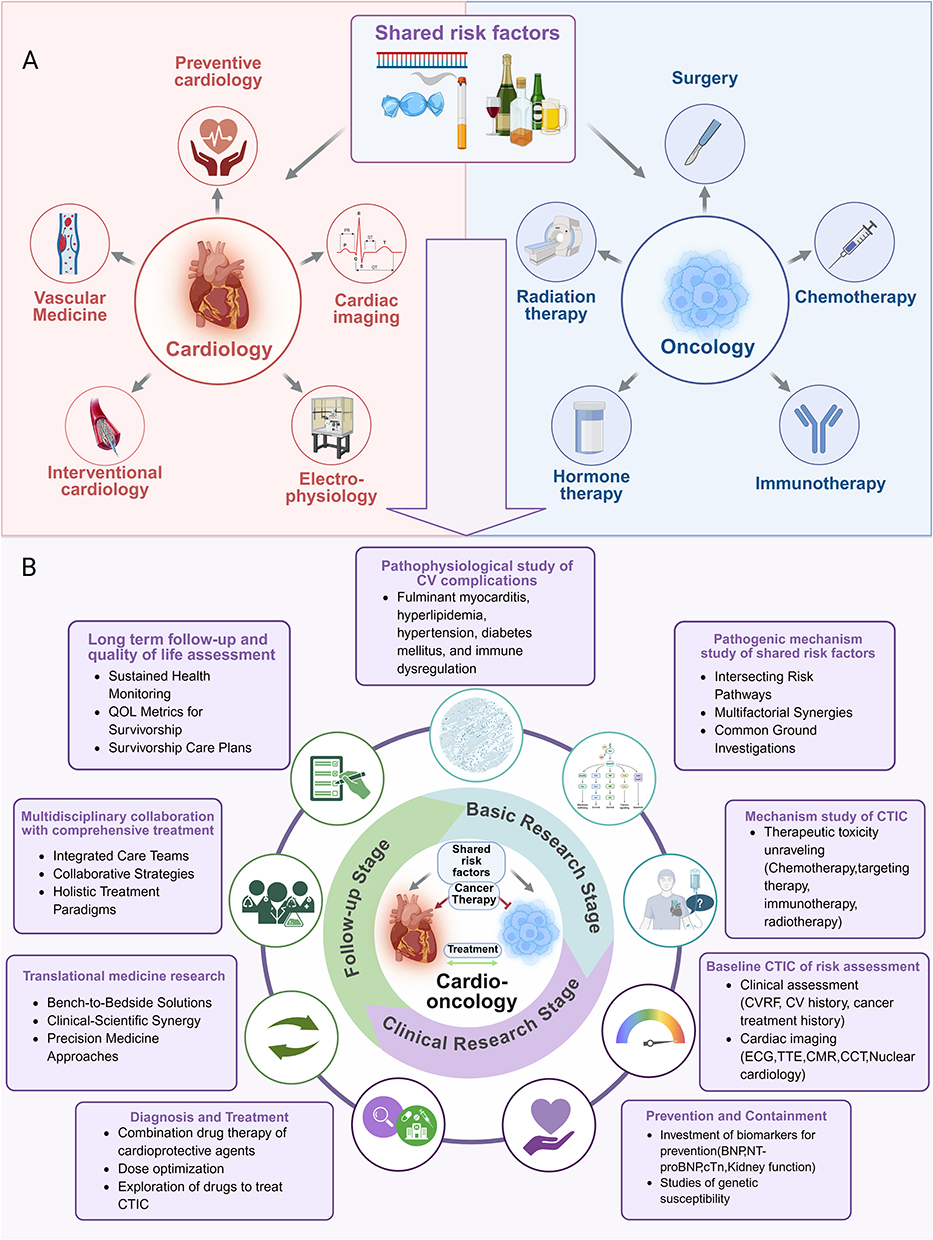 |
Figure 1 The composition and research content of cardio-oncology. (A) Shared risk factors and integrated approaches to Cardiology & Oncology. Shared risk factors correlate cardiovascular diseases and cancer. Holistic treatment paradigms should integrate therapies including cardiology (vascular medicine, interventional cardiology, novel imaging, etc.) with oncology (chemotherapy, immunotherapy, hormone therapy, etc.). (B) Comprehensive Research on Cardio-oncology. Comprehensive cardio-oncology research spans basic, clinical and follow-up phases, delving into cardiotoxicity etiology, assessment, management, treatment and prognosis. |
Increasing research efforts have been directed toward the development of strategies to prevent or mitigate CTIC. The potential cardiotoxicity of chemotherapeutics, exemplified by anthracyclines (such as doxorubicin, pirarubicin, cyclophosphamide, 5-fluorouracil, paclitaxel, and cisplatin), has garnered significant attention and has been comprehensively investigated from diverse perspectives.16 Anthracycline therapy involves multiple processes including topoisomerase II inhibition, generation of reactive oxygen radicals, suppression of apoptotic pathways initiation, and DNA intercalation. Doxorubicin serves as the typical anthracycline that elevates the risk of systolic dysfunction and HF through mechanisms involving DNA damage, oxidative stress, and mitochondrial dysfunction.17,18 Arsenic trioxide, as a treatment for solid tumors, demonstrates a distinct regulatory mechanism from standard chemotherapy and holds promising clinical application prospects.19 It is also the most cost-effective targeted therapy for tumors, carrying significant social and economic value.20 Its mode of action involves the restoration of mutant TP53 protein structure, with approximately half of all tumors exhibiting TP53 mutations.21 TP53 plays a crucial role in cell autophagy and metabolism, particularly in glucose metabolism, making it one of the most vital tumor suppressor factors within cells.22 Moreover, the impact of tumor-targeting drugs to induce CTIC, represented by TKIs, such as sunitinib, and sorafenib, are also a matter of concern. However, studies on this topic are scarce and still in the early stages, which may be related to the drug’s iterative development. Among tumor-targeted drugs, HER2 molecular-targeted therapies and VEGF (Vascular Endothelial Growth Factor) inhibitors, have been associated with an increased risk of HF and left ventricular dysfunction.23 VEGF blockers can induce microvascular changes that lead to reduced myocardial capillary network and impaired contractility. Anti-VEGF functions performed by TKIs including pazopanib, axitinib, vandetanib, regorafenib, cabozantinib, and lenvatinib, can also affect vascular endothelial cells and trigger hypertension.24 Mitogen-activated protein kinase (MEK) inhibitor and dasatinib, a multi-targeted TKI, have been associated with cardiomyopathy. The histone deacetylase inhibitor panobinostat and several TKIs, particularly ALK (Anaplastic lymphoma kinase) inhibitors such as crizotinib and ceritinib, followed by sunitinib, sorafenib and pazopanib, have been correlated with QT interval prolongation, a critical determinant of arrhythmia.25,26 In addition, immune-checkpoint inhibitors (ICIs) have precipitated a fundamental transformation in cancer treatment, rendering them a viable treatment option for almost half of patients with malignancies. Initial observations have highlighted the potential for ICIs to induce fulminant myocarditis, while recent studies have reported other immune-related cardiac adverse events (irAEs), encompassing an elevation in cardiac dysfunction, vascular inflammation, thrombogenesis, and atherosclerosis.27 The utility of ICIs disrupts immune system regulation and can trigger cell-mediated cytotoxicity targeting host tissues inadvertently. Typical targets of ICIs include cytotoxic T lymphocyte associated antigen 4 (CTLA4), programmed cell death protein 1 (PD1), PD1 ligand 1 (PDL1), and lymphocyte activation gene 3 (LAG3), a recently-identified target that correlates with fatigue status of CD4+ and CD8+ T cells.28 Furthermore, radiotherapy can also induce cardiotoxicity. Mechanisms of radiation-induced cardiotoxicity include oxidative stress, DNA damage, protein oxidation, lipid peroxidation, and molecular signaling pathway damage, such as the TGF-β (Transforming Growth Factor Beta) pathway, PI3K/Akt (Phosphatidylinositol 3-kinase/Protein kinase B) pathway, MAPK/ERK (Mitogen-Activated Protein Kinase/Extracellular Signal-Regulated Kinase) pathway, JAK/STAT (Janus kinase/Signal Transducer and Activator of Transcription) pathway, and NF-κB (nuclear factor kappa-light-chain-enhancer of activated B cells) pathway.29,30
Current Situation of Laboratory Research and Clinical Studies
Cardio-oncology research primarily encompasses two domains: clinical studies targeting early-stage intervention in diagnosis and laboratory-based studies. Clinical investigations primarily focus on early detection and the implementation of timely interventional strategies. Progress in cardiovascular imaging has underscored the crucial need for reliable methodologies to identify, monitor, and prognosticate the risks of CTIC. The American Heart Association has put forward guidelines and consensus on cardiovascular imaging for CTIC. Echocardiography is the primary modality for evaluating cardiac function, and it should be conducted before cancer therapy to evaluate baseline left ventricular ejection fraction (LVEF) and peak systolic longitudinal strain. Assessment of right ventricular function should also be included in echocardiographic evaluations due to its prognostic significance. Three-dimensional echocardiography is the recommended approach for obtaining 3D LVEF. For patients with abnormal baseline LVEF, it is advisable to explore alternative cancer treatment modalities associated with reduced cardiotoxicity.31,32 Besides, results from echocardiography should be combined with findings from other cardiovascular imaging techniques including cardiac magnetic resonance imaging (CMR), which offers more detailed information about cardiac function including myocardial fibrosis, edema, and myocarditis, in addition to Cardiac Computed Tomography Angiography (CTA) to assess valvular diseases, coronary artery disease, and non-cardiovascular complications associated with radiation therapy, followed by Nuclear Medicine Imaging used to evaluate myocardial perfusion and metabolism by detecting ischemia and myocarditis. These multimodality imaging methods complement each other while providing a comprehensive assessment of cardiac condition for detecting and monitoring CTIC of cancer patients.33
Research in the laboratory includes the exploration of biomarkers for early diagnosis, genetic studies of cancer susceptibility, and the exploration of drugs to treat CTIC. Natriuretic peptides (NPs), including B-type NP (BNP) or N-terminal pro-BNP (NT-proBNP) and cardiac troponin (cTn) are widely-recognized biomarkers of heart damage and stress whose increased levels have resulted in CTIC.34 It is advisable to conduct NP assessment at the beginning of treatment in patients at high risk who are receiving chemotherapeutics, ICIs and proteasome inhibitors (PIs). Other potential biomarker for CTIC include microRNAs (miRNAs), Galectin-3 (Gal-3), C-Reactive Protein (CRP).35,36 Growth differentiation factor-15 (GDF-15), myeloperoxidase (MPO) and asymmetric dimethylarginine also have been postulated as useful biomarkers due to their involvement in metabolism of nitric oxide, which are possible mechanisms of anthracycline-induced cardiotoxicity.37 Moreover, as a result of recent developments in -omics technology, the therapeutic significance of phenotyping has been significantly increased in both amplitude and spectrum.38 The -omics disciplines, including genomics, proteomics, metabolomics, lipidomics, and immunomics, aim to employ computational techniques for identifying patterns within extensive datasets, with the purpose of elucidating the underlying pathophysiological mechanisms.39 In cases of CTIC, -omics technologies can reveal novel disease measurements that may contribute to customizing medical treatment in the field of cardio-oncology.40 For genetic screening, it has been found that there are multiple cancer-related cardiotoxic genes. Several studies have found that certain single nucleotide polymorphisms (SNPS) in the ERBB2 (also known as HER2) gene are related to trastuzumab-induced cardiotoxicity.41 And human leukocyte antigen (HLA) genes, participating in the regulation of the immune system, are related to cardiotoxicity caused by chemotherapeutics.
To note, the development of pharmaceuticals or possible therapeutic targets for CTIC treatment is advancing at a rapid pace. Some non-coding RNAs, such as circular RNA (circRNA), have been identified as potential targets for ameliorating CTIC.42 It was reported that circITCH can alleviate DOX-induced cardiotoxicity by combining with miR-330-5p to prevent the degradation of target genes including SERCA2a, Survivin and SIRT6.43 Moreover, CircFOXO3 accelerates the advancement of glioblastoma by functioning as a competitive endogenous RNA against NFAT5.44 By sequestering ID1, E2F1, FAK and HIF1α, thereby impeding their nuclear translocation and anti-aging function, circFOXO3 also exacerbates DOX-induced cardiomyopathy.45 Furthermore, an increasing number of TCM natural products have demonstrated efficacy in managing cardiotoxicity resulting from diverse cancer treatment modalities.46 Research discovered that Isorhapontigenin (Isor), a novel derivative of stilbene, effectively alleviated DOX-induced apoptosis in cardiomyocytes in vitro by upregulating YAP1 expression.47 In current practice, CTIC is mainly managed by adjusting cancer drugs and adding heart-protective medications. For high-risk patients, ACE inhibitors, beta-blockers, and diuretics are recommended. Cardiac interventions and managing complications may also be needed, and treatment may be paused if necessary.48 For instance, in cases of hypertension induced by TKIs targeting VEGF pathway, antihypertensive medications such ACEIs or calcium channel blockers can be employed for blood pressure control.49,50 Treatment of ICI-related myocarditis usually starts with high-dose corticosteroids like prednisone or methylprednisolone.51 Based on the evaluation of clinical response and patterns in multiple biomarkers, it may be appropriate to contemplate the use of other immunomodulatory agents (abatacept and plasa pheresis).52,53 However, current strategies for ameliorating CTIC remain inadequate. Currently, dexrazoxane remains the only FDA‑ and EMA‑approved cardioprotective agent for anthracycline-induced cardiotoxicity due to its ability to chelate iron and limit oxidative stress without compromising anticancer efficacy. Furthermore, randomized trials and meta-analyses have shown that β‑blockers and ACE inhibitors or ARBs can help reduce CTIC.54,55 But these interventions are not universally effective, and some evidence shows inconsistent outcomes for ACEI/ARB monotherapy. Meanwhile, one network meta-analyses suggest potential benefits of combined prophylaxis regimens, including molecular agents and traditional Chinese medicine formulations, though high-quality trials are still needed.56
Natural Products From Traditional Chinese Medicine in CTIC
In recent years, natural products derived from Traditional Chinese Medicines have garnered increasing attention in tumor cardiology research. These natural compounds have been shown to exert protective effects in cardio-oncology by modulating the immune response, inhibiting tumor cell proliferation, and improving cardiovascular function, thereby demonstrating significant research value and promising clinical application potential.57 Through experimental studies, we have found that TCM natural products play a great role in alleviating the cardiotoxicity caused by anticancer drugs. These include traditional chemotherapy drugs as anthracyclines (eg, doxorubicin, pirarubicin), fluoropyrimidines (eg, 5-fluorouracil), alkylating agents (eg, cyclophosphamide, cisplatin), as well as newer treatments like arsenic trioxide, molecularly targeted drugs (eg, TKIs such as sorafenib and sunitinib, proteasome inhibitors such as bortezomib and carfilzomib), and monoclonal antibodies (eg, trastuzumab).
Traditional chemotherapy drugs refer to cytotoxic agents that primarily target rapidly dividing cells by interfering with DNA synthesis or mitosis. In contrast molecularly targeted drugs are therapeutics designed to specifically inhibit oncogenic pathways by targeting.
Notably, certain TCM-derived natural compounds have been reported to exert synergistic effects with anticancer agents, thereby enhancing the overall efficacy of tumor therapy.58,59
Cardiotoxicity Associated with Traditional Chemotherapy Drugs
Doxorubicin-Induced Cardiotoxicity
Anthracyclines (ie doxorubicin, daunorubicin, epirubicin, idarubicin) are widely used in the treatment of hematological malignancies and solid tumors, such as acute leukemias, lymphomas, breast cancers, gastric cancers, soft-tissue sarcomas, and ovarian cancers.60,61 They have made significant improvements in the overall survival of cancer patients and are one of the most effective cytostatic drugs for the treatment of various malignancies.62 However, with the widespread use of anthracyclines, it has been found that the toxic effects of these drugs are not limited to tumor cells, but can also affect cardiac cells. Members of the anthracycline family have been found to be a significant cause of both acute and chronic cardiotoxicity,63,64 with approximately one-third of deaths attributable to long-term cardiotoxicity, compared to 51% of tumor-related mortality.64
Clinical studies have found that anthracycline-induced cardiac disorders (eg, cardiac insufficiency, arrhythmias, and, rarely, acute myocarditis) occur in up to 20% of all anthracycline-treated patients, and up to 48% of patients treated with high-dose anthracyclines.64 Therefore, addressing anthracycline-induced cardiotoxicity is of great clinical significance. Through the literature, we have found that TCM natural products are able to ameliorate anthracycline-induced cardiotoxicity and improve the efficacy of oncology treatment to a certain extent.
Currently, doxorubicin (DOX) is the most extensively studied anthracycline, particularly with regard to its cardiotoxic effects. In the process of summarizing the research on the treatment of DOX cardiotoxicity with TCM natural products, we found that many Traditional Chinese Medicines can alleviate the cardiotoxicity it causes (Figure 2), such as Panax ginseng, Salvia miltiorrhiza, Lonicera japonica Thunb., Astragalus membranaceus, Coptis chinensis root, Scutellaria baicalensis, Magnolia bark, Evodia rutaecarpa, tuckahoe, Veratrum nigrum, Mentha haplocalyx, Aconitum carmichaelii, etc., have certain chemically active substances that have a certain effect in reducing the cardiotoxicity caused by anthracyclines (Table 1).
 |
Table 1 Cardiotoxicity of Traditional Chemotherapy Drugs |
 |
Figure 2 Relationship between traditional chemotherapeutic drugs in inhibiting cancer cell proliferation and their induced cardiotoxicity. (A) How chemotherapy drugs act on cancer cells. Various types of chemotherapy drugs (5-fluorouracil, 6-mercaptopurine, A2O3, taxanes, cytarabine, etc.) inhibit the growth of cancer cells by affecting each stage of cellular protein synthesis (purine ring biosynthesis, DNA synthesis, etc). (B) Comprehensive overview of the protective effects of natural products. Comprehensive research on the protective effects of natural products from different traditional Chinese medicines various chemotherapeutic drugs, including doxorubicin, 5-fluorouracil, cisplatin, cyclophosphamide, pirarubicin, and paclitaxel. |
Matrine and sophocarpine both can be extracted from Sophora flavescens. Sophocarpine reduces the oxidative stress of cardiomyocytes and reduces the apoptosis of cardiomyocytes through the Nrf2/HO-1 (Nuclear factor erythroid 2–related factor 2/Heme oxygenase-1) signaling pathway;83 matrine can reduce the cardiotoxicity caused by DOX through the AMPKα/UCP2 (AMP-activated protein kinase alpha/uncoupling protein 2) pathway.84 Berberine is an important extract of Coptis chinensis, it can relieve DOX-induced cardiotoxicity through multiple pathways. Studies have found that berberine can reduce the MBA level in cardiac cells, mitochondrial damage in the heart, cardiac fibrosis, and cardiac oxidative stress levels by decreasing the expression of SIRT1, p66Shc proteins, and related pathways and genes.89,90,95
Scutellaria baicalensis, like Coptis chinensis and Sophora flavescens, is also a heat-clearing medicine. Baicalin and lignin A in it can reduce myocardial damage and oxidative stress levels in myocardial cells. They achieve this by decreasing the activity of Cytochrome-c and caspase in cardiomyocytes and activating the sirtuin 1 signaling pathway.88
In addition, substances in Traditional Chinese Medicines with tonic effects, such as Panax ginseng, Astragalus membranaceus, Schisandra chinensis, Epimedium pubescens, and Ophiopogon japonicus, can also improve the effects of related cardiotoxicity.
Ginsenoside Rg1 in Panax ginseng can improve the expression of GFAT1, JNK1, and P70S6k-related kinases to reduce cardiac toxicity.102 Although the mechanism of ginsenoside Rh2 has not been clarified in current research, in vivo and in vitro experiments have found that Rh2 can reduce cardiac inflammation, cardiac fibrosis, and cardiac tissue damage.94 Astragalus polysaccharide in Astragalus tongolensis can reduce cardiomyocyte apoptosis by inhibiting the activation of Caspase-3 and LC3B and activating the AMPK/mTOR (AMP-activated protein kinase/mechanistic target of rapamycin) pathway.78
Schisandrin B in Schisandra chinensis can also reduce myocardial cell apoptosis.99 It can weaken the conduction of the MAPK/p53 (Mitogen-Activated Protein Kinase/Tumor Protein p53) signaling pathway, reduce the levels of MDA (Malondialdehyde) and nitrite in the heart, and reduce the level of oxidative stress in the heart.99 Icariin in Epimedium can weaken the expression of Cav-1, inhibit the opening of mPTP (Mitochondrial permeability transition pore) and the activity of PDE5a (phosphodiesterase 5a), and reduce the level of oxidative stress in the heart.101 Natural isoflavone 8-Formylophiopogonanone-B in Ophiopogon japonicus can weaken the expression of HMOX1 (heme oxygenase 1), thereby reducing the heart atrophy and cardiac dysfunction caused by DOX.65
Beyond the above-mentioned chinese medicines, our research summary found that a variety of TCM natural products, such as pachymic acid in Poria cocos,74 honokiol in Magnolia officinalis,75 cryptotanshinone in Salvia miltiorrhiza,82 resveratrol in Veratrum,87 cardamonin in Alpinia officinalis,97 luteolin in Lonicera japonica and Chrysanthemum,107 and hyperoside in chinese medicine such as Forsythia suspensa, Polygonum multiflorum, and Evodia rutaecarpa,104 all can improve DOX-induced cardiotoxicity by affecting related signaling pathways or the expression of proteins or genes.
In general, the topic of Chinese herbal natural products alleviating DOX-induced cardiotoxicity has received much attention from researchers. Herbs such as Panax ginseng, Astragalus membranaceus, Salvia miltiorrhiza, Scutellaria baicalensis, Coptis chinensis, and Epimedium brevicornum contain active compounds including ginsenosides, astragalus polysaccharides, berberine, baicalin, and icariin, which have been shown to alleviate myocardial injury, reduce oxidative stress, and improve cardiac function in experimental models. Other compounds, such as honokiol, cryptotanshinone, resveratrol, cardamonin, luteolin, and hyperoside, also exhibit cardioprotective properties. These findings highlight the potential of TCM-derived natural products as promising agents in the prevention and management of DOX-induced cardiotoxicity.
Pirarubicin-Induced Cardiotoxicity
Pirarubicin (THP) is another anthracycline antibiotic that is widely used in clinical practice for the treatment of malignant tumors due to its high efficacy and broad spectrum.125 However, it has been identified to cause various toxicity,125 which limits its medical use.126 The most serious toxicity of THP is its cardiotoxicity, and the mechanism of its cardiotoxicity is still under investigation, study found that cardiotoxicity caused by THP is closely associated with the occurrence of oxidative stress in cardiomyocytes.127–129 Summarizing multiple studies, we found that natural products from TCM can be used to treat THP-induced cardiotoxicity.108
As another commonly used anthracycline, the research on the cardiotoxicity of pirarubicin has also attracted much attention (Figure 2). Chemicals from Panax ginseng, Amomum villosum, Morus alba, and Salvia miltiorrhiza can be used to treat pirarubicin cardiotoxicity. Ginsenoside F1 from Panax ginseng can activate AKT/Bcl-2 signaling pathways and reduce cardiac oxidative stress levels.108 Isoquercitrin from Amomum villosum and Morus alba can activate Phlpp1/AKT/Bcl-2 signaling pathway and reduce myocardial toxicity and cardiac oxidative stress levels.110 Salvianolic Acid B from Salvia miltiorrhiza can inhibit the opening of mPTP and weaken the expression of apoptosis-related proteins in the heart110 (Table 1). These findings suggest that Chinese herbal natural products may have therapeutic potential to alleviate THP treatment-related cardiotoxicity.
Arsenic Trioxide-Induced Cardiotoxicity
Arsenic trioxide has shown a strong anti-tumor effect when used in the treatment of acute promyelocytic leukemia (APL) and glioma.130 Arsenic trioxide can inhibit tumor growth by inducing changes in cancer cell apoptosis signals.131 However, current clinical studies have found that Arsenic Trioxide can affect the mitochondrial membrane potential of cardiomyocytes, causing heart problems in patients.132
Regarding the cardiotoxicity caused by arsenic trioxide, studies have found that TCM natural products have good therapeutic effects. Salvianolic Acid A and Salvianolic Acid B in Salvia miltiorrhiza can improve the antioxidant capacity of the heart and reduce mitochondrial damage by affecting the expression of proteins and related signaling pathways, such as Ca2+-related proteins and AKT/GSK-3β.111,112,116 Protocatechuic acid in commonly used Chinese medicine such as Hibiscus mutabilis and Salvia miltiorrhiza, hesperidin in dried orange peel, and honokiol in Magnolia officinalis can reduce oxidative stress and damage to cardiomyocytes by affecting different signaling pathways, thereby alleviating the symptoms of cardiac toxicity caused by arsenic trioxide113–115 (Figure 2) (Table 1).
In general, arsenic trioxide, while effective in treating certain cancers such as acute promyelocytic leukemia and glioma, has been associated with cardiotoxicity due to its effects on mitochondrial function in cardiomyocytes. TCM Natural products have shown promising protective effects against this toxicity. These findings suggest that TCM natural products may serve as potential candidates for mitigating arsenic trioxide-induced cardiotoxicity.
5-FU-Induced Cardiotoxicity
5-Fluorouracil (5-FU) is a fluoropyrimidine (FP) antimetabolite that can be used to treat a variety of solid tumors. Clinical and literature studies have shown that 5-FU has potential cardiotoxicity and may cause coronary artery spasm and other symptoms; and in severe cases, it can lead to sudden cardiac death.133 The incidence of 5-FU cardiotoxicity is only second to anthracyclines in terms of cardiotoxicity.120
Comprehensive experimental studies have demonstrated that certain TCM-derived natural compounds can mitigate 5-fluorouracil-induced cardiotoxicity (Figure 2). By summarizing the literature, we found that colchicine, myricetin, and kaempferol all have the effect of reducing the cardiotoxicity caused by this type of drug. These active substances reduce the oxidative stress of myocardial cells by regulating the expression of various kinases, heat shock proteins, and growth factors119–121 (Table 1).
In summary, while 5-fluorouracil remains a cornerstone chemotherapeutic agent for various solid tumors, its notable cardiotoxic risk-second only to anthracyclines-necessitates effective protective strategies. Accumulating evidence from experimental studies highlights that TCM-derived natural compounds such as colchicine, myricetin, and kaempferol exhibit cardioprotective effects by modulating oxidative stress pathways and key molecular targets, offering promising adjunctive options to mitigate 5-FU-induced cardiotoxicity.
Paclitaxel-Induced Cardiotoxicity
Paclitaxel is a diterpene alkaloid compound with anticancer activity. It is extensively utilized in the treatment of breast cancer, ovarian cancer, certain head and neck malignancies, as well as lung cancer.134 Clinical records show that paclitaxel has a certain degree of cardiotoxicity, but its cardiotoxicity is rarer than that of anthracyclines and 5-fluorouracil.135 Paclitaxel-induced cardiotoxicity is mainly manifested as subacute or acute bradycardia, heart block, and atrial or ventricular arrhythmias.135
Due to the low incidence of paclitaxel-induced cardiotoxicity, research on this topic remains limited (Figure 2). In terms of treating and alleviating paclitaxel-induced cardiotoxicity, TCM natural products have achieved good experimental results. We found that rutin and hesperidin from tangerine peel can reduce the levels of CK-MB (Creatine Kinase MB Isoenzyme) and LDH (Lactate dehydrogenase) in cardiomyocytes by reducing CK-MB and LDH activities, thereby improving the cardiotoxicity caused by doxorubicin.122 Whereas naringin and naringenin in Citrus maxima can improve the oxidative stress and LDH activity of cardiomyocytes by affecting the levels of LPO, GSH, and free radicals123 (Table 1).
In summary, paclitaxel, though less cardiotoxic than anthracyclines, can cause arrhythmias and bradycardia, and emerging studies suggest that natural compounds from Traditional Chinese Medicine, such as rutin, hesperidin, and naringin, may help alleviate its cardiotoxic effects by reducing oxidative stress and cardiac injury markers.
Cisplatin-Induced Cardiotoxicity
Cisplatin is a broad-spectrum chemotherapeutic agent employed in the treatment of various malignancies, including small-cell lung cancer, ovarian cancer, lymphoma, and germ cell tumors.131 However, clinical studies have found that cisplatin has severe, acute and cumulative cardiotoxicity.136 Experiments have found that cisplatin-induced cardiac dysfunction is associated with mitochondrial membrane depolarization and mitochondrial ultrastructural abnormalities. Based on this, mitochondrial-targeted antioxidants can be used for treatment, and substances in TCM natural products can play a similar role.137
At present, research on the treatment of cisplatin-induced cardiac toxicity with TCM natural products has also received much attention. According to a study, it was found that both cyanide and icariin could show protective effects against cisplatin mediated cardiotoxicity through ROS mediated oxidative stress injury124,138 (Figure 2). Taking cyanidin as an example, cyanidin which is abstracted from Glycine max. It can activate the ERK signaling pathway and mitochondrial pathway, increase the expression of anti-apoptotic proteins in cardiomyocytes and inhibit the activity of caspase, and thus improve the survival rate of cardiomyocytes124 (Table 1).
Notably, cisplatin—despite its broad anticancer use—induces cardiotoxicity linked to mitochondrial damage, and studies have shown that TCM natural products such as cyanidin and icariin can mitigate this toxicity by targeting oxidative stress and apoptosis-related pathways.
Cyclophosphamide-Induced Cardiotoxicity
Cyclophosphamide is an alkylating anticancer agent with strong cytotoxicity and immunosuppressive activity.139 It is a widely effective anticancer agent. Studies have found that cyclophosphamide has a certain degree of cardiotoxicity for patients. Manifestations of cyclophosphamide-induced cardiotoxicity include pericardial effusions, myocarditis, pericarditis, and HF. The cardiotoxicity caused by cyclophosphamide is dose-dependent. When the patient receives a cyclophosphamide dose greater than 150 mg/kg or 1.55 g/m2/day, there is a higher risk of cardiac damage.140
The precise mechanisms underlying cyclophosphamide-induced cardiotoxicity remain unclear. However, studies have indicated that reactive oxygen species generated by cyclophosphamide play a critical role in impairing cardiac endothelial function.141 The use of cyclophosphamide affects the ability of cardiac mitochondria to retain accumulated calcium, causing severe oxidative stress and nitrative stress in the heart.117,142 Kolaviron from Garcinia hanburyi and capsaicin from Capsicum annuum can reduce cyclophosphamide-induced oxidative and nitrative stress by affecting the apoptosis pathway of cardiac myocytes and regulating inflammatory factors and free radicals, etc.66,118 (Table 1 and Figure 2).
All in all, while cyclophosphamide is a widely used alkylating agent, its dose-dependent cardiotoxicity manifesting as pericardial effusion, myocarditis, and heart failure has been linked to oxidative and nitrative stress, and TCM-derived compounds such as kolaviron and capsaicin have shown potential in alleviating these effects by modulating apoptosis and inflammation-related pathways.
Summary
Although conventional chemotherapy agents have demonstrated substantial efficacy in tumor treatment, their clinical utility is frequently limited by cardiotoxicity, which can compromise therapeutic outcomes. Adriamycin and pirarubicin, represented by anthracyclines, as well as traditional chemotherapy drugs such as arsenic trioxide, fluorouracil, paclitaxel, cisplatin and cyclophosphamide, can cause cardiotoxicity by inducing oxidative stress, mitochondrial damage, and apoptosis. A number of studies have found that TCM active ingredients can alleviate the cardiotoxicity induced by these drugs. Currently, anthracycline drugs are mostly used to treat the cardiotoxicity caused by traditional chemotherapy drugs with TCM natural products. The active ingredients of TCM involved in relevant studies mainly include saponins, polyphenols, flavonoids, etc. These active ingredients can reduce oxidative stress, inflammatory reaction, and cardiomyocyte apoptosis by regulating related signaling pathways (such as AMPK, SIRT1, Akt, etc). However, at present, the specific mechanism of various active ingredients to alleviate cardiotoxicity is still unclear, and more clinical trials are needed to further explore.
Chemotherapy Targeted Drugs-Induced Cardiotoxicity
In recent years, targeted therapies have shown promising efficacy in cancer treatment. These agents primarily act on aberrant tumor signaling pathways and are characterized by high specificity, reduced toxicity, and an improved therapeutic index.143 However, long-term use of targeted drugs can lead to systemic toxicity, especially cardiovascular toxicity.144 The mechanism of action remains unclear. There are many types of tumor-targeting drugs, including HER2+ targeted therapy, tyrosine kinase inhibitors, proteasome inhibitors, MEK/BRAF inhibitors, etc. This article mainly introduces the treatment of TKI and proteasome inhibitor-related cardiotoxicity with TCM natural products.144
Commonly used TKIs include sorafenib, sunitinib, imatinib, etc. The cardiotoxicity associated with these types of targeted drugs is relatively rare. This article primarily focuses on the treatment of sorafenib and sunitinib with TCM natural products (Table 2). Sunitinib has more clinical applications, and its cardiotoxicity has also been studied extensively. Studies have found that polydatin in Reynoutria japonica, and astragaloside IV in Astragalus membranaceus reduce oxidative stress and inflammatory damage in cardiomyocytes by regulating NLRP3-MyD88 pathway and COUP-TFII expression, respectively.145,146 In the study of Sorafenib cardiotoxicity, it was found that hesperetin in tangerine peel reduces cardiomyocyte apoptosis through regulating TLR4/NLRP3 signaling pathway.147
 |
Table 2 Cardiotoxicity of Tumor-Targeted Drugs & Antibody Drugs |
Cardiotoxicity of proteasome inhibitors (PIs) mainly occurs in the use of bortezomib and carfilzomib.151 In contrast, a clinical meta-analysis found that the cardiotoxicity caused by carfilzomib is equivalent to that of bortezomib and is potentially lethal.151 For carfilzomib-induced cardiotoxicity, zingerone in Zingiber officinale can reduce apoptosis of cardiac cells and inhibit the occurrence of cardiac autophagy by regulating Nrf2/HO-1 signaling pathways148 (Figure 3).
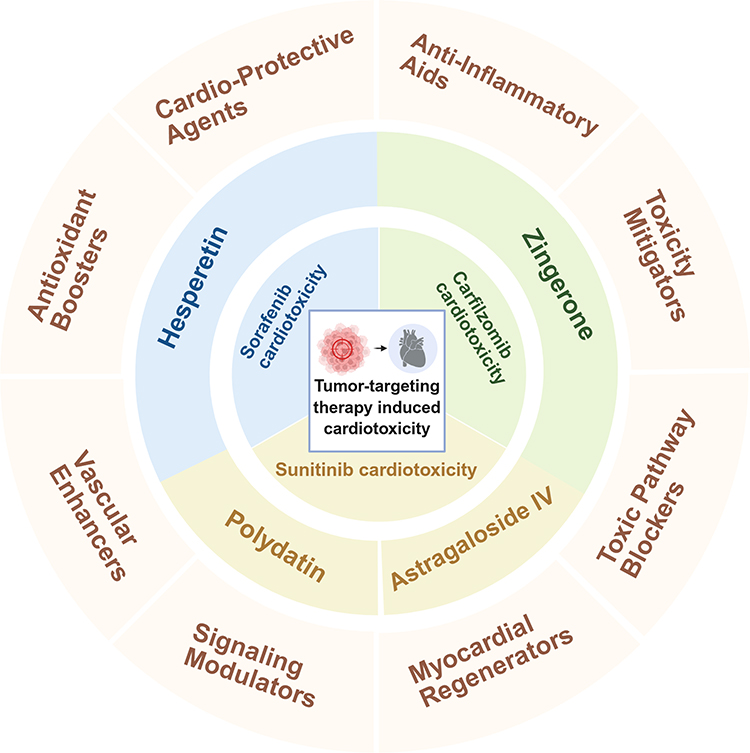 |
Figure 3 Protective effects of TCM (Traditional Chinese Medicine) natural products on the cardiotoxicity of tumor-targeted drugs. The general mechanism of the protective effect of TCM natural products (zingerone, astragaloside IV, polydatin, etc.) on the cardiotoxicity caused by different types of tumor targeted drugs (sorafenib, sunitinib, carfilzomib, etc.). |
Targeted drugs show strong selectivity and therapeutic effect in tumor treatment, but long-term use will lead to cardiotoxicity. This article reviews the cardiotoxic mechanisms of tyrosine kinase inhibitors (sorafenib and sunitinib) and proteasome inhibitors (bortezomib and caffezomib). Studies have shown that resveratrol glucoside, astragaloside IV, hesperidin and other TCM ingredients can reduce oxidative stress, inflammatory reaction and cardiomyocyte apoptosis by regulating key signaling pathways (such as NRLP3-MyD88, COUP-TFII, TLR4/NLRP3). Although TCM natural products provide a potential solution for drug-induced cardiotoxicity, the research on the mechanism of action of TCM natural products is still in the preliminary stage, and the mechanism of cardiotoxicity of targeted drugs is still exploring.152 It is necessary to further study the mechanism of action of targeted drugs’ cardiotoxicity and related TCM active ingredients, so as to better intervene the targeted drug-related toxicity (Table 2).
Overall, although the mechanisms underlying cardiotoxicity caused by targeted therapies remain under investigation, current studies have shown that several TCM natural products may be able to offer promising cardioprotective effects. Active ingredients such as polydatin, astragaloside IV, hesperetin, and zingerone have shown the ability to alleviate oxidative stress, inflammation, and cardiomyocyte apoptosis induced by tyrosine kinase inhibitors and proteasome inhibitors in preclinical studies. These findings suggest that TCM natural products may serve as potential adjuvant therapies to mitigate the cardiovascular risks associated with long-term use of targeted anticancer agents.
Monoclonal Antibody Anticancer Drugs-Induced Cardiotoxicity
Monoclonal antibodies (mAbs) are a major component of cancer therapy, and their mechanism of action is mainly focused on stimulating innate immune effects. Currently, the commonly used mAbs in clinical practice are mainly divided into conjugated and unconjugated types. Conjugated mAbs have a single pathway of action, usually relying on the direct cytotoxic effect of their payload, which is taken up by endocytosis of the receptor-bound conjugated mAbs.153 The mechanism triggered by unconjugated mAbs is relatively complex. Different unconjugated mAbs directly bind to Fcγ receptors (FCGRs) on different types of immune cells, directly triggering different immune responses, which are mediated by differences in the binding ratio (A:I ratio) of activating and inhibitory FCGRs, which varies depending on the antibody isotype.154 After FCGR activation, phagocytes engulf antibody-bound pathogens or cells, which is called antibody-dependent cellular phagocytosis (ADCP). FCGR (Fc Gamma Receptor) engagement and signaling activities also stimulate cell stimulation of different classes of immune cells (such as DCs, macrophages, or neutrophils), further changing the adaptive immune response. In addition, the Fc portion of the conjugated antibody can also stimulate other innate immune cells, such as natural killer (NK) cells, to directly lyse well-opsonized targets, known as antibody-dependent cellular cytotoxicity (ADCC). In addition, the Fc portion of the mAb can also trigger the activation of serum proteins, such as the complement family.155 This ability of unconjugated mAbs to block interactions and internalize receptors inhibits the transduction of oncogenic signaling and suppresses tumor growth.
Although monoclonal antibodies are currently widely used in cancer treatment, they can also cause significant cardiotoxicity. A typical example is the HER2-specific monoclonal antibody, which is a humanized antibody against HER2 (also known as ERBB2), which is overexpressed in 15–20% of breast cancers.156 HER2 signaling increases cancer cell proliferation, tumor growth, and metastatic spread.157 HER2-specific monoclonal antibodies often directly damage cardiomyocytes. Clinically, it has been found that the incidence of HER2-specific monoclonal antibody-induced cardiotoxicity, trastuzumab, is 15–20%, and the incidence of HF is <5%. In a continuous patient data set, 40–45% of patients treated with trastuzumab had a decrease in cardiac function of ≥10%,158,159 and up to 75% of patients treated with trastuzumab may experience irreversible decrease in cardiac function.160
Other studies have found that cardiotoxicity occurs when trastuzumab is administered alone or in combination with anti-tumor drugs (especially anthracyclines),161 and the cardiotoxicity caused by combined use is greatly increased.161 At present, the relevant mechanism is still unclear. Experimental studies have shown that when trastuzumab is used in combination with doxorubicin, it may affect the signaling pathway related to cell autophagy, thereby affecting the normal functioning of the heart162 (Figure 4).
 |
Figure 4 The mechanism of action of trastuzumab and its effect on the cardiovascular system. (A) Mechanism of action of trastuzumab in HER2-positive cancer cells. Trastuzumab inhibits signal transduction pathways and prevents tumor proliferation by blocking cleavage, blocking dimerization, endocytosis, and activating antibody-dependent cell-mediated cytotoxicity. (B) Mechanisms of natural products against trastuzumab-induced cardiotoxicity. Natural compounds such as Zingerone and Ginsenoside Rg2 inhibit multiple signaling pathways downstream of trastuzumab, including PI3K/AKT (Phosphoinositide 3-kinase/Protein kinase (B) and RAS/MAPK (Rat sarcoma/Mitogen-activated protein kinase), and alleviate adverse reactions caused by these signaling pathways. |
At present, cases of heart-related death are uncommon in patients receiving trastuzumab monotherapy or combination therapy.161 However, considering the enormous burden it brings to cancer patients, the treatment of trastuzumab-induced cardiac toxicity has attracted much attention, and TCM natural products have shown good efficacy in alleviating the cardiac toxicity caused by this type of monoclonal antibody (Table 2).
Experimental studies have found that zingerone in Zingiber officinale can increase the expression of IL-2 and TNF-α in the heart, reduce the expression of cardiac apoptotic proteins, and thus reduce the induction of cell apoptosis by trastuzumab,149 ginsenoside Rg2 in Panax ginseng can enhance the conduction of PI3K/AKT pathway and reduce the occurrence of cardiac oxidative stress and cardiac inflammation.150
Monoclonal antibodies (mAbs) now play an important role in tumor therapy. However, their cardiotoxicity, especially HER2-specific monoclonal antibody (trastuzumab), has become an urgent problem in the treatment of cancer patients. To address this problem, TCM natural products provide new ideas and directions for cardiotoxicity intervention with their unique advantages of multi-targets and multi-mechanisms.
The above findings indicated that TCM natural products have good effects in alleviating monoclonal antibody-induced cardiotoxicity. This not only provides a new adjuvant strategy for the comprehensive treatment of tumor patients, but also opens up a new direction for research in the field of cardio protection. Since the mechanism of action of TCM natural products in alleviating monoclonal antibody-associated cardiotoxicity is still not clear enough. Therefore, it is necessary to further clarify the mechanism of various TCM natural products in alleviating mAb-induced cardiotoxicity in order to better realize clinical application.
Current Clinical Applications
At present, the research on the anti-tumor cardiotoxicity of TCM natural products is still mainly based on basic experiments at the animal model and cell level, and human clinical research on single active ingredients is still very scarce. The clinical studies published so far are mostly focused on the evaluation of the intervention effect of whole extracts of one herd or compound injections.
For example, Shenmai injection extracted from ginseng has been shown in multiple randomized controlled trials to significantly improve electrocardiogram abnormalities (such as ST-T changes, QT interval prolongation) and myocardial enzyme indicators (such as CK-MB levels) in patients with anthracycline-induced cardiotoxicity.163 Whole Chinese medicine extracts represented by ginseng have also been shown to delay LVEF decline and play a protective role in cardiac function in patients with breast cancer chemotherapy,164 providing preliminary evidence for the clinical transformation of TCM natural products in the direction of anti-tumor cardiotoxicity.
Combining the mechanism research results revealed by the current basic research and the clinical efficacy of whole extracts in the population, we believe that natural products of TCM have important research value, good application potential and development prospects in the prevention and treatment of chemotherapy-related cardiotoxicity. With the continuous optimization of research design and the accumulation of evidence-based evidence, its role in precision medicine and personalized tumor treatment is also worth further anticipation.
Discussion
Clinical case studies have demonstrated that a wide range of anticancer drugs—whether traditional anthracyclines like DOX or newer immunosuppressive agents—can induce cardiovascular complications. The underlying mechanisms of such cardiotoxicity are multifactorial, involving various forms of regulated cell death in cardiomyocytes, including autophagy, apoptosis, necroptosis, ferroptosis, and pyroptosis. Due to the limited targets of conventional Western drugs, recent research efforts have increasingly shifted toward TCM natural products. With their multi-component, multi-target, and holistic regulatory characteristics, TCM offers promising potential for alleviating tumor-induced cardiotoxicity.165–167
Recent experimental studies have identified an increasing number of TCM-derived natural products with potential in the prevention of CTIC. These TCM natural products affect various aspects of cardiotoxicity, including inhibiting myocardial oxidative stress, alleviating myocardial ischemia-reperfusion injury, inhibiting myocardial fibrosis, regulating apoptosis and autophagy of cardiomyocytes, and alleviating myocardial mitochondrial dysfunction. The molecules and pathways involved include ROS, Noxs, Nrf2, TGF-β/Smad, NF-κB, NLRP3, P53, PI3K/AKT, MAPK, AMPK, PI3K/AKT/mTOR, AMPK/mTOR/Ulk1, Beclin1, LC3, Atg, ERS Pathway, etc. These show the comprehensive intervention effect of TCM natural products on CTIC. Notably, the natural bioactive compounds currently under investigation include ginsenosides (Ginsenoside Rg, Ginsenoside F, etc), salvianolic acids, coptis berberine, schisandrin B, zingerone, astragalus polysaccharide, astragaloside, cryptotanshinone, matrine, sophocarpine, etc. Specifically, ginseng is extensively utilized in treating cardiovascular diseases, nervous system diseases, cancer, diabetes, and other diseases. Ginsenosides are triterpenoid glycoside compounds extracted from ginseng, which are the main active ingredients of ginseng. Among them, ginsenoside Rh2 reduces the pathological remodeling of the myocardium by reducing the transformation of fibroblasts to myofibroblasts (FMT) and endothelial-mesenchymal transition in the heart.94 Salvia miltiorrhiza is a commonly used anticancer in Chinese medicine. Salvianolic acid and tanshinone in it have been found to have strong anticancer effects. Additional studies have demonstrated that its constituents can mitigate ischemia-reperfusion injury and preserve mitochondrial function, thereby reducing cardiotoxicity.168,169 Berberine is a commonly used antibacterial natural product of TCM. It can reduce cardiotoxicity by reducing cardiac fibrosis and increasing SOD to reduce cardiac oxidative stress.95
Conclusions and Perspectives
In conclusion, this review systematically highlights the potential of TCM natural products in mitigating CTIC. A comprehensive analysis of preclinical studies indicates that natural compounds such as ginsenosides, salvianolic acids, and berberine exhibit multi-target cardioprotective effects by modulating oxidative stress, apoptosis, and key signaling pathways (eg, AMPK, SIRT1, Nrf2). These findings support the potential application of TCM-derived agents as adjunctive therapies to improve the cardiovascular safety profile of anticancer regimens.
With the support of modern technology, the research on TCM natural products has made significant progress, but there are also some limitations. The absence of standardized and objective quantitative evaluation criteria has resulted in TCM being classified as complementary or alternative medicine in most Western countries. Despite the accumulation of substantial basic and clinical research data, the clinical translation of TCM remains limited.170 Moreover, potential herb-drug interactions between certain TCM formulations and conventional cardiovascular medications necessitate careful evaluation of the patient’s medical history and contraindications prior to combined administration.171 Furthermore, many clinical trials involving TCM suffer from methodological limitations, including small sample sizes, short follow-up durations, and dependence on surrogate endpoints.170 These factors lead to uncertainty in the intervention of TCM natural products on tumor-associated cardiotoxicity. This may partially explain why, despite favorable preclinical findings, the clinical efficacy of TCM-derived natural products in managing tumor-related cardiotoxicity has yet to gain widespread recognition. Moreover, a substantial gap exists between the controlled conditions of experimental research and the complex, dynamic nature of human physiology in clinical settings. Although these natural products have shown promising effects in experimental studies, additional evidence is required to support their routine application in clinical practice. Overcoming these challenges necessitates comprehensive elucidation of the molecular interactions between TCM natural products and the complex mechanisms underlying tumor-induced cardiotoxicity. Advanced techniques such as in situ hybridization, immunohistochemistry, and gene chip analysis can facilitate the elucidation of the mechanisms of action and direct molecular targets of TCM natural product candidates. Or rely on modern analytical methods and translational models, such as using network pharmacology to analyze the possible targets of TCM natural products. These will provide the necessary preclinical basis for the widespread application of TCM natural products.
Abbreviations
CTIC, Cancer therapy-induced cardiotoxicity; TCM, Traditional Chinese Medicine; TP53, Tumor protein 53; LVEF, left ventricular ejection fraction; LAG3, lymphocyte activation gene 3; CTLA4, cytotoxic T lymphocyte associated antigen 4; ICI, immune-checkpoint inhibitor; irAE, immune-related cardiac adverse event; ALK, Anaplastic lymphoma kinase; MEK, mitogen-activated protein kinase; TKI, tyrosine kinase inhibitors; VEGF, vascular endothelial growth factor; HF, heart failure; PDL1, PD1 ligand 1; PD1, programmed cell death protein 1; CTA, computed tomography angiography; NP, natriuretic peptides; NT-proBNP, N-terminal pro-BNP; cTn, cardiac troponin; PI, proteasome inhibitor; CRP, C-Reactive protein; Isor, Isorhapontigenin; DOX, doxorubicin; HMOX1, heme oxygenase 1; MDA, malondialdehyde; mPTP, mitochondrial permeability transition pore; PDE5A, phosphodiesterase 5A; THP, pirarubicin; APL, acute promyelocytic leukemia; 5-FU, 5-Fluorouracil; LDH, Lactate dehydrogenase; mAb, monoclonal antibody; ADCP, antibody-dependent cellular phagocytosis; FCGR, Fc Gamma Receptor; NK, natural killer; ADCC, antibody-dependent cellular cytotoxicity.
Data Sharing Statement
All data generated or analyzed during this study are included in this article.
Acknowledgments
We thank Wenlong Xue for the support in reading and revising the manuscript.
Author Contributions
All authors made a significant contribution to the work reported, whether that is in the conception, study design, execution, acquisition of data, analysis and interpretation, or in all these areas; took part in drafting, revising or critically reviewing the article; gave final approval of the version to be published; have agreed on the journal to which the article has been submitted; and agree to be accountable for all aspects of the work.
Funding
This work was supported by grants from the Nantong University Special Research Fund for Clinical Medicine (No.2022LY018), the National Natural Science Foundation of China (82204831), and the Shanghai Sailing Program (No. 22YF1448800).
Disclosure
The authors report no conflicts of interest in this work.
References
1. Sonkin D, Thomas A, Teicher BA. Cancer treatments: past, present, and future. Cancer Genet-NY. 2024;286-287:18–24. doi:10.1016/j.cancergen.2024.06.002
2. Herrmann J. Adverse cardiac effects of cancer therapies: cardiotoxicity and arrhythmia. Nat Rev Cardiol. 2020;17(8):474–502. doi:10.1038/s41569-020-0348-1
3. Deng H, Fan R, Zhai Y, Li J, Huang Z, Peng L. Incidence of chemotherapy-related cardiac dysfunction in cancer patients. Clin Cardiol. 2024;47(4):e24269. doi:10.1002/clc.24269
4. Yuan H, Ma Q, Ye L, Piao G. The traditional medicine and modern medicine from natural products. Molecules. 2016;21(5):559. doi:10.3390/molecules21050559
5. Liao Y, Gui Y, Li Q, An J, Wang D. The signaling pathways and targets of natural products from traditional Chinese medicine treating gastric cancer provide new candidate therapeutic strategies. Biochimica et biophysica acta. Rev Cancer. 2023;1878(6):188998. doi:10.1016/j.bbcan.2023.188998
6. Nie L, Song H, He A, Yao S. Recent research progress in natural bioactive constituents against lipid metabolic diseases. Curr Top Med Chem. 2016;16(23):2605–2624. doi:10.2174/1568026616666160414124145
7. Yi X, Wang Q, Zhang M, Shu Q, Zhu J. Ferroptosis: a novel therapeutic target of natural products against doxorubicin-induced cardiotoxicity. Biomed pharmacothe. 2024;178:117217. doi:10.1016/j.biopha.2024.117217
8. López-Fernández T, Farmakis D, Ameri P, et al. European society of cardiology core curriculum for cardio-oncology. Eur J Heart Fail. 2024;26(4):754–771. doi:10.1002/ejhf.3102
9. Liang Z, He Y, Hu X. Cardio-oncology: mechanisms, drug combinations, and reverse cardio-oncology. Int J Mol Sci. 2022;23(18):10617.
10. Wilcox NS, Amit U, Reibel JB, Berlin E, Howell K, Ky B. Cardiovascular disease and cancer: shared risk factors and mechanisms. Nat Rev Cardiol. 2024;21(9):617–631. doi:10.1038/s41569-024-01017-x
11. Karlstaedt A, Moslehi J, de Boer RA. Cardio-onco-metabolism: metabolic remodelling in cardiovascular disease and cancer. Nat Rev Cardiol. 2022;19(6):414–425. doi:10.1038/s41569-022-00698-6
12. El-Cheikh J, Moukalled N, Malard F, Bazarbachi A, Mohty M. Cardiac toxicities in multiple myeloma: an updated and a deeper look into the effect of different medications and novel therapies. Blood Cancer J. 2023;13(1):83. doi:10.1038/s41408-023-00849-z
13. Li Y, Sun L, Burstein DS, Getz KD. Considerations of competing risks analysis in cardio-oncology studies: JACC: cardioOncology state-of-the-art review. JACC Cardio Oncol. 2022;4(3):287–301. doi:10.1016/j.jaccao.2022.08.002
14. Mikail N, Chequer R, Imperiale A, et al. Tales from the future-nuclear cardio-oncology, from prediction to diagnosis and monitoring. Eur Heart J Cardiovasc Imaging. 2023;24(9):1129–1145. doi:10.1093/ehjci/jead168
15. Alvarez-Cardona JA, Ray J, Carver J, et al. Cardio-oncology education and training: JACC council perspectives. J Am Coll Cardiol. 2020;76(19):2267–2281. doi:10.1016/j.jacc.2020.08.079
16. Casson CL, John SA, Ferrall-Fairbanks MC. Mathematical modeling of cardio-oncology: modeling the systemic effects of cancer therapeutics on the cardiovascular system. Semin Cancer Biol. 2023;97:30–41. doi:10.1016/j.semcancer.2023.11.004
17. Beavers CJ, Rodgers JE, Bagnola AJ, et al. Cardio-oncology drug interactions: a scientific statement from the American heart association. Circulation. 2022;145(15):e811–38. doi:10.1161/CIR.0000000000001056
18. Salloum FN, Tocchetti CG, Ameri P, et al. Priorities in cardio-oncology basic and translational science: GCOS 2023 symposium proceedings: JACC: cardioOncology state-of-the-art review. JACC Cardio Oncol. 2023;5(6):715–731. doi:10.1016/j.jaccao.2023.08.003
19. Chen J, Chen S, Luo H, Wu W, Wang S. The application of arsenic trioxide in cancer: an umbrella review of meta-analyses based on randomized controlled trials. J Ethnopharmacol. 2023;316:116734. doi:10.1016/j.jep.2023.116734
20. Liu X, Tian R, Tao H, et al. The cardioprotective potentials and the involved mechanisms of phenolic acids in drug-induced cardiotoxicity. Eur J Pharmacol. 2022;936:175362. doi:10.1016/j.ejphar.2022.175362
21. Chen S, Wu J, Liang Y, et al. Arsenic trioxide rescues structural p53 mutations through a cryptic allosteric site. Cancer Cell. 2021;39(2):225–239. doi:10.1016/j.ccell.2020.11.013
22. Wang Z, Strasser A, Kelly GL. Should mutant TP53 be targeted for cancer therapy? Cell Death Differ. 2022;29(5):911–920. doi:10.1038/s41418-022-00962-9
23. Guan J, Zhang M. Cardiotoxicity of anthracycline-free targeted oncological therapies in HER2-positive breast cancer. Oncol Lett. 2021;21(2):100. doi:10.3892/ol.2020.12361
24. Liu D, Ma X, Xiao D, Jia Y, Wang Y. Efficacy and safety of targeting VEGFR drugs in treatment for advanced or metastatic gastric cancer: a systemic review and meta-analysis. Oncotarget. 2018;9(8):8120–8132. doi:10.18632/oncotarget.23429
25. Wang L, Wang W. Safety and efficacy of anaplastic lymphoma kinase tyrosine kinase inhibitors in non‑small cell lung cancer (Review). Oncol Rep. 2021;45(1):13–28.
26. Shyam Sunder S, Sharma UC, Pokharel S. Adverse effects of tyrosine kinase inhibitors in cancer therapy: pathophysiology, mechanisms and clinical management. Signal Transduction Tar. 2023;8(1):262.
27. Thuny F, Naidoo J, Neilan TG. Cardiovascular complications of immune checkpoint inhibitors for cancer. Eur Heart J. 2022;43(42):4458–4468. doi:10.1093/eurheartj/ehac456
28. Munir AZ, Gutierrez A, Qin J, Lichtman AH, Moslehi JJ. Immune-checkpoint inhibitor-mediated myocarditis: CTLA4, PD1 and LAG3 in the heart. Nat Rev Cancer. 2024;24(8):540–553. doi:10.1038/s41568-024-00715-5
29. Siaravas KC, Katsouras CS, Sioka C. Radiation treatment mechanisms of cardiotoxicity: a systematic review. Int J Mol Sci. 2023;24(7):6272. doi:10.3390/ijms24076272
30. Bergom C, Bradley JA, Ng AK, et al. Past, present, and future of radiation-induced cardiotoxicity: refinements in targeting, surveillance, and risk stratification. JACC Cardio Oncol. 2021;3(3):343–359. doi:10.1016/j.jaccao.2021.06.007
31. Addison D, Neilan TG, Barac A, et al. Cardiovascular imaging in contemporary cardio-oncology: a scientific statement from the American heart association. Circulation. 2023;148(16):1271–1286. doi:10.1161/CIR.0000000000001174
32. Fabiani I, Chianca M, Aimo A, et al. Use of new and emerging cancer drugs: what the cardiologist needs to know. Eur Heart J. 2024;45(22):1971–1987. doi:10.1093/eurheartj/ehae161
33. Baldassarre LA, Ganatra S, Lopez-Mattei J, et al. Advances in multimodality imaging in cardio-oncology: JACC state-of-the-art review. J Am Coll Cardiol. 2022;80(16):1560–1578. doi:10.1016/j.jacc.2022.08.743
34. Chow EJ, Leger KJ, Bhatt NS, et al. Paediatric cardio-oncology: epidemiology, screening, prevention, and treatment. Cardiovasc Res. 2019;115(5):922–934. doi:10.1093/cvr/cvz031
35. Brown C, Mantzaris M, Nicolaou E, et al. A systematic review of miRNAs as biomarkers for chemotherapy-induced cardiotoxicity in breast cancer patients reveals potentially clinically informative panels as well as key challenges in miRNA research. Cardio-Oncol. 2022;8(1):16. doi:10.1186/s40959-022-00142-1
36. Gulati G, Heck SL, Røsjø H, et al. Neurohormonal blockade and circulating cardiovascular biomarkers during anthracycline therapy in breast cancer patients: results from the PRADA (Prevention of Cardiac Dysfunction During Adjuvant Breast Cancer Therapy) study. J Am Heart Assoc. 2017;6(11). doi:10.1161/JAHA.117.006513.
37. Attanasio U, Di Sarro E, Tricarico L, et al. Cardiovascular biomarkers in cardio-oncology: antineoplastic drug cardiotoxicity. Biomolecules. 2024;14(2):199. doi:10.3390/biom14020199
38. Evans PC, Davidson SM, Wojta J, et al. From novel discovery tools and biomarkers to precision medicine-basic cardiovascular science highlights of 2021/22. Cardiovasc Res. 2022;118(13):2754–2767. doi:10.1093/cvr/cvac114
39. Han X, Zhou Y, Liu W. Precision cardio-oncology: understanding the cardiotoxicity of cancer therapy. Npj Precis Oncol. 2017;1(1):31. doi:10.1038/s41698-017-0034-x
40. Dreyfuss AD, Bravo PE, Koumenis C, Ky B. Precision cardio-oncology. J Nuclear Med. 2019;60(4):443–450. doi:10.2967/jnumed.118.220137
41. Pinheiro EA, Fetterman KA, Burridge PW. hiPSCs in cardio-oncology: deciphering the genomics. Cardiovasc Res. 2019;115(5):935–948. doi:10.1093/cvr/cvz018
42. Neufeldt D, Cushman S, Bär C, Thum T. Circular RNAs at the intersection of cancer and heart disease: potential therapeutic targets in cardio-oncology. Cardiovasc Res. 2023;119(7):1495–1508. doi:10.1093/cvr/cvad013
43. Han D, Wang Y, Wang Y, et al. The tumor-suppressive human circular RNA CircITCH sponges miR-330-5p to ameliorate doxorubicin-induced cardiotoxicity through upregulating SIRT6, survivin, and SERCA2a. Circ Res. 2020;127(4):e108–25. doi:10.1161/CIRCRESAHA.119.316061
44. Zhang S, Liao K, Miao Z, et al. CircFOXO3 promotes glioblastoma progression by acting as a competing endogenous RNA for NFAT5. Neuro-Oncol. 2019;21(10):1284–1296. doi:10.1093/neuonc/noz128
45. Du WW, Yang W, Chen Y, et al. Foxo3 circular RNA promotes cardiac senescence by modulating multiple factors associated with stress and senescence responses. Eur Heart J. 2017;38(18):1402–1412. doi:10.1093/eurheartj/ehw001
46. Zhang X, Qiu H, Li C, Cai P, Qi F. The positive role of traditional Chinese medicine as an adjunctive therapy for cancer. Biosci Trends. 2021;15(5):283–298. doi:10.5582/bst.2021.01318
47. Wang P, Wang M, Hu Y, et al. Isorhapontigenin protects against doxorubicin-induced cardiotoxicity via increasing YAP1 expression. Acta Pharmaceutica Sinica B. 2021;11(3):680–693. doi:10.1016/j.apsb.2020.10.017
48. Porter C, Azam TU, Mohananey D, et al. Permissive cardiotoxicity: the clinical crucible of cardio-oncology. JACC Cardio Oncol. 2022;4(3):302–312. doi:10.1016/j.jaccao.2022.07.005
49. Bottinor WJ, Shuey MM, Manouchehri A, et al. Renin-angiotensin-aldosterone system modulates blood pressure response during vascular endothelial growth factor receptor inhibition. JACC Cardio Oncol. 2019;1(1):14–23. doi:10.1016/j.jaccao.2019.07.002
50. van Dorst DCH, Kabadayi S, Oomen-de Hoop E, Danser AHJ, Mathijssen RHJ, Versmissen J. Treatment and implications of vascular endothelial growth factor inhibitor-induced blood pressure rise: a clinical cohort study. J Am Heart Assoc. 2023;12(1):e28050. doi:10.1161/JAHA.122.028050
51. Neelapu SS, Tummala S, Kebriaei P, et al. Chimeric antigen receptor T-cell therapy - assessment and management of toxicities. Nat Rev Clin Oncol. 2018;15(1):47–62. doi:10.1038/nrclinonc.2017.148
52. Arangalage D, Delyon J, Lermuzeaux M, et al. Survival after fulminant myocarditis induced by immune-checkpoint inhibitors. Annals Internal Med. 2017;167:683–684. doi:10.7326/L17-0396
53. Wei SC, Meijers WC, Axelrod ML, et al. A Genetic mouse model recapitulates immune checkpoint inhibitor-associated myocarditis and supports a mechanism-based therapeutic intervention. Cancer Discov. 2021;11(3):614–625. doi:10.1158/2159-8290.CD-20-0856
54. Huang S, Zhao Q, Yang Z, et al. Protective role of beta-blockers in chemotherapy-induced cardiotoxicity-a systematic review and meta-analysis of carvedilol. Heart Fail Rev. 2019;24(3):325–333. doi:10.1007/s10741-018-9755-3
55. Gupta V, Kumar Singh S, Agrawal V, Bali Singh T. Role of ACE inhibitors in anthracycline-induced cardiotoxicity: a randomized, double-blind, placebo-controlled trial. Pediatr Blood Cancer. 2018;65(11):e27308. doi:10.1002/pbc.27308
56. Li S, Li W, Cheng M, Wang X, Chen W. Prevention and treatment of anthracycline-induced cardiotoxicity: a systematic review and network meta-analysis of randomized controlled trials. Cardio-Oncol. 2025;11(1):66. doi:10.1186/s40959-025-00360-3
57. Liu H. Harnessing traditional medicine and biomarker-driven approaches to counteract Trichostatin A-induced esophageal cancer progression. World J Gastroenterol. 2025;31(20):106443. doi:10.3748/wjg.v31.i20.106443
58. Hengrui L. An example of toxic medicine used in Traditional Chinese Medicine for cancer treatment. J Trad Chin Med=Chung I Tsa Chih Ying Wen Pan. 2023;43:209–210. doi:10.19852/j.cnki.jtcm.2023.02.001
59. Hengrui L. Toxic medicine used in traditional chinese medicine for cancer treatment: are ion channels involved? J Trad Chin Med= Chung I Tsa Chih Ying Wen Pan. 2022;42(6):1019–1022. doi:10.19852/j.cnki.jtcm.20220815.005
60. Dempke WCM, Zielinski R, Winkler C, Silberman S, Reuther S, Priebe W. Anthracycline-induced cardiotoxicity - are we about to clear this hurdle? Eur J Cancer. 2023;185:94–104. doi:10.1016/j.ejca.2023.02.019
61. Kong C, Guo Z, Song P, et al. Underlying the mechanisms of doxorubicin-induced acute cardiotoxicity: oxidative stress and cell death. Int J Biol Sci. 2022;18(2):760–770. doi:10.7150/ijbs.65258
62. Tantawy M, Pamittan FG, Singh S, Gong Y. Epigenetic changes associated with anthracycline-induced cardiotoxicity. Clin Transl Sci. 2021;14(1):36–46. doi:10.1111/cts.12857
63. Macedo AVS, Hajjar LA, Lyon AR, et al. Efficacy of dexrazoxane in preventing anthracycline cardiotoxicity in breast cancer. JACC. Cardio Oncol. 2019;1(1):68–79. doi:10.1016/j.jaccao.2019.08.003
64. Zamorano JL, Lancellotti P, Rodriguez Muñoz D, et al. 2016 ESC Position Paper on cancer treatments and cardiovascular toxicity developed under the auspices of the ESC Committee for Practice Guidelines: The Task Force for cancer treatments and cardiovascular toxicity of the European Society of Cardiology (ESC). Eur Heart J. 2016;37(36):2768–2801. doi:10.1093/eurheartj/ehw211
65. Qin D, Yue R, Deng P, et al. 8-Formylophiopogonanone B antagonizes doxorubicin-induced cardiotoxicity by suppressing heme oxygenase-1-dependent myocardial inflammation and fibrosis. Biomed pharmacothe. 2021;140:111779. doi:10.1016/j.biopha.2021.111779
66. Yu J, Gao H, Wu C, Xu Q, Lu J, Chen X. Diethyl blechnic, a novel natural product isolated from salvia miltiorrhiza bunge, inhibits doxorubicin-induced apoptosis by inhibiting ROS and activating JNK1/2. Int J Mol Sci. 2018;19(6):1809. doi:10.3390/ijms19061809
67. Gao L, Yuan P, Wei Y, et al. Total flavonoids of Selaginella tamariscina (P.Beauv.) Spring ameliorates doxorubicin-induced cardiotoxicity by modulating mitochondrial dysfunction and endoplasmic reticulum stress via activating MFN2/PERK. Phytomedicine. 2022;100:154065. doi:10.1016/j.phymed.2022.154065
68. Abbas MM, Kandil Y0, Abbas MA. R-(-)-carvone attenuated doxorubicin induced cardiotoxicity in vivo and potentiated its anticancer toxicity in vitro. Balk Med J. 2020;37(2):98–103. doi:10.4274/balkanmedj.galenos.2019.2019.7.117
69. Ye M, Zhang L, Yan Y, Lin H. Punicalagin protects H9c2 cardiomyocytes from doxorubicin-induced toxicity through activation of Nrf2/HO-1 signaling. Biosci Rep. 2019;39(5):BSR20190229. doi:10.1042/BSR20190229
70. Xu N, Lu Y, Yao X, et al. NMCP-2 polysaccharide purified from Morchella conica effectively prevents doxorubicin-induced cardiotoxicity by decreasing cardiomyocyte apoptosis and myocardial oxidative stress. Food Sci Nutr. 2021;9(11):6262–6273. doi:10.1002/fsn3.2586
71. Hao E, Mukhopadhyay P, Cao Z, et al. Cannabidiol protects against doxorubicin-induced cardiomyopathy by modulating mitochondrial function and biogenesis. Mol Med. 2015;21(1):38–45. doi:10.2119/molmed.2014.00261
72. Argun M, Üzüm K, Sönmez MF, et al. Cardioprotective effect of metformin against doxorubicin cardiotoxicity in rats. Anatol J Cardiol. 2016;16(4):234–241. doi:10.5152/akd.2015.6185
73. Zhu H, Luo P, Fu Y, et al. Dihydromyricetin prevents cardiotoxicity and enhances anticancer activity induced by Adriamycin. Oncotarget. 2015;6(5):3254–3267. doi:10.18632/oncotarget.2410
74. Younis NN, Salama A, Shaheen MA, Eissa RG. Pachymic acid attenuated doxorubicin-induced heart failure by suppressing miR-24 and preserving cardiac Junctophilin-2 in rats. Int J Mol Sci. 2021;22(19):10710. doi:10.3390/ijms221910710
75. Huang L, Zhang K, Guo Y, et al. Honokiol protects against doxorubicin cardiotoxicity via improving mitochondrial function in mouse hearts. Sci Rep-UK. 2017;7(1):11989. doi:10.1038/s41598-017-12095-y
76. Yan J, Xu S, Kong C, et al. Piperine alleviates doxorubicin-induced cardiotoxicity via activating PPAR-γ in mice. Ppar Res. 2019;2019:2601408. doi:10.1155/2019/2601408
77. Dong Q, Chen L, Lu Q, et al. Quercetin attenuates doxorubicin cardiotoxicity by modulating Bmi-1 expression. Brit J Pharmacol. 2014;171(19):4440–4454. doi:10.1111/bph.12795
78. Cao Y, Shen T, Huang X, et al. Astragalus polysaccharide restores autophagic flux and improves cardiomyocyte function in doxorubicin-induced cardiotoxicity. Oncotarget. 2017;8(3):4837–4848. doi:10.18632/oncotarget.13596
79. Zhang W, Zheng Y, Wu Y. Protective effects of oroxylin a against doxorubicin-induced cardiotoxicity via the activation of Sirt1 in mice. Oxid Med Cell Longev. 2021;2021:6610543. doi:10.1155/2021/6610543
80. Wu W, Cui Y, Hong Y, et al. Doxorubicin cardiomyopathy is ameliorated by acacetin via Sirt1-mediated activation of AMPK/Nrf2 signal molecules. J Cell Mol Med. 2020;24(20):12141–12153. doi:10.1111/jcmm.15859
81. Liu D, Ma Z, Xu L, Zhang X, Qiao S, Yuan J. PGC1α activation by pterostilbene ameliorates acute doxorubicin cardiotoxicity by reducing oxidative stress via enhancing AMPK and SIRT1 cascades. Aging. 2019;11(22):10061–10073. doi:10.18632/aging.102418
82. Wang X, Sun Q, Jiang Q, et al. Cryptotanshinone ameliorates doxorubicin-induced cardiotoxicity by targeting Akt-GSK-3β-mPTP pathway in vitro. Molecules. 2021;26(5):1460. doi:10.3390/molecules26051460
83. Zhang H, Fu Y, Zhang H, Lai Z, Dong Y. Sophocarpine alleviates doxorubicin-induced heart injury by suppressing oxidative stress and apoptosis. Sci Rep-UK. 2024;14(1):428. doi:10.1038/s41598-023-51083-3
84. Hu C, Zhang X, Wei W, et al. Matrine attenuates oxidative stress and cardiomyocyte apoptosis in doxorubicin-induced cardiotoxicity via maintaining AMPKα/UCP2 pathway. Acta Pharmaceutica Sinica B. 2019;9(4):690–701. doi:10.1016/j.apsb.2019.03.003
85. Zhou W, Ouyang J, Hu N, Wang H. Flavonoids from hippophae rhamnoides linn. revert doxorubicin-induced cardiotoxicity through inhibition of mitochondrial dysfunction in H9c2 cardiomyoblasts in vitro. Int J Mol Sci. 2023;24(4):3174. doi:10.3390/ijms24043174
86. Liu J, Liu H, Deng L, et al. Protective role of dioscin against doxorubicin-induced chronic cardiotoxicity: insights from Nrf2-GPX4 axis-mediated cardiac ferroptosis. Biomolecules. 2024;14(4):422. doi:10.3390/biom14040422
87. Chen L, Sun X, Wang Z, et al. Resveratrol protects against doxorubicin-induced cardiotoxicity by attenuating ferroptosis through modulating the MAPK signaling pathway. Toxicol Appl Pharm. 2024;482:116794. doi:10.1016/j.taap.2023.116794
88. Wei Y, Zhao J, Xiong J, et al. Wogonin reduces cardiomyocyte apoptosis from mitochondrial release of cytochrome c to improve doxorubicin-induced cardiotoxicity. Exp Ther Med. 2022;23(3):205. doi:10.3892/etm.2022.11128
89. Wu Y, Zhang L, Wu Z, Shan T, Xiong C. Berberine ameliorates doxorubicin-induced cardiotoxicity via a SIRT1/p66Shc-mediated pathway. Oxid Med Cell Longev. 2019;2019:2150394. doi:10.1155/2019/2150394
90. Lv X, Yu X, Wang Y, et al. Berberine inhibits doxorubicin-triggered cardiomyocyte apoptosis via attenuating mitochondrial dysfunction and increasing Bcl-2 expression. PLoS One. 2012;7(10):e47351. doi:10.1371/journal.pone.0047351
91. Sirangelo I, Liccardo M, Iannuzzi C. Hydroxytyrosol prevents doxorubicin-induced oxidative stress and apoptosis in cardiomyocytes. Antioxidants. 2022;11(6):1087. doi:10.3390/antiox11061087
92. Liao Z, Jiang Y, Su Z, et al. Rutaecarpine inhibits doxorubicin-induced oxidative stress and apoptosis by activating AKT signaling pathway. Front Cardiovasc Med. 2021;8:809689. doi:10.3389/fcvm.2021.809689
93. Jin C, Chai Y, Hu Z, et al. Higenamine attenuates doxorubicin-induced cardiac remodeling and myocyte apoptosis by suppressing AMPK activation. Front Cell Dev Biol. 2022;10:809996. doi:10.3389/fcell.2022.809996
94. Hou J, Yun Y, Cui C, Kim S. Ginsenoside Rh2 mitigates doxorubicin-induced cardiotoxicity by inhibiting apoptotic and inflammatory damage and weakening pathological remodelling in breast cancer-bearing mice. Cell Proliferat. 2022;55(6):e13246. doi:10.1111/cpr.13246
95. Wang Y, Liao J, Luo Y, et al. Berberine alleviates doxorubicin-induced myocardial injury and fibrosis by eliminating oxidative stress and mitochondrial damage via promoting Nrf-2 pathway activation. Int J Mol Sci. 2023;24(4):3257. doi:10.3390/ijms24043257
96. Zhang X, Zhu J, Ma Z, et al. Rosmarinic acid alleviates cardiomyocyte apoptosis via cardiac fibroblast in doxorubicin-induced cardiotoxicity. Int J Biol Sci. 2019;15(3):556–567. doi:10.7150/ijbs.29907
97. Qi W, Boliang W, Xiaoxi T, Guoqiang F, Jianbo X, Gang W. Cardamonin protects against doxorubicin-induced cardiotoxicity in mice by restraining oxidative stress and inflammation associated with Nrf2 signaling. Biomed Pharmacothe. 2020;122:109547. doi:10.1016/j.biopha.2019.109547
98. Cicek B, Hacimuftuoglu A, Yeni Y, et al. Chlorogenic acid attenuates doxorubicin-induced oxidative stress and markers of apoptosis in cardiomyocytes via Nrf2/HO-1 and dityrosine signaling. J Pers Med. 2023;13(4):649. doi:10.3390/jpm13040649
99. Thandavarayan RA, Giridharan VV, Arumugam S, et al. Schisandrin B prevents doxorubicin induced cardiac dysfunction by modulation of DNA damage, oxidative stress and inflammation through inhibition of MAPK/p53 signaling. PLoS One. 2015;10(3):e119214. doi:10.1371/journal.pone.0119214
100. Guo L, Zheng X, Wang E, Jia X, Wang G, Wen J. Irigenin treatment alleviates doxorubicin (DOX)-induced cardiotoxicity by suppressing apoptosis, inflammation and oxidative stress via the increase of miR-425. Biomed Pharmacothe. 2020;125:109784. doi:10.1016/j.biopha.2019.109784
101. Scicchitano M, Carresi C, Nucera S, et al. Icariin protects H9c2 rat cardiomyoblasts from doxorubicin-induced cardiotoxicity: role of caveolin-1 upregulation and enhanced autophagic response. Nutrients. 2021;13(11):4070. doi:10.3390/nu13114070
102. Xu Z, Li C, Liu Q, Li P, Yang H. Ginsenoside Rg1 prevents doxorubicin-induced cardiotoxicity through the inhibition of autophagy and endoplasmic reticulum stress in mice. Int J Mol Sci. 2018;19(11):3658. doi:10.3390/ijms19113658
103. Al-Salam S, Kandhan K, Sudhadevi M, Tariq S. Nootkatone ameliorates doxorubicin induced myocardial injury through modulation of NF-κB signals and oxidative stress. Cell Physiol Biochem. 2022;56(4):401–417.
104. Chen L, Qin Z, Ruan Z. Hyperoside alleviates doxorubicin-induced myocardial cells apoptosis by inhibiting the apoptosis signal-regulating kinase 1/p38 pathway. PeerJ. 2023;11:e15315. doi:10.7717/peerj.15315
105. Zhang L, Fan C, Jiao H, et al. Calycosin alleviates doxorubicin-induced cardiotoxicity and pyroptosis by inhibiting NLRP3 inflammasome activation. Oxid Med Cell Longev. 2022;2022:1733834. doi:10.1155/2022/1733834
106. Zhang Y, Yi M, Huang Y. Oxymatrine ameliorates doxorubicin-induced cardiotoxicity in rats. Cell Physiol Biochem. 2017;43(2):626–635. doi:10.1159/000480471
107. Zhang Y, Ma C, Liu C, Wei F. Luteolin attenuates doxorubicin-induced cardiotoxicity by modulating the PHLPP1/AKT/Bcl-2 signalling pathway. PeerJ. 2020;8:e8845. doi:10.7717/peerj.8845
108. Zhang Y, Ma J, Liu S, et al. Ginsenoside F1 attenuates pirarubicin-induced cardiotoxicity by modulating Nrf2 and AKT/Bcl-2 signaling pathways. J Ginseng Res. 2023;47(1):106–116. doi:10.1016/j.jgr.2022.06.002
109. Wang L, Ma J, Chen C, et al. Isoquercitrin alleviates pirarubicin-induced cardiotoxicity in vivo and in vitro by inhibiting apoptosis through Phlpp1/AKT/Bcl-2 signaling pathway. Front Pharmacol. 2024;15:1315001. doi:10.3389/fphar.2024.1315001
110. Shi H, Tang H, Ai W, et al. Schisandrin B antagonizes cardiotoxicity induced by pirarubicin by inhibiting mitochondrial permeability transition pore (mPTP) opening and decreasing cardiomyocyte apoptosis. Front Pharmacol. 2021;12:733805. doi:10.3389/fphar.2021.733805
111. Wang M, Sun G, Wu P, et al. Salvianolic acid B prevents arsenic trioxide-induced cardiotoxicity in vivo and enhances its anticancer activity in vitro. Evid Based Complement Alternat Med. 2013;2013:759483. doi:10.1155/2013/759483
112. Wang R, Zhang J, Wang S, et al. The cardiotoxicity induced by arsenic trioxide is alleviated by salvianolic acid A via maintaining calcium homeostasis and inhibiting endoplasmic reticulum stress. Molecules. 2019;24(3):543. doi:10.3390/molecules24030543
113. Jia Y, Li J, Liu P, et al. Based on activation of p62-Keap1-Nrf2 pathway, hesperidin protects arsenic-trioxide-induced cardiotoxicity in mice. Front Pharmacol. 2021;12:758670. doi:10.3389/fphar.2021.758670
114. Shafiee F, Safaeian L, Gorbani F. Protective effects of protocatechuic acid against doxorubicin- and arsenic trioxide-induced toxicity in cardiomyocytes. Res Pharm Sci. 2023;18(2):149–158. doi:10.4103/1735-5362.367794
115. Huang A, Yang F, Cheng P, et al. Honokiol attenuate the arsenic trioxide-induced cardiotoxicity by reducing the myocardial apoptosis. Pharmacol Res Perspe. 2022;10(2):e914. doi:10.1002/prp2.914
116. Zhang J, Wang M, Wang R, et al. Salvianolic acid A ameliorates arsenic trioxide-induced cardiotoxicity through decreasing cardiac mitochondrial injury and promotes its anticancer activity. Front Pharmacol. 2018;9:487. doi:10.3389/fphar.2018.00487
117. Omole JG, Ayoka OA, Alabi QK, et al. Protective effect of kolaviron on cyclophosphamide-induced cardiac toxicity in rats. J Evid-Based Integr. 2018;23:1759909871.
118. Ahmed RA, Alam MF, Alshahrani S, et al. Capsaicin ameliorates the cyclophosphamide-induced cardiotoxicity by inhibiting free radicals generation, inflammatory cytokines, and apoptotic pathway in rats. Life. 2023;13(3):786. doi:10.3390/life13030786
119. Safarpour S, Safarpour S, Pirzadeh M, et al. Colchicine ameliorates 5-fluorouracil-induced cardiotoxicity in rats. Oxid Med Cell Longev. 2022;2022:6194532. doi:10.1155/2022/6194532
120. Safarpour S, Pirzadeh M, Ebrahimpour A, et al. Protective effect of kaempferol and its nanoparticles on 5-fluorouracil-induced cardiotoxicity in rats. Biomed Res Int. 2022;2022:2273000. doi:10.1155/2022/2273000
121. Arafah A, Rehman MU, Ahmad A, et al. Myricetin (3,3’,4’,5,5’,7-Hexahydroxyflavone) prevents 5-fluorouracil-induced cardiotoxicity. ACS Omega. 2022;7(5):4514–4524. doi:10.1021/acsomega.1c06475
122. Ali YA, Ahmed OM, Soliman HA, et al. Rutin and hesperidin alleviate paclitaxel-induced nephrocardiotoxicity in wistar rats via suppressing the oxidative stress and enhancing the antioxidant defense mechanisms. Evid Based Complement Alternat Med. 2023;2023:5068304. doi:10.1155/2023/5068304
123. Khaled SS, Soliman HA, Abdel-Gabbar M, et al. The preventive effects of naringin and naringenin against paclitaxel-induced nephrotoxicity and cardiotoxicity in male wistar rats. Evid Based Complement Alternat Med. 2022;2022:8739815. doi:10.1155/2022/8739815
124. Qian P, Yan L, Li Y, et al. Cyanidin ameliorates cisplatin-induced cardiotoxicity via inhibition of ROS-mediated apoptosis. Exp Ther Med. 2018;15(2):1959–1965. doi:10.3892/etm.2017.5617
125. Rivankar S. An overview of doxorubicin formulations in cancer therapy. J Cancer Res Ther. 2014;10(4):853–858. doi:10.4103/0973-1482.139267
126. Zhao H, Yao Y, Wang Z, Lin F, Sun Y, Chen P. Therapeutic effect of pirarubicin-based chemotherapy for osteosarcoma patients with lung metastasis. J Chemother. 2010;22(2):119–124. doi:10.1179/joc.2010.22.2.119
127. Valcovici M, Andrica F, Serban C, Dragan S. Cardiotoxicity of anthracycline therapy: current perspectives. Arch med sci. 2016;12(2):428–435. doi:10.5114/aoms.2016.59270
128. Xie S, Sun Y, Zhao X, et al. An update of the molecular mechanisms underlying anthracycline induced cardiotoxicity. Front Pharmacol. 2024;15:1406247. doi:10.3389/fphar.2024.1406247
129. Lan Y, Tian F, Tang H, Pu P, He Q, Duan L. Food therapy of scutellarein ameliorates pirarubicin‑induced cardiotoxicity in rats by inhibiting apoptosis and ferroptosis through regulation of NOX2‑induced oxidative stress. Mol Med Rep. 2024;29(5). doi:10.3892/mmr.2024.13208
130. Fang Y, Zhang Z. Arsenic trioxide as a novel anti-glioma drug: a review. Cell Mol Biol Lett. 2020;25:44. doi:10.1186/s11658-020-00236-7
131. Varga ZV, Ferdinandy P, Liaudet L, Pacher P. Drug-induced mitochondrial dysfunction and cardiotoxicity. Am J Physiol Heart Circulatory Physiol. 2015;309(9):H1453–67. doi:10.1152/ajpheart.00554.2015
132. Wendt S, Schlattner U, Wallimann T. Differential effects of peroxynitrite on human mitochondrial creatine kinase isoenzymes. Inactivation, octamer destabilization, and identification of involved residues. J Biol Chem. 2003;278(2):1125–1130. doi:10.1074/jbc.M208572200
133. Yuan C, Parekh H, Allegra C, George TJ, Starr JS. 5-FU induced cardiotoxicity: case series and review of the literature. Cardio-Oncol. 2019;5:13. doi:10.1186/s40959-019-0048-3
134. Zhu L, Chen L. Progress in research on paclitaxel and tumor immunotherapy. Cell Mol Biol Lett. 2019;24:40. doi:10.1186/s11658-019-0164-y
135. Arbuck SG, Strauss H, Rowinsky E, et al. A reassessment of cardiac toxicity associated with Taxol. J Nat Cancer Inst Monographs. 1993;1993(15):117–130.
136. Petit T, Wilt M, Velten M, et al. Comparative value of tumour grade, hormonal receptors, Ki-67, HER-2 and topoisomerase II alpha status as predictive markers in breast cancer patients treated with neoadjuvant anthracycline-based chemotherapy. Eur J Cancer. 2004;40(2):205–211. doi:10.1016/S0959-8049(03)00675-0
137. Dasari S, Njiki S, Mbemi A, Yedjou CG, Tchounwou PB. Pharmacological effects of cisplatin combination with natural products in cancer chemotherapy. Int J Mol Sci. 2022;23(3). doi:10.3390/ijms23031532
138. Xia J, Hu J, Zhang R, et al. Icariin exhibits protective effects on cisplatin-induced cardiotoxicity via ROS-mediated oxidative stress injury in vivo and in vitro. Phytomedicine. 2022;104:154331. doi:10.1016/j.phymed.2022.154331
139. Ayza MA, Zewdie KA, Tesfaye BA, Wondafrash DZ, Berhe AH. The role of antioxidants in ameliorating cyclophosphamide-induced cardiotoxicity. Oxid Med Cell Longev. 2020;2020:4965171. doi:10.1155/2020/4965171
140. Kusumoto S, Kawano H, Hayashi T, et al. Cyclophosphamide-induced cardiotoxicity with a prolonged clinical course diagnosed on an endomyocardial biopsy. Internal Med. 2013;52(20):2311–2315. doi:10.2169/internalmedicine.52.0347
141. Sandoo A, Kitas GD, Carmichael AR. Endothelial dysfunction as a determinant of trastuzumab-mediated cardiotoxicity in patients with breast cancer. Anticancer Res. 2014;34(3):1147–1151.
142. Iqubal A, Iqubal MK, Sharma S, et al. Molecular mechanism involved in cyclophosphamide-induced cardiotoxicity: old drug with a new vision. Life Sci. 2019;218:112–131. doi:10.1016/j.lfs.2018.12.018
143. Li X, Li M, Huang M, et al. The multi-molecular mechanisms of tumor-targeted drug resistance in precision medicine. Biomed Pharmacothe. 2022;150:113064. doi:10.1016/j.biopha.2022.113064
144. Hahn VS, Zhang KW, Sun L, Narayan V, Lenihan DJ, Ky B. Heart failure with targeted cancer therapies: mechanisms and cardioprotection. Circ Res. 2021;128(10):1576–1593. doi:10.1161/CIRCRESAHA.121.318223
145. Quagliariello V, Berretta M, Buccolo S, et al. Polydatin reduces cardiotoxicity and enhances the anticancer effects of sunitinib by decreasing pro-oxidative stress, pro-inflammatory cytokines, and NLRP3 inflammasome expression. Front Oncol. 2021;11:680758. doi:10.3389/fonc.2021.680758
146. Qin W, Li S, Cheng Z, et al. Astragaloside IV attenuates sunitinib-associated cardiotoxicity by inhibiting COUP-TFII. Heliyon. 2024;10(3):e24779. doi:10.1016/j.heliyon.2024.e24779
147. Zaafar D, Khalil HMA, Rasheed RA, Eltelbany RFA, Zaitone SA. Hesperetin mitigates sorafenib-induced cardiotoxicity in mice through inhibition of the TLR4/NLRP3 signaling pathway. PLoS One. 2022;17(8):e271631. doi:10.1371/journal.pone.0271631
148. Alam MF, Hijri SI, Alshahrani S, et al. Zingerone attenuates carfilzomib-induced cardiotoxicity in rats through oxidative stress and inflammatory cytokine network. Int J Mol Sci. 2022;23(24):15617. doi:10.3390/ijms232415617
149. Khan G, Alam MF, Alshahrani S, et al. Trastuzumab-mediated cardiotoxicity and its preventive intervention by zingerone through antioxidant and inflammatory pathway in rats. J Pers Med. 2023;13(5):750. doi:10.3390/jpm13050750
150. Liu G, Zhang J, Sun F, Ma J, Qi X. Ginsenoside Rg2 attenuated trastuzumab-induced cardiotoxicity in rats. Biomed Res Int. 2022;2022:8866660. doi:10.1155/2022/8866660
151. Xiao Y, Yin J, Wei J, Shang Z. Incidence and risk of cardiotoxicity associated with bortezomib in the treatment of cancer: a systematic review and meta-analysis. PLoS One. 2014;9(1):e87671. doi:10.1371/journal.pone.0087671
152. Lyon AR, Yousaf N, Battisti NML, Moslehi J, Larkin J. Immune checkpoint inhibitors and cardiovascular toxicity. Lancet Oncol. 2018;19(9):e447–58. doi:10.1016/S1470-2045(18)30457-1
153. Tsao L, Force J, Hartman ZC. Mechanisms of therapeutic antitumor monoclonal antibodies. Cancer Res. 2021;81(18):4641–4651. doi:10.1158/0008-5472.CAN-21-1109
154. Nimmerjahn F, Ravetch JV. Divergent immunoglobulin g subclass activity through selective Fc receptor binding. Science. 2005;310(5753):1510–1512. doi:10.1126/science.1118948
155. Reis ES, Mastellos DC, Ricklin D, Mantovani A, Lambris JD. Complement in cancer: untangling an intricate relationship. Nat Rev Immunol. 2018;18(1):5–18. doi:10.1038/nri.2017.97
156. Carter P, Presta L, Gorman CM, et al. Humanization of an anti-p185HER2 antibody for human cancer therapy. Proc Natl Acad Sci U S A. 1992;89(10):4285–4289. doi:10.1073/pnas.89.10.4285
157. Moasser MM, Krop IE. The evolving landscape of HER2 targeting in breast cancer. Jama Oncol. 2015;1(8):1154–1161. doi:10.1001/jamaoncol.2015.2286
158. Farolfi A, Melegari E, Aquilina M, et al. Trastuzumab-induced cardiotoxicity in early breast cancer patients: a retrospective study of possible risk and protective factors. Heart. 2013;99(9):634–639. doi:10.1136/heartjnl-2012-303151
159. Nowsheen S, Aziz K, Park JY, et al. Trastuzumab in female breast cancer patients with reduced left ventricular ejection fraction. J Am Heart Assoc. 2018;7(15):e8637. doi:10.1161/JAHA.118.008637
160. Tan TC, Bouras S, Sawaya H, et al. Time trends of left ventricular ejection fraction and myocardial deformation indices in a cohort of women with breast cancer treated with anthracyclines, taxanes, and trastuzumab. J Am Soc Echocardiograp. 2015;28(5):509–514. doi:10.1016/j.echo.2015.02.001
161. Keefe DL. Trastuzumab-associated cardiotoxicity. Cancer-Am Cancer Soc. 2002;95(7):1592–1600.
162. Mohan N, Shen Y, Endo Y, ElZarrad MK, Wu WJ. Trastuzumab, but not pertuzumab, dysregulates HER2 signaling to mediate inhibition of autophagy and increase in reactive oxygen species production in human cardiomyocytes. Mol Cancer Ther. 2016;15(6):1321–1331. doi:10.1158/1535-7163.MCT-15-0741
163. Yang L, Liu X, Yang W, et al. Effect of shenmai injection on anthracycline-induced cardiotoxicity: a systematic review and meta-analysis. Complement Ther Med. 2024;83:103053. doi:10.1016/j.ctim.2024.103053
164. Hamidian M, Foroughinia F, Haghighat S, Attar A, Haem E. Protective effects of Panax ginseng against doxorubicin-induced cardiac toxicity in patients with non-metastatic breast cancer: a randomized, double-blind, placebo-controlled clinical trial. J Oncol Pharm Pract. 2023;29(6):1306–1316. doi:10.1177/10781552221118530
165. Ping Z, Peng Y, Lang H, et al. Oxidative stress in radiation-induced cardiotoxicity. Oxid Med Cell Longev. 2020;2020:3579143. doi:10.1155/2020/3579143
166. Behranvand N, Nasri F, Zolfaghari Emameh R, et al. Chemotherapy: a double-edged sword in cancer treatment. Cancer Immunol Immunother. 2022;71(3):507–526. doi:10.1007/s00262-021-03013-3
167. Zhao Y, Chen L, Huang L, et al. Cardiovascular protective effects of GLP-1: a focus on the MAPK signaling pathway. Biochem Cell Biol=Biochimie Et Biologie Cellulaire. 2022;100(1):9–16. doi:10.1139/bcb-2021-0365
168. Wei X, Chen J, Wu X, et al. Salvianolic acid B alleviated myocardial ischemia-reperfusion injury via modulating SIRT3-mediated crosstalk between mitochondrial ROS and NLRP3. Phytomedicine. 2025;136:156260. doi:10.1016/j.phymed.2024.156260
169. Jiang Q, Chen X, Tian X, et al. Tanshinone I inhibits doxorubicin-induced cardiotoxicity by regulating Nrf2 signaling pathway. Phytomedicine. 2022;106:154439. doi:10.1016/j.phymed.2022.154439
170. Jin Z, Wang X. Traditional Chinese medicine and plant-derived natural products in regulating triglyceride metabolism: mechanisms and therapeutic potential. Pharmacol Res. 2024;208:107387. doi:10.1016/j.phrs.2024.107387
171. Tachjian A, Maria V, Jahangir A. Use of herbal products and potential interactions in patients with cardiovascular diseases. J Am College Cardiol. 2010;55(6):515–525. doi:10.1016/j.jacc.2009.07.074
 © 2025 The Author(s). This work is published and licensed by Dove Medical Press Limited. The
full terms of this license are available at https://www.dovepress.com/terms
and incorporate the Creative Commons Attribution
- Non Commercial (unported, 4.0) License.
By accessing the work you hereby accept the Terms. Non-commercial uses of the work are permitted
without any further permission from Dove Medical Press Limited, provided the work is properly
attributed. For permission for commercial use of this work, please see paragraphs 4.2 and 5 of our Terms.
© 2025 The Author(s). This work is published and licensed by Dove Medical Press Limited. The
full terms of this license are available at https://www.dovepress.com/terms
and incorporate the Creative Commons Attribution
- Non Commercial (unported, 4.0) License.
By accessing the work you hereby accept the Terms. Non-commercial uses of the work are permitted
without any further permission from Dove Medical Press Limited, provided the work is properly
attributed. For permission for commercial use of this work, please see paragraphs 4.2 and 5 of our Terms.