
Back to Journals » Risk Management and Healthcare Policy » Volume 19
Multisystem Influences on Mental Health Risk Among Urban Older Adults: An Ecological Systems Theory Perspective
Authors Luo J, Zheng L  , Huang C
Received 6 February 2026
Accepted for publication 14 May 2026
Published 9 June 2026 Volume 2026:19 595339
DOI https://doi.org/10.2147/RMHP.S595339
Checked for plagiarism Yes
Review by Single anonymous peer review
Peer reviewer comments 3
Editor who approved publication: Professor Mecit Can Emre Simsekler
Juan Luo, Li Zheng, Chiyue Huang
School of Management, Shanghai University of Engineering Science, Shanghai, People’s Republic of China
Correspondence: Li Zheng, School of Management, Shanghai University of Engineering Science, No. 333, Longteng Road, Songjiang District, Shanghai, 201620, People’s Republic of China, Email [email protected]
Introduction: Mental health risk among urban older adults has become an important public health and social policy issue in the context of rapid population aging in China. Existing studies have often focused on single factors and have lacked an integrated analysis of multi-level determinants within a unified theoretical framework. This study examined the associations of ecological system factors with mental health risk among urban older adults.
Methods: Data were drawn from the 2020 China Longitudinal Aging Social Survey (CLASS). Guided by Bronfenbrenner’s ecological systems theory, this study constructed an analytical framework covering the micro-, meso-, exo-, macro-, and chrono-system levels. Ordered logistic regression, stepwise cumulative regression, bootstrap mediation analysis, and robustness tests were used to examine the associations of social support, activity participation, community environment, institutional environment, and risk events with mental health risk, as well as subgroup heterogeneity.
Results: Higher levels of social support and more frequent activity participation were associated with higher mental health risk. Better community and institutional environments were associated with lower mental health risk, whereas risk events were significantly associated with higher risk. Mediation analysis suggested that activity participation was indirectly associated with mental health risk through risk events, while the association between community environment and mental health risk was attenuated after risk events were taken into account. Heterogeneity analysis showed substantial differences across gender, age, income, and educational groups.
Discussion: Mental health risk among urban older adults was closely related to multi-level ecological factors. Policy efforts should focus on improving the quality of support, strengthening community services and institutional protection, and adopting stratified interventions for different groups. Given the cross-sectional design, the findings should be interpreted as associations rather than causal relationships.
Keywords: urban older adults, mental health risk, ecological systems theory
Introduction
With the acceleration of population aging, mental health risk among older adults has become an important public health and social policy issue. Data from the Seventh National Population Census show that the population aged 60 years and above in China has reached 264 million, accounting for 18.70% of the total population, and the degree of population aging continues to deepen,1 while the number of urban older adults has also continued to increase. As age increases, older adults face multiple challenges, including physiological decline, social role transitions, and life-event shocks, making psychological distress such as depression, loneliness, and anxiety more likely to accumulate,2 thereby affecting quality of life and increasing demands for health care and social support.3 Therefore, an in-depth analysis of the factors associated with mental health risk among urban older adults is of important practical significance for advancing active aging and improving community support and health governance systems.
Existing studies have examined older adults’ mental health from multiple perspectives, including environmental factors, social participation, family support, economic income, physical health, and subjective cognition. Previous research has shown that good living conditions and community environments can help alleviate loneliness and anxiety among older adults, whereas adverse environments and social isolation may increase the risk of depression; social participation and social support are generally regarded as important resources for improving the mental state of older adults,4 although some studies have also pointed out that insufficient support quality or mismatched support may impose additional psychological burdens.5 With the development of digital technology, the use of information and communication technology has, to some extent, helped alleviate social isolation and improve psychological well-being among older adults.6 However, existing studies have mostly focused on a single dimension or specific factors and have lacked a systematic analysis that incorporates factors at different levels into a unified theoretical framework, especially with regard to simultaneously examining major life events and group heterogeneity.
Bronfenbrenner’s ecological systems theory provides a multi-level analytical perspective for understanding mental health risk among older adults. This theory emphasizes that individuals are situated within a nested environment composed of the microsystem, mesosystem, exosystem, and macrosystem, and that factors at different levels jointly influence individuals’ psychological states through dynamic interactions.7 Subsequent extensions of the temporal dimension further suggest that life-course events and social changes may also shape mental health risk. On this basis, this study integrates social support, activity participation, community environment, institutional environment, and risk events within the framework of ecological systems theory, and examines their relationships with mental health risk among urban older adults.
Using data from the 2020 China Longitudinal Aging Social Survey (CLASS), this study employs ordered logistic models, stepwise cumulative regression, bootstrap mediation analysis, and robustness tests to examine the relationships between factors at different system levels and mental health risk, and further analyzes heterogeneity across gender, age, income, and educational groups. The marginal contributions of this study are threefold. First, it incorporates micro-, meso-, exo-, macro-, and temporal dimensions into a unified analytical framework to examine the multi-level influences on mental health risk among urban older adults. Second, it introduces risk events to analyze their mediating associations between different system factors and mental health risk. Third, it reveals differences across groups through subgroup regression, thereby providing empirical evidence for stratified intervention and policy design.
Literature Review
In recent years, a substantial body of research has examined the factors influencing older adults’ mental health. These factors can generally be divided into objective factors and subjective factors.
Regarding objective factors, environmental and living conditions are regarded as important external conditions affecting older adults’ mental health. Studies have shown that climate change may exacerbate environmental vulnerability among older adults and thereby increase psychological stress;8 indoor air pollution and environmental pollution may also adversely affect older adults’ emotions, cognitive functioning, and overall mental health.9 Meanwhile, living environment and community support conditions are also important. High-rise residential environments may aggravate loneliness and anxiety at the level of subjective perception,10 whereas age-friendly support conditions in family and community environments may help improve older adults’ mental health, especially among those with poorer living conditions or those in the young-old and middle-old age groups.11
Social participation, social support, and the use of information and communication technology are also important themes in research on older adults’ mental health. Existing studies generally suggest that social participation and social support help alleviate loneliness and depressive symptoms and constitute important resources for promoting older adults’ mental health.12 At the same time, digital inclusion and social capital are also significantly associated with older adults’ mental health.13 Sustained social participation may, to some extent, slow the progression of depressive symptoms.14 However, these effects are not always consistent, and factors such as income differences and health status may influence their direction and magnitude.15 In addition, the use of information and communication technology is believed to reduce social isolation and improve mental health among older adults, especially when they have higher information technology self-efficacy.16 As the variety of internet applications increases, older adults’ psychological well-being may further improve.17 Beyond formal social participation, moderate family caregiving and intergenerational interaction may also have positive effects on older adults’ mental health.18
In addition to objective environments and social resources, subjective cognition and psychological evaluation also affect older adults’ psychological states. Research has shown that ego integrity, as a positive evaluation of one’s own life course and sense of value, helps alleviate negative emotions such as anxiety and depression.19 At the same time, older adults’ attitudes toward change and aging are also closely related to their mental health, and positive aging cognition and stronger adaptive capacity may contribute to greater psychological well-being.20
In summary, existing studies have identified important factors affecting older adults’ mental health from multiple dimensions, including environmental factors, social participation, family support, information technology use, and subjective cognition. However, existing research has still focused largely on single factors or a single dimension, with considerable discussion of the relationships between different environmental and behavioral factors and older adults’ mental health, but relatively limited research integrating multi-level factors from the perspective of the overall ecological environment. Meanwhile, studies have paid attention to temporal changes in older adults’ mental health,21 yet relatively few have comprehensively examined risk events, community environment, institutional environment, and individual resources within a single analytical framework. Therefore, it is necessary, within a systematic theoretical framework and in conjunction with existing analytical framework studies on living arrangements, living environments, and older adults’ mental health,22 to further integrate micro-, meso-, exo-, macro-, and temporal dimensions for a more comprehensive analysis of mental health risk among urban older adults.
Theoretical Hypotheses
Bronfenbrenner’s ecological systems theory posits that individual development occurs within a multi-level nested environment composed of the microsystem, mesosystem, exosystem, macrosystem, and temporal dimension, and that interactions among these systems jointly influence individuals’ psychological states. Based on this theory, this study analyzes the factors associated with mental health risk among urban older adults from the perspective of multi-level environmental factors and proposes the following hypotheses.
At the microsystem level, social participation and social connectedness are important factors influencing mental health risk among urban older adults.23 Instrumental, social, and emotional support provided by family members, relatives, friends, and social networks can help alleviate daily difficulties, reduce loneliness, and enhance psychological security. At the same time, activity participation may expand social ties, strengthen a sense of belonging, and potentially improve psychological status.24 However, these relationships do not necessarily follow a single direction at all times, and may be affected by support type, participation patterns, individual needs, and specific contexts. Therefore, Hypothesis 1 is proposed: social support and activity participation are significantly associated with mental health risk among urban older adults.
At the exosystem and macrosystem levels, community environment and institutional environment constitute important external conditions in the daily lives of older adults. Living conditions, community infrastructure, and barrier-free environments may affect older adults’ sense of safety, convenience, and independence;25,26 at the same time, broader living conditions, external resources, and social support environments may also be associated with subjective well-being among older adults.27 Therefore, Hypothesis 2 is proposed: community environment and institutional environment are significantly associated with mental health risk among urban older adults.
At the temporal level, adverse life changes experienced in old age may increase individuals’ uncertainty and psychological stress, thereby increasing mental health risk. Therefore, Hypothesis 3 is proposed: risk events are significantly associated with mental health risk among urban older adults.
In addition, different groups vary in their access to resources and social circumstances, and older adults from different socioeconomic backgrounds may face different levels of mental health risk.28 Therefore, Hypothesis 4 is proposed: the factors associated with mental health risk among urban older adults exhibit significant heterogeneity across different groups.
Overall, mental health risk among urban older adults may be jointly shaped by multi-level ecological system factors. On this basis, this study further examines the relationships between factors at different levels and mental health risk, as well as the roles of risk events and group differences within these relationships. Figure 1 presents the analytical framework based on ecological systems theory, summarizing the relationships among social support, activity participation, community environment, institutional environment, risk events, and mental health risk among urban older adults.
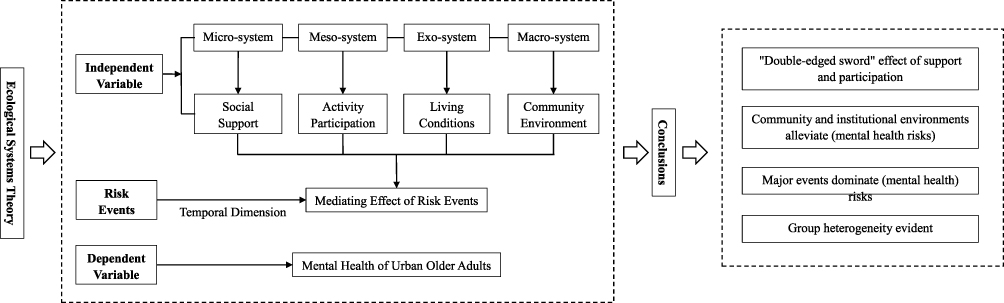 |
Figure 1 Analytical Framework Based on Ecological Systems Theory. |
Variables and Methods
Data Source
This study used data from the 2020 China Longitudinal Aging Social Survey (CLASS). The survey was organized and implemented by the Institute of Gerontology at Renmin University of China and covered multiple provinces and municipalities across the country. It mainly collected information on the socioeconomic status, family support, quality of life, and mental health of older adults aged 60 years and above. After excluding missing values and invalid cases, a final sample of 4292 valid observations was obtained. Stata 14.0 was used for data analysis. Within the framework of ecological systems theory, this study examined the relationships between factors at the micro-, meso-, exo-, macro-, and temporal levels and mental health risk among urban older adults.
Variables
Dependent Variable
The dependent variable was the level of mental health risk among urban older adults. Based on 10 CLASS 2020 items related to mental health, a composite mental health score was constructed from five dimensions: loneliness, anxiety-related somatic symptoms, depressive mood, social adaptation, and self-worth (see Table 1). After harmonizing item coding, the items were combined into a continuous composite mental health score, with higher scores indicating better mental health status and lower scores indicating higher mental health risk. For the purposes of risk identification and stratified comparative analysis, an ordered three-category mental health risk variable was then constructed based on this continuous score. Specifically, category boundaries were smoothed based on the score distribution of the sample, the exploratory boundary identification generated by a decision tree, and prior research practice. Mental health risk was ultimately divided into three levels: high risk (0, 2.63), medium risk [2.63, 3.50), and low risk [3.50, 5.00]. Among these, 0, 1, and 2 represent high risk, medium risk, and low risk, respectively. This operationalization was intended primarily for risk identification and stratified analysis. Future research may further evaluate the psychometric structure and classification stability of this measure using more rigorous measurement approaches.
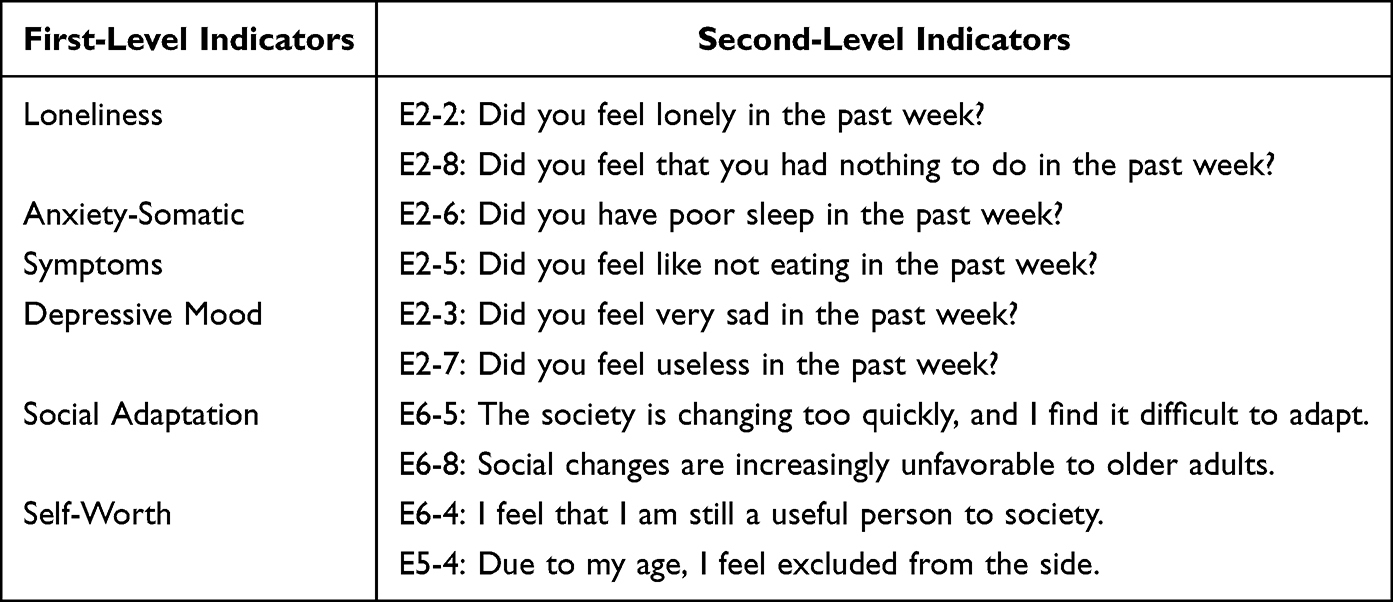 |
Table 1 Dimensions and Indicator System for Assessing Mental Health Risk |
Independent Variables
This study treated social support, activity participation, community environment, and institutional environment as the core independent variables. Social support was measured using six questionnaire items covering instrumental support, social support, and emotional support. Activity participation was measured by the frequency of participation in seven categories of social activities. Community environment mainly included the provision of community eldercare services and the availability of community facilities. Institutional environment was mainly constructed from questionnaire items on respondents’ satisfaction with the public environment and community governance. The variables and their measurement methods are presented in Table 2.
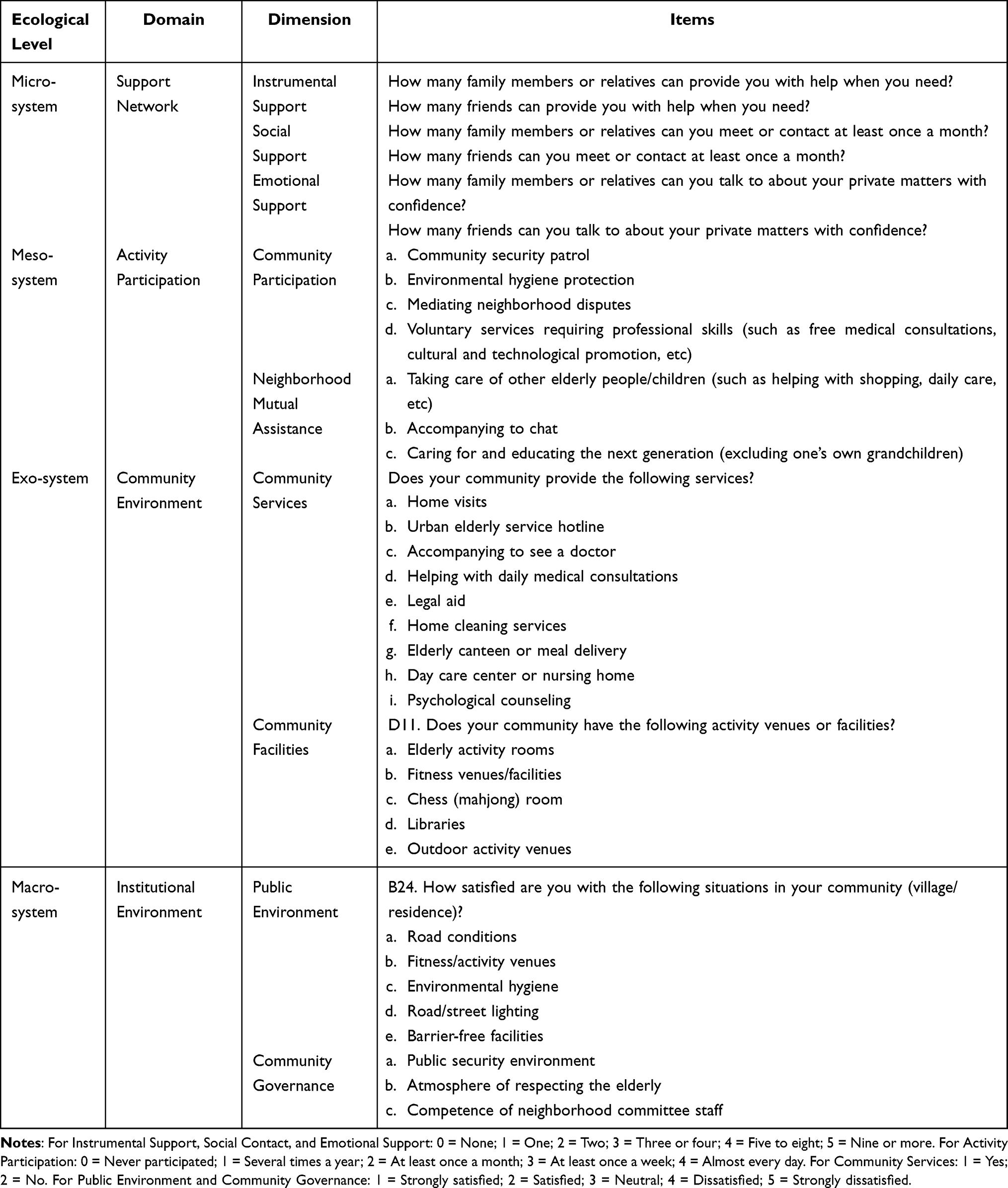 |
Table 2 Main Variables Related to Mental Health Risk in Urban Older Adults |
Mediating Variable
The mediating variable was risk events. This variable was constructed from the questionnaire item asking whether respondents had experienced any of the following events during the previous 12 months, including marriage or childbirth of children or grandchildren, retirement, serious illness of the respondent, natural disasters, death of a spouse, death of a child, death of other relatives or friends, property loss, serious illness of a family member, conflicts with relatives or friends, relocation, and accidents, for a total of 13 categories of events. In this study, “risk events” refers broadly to major life events experienced in later life that may involve adjustment demands or psychological stress, even though the direction and intensity of their impacts may vary across specific event types. The number of risk events experienced by each respondent was summed to form the risk-event variable.
Control Variables
In addition to the core independent and mediating variables, this study controlled for sociodemographic characteristics that may be associated with mental health risk among older adults, including gender, age, marital status, educational attainment, income, exercise frequency, number of children, and religious belief.
Model Specification
Ordered Logistic Regression Models by System
To examine the relationships between ecological factors at different system levels and mental health risk, this study first employed ordered logistic regression models, in which social support, activity participation, community environment, institutional environment, and risk events were separately entered as core explanatory variables. The dependent variable was the level of mental health risk (0 = high risk, 1 = medium risk, 2 = low risk). The model is specified as follows:

Where: Y represents mental health risk; j represents the category threshold (j=0,1,2); aj is the cut-off point; Xk represents the k-th system variable (k=1,2,3,4,5 corresponding to social support, activity participation, community environment, institutional environment, risk events respectively); βk is the regression coefficient of the system; C represents the control variable group.
Stepwise Cumulative Regression Model
Based on the single-system regressions, this study further adopted a stepwise cumulative approach, in which ecological variables at different system levels were sequentially entered into the same model to examine the relationships between jointly included multi-level factors and mental health risk. The model is specified as follows:

Where: K=1,2,3,4,5 represents the five systems added step by step; each time k increases by 1, the model adds one system variable; the meanings of other symbols are the same as above.
Analysis of Empirical Results
Descriptive Statistical Analysis
Sample Characteristics
Table 3 reports the basic characteristics of the sample. The mean age of the respondents was 76.27 years, and 48.5% were male. The mean level of educational attainment was 3.54, indicating that the overall educational level was relatively low to moderate. Married respondents accounted for 77.1% of the sample. Mean income was RMB 12,527.8, with a relatively large standard deviation, suggesting substantial variation in economic status within the sample. The mean frequency of exercise was 4.45, the mean number of children was 2.04, and 4.9% of respondents reported having a religious belief.
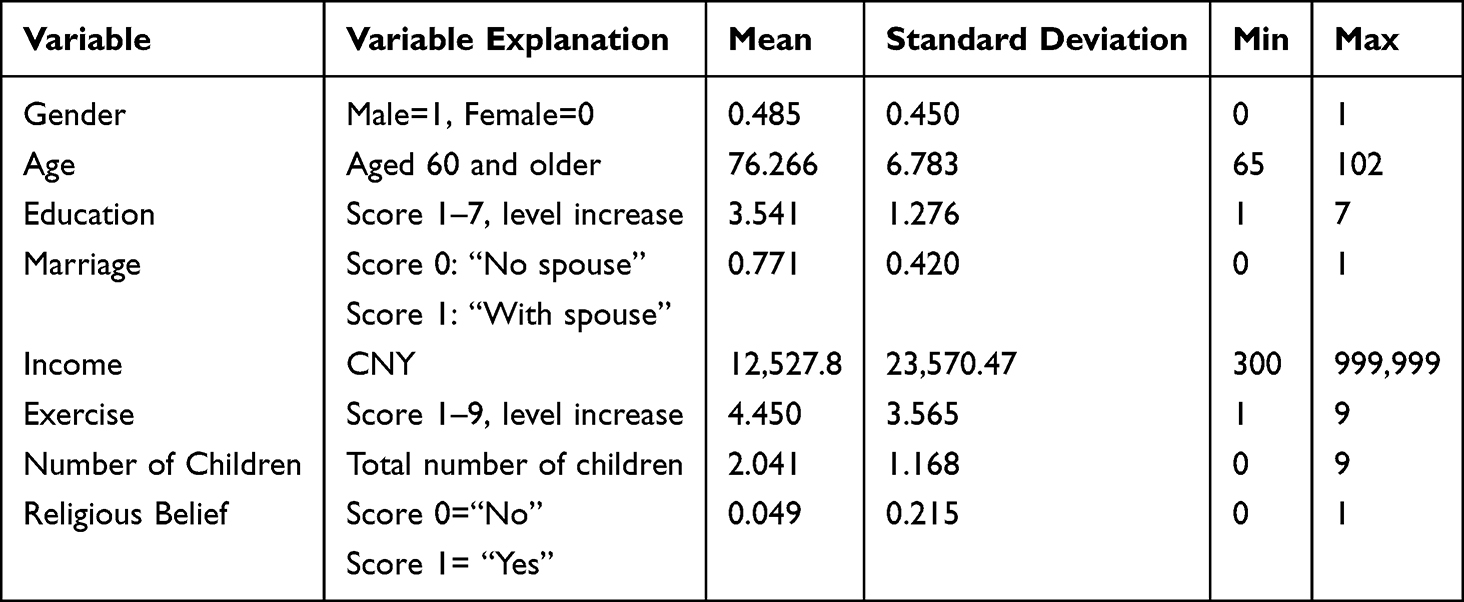 |
Table 3 Descriptive Statistics of Sample Characteristics |
Descriptive Statistics of the Main Variables
Table 4 presents the descriptive statistics for the main variables. For the dependent variable, the mean value of the underlying continuous mental health score, which was used to construct the ordered mental health risk categories, was 0.920. Lower values on this score indicate higher mental health risk. Across dimensions, the mean scores for loneliness, anxiety-related somatic symptoms, and depressive mood ranged approximately from 3.2 to 3.5, whereas the mean scores for social adaptation and self-worth were relatively higher. Among the independent variables, the mean social support score was 14.22, indicating that the sample generally had a certain level of support; the mean score for activity participation was 1.98, suggesting a relatively limited overall level of participation. The mean community environment score was 3.02, and the mean institutional environment score was 30.878, indicating a relatively positive overall evaluation of the institutional environment. The mean value of the mediating variable, risk events, was 0.476, suggesting that the average number of risk events experienced by respondents was relatively low.
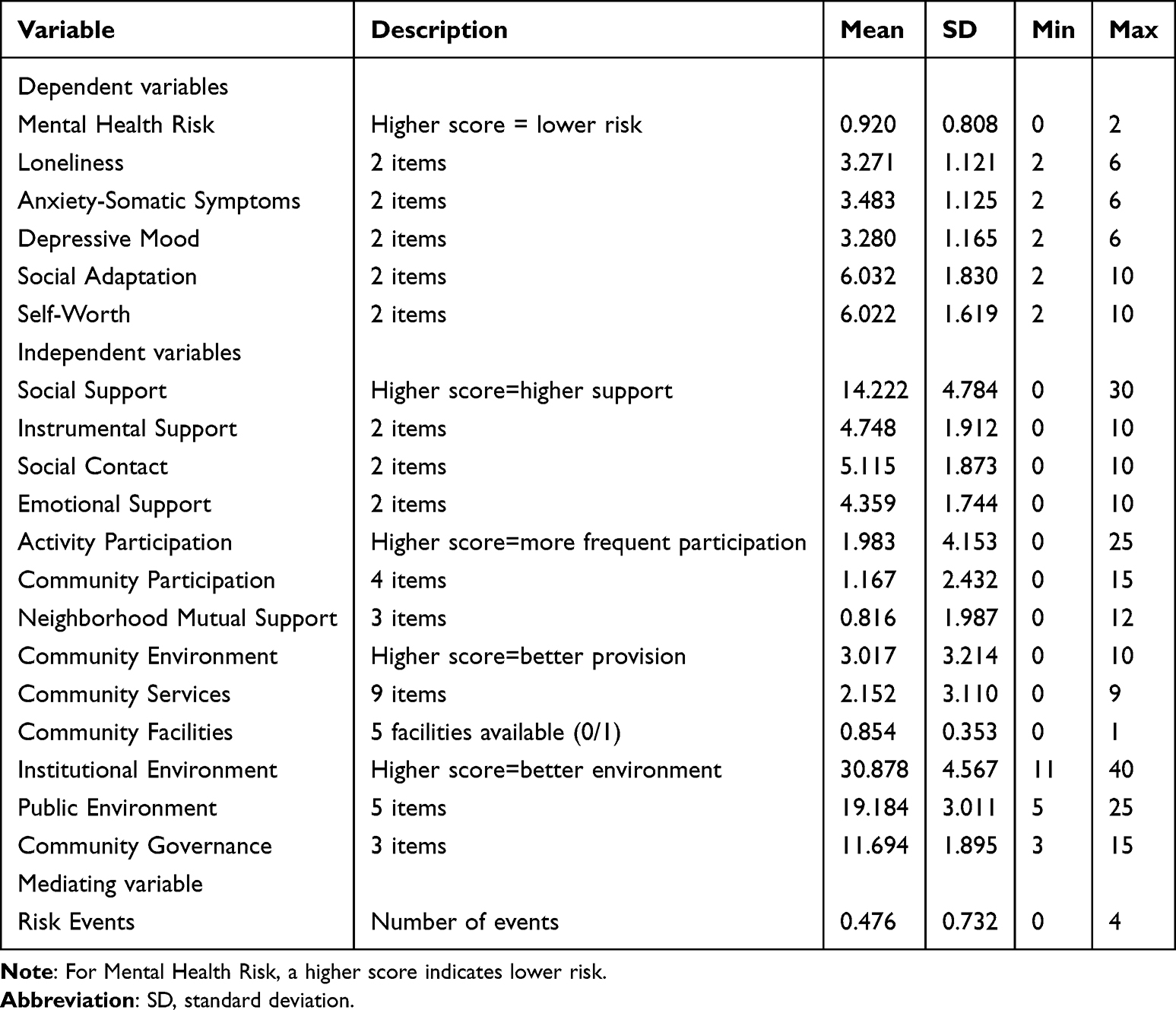 |
Table 4 Descriptive Statistics of Main Variables |
Baseline Regression Results
Relationships Between System-Level Factors and Mental Health Risk
Table 5 reports the relationships between ecological factors at different levels and mental health risk. The results show that both social support and activity participation were significantly associated with mental health risk, with coefficients of −0.015 and −0.028, respectively, indicating that, in this sample, higher levels of social support and more frequent activity participation were associated with higher mental health risk. The coefficients for community environment and institutional environment were 0.049 and 0.038, respectively, indicating that better community and institutional environments were significantly associated with lower mental health risk. The coefficient for risk events was −0.336, showing that risk events were significantly associated with higher mental health risk.
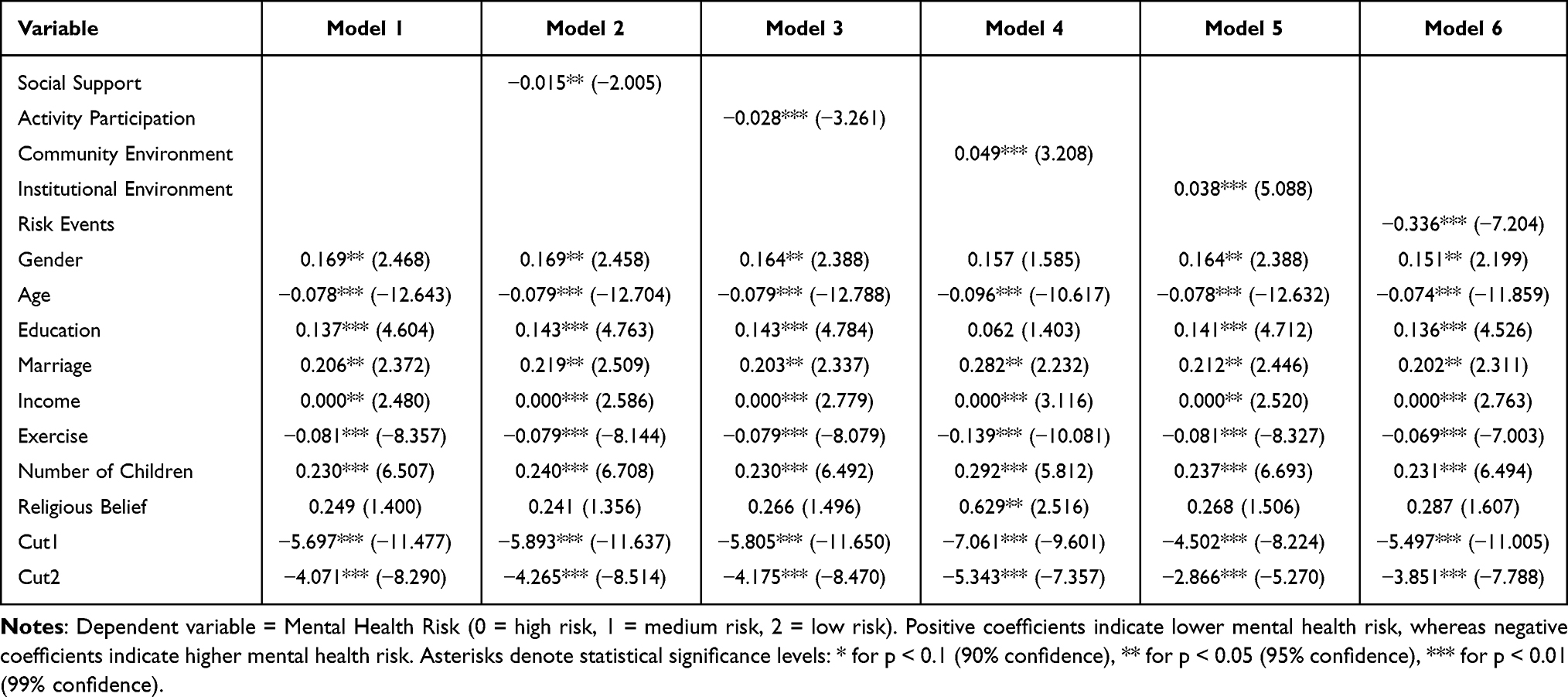 |
Table 5 Associations Between Ecological System Factors and Mental Health Risk Among Urban Older Adults |
Regarding the control variables, age was significantly negatively associated with mental health risk, whereas educational attainment, marital status, income, and number of children were generally associated with lower mental health risk. Religious belief did not show a statistically significant relationship in most models. Overall, social support and activity participation, community and institutional environment, and risk events were all significantly associated with mental health risk, which is broadly consistent with the expectations of Hypotheses 1, 2, and 3.
Results of the Stepwise Cumulative Models
Table 6 further reports the results of the stepwise cumulative models. After sequentially adding ecological variables at different levels, social support and activity participation remained significantly associated with higher mental healthrisk, whereas community environment and institutional environment remained significantly associated with lower mental health risk, and risk events consistently remained significantly associated with higher mental health risk. Overall, thedirections and significance of the ecological factors were largely stable after joint inclusion in the models. This indicates that, after simultaneously including multi-level factors, the core variables involved in Hypotheses 1, 2, and 3 continued to exhibit relatively stable statistical associations.
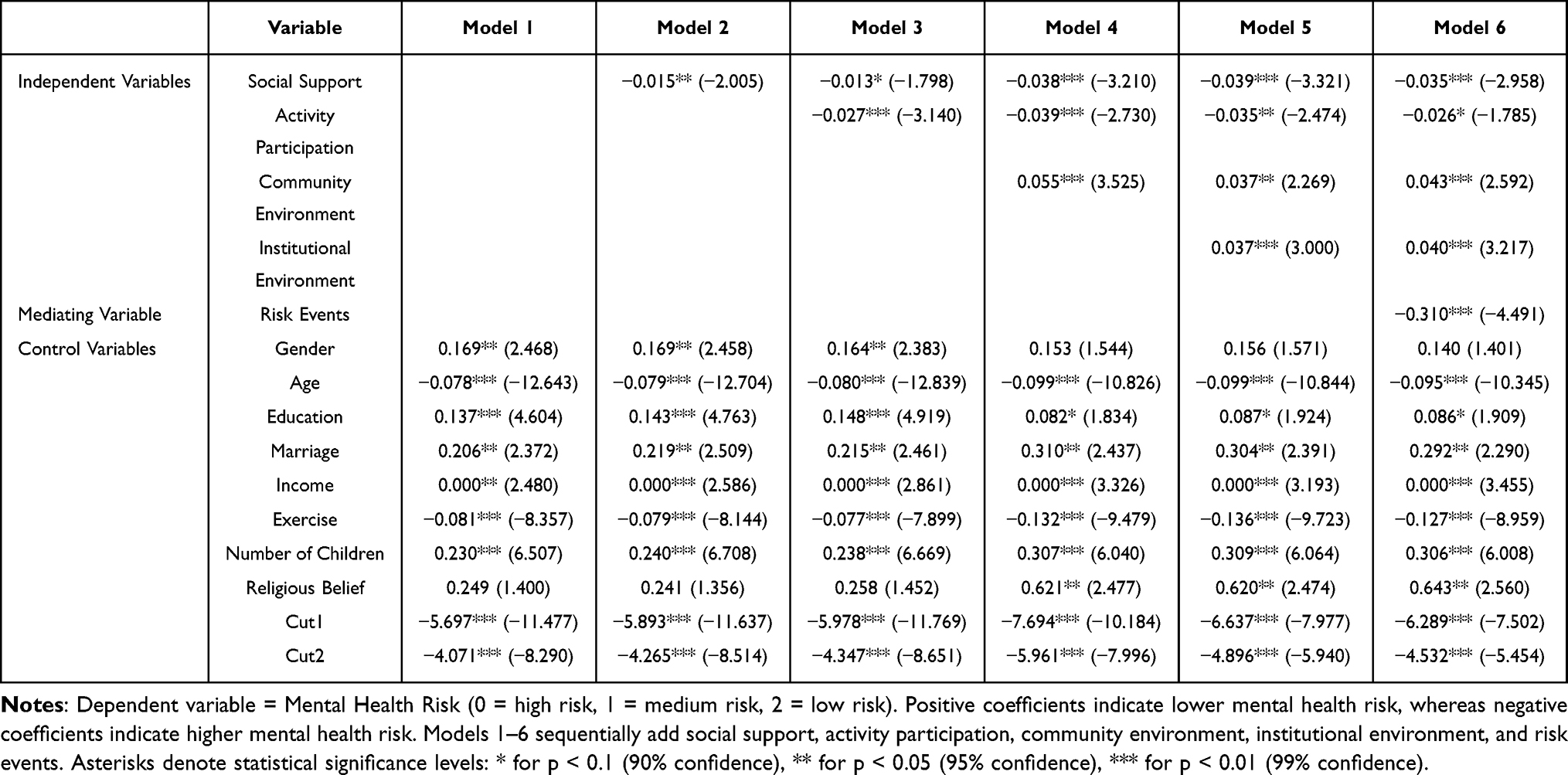 |
Table 6 Stepwise Cumulative Regression Results for Ecological System Factors and Mental Health Risk Among Urban Older Adults |
Analysis of Internal Dimensions of Social Support
Further decomposition of the internal dimensions of social support showed that, in Table 7, instrumental support was significantly negatively associated with mental health risk, social support was significantly positively associated with mental health risk, and emotional support had a negative coefficient with relatively weaker significance. These results indicate that the relationships between different types of social support and mental health risk are not uniform, and further suggest that the role of social support proposed in Hypothesis 1 is internally differentiated.
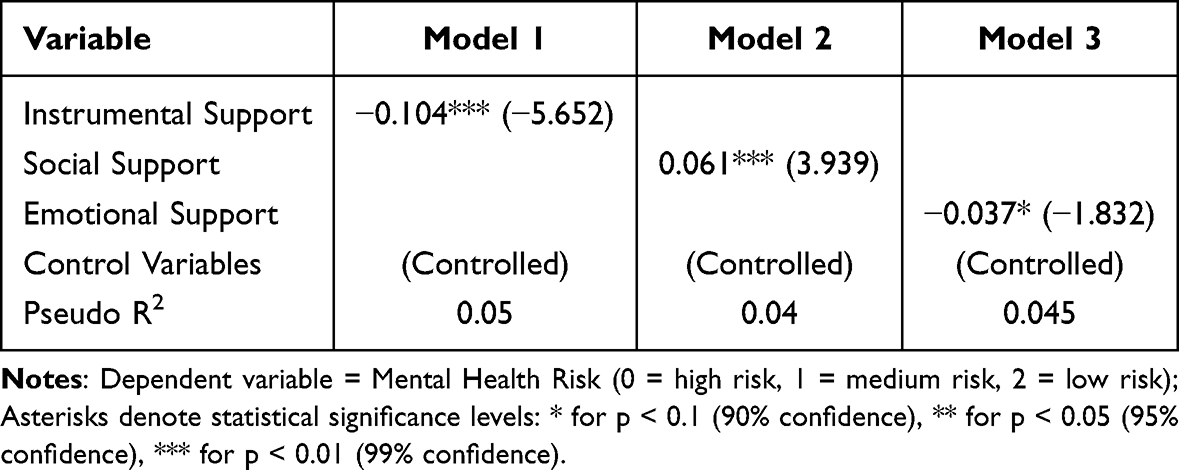 |
Table 7 The Impact of Internal Factors of Social Support on the Mental Health Risk of Older Adults |
Mediation Analysis of Risk Events
After controlling for other variables, Tables 8 and 9 report the mediation analysis results for risk events. The results show that there was an indirect association between activity participation and mental health risk through risk events, whereas the mediation effect of institutional environment was not significant. After accounting for risk events, the association between community environment and mental health risk was attenuated, showing a certain masking pattern. The indirect effect of social support was relatively weak, suggesting that its relationship with mental health risk was primarily reflected in direct association.
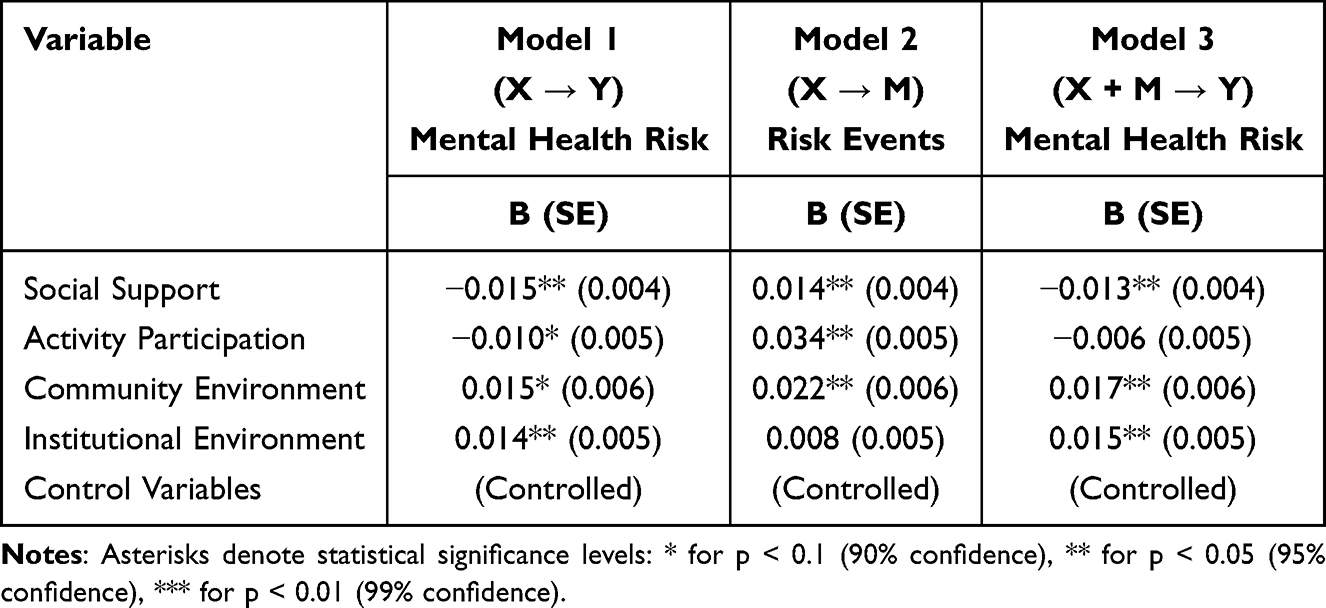 |
Table 8 Bootstrap Analysis of the Relationships Between Variables in the Mediating Model |
 |
Table 9 Bootstrap Mediating Effect Analysis of Risk Events |
Overall, risk events exhibited varying degrees of mediating association between ecological factors at different levels and mental health risk, which empirically supports the expectation in Hypothesis 3 regarding the role of risk events.
Robustness Test
To test the robustness of the main model results, this study further employed ordered probit and generalized ordered logit models as alternative estimations. Table 10 shows that the directions of the coefficients of the core variables were basically consistent with those of the main model, and most variables remained statistically significant. Specifically, social support and activity participation remained associated with higher mental health risk, community environment and institutional environment remained associated with lower mental health risk, and risk events remained significantly associated with higher mental health risk. Overall, the alternative model results were consistent with those of the main model, indicating good robustness of the findings and further strengthening the empirical support for Hypotheses 1, 2, and 3.
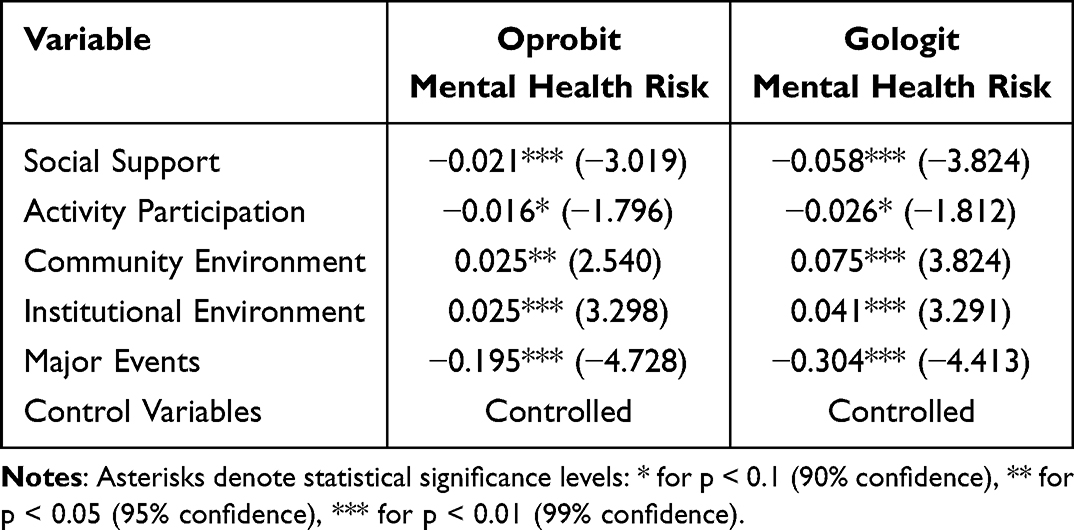 |
Table 10 Replacement of Econometric Models |
Heterogeneity Analysis
The heterogeneity analysis showed that the patterns of association with mental health risk varied across gender, age, income, and educational groups.
Gender Heterogeneity
Table 11 shows that social support was significantly associated with higher mental health risk in both the male and female subsamples, whereas activity participation was significant only in the male subsample. Community environment was significantly associated with lower mental health risk in the female subsample, but not in the male subsample. Institutional environment and risk events remained significant in both groups.
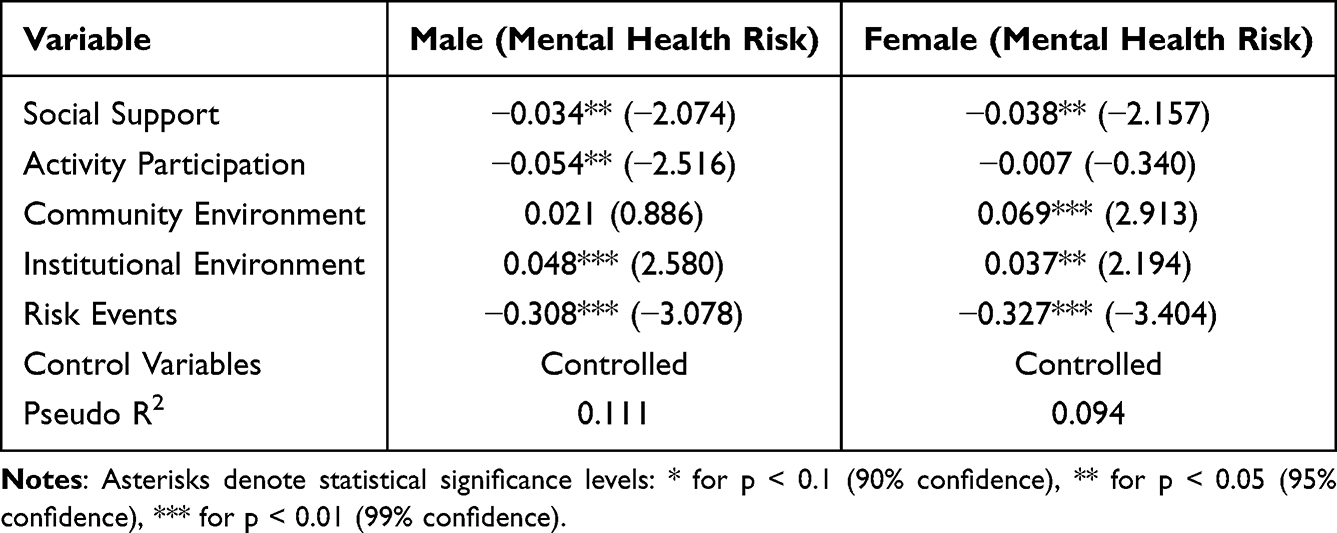 |
Table 11 Regression Results of Factors Influencing Mental Health Risks Under Gender Heterogeneity |
Age Heterogeneity
Table 12 shows that social support was significantly associated with higher mental health risk in the 60–80 age group, but not in the group aged 80 years and above. Activity participation was significant only in the group aged 80 years and above. Community environment was significantly associated with lower mental health risk in the 60–80 age group, but not in the oldest-old group. Better institutional environment was associated with lower mental health risk inboth age groups, while the association of risk events was more pronounced in the 60–80 age group.
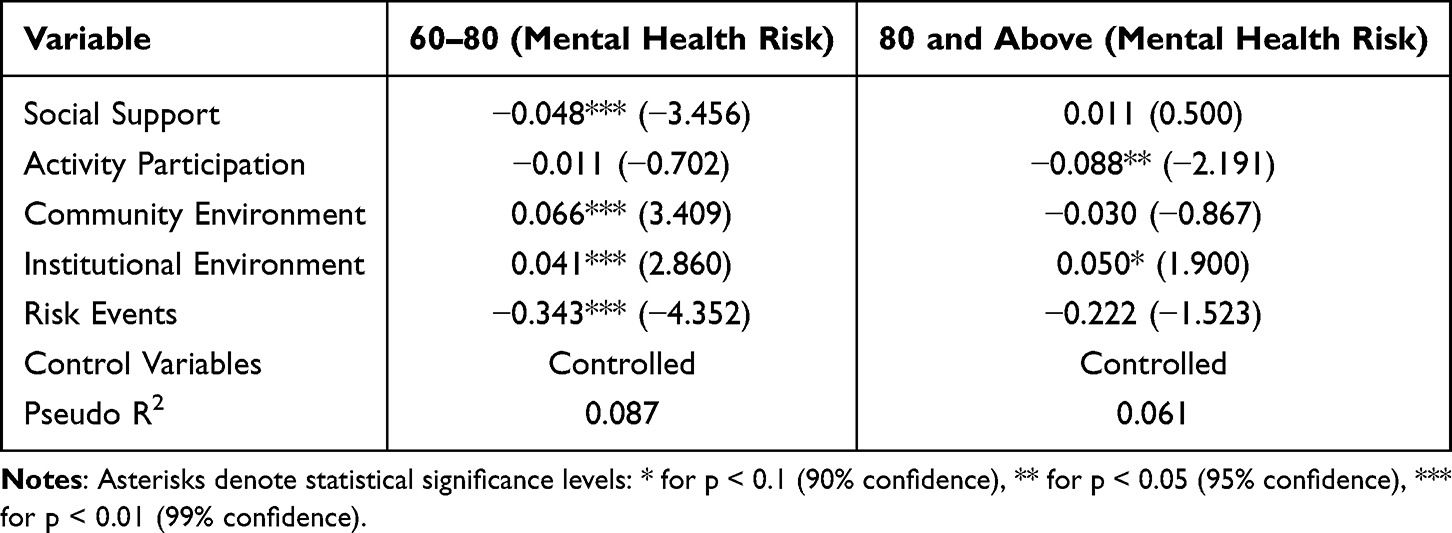 |
Table 12 Regression Results of Factors Influencing Mental Health Risks Under Age Heterogeneity |
Income Heterogeneity
Table 13 shows that, in the low-income group, both social support and activity participation were significantly associated with higher mental health risk; in the middle- and high-income groups, these associations were attenuated or not significant. Community environment and institutional environment showed stronger protective associations in the middle- and high-income groups, whereas risk events were associated with higher mental health risk in all income groups.
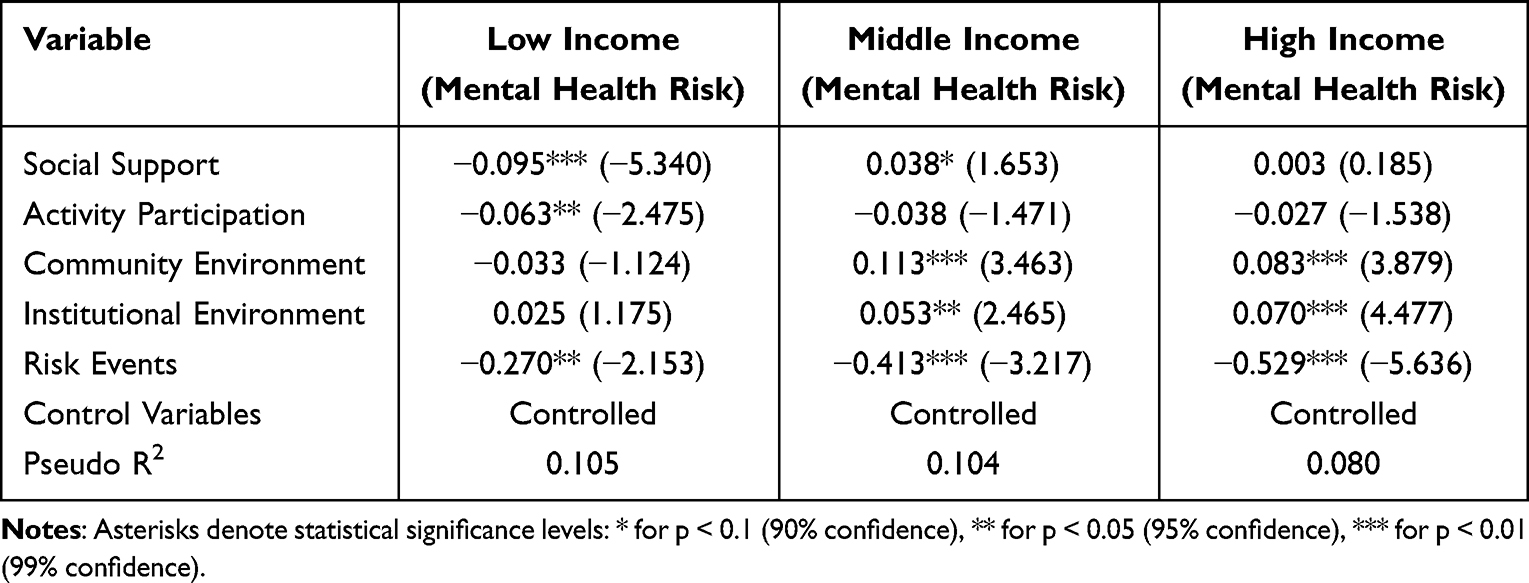 |
Table 13 Regression Results of Factors Influencing Mental Health Risks Under Income Heterogeneity |
Educational Heterogeneity
Table 14 shows that social support was associated with higher mental health risk in the low- and middle-education groups, but not in the high-education group. The associations of community environment and institutional environment were more evident in the low-education group, and risk events were significantly associated with higher mental health risk in both the low- and middle-education groups. Overall, these findings indicate differences in the ways different educational groups utilize resources and respond to risks. In summary, the heterogeneity analysis shows clear differences in the patterns of association with mental health risk across groups, which is consistent with the expectation of Hypothesis 4 regarding group heterogeneity.
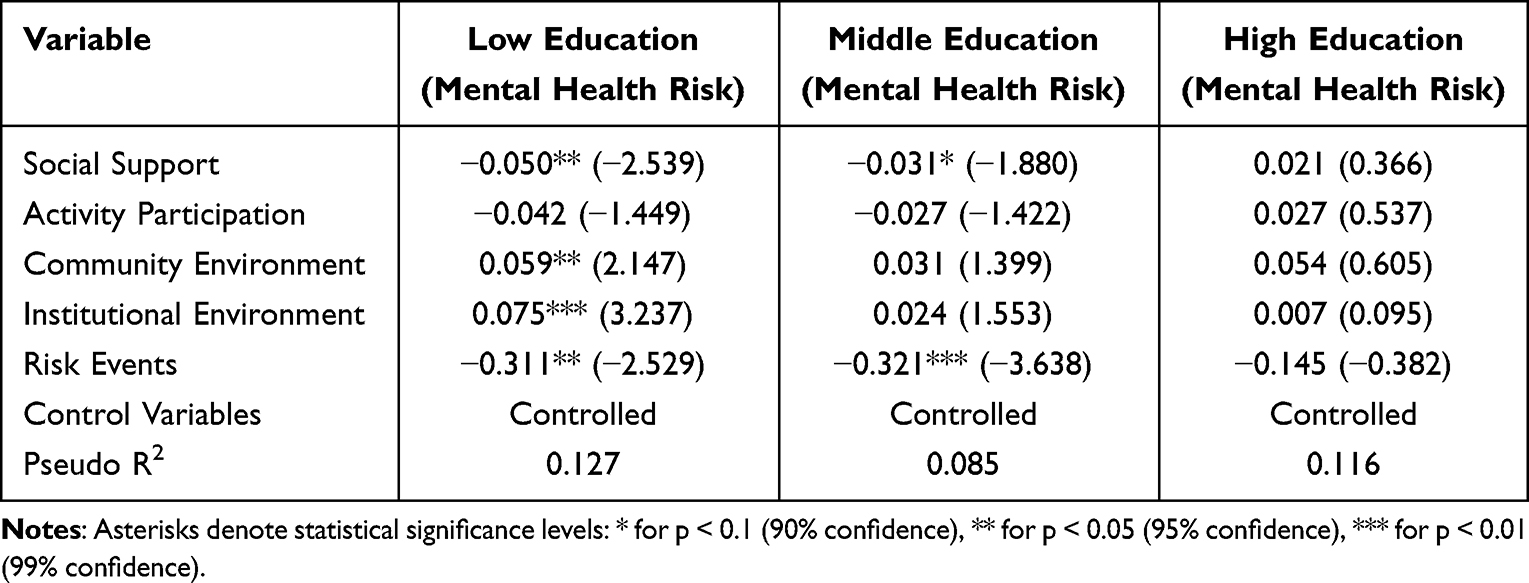 |
Table 14 Regression Results of Factors Influencing Mental Health Risks Under Educational Heterogeneity |
Discussion
Based on ecological systems theory, this study examined the relationships between factors at different levels and mental health risk among urban older adults from the perspectives of the microsystem, mesosystem, exosystem, macrosystem, and temporal dimension. The findings suggest that mental health risk is associated with multi-level factors, including individual-level resources, social participation, community environment, institutional environment, and risk events. Overall, the findings are broadly consistent with the hypotheses proposed earlier, indicating that social support and activity participation, community and institutional environment, risk events, and group differences are all significantly associated with mental health risk among urban older adults.
First, social support and activity participation were associated with higher mental health risk. This finding suggests that support and participation do not necessarily correspond to lower mental health risk. Further dimensional analysis showed that different types of support were associated with risk in different ways: social support was associated with higher mental health risk, whereas instrumental support and emotional support were associated with lower mental health risk, although the association for emotional support was weaker. These findings indicate that, compared with the quantity of support alone, the form, quality, and degree of fit between support and the actual needs of older adults may be more important. Similarly, although activity participation is often viewed as a positive factor, in this study, more frequent participation was associated with higher risk, suggesting that activity burden, mode of participation, and individual capacity may influence the actual direction of the association. This finding is broadly consistent with the expectation in Hypothesis 1 regarding the roles of social support and activity participation, while also suggesting that their specific directions and magnitudes may be more complex.
Second, community environment and institutional environment were significantly associated with lower mental health risk, indicating that external living conditions and institutional protection are important in understanding mental health risk among older adults. Better community infrastructure, public services, and governance conditions may help improve older adults’ sense of safety, convenience, and social integration; improvements in the institutional environment may also be associated with lower risk by reducing life uncertainty and barriers to resource access. These findings suggest that focusing only on family- or individual-level resources is insufficient for understanding mental health risk among older adults, and that community- and institution-level support conditions should also be taken into account. This is consistent with the expectation in Hypothesis 2 regarding the roles of community and institutional environment.
Third, there was a relatively stable association between risk events and higher mental health risk, indicating that major adverse life events are important in later life. The mediation analysis further showed that the relationships between ecological factors at different levels and mental health risk may partly be reflected through risk events. Specifically, there was an indirect association between activity participation and mental health risk through risk events; the association between community environment and mental health risk was attenuated after accounting for risk events, whereas the mediation effect of institutional environment was not significant. These findings suggest that the relationships between different system-level factors and mental health risk may vary and cannot be simply reduced to a single pattern. Notably, these results also resonate with the recently proposed Ecologies of Exposure and Resistance (EER) framework,29 which emphasizes that structural exposure, collective support resources, and psychological embodiment processes jointly shape health outcomes over time, and that collective support is not always unidirectionally protective; rather, its effects may vary according to cultural context, resource conditions, and specific forms of stress exposure. Therefore, the findings of this study on social support, risk events, and subgroup differences suggest that the formation of mental health risk among urban older adults should be understood from a more dynamic perspective. This part of the findings generally supports the expectation in Hypothesis 3 regarding the role of risk events.
In addition, the heterogeneity analysis showed clear differences in the patterns of association with mental health risk across gender, age, income, and educational groups. Comparatively speaking, the associations of social support and activity participation were more pronounced in the male subsample, whereas the association of community environment was more prominent in the female subsample. Low-income and low-education groups appeared to be more sensitive to risk events and support mismatch, whereas high-income and high-education groups were more likely to show associations with community and institutional environments. Among those aged 60–80 years, the associations of social support, community environment, and risk events were more evident, whereas among those aged 80 years and above, institutional environment and activity participation appeared to be more relevant. These findings suggest that different groups vary in their sensitivity to resources, environments, and risk events, and that there is no single uniform pattern underlying mental health risk among older adults. This is consistent with the expectation of Hypothesis 4 regarding group heterogeneity.
This study has several limitations. First, the study used cross-sectional data, and the findings mainly reflect statistical associations between variables; therefore, strict causal inferences cannot be drawn. Second, although the mental health risk variable was constructed using multidimensional items, its classification was primarily intended for risk identification and stratified analysis. Future research may further evaluate its psychometric structure and classification stability using more rigorous measurement methods. Third, the risk-event variable was constructed by summing the number of events experienced, without distinguishing the nature, intensity, or duration of different events, which may limit the granularity of interpretation.
Overall, the findings of this study extend, to some extent, the application of ecological systems theory to research on mental health risk among older adults. They also suggest that future research should incorporate longitudinal data, more fine-grained measurement of life events, and more explicit theoretical frameworks in order to further examine the dynamic relationships between multi-level factors and mental health risk.
Conclusion
Using data from the 2020 China Longitudinal Aging Social Survey (CLASS), this study examined the relationships between multi-level factors and mental health risk among urban older adults from the perspective of ecological systems theory. The results showed that social support, activity participation, community environment, institutional environment, and risk events were all significantly associated with mental health risk, with risk events showing the strongest association with higher mental health risk. Further analyses indicated that the directions of association varied across different types of social support, and that the patterns of association also differed significantly across gender, age, income, and educational groups. Overall, the findings are broadly consistent with Hypotheses 1, 2, 3, and 4 proposed in this study.
Overall, mental health risk among urban older adults is closely associated with multi-level ecological system factors. From a policy perspective, attention should be paid to the quality of support, the appropriateness of activity participation, the coordination of community service provision and institutional protection, and the implementation of stratified interventions and risk management according to subgroup characteristics. Given the cross-sectional nature of the data, the findings of this study mainly reflect statistical associations, and future research should further examine the dynamic relationships among these factors using longitudinal data and more rigorous measurement approaches.
Ethics Statement
This study was a retrospective secondary analysis of legally obtained, anonymized data from the 2020 China Longitudinal Aging Social Survey (CLASS 2020). The authors did not recruit participants or have direct contact with human subjects. Under Article 32 of the Measures for Ethical Review of Life Science and Medical Research Involving Human Subjects (China, 2023), research using legally obtained anonymized data may be exempt from ethical review. Accordingly, this study was exempt from institutional ethics review. Informed consent was not applicable because only anonymized secondary data were analyzed.
Author Contributions
All authors made a significant contribution to the work reported, whether that is in the conception, study design, execution, acquisition of data, analysis and interpretation, or in all these areas; took part in drafting, revising or critically reviewing the article; gave final approval of the version to be published; have agreed on the journal to which the article has been submitted; and agree to be accountable for all aspects of the work.
Funding
This research was funded by the General Project of the National Social Science Foundation of China, titled “Research on Risk Identification, Prevention and Control Mechanisms, and Coping Strategies in a Severely Aging Society” (Grant No. 23BGL279).
Disclosure
The authors report no conflicts of interest in this work.
References
1. National Bureau of Statistics of China. Communiqué of the Seventh National Population Census (No. 5): age composition of the population. 2021.
2. World Health Organization. Mental health of older adults. 2025.
3. Hawkins K, Musich S, Wang S, Yeh C. The impact of loneliness on quality-of-life and patient satisfaction among sicker, older adults. Am J Geriatr Psychiatry. 2015;23(3 suppl):S168–16. doi:10.1016/j.jagp.2014.12.176
4. Lu S, Wang L. A study on the impact of urban-rural community environment on older adults’ mental health. Popul Dev. 2021;27(5):36–43.
5. Hou JM, Zhou WJ. The influence mechanism and heterogeneity analysis of internet use on the health status of Chinese older adults. Popul J. 2022;(3):73–87. doi:10.16405/j.cnki.1004-129X.2022.03.006
6. Andrews JA, Brown LJE, Hawley MS, Astell AJ. Older adults’ perspectives on using digital technology to maintain good mental health: interactive group study. J Med Internet Res. 2019;21(2):1–3. doi:10.2196/11694
7. Bronfenbrenner U. Ecology of the family as a context for human development: research perspectives. Dev Psychol. 1986;22(6):723–742. doi:10.1037/0012-1649.22.6.723
8. Ayalon L, Keating N, Pillemer K, Rabheru K. Climate change and mental health of older persons: a human rights imperative. Am J Geriatr Psychiatry. 2021;29(10):1038–1040. doi:10.1016/j.jagp.2021.06.015
9. Ao CK, Du Y, Kong PF. Industrialization, indoor and ambient air quality, and elderly mental health. China Econ Rev. 2021;69:2–4. doi:10.1016/j.chieco.2021.101676
10. Ji QF, Yin MY, Li YX, Zhou XL. Exploring the influence path of high-rise residential environment on the mental health of the elderly. Sustain Cities Soc. 2023;98:1–5. doi:10.1016/j.scs.2023.104808
11. Sun JJ, Sun KX. The impact of family and community environment on the mental health of Chinese older adults: an analytical perspective based on an age-friendly society. Chin J Popul Sci. 2024;38(4):100–105.
12. Mackenzie CS, Abdulrazaq S. Social engagement mediates the relationship between participation in social activities and psychological distress among older adults. Aging Ment Health. 2021;25(2):299–305. doi:10.1080/13607863.2019.1697200
13. Jiang S, Jiang CX, Ren Q. Digital integration, social capital and older adults’ mental health: an empirical study based on the China Longitudinal Aging Social Survey. Gov Stud. 2022;(5):25–29. doi:10.15944/j.cnki.33-1010/d.2022.05.012
14. Xu JY, Zhang QQ. The impact of older adults’ social participation on mental health: findings based on the CHARLS follow-up survey. Chin J Popul Sci. 2023;37(6):98–104.
15. Li D, Bai G. Inequality in older adults’ mental health under income differences and its influence mechanism. Beijing Soc Sci. 2022;(7):108–113. doi:10.13262/j.bjsshkxy.bjshkx.220711
16. Ma XM, Zhang XF, Guo XT, Kee-hung L, Doug V. Examining the role of ICT usage in loneliness perception and mental health of the elderly in China. Technol Soc. 2021;67:2–8. doi:10.1016/j.techsoc.2021.101718
17. Yan CY, He H. The impact of internet application usage on older adults’ mental health: taking WeChat, short videos, audio-visual content, and games as examples. Popul J. 2023;45(3):78–83. doi:10.16405/j.cnki.1004-129X.2023.03.006
18. Wang P, Chang CQ, Pan S, Li YM. A follow-up study on the impact of caring for minor grandchildren on the physical health and psychological well-being of rural older adults. Popul Res. 2023;47(5):32–45.
19. Abboud MM, Younes RR, Moukarzel C. The importance of promoting self-actualization among older adults: key determinants of mental health and clinical implications. NPG Neurol Psychiatr Geriatr. 2024;2–9. doi:10.1016/j.npg.2024.08.004
20. Atta MHR, Shaala RS, Mousa EFS, El-Monshed AH, Abd El Fatah NK, Khalil MIM. Exploring the mediating influence of acceptance of change: a study on gerontechnology acceptance, mental well-being, and urban-rural disparities among older adults. Geriatr Nurs. 2024;58:324–335. doi:10.1016/j.gerinurse.2024.06.006
21. Xin SFF, Yue YM, Xin ZQ. A cross-temporal meta-analysis of changes in Chinese older adults’ mental health from 1996 to 2016. Psychol Dev Educ. 2020;36(6):753–761. doi:10.16187/j.cnki.issn1001-4918.2020.06.14
22. Jiang WK, Sun JJ. Living arrangements, living environment and urban-rural older adults’ mental health: an analytical framework for age-friendly community construction. Urban Probl. 2022;(1):65–74. doi:10.13239/j.bjsshkxy.cswt.220107
23. Li Y, Lu JH, Cheng Q, Gu DA. An exploration of the relationship between social participation and depression among Chinese older adults. Popul Dev. 2020;26(3):86–97.
24. Wang R, Li T, Li G. Social participation patterns of Chinese older adults and their impact on age identity: an empirical analysis based on 2016 CLASS data. Popul Dev. 2021;27(6):151–161.
25. Liu XH, Yu YF. The impact of community built environment on older adults’ health and intervention paths in high-density human settlements. Urban Dev Stud. 2023;30(8):35–40.
26. Yuan Q, Li HR, Leng H, et al. A study on the impact of winter Riverside space environmental perception on older adults’ mental health: taking Harbin as an example. South Archit. 2023;(6):96–106.
27. Gilberto JM, Davenport MK, Beier ME. Personality, health, wealth, and subjective well-being: testing an integrative model with retired and working older adults. J Res Pers. 2020;87:85–92. doi:10.1016/j.jrp.2020.103959
28. Gao L, Li SZ, Wu Z. The impact of community poverty on older adults’ mental health and its urban-rural differences: an analysis based on the 2014 China Longitudinal Aging Social Survey. Popul Dev. 2019;25(5):38–47.
29. Folorunsho S. Ecologies of exposure and resistance (EER): a novel framework for understanding health inequalities in marginalized communities. Theory Psychol. 2026. doi:10.1177/09593543261419454
 © 2026 The Author(s). This work is published and licensed by Dove Medical Press Limited. The
full terms of this license are available at https://www.dovepress.com/terms
and incorporate the Creative Commons Attribution
- Non Commercial (unported, 4.0) License.
By accessing the work you hereby accept the Terms. Non-commercial uses of the work are permitted
without any further permission from Dove Medical Press Limited, provided the work is properly
attributed. For permission for commercial use of this work, please see paragraphs 4.2 and 5 of our Terms.
© 2026 The Author(s). This work is published and licensed by Dove Medical Press Limited. The
full terms of this license are available at https://www.dovepress.com/terms
and incorporate the Creative Commons Attribution
- Non Commercial (unported, 4.0) License.
By accessing the work you hereby accept the Terms. Non-commercial uses of the work are permitted
without any further permission from Dove Medical Press Limited, provided the work is properly
attributed. For permission for commercial use of this work, please see paragraphs 4.2 and 5 of our Terms.
Recommended articles

Perspectives on Migrant Children’s Mental Health Needs and Existing Services: A Qualitative Study Among Psychological Service Providers of Chinese Social Organizations
Guo Y, Zhu Q, Shrestha S
Psychology Research and Behavior Management 2023, 16:3659-3673
Published Date: 6 September 2023