
Back to Journals » International Journal of Women's Health » Volume 18
Molecular Targeted Therapy for Chronic Non-Bacterial Mastitis: New Insights into Pathophysiology and Therapeutic Strategies
Authors Xuan Z, Zheng K, Zhang D, Wei H
Received 11 November 2025
Accepted for publication 18 February 2026
Published 3 March 2026 Volume 2026:18 580664
DOI https://doi.org/10.2147/IJWH.S580664
Checked for plagiarism Yes
Review by Single anonymous peer review
Peer reviewer comments 2
Editor who approved publication: Dr Matteo Frigerio
Zefeng Xuan,1 Kunying Zheng,2 Di Zhang,1 Haiyan Wei1
1Department of Breast Surgery, First Affiliated Hospital, Zhejiang University School of Medicine, Hangzhou, 310003, People’s Republic of China; 2School of Public Health, Zhejiang University, Hangzhou, 310058, People’s Republic of China
Correspondence: Haiyan Wei, Department of Breast Surgery, First Affiliated Hospital, Zhejiang University School of Medicine, Hangzhou, 310003, People’s Republic of China, Tel/Fax +86-0571-87237757, Email [email protected]
Abstract: Chronic Non-bacterial Mastitis (CNBM) is a benign and heterogeneous breast disease whose etiology is not yet fully understood and primarily includes plasma cell mastitis and idiopathic granulomatous mastitis. Its management is challenged by limited therapeutic choices, poor treatment outcomes, and considerable adverse effects. The emergence of molecular targeted therapy has presented new alternatives and hope for the treatment of this condition. The marked dysregulation of critical inflammatory pathways, including NF-κB, JAK-STAT, and MAPK, observed during the onset and progression of CNBM, suggests that molecular agents targeting these signaling cascades may hold therapeutic promise. While preclinical studies in animal models have validated the effectiveness of agents such as pathway inhibitors, clinical evidence is still largely confined to case reports and inferences drawn from other autoimmune diseases. A distinct research gap in the molecular targeted treatment of CNBM persists, owing to the absence of large-scale randomized controlled trials. Advancements in future research will hinge on a multi-pronged approach: utilizing multi-omics methods to establish molecular classifications for precision medicine; designing novel, high-selectivity molecular inhibitors and exploring possibilities for drug repurposing; and studying combined therapeutic regimens to improve efficacy while minimizing toxicity. Through interdisciplinary collaboration and sustained investigation, these initiatives are designed to deliver more effective and safer therapeutic solutions for patients, with the ultimate goal of ameliorating the clinical prognosis of this challenging disease and improving their quality of life.
Keywords: chronic non-bacterial mastitis, plasma cell mastitis, idiopathic granulomatous mastitis, molecular targeted therapy, inflammatory disease, autoimmunity
Introduction
Chronic Non-bacterial Mastitis (CNBM) refers to a group of benign, non-neoplastic diseases characterized by chronic inflammation of the breast tissue. The etiology is complex and unrelated to direct infection, involving a multifactorial interplay including autoimmune reactions characterized by aberrant T/B cell activation and elevated interleukin-6 (IL-6), and endocrine dysfunction marked by hyperprolactinemia. Genetic susceptibility involves single nucleotide variants in immune-related genes such as human leukocyte antigen (HLA)-DRB1, while reproductive history acts as the primary trigger. Furthermore, the pathogenesis includes complement activation, evidenced by elevated C3, and M1/M2 macrophage polarization.1–4 Historically, these conditions were often termed “non-lactational mastitis”; however, this nomenclature is inaccurate as chronic mastitis of non-bacterial origin can also arise during lactation.5,6
The incidence of CNBM has risen in recent years, exhibiting distinct demographic and clinical characteristics. The global incidence represents about 0.3% to 1.9% of all breast diseases, while in China, it accounts for about 2% to 5%. The condition predominantly affects women of childbearing age (20–49 years), who comprise approximately 96% of cases. Within this group, the 30–39 age bracket is the most prevalent, accounting for 54.97%, followed by the 20–29 (33.15%) and 40–49 (18.23%) age groups.7,8 Adolescent females (10–19 years) are rarely affected, representing only 2.07% of cases, while male cases are exceedingly rare.9,10 Geographically, distinct variations are observed in the epidemiology of CNBM. Prevalence is notably concentrated in the Americas, with the USA accounting for 37.6% of reported cases in the region. Asia exhibits an upward trend in detection, exemplified by rising annual incidence rates in China. In contrast, while European populations demonstrate a lower overall incidence, they report a higher relapse rate, ranging from 11% to 38.3%. These disparities likely stem from differences in diagnostic capabilities, regional pathogen distribution, and cultural barriers to accessing reproductive health care.11,12 Notably, epidemiological studies indicate that CNBM may increase the risk of subsequent breast cancer (hazard ratio = 1.73; 95% 1.25–2.40), with a strong association observed in women aged >50 years.13
As a heterogeneous disease category, CNBM encompasses several subtypes, primarily Plasma Cell Mastitis (PCM) and Idiopathic Granulomatous Mastitis (IGM). Pathologically, it is characterized by atypical ductal epithelial hyperplasia, inflammatory cell infiltration, progressive fibrosis, and the formation of non-caseating granulomas. The main clinical manifestations include non-cyclical breast pain, palpable breast masses, nipple discharge, breast abscesses, and sinus tract formation.14–17 It is important to note that although CNBM resembles several related conditions, they have some distinguishing characteristics. Bacterial mastitis, for instance, has an acute onset accompanied by fever and purulent discharge, and usually resolves well with antibiotics. In contrast, breast cancer typically presents as a painless, hard mass with irregular borders, seldom involving inflammation.
CNBM is a challenging benign breast disease that poses significant difficulties in clinical diagnosis and treatment. First, its clinical manifestations and imaging characteristics can be indistinguishable from those of breast cancer, often leading to unnecessary biopsies or surgeries.18 Consequently, core needle biopsy remains the gold standard for histological diagnosis and is indispensable for excluding malignancy prior to considering inflammatory etiologies. Second, since its pathogenesis is primarily linked to autoimmune reactions, dysregulated inflammatory pathways, or metabolic abnormalities rather than bacterial infection,19 antibiotic therapy is typically ineffective. Furthermore, the absence of clear therapeutic targets and satisfactory treatments means patients frequently endure recurrent episodes and a chronic disease course, severely affecting psychological health by inducing anxiety and depression, while also compromising quality of life through social isolation and impaired reproductive confidence, as reported in patient surveys.20
Current treatment strategies are diverse, yet clinical outcomes remain suboptimal. Pharmacologic regimens include corticosteroids, which are associated with adverse effects such as temporary steroid-induced diabetes mellitus and have a long-term recurrence rate ranging from 28.8% to 40%. Methotrexate fails to achieve remission in 14.9% of cases and carries side effects including nausea and vomiting. Azathioprine’s efficacy in special populations, such as pregnant patients, remains insufficiently validated, and it may pose rare risks like cytopenia. Rifampicin-based triple therapy results in a lack of response in 5.96% of patients and a recurrence rate of 8.72%, typically accompanied by mild adverse events.21–24 Additionally, traditional Chinese medicine options, such as Radix Bupleuri formulations and Yanghe Decoction, lack large-sample randomized controlled trials; partial formulations exhibit an unresponsive rate of 6.5% to 15.38%, and long-term efficacy remains to be fully validated.25–28 Surgical interventions, which range from lesion excision and quadrantectomy to Mammotome minimally invasive excision and nipple correction, may achieve local control but carry the risk of breast deformity.29–31 Similarly, physical therapies like microwave ablation, hyperbaric oxygen, and local thermotherapy offer symptomatic relief but no curative effect.32–34 Collectively, these modalities not only have limited efficacy but also cause significant side effects, contributing to psychological distress such as anxiety and fear.35–37 While existing research has explored drug administration methods and timing, these efforts are confined to conventional therapies and have yielded no significant improvements in efficacy or side effect management.38–40 Consequently, there is an urgent and unmet need for the development of novel therapeutic strategies for CNBM (Figure 1).
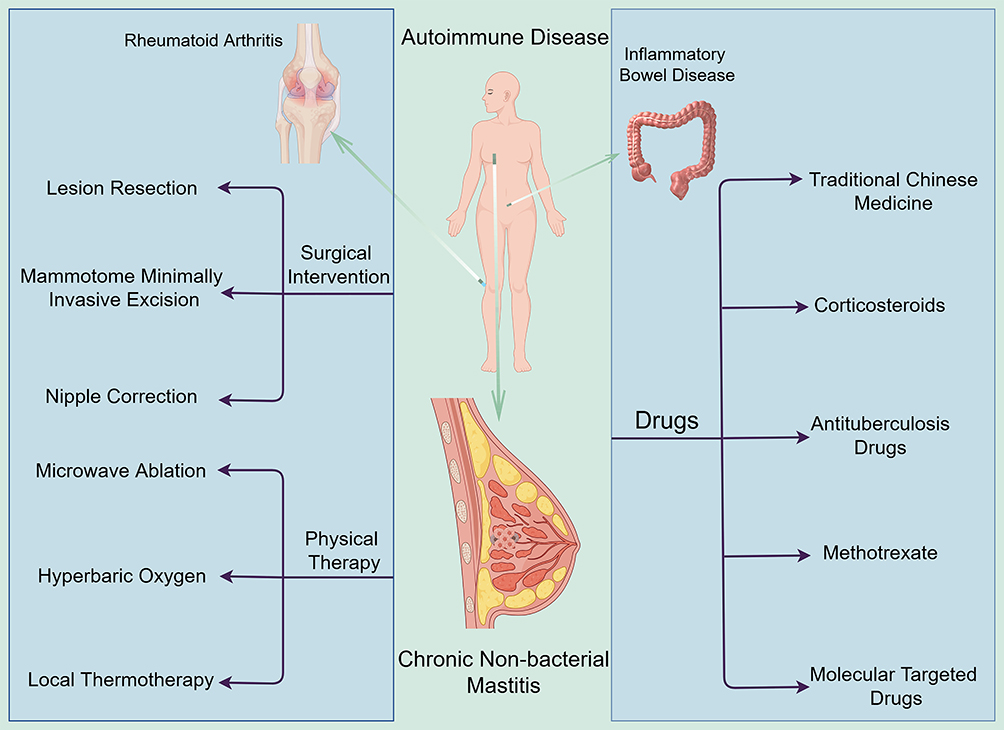 |
Figure 1 Current therapeutic approaches for chronic non-bacterial mastitis. The schematic demonstrates that chronic non-bacterial mastitis exhibits parallels with other autoimmune disorders, indicating that therapeutic approaches for the latter may be applicable. It also presents the current primary treatment modalities, encompassing pharmacological therapy, surgical intervention, and physical therapy. |
Unlike conventional pharmacotherapies, research at the molecular level seeks to identify more precise drug targets, thereby enhancing therapeutic efficacy while minimizing adverse effects. Current research indicates that the pathogenesis and progression of CNBM are characterized by significant dysregulation of various inflammatory signaling pathways, with notable aberrant activation of key pathways like Nuclear Factor kappa B (NF-κB), Janus kinase-Signal Transducer and Activator of Transcription (JAK-STAT), and Mitogen-Activated Protein Kinase(MAPK). These discoveries lay a theoretical foundation for the development of molecular targeted drugs. Emerging technologies such as single-cell RNA sequencing to map immune cell subsets in lesions and dynamic contrast-enhanced MRI to assess treatment response are further advancing target identification and therapeutic monitoring.41,42
As the principles of precision medicine gain traction, molecular targeted therapies directed against these dysregulated pathways are emerging as a new frontier in CNBM research. Such therapies represent not merely an alternative, but a potential paradigm shift—moving beyond symptomatic suppression toward interrupting the core pathogenic mechanisms. Additionally, cross-disciplinary collaboration involving immunologists deciphering inflammatory pathways, oncologists adapting targeted therapy platforms, and breast surgeons optimizing combined treatment regimens is accelerating translational research and clinical application. Molecular targeted therapies thus hold the promise of providing more effective and safer treatment options for this challenging condition, ultimately improving patients’ long-term outcomes and quality of life.
Theoretical Rationale
The molecular pathogenesis of CMBM is characterized by the complex interplay of various inflammatory signaling pathways. The aberrant activation of these pathways provides the theoretical foundation for molecular targeted therapy. As research into the disease mechanism has advanced, several key signaling pathways have been identified by researchers as potential therapeutic targets.
NF-κB Signaling Pathway
NF-κB signaling pathway is a crucial intracellular pathway governing key biological processes such as inflammation, immune response, and cell survival.43 It stands as one of the most significantly dysregulated inflammatory pathways in the pathogenesis of mastitis.44 Research indicates that the NF-κB pathway is persistently activated in IGM tissues. Relative to a control population, patients with IGM exhibit significantly elevated expression levels of interleukin-1β (IL-1β), monokine induced by gamma interferon (MIG), macrophage inflammatory protein (MIP)-1α, MIP-1β, and tumor necrosis factor receptor 2 (TNF RII).45 Additional studies have reported that, compared with healthy female controls, IGM patients have significantly higher serum levels of IL-6, interleukin-10 (IL-10), and tumor necrosis factor-α (TNF-α).46 A comparative analysis of IGM lesion tissue versus normal breast tissue using single-cell RNA sequencing (scRNA-seq) has revealed that macrophage subpopulations in IGM tissue undergo a shift towards a pro-inflammatory phenotype. This is evidenced by the enrichment of signaling pathways such as interferon-γ (IFN-γ), IFN-α, IL-6/JAK/STAT3, and TNF-α/NF-κB.41 This sustained inflammatory response further recruits immune cells, creating a vicious cycle that exacerbates tissue damage and fibrosis. From a therapeutic standpoint, molecular targeted drugs directed against the NF-κB pathway have demonstrated considerable efficacy in other inflammatory diseases,47 thus providing a strong rationale for their application in CNBM.
JAK-STAT Signaling Pathway
The JAK-STAT signaling pathway is a crucial conduit for cytokine signal transduction, governing key biological processes such as immune response, cell proliferation, and differentiation.48 It plays a pivotal role in the pathogenesis of CNBM.49 The phosphorylation of JAK and STAT governs the transduction of signals to the nucleus, subsequently regulating the production of chronic inflammatory mediators and the activation of immune cells in autoimmune diseases.50,51 Research indicates that in certain inflammatory conditions, persistent activation of this pathway leads to extensive recruitment of inflammatory cells and overexpression of inflammatory cytokines.52 Furthermore, studies on PCM have revealed that the IL-6/JAK/STAT3 pathway is significantly activated.49 Relative to patients with benign breast tumors, those with IGM exhibit significantly elevated levels of IL-6 and C-reactive protein (CRP), suggesting that IL-6 is a key driver in the pathogenesis of IGM.53 Additional research has confirmed dysregulation of multiple immune molecules—including IL-2, IL-4, IL-6, and IL-10—in the serum and tissue microenvironment of IGM patients. These molecules and their associated pathways represent potential targets and avenues for breakthrough in the future treatment of IGM.54 Critically, the various components of the JAK-STAT pathway have been validated as ideal targets for small-molecule inhibitors and biologics, presenting a significant opportunity for treating chronic inflammatory diseases.55
MAPK Signaling Pathway
The MAPK signaling pathway is central to the regulation of inflammatory responses and cellular stress.56 Analysis of IGM lesion tissue using scRNA-seq has revealed that mammary luminal cells from IGM patients exhibit an impaired estrogenic profile while showing upregulation in prolactin’s downstream pathways, notably JAK-STAT and MAPK.41 Acting as an upstream molecule in the MAPK pathway, IL-17 expression is also significantly elevated in IGM patients compared to controls. Moreover, in its capacity as a pro-inflammatory cytokine, IL-17 can serve as a biomarker for assessing inflammatory damage in autoimmune diseases.57,58 The components of the MAPK pathway, which are key molecules in cellular signal transduction, are regarded as promising targets for drug development. To this end, small-molecule MAPK inhibitors designed for inflammatory diseases have already advanced to clinical trials.59
Toll-Like Receptor (TLR) Signaling Pathway
The TLR signaling pathway serves as a crucial link between the innate and adaptive immune systems, playing a central role in pathogen recognition and immune signal transduction.60 A comparative analysis of IGM lesion tissue using scRNA-seq has revealed extensive immune cell infiltration, accompanied by the enrichment of the TLR pathway.41 In comparison with healthy controls, patients with IGM exhibit significantly reduced serum levels of LL-37, IL-36α, galectin-3 and TLR3. The reduction in LL-37 may, in turn, lead to decreased levels of IL-36α and TLR3, suggesting that these molecules are potentially involved in the pathogenesis of IGM.61
NOD-Like Receptor Family Pyrin Domain-Containing Protein 3 (NLRP3) Signaling Pathway
The NLRP3 signaling pathway mediates innate immune responses and inflammation via the NLRP3 inflammasome. Its overactivation or dysregulation results in the excessive release of inflammatory cytokines, including IL-1β and IL-18, thereby inducing chronic inflammation and autoinflammatory responses. This process is implicated in the pathogenesis of numerous autoinflammatory and autoimmune diseases.62 Inhibition of the NLRP3 signaling pathway can reduce plasma cell infiltration in breast tissue and downregulate the expression of key pro-inflammatory cytokines such as IL-1β, TNF-α, IL-2 and IL-6.63
Evidence suggests that the aforementioned signaling pathways are intimately involved in the pathogenesis and progression of CNBM, thereby providing a theoretical foundation for the development of novel molecular targeted drugs (Table 1). However, these pathways do not function independently; rather, they constitute a complex signaling network. Consequently, a combination inhibition strategy that targets multiple pathways is likely to be more effective than the inhibition of a single pathway.
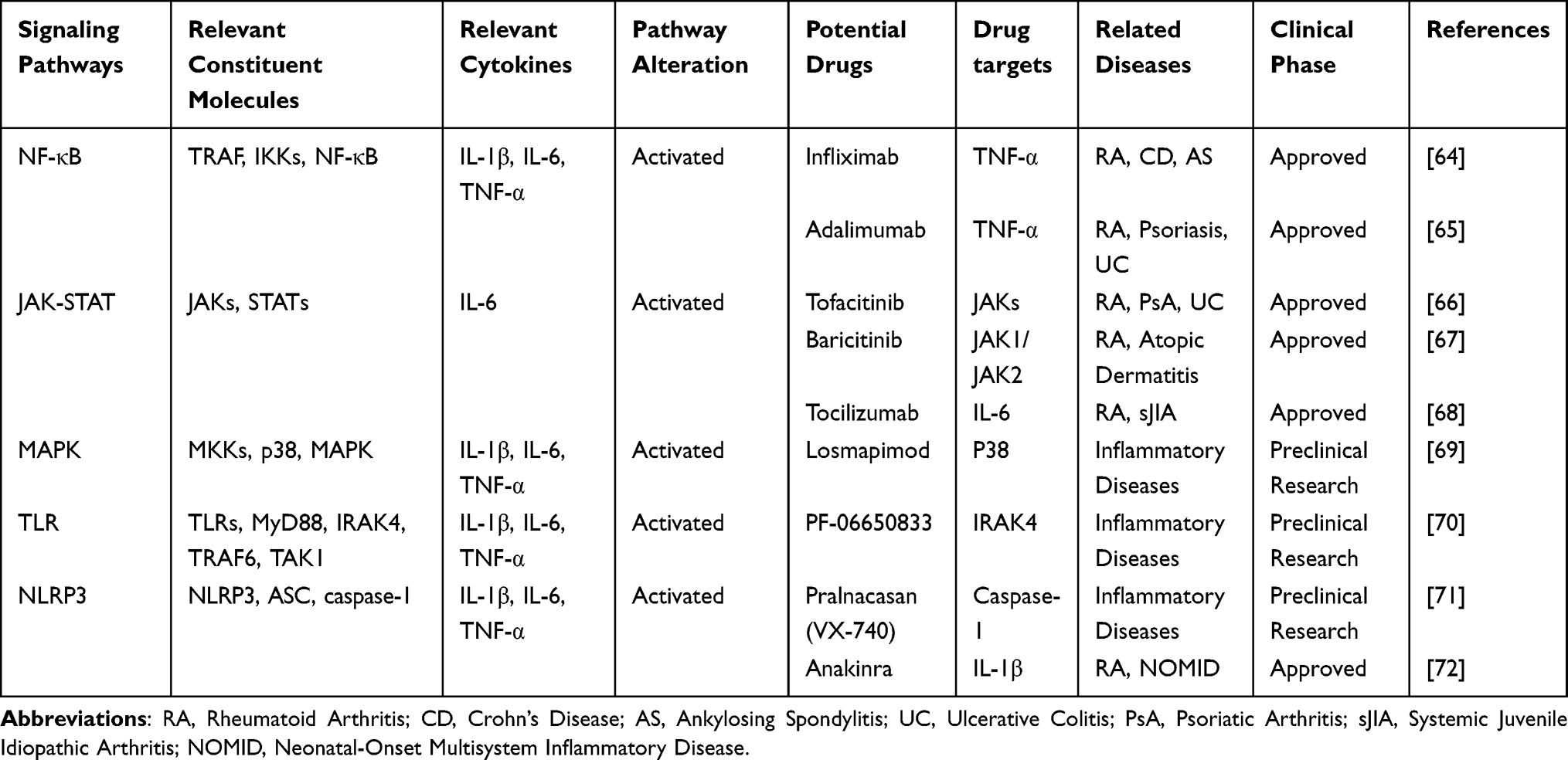 |
Table 1 Main Dysregulated Signaling Pathways and Related Potential Molecular Targeted Drugs in Chronic Non-Bacterial Mastitis |
Preclinical Research
The preclinical research of molecular targeted drugs for CNBM is primarily dependent on animal models, which serve as a crucial platform for elucidating disease mechanisms and assessing potential therapeutic efficacy. To date, researchers have developed several relevant inflammatory and autoimmune mastitis models for the evaluation of the efficacy and safety of potential therapies.
Animal Models
Mice and rats are the primary species used for modeling CNBM. A PCM model can be successfully induced in 6–8 week-old female BALB/c mice. This is achieved by co-injecting a water-in-oil emulsion—comprising the supernatant from ground normal mammary tissue mixed with Complete Freund’s Adjuvant (CFA)—and recombinant mouse IL-6 into the subcutaneous mammary tissue.73 A stable, reproducible, and long-lasting rat model that closely mimics human IGM has been developed using 6–7 week-old female SD rats. This model is established by injecting a tissue homogenate, prepared from breast lesions of IGM patients which contains granulomas or necrotic tissue, in conjunction with CFA.74
Exploration of Therapeutic Targets
To date, several molecular targeted drugs have demonstrated potential therapeutic value in preclinical models of CNBM, with a primary focus on Traditional Chinese Medicine (TCM) and small-molecule inhibitors (Table 2). The involvement of key signaling pathways in the pathogenesis of CNBM, coupled with the availability of numerous molecular targeted drugs against these pathways, presents a compelling opportunity to test and validate a broader spectrum of therapeutics in preclinical CNBM models.
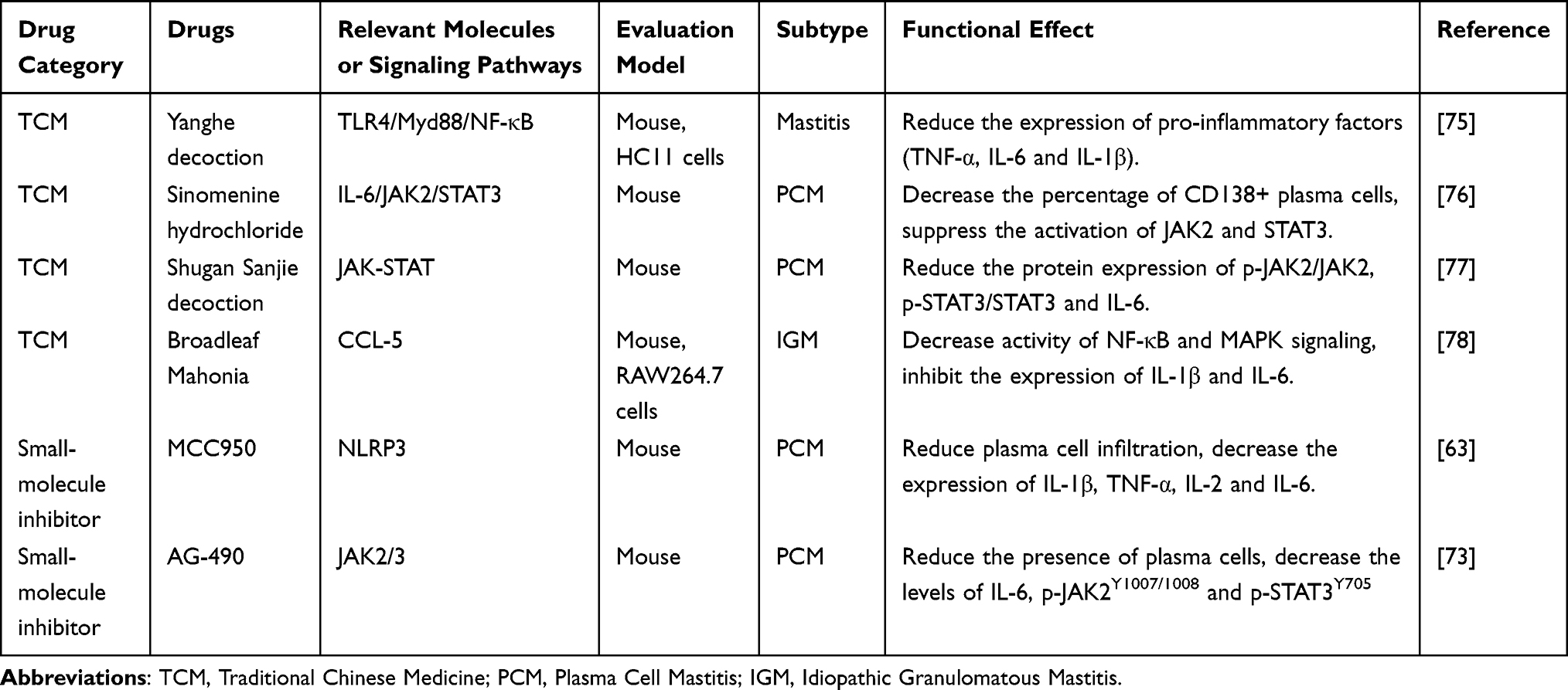 |
Table 2 Molecular-Targeted Drugs Evaluated in Preclinical Studies of Chronic Non-Bacterial Mastitis |
Challenges in Translational Research
Despite encouraging preliminary results from current preclinical studies, the translation of these findings into clinical practice faces several hurdles. First, the rodents used to model CNBM possess immune systems and mammary gland structures that differ significantly from those of humans, potentially compromising the accuracy of efficacy assessments. Overcoming this challenge necessitates the development of novel models that more closely recapitulate human disease, such as humanized mouse models or 3D organoids.79,80 Second, CNBM is inherently heterogeneous, encompassing multiple subtypes, and it is hypothesized that each subtype possesses distinct molecular characteristics and dominant signaling pathways. Preclinical models often fail to fully replicate this heterogeneity, thereby limiting the generalizability of corresponding therapeutic strategies. Future research will require more refined disease stratification to facilitate the development of more precise, targeted molecular therapies. Furthermore, the mammary gland tissue exhibits unique drug distribution properties. A critical consideration is ensuring that molecular targeted drugs, even those effective for similar diseases, achieve therapeutic concentrations at the lesion site. Novel drug delivery systems, such as nanoparticles and liposomes, could offer a means to optimize drug distribution and retention within the mammary tissue.81,82
Challenges in Clinical Research
To date, clinical research into molecular targeted therapies for CNBM remains in its nascent stages, with no large-scale randomized controlled trials (RCTs) having been reported. The existing clinical evidence is largely limited to case reports and data extrapolated from studies on other inflammatory conditions, which highlights a significant research gap in the field. Consequently, therapeutic decisions in clinical practice are predominantly guided by physician experience and the off-label application of therapies developed for other inflammatory diseases.
In the absence of dedicated clinical trials, case reports offer valuable clinical insights. For instance, reports indicate that patients with comorbid rheumatoid arthritis (RA) and PCM experienced remission of mastitis symptoms following treatment with TNF-α antagonists. This suggests that TNF-α antagonists may represent a potential therapeutic strategy for mastitis.83 Certolizumab, a drug commonly used for RA and Crohn’s disease (CD), has also demonstrated therapeutic potential in the treatment of IGM.84 Furthermore, additional research suggests that anti-TNF-α antibodies, such as adalimumab, may be effective against IGM, particularly in cases that are refractory or recurrent.85,86
Despite the current lack of clinical trials dedicated to CNBM, relevant pharmacodynamic and safety data can be extrapolated from clinical trials for other inflammatory and autoimmune diseases. Research has explored the potential link between IGM and systemic lupus erythematosus (SLE), indicating a high degree of similarity between the two conditions.87 The co-occurrence of IGM with erythema nodosum has been observed in some cases, where patients exhibit a higher incidence of breast ulcers and a poorer prognosis, hinting at a shared pathogenic mechanism.88,89 Given the overlapping clinical features of IGM, erythema nodosum, and arthritis (with or without), along with a positive response to glucocorticoids, it has been proposed that this constellation of symptoms represents an under-recognized systemic autoimmune disease, designated by the acronym “GMENA” (Granulomatous Mastitis, Erythema Nodosum, Arthritis) syndrome.90 Owing to its immune-mediated pathogenesis, IGM shares similarities with autoimmune rheumatic diseases, wherein cytokines like TNF-α, IL-6, and the Th17 axis play pivotal roles in sustaining granulomatous inflammation.91 Furthermore, a review of anti-rheumatic drugs in the treatment of IGM has demonstrated that agents such as methotrexate, azathioprine, and mycophenolate mofetil yield favorable therapeutic outcomes.92 Collectively, these findings suggest that drugs with proven efficacy in other inflammatory or autoimmune conditions are promising starting points for identifying molecular targeted therapies for CNBM. For instance, JAK inhibitors are already clinically applied for a range of inflammatory and autoimmune diseases.93,94 Several inhibitors of this pathway, such as tofacitinib and baricitinib, have demonstrated clinical efficacy in conditions like RA, psoriasis, and inflammatory bowel disease, thereby enhancing the feasibility of their application in CNBM.95,96
Future Research Directions
With the rapid development of molecular biology technologies and the in-depth advancement of precision medicine concepts, research on molecular targeted therapy for CNBM is ushering in new opportunities.
Molecular Subtyping and Precision Medicine
Given the inter-patient variability in disease characteristics, genetic backgrounds, and immune statuses, there is a critical need to tailor treatment strategies to the individual. The molecular heterogeneity of CNBM is likely a key contributor to the variable therapeutic responses currently observed. Future research should employ multi-omics approaches, including genomics, transcriptomics, and proteomics, to systematically stratify patients and identify distinct molecular subtypes. Integrated analytical techniques, such as proteogenomics, have been shown to offer a more comprehensive understanding of disease complexity and should be leveraged in CNBM research.97 Precision therapy guided by molecular subtyping holds the promise of enhancing treatment response rates, minimizing unnecessary drug exposure and adverse effects, and ultimately realizing the goal of truly personalized medicine.
Novel Drug Development Strategies
Building upon a deeper understanding of CNBM pathogenesis, future research and development of molecular targeted drugs should be directed towards several key areas. First, the development of small-molecule inhibitors with enhanced selectivity and improved safety profiles should target key signaling pathways already identified in CNBM, such as NF-κB, JAK-STAT, and MAPK. Notably, the design of drugs with mammary tissue-specific targeting holds the potential to increase local drug concentrations while minimizing systemic exposure and adverse effects. Second, monoclonal antibodies directed against specific cytokines like IL-6, TNF-α, and IL-1β have demonstrated efficacy in other inflammatory diseases and warrant systematic evaluation in CNBM. Likewise, other molecular targeted agents beyond monoclonal antibodies, already approved for chronic inflammatory conditions, should be systematically assessed for their potential utility in CNBM. This approach can shorten the timelines and reduce the costs of new drug development, thereby accelerating patient access to therapeutic options.98 Moreover, given the inherent complexity and redundancy of inflammatory pathways, multi-pathway combination therapies are likely to be more effective than single-pathway inhibition. For instance, combining a JAK inhibitor with low-dose corticosteroids,99 or pairing inhibitors from different pathways, could yield synergistic effects while simultaneously lowering the dose and associated toxicity of individual agents.100
Crucially, to realize these advancements, interdisciplinary collaboration integrating immunology, oncology, breast surgery, and molecular biology will be essential to accelerate translational research and optimize therapeutic strategies. However, despite this promise, it is important to acknowledge potential challenges in adopting molecular targeted therapy for a benign condition like CNBM. Key considerations include the high cost of targeted agents, long-term safety profiles in a predominantly young female population, and the necessity of balancing therapeutic benefits against the self-limiting or steroid-responsive nature of some cases. Therefore, future studies must incorporate cost-effectiveness analyses and long-term follow-up to ensure these therapies are both clinically and economically viable.
Summary of Findings
CNBM, a heterogeneous benign breast disease of unclear etiology and pathogenesis, currently suffers from limited and variable therapeutic options. This analysis of existing evidence suggests that molecular targeted therapy represents a promising new strategy with the potential to transform the management of this condition.
Signaling pathway analyses reveal that CNBM is characterized by significant dysregulation of multiple inflammatory cascades. Preliminary evidence specifically implicates key pathways such as NF-κB, JAK-STAT, and MAPK, thereby providing a strong theoretical foundation for targeted interventions. The efficacy of inhibitors against these pathways has been further corroborated in preclinical animal models (Figure 2). However, a significant translational gap exists, as clinical data are largely confined to case reports. The stark paucity of large-scale, high-quality clinical trials highlights the nascent state of research in this field.
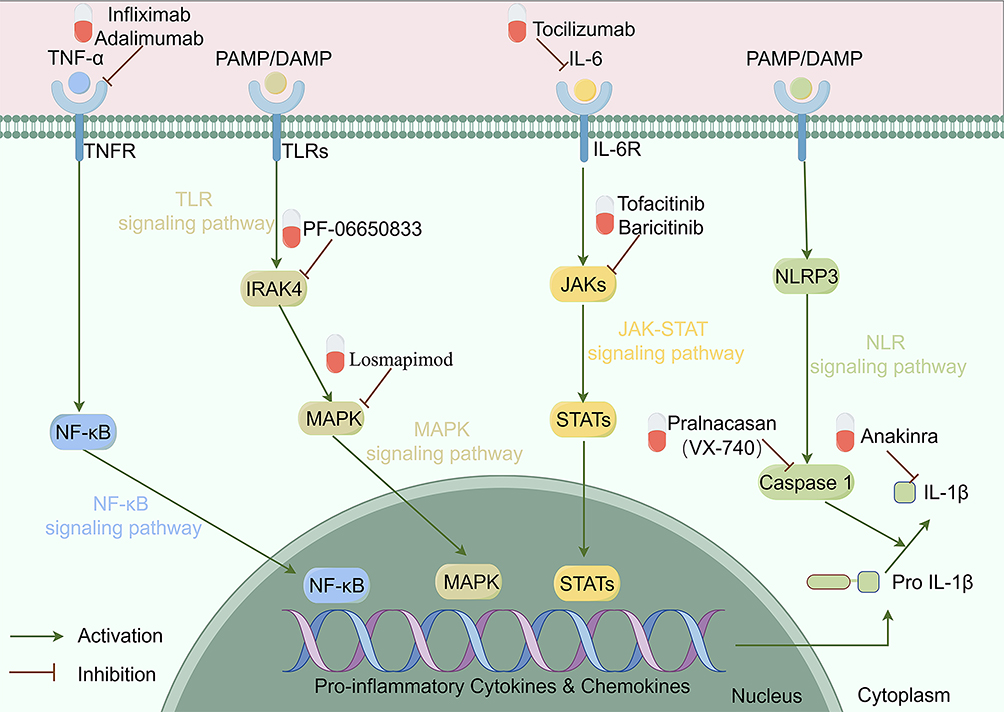 |
Figure 2 Main signaling pathway alterations in chronic non-bacterial mastitis. The schematic illustrates key dysregulated pathways, potential intervention targets, and candidate drugs for therapy. |
Conclusion
With the growing adoption of precision medicine and the proven success of molecular targeted drugs in other inflammatory diseases, it is reasonable to anticipate significant advancements in the molecular targeted therapy for CNBM in the coming years. Deepen the understanding of the molecular mechanisms of the disease through multi-omics approaches to achieve precision treatment based on molecular subtyping; develop novel selective inhibitors targeting key pathways and explore combined therapeutic strategies; and ultimately provide patients with more effective and safe treatment options, as well as improve clinical outcomes and quality of life, through interdisciplinary collaboration and sustained research investment.
Molecular targeted therapy offers a new paradigm and a promising opportunity for the management of CNBM. While the path forward is challenging, the outlook is bright. Realizing this potential will require the collective efforts of researchers, clinicians, and patients to drive this field forward, with the ultimate goal of alleviating the disease burden and improving the quality of life for affected individuals.
Abbreviations
CNBM, Chronic non-bacterial mastitis; IL-6, interleukin-6; HLA, Human leukocyte antigen; PCM, Plasma cell mastitis; IGM, Idiopathic granulomatous mastitis; NF-κB, Nuclear factor kappa B; JAK-STAT, Janus kinase-Signal transducer and activator of transcription; MAPK, Mitogen-activated protein kinase; IL-1β, interleukin-1β; MIG, monokine induced by gamma interferon; MIP, macrophage inflammatory protein; TNF RII, tumor necrosis factor receptor 2; IL-10, interleukin-10; TNF-α, tumor necrosis factor-α; scRNA-seq, single-cell RNA sequencing; IFN-γ, interferon-γ; CRP, C-reactive protein; TLR, Toll-like receptor; NLRP3, NOD-like receptor family pyrin domain-containing protein 3; CFA, Complete freund’s adjuvant; TCM, Traditional chinese medicine; RCTs, Randomized controlled trials; RA, rheumatoid arthritis; CD, Crohn’s disease; SLE, systemic lupus erythematosus.
Data Sharing Statement
All the original data of this study belong to the authors. The data that support the findings of this study are available from the corresponding author upon reasonable request.
Acknowledgment
Thanks to home-for-researchers.com for providing the figure materials.
Funding
This work was supported by the National Natural Science Foundation of China [82100674] and the Fundamental Research Funds for the Central Universities [K20210287].
Disclosure
All authors declare no financial or non-financial competing interests in this work.
References
1. Liu B, Qu W, Feng Y, et al. Exploring the interplay of prolactin and bromocriptine on serum markers in granulomatous lobular mastitis. Front Immunol. 2025;16:1608875. doi:10.3389/fimmu.2025.1608875
2. Xie L, Feng J, Gao Q, et al. The autoimmune profiles in the etiopathogenesis of granulomatous lobular mastitis. Immunobiology. 2025;230(2):152878. doi:10.1016/j.imbio.2025.152878
3. Ozcinar B, Ocak Z, Billur D, Ertugrul B, Timirci-Kahraman O. Whole-exome sequencing: discovering genetic causes of granulomatous mastitis. Int J Mol Sci. 2025;26(1):425. doi:10.3390/ijms26010425
4. Zhou Y, Gong J, Deng X, Shen L, Liu L. Novel insights: crosstalk with non-puerperal mastitis and immunity. Front Immunol. 2024;15:1431681. doi:10.3389/fimmu.2024.1431681
5. Liang H, Shi G, Chen H, et al. Granulomatous lobular mastitis in pregnancy: report of 29 cases. Front Oncol. 2025;15:1526754. doi:10.3389/fonc.2025.1526754
6. Liu G, McRitchie D, Russell E, Cates EC. Spontaneous, idiopathic granulomatous mastitis in a pregnant patient: a case report and review of the literature. Heliyon. 2023;9(11):e21619. doi:10.1016/j.heliyon.2023.e21619
7. Feng J, Gao Q, Qu W, et al. Clinical characteristics of non-puerperal mastitis: a retrospective analysis of 724 patients. Int J Womens Health. 2024;16:2113–13. doi:10.2147/IJWH.S485461
8. Li H, Lin C, Huang M, et al. Epidemiology and antimicrobial resistance of pathogens in granulomatous mastitis: a multicenter study in Guangdong China. iScience. 2025;28(10):113629. doi:10.1016/j.isci.2025.113629
9. Tang H, Wu X, Feng J, et al. Adolescent non-puerperal mastitis: risk factors, clinical characteristics, and prognosis analysis. J Inflamm Res. 2024;17:487–495. doi:10.2147/JIR.S447181
10. Yaghan RJ, Ayoub NM, Shenawi HM, Yaghan LR. Idiopathic granulomatous mastitis in the male population: a clinical analysis of 13 reported cases. Breast J. 2020;26(7):1481–1482. doi:10.1111/tbj.13778
11. Costa Morais Oliveira V, Cubas-Vega N, López Del-Tejo P, et al. Non-lactational infectious mastitis in the Americas: a systematic review. Front Med. 2021;8:672513. doi:10.3389/fmed.2021.672513
12. Xiong X. Microbiological characteristics and antibiotic resistance of non-lactational mastitis. Theor Nat Sci. 2024;63(1):68–73. doi:10.54254/2753-8818/63/20241597
13. Krishnan VD, Kostev K, Kalder M. Is there an association between mastitis and breast cancer? A retrospective cohort study from Germany. Cancer Causes Control. 2024;35(12):1517–1523. doi:10.1007/s10552-024-01909-w
14. Thomas WG, Williamson RC, Davies JD, Webb AJ. The clinical syndrome of mammary duct ectasia. Br J Surg. 1982;69(7):423–425. doi:10.1002/bjs.1800690724
15. Hughes LE. Non-lactational inflammation and duct ectasia. Br Med Bull. 1991;47(2):272–283. doi:10.1093/oxfordjournals.bmb.a072469
16. Sener Bahce Z, Aktas H. Patients with idiopathic granulomatous mastitis accompanied by erythema nodosum. Int J Clin Pract. 2021;75(4):e13928. doi:10.1111/ijcp.13928
17. Isik F, Pala E, Alper F, et al. Skin involvement of idiopathic granulomatous mastitis: sonographic, clinical, and histopathological features. Breast J. 2025;2025:7224219. doi:10.1155/tbj/7224219
18. Krawczyk N, Kuhn T, Ditsch N, et al. Idiopathic granulomatous mastitis as a benign condition mimicking inflammatory breast cancer: current status, knowledge gaps and rationale for the GRAMAREG Study (EUBREAST-15). Cancers. 2024;16(19):3387. doi:10.3390/cancers16193387
19. Li S, Chen H, Fan Y, et al. Profiling the full-length transcriptome of plasma cell mastitis via nanopore sequencing. BMC Genom Data. 2025;26(1):29. doi:10.1186/s12863-025-01312-7
20. McNaughton-Cassill M, Torres J, Pahl S, Cassill C. Granulomatous mastitis is not as benign as you might think: what doctors need to know about the lived experience of people with this rare disease. Breast Care. 2025;20(4):221–227. doi:10.1159/000544888
21. Konan A, Kalyoncu U, Dogan I, et al. Combined long-term steroid and immunosuppressive treatment regimen in granulomatous mastitis. Breast Care. 2012;7(4):297–301. doi:10.1159/000341388
22. Kaya MN, Tekgoz E, Colak S, Kilic O, Cinar M, Yilmaz S. Impact of methotrexate monotherapy in patients with idiopathic granulomatous mastitis. Postgrad Med. 2025;137(5):404–407. doi:10.1080/00325481.2025.2502322
23. Senol K, Ozsen M, Gokalp G, Tolunay S, Tasdelen MI. Efficacy of azathioprine in reducing recurrence in idiopathic granulomatous mastitis. Sci Rep. 2025;15(1):7391. doi:10.1038/s41598-025-92300-5
24. Zhou F, Li H, Wang F, et al. Efficacy and safety of rifampicin-based triple therapy for non-puerperal mastitis: a single-arm, open-label, prospective clinical trial. Int J Infect Dis. 2024;140:25–30. doi:10.1016/j.ijid.2023.12.008
25. Zhang X, Li J, Hu XJ. Postoperative Yanghe decoction regimen improves outcomes for idiopathic granulomatous mastitis: a retrospective cohort study. Medicine. 2020;99(45):e23136. doi:10.1097/MD.0000000000023136
26. Endo M, Konishi T, Yamana H, Jo T, Ishikawa T, Yasunaga H. Association of the Japanese herbal kampo medicine kakkonto with antibiotic use and surgical drainage for noninfectious mastitis: a nationwide database study. J Obstet Gynaecol Res. 2024;50(1):113–119. doi:10.1111/jog.15810
27. Das Sheth A, Joshi S, Kumar A, et al. Management of idiopathic granulomatous mastitis: effectiveness of a steroid-free regimen using tinospora cordifolia-a single-institution experience. Breast J. 2025;2025:2997891. doi:10.1155/tbj/2997891
28. Lou Y, Xu H, Lu Z, Wang B, Liu X. Immune regulation: a new strategy for traditional Chinese medicine-based treatment of granulomatous lobular mastitis. Front Immunol. 2024;15:1494155. doi:10.3389/fimmu.2024.1494155
29. Hladik M, Schoeller T, Ensat F, Wechselberger G. Idiopathic granulomatous mastitis: successful treatment by mastectomy and immediate breast reconstruction. J Plast Reconstr Aesthet Surg. 2011;64(12):1604–1607. doi:10.1016/j.bjps.2011.07.011
30. Zhang F, Li C, Wu X, Miao K, Zhang Z, Zhang J. Non-inferiority of minimally invasive rotational cutting in granulomatous mastitis treatment: a comparative trial. Sci Rep. 2025;15(1):728. doi:10.1038/s41598-024-79778-1
31. Xu Y, Da B, Zhao F, et al. Corrective surgery for nipple depression in patients with plasmacytic mastitis - A single-center experience. Front Med. 2023;10:1156628. doi:10.3389/fmed.2023.1156628
32. Li H, Li B, Chen H, Liu X, Wang H, Zhang G. Application of microwave ablation combined with Chai Hu Qing Gan Tang in the treatment of idiopathic granulomatous mastitis. Breast J. 2025;2025:2731494. doi:10.1155/tbj/2731494
33. Turhan N, Sumen SG, Zaman T, Memisoglu E, Yilmaz KB. Would hyperbaric oxygen therapy be a supportive treatment method for refractory idiopathic granulomatous mastitis? Asian J Surg. 2024;47(10):4336–4340. doi:10.1016/j.asjsur.2024.04.095
34. Chen X, Zhang W, Yuan Q, et al. A novel therapy for granulomatous lobular mastitis: local heat therapy. Exp Ther Med. 2021;22(4):1156. doi:10.3892/etm.2021.10590
35. Azzam MI, Alnaimat F, Al-Nazer MW, et al. Idiopathic granulomatous mastitis: clinical, histopathological, and radiological characteristics and management approaches. Rheumatol Int. 2023;43(10):1859–1869. doi:10.1007/s00296-023-05375-6
36. Zhou Y, Xu L. Clinical efficacy of different methods for treatment of granulomatous lobular mastitis: a systematic review and network meta-analysis. PLoS One. 2025;20(2):e0318236. doi:10.1371/journal.pone.0318236
37. Lin W, Wang Q, Liu J, Tan Q. Corticosteroid phobia: a key barrier to treatment in young women with idiopathic granulomatous mastitis. Int J Womens Health. 2025;17:167–177. doi:10.2147/IJWH.S500846
38. Burcu B, Cetinoglu I, Hacim NA, et al. Comparing the efficacy of intralesional injection versus systemic steroids in treating idiopathic granulomatous mastitis: insights from a single-center experience. Breast Care. 2024;19(6):307–315. doi:10.1159/000541707
39. Wang P, Sun JZ, Fang HY, Yang DJ, Ren GS. Optimal timing for corticosteroid therapy in idiopathic granulomatous mastitis: a retrospective analysis highlighting early intervention efficacy. J Inflamm Res. 2024;17:9617–9624. doi:10.2147/JIR.S498018
40. Chen X, Huang H, Huang H, et al. Ductal lavage followed by observation versus oral corticosteroids in idiopathic granulomatous mastitis: a randomized trial. Nat Commun. 2024;15(1):9144. doi:10.1038/s41467-024-53143-2
41. Zhou Y, Deng X, Ruan H, et al. Single-cell RNA sequencing reveals the immune landscape of granulomatous mastitis. Inflammation. 2025;48(6):4046–4061. doi:10.1007/s10753-025-02310-8
42. Rona G, Arifoğlu M, Çetin K, Kündeş MF. The value of dynamic contrast-enhanced MRI in predicting the response of idiopathic granulomatous mastitis to steroid therapy and comparison of clinical and radiological outcomes. Arch Breast Cancer. 2023;10:124–130. doi:10.32768/abc.2023102124-130
43. Wullaert A, Bonnet MC, Pasparakis M. NF-kappaB in the regulation of epithelial homeostasis and inflammation. Cell Res. 2011;21(1):146–158. doi:10.1038/cr.2010.175
44. Khan MZ, Khan A, Xiao J, et al. Overview of research development on the role of NF-kappaB signaling in mastitis. Animals. 2020;10(9):1625. doi:10.3390/ani10091625
45. Li F, Nie L, Huang J, et al. Evaluation of significantly changed chemokine factors of idiopathic granulomatous mastitis in non-puerperal patients. FASEB J. 2024;38(13):e23745. doi:10.1096/fj.202400114RRR
46. Li J, Zeng Y, Wang M, et al. Immune markers and inflammatory cytokines in granulomatous lobular mastitis: a case-control study. J Inflamm Res. 2024;17:8647–8657. doi:10.2147/JIR.S492464
47. Yu H, Lin L, Zhang Z, Zhang H, Hu H. Targeting NF-kappaB pathway for the therapy of diseases: mechanism and clinical study. Signal Transduct Target Ther. 2020;5(1):209. doi:10.1038/s41392-020-00312-6
48. Xin P, Xu X, Deng C, et al. The role of JAK/STAT signaling pathway and its inhibitors in diseases. Int Immunopharmacol. 2020;80:106210. doi:10.1016/j.intimp.2020.106210
49. Liu Y, Zhang J, Zhou YH, et al. IL-6/STAT3 signaling pathway is activated in plasma cell mastitis. Int J Clin Exp Pathol. 2015;8(10):12541–12548.
50. O’Shea JJ, Holland SM, Staudt LM. JAKs and STATs in immunity, immunodeficiency, and cancer. N Engl J Med. 2013;368(2):161–170. doi:10.1056/NEJMra1202117
51. Gao Q, Liang X, Shaikh AS, Zang J, Xu W, Zhang Y. JAK/STAT signal transduction: promising attractive targets for immune, inflammatory and hematopoietic diseases. Curr Drug Targets. 2018;19(5):487–500. doi:10.2174/1389450117666161207163054
52. Griesinger AM, Josephson RJ, Donson AM, et al. Interleukin-6/STAT3 pathway signaling drives an inflammatory phenotype in Group A ependymoma. Cancer Immunol Res. 2015;3(10):1165–1174. doi:10.1158/2326-6066.CIR-15-0061
53. Zhou Y, Wu J, Ma L, et al. Differences and significance of peripheral blood interleukin-6 expression between patients with granulomatous lobular mastitis and those with benign breast tumors. Front Med. 2023;10:1273406. doi:10.3389/fmed.2023.1273406
54. Zheng B, Song J, Lu M, Chen C, Sun S. Current research describing the role of CD4(+) T lymphocyte subsets in the pathogenesis of granulomatous lobular mastitis. J Invest Surg. 2022;35(10):1790–1795. doi:10.1080/08941939.2022.2090035
55. Rutherford C, Woolson HD, Palmer TM. Cross-regulation of JAK-STAT signaling implications for approaches to combat chronic inflammatory diseases and cancers. 2012.
56. Huang P, Han J, Hui L. MAPK signaling in inflammation-associated cancer development. Protein Cell. 2010;1(3):218–226. doi:10.1007/s13238-010-0019-9
57. Zhu S, Qian Y. IL-17/IL-17 receptor system in autoimmune disease: mechanisms and therapeutic potential. Clin Sci. 2012;122(11):487–511. doi:10.1042/CS20110496
58. Koksal H, Vatansev H, Artac H, Kadoglou N. The clinical value of interleukins-8, −10, and −17 in idiopathic granulomatous mastitis. Clin Rheumatol. 2020;39(5):1671–1677. doi:10.1007/s10067-020-04925-8
59. Hommes DW, Peppelenbosch MP, van Deventer SJ. Mitogen activated protein (MAP) kinase signal transduction pathways and novel anti-inflammatory targets. Gut. 2003;52(1):144–151. doi:10.1136/gut.52.1.144
60. Kawai T, Akira S. TLR signaling. Semin Immunol. 2007;19(1):24–32. doi:10.1016/j.smim.2006.12.004
61. Aydin U, Karatas A, Artas G, et al. Exploring the role of immune biomarkers in idiopathic granulomatous mastitis: a clinical and pathological perspective. Hum Immunol. 2025;86(1):111222. doi:10.1016/j.humimm.2024.111222
62. Mangan MSJ, Olhava EJ, Roush WR, Seidel HM, Glick GD, Latz E. Targeting the NLRP3 inflammasome in inflammatory diseases. Nat Rev Drug Discov. 2018;17(9):688. doi:10.1038/nrd.2018.149
63. Sun X, Hou J, Ni T, et al. MCC950 attenuates plasma cell mastitis in an MDSC-dependent manner. Int Immunopharmacol. 2024;131:111803. doi:10.1016/j.intimp.2024.111803
64. Siddiqui MA, Scott LJ. Infliximab: a review of its use in Crohn’s disease and rheumatoid arthritis. Drugs. 2005;65(15):2179–2208. doi:10.2165/00003495-200565150-00014
65. Takeuchi T, Yamanaka H, Ishiguro N, et al. Adalimumab, a human anti-TNF monoclonal antibody, outcome study for the prevention of joint damage in Japanese patients with early rheumatoid arthritis: the HOPEFUL 1 study. Ann Rheum Dis. 2014;73(3):536–543. doi:10.1136/annrheumdis-2012-202433
66. van Vollenhoven RF, Fleischmann R, Cohen S, et al. Tofacitinib or adalimumab versus placebo in rheumatoid arthritis. N Engl J Med. 2012;367(6):508–519. doi:10.1056/NEJMoa1112072
67. Taylor PC, Keystone EC, van der Heijde D, et al. Baricitinib versus placebo or adalimumab in rheumatoid arthritis. N Engl J Med. 2017;376(7):652–662. doi:10.1056/NEJMoa1608345
68. Bongartz T. Tocilizumab for rheumatoid and juvenile idiopathic arthritis. Lancet. 2008;371(9617):961–963. doi:10.1016/S0140-6736(08)60428-6
69. Yang S, Lukey P, Beerahee M, Hoke F. Population pharmacokinetics of losmapimod in healthy subjects and patients with rheumatoid arthritis and chronic obstructive pulmonary diseases. Clin Pharmacokinet. 2013;52(3):187–198. doi:10.1007/s40262-012-0025-6
70. Wiese MD, Manning-Bennett AT, Abuhelwa AY. Investigational IRAK-4 inhibitors for the treatment of rheumatoid arthritis. Expert Opin Investig Drugs. 2020;29(5):475–482. doi:10.1080/13543784.2020.1752660
71. Bauer C, Duewell P, Mayer C, et al. Colitis induced in mice with dextran sulfate sodium (DSS) is mediated by the NLRP3 inflammasome. Gut. 2010;59(9):1192–1199. doi:10.1136/gut.2009.197822
72. Quartier P, Allantaz F, Cimaz R, et al. A multicentre, randomised, double-blind, placebo-controlled trial with the interleukin-1 receptor antagonist anakinra in patients with systemic-onset juvenile idiopathic arthritis (ANAJIS trial). Ann Rheum Dis. 2011;70(5):747–754. doi:10.1136/ard.2010.134254
73. Liu Y, Zhang J, Zhou YH, et al. Activation of the IL-6/JAK2/STAT3 pathway induces plasma cell mastitis in mice. Cytokine. 2018;110:150–158. doi:10.1016/j.cyto.2018.05.002
74. Gong J, Wang J, Zhong X, et al. Rat model of granulomatous mastitis. J Inflamm Res. 2025;18:9443–9457. doi:10.2147/JIR.S537209
75. Zhao J, Xu L, Lv L, et al. Network pharmacology and in vivo and in vitro experiments to determine the mechanism behind the effects of Jiawei Yanghe decoction via TLR4/Myd88/NF-kappaB against mastitis. Heliyon. 2023;9(11):e21219. doi:10.1016/j.heliyon.2023.e21219
76. Liu Y, Sun Y, Zhou Y, et al. Sinomenine hydrochloride inhibits the progression of plasma cell mastitis by regulating IL-6/JAK2/STAT3 pathway. Int Immunopharmacol. 2020;81:106025. doi:10.1016/j.intimp.2019.106025
77. Nan Q, Qinnan W, Chaoqun MA, Dexuan C, Haidong C, Yaoyao LU. Mechanism underlying efficacy of Shugan Sanjie decoction on plasma cell mastitis, based on network pharmacology and experimental verification. J Tradit Chin Med. 2022;42(3):400–407. doi:10.19852/j.cnki.jtcm.20220311.004
78. Wang Z, Wang N, Liu X, et al. Broadleaf Mahonia attenuates granulomatous lobular mastitis‑associated inflammation by inhibiting CCL‑5 expression in macrophages. Int J Mol Med. 2018;41(1):340–352. doi:10.3892/ijmm.2017.3246
79. Carrillo MA, Zhen A, Kitchen SG. The use of the humanized mouse model in gene therapy and immunotherapy for HIV and cancer. Front Immunol. 2018;9:746. doi:10.3389/fimmu.2018.00746
80. Djomehri SI, Burman B, Gonzalez ME, Takayama S, Kleer CG. A reproducible scaffold-free 3D organoid model to study neoplastic progression in breast cancer. J Cell Commun Signal. 2019;13(1):129–143. doi:10.1007/s12079-018-0498-7
81. Blanco E, Shen H, Ferrari M. Principles of nanoparticle design for overcoming biological barriers to drug delivery. Nat Biotechnol. 2015;33(9):941–951. doi:10.1038/nbt.3330
82. Large DE, Abdelmessih RG, Fink EA, Auguste DT. Liposome composition in drug delivery design, synthesis, characterization, and clinical application. Adv Drug Deliv Rev. 2021;176:113851. doi:10.1016/j.addr.2021.113851
83. Faccin M, Caillot O, Leveque J, Perdriger A. Plasma cell mastitis in women with rheumatoid arthritis treated with TNFalpha antagonists: report of 2 cases. Joint Bone Spine. 2016;83(5):593–594. doi:10.1016/j.jbspin.2015.12.001
84. Fardel MA, Le Flahec G, Misery L, Brenaut E. A case of idiopathic granulomatous mastitis successfully treated with certolizumab. Ann Dermatol Venereol. 2024;151(4):103318. doi:10.1016/j.annder.2024.103318
85. Cadena-Semanate RE, Estrella-Tapia LF, Contreras-Yametti FI, Contreras-Yametti JE, Salazar-Molina RD. Adalimumab in a patient with refractory idiopathic granulomatous mastitis: a case report. Breast J. 2021;27(1):99–102. doi:10.1111/tbj.14050
86. Lermi N, Ekin A, Yagiz B, et al. Idiopathic granulomatous mastitis: tNFi effectivity in a retrospective inception cohort. Clin Rheumatol. 2025;44(6):2553–2560. doi:10.1007/s10067-025-07468-y
87. Toprak M, Toprak N. Is idiopathic granulomatous mastitis a subgroup of systemic lupus erythematosus? A preliminary study. J Clin Med. 2024;13(20):6242. doi:10.3390/jcm13206242
88. Moreno-Vilchez C, Llobera-Ris C, Penin RM, Pla MJ, Mitjavila F, Marcoval J. Mastitis granulomatosa asociada a eritema nudoso: estudio de 42 casos [Granulomatous mastitis associated with erythema nodosum: a case series of 42 patients]. Med Clin. 2022;158(5):229–232. doi:10.1016/j.medcli.2021.10.001
89. Velidedeoglu M, Papila Kundaktepe B, Mete B, Ugurlu S. Idiopathic granulomatous mastitis associated with erythema nodosum may indicate a worse prognosis. Int J Rheum Dis. 2021;24(11):1370–1377. doi:10.1111/1756-185X.14218
90. Parperis K, Achilleos S, Costi E, Vardas M. Granulomatous mastitis, erythema nodosum and arthritis syndrome: case-based review. Rheumatol Int. 2021;41(6):1175–1181. doi:10.1007/s00296-021-04820-8
91. Parperis K, Theodoridou M. Is granulomatous mastitis a rheumatologic disease? The emerging role of rheumatologists in disease management. Rheumatol Int. 2025;45(5):93. doi:10.1007/s00296-025-05849-9
92. Parperis K, Costi E, Philippou S, Hadi M, Derk CT. Efficacy of disease-modifying antirheumatic drugs in the treatment of granulomatous mastitis: a systematic review. Rheumatol Int. 2024;44(11):2371–2379. doi:10.1007/s00296-024-05719-w
93. Virtanen AT, Haikarainen T, Raivola J, Silvennoinen O. Selective JAKinibs: prospects in inflammatory and autoimmune diseases. BioDrugs. 2019;33(1):15–32. doi:10.1007/s40259-019-00333-w
94. Gadina M, Le MT, Schwartz DM, et al. Janus kinases to jakinibs: from basic insights to clinical practice. Rheumatology. 2019;58(Suppl 1):i4–i16. doi:10.1093/rheumatology/key432
95. Ramanan AV, Quartier P, Okamoto N, et al. Baricitinib in juvenile idiopathic arthritis: an international, Phase 3, randomised, double-blind, placebo-controlled, withdrawal, efficacy, and safety trial. Lancet. 2023;402(10401):555–570. doi:10.1016/S0140-6736(23)00921-2
96. King B, Ohyama M, Kwon O, et al. Two phase 3 trials of baricitinib for alopecia areata. N Engl J Med. 2022;386(18):1687–1699. doi:10.1056/NEJMoa2110343
97. Sidaway P. Proteogenomics reveals molecular subtypes. Nat Rev Clin Oncol. 2020;17(9):519. doi:10.1038/s41571-020-0419-6
98. Hechtelt Jonker A, Day S, Gabaldo M, et al. IRDiRC Drug Repurposing Guidebook: making better use of existing drugs to tackle rare diseases. Nat Rev Drug Discov. 2023;22(12):937–938. doi:10.1038/d41573-023-00168-9
99. Damsky W, Singh K, Galan A, King B. Treatment of necrobiosis lipoidica with combination Janus kinase inhibition and intralesional corticosteroid. JAAD Case Rep. 2020;6(2):133–135. doi:10.1016/j.jdcr.2019.11.016
100. Bajpai P, Agarwal S, Afaq F, et al. Combination of dual JAK/HDAC inhibitor with regorafenib synergistically reduces tumor growth, metastasis, and regorafenib-induced toxicity in colorectal cancer. J Exp Clin Cancer Res. 2024;43(1):192. doi:10.1186/s13046-024-03106-8
 © 2026 The Author(s). This work is published and licensed by Dove Medical Press Limited. The
full terms of this license are available at https://www.dovepress.com/terms
and incorporate the Creative Commons Attribution
- Non Commercial (unported, 4.0) License.
By accessing the work you hereby accept the Terms. Non-commercial uses of the work are permitted
without any further permission from Dove Medical Press Limited, provided the work is properly
attributed. For permission for commercial use of this work, please see paragraphs 4.2 and 5 of our Terms.
© 2026 The Author(s). This work is published and licensed by Dove Medical Press Limited. The
full terms of this license are available at https://www.dovepress.com/terms
and incorporate the Creative Commons Attribution
- Non Commercial (unported, 4.0) License.
By accessing the work you hereby accept the Terms. Non-commercial uses of the work are permitted
without any further permission from Dove Medical Press Limited, provided the work is properly
attributed. For permission for commercial use of this work, please see paragraphs 4.2 and 5 of our Terms.