
Back to Journals » Psychology Research and Behavior Management » Volume 18
Maternal Negative Parenting and Children’s Eating Behavior: The Mediating Role of Social Anxiety
Authors Shi W  , Zhao K, Huang L, Liu Q, Yang L, Hou C, Tang H, Xu T, Zhu H, Xu Q
Received 18 June 2025
Accepted for publication 27 October 2025
Published 6 November 2025 Volume 2025:18 Pages 2273—2284
DOI https://doi.org/10.2147/PRBM.S543854
Checked for plagiarism Yes
Review by Single anonymous peer review
Peer reviewer comments 2
Editor who approved publication: Dr Gabriela Topa
Wenbing Shi,1,* Kang Zhao,1,* Lidong Huang,1 Qianqi Liu,2 Linghui Yang,2 Caiyun Hou,3 Huiting Tang,1 Ting Xu,1 Hanfei Zhu,1 Qin Xu1
1School of Nursing, Nanjing Medical University, Nanjing, Jiangsu, People’s Republic of China; 2Department of Child Health Care, Children’s Hospital of Nanjing Medical University, Nanjing, Jiangsu, People’s Republic of China; 3Xuanwu District Xinjiekou Community Health Service Center, Nanjing, Jiangsu, People’s Republic of China
*These authors contributed equally to this work
Correspondence: Qin Xu, School of Nursing, Nanjing Medical University, Nanjing, Jiangsu, People’s Republic of China, Email [email protected] Hanfei Zhu, School of Nursing, Nanjing Medical University, Nanjing, Jiangsu, People’s Republic of China, Email [email protected]
Background: Eating behavior is essential to school-age children’s physical and psychological well-being. Parenting style plays a critical role in shaping these behaviors, and social anxiety may be an underlying mechanism linking the two.
Objective: This study aimed to examine whether social anxiety mediates the association between parenting style and eating behavior among school-age children.
Materials and Methods: Between August 2022 and February 2023, a cross-sectional study was conducted involving 1016 children aged 6 to 12 and their parents. Participants completed the Parenting Style Scale, the Dutch Eating Behavior Questionnaire, and the Social Anxiety Scale for Children. Pearson correlation coefficients were calculated to assess associations between variables. Structural equation modeling and the Bootstrap method were used to test mediation effects.
Results: Children’s eating behavior was positively correlated with maternal negative parenting style and negatively correlated with maternal warmth and understanding. Social anxiety partially mediated the effect of maternal negative parenting on eating behavior, accounting for 15.1% of the total effect.
Conclusion: Maternal negative parenting may increase children’s social anxiety, which in turn contributes to poor eating behavior. Interventions promoting positive parenting and greater paternal involvement could reduce children’s anxiety and foster healthier dietary habits.
Keywords: eating behavior, parenting style, social anxiety, school-age children, mediating role
Introduction
Eating Behavior
Eating behavior is crucial for school-age children’s physical and mental development. The formation of poor eating behaviors during childhood had the potential to persist into adulthood, thereby elevating the risk of developing undernutrition, obesity, and emotional disorders.1 Emotional eating, a prevalent phenomenon among children in the process of developing emotional regulation capabilities, refers to the consumption of food as a coping mechanism to alleviate negative affective states such as anxiety, stress, and loneliness, which frequently results in excessive eating patterns.2 Van Strien identified emotional eating, external eating, and restrained eating as key patterns linked to excessive snacking, weight gain, and binge eating.3 According to the emotion regulation theory, the manner in which individuals handle and modulate their emotions influences their behavioral outcomes and mental well-being.4 External eating occurred when children responded to food cues like sight or smell rather than hunger, leading to overeating. Restrained eating, aimed at weight control, can cause under-nutrition and health issues, with prolonged restriction increasing susceptibility to overeating due to heightened sensitivity to food cues.5 However, emotional eating was not a separate eating disorder, but an eating behavior that was influenced by stress, behaviors, emotions, and feelings related to eating. Studies have confirmed that social anxiety may cause children to respond to food as a means of emotional regulation, leading to eating problems such as restrictive and emotional eating.6,7
Social Anxiety
Social anxiety is a key factor influencing children’s eating behavior. Social anxiety is typically defined as the fear of social situations where one might be judged or face unfamiliar people, which often results in a lack of confidence, nervousness, and avoidance of social interactions.8 In children, social anxiety typically manifests through two key components: social avoidance and distress (SAD), coupled with fear of negative evaluation (FNE), which represents the core cognitive dimension.9 Social anxiety adversely impacted school-age children’ social interactions. Individuals suffering from social anxiety exhibited heightened sensitivity to criticism and negative perceptions from others, often striving to avoid such situations.6 This condition elicited negative emotions in adolescents, which may result in increased food intake and the emotional eating behaviors. A network analysis of preadolescents found that concern over being judged played a central role and was the strongest bridge symptom linking social anxiety and eating disorders.10 A cross-sectional study showed that a positive relationship between anxiety symptoms and emotional eating, and boredom was related with more severe eating disorder symptoms, worse psychological well-being, and more emotion regulation complications.11 Parenting style, as a significant environmental factor during child development, exerted a direct influence on the emotion and formation of dietary behaviors in school-aged children. Different types of parenting styles might affect children’s food choices, eating habits, and attitudes toward diet. For example, when parents consistently employed negative parenting practices, children were more likely to exhibit lack of confidence and heightened tension in social interactions, manifesting as social anxiety, which in turn might adversely affect their dietary behaviors.12 Specifically, emotional warmth exhibited by fathers could mitigate social anxiety, whereas overprotection by mothers frequently exacerbated it.12
Parenting Style
Parenting style refers to the attitude and emotional atmosphere conveyed by parents in educating their children, encompassing the set of values, objectives, actions, and emotional approaches that shape parent-child communication.13 Some scholars have classified parenting styles into two categories: positive and negative.14 Positive parenting involved a warm, supportive, and democratic relationship with children, serving as a key protective factor in their development. In contrast, negative parenting was characterized by insufficient supervision, excessive control, and inconsistent responses to a child’s needs. Negative parenting styles have been associated with decreased self-esteem and an elevated risk of depression in children, thereby impeding their development and adversely affecting their mental health.15 Conversely, positive parenting has been shown to confer protection against depression, anxiety, and aggression.16 A systematic review also emphasized that parenting styles were correlated with dietary intake, where authoritative parenting and parental warmth fostered higher consumption of fruits and vegetables. Conversely, a lack of warmth was associated with decreased intake of healthy foods and an elevated consumption of unhealthy options.17 Furthermore, negative parenting styles may lead to children developing unhealthy eating behavior, which can result in weight problems.14 Studies suggest that mothers may impact their children’s eating behaviors more significantly than fathers. Specifically, greater maternal encouragement of fruits and vegetables was correlated with higher reports of children consuming these foods, while paternal encouragement did not demonstrate any additional benefits beyond maternal support.18 Therefore, a correlation exists between parenting styles (mother and father) and children’s dietary behaviors as well as their social-emotional well-being.
The Current Study
The above research confirmed that parents’ dietary habits and feeding strategies were crucial in shaping children’s eating behaviors and food preferences. Furthermore, parenting styles also impacted children’s emotional regulation, subsequently influencing their eating behaviors.2,7,14,15,17 The family systems theory posits that the family constitutes an interconnected system, where interactions among family members can affect individuals’ psychology and behavior.18 The emotion regulation theory proposes that an individual’s emotional regulation capabilities can influence their psychological state and behavioral patterns.4 Based on the above theory, this study suggests that parental parenting styles may affect children’s dietary behavior by influencing their anxiety state, but this mechanism has not been fully explored in China. Therefore, our goal was to explore the mediating role of social anxiety in the relationship between parenting style and eating behavior of school-age children.
Given that negative parenting style tended to be more closely associated with unhealthy eating behavior than positive parenting style,14 and mothers were often served as the primary caregivers in most Chinese families, potentially exerting a stronger influence on children.19 This study proposed three hypotheses with social anxiety as the mediator: (1) Parenting style - Social anxiety - Eating behavior (2) Maternal parenting style - Social anxiety - Eating behavior (3) Maternal negative parenting style - Social anxiety - Eating behavior. The conceptual frameworks corresponding to these three hypotheses are presented in Figure 1. The findings can provide a reference for clinical nursing staff in developing dietary education and intervention programs for children. Such programs could focus on targeted assessments of parenting styles and children’s level of social anxiety, establish differentiated health education models, and build a tripartite collaboration model involving children, parents, and healthcare providers. By formulating and implementing this program, medical staff can promote correct education for parents, alleviate children’s negative social emotions, and further foster healthy eating behaviors among children.
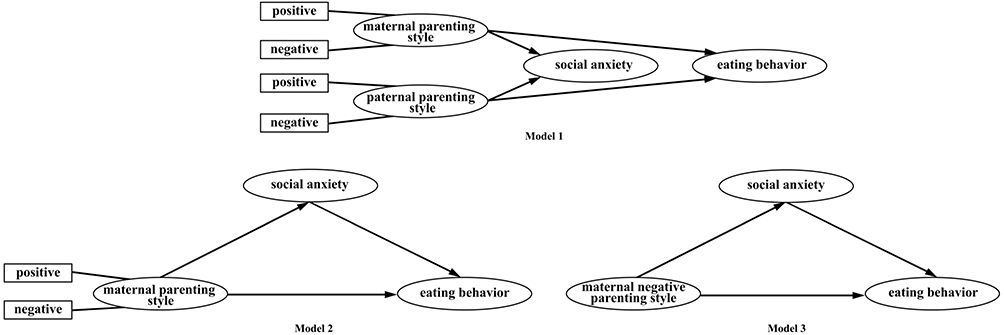 |
Figure 1 Conceptual models based on the hypotheses. |
Methods
Participants
This cross-sectional survey was conducted in Nanjing from August 2022 to February 2023. A total of 1,016 children aged 6–12 years and their parents participated by completing an electronic questionnaire. Inclusion criteria were: (1) children aged 6–12 years; (2) children and their families had normal communication and expression abilities; and (3) informed consent was obtained and participation was voluntary. Exclusion criteria were: (1) children with major mental illnesses who were unable to cooperate with the study; and (2) use of hormone or psychotropic drugs in the past three months.
A total of 1,152 children were initially surveyed, with 136 invalid questionnaires excluded, resulting in a final sample of 1,016 participants (effective response rate = 88.19%). Among them, 524 were boys (51.6%) with a mean age of 9.25 ± 1.71 years. Most participants lived with their parents (58.5%), and in more than half of the families both parents were employed. Most families resided in urban areas (84.3%). Overweight and obesity were defined according to the Chinese criteria established by the National Health Commission of the People’s Republic of China, which provides age- and sex-specific BMI reference values for children and adolescents aged 6–12 years. Detailed classification criteria are provided in Supplementary Table 1. The characteristics of the sample are presented in Table 1.
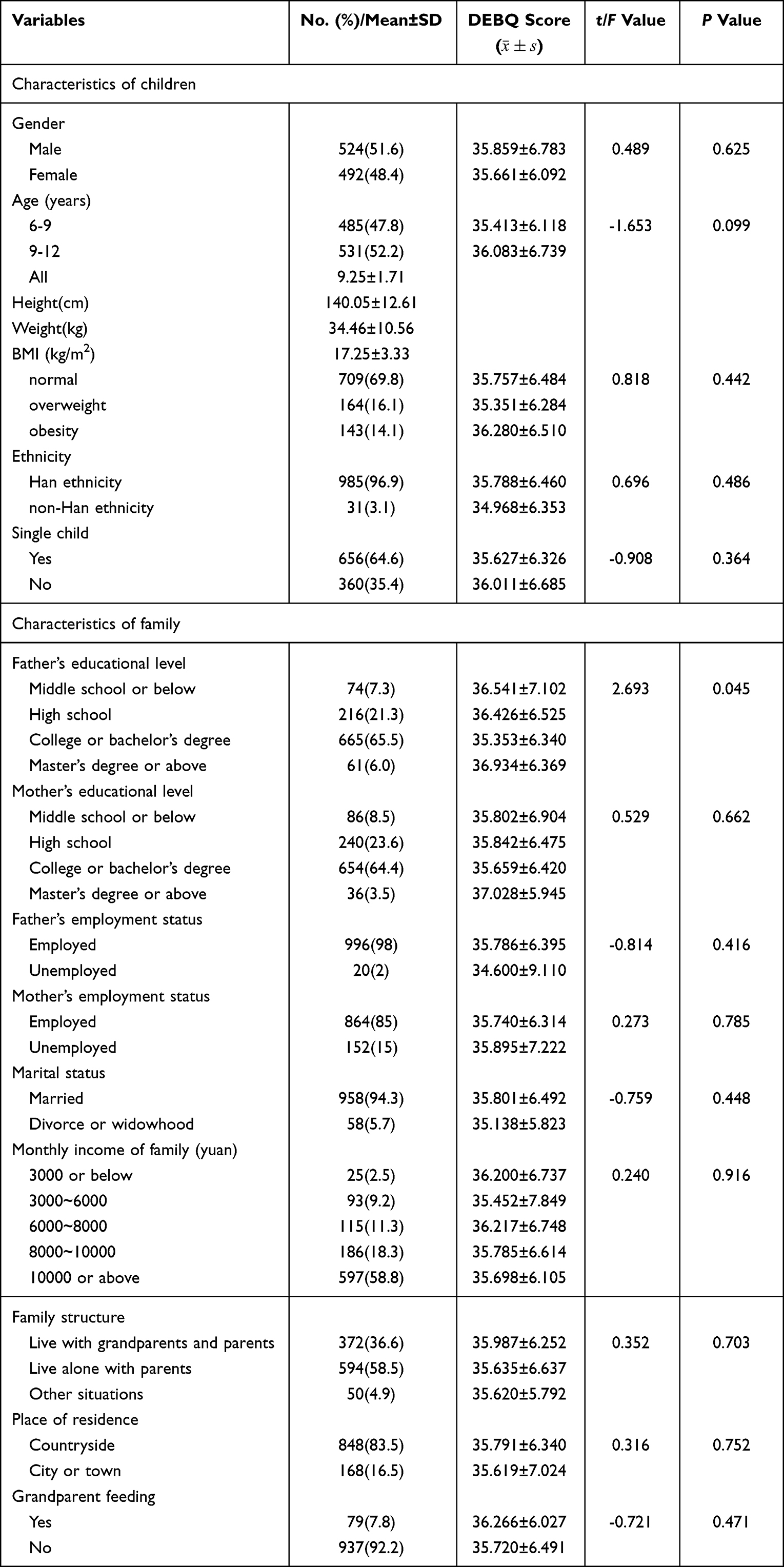 |
Table 1 Participant Characteristics and analysis of scores of DEBQ |
Measures
Assessment of Parenting Style
Parenting style was measured using the Chinese version of the Short-Form Egna Minnen Betraffande Uppfostran20 (One’s Memories of Upbringing) (s-EMBU-C), later adapted by Xin Song with demonstrated good reliability and validity in the Chinese population. The scale assesses both paternal and maternal parenting across four dimensions: emotional warmth, over-protection, punishing harshness, and rejection. Each item was rated on a 4-point Likert scale from 1 (never) to 4 (often), with higher scores indicating a stronger tendency toward each parenting behavior. In this study, positive parenting was represented by emotional warmth, while negative parenting included over-protection, punishing harshness, and rejection. The Cronbach’s α for the scale in this study was 0.710.
Assessment of Eating Behavior
Eating behavior was assessed using a validated Chinese version of the Dutch Eating Behavior Questionnaire (DEBQ-C),3 which was translated by Yan Zhao.21 This tool was used to assess emotional, external, and restrained eating. All items were rated on a 3-point scale ranging from 1 (never) to 3 (often). High total scores for each eating behavior indicate greater endorsement of the behavior. The Cronbach’s Alpha coefficient for this scale was 0.805.
Assessment of Social Anxiety
This study used the Chinese version of the Social Anxiety Scale for Children (SASC) to assess children’s social anxiety.22 This scale has demonstrated adequate reliability and validity in the Chinese population. The scale consisted of 10 items and two dimensions: fear of negative evaluations, social avoidance, and distress. It is scored on a 3-point scale from 0 to 2, with total scores ranging from 0 to 20. A cutoff score of 8 was used, with scores ≥8 indicating possible presence of social anxiety symptoms. Higher total scores indicate higher levels of social anxiety. The Cronbach’s alpha coefficient for this scale in the present study was 0.884.
Procedures
The research team first contacted the class teachers of various classes in the school who met the inclusion criteria. After obtaining the consent of school leaders and class teachers, the research group conducted a unified training on questionnaire survey implementation for class teachers, explaining the purpose, significance, and inclusion criteria of the study subjects. After the training, class teachers sent online questionnaire filling links to the parents of each child through Wenjuanxing in the class group. The link included information about the purpose, significance, anonymity, etc. The first page of the questionnaire was an informed consent form. After the participants signed the informed consent form, they began to fill in the main content of the questionnaire. At the same time as distributing the questionnaire, the class teachers sent the inclusion and exclusion criteria of the questionnaire in the class group and informed parents to answer according to their actual situation.
The questionnaire was jointly completed by children and their parents. Parents provided basic demographic information for the child and themselves. All three scales were child-reported. For children below the third grade or those with reading difficulties, parents assisted by reading items aloud and clarifying vocabulary; older children completed the scales independently under parental supervision. To ensure data quality, responses submitted in less than 5 minutes were excluded as invalid. Before completing the questionnaire, parents were required to confirm that their child had not used any hormonal medications in the previous three months and had no metabolic disorders. The questionnaire was set to the same login address and can only be answered once. All required items must be completed before submitting the questionnaire. The filling time for the questionnaire was not less than 5 minutes, otherwise it would be considered invalid.
Analyses
Descriptive statistics and Pearson correlation analysis were conducted using SPSS 25.0, while mediation effects were examined with AMOS 24.0. Parenting style, social anxiety, and eating behavior scores were in line with a normal distribution, according to the Shapiro–Wilk Test (P > 0.05). The bootstrap method, with 5000 iterations, was used for parameter estimation, and a mediating effect was considered statistically significant if the resulting 95% confidence interval excluded zero.23 The degree of fit of SEM was evaluated by the chi-square/degrees of freedom (χ2/df ≤ 2.00), the root mean square error of approximation (RMSEA ≤ 0.05), the goodness-of-fit index (GFI ≥ 0.95), and the comparative fit index (CFI ≥ 0.97). The significant level was α = 0.05.
Results
Descriptive Analysis
Children’s eating behavior varied according to father’s educational level. Children whose parents had a master’s degree or above scored higher on the DEBQ than those with a college or bachelor’s degree, graduated from high school or completed middle school or below (P < 0.05). There were no significant associations of eating behavior with other baseline variables (Table 1).
Father’s educational level was therefore considered in the mediation model. In addition, age and gender were regarded as essential demographic covariates in child development research, and prior studies have also pointed to their influence on children’s eating behaviors.24–26 For these reasons, children’s gender, age, and father’s educational level were included as control variables in the mediation model.
Correlation Analysis
The data of this study conform to normality by the Shapiro–Wilk Test (P > 0.05). The results indicated that children’s eating behavior was positively correlated with all dimensions of negative parenting style (r = 0.172~0.397, P < 0.05) and social anxiety (r = 0.350, P < 0.05), and significantly negatively correlated with maternal emotional warmth and understanding (r = −0.08, P < 0.05). However, paternal emotional warmth was found to have no significant association with children’s eating behavior. Furthermore, there was a positive correlation between social anxiety and negative parenting style (r = 0.083~0.279, P< 0.05) and a negative correlation between positive parenting style and social anxiety (r = −0.071~-0.149, P < 0.05). Results from the correlation analysis are shown in Table 2. Since all the study variables were significantly correlated, this laid a foundation for analyzing the effects of parenting style on children’s eating behavior and the mediating roles of social anxiety.
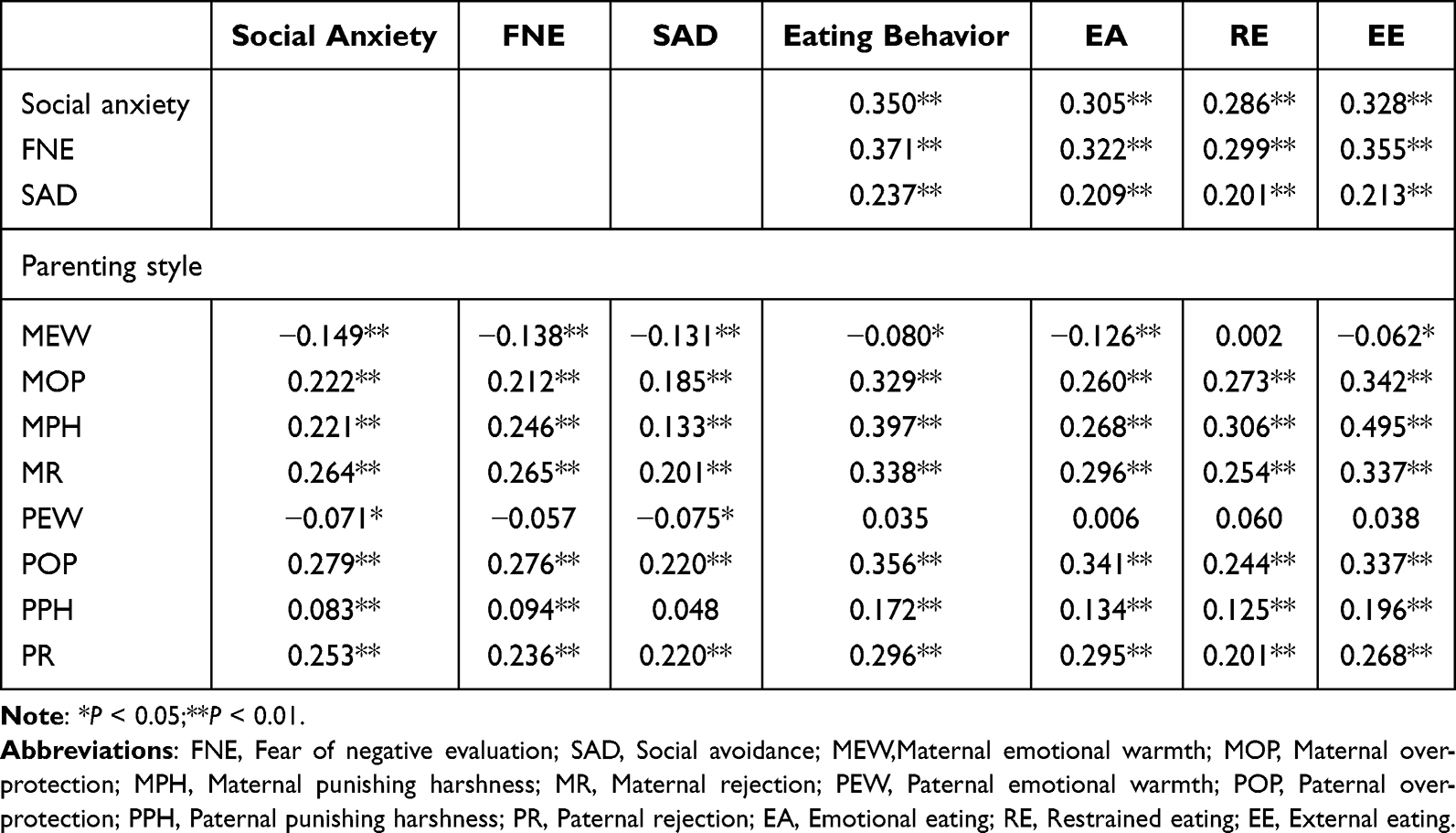 |
Table 2 Correlation Analysis of Children’s Eating Behavior, Parenting Style, and Social Anxiety |
Mediation Analysis
Using AMOS to construct the structural equation models, the results from comparing the three proposed models indicated that Model 3, which demonstrated the best fitting indexes (χ2/df = 2.478, RMSEA = 0.038, GFI = 0.984, AGFI = 0.966, CFI = 0.985, TLI = 0.973), was selected for further analysis. The detailed fitting indexes for the three models are provided in the Supplementary Table 2. The path coefficients for all paths in Model 3 were statistically significant (P < 0.01). Specifically, maternal negative parenting style had a significant positive effect on social anxiety (β = 0.443, P < 0.01), and social anxiety, in turn, had a significant positive impact on children’s eating behavior (β = 0.274, P < 0.01).
The mediating effect path diagram of model 3 is shown in Figure 2. The SEM analysis of model 3 revealed that the standard total effect of negative maternal parenting style on children’s eating behavior was 0.802 (SE = 0.047, 95% CI [0.710, 0.895], P < 0.001), with a direct effect of negative maternal parenting style on children’s eating behavior of 0.681 (SE = 0.048, 95% CI [0.586, 0.776], P < 0.001); indirect effect of 0.121 (SE = 0.021, 95% CI [0.083, 0.166], P < 0.001) in the pathway of parenting style-social anxiety-children eating behavior (Table 3). Since the 95% confidence intervals for the indirect effect did not contain zero, it indicated a statistically significant mediating effect, which means social anxiety was a mediating variable between parenting style and children’s eating behavior, the mediating effect accounted for 15.1% of the total effect.
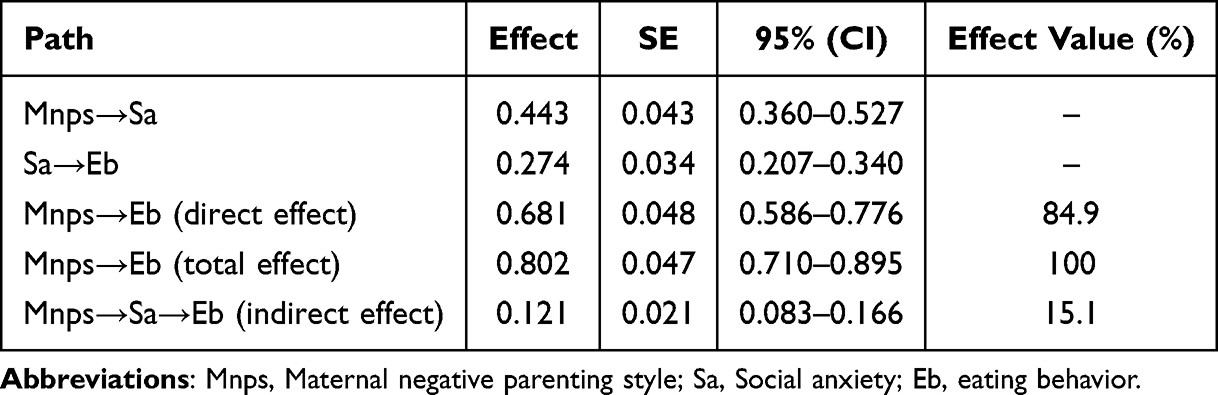 |
Table 3 Bootstrap Analysis of the Mediating Effect of Social Anxiety Between Maternal Negative Parenting Style and Eating Behavior |
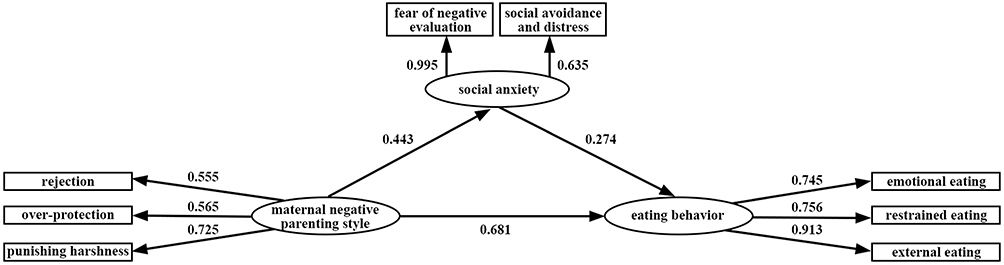 |
Figure 2 Path model illustrating the mediating role of social anxiety between maternal negative parenting and children’s eating behaviors. |
Discussion
The Impact of Social Anxiety on Eating Behaviors in School-Age Children
This study found that the higher the level of social anxiety in children, the more likely they were to have poor eating behavior, which is consistent with previous research.27 Social anxiety can intensify concerns about how one is perceived in social settings, often resulting in an excessive preoccupation with body weight and shape. Children’s misconceptions about weight issues may lead to emotional eating, increasing the risk of obese children exhibiting eating disorders and internalizing psychopathology.27 Childhood obesity was also considered a risk factor for various psychopathology, and adolescent obese patients often reported eating behavioral disorders (such as unhealthy eating, loss of control, and emotional eating).28 The common regulatory strategy in emotion regulation theory is response adjustment, which is explained as individuals actively adjusting their behavior in response to external evaluations.4 When children perceived negative evaluations of their weight from the outside world, they actively limited food intake to prevent weight gain and maintain their ideal appearance.7 In addition, negative emotion regulation strategies may also manifest as expression inhibition. Research has shown that children with social anxiety often exhibit introverted and withdrawn characteristics, which combine with low self-esteem and a weakened sense of self-worth, leading them to avoid social interactions.29 Compared with peers, children who reduced social activities had higher levels of social anxiety. They were unable to gain positive experiences from the social environment, which made them more likely to alleviate their anxiety through unhealthy eating behaviors, thus forming a vicious cycle of social anxiety and unhealthy eating behaviors.
The Impact of Maternal Parenting Style on Eating Behaviors in School-Age Children
This study discovered that maternal negative parenting style was more likely to lead to children’s poor eating behavior, which is consistent with previous research.14,30 Moreover, mothers scored higher than fathers on all dimensions of parenting style, indicating that maternal parenting exerts a more pronounced influence on children’s development. This may be due to the different roles and division of labor between parents in the family, with mothers taking on more childcare tasks, spending more time with their children, and having more opportunities to influence the development of children’s behavior.31 Such maternal influence is further reinforced by cultural traditions that shape parental roles and expectations in China. Rooted in the Confucian ideal of the “virtuous mother”, mothers are traditionally expected to act as custodians of children’s daily conduct, particularly dietary habits, being not only responsible for food preparation and selection but also playing a pivotal role in transmitting food culture and instilling proper table manners.32 By contrast, fathers have historically been positioned as providers or authority figures, with less direct involvement in children’s everyday feeding practices. Research has indicated that men often interact with their children less sensitively than mothers, which may explain why many children form closer attachments to their mothers than to their fathers.33 Together, these patterns reflect a broader cultural division of parental roles. This division intensifies maternal responsibility for managing children’s diet, making maternal parenting styles particularly consequential for children’s eating patterns.
Meanwhile, in Chinese culture, where collectivist values and filial piety are deeply rooted,34 children’s eating behaviors are often regarded as a reflection of family discipline and parental responsibility. In this cultural context, parents often adopt stricter approaches to ensure that children’s eating conforms to family expectations; although motivated by concern for children’s health, these practices may nonetheless impose excessive control that undermines healthy eating development. Under such circumstances, unhealthy maternal parenting behaviors—such as forcing children to eat more, using snacks to coax them, or withholding meals as punishment—may undermine children’s eating self-regulation, disrupt meal regularity, and increase the risk of overeating, food selectivity, and other unhealthy habits. Excessive denial and rejection also had a detrimental impact on children’s eating behavior, as children may perceive a lack of acceptance and recognition, leading them to seek solace in food.14 By contrast, when parents consistently demonstrate support and respect, children are more likely to experience warmth and understanding, which in turn fosters adherence to healthy dietary patterns. Therefore, parental strategies should emphasize rational love and appropriate control, minimize excessive punishment, rejection, and denial when children exhibit undesirable behaviors, incorporate children’s perspectives, and provide support and encouragement.
Nevertheless, the role of fathers should not be underestimated. Although mothers exert the most direct influence through daily feeding practices, fathers can shape children’s eating behaviors in meaningful ways. As role models, their own dietary preferences and lifestyle habits may indirectly affect children’s food choices, and their involvement contributes to the overall emotional climate of the family.35 Anthropologists Draper and Harpending, drawing on parental investment theory, argued that limited paternal participation may deprive children of adequate care and worsen conditions for future development.36 Prior evidence further suggests that when both mothers and fathers display consistent parenting practices, children are more likely to adopt favorable dietary behaviors.37 These findings underscore the importance of involving both parents in intervention programs, with mothers receiving guidance on adaptive feeding strategies and fathers being encouraged to engage more actively in creating supportive family environments that promote healthy eating.
The Mediating Role of Social Anxiety Between Parenting Style and Eating Behavior
The current study found that social anxiety of children was a mediating factor between maternal negative parenting style and children’s eating behavior. The family systems theory holds that the family is a whole, and the behavior of each family member in the system follows the principle of cyclic causality of mutual influence. Changes in the behavior of each member could affect other family members.18 Within this framework, parental rearing patterns served as a trigger within the family system. Improper parenting style, such as forced feeding and strict dietary restrictions, may lead children to neglect their own emotions and comply with parental demands at the expense of their own needs. This can disrupt the balance of parent–child interactions, subsequently triggering social anxiety in children. Consistent with prior findings, our study confirmed that higher levels of parental emotional warmth and understanding were associated with lower risks of social anxiety, while negative parenting practices heightened such risks.38,39 The socialization experience of children under different parenting styles became a template for subsequent social interaction. The transitional protection and control of parents made children develop a strong sense of dependence, which may lead to children becoming timid after leaving their parents.40 Frequently punishing, irritable, and rejecting parents can increase children’s aggressive behavior, directly affecting their social interactions.41
From the perspective of emotion regulation theory, social anxiety can further influence children’s eating behaviors. Children experiencing heightened social anxiety may adopt maladaptive eating patterns as a strategy to cope with negative emotions, which provides theoretical support for its mediating role between parenting style and eating behavior. Taken together, family systems theory explains how maternal parenting practices can heighten children’s social anxiety, while emotion regulation theory clarifies how this elevated anxiety translates into maladaptive eating behaviors. This integration provides a clear rationale for conceptualizing social anxiety as the mediator linking parenting style to children’s dietary outcomes. In line with this mechanism, our findings suggest that social anxiety, serving as a mediator, links parenting practices to dietary outcomes: positive parenting practices can reduce social anxiety and thereby foster healthier eating behaviors.
These findings suggest that strategies to improve children’s eating behaviors should not only aim to reduce negative parenting practices at the source but can also be effective by addressing the mediating mechanism of alleviating children’s social anxiety. To ensure the effectiveness and sustainability of interventions implemented, broader cultural background and family system factors must be fully considered. For example, within the Chinese cultural context, where collectivist values and filial piety are emphasized, interventions aimed at reducing maternal negative practices must be culturally adapted. Instead of simply dismissing parental authority, they should guide mothers to balance authority with sensitivity to children’s autonomy and emotional needs, thereby reducing the specific triggers of social anxiety. Furthermore, from a family systems perspective, involving both parents is essential.
Guided by these principles, several implementative approaches can be pursued. School counselors could implement group-based cognitive–behavioral therapy (CBT) workshops specifically designed to help children recognize and reframe the socially anxious thoughts that may stem from maternal pressure or criticism. For parents, community nurses could deliver structured education sessions that provide mothers with concrete, culturally sensitive strategies for supportive feeding and emotional guidance, while actively inviting fathers to participate. These workshops would aim not only to change individual behaviors but to improve overall family communication and consistency, ensuring that efforts to reduce maternal negative parenting are reinforced by the entire family system. Integrating these culturally and systemically informed measures can create a supportive family environment that directly targets the identified mediator (social anxiety) and fosters healthier eating behaviors.
Limitation
There are some limitations to this study. Firstly, this study primarily relied on online self-reports (parents and children) collected during the COVID-19 pandemic, which may have influenced family dynamics and individual well-being due to environmental and economic pressures, potentially affecting data reliability. Secondly, the sample was specific to school-age children in a single urban area (Nanjing), which may limit the geographic generalizability of the findings. Future studies should therefore include multi-regional and rural populations to provide a more comprehensive understanding. In addition, the Cronbach’s alpha for the Parenting Style Scale in this study was relatively low, suggesting weaker internal consistency and reduced precision of the findings, indicating that the results warrant further verification in future research. Finally, while this study identified social anxiety as a mediator, the relatively small level of mediation effect indicates the need to examine other potential psychological (eg, self-esteem, depressive symptoms) or environmental (eg, family communication quality, parental feeding practices, or nutritional knowledge) mediators for a more complete explanation.
Conclusion
This study is distinctive in highlighting maternal negative parenting style as a key predictor and social anxiety as a mediator of children’s eating behaviors, offering culturally specific insights that contribute to cross-cultural understanding. Although the mediation effect size was modest, it provides quantitative evidence that social anxiety partially explains how maternal negative parenting shapes children’s eating behaviors. These findings suggest that interventions should focus both on reducing negative maternal practices and on alleviating children’s social anxiety, for example, through culturally adapted parent–child education programs that guide mothers and fathers toward supportive parenting and effective communication, as well as school-based initiatives such as social skills training and counseling to help children manage social anxiety in daily life. While the study was limited to a single urban sample and examined only one mediator, future research with broader populations and additional pathways is needed to strengthen generalizability and comprehensiveness.
Data Sharing Statement
The datasets used and/or analyzed during the current study are available from the corresponding author Qin Xu upon reasonable request.
Ethics Approval and Consent to Participate
The study involving human participants was approved by the Research Ethics Board of Nanjing Medical University (Approval No. 2021-538) and conducted in accordance with local legislation and institutional requirements. This study was also conducted in accordance with the ethical principles of the Declaration of Helsinki and the Ethical Review Measures for Biomedical Research Involving Humans (China). Written informed consent was obtained from all students’ guardians prior to participation in the questionnaire survey.
Acknowledgments
Thanks to all the children and parents who participated in this study, and thanks to all the authors of this study for their help in the writing process.
Author Contributions
All authors made a significant contribution to the work reported, whether that is in the conception, study design, execution, acquisition of data, analysis and interpretation, or in all these areas; took part in drafting, revising or critically reviewing the article; gave final approval of the version to be published; have agreed on the journal to which the article has been submitted; and agree to be accountable for all aspects of the work.
Funding
This study was supported by the project Early warning and intervention of obesity in children and adolescents in the context of big data: construction and demonstration application of iNATURE intelligent platform based on hospital-community-family linkage funded by the Jiangsu Provincial Department of Science and Technology (No.BE2021722), the project of “Nursing Science” Funded by the 4th Priority Discipline Development Program of Jiangsu Higher Education Institutions (Jiangsu Education Department (2023) No.11).
Disclosure
The author(s) report no conflicts of interest in this work.
References
1. Li X, Yin A, Choi HY, Chan V, Allman-Farinelli M, Chen J. Evaluating the quality and comparative validity of manual food logging and artificial intelligence-enabled food image recognition in apps for nutrition care. Nutrients. 2024;16(15):2573. doi:10.3390/nu16152573
2. Dakanalis A, Mentzelou M, Papadopoulou SK, et al. The association of emotional eating with overweight/obesity, depression, anxiety/stress, and dietary patterns: a review of the current clinical evidence. Nutrients. 2023;15(5):1173. doi:10.3390/nu15051173
3. Van Strien T, Herman CP, Verheijden MW. Eating style, overeating, and overweight in a representative Dutch sample. Does external eating play a role? Appetite. 2009;52(2):380–387. doi:10.1016/j.appet.2008.11.010
4. Gross JJ. Emotion regulation: affective, cognitive, and social consequences. Psychophysiology. 2002;39(3):281–291. doi:10.1017/S0048577201393198
5. Lowe MR, Doshi SD, Katterman SN, Feig EH. Dieting and restrained eating as prospective predictors of weight gain. Front Psychol. 2013;4:577. doi:10.3389/fpsyg.2013.00577
6. Erdem E, Efe YS, Özbey H. A predictor of emotional eating in adolescents: social anxiety. Archiv Psych Nurs. 2023;43:71–75. doi:10.1016/j.apnu.2022.12.016
7. Mancuso CJ, Spoor SP, Kambanis PE, De Young KP. Conditional effects of state fear of negative evaluation on restrictive eating behaviors. Eating Behaviors. 2022;47:101676. doi:10.1016/j.eatbeh.2022.101676
8. Watson D, Friend R. Measurement of social-evaluative anxiety. J Consul Clin Psychol. 1969;33(4):448. doi:10.1037/h0027806
9. Weeks JW, Heimberg RG, Fresco DM, et al. Empirical validation and psychometric evaluation of the brief fear of negative evaluation scale in patients with social anxiety disorder. Psychol Assessment. 2005;17(2):179. doi:10.1037/1040-3590.17.2.179
10. Sahlan RN, Keshishian AC, Christian C, Levinson CA. Eating disorder and social anxiety symptoms in Iranian preadolescents: a network analysis. Eating Weight Disord-Studies Anorexia, Bulimia Obesity. 2022;27:1855–1867. doi:10.1007/s40519-021-01329-8
11. Hsu T, Forestell CA. Mindfulness, depression, and emotional eating: the moderating role of nonjudging of inner experience. Appetite. 2021;160:105089. doi:10.1016/j.appet.2020.105089
12. Xu J, Ni S, Ran M, Zhang C. The relationship between parenting styles and adolescents’ social anxiety in migrant families: a study in Guangdong, China. Front Psychol. 2017;8:626. doi:10.3389/fpsyg.2017.00626
13. Perris C, Jacobsson L, Linndström H, von Knorring L, Perris H. Development of a new inventory for assessing memories of parental rearing behaviour. Acta Psychiatrica Scandinavica. 1980;61(4):265–274. doi:10.1111/j.1600-0447.1980.tb00581.x
14. Leuba AL, Meyer AH, Kakebeeke TH, et al. The relationship of parenting style and eating behavior in preschool children. BMC Psychology. 2022;10(1):275. doi:10.1186/s40359-022-00981-8
15. Kang B, Li Y, Zhao X, et al. Negative parenting style and depression in adolescents: a moderated mediation of self-esteem and perceived social support. J Affective Disord. 2024;345:149–156. doi:10.1016/j.jad.2023.10.132
16. Kingsbury M, Sucha E, Manion I, Gilman SE, Colman I. Adolescent mental health following exposure to positive and harsh parenting in childhood. Can J Psych. 2020;65(6):392–400. doi:10.1177/0706743719889551
17. Burnett AJ, Lamb KE, McCann J, Worsley A, Lacy KE. Parenting styles and the dietary intake of pre-school children: a systematic review. Psychol Health. 2020;35(11):1326–1345. doi:10.1080/08870446.2020.1743842
18. Rothbaum F, Rosen K, Ujiie T, Uchida N. Family systems theory, attachment theory, and culture. Family Process. 2002;41(3):328–350. doi:10.1111/j.1545-5300.2002.41305.x
19. Lopez NV, Lai MH, Yang C-H, Dunton GF, Belcher BR. Associations of maternal and paternal parenting practices with children’s fruit and vegetable intake and physical activity: preliminary findings from an ecological momentary study. JMIR Formative Res. 2022;6(8):e38326. doi:10.2196/38326
20. Arrindell WA, Sanavio E, Aguilar G, et al. The development of a short form of the EMBU: its appraisal with students in Greece, Guatemala, Hungary and Italy. Personal Individual Differ. 1999;27(4):613–628. doi:10.1016/S0191-8869(98)00192-5
21. Yan Z. Application of Revised the Dutch Eating Behavior Questionnaire Child-Version for Chinese Children. Wuhan: Wuhan Sports University; 2018.
22. Li F, Su L, Jin Y. Norm of the screen for child social anxiety related emotional disorders in Chinese urban children. Chin J Child Health Care. 2006;14(4):335–337.
23. Tibbe TD, Montoya AK. Correcting the bias correction for the bootstrap confidence interval in mediation analysis. Front Psychol. 2022;13:810258. doi:10.3389/fpsyg.2022.810258
24. Zhou N, Sun L. Confirmatory factor analysis of the children’s eating behaviour questionnaire in a Chinese urban preschooler sample. Int J Behav Nutr Phys Act. 2021;18(1):113. doi:10.1186/s12966-021-01175-y
25. Svensson V, Lundborg L, Cao Y, Nowicka P, Marcus C, Sobko T. Obesity related eating behaviour patterns in Swedish preschool children and association with age, gender, relative weight and parental weight--factorial validation of the children’s eating behaviour questionnaire. Int J Behav Nutr Phys Act. 2011;8(1):134. doi:10.1186/1479-5868-8-134
26. Qiu C, Hatton R, Li Q, et al. Associations of parental feeding practices with children’s eating behaviors and food preferences: a Chinese cross-sectional study. BMC Pediatr. 2023;23(1):84. doi:10.1186/s12887-023-03848-y
27. Anderson LM, Wong N, Lanciers S, Lim CS. The relative importance of social anxiety facets on disordered eating in pediatric obesity. Eating Weight Disord-Studies Anorexia, Bulimia Obesity. 2020;25:117–126. doi:10.1007/s40519-018-0526-x
28. Jia P, Luo M, Li Y, Zheng JS, Xiao Q, Luo J. Fast‐food restaurant, unhealthy eating, and childhood obesity: a systematic review and meta‐analysis. Obesity Reviews. 2021;22:e12944. doi:10.1111/obr.12944
29. Teo AWL, Lai ACH, Richard RS, Kavitha RG. Social anxiety disorder, an insidious and silent disease–a constructed case study and cultural reviews from Singapore, India and Indonesia. Counsell Psychotherap Rev Singapore. 2023;1(01):11–17. doi:10.1142/S281096862350002X
30. Ningning W, Wenguang C. Influence of family parenting style on the formation of eating behaviors and habits in preschool children: the mediating role of quality of life and nutritional knowledge. PLoS One. 2023;18(7):e0288878. doi:10.1371/journal.pone.0288878
31. Pinquart M. Associations of parenting dimensions and styles with internalizing symptoms in children and adolescents: a meta-analysis. Marriage Family Rev. 2017;53(7):613–640. doi:10.1080/01494929.2016.1247761
32. Schratz LM, Larkin O, Dos Santos N, Martin C. Caregiver influences on eating behaviors in children: an opportunity for preventing obesity. Curr Atherosclerosis Rep. 2023;25(12):1035–1045. doi:10.1007/s11883-023-01171-6
33. Lewis C, Lamb ME. Fathers’ influences on children’s development: the evidence from two-parent families. Eur J Psychol Educ. 2003;18(2):211–228. doi:10.1007/BF03173485
34. Chuang SS, Glozman J, Green DS, Rasmi S. Parenting and family relationships in Chinese families: a critical ecological approach. J Family Theory Rev. 2018;10(2):367–383. doi:10.1111/jftr.12257
35. Li X. Fathers’ involvement in Chinese societies: increasing presence, uneven progress. Child Development Perspectives. 2020;14(3):150–156. doi:10.1111/cdep.12375
36. Draper P, Harpending H. Father absence and reproductive strategy: an evolutionary perspective. J Anthropol Res. 1982;38(3):255–273. doi:10.1086/jar.38.3.3629848
37. Litchford A, Roskos MRS, Wengreen H. Influence of fathers on the feeding practices and behaviors of children: a systematic review. Appetite. 2020;147:104558. doi:10.1016/j.appet.2019.104558
38. Fitzgerald M, Gallus K. Emotional support as a mechanism linking childhood maltreatment and adult’s depressive and social anxiety symptoms. Child Abuse Neglect. 2020;108:104645. doi:10.1016/j.chiabu.2020.104645
39. Sahithya B, Raman V. Parenting style, parental personality, and child temperament in children with anxiety disorders—A clinical study from India. Indian J Psychol Med. 2021;43(5):382–391. doi:10.1177/0253717620973376
40. McLean MA, Cobham VE, Simcock G, Lequertier B, Kildea S, King S. Childhood anxiety: prenatal maternal stress and parenting in the QF2011 cohort. Child Psychiatry Human Develop. 2021;52(3):389–398. doi:10.1007/s10578-020-01024-2
41. Lei H, Chiu MM, Cui Y, Zhou W, Li S. Parenting style and aggression: a meta-analysis of mainland Chinese children and youth. Child Youth Services Rev. 2018;94:446–455. doi:10.1016/j.childyouth.2018.07.033
 © 2025 The Author(s). This work is published and licensed by Dove Medical Press Limited. The
full terms of this license are available at https://www.dovepress.com/terms
and incorporate the Creative Commons Attribution
- Non Commercial (unported, 4.0) License.
By accessing the work you hereby accept the Terms. Non-commercial uses of the work are permitted
without any further permission from Dove Medical Press Limited, provided the work is properly
attributed. For permission for commercial use of this work, please see paragraphs 4.2 and 5 of our Terms.
© 2025 The Author(s). This work is published and licensed by Dove Medical Press Limited. The
full terms of this license are available at https://www.dovepress.com/terms
and incorporate the Creative Commons Attribution
- Non Commercial (unported, 4.0) License.
By accessing the work you hereby accept the Terms. Non-commercial uses of the work are permitted
without any further permission from Dove Medical Press Limited, provided the work is properly
attributed. For permission for commercial use of this work, please see paragraphs 4.2 and 5 of our Terms.