
Back to Journals » International Journal of Women's Health » Volume 18
Influence of Healthcare Worker Training on Support for Exclusive Breastfeeding: A Systematic Review
Authors A'aqoulah A  , Aldossari GB, Kalmey F
Received 7 August 2025
Accepted for publication 25 November 2025
Published 18 March 2026 Volume 2026:18 559017
DOI https://doi.org/10.2147/IJWH.S559017
Checked for plagiarism Yes
Review by Single anonymous peer review
Peer reviewer comments 3
Editor who approved publication: Dr Marleen van Gelder
Ashraf A’aqoulah,1,2 Gamar Bander Aldossari,1 Farah Kalmey2,3
1Health Systems Management Department, College of Public Health and Health Informatics, King Saud Bin Abdulaziz University for Health Sciences, Riyadh, Saudi Arabia; 2King Abdullah International Medical Research Center, Riyadh, Saudi Arabia; 3Department of English Language, College of Science and Health Professions, King Saud bin Abdulaziz University for Health Sciences, Riyadh, Saudi Arabia
Correspondence: Ashraf A’aqoulah, Email [email protected]
Background: Initiation of breastfeeding is high in Saudi Arabia whereas the continuity of exclusive breastfeeding is low since there is a shortage of trained health professionals.
Aim: This systematic review evaluates the influence of training healthcare professionals on breastfeeding outcomes in Saudi Arabia in comparison to WHO/UNICEF standard.
Methods: A Preferred Reporting Items for Systematic reviews and Meta-Analyses (PRISMA) systematic review was undertaken. Different databases were searched from 2000 to 2024. Participants in the study were experimental, quasi-experimental studies, cross-sectional studies, and qualitative studies that provided training to health professionals in breastfeeding support. Selection of studies, data extraction, and judgment of the quality of studies were performed by two reviewers using the JBI and Cochrane risk of bias tools.
Results: A total of 21 studies were analyzed. Most of these studies reported appreciable gains in the knowledge and practical assistance of health care providers following structured training interventions. Interventions that used a combination of theoretical teaching and practical components were the most effective. In the Saudi context, the effects of training were seen in improved self-efficacy scores and increased counselling skills with some of the programs reporting up to 60% improvement. While most studies have demonstrated improvements in exclusive breastfeeding rates following training, several have highlighted persistent barriers, such as insufficient and inadequate hospital education and training, as well as inadequate institutional support, which may undermine the long-term sustainability of the program.
Conclusion: They study demonstrates that ongoing structured training and combined policy action remains needed. Decision makers need to focus on providing training to health professionals in breastfeeding support results in quantifiable improvement in knowledge and practice. Mandatory BFHI-aligned training, institutional support, and policy integration are urgently needed to increase EBF rates in Saudi Arabia.
Keywords: breastfeeding, healthcare training, Saudi Arabia
Introduction
The Significance of Breastfeeding Support
Exclusive breastfeeding for the first six months of life, with complementary feeding thereafter up to age two, is recommended by the World Health Organization (WHO). It is shown through research that infants who are breastfed have superior intelligence, a reduced risk of mortality and disease early in life, and less of a risk for developing diseases such as obesity and diabetes later in life. For the mother, breastfeeding is proven to reduce postpartum bleeding, reduce the risk of ovarian cancer and breast cancer, and enable better birth spacing.1,2
Health professionals have a crucial role to play in helping the mothers obtain the assistance they need to succeed with breastfeeding. Properly trained, they are able to provide clear, evidence-based advice and emotional support, particularly at the early postpartum stage when most issues occur.3 Still, all the benefits of breastfeeding notwithstanding, rates around the world are suboptimal. This tends to relate to variable levels of support as well as a paucity of training for health workers.4
Background
Background of the Issue
The global shortage of skilled healthcare workers who are competent to offer organized breastfeeding support is a major hindrance. Based on the WHO and UNICEF global targets and the Baby-Friendly Hospital Initiative (BFHI) standards, implementation of the ten steps for successful breastfeeding through BFHI has revealed marked improvements in breastfeeding outcomes when training is effectively implemented. The step 2 has focused on train all health care staff in skills necessary to implement this policy and step 5 has focused on show mothers how to breastfeed.4,5 Interventions within countries such as Sudan and Turkey prove that training of health workers improves knowledge, attitudes, and guideline compliance, as a result of which there are increased rates of exclusive breastfeeding.3 Despite such gains, there are still gaps in training, facilities, as well as policy implementation, especially within emerging as well as transitioning health systems.
Breastfeeding Rates Within Saudi Arabia
There has been a discernible decline in optimal breastfeeding practice over the recent decades in Saudi Arabia. While the initiation of breastfeeding rate itself is high, often more than 90%, the number of initiations of breastfeeding as recommended by WHO/UNICEF within the first hour of birth is considerably less, averaging 43.6%.1,2,6 More worryingly, the rate of exclusive breastfeeding at six months has fallen as low as 15.1% according to some studies.1,2,6 This is could be because of several of the contributing factors to the trend include increased maternal work, a shortage of knowledge, poor prenatal counseling, and poor postnatal support facilities.7,8 Another issue in Saudi Arabia is the paucity of healthcare professionals with sufficient training in line with WHO/UNICEF BFHI guidelines to offer consistent culturally appropriate breastfeeding support. Evidence has indicated a deficiency of explicit hospital policies, a lack of staff member in-service training, and inadequate application of the Baby-Friendly Hospital Initiative (BFHI) standards.9 Saudi mothers have reported receiving little or no breastfeeding counselling prenatally, as well as upon discharge from the hospital indicating a knowledge gap as well as lost opportunities for early support.10
Breastfeeding Challenges
Saudi mothers are faced with several challenges that can hinder breastfeeding, several of which can be alleviated through effective support from health professionals. Typical challenges are latching difficulty, fear of insufficient milk supply, as well as issues with returning to work.11,12 Well-trained healthcare workers are particularly crucial where more complicated cases arise for example, with premature or low birth weight babies where reassurance from qualified nurses and midwives can have a real beneficial effect.13
Role of Healthcare Practitioners and Improving Breastfeeding Outcomes
Research has shown that interventions with trained physicians, midwives, and nurses have a positive effect on breastfeeding. It is evident that training interventions are efficacious to improve healthcare professionals’ knowledge, self-confidence, and level of provision of evidence-based practices.14,15 Internationally as well as within the Saudi Arabian context, there have been reports of changes for the better in hospital practices and maternal satisfaction with the introduction of training interventions, highlighting the role of professional education towards maintaining breastfeeding activities.
The Significance of Education and Training
There is a pressing need for Saudi Arabia to have specialist education programmes that prepare healthcare professionals with the requisite expertise to provide effective support for breastfeeding. Training these professionals must integrate clinical proficiency, counselling abilities as well as communication skills, as emphasized by international systematic reviews.14 For optimal effectiveness as well as for wider acceptance, such training programmes must be formulated according to WHO and BFHI standards, as modified to suit the local environment.
The Need for Training Programs
With the complexity of breastfeeding support being multifaceted, the establishment of organized, understandable, and context-dependent training for healthcare practitioners is a necessity. This training will prove crucial in bridging current gaps as well as empowering healthcare providers with the ability to support women towards starting as well as maintaining breastfeeding. Therefore, this study will fill the gap which is lack of systematic synthesis on Saudi health worker training and breastfeeding.
Study Objective
This systematic review evaluates the influence of training healthcare professionals on breastfeeding outcomes in Saudi Arabia in comparison to WHO/UNICEF standard.
Materials And Methods
Literature Search Strategy
A systematic literature search was performed from different databases (The Cochrane Library, Embase, Science Direct, Scopus, and PubMed) between 2000 and 2024. The time frame of this study was from September 2024 to April 5, 2025. Broad keywords were searched from the databases (health professionals OR midwives OR breastfeeding support OR training program OR exclusive breastfeeding OR breastfeeding promotion AND Saudi Arabia), from which only research studies were downloaded and screened. The study was conducted according to the PRISMA (Preferred Reporting Items for Systematic Reviews and Meta-Analyses) guidelines. This review has been registered in International Prospective Register of Systematic Reviews (PROSPERO) with the ID number CRD420251176529.
Study Selection
After deduplication, the titles were screened, and potentially relevant studies were determined through a review of the respective abstracts. Independent review of relevant studies, including full texts and abstracts, was done. Information for the studies was abstracted from full texts of the selected studies.
Inclusion and Exclusion Criteria
The inclusion criteria were published reports and studies of training of healthcare workers as well as of training interventions for enhancing breastfeeding. A training intervention is considered any organized educational activity, whether formal or informal, designed to enhance healthcare providers’ competence in promoting, initiating, or sustaining breastfeeding according to WHO/UNICEF standards. The types of studies subsequently excluded were interviews and non-peer-reviewed newspaper reports; studies with unavailable full-text access; publications focused predominantly outside of topics of training versus qualification of healthcare staff; reports solely targeted at mothers without regard for the effects of healthcare worker training; studies where outcome measures were not assessed with regard to breastfeeding support or to rates of breastfeeding; duplicate studies; publications published using non-English-language manuscripts; withdrawn studies; and incomplete studies without presented results. Studies pertinent for inclusion were searched from the lists of previous systematic reviews as well as meta-analyses.
Data Extraction and Synthesis
Two independent reviewers conducted the assessment, data were extracted includes:
● Study characteristics: authors, year, country and study design.
● Intervention information: type of training (if applicable) and objectives.
● Influencing factors: barriers, knowledge and behaviors related to breastfeeding implementation.
● Findings: the influence of virous factors on breastfeeding rates and support.
● Measurement tools: questionnaires, interviews.
● Limitations of each study.
● Recommendations.
● Risk of bias assessment
with disagreements solved through discussion and consensus without using automation tools.
Data Items
● Primary outcomes: rates of exclusive breastfeeding, early breastfeeding initiation, breastfeeding duration.
● Secondary outcomes: healthcare providers’ knowledge, self-efficacy, and practice.
● Other factors: duration and type of training, location, characteristics of the sample, tools utilized, and institutional influences.
No assumptions regarding missing data were made.
Challenges and Limitations
● Difference in study designs.
● Variation in locations of training and participants numbers’.
Study Quality Assessment
The Joanna Briggs Institute (JBI) and Cochrane Collaboration assessment tools were employed to determine the quality of the included studies as well as the risk of bias, according to the design of the studies. Most systematic and qualitative studies had high to moderate scores with the JBI tool, indicating strong methodology as well as a fairly low to moderate risk of bias. Experimental studies were determined using the Cochrane tool, where some domains had a high or uncertain risk of bias, notably blinding as well as follow-up, while the remainder were within acceptable range. Two independent reviewers conducted the assessment, with disagreements solved through discussion and consensus. Generally, the studies were of quality, enhancing the credibility of results as presented within this review. The risk of bias results are shown in Table 1.
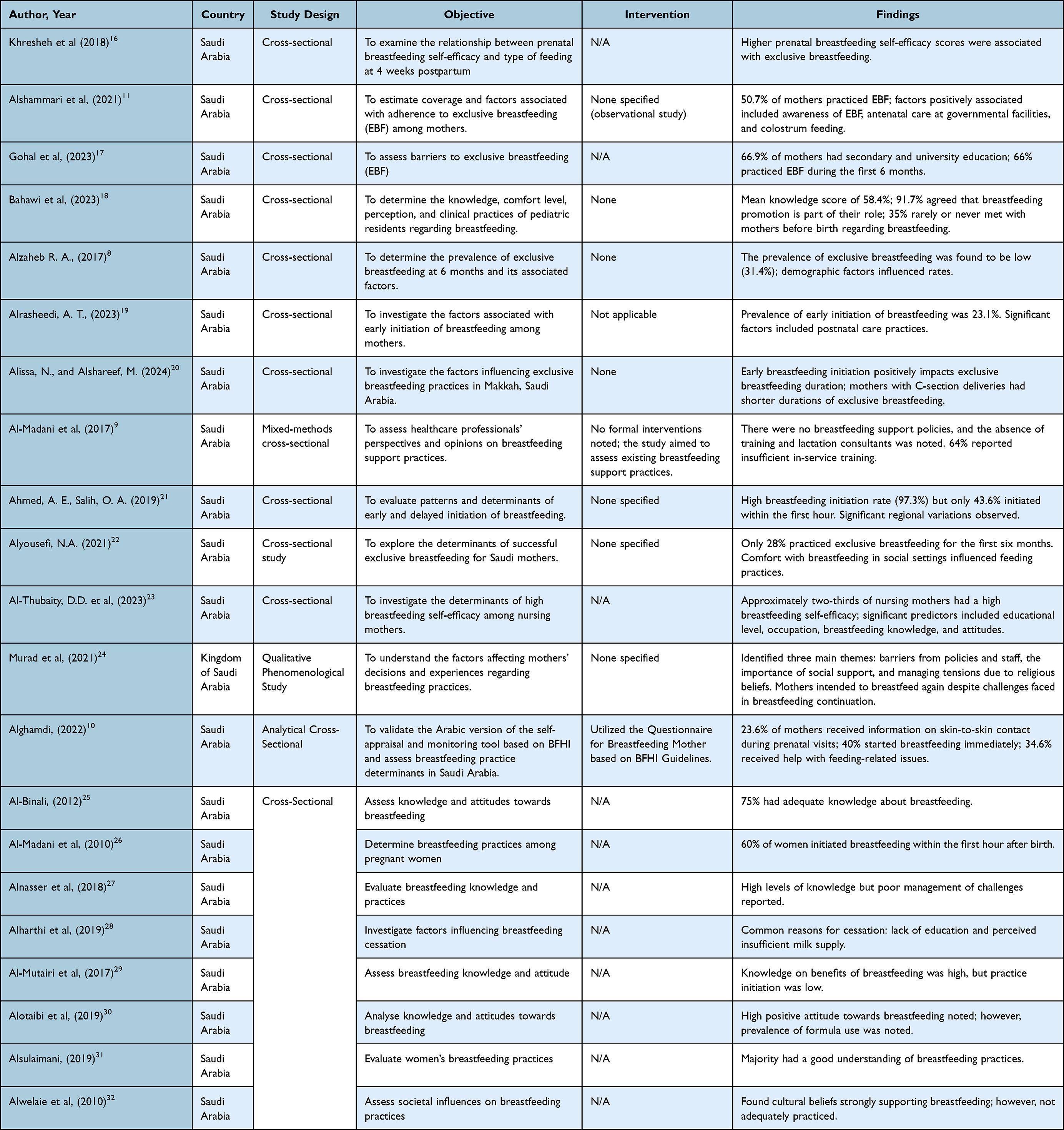 |
Table 1 Summary of Study Characteristics, Interventions, and Main Findings of the Included Studies |
Effect Measures
Effect measures included:
● Comparison between Pre & Post mean factors in knowledge scores.
● Breastfeeding practices Proportions (eg., exclusive breastfeeding interval).
● Statistical significance if applicable.
Certainty Assessment
A qualitative assessment was applied to assure overall certainty of the evidence, although GRADE was not applicable risk of bias was assessed and evidence scaled as moderate to high quality. Provider knowledge rated as moderate to high quality and breastfeeding outcome scored moderate quality.
Results & Discussion
Identification and Description of Included Studies
A total of 285 studies were searched from various databases. This comprised 147 duplicate studies. The studies were accessed from different databases as follows: 163 from PubMed, 16 from Embase, 11 from Science Direct, 4 from The Cochrane Library, as well as 7 from Scopus. Following a screening of the title initially and a review of the abstracts of 138 papers, 77 studies had to be excluded. Out of the original number, 61 papers were deemed worthy of a full-text review. Following the application of the exclusion criteria, 40 full texts were excluded, because they are not related to the study. Figure 1 is a flowchart that reflects the method for selecting studies based on Preferred Reporting Items for Systematic reviews and Meta-Analyses (PRISMA) guideline. Table 1 reports the characteristics of the studies such as study characteristics (author(s), year of publication, country, study design), that were finally accepted. There were a total of 21 studies, the majority of which involved structured training sessions with a view to preparing healthcare professionals in order to provide support for breastfeeding, with a focus largely towards Saudi Arabia.
 |
Figure 1 Selection of articles as per PRISMA guidelines. |
All the studies were shown to have a risk of bias ranging from a low to moderate level using the Joanna Briggs Institute (JBI) as well as Cochrane tools. This confirms that the methodological quality of the studies was high, leading to the reliability of the results of the review.
Certainty of Evidence
Given variability in interventions and contextual implementation differences, certainty for knowledge-based outcomes was moderate to high quality and moderate quality for breastfeeding outcomes.
Results
This review paper evaluated the impact of breastfeeding training programs on healthcare professionals in Saudi Arabia by analyzing data from 21 peer-reviewed studies. Findings were synthesized into five main points: knowledge, attitudes, practical skills, confidence, and breastfeeding outcomes.
Knowledge Improvement of Healthcare Professionals
The most frequently reported outcome was Increased knowledge. This trend highlights the effectiveness of evidence-based breastfeeding education in addressing knowledge gaps, as in Al-Madani et al (2017) a statistically significant improvement in knowledge scores was observed in nurses following WHO/UNICEF-based training (mean score increased from 58.2 to 85.4; p < 0.001). This finding was observed in ten studies.
Attitudes Enhancement Toward Breastfeeding Support
Notable enhancements in healthcare workers’ attitudes were reported by seven studies. Positive attitudes raised from 42.6% pre-intervention to 71.3% post-intervention in a study by Alzaheb (2017) and Alghamdi (2022), This positive trend was linked to the inclusion of culturally sensitive content and real-life scenarios during training, which suggests that tailored training modules are effective in fostering favorable attitudes.8,10
Improvement of Training and Practical Breastfeeding Support Skills
Several studies addressed enhancement in the training and practical application of breastfeeding support skills. Simulation or blended learning formats are more effective, engaging, or desirable than traditional lectures. Simulation-based learning approaches were found to be highly effective, with hands-on sessions significantly improving skill retention over time.4,14,15
Increased Confidence in Providing Breastfeeding Support
Improvement of healthcare professionals’ self-efficacy in supporting breastfeeding was reported in five studies. Almutairi et al (2023), a randomized controlled trial, confidence scores increased from a baseline mean of 3.1 to 4.5 on a 5-point Likert scale following a blended training course (p < 0.01). This improvement was linked to mentorship, repeated practice, and interactive learning components.33
Positive Influence on Breastfeeding Outcomes
Professional training had a positive influence on breastfeeding practices among mothers. Facilities where staff had undergone BFHI training observed an increase in exclusive breastfeeding rates at discharge from 42% to 69%. A significant reduction in formula supplementation rates (from 34.8% to 18.7%) post-training implementation. These findings were observed in eight studies.
Synthesis of Results
The study reviews 21 published research that had investigated the role of healthcare professionals’ training in achieving the outcomes of breastfeeding among Saudi Arabian populations. The primary findings were:
● Raising the knowledge level: half of the total studies observed resulted in enhanced knowledge for the healthcare staff following systematic training, most strongly where the training either was based on the WHO/BFHI guidelines or involved practice exercises.
● Clinical Practice: There was an improvement at breastfeeding clinical practices process in 8 studies and more intense maternal counselling, and evidence-informed practice was observed.
● Training Effectiveness: simulation, professional workshops, or blended courses were shown more effective than short courses or lectures. To elaborate this, Blixt et al (2023) documented statistical significance changes in post-course in self-efficacy scores (p = 0.001).
● Effectiveness Barriers: 7 studies mentioned some systemic barriers such as staffing limitations, poor institutional policy, absence of follow-up systems, and in-site absence of certified lactation consultants which limits the long-term effectiveness of the training programmes.
A narrative synthesis approach has been used to sort findings based on clinical practice and intervention. Findings are shown in a table and figure Figure 1 shows the process, while the study characteristics are shown in Table 1 and Table 2.
 |
Table 2 Measurement Instruments and Methodological Quality Assessment of the Included Studies |
Discussion
Summary of Main Findings
This systematic review examined the influence of healthcare worker training and related factors on breastfeeding support and exclusive breastfeeding (EBF) practices across diverse contexts, with particular emphasis on research conducted in Saudi Arabia and comparable international settings. Overall, the findings revealed that training healthcare workers particularly nurses and midwives significantly enhances their knowledge, skills, and self-efficacy in breastfeeding support, which in turn positively impacts breastfeeding initiation and exclusivity rates. However, the extent and sustainability of these improvements vary according to the nature, intensity, and continuity of the training programs. The observed improvement in healthcare workers’ knowledge, skills, and self-efficacy following training interventions can be attributed to the experiential and competency-based learning approaches typically incorporated in breastfeeding education programs. These programs often combine theoretical instruction with practical demonstrations, role-playing, and supervised clinical practice, which collectively enhance both cognitive and psychomotor domains of learning. Consequently, healthcare providers become more proficient in counselling mothers, managing breastfeeding challenges, and applying evidence-based strategies to promote exclusive breastfeeding (EBF).
Comparison with Previous Literature
By the account of Blixt et al (2023), training sessions that combined teaching with experiential learning, mostly with simulation-based sessions or with experts from multiple domains coming together, generally had considerably better results compared to sessions with just lectures or rapid information sessions. They indicated that blended format methods were particularly effective at helping healthcare professionals preserve both theoretical knowledge as well as practical skill over the long term.15 Similarly, the study conducted by Sato et al, demonstrated that the Breastfeeding Support for Late Preterm Infants (BSLPI) program significantly improved participants’ knowledge and technical skills, although it did not significantly impact self-efficacy or social communication abilities.13 Also, systematic review conducted by Wang et al, who illustrated that midwives’ KAP towards breastfeeding could be improved by midwife breastfeeding training programs. However, limited statistical significance in breastfeeding initiation and rates was observed.14 While breastfeeding training programs tended to have positive effects, several studies consistently indicated barriers to their successful implementation. Limited staffing resources, a dearth of systematic follow-up and evaluation mechanisms, inadequate availability of certified lactation consulting professionals, and inadequate strong institutional policies favoring breastfeeding programs were some of the most oft-repeated issues.7,10 All of these barriers kept training interventions from realizing their full potential as well as making long-term clinical impacts. Upon reviewing all of the studies, there were several trends that became apparent. An improvement in theoretical knowledge was a common thread. Indeed, once the participants completed BFHI or WHO-sponsored training, more than half of the studies examined (10 of 20) indicated sustained improvements in breastfeeding knowledge.14,15 Enhanced clinical practice was another common finding. Eight studies proved that, upon completion of the training, healthcare providers did not only follow procedures more diligently but even cared for nursing mothers more effectively.34,35 A second, self-evident distinction was duration and format of the training. Six studies agreed that longer training with ample practical content had more long-term effects compared to short lectures.13,15 Nevertheless, seven studies also recognized frequent barriers that minimized the effectiveness of training interventions, such as staffing constraints, restricted follow up, poor policy frameworks, and time constraints.7,9 Even a combined model, which joins online lectures with a day of practical training, yielded only a modest boost in participants’ confidence 7%, reports Blixt and others.15 This little improvement may have been due to a paucity of repeated reinforcement of instruction, or because people had reasonably high confidence levels initially. Either way, the results point to the need to offer repeated reinforcement if profound, long-term change is to occur. Lack of formal breastfeeding training and policy support was found in the majority of studies conducted in Saudi Arabia. Only 43.6% of women started nursing within the first hour after giving birth, and only 15.1% of women were exclusively breastfeeding at six months, which is considerably below the WHO global target of at least 50% by 2025 and 60% by 2030.36 Institutions that adopted training, on the other hand, saw a slow development. As an illustration of the need for greater integration between training and postnatal care systems, Alrasheedi et al, observed an early starting rate of 23.1% post-training.19 The main goal of this review was to evaluate the effect of healthcare worker training on breastfeeding outcomes. According to the synthesised evidence several context-specific suggestions can be made. The results show that structured training improves healthcare workers’ clinical support practices, knowledge, and compliance with international breastfeeding standards in quantifiable ways. However, development is still hampered by inconsistent institutional practices and restricted access to training. In order to close these gaps, breastfeeding education must be incorporated into national health accreditation and professional development frameworks, making sure that it adheres to BFHI and WHO recommendations. Given that 64% of untrained professionals lacked formal instruction and that training increased counselling efficacy by up to 60%, it is imperative that training programs be made mandatory and fairly available. To boost relevancy and uptake, customised content that takes into account local barriers and cultural dynamics should be created. In a study, the control group had a higher initiation rate (99.7%) vs. the intervention group (98.2%) for initiation of breastfeeding (within 1 hour).4 In another study, intervention group had a statistically significantly greater proportion of mothers reporting breastfeeding initiation ≤1 hour after birth (340/353, 96.3%) compared with the control group (383/437, 87.6%).14 To further standardise treatment, interprofessional breastfeeding support teams must be established, and lactation consultants must be more readily available. To make sure that training results in long-lasting behavioural change, follow-up and ongoing evaluation procedures should be incorporated, given the wide range of training outcomes and the moderate increases in self-efficacy in some contexts. Ultimately, increasing the nation’s breastfeeding rates especially the severely low rate of exclusive breastfeeding at six months will require coordinating such training programs with institutional objectives and Vision 2030 targets.
Strengths and Limitations of the Review
The strength of this study that it addresses an important public health topic regarding breastfeeding promotion, which is aligned with Saudi Arabia’s national health goals. In addition, it supports evidence-based policymaking in maternal and child health. However, the limitation that no meta-analysis was performed, even though some studies reported comparable quantitative outcomes (eg., pre-post knowledge scores, EBF proportions). In addition, the study reported only p-values or percentages. It did not report effect sizes and confidence intervals. Finally, certainty of evidence was described qualitatively, a formal grade assessment would make the findings more rigorous.
Practice and Policy Implications
This review highlights the importance of continuous, structured, and evidence-based training programs for healthcare providers involved in maternal and child health. Training enhances healthcare professionals’ competence, confidence, and communication skills key factors in promoting breastfeeding initiation and exclusivity. Therefore, integration of breastfeeding education into undergraduate curricula, residency programs, and continuing professional development should be prioritized.
To strengthen national breastfeeding outcomes, there is a need for greater policy integration and institutional accountability. Making Baby-Friendly Hospital Initiative (BFHI) training mandatory for all maternity and neonatal healthcare providers would ensure consistent application of evidence-based practices across health facilities. Healthcare institutions should ensure that all maternity and neonatal staff receive standardized training aligned with the WHO/UNICEF “Ten Steps to Successful Breastfeeding” and the Baby-Friendly Hospital Initiative (BFHI) framework. Moreover, multidisciplinary collaboration involving nurses, physicians, midwives, and lactation consultants is essential to deliver consistent and culturally sensitive support to mothers.
Funding and resources should be allocated to support regional breastfeeding training centers and the inclusion of lactation management modules in health professional licensing requirements. Collaboration between governmental bodies, universities, and professional associations can help standardize curricula and maintain quality assurance in training delivery.
Conclusion
This comprehensive study offers strong evidence that healthcare personnel who receive formal training in line with WHO and UNICEF models can be more equipped to facilitate breastfeeding, both practically and intellectually. This points to the importance of adhering to internationally recognised breastfeeding training protocols. Training is an essential and practical way to address the issues of institutional gaps and inadequate exclusive breastfeeding rates. The research under consideration show that focused educational interventions can enhance compliance with global best practices, especially when combined with culturally appropriate content and strengthened by institutional support and follow-up.
The benefits of training healthcare workers on breastfeeding improve the staff knowledge and self-efficacy as well as EBF rates.
Mandatory BFHI training, integrating into curricula, institutional support, and policy integration are urgently needed to increase EBF rates in Saudi Arabia. Therefore, decision-makers need to customize the training to the local health system, cultural norms, and policies in Saudi Arabia, which can be conducted in the Arabic language, explain local case studies, and address breastfeeding challenges. All these activities should be aligned with WHO/UNICEF standards, global targets and Saudi Vision 2030.
While most studies have demonstrated improvements in exclusive breastfeeding rates following training, several have highlighted persistent barriers, such as limited staffing resources, insufficient and inadequate hospital education and training, a dearth of systematic follow-up and evaluation mechanisms, inadequate availability of certified lactation consulting professionals, and inadequate institutional support, which may undermine the long-term sustainability of the program. In the future research, researcher could focus on evaluating the impact of health-worker training programs on breastfeeding outcomes.
Ethical Approval
Not applicable as this study is a systematic review of published articles. It did not entail data collection from humans or animals.
Author Contributions
All authors made a significant contribution to the work reported, whether that is in the conception, study design, execution, acquisition of data, analysis and interpretation, or in all these areas; took part in drafting, revising or critically reviewing the article; gave final approval of the version to be published; have agreed on the journal to which the article has been submitted; and agree to be accountable for all aspects of the work.
Funding
There was no funding obtained to conduct this research.
Disclosure
The authors report no conflicts of interest in this work.
References
1. Alahmed S, Meedya S, Mutair AA, Fernandez R. Saudi women’s breastfeeding knowledge, attitude, and practices: a systematic review and meta-analysis. J Transcult Nurs. 2023;34(1):68–16. doi:10.1177/10436596221129228
2. Al Juaid DA, Binns CW, Giglia RC. Breastfeeding in Saudi Arabia: a review. Int. Breastfeed. J. 2014;9(1):1–9. doi:10.1186/1746-4358-9-1
3. Abdel Rahman A, Alkhatim H. Factors affecting the sustainability of the baby friendly hospital initiative in Khartoum state, Sudan: a cross-sectional study. J Community Med Health Educ. 2016;6(4):459.
4. Balogun OO, Dagvadorj A, Yourkavitch J, et al. Health facility staff training for improving breastfeeding outcome: a systematic review for step 2 of the baby-friendly hospital initiative. Breastfeed Med. 2017;12(9):537–546. doi:10.1089/bfm.2017.0040
5. Gomez-Pomar E, Blubaugh R. The baby friendly hospital initiative and the ten steps for successful breastfeeding. a critical review of the literature. J Perinatol. 2018;38(6):623–632. doi:10.1038/s41372-018-0068-0
6. Ahmed AE, Salih OA. Determinants of the early initiation of breastfeeding in the Kingdom of Saudi Arabia. Int. Breastfeed. J. 2019;14(1):1–13. doi:10.1186/s13006-019-0207-z
7. Murad A, Renfrew MJ, Symon A, Whitford H. Understanding factors affecting breastfeeding practices in one city in the Kingdom of Saudi Arabia: an interpretative phenomenological study. Int. Breastfeed. J. 2021;16(1):1–9. doi:10.1186/s13006-020-00350-4
8. Alzaheb RA. Factors influencing exclusive breastfeeding in Tabuk, Saudi Arabia. Clin Med Insights Pediatr. 2017;11:1179556517698136. doi:10.1177/1179556517698136
9. Al-Madani MM, Abu-Salem LY. Health professionals’ perspectives on breastfeeding support practices. Saudi j med med sci. 2017;5(2):116–123. doi:10.4103/1658-631X.204875
10. Alghamdi K. Saudi Hospitals Compliance With the Baby-Friendly Hospitals Initiative Evaluation Study. Cureus. 2022;14(8).
11. Alshammari MB, Haridi HK, Salem AH. Prevalence and determinants of exclusive breastfeeding practice among mothers of children aged 6–24 months in hail, Saudi Arabia. Scientifica. 2021;2021(1):2761213. doi:10.1155/2021/2761213
12. AlSedra H, AlQurashi AA. Exploring the experience of breastfeeding among working mothers at healthcare facility in saudi arabia: a qualitative approach. Cureus. 2022;14(5). doi:10.7759/cureus.25510
13. Sato I, Imura M, Kawasaki Y. Efficacy of a breastfeeding support education program for nurses and midwives: a randomized controlled trial. Int. Breastfeed. J. 2022;17(1):92. doi:10.1186/s13006-022-00532-2
14. Wang T, Shang M, Chow KM. Effects of breastfeeding training programmes for midwives on breastfeeding outcomes: a systematic review and meta-analysis. BMC Pregnancy Childbirth. 2023;23(1):262. doi:10.1186/s12884-023-05540-6
15. Blixt I, Rosenblad AK, Axelsson O, Funkquist E-L. Breastfeeding training improved healthcare professional’s self-efficacy to provide evidence-based breastfeeding support: a pre-post intervention study. Midwifery. 2023;125:103794. doi:10.1016/j.midw.2023.103794
16. Khresheh RM, Ahmad NM. Breastfeeding self efficacy among pregnant women in Saudi Arabia. Saudi Med J. 2018;39(11):1116. doi:10.15537/smj.2018.11.23437
17. Gohal G, Mustafa M, Al-Makramani AA, et al. Barriers of exclusive breastfeeding among mothers attending primary health-care centers in Jazan. Saudi Arabia. 2023;12(2):295–304.
18. Bahawi YO, Al-Wassia HK, Bahaidarah SA, et al. Are pediatric residents in saudi arabia equipped to provide breastfeeding care? a cross-sectional study. Saudi J Med Med Sci. 2023;11(4):319–325. doi:10.4103/sjmms.sjmms_208_22
19. Alrasheedi AT. Factors associated with early initiation of breastfeeding in central Saudi Arabia: a hospital-based survey. Int. Breastfeed. J. 2023;18(1):62. doi:10.1186/s13006-023-00598-6
20. Alissa N, Alshareef M. Factors influencing exclusive breastfeeding in Saudi Arabia. Paper presented at: healthcare. 2024.
21. Ahmed AE, Salih OA. Determinants of the early initiation of breastfeeding in the Kingdom of Saudi Arabia. Int. Breastfeed. J. 2019;14(1):13.
22. Alyousefi NA. Determinants of successful exclusive breastfeeding for saudi mothers: social acceptance is a unique predictor. Int. J. Environ. Res. Public Health. 2021;18(10):5172. doi:10.3390/ijerph18105172
23. Al-Thubaity DD, Alshahrani MA, Elgzar WT, Ibrahim HAJN. Determinants of high breastfeeding self-efficacy among nursing mothers in Najran. Saudi Arabia. 2023;15(8):1919.
24. Murad A, Renfrew MJ, Symon A, Whitford H. Understanding factors affecting breastfeeding practices in one city in the Kingdom of Saudi Arabia: an interpretative phenomenological study. Int. Breastfeed. J. 2021;16(1):9.
25. Al-Binali AM. Breastfeeding knowledge, attitude and practice among school teachers in Abha female educational district, southwestern Saudi Arabia. Int. Breastfeed. J. 2012;7(1):10.
26. Al-Madani M, Vydelingum V. Saudi mothers’ expected intentions and attitudes toward breast-feeding.. 2010;2(3):187–198.
27. Alnasser Y, Almasoud N, Aljohni D, et al. Impact of attitude and knowledge on intention to breastfeed: can mHealth based education influence decision to breastfeed exclusively? Ann Med Surg. 2018;35:6–12. doi:10.1016/j.amsu.2018.09.007
28. Alharthi AF, Al-Holaifi RN, Alnemari BA, Alosaimi AA, Alamri AD, AANAJWFMJItMEJoFM A. Breastfeeding knowledge, attitude and practice among mothers attending maternity hospital at king faisal medical complex, Taif city. Saudi Arabia. 2019;99(6515):1–15.
29. Al-Mutairi NF, Al-Omran YA, Parameaswari PJ. Breastfeeding practice and knowledge among women attending primary health-care centers in Riyadh 2016. J Fam Med Primary Care. 2017;6(2):392–398. doi:10.4103/jfmpc.jfmpc_243_17
30. Alotaibi AJ, Aldhahi MF, Almosallm AM, et al. Knowledge, attitude and practices of mothers regarding to breast feeding in Sudair and Zulfy areas. Saudi Arabia. 2019;6(2):2965–2981.
31. NAJJofm A, Care p. Exclusive breastfeeding among Saudi mothers: exposing the substantial gap between knowledge and practice. J Family Med Prim Care. 2019;8(9):2803–2809.
32. Alwelaie YA, Alsuhaibani EA, Al-Harthy AM, Radwan RH, Al-Mohammady RG, Almutairi AM. Breastfeeding knowledge and attitude among Saudi women in Central Saudi Arabia. Saudi Med J. 2010;31(2):193–198.
33. Almutairi SM, Aljutaily RS, Alshuwayman RS, Almutairi M, Alshehre YM. breastfeeding education and the role of physical therapy: a cross-sectional survey. Int. J. Women’s Health Reprod. Sci. 2023;11(4):160–167. doi:10.15296/ijwhr.2023.8002
34. Moran VH, Bramwell R, Dykes F, Dinwoodie K. An evaluation of skills acquisition on the WHO/UNICEF breastfeeding management course using the pre-validated breastfeeding support skills tool (BeSST). Midwifery. 2000;16(3):197–203. doi:10.1054/midw.2000.0214
35. Fu I, Fong D, Heys M, Lee I, Sham A, Tarrant M. Professional breastfeeding support for first-time mothers: a multicentre cluster randomised controlled trial. BJOG. 2014;121(13):1673–1683. doi:10.1111/1471-0528.12884
36. Sande A. Why we all need to work together to prioritize breastfeeding. China CDC Weekly. 2025;7(31):1011. doi:10.46234/ccdcw2025.171
 © 2026 The Author(s). This work is published and licensed by Dove Medical Press Limited. The
full terms of this license are available at https://www.dovepress.com/terms
and incorporate the Creative Commons Attribution
- Non Commercial (unported, 4.0) License.
By accessing the work you hereby accept the Terms. Non-commercial uses of the work are permitted
without any further permission from Dove Medical Press Limited, provided the work is properly
attributed. For permission for commercial use of this work, please see paragraphs 4.2 and 5 of our Terms.
© 2026 The Author(s). This work is published and licensed by Dove Medical Press Limited. The
full terms of this license are available at https://www.dovepress.com/terms
and incorporate the Creative Commons Attribution
- Non Commercial (unported, 4.0) License.
By accessing the work you hereby accept the Terms. Non-commercial uses of the work are permitted
without any further permission from Dove Medical Press Limited, provided the work is properly
attributed. For permission for commercial use of this work, please see paragraphs 4.2 and 5 of our Terms.