
Back to Journals » Drug Design, Development and Therapy » Volume 19
Idebenone: Clinical Potential Beyond Neurological Diseases
Authors Yi B, Zeng J, Li J, Liu K, Zhu X  , Chen X , Gao Y
Received 2 March 2025
Accepted for publication 24 May 2025
Published 9 September 2025 Volume 2025:19 Pages 7929—7946
DOI https://doi.org/10.2147/DDDT.S515053
Checked for plagiarism Yes
Review by Single anonymous peer review
Peer reviewer comments 2
Editor who approved publication: Dr Solomon Tadesse Zeleke
Bin Yi,1– 4,* Jun Zeng,1– 4,* Jiashuo Li,1– 4,* Kunfeng Liu,1– 4 Xiaocheng Zhu,4,5 Xiang Chen,4,5 Yang Gao1– 4
1Department of Thoracic Surgery, Xiangya Hospital, Central South University, Changsha, Hunan, People’s Republic of China; 2Hunan Engineering Research Center for Pulmonary Nodules Precise Diagnosis & Treatment, Changsha, Hunan, People’s Republic of China; 3Xiangya Lung Cancer Center, Xiangya Hospital, Central South University, Changsha, Hunan, People’s Republic of China; 4National Clinical Research Center for Geriatric Disorders, Changsha, Hunan, People’s Republic of China; 5Department of Anesthesiology, Xiangya Hospital, Central South University, Changsha, Hunan, People’s Republic of China
*These authors contributed equally to this work
Correspondence: Xiang Chen; Yang Gao, Xiangya Hospital, Central South University, 87 Xiangya Road, Changsha, 410008, People’s Republic of China, Email [email protected]; [email protected]
Abstract: Idebenone, a short-chain analog of coenzyme Q10 with a hydroxydecyl side chain, is known to activate mitochondrial function by transferring electrons to the electron transport chain complex III, thereby promoting adenosine triphosphate production. Numerous clinical trials have demonstrated the effectiveness of idebenone in the treatment of neurological diseases. Interestingly, emerging evidence suggests that idebenone may also have beneficial effects beyond neurological conditions through disrupting mitochondrial membrane potential, inducing mitochondrial apoptosis, promoting mitophagy attenuating ferroptosis, reducing reactive oxygen species and lipid peroxidation, etc. This study aims to comprehensively review the clinical potential of idebenone in various fields, including cancers (such as breast cancer, melanoma, glioblastoma, neuroblastoma, hepatocellular carcinoma, prostatic carcinoma and pancreatic carcinoma), cardiovascular diseases (including atherosclerosis, hypertension, myocardial infarction and heart failure), diabetes mellitus, liver diseases, urogenital diseases, sepsis, and other diseases. The findings highlight the potential of idebenone as a promising therapeutic option for the prevention and management of these condition, which need to be validated in more clinical trials.
Keywords: idebenone, antioxidant, mitochondria, electron carrier, non-neurological diseases
Introduction
Idebenone, a synthetic analogue of coenzyme Q10 (CoQ10) developed by Takeda Pharmaceuticals in Japan, serves as a lipophilic electron carrier and endogenous antioxidant within the mitochondrial respiratory chain.1 Idebenone possesses a similar redox-active benzoquinone structure to CoQ10, but features a shorter lipophilic side chain and a terminal hydroxyl group to enhance its solubility2 (Figure 1). Due to their structural similarities and variations, idebenone shares a redox-active benzoquinone core that enables it to act as an electron carrier in the respiratory chain to contribute to ATP production, and also function as a potent intramitochondrial antioxidant, which can cross the blood-brain barrier and biological membranes more readily and freely. Of note, it can shuttle electrons directly to complex III of the respiratory chain, thereby bypassing complex I.3
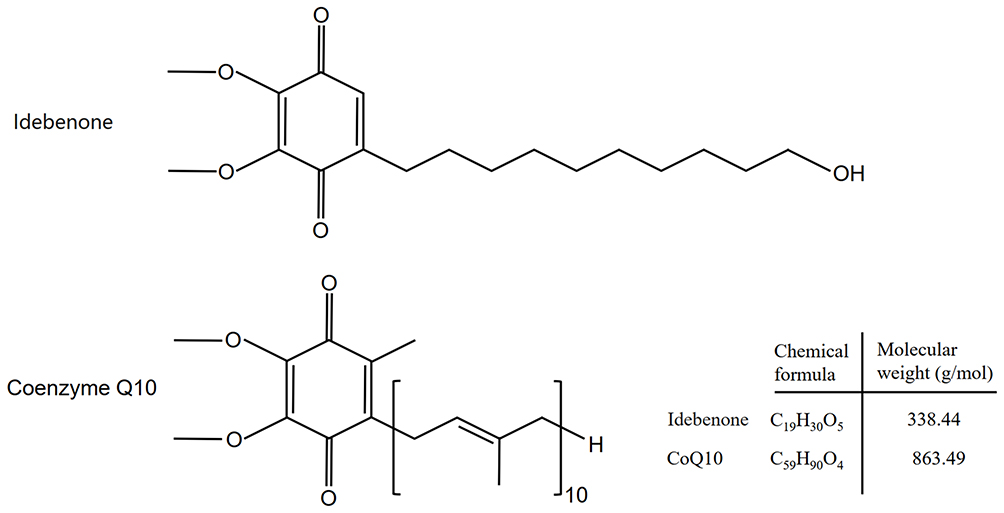 |
Figure 1 Chemical structures of idebenone and CoQ10. |
Given that microcirculatory changes in the central nervous system have been associated with reactive oxygen species (ROS) and lipid peroxidation, lipophilic antioxidants have shown promise for therapeutic effects.4,5 In the 1980s, idebenone was first synthesized and introduced for the treatment of neurodegenerative disorders.6,7 Clinical trials have demonstrated the safety and tolerability of idebenone, making it a commonly used drug to enhance brain metabolism and alleviate mental symptoms. A study published in Lancet Neurology reported that higher doses of idebenone were well-tolerated, and associated with improvements in neurological function and daily activities among patients with Friedreich’s ataxia.8 Additionally, a pilot open trial documented the visual function improvement in patients with OPA1-mutant dominant optic atrophy following idebenone therapy.9 Furthermore, a double-blind randomized placebo-controlled Phase 3 trial published in Lancet found that idebenone could enhance respiratory function in glucocorticoid non-using patients with Duchenne muscular dystrophy.10 An open-label, international, multicenter, natural history-controlled study confirmed the benefits of idebenone in patients with Leber hereditary optic neuropathy, even in the chronic phase.11
However, information regarding the clinical applications of idebenone beyond the neurological field remains limited and unclear. More importantly, there is a lack of articles to systematically summarize the research of idebenone in the non-neurological area. Therefore, our study aims to comprehensively review the potential therapeutic value of idebenone in various conditions with an analysis for the effects on health and living quality of patients.
Pharmaco-Chemical Properties of Idebenone
Idebenone, chemically known as 6-(10-hydroxydecyl)-2,3-dimethoxy-5-methyl-1,4-benzoquinone, is a yellow crystal or crystalline powder with a relative molecular weight of 338.44. It is relatively insoluble in water, but easily dissolved in organic solvents1,12 (Table 1).
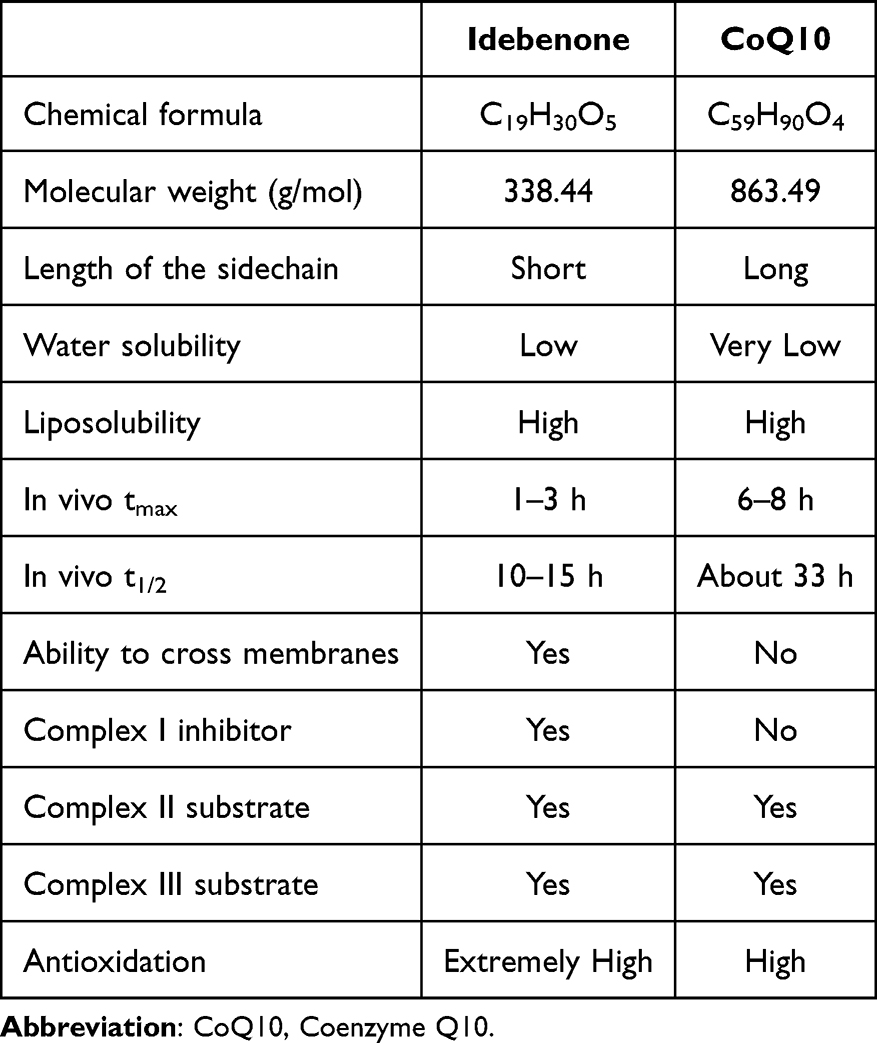 |
Table 1 Pharmaco-Chemical Differences Between Idebenone and CoQ10 |
The half-life of idebenone varies with age, being approximately 9.4±0.5 hours for children, 10.4±1 hours for adolescents, and 12.7±2 hours for adults.13 Following oral administration, idebenone is rapidly metabolized via oxidative shortening by various cytochrome P450 enzymes (CYP1A2, CYP2C9, CYP2C19, CYP2D6 and CYP3A4) to yield QS4, QS6, QS8 and QS10. Idebenone and these metabolites concomitantly undergo conjugation via glucuronidation and sulfatation to yield conjugated moieties represented as idebenone-C, QS4-C, QS6-C, QS8-C and QS10-C.14
Idebenone, a synthetic short-chain benzoquinone, is believed to possess superior pharmacological and chemical properties compared to CoQ10. It exhibits lower hydrophobicity than natural CoQ10 and has minimal toxicity.15,16 Idebenone acts not only as an antioxidant but also participates in the electron transport chain at the mitochondrial membrane. Unlike CoQ10, which accepts electrons from complex I (nicotinamide adenine dinucleotide (NADH) dehydrogenase), idebenone effectively transfers electrons from complex II (succinate dehydrogenase) to complex III17 (Figure 2). In the model proposed by King et al, idebenone is reduced at the hydrophobic quinone binding site within complex I but dissociates slowly due to its low lipophilicity. Consequently, it competitively inhibits endogenous CoQ10 function without substituting for its electron transfer function to mitochondrial complex III.18 Despite early research confirmed that idebenone restored the oxidation of succinate in canine and rat CoQ10-depleted brain mitochondria, NADH oxidation in the presence of idebenone was independent of downstream components of the electron transport chain.19 Experiments using fibroblasts, which oxidized mainly NADH-linked substrates, demonstrated that idebenone was not competent to replace CoQ10 in the mitochondrial respiratory chain under conditions of CoQ10 deficiency.20
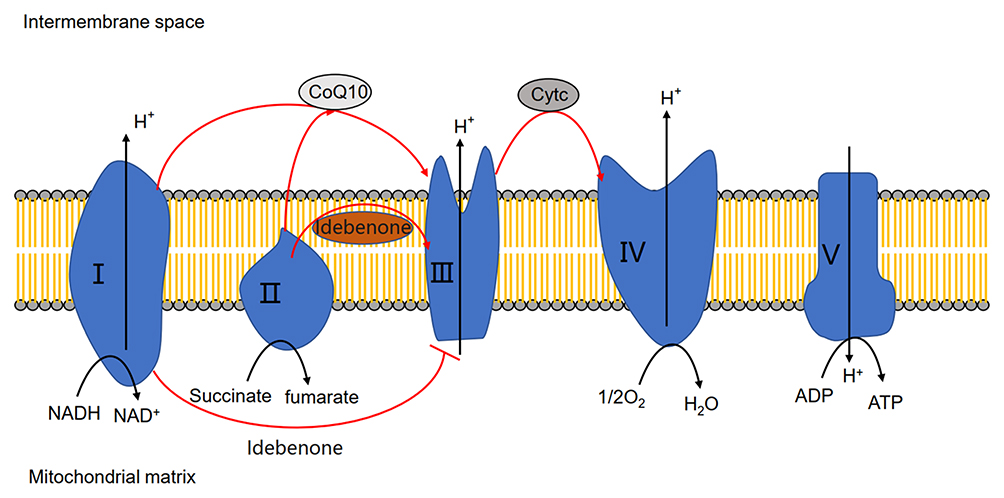 |
Figure 2 The role of idebenone and CoQ10 in mitochondrial electron transport chain. |
Idebenone and Cancers
Idebenone and Breast Cancer
Breast cancer, one of the most prevalent cancers diagnosed globally, accounted for an estimated 2.3 million new cases in 2020.21 With approximately 685,000 deaths, it was responsible for 16% of cancer deaths in female individuals.22,23
Among breast cancers, the triple-negative breast cancer (TNBC) stands out as a particularly aggressive form characterized by the absence of estrogen receptor, progesterone receptor, and human epidermal growth factor 2 protein expression. TNBC often presents as one of high-grade tumors associated with elevated rates of relapse and mortality, making this disease subtype a clinical challenge to treat, and necessitating the development of novel and more effective targeted therapies or combinations.24–27 A recent study conducted by a team of Chinese researchers investigated the potential therapeutic role of idebenone in TNBC. The results demonstrated that idebenone exerted inhibitory effects on TNBC through the GADD45/CyclinB/CDK1 signaling pathway, thus further impeded the proliferation, colony formation, migration, and invasion of TNBC cells, while halted the cell cycle in the G2/M phase. Additionally, idebenone disrupted mitochondrial membrane potential and promoted mitophagy, thereby activating cell autophagy via the AMPK/mTOR pathway and further suppressing TNBC cell proliferation28 (Table 2).
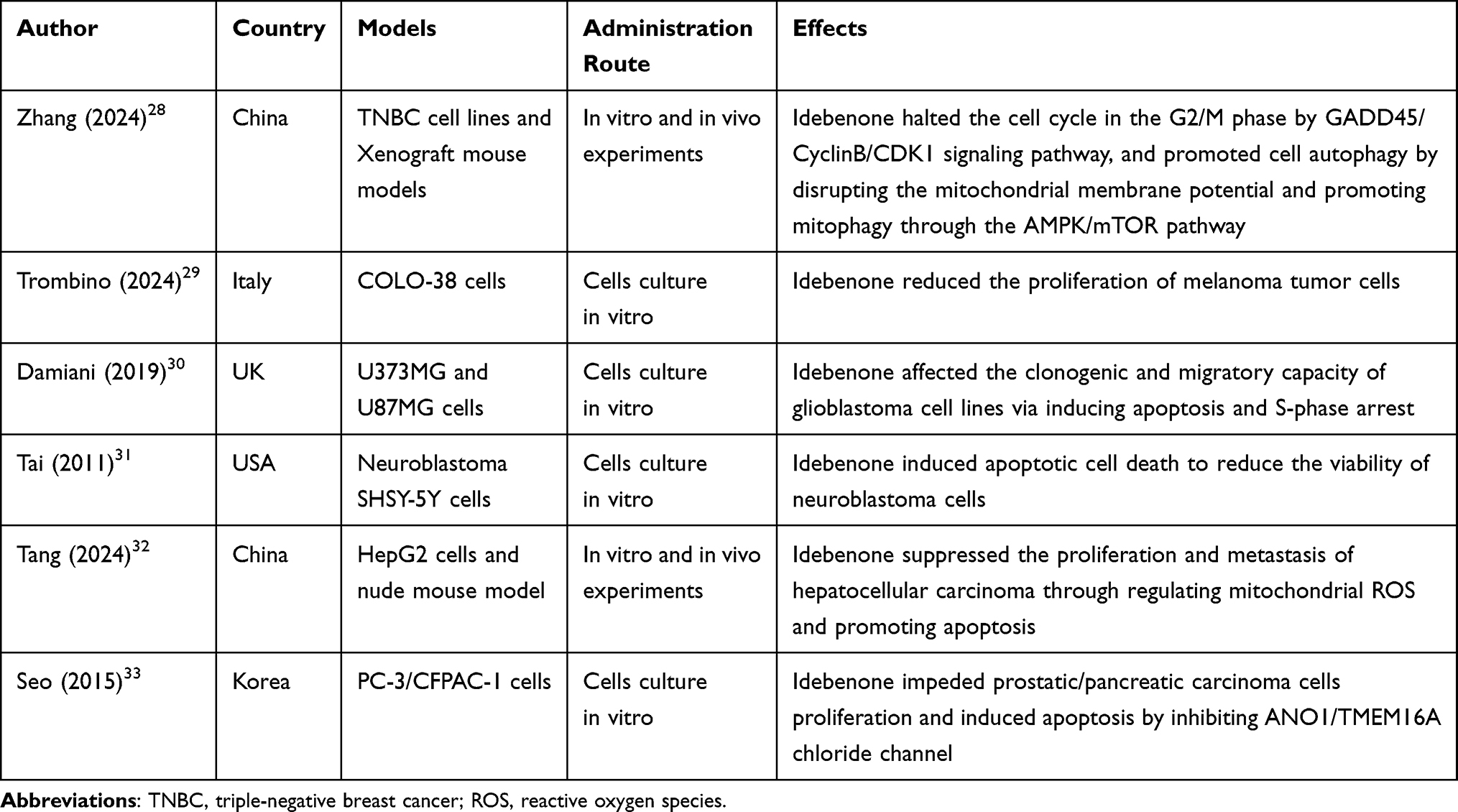 |
Table 2 The Anti-Tumor Effects of Idebenone |
Idebenone and Melanoma
Melanoma, characterized as a “ROS-driven” malignancy, represents the most fatal form of skin cancer originating from the malignant transformation of melanocytes. Melanocytes are pigment-producing cells primarily found in the skin, but can also be present in the eyes, ears, gastrointestinal tract, and oral and genital cavities.34–36 Currently, early surgical intervention remains the optimal treatment for melanoma, with no established standard adjuvant therapy available for this cancer.37,38
In recent years, one of the most promising approaches in melanoma treatment involves utilizing the drug delivery systems as carriers capable of delivering therapeutic agents to the tumor microenvironment. This strategy aims to prevent degradation of the active ingredient, improve release kinetics, hinder premature drug metabolism before reaching the target site, and enhance the safety and efficacy profiles of adjuvant cancer therapy.39 A noteworthy example is the utilization of microneedle-assisted topical delivery of idebenone-loaded bioadhesive nanoparticles, which has demonstrated a long-lasting protective effect against skin damage. This approach was shown to reduce levels of ROS and advanced glycation end-products in skin tissues, while also suppress melanogenesis.40 Sonia Trombino et al designed microparticles using silk fibroin and epifibroin 0039, silk-derived proteins loaded with idebenone.29 Efficacy studies revealed a decrease in the proliferation of COLO-38 melanoma tumor cells, and safety assessments confirmed that the microparticles were non-cytotoxic. Analysis of proinflammatory markers CD54 and CD86 indicated that the silk fibroin-based particles did not possess prosensitizing activity. These findings substantiated the effectiveness of idebenone-loaded silk protein microparticles in reducing the proliferation of melanoma cells without cytotoxicity (Table 2).
Idebenone and Neural Tumors
Glioblastoma, previously known as glioblastoma multiforme, represents the most prevalent and aggressive form among infiltrative gliomas, a group of primary malignant tumors originating from the central nervous system.41 Despite recent advancements in multimodality therapy for glioblastoma, which includes surgical resection, radiotherapy, chemotherapy, targeted therapy, and supportive care, the overall prognosis remains unfavorable, with long-term survival being rare.42,43 Idebenone shows promise as a potential anti-cancer agent for glioblastoma.30 In experiments conducted on two glioblastoma cell lines, U373MG and U87MG, idebenone demonstrated a time- and concentration-dependent decrease in cell viability. It also affected clonogenic and migratory capacity, and down-regulated p21 protein expression. Furthermore, idebenone enhanced the cytotoxic effects of two known anti-proliferative agents, temozolomide and oxaliplatin. Mechanistically, idebenone likely exerted its effects through cell cycle dysregulation, as evidenced by flow cytometric cell cycle analysis revealing S-phase arrest in U87MG cells. Additionally, the down-regulation of caspase-3 protein expression was observed in U373MG cells, indicating idebenone-induced apoptosis, which was confirmed by flow cytometric Annexin V/propidium iodide staining (Table 2).
Neuroblastoma is a malignancy that arises in the sympathetic nervous system, particularly sympathoadrenal progenitor cells, which differentiate into adrenal chromaffin cells and sympathetic ganglion cells.44 As the most common extracranial solid tumor in children, neuroblastoma accounts for up to 15% of childhood cancer-related mortality. Unfortunately, it carries a poor prognosis, with 5-year event-free survival rates ranging from 50% to 60%.45,46 The genetic, morphological, and clinical heterogeneity of neuroblastomas poses challenges for existing treatment modalities.47 Kwok-Keung Tai et al discovered that idebenone, at high concentrations, induced apoptotic cell death in dopaminergic neuroblastoma SHSY-5Y cells.31 Exposure of SHSY-5Y cells to idebenone for 72 hours at 25um or above concentration resulted in the reduced cell viability, as determined by MTT assay, and induced significant amount of cell death revealed by extensive trypan blue-positive staining. Idebenone-induced cell death was apoptotic in nature, which was characterized by genomic DNA fragmentation and accumulation of cytochrome c in the cytosol. Through a series of experiments, idebenone was proven be a viable therapeutic option for neuroblastoma as it was capable of inducing apoptosis (Table 2).
Idebenone and Hepatocellular Carcinoma
Hepatocellular carcinoma, ranked as the sixth most prevalent malignancy and the fourth leading cause of cancer-related mortality worldwide,48 commonly develops in individuals with chronic liver diseases such as viral hepatitis, alcohol-related liver disease (ALD), and nonalcoholic liver diseases.49 The management of hepatocellular carcinoma patients typically involves a multidisciplinary approach, with collaboration among surgeons, medical oncologists, radiation oncologists, and interventional radiologists to ensure the optimal care.50 However, the overall survival rate for hepatocellular carcinoma remains poor, with a median survival of 6–10 months, highlighting the urgent need for novel therapeutic options.51,52
Studies have reported that hepatocellular carcinoma progression and metastasis are closely associated with altered mitochondrial metabolism, encompassing mitochondrial stress responses, metabolic reprogramming, and mitoribosomal defects.53 In a recently published study, researchers discovered that idebenone exhibited potent suppression of proliferation and metastasis in hepatocellular carcinoma by regulating mitochondrial ROS.32 For one thing, idebenone effectively decreased the cell viability, inhibited the invasion and migration of HepG2 cells revealed by CCK-8, Wound-Healing and Transwell assays. Furthermore, intracellular ROS detection revealed that idebenone significantly reduced the total ROS level and mitochondrial ROS level, thereby alleviating oxidative damage. For another, the results indicated that idebenone promoted the apoptosis, while inhibited the tumorigenic and metastasis ability of tumor cells in vivo, according to the nude mouse model with HepG2 cells (Table 2).
Idebenone and Other Cancers
Oncogenes, which play a direct or indirect role in promoting cancer proliferation and progression, serve as drivers of tumorigenesis.54,55 Numerous studies have described the correlation between the expression of ion channels and tumorigenesis.56,57 Anoctamin 1 (ANO1), a calcium-activated chloride channel (CaCC) is frequently overexpressed in various cancer types and associated with poor prognosis.58 In a study conducted by Yohan Seo et al, it was discovered that idebenone exhibited potent inhibition of the ANO1/CaCC channel activity in prostatic carcinoma PC-3 and pancreatic carcinoma CFPAC-1 cells. Furthermore, idebenone significantly reduced cell proliferation, inhibited cell migration, and induced apoptosis in these cells.33 These findings suggest that idebenone, as a novel ANO1 inhibitor, holds promise as a potential candidate for the development of innovative therapeutic agents for the prevention and treatment of cancer (Table 2).
Idebenone and Cardiovascular Diseases
Idebenone and Atherosclerosis
Atherosclerosis, a progressive inflammatory disease triggered by excessive oxidized low-density lipoprotein (ox-LDL), underpins various cardiovascular diseases, such as peripheral artery disease, acute coronary syndrome, and stroke.59,60 Its development involves a complex interplay of abnormal lipid transport and metabolism, impaired endothelial function, inflammation, and oxidative stress.61
One of studies investigating idebenone supplementation in atherosclerotic disease focused on cultured vascular endothelial cells from fetal bovine aorta. The study revealed that incubation with idebenone inhibited the toxicity of oxLDL, without affecting copper-induced modification of LDL. These findings suggested that the protective effects of idebenone against oxLDL-induced endothelial toxicity could be beneficial in inhibiting atherosclerosis development.62 More recent studies have delved into specific signaling pathways or mechanisms associated with atherosclerosis. Through the experimental model using oxLDL-induced human umbilical vein endothelial cells (HUVECs), Pengfei Lin et al demonstrated that idebenone showed promise as a treatment or preventive agent for atherosclerosis. Idebenone not only inhibited apoptosis induced by oxLDL through the mitochondrial-dependent apoptotic pathway but also protected against oxLDL-mediated cytotoxicity via GSK3β/β-catenin signaling pathways.63 Subsequently, researchers further confirmed that idebenone held therapeutic potential for patients with atherosclerosis by improving mitochondrial dysfunction and inhibiting oxidative stress through the inhibition of NOD-, LRR-, and pyrin domain-containing protein 3 (NLRP3) activation via the SIRT3-SOD2-mtROS pathway. On the one hand, idebenone significantly regulated the expression of SIRT3, SOD2, and NLRP3 both in vivo and in vitro. On the other hand, idebenone protected against endothelial cell damage and inhibited the production of mtROS in cholesterol-treated HUVECs64 (Table 3).
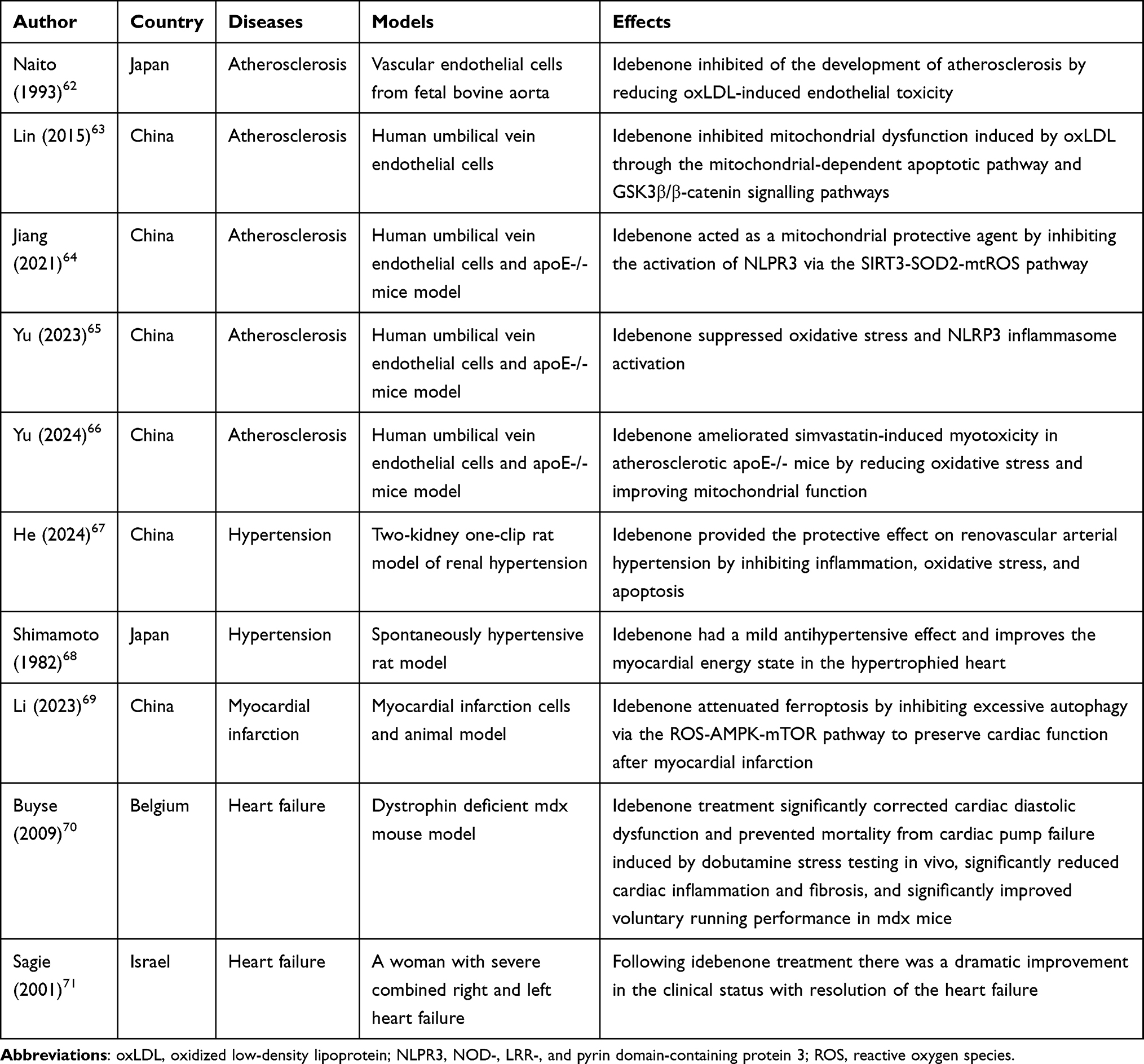 |
Table 3 The Cardioprotective Effects of Idebenone |
Statins are the first-line choice for protecting against atherosclerosis due to their LDL-lowering and anti-inflammatory effects.72 Statin-mediated inhibition of the NLRP3 inflammasome has been observed both in vivo and in vitro.73,74 Min Tong et al aimed to investigate the anti-atherosclerotic effect of combining idebenone with statins, which could offer an improved therapeutic option. Their study suggested that the combination of idebenone and rosuvastatin appeared to be a promising strategy for further preventing atherosclerosis by suppressing oxidative stress and NLRP3 inflammasome activation in both in vivo and in vitro settings.65 Furthermore, another study from the same team reported that idebenone ameliorated simvastatin-induced myotoxicity in atherosclerotic ApoE-/- mice by reducing oxidative stress and improving mitochondrial function66 (Table 3).
Idebenone and Hypertension
Hypertension, defined as persistently elevated systolic blood pressure greater than 140 mmHg and/or diastolic blood pressure of at least 90 mmHg according to the guidelines of the International Society of Hypertension, affects approximately 33% of the global population of 8 billion individuals.75–77 It represents a significant risk factor for cardiovascular events, including heart attack, stroke, myocardial infarction, heart failure, and renal failure. The risk of mortality from these conditions increases twofold with every 20 mmHg rise in systolic blood pressure and every 10 mmHg increase in diastolic blood pressure.78,79
As the most influential modifiable risk factor for overall morbidity and mortality, several studies have explored the use of idebenone in hypertension (Table 3). By employing the two-kidney one-clip rat model of renovascular arterial hypertension, it was demonstrated that idebenone exerted protective effects on the kidneys through its suppressive actions on inflammation, oxidative stress, and apoptosis. These findings might offer potential guidance for the use of idebenone in managing renovascular arterial hypertension.67 N. Shimamoto et al also confirmed that idebenone exhibited a mild antihypertensive effect and improved the myocardial energy state in hypertrophied hearts during the sustained phase of hypertension in spontaneously hypertensive rats.68
Idebenone and Myocardial Infarction
Myocardial infarction, one of the life-threatening coronary-associated pathologies, is characterized by sudden cardiac death, and carries a high mortality rate.80,81 Regardless of whether the culprit coronary artery undergoes prompt revascularization, millions of cardiomyocytes die from persistent ischemia and hypoxia following myocardial infarction.82 Residual ischemia in the peri-infarct border zone leads to further damage to cardiomyocytes, resulting in a progressive decline in contractile function.83 Currently, no treatment has successfully increased vascularization in the infarcted heart.
Emerging evidence suggests that ROS-induced lipid peroxidation contributes to autophagy and ferroptosis, leading to the loss of healthy myocardium and subsequent dysfunction of cardiac tissue.84,85 Therefore, it is crucial to identify drugs that can alleviate autophagy and ferroptosis while providing cardioprotection after myocardial infarction. Demin Li et al confirmed that idebenone effectively prevented excessive autophagy and subsequent ferroptosis through modulation of the ROS-AMPK-mTOR pathway axis.69 More importantly, idebenone demonstrated its cardioprotective function by regulating ROS-dependent autophagy and inhibiting ferroptosis in a mouse model of myocardial infarction. These findings paved the way for future clinical translation of idebenone in the management of myocardial infarction (Table 3).
Idebenone and Heart Failure
Heart failure, characterized by a complex and life-threatening clinical syndrome involving structural and/or functional impairment of cardiac blood ejection, is associated with substantial morbidity and mortality, reduced functional capacity and quality of life, and high economic burden.86,87 It affects a staggering population of over 64 million individuals worldwide,88 making efforts to alleviate its social and economic impact a critical global public health priority.
In a long-term blinded placebo-controlled study, idebenone treatment demonstrated notable benefits. It effectively corrected cardiac diastolic dysfunction, prevented the development of lethal acute heart failure induced by dobutamine stress protocol, reduced cardiac inflammation and fibrosis, and improved voluntary running performance in dystrophin-deficient mdx mice.70 Furthermore, T. Lerman-Sagie et al reported a case of a woman with severe combined right and left heart failure caused by mitochondrial cardiomyopathy. Remarkably, her clinical condition experienced a remarkable improvement, with resolution of heart failure following idebenone treatment71 (Table 3).
Idebenone and Diabetes Mellitus
Diabetes mellitus, an irreversible and chronic metabolic disorder indicated by hyperglycemia, arises from insufficient insulin levels that impede the physiological disposal of glucose and hinder energy storage in adipose tissue, muscle, and liver. This condition leads to complications affecting multiple organs and systems, reducing quality of life and increasing mortality rates.89,90 Diabetes mellitus is traditionally classified into various clinical categories, including type 1 diabetes mellitus (T1DM), type 2 diabetes mellitus (T2DM), gestational diabetes mellitus, and other specific types resulting from genetic causes, exocrine pancreatic disorders, or medications.91 As a global pandemic now, our understanding of the pathophysiology, treatment, and prevention about diabetes mellitus has significantly expanded. It is noteworthy that idebenone has emerged as a novel clinical drug for diabetes mellitus (Table 4).
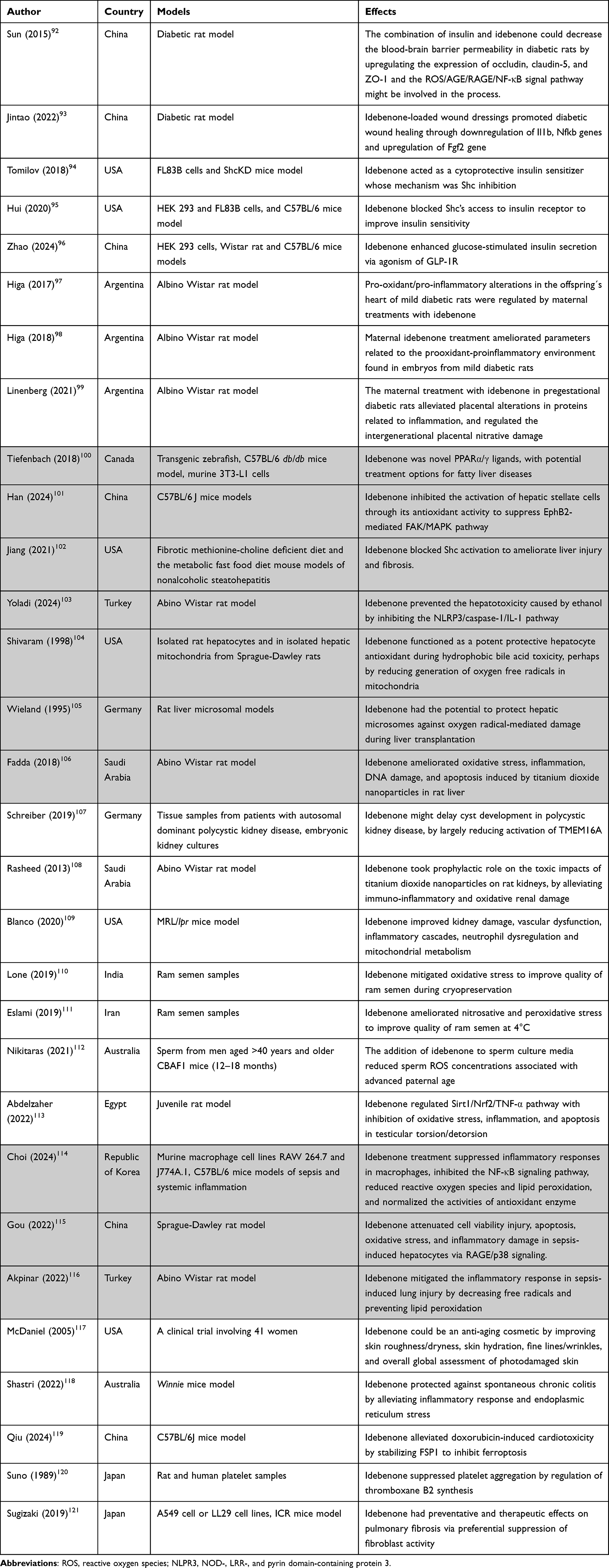 |
Table 4 The Pharmacological Effects of Idebenone in Diabetes Mellitus, Liver Diseases, Urogenital Diseases, Sepsis and Other Diseases Beyond Neurological Fields |
In a diabetic rat model, it was demonstrated that the administration of insulin and idebenone reduced blood-brain barrier permeability by upregulating protein expressions of occludin, claudin-5, and ZO-1, suggesting that the combined therapy exerted a synergistic or enhanced effect.92 The ROS/AGE/RAGE/NF-κB signaling pathway might be involved in the regulation of blood-brain barrier permeability by insulin and idebenone in diabetes mellitus.
Diabetic wounds pose challenges due to various pathophysiological factors involved in their development and progression. Consequently, researchers are continuously seeking alternative solutions. Recent research using a rat model of diabetic wounds showed that idebenone-loaded wound dressings promoted diabetic wound healing by reducing oxidative stress, modulating inflammation, and promoting the formation of granulation tissue during the wound healing process.93
As for T2DM, Gino Cortopassi et al reported that idebenone dose-dependently decreased the interaction between SHC and the insulin receptor at pharmacologically relevant concentrations at which it sensitized cells and animals to insulin, indicating that idebenone should be considered for the treatment of insulin resistance and T2DM, particularly in patients receiving corticosteroids.94,95,122 Additionally, Xin Zhao et al identified, for the first time, that idebenone promoted glucose-dependent insulin secretion through agonism of GLP-1R, leading to the reduced blood glucose levels in mice. This discovery offered a potential therapeutic strategy for the prevention and treatment of metabolic diseases such as T2DM.96
Maternal diabetes has implications for the metabolic and cardiovascular health of offspring. A team from the University of Buenos Aires investigated the effect of idebenone on the intergenerational programming of gestational diabetes mellitus. Their initial study revealed evident cardiac alterations in the offspring of mild diabetic rats, while maternal treatment with idebenone prevented these alterations in the offspring’s hearts.97 Another study found that the antioxidant properties of idebenone inhibited the increases in markers of prooxidant and proinflammatory processes in embryos from mild diabetic rats during organogenesis.98 Furthermore, it was reported that idebenone alleviated placental alterations in proteins related to inflammation and regulated intergenerational placental nitrative damage.99
Idebenone and Liver Diseases
Liver disease is responsible for two million deaths annually, accounting for 4% of all deaths.123,124 Numerous studies have reported on the liver-protective effects of idebenone (Table 4).
A zebrafish screen identified idebenone as a novel ligand for PPARα/γ, suggesting its potential as a treatment option for fatty liver diseases.100 In two mouse models of liver fibrosis, idebenone decreased hepatic injury through its antioxidant activity and inhibition of EphB2 function.101 Additionally, as the first small-molecule SHC inhibitor drug,94 idebenone ameliorated liver injury and fibrosis in two mouse models of nonalcoholic steatohepatitis.102 By inhibiting the NLRP3/caspase-1/IL-1 pathway, idebenone also prevented ethanol-induced hepatotoxicity in rats.103 Moreover, idebenone acted as a potent protective hepatocyte antioxidant during hydrophobic bile acid toxicity, perhaps by reducing the generation of oxygen free radicals in mitochondria.104 Additionally, during liver transplantation, idebenone showed potential in protecting hepatic microsomes against oxygen radical-mediated damage.105
Nano-sized titanium dioxide, a commonly used metallic nanoparticle, can accumulate and cause toxicity in human and animal organs. Excess oral administration of titanium powder induces liver damage, leading to an increase in the ALT/AST ratio, lactate dehydrogenase activity, liver weight, and hepatocyte necrosis.125–127 Evidence suggested that idebenone could improve liver injury induced by nano-sized titanium dioxide, given idebenone had antifibrotic and angiostatic potential, and reduced oxidative stress, inflammation, DNA damage, and apoptosis in rat liver.106,128,129
Idebenone and Urogenital Diseases
Urogenital diseases are the result of an imbalance of the normal homeostasis of the urinary and reproductive tracts brought about by hormonal, environmental, and management-related stress factors. With the increasing number of elderly patients with comorbidities, the prevalence of these diseases is projected to rise in the coming decades.130 Therefore, it is crucial to ensure widespread access and affordability of new-generation protective drugs to prevent the development and delay the progression of urogenital diseases.
It was demonstrated that idebenone might be powerful therapeutic approaches to delay cyst development in polycystic kidney disease, by largely reducing activation of TMEM16A.107 Meanwhile, idebenone had the potential to take prophylactic role on the toxic impacts of titanium dioxide nanoparticles on rat kidneys, by alleviating immuno-inflammatory and oxidative renal damage.108 Also, idebenone was found to mitigate kidney damage, improve vascular dysfunction, inflammatory cascades and neutrophil dysregulation, suggesting the therapeutic potential in systemic lupus erythematosus.109 Moreover, idebenone was reported to improve quality of ram semen by mitigating oxidative stress.110,111 For another, the addition of idebenone to sperm culture media reduced sperm ROS concentrations associated with advanced paternal age, thus further improved fertilization rates, embryo quality and implantation rates after in vitro fertilization.112 Furthermore, idebenone reduced testicular ischemia-reperfusion injury in the juvenile rat testicular torsion/detorsion model by limiting oxidative stress, inflammation, and apoptosis through modulation of the Sirt1/Nrf2/TNF-pathway113 (Table 4).
Idebenone and Sepsis
Sepsis is a life-threatening condition characterized by the dysregulation of the host response to infection, resulting in organ dysfunction and failure.131,132 Despite advances in clinical recognition and management, sepsis remains a global health concern and a major contributor to mortality.133,134 Increasing studies have succeeded to confirm efficacy of intervention therapies amid sepsis, including precision medicine and personalized therapies.135
Idebenone exerted therapeutic effects in mice models of cecal ligation puncture-induced sepsis and lipopolysaccharide-induced inflammation. Meanwhile, in vitro experiments showed that idebenone treatment ameliorated inflammatory responses in macrophages, inhibited the NF-κB signaling pathway, reduced ROS and lipid peroxidation, and normalized the activities of antioxidant enzyme.114 Moreover, in vivo and in vitro experiments revealed that idebenone alleviated cell viability injury, apoptosis, oxidative stress, and inflammatory damage in sepsis--induced liver injury via the RAGE/p38 signaling pathway,115 and against sepsis-induced lung injury by decreasing free radicals and preventing lipid peroxidation116 (Table 4).
Idebenone and Other Diseases
Idebenone has also shown potential in various other diseases. A clinical trial involving 41 women showed that skin roughness/dryness, skin hydration, fine lines/wrinkles, and overall global assessment of photodamaged skin were improved after six weeks of using 0.5% and 1.0% idebenone, suggesting the great potential of idebenone to be anti-aging cosmetics.117 In Winnie mice, idebenone could represent a potential therapeutic approach against spontaneous chronic colitis by alleviating inflammatory response and endoplasmic reticulum stress.118 Besides, it was proposed that idebenone attenuated doxorubicin-mediated cardiotoxicity by inhibiting ferroptosis via stabilizing of FSP1, making it a promising clinical drug for patients treating with doxorubicin.119 In addition, idebenone suppressed platelet aggregation by regulation of thromboxane B2 synthesis,120 and exerted inhibitory activity on the function of lung fibroblasts121 (Table 4).
Limitations
There are some limitations to be pointed out. On the one hand, the vast majority of the included studies are in vivo and in vitro experiments, absent of enough human studies on the effects of idebenone on diseases beyond neurological conditions. On the other hand, clinical studies often lack controlled groups with homogeneous patients in terms of gender, age, or idebenone used. However, according to the broadness of the theme, we have covered all the aspects regarding the pharmacological effects of idebenone beyond neurological diseases as comprehensive as possible.
Conclusions
Although numerous and encouraging findings in the neurological field, in particular for mitochondrial optic neuropathies, with idebenone being the only currently approved therapy into clinical practice across Europe, data about idebenone among other pathological disorders are still limited, with unknown challenges in clinical translation of idebenone beyond neurological diseases. Consequently, the objective of this study is to comprehensively review and explore the potential therapeutic uses of idebenone in various non-neurological disorders, including cancers, cardiovascular diseases, diabetes mellitus, liver diseases, urogenital diseases, sepsis, and other diseases. Firstly, idebenone acts as an electron carrier in the respiratory chain, that promotes the production of ATP. In addition to impairing lipid peroxidation, idebenone, as a powerful antioxidant, is capable of detoxifying a wide variety of free radicals, including peroxyl and tyrosyl radicals and peroxynitrite. Moreover, idebenone also functions as a novel anti-inflammatory agent in protecting against tissue damage, and decreased the expression of inflammatory enzymes and cytokines. Therefore, idebenone possesses potential therapeutic application in cancers, cardiovascular diseases, diabetes mellitus, liver diseases, urogenital diseases, sepsis, and other diseases. Despite these findings are based on cell and animal experiments, the preclinical data not only pave the way for the early human trials which have confirmed the feasibility and safety of idebenone, but remind that the further validation is crucial and necessary, through well-designed, long-term follow-up clinical trials in the future.
Author Contributions
All authors made a significant contribution to the work reported, whether that is in the conception, study design, execution, acquisition of data, analysis and interpretation, or in all these areas; took part in drafting, revising or critically reviewing the article; gave final approval of the version to be published; have agreed on the journal to which the article has been submitted; and agree to be accountable for all aspects of the work.
Funding
This research was supported by the National Natural Science Foundation of China (82400356), the Project Program of National Clinical Research Center for Geriatric Disorders (2021LNJJ17), the Natural Science Foundation of Hunan Province (2022JJ30925), and the National Multidisciplinary Cooperative Diagnosis and Treatment Capacity Building Project for Major Diseases (Lung Cancer grant number: z027002). Funding agencies were not involved in the design and conduct of the study, in the collection, analysis, and interpretation of data, or the preparation, review, or approval of the manuscript.
Disclosure
All authors declare that they have no known conflicts of interests or personal relationships that could have appeared to influence the work reported in this paper.
References
1. Gueven N, Woolley K, Smith J. Border between natural product and drug: comparison of the related benzoquinones idebenone and coenzyme Q10. Redox Biol. 2015;4:289–295. doi:10.1016/j.redox.2015.01.009
2. Villalaín J. Location and interaction of idebenone and mitoquinone in a membrane similar to the inner mitochondrial membrane. Comparison with ubiquinone 10. Free Radic Biol Med. 2024;222:211–222. doi:10.1016/j.freeradbiomed.2024.06.017
3. Klopstock T, Zeng LH, Priglinger C. Leber’s hereditary optic neuropathy - current status of idebenone and gene replacement therapies. Med Genet. 2025;37(1):57–63. doi:10.1515/medgen-2024-2066
4. Shehata MK, Ismail AA, Kamel MA. Nose to brain delivery of astaxanthin-loaded nanostructured lipid carriers in rat model of Alzheimer’s disease: preparation, in vitro and in vivo evaluation. Int J Nanomed. 2023;18:1631–1658. doi:10.2147/IJN.S402447
5. Jia Z, Yu X, Wang X, Li J. Therapeutic effects of coenzyme Q10 in the treatment of ischemic stroke. Curr Nutr Rep. 2024;13(4):679–690. doi:10.1007/s13668-024-00568-2
6. Gueven N, Ravishankar P, Eri R, Rybalka E. Idebenone: when an antioxidant is not an antioxidant. Redox Biol. 2021;38:101812. doi:10.1016/j.redox.2020.101812
7. Suno M, Nagaoka A. Inhibition of lipid peroxidation by a novel compound, idebenone (CV-2619). Jpn J Pharmacol. 1984;35(2):196–198. doi:10.1254/jjp.35.196
8. Di Prospero NA, Baker A, Jeffries N, Fischbeck KH. Neurological effects of high-dose idebenone in patients with Friedreich’s ataxia: a randomised, placebo-controlled trial. Lancet Neurol. 2007;6(10):878–886. doi:10.1016/S1474-4422(07)70220-X
9. Barboni P, Valentino ML, La Morgia C, et al. Idebenone treatment in patients with OPA1-mutant dominant optic atrophy. Brain. 2013;136(Pt 2):e231. doi:10.1093/brain/aws280
10. Buyse GM, Voit T, Schara U, et al. Efficacy of idebenone on respiratory function in patients with Duchenne muscular dystrophy not using glucocorticoids (DELOS): a double-blind randomised placebo-controlled phase 3 trial. Lancet. 2015;385(9979):1748–1757. doi:10.1016/S0140-6736(15)60025-3
11. Yu-Wai-Man P, Carelli V, Newman NJ, et al. Therapeutic benefit of idebenone in patients with Leber hereditary optic neuropathy: the LEROS nonrandomized controlled trial. Cell Rep Med. 2024;5(3):101437. doi:10.1016/j.xcrm.2024.101437
12. Geromel V, Darin N, Chrétien D, et al. Coenzyme Q(10) and idebenone in the therapy of respiratory chain diseases: rationale and comparative benefits. Mol Genet Metab. 2002;77(1–2):21–30. doi:10.1016/s1096-7192(02)00145-2
13. Di Prospero NA, Sumner CJ, Penzak SR, Ravina B, Fischbeck KH, Taylor JP. Safety, tolerability, and pharmacokinetics of high-dose idebenone in patients with Friedreich ataxia. Arch Neurol. 2007;64(6):803–808. doi:10.1001/archneur.64.6.803
14. Becker C, Bray-French K, Drewe J. Pharmacokinetic evaluation of idebenone. Expert Opin Drug Metab Toxicol. 2010;6(11):1437–1444. doi:10.1517/17425255.2010.530656
15. Nagy IZ. Chemistry, toxicology, pharmacology and pharmacokinetics of idebenone: a review. Arch Gerontol Geriatr. 1990;11(3):177–186. doi:10.1016/0167-4943(90)90063-c
16. Rauchová H, Drahota Z, Bergamini C, Fato R, Lenaz G. Modification of respiratory-chain enzyme activities in brown adipose tissue mitochondria by idebenone (hydroxydecyl-ubiquinone). J Bioenerg Biomembr. 2008;40(2):85–93. doi:10.1007/s10863-008-9134-1
17. Jaber S, Polster BM. Idebenone and neuroprotection: antioxidant, pro-oxidant, or electron carrier? J Bioenerg Biomembr. 2015;47(1–2):111–118. doi:10.1007/s10863-014-9571-y
18. King MS, Sharpley MS, Hirst J. Reduction of hydrophilic ubiquinones by the flavin in mitochondrial NADH: ubiquinone oxidoreductase (Complex I) and production of reactive oxygen species. Biochemistry. 2009;48(9):2053–2062. doi:10.1021/bi802282h
19. Imada I, Fujita T, Sugiyama Y, Okamoto K, Kobayashi Y. Effects of idebenone and related compounds on respiratory activities of brain mitochondria, and on lipid peroxidation of their membranes. Arch Gerontol Geriatr. 1989;8(3):323–341. doi:10.1016/0167-4943(89)90014-9
20. López LC, Quinzii CM, Area E, et al. Treatment of CoQ(10) deficient fibroblasts with ubiquinone, CoQ analogs, and vitamin C: time- and compound-dependent effects. PLoS One. 2010;5(7):e11897. doi:10.1371/journal.pone.0011897
21. Benitez Fuentes JD, Morgan E, de Luna Aguilar A, et al. Global stage distribution of breast cancer at diagnosis: a systematic review and meta-analysis. JAMA Oncol. 2024;10(1):71–78. doi:10.1001/jamaoncol.2023.4837
22. Arnold M, Morgan E, Rumgay H, et al. Current and future burden of breast cancer: global statistics for 2020 and 2040. Breast. 2022;66:15–23. doi:10.1016/j.breast.2022.08.010
23. Sung H, Ferlay J, Siegel RL, et al. Global cancer statistics 2020: GLOBOCAN estimates of incidence and mortality worldwide for 36 cancers in 185 countries. CA Cancer J Clin. 2021;71(3):209–249. doi:10.3322/caac.21660
24. Kwa MJ, Adams S. Checkpoint inhibitors in triple-negative breast cancer (TNBC): where to go from here. Cancer. 2018;124(10):2086–2103. doi:10.1002/cncr.31272
25. Shiao SL, Gouin KH, Ing N, et al. Single-cell and spatial profiling identify three response trajectories to pembrolizumab and radiation therapy in triple negative breast cancer. Cancer Cell. 2024;42(1):70–84.e8. doi:10.1016/j.ccell.2023.12.012
26. Wang C, Fan P, Wang Q. Evolving therapeutics and ensuing cardiotoxicities in triple-negative breast cancer. Cancer Treat Rev. 2024;130:102819. doi:10.1016/j.ctrv.2024.102819
27. Yuan P, Ma N, Xu B. Poly (adenosine diphosphate-ribose) polymerase inhibitors in the treatment of triple-negative breast cancer with homologous repair deficiency. Med Res Rev. 2024;44(6):2774–2792. doi:10.1002/med.22058
28. Zhang Y, Yang F, Wu J, Huang J, Li P, Huang G. Idebenone exerts anti-triple negative breast cancer effects via dual signaling pathways of GADD45 and AMPK. Nutr Cancer. 2024;76(4):379–392. doi:10.1080/01635581.2024.2314320
29. Trombino S, Sole R, Curcio F, et al. Microparticles made with silk proteins for melanoma adjuvant therapy. Gels. 2024;10(8):485. doi:10.3390/gels10080485
30. Damiani E, Yuecel R, Wallace HM. Repurposing of idebenone as a potential anti-cancer agent. Biochem J. 2019;476(2):245–259. doi:10.1042/BCJ20180384
31. Tai KK, Pham L, Truong DD. Idebenone induces apoptotic cell death in the human dopaminergic neuroblastoma SHSY-5Y cells. Neurotox Res. 2011;20(4):321–328. doi:10.1007/s12640-011-9245-z
32. Tang J, Tang R, Xue F, Yi C, Li W, Liu C. Idebenone inhibiting growth and metastasis of hepatocellular carcinomavia regulating mitochondrial reactive oxygen species. Chin J Cancer Prev Treat. 2024;31(6):354–360.
33. Seo Y, Park J, Kim M, et al. Inhibition of ANO1/TMEM16A chloride channel by idebenone and its cytotoxicity to cancer cell lines. PLoS One. 2015;10(7):e0133656. doi:10.1371/journal.pone.0133656
34. Saginala K, Barsouk A, Aluru JS, Rawla P, Barsouk A. Epidemiology of melanoma. Med Sci. 2021;9(4):63. doi:10.3390/medsci9040063
35. Guo W, Wang H, Li C. Signal pathways of melanoma and targeted therapy. Signal Transduct Target Ther. 2021;6(1):424. doi:10.1038/s41392-021-00827-6
36. Sun Y, Shen Y, Liu Q, et al. Global trends in melanoma burden: a comprehensive analysis from the global burden of disease study, 1990–2021. J Am Acad Dermatol. 2024:S0190–9622(24)02893–7. doi:10.1016/j.jaad.2024.09.035
37. Long GV, Swetter SM, Menzies AM, Gershenwald JE, Scolyer RA. Cutaneous melanoma. Lancet. 2023;402(10400):485–502. doi:10.1016/S0140-6736(23)00821-8
38. Benedusi M, Lee H, Lim Y, Valacchi G. Oxidative state in cutaneous melanoma progression: a question of balance. Antioxidants. 2024;13(9):1058. doi:10.3390/antiox13091058
39. Trombino S, Malivindi R, Barbarossa G, Sole R, Curcio F, Cassano R. Solid lipid nanoparticles hydroquinone-based for the treatment of melanoma: efficacy and safety studies. Pharmaceutics. 2023;15(5):1375. doi:10.3390/pharmaceutics15051375
40. Xie Y, Ye J, Ouyang Y, et al. Microneedle-assisted topical delivery of idebenone-loaded bioadhesive nanoparticles protect against UV-induced skin damage. Biomedicines. 2023;11(6):1649. doi:10.3390/biomedicines11061649
41. Lukas RV, Wainwright DA, Ladomersky E, Sachdev S, Sonabend AM, Stupp R. Newly diagnosed glioblastoma: a review on clinical management. Oncology. 2019;33(3):91–100.
42. Tan AC, Ashley DM, López GY, Malinzak M, Friedman HS, Khasraw M. Management of glioblastoma: state of the art and future directions. CA Cancer J Clin. 2020;70(4):299–312. doi:10.3322/caac.21613
43. Squalli Houssaini A, Lamrabet S, Nshizirungu JP, et al. Glioblastoma vaccines as promising immune-therapeutics: challenges and current status. Vaccines. 2024;12(6):655. doi:10.3390/vaccines12060655
44. Matthay KK, Maris JM, Schleiermacher G, et al. Neuroblastoma. Nat Rev Dis Primers. 2016;2:16078. doi:10.1038/nrdp.2016.78
45. Croteau N, Nuchtern J, LaQuaglia MP. Management of neuroblastoma in pediatric patients. Surg Oncol Clin N Am. 2021;30(2):291–304. doi:10.1016/j.soc.2020.11.010
46. Zhang Y, Zhang WL, Huang DS, et al. Prognostic factors for intermediate- or high-risk neuroblastomas in children in China. BMC Pediatr. 2023;23(1):617. doi:10.1186/s12887-023-04258-w
47. Zafar A, Wang W, Liu G, et al. Molecular targeting therapies for neuroblastoma: progress and challenges. Med Res Rev. 2021;41(2):961–1021. doi:10.1002/med.21750
48. Bray F, Ferlay J, Soerjomataram I, Siegel RL, Torre LA, Jemal A. Global cancer statistics 2018: GLOBOCAN estimates of incidence and mortality worldwide for 36 cancers in 185 countries. CA Cancer J Clin. 2018;68(6):394–424. doi:10.3322/caac.21492
49. Toh MR, Wong EYT, Wong SH, et al. Global epidemiology and genetics of hepatocellular carcinoma. Gastroenterology. 2023;164(5):766–782. doi:10.1053/j.gastro.2023.01.033
50. Brown ZJ, Tsilimigras DI, Ruff SM, et al. Management of hepatocellular carcinoma: a review. JAMA surg. 2023;158(4):410–420. doi:10.1001/jamasurg.2022.7989
51. Goutté N, Sogni P, Bendersky N, Barbare JC, Falissard B, Farges O. Geographical variations in incidence, management and survival of hepatocellular carcinoma in a western country. J Hepatol. 2017;66(3):537–544. doi:10.1016/j.jhep.2016.10.015
52. Brar G, Greten TF, Graubard BI, et al. Hepatocellular carcinoma survival by etiology: a SEER-medicare database analysis. Hepatol Commun. 2020;4(10):1541–1551. doi:10.1002/hep4.1564
53. Lee HY, Nga HT, Tian J, Yi HS. Mitochondrial metabolic signatures in hepatocellular carcinoma. Cells. 2021;10(8):1901. doi:10.3390/cells10081901
54. Allison Stewart C, Tong P, Cardnell RJ, et al. Dynamic variations in epithelial-to-mesenchymal transition (EMT), ATM, and SLFN11 govern response to PARP inhibitors and cisplatin in small cell lung cancer. Oncotarget. 2017;8(17):28575–28587. doi:10.18632/oncotarget.15338
55. Crottès D, Jan LY. The multifaceted role of TMEM16A in cancer. Cell Calcium. 2019;82:102050. doi:10.1016/j.ceca.2019.06.004
56. Becchetti A, Munaron L, Arcangeli A. The role of ion channels and transporters in cell proliferation and cancer. Front Physiol. 2013;4:312. doi:10.3389/fphys.2013.00312
57. Bose T, Cieślar-Pobuda A, Wiechec E. Role of ion channels in regulating Ca2+ homeostasis during the interplay between immune and cancer cells. Cell Death Dis. 2015;6(2):e1648. doi:10.1038/cddis.2015.23
58. Li H, Yu Z, Wang H, et al. Role of ANO1 in tumors and tumor immunity. J Cancer Res Clin Oncol. 2022;148(8):2045–2068. doi:10.1007/s00432-022-04004-2
59. Erol Ç. Atherosclerosis reviewed. Anatol J Cardiol. 2024;28(8):374. doi:10.14744/AnatolJCardiol.2024.8
60. Hansson GK, Hermansson A. The immune system in atherosclerosis. Nat Immunol. 2011;12(3):204–212. doi:10.1038/ni.2001
61. Liao M, He X, Zhou Y, Peng W, Zhao XM, Jiang M. Coenzyme Q10 in atherosclerosis. Eur J Pharmacol. 2024;970:176481. doi:10.1016/j.ejphar.2024.176481
62. Naito M, Hayashi T, Yamada K, Asai K, Yoshimine N, Iguchi A. Protective effects of idebenone on vascular endothelial cells against toxicity induced by oxidatively modified low density lipoprotein. Artery. 1993;20(6):314–323.
63. Lin P, Liu J, Ren M, et al. Idebenone protects against oxidized low density lipoprotein induced mitochondrial dysfunction in vascular endothelial cells via GSK3β/β-catenin signalling pathways. Biochem Biophys Res Commun. 2015;465(3):548–555. doi:10.1016/j.bbrc.2015.08.058
64. Jiang W, Geng H, Lv X, et al. Idebenone protects against atherosclerosis in apolipoprotein E-deficient mice via activation of the SIRT3-SOD2-mtROS pathway. Cardiovasc Drugs Ther. 2021;35(6):1129–1145. doi:10.1007/s10557-020-07018-5
65. Yu W, Jiang W, Wu W, et al. Combining idebenone and rosuvastatin prevents atherosclerosis by suppressing oxidative stress and NLRP3 inflammasome activation. Eur J Pharmacol. 2023;955:175911. doi:10.1016/j.ejphar.2023.175911
66. Yu W, Wu W, Zhao D, et al. Idebenone ameliorates statin-induced myotoxicity in atherosclerotic ApoE-/- mice by reducing oxidative stress and improving mitochondrial function. Biochim Biophys Acta Mol Basis Dis. 2024;1870(5):167157. doi:10.1016/j.bbadis.2024.167157
67. He J, Huang L, Lu L. Idebenone protects the kidneys of rats with renovascular arterial hypertension by inhibiting oxidative stress and apoptosis. Cell Mol Biol. 2024;70(7):180–185. doi:10.14715/cmb/2024.70.7.26
68. Shimamoto N, Tanabe M, Imamoto T, Hirata M. effects of 2,3-dimethoxy-5-methyl-6-(10′-hydroxydecyl)-1,4-benzoquinone (CV-2619) on myocardial energy metabolism in the hypertrophied heart of spontaneously hypertensive rats. Nihon Yakurigaku Zasshi Folia Pharmacol Jpn. 1982;80(4):299–306.
69. Li D, Zhang G, Wang Z, et al. Idebenone attenuates ferroptosis by inhibiting excessive autophagy via the ROS-AMPK-mTOR pathway to preserve cardiac function after myocardial infarction. Eur J Pharmacol. 2023;943:175569. doi:10.1016/j.ejphar.2023.175569
70. Buyse GM, Van der Mieren G, Erb M, et al. Long-term blinded placebo-controlled study of SNT-MC17/idebenone in the dystrophin deficient mdx mouse: cardiac protection and improved exercise performance. Eur Heart J. 2009;30(1):116–124. doi:10.1093/eurheartj/ehn406
71. Lerman-Sagie T, Rustin P, Lev D, et al. Dramatic improvement in mitochondrial cardiomyopathy following treatment with idebenone. J Inherit Metab Dis. 2001;24(1):28–34. doi:10.1023/a:1005642302316
72. Sørensen AL, Hasselbalch HC, Nielsen CH, Poulsen HE, Ellervik C. Statin treatment, oxidative stress and inflammation in a danish population. Redox Biol. 2019;21:101088. doi:10.1016/j.redox.2018.101088
73. Singh LP. The NLRP3 inflammasome and diabetic cardiomyopathy: editorial to: “rosuvastatin alleviates diabetic cardiomyopathy by inhibiting NLRP3 inflammasome and MAPK pathways in a type 2 diabetes rat model” by beibei luo et al. Cardiovasc Drugs Ther. 2014;28(1):5–6. doi:10.1007/s10557-013-6501-x
74. Tong M, Ren K, Chen L, Zhao GJ. Statin ameliorates adipose inflammation via NLRP3 suppression. Int J Cardiol. 2020;301:154. doi:10.1016/j.ijcard.2019.10.016
75. Charchar FJ, Prestes PR, Mills C, et al. Lifestyle management of hypertension: international society of hypertension position paper endorsed by the world hypertension league and european society of hypertension. J Hypertens. 2024;42(1):23–49. doi:10.1097/HJH.0000000000003563
76. Tomaszewski M, Itoh H. ISH2022KYOTO hypertension zero declaration. Hypertens Res. 2023;46(1):1–2. doi:10.1038/s41440-022-01068-y
77. NCD Risk Factor Collaboration (NCD-RisC). Worldwide trends in hypertension prevalence and progress in treatment and control from 1990 to 2019: a pooled analysis of 1201 population-representative studies with 104 million participants. Lancet. 2021;398(10304):957–980. doi:10.1016/S0140-6736(21)01330-1
78. Moiz A, Zolotarova T, Eisenberg MJ. Outpatient management of essential hypertension: a review based on the latest clinical guidelines. Ann Med. 2024;56(1):2338242. doi:10.1080/07853890.2024.2338242
79. Bludorn J, Railey K. Hypertension guidelines and interventions. Prim Care. 2024;51(1):41–52. doi:10.1016/j.pop.2023.07.002
80. Salari N, Morddarvanjoghi F, Abdolmaleki A, et al. The global prevalence of myocardial infarction: a systematic review and meta-analysis. BMC Cardiovasc Disord. 2023;23(1):206. doi:10.1186/s12872-023-03231-w
81. Bergmark BA, Mathenge N, Merlini PA, Lawrence-Wright MB, Giugliano RP. Acute coronary syndromes. Lancet. 2022;399(10332):1347–1358. doi:10.1016/S0140-6736(21)02391-6
82. Wang XD, Kang S. Ferroptosis in myocardial infarction: not a marker but a maker. Open Biol. 2021;11(4):200367. doi:10.1098/rsob.200367
83. Avolio E, Campagnolo P, Katare R, Madeddu P. The role of cardiac pericytes in health and disease: therapeutic targets for myocardial infarction. Nat Rev Cardiol. 2024;21(2):106–118. doi:10.1038/s41569-023-00913-y
84. Su LJ, Zhang JH, Gomez H, et al. Reactive oxygen species-induced lipid peroxidation in apoptosis, autophagy, and ferroptosis. Oxid Med Cell Longevity. 2019;2019:5080843. doi:10.1155/2019/5080843
85. Xie J, Yao Y, Wang S, et al. Alleviating oxidative injury of myocardial infarction by a fibrous polyurethane patch with condensed ROS-scavenging backbone units. Adv Healthcare Mater. 2022;11(4):e2101855. doi:10.1002/adhm.202101855
86. Khan MS, Shahid I, Bennis A, Rakisheva A, Metra M, Butler J. Global epidemiology of heart failure. Nat Rev Cardiol. 2024;21(10):717–734. doi:10.1038/s41569-024-01046-6
87. Behnoush AH, Khalaji A, Naderi N, Ashraf H, von Haehling S. ACC/AHA/HFSA 2022 and ESC 2021 guidelines on heart failure comparison. ESC Heart Fail. 2023;10(3):1531–1544. doi:10.1002/ehf2.14255
88. Savarese G, Becher PM, Lund LH, Seferovic P, Rosano GMC, Coats AJS. Global burden of heart failure: a comprehensive and updated review of epidemiology. Cardiovasc Res. 2023;118(17):3272–3287. doi:10.1093/cvr/cvac013
89. Kumar A, Mazumder R, Rani A, Pandey P, Khurana N. Novel approaches for the management of type 2 diabetes mellitus: an update. Curr Diab Rev. 2024;20(4):45–61. doi:10.2174/0115733998261903230921102620
90. Abel ED, Gloyn AL, Evans-Molina C, et al. Diabetes mellitus-progress and opportunities in the evolving epidemic. Cell. 2024;187(15):3789–3820. doi:10.1016/j.cell.2024.06.029
91. American Diabetes Association Professional Practice Committee. Diagnosis and classification of diabetes: standards of care in diabetes-2024. Diabetes Care. 2024;47(Suppl 1). doi:10.2337/dc24-S002
92. Sun YN, Liu LB, Xue YX, Wang P. Effects of insulin combined with idebenone on blood-brain barrier permeability in diabetic rats. J Neurosci Res. 2015;93(4):666–677. doi:10.1002/jnr.23511
93. Jintao Y. Idebenone-loaded wound dressings promote diabetic wound healing through downregulation of Il1b, nfkb genes and upregulation of Fgf2 gene. Res Vet Sci. 2022;151:128–137. doi:10.1016/j.rvsc.2022.07.002
94. Tomilov A, Allen S, Hui CK, Bettaieb A, Cortopassi G. Idebenone is a cytoprotective insulin sensitizer whose mechanism is shc inhibition. Pharmacol Res. 2018;137:89–103. doi:10.1016/j.phrs.2018.09.024
95. Hui C, Tomilov A, Garcia C, et al. Novel idebenone analogs block shc’s access to insulin receptor to improve insulin sensitivity. Biomed Pharmacother. 2020;132:110823. doi:10.1016/j.biopha.2020.110823
96. Zhao X, Zeng Q, Yu S, et al. GLP-1R mediates idebenone-reduced blood glucose in mice. Biomed Pharmacother. 2024;178:117202. doi:10.1016/j.biopha.2024.117202
97. Higa R, Roberti SL, Capobianco E, Fornes D, White V, Jawerbaum A. Pro-oxidant/pro-inflammatory alterations in the offspring´s heart of mild diabetic rats are regulated by maternal treatments with a mitochondrial antioxidant. Reprod Toxicol. 2017;73:269–279. doi:10.1016/j.reprotox.2017.06.051
98. Higa R, Roberti S, Mazzucco MB, White V, Jawerbaum A. Effect of the antioxidant idebenone on maternal diabetes-induced embryo alterations during early organogenesis. Reprod Biomed Online. 2018;37(4):397–408. doi:10.1016/j.rbmo.2018.05.006
99. Linenberg I, Fornes D, Higa R, Jawerbaum A, Capobianco E. Intergenerational effects of the antioxidant idebenone on the placentas of rats with gestational diabetes mellitus. Reprod Toxicol. 2021;104:16–26. doi:10.1016/j.reprotox.2021.06.013
100. Tiefenbach J, Magomedova L, Liu J, et al. Idebenone and coenzyme Q10 are novel PPARα/γ ligands, with potential for treatment of fatty liver diseases. Dis Models Mech. 2018;11(9):dmm034801. doi:10.1242/dmm.034801
101. Han Y, Gao Q, Xu Y, et al. Cysteine sulfenylation contributes to liver fibrosis via the regulation of EphB2-mediated signaling. Cell Death Dis. 2024;15(8):602. doi:10.1038/s41419-024-06997-9
102. Jiang JX, Tomilov A, Montgomery C, Hui CK, Török NJ, Cortopassi G. Shc inhibitor idebenone ameliorates liver injury and fibrosis in dietary NASH in mice. J Biochem Mol Toxicol. 2021;35(10):e22876. doi:10.1002/jbt.22876
103. Yoladi FB, Palabiyik-Yucelik SS, Bahador Zirh E, Halici Z, Baydar T. Effects of idebenone and coenzyme Q10 on NLRP3/caspase-1/IL-1β pathway regulation on ethanol-induced hepatotoxicity in rats. Drug Chem Toxicol. 2024;47(6):1205–1217. doi:10.1080/01480545.2024.2351191
104. Shivaram KN, Winklhofer-Roob BM, Straka MS, et al. The effect of idebenone, a coenzyme Q analogue, on hydrophobic bile acid toxicity to isolated rat hepatocytes and hepatic mitochondria. Free Radic Biol Med. 1998;25(4–5):480–492. doi:10.1016/s0891-5849(98)00077-x
105. Wieland E, Schütz E, Armstrong VW, Küthe F, Heller C, Oellerich M. Idebenone protects hepatic microsomes against oxygen radical-mediated damage in organ preservation solutions. Transplantation. 1995;60(5):444–451. doi:10.1097/00007890-199509000-00007
106. Fadda LM, Hagar H, Mohamed AM, Ali HM. Quercetin and idebenone ameliorate oxidative stress, inflammation, DNA damage, and apoptosis induced by titanium dioxide nanoparticles in rat liver. Dose-Response. 2018;16(4):1559325818812188. doi:10.1177/1559325818812188
107. Schreiber R, Buchholz B, Kraus A, et al. Lipid peroxidation drives renal cyst growth in vitro through activation of TMEM16A. J Am Soc Nephrol. 2019;30(2):228–242. doi:10.1681/ASN.2018010039
108. Al-Rasheed NM, Faddah LM, Mohamed AM, Abdel Baky NA, Al-Rasheed NM, Mohammad RA. Potential impact of quercetin and idebenone against immuno- inflammatory and oxidative renal damage induced in rats by titanium dioxide nanoparticles toxicity. J Oleo Sci. 2013;62(11):961–971. doi:10.5650/jos.62.961
109. Blanco LP, Pedersen HL, Wang X, et al. Improved mitochondrial metabolism and reduced inflammation following attenuation of murine lupus with coenzyme Q10 analog idebenone. Arthritis Rheumatol. 2020;72(3):454–464. doi:10.1002/art.41128
110. Lone FA, Naikoo M, Khatun A, et al. Idebenone improves quality of ram sperm by mitigating oxidative stress during cryopreservation. Cryobiology. 2019;90:15–20. doi:10.1016/j.cryobiol.2019.09.004
111. Eslami M, Jahan-Roshan N, Farrokhi-Ardabili F. Influence of idebenone on ram semen quality stored at 4°C. Reprod Domest Anim. 2019;54(3):486–497. doi:10.1111/rda.13379
112. Nikitaras V, Zander-Fox D, McPherson NO. Improving sperm oxidative stress and embryo quality in advanced paternal age using idebenone in vitro-a proof-of-concept study. Antioxid. 2021;10(7):1079. doi:10.3390/antiox10071079
113. Abdelzaher WY, Mostafa-Hedeab G, Sayed AboBakr Ali AH, et al. Idebenone regulates sirt1/Nrf2/TNF-α pathway with inhibition of oxidative stress, inflammation, and apoptosis in testicular torsion/detorsion in juvenile rats. Hum Exp Toxicol. 2022;41:9603271221102515. doi:10.1177/09603271221102515
114. Choi Y, Cho YL, Park S, et al. Anti-inflammatory effects of idebenone attenuate LPS-induced systemic inflammatory diseases by suppressing NF-κB activation. Antioxid. 2024;13(2):151. doi:10.3390/antiox13020151
115. Gou T, Jin X, Xia J. Idebenone reduces sepsis-induced oxidative stress and apoptosis in hepatocytes via RAGE/p38 signaling. Ann Transl Med. 2022;10(24):1363. doi:10.21037/atm-22-5758
116. Akpinar E, Kutlu Z, Kose D, et al. Protective effects of idebenone against sepsis induced acute lung damage. J Investig Surg. 2022;35(3):560–568. doi:10.1080/08941939.2021.1898063
117. McDaniel DH, Neudecker BA, DiNardo JC, Lewis JA, Maibach HI. Clinical efficacy assessment in photodamaged skin of 0.5% and 1.0% idebenone. J Cosmet Dermatol. 2005;4(3):167–173. doi:10.1111/j.1473-2165.2005.00305.x
118. Shastri S, Shinde T, Perera AP, Gueven N, Eri R. Idebenone protects against spontaneous chronic murine colitis by alleviating endoplasmic reticulum stress and inflammatory response. Biomedicines. 2020;8(10):384. doi:10.3390/biomedicines8100384
119. Qiu H, Huang S, Liu Y, et al. Idebenone alleviates doxorubicin-induced cardiotoxicity by stabilizing FSP1 to inhibit ferroptosis. Acta Pharm Sin B. 2024;14(6):2581–2597. doi:10.1016/j.apsb.2024.03.015
120. Suno M, Terashita Z, Nagaoka A. Inhibition of platelet aggregation by idebenone and the mechanism of the inhibition. Arch Gerontol Geriatr. 1989;8(3):313–321. doi:10.1016/0167-4943(89)90013-7
121. Sugizaki T, Tanaka KI, Asano T, et al. Idebenone has preventative and therapeutic effects on pulmonary fibrosis via preferential suppression of fibroblast activity. Cell Death Discov. 2019;5:146. doi:10.1038/s41420-019-0226-y
122. Dassano A, Loretelli C, Fiorina P. Idebenone and T2D: a new insulin-sensitizing drug for personalized therapy. Pharmacol Res. 2019;139:469–470. doi:10.1016/j.phrs.2018.12.008
123. Younossi ZM, Wong G, Anstee QM, Henry L. The global burden of liver disease. Clin Gastroenterol Hepatol. 2023;21(8):1978–1991. doi:10.1016/j.cgh.2023.04.015
124. Devarbhavi H, Asrani SK, Arab JP, Nartey YA, Pose E, Kamath PS. Global burden of liver disease: 2023 update. J Hepatol. 2023;79(2):516–537. doi:10.1016/j.jhep.2023.03.017
125. Liu H, Ma L, Zhao J, et al. Biochemical toxicity of nano-anatase TiO2 particles in mice. Biol Trace Elem Res. 2009;129(1–3):170–180. doi:10.1007/s12011-008-8285-6
126. Xiong D, Fang T, Yu L, Sima X, Zhu W. Effects of nano-scale TiO2, ZnO and their bulk counterparts on zebrafish: acute toxicity, oxidative stress and oxidative damage. Sci Total Environ. 2011;409(8):1444–1452. doi:10.1016/j.scitotenv.2011.01.015
127. Turkez H. The role of ascorbic acid on titanium dioxide-induced genetic damage assessed by the comet assay and cytogenetic tests. Exp Toxicol Pathol. 2011;63(5):453–457. doi:10.1016/j.etp.2010.03.004
128. Abdelazim SA, Darwish HA, Ali SA, Rizk MZ, Kadry MO. Potential antifibrotic and angiostatic impact of idebenone, carnosine and vitamin E in nano-sized titanium dioxide-induced liver injury. Cell Physiol Biochem. 2015;35(6):2402–2411. doi:10.1159/000374041
129. Azim SAA, Darwish HA, Rizk MZ, Ali SA, Kadry MO. Amelioration of titanium dioxide nanoparticles-induced liver injury in mice: possible role of some antioxidants. Exp Toxicol Pathol. 2015;67(4):305–314. doi:10.1016/j.etp.2015.02.001
130. Chesnaye NC, Ortiz A, Zoccali C, Stel VS, Jager KJ. The impact of population ageing on the burden of chronic kidney disease. Nat Rev Nephrol. 2024;20(9):569–585. doi:10.1038/s41581-024-00863-9
131. van der Poll T, van de Veerdonk FL, Scicluna BP, Netea MG. The immunopathology of sepsis and potential therapeutic targets. Nat Rev Immunol. 2017;17(7):407–420. doi:10.1038/nri.2017.36
132. Cecconi M, Evans L, Levy M, Rhodes A. Sepsis and septic shock. Lancet. 2018;392(10141):75–87. doi:10.1016/S0140-6736(18)30696-2
133. Zhang YY, Ning BT. Signaling pathways and intervention therapies in sepsis. Signal Transduct Target Ther. 2021;6(1):407. doi:10.1038/s41392-021-00816-9
134. Saxena J, Das S, Kumar A, et al. Biomarkers in sepsis. Clin Chim Acta. 2024;562:119891. doi:10.1016/j.cca.2024.119891
135. Giamarellos-Bourboulis EJ, Aschenbrenner AC, Bauer M, et al. The pathophysiology of sepsis and precision-medicine-based immunotherapy. Nat Immunol. 2024;25(1):19–28. doi:10.1038/s41590-023-01660-5
 © 2025 The Author(s). This work is published and licensed by Dove Medical Press Limited. The
full terms of this license are available at https://www.dovepress.com/terms
and incorporate the Creative Commons Attribution
- Non Commercial (unported, 4.0) License.
By accessing the work you hereby accept the Terms. Non-commercial uses of the work are permitted
without any further permission from Dove Medical Press Limited, provided the work is properly
attributed. For permission for commercial use of this work, please see paragraphs 4.2 and 5 of our Terms.
© 2025 The Author(s). This work is published and licensed by Dove Medical Press Limited. The
full terms of this license are available at https://www.dovepress.com/terms
and incorporate the Creative Commons Attribution
- Non Commercial (unported, 4.0) License.
By accessing the work you hereby accept the Terms. Non-commercial uses of the work are permitted
without any further permission from Dove Medical Press Limited, provided the work is properly
attributed. For permission for commercial use of this work, please see paragraphs 4.2 and 5 of our Terms.