
Back to Journals » Clinical Interventions in Aging » Volume 20

Global Poorer Olfaction, Frailty and Postoperative Adverse Outcomes: Exploring Their Interplay in a Prospective Cohort of Older Adults Undergoing Elective Surgery
Authors Van Regemorter V  , Momeni M , Bouhours J, Mouraux A, Huart C
Received 22 July 2025
Accepted for publication 4 November 2025
Published 13 December 2025 Volume 2025:20 Pages 2567—2578
DOI https://doi.org/10.2147/CIA.S555376
Checked for plagiarism Yes
Review by Single anonymous peer review
Peer reviewer comments 2
Editor who approved publication: Prof. Dr. Nandu Goswami
Victoria Van Regemorter,1,2 Mona Momeni,1,2 Julie Bouhours,1 André Mouraux,2 Caroline Huart2,3
1Department of Anesthesiology, Cliniques Universitaires Saint-Luc, Brussels, Belgium; 2Institute of Neuroscience, Université Catholique de Louvain, Brussels, Belgium; 3Department of Otorhinolaryngology, Cliniques universitaires Saint-Luc, Brussels, Belgium
Correspondence: Victoria Van Regemorter, Department of Anesthesiology, Cliniques Universitaires Saint-Luc, Brussels, Belgium, Email [email protected]
Purpose: Olfactory dysfunction has emerged as a marker of neurodegeneration and frailty in older adults, yet its value for perioperative risk stratification remains underexplored. This prospective study aimed to assess the interplay between three olfactory modalities (Threshold, Discrimination, Identification: TDI), baseline frailty, and postoperative outcomes in older patients undergoing surgery.
Patients and Methods: We enrolled adults aged 65 years or older scheduled for elective aortic/lower limb vascular or orthopedic procedures under general anesthesia. The day before surgery, patients underwent olfactory testing using the Sniffin’ Sticks extended test (yielding a composite TDI score), and frailty evaluation with the Edmonton Frail Scale (EFS) and Clinical Frailty Scale. Postoperative moderate/severe complications or death occurring within one year were recorded. Statistical analyses included univariable and multivariable regression adjusted for age, sex, comorbidities, and surgical parameters.
Results: From 362 screened patients, a final cohort of 209 patients (160 orthopedic, 49 vascular) was included after accounting for ineligibility, 42 refusals, and 6 data access exclusions. Lower olfactory performance (TDI score ≤ the 25th percentile) was identified in 74 (35.4%) patients. Frailty (EFS ≥ 6/17) was present in 51 cases (24.4%). Frail patients had significantly lower TDI scores (median 25.25 vs 28.75, p< 0.001), with all three modalities independently correlated with frailty after adjustment. Within one year, 54 (25.8%) experienced postoperative complications and 3 (1.4%) patients died. Reduced olfaction was associated with a higher risk of postoperative morbidity/mortality (39.2% vs 20.7%, p=0.004), and this association remained significant after accounting for age and gender, comorbidities, surgery type, and frailty. Lower olfactory performance, but not frailty, predicted poor outcomes in vascular patients (odds ratio 6.34, p=0.004), while only frailty was predictive in orthopedic patients.
Conclusion: Global poorer olfaction is closely associated with frailty and may serve as a robust indicator of adverse postoperative outcomes in older adults, beyond conventional frailty scales.
Keywords: preoperative, olfactory dysfunction, frail, complications
Introduction
Reduced sense of smell affects one in five adults in the general population, with prevalence significantly increasing with age, as more than 50% of individuals over 65 are impacted.1,2 Although often overlooked clinically, olfactory dysfunction is increasingly recognized as a marker of underlying neurodegeneration, nutritional deficits, cognitive decline, and elevated mortality risk in the aging population.3 Frailty, characterized by decreased physiological reserves and increased vulnerability to stressors such as surgery or acute illness, is a critical predictor of adverse postoperative outcomes in older adults.4,5 Its incidence and impact escalate with advancing age, and validated frailty screening instruments, such as the Edmonton Frail Scale (EFS) and the Clinical Frailty Scale (CFS), have become essential for preoperative risk stratification and individualized patient management.6,7
We previously demonstrated that preoperative lower olfactory performance increases the risk of being classified as frail, even after adjusting for age and comorbidities.8 This suggests that olfactory testing may reflect a broader systemic vulnerability not captured by conventional risk factors. However, our prior research has been limited to the olfactory identification modality and a mixed patient cohort, leaving important questions about the prognostic utility of comprehensive olfactory assessment in standardized surgical populations. Notably, olfactory impairment can arise from both peripheral and central deficits.9 Therefore, we aim to go beyond the common practice of relying solely on odor identification tests to gain a more complete picture of olfactory function and to overcome the limitations of single-modality testing, which can underestimate the overall prognostic value of smell.
In this context, the current prospective study is the first to comprehensively assess three aspects of olfactory function – Threshold, Discrimination, and Identification – in relation to frailty and postoperative outcomes among older adults undergoing orthopedic or vascular surgical procedures. By combining detailed olfactory phenotyping and established frailty assessments, we seek to clarify the interplay between sensory impairment, frailty status, and surgical risk, and to inform more nuanced perioperative risk assessment strategies for geriatric surgical patients.
Materials and Methods
Study Population and Protocol
This prospective observational study was approved by the Institutional Ethics Committee of Cliniques universitaires Saint-Luc, Université catholique de Louvain, Brussels, Belgium, on March 3rd, 2020. The study protocol was registered on https://clinicaltrials.gov/study/NCT04761458 in February 2021. This study started in March 2021 and was conducted at the Cliniques universitaires Saint-Luc. Written informed consent was obtained for all patients. The current study complies with the Declaration of Helsinki.
We enrolled patients aged 65 and older who were scheduled for two types of elective surgery under general anesthesia: vascular surgery including aortic or lower limb interventions, or orthopedic procedures, specifically total hip replacement surgery and lumbar spinal stenosis surgery. The exclusion criteria included patients with a history of neurological disorders (including any diagnosed dementia or cognitive impairment), psychiatric disease, severe head trauma, sino-nasal conditions or surgeries, and any diagnosed olfactory loss. A history of COVID-19 (>3 months) was not an exclusion criterion per se, but rather recorded and included as a covariate in our analyses. However, patients with a recent COVID-19 infection (within the last three months) were excluded. Indeed, any acute or recent upper respiratory tract infection can cause significant inflammation and temporary impairment in the sinonasal region. In addition, patients were specifically asked whether they had noticed any lasting changes or impairment in their sense of smell following a past COVID-19 infection. Individuals who reported a subjective residual olfactory dysfunction were excluded from participation. All patients underwent olfactory and frailty assessment the day before the surgery. Testing was conducted in the patient’s room. Two physicians were trained together specifically to administer the tests in the same exact manner. Both examiners always ensured a calm and uninterrupted testing session with the patients. All surgeries were performed under general anesthesia. The choice of anesthetic agents was left at the discretion of the anesthesiologist in charge of the patient.
Olfactory Function Assessment
We used the Sniffin’ Sticks extended test (Burghart Messtechnik GmbH, Wedel, Germany) to evaluate the olfactory function of the preoperative patients. This psychophysical test is a routinely used method and consists of three subtests using pen-like odor-dispensing devices.10,11 The examiner placed the sticks approximately 2 cm in front of the nostrils. First, the odor threshold for n-butanol was assessed using a single-staircase, three alternative forced choice procedure. Triplets of sticks were presented to the patients, with two non-odorant sticks and one stick impregnated with n-butanol. Then, odor discrimination was evaluated also with a three alternative forced choice procedure (using two sticks containing the same odorant and one with a distinct odorant). Odor identification was tested for 16 common odors using a multiple-choice identification from lists of four descriptors each. Each subtest was scored on a maximum of 16 points, with higher scores indicating a higher olfactory function. To quantify global olfactory function, results from the three subtests were put together to form a composite “TDI score” (48 points), which was the sum of the threshold score T (16 points), the discrimination score D (16 points), and the identification score I (16 points). The original cut-off for normosmia, regardless of age and sex, is defined as a TDI score > 30.5/48. We also classified the patients into two groups, having either a TDI, threshold, discrimination, or identification score ≤ the 25th percentile (p25) or > p25, using updated age- and sex- adjusted norms of the Sniffin’ Sticks.12 Lower olfactory performance was defined as a TDI score ≤ the 25th percentile, allowing us to capture a broader spectrum of reduced olfactory performance rather than focusing solely on the most severe impairments (≤ the 10th percentile).
Frailty Assessment
We used two different tests to identify the level of frailty in our study population: the Edmonton Frail Scale (EFS) and the Clinical Frailty Scale (CFS). Both tests were administered to every patient included in the study cohort. The EFS is a validated frailty screening tool consisting of a brief and user-friendly interview.13 This test explores nine domains of frailty: cognition, general health status, functional independence, social support, medication use, nutrition, mood, continence, and functional performance. The EFS has been shown to be performant in frailty stratification and has the advantage of being quickly and reliably performed by non-geriatricians.14 We defined frailty as scoring ≥6/17 at the EFS. The CFS is a fast and intuitive tool based on our clinical appreciation of the patient in front of us.15 It has a maximum score of 7 points, and we settled the cut-off for frailty as of the “Apparently vulnerable” category (4 points).16 In the majority of our analyses, we primarily chose to use the EFS for its multidimensionality, believing it to provide a more detailed and accurate characterization of the overall geriatric condition.
Postoperative Morbidity and Mortality
We prospectively collected postoperative data from local hospital medical records and, with patient authorization, the Belgian Health network, allowing for comprehensive tracking of each patient’s outcomes. We used the Clavien-Dindo classification to grade postoperative complications within one year after elective surgery.17 If more than one complication occurred in one patient, we used the highest grade for our analyses. We only collected moderate to severe complications (grade 2 to 4) and mortality (grade 5), and we did not consider minor complications (grade 1), as they represent minor deviations from the normal postoperative course that do not require specific pharmacological or procedural intervention. This decision was made to focus on clinically significant events and to avoid potential reporting bias associated with the variable documentation of these minor deviations. Given the low mortality rate, we gathered postoperative complications (grades 2 to 4) and mortality (grade 5) into a single “postoperative morbidity/mortality” group for our binary analyses. We regarded this composite group as our primary outcome for poor postoperative outcome. Additionally, we aimed to obtain more stratified results by categorizing patients into three groups: no or minor complications (grade 1), moderate complications (grade 2), severe complications and mortality (grades 3 to 5).
Covariables
We collected the following demographic and medical data: age, sex, BMI, smoking status, Charlson Comorbidity Index (CC Index), and duration of anesthesia (from induction of anesthesia until tracheal extubation).
Statistical Analyses
As this is a new topic with no previous research in the perioperative setting context, we based our sample size calculation on data from our previous study exploring preoperative olfactory dysfunction and postoperative outcomes in older adults.8 In that study, poor postoperative outcomes (complications and/or death) occurred in 50% of anosmic patients and 18.8% of normosmic patients. Considering these outcome rates and the respective proportions of anosmic and normosmic patients, we performed the sample size calculation using G*Power 3.1 – U Düsseldorf with an alpha error of 0.05 and power of 0.80. The required sample size was estimated at 200 patients. To account for potential dropouts, we set the planned sample size at 215.
We analyzed the data using SPSS version 29.0. We used the Kolmogorov–Smirnov test to evaluate the normality of the data. Continuous variables were not normally distributed and were presented as medians (interquartile range). Ordinal variables were reported as medians (interquartile range). Comparisons between groups of patients were realized with a Pearson χ2 for nominal variables and with a Mann–Whitney U-test or a Kruskal–Wallis test for continuous variables. We performed univariable and multivariable linear regression analyses to assess the correlation between olfactory scores and the EFS score. We used univariable and multivariable binary logistic regression analyses to predict postoperative morbidity/mortality. For regression analyses, we adjusted for potential confounding variables related to olfactory function (age, gender) or to the outcome variable. Any p-value < 0.05 was considered statistically significant.
Results
Study Population
We recruited 215 patients, but ultimately 209 patients were enrolled in this study (Figure 1). 74 patients (35.4%) had a TDI score in the 25th percentile (≤p25) and were thus considered to have lower olfactory performance, whereas the rest of the cohort had normal olfactory function. We compared these patients’ baseline and operative characteristics according to their preoperative olfactory function (Table 1). We did not find any statistically significant difference between patients with a higher or a lower olfactory performance.
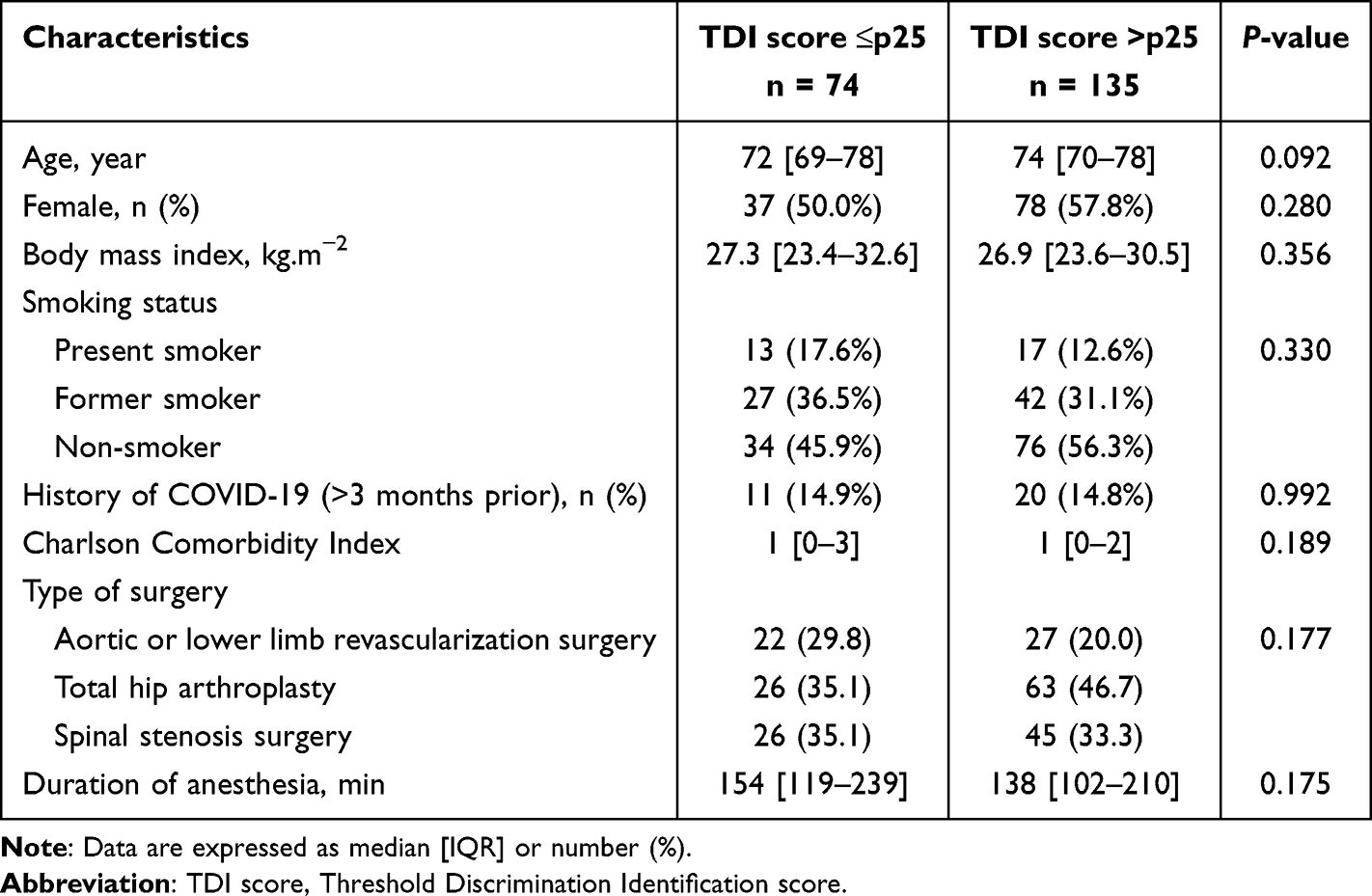 |
Table 1 Baseline and Operative Characteristics According to Preoperative Olfactory Function |
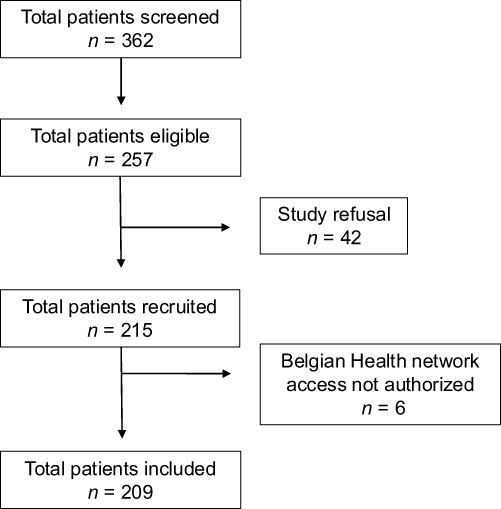 |
Figure 1 Flowchart. |
In this surgical cohort, 160 patients were scheduled for orthopedic surgeries (total hip arthroplasty or spinal stenosis surgery), while 49 were scheduled for vascular surgeries (aortic or lower limb revascularization). Vascular surgery patients were more often classified as anosmic compared to orthopedic patients (16.3% vs 5.0%, p = 0.004), and conversely, orthopedic patients had a higher prevalence of normosmia (28.7% vs 14.3%). 44.9% (22/49) of the vascular patients had a TDI score ≤p25 compared to 32.5% (52/160) among the orthopedic subgroup (p = 0.112).
Olfaction and Frailty
51/209 patients (24.4%) and 48/209 patients (23.0%) were classified as frail according to the EFS and CFS, respectively. Frail patients (EFS ≥6/17) exhibited lower olfactory TDI scores compared to robust patients (25.25 [18.50–28.50] vs 28.75 [24.25–31.50], p < 0.001), and this was also true for the threshold, discrimination, and identification scores measured separately (all p-values < 0.05) (Figure 2). We obtained similar results when using the CFS to assess frailty. Patients with a TDI score greater than 30.5 (the original cut-off for normosmia regardless of age and sex) were frail (EFS score ≥6/17) in only 3.8% of the cases (2/51) compared to 31.4% (42/138) of the patients with a lower TDI score (p < 0.001).
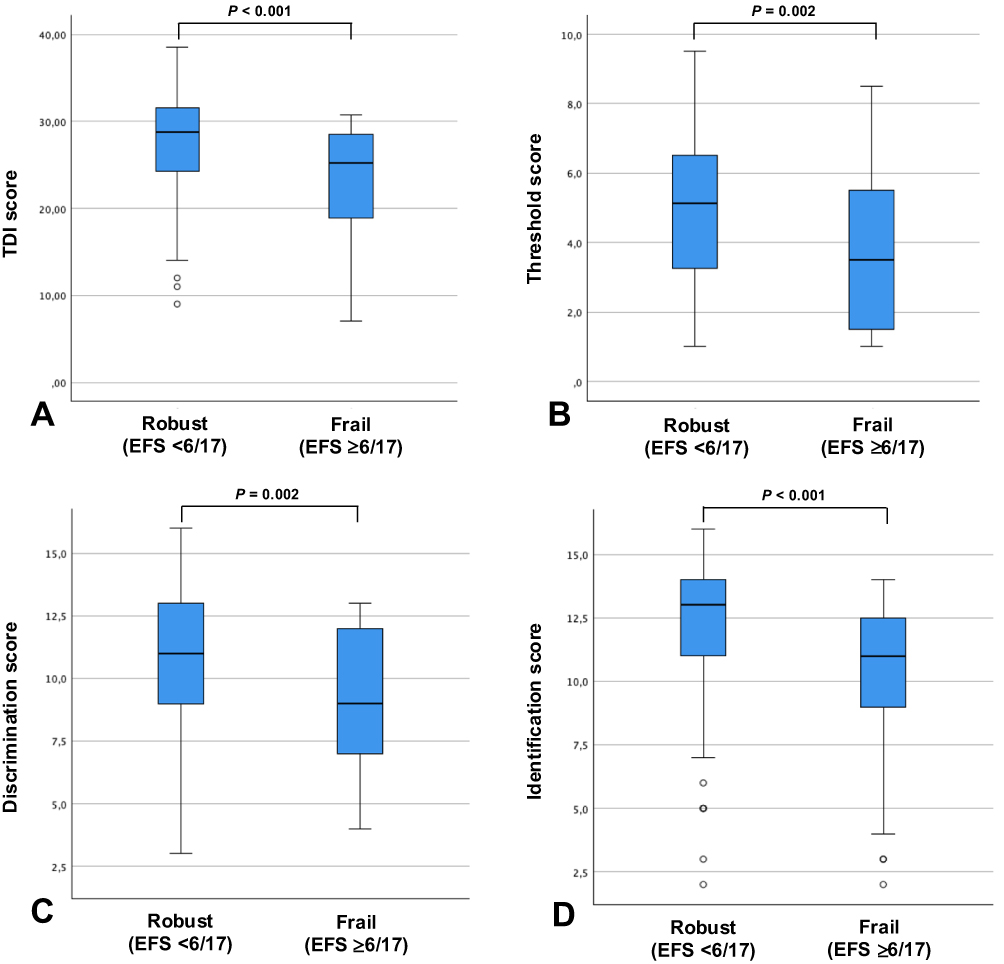 |
Figure 2 Preoperative olfactory scores according to frailty status, based on the Edmonton Frail Scale (EFS). The panels represent the following olfactory modalities, measured using the Sniffin’ Sticks extended test: (A) TDI score, (B) Threshold score, (C) Discrimination score, (D) Identification score. In all four panels, patients classified as frail demonstrated significantly lower olfactory scores compared to robust patients (all p-values < 0.05). Abbreviations: TDI, Threshold Discrimination Identification; EFS, Edmonton Frail Scale. |
In univariable linear regression analyses, we found the EFS score to be significantly associated with preoperative olfactory TDI score (p < 0.001), threshold (p = 0.002), discrimination (p < 0.001) and identification scores (p < 0.001) (Table 2). After adjustment for age, sex, and Charlson Comorbidity Index, all olfactory scores remained significantly correlated with the EFS score (Table 3). The identification score appeared to correlate best with the EFS.
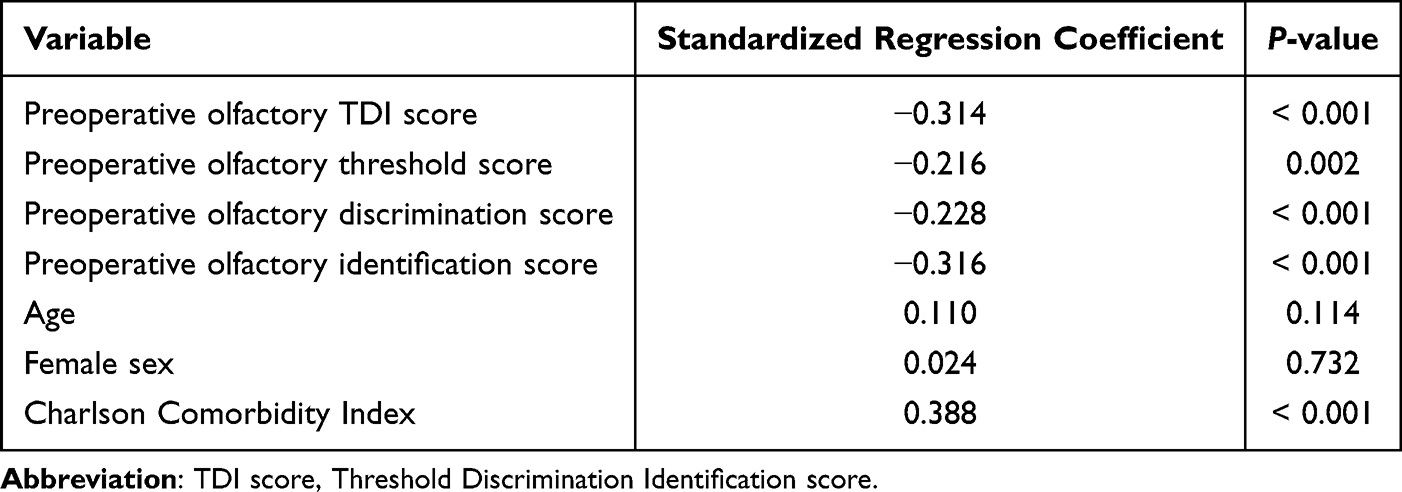 |
Table 2 Univariable Linear Regression Models for the Prediction of the Edmonton Frail Scale (EFS) Score |
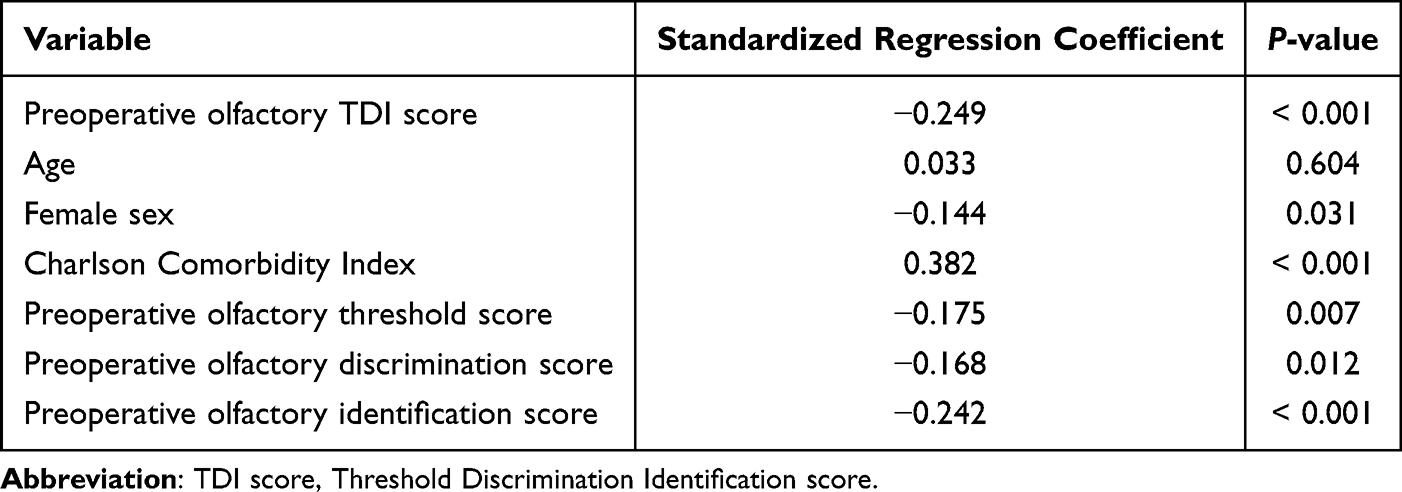 |
Table 3 Multivariable Linear Regression Models for the Prediction of the Edmonton Frail Scale (EFS) Score |
Olfaction and Postoperative Morbidity and Mortality
Within one year after surgery, 54/209 (25.8%) patients developed a postoperative complication, and 3 (1.4%) patients died. 39.2% of the patients with a TDI score ≤p25 suffered from postoperative morbidity/mortality, against only 20.7% of the patients with a higher olfactory performance (p = 0.004). The results are shown in Figure 3. When postoperative complications were stratified by severity, a significant association with preoperative olfactory performance was observed. The incidence of severe complications (Clavien-Dindo grades 3 to 5) was substantially higher among patients with lower olfactory performance compared to those with higher olfactory function (respectively 24.3% (18/74) vs 9.6% (13/135), p = 0.008). Grade 2 complications followed a similar, though less pronounced, pattern (14.9% vs 11.1%). Among the patients who experienced severe complications, 58.1% belonged to the lower olfactory performance group. On the other hand, when we separately analyzed normosmic patients (TDI score > 30.5), we noticed that only 13.2% of these patients (7/57) would develop postoperative morbidity/mortality compared to the rest of the cohort (p = 0.008). In contrast, the incidence was 30.7% (43/140) in the hyposmic population (ie, a TDI score ≤ 30.5 and ≥ 16.5) and 43.8% (7/16) among the anosmics (ie, a TDI score < 16.5).
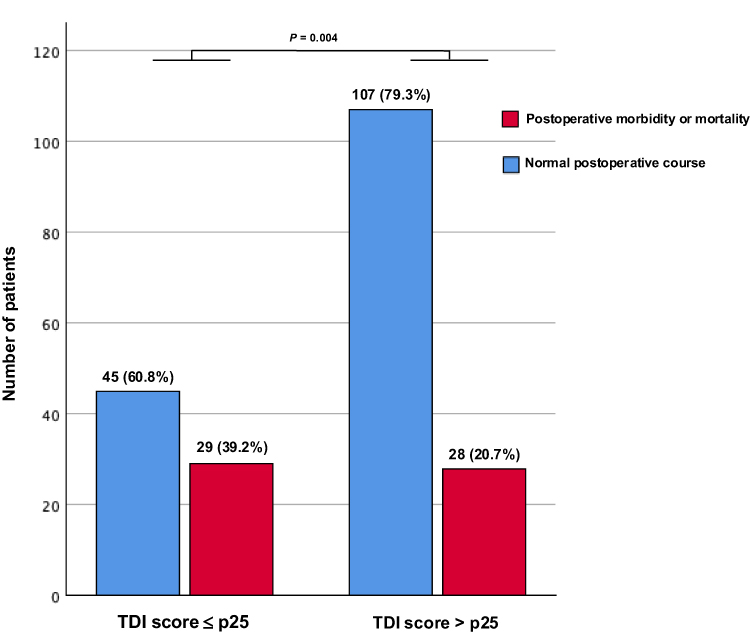 |
Figure 3 One-year postoperative morbidity/mortality according to preoperative olfactory TDI score. Abbreviation: TDI, Threshold Discrimination Identification. |
We performed logistic regression models predicting one-year postoperative morbidity/mortality in our cohort according to preoperative olfactory function (Table 4 and Table 5). All three modalities of olfactory function were significantly linked to postoperative outcome; higher scores corresponded to lower chances of experiencing poor postoperative outcome. We constructed four different multivariable regression models accounting for potential confounding covariables. Model 1 accounted for age and sex, given their relationship with olfactory scores. Adjusting for comorbidities (Model 2), or for type and duration of surgery (Model 3) had a negligible effect on the relationship between lower olfactory performance (TDI score ≤p25) and postoperative outcome. In Model 4, a TDI score ≤p25 was still significantly associated with poor postoperative outcome when accounting for frailty.
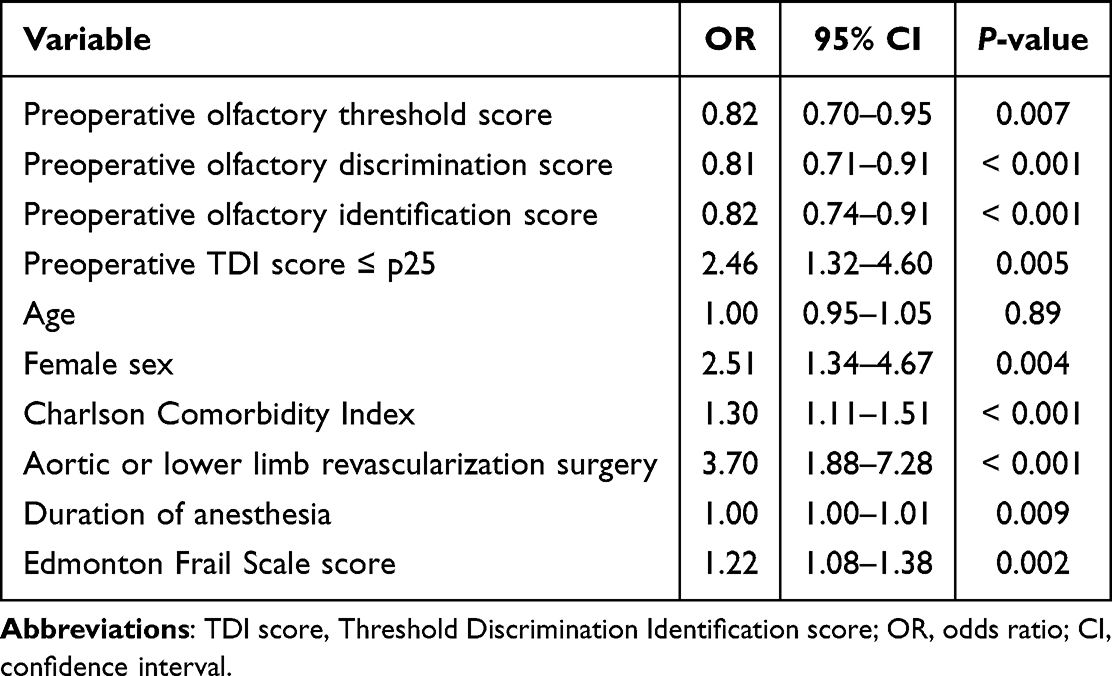 |
Table 4 Univariable Logistic Regression Analysis for the Prediction of Postoperative Morbidity/Mortality |
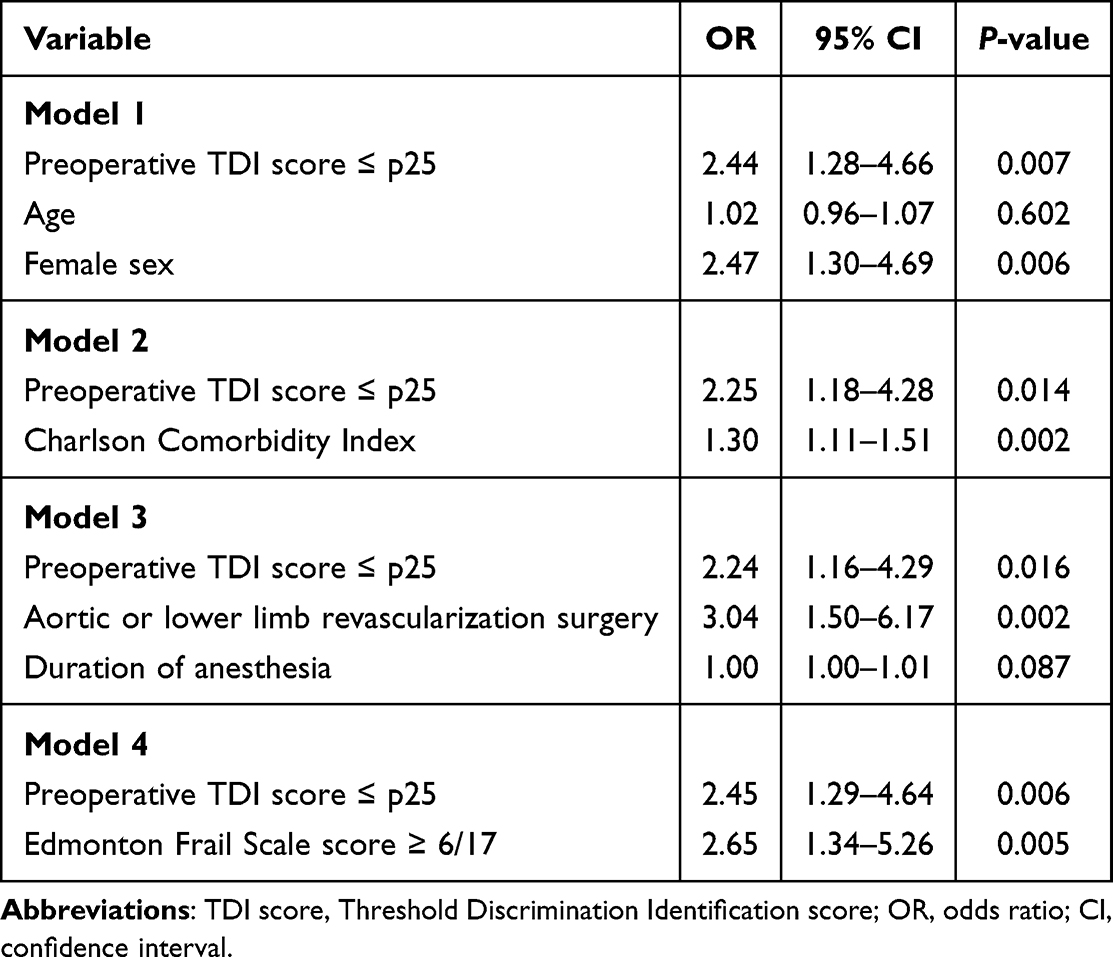 |
Table 5 Multivariable Logistic Regression Models for the Prediction of Postoperative Morbidity/Mortality |
Regression analyses were used to seek associations of lower olfactory performance and frailty with postoperative morbidity/mortality based on the type of surgery performed. Importantly, we found an EFS score ≥6/17 in 44.9% (22/49) of the patients undergoing vascular surgery, compared to only 18.1% (29/160) in the rest of the cohort (p < 0.001). Postoperative morbidity/mortality occurred in 49.0% (24/49) of the vascular patients and in 20.6% (33/160) of the patients who underwent orthopedic procedures (p < 0.001). In the vascular group, frailty was not significantly associated with poor postoperative outcome (Table 6). Conversely, the presence of a TDI score ≤p25 before surgery significantly heightened the chances of experiencing postoperative morbidity and mortality (OR 6.34 [1.81–22.11], p = 0.004). In the orthopedic group, preoperative lower olfactory performance was not linked to an increased risk of poor postoperative outcome, in contrast to frailty (OR 2.41, [1.017–6.007], p = 0.046). Notably, normosmia (with a 89.1% negative predictive value in this group) almost reached statistical significance in reducing the odds of developing postoperative morbidity and mortality.
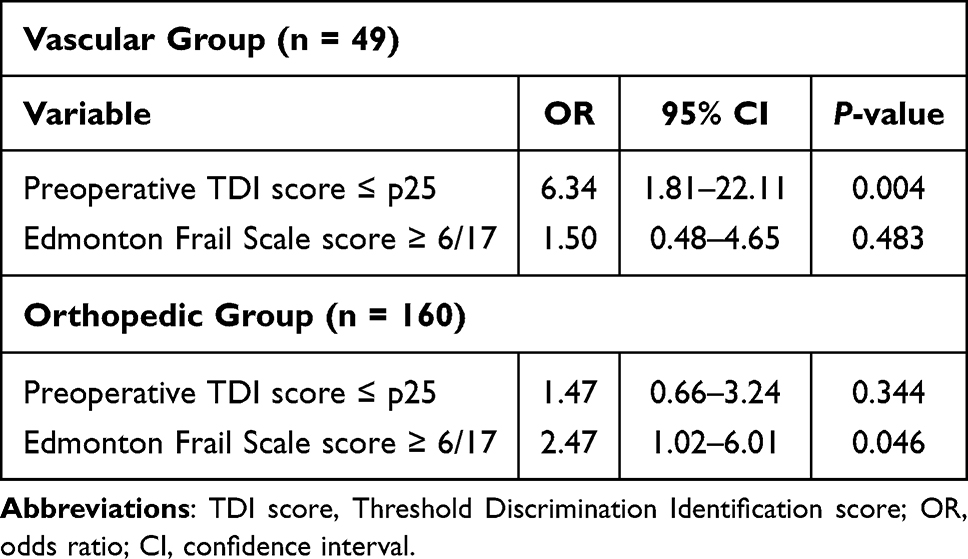 |
Table 6 Univariable Logistic Regression Analyses for the Prediction of Postoperative Morbidity/Mortality According to the Type of Surgery Performed |
Discussion
The present results showed a clear correlation between olfactory function and two widely used preoperative frailty tests, the EFS and the CFS.6 In 2020, a systematic review including three studies, of which only one had assessed olfaction with a psychophysical test, could not conclude, given too sparse evidence.18,19 Since then, six papers have reported a significant correlation between semi-objective testing of olfactory identification dysfunction and frailty20–24 including our previous work.8 Two other studies showed a link using subjective evaluation of olfaction.25,26
What is interesting is the diversity of the frailty tests that correlated with olfactory identification dysfunction: handgrip strength measurement,19,21 the appendicular skeletal muscle mass index,19 the 37- or 39-item Frailty Index,20,22 the Risk Analysis Index,24 the adapted Fried frailty phenotype criteria,24 the CFS,8 and the EFS.8 Together, these tests capture a broad spectrum of frailty, going from the physical frailty phenotype model to the accumulation of deficits model – typically represented by the frailty index.27 Of note, Xue’s team has recently shown a high discrepancy when diagnosing frailty in individuals using either a physical frailty phenotype test or a frailty index.28 Nagururu et al, who were the first to investigate the olfactory threshold function in addition to the identification function, showed that low performance in both modalities was associated with the physical frailty phenotype.22 Still, only olfactory identification was correlated to a 37-item frailty index. They explained this difference by the neurocognitive variables weighting their frailty index, which would probably relate more to olfactory identification than threshold. Therefore, they suggested the role of mediators other than cognitive impairment alone in the association between olfaction and frailty. Besides, they only used six different levels for determining the olfactory threshold, which may account for more limited findings. In contrast, we found a significant association between all three olfactory modalities – threshold, discrimination, and identification – and the two commonly used frailty tests. The CFS may be more closely related to the physical frailty phenotype and, like the latter, does not include a direct cognitive component. Instead, the EFS is considered part of the accumulation of deficits model but, unlike the frailty index, it represents more than merely an accumulation of medical conditions and is linked to multi-dimensional geriatric conditions.14 In the light of existing evidence and of our preliminary data, global olfaction is linked to frailty in plural ways, probably reflecting multifactorial vulnerability. A recent meta-analysis by Yeo et al further substantiates this connection, demonstrating a significant association between olfactory dysfunction and frailty, with individuals experiencing reduced smell having a 2.32-fold greater odds of frailty.29
Age is undeniably associated with more frailty and poorer olfaction.30,31 Yet, we found olfactory scores to predict frailty even when taking age, sex, and comorbidities into account. This comes as supplementary proof that “age-related” olfactory decline does not simply reflect chronological age and needs to be seen in a broader picture. On the other hand, having a TDI score above 30.5 – ie, the definition of normosmia, regardless of age and sex – made frailty prevalence drop drastically. This highlights that a good performance at olfactory testing rules out frailty most of the time.
Our results confirm the substantial and dose-dependent link existing between preoperative global lower olfactory performance and postoperative morbidity and mortality in older surgical patients. In a previous study including 155 patients we showed that recognizing correctly 6 or fewer odors at a 12-item identification screening test predicted poor 1-year outcome after various elective surgeries.8 Another study with 165 patients undergoing cardiac surgery found no statistically significant difference in in-hospital postoperative complications and mortality between olfactory-impaired patients and the rest of their cohort. However, they used a higher cut-off for olfactory dysfunction (≤ 8 in a 12-odor identification test) and may have lacked power for this in-hospital outcome, at least concerning mortality, which hit only 8 patients.32 A recent trial by Mady et al measured olfactory identification function with a 40-item identification test in 51 individuals requiring head and neck cancer surgery, and they found that severe anosmia was associated with a three-day increased length of stay.23 Here, we report a nearly two times higher incidence of 1-year postoperative complications in patients with a TDI score below the 25th percentile for age and sex. This association between lower olfactory performance and adverse outcomes was most pronounced for severe complications (Clavien-Dindo grades 3 to 5), where the difference in incidence between the low and high olfactory performance groups was substantially greater than for grade 2 events. Besides, when considering the “raw” TDI scores regardless of age and sex, we found a 3-fold difference in the incidence of poor postoperative outcome between normosmic and anosmic groups. Indeed, multivariable analyses confirmed the predictive ability of the olfactory scores irrespective of age and sex. This may be paralleled with our similar data regarding frailty and raises questions about the concept of age-related olfactory decline being a “normal” feature of aging.
Our study is the first to explore how the three types of olfactory function relate to postoperative outcome. Interestingly, even after adjusting for comorbidities or for vascular surgery, which typically includes patients with greater illness severity and higher postoperative risk, the association between lower olfactory performance and adverse postoperative outcomes remained largely unchanged. These results corroborate our previous data,8 as well as those from the studies investigating olfactory dysfunction and mortality in non-surgical patients, of which most had included cardiovascular disease in their analyses.3,33 Medical comorbidities cannot be neglected when assessing an older surgical patient and obviously constitute a risk factor for developing postoperative complications and death. Still, they do not seem to mediate much of the relationship between preoperative olfaction and postoperative outcome.
In a previous prospective study, we demonstrated that preoperative olfactory dysfunction, assessed using the Sniffin’ Sticks 12-item identification test, was significantly associated with frailty as determined by the Edmonton Frail Scale, and that frailty appeared to mediate the relationship between reduced smell and poor postoperative outcomes.8 In the present analysis, we included the EFS in our models with the objective of further exploring the interplay between these two variables in distinct surgical populations. As noted earlier, several recent studies support the association between olfactory dysfunction and frailty, highlighting poor olfaction as a potential early marker of systemic physiological decline. Data from the SNAC-K cohort confirmed that frailty becomes the predominant mediator between olfactory dysfunction and mortality over time, particularly as the role of neurodegeneration diminishes.34 We observed a marked divergence in the predictive value of poor olfaction and frailty based on the surgical context, reinforcing the notion that these measures reflect distinct dimensions of vulnerability. In our current cohort, frailty was more frequent among vascular patients but did not significantly correlate with adverse postoperative outcomes in this subset. An explanation for these findings may be that, because frailty is more common in the vascular group, its ability to discriminate between patients with and without adverse outcomes is reduced. In striking contrast, lower olfactory performance was identified as an independent predictor of poor outcome in the vascular group, with an odds ratio exceeding 6. Of note, vascular patients may have a higher burden of intracerebral vascular pathology, potentially impairing olfactory pathways, which could account for the superior prognostic performance of olfactory dysfunction in this subgroup. We qualify these noteworthy findings in the vascular subgroup, however, acknowledging the relatively small sample size (n = 49), and recommend external validation in larger cohorts. Conversely, in patients undergoing orthopedic procedures, frailty was predictive of complications, while reduced sense of smell was not. Notably, normosmia, although not reaching statistical significance, was associated with an 89.1% negative predictive value in this group. This suggests its potential utility as a reassuring screening tool in the orthopedic setting, minimizing the risk of overlooking a patient who may develop a postoperative complication. Our data confirm the complexity of this relationship, demonstrating that the prognostic roles of lower olfactory performance and frailty may be highly dependent on the surgical subgroup and underlying pathological vulnerability. Taken together, our findings suggest that poor sense of smell holds prognostic value beyond what is captured by frailty screening instruments such as the EFS.
Limitations
The EFS and the CFS are often used perioperatively as screening tests for frailty, but a large panel of more exhaustive geriatric assessments exists which were not used in this study. We had a low rate of postoperative death, which precluded any specific analysis for this outcome. Lastly, the vascular subgroup was much smaller than the orthopedic subgroup, and this may have influenced our analyses.
Conclusion
This study demonstrates that lower olfactory performance is closely associated with frailty in older adults, regardless of the method used for frailty assessment or the olfactory modality employed. Reduced olfaction not only predicts frailty independently of age, sex, and comorbidities but also provides significant incremental prognostic value, serving as a robust indicator of postoperative risk – something not entirely captured by conventional frailty scores alone. Lower olfactory performance proved more effective than frailty in high-risk vascular patient subgroups, though these findings should be interpreted with caution due to the smaller sample size in this group. Our findings suggest that objective olfactory testing could provide valuable insights for preoperative evaluation and emphasize the importance of further research into how the sense of smell may help identify vulnerable individuals and improve outcomes in aging and surgical populations.
Data Sharing Statement
The datasets that support the findings of the current study are available from the corresponding author upon reasonable request.
Acknowledgments
We would like to thank Mrs. Laetitia Miltoni (Clinical Research Coordinator, Cliniques universitaires Saint-Luc, Brussels, Belgium) who assisted in data acquisition.
Disclosure
The author(s) report no conflicts of interest in this work.
References
1. Doty RL. Age-related deficits in taste and smell. Otolaryngol Clin North Am. 2018;51:815–825. doi:10.1016/j.otc.2018.03.014
2. Croy I, Nordin S, Hummel T. Olfactory disorders and quality of life-an updated review. Chem Senses. 2014;39:185–194. doi:10.1093/chemse/bjt072
3. Van Regemorter V, Hummel T, Rosenzweig F, Mouraux A, Rombaux P, Huart C. Mechanisms linking olfactory impairment and risk of mortality. Front Neurosci. 2020;14:140. doi:10.3389/fnins.2020.00140
4. Shem Tov L, Matot I. Frailty and anesthesia. Curr Opin Anaesthesiol. 2017;30:409–417. doi:10.1097/ACO.0000000000000456
5. Chow WB, Rosenthal RA, Merkow RP, Ko CY, Esnaola NF. Optimal preoperative assessment of the geriatric surgical patient: a best practices guideline from the American college of surgeons national surgical quality improvement program and the American geriatrics society. J Am Coll Surg. 2012;215:453–466. doi:10.1016/j.jamcollsurg.2012.06.017
6. Aucoin SD, Hao M, Sohi R, et al. Accuracy and feasibility of clinically applied frailty instruments before surgery: a systematic review and meta-analysis. Anesthesiology. 2020;133:78–95. doi:10.1097/ALN.0000000000003257
7. Lin HS, Watts JN, Peel NM, Hubbard RE. Frailty and post-operative outcomes in older surgical patients: a systematic review. BMC Geriatr. 2016;16:157. doi:10.1186/s12877-016-0329-8
8. Van Regemorter V, Dollase J, Coulie R, et al. Olfactory dysfunction predicts frailty and poor postoperative outcome in older patients scheduled for elective non-cardiac surgery. J Nutr Health Aging. 2022;26:981–986. doi:10.1007/s12603-022-1851-3
9. Huart C, Rombaux P. Nasal Physiology and Pathophysiology of Nasal Disorders. Önerci TM, ed. Springer; 2013:113–137.
10. Hummel T, Sekinger B, Wolf SR, Pauli E, Kobal G. ‘Sniffin’ sticks’: olfactory performance assessed by the combined testing of odor identification, odor discrimination and olfactory threshold. Chem Senses. 1997;22:39–52. doi:10.1093/chemse/22.1.39
11. Rumeau C, Nguyen DT, Jankowski R. How to assess olfactory performance with the Sniffin’ Sticks test. Eur Ann Otorhinolaryngol Head Neck Dis. 2016;133:203–206. doi:10.1016/j.anorl.2015.08.004
12. Oleszkiewicz A, Schriever VA, Croy I, Hähner A, Hummel T. Updated Sniffin’ Sticks normative data based on an extended sample of 9139 subjects. Eur Arch Otorhinolaryngol. 2019;276:719–728. doi:10.1007/s00405-018-5248-1
13. Rolfson D, Majumdar S, Tsuyuki R, Tahir A, Rockwood K. Validity and reliability of the Edmonton Frail Scale. Age Ageing. 2006;35:526–529. doi:10.1093/ageing/afl041
14. Perna S, D’Arcy Francis M, Bologna C, et al. Performance of Edmonton Frail Scale on frailty assessment: its association with multi-dimensional geriatric conditions assessed with specific screening tools. BMC Geriatr. 2017;17:2. doi:10.1186/s12877-016-0382-3
15. Rockwood K, Song X, MacKnight C, et al. A global clinical measure of fitness and frailty in elderly people. CMAJ. 2005;173:489–495. doi:10.1503/cmaj.050051
16. Rockwood K, Theou O. Using the clinical frailty scale in allocating scarce health care resources. Can Geriatr J. 2020;23:254–259. doi:10.5770/cgj.23.463
17. Dindo D, Demartines N, Clavien PA. Classification of surgical complications: a new proposal with evaluation in a cohort of 6336 patients and results of a survey. Ann Surg. 2004;240:205–213. doi:10.1097/01.sla.0000133083.54934.ae
18. Tan BKJ, Man REK, Gan ATL, et al. Is sensory loss an understudied risk factor for frailty? A systematic review and meta-analysis. J Gerontol A Biol Sci Med Sci. 2020;75:2461–2470. doi:10.1093/gerona/glaa171
19. Harita M, Miwa T, Shiga H, et al. Association of olfactory impairment with indexes of sarcopenia and frailty in community-dwelling older adults. Geriatr Gerontol Int. 2019;19:384–391. doi:10.1111/ggi.13621
20. Bernstein IA, Roxbury CR, Lin SY, Rowan NR. The association of frailty with olfactory and gustatory dysfunction in older adults: a nationally representative sample. Int Forum Allergy Rhinol. 2021;11:866–876. doi:10.1002/alr.22718
21. Ramírez-Vélez R, López-Gil JF, de Asteasu MLS, Izquierdo M, García-Hermoso A. Handgrip strength as a moderator of the influence of age on olfactory impairment in US adult population ≥ 40 years of age. Sci Rep. 2021;11:1–9. doi:10.1038/s41598-021-93355-w
22. Nagururu NV, Bernstein IA, Voegtline K, Olson S, Agrawal Y, Rowan NR. The association of peripheral and central olfaction with frailty in older adults. J Gerontol A Biol Sci Med Sci. 2023;78:1276–1283. doi:10.1093/gerona/glac237
23. Mady LJ, De Ravin E, Vohra V. Exploring olfactory dysfunction as a marker of frailty and postoperative outcomes in head and neck cancer. JAMA Otolaryngol Head Neck Surg. 2023;149:828–836. doi:10.1001/jamaoto.2023.1935
24. Wang E, Wroblewski KE, McClintock MK, Pinto JM, Witt LJ. Olfactory decline develops in parallel with frailty in older US adults with obstructive lung diseases. Int Forum Allergy Rhinol. 2024;14:819–827. doi:10.1002/alr.23273
25. Hura N, Bernstein IA, Mady LJ, Agrawal Y, Lane AP, Rowan NR. Otolaryngic sensory loss as a measure of frailty among older US adults. Int Forum Allergy Rhinol. 2022;12:771–779. doi:10.1002/alr.22918
26. Sable-Morita S, Sugiura S, Suzuki H, Fukuoka H, Matsui Y, Arai H. Frailty and visual, auditory, olfactory, and taste senses in older patients visiting a frailty outpatient clinic. Geriatr Gerontol Int. 2023;23:871–879. doi:10.1111/ggi.14674
27. Walston JD, Bandeen-Roche K. Frailty: a tale of two concepts. BMC Med. 2015;13:6–8. doi:10.1186/s12916-015-0420-6
28. Xue QL, Tian J, Walston JD, Chaves PHM, Newman AB, Bandeen-Roche K. Discrepancy in frailty identification: move beyond predictive validity. J Gerontol A Biol Sci Med Sci. 2020;75:387–393. doi:10.1093/gerona/glz052
29. Yeo BSY, Chan JH, Tan BKJ, et al. Olfactory impairment and frailty a systematic review and meta-analysis. JAMA Otolaryngol Head Neck Surg. 2024;150:772–783. doi:10.1001/jamaoto.2024.1854
30. Bissot M, Henin PY, Aunac S, et al. Preoperative frailty assessment: a review. Acta Anaesthesiol Belg. 2016;67:157–173.
31. Ekström I, Larsson M, Rizzuto D, Fastbom J, Bäckman L, Laukka EJ. Predictors of olfactory decline in aging: a longitudinal population-based study. J Gerontol A Biol Sci Med Sci. 2020;75:2441–2449. doi:10.1093/gerona/glaa221
32. Brown CH, Morrissey C, Ono M, et al. Impaired olfaction and risk of delirium or cognitive decline after cardiac surgery. J Am Geriatr Soc. 2015;63:16–23. doi:10.1111/jgs.13198
33. Choi JS, Jang SS, Kim J, Hur K, Ference E, Wrobel B. Association between olfactory dysfunction and mortality in US adults. JAMA Otolaryngol Head Neck Surg. 2021;147:49–55. doi:10.1001/jamaoto.2020.3502
34. Ruane R, Lampert O, Larsson M, Vetrano D, Laukka EJ, Ekström I. Olfactory deficits and mortality in older adults. JAMA Otolaryngol Head Neck Surg. 2025;151:558–566. doi:10.1001/jamaoto.2025.0174
 © 2025 The Author(s). This work is published and licensed by Dove Medical Press Limited. The
full terms of this license are available at https://www.dovepress.com/terms
and incorporate the Creative Commons Attribution
- Non Commercial (unported, 4.0) License.
By accessing the work you hereby accept the Terms. Non-commercial uses of the work are permitted
without any further permission from Dove Medical Press Limited, provided the work is properly
attributed. For permission for commercial use of this work, please see paragraphs 4.2 and 5 of our Terms.
© 2025 The Author(s). This work is published and licensed by Dove Medical Press Limited. The
full terms of this license are available at https://www.dovepress.com/terms
and incorporate the Creative Commons Attribution
- Non Commercial (unported, 4.0) License.
By accessing the work you hereby accept the Terms. Non-commercial uses of the work are permitted
without any further permission from Dove Medical Press Limited, provided the work is properly
attributed. For permission for commercial use of this work, please see paragraphs 4.2 and 5 of our Terms.