
Back to Journals » Psychology Research and Behavior Management » Volume 18
Generational Egoism: Concept and Measurement
Authors Próchniak P  , Próchniak A, Ossowski A , Cieśluk M, Suchecka DJ
Received 14 May 2025
Accepted for publication 31 August 2025
Published 30 September 2025 Volume 2025:18 Pages 2091—2105
DOI https://doi.org/10.2147/PRBM.S540235
Checked for plagiarism Yes
Review by Single anonymous peer review
Peer reviewer comments 2
Editor who approved publication: Prof. Dr. Bao-Liang Zhong
Piotr Próchniak,1,* Agnieszka Próchniak,2,* Adam Ossowski,1,* Marek Cieśluk,1,* Daria Joanna Suchecka1,*
1Institute of Psychology, University of Szczecin, Szczecin, 70-453, Poland; 2Department of Sociology, Pomeranian University, Slupsk, 76-200, Poland
*These authors contributed equally to this work
Correspondence: Piotr Próchniak, Institute of Psychology, University of Szczecin, Szczecin, 70-453, Poland, Email [email protected]
Introduction: The conceptualisation and development of a measure of generational egoism are described. Generational egoism is defined as actions aimed at maximising benefits for one’s own generation without giving due attention or concern to the negative consequences of those actions for future generations. This form of selfishness is characterised by a short-term (here and now) focus and a lack of concern for the long-term consequences of one’s actions.
Methods: A study of the psychometric properties of the Generational Egoism Questionnaire was conducted, with an exploratory and a confirmatory factor analysis being carried out. The first set of data (N = 269; Mage = 24.90; SD = 6.70) was analysed by exploratory factor analysis, and the second set of data (N = 213; M = 24.70; SD = 6.15) was analysed by confirmatory factor analysis. In addition, an investigation was conducted into the potential correlations within the group of participants (N = 161; M = 23.91, SD = 8.36) between the General Egoism Questionnaire, which has been introduced in this paper, and other personality and well-being diagnostic tools: The Dark Triad Dirty Dozen, The TIPI Test, The Satisfaction with Life Scale, The Positivity Scale, Brief Resilience Coping Scale and The Meaning of Life Questionnaire.
Results: The results of the factor analyses verified the one-factor structure of the Generational Egoism Questionnaire. The Generational Egoism Questionnaire reveals satisfactory internal consistency, with r = 0.88. The divergent and convergent validity of the Generational Egoism Questionnaire was indicated by correlations with other scales. The Generational Egoism Questionnaire correlates with personality subscales: narcissism, psychopathy, machiavelism, neurtocism and open to experience. The General Egoism does not correlate well-being.
Conclusion: The results indicate that the Generational Egoism Questionnaire is a valid and reliable instrument. The Genrational Egoism Questionnaire can be used in future research but also has its practical use – for teachers and environmental educators.
Keywords: egoism, sustainability, future generations
Introduction
The notion of sustainable development is about improving the quality of life while maintaining social equity, biodiversity and an abundance of natural resources. In accordance with this principle, it is not sufficient to consider the needs of the present generation; consideration must also be given to the fate of future generations. A prerequisite for the actualisation of the sustainable development concept is the decrease or even abandonment of the selfish needs of the present generation and a greater openness to the needs of future generations. The prevailing egoism of the present generation seems to be a major obstacle to realising the ideas and principles of sustainable development. Egoistic individuals are less likely to make personal sacrifices for the benefit of the environment, such as paying more for sustainable products or changing their lifestyle. They prioritise personal comfort over sustainable actions such as reducing consumption, recycling, minimising single-use plastics, saving energy, conserving water and using public transport.1,2
The article explores the concept of egoism in contemporary social relationships, with a particular emphasis on its expression in interpersonal interactions. Additionally, the article introduces the notion of generational egoism, which explores the relationship between the present generation and future generations. This concept raises important questions about the responsibilities of the current generation towards those yet to come, emphasizing the need for a balance between self-interest and collective well-being. A significant component of the article will be the presentation of a questionnaire designed to diagnose generational egoism and its relationship with personality traits and well-being.
Egoism
Egoism has a long-standing tradition in the field of science. Epicureanism is an ancient philosophy that posits the notion that humans live for their own enjoyment. The concept that individuals act for their own benefit, rather than for the benefit of others or in accordance with a moral code, is substantiated by the observation that humans engage in prosocial behaviour from infancy through to adulthood.3
Thomas Hobbes considered egoism to be an indelible element (feature) of human nature. Therefore, it is not an attitude or choice of a person themself. According to Hobbes, egoism is an attitude aimed at protecting one’s own interest and one’s own good. What changes is not egoism itself, but only its form; in place of boundless egoism comes rational, moderate egoism, subject to accepted norms and laws.4
In the realm of modern philosophy, Jeremy Bentham concurred with Epicurus on the notion that human behaviour is predicated on the pursuit of pleasure and the evasion of pain. Bentham meticulously delineated the categories and attributes of pain and pleasure, elucidating the notion of psychological hedonism as the driving force behind human actions. He further endeavoured to quantify psychological hedonism. He sought to identify the ideal human behaviour based on the concept of “hedonic calculus”, which posits that we should evaluate relative gains and losses in pain and pleasure to determine the most pleasurable action to select in a given situation.5,6
In the philosophical framework of Herbert Spencer, a proponent of the concept of “survival of the fittest”, the primary objective of animals is to ensure their own survival and that of their offspring. This assertion signifies that the needs of the individual and their immediate family supersede those of other species. All species, according to Spencer, strive to optimise their chances of survival and, by extension, their well-being. The hypothesis propounded by Spencer asserts that the organisms most adept at adapting to their environment will experience a higher level of pleasure than pain. This suggests that pleasure is the driving force behind an animal’s survival instinct, and that the pursuit of pleasure is a constant aspect of an animal’s behaviour because it is linked to its survival.7–9
At present, the concept of egoism is employed to refer to a wide range of phenomena. It is usually a term that describes human behavior directed towards achieving one’s own needs, benefits or desires,10 or even maximising one’s happiness or interest.11 Sometimes it is treated as a lack of human involvement in actions for the benefit of others as a result of a lack of empathy12,13 altruism,14,15 or the desire to cooperate with others.16 Its roots lie in the human psyche and may be associated with various human traits such as narcissism,17 psychopathy,18 egocentrism,19 or excessive individualism.20 Extreme forms of egoism may be expressed in aggression,21 social hostility22–24 or greed.25 Egoism may also be an attitude adopted by a person who is overburdened with obligations to others or is not very assertive. In this case, the adopted attitude of “healthy egoism” may be a manifestation of self-respect and concern for one’s own health or well-being.26–29
In the public perception, selfishness is usually associated with a negative connotation, because it is destructive to personal or social relationships. When an individual puts their own interests above the interests of a partner in a relationship, neglecting or ignoring their needs and desires, it can cause emotional pain or feelings of anger, resentment, or betrayal in a loved one.30 However, when individuals or groups put their needs above the interests of other communities or society as a whole, it can undermine the well-being of the community, reinforce social inequalities or lead to a decrease in social trust or a decrease in the standard of living of society.31
Sometimes selfish actions can be associated with prosocial motivation. Paradoxically, selfishness can motivate an individual to act for the good of other people or the community (ie, cooperation, helping, sharing) when the action is an instrumental means to achieve one’s own well-being or personal benefits (ie, avoiding social criticism or a sense of shame or guilt for not acting for the good of others, or gaining respect, esteem or recognition for actions for the common good). Selfishly motivated prosocial actions give individuals the feeling that they are perceived by others as good, caring, responsible, or engaged in their personal or social lives.32,33 This is a strategy for managing the impressions of others.34 This instrumental motivation in prosocial actions is sometimes referred to as the phenomenon of “tainted altruism”.35–38 The primary motivation of people with pathological altruism is to please others, gain approval, and avoid criticism and rejection.39
The question of whether selfishness is genetic or environmental remains a subject of debate. In general, children exhibit a greater tendency towards directness and selfishness, as they have not yet developed an understanding of other people’s desire to be happy. They face challenges in comprehending their role as social beings, and as a result, they struggle to align their own interests with those of others.40 However, when confronted with a selfish adult, a different dynamic emerges. In such cases, the individual can be perceived as someone who has not yet transitioned out of this phase of childhood, at least in terms of their psychological development.
Research indicates that individuals who prioritise self-interest are less inclined to collaborate in the presence of social dilemmas41,42 and to participate in pro-environmental initiatives.43–47 The motivation behind environmental concern and pro-environmental engagement is the pursuit of self-serving objectives, such as attaining status or reputation,48 safeguarding public image,49,50 financial gain or enhancing personal well-being,51 or evading financial and health consequences.52
Egoism, focusing on self-interest, has a complex relationship with culture. It can be viewed as a basic human drive or a cultural value. Cultural norms shape egoistic behaviors, leading to varied expressions of self-interest across societies. Individualistic cultures can foster egoism due to their emphasis on independence, autonomy, and self-reliance, which leads to prioritizing individual needs over group goals. Conversely, collectivist cultures prioritise the needs of the group and the maintenance of harmony, placing significant emphasis on interdependence, group loyalty and social responsibility. This cultural dynamic has the potential to mitigate egoism.53,54
From a developmental perspective, egoism is frequently considered to represent a natural stage in early childhood, typified by a concentration on one’s personal necessities and aspirations. Infants are naturally egocentric, viewing the world through their own lens. As children mature, their cognitive skills grow, enabling them to recognize that others possess different thoughts and feelings. This awareness fosters empathy, the ability to understand and share the emotions of others.55–57
Concept of Generational Egoism
The traditional perspective on egoism is focused on current interpersonal relationships. The term is typically employed to describe human behaviour directed towards the fulfilment of personal needs, benefits or even the maximisation of personal wellbeing.10,11 The adverse consequences of selfish behaviour are experienced by others in a relatively short period of time. But sometimes, the negative consequences of selfishness affect individuals or social groups that exist now, but the effects of selfishly motivated actions taken now may have negative consequences for future generations, a point not often emphasised in previous discussions of selfishness. In essence, selfishness can be conceptualised as an inclination to prioritise one’s own best interests, often disregarding the potential consequences of these actions for future generations. This form of selfishness appears particularly evident in the context of over-consumption and environmental exploitation.
The world we live in is one in which excessive consumption of goods is causing a lot of environmental damage and an ecological crisis. There is a growing tendency for individuals to disregard the ecological consequences of their daily consumption. The preoccupation with personal needs and desires and the prioritisation of psychological and material well-being has led to a societal blind spot regarding the adverse environmental impacts of daily choices. These choices encompass a wide range of activities, including energy and water consumption, food wastage, adherence to fashion trends, the disposal of functional appliances in favour of new purchases, and the failure to separate waste.58 Human activity has been identified as a primary driver of climate change, with increasing temperatures, more frequent extreme weather events, and a growing threat of pollution. Additionally, natural resources are being overexploited, leading to a decline in their availability and a potential threat to long-term sustainability.59,60
The aforementioned considerations indicate that human beings may engage in behaviour that is oriented towards the fulfilment of personal needs, benefits or desires, despite the potential negative consequences of such actions for future generations. Therefore, it would appear that there is a distinct form of egoism that has hitherto not been subject to analysis in the social sciences. The term “generational egoism” is thus proposed.
Generational egoism can be defined as actions aimed at maximising benefits for one’s own generation without giving due attention or concern to the negative consequences of those actions for future generations. This form of selfishness is characterised by a short-term (here and now) focus and a lack of concern for the long-term consequences of one’s actions. The emphasis on the satisfaction of one’s own needs is so pronounced that it effectively excludes concern for the needs of future generations.
The intensity of generational egoism is, of course, subject to variation depending on the experiences, values and norms that exist in each generation. The Millennial generation, for instance, has been referred to as the “ego” generation, given its propensity to prioritise experiential values over those related to community, family, or altruistic pursuits. This generation has been observed to exhibit higher levels of narcissism in comparison to preceding generations. This generation was characterised by high self-esteem, exceptionalism, materialism and vanity, and a strong focus on the self.61–64 The economic paradigm, with its preoccupation with notions of “profit” and “loss”, permeated all facets of life, including the private sphere.65 This generation has been referred to as the “generation self”. Research on Millennials has demonstrated that they were less inclined to participate in charity, politics, or social activities. This generation has been found to be less inclined to engage in personal actions for the environment or energy conservation when compared to the preceding generations. In this context, the Millennial generation may reveal high levels of generational egoism.61,62
Current studies that analyse generational differences in environmental behaviour demonstrate that younger generations, such as Generation Z, are more environmentally conscious and committed to environmental care.66–69 In comparison to their older counterparts, younger generations demonstrate a stronger inclination towards sustainable practices, including resource conservation, the purchase of locally sourced foodstuffs, pro-social attitudes, and a commitment to green consumption values. Furthermore, they exhibit a higher level of engagement in behaviours aimed at reducing food waste. Recent studies have also demonstrated that Generation Z members are more concerned about environmental issues than previous generations.67 This suggests that members of Generation Z may exhibit reduced levels of generational egoism compared to their predecessors.
The objective of the next sections is to present the construction of a questionnaire for diagnosing generational selfishness and to analyse the relationship between generational selfishness and personality traits and individual well-being.
Measurement of Generational Egoism
In the extant literature on egoism, several diagnostic tools have been developed for the purpose of measuring this construct.31,70,71 A common characteristic of these measures is that they refer to the relationship between currently living individuals. However, there is an absence of diagnostic tools that can be utilised to identify intergenerational egoism.
The objective pursued in this study was to develop a questionnaire for measuring generational egoism. The construction of the tool for measuring generational egoism was based on the following definition:
Generational egoism can be defined as actions aimed at maximising benefits for one’s own generation without giving due attention or concern to the negative consequences of those actions for future generations. This form of selfishness is characterised by a short-term (here and now) focus and a lack of concern for the long-term consequences of one’s actions.
To begin, 20 items describing the phenomenon of generational egoism were generated. In order to evaluate the quality of the items, experts in the field of environmental psychology were invited to utilise a 5-point Likert-type scale (very poor, poor, fair, good, very good) to independently ascertain the extent to which the initial pool of items reflected generational egoism. Employing the same scale, the experts then proceeded to evaluate the extent to which the initial pool of items reflected generational egoism. Items were retained if the average was 4.0 or higher. This pre-selection process reduced the number of statements to eleven.
Subsequent statistical analyses were carried out using the statistical software Statistica 13.0.
Exploratory Factor Analysis
The primary objective of the present study was to ascertain the factor structures of the Generational Egoism Questionnaire, with a secondary aim of assessing its reliability.
Method
Participants
The sample consisted of 269 people (Mage = 24.90; SD = 6.70). 186 participants (69.14%) were women and 77 (28.62%) were men. Six people answered “other” (2.24%). 65 participants (24.17%) lived in villages and 204 (75.83%) participants lived in cities. Of the respondents, 87 had received a university education (32.35%) and 165 were students (61.33%). 17 respondents indicated completion of primary education (6.32%).
All participants in the survey lived in the Polish voivodeship of Pomerania, close to the Baltic Sea. This province is also home to many lakes and rivers, as well as national parks (Slowinski National Park and Wolinski National Park) and thirteen local landscape parks. Poland has many natural assets, but the country also emits significant amounts of greenhouse gases. The reason for these gas emissions is the use of coal for energy production. For many years, Poland was the leading producer of coal in Europe. In recent years, European regulations have forced Poland to reduce coal mining and develop other energy sources – natural gas and renewable energy (wind turbines, photovoltaics).
Procedure
A comprehensive data collection process was executed utilising Google Forms and a computer application. Google Forms is an interactive form tool whose layout is aligned with the graphical design of the paper equivalent. Subjects were instructed to undertake the questionnaire directly on the Internet. Their task was to rate each of the statements in the questionnaire and select an opinion from a five-point Likert scale. The options ranged from (1) “Definitely disagree” to (5) “Definitely agree”.
Prior to participation, subjects were informed about the study objectives and gave their consent online. The informed nature of the study, which was anonymous, was highlighted to the subjects, who were at liberty to refuse to participate. The main inclusion criterion for participation in the study was age above 18. The exclusion criterion was living beyond the Pomeranian voivodeship. The participants were contacted by the study team.
The study was reviewed and approved by the Bioethics Committee of the Institute of Psychology at the University of and was conducted in accordance with the Declaration of Helsinki (KB 27/2022).
Results
The dataset was then subjected to an exploratory factor analysis (EFA), a statistical method used to identify latent variables or factors in a set of data. Prior to conducting the EFA, two crucial steps were performed: the Kaiser–Meyer–Olkin (KMO) measure of sampling adequacy and Bartlett’s Test of Sphericity (BTS) were applied to the data, yielding results of KMO = 0.902, BTS (55) = 1694.634, p < 0.001. The application of this exploratory factor analysis, employing the principal component analysis with oblimin rotation of the statements of the Generational Egoism Questionnaire, yielded a single factor. A parallel analysis also suggested the possibility of a one-factor solution (actual λ1 = 5.99, λ2 = 0.99, λ3 = 0.92 vs λ1 = 1.34, λ2 = 1.24, λ3 = 1.16 from the parallel analysis). The quality of the items that constituted the one-factor solution was also analysed. Comrey and Lee’s classification system placed items with loadings higher than or equal to 0.71 in the “excellent” category, those with loadings between 0.63 and 0.71 in the “very good” category, those with loadings between 0.55 and 0.63 in the “good” category, those with loadings between 0.43 and 0.55 in the “reasonable” category, and those with loadings between 0.32 and 0.43 in the “poor” category. Consequently, statements with loadings above 0.62 were retained for the items’ quality.72 Consequently, the final version of the Generational Egoism Questionnaire comprised 9 items.
A one-factor structure accounts for approximately 54% of the variance, and the factor has satisfactory reliability as measured by Cronbach’s alpha.73 The reliability of the factor is Cronbach’s alpha = 0.88 (see Table 1).
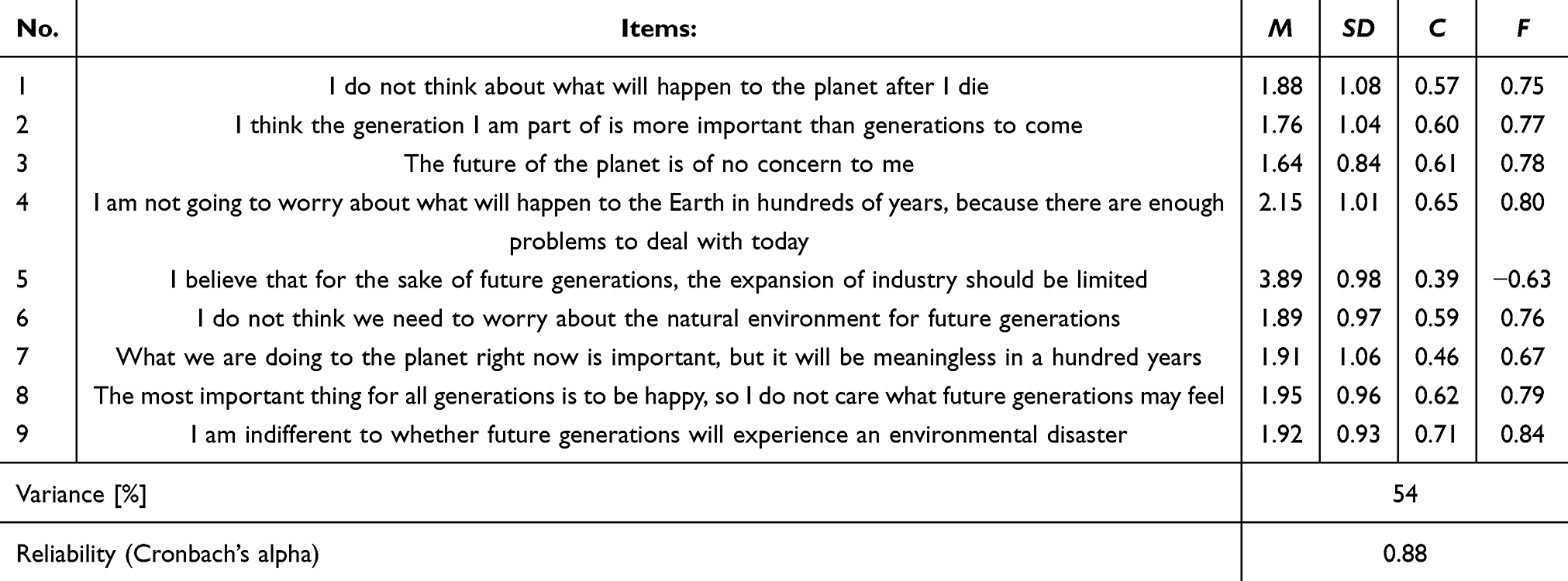 |
Table 1 Median, Standard Deviation, Communalities, Factor of the Generational Egoism Questionnaire (N = 269) |
Confirmatory Factor Analysis
The next stage of the research was to conduct a confirmatory factor analysis. We used several indices to evaluate the model on the empirical data: χ2(df), comparative fit index (CFI), TLI index, and root mean squared error of approximation (RMSEA). The following criteria indicated a good fit of the model to the empirical data: >0.90 CFI, and <0.09 RMSEA.74
Method
Participants
In this study, we collected data from a sample consisting of 213 participants, including 154 women (72.30%) and 59 men (27.70%). The ages of the respondents ranged from 18 years old up to 43 years old (M = 24.70; SD = 6.15). Among the collected sample, 176 participants lived in cities (82.62%) and 38 participants lived in villages (17.38%). Furthermore, 67 respondents had received a university education (31.46%), 140 participants had a secondary education (65.72%), and 6 respondents indicated completion of primary education (2.82%).
Procedure
In line with the exploratory factor analysis’ data collection, the confirmatory factor analysis data were collected electronically. Each participant was informed that the study was anonymous and that participation was voluntary. The study included participants over 18 years old, excluding those living outside the Pomeranian voivodeship. Participants were contacted by the study team.
Results
The results of the confirmatory factor analysis are presented in Table 2. The one-factor model was found to be a more suitable fit to the empirical data.
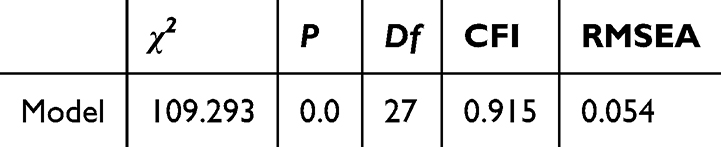 |
Table 2 Indices for One Factor Model |
Study 2. Divergent and Convergent Validity of Generational Egoism Questionnaire
The validity of any assertion that the Generational Egoism Scale (GES) quantifies a distinctive and significant personality dimension is contingent, at least in part, on substantiating that it does not constitute an arbitrary reinterpretation of extant concepts, and that the GES, as it has been operationalised, does not represent a construct that can be adequately elucidated by another personality scale within a more extensive personality inventory. In a preliminary attempt to address the construct validity question and related questions on divergent and convergent validity, the relationship between selfishness and several psychological constructs was examined.
The measures are the Dark Triad Dirty Dozen (neuroticism, psychopathy, machiavelism),75 Ten-Item Personality Inventory (extraversion, neuroticism, agreeableness, conscientiousness, open to experience),76 Satisfaction with Life Scale (SWLS),77 Positivity scale (POS),78 Brief Resilience Coping Scale (BRCS),79 and Meaning of Life Questionnaire (MLQ).80
A number of personality traits, particularly those that are characterised as “dark”, have been identified as significant contributors to ethical, moral and socially questionable behaviour. These traits are characterised by a propensity to prioritise personal gain, often at the expense of other individuals.81
It is logical to hypothesise a positive correlation between personality traits including narcissism, psychopathy and Machiavellianism with generational selfishness.
Research on the relationship between egoism and personality traits has focused not only on negative personality traits, but also on personality traits that are considered socially acceptable, as exemplified by the Five Personality Traits Model. This model encompasses the following personality traits: extraversion, neuroticism, agreeableness, conscientiousness, and openness to experience. While some relationships have been observed between egoism and personality traits viewed from the perspective of the aforementioned model (agreeableness correlates negatively to egoism) these relationships are not very strong.82 Consequently, it can be hypothesised that generational egoism will demonstrate a negative correlation with agreeableness.
The enhancement of one’s own well-being is the most evident component of the selfish motive. Preliminary research suggests that individuals who are characterised by self-interest tend to perceive their lives as being replete with positive change and employ rational cognitive and behavioural strategies to cope with adversity. However, productive strategies are frequently accompanied by irrational ones.83 Consequently, a positive correlation can be anticipated with selected scales measuring disparate aspects of well-being: life satisfaction, positive orientation, resilience and meaning of life.
Method
Procedure
The research data were collected through the use of Google Forms. Participants were recruited via various Internet-based networks targeting persons living in the Pomeranian voivodeship in Poland. Prior to their involvement in this study, the subjects were informed about the objectives of the study and gave their consent online. The subjects were made aware of the anonymous nature of the study, as well as the option to decline participation. The main inclusion criterion for participation in the study was age above 18. The exclusion criterion was living beyond the Pomeranian voivodeship. The participants were contacted by the study team.
Participants
A dataset was collected from individuals, of whom 105 were female (53.03%), 54 were male (27.27%) and 2 were non-binary persons (1.01%). The age of the participants was (M = 23.91, SD = 8.36). The majority of the participants resided in urban areas N = 129 (80.12%), while the remainder resided in rural villages N = 32 (19.87%). 29 respondents had received a university education (19.87%) N = 96 participants had a secondary education (59.62%), and 4 respondents indicated completion of primary education (2.48%).
Measures
Dark Triad Dirty Dozen
The Polish version of the Dirty Dozen comprises three personality subscales: narcissism, psychopathy and Machiavellianism.75 The Polish version of the Dirty Dozen scale maintains a consistent structure comprising 12 items, with four items allocated to each subscale. The scale and its subscales demonstrate adequate internal consistency and test–retest reliability. Polish adaptation:.84
TIPI Test
The Ten-Item Personality Inventory (TIPI) is a brief instrument designed to assess the five-factor model (FFM) of personality dimensions: extraversion, neuroticism, agreeableness, conscientiousness, and open to experience.76 The questionnaire consists of 10 test items and the respondent is asked to respond to each item on a 7-point scale ranging from 1 – strongly disagree to 7 – strongly agree. The reliability of the questionnaire ranged between 0.45 to 0.83 (Cronbach’s alphas). The test–retest reliability ranged between 0.56 and 0.83. Polish adaptation:.85
Satisfaction with Life Scale (SWLS)
The SWLS is comprised of five items which are used to assess individuals’ global life satisfaction.77 The SWLS is a five-item measure that is scored on a seven-point Likert-type scale with response options ranging from 1 = extremely dissatisfied to 7 = extremely satisfied. The instrument’s reliability, as measured by Cronbach’s alpha, is indicated by a coefficient of 0.81. Polish adaptation:.86
Positivity Scale (POS)
The positive orientation scale78 is comprised of eight items that measure the tendency to perceive positive aspects of life. It comprises three components: self-worth, optimism, and satisfaction, with a scale ranging from 1 (totally disagree) to 5 (totally agree). Cronbach’s alpha was 0.84. Polish adaptation:87
Brief Resilience Coping Scale (BRCS)
The Brief Resilient Coping Scale (BRCS) is a measure of highly adaptive stress coping tendencies.79 The scale consists of 4 items to which the respondent has to respond on a 5-point scale (1 – strongly disagree, 5 – strongly agree). The reliability of this scale is Cronbach’s alpha = 0.625. Polish adaptation:88
Meaning of Life Questionnaire (MLQ)
The MLQ has been utilised as a tool to facilitate the comprehension and monitoring of individuals’ perceptions regarding their lives.80 The MLQ is a nine-item scale with two subscales: presence of meaning in life (Cronbach’s a = 0.86) and search for meaning in life (Cronbach’s a = 0.72). In order to provide a quantitative assessment of the respondents’ responses, a seven-point Likert scale is utilised, ranging from 1 (which is marked as “absolutely true”) to 7 (which is marked as “absolutely untrue”). Polish adaptation:89
Results
Tables 3 and 4 present the relations between the Generational Egoism Questionnaire and the personality and well-being scales.
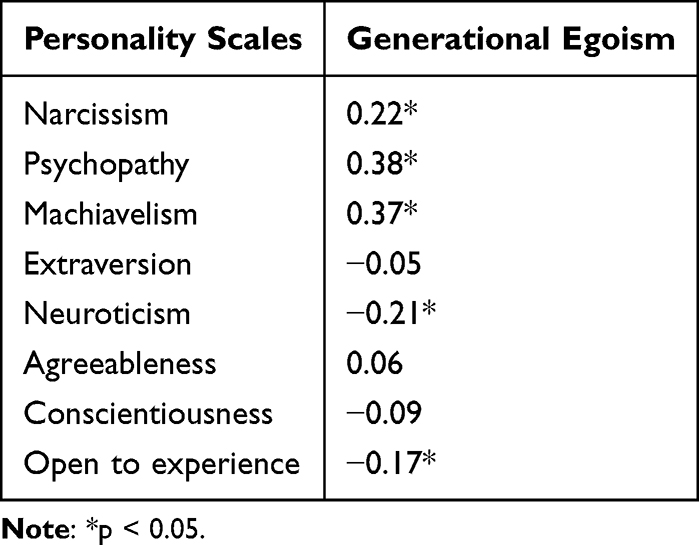 |
Table 3 Generational Egoism and Personality Scales |
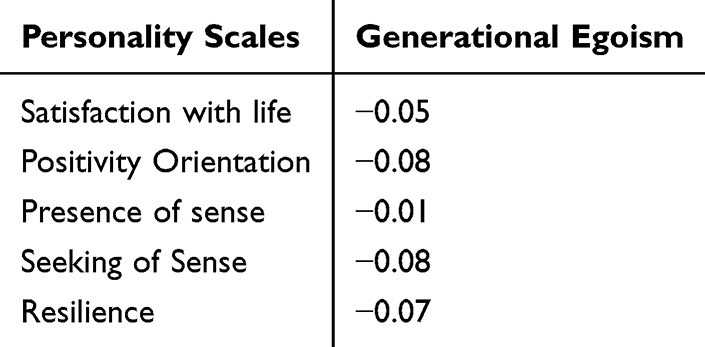 |
Table 4 Generational Egoism and Well-being Scales |
Statistical analyses show that Generational Egoism correlates with some the personality tools used in the study, specifically: Narcissism (p < 0.05), Psychopathy (p < 0.05), Machiavelism (p < 0.05). It correlates negatively with Neuroticism (p < 0.05) and Open to experience (p < 0.05).
The General Egoism does not correlate well-being.
Discussion
The objective of the article was to present the concept of generational egoism from a social science perspective. The theoretical section of the article presented the assumptions of generational egoism.
Generational egoism was defined as actions aimed at maximising benefits for one’s own generation without giving due attention or concern to the negative consequences of those actions for future generations. This form of selfishness is characterised by a short-term (here and now) focus and a lack of concern for the long-term consequences of one’s actions. This definition of generational egoism attempts to go beyond the traditional view of egoism, which focuses on current interpersonal relationships.10,11 By directing our attention to the egoism that arises from the conflict between the present generation and future generations, we can gain novel and intriguing insights into the nature of egoism.
The subsequent research section delineated the developmental stages of the Generational Egoism Questionnaire and its correlation with personality traits and well-being.
The Generational Egoism Questionnaire (GEQ) is a useful instrument for assessing the tendency to prioritise the needs of one’s own generation over those of subsequent generations. The present study indicates that the GEQ is a reliable and valid instrument. Exploratory and confirmatory factor analyses have been employed to verify the univariate structure. The findings suggest that the GEQ also exhibits robust internal consistency.
The present analysis examined the possible correlations between personality traits and generational selfishness. Initially, analyses were conducted between generational egoism and dark personality traits. The results indicated a positive correlation between all three dark traits (narcissism, psychopathy and machiavellianism) and generational egoism.
Individuals who obtain a high score on the narcissism scale are characterised by a sense of superiority towards other people, an exaggeration of their own merits, and a tendency to claim sensitivity to how others perceive them.90–93 The positive correlation of narcissism with generational egoism may therefore suggest that individuals who focus on their own benefits while showing no concern for the well-being of future generations may have a belief in their own uniqueness and a tendency to focus on themselves and their own needs, as these needs are of the utmost importance to them. It is hypothesised that an overemphasis on the self can impede the capacity to perceive the challenges faced by contemporary and future generations.
Subscale psychopathy is also positively correlated with generational selfishness. The psychopathy construct is typified by a diminished capacity for empathy and a concomitant deficit in the understanding of others. Individuals who exhibit elevated scores on subclinical psychopathy scales are distinguished by diminished emotional sensitivity, impulsivity, and a disregard for the consequences of punishment.94,95 Within this theoretical framework, the observed positive correlation between subscale psychopathy and generational egoism appears to be a plausible outcome. Individuals exhibiting low empathy, insensitivity to the plight of others, and a lack of concern for the well-being of others (ie, high psychopathy) may also fail to acknowledge the potential challenges that future generations may face.
The final dark personality trait under consideration, namely Machaivelism, demonstrates a positive correlation with generational egoism. It is noteworthy that this trait exhibits the strongest correlation with generational egoism of all the traits comprising the dark personality triad.
People who achieve high scores on the Machiavellianism scale are those who deceive and exploit others to achieve their own goals and benefit themselves. These individuals engage in manipulative behaviours, demonstrating a lack of empathy and a strong sense of self-worth. Their self-interest is of paramount importance.96–99 Within this paradigm, a discernible and robust correlation emerges between Machiavellianism and generational egoism. For individuals who exhibit Machiavellian tendencies, their own objectives take precedence over those of future generations. Furthermore, individuals with high levels of Machavielism may appear to understand the problems of climate change or sustainable development, but they are not really interested in these issues because they are only concerned with making a good impression on others.
Generational egoism has been demonstrated to correlate positively with many of the personality traits encompassed within the Five Trait Model.100 Conversely, generational egoism exhibits a negative correlation with neuroticism. Neuroticism is characterised by a high level of anxiety, a tendency towards depression, and an inability to control one’s emotions, especially in difficult, risky crisis situations. The correlation between neuroticism and generational egoism suggests that generational egoists possess a distinct ability to regulate their own emotional states, exhibiting minimal anxiety, including future-oriented anxiety. Conversely, individuals who are more emotionally sensitive may be predisposed to emotional discomfort, yet their heightened sensitivity to fear renders them more susceptible to the risks associated with unsustainability.
Furthermore, the propensity to embrace novel experiences has been demonstrated to be associated with a heightened tendency towards generational egoism. The findings indicate that individuals who are less receptive to novel experiences and information tend to place a greater emphasis on their existing knowledge and familiarity. This tendency is accompanied by a propensity to prioritise the challenges that are characteristic of their own generation. This finding may imply that individuals with limited openness to experience possess an inherent bias that hinders their ability to comprehend alternative perspectives or to adopt a viewpoint that transcends their own life experiences. Consequently, engaging in discourse on sustainability with an individual exhibiting low openness to experience may prove to be unproductive.
The study found no correlation between generational egoism and well-being, contradicting existing literature on egoism in interpersonal relationships. Previous results indicate that egoism in interpersonal relations impacts well-being both positively and negatively. “Healthy egoism”, marked by self-awareness and prioritizing personal needs, fosters authenticity and mental well-being. Conversely, excessive egoism, linked to selfishness, harms relationships and impedes personal growth.101 The findings of the present study that an exclusive focus on one’s own life and generation, without considering the broader perspective of future generations, does not necessarily lead to increased or decreased happiness. It is also important to note that an exclusive focus on the problems of future generations is unrelated to well-being. The absence of correlation between generational egoism and wellbeing may imply that it constitutes a distinct form of egoism, divergent from its manifestation in interpersonal relationships.
Limits of the Study and Future Directions
The notion of generational egoism represents an endeavour to delineate egoism beyond its conventional connotation – that is, egoism directed towards other individuals. Generational egoism, as previously defined, concerns the prioritisation of the self and one’s own generation while disregarding the perspective of future generations. While this perspective may offer certain advantages, it is important to recognise its limitations. The concept of generational egoism can be interpreted as a prioritisation of the interests of one’s own generation over those of future generations. However, the proposal of generational egoism does not define what specific benefits for one’s own generation one focuses on. A comprehensive analysis of the benefits that come from being a member of one’s own generation might help us to understand the structure of generational egoism. Conversely, an analysis of the aspects of future generations that are not given consideration when thinking about future generations, and the specific benefits in future generations that are not taken into account, could also deepen the understanding of generational egoism.
It appears that the relationship between the emphasis placed on one’s own generation and the absence of attention towards future generations necessitates a more sophisticated examination. Is this a zero-sum relationship? Alternatively, does the focus on the here and now at the expense of future generations reflect a fundamental aspect of human nature, while instances of consideration for posterity, such as the raising of one’s own children, introduce elements of prospective thinking?
In subsequent research, it would be useful to control for the time perspective of the respondents. Preliminary studies indicate that individuals with a prolonged time perspective are more inclined to contemplate future generations.102 It is reasonable to hypothesise that the importance of preferred values may play an important role in shaping generational egoism. Previous research suggests that individuals who prefer self-focused values are more likely to be selfish in the context of environmental behaviour.103
It would be a fascinating area for research to explore the regulatory function of generational selfishness in relation to environmental behaviour. It would be worthwhile to ascertain whether individuals who exhibit low levels of generational selfishness are more likely to participate in pro-environmental activities and demonstrate an interest in climate change issues.59 Moreover, does an absence of generational selfishness imply generational altruism?
Future research may focus on the developmental aspects of generational egoism. “Traditional” egoism changes throughout life. Infants show self-centeredness due to basic needs. As people grow, their understanding of self and others grows, leading to a more complex egoism, seen as good or bad depending on the situation. The question is whether the same developmental patterns apply to generational egoism.101,104
A potentially intriguing issue for further exploration is the role of generational egoism in identity development. The development of identity and egoism are connected. Egoism influences self-perception, relationships, and social standing The role of this in identity formation becomes more evident during adolescence. This period is of particular significance in the development of an individual’s identity.105 Teenagers often exhibit self-centeredness, preoccupied with their thoughts and feelings, and frequently perceive themselves as uniquely individual. In this respect, future research could address the importance of generational egoism for the development of one’s own identity. Does generational egoism, like traditional egoism, influence the shaping of the individual’s self and his/her relationships with others?
It is not only the domain of future research but also that of practical application of the concept of generational egoism that is worthy of interest. The study can demonstrate certain practical applications. For instance, The Generational Egoism Questionairre can be utilised by environmental educators as a diagnostic instrument when engaging with individuals on the significance of sustainability for our planet. By diagnosing the intensity of generational selfishness, environmental educators can differentiate educational programmes on sustainability, as it is likely that people with different levels of generational selfishness may require different educational interventions.
The study under consideration also has a number of statistical limitations. Firstly, it is imperative to acknowledge that the relationship between generational selfishness and personality traits and well-being is correlational in nature and does not imply a causal relationship, particularly when the correlation values are low. Consequently, the analysis of the relationship between these variables must be approached with the utmost caution.
A notable constraint of the present study is the predominance of young respondents, which may introduce bias and limit the generalisability of the findings to the broader population. This restriction hinders the generalisability of the findings to he whole population. In future studies, it would be important to assess not only young people but also other groups of adults. Furthermore, the subjects of the survey were recruited only from a single province. It is recommended that future research encompass individuals residing in diverse geographical locations. In this study, the gender variable was not controlled for. In future studies, it is essential to consider the gender variable to enhance the generalisability of the findings.
Conclusions
The notion of sustainable development postulates that the satisfaction of the present generation’s needs must not be achieved by compromising the opportunities of future generations. In order to achieve such sustainable development, it becomes necessary to overcome the focus on one’s own selfish and present benefits. This transition is rendered challenging by the reinforcement of existing cultural patterns, which tend to emphasise the importance of self-development, self-fulfilment, and the pursuit of personal pleasure and satisfaction. The study of generational egoism can, on the one hand, reveal factors that encourage a heightened focus on one’s own generation. On the other hand, it can facilitate the identification of psychological factors that can mitigate the egoism of one’s own generation, thereby contributing to realising the concept of sustainable development.
Disclosure
The authors report no conflicts of interest in this work.
References
1. Knez I. Is climate change a moral issue? Effects of egoism and altruism on pro-environmental behavior? Curr Urban Stud. 2016;4(2):157–174. doi:10.4236/cus.2016.42012
2. Pinho M, Gomes S. What role does sustainable behavior and environmental awareness from civil society play in the planet’s sustainable transition. Resour. 2023;12(3):42. doi:10.3390/resources12030042
3. Scarre G. Epicurus as a Forerunner of Utilitarianism. Utilitas. 1994;6(2):219–231. doi:10.1017/S0953820800001606
4. Hobbes TH. Man and Citizen (De Homine and de Cive). Gert B, editor. Indianapolis, USA: Hackett Publishing Company; 1991.
5. Bentham J. An Introduction to the Principles of Morals and Legislation. Oxford, UK: Clarendon Press; 1789.
6. Narens L, Skyrms B. Jeremy bentham: philosophical radical. In: Narens L, Skyrms B, editors. The Pursuit of Happiness: Philosophical and Psychological Foundations of Utility. Oxford, UK: Oxford University Press; 2020:9–15. doi:10.1093/oso/9780198856450.003.0002
7. Paul DB. The selection of the “Survival of the Fittest”. J Hist Biol. 1988;21(3):411–424. doi:10.1007/BF00144089
8. Taylor MW. The Philosophy of Herbert Spencer. London/New York, UK/USA: Continuum; 2007.
9. Offer J. From ‘natural selection’ to ‘survival of the fittest’: on the significance of Spencer’s refashioning of Darwin in the 1860s. J Class Sociol. 2013;14(2):156–177. doi:10.1177/1468795X13491646
10. Cialdini RB. Altruism or egoism? That is (still) the question. Psychol Inquiry. 1991;2(2):124–126. doi:10.1207/s15327965pli0202_3
11. Prichard HA. Moral Writings. New York, NY, USA: Oxford University Press; 2002.
12. Dovidio JF. The empathy-altruism hypothesis: paradigm and promise. Psychol Inquiry. 1991;2(2):126–128. doi:10.1207/s15327965pli0202_4
13. Cialdini RB, Schaller M, Houlihan D, Arps K, Fultz J, Beaman AL. Empathy-based helping: is it selflessly or selfishly motivated? J Pers Soc Psychol. 1987;52(4):749–758. doi:10.1037//0022-3514.52.4.749
14. Batson CD. Altruism in Humans. New York, NY, USA: Oxford University Press; 2011.
15. Batson CD, Shaw LL. Evidence for altruism: toward a pluralism of prosocial motives. Psychol Inquiry. 1991;2(2):107–122. doi:10.1207/s15327965pli0202_1
16. Stevens JR, Hauser MD. Why be nice? Psychological constraints on the evolution of cooperation. Trends Cognit Sci. 2004;8(2):60–65. doi:10.1016/j.tics.2003.12.003
17. Buffardi LE, Campbell WK. Narcissism and social networking web sites. Pers Soc Psychol Bull. 2008;34(10):1303–1314. doi:10.1177/0146167208320061
18. Sonne JW, Gash DM. Psychopathy to altruism: neurobiology of the selfish–selfless spectrum. Front Psychol. 2018;9:575. doi:10.3389/fpsyg.2018.00575
19. Elkind D. Egocentrism in adolescence. Child Dev. 1967;38(4):1025–1034. doi:10.2307/1127100
20. Van Lange PA, Van Doesum NJ. Social mindfulness and social hostility. Cur Opin Behav Sci. 2015;3:18–24. doi:10.1016/j.cobeha.2014.12.009
21. Anderson CA, Bushman BJ. Human aggression. Annu Rev Psychol. 2002;53(1):27–51. doi:10.1146/annurev.psych.53.100901.135231
22. Anderson C, Sharps DL, Soto CJ, John OP. People with disagreeable personalities (selfish, combative, and manipulative) do not have an advantage in pursuing power at work. Proc Natl Acad Sci. 2020;117(37):22780–22786. doi:10.1073/pnas.2005088117
23. Van Lange PA. The pursuit of joint outcomes and equality in outcomes: an integrative model of social value orientation. J Pers Soc Psychol. 1999;77(2):337–349. doi:10.1037/0022-3514.77.2.337
24. Park LE, Troisi JD, Maner JK. Egoistic versus altruistic concerns in communal relationships. J Soc Pers Relat. 2011;28(3):315–335. doi:10.1177/0265407510382178
25. Seuntjens TG, Zeelenberg M, Van de Ven N, Breugelmans SM. Dispositional greed. J Pers Soc Psychol. 2015;108(6):917–933. doi:10.1037/pspp0000031
26. Brink D. Self-love and altruism. Soc Philosophy Policy. 1997;14(1):122–157. doi:10.1017/S0265052500001709
27. Brink D. Perfectionism and the Common Good: Themes in the Philosophy of T. H. Green. Oxford, UK: Oxford University Press; 2003.
28. Mercer M. In defense of weak psychological egoism. Erkenntnis. 2001;55(2):217–237. doi:10.1023/A:1012902007138
29. Maslow AH. Is human nature basically selfish? In: Hoffman E, editor. Future Visions: The Unpublished Papers of Abraham Maslow. Newbury Park, CA, USA: Sage Publications; 1943:107–114.
30. Raine A, Uh S. The Selfishness questionnaire: egocentric, adaptive, and pathological forms of selfishness. J Pers Assess. 2018;101(5):503–514. doi:10.1080/00223891.2018.1455692
31. Weigel RH, Lessing DJ, Elffers H. Egoism: concept, measurement and implications for deviance. Psychol Crime Law. 1999;5(4):349–378. doi:10.1080/10683169908401777
32. Batson CD, Ahmad N, Yin J, et al. Two threats to the common good: self-interested egoism and empathy-induced altruism. Pers Soc Psychol Bulletin. 1999;25(1):3–16. doi:10.1177/0146167299025001001
33. Batson CD, Ahmad N, Tsang J-A. Four motives for community involvement. J Soc Issues. 2002;58(3):429–445. doi:10.1111/1540-4560.00269
34. Crocker J, Canevello A. Chapter two - from egosystem to ecosystem: motivations of the self in a social world. Adv Motiv Sci. 2018;5:41–86. doi:10.1016/bs.adms.2018.01.003
35. Newman GE, Cain DM. Tainted altruism: when doing some good is evaluated as worse than doing no good at all. Psychol Sci. 2014;25(3):648–655. doi:10.1177/0956797613504785
36. Carlson RW, Adkins C, Crockett MJ, Clark MS. Psychological selfishness. Perspec Psychol Sci. 2022;17(5):1359–1380. doi:10.1177/17456916211045692
37. Carlton RW, Zaki J. Good deeds gone bad: lay theories of altruism and selfishness. J Exp Soc Psychol. 2018;75:36–40. doi:10.1016/j.jesp.2017.11.005
38. Lin-Healy F, Small DA. Cheapened altruism: discounting personally affected prosocial actors. Organ Behav Hum Decis Process. 2012;117(2):269–274. doi:10.1016/j.obhdp.2011.11.006
39. Bachner-Melman R, Oakley BA. Giving ‘till it hurts’: eating disorders and pathological altruism. In: Latzer Y, Stein D, editors. Bio-Psycho-Social Contributions to Understanding Eating Disorder. New York, NY, USA: Springer; 2016:91–103.
40. Gonzalez G, Ahl RE, Cordes S, McAuliffe K. Children strategically conceal selfishness. Child Dev. 2022;93(1):e71–e86. doi:10.1111/cdev.13687
41. Cameron LD, Brown PM, Chapman JG. Social value orientations and decisions to take proenvironmental action. J Appl Soc Psychol. 1998;28(8):675–697. doi:10.1111/j.1559-1816.1998.tb01726.x
42. Van Lange PA, Vugt MV, Meertens RM, Ruiter RA. A social dilemma analysis of commuting preferences: the roles of social value orientation and trust. J Appl Soc Psychol. 1998;28(9):796–820. doi:10.1111/j.1559-1816.1998.tb01732.x
43. Balundė A, Perlaviciute G, Steg L. The relationship between people’s environmental considerations and pro-environmental behavior in Lithuania. Front Psychol. 2019;10:2319. doi:10.3389/fpsyg.2019.02319
44. Steg L, De Groot JI, Dreijerink L, Abrahamse W, Siero F. General antecedents ofpersonal norms, policy acceptability, and intentions: the role of values, worldviews, and environmental concern. Soc Nat Resour. 2011;24(4):349–367. doi:10.1080/08941920903214116
45. Steg L, De Groot JI. Environmental values. In: Clayton SD, editor. The Oxford Handbook of Environmental and Conservation Psychology. New York, NY, USA: Oxford University Press; 2012:82–96. doi:10.1093/oxfordhb/9780199733026.013.0005
46. Stern PC, Dietz T. The value basis of environmental concern. J Soc Issues. 1994;50(3):65–84. doi:10.1111/j.1540-4560.1994.tb02420.x
47. Stern PC, Dietz T, Abel T, Guagnano GA, Kalof L. A value-belief-norm theory of support for social movements: the case of environmentalism. Hum Ecol Rev. 1999;6(2):81–97.
48. Griskevicius V, Tybur JM, Van den Bergh B. Going green to be seen: status, reputation, and conspicuous conservation. J Pers Soc Psychol. 2010;98(3):392–404. doi:10.1037/a0017346
49. Li W, Yang G, Li X. Correlation between PM2.5 pollution and its public concern in China: evidence from baidu index. J Clean Prod. 2021;293(2):126091. doi:10.1016/j.jclepro.2021.126091
50. De Dominicis S, Schultz PW, Bonaiuto M. Protecting the environment for self-interested reasons: altruism is not the only pathway to sustainability. Front Psychol. 2017;8:1065. doi:10.3389/fpsyg.2017.01065
51. Gifford R, Nilsson A. Personal and social factors that influence pro-environmental concern and behaviour: a review. Int J Psychol. 2014;49(3):141–157. doi:10.1002/ijop.12034
52. Van de Vyver J, Abrams D, Hopthrow T, Purewal K, de Moura GR, Meleady R. Motivating the selfish to stop idling: self-interest cues can improve environmentally relevant driver behaviour. Transp Res Part F Traffic Psychol Behav. 2018;54:79–85. doi:10.1016/j.trf.2018.01.015
53. Hofstede G. Culture’s Consequences: Comparing Values, Behaviors, Institutions, and Organizations Across Nations.
54. Eom K, Kim HS, Sherman DK, Ishii K. Cultural variability in the link between environmental concern and support for environmental action. Psychol Sci. 2016;27(10):1331–1339. doi:10.1177/0956797616660078
55. Riva F, Triscoli C, Lamm C, Carnaghi A, Silani G. Emotional egocentricity bias across the life-span. Front Aging Neurosci. 2016;8:74. doi:10.3389/fnagi.2016.00074
56. Saracho ON. Theories of child development and their impact on early childhood education and care. Early Childhood Educ J. 2023;51(1):15–30. doi:10.1007/s10643-021-01271-5
57. Barrouillet P. Theories of cognitive development: from Piaget to today. Develop Rev. 2015;38:1–12. doi:10.1016/j.dr.2015.07.004
58. Próchniak A. [Students’ attitudes towards socially responsible consumption. In: Piekarski G, editor. Social Contexts of Education. Traces - Approximations – Applications]. Toruń, Poland: Wydawnictwo Adam Marszałek; 2016:11–29. In Polish.
59. Próchniak P, Ossowski A. Development and validation of the curiosity of climate changes scale. Psychol Res Behav Manag. 2023;16:4829–4838. doi:10.2147/prbm.s425867
60. Katoh T, Kikuchi M. Human selfishness and environmental problems. Nihon Eiseigaku Zasshi. 2021;76. In Japanese. doi:10.1265/jjh.21008
61. Twenge JM, Campbell WK, Freeman EC. Generational differences in young adults’ life goals, concern for others, and civic orientation, 1966-2009. J Pers Soc Psychol. 2012;102(5):1045–1062. doi:10.1037/a0027408
62. Twenge JM, Campbell WK, Gentile B. Generational increases in agentic self-evaluations among American college students, 1966-2009. Self Identity. 2012;11(4):409–427. doi:10.1080/15298868.2011.576820
63. Twenge JM. The evidence for generation me and against generation we. Emerg Adulthood. 2013;1(1):11–16. doi:10.1177/2167696812466548
64. Twenge JM. Generation Me: Why Today’s Young Americans are More Confident, Assertive, Entitled and More Miserable Than Ever Before.
65. Ikrath P. Generation Ego. Paediatr Paedolog. 2018;53(1):28–31. doi:10.1007/s00608-017-0520-y
66. Song Y, Qin Z, Qin Z. Green marketing to gen Z consumers in China: examining the mediating factors of an eco-label–informed purchase. SAGE Open. 2020;10(4):1–15. doi:10.1177/2158244020963573
67. Prayag G, Aquino RS, Hall CM, Chen N, Fieger P. Is Gen Z really that different? Environmental attitudes, travel behaviours and sustainability practices of international tourists to Canterbury, New Zealand. J Sustain Tour. 2022;1–22. doi:10.1080/09669582.2022.2131795
68. Seyfi S, Sharifi-Tehrani M, Hall CM, Vo-Thanh T. Exploring the drivers of Gen Z tourists’ buycott behaviour: a lifestyle politics perspective. J Sustain Tour. 2023;1–19. doi:10.1080/09669582.2023.2166517
69. Sharma N, Goel P, Nunkoo R, Sharma A, Rana NP. Food waste avoidance behavior: how different are generation Z travelers? J Sustain Tour. 2023;1–15. doi:10.1080/09669582.2023.2187741
70. Tonković M, Galić Z, Jerneić Ž. The construct validity of over-claiming as a measure of egoistic enhancement. Rev Psychol. 2011;18(1):13–21.
71. Vecchione M, Alessandri G, Barbaranelli C. Measurement and application of egoistic and moralistic self-enhancement. Int J Select Assess. 2013;21(2):170–182. doi:10.1111/ijsa.12027
72. Comrey AL, Lee HB. A First Course in Factor Analysis.
73. Cronbach LJ. Coefficient alpha and the internal structure of tests. Psychometrika. 1951;16(3):297–334. doi:10.1007/BF02310555
74. Marsh HW, Wen Z, Hau KT. Structural equation models of latent interactions: evaluation of alternative estimation strategies and indicator construction. Psychol Methods. 2004;9(3):275–300. doi:10.1037/1082-989X.9.3.275
75. Jonason PK, Webster GD. The dirty dozen: a concise measure of the dark triad. Psychol Assess. 2010;22(2):420–432.doi:10.1037/a0019265.
76. Gosling SD, Rentfrow PJ, Swann WB. A very brief measure of the big-five personality domains. J Res Pers. 2003;37(6):504–528. doi:10.1016/S0092-6566(03)00046-1
77. Diener E, Emmons RA, Larsen RJ, Griffin S. The satisfaction with life scale. J Pers Assess. 1985;49(1):71–75. doi:10.1207/s15327752jpa4901_13
78. Caprara GV. Positive orientation: turning potentials into optimal functioning. Bull Eur Health Psychol. 2009;11:46–48.
79. Sinclar VG, Wallston KA. The development and psychometric evaluation of the brief resilience coping scale. Assess. 2004;11(1):94–101. doi:10.1177/1073191103258144
80. Steger MF, Frazier P, Oishi S, Kaler M. The meaning in life questionnaire: the presence of and search for meaning in life. J Couns Psychol. 2006;53(1):80–93. doi:10.1037/0022-0167.53.1.80
81. Moshagen M, Hilbig BE, Zettler I. The dark core of personality. Psychol Rev. 2018;125(5):656–688. doi:10.1037/rev0000111
82. de Vries RE, de Vries A, de Hoogh A, Feij J. More than the big five: egoism and the HEXACO model of personality. Eur J Pers. 2009;23(8):635–654. doi:10.1002/per.733
83. Muzdybaev K. Egoism of personality. Psychol J. 2000;21(2):27–39. in Russian.
84. Czarna AZ, Jonason PK, Dufner M, Kossowska M. The dirtydozen scale: validation of a polish version and extension o f the nomological net. Front Psychol. 2016;7:445. doi:10.3389/fpsyg.2016.00445
85. Sorokowska A, Słowińska A, Zbieg A, Sorokowski P. Polska Adaptacja Testu Ten Item Personality Inventory (TIPI) – TIPI-PL – Wersja Standardowa I Internetowa. [Polish Adaptation of the Ten Item Personality Inventory (TIPI) Test – TIPI-PL – Standard and Online Version]. Wrocław, Poland: WrocLab; 2014.
86. Juczyński Z. Narzędzia pomiaru w promocji i psychologii zdrowia. Skala Satysfakcji z Życia. [Measurement tools in health promotion and psychology. Life Satisfaction Scale]. Warsaw, Poland: Pracownia Testów Psychologicznych PTP; 2001.
87. Łaguna M, Oleś P, Filipiuk D. Orientacja pozytywna i jej pomiar: polska adaptacja skali orientacji pozytywnej. [Positive orientation and its measure: polish adaptation of the positivity scale]. Studia Psychologiczne. 2009;49(4):47–54. doi:10.2478/v10167-010-0035-7
88. Piórowska A, Piórowski K, Basińska M, Janicka M. The brief resilience coping scale - polska adaptacja krótkiej skali prężności zaradczej. [Polish adaptation of the brief resilience coping scale]. Przeglad Pedagogiczny. 2017;1:215–227. doi:10.34767/PP.2017.01.15
89. Kossakowska M, Kwiatek P, Stefaniak T. Sens w życiu. Polska wersja kwestionariusza MLQ (Meaning of Life Questionnaire). [Meaning in Life. Polish Version of MLQ]. Psychologia Jakosci Zycia. 2013;12(2):111–131. doi:10.5604/16441796.1090786
90. Ackerman RA, Donnellan MB, Wright AGC. Current conceptualizations of narcissism. Curr Opin Psychiatry. 2019;32(1):32–37. doi:10.1097/yco.0000000000000463
91. Krizan Z, Herlache AD. The narcissism spectrum model: a synthetic view of narcissistic personality. Pers Soc Psychol Rev. 2017;22(1):3–31. doi:10.1177/1088868316685018
92. Kernberg OF. Further contributions to the treatment of narcissistic personalities. J Am Psychoanal Assoc. 1974;55(2):215–238.
93. Kohut H, Wolf ES. The disorders of the self and their treatment: an outline. Int J Psychoanal. 1978;59(4):413–424.
94. Rauthmann JF. The dark triad and interpersonal perception: similarities and differences in the social consequences of narcissism, Machiavellianism, and psychopathy. Soc Psychol Personal Sci. 2012;3(4):487–496. doi:10.1177/1948550611427608
95. Smith CS, Hung LC. Subclinical Psychopaths: How Theyadapt, Their Interpersonal Interactions with and Effect on Others, and How to Detect Them. Springfieid, IL, USA: Charles C Thomas Publisher; 2013.
96. Sharpe BM, Collison KL, Lynam DR, Miller JD. Does Machiavellianism meaningfully differ from psychopathy? It depends. Behav Sci Law. 2021;39(5):663–677. doi:10.1002/bsl.2538
97. Fehr B, Samsom D, Paulhus DL. The construct of Machiavellianism: twenty years later. In: Spielberger CD, Butcher JN, editors. Advances in Personality assessment. Hillsdale, NJ, USA: Erlbaum; 1992:77–116.
98. Jones DN, Paulhus DL. Machiavellianism. In: Leary MR, Hoyle RH, editors. Handbook of Individual Differences in Social Behavior. New York, NY, USA: The Guilford Press; 2009:93–108.
99. Rauthmann JF, Will T. Proposing a multidimensional Machiavellianism conceptualization. Soc Behav Pers. 2011;39(3):391–403. doi:10.2224/sbp.2011.39.3.391
100. McCrae RR, Costa PT. Empirical and theoretical status of the five-factor model of personality traits. In: Boyle GJ, Matthews G, Saklofske DH, editors. The SAGE Handbook of Personality Theory and Assessment (Personality Theories and Models. Vol. 1. Thousand Oaks, CA, USA: SAGE; 2008:273–294.
101. Weiß M, Iotzov V, Zhou Y, Hein G. The bright and dark sides of egoism. Front Psychiatry. 2022;13:1054065. doi:10.3389/fpsyt.2022.1054065
102. Timoszyk-Tomczak C, Próchniak P. Construction and validation of a new generational time perspective questionnaire. Sci Rep. 2024;14(1):13279. doi:10.1038/s41598-024-64185-3
103. Schwartz SH. Universals in the content and structure of values: theoretical advances and empirical tests in 20 countries. Adv Exp Soc Psychol. 1992;25:1–65. doi:10.1016/S0065-2601(08)60281-6
104. Wayment HA, Bauer JJ, Sylaska K. The quiet ego scale: measuring the compassionate self-identity. J Happiness Stud. 2015;16(4):999–1033. doi:10.1007/s10902-014-9546-z
105. Jovanović V, Adams S, Al Banna MH, et al. Adolescent self construal across cultures: measurement invariance of the aspects of identity questionnaire IV in 30 countries. J Res Adolesc. 2025;35(2):e70017. doi:10.1111/jora.70017
 © 2025 The Author(s). This work is published and licensed by Dove Medical Press Limited. The
full terms of this license are available at https://www.dovepress.com/terms
and incorporate the Creative Commons Attribution
- Non Commercial (unported, 4.0) License.
By accessing the work you hereby accept the Terms. Non-commercial uses of the work are permitted
without any further permission from Dove Medical Press Limited, provided the work is properly
attributed. For permission for commercial use of this work, please see paragraphs 4.2 and 5 of our Terms.
© 2025 The Author(s). This work is published and licensed by Dove Medical Press Limited. The
full terms of this license are available at https://www.dovepress.com/terms
and incorporate the Creative Commons Attribution
- Non Commercial (unported, 4.0) License.
By accessing the work you hereby accept the Terms. Non-commercial uses of the work are permitted
without any further permission from Dove Medical Press Limited, provided the work is properly
attributed. For permission for commercial use of this work, please see paragraphs 4.2 and 5 of our Terms.