
Back to Journals » Psychology Research and Behavior Management » Volume 18
From Brushstrokes to Brainpower: A Systematic Review on the Influence of Out-of-School Visual Art Activities on Chinese Adolescents’ Cognitive Skill Development
Authors Yiyun C
Received 9 September 2025
Accepted for publication 9 December 2025
Published 19 December 2025 Volume 2025:18 Pages 2401—2416
DOI https://doi.org/10.2147/PRBM.S566460
Checked for plagiarism Yes
Review by Single anonymous peer review
Peer reviewer comments 2
Editor who approved publication: Dr Gabriela Topa
Cheng Yiyun
School of Preschool Education, HangZhou Polytechnic, Hangzhou, People’s Republic of China
Correspondence: Cheng Yiyun, HangZhou Polytechnic, School of Preschool Education, No. 198 Gaoke Road, Fuyang District, Hangzhou, Zhejiang, 311402, Email [email protected]
Abstract: While China’s “Double Reduction Policy” has expanded children’s out-of-school time, research has predominantly focused on STEM and sports extracurricular activities, often overlooking the specific cognitive and academic role of the visual arts. Addressing this gap, this systematic review synthesizes 11 eligible studies to explore the association between out-of-school visual art activities and academic performance in Chinese children, while identifying key moderating factors. Conducted according to the PRISMA 2021 guidelines, the review finds that visual art engagement strengthens spatial reasoning, working memory, and creative problem-solving, thereby improving standardized test scores and school readiness. However, the benefits are not linear; they are shaped by a threshold model, in which excessive participation diminishes returns, and are moderated by socioeconomic access, parental involvement, and gender. Theoretically, this review underscores the novelty of this nonlinear relationship within the Chinese context. These findings highlight the need for policies that ensure equitable access to arts education and guide parents in fostering balanced, high-quality artistic engagement to support holistic cognitive development. Future research should investigate long-term effects and expand methodological and geographical scopes.
Keywords: visual art activities, extracurricular activities, out-of-school, in-and-out of home, cognitive development, systematic review
Introduction
Extracurricular activities (ECAs) are widely acknowledged as essential for fostering well-rounded child development, contributing to cognitive, social, and emotional growth.1–3 Among these, visual art—through mediums such as drawing, painting, and sculpture—has historically served as a powerful form of creative expression and cultural transmission. While visual art promotes critical thinking, creativity, and problem-solving, it has received comparatively less scholarly attention than other ECAs such as music, sports, and dance, which have been more extensively studied regarding cognitive development.4–7 Globally, the developmental value of ECAs has been recognized across educational systems. In Western contexts, participation in structured art activities outside regular classrooms has been linked to enhanced creativity, motivation, and cognitive flexibility.8–10 Similarly, studies in East Asian settings such as Japan and South Korea have shown that extracurricular art engagement strengthens visual-spatial reasoning and divergent thinking, complementing academically intensive school environments.11,12 These international insights highlight the broader relevance and transferability of findings concerning visual art participation.
A conceptual distinction between in-school and out-of-school art activities is essential to ensure consistency. In-school visual art typically follows prescribed curricula aimed at developing technical proficiency and aesthetic appreciation. In contrast, out-of-school or extracurricular visual art activities allow greater autonomy, exploration, and self-expression. The latter are often more effective at cultivating creativity, emotional regulation, and higher-order thinking skills, as they occur in socially interactive, less evaluative environments.6,8,13 Such contexts enable students to experiment with artistic forms and ideas beyond curricular constraints, thereby nurturing broader cognitive and emotional competencies.
The connection between visual art and cognitive skill development can be further understood through established theoretical frameworks. Vygotsky’s sociocultural theory posits that learning and creativity are mediated by social interaction and cultural tools, suggesting that collaborative art-making fosters symbolic reasoning and self-regulation.14,15 Likewise, executive function frameworks emphasize the role of art in stimulating working memory, cognitive flexibility, and inhibitory control—core processes underlying academic success and problem-solving.16,17 These theoretical perspectives together underscore the cognitive and developmental significance of visual art engagement for children.
In China, the government has increasingly recognized ECAs as vital to holistic child development. Policies such as the “Double Reduction” initiative, launched in 2021, aim to ease academic pressure and promote well-rounded education by expanding school-based and after-school opportunities. Although the policy encourages participation in diverse ECAs, its implementation has predominantly favored STEM and sports activities, often leaving visual art underfunded and under-researched.7,18 As schools strive to balance academic rigor with creativity and well-being, understanding how visual art—particularly in out-of-school settings—supports cognitive development has become increasingly important for curriculum planning and educational reform. Despite policy interest and theoretical grounding, the literature has focused mainly on specific ECAs, linking music to mathematical ability, dance to emotional and physical well-being, and sports to teamwork and discipline. Visual art, by contrast, remains frequently grouped within undifferentiated categories of ECAs.3,19–21 This omission overlooks the distinctive cognitive and psychological processes visual art engages, including spatial reasoning, visual literacy, and metacognitive reflection, all of which contribute uniquely to academic performance.2,22,23 The failure to disaggregate ECA types in prior research makes it difficult for educators and policymakers to identify and leverage the specific benefits of visual art participation.6,13,24
Hence, this review goes beyond summarizing existing findings by offering a critical synthesis of how visual art, as a distinct extracurricular domain, contributes to children’s cognitive and academic outcomes. By isolating visual art from broader ECA categories and grounding its developmental relevance in sociocultural and cognitive psychology theories, this study enhances the theoretical and global understanding of its educational value. The review thus aims to inform evidence-based curriculum design and policy formulation while advocating for the intentional integration of visual art into holistic education frameworks that promote creativity, cognitive growth, and academic well-being.
Based on the literature argument, the present systematic review is guided by the following research questions:
- Are out-of-school Visual Art activities related to cognitive skill development?
- What are the underlying factors that moderate the influence of visual art activities on adolescents’ cognitive skills?
The Role of Visual Art in Promoting Adolescents’ Well-Being
Visual art activities are widely acknowledged for their potential to support cognitive, emotional, and academic development, making them valuable components of extracurricular education.2,4,22,23 A substantial body of international research highlights that engagement in visual arts enhances spatial reasoning, imaginative thinking, and analytical skills, which are foundational to higher-order cognitive processes. Participation in visual art is positively associated with improvements in spatial reasoning, a key predictor of achievement in STEM fields, particularly through exposure to visual–spatial tasks such as drawing and modeling.7,24 Empirical findings from the United States and Europe have demonstrated that art-based activities improve geometric reasoning, proportional understanding, and visual–motor integration, contributing indirectly to mathematical performance.4,9
However, some studies have reported limited or inconsistent academic effects, particularly when controlling for socioeconomic status, prior ability, or self-selection bias. Large-scale longitudinal data from the United States and Australia suggest that the positive association between art participation and academic achievement weakens after controlling for background variables.8,25,26 Similarly, meta-analyses indicate that while engagement with visual art enhances creativity and divergent thinking, its direct impact on standardized academic outcomes remains modest and context-dependent.11,26 Such findings underscore the importance of interpreting the benefits of art participation within broader ecological and educational frameworks rather than assuming uniform cognitive gains.
Recent neurocognitive research offers new insights into how art-related experiences influence brain functioning and executive control. Functional imaging studies show that creating visual art activates prefrontal and parietal networks associated with cognitive flexibility and working memory.22,27 Experimental evidence further suggests that sustained art practice strengthens neural plasticity, emotion regulation, and attentional control—mechanisms linked to executive function and academic resilience.6,28,29 Nevertheless, heterogeneity in experimental designs, age ranges, and measurement tools has limited cross-study comparability, and many studies rely on small samples or short-term interventions, constraining the generalizability of results.19,26
Cross-cultural research indicates that the cognitive and emotional benefits of art participation may manifest differently across contexts. Evidence from Finland, the United Kingdom, and South Korea demonstrates that engagement with visual art enhances self-efficacy, emotional intelligence, and creative confidence—attributes that support motivation and engagement.3,16,19 In contrast, Chinese studies reveal that institutional pressures and exam-oriented curricula often constrain opportunities for creative exploration, resulting in less consistent developmental gains.21,30 However, when implemented through after-school programs or informal community art settings, Chinese adolescents show improvements in creativity, self-expression, and emotional regulation comparable to those of their Western counterparts.30–32 These cross-cultural findings suggest that the cognitive benefits of visual art are not universal but contingent on socioeducational contexts, pedagogical freedom, and resource availability.
Integrated curricula that embed visual art within academic subjects—such as those in the US Arts in Education Model Development and Dissemination (AEMDD) initiative or the UK’s Creative Partnerships program—demonstrate improved engagement and conceptual understanding across disciplines.8,20 However, critical evaluations point out that variations in program duration, teacher training, and assessment frameworks may contribute to inconsistent outcomes.26,33 Beyond school environments, community-based art programs in China, Finland, and the Netherlands have been shown to enhance perseverance, collaboration, and intercultural awareness, reinforcing the social dimension of well-being.2,30,31
Ultimately, evidence supports the multifaceted benefits of visual art activities, while acknowledging limitations in causal inference and measurement precision. Visual art engagement fosters spatial reasoning, creativity, and emotional regulation, though the magnitude and consistency of these effects depend on contextual, methodological, and socio-demographic factors. Future research should adopt longitudinal and cross-cultural designs, integrating behavioral and neurocognitive measures to clarify how visual art contributes to adolescents’ cognitive and emotional well-being across diverse learning environments.
Rationale for the Review
The rationale for conducting this systematic review is multifaceted. Firstly, while the Chinese government has been promoting ECAs to enhance educational outcomes, the focus has predominantly been on sports and STEM-related activities, with visual art often overlooked or subsumed under broader categories.34 Recently, the Chinese government announced the “double reduction policy,” intended to reduce academic pressure and stress by minimizing school homework and high-stakes exams. It has gained prominence, yet its impact on aspects beyond academic pressure, particularly in ECAs, has become a burning topic among scholars.34 In addition, this oversight is problematic, as visual art engages distinct cognitive and emotional processes, such as spatial reasoning, creativity, and self-expression,23 which may have unique implications for cognitive skill development. Secondly, much of the existing research on ECAs measures their impact in aggregate without distinguishing between individual activities (eg, 18). This generalized approach obscures the unique contributions of specific activities, such as visual art. It limits educators’ and policymakers’ ability to make informed decisions about resource allocation and curriculum design. For example, while studies have shown that participation in ECAs correlates with improved academic outcomes, the mechanisms through which visual art influences academic performance remain underexplored. Therefore, this systematic review aims to fill these gaps by critically synthesizing empirical evidence on the impact of visual art activities on children’s cognitive skill development and academic outcomes within the evolving educational landscape, shaped by policies such as China’s “double reduction.” By disaggregating visual art from other ECAs, the review provides nuanced insights into its unique cognitive and emotional benefits, thereby informing more targeted educational practices, resource allocation, and policy decisions.
Method
Research Method
This systematic review examined the relationship between visual art activities and cognitive skill development, identifying key moderating factors. Following PRISMA (2021) guidelines, we analyzed academic performance indicators, including standardized test scores, school achievement, study hours, and engagement measures, to ensure methodological rigor.
Inclusion Criteria
The following criteria were applied to select studies for inclusion in the review: i) Only studies published in English were considered to ensure consistency in interpretation and analysis. ii) Quantitative studies were included, including cross-sectional and longitudinal designs and the quantitative components of mixed-methods studies. These studies examined the influence of out-of-school visual art activities on academic performance in China. iii) Studies focusing on children under 18 were included, as this aligns with the definition of children and adolescents in the Chinese context. iv) Only studies conducted in mainland China were considered, as the review aimed to explore the phenomenon within China’s specific socio-economic and cultural context. v) The review included studies published between January 2010 and September 2025. The year 2010 was selected as a cutoff to ensure the inclusion of research reflecting recent trends and developments in the field. Studies published after 2010 are more likely to capture dynamic socio-economic conditions, social value patterns, and educational policies in China, particularly following recent game-changing policy changes, such as the “Double Reduction Policy,” which allows Chinese children and adolescents to cherish their out-of-school time by engaging in ECAs.
Exclusion Criteria
The review applied the following inclusion criteria: (i) Studies published in English to ensure interpretive consistency; (ii) Quantitative studies, including cross-sectional, longitudinal, and mixed-method designs, examining out-of-school visual art activities and academic performance in China; (iii) Studies involving participants under 18, in line with the Chinese definition of children and adolescents; (iv) Research conducted in mainland China to reflect its specific cultural and socio-economic context; and (v) Studies published between January 2010 and September 2025 to capture recent developments, including the impact of significant policy shifts like the “Double Reduction Policy,” which encourages children’s engagement in extracurricular activities.
Literature Search
To identify relevant studies, we conducted a comprehensive search of five major databases: PsycINFO, PubMed, Scopus, Web of Science, and ProQuest. The search included studies published up to June 2025. It was guided by carefully selected keywords and Boolean operators that aligned with the review’s objectives. The search terms combined keywords and phrases related to visual art activities, academic performance, extracurricular activities (ECAs), and moderating factors.
For visual art activities, we used terms such as “visual art,” “art education,” “art extracurricular,” “art activities,” “creative arts,” and “art participation.” These terms were selected to cover a broad range of visual art-related experiences that students may engage in outside the core curriculum. In addressing academic performance, we included terms like “academic achievement,” “academic performance,” “educational outcomes,” “school performance,” “learning outcomes,” “grades,” and “score.” These captured diverse measures of academic success and educational progress.
To focus the search on ECAs, we incorporated terms such as “ECAs,” “after-school activities,” “non-academic activities,” and “co-curricular activities.” These helped refine the search to studies that specifically explored activities beyond the formal academic curriculum. To explore potential moderating factors in the relationship between visual art activities and academic performance, we used terms like “moderating factors,” “mediating factors,” “influencing factors,” “determinants,” “contextual factors,” “socio-economic factors,” “demographic factors,” “school environment,” and “family support.” These were aimed at identifying studies that examined conditions or variables that might influence this relationship.
We employed Boolean operators to combine terms effectively. The operator “AND” was used to link key concepts—for example, “visual art” AND “academic performance” or “art extracurricular” AND “educational outcomes.” The operator “OR” was used to include synonyms or related concepts, such as (“visual art” OR “art education” OR “creative arts”) and (“academic performance” OR “educational outcomes” OR “grades”). In some cases, the operator “NOT” helped exclude unrelated topics—for instance, “visual art” NOT “professional artists”—to maintain a focus on student populations.
Screening and Selection Process
Following the initial search, all identified articles were imported into EndNote X9, a reference management software, to remove duplicates systematically. The PRISMA flow diagram (Figure 1) illustrates the screening process, outlining each step from identification to final inclusion.
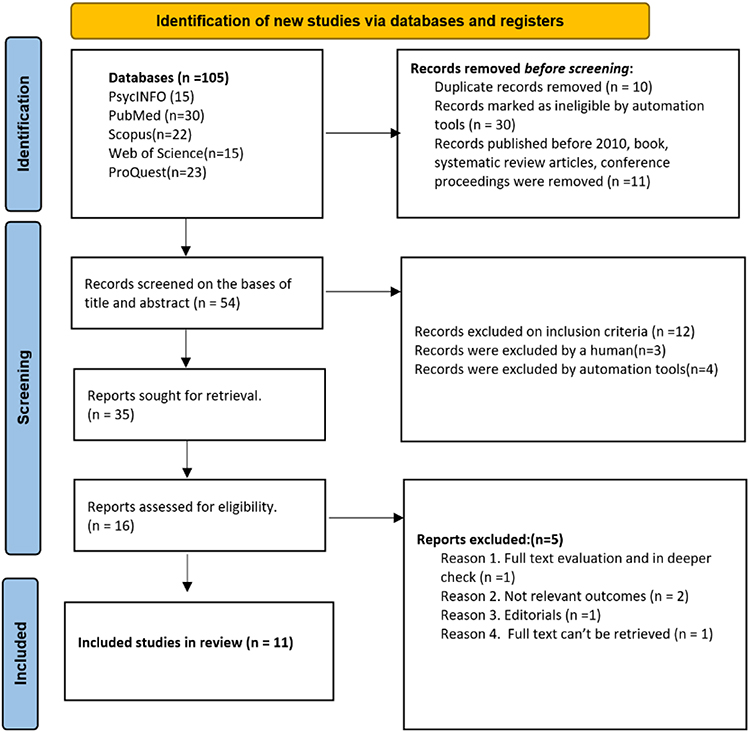 |
Figure 1 PRISMA 2020, Flow Diagram of the Literature Search. |
A total of 105 articles were retrieved from the databases. After applying the predefined inclusion and exclusion criteria, 11 studies were ultimately selected for review. These criteria were carefully designed to ensure that selected studies were relevant, methodologically sound, and aligned with the objectives of this review. To enhance methodological rigor, the sole author collaborated with an independent scholar, acknowledged in this study, to conduct the initial evaluation of titles and abstracts. Both reviewers conducted their assessments independently. In cases of disagreement, the author served as the final arbiter. This dual-review strategy helped maintain objectivity and reduce potential bias.
After the initial screening, the author conducted a detailed full-text review of potentially eligible studies to verify their suitability. The author independently reviewed all non-duplicate articles identified through the search strategy. Irrelevant studies—such as those with unclear findings or weak sampling methods—were excluded. The full texts of the remaining studies were then downloaded and reviewed. Eligibility was reassessed based on the inclusion and exclusion criteria. References that did not meet these standards were excluded, with the reasons for exclusion documented to ensure transparency. Subsequently, the author extracted relevant data from the eligible studies. Key data points included study design, sample characteristics, geographic location, academic performance metrics, and factors influencing LBCs’ academic outcomes. This systematic and rigorous approach ensured the reliability and validity of the review’s findings.
Data Extraction
A structured data extraction protocol was employed to systematically capture key study characteristics, including: author(s) and publication year; geographic focus (specific Chinese provinces); research design; participant demographics; measurement instruments employed; and significant findings. Particular emphasis was placed on examining the relationship between extracurricular participation in visual arts and academic outcomes, with careful attention to identifying potential moderating and mediating factors. The resulting analysis incorporated studies from multiple Chinese provinces, featuring diverse sample sizes and spanning a considerable temporal range. This geographic and methodological diversity strengthens the external validity of the review’s conclusions. The independent scholar’s participation was strictly limited to the initial screening phase, with all subsequent analytical and interpretive work conducted exclusively by the author to maintain conceptual coherence throughout the review process.
Quality Assessment
To assess the methodological quality of the studies included in this review, we utilized the National Institutes of Health (NIH) Quality Assessment Tool for cross-sectional and cohort observational studies.35 This tool evaluates each study using 14 predefined criteria, summarized in Table 1. For each criterion, a score of 1 was assigned for a “yes” response, and a score of 0 was given for “no” or “not applicable” responses. The total quality score for each study was determined by summing the individual scores across all criteria, yielding a global score ranging from 0 to 14. To classify the studies, we adopted the classification system proposed by Maher et al,36 where studies with total scores between 0–3 were considered “poor quality,” those with scores between 4–5 were categorized as “moderate,” 6–8 as “good,” 9–10 as “excellent,” and 8–11 as “optimal.” All studies included in the review met the minimum quality threshold, with scores ranging from 8 to 11, thus falling within the “optimal” quality category as defined by Maher et al.36 It is important to emphasize that while the quality assessment criteria were crucial for evaluating the scientific rigor of the studies, they were not used as the sole determinant for study inclusion or exclusion. The screening process followed a multi-stage procedure to ensure consistency and thoroughness. In the first stage, the author, an independent scholar, reviewed the titles and abstracts of the identified articles to assess their relevance. In the second stage, the author and an independent scholar retrieved and evaluated the full texts of the shortlisted studies for eligibility. In cases of disagreement or discrepancies regarding study eligibility, a consensus was reached by consulting with two additional reviewers, who made the final decision. This rigorous process ensured that the studies included in the review met methodological and content-related inclusion criteria.
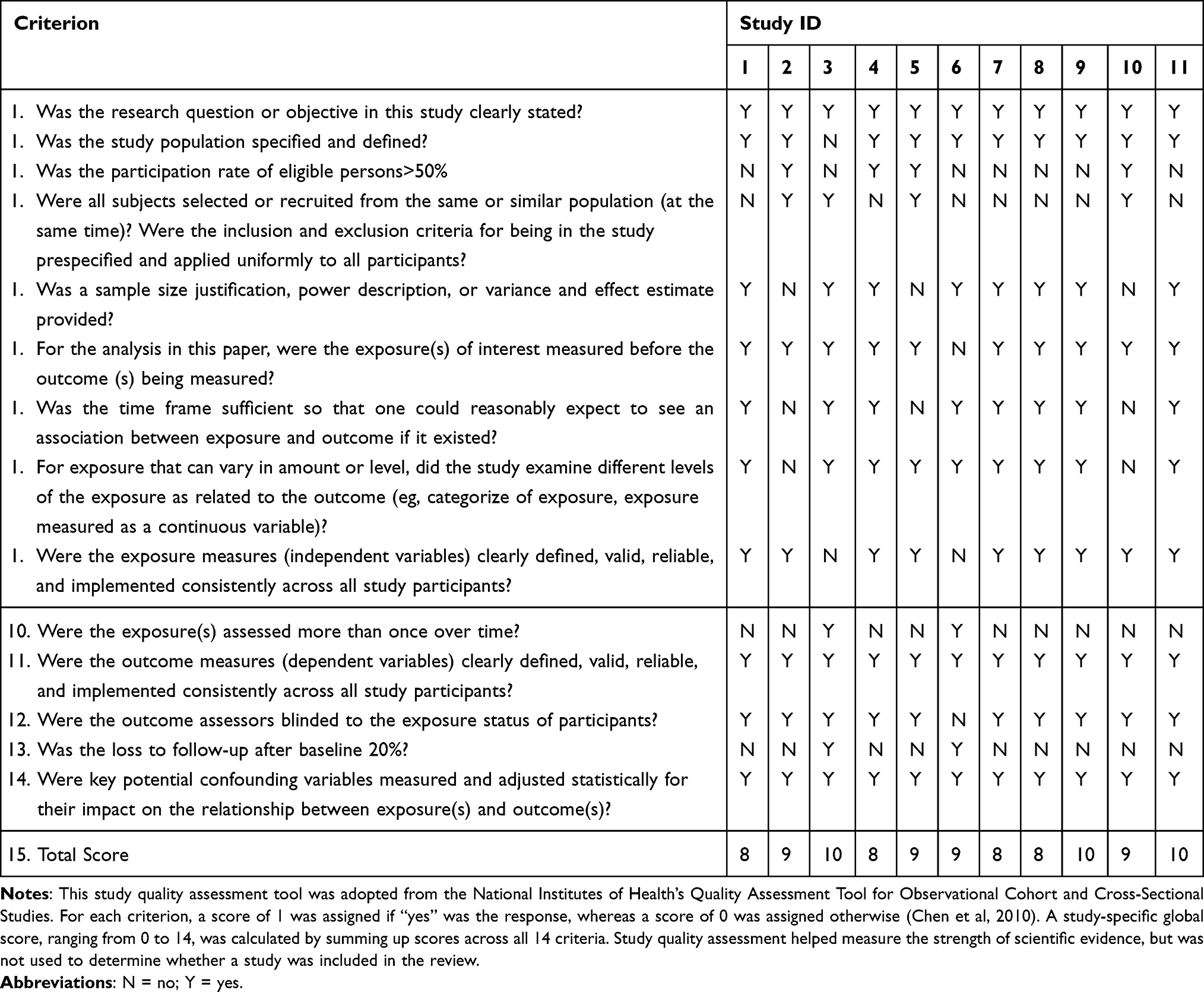 |
Table 1 Quality Assessment Tool for Observational Cohort and Cross-Sectional Studies |
Result
Characteristics of the Reviewed Studies
The reviewed research articles provide a comprehensive understanding of the influence of out-of-school or extracurricular visual art activities on cognitive skills and development and identify the underlying aspects that moderate the likelihood of participation and the direction of impact on Chinese children’s cognitive skills. Consequently, from an initial pool of 105 studies identified during the screening process, only 11 articles met the eligibility criteria for inclusion in this review37–47 (refer to Figure 1 and Table 2). All selected studies were conducted across various regions of mainland China and were published in English. Based on the preliminary findings of the review, these studies were published online between the year of 2015 and 2025,42,43 explicitly focus on assessing the participation of Chinese children and adolescents in out-of-school visual art activities as one of the ECAs; estimate the statistical impact of the participation on their cognitive skill; and pinpointing the factors that mitigate the degree of the relationship.
 |
Table 2 Description of the Reviewed Studies |
Furthermore, the literature synthesis indicates considerable variation across the reviewed studies in regions, research designs, participant characteristics, outcome measurements, and key findings. Although all the studies were conducted in China, most of the reviewed studies were conducted in mainland China, while three were conducted in the Hong Kong Special Administrative Region. Out of the eight studies conducted in Mainland China, two studies were from Shanghai, three studies were from Guizhou province (Southwest China), one study was from Guangdong province (Southern China), one study was from seven provinces in Northern China, one study utilized national data, and one study did not mention the particular research setting. Regarding the research design employed by the reviewed studies, the finding shows that four were longitudinal studies that mainly conducted two waves of data collection. In contrast, six studies in this review used a cross-sectional design, and one employed a mixed-methods approach to attain its research objectives. Of the 11 reviewed studies, except for one, the others used primary survey data rather than secondary or prior databases for the analysis. The introductory results of the literature reviews provide further insight into the descriptions of the reviewed studies. Specifically, five of the synthesized studies focused on participants aged six or younger, aiming to understand the impact of visual art activities on cognitive development in early childhood.
In contrast, the other six studies involved diverse participants, including children and adolescents aged 7 to 14, as well as primary to junior high school students. Finally, the preliminary finding of the systematic review demonstrates that although the present study’s outcome is cognitive skills, the reviewed studies contributed to this outcome by estimating the application of out-of-school visual art activities as ECA in promoting academic performance, as measured through school-based performance in different subjects. Standardized tests are designed and prepared by the researchers to assess participants’ math and language skills, which minimizes biases that can arise from subjective grading practices, offering a transparent and impartial assessment of student abilities and establishing the benchmarks of the trustworthiness or reliability of the findings by ensuring the skills and knowledge assessed are relevant and standardized across the participants.
The Influence of Out-of-School Visual Art Activities on Children’s Cognitive Skills
A systematic review of the 11 selected quantitative studies provides strong empirical support for the positive influence of visual art activities on children’s cognitive skills across multiple developmental contexts (See Table 3). Collectively, these studies examine domains such as working memory, critical thinking, creativity, executive functioning, school readiness, and academic performance, employing various statistical approaches, including regression analysis, structural equation modeling, and t-tests.
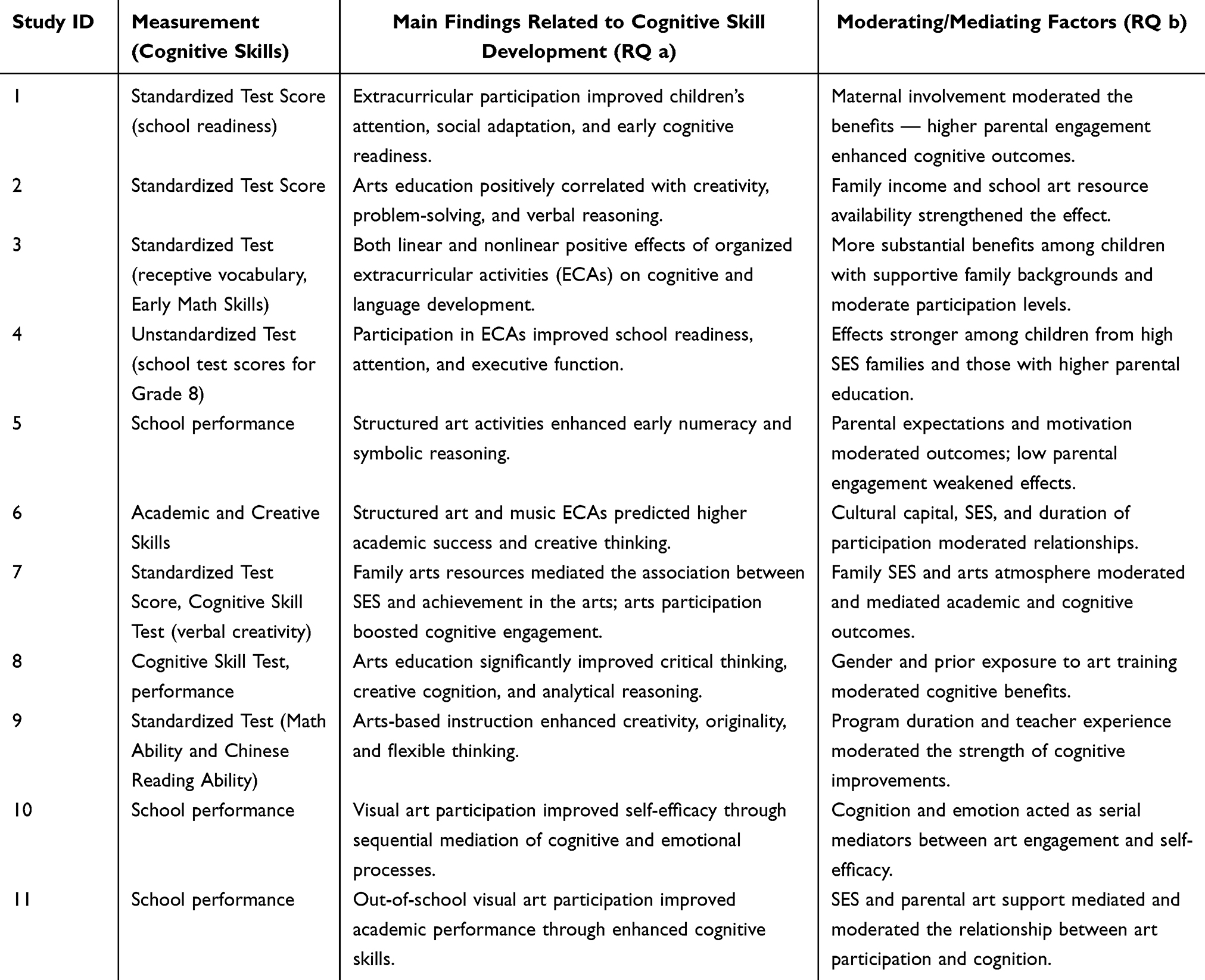 |
Table 3 The Key Findings of Reviewed Studies |
Specifically, Liu38 demonstrated that arts education significantly improved cognitive development, with working memory showing a beta coefficient of 0.41 (p <0.01) and attention span at 0.37 (p <0.05), thereby suggesting a notable impact on executive functioning. Similarly, Chiu and Lau,37 in their study on Hong Kong children, found that participation in extracurricular visual art activities predicted improved cognitive outcomes (β = 0.29, p <0.01), with maternal involvement moderating this relationship (interaction β = 0.18, p <0.05), highlighting the role of family context in amplifying cognitive benefits. Moreover, Ren et al39 explored the linear and nonlinear effects of organized extracurricular activities (ECAs) on preschoolers in China. They found a significant quadratic effect (β = 0.21, p <0.05), indicating that while moderate participation in arts positively influenced cognitive development, excessive involvement yielded diminishing returns. In addition, another study by Ren et al44 reported medium effect sizes (Cohen’s d = 0.48) for visual arts-related ECAs enhancing school readiness, especially in early literacy and numeracy.
Furthermore, Ren and Zhang45 used structural equation modeling to show that arts participation was positively associated with improvements in attention regulation and executive function (β = 0.32, p <0.01), thereby reinforcing the foundational cognitive role of visual arts. In a similar vein, Tan et al40 found that structured visual art engagement predicted improved standardized academic outcomes (β = 0.26, p <0.05), with cultural capital acting as a mediating factor. Additionally, Yuan et al41 examined the mediating role of family arts resources. They found a significant indirect effect (0.13, 95% CI [0.06, 0.21]) between family socio-economic status and adolescents’ achievement in art-based cognitive domains, while the arts atmosphere moderated this relationship. Complementing these findings, Hui et al43 showed that visual arts education significantly improved creativity scores, as indicated by an ANOVA with F(2, 198) = 6.78 (p <0.01), confirming the effectiveness of arts-based interventions in enhancing divergent thinking in young children. Turning to psychosocial outcomes, Deer et al47 provided evidence that cognition served as a mediator between visual art participation and self-efficacy, with cognition showing a substantial direct effect (β = 0.36, p <0.01) and a more negligible effect through emotion (β = 0.22, p <0.05), thus reinforcing the interdependence of cognitive and emotional processes in development. Subsequently, in a follow-up study, Deer et al46 found that visual art participation was significantly associated with academic performance (β = 0.31, p <0.001), with socio-economic status mediating this association, indicating the compensatory cognitive benefits of visual arts in less advantaged contexts. Finally, Li and Qi42 confirmed the cognitive value of arts education at the higher education level, with critical thinking and creativity scores significantly higher among art participants than among non-participants. The mean differences were statistically significant, with t(198) = 3.94 (p <0.001) for critical thinking and t(198) = 4.23 (p <0.001) for creativity, indicating the sustained cognitive impact of early visual art exposure.
In conclusion, the synthesis of quantitative findings from these studies reveals a consistent pattern: visual art activities contribute significantly to children’s cognitive development across domains such as executive function, school readiness, critical thinking, and academic achievement. These effects are sometimes moderated by factors such as socio-economic background and parental involvement, and can be mediated by variables such as family arts resources and cognitive-emotional mechanisms. Collectively, these findings underscore the importance of integrating visual art into early and middle childhood education to enrich cognitive development.
Underlying Factors Determining the Application of Visual Art Activities
The second objective of this review is to identify key mediators that influence the relationship between visual art activities and the development of cognitive and academic skills in children and adolescents. Collectively, the reviewed studies illuminate the intricate pathways through which engagement in visual art can impact cognitive outcomes (See Table 3). Several factors, including family environment, socio-economic conditions, emotional and cognitive mechanisms, and the intensity of participation, shape these pathways.
To begin with, Liu38 emphasized the direct impact of arts education on cognitive development and academic performance. However, the study also noted that the strength of this relationship may depend on external support mechanisms, suggesting potential moderating factors that were not thoroughly examined. Expanding on this, Chiu and Lau37 explicitly identified maternal involvement as a significant moderator. They found that the association between extracurricular visual art participation and cognitive outcomes was stronger when maternal involvement was high (interaction β = 0.18, p <0.05). This finding indicates that parental engagement enhances the benefits of art-related activities for children’s cognitive development.
In a related study, Ren et al39 provided a more nuanced perspective by highlighting nonlinear effects of organized extracurricular activities on preschoolers’ cognitive development (quadratic β = 0.21, p <0.05). Their findings imply that while moderate participation in arts activities is beneficial, excessive involvement may lead to diminishing returns. Thus, participation intensity emerged as a critical moderating factor. Furthermore, the same study revealed that not all children benefited equally from arts-related extracurricular activities. Specifically, school readiness gains varied based on individual characteristics and background conditions (Cohen’s d = 0.48). This underscores the moderating influence of contextual and individual differences. Shifting focus to underlying mechanisms, Ren and Zhang45 identified **executive function and attention regulation** as key cognitive processes that are enhanced through participation in arts education (β = 0.32, p <0.01). These processes appear to mediate the relationship between arts exposure and broader academic outcomes, suggesting a pathway through which cognitive gains are achieved.
Likewise, Tan et al40 found that cultural capital mediates the relationship between structured arts engagement and academic success (β = 0.26, p <0.05). Their findings imply that the acquisition of cultural knowledge and dispositions through the arts contributes meaningfully to students’ academic trajectories. Another layer of complexity is added by Yuan et al,41 who offered strong evidence for both mediating and moderating roles of family-related factors. Specifically, family arts resources mediated the link between socio-economic status and academic achievement in art-related domains (indirect effect = 0.13, 95% CI \ [0.06, 0.21]). Meanwhile, the family arts atmosphere functioned as a moderator, strengthening or weakening the impact based on the quality of the home arts environment. These findings highlight the dual role of the home context as both a conduit and an amplifier of cognitive benefits associated with the arts.
Turning to the role of creativity, Hui et al43 demonstrated significant improvements in creative thinking resulting from arts education (F(2, 198) = 6.78, p <0.01). This suggests that the quality and pedagogical approach of arts instruction may mediate the development of creative cognitive skills. In another study, Deer et al47 proposed a serial mediation model. They found that both cognition and emotion sequentially mediated the relationship between visual art participation and self-efficacy (cognition β = 0.36, p <0.01; emotion β = 0.22, p <0.05). These results underscore the intertwined nature of cognitive growth and emotional development, ultimately contributing to psychosocial well-being. Moreover, Deer et al46 identified socio-economic status as a crucial mediator between out-of-school visual art participation and academic performance (β = 0.31, p <0.001). This highlights how access to enriching art experiences—and their associated benefits—is often shaped by broader socio-economic conditions. Lastly, Li and Qi42 confirmed that arts education in higher education settings directly enhances critical thinking and creativity (t (198) = 3.94, p <0.001 for critical thinking; t(198) = 4.23, p <0.001 for creativity). These findings suggest that the cognitive benefits of early exposure to visual art may persist into later stages of education, potentially mediated by accumulated skill development.
Discussion
This systematic review aimed to synthesize 11 eligible studies using a rigorous inclusion and exclusion criterion. The review explores how out-of-school or extracurricular visual art activities influence cognitive development in Chinese children. Additionally, it examines key factors that mediate participation and its outcomes, including socio-economic status, parental involvement, and access to resources.
The preliminary findings of the review indicate that the studies were conducted across different regions of China, providing results that represent children from diverse economic and cultural backgrounds. One key finding highlights that socio-economic status and gender significantly affect participation in out-of-school visual art activities. This aligns with both national7,41,48 and international research,30,49,50 which confirms that children from financially stable families are more likely to participate in a variety of ECAs. In contrast, children from low-income households often engage in less productive or potentially risky activities during their free time.51 These patterns contribute to psychological, social, and academic disparities.18 Notably, this review’s findings challenge the outdated stereotype that affluent parents prioritize work over their children’s well-being. Today, many such parents actively support both in-home and out-of-home ECAs to promote holistic development.51
In line with this, Chinese literature increasingly shows that children from high socio-economic backgrounds outperform their peers academically. This is partly due to their stable cultural capital, which grants them access to resources that further widen the social and educational gap.48,52 In terms of gender, this review shows that girls participate in visual art activities more frequently than boys do. This finding supports previous research suggesting that male adolescents prefer traditionally masculine activities, such as sports or science fairs.49,53 A possible explanation is rooted in Chinese parenting culture, where boys are often pressured to focus on academics and after-school tutoring to secure high-paying careers.48,51 However, this trend has a promising side. The review suggests that modern Chinese parents increasingly recognize the potential of girls, motivated by the success of women in various sectors such as business, technology, the arts, and academia. As a result, more parents now support girls in pursuing visual art activities, reflecting a shift toward greater gender equality.
Turning to the core aim of this review, most studies confirm that visual art activities positively influence cognitive skill development. However, two studies reported no significant effects on school-based academic performance, echoing earlier findings.30,54 One reason may be the measurement method: academic performance was gauged using school grades, which vary between institutions and may not accurately reflect actual learning or cognitive ability. Surprisingly, this aligns with previous Chinese studies suggesting that while after-school ECAs may not directly enhance academic performance, they can have indirect benefits.40 However, this particular study has two key limitations. First, it relies on data from the 2014 China Education Panel Survey (CEPS), which may be outdated given China’s rapid societal changes. Second, it treated ECAs as a binary variable—yes or no—without specifying the types of activities.
Marsh and Kleitman54 further argued that out-of-school ECAs tend to have weaker academic effects than in-school ECAs. A likely explanation, supported by a previous study, is that over-involvement in ECAs—visual arts included—can lead to divided attention, potentially harming academic work.37 Consistent with this, several studies in this review found that while participants in out-of-school visual art activities showed gains in standardized test scores, school readiness, and cognitive performance, excessive participation led to adverse outcomes. Overloaded schedules can lead to stress, fatigue, and diminished academic performance.21,48 This pattern aligns with the threshold theory, which states that extracurricular involvement benefits students up to a certain point, after which it plateaus or becomes counterproductive.31 Additionally, earlier research suggests that students who are already academically strong are more likely to choose visual art activities, suggesting a self-selection bias.49
Therefore, this review supports recent Chinese studies that assert that only certain types of ECAs—specifically, informal, out-of-school ECAs—contribute to academic performance. In contrast, school-based ECAs, which are more structured and teacher-supervised, are often more impactful.48 Further analysis indicates that visual art activities yield greater cognitive benefits when children participate in just one focused out-of-school ECA, rather than multiple. This supports findings by preceding evidence that specialized engagement leads to better cognitive development than multitasking across several activities.53–55 Interestingly, the review also finds that academically successful and affluent children with a strong interest in the arts can benefit without external programs, provided they have the necessary resources and time at home. Ren et al44 corroborate this, suggesting that children from high-SES backgrounds gain minimal additional benefit from formal ECAs because they can practice and refine their skills at home.
These findings reinforce the threshold theory and underscore the importance of parental support. Excessive involvement without such support can even hinder academic performance.53 When parents help children choose and pursue activities they are passionate about, the cognitive benefits increase significantly.49 In China’s high-pressure academic environment, intrinsic motivation plays a vital role. ECAs that children genuinely enjoy foster perseverance, creativity, and cognitive flexibility—skills that are transferable to academic settings. Thus, this review highlights the essential role of parental support in creating balance. Parents who encourage children to explore their interests help offset the rigid demands of formal education. Motivated participation, when combined with parental encouragement, fosters emotional intelligence and problem-solving skills. These are crucial not just for school success but for broader life challenges. Importantly, this review emphasizes that Chinese parents must not only permit ECA participation but also invest time and effort in supporting it. A growing body of literature shows that such parental time investment enhances enjoyment, boosts academic motivation, and increases long-term engagement. This is particularly important in a competitive education system, where creative thinking and expression are often undervalued.37 Finally, I found that children whose parents engaged with their artistic pursuits—through visiting art exhibitions, discussing art, or collaborating on projects—exhibited greater cognitive flexibility and stronger critical thinking.49 This study added that these activities build early language skills, emotional bonds, and artistic cognition. All of these are foundational for robust cognitive development.
Conclusion
In conclusion, this systematic review substantiates that out-of-school visual art activities can positively influence cognitive development in Chinese children. Nevertheless, the effects are nuanced and contingent on key moderating factors. The benefits, including gains in standardized test scores and cognitive flexibility, are most pronounced when participation is focused and intrinsically motivated, aligning with the threshold theory, which warns of diminishing returns from over-scheduling. Crucially, the findings highlight that socio-economic status and parental involvement are not merely facilitators of access but are fundamental to the efficacy of participation. Affluent families provide a stable cultural capital that amplifies benefits, while active parental engagement—such as discussing art or visiting exhibitions—enhances enjoyment and cognitive gains. Furthermore, the review reveals a persistent gender disparity in participation, reflecting deep-seated cultural norms. Ultimately, the cognitive advantages of visual art activities are maximized not through mere enrollment but through a balanced, supported, and passionate engagement, underscoring the need for policies and parental strategies that foster quality of involvement over mere quantity.
Implications
The diverse and interrelated findings of this systematic review suggest several policy directions that can significantly shape the future application of visual art and other extracurricular activities (ECAs) to enhance children’s well-being in both Chinese and international contexts.
One of the most pressing issues highlighted is the influence of socio-economic status (SES) on children’s participation in ECAs and their subsequent short- and long-term outcomes. As China’s Double Reduction Policy seeks to alleviate academic pressure and promote holistic development, addressing educational access disparities in ECA becomes imperative. Children from low-SES families often face multiple barriers to participation, including limited financial resources, lack of parental availability, and inadequate access to community facilities. To bridge this gap, the Double Reduction Policy should prioritize support for low-SES families and communities.
One actionable approach is to establish community centers offering affordable or free access to a wide range of ECAs, including arts, sports, and STEM programs. These centers could act as hubs for skill development, creativity, and social interaction, ensuring children from all economic backgrounds have equal opportunities beyond the classroom. Collaborations with local organizations and volunteers can help sustain such programs while strengthening community involvement. Over time, these efforts can foster a more equitable and inclusive education system in which children’s growth and development are not limited by family income.
Moreover, this review suggests that ECAs can play a transformative role in cultivating creativity, resilience, and leadership among youth. To harness this potential, policymakers should consider launching initiatives that recognize and reward excellence in ECAs, such as university scholarship pathways tied to extracurricular achievement. These incentives could motivate students to engage more actively in diverse pursuits and reinforce a system that values holistic development alongside academic performance. Such forward-thinking policies would help shape a generation of well-rounded individuals equipped not only with academic knowledge but also with the soft skills and real-world experiences needed to succeed in an increasingly dynamic and complex world.
In addition, the current systematic review offers several practical recommendations to help families and educators maximize the benefits of out-of-school visual art activities. Parental support emerged as a fundamental factor enabling children to engage meaningfully in ECAs. Chinese parents, in particular, are encouraged to be actively involved in their children’s extracurricular lives, including investing financially in visual art activities that offer both emotional and academic benefits. Specific interventions could include scheduled parent-child art projects, storytelling sessions, and take-home school assignments designed around creative expression. These efforts can strengthen parent-child bonds, nurture intrinsic motivation, and foster emotional stability in children.
Further, the review emphasizes the need to eliminate gender-based criticism that may negatively impact children’s confidence and mental well-being when choosing ECAs. Parenting approaches should support children’s passions without judgment or societal pressure. Educational campaigns and community initiatives should promote gender-neutral parenting practices. Such efforts would empower children to follow paths that align with their talents and interests, free from restrictive norms. Parents should also maintain open dialogues with their children, encouraging them to express their interests and future goals without fear of gender-based bias. Schools can support this by providing career guidance programs that focus on students’ strengths rather than conforming to traditional expectations.
Finally, this review supports the threshold theory, cautioning that excessive or overly intensive involvement in ECAs may not always yield positive results. While moderate participation can enhance well-being and achievement, overcommitment may lead to burnout, stress, or disengagement from learning. Parents and educators must stay alert to signs of exhaustion, such as declining academic performance or waning motivation. Regular, open communication with children can help monitor their workload and adjust their involvement to ensure a balanced, beneficial experience.
Limitations and Future Research Directions
This systematic review has several limitations that warrant acknowledgment. First, the search was limited to studies published in English and conducted in mainland China. This restriction may have excluded relevant research published in other languages or from other regions. As a result, the findings may not fully represent the broader scope of the phenomenon under investigation. Second, the included studies primarily examined the impact of out-of-school visual art activities on cognitive skill development. This focus leaves a gap in understanding how such activities influence non-cognitive skills. Therefore, future research should examine the effects of visual art activities on creativity, emotional intelligence, resilience, and social adaptability. Investigating these outcomes can provide a more comprehensive understanding of how visual arts contribute to overall child development. Third, the limited number of studies and heterogeneity in sample characteristics, research designs, and measurement tools prevented conducting a meta-analysis. These inconsistencies weaken the comparability of findings across studies. To address this, future studies should aim for greater standardization in research design and measurement tools, especially regarding academic performance. Large-scale and well-controlled studies are also needed to improve the robustness of findings and support future meta-analytical efforts. Finally, this review excluded unpublished and grey literature, which may have introduced publication bias. This bias could have skewed the results by overrepresenting studies with significant or positive findings.
Data Sharing Statement
The datasets used during this study are available in the study.
Author Contributions
The author made a significant contribution to the study design, execution, acquisition of data, analysis and interpretation, or in all these areas; took part in drafting, revising or critically reviewing the article; gave final approval of the version to be published; have agreed on the journal to which the article has been submitted; and agree to be accountable for all aspects of the work.
Funding
No financial support was obtained for this study.
Disclosure
The author declares no potential conflicts of interest in this work.
References
1. Farb AF, Matjasko JL. Recent advances in research on school-based ECAs and adolescent development. Dev. Rev. 2012;32(1):1–48. doi:10.1016/j.dr.2011.10.001
2. Martinčević M, Vranić A. Don’t disturb my circles: the effect of fine arts training on visuospatial ability in students. Mem Cogn. 2025;53:341–351. doi:10.3758/s13421-023-01446-y
3. Petrovsky DV, Mobarki AM, Sefcik JS, et al. Longitudinal association between creative arts participation and cognitive function in late life. Int. Psychogeriatr. 2025;100048.
4. Winner E, Cooper M. Mute those claims: no evidence (yet) for a causal link between arts study and academic achievement. J. Aesthet. Educ. 2000;34(3/4):11–75. doi:10.2307/3333637
5. Eisner EW. The Arts and the Creation of Mind. Yale University Press; 2002.
6. Aldossary MS, Smith CA, Paris LF. Instrumental peer mentoring using visual arts to support university students: a scoping review. Rev. Educ. 2025;13(1):e70026. doi:10.1002/rev3.70026
7. Dong S, Zhi R, Gan F. Integrating robotics in art education: leveraging constructivist and experiential learning frameworks to enhance cognitive development, problem‐solving skills and collaboration among diverse learners. Eur J Educ. 2025;60(2):e70114. doi:10.1111/ejed.70114
8. Catterall JS, Dumais SA, Hampden-Thompson G. The Arts and Achievement in at-Risk Youth: Findings From Four Longitudinal Studies. National Endowment for the Arts; 2012.
9. OECD. (2022). Arts education and creativity in schools: trends and global perspectives. OECD Publishing. Available from: (https://www.oecd.org/content/dam/oecd/en/publications/reports/2022/01/trends-shaping-education-2022_842d27ff/6ae8771a-en.pdf.).
10. Cortez CSM, Montes JN. Extracurricular arts: effects on creativity and academics. Journal of Creativity. 2025;35(1):100094. doi:10.1016/j.yjoc.2025.100094
11. Kanefuji F. Investigating the impact of after-school programs on children’s inquiry skills in Japan. IInt. J. Educ. Res. Rev Ext Educ. 2025;13(1):5–21.
12. Cho E, Chang W. Facilitating arts participation for creative ageing: an action research in South Korea. Ageing Soc. 2024;44(5):1031–1050. doi:10.1017/S0144686X22000551
13. Feldman AF, Matjasko JL. The role of school-based ECAs in adolescent development: a comprehensive review and future directions. Rev Educ Res. 2005;75(2):159–210. doi:10.3102/00346543075002159
14. Vygotsky LS. Mind in Society. Cole M, John-Steiner V, Scribner S, Souberman E, Eds.; 1978
15. Kozulin A. Psychological Tools: A Sociocultural Approach to Education. Harvard University Press; 1998.
16. Diamond A. Executive functions. Annu. Rev. Psychol. 2013;64:135–168. doi:10.1146/annurev-psych-113011-143750
17. Blair C, Raver CC. School readiness and self-regulation: a developmental psychobiological approach. Annu. Rev. Psychol. 2015;66:711–731. doi:10.1146/annurev-psych-010814-015221
18. Zhang P, Wang Y, Chen X, Yan W, Zhu Y, Peng K. Beyond the bell: exploring the link between time allocation on ECAs and academic performance in Chinese adolescents. Int J Adolesc Youth. 2023;28(1):2277379. doi:10.1080/02673843.2023.2277379
19. Rauscher FH, Shaw GL, Ky KN, Wright E, Dennis W, Newcomb R. Music training enhances preschool children’s spatial-temporal reasoning in the long term. Neurological Res. 1997;19(1):2–8. doi:10.1080/01616412.1997.11740765
20. Burton J, Horowitz R, Abeles H. Learning in and through the arts: curriculum implications. Champions Change. 1999.
21. Zhang Y. Impact of arts activities on psychological well-being: emotional intelligence as mediator and perceived stress as moderator. Acta psychologica. 2025;254:104865. doi:10.1016/j.actpsy.2025.104865
22. Hetland L, Winner E, Veenema S, Sheridan KM. Studio Thinking: The Real Benefits of Visual Arts Education. Teachers College Press; 2007.
23. Zhang D, Tang X. The influence of ECAs on middle school students’ science learning in China. Int J Sci Educat. 2017;1–22. doi:10.1080/09500693.2017.1332797
24. Sanchez C, Blanc N. What a great feeling! The “experiencing art at school” program to engage children in visual arts and improve their emotional states. Psychology of Aesthetics, Creativity, and the Arts. 2025. doi:10.1037/aca0000734
25. See BH, Kokotsaki D. Impact of arts education on the cognitive and non-cognitive outcomes of school-aged children. A review of evidence. A rev evidence. 2015.
26. Dey M. The impact of arts education on cognitive development: a meta-analysis. Shodh Sagar J Language, Arts, Culture Film. 2024;1(1):25–30.
27. Brown S, Kim E. The neural basis of creative production: a cross-modal ALE meta-analysis. Open Psychol. 2021;3(1):103–132. doi:10.1515/psych-2020-0114
28. Lukaka D. Art education and its impact on creativity and critical thinking skills: a review literature. Int J Arts Humanit. 2023;1(1):31–39. doi:10.61424/ijah.v1i1.15
29. Andersen PN, Klausen ME, Skogli EW. Art of learning–an art-based intervention aimed at improving children’s executive functions. front psychol. 2019;10:1769. doi:10.3389/fpsyg.2019.01769
30. Foster EM, Marcus Jenkins JV. Does participation in music and performing arts influence child development? Am Educ Res J. 2017;54:399–443. doi:10.3102/0002831217701830
31. Deasy RJ. Critical Links: Learning in the Arts and Student Academic and Social Development. Arts Education Partnership; 2002.
32. Ho WC, Kong SH. Transforming higher education in hong kong: navigating creativity, music, and the arts for social change. In: Soundscapes of Education: Nurturing Creativity Through Music and the Arts. Singapore: Springer Nature Singapore; 2025:137–188.
33. Pidgeon LM, Grealy M, Duffy AH, et al. Functional neuroimaging of visual creativity: a systematic review and meta‐analysis. Brain and Behav. 2016;6(10):e00540. doi:10.1002/brb3.540
34. Feng X. Double reduction policy’s influence on music, arts, and education in Shandong’s schools: a comprehensive study. Arts Educa. 2024;37.
35. Chen DG, Peace KE, Zhang P. “Clinical Trial Data Analysis Using R.”. CRC Press; 2010.
36. Maher M, McNally M, Leahy M. Quality assessment of research studies in health professions education: an empirical evaluation of the quality criteria in the literature. Med Educ. 2003;37(8):773–781. doi:10.1046/j.1365-2923.2003.01553.x
37. Chiu CY, Lau EYH. Extracurricular participation and young children’s outcomes in Hong Kong: maternal involvement as a moderator. Child Youth Services Rev. 2018;88:476–485. doi:10.1016/j.childyouth.2018.03
38. Liu Z. The impact of arts education on cognitive development and academic performance. Int. J. Adv. Educ. 2023;2(5):34–46.
39. Ren L, Shizu Kutaka T, Chernyavskiy P, Fan J, Li X. The linear and nonlinear effects of organized extracurricular activities on chinese preschoolers’ development. Contemp Educ Psychol. 2020;60:101845. doi:10.1016/j.cedpsych.2020.101845
40. Tan M, Cai L, Bodovski K. An active investment in cultural capital: structured extracurricular activities and educational success in China. J. Youth Stud. 2022;25(8):1072–1087. doi:10.1080/13676261.2021.1939284
41. Yuan W, Guo H, Fung CV, et al. Family Socioeconomic Status and Chinese adolescents’ academic achievement in the arts: the mediating role of family arts resources and the moderating role of family arts atmosphere. Front Psychol. 2021;12:751135. doi:10.3389/fpsyg.2021.751135
42. Li J, Qi Y. Arts education and its role in enhancing cognitive development: a quantitative study of critical thinking and creativity in higher education. Cogn. Dev. 2025;74:101544. doi:10.1016/j.cogdev.2025.101544
43. Hui ANN, He MWJ, Shengquan Sam Y. Arts education and creativity enhancement in young children in Hong Kong. Educ Psychol. 2015;35(3):315–327. doi:10.1080/01443410.2013.875518
44. Ren L, Chen J, Xuan L, Huiping W, Fan J, Lin L. ECAs and Chinese childrenâs school readiness: who benefits more? Child Development. 2020;
45. Ren L, Zhang X. Antecedents and consequences of organized ECAs among Chinese preschoolers in Hong Kong. Learn Instruction. 2020;65:101267. doi:10.1016/j.learninstruc.2019.1
46. Deer G, Wu H, Zhang L, et al. Effect of out-of-school visual art activities on academic performance. The mediating role of socioeconomic status. PLoS One. 2024;19(5):e0298901. doi:10.1371/journal.pone.0298901
47. Deer G, Tadesse E, Chen Z, Khalid S, Gao C. The impact of Chinese adolescents visual art participation on self-efficacy: a serial mediating role of cognition and emotion. PLoS One. 2023;18(11):e0288379. doi:10.1371/journal.pone.0288379
48. Gao C, Tadesse E, Khalid S. Family socioeconomic status and the parent–child relationship in Chinese adolescents: the multiple serial mediating roles of visual art activities. BMC Public Health. 2022;22:1018. doi:10.1186/s12889-022-13215-8
49. Mansour M, Martin AJ, Anderson M, Gibson R, Liem GAD, Sudmalis D. Student, home, and school socio-demographic factors: links to school, home, and community arts participation. Aust Educ Res. 2016;43:221–244. doi:10.1007/s13384-015-0199-7
50. Morris JE. Arts engagement outside of school: links with Year 10 to 12 students’ intrinsic motivation and self-efficacy in responding to art. Aust Educ Res. 2018;45:455–472. doi:10.1007/s13384-018-0269-8
51. Pan Y, Zhou D, Shek DTL. Participation in After-school extracurricular activities and cognitive ability among early adolescents in china: moderating effects of gender and family economic status. Front Pediatr. 2022;10:839473. doi:10.3389/fped.2022.839473
52. See BH, Kokotsaki D. Impact of arts education on children’s learning and wider outcomes. Rev. Educ. 2016;4(3):234–262. doi:10.1002/rev3.3070
53. Mansour M. (2013). The role of school, home, and community Arts participation in students’ academic and non-academic outcomes. Ph.D thesis, Australia: The University of Sydney.
54. Marsh H, Kleitman S. Extracurricular school activities: the good, the bad, and the nonlinear. Harv Educ Rev. 2002;72:464–515. doi:10.17763/haer.724.051388703v7v7736
55. Marsh HW. Extracurricular activities: beneficial extension of the traditional curriculum or subversion of academic goals? J Educ Psychol. 1992;84:553–562. doi:10.1037/0022-0663.84.4.553
 © 2025 The Author(s). This work is published and licensed by Dove Medical Press Limited. The
full terms of this license are available at https://www.dovepress.com/terms
and incorporate the Creative Commons Attribution
- Non Commercial (unported, 4.0) License.
By accessing the work you hereby accept the Terms. Non-commercial uses of the work are permitted
without any further permission from Dove Medical Press Limited, provided the work is properly
attributed. For permission for commercial use of this work, please see paragraphs 4.2 and 5 of our Terms.
© 2025 The Author(s). This work is published and licensed by Dove Medical Press Limited. The
full terms of this license are available at https://www.dovepress.com/terms
and incorporate the Creative Commons Attribution
- Non Commercial (unported, 4.0) License.
By accessing the work you hereby accept the Terms. Non-commercial uses of the work are permitted
without any further permission from Dove Medical Press Limited, provided the work is properly
attributed. For permission for commercial use of this work, please see paragraphs 4.2 and 5 of our Terms.