
Back to Journals » Clinical Ophthalmology » Volume 19
Eyedrop Compliance and Literacy-Related Adherence Barriers After Cataract Surgery in Koforidua, Ghana
Authors Devireddy N, Farooqi I, Hidinger I, Kortei A, Wilkinson M
Received 23 January 2025
Accepted for publication 29 March 2025
Published 7 April 2025 Volume 2025:19 Pages 1223—1228
DOI https://doi.org/10.2147/OPTH.S519124
Checked for plagiarism Yes
Review by Single anonymous peer review
Peer reviewer comments 2
Editor who approved publication: Dr Scott Fraser
Nitya Devireddy,1 Iman Farooqi,1 Ian Hidinger,1 Atuquaye Kortei,2 Michael Wilkinson1
1Department of Ophthalmology, Penn State College of Medicine, Hershey, PA, USA; 2Eye Clinic, Eastern Regional Hospital, Koforidua, Ghana
Correspondence: Nitya Devireddy, Department of Ophthalmology, Penn State College of Medicine, 500 University Dr, Hershey, PA, 17033-0850, USA, Tel +1 717-531-5690, Email [email protected]
Purpose: The purpose of this study was to investigate compliance with post-operative eye drops following cataract surgery among a rural Ghanaian population.
Patients and Methods: This cross-sectional, single-site survey is a study of patients undergoing cataract surgery at the Eastern Regional Hospital in Koforidua, Ghana during October 2022. A survey was administered 1 week post cataract surgery to assess literacy level, eye drop adherence, instillation technique, eye drop frequency, and perceived understanding of post-operative instructions.
Results: There were 59 patients included in the analysis. Fifty-nine (100%) patients believed they administered the eye drops at the correct time and the correct method outlined by their doctor. Fifty-six (94.9%) patients noted the tip of the drop container never touched their eye, 2 (3.38%) noted it did more than twice and 1(1.69%) noted it did once or twice. Forty-five (76.3%) patients never forgot to wash their hands prior to eye drop administration, 6 (10.15%) patients noted they did not more than twice, and 7 (11.9%) did not once or twice. There was a statistically significant different in patients forgetting to administer eyedrops (p=0.018) and forgetting to wash hands prior to eye drop instillation (p=0.0005) among patients with different literacy levels.
Conclusion: Although all patients perceived their method of eye drop administration to be correct, some had forgotten to wash hands prior to eye drop use and had the tip of the eye drop container touch their eye. Patient education regarding eyedrop administration can be beneficial in improving eyedrop technique and adherence. The self-reported data utilized for the study serves as a limitation. Further investigation includes supplementing subjective, self-reported data with objective observations of patients.
Keywords: cataract, medication adherence, eyedrops
Introduction
Cataracts are the leading global cause of blindness in the world and represent a significant public health problem due to the prevalence of subsequent preventable blindness.1 In the sub-Saharan Africa region, there is high cataract prevalence among older adults.2 In Ghana, approximately 1 in 20 people aged 50 or older had a prior diagnosis of cataract and the overall cataract surgical uptake in the country was only 48.9%.3
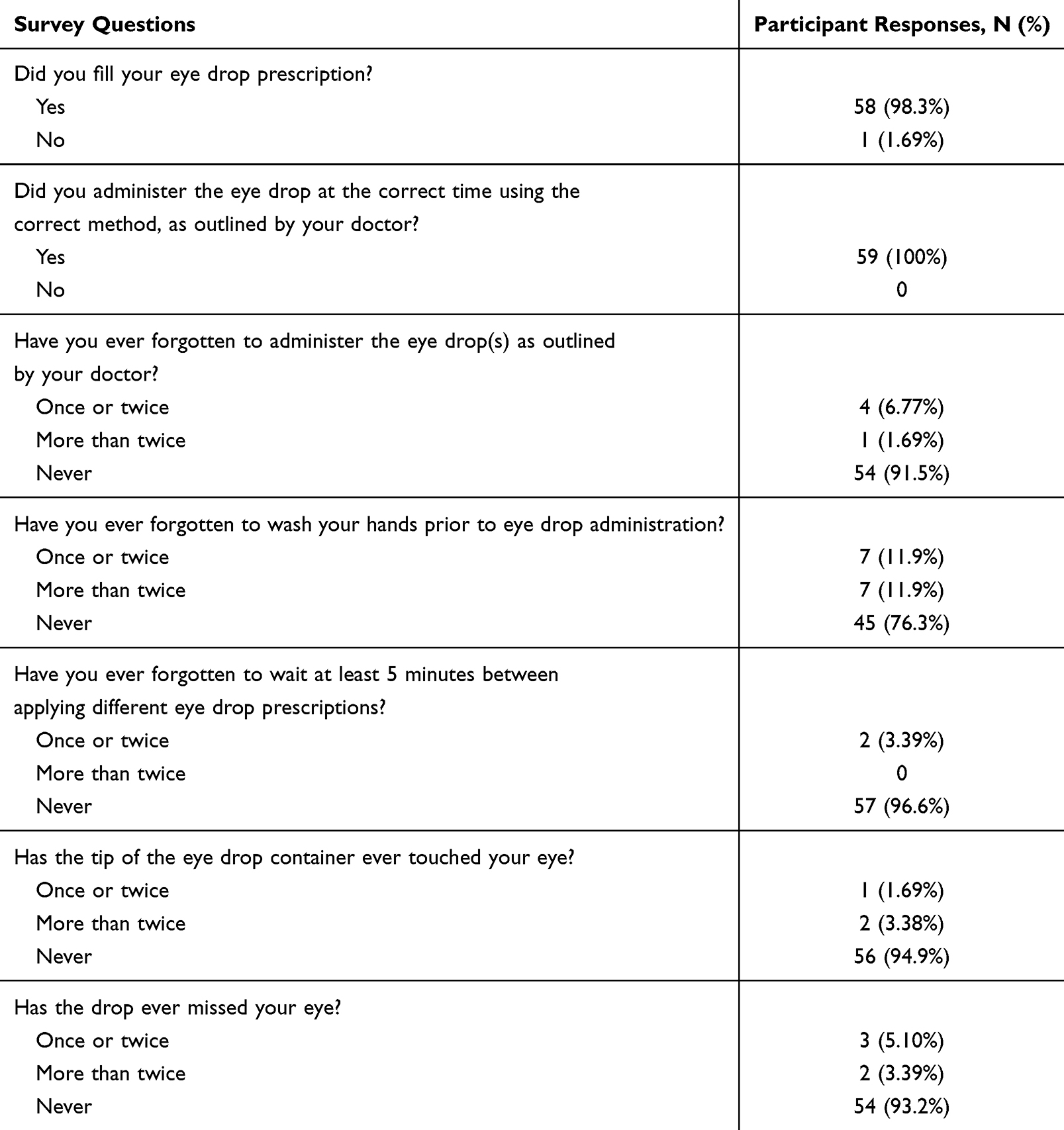 |
Table 1 Survey Questions and Participant Responses |
For patients undergoing cataract surgery, complying with the postoperative eye drop regimen and utilizing proper eye drop administration are essential to avoiding complications. The standard of care involves use of pre-operative and post-operative antibiotic eye drops for infection prevention and steroids or non-steroidal anti-inflammatory drug (NSAID) eye drops for controlling post-operative pain and inflammation.4 The consequence of poor compliance with eyedrops includes endophthalmitis and cystoid macular edema, which can permanently alter vision and quality of life.5 Eyedrop instillation technique is also vital and requires manual dexterity, hand-eye coordination and proper hand hygiene.6 Poor instillation technique, such as the eyedrop tip touching the eye or ocular adnexa, can cause corneal abrasions or contamination of the tip, increasing infection risk.7
In glaucoma patients, the Rapid Estimate of Adult Literacy in Medicine (REALM) score, an instrument used to measure literacy, was positively associated with the number of eyedrop refills obtained and lower frequency of eyedrops forgotten to be instilled.8,9 While there has been extensive research on eyedrop administration among glaucoma patients who are daily eyedrop users, there is limited literature on eyedrop compliance in cataract surgery patients who tend to have limited prior eyedrop experience and poor literacy. Limited formal education has been reported to be associated with noncompliance.10 In the rural Ghana population this study evaluated, there are varied literacy rates. The Ghana Statistical Service reports only 55.2% of the rural population age 6 years and older are literate in at least one language compared to the urban population, where there is a 80.6% literacy rate.11 In addition to literacy-related difficulties, cataract patients in Ghana report high cost of surgery, lack of escort to accompany to hospital, and fear of surgery as barriers to cataract surgical uptake.12 Health literacy, economic barriers, and cultural barriers are factors that can propagate inequities and these social determinants of health can create eye care disparities in the population.
This purpose of this study is to investigate compliance with post-operative drops following cataract surgery among patients with varying literacy levels at a rural hospital in Ghana. There is a considerable global health need to decreased patients’ perceived burden of eye drop therapy, promote eyedrop adherence, and understand how to best illustrate post-operative instructions for populations consisting of various literacy groups.
Materials and Methods
The study received approval from the Pennsylvania State College of Medicine Institutional Review Board as well as ethical approval from the Eastern Regional Hospital of Ghana Ethical Review Committee. The study was carried out in compliance with the Declaration of Helsinki.
The survey was created with input from two ophthalmologists, one practicing in Ghana and the other in the United States, to achieve face validity. This was a cross-sectional, single-site survey of patients receiving cataract surgery in a rural setting at the Eastern Regional Hospital, Koforidua, Ghana. Patients completed a self-reported survey at their 1-week post-operative appointment. Patients over the age of 18 were consented to participate in the survey if they could understand the purpose of the study and complete the survey questionnaire. Patients unable to return to the Eastern Regional Hospital for their post-operative appointment were excluded from the study.
Demographic information including age, gender, and literacy level were collected for all patients. Years of formal education completed were used to evaluate literacy levels. The survey completed at the 1-week post-cataract surgery appointment assessed eye drop adherence, eye drop instillation technique, eye drop frequency, perceived understanding of post-operative instructions, and associated barriers to eye drop compliance. Data was collected in September 2022. The survey included a combination of Likert-style (3-point scale with answer choices once or twice, more than twice, or never) and yes/no response choices. Descriptive statistics and Fisher’s exact test were prepared using STATA version 18.0 (StataCorp, College Station, Texas). A p value <0.05 was considered to be statistically significant.
Results
A total of 59 patients completed the survey. The mean age of patients is 65.22 ± 14.20 years. Of the patients, 23 (38.9%) were female and 36 (61.0%) were male. Thirty-three (55.9%) patients had 9 or more years of education, 12 (20.3%) had between 3 and 8 years of education and 14 (23.7%) had between 0 and 2 years of education.
Table 1 shows the patients’ responses to the survey questions. All 59 (100%) patients self-reported good performance on eyedrop instillation. On additional questions surveying specific eyedrop instillation safety precautions, 7 (11.9%) patients self-reported forgetting to wash hands once or twice and another 7 (11.9%) forgot more than twice.
Among the three groups of different education levels, there was a statistically significant difference in patients forgetting to administer eyedrops (p=0.018) and forgetting to wash hands (p=0.0005) prior to eye drop (Table 2). There was no statistically significant difference among the education groups in the tip of the eyedrop container touching patients’ eyes (p=0.348), forgetting to wait 5 minutes between different eyedrops (p=0.190), and the eyedrop missing the patients’ eyes (p=0.772).
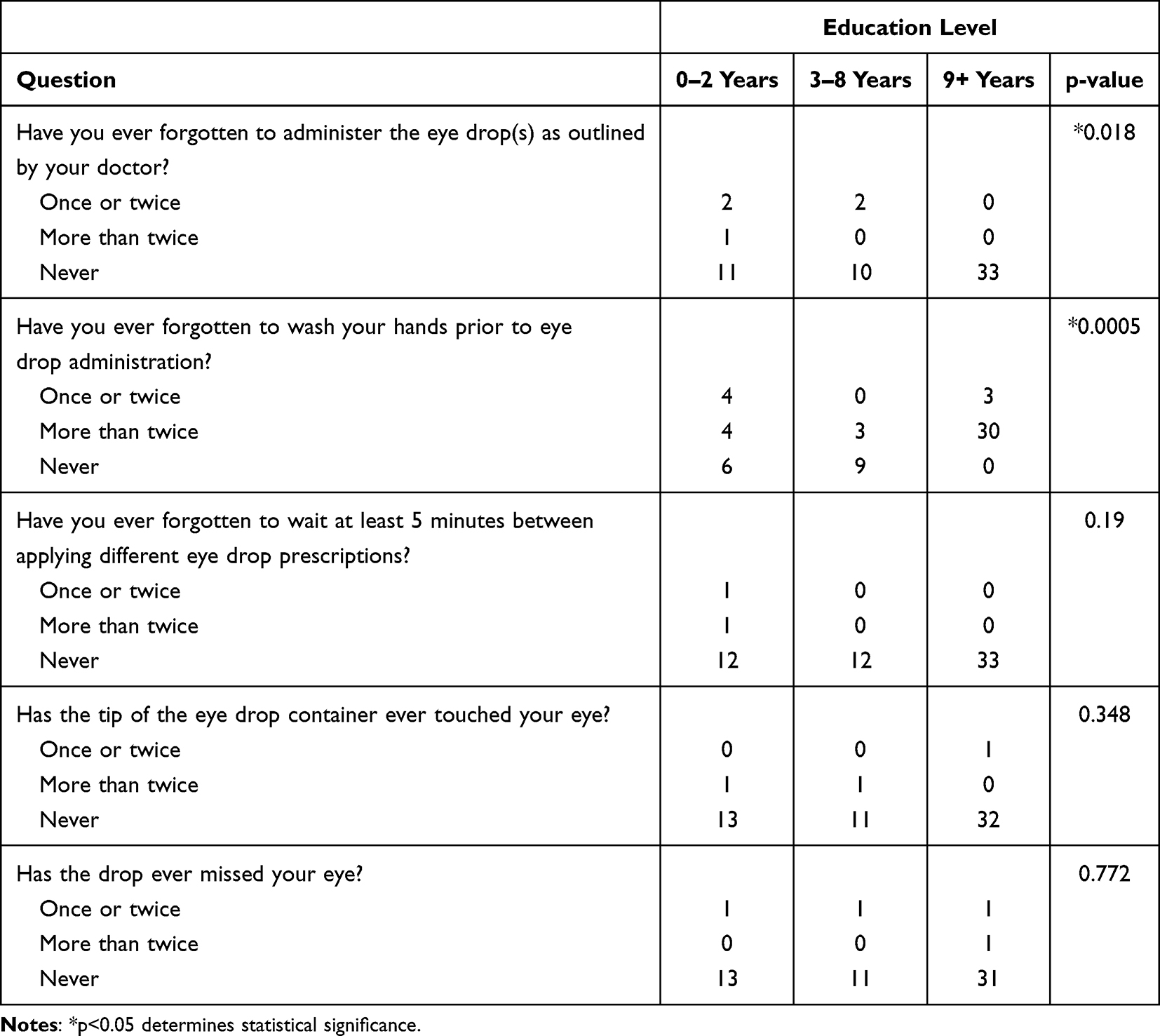 |
Table 2 Patient Perceptions of Eyedrop Instillation Performance Among Groups of Varying Literacy |
Discussion
Our study shows that all 59 (100%) patients perceived their method of eye drop administration to be correct, however 7 (11.7%) had forgotten to wash hands prior to eye drop use once or twice and another 7 (11.7%) had forgotten more than twice. One (1.69%) patient reported the tip of the eye drop container touched their eye once or twice and 2 (3.38%) reported this occurred more than twice. Although all patients believed their method of eyedrop administration to be correct, many had hygiene lapses, as demonstrated by subsequent survey questions asking about hand washing, container tip touching the eye, etc. Thus, this highlights the discrepancy between patients’ perceived technique of eyedrop instillation and their actual practice of recommended eye drop precautions. This is similarly reflected in prior studies examining eyedrop administration among postoperative cataract patients and glaucoma patients where patients self-reported high performance on their ability to instill drops yet demonstrated hygiene lapses when observed by video recording. Stone et al found that 86/139 (61.9%) patients reported washing their hands before eye drop instillation, yet on video-recorded instillations, only 3/180 (1.7%) demonstrated patients washing their hands.13 In study evaluating measured and reported eyedrop instillation proficiency on cataract postoperative day 30, Liu et al found that 33/36 (91.67%) patients reported no trouble applying eye drops, 25/36 (91.67%) reported the drops did not miss their eye, and 22/36 (61.11%) reported the bottle tip did not touch their eye.14 Yet, when eye drop proficiency evaluating these 3 criteria was observed, the researchers found only 3/36 (8.33%) correctly instilled drops.
Low literacy levels have been found to be associated with less adherence to glaucoma medications compared to individuals with high literacy rates.9 The impact of literacy levels on eye drop technique has not yet been studied in cataract surgery patients. Our study found a statistically significant difference in patient forgetting to administer eye drops (p=0.018) and forgetting to wash hands prior to eye drop administration (p=0.0005) among patients with groups with different literacy levels. Evaluating education and literacy levels is particularly important in low- and middle-income countries (LMICs) where health literacy affects health outcomes in already under resourced health systems. Economic barriers such as eyedrop prices and affordability can also limit adherence among patients. This underscores the need for routine patient education, and it has been found that receiving instructions on how to use eye drops is significantly associated with a better instillation technique.15
In addition to patient education, the use of educational tools that are suited for populations with varied literacy rates can help mitigate health disparities. For patients with poor print or oral literacy, video, audio-based tools, or pictorial guides and involving caregivers in the patient’s care can optimize care.16 Although healthcare agencies recommend patient education materials should be written at a fourth to sixth grade reading level, many materials do not meet these readability measures and makes it difficult for patients with limited literacy to comprehend.17
Topical eyedrops are an inconvenience for elderly patients who face difficulty with drop instillation due to physical conditions associated with aging.18 As increasingly varied methods of drug delivery become available beyond traditional topical eyedrops, there is a need to make these widely available on a global scale. Intracameral postoperative medications are increasingly being adopted for cataract surgery due to their effectiveness in reducing postoperative endophthalmitis and offer a solution for eliminating the barrier of postoperative eyedrops.19 However, they are not yet commercially approved in all countries, which limits their adoption.
There are limitations inherent to the nature of this study. Given the survey is cross-sectional and patient responses are self-reported and subjective, it is difficult to ascertain an objective understanding of eyedrop compliance and instillation technique. This study was conducted in a rural setting where the literacy rates may differ from those of an urban population, thus the results may not be generalizable to other settings. Further research includes comparing subjective patient self-report outcomes with objective observations of eyedrop instillation in patients to validate self-reports and improve data quality. A qualitative approach involving key informant interviews with patients and providers can also help elucidate patient challenges with eyedrop administration and adherence. To our knowledge, there have not been similar studies evaluating literacy and eyedrop adherence in other LMICs. By comparing results from this study with those of other rural LMIC populations, this can provide further insight into the impact of literacy of eye care and health. Additionally, a follow-up period longer than a week can help identify long-term adherence trends. We also did not collect data on patient co-morbidities. The mean age of patients was 65.22 ± 14.20 years and there is a possibility other medical conditions associated with aging such as arthritis or neuropathy could affect the spatial awareness and manual dexterity needed to properly self-administer eyedrops.
Conclusion
This study suggests that there is a need for measuring patients’ understanding of eye drop instructions as part of the postoperative evaluation and validating these patient-reported outcome measures can help ensure proper drop adherence and administration. Education regarding eyedrop instillation technique and safety precautions must be part of both pre-operative and post-operative care and should be part of a surgeon’s checklist when preparing for a patient’s cataract surgery. Patients can also practice using eye drops prior to surgery to ensure they are well-prepared to administer them post-operatively. Future studies include observing patients administer eye drops, developing relevant patient education tools, and incorporating visual teaching of proper eye drop administration technique into patient education.
Acknowledgments
This paper was presented in part at the Association of Research and Vision in Ophthalmology (ARVO) 2024 conference in Seattle, Washington as a poster. The abstract of this paper was presented in part at the Association of Research and Vision in Ophthalmology (ARVO) 2024 conference in Seattle, Washington as a poster with interim findings. The poster’s abstract was published in “Poster Abstracts” in Investigative Ophthalmology & Visual Science June 2024, Vol.65, 6376: A Cross-Sectional Survey to Investigate Compliance with Eye Drops after Cataract Surgery in Koforidua, Ghana.
Disclosure
ND is supported by a Fulbright-Fogarty Fellowship from the Fogarty International Center at the NIH and The Fulbright Program, unrelated to the submitted work. ND, IF, and IH received travel support from the Alley Endowment for Global Ophthalmology Outreach from the Department of Ophthalmology, Penn State College of Medicine to conduct this study. The authors report no other conflicts of interest in this work.
References
1. GBD 2019 Blindness and Vision Impairment Collaborators, Vision Loss Expert Group of the Global Burden of Disease Study. Causes of blindness and vision impairment in 2020 and trends over 30 years, and prevalence of avoidable blindness in relation to VISION 2020: the right to sight: an analysis for the global burden of disease study. Lancet Glob Health. 2021;9(2):e144–e160. doi:10.1016/S2214-109X(20)30489-7
2. Attafuah PYA, Mordi P, Aggrey EK, Quaicoe ASP, Sarfo JO. Prevalence and management of cataracts among older adults in Sub-Saharan Africa: a scoping review. BMC Ophthalmol. 2024;24(1):434. doi:10.1186/s12886-024-03701-5
3. Yawson AE, Ackuaku-Dogbe EM, Seneadza NAH, et al. Self-reported cataracts in older adults in Ghana: sociodemographic and health related factors. BMC Public Health. 2014;14:949. doi:10.1186/1471-2458-14-949
4. Nouraeinejad A. Factors of noncompliance with prescribed eye drops in patients undergoing cataract surgery. J Med Access. 2023;7:27550834231152341. doi:10.1177/27550834231152341
5. Matossian C. Temple University School of Medicine, Philadelphia, PA, USA. noncompliance with prescribed eyedrop regimens among patients undergoing cataract surgery—prevalence, consequences, and solutions. US Ophthalmic Rev. 2020;13(1):18. doi:10.17925/USOR.2020.13.1.18
6. Robin A, Grover DS. Compliance and adherence in glaucoma management. Indian J Ophthalmol. 2011;59(Suppl1):S93. doi:10.4103/0301-4738.73693
7. Gao X, Yang Q, Huang W, et al. Evaluating eye drop instillation technique and its determinants in glaucoma patients. J Ophthalmol. 2018;2018:1376020. doi:10.1155/2018/1376020
8. Juzych MS, Randhawa S, Shukairy A, Kaushal P, Gupta A, Shalauta N. Functional health literacy in patients with glaucoma in urban settings. Arch Ophthalmol. 2008;126(5):718–724. doi:10.1001/archopht.126.5.718
9. Muir KW, Santiago-Turla C, Stinnett SS, et al. Health literacy and adherence to glaucoma therapy. Am J Ophthalmol. 2006;142(2):223–226. doi:10.1016/j.ajo.2006.03.018
10. Kholdebarin R, Campbell RJ, Jin YP, Buys YM. Multicenter study of compliance and drop administration in glaucoma. Can J Ophthalmol J Can Ophtalmol. 2008;43(4):454–461. doi:10.1139/i08-076
11. data 2021 population and housing census-Ghana statistical service importance of. 2021 population and housing census. Available from: https://census2021.statsghana.gov.gh/subreport.php?readreport=MTMxOTU3MTAxLjg4MjU=&Ghana-2021-Population-and-Housing-Census-General-Report-Volume-3D.
12. Gyasi M, Amoaku W, Asamany D. Barriers to cataract surgical uptake in the upper east region of Ghana. Ghana Med J. 2007;41(4):167–170.
13. Stone JL, Robin AL, Novack GD, Covert DW, Cagle GD. An objective evaluation of eyedrop instillation in patients with glaucoma. Arch Ophthalmol. 2009;127(6):732–736. doi:10.1001/archophthalmol.2009.96
14. Liu Y, Murdoch A, Bassett K, Dharamsi S. Proficiency of eye drop instillation in postoperative cataract patients in Ghana. Clin Ophthalmol Auckl NZ. 2013;7:2099. doi:10.2147/OPTH.S50322
15. An JA, Kasner O, Samek DA, Lévesque V. Evaluation of eyedrop administration by inexperienced patients after cataract surgery. J Cataract Refract Surg. 2014;40(11):1857–1861. doi:10.1016/j.jcrs.2014.02.037
16. Capó H, Edmond JC, Alabiad CR, Ross AG, Williams BK, Briceño CA. The importance of health literacy in addressing eye health and eye care disparities. Ophthalmology. 2022;129(10):e137–e145. doi:10.1016/j.ophtha.2022.06.034
17. Badarudeen S, Sabharwal S. Assessing readability of patient education materials: current role in orthopaedics. Clin Orthop. 2010;468(10):2572–2580. doi:10.1007/s11999-010-1380-y
18. Lee K, Lee G, Lee S, Park CY. Advances in ophthalmic drug delivery technology for postoperative management after cataract surgery. Expert Opin Drug Deliv. 2022;19(8):945–964. doi:10.1080/17425247.2022.2109624
19. Daien V, Papinaud L, Gillies MC, et al. Effectiveness and safety of an intracameral injection of cefuroxime for the prevention of endophthalmitis after cataract surgery with or without perioperative capsular rupture. JAMA Ophthalmol. 2016;134(7):810–816. doi:10.1001/jamaophthalmol.2016.1351
 © 2025 The Author(s). This work is published and licensed by Dove Medical Press Limited. The
full terms of this license are available at https://www.dovepress.com/terms
and incorporate the Creative Commons Attribution
- Non Commercial (unported, 4.0) License.
By accessing the work you hereby accept the Terms. Non-commercial uses of the work are permitted
without any further permission from Dove Medical Press Limited, provided the work is properly
attributed. For permission for commercial use of this work, please see paragraphs 4.2 and 5 of our Terms.
© 2025 The Author(s). This work is published and licensed by Dove Medical Press Limited. The
full terms of this license are available at https://www.dovepress.com/terms
and incorporate the Creative Commons Attribution
- Non Commercial (unported, 4.0) License.
By accessing the work you hereby accept the Terms. Non-commercial uses of the work are permitted
without any further permission from Dove Medical Press Limited, provided the work is properly
attributed. For permission for commercial use of this work, please see paragraphs 4.2 and 5 of our Terms.