
Back to Journals » Journal of Experimental Pharmacology » Volume 17
Exploring the Neuroprotective Potentials of Flavonoid Metabolites in Syzygium aromaticum: A Review with in-silico Insight to Therapeutic Potential
Authors Etukudo EM, Usman IM, Oviosun A  , Ojiakor VO, Makena W, Owembabazi E, Aja PM , Mutume Nzanzu Vivalya B, Archibong VB, Anyanwu E
Received 25 April 2025
Accepted for publication 21 August 2025
Published 29 August 2025 Volume 2025:17 Pages 587—611
DOI https://doi.org/10.2147/JEP.S536765
Checked for plagiarism Yes
Review by Single anonymous peer review
Peer reviewer comments 2
Editor who approved publication: Prof. Dr. Abdelwahab Omri
Ekom Monday Etukudo,1 Ibe Michael Usman,1 Augustine Oviosun,1 Vivian Onyinye Ojiakor,1 Wusa Makena,1 Elna Owembabazi,1 Patrick Maduabuchi Aja,2 Bives Mutume Nzanzu Vivalya,3 Victor Bassey Archibong,4 Emeka Anyanwu1
1Human Anatomy Department, Kampala International University, Bushenyi, Uganda; 2Biochemistry Department, Kampala International University, Bushenyi, Uganda; 3Psychiatry Department, Kampala International University, Bushenyi, Uganda; 4Human Anatomy Department, University of Rwanda, Huye, Rwanda
Correspondence: Ibe Michael Usman, Email [email protected]
Abstract: The worldwide occurrence of neurodegenerative diseases in Alzheimer’s and Parkinson’s patients is increasing owing to multiple disease mechanisms, including oxidative stress, neuroinflammation, mitochondrial dysfunction, and excitotoxicity. Syzygium aromaticum (clove) flavonoid metabolites show strong neuroprotective potential because they act as antioxidants, reduce inflammation and lipid peroxidation, and prevent apoptosis. The key S. aromaticum flavonoid metabolites, quercetin, kaempferol, kumatakenin, myricetin, ombuin 3-O-β-d-glucopyranoside, and tamarixetin 3-O-β-d-glucopyranoside, bind to various brain receptors implicated in disease propagation pathways and induce changes that support neuronal survival and decrease cognitive impairment. In vitro, in vivo, and molecular docking studies were reviewed. The SwissADME and ADMETlab 3.0 web servers demonstrated that these metabolites have favorable drug-like properties and absorption characteristics that follow Lipinski’s Rule of Five, GSK, and Pfizer rules. The metabolites showed good gastrointestinal absorption and desirable physicochemical properties, suggesting safe oral use. The toxicological profile prediction generated from the pkCSM and ADMETlab 3.0 web servers indicated minimal liver, kidney, and brain damage risks; however, ombuin 3-O-β-d-glucopyranoside exhibited weak cardiac toxicity through hERG II blocking, whereas pachypodol requires additional research on long-term toxicity effects. The data from the reviewed studies indicate that S. aromaticum flavonoid metabolites show great promise as therapeutic agents for neurodegenerative diseases caused by oxidative stress, inflammation, apoptosis, and lipid peroxidation. Evidence suggests that their safety and effectiveness are positive, despite minimal risks. Further studies should focus on nanocarrier utilization to improve their Blood-Brain Barrier permeability and enhance therapeutic potential. Experimenting on primates before translating them to human clinical trials will be crucial.
Keywords: Syzygium aromaticum, metabolites, flavonoids, neuroprotective, therapeutic, botanical drugs, antioxidant, anti-inflammatory
Introduction
Neurodegenerative disorders (NDs), such as Alzheimer’s disease (AD) and Parkinson’s disease (PD), and various cognitive impairments affect people on a global scale.1 Neurological disorders are the primary cause of death and DALYs, particularly in low and middle-income countries.2 A 2019 report indicated that 50 million people worldwide had NDs that led to dementia, which is projected to grow to 152 million by 2060.3 Globally, the burden of AD and PD continues to increase, with increasing health disparities.4 These disorders are characterized by progressive neuronal loss, oxidative stress, neuroinflammation, and mitochondrial dysfunction, ultimately leading to cognitive decline and motor impairment.5,6 An increasing number of neurodegenerative disease cases has driven scientists to examine both natural therapeutic compounds and botanical medication candidates that could protect the nervous system.7 Research has focused on flavonoids as secondary plant metabolites, owing to their antioxidant, anti-inflammatory, and neuroprotective effects.8–15
Most NDs are increasingly driven by interconnected processes such as oxidative stress, inflammation, apoptosis, altered synaptic plasticity, and neuroexcitotoxicity.16,17 Botanical drugs and their metabolites, such as flavonoids, phenols, and tannins, demonstrate neuroprotective properties. These metabolites help protect the brain by controlling multiple biological pathways that reduce brain damage, thus providing promising therapeutic options.18,19
Plants contain natural polyphenolic compounds named flavonoids, which possess a C6-C3-C6 structure that connects two aromatic rings through a central three-carbon bridge to form a pyran ring.20,21
Syzygium aromaticum, commonly known as clove, is a medicinal plant widely utilized traditionally across Asia, Africa, and South America to treat various health problems requiring antioxidant, antimicrobial, analgesic, and anti-inflammatory remedies.8,9,22 The most commonly used part of this plant, clove buds, contains bioactive compounds including flavonoids, which consist of quercetin, kaempferol, and myricetin that demonstrate various health benefits.23,24 Earlier studies have identified emerging flavonoid metabolites in Syzygium aromaticum (S. aromaticum), including tamarixetin 3-O-β-d-glucopyranoside, ombuin 3-O-β-d-glucopyranoside, rhamnocitrin, kumatakenin, and pachypodol.25 All of which exhibit significant pharmacological properties, particularly in mitigating oxidative stress and neuroinflammation.26,27
Numerous scientific studies have shown that botanical drugs derived from S. aromaticum and their bioactive metabolites can protect brain function through their influence on the crucial processes of oxidative stress, inflammation, apoptosis, and neurotoxicity.5,8,9,28
Flavonoid metabolites are active biological compounds that are formed when the plant compound class flavonoids undergo breakdown processes within the human body during digestion and metabolic activities.29 These metabolites maintain or increase the therapeutic advantages of S. aromaticum botanical drugs by retaining refined properties, including antioxidant, anti-inflammatory, and neuroprotective properties. Flavonoid metabolites have better bioavailability because of their reduced size and modified chemical structure, which enable them to strongly affect brain cells and receptors for potential therapeutic use in neurological conditions.30 These natural compounds offer advantages over synthetic drugs, owing to their lower toxicity, multi-target activity, and better biocompatibility.31
Drug development requires a thorough assessment of plant-derived metabolites to determine their ADME properties, drug-likeness characteristics, pharmacokinetic properties, and toxicity risks for therapeutic agent suitability.32,33 Assessments conducted during this stage forecast absorption performance, distribution characteristics, metabolism patterns, drug-enzyme interactions, and toxicity risks. Early profiling enables researchers to identify promising drug candidates while lowering late-stage failure chances and guiding the development of optimized bioavailable solutions and adverse effect reduction strategies. Notably, some metabolites from botanical sources are blood-brain barrier (BBB) permeants that exert potent effects on specific brain regions and receptors, such as N-methyl-D-aspartate (NMDA), gamma-aminobutyric acid (GABA), and Transient Receptor Potential Vanilloid 1 (TRPV1), as well as receptors involved in inflammation and oxidative stress, such as Toll-like receptor 4 (TLR4), Nuclear factor erythroid 2-related factor 2 (Nrf2), and Nuclear Factor kappa B (NF-κB), which play crucial roles in modulating neuroinflammation and promoting neuronal survival.34–36
This review investigates the neuroprotective properties of flavonoid metabolites from S. aromaticum and highlights their mechanisms of action, enabling antioxidant defense, neuroinflammatory regulation, excitotoxicity blocking, and neuronal survival promotion. Secondly, we used an in-silico approach to provide insight into ADME, focusing on physicochemical, pharmacokinetic, drug-likeness, including Lipinski, Pfizer, and GSK rules, Blood-Brain Barrier (BBB) permeability (both categorical and numerical data), and toxicological profiles (AMES toxicity, hepatotoxicity, DILI, nephrotoxicity, and neurotoxicity) of the reviewed flavonoid metabolites using the SwisADME, ADMETlab 3.0, and pkCSM web servers.
By elucidating the neuroprotective properties of these bioactive compounds, this review aims to highlight their potential applications in managing and preventing neurodegenerative disorders and to unravel the therapeutic potential of these metabolites in Syzygium aromaticum plants.
Syzygium aromaticum: History and Traditional Uses
Syzygium aromaticum, commonly known as clove, is a member of the Myrtaceae family.22 The name “clove” originates from the Latin word clavus, meaning “nail”, referencing the bud’s shape.24 This aromatic plant is cultivated in the Indonesian Maluku Islands, but is now distributed in tropical regions, including Sri Lanka, Madagascar, Africa, Brazil, and India.37 Clove trees are evergreen and can grow to 15 m in height under optimal conditions. The plant produces dried flower buds, which are the most commercially significant parts, and are highly valued for their pungent aroma and distinct taste.37,38
Historically, cloves were highly prized in the spice trade and were considered one of the most valuable commodities during the 16th and 17th centuries, with European explorers traveling long distances to obtain them.39 They have been used in culinary applications worldwide, adding flavor to dishes, beverages, and baked goods, while also serving as a natural preservative, owing to their antimicrobial properties.40
Cloves are widely used in traditional medicine owing to their therapeutic effects. They have been used in Ayurvedic, Chinese, and Unani medicine to treat digestive disorders, toothaches, respiratory conditions, and infections.41 The essential oil extracted from cloves is a well-known remedy for dental pain and is often used in oral care products, such as toothpaste and mouthwash.42 Additionally, clove oil has been used as a topical analgesic for muscle pain and arthritis.43 In Indonesia, clove is an essential ingredient in kretek cigarettes, which contain a mixture of tobacco and ground cloves and are believed to have a soothing effect on the respiratory system.44
Syzygium aromaticum has been widely used in traditional medicine across Africa for centuries, owing to its strong antimicrobial, anti-inflammatory, and analgesic properties.22,38 This plant is widely used across Africa in traditional medicine, valued for its therapeutic properties in treating digestive issues, respiratory ailments, infections, pain, and reproductive health concerns.22,45 In East Africa, especially Zanzibar, cloves are used to treat fever, dental pain, and wounds.46 In West Africa, it is used for malaria, menstrual regulation, and reproductive vitality.47,48 In other parts of Africa, it is utilized for oral health, respiratory issues, and menstrual cramps.45,49
Clove oil is commonly applied topically, whereas infusions and decoctions are used internally.41 In addition to their medicinal uses, cloves play important cultural and religious roles, including incense, perfumes, and culinary spice blends.50 Globally recognized, cloves have emerging scientific support for their antioxidant, antidiabetic, and anticancer properties, particularly because of their active compound eugenol.23,24 Although traditional uses are being validated, further research is needed to clarify effective dosages and mechanisms, underscoring the continued significance of cloves in the health and food industries.
Phytochemistry and Biological Activities of Metabolites in Syzygium aromaticum
Syzygium aromaticum is a widely recognized medicinal plant with a complex phytochemical composition. It contains diverse bioactive metabolites, including flavonoids, tannins, terpenoids, alkaloids, and phenolic compounds, which contribute to its pharmacological properties.51 Its most notable constituents are eugenol, β-caryophyllene, and acetyl eugenol, which are primarily responsible for its antimicrobial, antioxidant, anti-inflammatory, and analgesic activities.38,52 Eugenol, the major active compound in clove essential oil, has been extensively studied for its potent free radical scavenging ability, role in modulating inflammatory pathways, and analgesic effects.53 In addition, β-caryophyllene, a sesquiterpene, exerts strong anti-inflammatory and neuroprotective effects,8,54 making S. aromaticum a promising candidate for treating neurodegenerative conditions.
The S. aromaticum-derived polyphenols, including gallic acid, ellagic acid, and flavonoids such as quercetin and kaempferol, exhibit significant antioxidant activity.55,56 These compounds protect cells from oxidative stress and have been linked to anti-aging, anti-cancer, and cardioprotective effects.57,58 Flavonoids in S. aromaticum exhibit broad antimicrobial activity against pathogens such as Staphylococcus aureus, Escherichia coli, Candida albicans, and Aspergillus spp.59,60 Additionally, they protect neurons by preserving mitochondrial function, preventing apoptosis, and upregulating Brain-Derived Neurotrophic Factor (BDNF),61,62 thereby contributing to overall neuroprotection. Tannins, including ellagitannins and gallotannins, are abundant in clove extracts and play a role in enhancing their antimicrobial and antiviral effects, particularly against influenza and herpes simplex viruses.63
The terpenoids present in S. aromaticum have been identified as the lead compounds responsible for their anti-inflammatory and analgesic properties. These include monoterpenes such as α-humulene, which modulate pro-inflammatory cytokine expression and inhibit cyclooxygenase (COX) enzymes, similar to non-steroidal anti-inflammatory drugs (NSAIDs).64,65 Eugenol is commonly used as a natural anesthetic and antimicrobial agent for the treatment of toothaches and gum infections.66 The strong analgesic properties of clove oil have also been attributed to its ability to block voltage-gated sodium channels, similar to synthetic local anesthetics.67
Alkaloids and phenolic acids in S. aromaticum have demonstrated significant bioactivity, particularly in metabolic and cardiovascular health.22,68 These compounds enhance insulin sensitivity and glucose uptake, aiding in type 2 diabetes management, whereas phenolic acids, such as chlorogenic and caffeic acids, support cardiovascular function by reducing blood pressure, lipid peroxidation, and endothelial dysfunction.69,70 Eugenol and its derivatives improve lipid metabolism and inhibit low-density lipoprotein (LDL) oxidation, thereby lowering the risk.71 Traditionally used dried cloves, oils, extracts, and clove preparations treat digestive, respiratory, and inflammatory conditions, with studies confirming their antimicrobial, gastroprotective, and hepatoprotective properties.52
The growing interest in natural therapeutics has led to the increased commercial production of Syzygium aromaticum-based products, including essential oils, botanical drug supplements, and functional foods. Thus, these products are promising alternatives to synthetic drugs. With rising concerns regarding antibiotic resistance, bioactive compounds found in S. aromaticum continue to be explored for their role in novel drug development and integrative medicine. With advances in research, the metabolite richness of cloves has highlighted their vast potential in modern pharmacology, reinforcing their long-standing use in traditional medicine.
Neuroprotective Mechanisms of Selected Flavonoid Metabolites in Syzygium aromaticum
Flavonoids are a diverse group of naturally occurring polyphenolic compounds that are abundant in fruits, vegetables, and medicinal plants. Chemically, they share a common structure consisting of two aromatic rings (A and B) connected by a three-carbon bridge that forms a closed pyran ring (C) typically arranged as a C6-C3-C6 skeleton.20,21
This structure allows them to be categorized into subclasses such as flavones, flavonols, flavanones, isoflavones, and anthocyanidins. Flavonoids possess important physicochemical properties, including strong antioxidant activity, metal ion chelation, and the ability to modulate cellular pathways and signaling.55,56,72 These properties contribute to their biological activities, including their anti-inflammatory, antioxidant, antimicrobial, and neuroprotective effects. The general mechanisms of action of these S. aromaticum flavonoid metabolites are shown in Figure 1.
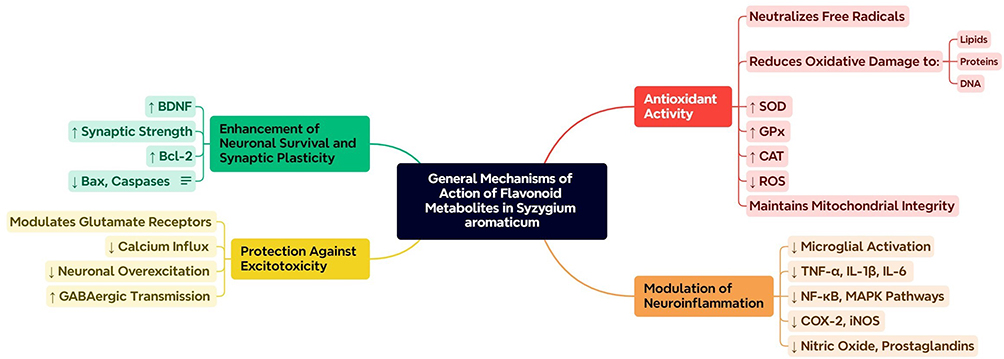 |
Figure 1 General mechanisms of action of flavonoid metabolites in Syzygium aromaticum. This ↑ Indicates Upregulation or increase; This ↓ Indicates Downregulation or decrease. Abbreviations: SOD, Superoxide Dismutase; GPx, Glutathione Proxidase; CAT, Catalase; ROS, Reactive Oxygen Species; TNF-α, Tumor Necrosis Factor-alpha; IL-1β / IL-6, Interleukins 1-beta and 6; NF-κB, Nuclear Factor kappa-light-chain-enhancer; MAPK, Mitogen-Activated Protein Kinase; COX-2, Cyclooxygenase-2; iNOS, Inducible Nitric Oxide Synthase; BDNF, Brain-Derived Neurotrophic Factor; Bcl-2, Anti-apoptotic Protein; Bax, Caspases – Pro-apoptotic Proteins. |
Flavonoids in Syzygium aromaticum, such as quercetin, kaempferol, myricetin, tamarixetin 3-O-β-d-glucopyranoside, rhamnocitrin, kumatakenin, ombuin 3-O-β-d-glucopyranoside, and pachypodol, show promising neuroprotective properties. These bioactive compounds have antioxidant, anti-inflammatory, anti-excitotoxic, and neurotrophic effects, making them potential therapeutic candidates for neurodegenerative disorders, including AD and PD. The chemical formulae, molecular weights, and PubChem CIDs of these S. aromaticum metabolites are presented in Table 1. The Two-dimensional (2D) chemical structures of these selected metabolites are shown in Figure 2. The neuroprotective potential of the S. aromaticum metabolites is illustrated in Figures 3 and 4. Few studies provide reports on the neuroprotective outcomes of emerging S. aromaticum flavonoid metabolites such as tamarixetin 3-O-β-d-glucopyranoside, rhamnocitrin, kumatakenin, ombuin 3-O-β-d-glucopyranoside, and pachypodol using in vitro and in vivo experiments. Despite this gap, the neuroprotective mechanisms of quercetin, kaempferol, and myricetin have been greatly explored using in vitro and in vivo models (Table 2).
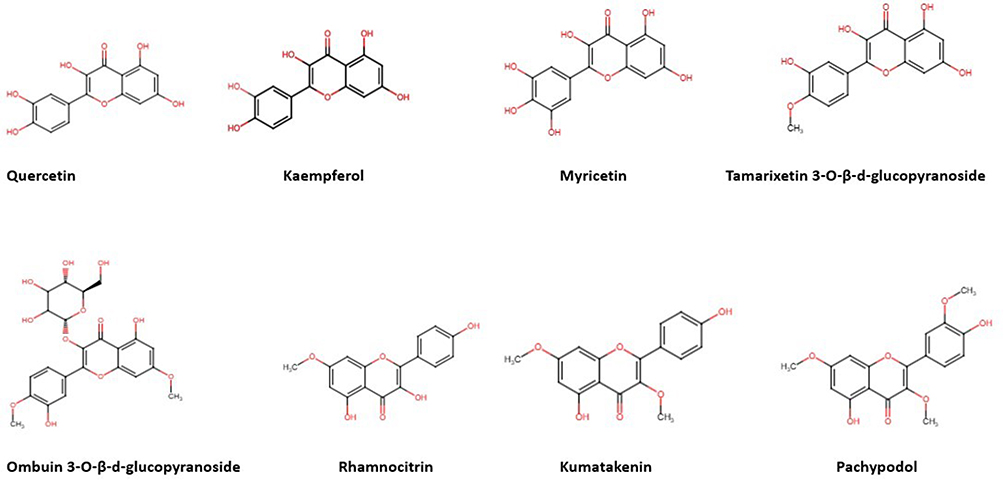 |
Figure 2 Two-dimensional (2D) Chemical Structures of S. aromaticum metabolites as retrieved from the SwissAdme web server, http://www.swissadme.ch/index.php via the Marvin JS using ChemAxon software.73 |
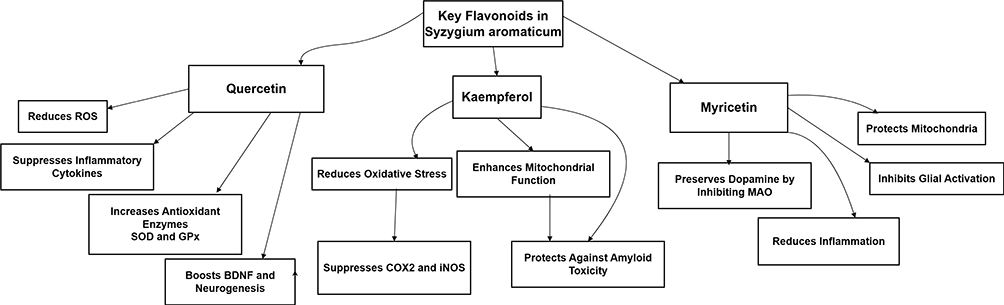 |
Figure 3 Specific neuroprotective mechanisms of Key flavonoid metabolites in Syzygium aromaticum. Abbreviations: SOD, Superoxide Dismutase; GPx, Glutathione Peroxidase; ROS, Reactive Oxygen Species; BDNF, Brain-Derived Neurotrophic Factor; COX2, Cyclooxygenase-2; iNOS, Inducible Nitric Oxide Synthase; MAO, Monoamine Oxidase. |
 |
Figure 4 Specific neuroprotective mechanisms of emerging flavonoid metabolites in Syzygium aromaticum. Abbreviations: ROS, Reactive Oxygen Species; IL1β, Interleukin 1 beta; TNFα, Tumor Necrosis Factor alpha. |
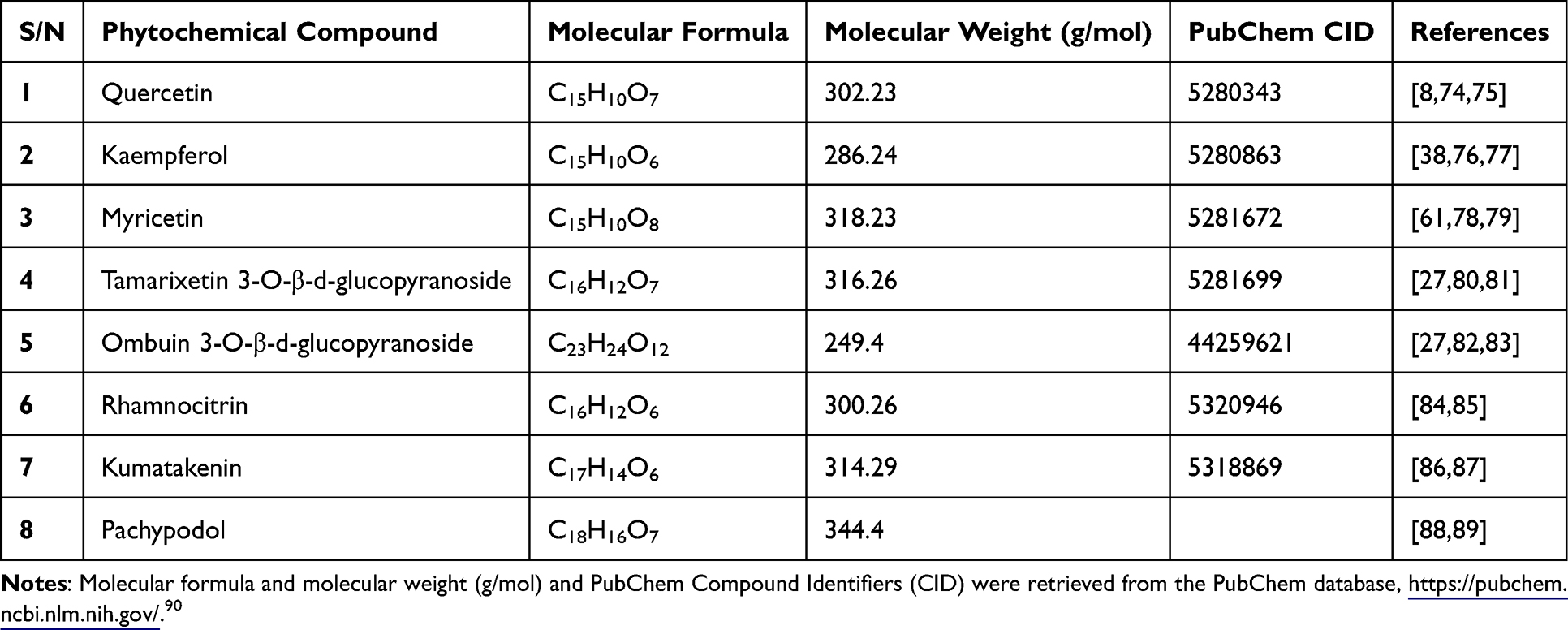 |
Table 1 Selected Flavonoid Metabolites Identified in Syzygium Aromaticum with Their Chemical Properties |
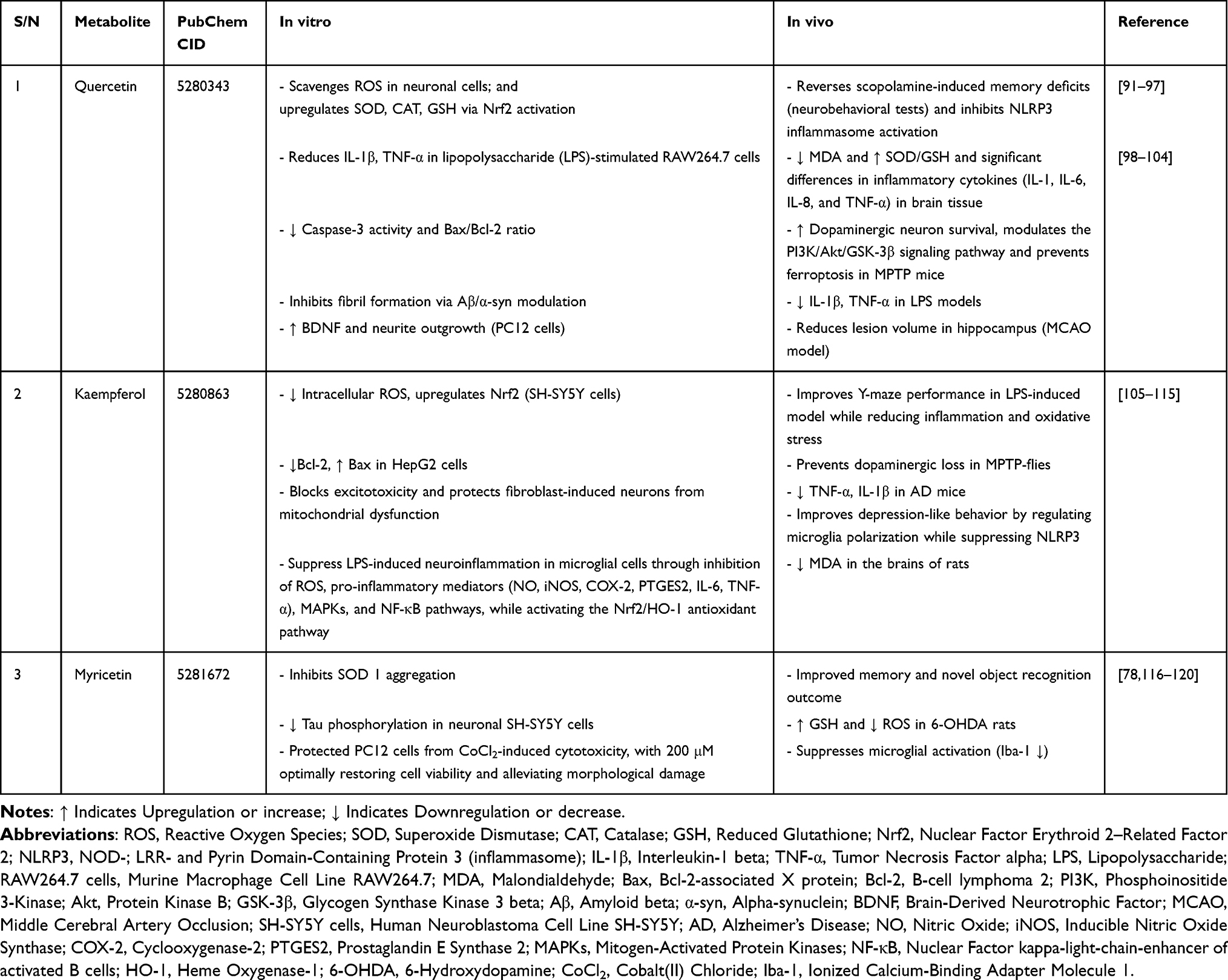 |
Table 2 Selected Syzygium Aromaticum Flavonoid Metabolites and Their Neuroprotective Mechanisms Reported in vitro and in vivo |
Quercetin
Quercetin is a well-known flavonoid with strong antioxidant, anti-inflammatory, and neuroprotective effects.8,74,75 It exerts neuroprotective effects by upregulating intrinsic antioxidant defenses, including superoxide dismutase (SOD) and glutathione peroxidase (GPx).121 Quercetin has been shown to decrease lipid peroxidation and prevent neuronal cell death.122,123
Studies have demonstrated that quercetin mitigates neuroinflammation by modulating microglial activation and inhibiting pro-inflammatory cytokines, such as TNF-α, IL-1β, and Interleukin 6 (IL-6).75,124 Additionally, quercetin modulates the activation of microglial cells, which are central to neuroinflammation, thereby protecting neurons from inflammatory damage.75
Quercetin has also been implicated in the promotion of neurogenesis and the enhancement of synaptic plasticity. It activates the brain-derived neurotrophic factor (BDNF) pathway, which is essential for neuronal survival and cognitive function.62 In addition, it enhances synaptic plasticity and reduces amyloid-beta (Aβ) aggregation, a hallmark of disease pathology.125 This suggests a potential role for quercetin in the prevention and treatment of cognitive disorders such as Alzheimer’s disease.
In vitro, quercetin protected neuronal cells by reducing oxidative stress, suppressing inflammation, regulating apoptosis-related proteins, inhibiting toxic protein aggregation, and promoting neuronal growth.91–97 Animal studies reveal that quercetin improved memory, reduced oxidative stress and inflammation, protected dopaminergic neurons by modulating PI3K/Akt/GSK-3β signaling and preventing ferroptosis, and lessened brain damage in disease models.98–104 (Table 2)
Kaempferol
Kaempferol exerts strong neuroprotective effects by reducing oxidative stress and preventing neuronal apoptosis.76,126 It enhances antioxidant defenses and preserves mitochondrial function, maintaining membrane potential and ATP production.38,127 It also modulates survival pathways, such as PI3K/Akt and MAPK, while inhibiting neurotoxic signaling linked to amyloid-beta and alpha-synuclein, which are key drivers of Alzheimer’s and Parkinson’s disease.77,128
Kaempferol suppresses the production of pro-inflammatory mediators [cyclooxygenase2 (COX-2) and inducible nitric oxide synthase (iNOS)], thereby reducing neuroinflammation.105 Inhibition of the NF-κB pathway limits excessive activation of microglial cells, which is known to contribute to neuronal damage in neurodegenerative diseases.129 These properties indicate their therapeutic potential in neurodegenerative disorders. In vitro, kaempferol reduced oxidative stress, regulated apoptosis-related proteins, protected neurons from mitochondrial damage, and suppressed neuroinflammation by inhibiting pro-inflammatory pathways while activating antioxidant defenses.105–109 In vivo studies reveal that kaempferol improved cognitive and behavioral outcomes, protected dopaminergic neurons, reduced neuroinflammation and oxidative damage, and modulated microglial activity in neurodegenerative and inflammatory models110–115 (Table 2).
Myricetin
Myricetin is a potent flavonoid known for its strong antioxidant, anti-inflammatory, and neuroprotective effects.61,78,79 Antioxidant activity reduces lipid peroxidation, mitochondrial dysfunction, and ROS-induced neuronal apoptosis.130 Research has shown that myricetin attenuates neuroinflammation by suppressing microglial activation and downregulating the expression of inflammatory cytokines TNF-α, IL-6, and IL-1β.131,132
Myricetin has been shown to modulate dopamine levels in the brain, which is particularly relevant in Parkinson’s disease.78 It prevents dopamine depletion by inhibiting monoamine oxidase (MAO), which is an enzyme responsible for dopamine breakdown.78,130 Additionally, myricetin enhances synaptic plasticity and learning ability, making it a promising candidate for the treatment of neurodegenerative diseases.116,130 Furthermore, it protects against oxidative stress-induced neuronal damage and inhibits tau phosphorylation and amyloid-beta (Aβ) accumulation, contributing to the prevention of neurodegenerative processes, particularly Alzheimer’s disease.132,133
Specifically, in vitro studies report that myricetin inhibited protein aggregation, reduced tau phosphorylation, and protected neuronal cells from oxidative and hypoxic damage, restoring viability and morphology.116–118 This was supported by findings from in vivo experiments showing that myricetin enhanced memory performance, boosted antioxidant defenses, reduced oxidative stress, and suppressed microglial activation in neurodegenerative models78,119,120 (Table 2).
Tamarixetin 3-O-β-d-Glucopyranoside
Tamarixetin, 3-O-β-d-glucopyranoside, is a glycosylated flavonol derivative with strong anti-inflammatory and antioxidant properties. Neutralizing reactive oxygen species (ROS) reduces oxidative stress, which is a major contributor to neuronal damage in neurodegenerative diseases.27,80,81 Studies have suggested that tamarixetin derivatives can inhibit neuroinflammation by downregulating pro-inflammatory cytokines, such as TNF-α and IL-6, thereby protecting neurons from inflammation-induced damage.81,134 Additionally, it enhances mitochondrial function, reduces oxidative stress, and improves neuronal energy metabolism, which are crucial for neurodegenerative conditions.134 These properties suggest that tamarixetin is a promising candidate for neuroprotective intervention.
Ombuin 3-O-β-d-Glucopyranoside
Ombuin 3-O-β-d-glucopyranoside is a methylated flavonol that exerts neuroprotective effects by modulating oxidative stress pathways in tissues, including the brain.82,135 It scavenges free radicals, enhances superoxide dismutase (SOD) activity, and reduces lipid peroxidation, which helps maintain neuronal integrity.82,136 Furthermore, ombuin derivatives have been reported to inhibit acetylcholinesterase (AChE),27,83 supporting synaptic plasticity and neuronal survival, which are key factors in maintaining cognitive function and preventing neurodegeneration. This suggests potential applications in treating memory-related disorders such as Alzheimer’s disease.
Rhamnocitrin
Rhamnocitrin is a flavonol with potent anti-inflammatory and neuroprotective effects. It suppresses microglial activation, thereby reducing the release of neurotoxic mediators such as nitric oxide (NO) and reactive oxygen species (ROS).75,137 Its antioxidant activity is particularly relevant in AD and PD, where oxidative stress accelerates neuronal loss.84,137 By reducing chronic inflammation in the brain, rhamnocitrin contributes to neuronal protection and may help slow the progression of neurodegenerative disorders.138
Kumatakenin
Kumatakenin is a flavonoid with potent antioxidant and antiapoptotic properties.139,140 Additionally, kumatakenin has been shown to enhance neurotransmission by modulating NMDA and GABA receptors and reducing lipid peroxidation-induced demyelination, which is essential for cognitive function and neuronal survival.38,141 These combined actions may protect neurons from degeneration and contribute to long-term brain health.
Pachypodol
Pachypodol is a flavone with significant anti-inflammatory, antioxidant, antiapoptotic, and neuroprotective properties.88,142,143 It inhibits the activation of NF-κB, a key regulator of neuroinflammation, and reduces the expression of inflammatory mediators such as COX-2 and iNOS.88 Additionally, pachypodol has been reported to enhance autophagy,143 which is essential for clearing damaged proteins and organelles in neurodegenerative disorders, such as Parkinson’s disease.
Additionally, pachypodol inhibits the expression of key inflammatory mediators, IL-1β and TNF-α, both of which are strongly associated with neuroinflammatory processes in conditions such as Alzheimer’s and Parkinson’s diseases.88,89 By counteracting oxidative stress, apoptosis, and inflammation, this flavonoid metabolite helps maintain neuronal integrity, making it a promising natural compound for the prevention and management of neurodegenerative diseases.
Molecular Interactions of Key Syzygium aromaticum Flavonoid Metabolites with Receptors Implicated in Neurodegenerative Diseases
The neuroprotective mechanisms of Syzygium aromaticum metabolites are further validated by findings from molecular docking studies. These studies show that they exhibit potent neuroprotective effects through strong molecular interactions with critical receptors implicated in neurodegenerative diseases. The reviewed examples included Quercetin, kaempferol, and myricetin.
These key metabolites (ligands) showed high and varied molecular interactions, indicating neuroprotective potential. The docking scores, tools used, and the reported molecular docking outcomes are presented in Table 3.
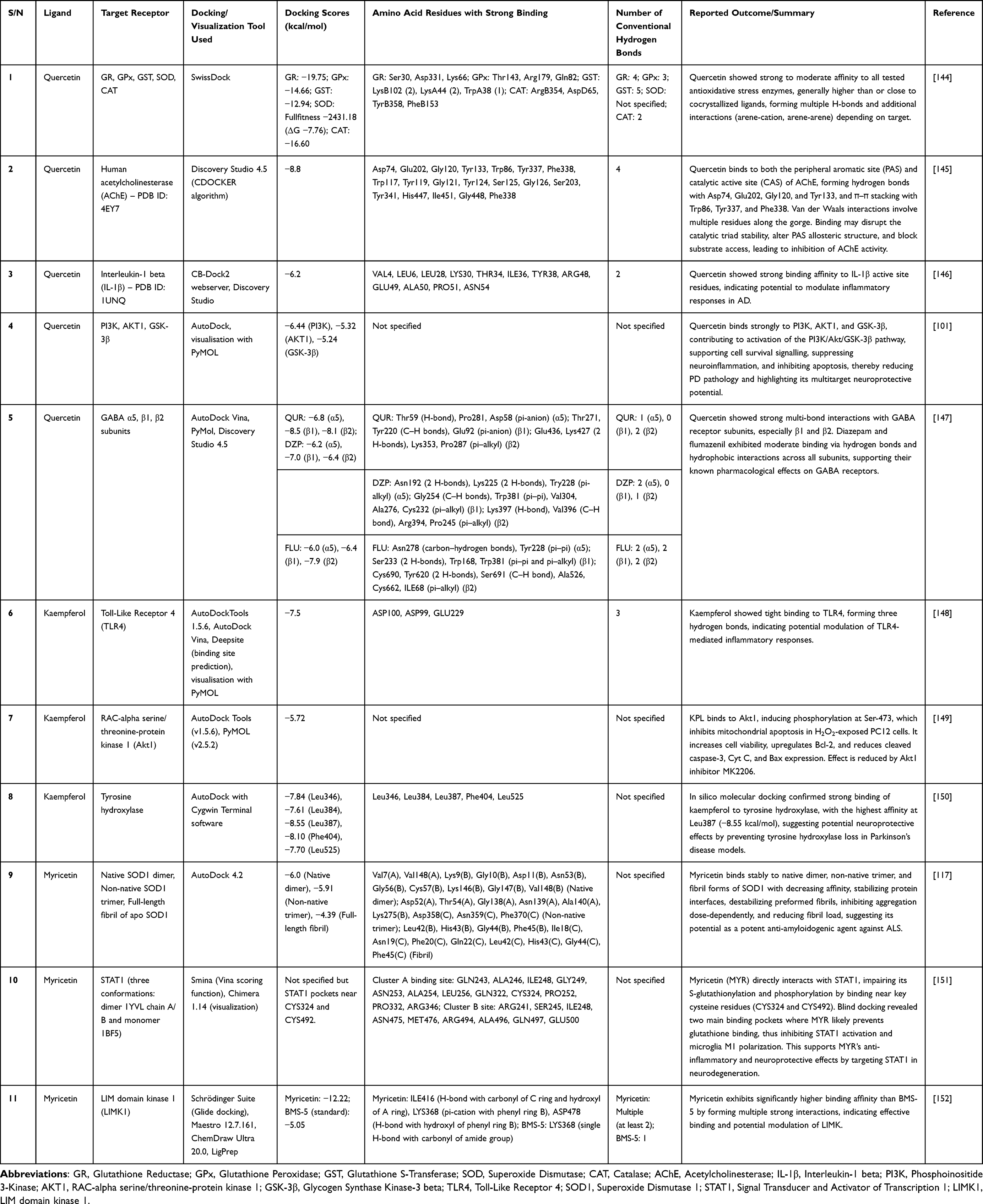 |
Table 3 Key Syzygium Aromaticum Flavonoid Metabolites and Their Neuroprotective Molecular Mechanisms (Reported in Docking Studies) |
Quercetin has a strong binding affinity to antioxidative enzymes (glutathione reductase, glutathione peroxidase, superoxide dismutase) and neurotransmission-related receptors (acetylcholinesterase, GABA receptor subunits), which exert the modulating activities of oxidative stress and synaptic activity in the pathology of Alzheimer’s and Parkinson’s diseases. Kaempferol is a potent inhibitor of neuroinflammatory and apoptotic signaling by forming strong interactions with Toll-Like Receptor 4 (TLR4), RAC-alpha serine/threonine-protein kinase 1 (Akt1), and tyrosine hydroxylase, which explains its applications in decreasing inflammation, inhibiting apoptosis, and sustaining dopamine production in models of Parkinsonism (Table 3). Myricetin demonstrates strong inhibition of pathological protein aggregation in Amyotrophic Lateral Sclerosis (ALS) by binding to different forms of superoxide dismutase 1 (SOD1), interferes with the activity of signal transducer and activator of transcription 1 (STAT1) to decrease neuroinflammation, and potently regulates LIM domain kinase 1 (LIMK1), a modifier of cytoskeletal dynamics, which could be therapeutic in a variety of neurodegenerative situations (Table 3). All of these flavonoids exhibit multitarget binding properties with antioxidative, anti-inflammatory, anti-apoptotic, and anti-amyloidogenic effects, which justify their potential as neurodegenerative disease intervention agents.
In-silico ADME and Toxicological Profiles of the Selected Flavonoid Metabolites in Syzygium aromaticum
After reviewing the Syzygium aromaticum flavonoid metabolites with neuroprotective potential, an in-silico Absorption, Distribution, Metabolism and Excretion (ADME), toxicological profiling was carried out using the SwissADME, ADMETlab 3.0, and pkCSM web servers to provide insight into the ability of these metabolites to be potential drug-like agents, considerably bioavailable, highly absorbed in the gastrointestinal tract, not violating more than one Lipinski’s rule, and having other promising therapeutic profiles.
The rationale for using the SwissADME web server was to explore its ability to predict absorption, distribution, metabolism, and drug-likeness based on physicochemical properties. The pkCSM web server was employed for accurate toxicological profile prediction, presenting both categorical and numerical data to enable comprehensive and comparative evaluation of compound safety and efficacy. We used both web servers to ensure scientific rigor and a less biased data presentation.
This provided more insight, which will stir actionable future directions for identifying and further developing or designing these S. aromaticum flavonoid metabolites as promising neuroprotective agents.
ADME Prediction
ADME and drug-likeness profiling are essential in drug design and development as they help predict the absorption, distribution, metabolism, and excretion of a compound in the body.153 By evaluating properties like solubility, permeability, and stability, researchers can identify promising drug candidates early, reduce development costs, and improve the chances of success in clinical trials.154 These assessments provide information on adequate bioavailability, minimize toxicity risks, and support the design of safe, effective, and orally available medications.
The ADME, drug-likeness, and pharmacokinetic profiles of S. aromaticum flavonoid metabolites are presented in Tables 4 and 5.
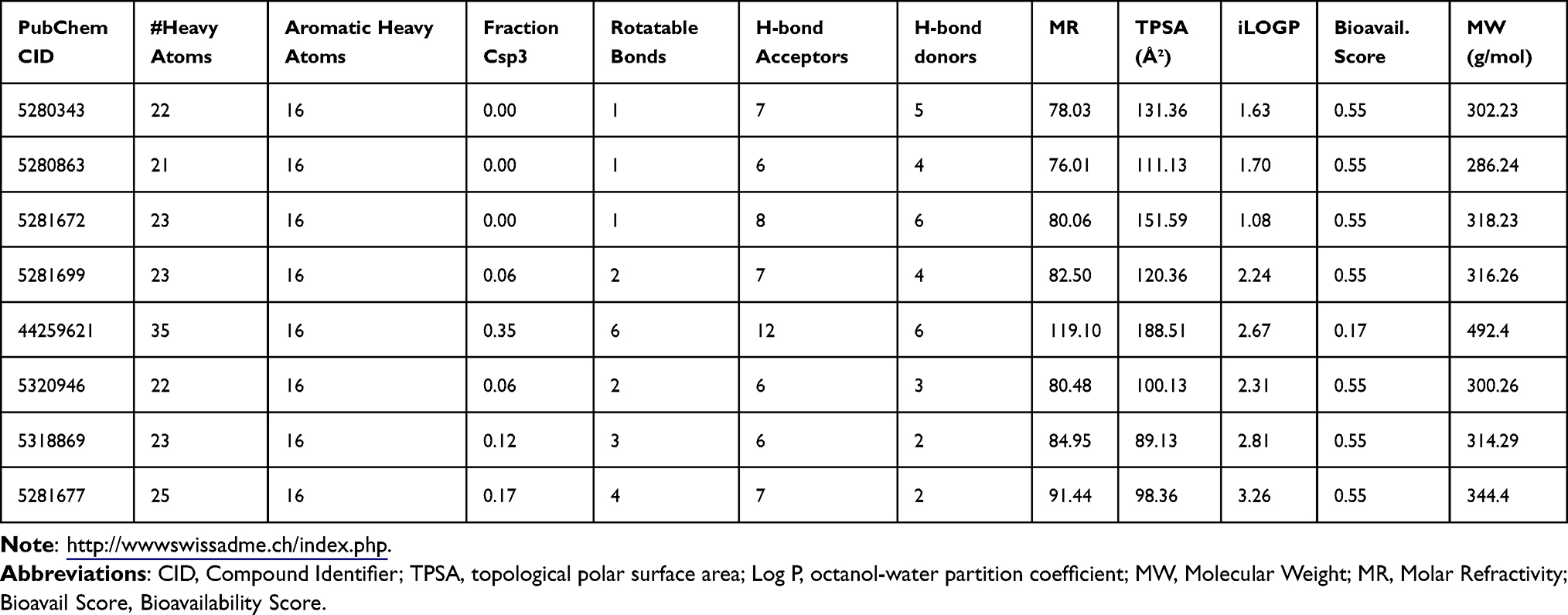 |
Table 4 Drug-Likeness of the S. aromaticum Flavonoid Metabolites from the SwissADME Web Server (Swiss Drug Design) |
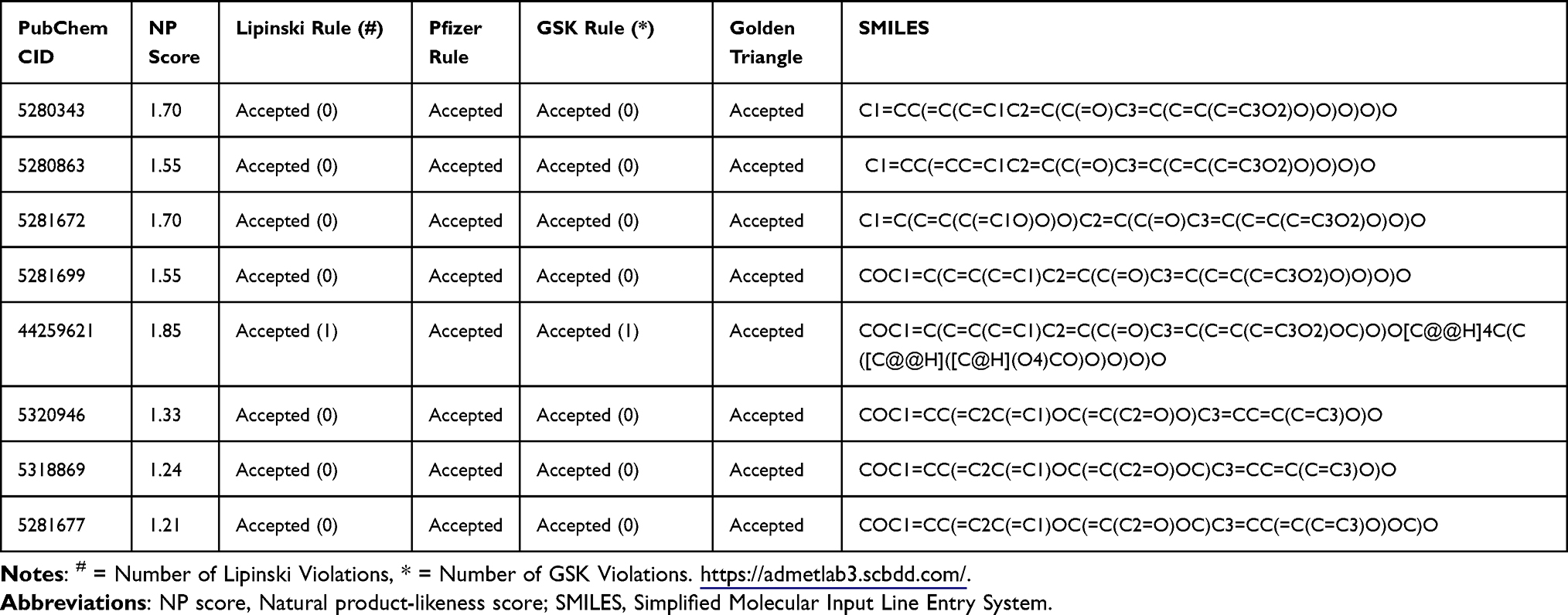 |
Table 5 Druglikeness Insight on Natural Product Score, Lipinski, Pfizer, GSK Rules, and Golden Triangle from the ADMETlab 3.0 Web Server |
In this review, the ADME profiling of eight Syzygium aromaticum flavonoid metabolites retrieved from the SwissADME web server highlights promising drug-likeness and oral bioavailability characteristics. Key parameters, such as molecular weight (MW), hydrogen bond donors (HBD), hydrogen bond acceptors (HBA), rotatable bonds, topological polar surface area (TPSA), molar refractivity (MR), and iLOGP, were analyzed, along with bioavailability scores (Table 4).
Physicochemical properties of a compound can be used to assess its drug-likeness in drug discovery. This is about their potential to become orally active drugs in human beings.155,156 Important parameters like molecular weight (MW), hydrogen bond donors (HBD), hydrogen bond acceptors (HBA), rotatable bonds, topological polar surface area (TPSA), molar refractivity (MR), and iLOGP are all checked regularly.153 Such properties have a direct impact on the absorption, distribution, metabolism, and excretion (ADME) profile of a compound. The molecular weight (MW) can influence the capacity of a drug to pass through biological membranes. The Lipinski Rule of Five states that a compound with an MW of 500Da or less has a higher probability of being orally bioavailable.157,158 Bigger molecules are not easily absorbed and have a bad membrane permeability. Hydrogen bond donors (HBD) and hydrogen bond acceptors (HBA) affect the capacity of a drug to form hydrogen bonds with biologic targets or transport proteins. The most favorable drug-likeness is related to HBD 5 and HBA 10. The excessive number of hydrogen bonds may cause a compound to become impermeable to lipid membranes. Molecular flexibility depends on rotatable bonds. Less than 10 rotatable bonds are typically good when it comes to oral bioavailability, because highly flexible molecules can have difficulties in traversing membranes or can be unable to bind to receptors stably. Topological polar surface area (TPSA) is the surface area of atoms that are polar (typically oxygen and nitrogen, and their bonded hydrogens). TPSA 140 Ų or less is generally desirable to have good intestinal absorption, and 90 Ų or less is desirable to cross the blood-brain barrier (relevant in neurotherapeutics). Molar refractivity (MR) is associated with the size and polarizability of a compound and assists in the interpretation of receptor interactions. The optimal MR should be between 40 and 130. Divergences can indicate inefficient contact with biological targets. Lipophilicity is key when considering membrane permeability and solubility, and is predicted by iLOGP. An iLOGP of 0–5 is desirable and is considered balanced. Very lipophilic drugs can be insoluble, and very hydrophilic drugs can have difficulty crossing membranes. These properties are summarized by the Lipinski Rule of Five: a compound is likely to have good oral bioavailability when it does not exceed more than one of the following: MW 500 Da, HBD 5, HBA 10, iLOGP 5. Two or more violation compounds tend to have poor absorption or permeation. Bioavailability score makes a prediction (typically on a scale of 0 to 1) of the likelihood that a compound will enter systemic circulation in the event of oral administration. A score of 0.55 and above is acceptable and indicates a moderate-to-high probability of oral effectiveness.159 Such parameters serve as a first-line screening method to determine potential drug candidates before more expensive in vitro and in vivo testing.
In our review, most S. aromaticum flavonoid metabolites, including quercetin (PubChem CID: 5280343), kaempferol (PubChem CID: 5280863), myricetin (PubChem CID: 5281672), rhamnocitrin (PubChem CID: 5320946), kumatakenin (PubChem CID: 5318869), and pachypodol (PubChem CID: 5281677), showed no Lipinski violations, indicating strong potential for oral bioavailability. These compounds also fell within the optimal range for hydrogen bonding and molecular weight, reinforcing their drug-likeness. Tamarixetin 3-O-β-d-glucopyranoside (PubChem CID: 5281699) also complied with Lipinski’s rules, supporting its potential as a drug-like molecule despite its glycosylated structure. However, ombuin 3-O-β-d-glucopyranoside (PubChem CID: 44259621) had two violations (high MW and excessive HBA count), suggesting challenges in its oral absorption. Its high TPSA (188.51 Ų) and six HBDs may improve aqueous solubility but could hinder passive membrane permeability. All compounds except ombuin had a bioavailability score of 0.55, which is considered acceptable for oral drugs. Ombuin scored 0.17, aligning with its reduced permeability profile and Lipinski violations. This score represents the likelihood of the compound reaching the systemic circulation when administered orally.
TPSA values of less than 140 Ų are generally favorable for cell membrane permeability.160,161 Most compounds, such as Rhamnocitrin (100.13 Ų), Kaempferol (111.13 Ų), and Kumatakenin (89.13 Ų), are within this range, indicating efficient membrane penetration.
The iLOGP values ranged from 1.08 (Myricetin) to 3.26 (Pachypodol), demonstrating a well-balanced hydrophilic-lipophilic profile suitable for oral drugs. Pachypodol showed the highest lipophilicity. This suggests strong potential for membrane permeability,162 which is a desirable characteristic of neuroprotective agents.
Overall, ADME profile prediction revealed that Quercetin, Kaempferol, Myricetin, Rhamnocitrin, Kumatakenin, Tamarixetin 3-O-β-d-glucopyranoside, and pachypodol demonstrated favorable drug-likeness, permeability, and oral bioavailability profiles.
To provide a deeper insight into the druglike properties of these selected S. aromaticum flavonoids, in silico prediction was carried out using the ADMETlab 3.0 database (https://admetlab3.scbdd.com/). The ADME screening plugin was explored, and the data on parameters concerning druglikeness, such as the Natural Product-likeness Score (NP Score), Lipinski Rule, Pfizer Rule, GSK Rule, and the Golden Triangle, were extracted from the medicinal chemistry option. This was enabled after the Simplified Molecular Input Line Entry System (SMILES) of these S. aromaticum metabolites retrieved from the PubChem database were input into the ADMETlab 3.0 database. The results concerning the druglike parameters and the SMILES of these metabolites are presented in Table 5.
The Lipinski Rule, the Pfizer Rule, the GSK Rule, and the Golden Triangle are all straightforward rules in drug discovery to determine whether a substance has a good chance of becoming an effective oral drug. These rules are used to determine druglikeness in terms of size, solubility, and permeability. The Lipinski Rule permits compounds whose molecular weight is less than or equal to 500, logP is less than or equal to 5, number of hydrogen bond donors is less than or equal to 5, and the number of hydrogen bond acceptors is less than or equal to 10 (ADMETLab 3). A compound is rejected when it breaks more than one of these rules. The Pfizer Rule identifies compounds with logP greater than 3 and tPSA less than 75 Ų as being at high risk of being toxic. The GSK Rule favors drugs with a molecular weight of less than 400 and logP less than 4, in the hope of obtaining superior safety and solubility. The Golden Triangle is a combination of logP and molecular weight that is used to enhance potency and clearance by creating a suitable spot, most commonly between MW 200 and 500, and logP of −0.4 to +5.6. In ADMETLab, the compounds that fall into these ranges are commonly highlighted as accepted (green), and the outliers are rejected (red), in order to help the researcher prioritize safer, more effective drug candidates.
The druglikeness analysis of ADMETlab 3.0 indicates that all eight metabolites of Syzygium aromaticum have good drug-like properties. Their Natural Product (NP) scores are between 1.21 and 1.85, which is a good indication that they are similar to known natural bioactive compounds. All of the compounds passed Lipinski, Pfizer, GSK, and Golden Triangle rules, which are major filters in medicinal chemistry used to assess oral bioavailability and safety, and physicochemical suitability. It is worth noting that the majority of compounds possessed zero Lipinski and GSK violations, which is indicative of a favorable molecular weight, hydrogen bonding capacity, and lipophilicity in terms of drug development. The compound with only one Lipinski and one GSK violation (CID: 44259621) also passed the rest of the rules, which means that the violation is not significant. These findings suggest that the chosen S. aromaticum flavonoid metabolites have favorable pharmacokinetic properties and can be considered as potential new neuroprotective agents to be further formulated and tested in vivo.
Their compliance with Lipinski’s rules, appropriate TPSA and iLOGP values, and high bioavailability scores make them promising candidates for neuroprotection studies. Notably, Ombuin 3-O-β-d-glucopyranoside, which is potentially pharmacologically active, may face limitations owing to its high polarity and molecular weight, necessitating formulation optimization to enhance its oral absorption and systemic bioavailability. This challenge can be addressed through nanoformulation techniques using nanoemulsions or liposomes, prodrug strategies to reduce polarity, or the use of permeation enhancers to improve membrane transport and oral absorption.163,164
The pharmacokinetic profile predictions of Syzygium aromaticum flavonoid metabolites revealed key insights into their gastrointestinal (GI) absorption, blood-brain barrier (BBB) permeability, P-glycoprotein (Pgp) substrate status, and interactions with cytochrome P450 (CYP) enzymes (Tables 6 and 7).
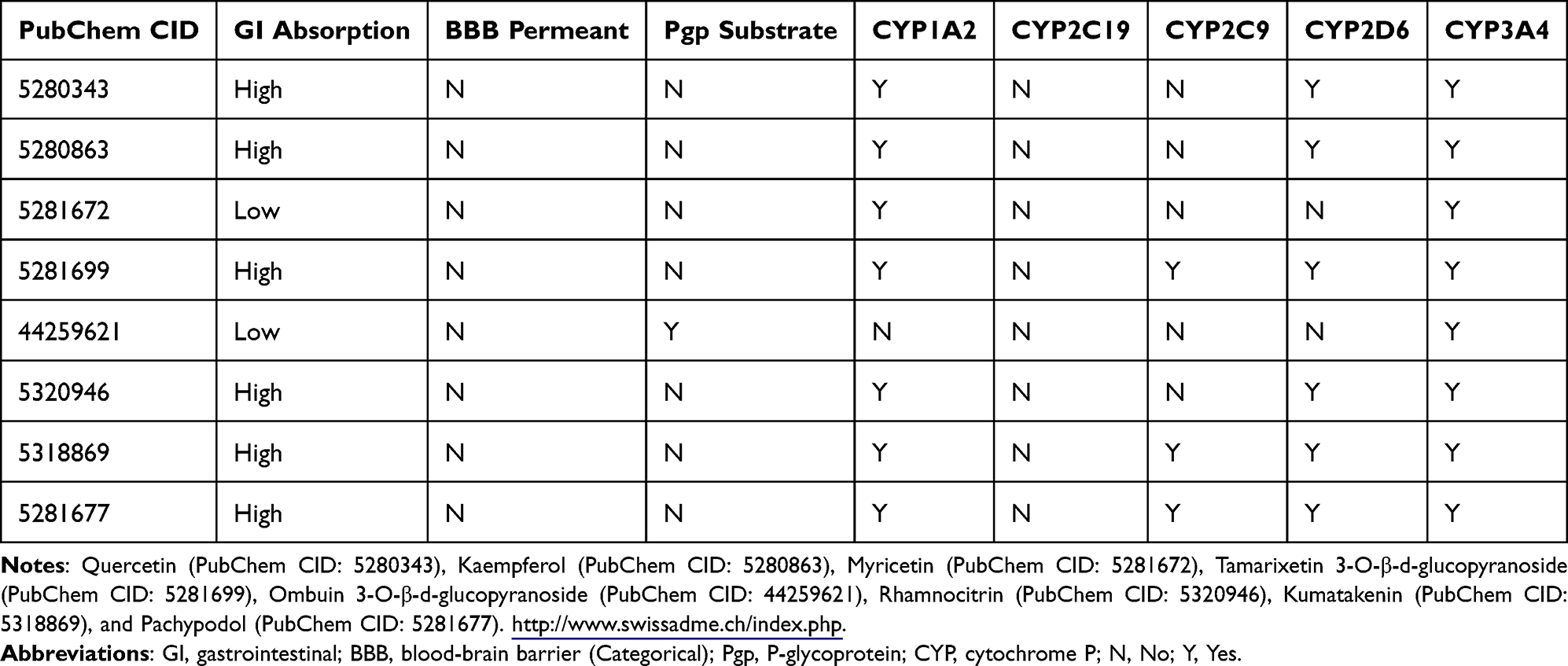 |
Table 6 Pharmacokinetics Properties of the S. aromaticum Flavonoid Metabolites from SwissADME Web Server (Swiss Drug Design) |
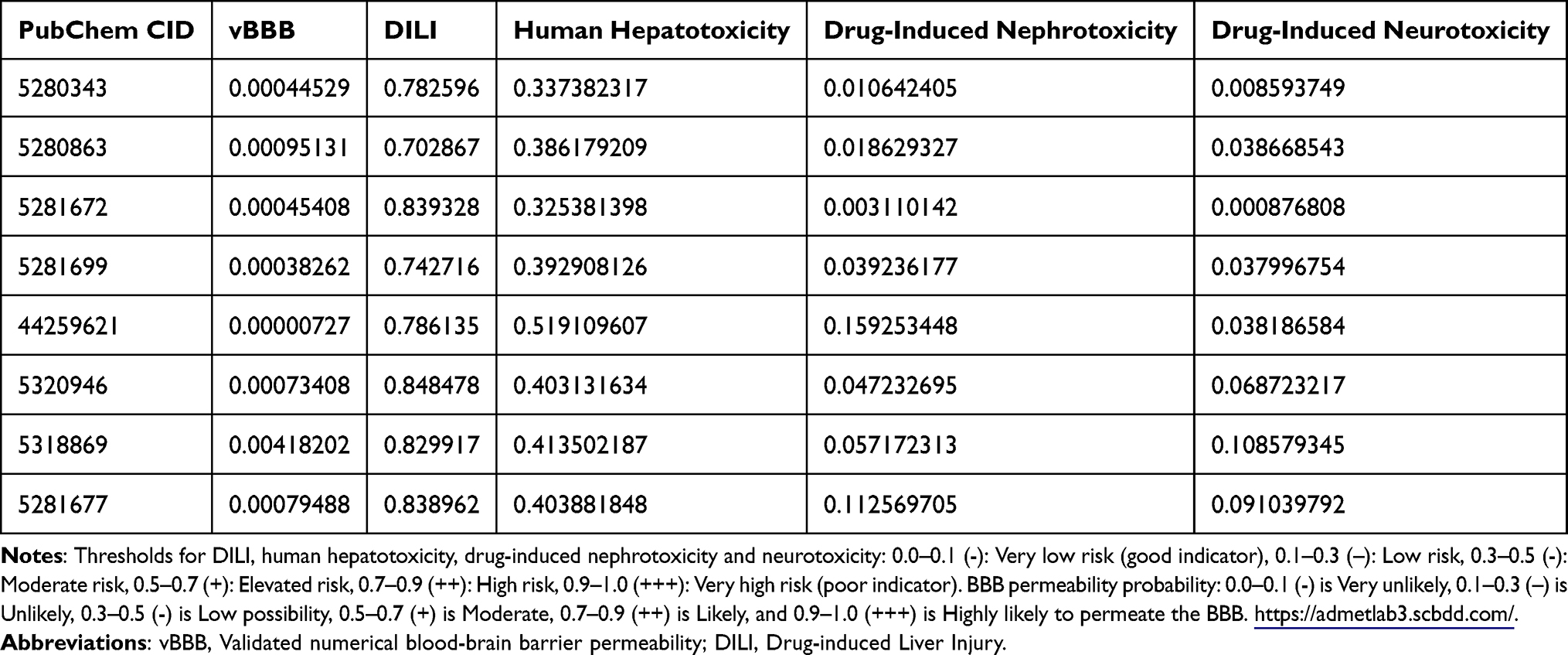 |
Table 7 Predicted BBB Permeability and Liver, Kidney, and Brain Toxicity of the S. aromaticum Flavonoid Metabolites in ADMETlab 3.0 Web Server |
The BBB permeability was of utmost interest in this current review; hence, we compared the results on BBB permeability retrieved from the SwissADME web server (Categorical) with the BBB permeability results from the ADMETlab 3.0 web server (Numerical) to strengthen our findings further (Tables 6 and 7).
For clarity, in ADMETlab 3.0, blood-brain barrier (BBB) permeability is predicted as a classification endpoint, with confidence scores represented by six symbols: - (0.0–0.1), – (0.1–0.3), - (0.3–0.5), + (0.5–0.7), ++ (0.7–0.9), and +++ (0.9–1.0). These symbols reflect the probability that a compound can cross the BBB. A prediction score of ++ or +++ (above 0.7) is considered favorable and indicates a high likelihood of BBB penetration, which is essential for central nervous system (CNS)-active drugs (Table 7). In contrast, scores below + suggest poor permeability and limited CNS access, which may limit the therapeutic potential of such compounds for neurological conditions. The results of the validated numerical values of BBB permeability from the ADMETlab 3.0 web server are presented in Table 7.
The BBB results from the ADMETlab 3.0 toxicity predictions indicate that all examined metabolites from Syzygium aromaticum, including Quercetin (CID: 5280343), Kaempferol (CID: 5280863), Myricetin (CID: 5281672), Tamarixetin 3-O-β-d-glucopyranoside (CID: 5281699), Ombuin 3-O-β-d-glucopyranoside (CID: 44259621), Rhamnocitrin (CID: 5320946), Kumatakenin (CID: 5318869), and Pachypodol (CID: 5281677), exhibit very low predicted BBB permeability (vBBB < 0.005), suggesting limited passive entry into the CNS.
When doing comparative analysis, none of the flavonoid metabolites were predicted to permeate the BBB by both the SwissADME (categorical) and ADMETlab 3.0 (numerical) web servers. This may limit these metabolites’ direct central nervous system (CNS) effects, although peripheral neuroprotection or delivery system modification may still offer therapeutic advantages.
The permeability of the blood-brain barrier (BBB) is important in assessing the capacity of therapeutic agents to reach the central nervous system (CNS). The BBB is a very selective and highly regulated barrier made up of endothelial cells, astrocyte end-feet, and tight junctions, which limit the movement of most molecules. A compound BBB permeability is usually predicted by computational models and in silico tools, including logP, topological polar surface area (TPSA), and molecular weight. The likelihood of drugs to cross the BBB is higher when it has a low molecular weight (<400 500 Da), moderate lipophilicity (logP 1–3), low hydrogen bonding potential, and TPSA <90 Ų. The precise forecasts can be used to make the CNS drug development process more streamlined by selecting only the candidates with high brain bioavailability and weeding out the poorly penetrating compounds, and the final outcome is the enhanced design of neurotherapeutic agents.
Notably, BBB impermeability is not the total write-off of the neuroprotective mechanisms. Metabolites that cannot cross the blood-brain barrier (BBB) can still exert indirect neuroprotective effects through peripheral mechanisms. They may reduce systemic inflammation and oxidative stress or modulate gut microbiota, which in turn influences brain health via the gut-brain axis. Additionally, these metabolites can trigger the release of signaling molecules such as anti-inflammatory cytokines, neurotrophic factors, and short-chain fatty acids, which can cross the BBB and positively affect brain function and neuronal survival. The reviewed S. aromaticum flavonoid metabolites have been reported by many authors to reduce ROS, lipid peroxidation, and neuroinflammation, all of which are involved in neuroprotection. Ombuin 3-O-β-d-glucopyranoside was the only compound predicted to be a P-gp substrate, indicating a potential efflux from intestinal cells.165,166
From our findings, most compounds, including quercetin (PubChem CID: 5280343), kaempferol (PubChem CID: 5280863), tamarixetin 3-O-β-d-glucopyranoside (PubChem CID: 5281699), rhamnocitrin (PubChem CID: 5320946), kumatakenin (PubChem CID: 5318869), and pachypodol (PubChem CID: 5281677), exhibited high GI absorption, suggesting good oral uptake potential. In contrast, myricetin (PubChem CID: 5281672) and ombuin 3-O-β-d-glucopyranoside (PubChem CID: 44259621) showed low GI absorption (Table 5), which could limit their oral bioavailability and necessitate formulation enhancement.
Regarding cytochrome P 450 (CYP) enzyme inhibition, several compounds, such as Quercetin, Kaempferol, Kumatakenin, and Pachypodol, were predicted to inhibit key CYP enzymes like CYP1A2, CYP2D6, and CYP3A4. This suggests possible drug-drug interaction risks.167,168 However, compounds, such as Myricetin and Ombuin 3-O-β-d-glucopyranoside, showed minimal CYP inhibition, which may reduce such risks. This implies that most S. aromaticum flavonoid metabolites demonstrated favorable GI absorption and manageable metabolic profiles. However, the low GI absorption and efflux potential of ombuin 3-O-β-d-glucopyranoside and myricetin may require optimization of the drug delivery. The CYP interactions must be considered during its co-administration with other therapies.
Toxicological Profile Prediction
The toxicological profile screening of plant metabolites is crucial in drug development and design because it helps to identify potential safety risks early in the discovery process.32,169 This helps determine safe dosage ranges and predict interactions with critical systems, such as liver enzymes (CYPs) or cardiac ion channels (hERG). This ensures that only compounds with acceptable safety margins advance to preclinical and clinical stages, reducing the risk of failure, saving time and resources, and protecting human health.170,171
Additionally, the toxicological profiling of parameters of drug-induced liver injury (DILI), human hepatotoxicity, nephrotoxicity, and neurotoxicity will allow predicting the possible adverse effects at the initial stages of development, minimizing the chances of late-stage failures. Plant metabolites are natural, but they are not always safe and can have bioactivity that is harmful to vital organs or metabolic processes. Toxic liabilities can be identified early so that structural optimization can be performed, dosage planning can be informed, and safer and more effective drugs can be developed.
Therefore, in silico toxicity profiling, which can be performed with the aid of free web tools, can increase the translational potential of phytochemicals in contemporary drug discovery with minimal financial implications.
In this current review, the toxicity profiles of Syzygium aromaticum flavonoid metabolites, predicted via the pkCSM and ADMETlab 3.0 web servers, indicated an overall favorable safety profile with minimal adverse effects expected in therapeutic contexts (Tables 7 and 8).
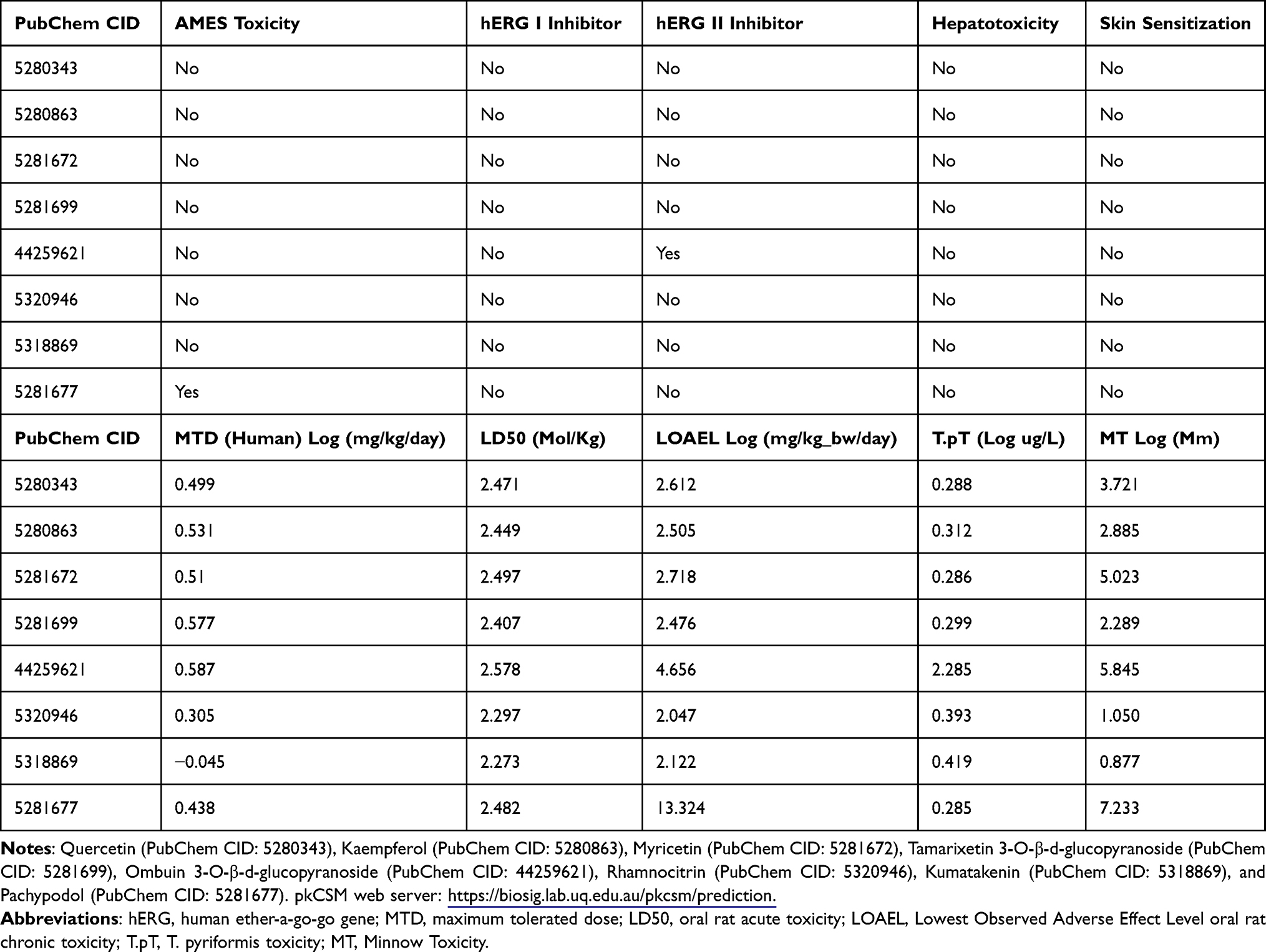 |
Table 8 Predicted Toxicity Profile of the S. aromaticum Flavonoid Metabolites in pkCSM Web Server |
All the reviewed S. aromaticum flavonoid metabolites, except pachypodol (PubChem CID: 5281677), tested negative in the AMES Test for Mutagenicity (AMES), suggesting low mutagenic risk. AMES is a biological assay that is used to assess the mutagenic potential of chemical compounds. A compound that tests positive in the AMES test may cause genetic mutations and is carcinogenic.172,173
Notably, Ombuin 3-O-β-d-glucopyranoside (PubChem CID: 44259621) was the only compound predicted to inhibit hERG II (Table 4), which may indicate a minor potential for cardiotoxicity,174 although it is not a hERG I inhibitor. All other compounds, including quercetin (PubChem CID: 5280343), kaempferol (PubChem CID: 5280863), myricetin (PubChem CID: 5281672), rhamnocitrin (PubChem CID: 5320946), kumatakenin (PubChem CID: 5318869), and tamarixetin 3-O-β-d-glucopyranoside (PubChem CID: 5281699) showed no hepatotoxicity or skin sensitization (Table 4), further supporting their safety.
Toxicity thresholds such as minimum tolerated dose (MTD), median lethal dose (LD50), and lowest observed adverse effect level (LOAEL) suggest that these flavonoid metabolites are well tolerated at standard dosages. Ombuin 3-O-β-d-glucopyranoside had a relatively high LOAEL log value (4.656), indicating a greater threshold before chronic toxicity was manifested. However, Pachypodol exhibited a high LOAEL (13.324), which may reflect a unique toxicological profile of chronic exposure that warrants further in vivo evaluation.
Minnow toxicity (MT) and Tetrahymena pyriformis toxicity (T. pT) were assessed. MT refers to the predicted acute aquatic toxicity of a compound to fathead minnows (a standard model organism), which is often used as a measure of environmental toxicity, whereas Tetrahymena pyriformis toxicity (T.pT) refers to the toxic effect of a compound on the protozoan Tetrahymena pyriformis, a widely used single-celled organism in ecotoxicology studies.175,176 T. pT serves as a model for assessing the general cytotoxicity of chemicals in simple eukaryotic organisms. A lower T.pT value (log µg/L) indicates higher toxicity, indicating that the compound is toxic at lower concentrations. This helps to evaluate the environmental safety and potential biological hazards of plant-derived or synthetic compounds.177,178 The pT predictions indicated that all Syzygium aromaticum flavonoid metabolites exhibited low toxicity to this protozoan model, with log T. pT values ranging from 0.285 to 0.419.
These MT values varied among the reviewed metabolites, with pachypodol exhibiting the highest MT (7.233), suggesting potential aquatic toxicity at higher concentrations. Kumatakenin and Rhamnocitrin displayed the lowest MT values, indicating a diminished environmental toxicity.
Compounds such as Quercetin, Kaempferol, and Pachypodol showed the lowest toxicity, whereas Rhamnocitrin and Kumatakenin displayed slightly higher but still safer profiles. These findings suggest minimal environmental toxicity, supporting the biosafety of these compounds and their suitability for drug development.
Overall, the reviewed S. aromaticum flavonoid metabolites generally exhibited low toxicity risks across standard predictive endpoints. However, Pachypodol and Ombuin 3-O-β-d-glucopyranoside may require further assessment because of their mutagenicity and potential interactions with cardiac channels, particularly in the context of long-term or high-dose use.
To provide a deeper insight into the toxicological profiles of these eight S. aromaticum flavonoid metabolites, we utilized the ADMETlab 3.0 to assess some parameters such as Drug-induced liver injury (DILI), human hepatotoxicity, drug-induced nephrotoxicity, and drug-induced neurotoxicity (Table 7).
In ADMETlab 3.0, toxicity classification endpoints like DILI (Drug-Induced Liver Injury), human hepatotoxicity, drug-induced nephrotoxicity, and neurotoxicity are predicted based on probability scores ranging from 0 to 1. The confidence thresholds are categorized as follows: 0.0–0.1 (-): Very low risk (good indicator), 0.1–0.3 (--): Low risk, 0.3–0.5 (-): Moderate risk, 0.5–0.7 (+): Elevated risk, 0.7–0.9 (++): High risk, 0.9–1.0 (+++): Very high risk (poor indicator). Scores closer to 0 are desirable, indicating a low probability of causing organ-specific toxicity, while scores approaching 1 suggest a higher likelihood of adverse effects.
In this current review, most of the reviewed S. aromaticum flavonoid metabolites showed a high likelihood for Drug-Induced Liver Injury (DILI), with notably elevated scores for Rhamnocitrin (CID: 5320946; 0.848) and Myricetin (CID: 5281672; 0.839) (Table 7). Human hepatotoxicity predictions span a moderate range (0.32–0.52), with Ombuin 3-O-β-d-glucopyranoside (CID: 44259621) having the highest estimated potential (0.519) (Table 7). On the other hand, nephrotoxicity and neurotoxicity scores remain low (< 0.2) across all compounds, suggesting good renal and neurological safety. Slightly higher neurotoxicity risks were observed for Kumatakenin (CID: 5318869; 0.108) and Pachypodol (CID: 5281677; 0.091), but these remain within tolerable thresholds for early-phase therapeutic consideration.
Conclusion
Flavonoid metabolites present in Syzygium aromaticum, such as quercetin, kaempferol, and myricetin, demonstrate significant neuroprotective effects through their antioxidant, anti-inflammatory, and cellular protective properties. Their ability to mitigate oxidative stress, suppress neuroinflammation, and enhance synaptic function makes them promising agents for the prevention and treatment of neurodegenerative disorders such as AD and PD, as evident in reported studies exploring in vitro, in vivo, and in silico molecular docking approaches. Tamarixetin 3-O-β-d-glucopyranoside, ombuin 3-O-β-d-glucopyranoside, Rhamnocitrin, Kumatakenin, and Pachypodol are among the understudied and emerging S. aromaticum flavonoid metabolites with significant neuroprotective potential. Although these metabolites are not BBB permeants, as predicted by the SwissAdme and ADMETlab 3.0 web servers, their antioxidant, anti-inflammatory, and cellular protective properties make them promising candidates for the prevention and treatment of neurodegenerative diseases. Most of the studies reviewed utilized rodent models, thereby posing a limitation in the extrapolation of these findings to humans. This indicates the necessity for conducting studies on primates and advancing to clinical trials in humans because these metabolites showed favorable pharmacokinetic and toxicological profiles. However, dosage optimization is vital.
The eight reviewed Syzygium aromaticum flavonoid metabolites generally exhibited favorable ADME and drug-likeness profiles, with most showing high gastrointestinal absorption, compliance with Lipinski’s rule, Pfitzer and GSK rules, and good oral bioavailability. Toxicological evaluations indicated a low risk of mutagenicity, cardiotoxicity, hepatotoxicity, drug-induced liver injury, nephrotoxicity, and neurotoxicity. Despite this, minor concerns such as potential skin sensitization or P-gp substrate activity were noted in a few compounds, warranting further investigation.
Future Directions and Prospects
To advance the therapeutic applications of these flavonoid metabolites in S. aromaticum, future research should focus on in vivo and clinical studies to validate their neuroprotective efficacy and safety in humans. Emerging S. aromaticum flavonoid metabolites from S. aromaticum show promise for neuroprotection and warrant further investigation. Future studies should involve isolating the key metabolites and testing them in models (in vivo and in vitro) of neurodegeneration. All eight reviewed S. aromaticum flavonoid metabolites were impermeable to the BBB; therefore, efforts should be directed toward optimizing their permeability through nanoparticle-based delivery systems or novel drug formulations to enhance their pharmacokinetic properties. Nanocarrier systems as liposomes, solid lipid nanoparticles, polymeric nanoparticles (including poly-lactic-co-glycolic acid-PLGA), and nanoemulsions, may enhance stability, solubility, and controlled release. The BBB penetration can be increased by ligand modification of the surface, using transferrin or lactoferrin, to facilitate receptor-mediated transport. Exosome-based delivery is biocompatible and has good brain targeting properties, whereas intranasal administration partially avoids the BBB, making it possible to enter the CNS directly. Also, stimuli-responsive systems (for example, ROS- or pH-sensitive) can be applied to guarantee their release only in inflamed or oxidative conditions, maximizing the neuroprotective effect and reducing the side effects on the whole system. All these strategies will be beneficial towards the creation of flavonoid-based treatment of neurodegenerative disorders.
Further studies should prioritize the comprehensive toxicity profiling and dose optimization of S. aromaticum flavonoid metabolites to ensure their safety for human use in the treatment of neurodegenerative disorders.
Additionally, future studies should investigate the potential synergistic effects of these flavonoid metabolites with existing neuroprotective drugs to develop combination therapies. Public health initiatives and nutraceutical development should consider integrating S. aromaticum-derived flavonoids into dietary interventions for neuroprotection.
Furthermore, interdisciplinary collaboration among neuroscientists, pharmacologists, and traditional medicine practitioners could facilitate translational research, ensuring that this botanical drug and its flavonoid metabolites move from bench to bedside as viable neuroprotective agents.
Disclosure
The authors report no conflicts of interest in this work.
References
1. Rajendran R, Ragavan RP, Al-Sehemi AG, Uddin MS, Aleya L, Mathew B. Current understandings and perspectives of petroleum hydrocarbons in Alzheimer’s disease and Parkinson’s disease: a global concern. Environ Sci Pollut Res. 2022;29(8):10928–10949. doi:10.1007/S11356-021-17931-3
2. Kumar A, Mirza M. Exploring the neurodegenerative landscape: understanding the burden of disease. Neurodegener Revolut Emerg Ther Sustain Solut. 2025;477–495. doi:10.1016/B978-0-443-28822-7.00001-5
3. Onohuean H, Akiyode AO, Akiyode O, Igbinoba SI, Alagbonsi AI. Epidemiology of neurodegenerative diseases in the East African region: a meta-analysis. Front Neurol. 2022;13:1024004. doi:10.3389/FNEUR.2022.1024004/TEXT
4. Ji Z, Chen Q, Yang J, Hou J, Wu H, Zhang L. Global, regional, and national health inequalities of Alzheimer’s disease and Parkinson’s disease in 204 countries, 1990–2019. Int J Equity Health. 2024;23(1):1–12. doi:10.1186/S12939-024-02212-5/TABLES/1
5. Olufunmilayo EO, Gerke-Duncan MB, Holsinger RMD. Oxidative stress and antioxidants in neurodegenerative disorders. Antioxidants. 2023;12(2):517. doi:10.3390/ANTIOX12020517
6. Singh P, Hassan S, Ramesh Kumar V, Biswas K. General introduction to different neurodegenerative diseases. Neurodegener Dis Transl Model Mech Ther. 2024;1–19. doi:10.1201/9781032620442-1/general-introduction-different-neurodegenerative-diseases-prabhakar-singh-saqib-hassan-ramesh-kumar-kunal-biswas
7. Gandhi M, Palan D. Recent advancement in the treatment of Parkinson’s disease cellular models. Neurodegener Dis Transl Model Mech Ther. 2024;29–41. doi:10.1201/9781032620442-3/recent-advancement-treatment-parkinson-disease-cellular-models-mansi-gandhi-devhuti-palan
8. Sargsyan T, Simonyan HM, Stepanyan L, et al. Neuroprotective properties of clove (Syzygium aromaticum): state of the art and future pharmaceutical applications for Alzheimer’s disease. Biomol. 2025;15(3):452. doi:10.3390/BIOM15030452
9. Amir Rawa MS, Mazlan MKN, Ahmad R, Nogawa T, Wahab HA. Roles of syzygium in anti-cholinesterase, anti-diabetic, anti-inflammatory, and antioxidant: from Alzheimer’s perspective. Plants. 2022;11(11):1476. doi:10.3390/PLANTS11111476
10. Yusuf HR, Musa SA, Agbon AN, et al. Hepatoprotective potential of tamarindus indica following prenatal aluminum exposure in Wistar rat pups. Toxicol Reports. 2023;10:376–381. doi:10.1016/J.TOXREP.2023.03.002
11. Etukudo EM, Usman IM, Oviosun A, et al. Exploring the phytochemical profile, antioxidant and anti-inflammatory potential of Bidens pilosa: a systematic review. Front Pharmacol. 2025;16:1569527. doi:10.3389/FPHAR.2025.1569527
12. Usman IM, Adebisi SS, Musa SA, Iliya IA. Glial fibrillary acid protein expression and behavioral changes in hippocampus following prenatal co-administration of ethyl acetate leaf fraction of tamarindus indica and aluminum chloride in wistar rats. Niger J Exp Clin Biosci. 2022;10(1):1–8. doi:10.4103/njecp.njecp_34_21
13. Usman IM, Iliya IA, Ivang AE, Ssempijja F, Ojewale AO, Yusuf HR. Microanatomical and biochemical changes of the cerebellum following ethanol gavage in adult wistar rats. Anat J Africa. 2019;8(2):1662–1669. doi:10.4314/AJA.V8I2.189708
14. Usman IM, Buraimoh A, Ibegbu AO. Effect of prenatal ethanol exposure and extract of tamarindus indica pulp on the cerebral cortex of wistar rats. African J Cell Pathol. 2016;7:1–5.
15. Adeniyi IA, Owu D, Onaadepo O, et al. Ameliorative effects of ethyl-acetate extract of Bidens pilosa on oxidative stress and reproductive impairment in bisphenol a-exposed male mice: insight from in-silico, invitro and in-vivo studies. F1000Research. 2025;14:771. doi:10.12688/f1000research.166336.1
16. Teleanu DM, Niculescu AG, Lungu II, et al. An overview of oxidative stress, neuroinflammation, and neurodegenerative diseases. Int J Mol Sci. 2022;23(11):5938. doi:10.3390/IJMS23115938
17. Singh S, Rai SN, Singh SK. Synaptic plasticity in neurodegenerative disorders. Synaptic Plast Neurodegener Disord. 2024:1–277. doi:10.1201/9781003464648/synaptic-plasticity-neurodegenerative-disorders-sachchida-nand-rai-sangeeta-singh-santosh-kumar-singh/rights-and-permissions
18. Kaspute G, Ramanavicius A, Prentice U. Natural drug delivery systems for the treatment of neurodegenerative diseases. Mol Biol Rep. 2025;52(1):1–23. doi:10.1007/S11033-025-10286-9
19. Singh DK, Kumari B, Sinha S, Fatima K. Phytochemicals for the improvement of cognitive function through cholinergic anti-inflammatory pathway. Curr Indian Sci. 2024;
20. Hasnat H, Shompa SA, Islam MM, et al. Flavonoids: a treasure house of prospective pharmacological potentials. Heliyon. 2024;10(6):e27533. doi:10.1016/J.HELIYON.2024.E27533/ASSET/117C80ED-4D6D-4905-BDA0-387DA601D98C/MAIN.ASSETS/GR11.JPG
21. El Rayess Y, Nehme N, Azzi-Achkouty S, Julien SG. Wine phenolic compounds: chemistry, functionality and health benefits. Antioxidants. 2024;13(11):1312. doi:10.3390/ANTIOX13111312
22. Otunola GA. Culinary spices in food and medicine: an overview of syzygium aromaticum (L.) Merr. and L. M. Perry [Myrtaceae]. Front Pharmacol. 2022;12:793200. doi:10.3389/FPHAR.2021.793200/BIBTEX
23. Cheikhyoussef A, Cheikhyoussef N, Rahman A, Hussein AA. Clove (Syzygium aromaticum) phenolics: extraction, compositions, and biological activities. Clove. 2022;215–233. doi:10.1016/B978-0-323-85177-0.00036-7
24. Poornima BA, Sain M, Singh A. Bioactive compounds in clove. Spice Bioact Compd Prop Appl Heal Benefits. 2022;137–164. doi:10.1201/9781003215387-8/BIOACTIVE-COMPOUNDS-CLOVE-POORNIMA-AZIZA-BEGUM-MUKUL-SAIN-AMRITPAL-SINGH
25. Lim TK. Syzygium aromaticum. Edible Med Non Med Plants. 2014;460–482. doi:10.1007/978-94-017-8748-2_32
26. Li C, Tao M, Li T, Huang X, Sui H, Fu X. Research progress of tamarixetin and its glycosides. Mini-Reviews Med Chem. 2023;24(7):689–703. doi:10.2174/1389557523666230828123425/CITE/REFWORKS
27. Das N, Dey A, Mandal SK, Chatterjee D, Logesh R, Devkota HP. Secondary metabolites of clove (Syzygium aromaticum). Clove. 2022:175–193. doi:10.1016/B978-0-323-85177-0.00020-3
28. Usman IM, Etukudo EM, Owembabazi E, et al. Medicinal plants with neuroprotective potential in East African countries: a systematic review. Phytomedicine Plus. 2025;5(1):100744. doi:10.1016/J.PHYPLU.2025.100744
29. Xiong HH, Lin SY, Chen LL, Ouyang KH, Wang WJ. The interaction between flavonoids and intestinal microbes: a review. Foods. 2023;12(2):320. doi:10.3390/FOODS12020320
30. Rodríguez-Yoldi J, Melrose J. The potential of flavonoids and flavonoid metabolites in the treatment of neurodegenerative pathology in disorders of cognitive decline. Antioxidants. 2023;12(3):663. doi:10.3390/ANTIOX12030663
31. Nath R, Manna S, Panda S, et al. Flavonoid based development of synthetic drugs: chemistry and biological activities. Chem Biodivers. 2025;22(3):e202401899. doi:10.1002/CBDV.202401899
32. Rai M, Singh AV, Paudel N, et al. Herbal concoction unveiled: a computational analysis of phytochemicals’ pharmacokinetic and toxicological profiles using novel approach methodologies (NAMs). Curr Res Toxicol. 2023;5:100118. doi:10.1016/J.CRTOX.2023.100118
33. Vignesh A, Dharani K, Selvakumar S, Vasanth K. Phytochemical composition, in vitro cytotoxicity and in silico ADME/Tox analysis of the active compounds of Oxalis latifolia Kunth. extracts with promising anticancer potential. Biotech. 2025;15(1):1–24. doi:10.1007/S13205-024-04167-4/METRICS
34. Choudhary N, Tewari D, Nabavi SF, et al. Plant based food bioactives: a boon or bane for neurological disorders. Crit Rev Food Sci Nutr. 2024;64(11):3279–3325. doi:10.1080/10408398.2022.2131729
35. Sic A, Manzar A, Knezevic NN. The role of phytochemicals in managing neuropathic pain: how much progress have we made? Nutrients. 2024;16(24):4342. doi:10.3390/NU16244342
36. Hasan S, Khatri N, Rahman ZN, et al. Neuroprotective potential of flavonoids in brain disorders. Brain Sci. 2023;13(9):1258. doi:10.3390/BRAINSCI13091258
37. Charoonratana T. Composition of clove (Syzygium aromaticum) buds. Clove. 2022;11–35. doi:10.1016/B978-0-323-85177-0.00004-5
38. Xue Q, Xiang Z, Wang S, Cong Z, Gao P, Liu X. Recent advances in nutritional composition, phytochemistry, bioactive, and potential applications of Syzygium aromaticum L. (Myrtaceae). Front Nutr. 2022;9:1002147. doi:10.3389/FNUT.2022.1002147/XML/NLM
39. Averbuch B. The spice trade in Southeast Asia. Oxford Res Encycl Asian Hist. 2022. doi:10.1093/ACREFORE/9780190277727.013.547
40. Kumar Pandey V, Shams R, Singh R, et al. A comprehensive review on clove (Caryophyllus aromaticus L.) essential oil and its significance in the formulation of edible coatings for potential food applications. Front Nutr. 2022;9:987674. doi:10.3389/FNUT.2022.987674/XML/NLM
41. Kumari S, Singh PA, Sindhwani R, Hazra S, Bajwa N, Suri A. Traditional formulations and uses. Compend Clove Navig Agric Chem Process Heal Benefits. 2024;223–241. doi:10.1201/9781003521785-12/TRADITIONAL-FORMULATIONS-USES-SNEHA-KUMARI-PREET-AMOL-SINGH-RITIKA-SINDHWANI-SUBHAJIT-HAZRA-NEHA-BAJWA-ANKUR-SURI
42. Sharma G, Kumar D. Herbs: potential alternatives to existing treatments for oral health issues. Int J Pharmacogn Herb Drug Technol. 2025;2(2):29–44.
43. Mahajan M, Vaidya V, Farande P, Bhagde S, Jadhav R. Review on essential oils and ways to use them for the treatment of arthritis. Biosci Biotechnol Res Asia. 2023;20(4):1181–1194. doi:10.13005/BBRA/3167
44. Picanco JMA, Limberger RP, Apel MA. Uncovering cloves: characterization of volatile compounds present in clove cigarettes. Toxicol Res. 2022;11(6):987–1002. doi:10.1093/TOXRES/TFAC074
45. Tungare K, Bhori M, Patil SA, et al. Clove Buds (Syzygium aromaticum). Med Spice Condiment Crop. 2024:200–224. doi:10.1201/9781003387046-14/CLOVE-BUDS-SYZYGIUM-AROMATICUM-KANCHANLATA-TUNGARE-MUSTANSIR-BHORI-SWAROOPA-AMIT-PATIL-POOJA-IYER-NAMDEV-JAGTAP-AAYUSHI-KADAM-SEKAR-VIJAYAKUMA
46. Mzee SS, Mohamed MR. Zanzibar state trading corporation: building a global brand for clove and essential oils. 403–430. doi:10.1007/978-3-031-63394-2_21
47. Ogidi OI. Sustainable utilization of important medicinal plants in Africa. 2023:323–351. doi:10.1007/978-981-19-6974-4_12
48. Wandjou JGN, Baldassarri C, Ferrati M, et al. Essential oils from cameroonian aromatic plants as effective insecticides against mosquitoes, houseflies, and moths. Plants. 2022;11(18):2353. doi:10.3390/PLANTS11182353
49. Khan KM, Hameed S, Shamim S. Natural products to cure bad breath. Pharmacol Stud Nat Oral Care. 2023;217–252. doi:10.1002/9781394167197.CH12
50. Tripathi T. Spices in Indian history: a multifaceted exploration of trade, medicine and religious practices. Artic Int J Appl Res. 2024;10(8):04–11. doi:10.22271/allresearch.2024.v10.i8a.11909
51. Alrashdi DYBA, Hossain DMA. Review on phytochemicals and pharmacological activities of syzygium aromaticum. Infect Epidemiol Microbiol. 2023;9(1):87–97. doi:10.52547/IEM.9.1.87
52. Ahamad J. Syzygium aromaticum (Clove): a Review. doi:10.25163/angiotherapy.8109864
53. Damasceno ROS, Pinheiro JLS, Rodrigues LHM, et al. Anti-inflammatory and antioxidant activities of eugenol: an update. Pharm. 2024;17(11):1505. doi:10.3390/PH17111505
54. Stojanović NM, Ranđelović PJ, Simonović M, et al. Essential oil constituents as anti-inflammatory and neuroprotective agents: an insight through microglia modulation. Int J Mol Sci. 2024;25(10):5168. doi:10.3390/IJMS25105168
55. Saber FR, Munekata PES, Rizwan K, et al. Family myrtaceae: the treasure hidden in the complex/diverse composition. Crit Rev Food Sci Nutr. 2024;64(19):6737–6755. doi:10.1080/10408398.2023.2173720
56. Saleem H, Yaqub A, Rafique R, et al. Nutritional and medicinal plants as potential sources of enzyme inhibitors toward the bioactive functional foods: an updated review. Crit Rev Food Sci Nutr. 2024;64(27):9805–9828. doi:10.1080/10408398.2023.2217264
57. Zarei M, Sarihi A, Zamani A, Raoufi S, Karimi SA, Ramezani-Aliakbari F. Mitochondrial biogenesis and apoptosis as underlying mechanisms involved in the cardioprotective effects of gallic acid against D-galactose-induced aging. Mol Biol Rep. 2023;50(10):8005–8014. doi:10.1007/S11033-023-08670-4/METRICS
58. Hussain MS, Altamimi ASA, Afzal M, et al. Kaempferol: paving the path for advanced treatments in aging-related diseases. Exp Gerontol. 2024;188:112389. doi:10.1016/J.EXGER.2024.112389
59. Maggini V, Semenzato G, Gallo E, Nunziata A, Fani R, Firenzuoli F. Antimicrobial activity of syzygium aromaticum essential oil in human health treatment. Mol. 2024;29(5):999. doi:10.3390/MOLECULES29050999
60. Muruganandham M, Al-Otibi FO, Alharbi RI, et al. Antibacterial, antifungal, antioxidant, and cytotoxicity activities of the aqueous extract of Syzygium aromaticum-mediated synthesized novel silver nanoparticles. Green Process Synth. 2023;12(1). doi:10.1515/GPS-2023-0188/ASSET/GRAPHIC/J_GPS-2023-0188_FIG_006.JPG
61. Bellavite P. Neuroprotective potentials of flavonoids: experimental studies and mechanisms of action. Antioxidants. 2023;12(2):280. doi:10.3390/ANTIOX12020280
62. Amidfar M, Garcez ML, Askari G, et al. Role of BDNF signaling in the neuroprotective and memory-enhancing effects of flavonoids in Alzheimer’s disease. CNS Neurol Disord Drug Targets. 2023;23(8):984–995. doi:10.2174/1871527323666230912090856/CITE/REFWORKS
63. Davidova S, Galabov AS, Antibacterial SG. Antifungal, antiviral activity, and mechanisms of action of plant polyphenols. Microorg. 2024;12(12):2502. doi:10.3390/MICROORGANISMS12122502
64. Avoseh ON, Giwa-Ajeniya A, Ogunwande IA. Toxicity, anti-nociceptive and anti-inflammatory activities of essential oils from medicinal plants from Nigeria. Essent Oils. 2024;147–165. doi:10.1201/9781032697598-12/toxicity-anti-nociceptive-anti-inflammatory-activities-essential-oils-medicinal-plants-nigeria-opeyemi-nudewhenu-avoseh-abdulatif-giwa-ajeniya-isiaka-ajani-ogunwande
65. Becker L, Holtmann D. Anti-inflammatory effects of α-humulene on the release of pro-inflammatory cytokines in lipopolysaccharide-induced THP-1 cells. Cell Biochem Biophys. 2024;82(2):839–847. doi:10.1007/S12013-024-01235-7/FIGURES/4
66. Sharma A, Bhardwaj G, Sohal HS, Gohain AE. Nutraceuticals heal care. 2022:177–198. doi:10.1016/B978-0-323-89779-2.00007-7
67. Liñán-Atero R, Aghababaei F, García SR, et al. Clove essential oil: chemical profile, biological activities, encapsulation strategies, and food applications. Antioxidants. 2024;13(4):488. doi:10.3390/ANTIOX13040488
68. Radha KN, Prakash S, Prakash S, et al. Medicinal and aromatic plants as potential sources of bioactives along with health-promoting activities. Curr Food Sci Technol Rep. 2024;2(4):359–376. doi:10.1007/S43555-024-00042-8
69. Aryal D, Joshi S, Thapa NK, et al. Dietary phenolic compounds as promising therapeutic agents for diabetes and its complications: a comprehensive review. Food Sci Nutr. 2024;12(5):3025–3045. doi:10.1002/FSN3.3983
70. Singh AK, Singla RK, Pandey AK. Chlorogenic acid: a dietary phenolic acid with promising pharmacotherapeutic potential. Curr Med Chem. 2022;30(34):3905–3926. doi:10.2174/0929867329666220816154634/CITE/REFWORKS
71. Devi S, Chauhan S, Mannan A, Singh TG. Targeting cardiovascular risk factors with eugenol: an anti-inflammatory perspective. Inflammopharmacology. 2024;32(1):307–317. doi:10.1007/S10787-023-01392-W/METRICS
72. Sysak S, Czarczynska-Goslinska B, Szyk P, et al. Metal nanoparticle-flavonoid connections: synthesis, physicochemical and biological properties, as well as potential applications in medicine. Nanomater. 2023;13(9):1531. doi:10.3390/NANO13091531
73. Chougule S, Patil S, Gavandi T, Basrani S, Jadhav AK, Karuppayil SM. Alpha-bisabolol inhibits yeast to hyphal form transition and biofilm development in Candida albicans: in vitro and in silico studies. Silico Pharmacol. 2025;13(1):1–17. doi:10.1007/S40203-025-00335-3
74. Ortiz A, Buchaim DV, De S, et al. Influence of the neuroprotective properties of quercetin on regeneration and functional recovery of the nervous system. Antioxidants. 2023;12(1):149. doi:10.3390/ANTIOX12010149
75. Chiang MC, Tsai TY, Wang CJ. The potential benefits of quercetin for brain health: a review of anti-inflammatory and neuroprotective mechanisms. Int J Mol Sci. 2023;24(7):6328. doi:10.3390/IJMS24076328
76. Shadman J, Haghi-Aminjan H, Alipour MR, Panahpour H. The neuroprotective mechanisms of kaempferol in experimental ischemic stroke: a preclinical systematic review. Mol Neurobiol. 2025;1–18. doi:10.1007/S12035-025-04848-Y
77. Picone P, Liberto VD, Pinto A, et al. Plant-based antioxidants for prevention and treatment of neurodegenerative diseases: phytotherapeutic potential of laurus nobilis, aronia melanocarpa, and celastrol. Antioxidants. 2023;12(3):746. doi:10.3390/ANTIOX12030746
78. Sethiya NK, Ghiloria N, Srivastav A, et al. Therapeutic potential of myricetin in the treatment of neurological, neuropsychiatric, and neurodegenerative disorders. CNS Neurol Disord Drug Targets. 2023;23(7):865–882. doi:10.2174/1871527322666230718105358/CITE/REFWORKS
79. Agraharam G, Girigoswami A, Girigoswami K. Myricetin: a multifunctional flavonol in biomedicine. Curr Pharmacol Reports. 2022;8(1):48–61. doi:10.1007/S40495-021-00269-2/METRICS
80. Li F, Xie W, Ding X, Xu K, Fu X. Phytochemical and pharmacological properties of the genus Tamarix: a comprehensive review. Arch Pharmacal Res. 2024;47(5):410–441. doi:10.1007/S12272-024-01498-X
81. Tang S, Wang B, Liu X, et al. Structural insights and biological activities of flavonoids: implications for novel applications. Food Front. 2025;6(1):218–247. doi:10.1002/FFT2.494
82. Ogunro OB, Salawu AO, Alotaibi SS, Albogami SM, Batiha GES, De WM. Quercetin-3-O-β-D-glucopyranoside-rich fraction from spondias mombin leaves halted responses from oxidative stress, neuroinflammation, apoptosis, and lipid peroxidation in the brain of dichlorvos-treated wistar rats. Toxics. 2022;10(8):477. doi:10.3390/TOXICS10080477
83. Nema NK, Rajan N, Babu M, et al. Plant polyphenols as nutraceuticals and their antioxidant potentials. Polyphenols Food, Nutraceutical, Nanotherapeutic Appl. 2024:21–44. doi:10.1002/9781394188864.CH2
84. Yessirita N, Verawati R, Purnamasari D, et al. In silico study of rhamnocitrin extract from clove syzygium aromaricum in inhibiting adenosine A1 adenylate cyclase interaction. Pharmacogn J. 2023;15(4):512–517. doi:10.5530/pj.2023.15.111
85. Amin M, Zakinah C, Lukiati B, Nik Malek NAN. Analysis of the potential of active compounds in cloves (Syzygium aromaticum) as candidates for anti - typhoid drugs based on molecular docking. AIP Conf Proc. 2023;2748(1). doi:10.1063/5.0139305/2892683
86. Arenbaoligao GX, Xiong J, Xiong J, et al. Kumatakenin inhibited iron-ferroptosis in epithelial cells from colitis mice by regulating the Eno3-IRP1-axis. Front Pharmacol. 2023;14:1127931. doi:10.3389/FPHAR.2023.1127931/BIBTEX
87. Laghari AH, Khan ST. Cloves (Syzygium aromaticum) cultivars: convenient source of eugenol and its role in commercially important formulations. Clove. 2022;67–80. doi:10.1016/B978-0-323-85177-0.00017-3
88. Umar Ijaz M, Azmat R, Karataş Yeni D, Ashraf A, Mariappan V. Pachypodol, a plant flavonoid, mitigates cisplatin-induced hepatotoxicity through anti-oxidant, anti-inflammatory and anti-apoptotic mechanisms. J Food Nutr Res. 2023;11(7):513–518. doi:10.12691/jfnr-11-7-8
89. Sun ZC, Liao R, Xian C, et al. Natural pachypodol integrated, lung targeted and inhaled lipid nanomedicine ameliorates acute lung injury via anti-inflammation and repairing lung barrier. J Control Release. 2024;375:300–315. doi:10.1016/J.JCONREL.2024.09.013
90. Kim S, Bolton EE. PubChem: a large-scale public chemical database for drug discovery. Open Access Databases Datasets Drug Discov. 2023;39–66. doi:10.1002/9783527830497.CH2
91. Jiang Y, Xie G, Alimujiang A, et al. Protective effects of querectin against MPP+-induced dopaminergic neurons injury via the Nrf2 signaling pathway. Front Biosci Landmark. 2023;28(3):42. doi:10.31083/J.FBL2803042/2768-6698-28-3-042/FIG7.PNG
92. Ho CL, Kao NJ, Lin CI, Cross TWL, Lin SH. Quercetin increases mitochondrial biogenesis and reduces free radicals in neuronal SH-SY5Y cells. Nutr. 2022;14(16):3310. doi:10.3390/NU14163310
93. Zhang J, Li H, Wang W, Li H. Assessing the anti-inflammatory effects of quercetin using network pharmacology and in vitro experiments. Exp Ther Med. 2022;23(4). doi:10.3892/ETM.2022.11230
94. Bastin A, Teimouri M, Faramarz S, Shabani M, Doustimotlagh AH, Sadeghi A. In vitro and molecular docking analysis of quercetin as an anti-inflammatory and antioxidant. Curr Pharm Des. 2023;29(11):883–891. doi:10.2174/1381612829666230330084043/CITE/REFWORKS
95. Dai C, Zhang Q, Shen L, et al. Quercetin attenuates quinocetone-induced cell apoptosis in vitro by activating the P38/Nrf2/HO-1 pathway and inhibiting the ROS/mitochondrial apoptotic pathway. Antioxidants. 2022;11(8):1498. doi:10.3390/ANTIOX11081498/S1
96. Gao W, Dong Q, Wu X, et al. Bifunctional inhibitor lentinan inhibits fibrillogenesis of amyloid-β protein and α-synuclein and alleviates their cytotoxicity. Vitro Vivo Studies. ACS Chem Neurosci. 2024;15(19):3437–3448. doi:10.1021/ACSCHEMNEURO.4C00164/SUPPL_FILE/CN4C00164_SI_001.PDF
97. Yang Q, Kang Z, Zhang J, Qu F, Song B. Neuroprotective effects of isoquercetin: an in vitro and in vivo study. Cell J. 2021;23(3):355. doi:10.22074/CELLJ.2021.7116
98. Olayinka J, Eduviere A, Adeoluwa O, Fafure A, Adebanjo A, Ozolua R. Quercetin mitigates memory deficits in scopolamine mice model via protection against neuroinflammation and neurodegeneration. Life Sci. 2022;292:120326. doi:10.1016/J.LFS.2022.120326
99. Li H, Chen FJ, Yang WL, Qiao HZ, Zhang SJ. Quercetin improves cognitive disorder in aging mice by inhibiting NLRP3 inflammasome activation. Food Funct. 2021;12(2):717–725. doi:10.1039/D0FO01900C
100. Abdelrahman SA, El-Shal AS, Abdelrahman AA, Saleh EZH, Mahmoud AA. Neuroprotective effects of quercetin on the cerebellum of zinc oxide nanoparticles (ZnoNps)-exposed rats. Tissue Barriers. 2023;11(3). doi:10.1080/21688370.2022.2115273
101. Li Y, Man M, Tian Y, et al. Quercetin protects against neuronal toxicity by activating the PI3K/Akt/GSK-3β pathway in vivo models of MPTP-induced Parkinson’s disease. Inflammopharmacology. 2025:1–14. doi:10.1007/S10787-025-01712-2/TABLES/1
102. Lin ZH, Liu Y, Xue NJ, et al. Quercetin protects against MPP+/MPTP-induced dopaminergic neuron death in parkinson’s disease by inhibiting ferroptosis. Oxid Med Cell Longev. 2022;2022(1):7769355. doi:10.1155/2022/7769355
103. Zhang HX, YY L, Liu ZJ, Wang JF. Quercetin effectively improves LPS-induced intestinal inflammation, pyroptosis, and disruption of the barrier function through the TLR4/NF-κB/NLRP3 signaling pathway in vivo and in vitro. Food Nutr Res. 2022;66:
104. Mahyar M, Ghadirzadeh E, Nezhadnaderi P, et al. Neuroprotective effects of quercetin on hippocampal CA1 neurons following middle cerebral artery ischemia‒reperfusion in male rats: a behavioral, biochemical, and histological study. BMC Neurol. 2025;25(1):1–14. doi:10.1186/S12883-024-04017-Z/FIGURES/8
105. Lim HJ, Prajapati R, Seong SH, Jung HA, Choi JS. Antioxidant and antineuroinflammatory mechanisms of kaempferol-3-O-β-d-glucuronate on lipopolysaccharide-stimulated BV2 microglial cells through the Nrf2/HO-1 signaling cascade and MAPK/NF-κB pathway. ACS Omega. 2023;8(7):6538–6549. doi:10.1021/ACSOMEGA.2C06916/ASSET/IMAGES/LARGE/AO2C06916_0010.JPEG
106. Ding J, Tie F, Dong Q, Hu N, Wang H. Kaempferol derivatives from hippophae rhamnoides linn. ameliorate H2O2-induced oxidative stress in SH-SY5Y cells by upregulating Nrf2. Chem Biodivers. 2024;21(7):e202400145. doi:10.1002/CBDV.202400145
107. Alyami NM, Alyami HM, Almeer R. Using green biosynthesized kaempferol-coated sliver nanoparticles to inhibit cancer cells growth: an in vitro study using hepatocellular carcinoma (HepG2). Cancer Nanotechnol. 2022;13(1):1–13. doi:10.1186/S12645-022-00132-Z/FIGURES/6
108. Lin TK, Hung CF, Weng JR, Hsieh TY, Wang SJ. Kaempferol 3-rhamnoside on glutamate release from rat cerebrocortical nerve terminals involves P/Q-Type Ca2+ channel and Ca2+/calmodulin-dependent protein kinase II-dependent pathway suppression. Mol. 2022;27(4):1342. doi:10.3390/MOLECULES27041342
109. Pilotto F, Smeele PH, Scheidegger O, et al. Kaempferol enhances ER-mitochondria coupling and protects motor neurons from mitochondrial dysfunction and ER stress in C9ORF72-ALS. Acta Neuropathol Commun. 2025;13(1):1–25. doi:10.1186/S40478-025-01927-Y/FIGURES/7
110. Wang M, Xia Y, Ai S, Gu X, Wang HL. Kaempferol improves Pb-induced cognitive impairments via inhibiting autophagy. J Nutr Biochem. 2024;125:109556. doi:10.1016/J.JNUTBIO.2023.109556
111. Yeh TM, Chang CD, Liu SS, Chang CI, Shih WL. Tea seed kaempferol triglycoside attenuates LPS-induced systemic inflammation and ameliorates cognitive impairments in a mouse model. Molecules. 2022;27(7):2055. doi:10.3390/MOLECULES27072055/S1
112. Adedara AO, Wildner G, Loreto JS, Dos Santos MM, Abolaji AO, Barbosa NV. Kaempferol counteracts toxicity induced by 1-methyl-4-phenyl-1,2,3,6-tetrahydropyridine in D. melanogaster: an implication of its mitoprotective activity. Neurotoxicology. 2023;95:23–34. doi:10.1016/J.NEURO.2022.12.008
113. Su P, Liu L, Gong Y, et al. Kaempferol improves depression-like behaviors through shifting microglia polarization and suppressing NLRP3 via tilting the balance of PPARγ and STAT1 signaling. Int Immunopharmacol. 2024;143:113538. doi:10.1016/J.INTIMP.2024.113538
114. Alshehri AS, El-kott AF, El-Gerbed MSA, El-Kenawy AE, Albadrani GM, Khalifa HS. Kaempferol prevents cadmium chloride-induced liver damage by upregulating Nrf2 and suppressing NF-κB and keap1. Environ Sci Pollut Res. 2022;29(10):13917–13929. doi:10.1007/S11356-021-16711-3/METRICS
115. Yue Z, Zhang Y, Zhang W, et al. Kaempferol alleviates myocardial ischemia injury by reducing oxidative stress via the HDAC3-mediated Nrf2 signaling pathway. J Adv Res. 2024. doi:10.1016/J.JARE.2024.10.037
116. Wang L, Tang Z, Li B, et al. Myricetin ameliorates cognitive impairment in 3×Tg Alzheimer’s disease mice by regulating oxidative stress and tau hyperphosphorylation. Biomed Pharmacother. 2024;177:116963. doi:10.1016/J.BIOPHA.2024.116963
117. Sharma S, Tomar VR, Deep S. Myricetin: a potent anti-amyloidogenic polyphenol against superoxide dismutase 1 aggregation. ACS Chem Neurosci. 2023;14(13):2461–2475. doi:10.1021/ACSCHEMNEURO.3C00276/SUPPL_FILE/CN3C00276_SI_001.PDF
118. Chen T, Hu Y, Lu L, et al. Myricetin attenuates hypoxic-ischemic brain damage in neonatal rats via NRF2 signaling pathway. Front Pharmacol. 2023;14:1134464. doi:10.3389/FPHAR.2023.1134464/BIBTEX
119. Shimada Y, Sato Y, Kumazoe M, Kitamura R, Fujimura Y, Tachibana H. Myricetin improves cognitive function in SAMP8 mice and upregulates brain-derived neurotrophic factor and nerve growth factor. Biochem Biophys Res Commun. 2022;616:33–40. doi:10.1016/J.BBRC.2022.05.039
120. Liu L, Ma Z, Han Q, et al. Myricetin oligomer triggers multi-receptor mediated penetration and autophagic restoration of blood-brain barrier for ischemic stroke treatment. ACS Nano. 2024;18(14):9895–9916. doi:10.1021/ACSNANO.3C09532/SUPPL_FILE/NN3C09532_SI_001.PDF
121. AbdElrazek DA, Ibrahim MA, Hassan NH, Hassanen EI, Farroh KY, Abass HI. Neuroprotective effect of quercetin and nano-quercetin against cyclophosphamide-induced oxidative stress in the rat brain: role of Nrf2/ HO-1/Keap-1 signaling pathway. Neurotoxicology. 2023;98:16–28. doi:10.1016/J.NEURO.2023.06.008
122. Qi W, Xiong D, Long M, Long M. Quercetin: its antioxidant mechanism, antibacterial properties and potential application in prevention and control of toxipathy. Mol. 2022;27(19):6545. doi:10.3390/MOLECULES27196545
123. Sallam AA, El-Magd MA, Ahmed MM, et al. Quercetin alleviated multi-walled carbon nanotubes-induced neurotoxicity in mice through inhibition of oxidation, inflammation, and pyroptosis. Biomed Pharmacother. 2022;151:113160. doi:10.1016/J.BIOPHA.2022.113160
124. Adeoluwa OA, Olayinka JN, Adeoluwa GO, et al. Quercetin abrogates lipopolysaccharide-induced depressive-like symptoms by inhibiting neuroinflammation via microglial NLRP3/NFκB/iNOS signaling pathway. Behav Brain Res. 2023;450:114503. doi:10.1016/J.BBR.2023.114503
125. Lasure VU, Singh Gautam A, Singh RK. Quercetin ameliorates neuroinflammatory and neurodegenerative biomarkers in the brain and improves neurobehavioral parameters in a repeated intranasal amyloid-beta exposed model of Alzheimer’s disease. Food Funct. 2024;15(17):8712–8728. doi:10.1039/D4FO02602K
126. Jin S, Zhang L, Wang L. Kaempferol, a potential neuroprotective agent in neurodegenerative diseases: from chemistry to medicine. Biomed Pharmacother. 2023;165:115215. doi:10.1016/J.BIOPHA.2023.115215
127. Ji X, Zhang C, Yang J, et al. Kaempferol improves exercise performance by regulating glucose uptake, mitochondrial biogenesis, and protein synthesis via PI3K/AKT and MAPK signaling pathways. Foods. 2024;13(7):1068. doi:10.3390/FOODS13071068/S1
128. Zhong G, Wang X, Li J, et al. Insights into the role of copper in neurodegenerative diseases and the therapeutic potential of natural compounds. Curr Neuropharmacol. 2023;22(10):1650–1671. doi:10.2174/1570159X22666231103085859/CITE/REFWORKS
129. Nezhad Salari AM, Rasoulizadeh Z, Shabgah AG, Vakili-Ghartavol R, Sargazi G, Gholizadeh Navashenaq J. Exploring the mechanisms of kaempferol in neuroprotection: implications for neurological disorders. Cell Biochem Funct. 2024;42(2):e3964. doi:10.1002/CBF.3964
130. Gu SC, Xie ZG, Gu MJ, et al. Myricetin mitigates motor disturbance and decreases neuronal ferroptosis in a rat model of Parkinson’s disease. Sci Reports. 2024;14(1):1–10. doi:10.1038/s41598-024-62910-6
131. Liu P, Zhou Y, Shi J, et al. Myricetin improves pathological changes in 3×Tg-AD mice by regulating the mitochondria-NLRP3 inflammasome-microglia channel by targeting P38 MAPK signaling pathway. Phytomedicine. 2023;115:154801. doi:10.1016/J.PHYMED.2023.154801
132. Wang C, Ouyang S, Zhu X, Jiang Y, Lu Z, Gong P. Myricetin suppresses traumatic brain injury-induced inflammatory response via EGFR/AKT/STAT pathway. Sci Rep. 2023;13(1):1–17. doi:10.1038/s41598-023-50144-x
133. Calderaro A, Patanè GT, Tellone E, et al. The neuroprotective potentiality of flavonoids on alzheimer’s disease. Int J Mol Sci. 2022;23(23):14835. doi:10.3390/IJMS232314835
134. Yang Y, Wang F, Fang M, et al. Tamarixetin ameliorates cerebral ischemia–reperfusion injury via suppressing nicotinamide adenine dinucleotide phosphate oxidase 2/nucleotide-binding oligomerization domain like receptor family pyrin domain-containing 3 inflammasome activation. Phyther Res. 2024;38(8):4286–4306. doi:10.1002/PTR.8263
135. Xie P, Luo HT, Pei WJ, et al. Saponins derived from gynostemma pentaphyllum regulate triglyceride and cholesterol metabolism and the mechanisms: a review. J Ethnopharmacol. 2024;319:117186. doi:10.1016/J.JEP.2023.117186
136. Kaushik D, Kumar M, Kaushik R, Kumar A. Role of bioactive compounds of Bauhinia variegata and their benefits. Harvest Food From Weeds. 2024;217–266. doi:10.1002/9781119793007.CH7
137. Patel DK. Biological importance and therapeutic benefit of rhamnocitrin: a review of pharmacology and analytical aspects. Drug Metab Bioanal Lett. 2022;15(3):150–158. doi:10.2174/2949681015666220609100336/CITE/REFWORKS
138. Bai X, Zhao X, Liu K, et al. Mulberry leaf compounds and gut microbiota in alzheimer’s disease and diabetes: a study using network pharmacology, molecular dynamics simulation, and cellular assays. Int J Mol Sci. 2024;25(7):4062. doi:10.3390/IJMS25074062/S1
139. Qian Y, Xu Y, Zhang Q, et al. Jaranol alleviates cognitive impairment in db/db mice through the PI3K/AKT pathway. Metab Brain Dis. 2025;40(1):1–16. doi:10.1007/S11011-024-01527-0/METRICS
140. Saikia L, Gogoi B, Sen S, Tonk RK, Kumar D, Dutta PP. The recent update and advancements of natural products in targeting the Wnt/β-Catenin pathway for cancer prevention and therapeutics. Med Oncol. 2024;41(7):1–18. doi:10.1007/S12032-024-02387-5/METRICS
141. Li Q, Yang X, Li T. Natural flavonoids from herbs and nutraceuticals as ferroptosis inhibitors in central nervous system diseases: current preclinical evidence and future perspectives. Front Pharmacol. 2025;16:1570069. doi:10.3389/FPHAR.2025.1570069/XML/NLM
142. Fatima S, Farzeen I, Ashraf A, et al. A comprehensive review on pharmacological activities of pachypodol: a bioactive compound of an aromatic medicinal plant pogostemon cablin benth. Mol. 2023;28(8):3469. doi:10.3390/MOLECULES28083469
143. Mrisho Musazade E, Chen H, Chen H, et al. Unlocking the therapeutic potential of patchouli leaves: a comprehensive review of phytochemical and pharmacological insights. Plants. 2025;14(7):1034. doi:10.3390/PLANTS14071034
144. Mehany ABM, Belal A, Santali EY, et al. Biological effect of quercetin in repairing brain damage and cerebral changes in rats: molecular docking and in vivo studies. Biomed Res Int. 2022;2022(1):8962149. doi:10.1155/2022/8962149
145. Liao Y, Mai X, Wu X, Hu X, Luo X, Zhang G. Exploring the inhibition of quercetin on acetylcholinesterase by multispectroscopic and in silico approaches and evaluation of its neuroprotective effects on PC12 cells. Molecules. 2022;27(22):7971. doi:10.3390/MOLECULES27227971/S1
146. Sabarathinam S. Unraveling the therapeutic potential of quercetin and quercetin-3-O-glucuronide in Alzheimer’s disease through network pharmacology, molecular docking, and dynamic simulations. Sci Reports. 2024;14(1):1–14. doi:10.1038/s41598-024-61779-9
147. Islam MS, Hossain R, Ahmed T, et al. Anxiolytic-like effect of quercetin possibly through GABA receptor interaction pathway: in vivo and in silico studies. Mol. 2022;27(21):7149. doi:10.3390/MOLECULES27217149
148. Chang S, Li X, Zheng Y, et al. Kaempferol exerts a neuroprotective effect to reduce neuropathic pain through TLR4/NF-ĸB signaling pathway. Phyther Res. 2022;36(4):1678–1691. doi:10.1002/PTR.7396
149. Li E, Yan K, Zhang R, et al. Kaempferol protects against apoptosis in PC12 cells exposed to hydrogen peroxide by activating Akt1. Nat Prod Commun. 2023;18(4). doi:10.1177/1934578X231170448/ASSET/7BF874F3-9DD0-4600-8E1C-FDB82F6CA2B9/ASSETS/IMAGES/LARGE/10.1177_1934578X231170448-FIG7.JPG
150. Pan X, Liu X, Zhao H, Wu B, Liu G. Antioxidant, anti-inflammatory and neuroprotective effect of kaempferol on rotenone-induced Parkinson’s disease model of rats and SH-S5Y5 cells by preventing loss of tyrosine hydroxylase. J Funct Foods. 2020;74:104140. doi:10.1016/J.JFF.2020.104140
151. Boriero D, Carcereri de Prati A, Antonini L, et al. The anti-STAT1 polyphenol myricetin inhibits M1 microglia activation and counteracts neuronal death. FEBS J. 2021;288(7):2347–2359. doi:10.1111/FEBS.15577
152. Roy A, Sen S, Das R, Shard A, Kumar H. Modulation of the LIMK pathway by myricetin: a protective strategy against neurological impairments in spinal cord injury. Neurospine. 2024;21(3):878. doi:10.14245/NS.2448546.273
153. Çevik UA, Işik A, Karakaya A. ADMET and physicochemical assessments in drug design. Comput Methods Ration Drug Des. 2025;123–151. doi:10.1002/9781394249190.CH6
154. Bhandare A, Nannor KM. Bioavailability In Drug Design And Development: A Comprehensive Review. Certif J. 2024;13:145–168. doi:10.20959/wjpr202417-33652
155. Nhlapho S, Nyathi M, Ngwenya B, et al. Druggability of pharmaceutical compounds using lipinski rules with machine learning. Sci Pharm. 2024;3(4):177–192. doi:10.58920/SCIPHAR0304264
156. Varela MT, Amaral M, Romanelli MM, et al. NC-ND license Optimization of physicochemical properties is a strategy to improve drug-likeness associated with activity: novel active and selective compounds against Trypanosoma cruzi. Eur J Pharm Sci. 2022;171:106114. doi:10.1016/j.ejps.2021.106114
157. Caminero Gomes Soares A, Marques Sousa GH, Calil RL, Goulart Trossini GH. Absorption matters: a closer look at popular oral bioavailability rules for drug approvals. Mol Inform. 2023;42(11):e202300115. doi:10.1002/MINF.202300115
158. Lohit N, Singh AK, Kumar A, et al. Description and in silico ADME studies of US-FDA approved drugs or drugs under clinical trial which violate the lipinski’s rule of 5. Lett Drug Des Discov. 2023;21(8):1334–1358. doi:10.2174/1570180820666230224112505/CITE/REFWORKS
159. Stielow M, Witczyńska A, Kubryń N, Fijałkowski Ł, Nowaczyk J, Nowaczyk A. The bioavailability of drugs—the current state of knowledge. Mol. 2023;28(24):8038. doi:10.3390/MOLECULES28248038
160. Khalivulla SI, Uma A, Sankar R, Kiran Kumar ABV. Molecular docking studies of 3a,4-dihydro-3H- [1,3,2] oxazaphospholo [3,4-a]indole-1-oxide derivatives for anticancer activity. J Mol Chem. 2024;4(2):697.
161. Mihalev K, Iliev I, Georgieva S. Computational analysis of 3-monosubstituted isatin derivatives for physicochemical properties and drug-likeness. Scr Sci Pharm. 2025;10(2). doi:10.14748/SSP.V10I2.9832
162. Möbitz H. Design principles for balancing lipophilicity and permeability in beyond rule of 5 space. ChemMedChem. 2024;19(5):e202300395. doi:10.1002/CMDC.202300395
163. Chaturvedi VK, Payal Singh MPS. Recent advancement in the nanoparticles mediated therapeutics of parkinson’s disease | bentham science publishers. Recent Advanc Treat Neurodegen Dis. 2021;208–218.
164. Ghosh A, Pal A, Sagar R, Gaharwar U, Singh H, Kumar D. Recent therapeutic approaches for neurodegenerative disorders. Synaptic Plast Neurodegener Disord. 2024;115–156. doi:10.1201/9781003464648-8
165. Lu R, Zhou Y, Ma J, Wang Y, Miao X. Strategies and mechanism in reversing intestinal drug efflux in oral drug delivery. Pharm. 2022;14(6):1131. doi:10.3390/PHARMACEUTICS14061131
166. Husain A, Makadia V, Valicherla GR, Riyazuddin M, Gayen JR. Approaches to minimize the effects of P-glycoprotein in drug transport: a review. Drug Dev Res. 2022;83(4):825–841. doi:10.1002/DDR.21918
167. Mar PL, Horbal P, Chung MK, et al. Drug interactions affecting antiarrhythmic drug use. Circ Arrhythmia Electrophysiol. 2022;15(5):346–362. doi:10.1161/CIRCEP.121.007955/SUPPL_FILE/CIRCAE_CIRCAE-2019-007955_SUPP1.PDF
168. Lee J, Beers JL, Geffert RM, Jackson KD. A review of CYP-mediated drug interactions: mechanisms and in vitro drug-drug interaction assessment. Biomol. 2024;14(1):99. doi:10.3390/BIOM14010099
169. Najmi A, Javed SA, Al Bratty M, Alhazmi HA. Modern approaches in the discovery and development of plant-based natural products and their analogues as potential therapeutic agents. Mol. 2022;27(2):349. doi:10.3390/MOLECULES27020349
170. Kuppasani PR, Thomas A. Regulatory toxicology testing for pharmaceuticals. Target Ther Cent Nerv Syst Formul Clin Challenges, Regul Strateg. 2025;475–500. doi:10.1016/B978-0-443-23841-3.00021-2
171. Bode G, Starck-Lantova P, Kramer PJ. Future of regulatory safety assessment. Drug Discov Eval Saf Pharmacokinet Assays. 2023;1–26. doi:10.1007/978-3-030-73317-9_142-1
172. Barros B, Oliveira M, Morais S. Unveiling urinary mutagenicity by the ames test for occupational risk assessment: a systematic review. Int J Environ Res Public Heal. 2022;19(20):13074. doi:10.3390/IJERPH192013074
173. Thomas DN, Wills JW, Tracey H, et al. Ames test study designs for nitrosamine mutagenicity testing: qualitative and quantitative analysis of key assay parameters. Mutagenesis. 2024;39(2):78–95. doi:10.1093/MUTAGE/GEAD033
174. Wang T, Sun J, Zhao Q. Investigating cardiotoxicity related with hERG channel blockers using molecular fingerprints and graph attention mechanism. Comput Biol Med. 2023;153:106464. doi:10.1016/J.COMPBIOMED.2022.106464
175. Zhang R, Guo H, Hua Y, Cui X, Shi Y, Li X. Modeling and insights into the structural basis of chemical acute aquatic toxicity. Ecotoxicol Environ Saf. 2022;242:113940. doi:10.1016/J.ECOENV.2022.113940
176. Lotfi S, Ahmadi S, Azimi A, Kumar P. In silico aquatic toxicity prediction of chemicals toward Daphnia magna and fathead minnow using monte carlo approaches. Toxicol Mech Methods. 2025;35(3):305–317. doi:10.1080/15376516.2024.2416226
177. Boros BV, Roman DL, Isvoran A. Evaluation of the aquatic toxicity of several triazole fungicides. Metabolites. 2024;14(4):197. doi:10.3390/METABO14040197/S1
178. Ismail N, Seguin P, Pricam L, et al. Seasonality of cyanobacteria and eukaryotes in Lake Geneva and the impacts of cyanotoxins on growth of the model ciliate Tetrahymena pyriformis. Aquat Toxicol. 2025;279:107262. doi:10.1016/J.AQUATOX.2025.107262
 © 2025 The Author(s). This work is published and licensed by Dove Medical Press Limited. The
full terms of this license are available at https://www.dovepress.com/terms
and incorporate the Creative Commons Attribution
- Non Commercial (unported, 4.0) License.
By accessing the work you hereby accept the Terms. Non-commercial uses of the work are permitted
without any further permission from Dove Medical Press Limited, provided the work is properly
attributed. For permission for commercial use of this work, please see paragraphs 4.2 and 5 of our Terms.
© 2025 The Author(s). This work is published and licensed by Dove Medical Press Limited. The
full terms of this license are available at https://www.dovepress.com/terms
and incorporate the Creative Commons Attribution
- Non Commercial (unported, 4.0) License.
By accessing the work you hereby accept the Terms. Non-commercial uses of the work are permitted
without any further permission from Dove Medical Press Limited, provided the work is properly
attributed. For permission for commercial use of this work, please see paragraphs 4.2 and 5 of our Terms.
Recommended articles
Synergistic Potential of Trikatu Essential Oil as an Aromatherapy Agent: A Chemical and Mechanistic Review
Pramitha DAI, Herlina T, Maksum IP, Hardianto A, Latip J
Drug Design, Development and Therapy 2025, 19:6751-6776
Published Date: 5 August 2025
Elucidating the Pharmacological Basis of Xianling Cifang Granules Against Breast Cancer. A Metabolomic Profiling Study
Wang Y, Yang R, Shi Y, Liu S
Drug Design, Development and Therapy 2025, 19:8213-8236
Published Date: 13 September 2025