
Back to Journals » Patient Preference and Adherence » Volume 19
Exploring Early Symptom Experiences and Self-Management Strategies Among Postoperative Kidney Transplant Patients on Symptom Management Theory: A Qualitative Study
Authors Hu N  , Chang T, Jiang D
Received 18 June 2025
Accepted for publication 26 August 2025
Published 8 September 2025 Volume 2025:19 Pages 2759—2769
DOI https://doi.org/10.2147/PPA.S542956
Checked for plagiarism Yes
Review by Single anonymous peer review
Peer reviewer comments 2
Editor who approved publication: Dr Johnny Chen
Na Hu,1 Tiantian Chang,1 Delong Jiang2
1Transplantation Department, The First Affiliated Hospital of China Medical University, Shenyang, Liaoning Province, People’s Republic of China; 2Department of Vascular and Thyroid Surgery, The First Affiliated Hospital of China Medical University, Shenyang, Liaoning Province, People’s Republic of China
Correspondence: Delong Jiang, Department of Vascular and Thyroid Surgery, The First Affiliated Hospital of China Medical University, No. 155, Nanjing North Street, Heping District, Shenyang, Liaoning Province, 110001, People’s Republic of China, Tel +86 15142099875, Email [email protected]
Background: After kidney transplantation, patients need to take immunosuppressants for life to maintain their kidney functions. However, patients still face various symptoms and reactions after the surgery, which poses great challenges to their kidney rehabilitation and public health management. This study is based on the symptom management theory and focuses on exploring the unique experiences of real symptom perception and symptom management coping strategies of kidney transplant patients in the early postoperative period.
Methods: This study adopted the descriptive qualitative research method. From February to April in 2025, 13 patients who underwent kidney transplantation were recruited by purposive sampling in a tertiary hospital in Northeast China. Data collection was conducted through semi-structured one-on-one interviews, and the data were analyzed using content analysis method.
Results: This study identified a total of 4 themes and 9 sub-themes, namely: (1) The diversity and complexity of symptom experiences (irregular dynamic changes, excessive symptom burden); (2) Coping strategies for symptom experiences (positive approach to challenges, negative responses to symptoms); (3) Adverse effects of symptoms (affecting personal values, family relationships, and social interactions); (4) Barriers to symptom management (internal and external factors).
Conclusion: This study indicates that kidney transplant patients exhibit various symptoms and reactions in the early postoperative period and these reactions change irregularly. This also emphasizes the importance for clinical nursing researchers to dynamically assess the postoperative symptom reactions of kidney transplant patients. Based on the results of this study, clinical nurses can guide kidney transplant patients to adopt correct and positive coping strategies to manage their symptoms, establish an optimistic psychological state and perception of the disease, and by improving the internal and external influencing factors of symptom management, strengthen the relevant health education training for patients after surgery.
Keywords: kidney transplantation, symptom experience, management strategies, qualitative research
Introduction
Chronic kidney disease has become a significant public health issue worldwide. Some researchers have pointed out that China is the country with the largest number of patients with chronic kidney disease in Asia, with approximately 159.8 million people affected.1 According to the results of the sixth national survey on chronic kidney diseases and related risk factors in China, the incidence rates of chronic kidney diseases in the first to second stage, third stage and fourth to fifth stage among the Chinese population are 73.3%, 25% and 1.8% respectively. As the chronic kidney diseases progress gradually, they will enter the stage of end-stage kidney failure.2 Apart from hemodialysis and peritoneal dialysis, kidney transplantation has been regarded as the most effective treatment for patients with end-stage renal disease. Although the surgery can improve their quality of life, it is not without risks,3 However, the clinical treatment process after surgery is characterized by complexity and variability. Preliminary research indicates that kidney transplant patients experience issues related to positive or negative psychosocial adaptation.4 There may be a variety of complications in terms of physical function, and even the loss of function of the transplanted kidney, which makes patients face serious financial burden and disease challenges.5
To maintain the function of the transplanted kidney, patients need to take immunosuppressants for life after the surgery. The main treatment plan usually involves a triple immunosuppressive regimen combining a calcineurin inhibitor (such as tacrolimus or cyclosporine) with an anti-proliferative drug (such as a mycophenolic acid drug) and a glucocorticoid (such as methylprednisolone).6 These drugs can cause single or multiple symptoms and burdens, such as hypertension, hyperlipidemia, hand tremors caused by calcineurin inhibitors, diarrhea and abdominal distension caused by mycophenolic acid-based drugs, facial changes, bone marrow suppression and digestive tract ulcers caused by glucocorticoids.6,7 Therefore, actively improving the post-operative symptom experience of kidney transplant patients and adopting the correct management strategies are of utmost importance.
Some scholars have pointed out that there is a moderate level of symptom burden in Chinese kidney transplant patients, and symptom burden is also one of the predictors of disease progression.8 The experience of such symptoms may be affected by many factors such as age, lifestyle and financial burden, time after transplantation, complications, immunosuppressants, kidney function, and mental health status.9 Long-term exposure to antibiotics, antivirals, and immunological agents in kidney transplant patients after surgery altered the composition and function of their protective gut microbial community, and this high level of symptom burden was associated with adverse health outcomes.10 Due to the use of immunosuppressants and other reasons, the incidence of fatigue symptoms in Chinese kidney transplant patients is as high as 53.1%.11 Fatigue is associated with inflammation, depressive symptoms, sleep disturbances, and obesity, which leads to impaired physiological function, quality of life, and return to work.12 The postoperative symptom reactions of kidney transplant patients mainly include fatigue, anxiety, lack of energy, sleep disturbance and gastrointestinal related symptoms, as well as some specific symptoms such as male erectile dysfunction and female menstrual disorders, etc., which will cause patients to have negative disease perception and continuously reduce the quality of life of patients.13,14 Some researchers believe that the most common symptoms after kidney transplantation include bruising, fatigue, lack of energy, increased nocturia, fatigue and dryness, among which sexual function problems are considered to be the heaviest symptom burden, and the occurrence of such physiological symptoms is also accompanied by depression and appearance changes, which seriously affects the mental health of patients,15 Such contradictory emotional reactions include post-traumatic growth disorder, negative psychological distress, depression, low self-esteem, etc.16 A cross-sectional study pointed out that kidney transplant patients may experience adverse symptoms such as infection, gastrointestinal reactions, edema, and blood diseases as they age, which can trigger depression, anxiety and stress, and eventually show a malignant trend.17
Therefore, active and effective assessment of the symptoms of kidney transplant patients will be beneficial to the postoperative management and long-term renal rehabilitation of patients. Currently, self-management has been established as one of the 20 most pressing areas of high-quality health care in the US health care system and a key factor in the successful management of chronic diseases.18 Self-management is defined as the ability to manage symptoms and prognosis in patients with chronic diseases, including treatment, physiological, social, and lifestyle changes.19 Symptom Management Theory (SMT) has been widely used in clinical practice, with the main goal of reducing the symptom burden of patients and improving their prognosis and quality of life.20 The theory believes that all symptoms need to be managed, and its core concepts include three aspects: symptom experience, symptom management strategies and outcomes, which integrates people, environment, health and disease, and emphasizes the criticality of how to perceive and manage symptoms during an individual’s illness, which has been applied by researchers to clinical treatment and care.21,22
Therefore, this study chose this theory for the guidance of the study and the design of the interview outline to help the investigators understand the real experience (perception, interpretation and management) of postoperative symptoms of kidney transplant patients, the symptom management strategies and the factors that affect their symptom management strategies (people, environment, health and disease. Most previous studies have used quantitative research methods to analyze the relationship between the symptoms experienced by kidney transplant patients and various variables,8,13,17 The above studies show that there are different types of symptom groups in kidney transplant patients after surgery, such as physiological and psychological aspects. However, there is still a lack of qualitative research that applies the symptom management theory to explore the early symptom experiences and management strategies of kidney transplant patients in the Chinese cultural context. Therefore, this study employed a descriptive qualitative research method to explore the early symptom experiences and symptom management strategies of kidney transplant patients. The aim was to provide a new direction for understanding the mechanism of symptom occurrence and formulating symptom management strategies from the perspective of patients.
Method
Design
A descriptive qualitative study was used to describe the phenomenological approach to describe the different symptom experiences and symptom management coping strategies that kidney transplant patients may experience in the early postoperative period. This research report complies with the Standards for Reporting Qualitative Research (SRQR).23
Participants and Settings
From February to April in 2025, kidney transplant patients who met the inclusion criteria were recruited in the outpatient and ward of the organ transplantation department of a tertiary hospital in Northeast China. In this study, the maximum variance sampling method (based on the age, gender, marital status, educational level, etc.) was used in the purpose sampling to select the respondents to ensure the diversity of sample information.23 The sample size was determined based on the principle of sufficient and saturated data. When no new themes emerged during data analysis, one more research subject was added until no new themes appeared. Inclusion criteria: (1) Age ≥ 18 years old; (2) First-time kidney transplant surgery, 1 month ≤ post-transplantation time ≤ 12 months; (3) Clear consciousness, able to read and communicate, and willing to participate in the study to describe the relevant experiences. Exclusion criteria: (1) Patients undergoing two or more combined organ transplants simultaneously; (2) Patients with severe postoperative complications (such as severe recurrence of renal failure, critical condition of severe rejection reaction, malignant tumors, severe physical functional impairment) who are difficult to cooperate.
Ethical Considerations
This study was conducted following the guiding principle of the Declaration of Helsinki, and it was approved by the Ethics Committee of the First Affiliated Hospital of China Medical University (No.2025.294). All organ donation procedures are carried out under the supervision of the Red Cross Society and strictly in accordance with the Helsinki Declaration. The organ donation behavior in this study was conducted in accordance with the Declaration of Istanbul. The organ sources are from patients who are on the verge of death due to accidents or diseases, and they have already registered their voluntary donation with the China Human Organ Donation Center. Both the organ donors and the recipients have voluntarily signed the informed consent forms. Firstly, the researcher introduced the purpose and process of the study to the respondents, explained the possible risks and benefits, informed them that the interview process would be recorded, and obtained their voluntary signed informed consent form. The names and relevant personal information of all respondents were reported in alphabetical order to fully protect the privacy of the respondents. All participants provided consent for publication for the patient identifiers used in the manuscript.
Rigor and Research Characteristics
There are four key aspects that ensure the quality control and rigor of qualitative research: credibility, transferability, reliability, and confirmability. To ensure the consistency of the research results, all interviews were conducted by the researcher himself (NH). The researcher is a doctor in nursing with 5 years of clinical nursing experience in organ transplantation. The other nursing scholar in this study holds a master’s degree in nursing and has extensive clinical and research experience. The relevant guidance throughout the process was mainly provided by DLJ, who has rich experience in clinical surgery and qualitative research. Firstly, in order to ensure the credibility of the research results, this study adopted the one-on-one semi-structured interview method, and only selected one respondent for each interview to fully guarantee that the respondents had time to describe their own experiences. The purpose of this study was to determine the transferability of the research results to similar phenomena, so a comprehensive description of the participants’ experiences and situations was provided; to ensure the reliability of the research, all researchers conducted reflections and wrote reflection memos after each interview to avoid getting too deeply involved in the research and reduce the influence of preconceived notions on the research results. A unified interview outline was used for assessment to ensure the reliability of the research results.
Data Collection
The main research tool used by the researcher was a notebook computer, along with recording equipment, pens, and diaries. A semi-structured interview method was adopted. Before the interviews, the researcher initially drafted the interview outline based on the SMT theory and consulted relevant literature. Then, they consulted experts in the field of kidney transplantation and discussed with the group members to finalize the interview outline. During the pre-interview stage, this study selected one kidney transplant patient who met the inclusion criteria for an interview. Based on the feedback from the interviewee, the content of the interview outline was modified, and finally, a formal version of the interview outline was formed (Table 1).
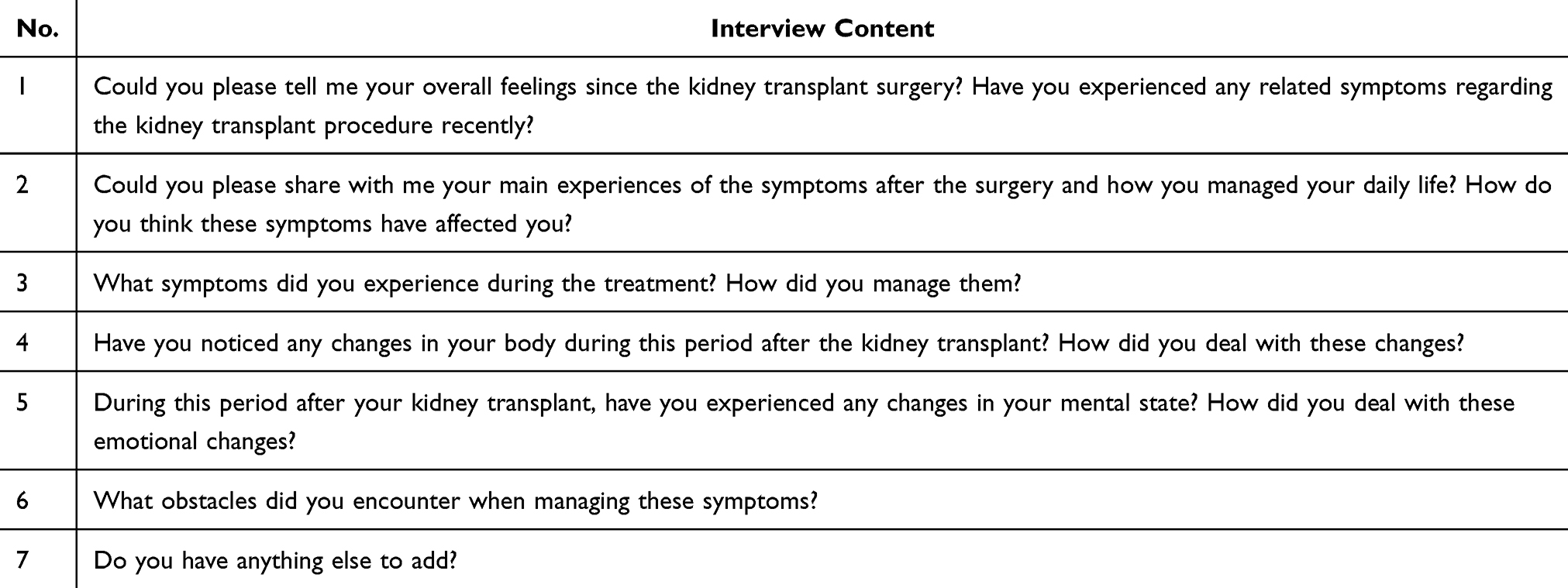 |
Table 1 Interview Outline of This Study |
During the formal interview, the general information of the respondents was retrieved by the researcher through the case system within the department. The research site only included the respondents and the researcher. We prepared a quiet and clean room, where disinfectant wipes, masks and hand sanitizer were provided for the respondents. Each respondent was interviewed by the same researcher (NH), ensuring the consistency of the research results. Only one interviewee was selected on the day of each interview, and the room was thoroughly disinfected before and after the interview to avoid cross-infection. Before each formal interview, the investigator asks about the patient’s health status, understands the patient from a humanistic perspective, and builds trust with the interviewee. During the interview, the interviewee’s body language and facial expressions were recorded in a diary, and after each interview, the interviewee was reflected and non-verbal information was supplemented. In this study, audio recording equipment was used to record textual data, and the interview duration was approximately 45–78 minutes.
Data Analysis
Data collection and analysis are carried out simultaneously. Within 24 hours after each interview, the interview audio recordings are transcribed into word documents. The transcribed text data are analyzed using NVivo 12.0 software, and a database is established and password-protected for backup. The text data was analyzed using Colaizzi’s seven-step analysis method. Two researchers independently analyzed the collected text information respectively. First, the first author reads the text information multiple times to fully understand its meaning. Second, identify the important information and statements in the text data. Third, form important and meaningful concepts. Fourth, classify the concepts, including themes and sub-themes. Fifth, fully integrate and describe the research results in detail. Sixth, provide a comprehensive description of the structure of this phenomenon. Subsequently, compare the research results with the patients’ experiences to fully validate the research results. If there is a disagreement between the two researchers, the decision will be made by another researcher in the research team.
Results
Characteristics of Participants
Thirteen kidney transplant patients, eight men and five women, aged between 21 and 60, and the time since transplantation ranged from 2 to 11 months. Among them, 6 participants were in the state of hemodialysis before the surgery, and 5 had not returned to their previous jobs (Table 2). This study identified a total of 4 main themes and 9 sub-themes, namely the diversity and complexity of symptom experiences (irregular dynamic changes, excessive symptom burden), coping strategies for symptom experiences (positive approach to challenges, negative response to symptoms), adverse effects of symptoms (affecting personal values, family relationships, social interactions), and obstacles in symptom management (internal factors and external factors). (Table 3).
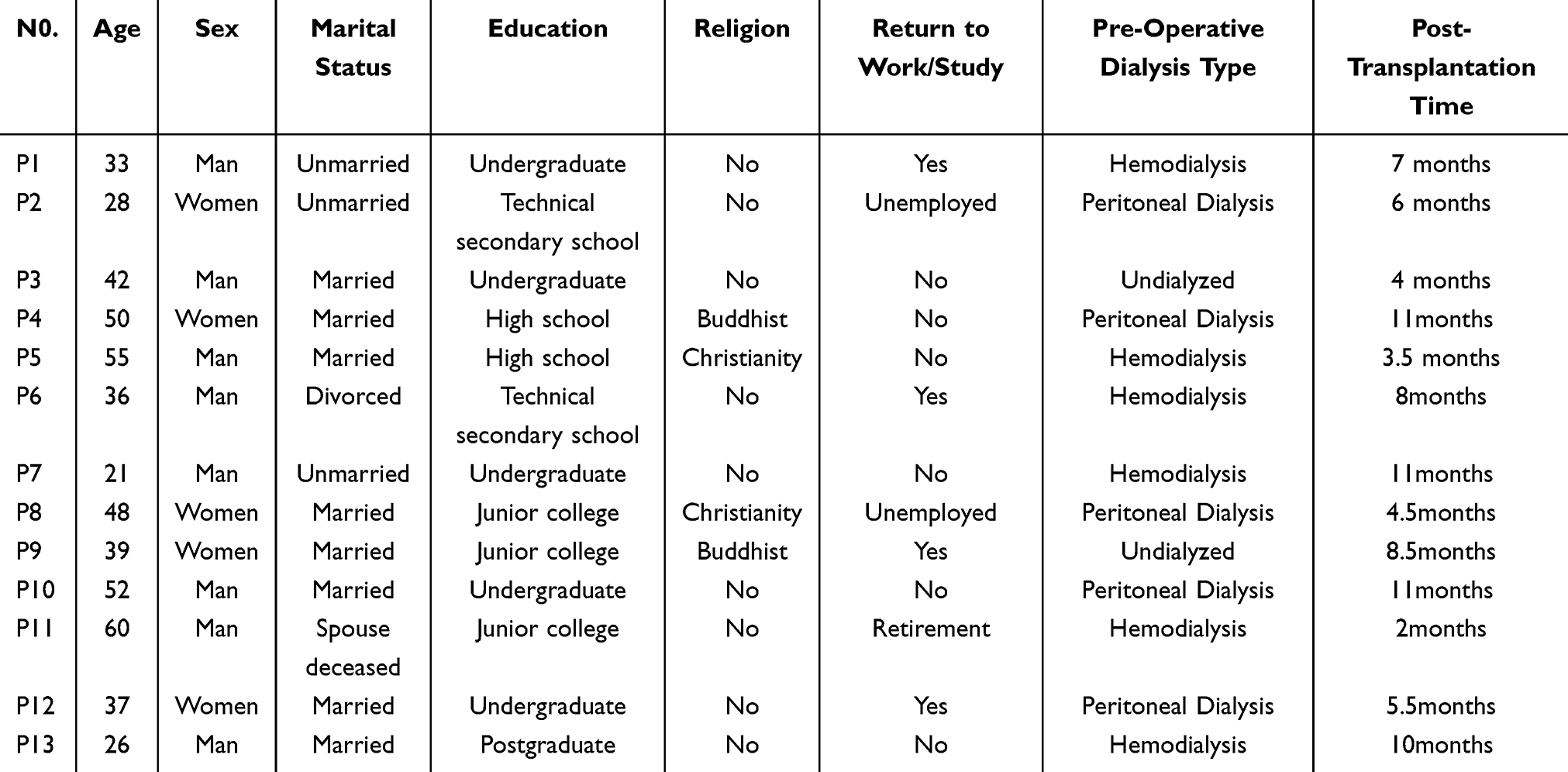 |
Table 2 Characteristics of Participants (n=13) |
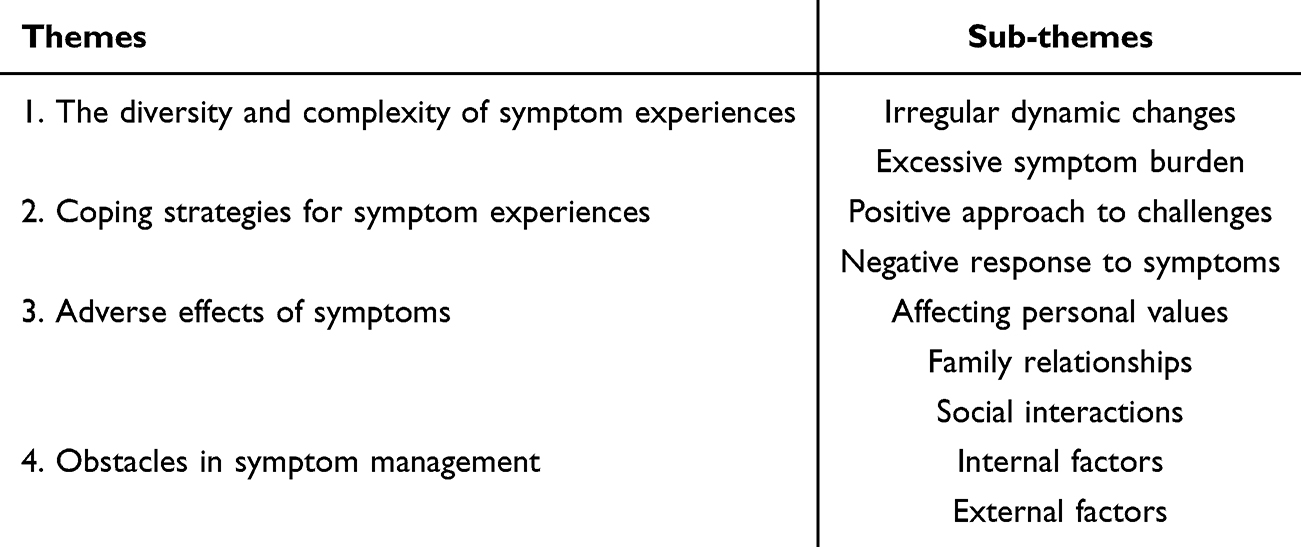 |
Table 3 Themes and Sub-Themes |
The Diversity and Complexity of Symptom Experiences
Kidney transplant patients experience various types of symptoms after the operation. The symptom experiences among individuals are diverse and individualized. Different symptoms may occur singly or in combination. They are complex and show dynamic changes, but they do not necessarily develop linearly or regularly over time.
Irregular Dynamic Changes
The early postoperative symptom experience of kidney transplant patients may not gradually improve or worsen with the change of time, and this symptom experience may have single or multiple coexisting experiences at different times, with irregular dynamic change trends, and there are individual differences in the symptom experience of different respondents.
P2: After the surgery, I always felt weak and sometimes my hands would tremble. I had no idea what was causing this. Additionally, I sometimes felt very hungry, and at other times my appetite was not good and there was no regularity to it.
P10: When I was discharged from the hospital, I felt a lack of sexual desire and had extremely poor sleep. I needed to take sleeping pills to fall asleep, and sometimes I even felt feverish all over like having a cold.
P9: Apart from having numerous recurring symptoms all over the body, such as fatigue, irritability, muscle pain, etc., each time the discomfort occurs it is very sudden and there is no way to predict when the next symptom will arise.
Excessive Symptom Burden
Due to the characteristics of the surgery and the disease itself, patients undergoing kidney transplantation need to take immunosuppressants and other medications for life to maintain their kidney function. This leads to a certain degree of symptom burden for the patients. Most patients have single or multiple symptoms with high frequency, such as fatigue, facial changes, hand tremors, memory decline, sleep disorders, negative emotional reactions, etc.
P3: I always feel extremely tired. Even doing some simple housework at home leaves me lacking in energy. Moreover, every night I cannot fall asleep. Right now, I have not gone back to work yet.
P6: The involuntary shaking of my hands is my most prominent reaction. The doctor said it was caused by taking immunosuppressants. Also, after taking hormones, I had a lot of acne on my face. Every time I went out, I felt extremely self-conscious.
P11: I feel extremely anxious. My memory is a bit poor now and I often lose my temper over small matters with my family.
Coping Strategies for Symptom Experiences
When kidney transplant patients encounter different symptoms and changes after the operation, there are individual differences, including both positive coping strategies and negative coping methods.
Positive Approach to Challenges
Some kidney transplant patients, when facing the related symptoms after the transplantation, adopted an active and optimistic attitude or approach to cope with a series of challenges, such as the psychological pressure after the transplantation, the side effects and burdens caused by immunosuppressants and the surgery.
P13: Although different symptoms occurred after the transplant surgery, kidney transplantation is much better than dialysis. At least I no longer have to go to the hospital for dialysis. If I experience some symptoms, I will hurry to the hospital to ask the doctor or nurse. View it positively and face my second life.
P12: Some symptoms did cause me some trouble, such as diarrhea or high blood sugar. But I consulted the doctor and the problem was solved immediately. It was not that difficult actually. I am very grateful to the organ donors, so I will take good care of my new kidney.
Negative Response to Symptoms
Some patients who have undergone kidney transplantation have adopted a pessimistic and negative attitude when dealing with the post-transplantation symptoms, and have exhibited behaviors such as non-compliance with medical advice, complaints, and regret.
P5: I never expected that there would be so many symptoms after the kidney transplant. After the transplant, I often felt weak, and I also had an infection before, which led to repeated hospitalizations and affected my family relationships and work.
P4: My family and friends always urge me to pay attention to my diet and do some physical activities, but I do not want to go out, I do not want to see other friends either, and I do not want to be looked down upon by others.
Adverse Effects of Symptoms
After kidney transplantation, patients may experience varying degrees and types of symptoms, which have adverse effects on their personal values, family relationships, and social interactions.
Affecting Personal Values
After kidney transplantation, some patients’ studies and work are affected, resulting in damage to their personal roles and preventing them from realizing their personal values, thus causing negative consequences.
P4: After the kidney transplant surgery, the unit was afraid that I might get infected or have an accident, so they dismissed me. I felt like I was a useless person. Now I have to rely on my parents to survive, and the financial pressure is very high.
P7: After the surgery, the school asked me to take a temporary leave from school. My former roommates in the dormitory also looked at me with strange eyes. I felt as if I were inferior to others. What should I do if I cannot go to school in the future?
Family Relationships
Some symptoms that occur in a portion of patients after kidney transplantation, including both physical and psychological impacts, such as decreased libido, fatigue, and low self-esteem, affect the relationship between spouses and have a negative impact on family harmony.
P13: I have no sexual desire now. Also, I am afraid that having sex might have an impact on my kidneys, which has led to disharmony in my relationship with my wife. As a man, I feel extremely inferior.
P8: I failed to fulfill my duties as a wife. After the transplant surgery, I was completely exhausted and afraid of getting infected in crowded places. Therefore, all the household chores or picking up my children from school were done by my husband. Sometimes I felt that my husband had also become cold towards me.
Social Interactions
After kidney transplantation, patients suffer from various burdens such as concerns about infection, fear of the loss of function of the transplanted kidney, and discrimination from others, which leads to a decline in their social integration and affects their normal social interactions.
P1: After the kidney transplant surgery, I rarely went out for meals or shopping with friends because I was too afraid to go to public places. I was worried that I might get infected and lose the function of my kidneys. So sometimes I felt quite lonely.
After the surgery, I had a scar on my abdomen. This has made me afraid to fall in love and make friends. I do not want others to know that I had a kidney transplant surgery. They would definitely discriminate against me (P7).
Obstacles in Symptom Management
Internal Factors
Some kidney transplant patients indicated that they did not attach much importance to the postoperative symptoms. Most kidney transplant patients lacked a clear understanding of the possible symptoms and the corresponding coping methods.
P12: After the kidney transplant surgery, I experienced diarrhea and sometimes felt general body aches. I thought it was due to poor food hygiene and did not deal with it in time. As a result, the doctor said that the diarrhea would affect the concentration of the immunosuppressant drugs and the function of the transplanted kidney.
P6: During my stay in the hospital, I often could not sleep and my hands would tremble. My mood was also fluctuating. I thought it was normal, but it remained the same even after I was discharged.
External Factors
Some kidney transplant patients reported a lack of knowledge and health education regarding symptom management after the surgery. Additionally, when consulting doctors or nurses about issues related to symptom handling, the medical staff were very busy and did not have a relevant system or support equipment to help patients answer questions related to their diseases.
P10: After being discharged from the hospital, there are always some unexpected symptoms that I do not know how to deal with. I send messages to the doctors, but they are very busy and cannot reply immediately. I am also afraid that constantly disturbing the medical staff will cause problems.
P2: After discharge, I was not fully clear about many aspects of the symptoms and their treatment. It would have been great if medical staff could have provided immediate answers when I experienced any of those symptoms.
Discussion
This study examines the early symptoms experienced by kidney transplant patients and their self-management strategies. The research results reveal that the symptoms experienced by these patients are diverse and complex, which may have negative impacts on their personal values and family relationships, as well as hindering the establishment of social relationships. This will pose significant challenges for clinical medical staff when assisting kidney transplant patients in managing their symptoms. This study found that kidney transplant patients adopted various coping strategies during the process of managing their symptoms, including positive approaches and negative handling methods. This potentially supplements the understanding of the symptom experiences and self-management of kidney transplant patients in the real world. The early postoperative symptoms of kidney transplant patients show irregular changes over time, and different symptoms are manifested at different periods. Moreover, due to the diverse and complex types of symptoms experienced by individual kidney transplant patients, if not handled promptly, it may cause the patients to bear heavy physical and psychological burdens and affect their postoperative recovery status, which is consistent with previous research results.13,17 Therefore, clinical nursing researchers should comprehensively and accurately assess the actual symptom responses of kidney transplant patients in the early postoperative period, and precisely implement nursing measures and relevant health education.
Furthermore, this study also found that there were differences in the coping strategies adopted by kidney transplant patients when experiencing different symptoms. Some patients employed positive coping strategies, adjusting their positive mental state and taking proactive medical compliance actions to deal with adverse symptom reactions. This is consistent with the results of previous studies, However, there are also some kidney transplant patients who respond to the symptoms in a negative way, including ignoring the symptoms and having a pessimistic attitude.9 Some researchers have pointed out that negative disease perceptions and emotional responses can affect the health behaviors and quality of life of kidney transplant patients.13 Some patients who have undergone kidney transplantation often experience high levels of depression and anxiety after the surgery, and they frequently worry about the loss of function of the transplanted kidney. Such negative emotions can increase the mortality rate and death rate, affect health behaviors such as medication compliance, and indirectly lead to adverse health outcomes such as the loss of function of the transplanted kidney.16,22
Therefore, clinical nurses should dynamically assess the emotional responses of kidney transplant patients in the early postoperative period, adopt effective and positive psychological interventions to alleviate the patients’ psychological burdens, and achieve the goal of improving the patients’ experience of adverse symptoms.
The disease recovery of patients after kidney transplantation is a long and arduous process. Patients need to take immunosuppressants for life and undergo regular follow-up examinations to maintain stable kidney function. This study indicates that kidney transplant patients’ symptoms can affect the relationships among family members. A qualitative study also points out that there are certain negative impacts on the patients’ self-esteem, sexual life, and interpersonal relationships after the surgery,24 the sexual dysfunction of some patients has affected their family relationships. Among them, the support from their spouses plays a significant role in improving their family relationships and sexual quality of life.23 Furthermore, in this study, kidney transplant patients faced challenges in restoring their personal values and social interactions due to related symptoms, such as difficulties in continuing work and studies, and hindrances in social interactions. This is consistent with previous research, Within one year after kidney transplantation, only 38.3% of the patients returned to their jobs. The unemployment rate increased from 32.1% to 61.7% after the surgery, which seriously affected the postoperative mental health status, medication compliance and quality of life of the patients.25 Some researchers have pointed out that patients after kidney transplantation face obstacles in reintegrating into society and have limited social interactions. Promoting their social interaction and return to work is one of the important indicators for improving the quality of life of kidney transplant patients. Potential differential treatment and discrimination are not conducive to the recovery of patients’ diseases.26 Therefore, once the professional medical staff have assessed and confirmed that the physical health condition of the kidney transplant patient is risk-free, the patient should be encouraged to return to work and integrate into society as soon as possible. It is also necessary to advocate that the relevant government welfare departments establish special social welfare positions specifically for kidney transplant patients, in order to promote the realization of personal value, increase the social participation of patients, and encourage mutual encouragement and communication between spouses.
This study found that the factors related to symptom management difficulties in kidney transplant patients mainly include internal and external obstacles, mostly focusing on the insufficient cognition and knowledge regarding symptom management. This is consistent with the conclusions of previous studies, The factors contributing to the self-management difficulties of kidney transplant patients include the complexity of the treatment and the adaptation to the new health condition. Effectively managing symptoms and complications can alleviate the patients’ perceived treatment burden.25 Some researchers have pointed out that the knowledge level of kidney transplant patients regarding transplant-related matters is not optimistic. The higher the level of relevant nursing knowledge and symptom management ability, the lower the possibility of kidney failure after transplantation. Among them, the self-management after kidney transplantation mainly includes following the doctor’s advice on medication, controlling weight and diet, and regular check-ups, etc. Active self-management is crucial for preventing rejection reactions and reducing infections after kidney transplantation.27,28 Some scholars believe that it is possible to influence self-management by enhancing the internal autonomous motivation and capabilities of patients.9 Regarding the symptom management of kidney transplant patients, it mainly involves intervention based on a single symptom. Through methods such as physical relaxation, massage and exercise, the patients’ symptom responses have been effectively improved, and this has indirectly led to a coordinated impact on the entire symptom cluster.29,30 Therefore, clinical medical staff can actively provide patients with relevant resource information and social support, enhance communication between nurses and patients, and extend this to the post-hospitalization stage of the patients, thereby improving the patients’ health knowledge related to transplantation and helping them overcome the obstacles in symptom management.
Based on the three core dimensions of the symptom management theory, this study reveals the actual symptom experiences, symptom management strategies, and management challenges faced by kidney transplant patients in the early postoperative period from their perspective, which is in line with the theory. This provides a new perspective and scientific support for clinical medical staff in formulating accurate symptom management intervention plans in the future. This study is beneficial for clinical medical staff to understand the relationship between the early symptoms of kidney transplant patients after surgery and disease management, and provides support for promoting effective self-care behaviors among patients. It also suggests that researchers need to comprehensively consider the dynamic changes of symptom experiences of kidney transplant patients when constructing intervention plans. In future research, how to precisely track and evaluate the dynamic changes of symptoms of kidney transplant patients through intelligent methods, and automatically match appropriate intervention plans based on big data is worthy of further exploration.
Limitations
Currently, this research is one of the few qualitative studies that explore the early postoperative symptom experiences and management coping strategies of kidney transplant patients from their perspective. This provides scientific support for future nursing researchers in the field of kidney transplantation to understand and formulate symptom management-related nursing intervention measures. However, this research has certain limitations. Firstly, this study was conducted only in a tertiary grade A hospital in Northeast China, and the limitation of the sample size source may restrict the interpretation of the qualitative research results; secondly, the selection of research subjects was limited by age, and this result cannot be applied to children and adolescents; thirdly, the purposeful sampling method may lead to the selection of kidney transplant patients who are interested in symptom self-management.
Conclusion
The results of this study provide a new perspective for the formulation of symptom experiences and coping strategies for kidney transplant patients. The symptom responses of kidney transplant patients after the surgery are complex and irregular, and individuals adopt different coping methods when facing different symptom responses. This symptom experience has a negative impact on their personal values, family and social interactions. Since kidney transplant patients need to take immunosuppressants for life to maintain kidney function, and the related symptom responses caused by drugs and surgery show a certain degree of complexity and dynamics, the healthcare system needs to proactively provide precise symptom management measures for patients. By providing medical service resources and strengthening support among patients, it helps patients actively face and regulate the negative emotions during the post-transplant recovery period and correct negative coping methods. At the same time, it guides patients to actively respond and fully recognize the importance of symptom management, promoting the social self-worth of returning to work, improving internal and external barriers, and achieving the ultimate goal of enhancing symptom management ability and improving symptom responses, reducing the burden of social medical care.
Data Sharing Statement
The data that support the findings of this study are available on the request from the corresponding author. The data are not publicly available due to privacy or ethical restrictions.
Ethics Approval and Informed Consent
The study was performed in line with the principles of the Declaration of Helsinki. Approved was granted by the Ethics Committee of The First Affiliated Hospital of China Medical University (No.2025.294). The participants provided their written informed consent to participate in this study.
Acknowledgments
We sincerely thank all the participants in the investigation.
Author Contributions
All authors made a significant contribution to the work reported, whether that is in the conception, study design, execution, acquisition of data, analysis and interpretation, or in all these areas; took part in drafting, revising or critically reviewing the article; gave final approval of the version to be published; have agreed on the journal to which the article has been submitted; and agree to be accountable for all aspects of the work.
Funding
This study was funded by the Key projects of China Medical University of Nursing (Grant No. 2024-FC6).
Disclosure
The authors declared no potential conflicts of interest with respect to the research, authorship, and/or publication of this article.
References
1. Liyanage T, Toyama T, Hockham C, et al. Prevalence of chronic kidney disease in Asia: a systematic review and analysis. BMJ Glob Health. 2022;7(1):e007525. doi:10.1136/bmjgh-2021-007525
2. Wang L, Xu X, Zhang M, et al. Prevalence of chronic kidney disease in China: results from the sixth china chronic disease and risk factor surveillance. JAMA Intern Med. 2023;183(4):298–310. doi:10.1001/jamainternmed.2022.6817
3. Nishio Lucar AG, Patel A, Mehta S, et al. Expanding the access to kidney transplantation: strategies for kidney transplant programs. Clin Transplant. 2024;38(5):e15315. doi:10.1111/ctr.15315
4. Hu N, Yang Z, Wang A. Early post-transplant adaptation experience in young and middle-aged people with kidney transplant in China: a qualitative study. West J Nurs Res. 2024;46(5):356–365. doi:10.1177/01939459241238683
5. Ma MKM, Yap DYH, Chan KY, Chan TM. Palliative care in kidney transplant recipients with graft failure. Ann Palliat Med. 2024;13(3):654–660. doi:10.21037/apm-23-413
6. Fatly ZA, Betjes MG, van Gestel J, Verschragen M, de Weerd AE. The burden of gastrointestinal complaints in kidney transplant recipients using tacrolimus with and without mycophenolate mofetil: a randomized controlled study. Front Nephrol. 2022;2:933954. doi:10.3389/fneph.2022.933954
7. Slominska A, Loban K, Kinsella EA, Ho J, Sandal S. Supportive care in transplantation: a patient-centered care model to better support kidney transplant candidates and recipients. World J Transplant. 2024;14(4):97474. doi:10.5500/wjt.v14.i4.97474
8. Zhang Y, Liu S, Miao Q, et al. The heterogeneity of symptom burden and fear of progression among kidney transplant recipients: a latent class analysis. Psychol Res Behav Manag. 2024;17:1205–1219. doi:10.2147/PRBM.S454787
9. Wang H, Du C, Liu H, et al. Exploration of symptom experience in kidney transplant recipients based on symptoms experience model. Qual Life Res. 2020;29(5):1281–1290. doi:10.1007/s11136-019-02404-5
10. Lockwood MB, Sung C, Alvernaz SA, et al. The gut microbiome and symptom burden after kidney transplantation: an overview and research opportunities. Biol Res Nurs. 2024;26(4):636–656. doi:10.1177/10998004241256031
11. Liu S, Shen Y, Nie M, et al. The status and influencing factors of fatigue in kidney transplant recipients based on the theory of unpleasant symptoms: a cross-sectional study in China. Int J Nurs Pract. 2024;30(5):e13256. doi:10.1111/ijn.13256
12. Bossola M, Arena M, Urciuolo F, et al. Fatigue in kidney transplantation: a systematic review and meta-analysis. Diagnostics. 2021;11(5):833. doi:10.3390/diagnostics11050833
13. Wang Y, Van Der Boog P, Hemmelder MH, Dekker FW, De Vries A, Meuleman Y. Understanding health-related quality of life in kidney transplant recipients: the role of symptom experience and illness perceptions. Transpl Int. 2023;36:10837. doi:10.3389/ti.2023.10837
14. Sung C, Hershberger PE, Lockwood MB. Sickness symptoms in kidney transplant recipients: a scoping review. West J Nurs Res. 2023;45(4):344–362. doi:10.1177/01939459221128125
15. Veltkamp DMJ, Wang Y, Meuleman Y, et al. Age and gender differences in symptom experience and health-related quality of life in kidney transplant recipients: a cross-sectional study. Nephrol Dial Transplant. 2023;38(7):1707–1718. doi:10.1093/ndt/gfad023
16. Torres-Gutiérrez M, Lozano-Suárez N, Burgos-Camacho VA, et al. Is non-adherence associated with adverse outcomes in kidney transplant recipients? The role of non-adherence as a risk and predictor factor for graft loss and death. Patient Prefer Adherence. 2023;17:2915–2925. doi:10.2147/PPA.S436833
17. Uyar B. The analysis of immunosuppressant therapy adherence, depression, anxiety, and stress in kidney transplant recipients in the post-transplantation period. Transpl Immunol. 2022;75:101686. doi:10.1016/j.trim.2022.101686
18. Cuthbert CA, Farragher JF, Hemmelgarn BR, Ding Q, McKinnon GP, Cheung WY. Self-management interventions for cancer survivors: a systematic review and evaluation of intervention content and theories. Psychooncology. 2019;28(11):2119–2140. doi:10.1002/pon.5215
19. Li Y, Zhu K, Wang L, Zhang Y, Hou S, Wang W. Effectiveness of web-based intervention on reducing symptom burden, improving self-management capabilities and self-efficacy among prostate cancer survivors: a systematic review and meta-analysis protocol. BMJ Open. 2024;14(5):e082709. doi:10.1136/bmjopen-2023-082709
20. Wei J, Yan H, Xiang Y, Ni J, He F. The effectiveness of symptom management theory in guiding clinical practice-a systematic review. Altern Ther Health Med. 2024;30(8):108–114.
21. Yang H, Wu B, Hu R, Wang Y. Symptom experiences and self-management strategies of patients with haematological malignancy undergoing chemotherapy: a qualitative study. Asia-Pac J Oncol Nurs. 2024;11(9):100563. doi:10.1016/j.apjon.2024.100563
22. da Silva LAGP, Lopes VJ, Das Mercês NNA. Symptom management theory applied to nursing care: scoping review. Rev Bras Enferm. 2021;74(3):e20201004. doi:10.1590/0034-7167-2020-1004
23. O’Brien BC, Harris IB, Beckman TJ, Reed DA, Cook DA. Standards for reporting qualitative research: a synthesis of recommendations. Acad Med J Assoc Am Med Coll. 2014;89(9):1245–1251. doi:10.1097/ACM.0000000000000388
24. Akıncı N, Varışoğlu Y. Investigating body image and self-esteem in kidney transplant patients: a qualitative study. Niger J Clin Pract. 2024;27(6):785–791. doi:10.4103/njcp.njcp_138_24
25. De Pasquale C, Veroux M, Pistorio ML, et al. Return to work and quality of life: a psychosocial survey after kidney transplant. Transplant P. 2019;51(1):153–156. doi:10.1016/j.transproceed.2018.04.083
26. Jordakieva G, Grabovac I, Steiner M, et al. Employment status and associations with workability, quality of life and mental health after kidney transplantation in Austria. Int J Environ Res Public Health. 2020;17(4):1254. doi:10.3390/ijerph17041254
27. Huang X, Xi B, Xuan C, Bao Y, Wang L, Peng F. Knowledge, attitude, and practice toward postoperative self-management among kidney transplant recipients. BMC Med Educ. 2024;24(1):652. doi:10.1186/s12909-024-05631-8
28. Maasdam L, Timman R, Cadogan M, et al. Exploring health literacy and self-management after kidney transplantation: a prospective cohort study. Patient Educ Couns. 2022;105(2):440–446. doi:10.1016/j.pec.2021.05.013
29. Haanstra AJ, Maring H, van der Veen Y, et al. Insights into effective fatigue reducing interventions in kidney transplant candidates: a scoping review. Ann Behav Med. 2025;59(1):kaaf017. doi:10.1093/abm/kaaf017
30. Cooper TE, Dalton A, Kieu A, et al. Patient preferences for the management of gastrointestinal symptoms in kidney transplantation: a discrete choice experiment. Kidney Int Rep. 2023;8(10):1978–1988. doi:10.1016/j.ekir.2023.07.034
 © 2025 The Author(s). This work is published and licensed by Dove Medical Press Limited. The
full terms of this license are available at https://www.dovepress.com/terms
and incorporate the Creative Commons Attribution
- Non Commercial (unported, 4.0) License.
By accessing the work you hereby accept the Terms. Non-commercial uses of the work are permitted
without any further permission from Dove Medical Press Limited, provided the work is properly
attributed. For permission for commercial use of this work, please see paragraphs 4.2 and 5 of our Terms.
© 2025 The Author(s). This work is published and licensed by Dove Medical Press Limited. The
full terms of this license are available at https://www.dovepress.com/terms
and incorporate the Creative Commons Attribution
- Non Commercial (unported, 4.0) License.
By accessing the work you hereby accept the Terms. Non-commercial uses of the work are permitted
without any further permission from Dove Medical Press Limited, provided the work is properly
attributed. For permission for commercial use of this work, please see paragraphs 4.2 and 5 of our Terms.