
Back to Journals » Clinical, Cosmetic and Investigational Dermatology » Volume 19

Evaluation of Parameters Determining the Pull-Out Strength of Poly(L-Lactide-Co-ϵ-Caprolactone) Barbed Suspension Threads: A Comparative ex vivo Study
Authors Fundaro S, Malgapo DMH, Manni M 
Received 16 March 2026
Accepted for publication 28 May 2026
Published 26 June 2026 Volume 2026:19 531384
DOI https://doi.org/10.2147/CCID.S531384
Checked for plagiarism Yes
Review by Single anonymous peer review
Peer reviewer comments 2
Editor who approved publication: Prof. Dr. Rungsima Wanitphakdeedecha
Salvatore Fundaro,1 Dennis Malvin Hernandez Malgapo,2,3 Martina Manni4
1Cosmetic Surgery, Qute Clinic, Modena, Italy; 2Regenerative Medicine, EW Villa Medica Manila Premiere Center, Pasay City, Metro Manila, Philippines; 3Preventive Medicine, St. Luke’s College of Medicine, Metro Manila, Philippines; 4Scientific Affairs, RELIFE S.r.l., Florence, Italy
Correspondence: Dennis Malvin Hernandez Malgapo, Regenerative Medicine, EW Villa Medica Manila Premiere Center, Pasay City, Metro Manila, Philippines, Tel +639286745699, Email [email protected]
Purpose: This study aimed to examine a pull-out strength test methodology and compare the pull-out strength of different insertion methods for poly(L-lactide-co-ϵ-caprolactone) (PLCL) barbed suspension threads.
Methods: A custom-designed “pull-out strength test device” was used to measure the maximum force required to pull out threads inserted into an ex vivo turkey breast model.
Results: Insertion techniques influence pull-out strength. Additionally, trend analysis indicated that thinner needles (0.85 mm) generally yielded higher pull-out resistance than larger diameter needles (1.28 mm), suggesting they may create a tighter initial grip within the tissue.
Conclusion: Different insertion techniques influence the pull-out strength of PLCL in an ex vivo model.
Plain Language Summary: Why was this study done?
Barbed threads are used to lift sagging facial tissue without surgery. However, doctors lack standardized data on which insertion methods provide the strongest, most secure hold. This study aimed to find out which techniques grip the tissue best.
What did the researchers do and find?
Using a custom testing device and an animal tissue model (turkey breast), researchers measured the force needed to pull out specific absorbable threads (PLCL). They tested various clinical insertion methods. They found that the insertion technique greatly impacts the thread’s holding strength. Angled patterns, like the “J-stitch”, and self-locking thread systems provided a much stronger grip than straight-line insertions. The length of the thread’s barbed section did not significantly change its holding power. Additionally, a trend indicated that threads inserted with thinner needles tended to hold more tightly in the tissue.
What do these results mean?
Because this study was performed on animal tissue, the results cannot directly predict human clinical outcomes. However, the findings strongly suggest that the specific technique a doctor uses is a critical factor in how well a thread anchors. Utilizing angled insertion patterns and thinner needles may improve the thread’s overall stability. This study also provides a reliable, standardized testing method for researchers to evaluate future thread designs.
Keywords: suspension suture, noninvasive face lifting, insertion technique, poly(L-lactide-co-ϵ-caprolactone)
Introduction
Barbed suspension threads offer a generally safe and effective minimally invasive option for facial rejuvenation. In recent years, the sheer diversity of available materials, thread properties, and implantation techniques has become overwhelming for many clinicians.1–4 While some suspension systems use non-absorbable materials, such as silicone-based threads designed for permanent tissue suspension, most clinicians have adopted absorbable materials, which are broken down by the body over time while stimulating collagen production and improving skin firmness and elasticity, even after the suture has fully degraded. The most common types include polydioxanone (PDO), poly-L-lactic acid (PLLA), polyglycolic acid (PGA), polycaprolactone (PCL), and poly(L-lactide-co-ε-caprolactone) (PLCL).5
Pull-out strength, which is defined as the maximum force required to pull a barbed thread out of treated tissue before the barbs lose their grip, has been evaluated in cadaveric facial specimens, as well as in animal and in vitro synthetic skin models.2,6,7 These studies have demonstrated the influence of material type and properties (eg, microstructure, elastic modulus, mechanical strength), barb shape, and biological response on the pull-out strength, as well as the holding and lifting capacities, of barbed threads.2,6,7 Regarding technique-related variables, previous literature suggests that the geometric pattern of insertion significantly affects mechanical stability; for instance, anchoring techniques, multidirectional vectors, and crisscrossing patterns have been shown to provide greater tissue purchase and structural support than simple linear insertions. However, these studies are hindered by small sample sizes, variability in specimen quality, and non-standardized measurements of biomechanical interactions between the thread and treated tissue. Consequently, a significant knowledge gap remains: there is a distinct lack of standardized, comparative biomechanical data isolating the specific impact of different clinical insertion methods (including variations in needle gauge and anchoring patterns) when the thread material itself is held constant.1,6,8,9
Because this lack of uniformity could contribute to the observed variability in clinical outcomes, it is crucial to address this gap to understand the effects of these mechanical properties and the impact of insertion technique on the durability of suspension threads used for facial repositioning. This study addresses these shortcomings by providing a standardized testing approach using a specialized pull-out strength device and evaluating the effects of different insertion techniques on holding, slippage, and pull-out forces of PLCL barbed suspension threads.5 PLCL is a commonly used material for barbed suspension threads used for facial soft-tissue repositioning. Studies on its elastic and plastic capabilities (ie, rheological creep and recovery) show that PLCL threads can recover a significant component of elastic behavior after stress testing while retaining some plastic deformation, supporting their adaptability to facial movements after implantation.10 By keeping this thread material constant, the study minimizes the impact of variations in material properties (eg, tensile strength, elasticity, degradation rate) on pull-out strength. This facilitates a more focused analysis of how different insertion methods influence the thread’s performance. The techniques utilized in this study have been previously described.3 Certain insertion patterns, such as the J-stitch, reinforce the suspension at the anchoring point, thereby stabilizing the anchored tissue3 and, as such, merit evaluation in pull-out strength studies. Ultimately, the findings here will provide clinicians with valuable guidance on selecting the most effective thread type and insertion method, thereby enhancing patient outcomes and the longevity of results.
Materials and Methods
Tissue Preparation
Fresh turkey breast steak was used as the substrate for the barbed-suspension thread pullout tests. To ensure batch consistency, all tissue samples were procured from the same commercial supplier and batch and were matched by weight and cut. Prior to testing, the samples were kept at a standardized temperature of 4°C, with an estimated moisture content of 74% to 77% and an approximate tissue density of 1.05 g/cm3. These parameters were monitored to minimize baseline mechanical variability across the test groups. Because the material was a commercially available food product and did not involve the use of live vertebrate animals, ethical approval from the Institutional Animal Care and Use Committee (IACUC) and the Il Sentiero International Campus S.r.l. Ethics Committee was not required for this study.
Test Device, Threads, and Techniques
The pull-out strength was quantified using a specialized, custom-designed testing device featuring a stainless-steel frame with a reclining station. The apparatus consists of a main adjustable base frame that allows fixing the structure to a desk and securing the mechanical guides on three axes by means of manual clamps. Key technical specifications of the device include (Figure 1):
- Linear Actuator: A linear servo motor (Model DSZY1-24-10-100-POT-IP65, Drive System Europe) provides a maximum stroke of 100 mm (94 mm effective) and can deliver a maximum force of 250 N.
- Force Measurement: A digital dynamometer (Model SAUTER FH500) is fixed to the mobile slider to measure extraction forces up to 500 N with a measuring frequency of 2000 Hz.
- Alignment System: A double-adjustable laser system ensures precise alignment between the load direction and the thread’s insertion path, maintaining test standardization (Figure 1).
- Load Control: A potentiometer-controlled time ramp regulates the ramp time from 1 to 7 seconds, applying a pulling force in fixed steps of 0.5 N (up to 35 N) to maintain a constant force gradient during the extraction process.
- Leveling: The tilt level is evaluated using two integrated spirit levels.
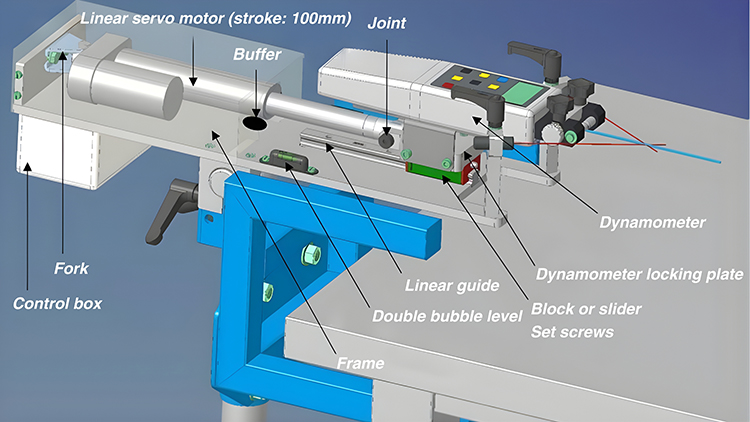 |
Figure 1 Custom-designed pull-out strength test device. Schematic overview of the testing apparatus. The system utilizes a linear servo motor to activate a mobile slider integrated with a digital dynamometer. A double-adjustable laser system and spirit levels ensure axial alignment and standardized force gradients via a potentiometer-controlled time-ramp. |
This device measured the force required to pull out PLCL threads inserted into 2 cm thick samples of turkey breast steak (Figure 2). Ten different insertion methods were tested, including Linear Pull tests and techniques mimicking clinical procedures, such as the Jawline, Lateral, and Malar Reshaping techniques (Table 1 and Figure 3). Each technique was performed using three different types of PLCL absorbable, monofilament, suspension barbed threads with convergent bidirectional spines, USP 2–0:
- 12 cm thread, which has two parts of 6 cm on each side and a central part about 1 cm long without spines. At each extremity, there is a straight-cut edge needle, 100 mm long with a diameter of 0.85 mm (Definisse™ PLCL double-needle threads, 12 cm).
- 23 cm thread, which has two parts of 11.5 cm on each side and a central part approximately 1.5 cm long without spines. At each extremity, there is a straight-cut edge needle, 150 mm long with a diameter of 1.28 mm (PLCL double-needle threads, 23 cm), and
- 23 cm thread, consisting of two parts, each 11.5 cm long, and a central part about 1.5 cm long, without spines. At each extremity, there is a straight-cut edge needle, 100 mm long with a diameter of 0.85 mm (Filbloc® self-locking system).11
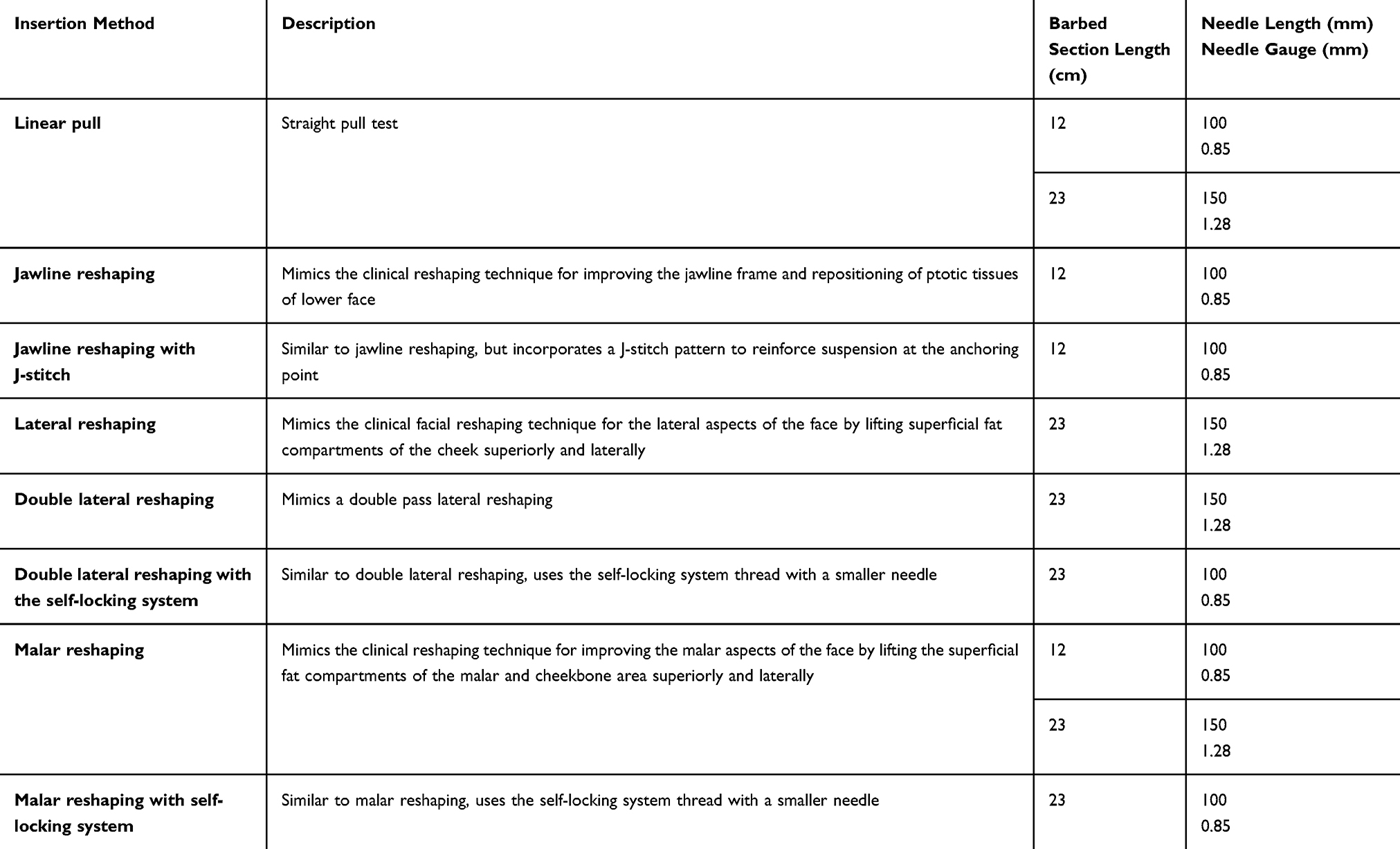 |
Table 1 Description of the Ten Evaluated Insertion Techniques and Thread Specifications |
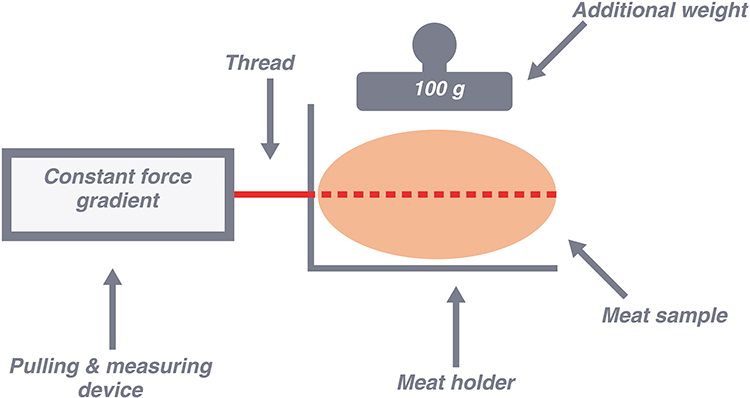 |
Figure 2 Schematic of the ex vivo tissue model and testing configuration. Experimental setup using a 2-cm-thick Turkey breast steak as the substrate. The meat is secured in a dedicated holder under a 100 g stabilization weight. The thread is axially aligned with the constant force gradient pulling device to measure the maximum extraction force. |
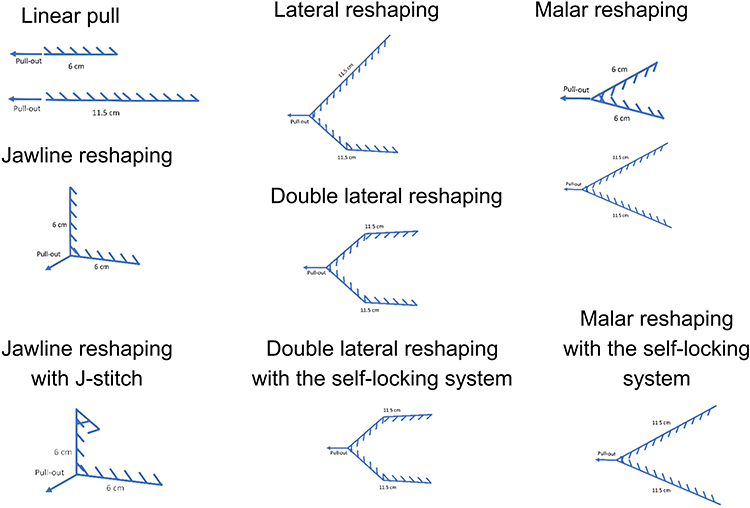 |
Figure 3 Thread patterns used in the study. The figure details the specific clinical patterns for Jawline, Lateral, and Malar Reshaping alongside standard Linear Pull tests. Each panel illustrates the geometric configuration of the thread insertion, specifying the thread length (12 cm or 23 cm) and the corresponding needle dimensions (100 mm/0.85 mm or 150 mm/1.28 mm) utilized for each technique. The J-Stitch and self-locking system variations are included to indicate where specialized anchoring or material systems were applied. |
Sample Mounting and Test Procedure
To standardize the biomechanical evaluation, the following procedure was implemented:
- Tissue Stabilization: Turkey breast samples were secured in a dedicated meat holder to prevent bulk tissue movement during testing.
- Pre-load Application: An additional 100 g weight was placed on top of the meat sample to ensure consistent contact and initial friction (Figure 2). This specific pre-load was used to standardize the initial tissue compression across all samples and to simulate a baseline resting tension roughly analogous to facial soft-tissue resistance, thereby preventing bulk tissue shifting during the initial motor engagement.
- Laser Alignment: The double laser system aligned the thread exit point with the dynamometer’s pulling vector to ensure force was applied axially.
- Clamping: Threads were secured using either a clamp system for short wire samples (steel or rubber) or a winding system for long samples, designed to allow manual preloading without damaging the thread.
- Execution and Recording: The motor initiated a standardized ramp-up of force. The trend of applied force was monitored in real-time via dedicated software, recording the maximum pulling force (peak value) as the definitive pull-out strength.
Statistical Testing
A two-sample Student’s t-test was utilized to analyze the pull-out strength data obtained from the measurements. This statistical test compared the means of two independent groups, such as the pull-out strength measurements resulting from different insertion techniques. The t-test was performed to assess significant differences in pull-out strength between the different techniques (Jawline, Lateral, Malar Reshaping, etc) and thread lengths (12 cm vs 23 cm). Continuous variables were expressed as mean ± standard deviation (SD) for each insertion technique and thread type. A p-value of less than 0.05 was considered to indicate statistical significance. All statistical analyses were performed using OriginLab 2020 software. While multiple pairwise comparisons were conducted across the test groups, post-hoc statistical corrections (eg, Bonferroni) were omitted. This decision was made because the study is primarily exploratory and serves as a biomechanical proof-of-concept for the custom pull-out device. Therefore, uncorrected p-values are reported to identify potential mechanical trends that warrant future, highly targeted clinical or in vivo investigations.
Results
The study found that the length of the barbed section of the PLCL thread (12 cm vs 23 cm) did not significantly affect the pull-out strength. Insertion patterns involving angles and direction changes demonstrated higher pull-out strength. Specifically, the J-stitch technique increased the holding strength compared to the standard Jawline Reshaping technique. Lastly, a trend suggested that threads with thinner needles exhibit higher pull-out strength.
Pull-Out Strength Analysis
Figure 4 illustrates the distribution of pull-out strength values for each insertion technique. The data showed substantial scatter within each group, indicating significant variability in pull-out strength across insertion techniques. However, although there is variation among the techniques, trends emerge that establish the superiority of specific patterns, direction angles, and needle sizes. Specific insertion patterns consistently demonstrated higher pull-out strength, suggesting that the arrangement and orientation of the insertion play a crucial role. Additionally, the direction angles of the insertions appeared to influence the pull-out strength, with some angles providing better resistance to pull-out forces. Furthermore, the needle size used during insertion also affected pull-out strength, with smaller needles generally yielding higher pull-out values.
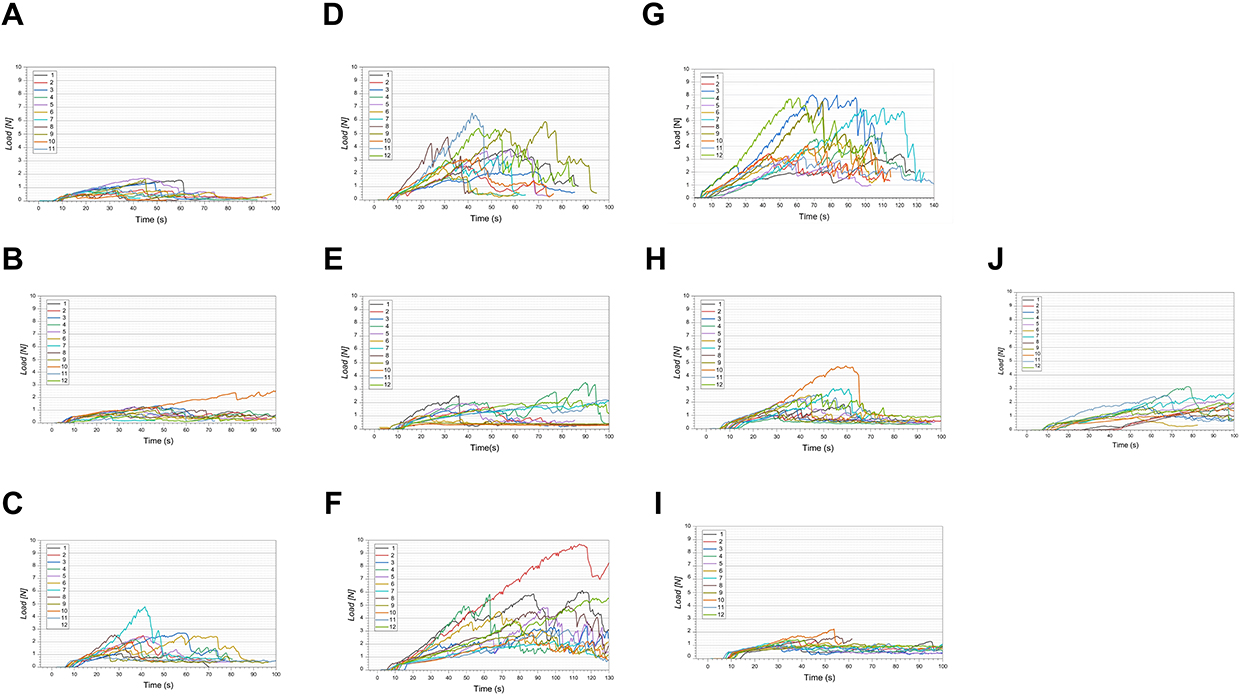 |
Figure 4 Comparative pull-out strength profiles across different insertion techniques. Comparative pull-out strength profiles across different insertion techniques. Force vs time curves display the distribution of load (N) until the point of maximum mechanical failure (pull-out strength) across ten evaluated methods: (A) Linear pull 12 cm; (B) Linear pull 23 cm; (C) Jawline reshaping 12 cm; (D) Jawline reshaping with J-stitch 12 cm; (E) Lateral reshaping 23 cm; (F) Double lateral reshaping 23 cm; (G) Double lateral reshaping with self-locking system 23 cm; (H) Malar reshaping 12 cm; (I) Malar reshaping 23 cm; and (J) Malar reshaping with self-locking system 23 cm. A high degree of scatter is evident across all cohorts, reflecting the structural heterogeneity of the biological ex vivo tissue model. |
A high degree of scatter was observed in the raw pull-out strength data across all test groups (Figure 5). Assuming a normal distribution in the underlying population, to improve data consistency, data points outside the 10th to 95th percentiles were identified as extreme outliers and excluded from further analysis. This specific asymmetric percentile range (10th–95th) was deliberately selected to account for the unique mechanical artifacts observed in ex vivo tissue testing. The lower 10% was trimmed to eliminate fluke insertions caused by premature tissue tearing or structural defects in the meat substrate, while the top 5% was trimmed to remove extreme measurement errors resulting from thread clamping artifacts. This approach isolated the true mechanical performance of the threads from the inherent structural variability seen in biological models.12 This procedure eliminated the minimum and maximum values for each test group, except for the Linear Pull 23 cm group, which excluded only the extreme maximum value. This was because the lower bound of the 10th percentile for the Linear Pull 23 cm data was already near the minimum observed value (approximately 0 N), so the minimum value was not considered a statistical outlier by this criterion. The mean and standard deviation of the pull-out force changed following this data elaboration, and the relative error was reduced across all test groups. After excluding extreme outliers, the relative error was reduced but remained substantial (16–52%). Despite this variability, several significant trends emerged regarding insertion patterns and thread systems (Figure 6 and Table 2).
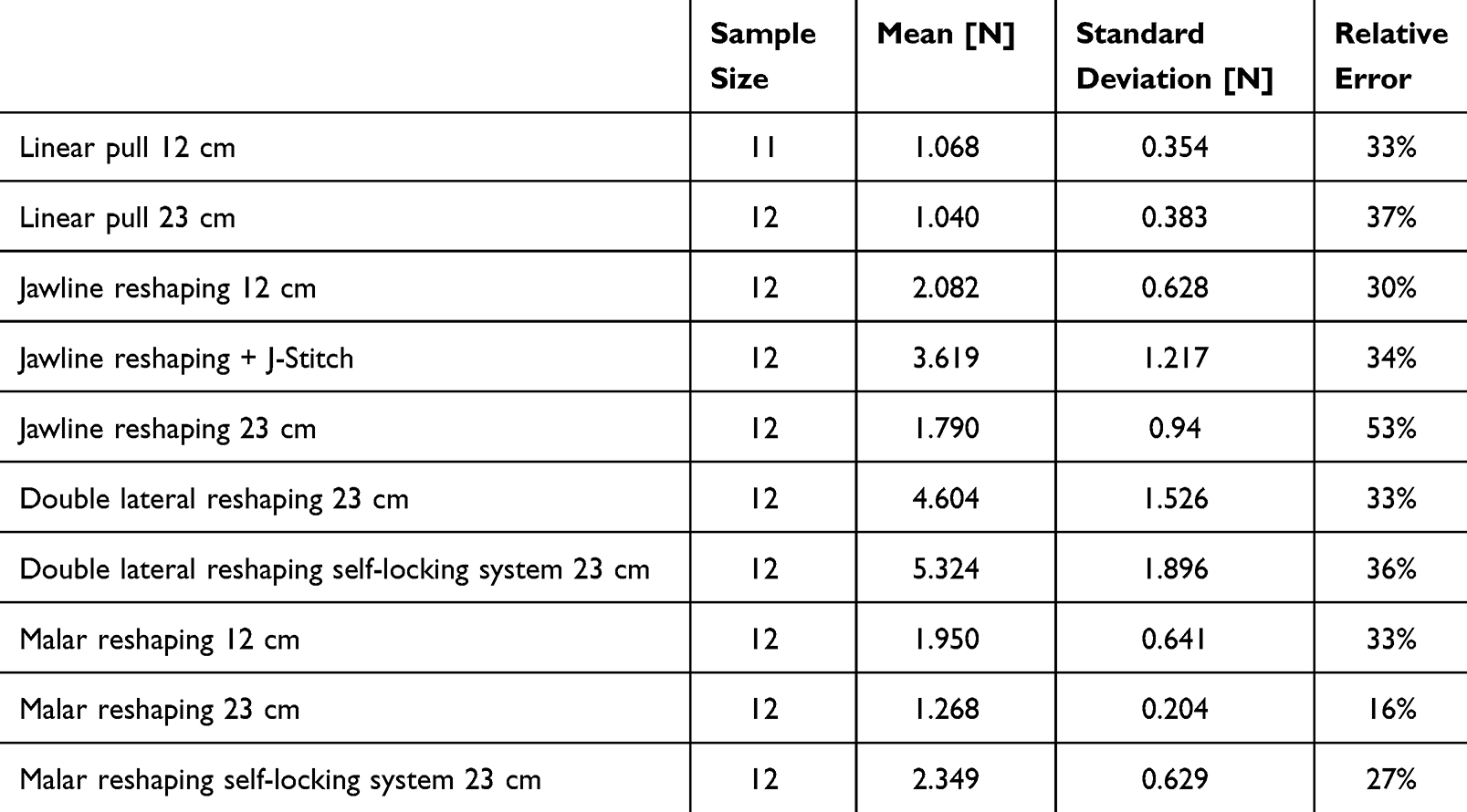 |
Table 2 Force vs Time Measurements for Each Method, Excluding Outliers |
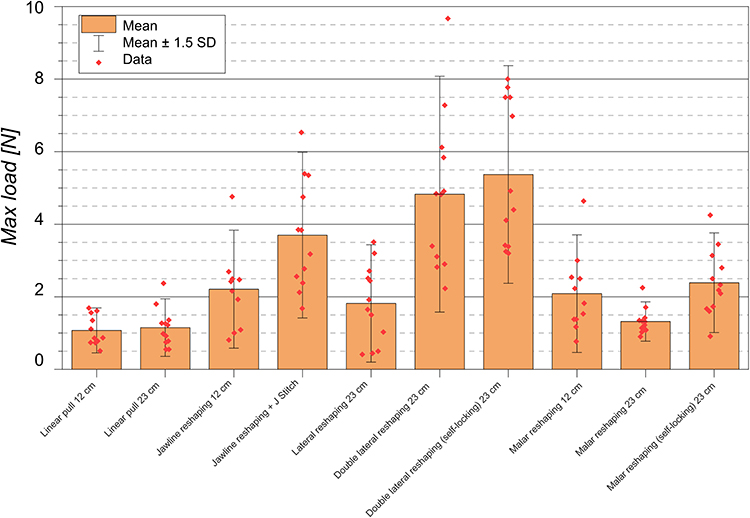 |
Figure 5 Raw distribution of maximum pull-out force measurements across insertion techniques. Raw experimental data showing individual data points and mean ± 1.5 standard deviations before data filtering. |
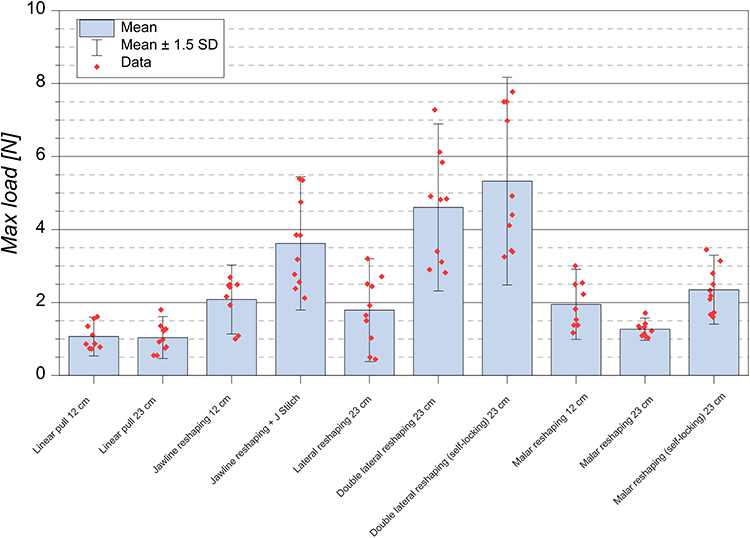 |
Figure 6 Filtered distribution of maximum pull-out force measurements across insertion techniques. Processed experimental dataset following the exclusion of extreme outliers outside the 10th to 95th percentile range, demonstrating reduced relative error across the test groups. |
The Impact of Thread Length, Needle Gauge, and Insertion Techniques
Both equal variance (aeV) and non-equal variance (NaeV) were assumed, with a significance level set at p=0.05. The null hypothesis (μ1 – μ2 = 0) was rejected in favor of the alternative hypothesis (μ1 – μ2 ≠ 0) if p<0.05. Conversely, if p ≥ 0.05, we fail to reject the null hypothesis. In Linear Pull tests, the length of the barbed section (6 cm for 12 cm threads vs 12.5 cm for 23 cm threads) had no significant influence on holding strength (p=0.859). However, a trend was observed that thinner needles (0.85 mm) generally resulted in higher pull-out values than larger-diameter needles (1.28 mm).
The Double Lateral Reshaping technique exhibited a higher holding strength than the standard Lateral technique (PaeV<0.001; PNaeV <0.001). Adding the J-stitch in the Jawline Reshaping technique significantly enhanced the holding strength compared to the standard Jawline technique (PaeV=0.003; PNaeV = 0.004). Interestingly, the Malar Reshaping technique with 12 cm threads showed a statistically significant superiority in holding strength compared to Malar Reshaping with 23 cm threads (PaeV=0.005; PNaeV = 0.013). Using the self-locking system significantly increased holding strength in both the Double Lateral Reshaping (PaeV=0.002; PNaeV = 0.003) and Malar Reshaping techniques (PaeV=0.003; PNaeV = 0.006) (Table 3).
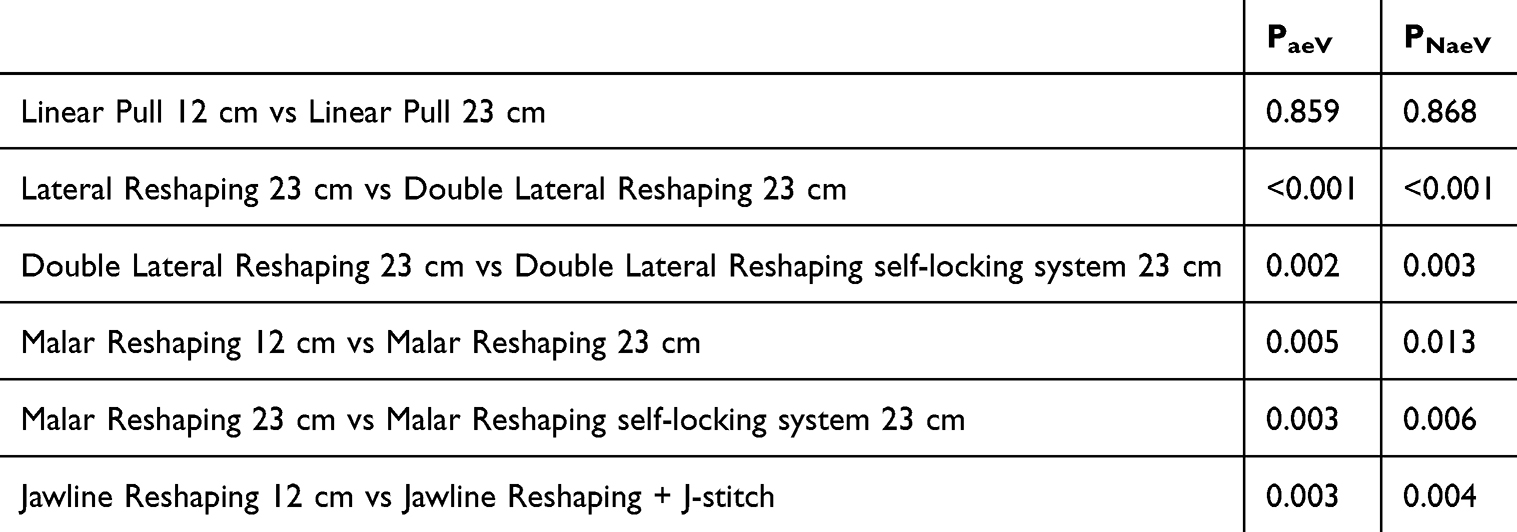 |
Table 3 Two-Sample Student’s t-Test Analysis |
Discussion
The immediate benefit of barbed suspension threads lies in their ability to lift mechanically and reposition ptotic soft tissues. The barbs engage the subcutaneous tissue, providing immediate anchorage and support, and this pulling action is complemented by a secondary, longer-term benefit derived from the thread material (eg, PLCL), which stimulates neocollagenesis and a connective tissue response around the thread, enhancing tissue support and skin quality over time during thread reabsorption.5 However, achieving predictable and durable results is not solely dependent on the physical properties of the threads and their biomechanical effects. Optimizing clinical outcomes requires a nuanced approach that extends beyond simply choosing a thread. Practitioners must carefully assess individual patient factors. Patient needs, including the specific areas requiring lift (eg, jowls, midface, brow) and the desired degree of correction, dictate the required lifting vectors and the necessary tensile strength and anchorage. The quality of skin, ligaments, retinacula cutis, and soft tissue is another paramount consideration. Patients with good skin thickness and elasticity, strong ligaments, thick retinacula cutis network, and compact superficial fat compartments may achieve more significant and lasting results, as the tissue provides better purchase for the barbs and responds more robustly with neocollagenesis. Conversely, thin, atrophic, or severely photodamaged skin, weak ligaments and retinacula cutis, and hypotrophic fat compartments may provide less secure anchorage, potentially increasing the risk of thread migration, extrusion, or suboptimal lift.13 In such cases, selecting threads with appropriate barb designs, possibly using different insertion depths or patterns, or considering combination therapies might be necessary.
As demonstrated in this study and supported by existing literature,6–8 the mechanical performance, specifically pull-out strength, is significantly influenced by factors such as barb design, thread material, insertion technique, and even the instrumentation used (eg, needle diameter). Pull-out strength is a critical parameter as it directly relates to the thread’s ability to maintain tissue suspension and resist displacement under physiological loads, thereby influencing the degree and longevity of the lift.6,9 Hong et al showed that techniques such as specific insertion patterns (eg, crisscrossing) may further enhance the structural support framework created by the threads.14
The results of this evaluation show that the length of the barbed section does not significantly affect the pull-out strength, indicating that the presence and length of barbs do not play a crucial role in determining the force required to remove the thread. This finding could be relevant for surgeons choosing threads and for manufacturers designing them. If selecting threads based on barb anchoring properties, the results suggest that focusing on factors beyond barb length might be more effective. It might also alleviate concerns that using longer barbed threads necessarily makes removal significantly more difficult or traumatic.
Consistent with previous studies, the results suggest that patterns involving angle and direction modifications exhibit higher pull-out strengths than straight insertion paths. These modifications enhance the grip force of barbed threads on surrounding tissue by creating an anchor, thereby increasing resistance to pull-out, which suggests potentially greater initial mechanical stability.1,4,14 The J-stitch technique, which uses a specific angled insertion pattern, showed a trend toward higher holding strength than the standard Jawline Reshaping technique. This finding suggests that the J-stitch technique may provide enhanced initial stability and thread anchorage, warranting further investigation to determine its clinical significance and potential benefits in facial suspension procedures. In terms of its clinical application, the choice of insertion technique must be deliberately matched to the selected thread and the patient’s anatomy, including an understanding of relevant layers such as the superficial musculoaponeurotic system (SMAS)15 and other specific tissue characteristics. This implies the need for standardized insertion protocols to fully exploit the suspension properties of these threads, while adjusting the technique to individual clinical situations.
While not statistically significant, the trend analysis revealed that threads with thinner needles (smaller diameter) tended to have numerically higher pull-out strengths. This suggests that thinner needles may create a tighter grip within the tissue, resulting in greater resistance to removal. Needle choice often involves balancing factors such as ease of insertion, patient comfort, tissue trauma, and the desired outcome (eg, anchoring strength). This finding adds another potential factor to consider in that balance, suggesting that thinner needles might offer better anchoring, but this will need further confirmation.
When interpreting these findings, it is critical to acknowledge the high residual relative error (16–52%) observed across the test groups, even after the exclusion of extreme outliers. This high within-group variability highlights a fundamental challenge in ex vivo biomechanical testing: biological tissue is inherently heterogeneous. Variations in local tissue density, micro-tears during needle insertion, and the variable engagement of barbs with muscle fibers all contribute to data scatter. Consequently, while the statistically significant group differences provide valuable comparative insights into technique efficacy, the high variability means that absolute pull-out strength values should be interpreted with caution. The statistical trends must be viewed as biomechanical proofs-of-concept rather than precise predictors of individual thread performance.
Lastly, the study proposes that the development of a standardized testing device would enable objective, reproducible measurements of pull-out strength, thereby reducing variability across settings. With more reliable data, researchers can make more informed decisions and develop more effective clinical protocols. This may contribute to the more effective use of suspension barbed threads in suitable candidates.
Limitations
The primary limitation of this study is its use of an ex vivo turkey breast model. While this animal tissue model provides a readily available and standardized substrate for comparative biomechanical testing, it does not fully replicate the complex mechanical properties, multi-layered anatomy (such as the SMAS), or dynamic movements of live human facial tissue. Furthermore, this study evaluated only a single thread material (PLCL) manufactured by a single brand. Consequently, these findings cannot be universally generalized to other thread-lifting systems, as threads composed of different materials (eg, PDO, PLLA) or featuring different barb geometries and manufacturing processes may exhibit vastly different tensile strengths and tissue interactions. The clinical implications for improved patient outcomes and long-term durability are not directly evaluated in this model and should be expressed cautiously. Future research is required to validate these biomechanical findings in clinical settings or in vivo models, and to compare the performance of various anchoring techniques across a wider array of thread materials.
Conclusions
While barbed suspension threads offer benefits for soft tissue repositioning, their effective use demands careful consideration of thread properties and meticulous technique selection. Optimizing biomechanical stability hinges on the practitioner’s ability to employ the most suitable insertion technique for the targeted anatomy. This ex vivo study demonstrates that the insertion geometry—specifically, the use of angled patterns such as the J-stitch and self-locking systems—significantly influences the initial pull-out strength of PLCL threads. Utilizing these specific techniques maximizes the thread’s mechanical purchase within the tissue model. Because these findings are limited to a single material evaluated in an ex vivo setting, further research correlating specific insertion techniques and various thread materials with in vivo mechanical behavior and long-term clinical outcomes is warranted to refine best practices in this evolving field.
Artificial Intelligence (AI) Use Statement
In accordance with the International Committee of Medical Journal Editors (ICMJE) guidelines, the authors acknowledge the use of Gemini (Google) during the preparation of this manuscript. This artificial intelligence tool was used solely to assist with grammatical checking, summarizing research findings, and organizing the structural flow of manuscript drafts. The authors thoroughly reviewed, edited, and verified all AI-assisted text and take full responsibility for the final content, accuracy, and integrity of the published work.
Abbreviations
aeV, Equal variance; IACUC, Institutional Animal Care and Use Committee; NaeV, Not equal variance; PCL, Polycaprolactone; PDO, Polydioxanone; PGA, Polyglycolic acid; PLCL, Poly(L-lactide-co-ε-caprolactone); PLLA, Poly-L-lactic acid; SMAS, Superficial musculoaponeurotic system; USP, United States Pharmacopeia.
Data Sharing Statement
The datasets generated and analyzed during the current study are available from the corresponding author on reasonable request.
Ethical Approval and Informed Consent
This study utilized ex vivo turkey breast tissue purchased from a commercial retail outlet intended for human consumption. According to the guidelines of the Institutional Animal Care and Use Committee (IACUC) and the Il Sentiero International Campus S.r.l. Ethics Committee, formal ethical approval was not required as the research involved commercially available food products and did not involve the use of live vertebrate animals. No animals were euthanized specifically for this study.
Acknowledgments
The authors would like to thank Dr. Giorgio Reggiardo for his expertise and assistance with the statistical analysis of the pull-out strength data, and Mr. Riccardo Franci for providing the data used in this study. They also thank RELIFE S.r.l. for providing an unrestricted educational grant for this project.
Author Contributions
All authors made a significant contribution to the work reported, whether that is in the conception, study design, execution, acquisition of data, analysis and interpretation, or in all these areas; took part in drafting, revising or critically reviewing the article; gave final approval of the version to be published; have agreed on the journal to which the article has been submitted; and agree to be accountable for all aspects of the work.
Disclosure
SF and DMHM hold consultancy contracts with RELIFE S.r.l., the manufacturer of the threads evaluated in this study. MM is an employee of RELIFE S.r.l. RELIFE S.r.l. provided an unrestricted educational grant for this research. The sponsor provided the testing materials and devices but was not involved in the independent data analysis. The authors report no other conflicts of interest in this work.
References
1. Ruff G. Technique and uses for absorbable barbed sutures. Aesthet Surg J. 2006;26:620–12. doi:10.1016/j.asj.2006.08.011
2. Sasaki GH, Komorowska-Timek ED, Bennett DC, et al. An objective comparison of holding, slippage, and pull-out tensions for eight suspension sutures in the malar fat pads of fresh-frozen human cadavers. Aesthet Surg J. 2008;28:387–396. doi:10.1016/j.asj.2008.04.001
3. Fundaro SP, Goh CL, Hau KC, et al. Expert consensus on soft-tissue repositioning using absorbable barbed suspension double-needle threads in Asian and Caucasian patients. J Cutan Aesthet Surg. 2021;14:1–13. doi:10.4103/JCAS.JCAS_138_19
4. Wanitphakdeedecha R, Yan C, Ng JNC, et al. Absorbable barbed threads for lower facial soft-tissue repositioning in Asians. Dermatol Ther. 2021;11:1395–1408. doi:10.1007/s13555-021-00569-x
5. Wong V. The science of absorbable poly(L-lactide-co-epsilon-caprolactone) threads for soft tissue repositioning of the face: an evidence-based evaluation of their physical properties and clinical application. Clin Cosmet Invest Dermatol. 2021;14:45–54. doi:10.2147/CCID.S274160
6. Hong W, Chen IC, Su CY, et al. Evaluating pull-out strength of barbed suture in vitro by using porcine tissue and polydimethylsiloxane (PDMS). Polymers. 2022;14:2170. doi:10.3390/polym14112170
7. Cao L, Qiu H, Yu D, et al. Comparison of different thread products for facial rejuvenation: materials and barb designs. J Cosmet Dermatol. 2023;22:1988–1994. doi:10.1111/jocd.15691
8. Hong GW, Kim SB, Park SY, et al. Thread lifting materials: a review of its difference in terms of technical and mechanical perspective. Clin Cosmet Invest Dermatol. 2024;17:999–1006. doi:10.2147/CCID.S457352
9. Hong G-W, Hu H, Park S-Y, et al. What are the factors that enable thread lifting to last longer? Cosmetics. 2024;11:42. doi:10.3390/cosmetics11020042
10. Sundaram H. The new science of threads: an evidence-based paradigm for physiological tissue mobilisation and reshaping. Prime J. 2019:48–54.
11. Duomed. Filbloc. Available from: https://www.duomed.com/en-BE/products/filblocr.
12. Malik FA, Drahos BA, Safdari AM, et al. Variability of tissue mechanical response in Sus Domesticus porcine models from in vivo to ex vivo conditions. PLoS One. 2023;18:e0268608. doi:10.1371/journal.pone.0268608
13. Song JK, Chang J, Cho KW, et al. Favorable crisscrossing pattern with polydioxanone: barbed thread lifting in constructing fibrous architecture. Aesthet Surg J. 2021;41:NP875–NP886. doi:10.1093/asj/sjab153
14. Hong GW, Wan J, Yoon SE, et al. Pre- and post-procedural considerations and thread types for thread lifting. Life. 2025;15:85. doi:10.3390/life15010085
15. Minelli L, van der Lei B, Mendelson BC. The superficial musculoaponeurotic system: does it really exist as an anatomical entity? Plast Reconstr Surg. 2024;153:1023–1034. doi:10.1097/PRS.0000000000010557
 © 2026 The Author(s). This work is published and licensed by Dove Medical Press Limited. The
full terms of this license are available at https://www.dovepress.com/terms
and incorporate the Creative Commons Attribution
- Non Commercial (unported, 4.0) License.
By accessing the work you hereby accept the Terms. Non-commercial uses of the work are permitted
without any further permission from Dove Medical Press Limited, provided the work is properly
attributed. For permission for commercial use of this work, please see paragraphs 4.2 and 5 of our Terms.
© 2026 The Author(s). This work is published and licensed by Dove Medical Press Limited. The
full terms of this license are available at https://www.dovepress.com/terms
and incorporate the Creative Commons Attribution
- Non Commercial (unported, 4.0) License.
By accessing the work you hereby accept the Terms. Non-commercial uses of the work are permitted
without any further permission from Dove Medical Press Limited, provided the work is properly
attributed. For permission for commercial use of this work, please see paragraphs 4.2 and 5 of our Terms.