
Back to Journals » Clinical, Cosmetic and Investigational Dermatology » Volume 19
Epidemiological Patterns of Common Skin Disorders in Dermatology Outpatient Clinics: A Decade of Data from Eastern Saudi Arabia
Authors Bin Rubaian NF, AlHuraish DS 
Received 6 October 2025
Accepted for publication 29 January 2026
Published 4 February 2026 Volume 2026:19 564331
DOI https://doi.org/10.2147/CCID.S564331
Checked for plagiarism Yes
Review by Single anonymous peer review
Peer reviewer comments 2
Editor who approved publication: Dr Monica K. Li
Nouf F Bin Rubaian,1 Deemah S AlHuraish2
1Dermatology Department, Imam Abdulrahman Bin Faisal University, King Fahad Hospital of the University, Khobar, Saudi Arabia; 2College of Medicine, Imam Abdulrahman Bin Faisal University, Dammam, Saudi Arabia
Correspondence: Deemah S AlHuraish, Email [email protected]
Background: Skin disorders represent a significant public health concern, particularly in regions like Eastern Saudi Arabia, where environmental, genetic, and lifestyle factors influence disease patterns. Despite their burden, comprehensive regional data on dermatological conditions remain limited.
Objective: This study aimed to identify the most prevalent skin disorders encountered in derma-tology outpatient clinics in Eastern Saudi Arabia and to explore their distribution across demographic subgroups.
Methods: A retrospective cross-sectional study was conducted using electronic medical records from King Fahad Hospital of the University between 2014 and 2024. A total of 26,363 patients were included. Diagnoses were documented by board-certified dermatologists and classified using ICD-10 codes. Data on age, gender, and nationality were analyzed using descriptive statistics.
Results: A total of 26,363 patients were analyzed Most patients were female (61.6%) and aged 13– 60 years (77.3%). The most common diagnoses were eczematous disorders (20.66%) and acneiform disorders (20.47%), followed by viral skin infections (16.52%) and infectious skin conditions (7.02%). Females had higher frequencies across most diagnostic categories. Children ≤ 12 years showed a higher prevalence of infectious skin disorders (22.03%). Miscellaneous skin conditions accounted for 17.10% of cases.
Conclusion: Eczematous and acneiform disorders were the most frequent conditions in this outpatient population, consistent with national and international trends. These findings underscore the need for region-specific dermatology services and public health planning. Further research is warranted to explore underlying risk factors and inform targeted interventions.
Keywords: skin diseases, infectious, eczematous, Saudi Arabia
Introduction
Skin disorders are among the most common health concerns worldwide, with substantial effects on quality of life, healthcare utilization, and economic burden. Globally, skin conditions rank among the leading causes of nonfatal disease burden, contributing significantly to disability-adjusted life years across all age groups (DALYs).1–3 Epidemiological studies from Europe, Asia, Africa, and North America consistently report eczema, acne, infectious dermatoses, pigmentary disorders, and papulosquamous diseases among the most prevalent dermatological conditions, although their distribution varies according to climate, socioeconomic status, genetic background, and healthcare access.1–3
In Saudi Arabia, dermatological disorders constitute a major proportion of outpatient visits; however, national-level data describing their patterns and prevalence remain limited. The burden of skin diseases in the Kingdom is influenced by unique environmental, genetic, and sociocultural factors, including intense sun exposure, high humidity, high rates of consanguinity, and rapid urbanization. The Eastern Province is characterized by a coastal environment with extreme heat and persistently high humidity, conditions that are hypothesized to influence the regional dermatological disease spectrum by increasing the prevalence of inflammatory, infectious, and pigmentary skin disorders. Several regional studies have reported high prevalence rates for conditions such as eczema, acne, pigmentary disorders, and infectious dermatoses, but these findings are often fragmented, geographically restricted, and based on short observation periods.4–6
For example, studies conducted in Jeddah and Najran have demonstrated high rates of eczema and fungal infections among school-aged children,6–8 while a systematic review of Saudi dermatological studies identified dermatitis and appendage-related disorders as the most commonly reported conditions nationwide.5 Nevertheless, compared with international data, comprehensive and up-to-date epidemiological information encompassing multiple age groups and diverse regions—particularly the Eastern Province—remains scarce.
Understanding the epidemiology of skin diseases at a regional level is essential to inform healthcare planning, resource allocation, and targeted public health interventions. This study addresses this gap by analyzing the patterns of dermatological conditions over a 10-year period at a major tertiary center in Eastern Saudi Arabia. It aims to provide a representative overview of common skin disorders, examine their distribution across age and gender groups, and compare findings with national and international literature. These insights are expected to support future strategies for dermatological care delivery and guide further research on skin disease burden in the Kingdom.
Materials and Methods
This cross-sectional study was conducted at King Fahad Hospital of the University (KFHU), a prominent teaching hospital located in Al Khobar, in the Eastern Province of Saudi Arabia, which has a population of approximately 4.6 million. The study covered data collected over a ten-year duration, from November 2014 to November 2024, and was approved by the Institutional Review Board (IRB) with the reference number IRB-2024-01-823. The study population consisted of all patients seeking dermatological care at the outpatient clinics of KFHU during the study period. Exclusion criteria included patients with incomplete medical records, missing key demographic information, or those suffering from severe or unstable medical conditions that could affect the assessment and diagnosis of their skin disorders.
Data on age, gender, nationality, and dermatological diagnoses were extracted from electronic medical records. Diagnoses were classified according to the International Statistical Classification of Diseases and Related Health Problems, version 10 (ICD-10), allowing for systematic categorization into relevant groups and subgroups to facilitate analysis. The findings were then compared with those from similar studies conducted in other regions of Saudi Arabia and neighboring countries. A total population sampling technique was employed, encompassing all patients who attended the dermatology clinics at KFHU during the specified timeframe.
Statistical analyses were conducted using IBM SPSS Statistics for Mac, Version 26.0 (IBM Corp., Armonk, NY, USA). Descriptive statistics were used to summarize the sociodemographic and skin diseases or conditions. Continuous variables were presented as means ± standard deviations. Appropriate graphs were used to present the data distribution.
Results
A total of 26,363 patients attending dermatology outpatient clinics at King Fahad Hospital of the University between 2014 and 2024 were included in the analysis. The sociodemographic characteristics of the study population are summarized in Table 1. The majority of patients were female (61.6%), and most were aged between 13 and 60 years (77.3%). Children aged 12 years or younger constituted 15.4% of the cohort, while patients aged 61 years or older accounted for 7.2%. Most patients were of Saudi nationality (84.6%).
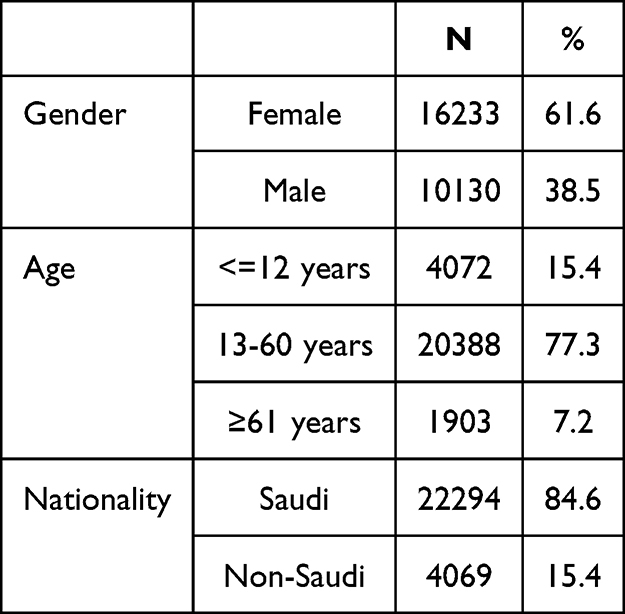 |
Table 1 Sociodemographic Details |
Figure 1 illustrates the geographic location of the Eastern Province of Saudi Arabia, which represents the primary catchment area from which the majority of patients in this study were reported.
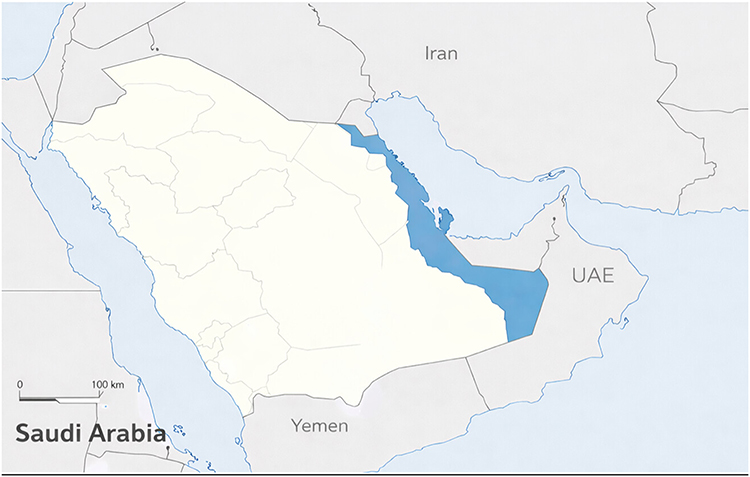 |
Figure 1 Geographic distribution of the study population within the Eastern Province. |
The distribution of skin diseases showed that eczematous disorders were the most prevalent, affecting 20.66% of patients, followed closely by acneiform disorders (20.47%). Viral skin infections were also common, accounting for 16.52% of cases. Miscellaneous skin disorders represented a substantial proportion of diagnoses (17.10%), reflecting a heterogeneous group of less common conditions. Other dermatological categories occurred at lower frequencies, as illustrated in Figure 2. Cutaneous malignancies were infrequently observed in this cohort and were included within the miscellaneous category, reflecting regional referral pathways whereby most suspected or confirmed skin cancer cases are managed at specialized oncology centers. Other dermatological categories occurred at lower frequencies.
 |
Figure 2 Distributions of different skin diseases/conditions based on ICD-10 categories. |
Gender-based distribution of skin diseases is summarized in Table 2. Females accounted for a higher proportion of cases across most major diagnostic categories, including eczematous disorders (60.1%), acneiform disorders (62.9%), viral skin infections (61.4%), and pigmentary disorders (62.1%). Only a limited number of conditions, such as lipomatous and vascular lesions, showed a relative male predominance.
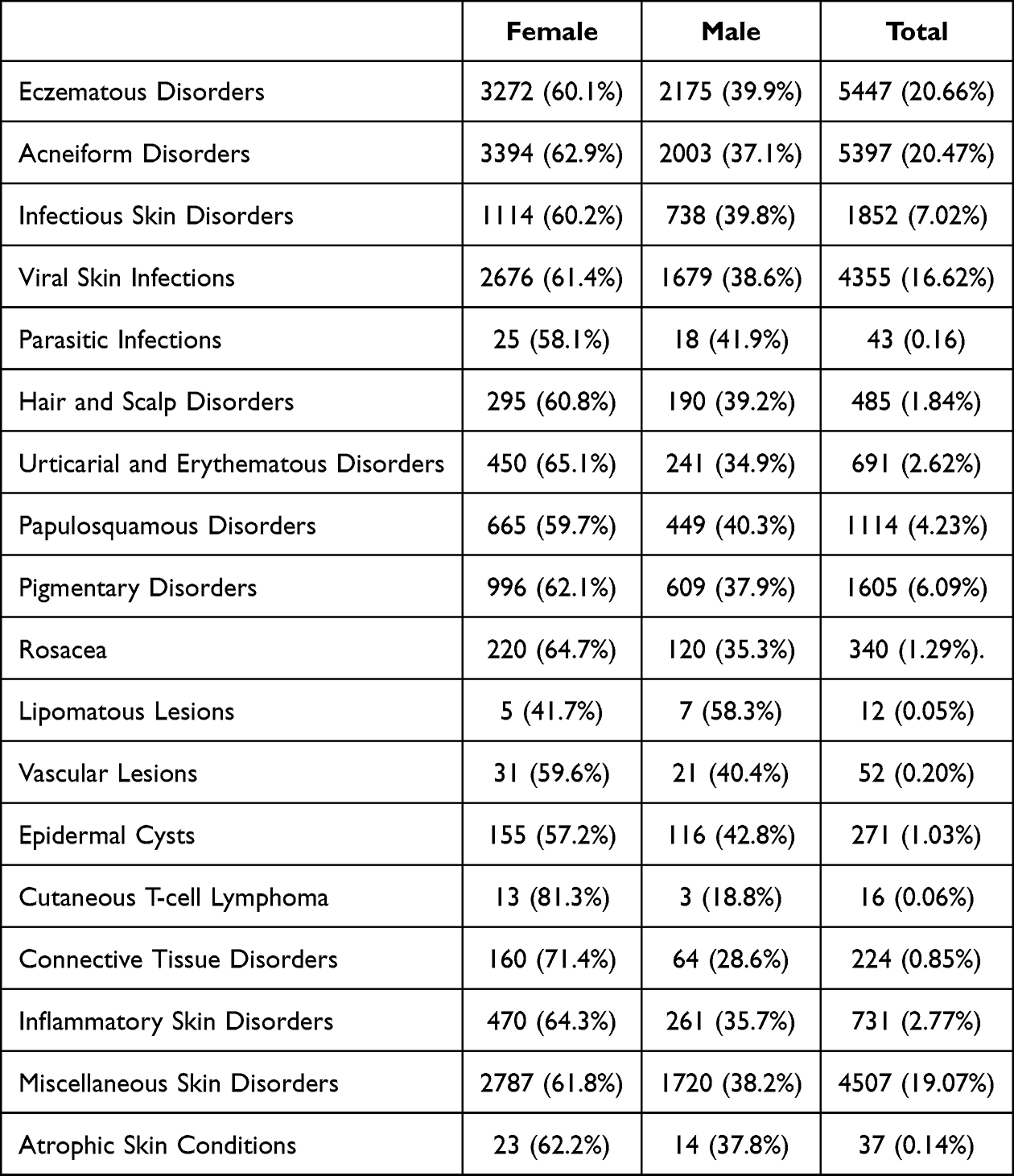 |
Table 2 Prevalence of Skin Diseases or Conditions Based on Gender |
The age-based distribution of dermatological conditions is shown in Table 3. Eczematous and acneiform disorders were most prevalent among individuals aged 13–60 years, accounting for 76.41% and 83.08% of cases within these categories, respectively. Infectious skin disorders were more commonly observed in children aged ≤12 years (22.03%), while viral skin infections predominated among adults aged 13–60 years (81.65%). Patients aged ≥61 years constituted a smaller proportion of cases across most diagnostic categories.
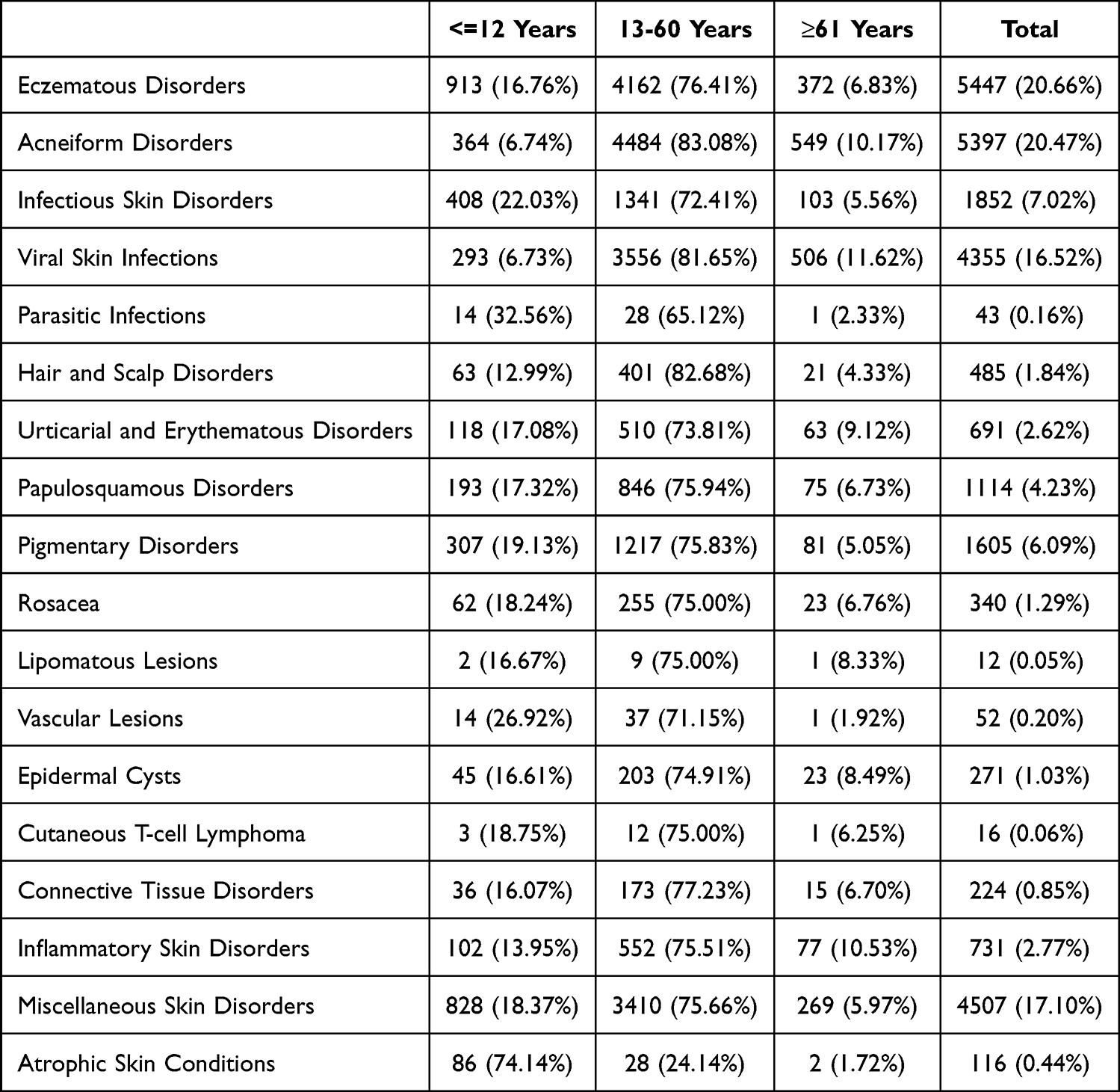 |
Table 3 Prevalence of Skin Diseases or Conditions Based on Age |
Discussion
The findings of the current study indicate that eczematous and acneiform disorders are the leading diagnoses, collectively affecting over 40% of the patient population. This aligns with international patterns, where eczema, particularly atopic dermatitis, is recognized as a significant dermatological condition attributable to its complex origins, which encompass genetic, environmental, and immune system factors.1 Urbanization and increased exposure to allergens are implicated in the development of eczema according to many recently published reports.2,3,5 In 2019, eczema accounted for the greatest global burden among skin conditions, affecting over 171 million people and resulting in nearly 748 million years of disability-adjusted life.6
Studies that explored the prevalence of eczema in Saudi Arabia is scarce. A study carried out in Madinah involving schoolchildren aged 6 to 9 years identified that 10.4% of participants reported a history of eczema, while 8.8% indicated experiencing current symptoms of eczema.7 Another study conducted in Najran involving schoolchildren aged 7 to 19 years reported a lifetime prevalence of 12.9%, current eczema at 10.5%, and physician-diagnosed eczema at 12.5%.8 Additionally, research carried out among schoolchildren in Jazan indicated prevalence rates of 11.4% for lifetime eczema, 8.4% for current eczema, and 8.9% for eczema diagnosed by a physician.9 In recent decades, the incidence of eczema has increased by 2 to 3 times in developed countries.10,11 While the exact cause of this spike remains unclear, it is believed to result from a complex interaction of genetic, environmental, nutritional, and behavioral factors.2 Notably, our study observed that these disorders were more prevalent among females compared to males, suggesting potential hormonal or behavioral influences in the pathogenesis of eczema.
Acneiform disorders constituted the second most prevalent category, affecting 20.47% of the study population. This finding is consistent with established literature highlighting the global burden of these conditions, particularly the association of acne with adolescence and young adulthood due to hormonal influences and sebaceous gland activity.12 A systematic review of dermatological studies conducted in Saudi Arabia identified the five most prevalent skin disorders as diseases of the skin appendages (24.8%), dermatitis (24%), skin infections (18.5%), pigmentary disorders (16.1%), and papulosquamous disorders (5.3%).13 The observed shift in pilosebaceous disorder prevalence aligns with a study conducted in Hail between 2008 and 2014, which reported a 20% prevalence of acne vulgaris among dermatology clinic attendees. This contrasts with a lower prevalence of 12.43% observed at the same hospital between 1995 and 1997.14,15 This temporal increase in acne vulgaris prevalence may be attributed to the study population’s predominantly young population and the documented global rise in acne vulgaris cases.
Viral skin infections represented a significant proportion of cases (16.52%), indicating their considerable impact on dermatological health in the region. This finding is consistent with reports of increased viral skin disease prevalence in tropical and subtropical climates, potentially exacerbated by environmental factors such as warm temperatures and high population density.16
Infectious skin disorders, representing 7.02% of cases, include bacterial and fungal infections, which remain significant health concerns. These conditions are often associated with poor hygiene, overcrowding, and immunocompromised states, as reported by Hay et al.17 However, the relatively lower prevalence in this study compared to viral infections may be attributable to effective public health measures and the widespread use of antifungal and antibacterial therapies. At the same, reports from previous studies done in Saudi Arabia showed that fungal infections were the most prevalent type of skin illness in Jeddah (10.9%), followed by Al-Khobar (9.6%), and Qnfudah (6.4%).4,18,19
Pigmentary disorders, encompassing conditions like melasma and vitiligo, were diagnosed in 6.09% of the patients in this study. These disorders can significantly impact psychological and social well-being, particularly in cultural contexts where skin tone carries substantial social significance.20 The psychological burden associated with pigmentary disorders is well-documented, with studies demonstrating increased rates of anxiety, depression, and reduced quality of life among affected individuals. The social impact can manifest as stigmatization, discrimination, and social isolation, further exacerbating the psychological distress.20,21
The prevalence of papulosquamous disorders (4.23%), including psoriasis and lichen planus in our cohort reflect the chronic inflammatory nature of these conditions. Psoriasis, for instance, has a well-documented association with systemic comorbidities such as cardiovascular disease, necessitating a multidisciplinary approach to management.22 Inflammatory skin disorders (2.77%), urticarial and erythematous disorders (2.62%), and hair and scalp disorders (1.84%) were observed less frequently. Migliavaca et al attribute the relatively low prevalence of these conditions to their episodic nature or effective treatment protocols.22 Furthermore, the low prevalence of these lesions can be an outcome of primary level case care that minimizes the necessity for referral to the tertiary center.
A notable finding of this study is the relatively large proportion of cases classified under the miscellaneous skin disorders category. This group represents a heterogeneous collection of less common dermatological conditions that do not fall within the major ICD-10 groupings, including rare inflammatory disorders, benign neoplastic conditions, and referral-based diagnoses. The size of this category likely reflects both the wide spectrum of dermatological presentations encountered at a tertiary care center and regional referral patterns, whereby certain specialized cases are initially evaluated before being referred for definitive management at specialized institutions.
When compared with the earlier study conducted in the Eastern Province by Alakloby in 2005, our findings demonstrate both continuity and temporal shifts in dermatological disease patterns. While eczematous and acneiform disorders remain the most prevalent conditions, their relative proportions appear to have increased over the past two decades. Conversely, infectious dermatoses—which were more prominent in earlier regional studies—constitute a smaller proportion of cases in the current cohort. These changes may reflect evolving environmental exposures, improved public health measures, changes in healthcare-seeking behavior, and advancements in dermatological care delivery over time.4
This study has several limitations that should be acknowledged. First, the retrospective nature of the study may introduce biases related to incomplete or inconsistently documented medical records. Second, the analysis is based on data from a single tertiary care center, which may limit the generalizability of the findings to the broader population in Saudi Arabia or other regions. Third, the study includes only patients who sought dermatological care, potentially underrepresenting skin conditions present in the community but not brought to medical attention.
Fourth, the dataset did not include detailed clinical variables such as duration or severity of conditions, comorbidities, or socioeconomic factors, which could have provided deeper insights into disease patterns. Lastly, while diagnoses were based on ICD-10 codes entered by board-certified dermatologists, the absence of external validation or standardized diagnostic criteria may have introduced some degree of variability in classification.
The findings of this study have important implications for healthcare planning and clinical dermatology practice in Eastern Saudi Arabia. The high burden of eczematous and acneiform disorders among females and individuals aged 13–60 years highlights the need for targeted public health education and preventive strategies, especially in primary care and adolescent health settings.
Given the substantial number of cases observed in this tertiary center, strengthening dermatology services at the primary and secondary levels may reduce referral burden and improve early access to care. Additionally, the relatively high proportion of viral and infectious skin disorders emphasizes the ongoing need for public hygiene awareness campaigns and potentially school-based interventions in younger populations.
Conclusion
This study provides valuable insights into the prevalent skin disorders encountered in dermatology outpatient clinics in Eastern Saudi Arabia over a decade. The findings highlight a significant predominance of eczematous and acneiform disorders, which collectively affect a substantial portion of the patient population. The gender and age distributions reveal distinct patterns, with females and individuals aged 13–60 years being particularly affected.
Understanding these prevalence patterns is essential for healthcare providers to tailor interventions and allocate resources effectively. The high incidence of skin disorders underscores the need for targeted public health initiatives aimed at addressing the dermatological needs of the population. Future research should focus on the underlying risk factors associated with these conditions and expand to diverse populations to enhance the overall understanding of skin disorder prevalence in Saudi Arabia. By doing so, we can improve clinical practices and patient outcomes in the region, ensuring that dermatological health is prioritized in public health strategies.
Institutional Review Board Statement
The study was conducted in accordance with the Declaration of Helsinki and approved by the Institutional Review Board of King Fahad Hospital of the University, with the approval number IRB-2024-01-823. The requirement for informed consent was waived as the study involved retrospective analysis of anonymized patient data and did not include any direct patient contact or intervention.
Disclosure
The authors report no conflicts of interest in this work.
References
1. Boyle RJ, Flohr C, Shamji MH. Global trends in eczema prevalence during early life. Clin Exp Allergy. 2023;53(3):252–8. doi:10.1111/cea.14302
2. Nutten S. Atopic dermatitis: global epidemiology and risk factors. Ann Nutr Metab. 2015;66 Suppl 1(Suppl. 1):8–16. doi:10.1159/000370220
3. Murrison LB, Brandt EB, Myers JB, Hershey GKK. Environmental exposures and mechanisms in allergy and asthma development. J Clin Invest. 2019;129(4):1504–1515. doi:10.1172/JCI124612
4. Alakloby OM. Pattern of skin diseases in eastern Saudi Arabia. Saudi Med J. 2005;26(10):1607–1610.
5. Almohideb M. Epidemiological patterns of skin disease in Saudi Arabia: a systematic review and meta-analysis. Dermatol Res Pract. 2020;2020:5281957. doi:10.1155/2020/5281957
6. Alshamrani HM, Alsolami MA, Alshehri AM, et al. Pattern of skin diseases in a university hospital in Jeddah, Saudi Arabia: age and sex distribution. Ann Saudi Med. 2019;39(1):22–28. doi:10.5144/0256-4947.2019.22
7. Nahhas M, Bhopal R, Anandan C, Elton R, Sheikh A. Prevalence of allergic disorders among primary school-aged children in Madinah, Saudi Arabia: two-stage cross-sectional survey. PLoS One. 2012;7(5):e36848. doi:10.1371/journal.pone.0036848
8. Alqahtani JM. Asthma and other allergic diseases among Saudi schoolchildren in Najran: the need for a comprehensive intervention program. Ann Saudi Med. 2016;36(6):379–385. doi:10.5144/0256-4947.2016.379
9. Kim K. Influences of environmental chemicals on atopic dermatitis. Toxicol Res. 2015;31(2):89–96. doi:10.5487/TR.2015.31.2.089
10. GBD 2019 Viewpoint Collaborators. Five insights from the global burden of disease study 2019. Lancet. 2020;396(10258):1135–1159. doi:10.1016/S0140-6736(20)31404-5
11. Khawaji AF, Basudan A, Moafa A, et al. Epidemiology of atopic dermatitis among children in Jazan Region, Saudi Arabia. Int J Med Health Res. 2017;3:41–45.
12. Al Nahas S, Abouammoh N, Althagafi W, et al. Prevalence, severity, and risk factors of eczema among young children and adolescents in Saudi Arabia: a national cross-sectional study, 2019. J Allergy Clin Immunol Glob. 2024;3(4):100299. doi:10.1016/j.jacig.2024.100299
13. Langan SM, Mulick AR, Rutter CE, et al. Trends in eczema prevalence in children and adolescents: a global asthma network Phase I study. Clin Exp Allergy. 2023;53(3):337–352. doi:10.1111/cea.14276
14. Bhate K, Williams HC. Epidemiology of acne vulgaris. Br J Dermatol. 2013;168(3):474–485. doi:10.1111/bjd.12149
15. Al Shammrie F, Al Shammrie A. Pattern of skin disease in Hail region of Saudi Arabia. Journal of Dermatology & Dermatologic Surgery. 2017;21(2):62–65. doi:10.1016/j.jdds.2017.04.001
16. Parthasaradhi A, Al Gufai AF. The pattern of skin diseases in Hail Region, Saudi Arabia. Ann Saudi Med. 1998;18(6):558–561. doi:10.5144/0256-4947.1998.558
17. Burrell CJ, Howard CR, Murphy FA. Epidemiology of viral infections. Fenner and White’s Medical Virology. 2017;185–203. doi:10.1016/B978-0-12-375156-0.00013-8
18. Ahmed A, Ali AA, Hussain A, Hussain A. The pattern of skin diseases in a hospital in Qunfudah region, Saudi Arabia. International Journal of Advanced Research. 2016;4(12):1365–1370. doi:10.21474/IJAR01/2531
19. Taylor A, Pawaskar M, Taylor SL, Balkrishnan R, Feldman SR. Prevalence of pigmentary disorders and their impact on quality of life: a prospective cohort study. J Cosmet Dermatol. 2008;7(3):164–168. doi:10.1111/j.1473-2165.2008.00384.x
20. Ezzedine K, Eleftheriadou V, Jones H, et al. Psychosocial effects of vitiligo: a systematic literature review. Am J Clin Dermatol. 2021;22(6):757–774. doi:10.1007/s40257-021-00631-6
21. Daugaard C, Iversen L, Hjuler KF. Comorbidity in adult psoriasis: considerations for the clinician. Psoriasis (Auckl). 2022;12:139–150. doi:10.2147/PTT.S328572
22. Migliavaca CB, Lazzarini R, Stein C, et al. Prevalence of atopic dermatitis: a systematic review and meta-analysis. Dermatitis. 2024. doi:10.1089/derm.2024.0165
 © 2026 The Author(s). This work is published and licensed by Dove Medical Press Limited. The
full terms of this license are available at https://www.dovepress.com/terms
and incorporate the Creative Commons Attribution
- Non Commercial (unported, 4.0) License.
By accessing the work you hereby accept the Terms. Non-commercial uses of the work are permitted
without any further permission from Dove Medical Press Limited, provided the work is properly
attributed. For permission for commercial use of this work, please see paragraphs 4.2 and 5 of our Terms.
© 2026 The Author(s). This work is published and licensed by Dove Medical Press Limited. The
full terms of this license are available at https://www.dovepress.com/terms
and incorporate the Creative Commons Attribution
- Non Commercial (unported, 4.0) License.
By accessing the work you hereby accept the Terms. Non-commercial uses of the work are permitted
without any further permission from Dove Medical Press Limited, provided the work is properly
attributed. For permission for commercial use of this work, please see paragraphs 4.2 and 5 of our Terms.