
Back to Journals » Patient Preference and Adherence » Volume 19
Enablement After Consultation in Primary Healthcare: How Do Patients and Doctors Cross-Sectionally Evaluate It in Northern Portugal
Authors Loureiro II  , Teixeira A , Torrinha MF, Santiago LM, Baptista A
Received 18 May 2025
Accepted for publication 30 October 2025
Published 27 December 2025 Volume 2025:19 Pages 4271—4282
DOI https://doi.org/10.2147/PPA.S541225
Checked for plagiarism Yes
Review by Single anonymous peer review
Peer reviewer comments 3
Editor who approved publication: Dr Johnny Chen
Isabel Inês Loureiro,1,* Andreia Teixeira,2 Mariana Fleming Torrinha,3 Luiz Miguel Santiago,4– 6,* Sofia Baptista2,7,8,*
1Family Health Unit Santa Clara, Health Centers Group of Póvoa de Varzim - Vila Do Conde, Porto, Portugal; 2Faculty of Medicine (MEDCIDS), University of Porto, Porto, Portugal; 3Family Health Unit Eça de Queirós, Health centers Group of Póvoa de Varzim - Vila do Conde, Porto, Portugal; 4Faculty of Medicine, University of Coimbra, Coimbra, Portugal; 5Faculty of Medicine, University Clinic of General Practice and Family Medicine, Coimbra, Portugal; 6Centre for Health Studies and Research, University of Coimbra, Coimbra, Portugal; 7RISE - Health, Porto, Portugal; 8CUF Porto Hospital, Porto, Portugal
*These authors contributed equally to this work
Correspondence: Isabel Inês Loureiro, Health Centers Group of Póvoa de Varzim - Vila do Conde, Rua Dr. António José de Sousa Pereira, S/N, 2° andar, Vila do Conde, Porto, 4480-807, Portugal, Tel + 351 964301088, Email [email protected]
Introduction: The degree to which patients are able to understand, cope with, and manage their illness and daily lives can be assessed using the Patient Enablement Instrument (PEI) questionnaire, a tool widely recognized as the gold standard for such evaluations. The primary objective of this study was to assess the level of agreement between patients and General Practitioners (GPs) in evaluating enablement following a consultation.
Patients and Methods: A cross-sectional observational study was carried out using the PEI in urban area, (3,88% of patients without GP). Surveys were conducted with individuals over 18 years of age after their GP appointment. They were invited post-consultation to self-complete the PEI survey (range: 0– 12) and sociodemographic questionnaire, following the written informed consent. Both patients and GPs completed the PEI. A minimum sample size of 108 participants was calculated, and a favourable opinion was obtained from the Ethics Committee of the Faculty of Medicine of the University of Porto (FMUP).
Results: The study included 16 physicians and 238 patients (65.1% women, median age 59). Patients reported higher levels of enablement than GPs (median 8 vs 6), with a mean bias of 0.89. The agreement between the patients and the GPs was poor (42%– 46%), and the reliability of the total score across the six PEI items (intraclass correlation coefficient: 0.126) was low.
Conclusion: In this sample, GPs underestimated patients’ perceived enablement levels. Enablement is multidimensional and depends on various clinical interactions and care processes. Factors influencing enablement and its impact on disease self-management and health outcomes should be explored in future research.
Keywords: enablement, primary care, doctors, patients, agreement
Introduction
Chronic diseases increasingly represent a sustainability challenge for health systems, requiring a shift from a disease-centred to a patient-centred approach. This shift implies enhancing patient enablement and involving individuals more actively in the healthcare system in order to better address their needs.1,2
Today, addressing health enablement is essential. It is a process that leads to greater understanding of one’s condition, determining better control over both the illness and the individual’s overall well-being.1 However, enablement is neither a simple nor necessarily linear process. Enablement depends on specific individual circumstances.
In healthcare, consultations with the family doctor are fundamental to ensuring high-quality care.2 In 2011, patient enablement was added to the WONCA framework as one of its 12 core pillars.3 At the heart of this enablement approach lies the doctor–patient relationship, which should function as a cooperative partnership.1 Striking a balance in this relationship can be a challenge; it requires the development of an empathetic relationship and ongoing negotiation during each consultation. Furthermore, empathy and effective communication are central to this relationship and may play a critical role in enhancing patient enablement. In addition, patients’ health literacy must be supported. Recent studies have demonstrated that patients with adequate health literacy experience higher levels of enablement and improved health outcomes, hence the need of enablement.3,4
Enabling people to manage their illnesses also has a positive psychological effect, enhancing self-confidence and self-esteem.5
We therefore define enablement as the extent to which a person feels strengthened after a consultation in terms of their ability to understand, manage, and cope with their condition. Higher levels of enablement post-consultation has been associated with improved clinical outcomes, which may be influenced by a range of factors, including empathy, patient characteristics (such as age, gender, socioeconomic status, and multimorbidity), and consultation-related aspects (such as duration and continuity of care).6
There are other concepts such as empowerment and patient satisfaction that often appear to be interrelated with enablement. Patient empowerment relates to a patient’s proliferation of knowledge, skills, attitudes, or self-awareness, combined with the confidence to participate in their care.7 On the other hand, patient satisfaction depends on several factors. One of the main ones seems to be that shared decision-making improves patient satisfaction, their involvement in care, and their knowledge of their condition.8
It is important to understand what patients gain from consultations with their family doctor in terms of health-related enablement. For this reason, it is critical to classify and investigate the concept of patient enablement and the collaborative alliance established between doctor and patient.9
In this part of Portugal, the percentage of patients without a family doctor is quite low (2.7%–3.8%), which allows to better analyse the doctor-patient relationship.10
A number of scales measure enablement, with the Patient Enablement Instrument (PEI) being considered the gold standard.11 This questionnaire has been validated and implemented in primary healthcare in several countries, including Canada, China, Croatia, Japan, the United Kingdom, and Sweden.11 The PEI has been translated into Portuguese and validated, and it was first used in Portugal in 2013.6,12 It consists of six questions designed to assess the enablement that a person obtains regarding their health and overall well-being, following a consultation with their family doctor.6
According to published studies, doctors have difficulty predicting patient enablement following appointments.13 Similarly, there are few studies on doctors’ perceptions of patient enablement, and none have been conducted in Portugal to date. Therefore, both the patient and the doctor were asked to complete the PEI after the scheduled consultation.14 The aim was to assess the level of agreement between patient-reported enablement (self-assessment) and the doctor’s assessment of the patient’s enablement in relation to the same consultation, using the same instrument. In this study, it was considered pertinent to explore the relationship between health enablement and various sociodemographic characteristics (age, gender, education, occupational area, and chronic illness), as well as consultation-related factors (appointment initiation), the ethical question “In today’s consultation, did the doctor pay more attention to your complaints or to you?” and the doctor’s level of experience. After characterising the health enablement of both patients and family doctors, the main objective was to assess the degree of agreement between these two assessments, using the PEI scale.
Materials and Methods
This was an observational, cross-sectional study. Patients attending scheduled appointments at two Family Health Units (FHU), Portuguese primary Health Care facilities, in the Póvoa de Varzim/Vila do Conde district, participated in the study. Data collection took place between May to July 2024, on consecutive working days, and General Practice/Family Doctors (GP/FM) were voluntary.
Patients were eligible if they were aged 18 or over, had a scheduled appointment with the doctor (whether booked by the doctor or by the patient), and had already attended at least one previous medical consultation with the same doctor. The following exclusion criteria were applied: individuals unable to provide informed consent or complete the survey due to dependency; patients with severe psychiatric disorders; patients who did not speak or understand Portuguese, and those not attending a consultation with their GP/FM.
Both questionnaires were self-administered after the consultation. Each included the PEI scale (Figure 1), cross-culturally adapted and validated to European spoken Portuguese.6,12 The patient questionnaire also included sociodemographic data and the ethical question; “In today’s consultation, did the doctor pay more attention to your complaints or to you?” (Appendices I and II). The patients were invited to participate by their GP/FM after provided written informed consent and were instructed to put the completed questionnaire in a sealed box next to the primary health care facility reception area. The GP/FM completed the PEI scale for the same consultation as a reflective estimate, based on the belief of the patient response, since the doctors were blind to the patients’ responses. Both questionnaires shared the same alphanumeric code to enable pairing, while preserving anonymity. No personally identifiable information was collected. Responses were scored as follows: “much better/more” (2 points), ”better/more” (1 point), “the same or less” (0 points), and “not applicable” (0 points). The final PEI score was determined by the sum of the responses to the six items, with a possible range of 0 to 12 points. This PEI score was considered valid when at least three of the six questions were answered. All responses were kept free of any personally identifiable information and entered into a password-protected database accessible only to the research team. Data will be securely destroyed two years after the conclusion of the study.
 |
Figure 1 Patient enablement instrument (PEI) a - Much better/more = 2; b - Better/More = 1; c - Same/less/not applicable = 0. |
This study was approved by the Ethics Committee of the Faculty of Medicine of the University of Porto, and authorisation was obtained from the directors of the participating Primary Health care units.
Data was analysed using SPSS v. 28 and R. Categorial variables were described using absolute and relative frequencies, n (%). For continuous variables, those with normal distribution were summarised using the mean and standard deviation, M (SD), while non-normally distributed variables were summarised using the median and interquartile range, Med [Q1; Q3]. Normality of the distributions was assessed by visual observation of the corresponding histograms. The minimum sample size (n = 108) was calculated to perform a linear regression, based on nine independent variables, a significance level of 5%, a power of 90%, and an effect size of 0.2.
The score obtained by adding up the responses to the six PEI items was treated as a continuous variable. In this case, reliability was assessed using the intraclass correlation coefficient (ICC), which ranges from 0 (no reliability) to 1 (perfect reliability). Agreement between patients and doctors was further analysed using a Bland–Altman graph (Figure 2). This method enables the visualisation of the differences between paired measurements as a function of their mean, providing insight into systematic and random biases. The limits of agreement were calculated as the mean difference ± 1.96 times the standard deviation of the differences, corresponding to the 95% confidence interval.
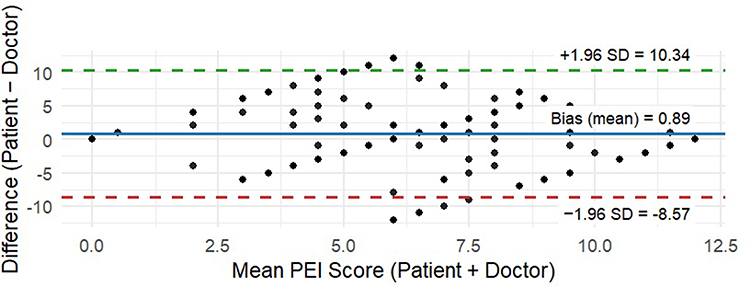 |
Figure 2 Comparison between the PEI score obtained by patients and that obtained by doctors (Bland and Altman) Green line: 10.34 [9.29; 11.39]. Red line: −8.57 [−9.62; −7.51]. These are the upper limit and the lower limit of agreement, ie, the maximum and the minimum expected difference between scores for 95% of observations. |
Agreement between patients and GPs for each of the six items on the PEI was assessed using the overall agreement proportions, the specific agreement proportions for each response category (0, 1, 2), and the respective 95% confidence intervals [95% CI]. The proportion of agreement makes it possible to assess the degree of concordance between two independent observers regarding the same phenomenon, so the higher the value, the greater the agreement. Reliability for each of the six PEI items was assessed using the weighted kappa coefficients (κ) and the corresponding 95% confidence interval [95% CI].15 Given that the distribution of responses was skewed (with few responses in category “0”), we additionally reported category-specific agreement proportions, as low prevalence categories can artificially deflate kappa values despite high observed agreement.
Simple linear regressions were performed to explore the possible associations between the PEI score reported by the patients and other variables. All variables demonstration significance at the 20% level were included in a multiple linear regression model. Subsequently, non-significant explanatory variables were eliminated sequentially, in descending order of p-value, until only variables with statistical significance at the 5% level remained in the final model. The regression results were reported using regression coefficients, corresponding 95% confidence intervals, β [95% CI] and p-values.
Results
The study included 16 doctors (nine from FHU A and seven from FHU B), comprising 11 women and five men. A total of 238 paired questionnaires were completed, with an overall response rate of approximately 99.15%. Regarding the sociodemographic characteristics of the sample, shown in Table 1, 155 (65.1%) of the respondents were female and 83 (34.6%) male. The mean age of the patients was 59 years (median 62; interquartile range 43.5–69). In terms of education attainment, most patients had completed the 9th year of schooling (44.5%). Among the study participants, 170 had chronic conditions, with the most common being hypertension (43.3%), diabetes mellitus (19.7%), and dyslipidemia (17.2%).
 |
Table 1 Socio-Demographic Characterization of the Sample |
Of those surveyed, in 70.6% of cases, the appointment was initiated by the doctor. Additionally, concerning to ethical question, 76.9% of the participants reported that, during the consultation, the doctor paid as much attention to their complaints as to them as individuals.
With regard to patients, the median score on the PEI scale was 8 (range: 0–12), while the Q1 and Q3 quartiles were 6 and 12, respectively. These results indicate that for five of the six questions asked, respondents most frequently answered “better” and “more” to items such as “able to cope with life”, “able to understand their illness”, “able to cope with their illness”, “confident about their health”, and “able to help themselves”. Notably, for all six questions, the answers given least by patients were “the same or worse” and “the same or less” (Table 2). Among the 238 patients, 79.8% had a PEI score ≥6, ie, were considered enabled.
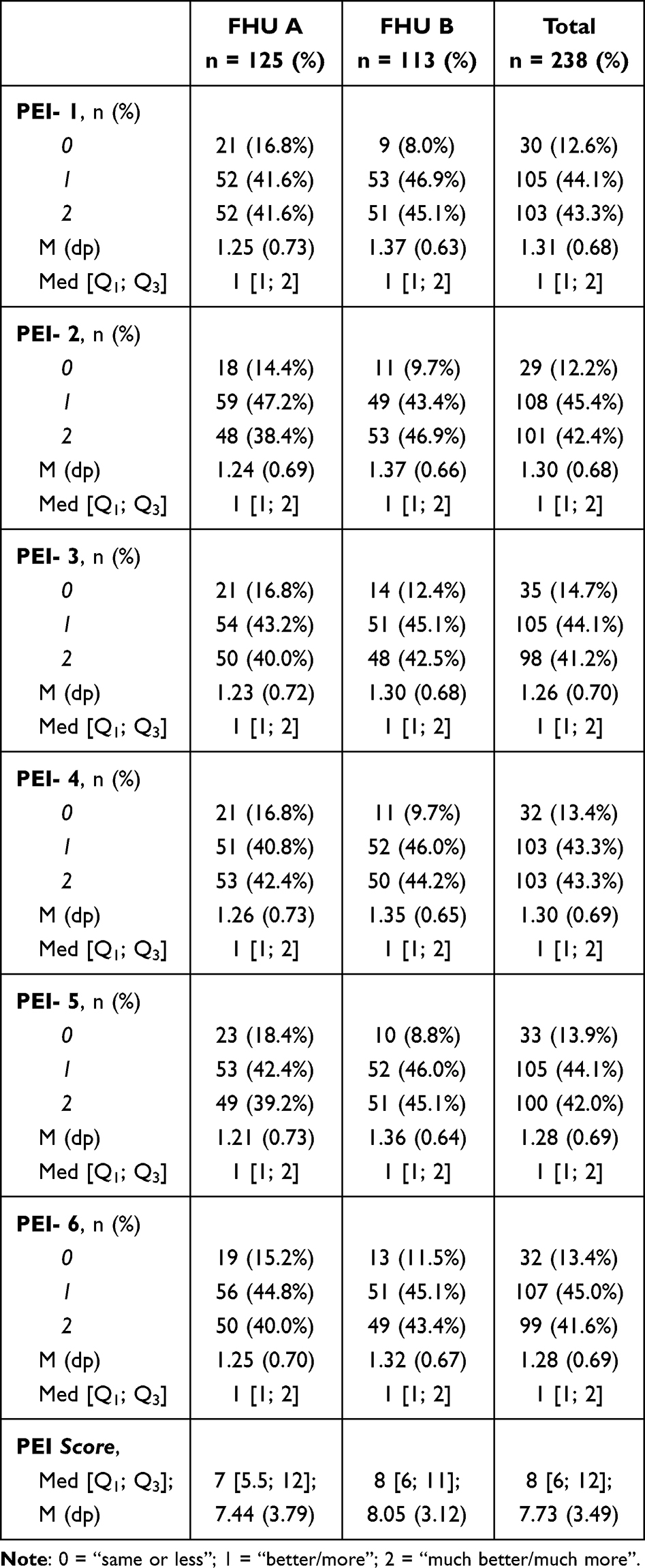 |
Table 2 Characterization of Patient Empowerment Using the PEI Scale in Two FHUs |
Of the doctors taking part in the study, 35.3% had more than 20 years of professional experience. The doctors also most commonly responded with “better” and “more” across all six items of the PEI. However, they had a lower median score on the PEI scale compared with that of the patients, with a value of six (range 0–12), while the Q1 and Q3 quartiles were six and 11.25, respectively (Table 3).
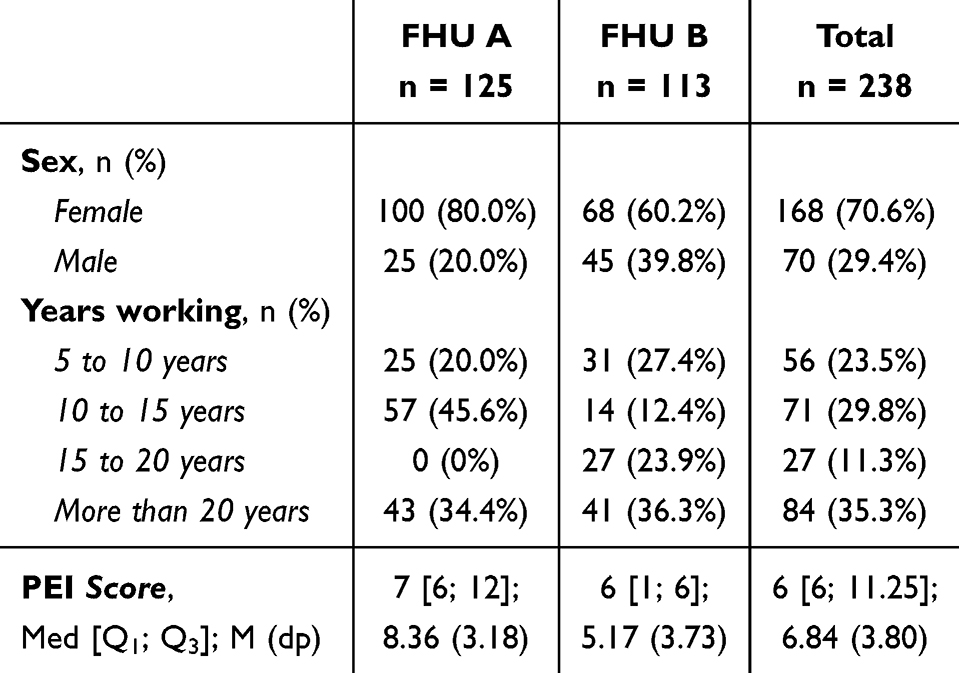 |
Table 3 Characterization of Patient Empowerment in Health Carried Out by Family Doctors, Using the PEI Scale, at the FHU |
Regarding the level of agreement between patients and doctor assessments of enablement (Table 4), overall agreement ranged between 42% and 46%, indicating weak concordance. Reliability was also found to be low since kappa values for all PEI items were less than 0.20. This is probably due to the fact that category zero responses were much less prevalent than the other two.
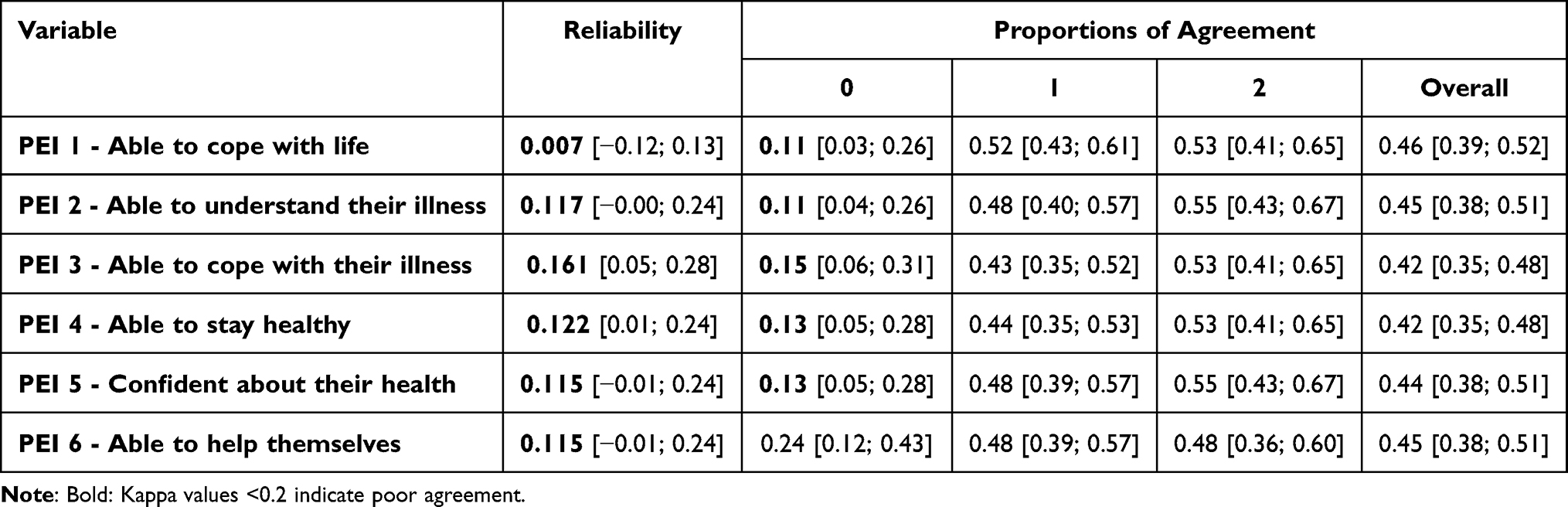 |
Table 4 To Assess the Degree of Agreement Between the Evaluation of Training by Patients and Family Doctors |
With regard to the reliability of the score obtained from the sum of the six items, an intraclass correlation coefficient (ICC) value of 0.126 was obtained, which represents a low level of reliability.
The Bland–Altman method revealed limits of agreement between −8.57 and 10.34 units, which means that the largest expected difference between patient and doctor scores is expected to fall between these values, as shown in Figure 2. The average bias, defined as the mean difference between the scores, was also calculated. This study found that the score obtained by patients tended to be higher than the score obtained by doctors. The mean difference obtained was 0.89, which suggests that, on average, the patient’s score was around 0.89 units higher than the doctor’s. Since the confidence interval for the bias did not include zero (0.27 to 1.50), this shows that the difference between the two scores was statistically significant.
Table 5 shows various sociodemographic characteristics of the study population and their association with the PEI score reported by patients (the outcome or dependent variable). Analysis showed that for each additional year of age, the score decreased by an average of 0.03 units, which is a significant variable (p = 0.011). Statistically significant associations were also observed for variables such as employment status and the presence of chronic conditions: being professionally active was associated with higher PEI scores (p < 0.001), while having a chronic condition was also associated with lower PEI scores (p = 0.018).
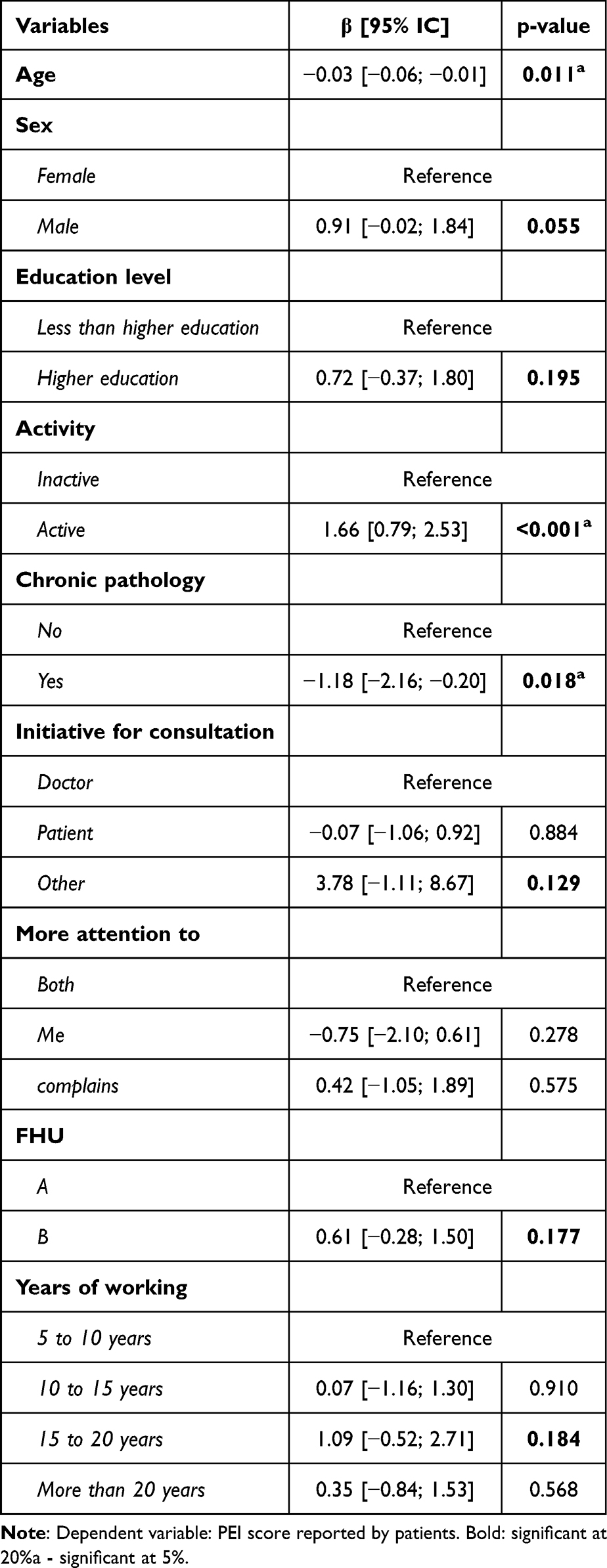 |
Table 5 Simple Linear Regression |
The following variables were not statistically significant at the 5% level but had p-values below 20% and were therefore included in the initial multiple linear regression model: gender, level of education, appointment initiative, FHU, and years of professional experience (Table 6). In the final multiple linear regression model (Table 6), three variables remained statistically significant: male gender (p = 0.016), being professionally active (p = 0.002), and having a chronic condition (p = 0.034). In other words, these variables were found to be significantly associated with the patients’ PEI score.
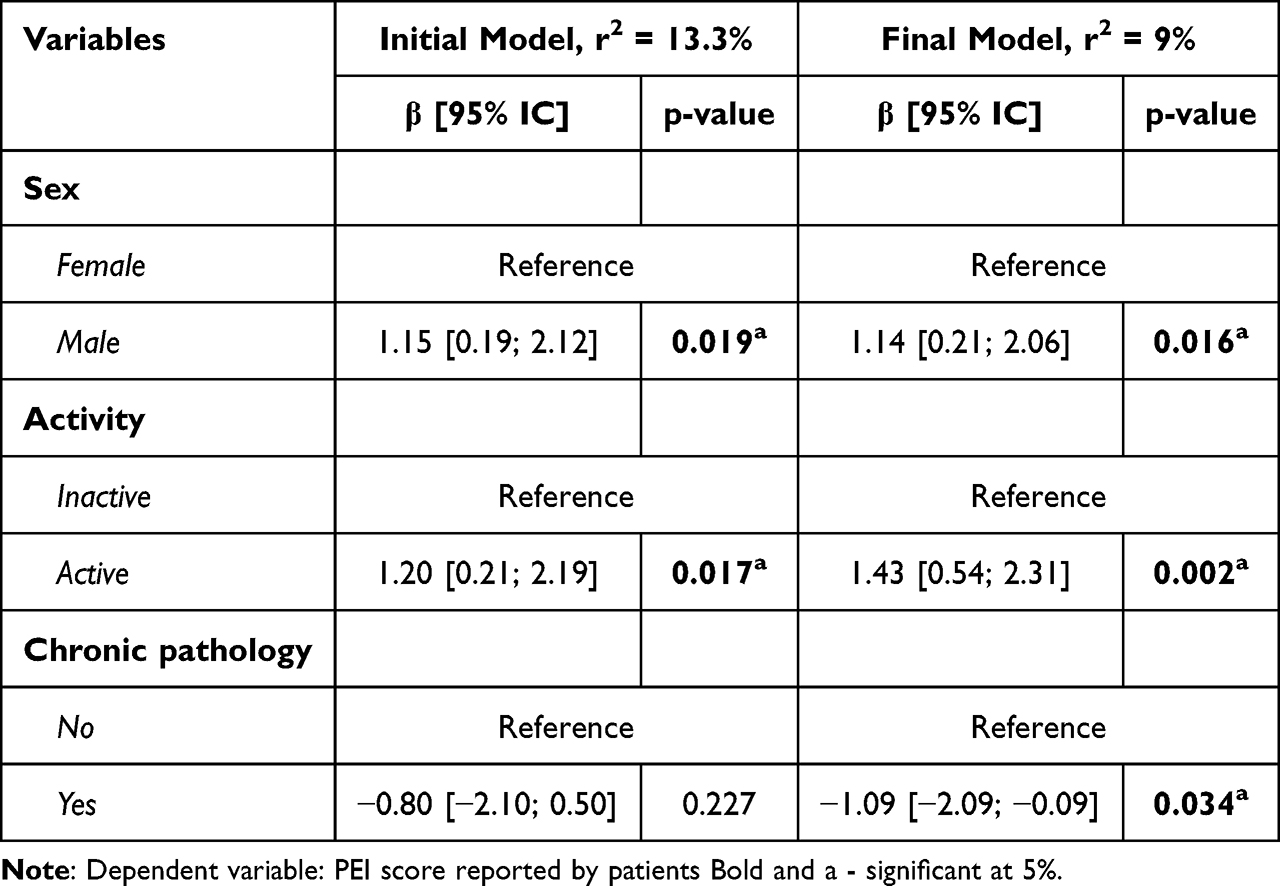 |
Table 6 Multiple Linear Regression |
Discussion
Summary of the Main Results
Enablement is a multidimensional construct that can be influenced by a range of factors, whether personal, clinical, or social. To date, few published studies have evaluated enablement using the PEI, either in Portugal or in other countries.
In this study, male participants and those who were professionally active demonstrated higher enablement scores. Conversely, older individuals and those with chronic diseases had lower enablement scores, regardless of the specific diagnosis (eg, hypertension, diabetes). No statistically significant association was found between enablement scores and the initiative for the consultation, ethical question or the doctor’s level of experience.
Based on these results, following a consultation with the usual GP/FM, most patients seemed to feel better equipped to manage their illness and life in general, reflecting an increased sense of enablement. The study was conducted across two FHUs in different municipalities, yet no significant differences in outcomes were observed between the two sites. The majority of doctors also reported that patients, following consultation, seemed better and more confident in dealing with their illness and everyday life. The median total PEI score reported by patients was 8 [6;12], compared with a median score of 6 [6;11.25] reported by doctors.
The primary objective of this study was to assess the degree of agreement between patient and doctor responses for each item on the PEI scale (six items). Overall, the total proportion of agreement ranged from 42% to 46%, indicating a low level of agreement. This conclusion is further supported by the intraclass correlation coefficient obtained (0.126), which also suggests poor reliability. Although the observed agreement proportions were acceptable, the weighted kappa values were relatively low. This apparent discrepancy can be explained by the skewed distribution of responses, particularly the low frequency of category “0”. As previously noted in the literature, such imbalances may artificially deflate kappa coefficients (the so-called “kappa paradox”), even when agreement is substantial. To address this limitation, we also reported category-specific agreement proportions, which provide a clearer picture of concordance across the response scale. When comparing the two PEI scores between patients and doctors, a consistency bias of 0.89 was observed, patients tending to score higher than the doctors perceived. Although the bias was relatively small, it was statistically significant.
Comparison with Existing Literature
Most of the results obtained in this study are consistent with findings reported in the existing literature. Regarding gender, our results align with those of Tolvanen E. et al16 and Banerjee A. et al.17 Some studies have found no significant differences in enablement by gender6 and one has reported that women exhibit higher levels of enablement.2
In relation to age, it is possible that the decline in cognitive ability, reduced self-confidence, and diminished self-management associated with increasing age and multimorbidity can contribute to a decline in enablement in health and life.2,6,16,18–20
Enablement is related to socio-cultural factors; individuals who play an active role in society tend to feel more able to manage their health and, consequently, their lives.6,16
As for the reduction in enablement for those with chronic conditions, our findings were similar to those reported by Mercer and colleagues.21
Regarding the PEI scale findings, we observed that doctors tended to underestimate patients’ level of enablement. This is consistent with most of the studies found in the literature, where lower total PEI scores among patients have been reported, with the highest recorded score being 6.6 in Croatia.19 Several potential explanations exist for this discrepancy: First, patients were invited by their GPs to complete the questionnaire, and participation may have been biased towards individuals who had greater time or availability. Therefore, despite assurances of anonymity, a selection bias or social desirability bias could have influenced the reported enablement scores, possibly inflating them. Additionally, one of the study’s inclusion criteria was the administration of the questionnaire following a scheduled consultation with a GP/FM.
The majority of these appointments were for the management of chronic conditions (eg, hypertension, diabetes mellitus), and typically a follow-up consultation was scheduled at the end of this appointment by the doctor. Continuity of care makes people feel safer and better able to deal with their illnesses, which could have positively influenced enablement outcomes.22 In both FHUs, most people had maintained a continuous relationship with the same GP for over ten years. This long-term continuity likely contributed to the consolidation of the doctor-patient relationship and promoting greater enablement in health and life. Numerous studies affirm that the cornerstone of enablement lies in a strong doctor–patient relationship, and that enablement is increasingly and intrinsically linked to the doctor’s empathy and communication skills than solely to clinical management.19,21,23,24 Some studies have also evaluated patient enablement patients using PEI at different time points (eg, immediately after the consultation and then several months later) and concluded that PEI scores tend to be higher immediately after the consultation with their GP.25,26
In this study, the questionnaire was carried out immediately after the consultation, which may have contributed to higher enablement scores. In relation to the PEI score obtained by the doctors (PEI = 6), it is possible that the participating GP/FM doctors tended to be modest or humble in their enablement evaluations, consistent with the literature.14
In the studies by McKinstry B. et al13 and Cannon B et al14 a similarly weak correlation was observed between patients’ PEI scores and the doctors’ predictions. One possible explanation for this may be that doctors may be more critical of their own performance than patients are, thereby producing lower enablement scores.
Limitations
This was a cross-sectional observational study based on a convenience sample, with the inherent limitations that such sampling entails. Consequently, it is not possible to extrapolate or generalise the results to other populations or contexts. A larger sample size would have been necessary to obtain more robust and generalisable findings. Similarly, the non-randomized sample of general practitioners was small, comprising only 16 participants, and it can be concluded that they were not representative of the broader GP population. Another limitation relates to patient selection, as participants were invited by their own doctors, introducing the potential for selection and social desirability bias.
The PEI scale is short and precise (Figure 1). However, there may be some possibility of bias in its interpretation, either by doctors or patients.
Implications for Clinical Practice and Future Directions
For future studies, efforts should be made to explore what people and doctors consider to have the greatest influence on enablement, using qualitative methodologies. It would also be valuable to examine how enablement evolves over time, through longer-term follow-up studies and evaluations at different time points (eg, post-consultation, 3 months, 6 months).
In terms of treatment adherence, continuity of care, or shared decision-making, we can assume that, since results of patients and doctors concluded that patients felt more enabled after the consultation, these variables would also be expected to be positive. Would be interesting to see whether more enabled people adhered more to the proposed treatment or not.
In line with this, other challenging area for investigation is whether individuals with higher levels of enablement actually achieve better disease control and how this might impact healthcare utilisation in primary care settings. Increasing attention is being paid to the potential link between health enablement with lower healthcare costs. However, there are currently few studies directly examining the economic impact of patient enablement.
Conclusion
GPs are increasingly focusing on the doctor-patient relationship as a way of promoting patient enablement and recognising the benefits it can bring to the management of chronic illnesses. Enhancing enablement is becoming a key determinant of success in general practice.
Our results show being male and professionally active was associated with higher enablement scores.
This study has demonstrated that there was little agreement between patients’ and doctors’ assessments of enablement following the same consultation, doctors responding on how they thought patients had responded. Overall levels of patients enablement after consultations with their GP/FM were high. This may be due to intrinsic characteristics of the studied population and to accessibility and continuity of care. The results could inform doctor’s communication training strategies to better empower patients and also future research on how both patients and doctors perceive enablement, as well as its impact for health policies. It would be interesting for future research/training interventions to focus on improving family doctors’ ability to detect patient enablement by using more self-assessment tools after consultations.
The art of medicine relies on the ability to recognise and respect individual differences and to treat each patient as a unique individual. Empathy and effective communication are central to this relationship and may play a critical role in enhancing patient enablement.
Ethics Approval
This study was conducted in accordance with the basic principles of the Helsinki Declaration and was approved by the Ethics Committee of the University of Oporto (238/CEFMUP/2024).
Acknowledgments
To the experts who, anonymously, helped to translate the scale to Portuguese.
Funding
This work was funded through the Faculdade de Medicina da Universidade do Porto.
Disclosure
The authors report no conflicts of interest in this work.
References
1. Forum” “European Patients”. EPF Background Brief: Patient Empowerment. A Strong Patient´s Voice to Drive Better Heal Eur. 2015. Internet. 12.
2. Skarbalienė A, Jurgutis A, Strandberg EL, Pawlikowska T. Patient involvement in assessing consultation quality: validation of patient enablement instrument (PEI) in Lithuanian general practice. BMC Fam Pract. 2019;20(1):1–6. doi:10.1186/s12875-019-1061-1
3. Santos P, Sá ABD, Santiago L, Hespanhol A. A árvore da WONCA: tradução e adaptação cultural para português. Revista Portuguesa de Clínica Geral. 2021;37:28–35. doi:10.32385/rpmgf.v37i1.12943
4. Náfrádi L, Nakamoto K, Schulz PJ. Is patient empowerment the key to promote adherence? A systematic review of the relationship between self-efficacy, health locus of control and medication adherence. PLoS One. 2017;12(10):1–23. doi:10.1371/journal.pone.0186458
5. Vainauskienė V, Vaitkienė R. Enablers of patient knowledge empowerment for self-management of chronic disease: an integrative review. Int J Environ Res Public Health. 2021;18(5):1–24. doi:10.3390/ijerph18052247
6. Simões JA, Prazeres F, Maricoto T, et al. Physician empathy and patient enablement: survey in the Portuguese primary health care. Fam Pract. 2021;38(5):606–611. doi:10.1093/fampra/cmab005
7. Hickmann E, Richter P, Schlieter H. All together now – patient engagement, patient empowerment, and associated terms in personal healthcare. BMC. Health Serv. Res. 2022;22(1). doi:10.1186/s12913-022-08501-5
8. Silva D. Helping people shared decision-making: a review of evidence considering whether shared decision making is worthwhile. The Health Foundation. 2012.
9. Hespanhol AP, Couto L, Martins C, Viana M. A Capacitação na Consulta de Medicina Geral e Familiar (I). Rev Port Clínica Geral. 2009;25(2):236–241. doi:10.32385/rpmgf.v25i2.10612
10. Utentes Inscritos em Cuidados de Saúde Primários. (2025). Sns.gov.pt. Available from: https://transparencia.sns.gov.pt/explore/dataset/utentes-inscritos-em-cuidados-de-saude-primarios/table/?disjunctive.ars&disjunctive.aces&sort=periodo&refine.periodo=2024%2F05.
11. Tolvanen E, Koskela TH, Kosunen E. Comparison of the Patient Enablement Instrument (PEI) with two single-item measures among Finnish Health care centre patients. BMC Health Serv Res. 2019;19(1):1–10. doi:10.1186/s12913-019-4182-2
12. Pintalhão I, Santiago LM, Pereira C, Santiago LM. Desenvolvimento de tradução para português de “Patient Enablement Instrument”. RevADSO. 2013;1(2):18–22. doi:10.35323/revadso.12201313
13. McKinstry B, Colthart I, Walker J. Can doctors predict patients’ satisfaction and enablement? A cross-sectional observational study. Fam Pract. 2006;23(2):240–245. doi:10.1093/fampra/cmi111
14. Cannon B, Usherwood TP. General practice consultations - how well do doctors predict patient satisfaction? Aust Fam Physician. 2007;36(3):185–187.
15. Landis JR, Koch GG. The measurement of observer agreement for categorical data. Biometrics. 1977;33. doi:10.2307/2529310
16. Tolvanen E, Groenewegen P, Koskela T, Bjerve T, Cohidon C, Kosunen E. Patient enablement after a consultation with a general practitioner—Explaining variation between countries, practices and patients. Health Expectations. 2020;23(5):1129–1143. doi:10.1111/hex.13091
17. Banerjee A, Sanyal D. Dynamics of doctor-patient relationship: a cross-sectional study on concordance, trust, and patient enablement. J. Fam. Community Med. 2012;19(1):12. doi:10.4103/2230-8229.94006
18. Chan M, Fang H, Shah M. Factors affecting patient enablement in an Asian setting: a mixed methods study. Singapore Med J. 2019.
19. Adžić O, Katić M, Kern J, Lazić Đ, Nekić V, Soldo D. Patient, physician, and practice characteristics related to patient enablement in general practice in croatia: cross-sectional survey study. Croatian Med J. 2008;49(6):813–823. doi:10.3325/cmj.2008.49.813
20. Gregório M, Teixeira A, Henriques T, et al. What role do patients prefer in medical decision-making?: a population-based nationwide cross-sectional study. BMJ Open. 2021;11(10):e048488. doi:10.1136/bmjopen-2020-048488
21. Mercer W, Jani B, Maxwell M, Wong S, watt G. Patient enablement requires physician empathy: a cross-sectional study of general practice consultations in areas of high and low socioeconomic deprivation in Scotland. BMC Family Practice. 2012;13(1). doi:10.1186/1471-2296-13-6
22. Sandvik H, Hetlevik Ø, Blinkenberg J, Hunskaar S. Continuity in general practice as a predictor of mortality, acute hospitalization, and use of out-of-hours services: registry-based observational study in Norway. Br J Gen Pract. 2021;72(715).
23. Brusse J, Yen E. Preferences, predictions and patient enablement: a preliminary study. BMC Family Practice. 2013;14(1). doi:10.1186/1471-2296-14-116
24. McKinstry B. Do patients and expert doctors agree on the assessment of consultation skills?: a comparison of two patient consultation assessment scales with the video component of the MRCGP. Family Practice. 2004;21(1):75–80. doi:10.1093/fampra/cmh116
25. Vaz F, Santiago L, Carvalho F. A Capacitação na Consulta de Medicina Geral e Familiar: como se Comporta ao Longo do Tempo Após a Última Consulta. Revista ADSO. 2014;2(3):13–18. doi:10.35323/revadso.23201419
26. Rööst M, Zielinski A, Petersson C, Strandberg E. Reliability and applicability of the Patient Enablement Instrument (PEI) in a Swedish general practice setting. BMC Family Practice. 2015;16(1). doi:10.1186/s12875-015-0242-9
 © 2025 The Author(s). This work is published and licensed by Dove Medical Press Limited. The
full terms of this license are available at https://www.dovepress.com/terms
and incorporate the Creative Commons Attribution
- Non Commercial (unported, 4.0) License.
By accessing the work you hereby accept the Terms. Non-commercial uses of the work are permitted
without any further permission from Dove Medical Press Limited, provided the work is properly
attributed. For permission for commercial use of this work, please see paragraphs 4.2 and 5 of our Terms.
© 2025 The Author(s). This work is published and licensed by Dove Medical Press Limited. The
full terms of this license are available at https://www.dovepress.com/terms
and incorporate the Creative Commons Attribution
- Non Commercial (unported, 4.0) License.
By accessing the work you hereby accept the Terms. Non-commercial uses of the work are permitted
without any further permission from Dove Medical Press Limited, provided the work is properly
attributed. For permission for commercial use of this work, please see paragraphs 4.2 and 5 of our Terms.