
Back to Journals » Medical Devices: Evidence and Research » Volume 17
Emerging Trends and Hot Topics of Non-Invasive Electroencephalography Research in the Elderly: A Bibliometric Analysis from 2014 to 2023
Authors Tang C, Peng Y  , Sui J, Jiang W , Zhou R
Received 1 June 2024
Accepted for publication 20 August 2024
Published 27 August 2024 Volume 2024:17 Pages 311—322
DOI https://doi.org/10.2147/MDER.S480900
Checked for plagiarism Yes
Review by Single anonymous peer review
Peer reviewer comments 2
Editor who approved publication: Dr Scott Fraser
Chunyong Tang,1,* Yanhua Peng,1,* Jing Sui,1 Wencai Jiang,1 Rui Zhou2
1Department of Anesthesiology, Deyang People’s Hospital, Deyang, 618000, People’s Republic of China; 2Department of Anesthesiology and Perioperative Medicine, Shanghai Fourth People’s Hospital, School of Medicine, Tongji University, Shanghai, 200434, People’s Republic of China
*These authors contributed equally to this work
Correspondence: Rui Zhou, Department of Anesthesiology and Perioperative Medicine, Shanghai Fourth People’s Hospital, No. 1279, Sanmen Road, Hongkou District, Shanghai, 200434, People’s Republic of China, Email [email protected]
Background: Electroencephalography (EEG) has been rapidly developed and is widely used in both clinical and scientific fields. Original studies on non-invasive EEG in the elderly have been of great importance owing to the global aging trend. The present study aimed to provide a bibliometric overview on current status and trends in this research field.
Methods: We searched the Web of Science Core Collection for articles published during 2014 and 2023. Synonyms for EEG and the elderly were combined as a retrieval strategy. Invasive EEG and secondary studies were excluded. Online filters and manual reviews were applied to select eligible articles. Basic bibliometric parameters were analyzed and visualized using VOSviewer and Excel software.
Results: A total of 1656 publications were filtered, and 655 of which were finally included. In general, publication counts have steadily increased over the last 10 years. A sharp rise in publications occurred in 2021, and then remained at a high level. Authors and institutions from high-income countries/regions such as the United States of America (USA), China, and Germany were more productive and made significant contributions. Journals specialized in neuroscience, such as Frontiers in Aging Neuroscience, Neurobiology of Aging, and Clinical Neurophysiology, were popular among authors. Articles on aging, Alzheimer’s disease (AD), mild cognitive impairment (MCI), dementia, memory, event-related potentials, attention, and the brain were more likely to use EEG. The newer topics included anesthesia, postoperative delirium (POD), confusion assessment method, connectivity, validation, and power.
Conclusion: This bibliometric study provides fundamental knowledge on the current status and hot spots of the original studies on EEG in elderly, which is beneficial to researchers in paving future investigations of neuroscience and neural diseases.
Keywords: EEG, neuroscience, age-related changes, bibliometric analysis, VOSviewer
Introduction
Humans face problems in the aging of the population that have never been faced before. According to the reports by the United Nations, the mean lifetime of the world’s population reached 72.8 years old in 2019 and is estimated to be 77.2 years old in 2050.1 To make matters worse, global fertility is decreasing, with a >50% reduction in births per woman from 1950 to 2019, and a further reduction in 2050.1 More specifically, the proportion of the aged population is estimated to reach up to 16% in 2050, with a 6% increase in comparison with 2022.1 Therefore, age-related diseases must be paid more attention. One of the most typical features of age-related changes is the degeneration of the neural system. Neurodegenerative diseases such as Alzheimer’s disease (AD), Parkinson’s disease (PD), Huntington’s disease (HD), amyotrophic lateral sclerosis (ALS), and dementia have close relationships with aging.2–4 A decline in self-care ability is the primary impact of neurodegenerative diseases, which increases social burden. According to a report by the World Health Organization, AD and other types of dementia caused nearly 2 million deaths worldwide, ranking the 7th among the top-10 leading causes of death in 2019.1 Mental disorders also affect the elderly population. Approximately one-fourth to one-third of elderly European individuals suffer from mental disorders, leading to a decline in quality of life and functioning level.5,6 Neurological and psychotic disorders are correlated to abnormal electrical activity of the brain. Electroencephalography (EEG), an inexpensive, effective, and noninvasive method for recording the electrical signals of the brain, has been widely regarded as an auxiliary diagnosis for neurological and psychotic disorders, including not only epilepsy and depression, but also AD, PD and postoperative delirium.7–9 Aging actuates investigations of age-related disorders, along with increasing use of EEG. However, with booming publications on EEG, the global status of EEG research in the elderly population remains unclear.
Bibliometric analysis is a popular approach to analyze the current status of a scientific issue.10,11 Through bibliometric analyses, readers can gain knowledge about publication trends, related journals, hot and influential articles, and the leading authors, institutions and countries. Some high-quality ones can further provide promising research topics. It matters to researchers, especially the beginners. Herein, we conducted a bibliometric analysis of the original studies on the application of EEG in the elderly.
Materials and Methods
Literature Retrieval and Selection
The inclusion and exclusion criteria were determined prior to the literature retrieval. Original studies on the application of EEG in elderly patients were eligible. The exclusion criteria were as follows:1 Review, meta-analysis, letter, meeting paper, editorial material, book, bibliography, and retracted publication;2 Invasive EEG;3 The age of subjects < 60 years old;4 Publications with unclear research population. Documents tagged “Early Access” were not excluded.
The articles were searched in the Web of Science (WoS) Core Collection on 17 December 2023. The retrieval formula was as follows: (TS=(electroencephalography) OR TS=(electroencephalogram) OR TS=(EEG)) NOT (TS=(stereoelectroencephalography) OR TS=(intracranial encephalography) OR TS=(scalp electroencephalography) OR TS=(oval foramen electrode)) AND (TS=(elderly patients) OR TS=(gerontal patients) OR TS=(geriatric patients) OR TS=(older adults)). The document types were restricted to “Article” and “Case Report”. The publication year was set as 2014 to 2023. Manual screening was conducted by two independent investigators. The third investigator helped deal with the disagreements.
Data Analyses and Visualization
VOSviewer (version 1.6.20) and Excel (version 2021) were applied to analyze the publications, citations, authors, organizations, countries/regions, journals, and keywords (added by the authors and WoS) of the articles. The relationships between the authors, organizations, countries/regions, journals, and keywords were then visualized. The journal impact factor (IF) and Journal Citation Report (JCR) quartile (Edition 2022) were obtained from WoS. If a journal belongs to more than one category, the highest JCR quartile was shown in our results.
We merged England, Scotland, North Ireland and Wales into the United Kingdom (UK). The item Turkiye was united into Turkey. The synonyms for the high-frequency keywords were also merged.
Ethic Issues
The present study was based on articles published in an open database, and there was no private information of the patients. Therefore, ethical approvements were not required for this study.
Results
A total of 1656 articles were retrieved from WoS Core Collection, the filters “Document Type” and “Publication Year” excluded 616 articles. Among the 1040 documents, 385 of which were manually omitted according to the inclusion and exclusion criteria. Finally, 655 were included in the analysis. The flowchart was shown in Figure 1.
 |
Figure 1 Flowchart of this study. |
Publication Count and Citation Analyses
As shown in Figure 2, most articles were published in 2022 (106 articles), followed by 2021 (105 articles) and 2023 (98 articles). Generally, original researches on the application of EEG in the elderly were increasing during the past 10 years. However, the publications tended to become relatively stable in the last 3 years. Table 1 shows the 10 most cited articles. The top-1 article was cited 242 times in the WoS Core Database. Among the 10 articles, 2 were associated with postoperative delirium (POD), 1 was related to AD, 3 were involved in sleep, and 2 focused on the brain network.
 |
Table 1 The 10 Most Cited Articles on EEG in Elderly Adults |
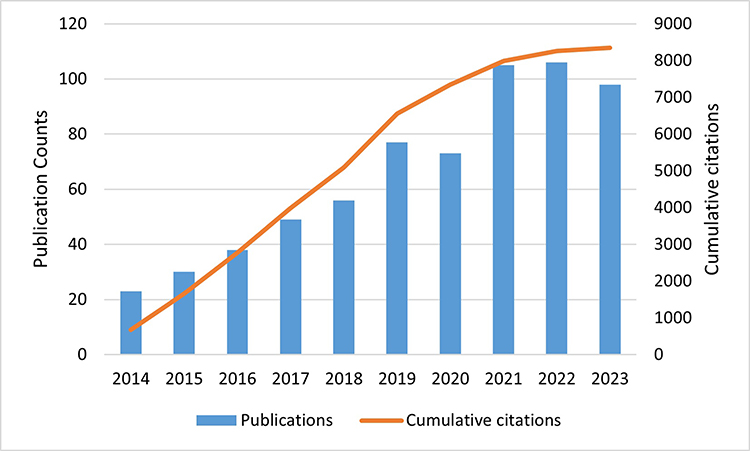 |
Figure 2 Annual analyses of the publication counts and cumulative cited times. |
Author, Organization and Country/Region Analyses
Totally, 3620 authors contributed to the 655 articles in the last 10 years. The top-10 authors in terms of the publications and citations were depicted in Figure 3A and B, respectively. The most productive author in this field was Kreuzer Matthias (Germany, 10 publications), whereas the most influential author was Avidan Michael S (USA, 487 citations). However, Wildes and the colleagues published the most influential article, entitled
Effect of electroencephalography-guided anesthetic administration on postoperative delirium among older adults undergoing major surgery the ENGAGES randomized clinical trial.12
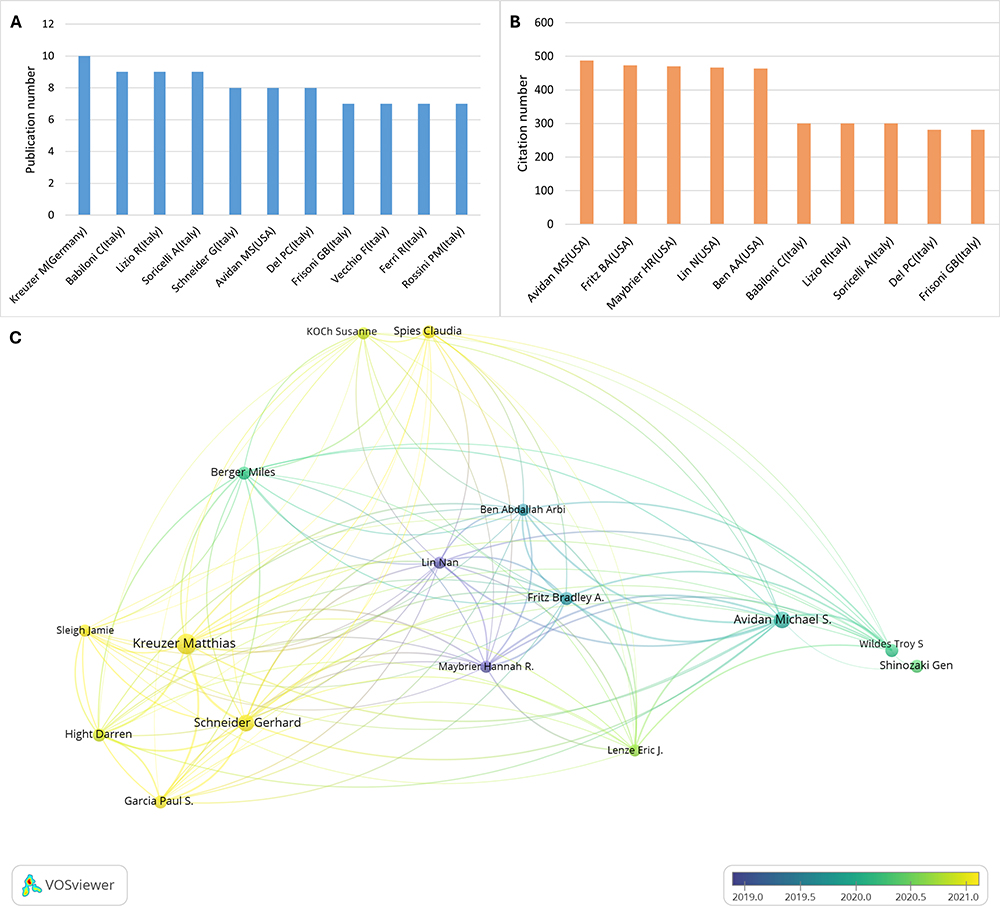 |
Figure 3 Author analyses. (A) publication counts and nationalities of the top-10 productive authors; (B) total cited times and nationalities of the top-10 highly cited authors; (C) visualization for citation analysis of the authors. The minimal occurrence of authors in the map is 5. The colors of nodes and lines are dependent on the average publication time. |
This article, published in 2019, was cited 242 times. As shown in Figure 3C, the publication year of articles published by Schneider, Kreuzer, Garcia, Sleigh and Spies was relatively new. Wen published the article with the highest usage count in the last 180 days in 2023.13 The article with most usage count since 2013 is “Musical neurofeedback for treating depression in elderly people” published by Ramirez in 2015.14
The articles were produced by 1205 institutions from 58 countries/regions. Harvard Medical School (USA), ranking No. 1, published 25 articles, followed by Katholieke University Leuven (13 articles, Belgium) and Washington University (12 articles, USA) (Figure 4A). Institutions, such as Katholieke University Leuven, University of Bern (Switzerland), Capital Medical University (China), Technical University of Munich (Germany), Beth Israel Deaconess Medical Center (USA), University of Auckland (New Zealand), Charite Universitatsmedizin Berlin (Germany), Columbia University (USA) and Massachusetts General Hospital (USA), had newer research outputs (Figure 4B). As for country force, the USA is still the leader in this area, with 187 publications (Figure 5A). China and Germany published 99 and 86 articles, respectively (Figure 5A). The articles from Italy, Norway, Greece, Spain, Canada and the USA had higher average citation counts, whereas articles from Iran, Ireland, Portugal, Belgium and China were less cited (Figure 5B).
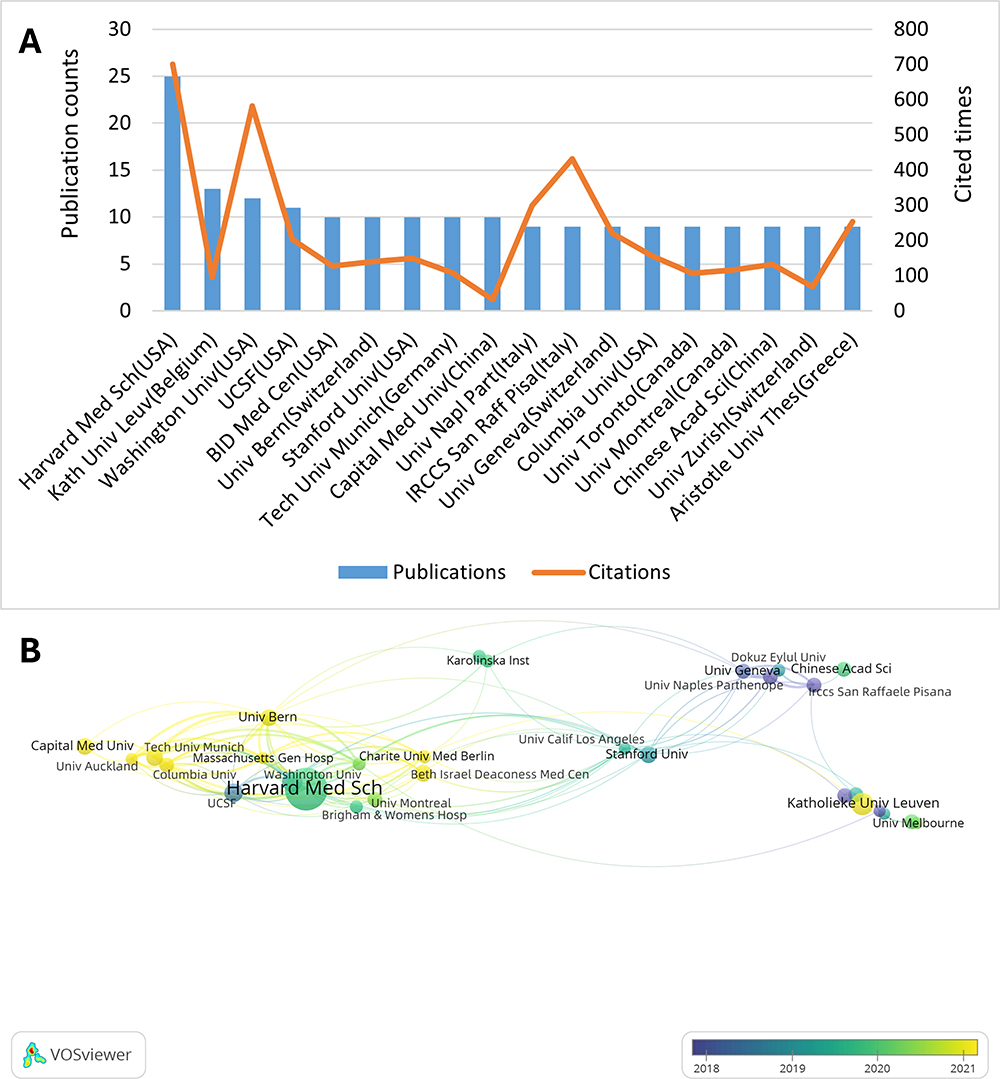 |
Figure 4 Institution analyses. (A) publication counts, total cited times and nationalities of the top-10 productive institutions. UCSF, University of California, San Francisco. Kath Univ Leuv, Katholieke University of Leuven. Bid Med Cen, Beth Israel Deaconess Medical Center. Univ Napl Part, University of Naples Parthenope. IRCCS San Raff Pisa, IRCCS San Raffaele Pisana. Aristotle Univ Thes, Aristotle University of Thessaloniki. (B) visualization for citation analysis of the institutions. The minimal occurrence of institutions in the map is 7. The colors of nodes and lines are dependent on the average publication time. |
 |
Figure 5 Country/region analyses. (A) publication counts and total cited times of the top-10 productive countries/regions. (B) visualization for co-authorship analysis of the countries/regions. The minimal occurrence of countries/regions in the map is 5. The colors of nodes and lines are dependent on the average cited times. |
Journal Analyses
Two hundred and sixty-four journals recorded these articles. Frontiers in Aging Neuroscience, with 61 documents, was the most popular journal for researchers in this field. Other hot journals were Neurobiology of Aging, Clinical Neurophysiology, Frontiers in Neuroscience, Journal of Alzheimer's Disease, Frontiers in Human Neuroscience, Scientific Reports, Neuroimage, Clinical EEG and Neuroscience, Neuroscience, Sleep and Brain Sciences. The highest Impact Factor (IF) among the 12 popular journals was 5.6, and the average IF was 3.99. There were 3 journals located in the first quartile (Q1) of the Journal Citation Reports (JCR) category, 6 in the second quartile (Q2), and 3 in the third quartile (Q3). The information of these journals was presented in Table 2. However, the average publication age of the articles in Brain Sciences, Frontiers in Psychiatry, BMC Anesthesiology and IEEE Transactions on Neural Systems and Rehabilitation Engineering was relatively young (Figure 6A). The British Journal of Anaesthesia, Anesthesia and Analgesia, and Frontiers in Systems Neuroscience won higher citations in average (Figure 6B).
 |
Table 2 The 10 Journals with Most Publications |
 |
Figure 6 Visualization for citation analysis of the journals. The minimal occurrence of journals in the map is 5. (A), the colors of nodes and lines is dependent on the average publication time. (B), the colors of nodes and lines is dependent on the average cited times. |
Keywords Analyses
We analyzed the occurrence of keywords in these articles. The 10 keywords with the highest occurrence counts were EEG, elderly, aging, Alzheimer’s disease, mild cognitive impairment, dementia, memory, event-related potentials, attention and brain (Figure 7A). However, the average occurrence of anesthesia, postoperative delirium, confusion assessment method, connectivity, validation and power were the latest (Figure 7B). EEG, elderly, aging and Alzheimer’s disease had strong connections with other keywords (Figure 7B). The main disorders for EEG researches included AD, dementia, epilepsy, seizures, POD, delirium, and mild cognitive impairment (Figure 7B).
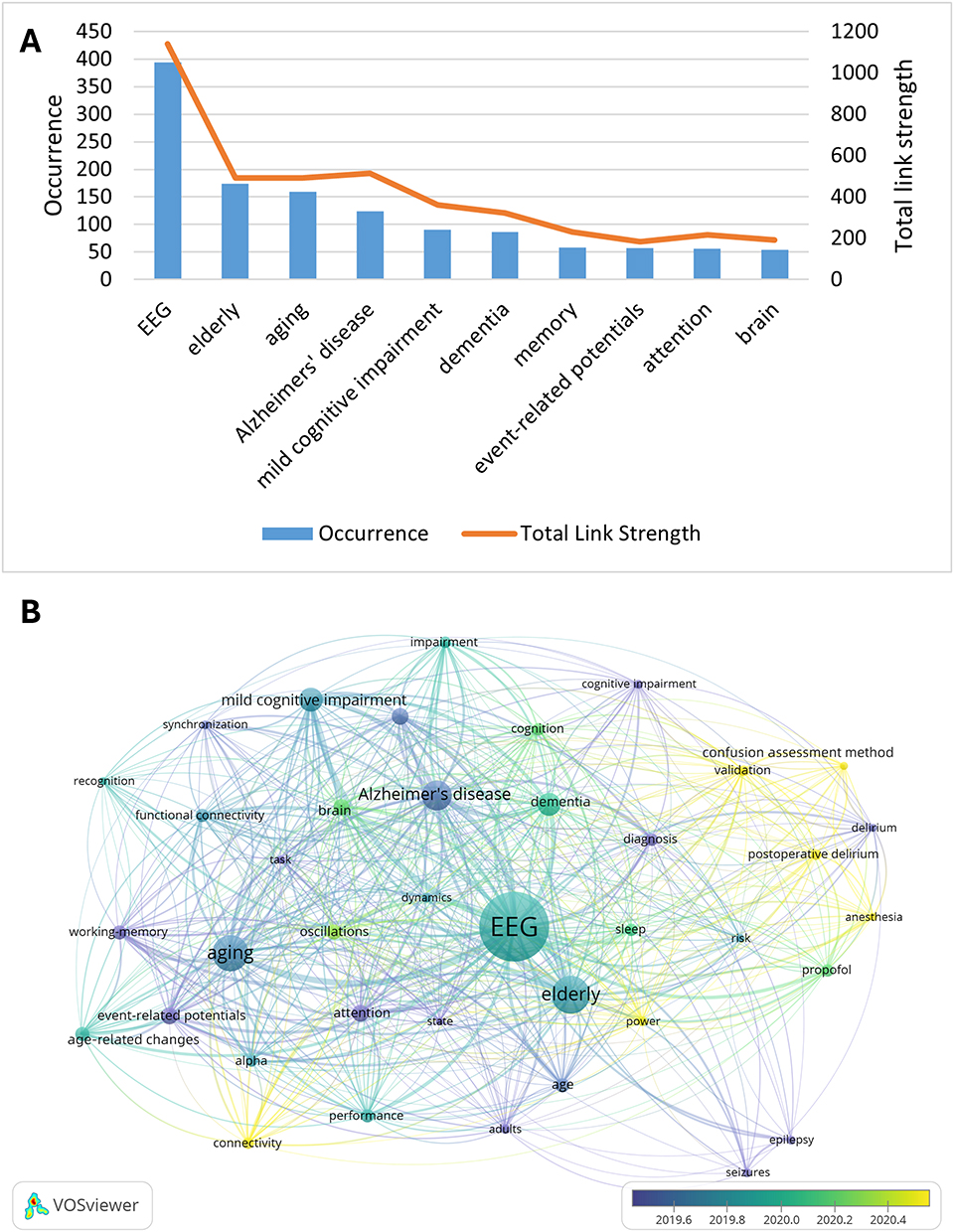 |
Figure 7 Keywords analyses. (A) occurrence counts and total link strength of the top-10 used keywords. (B) visualization for co-occurrence analysis of the keywords. The minimal occurrence of keywords in the map is 20. The colors of nodes and lines are dependent on the average publication time. |
Discussion
We performed a bibliometric analysis of the application of non-invasive EEG in elderly patients. A total of 655 articles published in the last 10 years in this field were enrolled and analyzed. Generally, the development of publication counts is positive. The global participation is wide, with 3620 investigators, 1205 organizations and 58 countries/regions. These studies have been published in 264 journals involved in multiple disciplines.
The USA is clearly the leader in this field. The results of this study indicate that authors from the USA published 187 (28.5%) articles that were cited more than 3000 times. The top-5 authors with the highest number of citations are American. Moreover, 6 productive institutions belong to the USA. However, European and Asian countries, such as Germany, the UK, Switzerland, Italy, China and Japan, also made significant contributions. These countries share a common feature of a high income, which partly confirms the mutual promotion between economics and technology.
The highly preferred journals are mainly specialized in neuroscience, which is in accordance with the more occurrence of neurological-related keywords. Although the IF of the popular journals is not so high, they are mainly the influential journals in the subspecialty area. The journal with the highest IF is JAMA- Journal of the American Medical Association.12 This article is a randomized clinical trial in which the authors found that EEG-guided anesthesia did not reduce the incidence of POD among elderly patients undergoing major surgery. The conclusion is consistent with a recently published meta-analysis.15 However, some latest studies have reached opposing conclusions.16,17 The role of EEG-guided anesthesia in POD seems contradictory. In fact, the key point is the value of the bispectral index (BIS), a kind of processed EEG indicating anesthesia depth. A lower BIS value (ie <40) indicates excessive inhibition of the brain and further the higher incidence of POD.18 Therefore, further studies should focus on the optimal anesthesia depth and the way to maintain the optimal depth. Another interesting point is that the articles published in two anesthesiology journals (British Journal of Anesthesia, and Anesthesia and Analgesia) have higher average citations, indicating the importance of EEG in anesthesiology.
According to keyword analyses, the pathophysiology related to the application of EEG in the elderly includes neurodegenerative diseases, abnormal neural electrical activities, perioperative issues, and age-related changes in neuroelectrophysiology. The most frequently studied diseases via EEG are AD, mild cognitive impairment and dementia, while postoperative delirium (POD) and brain network are newer topics. On the one hand, the results indicate that researchers in anesthesiology have put more efforts into protecting aged brains. This is a necessity for anesthesiologists and neurologists to face with the large number of elderly surgical patients.19 On the other hand, the connectivity of encephalic regions has been widely noticed. Advanced monitoring devices and analysis methods, such as functional magnetic resonance imaging (fMRI), magnetoencephalography (MCG), functional near-infrared spectroscopy (fNIRS), EEG and multimodal analysis methods, have made it possible to gradually deepen the understanding of the complex brain.20–22 Nevertheless, current recognition of brain is still much insufficient. The above-mentioned keywords may become new hotspots of this field in the near future.
The present study mainly offered an overview of the current status, hotspots and trends in EEG-based researches among older adults. We also emphasized the most productive authors, countries/regions and academic organizations to facilitate potential cooperation. In addition, the popular journals and active journals were analyzed to help researchers. However, there are several limitations in the bibliometric study.
First of all, despite we used many synonyms for EEG, older adults and invasive EEG, they still could not include all the related thesauruses. In order to include the publications to the maximum extent, we used fuzzy retrieval and carefully reviewed the method section of the alternative articles. As a result, 1656 articles were identified, of which 655 were eligible. Secondly, we searched only the WoS Core Collection, a database that documented high-quality articles. Therefore, our study did not analyze all the articles in this field. However, studies with high quality are more helpful. Finally, since there are no keywords in some articles, such as articles in Anesthesia and Analgesia, and the European Journal of Anaesthesiology, the keywords in our study actually included Author Keywords (added by the authors) and Keywords Plus (added by WoS). However, Keywords Plus can be very different from Author Keywords. For example, Author Keywords in Yin’s article include freezing of gait, graph theory, brain networks and transfer entropy, whereas Keywords Plus are theta and oscillations.23 Thus, the analyses of keywords may have biases.
Conclusions
Based on 655 articles in the WoS Core Collection, the present study provides a general perspective on the original research on EEG in the elderly. Despite the slow growth in publications, this field has produced a large number of outputs in recent years. EEG is absolutely a hotspot in gerontology. The investigators from North America, Europe and East Asia made significant contributions to the literature. Authors in this field are more likely to publish their works in journals that specialize in neuroscience. The most commonly studied issues are degenerative neural disorders; however, POD and brain network may become hotspots in the near future.
Author Contributions
All authors made a significant contribution to the work reported, whether that is in the conception, study design, execution, acquisition of data, analysis and interpretation, or in all these areas; took part in drafting, revising or critically reviewing the article; gave final approval of the version to be published; have agreed on the journal to which the article has been submitted; and agree to be accountable for all aspects of the work.
Funding
The authors declare that no funds, grants, or other support was received during the preparation of this manuscript.
Disclosure
The authors declare no competing interests in this work.
References
1. United Nations Department of Economic and Social Affairs, Population Division. World Population; 2022.Prospects 2022: summary of Results. UN DESA/POP/2022/TR/NO. 3; 2022.
2. Hou Y, Dan X, Babbar M, et al. Ageing as a risk factor for neurodegenerative disease. Nat Rev Neurol. 2019;15(10):565–581.
3. Erkkinen MG, Kim MO, Geschwind MD. Clinical Neurology and Epidemiology of the Major Neurodegenerative Diseases. Cold Spring Harbor Perspect Biol. 2018;10(4).
4. Checkoway H, Lundin JI, Kelada SN. Neurodegenerative diseases. IARC Scientific Public. 2011(163):407–419.
5. Andreas S, Schulz H, Volkert J, et al. Prevalence of mental disorders in elderly people: the European MentDis_ICF65+ study. Brit j Psych. 2017;210(2):125–131.
6. Grassi L, Caruso R, Da Ronch C, et al. Quality of life, level of functioning, and its relationship with mental and physical disorders in the elderly: results from the MentDis_ICF65+ study. Health Qual Life Outco. 2020;18(1):61.
7. Yener G, D Ö. Innovations in Neurophysiology and Their Use in Neuropsychiatry. Noro psikiyatri arsivi. 2022;59(1):S67–s74.
8. Wang B, Zartaloudi E, Linden JF, Bramon E. Neurophysiology in psychosis: the quest for disease biomarkers. Transl Psychiatry. 2022;12(1):100.
9. Manganotti P, Ajčević M, Buoite Stella A. EEG as a marker of brain plasticity in clinical applications. Handbook Clin Neurol. 2022;184:91–104.
10. Lazarides MK, Lazaridou IZ, Papanas N. Bibliometric Analysis: bridging Informatics With Science. International j Lower Extremity Wounds. 2023;15347346231153538.
11. He X, Peng C, Xu Y, Zhang Y, Wang Z. Global Scientific Research Landscape on Medical Informatics From 2011 to 2020: bibliometric Analysis. JMIR Medical Informatics. 2022;10(4):e33842.
12. Wildes TS, Mickle AM, Ben Abdallah A, et al. Effect of Electroencephalography-Guided Anesthetic Administration on Postoperative Delirium Among Older Adults Undergoing Major Surgery: the ENGAGES Randomized Clinical Trial. JAMA. 2019;321(5):473–483.
13. Wen D, Liang B, Li J, et al. Feature Extraction Method of EEG Signals Evaluating Spatial Cognition of Community Elderly With Permutation Conditional Mutual Information Common Space Model. IEEE Transact Neural Syst Rehabil Engi. 2023;31:2370–2380.
14. Ramirez R, Palencia-Lefler M, Giraldo S, Vamvakousis Z. Musical neurofeedback for treating depression in elderly people. Front Neurosci. 2015;9:354.
15. Chew WZ, Teoh WY, Sivanesan N, et al. Bispectral Index (BIS) Monitoring and Postoperative Delirium in Elderly Patients Undergoing Surgery: a Systematic Review and Meta-Analysis With Trial Sequential Analysis. J Cardioth Vascular Anesthesia. 2022;36(12):4449–4459.
16. He Z, Zhang H, Xing Y, et al. Effect of raw electroencephalogram-guided anesthesia administration on postoperative outcomes in elderly patients undergoing abdominal major surgery: a randomized controlled trial. BMC Anesthesiology. 2023;23(1):337.
17. Pérez-Otal B, Aragón-Benedí C, Pascual-Bellosta A, Ortega-Lucea S, Martínez-Ubieto J, Ramírez-Rodríguez JM. Neuromonitoring depth of anesthesia and its association with postoperative delirium. Sci Rep. 2022;12(1):12703.
18. Evered LA, Chan MTV, Han R, et al. Anaesthetic depth and delirium after major surgery: a randomised clinical trial. Br J Anaesth. 2021;127(5):704–712.
19. Daiello LA, Racine AM, Yun Gou R, et al. Postoperative Delirium and Postoperative Cognitive Dysfunction: overlap and Divergence. Anesthesiology. 2019;131(3):477–491.
20. Sang F, Xu K, Chen Y. Brain Network Organization and Aging. Adv Exp Med Biol. 2023;1419:99–108.
21. Hu Z, Liu G, Dong Q, Niu H. Applications of Resting-State fNIRS in the Developing Brain: a Review From the Connectome Perspective. Front Neurosci. 2020;14:476.
22. Cao J, Zhao Y, Shan X, et al. Brain functional and effective connectivity based on electroencephalography recordings: a review. Human Brain Mapp. 2022;43(2):860–879.
23. Yin N, Wang H, Wang Z, Feng K, Xu G, Yin S. A study of brain networks associated with Freezing of gait in Parkinson’s disease using transfer entropy analysis. Brain Res. 2023;1821:148610.
 © 2024 The Author(s). This work is published and licensed by Dove Medical Press Limited. The
full terms of this license are available at https://www.dovepress.com/terms
and incorporate the Creative Commons Attribution
- Non Commercial (unported, 3.0) License.
By accessing the work you hereby accept the Terms. Non-commercial uses of the work are permitted
without any further permission from Dove Medical Press Limited, provided the work is properly
attributed. For permission for commercial use of this work, please see paragraphs 4.2 and 5 of our Terms.
© 2024 The Author(s). This work is published and licensed by Dove Medical Press Limited. The
full terms of this license are available at https://www.dovepress.com/terms
and incorporate the Creative Commons Attribution
- Non Commercial (unported, 3.0) License.
By accessing the work you hereby accept the Terms. Non-commercial uses of the work are permitted
without any further permission from Dove Medical Press Limited, provided the work is properly
attributed. For permission for commercial use of this work, please see paragraphs 4.2 and 5 of our Terms.