
Back to Journals » Patient Preference and Adherence » Volume 19
Emerging Research Trends on Medication Adherence in Tuberculosis Treatment: A Bibliometric Study of Research Between 2015 and 2024 to Inform Future Research Trajectory
Authors Maulana S  , Lutfian L , Wardika IJ , Fadhli R, Anggreani D, Haposan JH , Wildana F, Efendi MA, Platini H , Haroen H
Received 2 February 2025
Accepted for publication 4 July 2025
Published 28 July 2025 Volume 2025:19 Pages 2213—2226
DOI https://doi.org/10.2147/PPA.S520341
Checked for plagiarism Yes
Review by Single anonymous peer review
Peer reviewer comments 2
Editor who approved publication: Dr Johnny Chen
Sidik Maulana,1,* Lutfian Lutfian,2,* Izdihar Javier Wardika,3 Rahmat Fadhli,4,5 Desfara Anggreani,6 Jonathan Hasian Haposan,7,8 Fahmi Wildana,3 Melani Adelia Efendi,3 Hesti Platini,9,10 Hartiah Haroen11
1Doctoral Study Program of Nursing, Faculty of Nursing, Universitas Padjadjaran, Sumedang, 45363, Indonesia; 2School of Nursing and Midwifery, Faculty of Medicine, Nursing, and Health Sciences, Monash University, Melbourne, Victoria, 3168, Australia; 3Faculty of Nursing, Universitas Padjadjaran, Sumedang, 45463, Indonesia; 4School of Computing and Information Systems, Faculty of Engineering and Information Technology, University of Melbourne, Melbourne, Victoria, Australia; 5Faculty of Education, Universitas Negeri Yogyakarta, Yogyakarta, Sleman, 55281, Indonesia; 6Faculty of Health Science, National University, South Jakarta, 12520, Indonesia; 7Department of Paediatrics, Faculty of Medicine, Dentistry, and Health Sciences, University of Melbourne, Melbourne, Victoria, Australia; 8Department of Biostatistics, Epidemiology, and Population Health, Faculty of Medicine, Public Health, and Nursing, Universitas Gadjah Mada, Sleman, 55281, Indonesia; 9Department of Medical-Surgical Nursing, Faculty of Nursing, Universitas Padjadjaran, Sumedang, 45363, Indonesia; 10Department of Nursing, Universitas Padjadjaran Hospital, Sumedang, 45363, Indonesia; 11Department of Community Health Nursing, Faculty of Nursing, Universitas Padjadjaran, Sumedang, 45363, Indonesia
*These authors contributed equally to this work
Correspondence: Sidik Maulana, Faculty of Nursing, Universitas Padjadjaran, Jl. Ir. Soekarno KM. 21, Jatinangor, Sumedang, 45363, Indonesia, Tel +62 89662392294, Email [email protected]; [email protected] Lutfian Lutfian, School of Nursing and Midwifery, Faculty of Medicine, Nursing, and Health Sciences, Monash University, 48 Risdon Drive, Notting Hill, Melbourne, Victoria, 3168, Australia, Tel +61424713022, Email [email protected]
Introduction: Current knowledge regarding tuberculosis (TB) medication adherence largely stems from scientific publications. However, to date, the volume and characteristics of studies specifically focused on TB medication adherence in Southeast Asia have not yet been systematically assessed. This study aims to conduct a comprehensive bibliometric analysis of research on medication adherence in TB treatment within this region.
Methods: A bibliometric analysis was conducted using the Scopus database to identify research articles related to medication adherence in TB treatment in Southeast Asia, published in English between 2015 and 2024. The analysis included the number of publication trends, country of origin, citation metrics, co-authorship networks, keyword co-occurrence, and the most frequently cited documents.
Results: A total of 146 journal articles were retrieved. Indonesia emerged as the most prolific contributor and demonstrated strong international collaboration. Keyword co-occurrence analysis revealed four major research themes: (1) clinical and demographic characteristics, (2) pharmacological management and disease burden, (3) socio-behavioral factors related to adherence, and (4) digital health-based treatment evaluation. Burst analysis of reference and keyword highlighted emerging research trends, particularly in “primary-community based care” and “digital health interventions”, indicating potential trajectories for future research in TB medication adherence.
Conclusion: This study provided an overview of the evolving research landscape on TB medication adherence in Southeast Asia. These findings highlight the growing emphasis on primary-community based care and digital health interventions, pointing toward shaping future research and practice.
Keywords: bibliometric, medication adherence, tuberculosis, Southeast Asia
Introduction
Tuberculosis (TB) remains a major global health challenge, particularly in Southeast Asia.1 Caused by Mycobacterium tuberculosis, TB requires prolonged treatment, often spanning several months. According to the World Health Organization (WHO), an estimated 10.8 million people were affected by TB worldwide in 2023.2 The Global Tuberculosis Report 2024 further reported that TB was responsible for around 1.25 million deaths in 2023, making it the leading cause of death from infectious diseases.2 Southeast Asia carries a significant share of this burden, accounting for about 38% of global TB cases.2 Multiple factors such as economic disparities, healthcare system limitation, and cultural practices significantly influence medication adherence among tuberculosis patients in region.1,3
Adherence to medication is a key determinant of successful TB treatment.4 However, Southeast Asia continues to face significant challenges in achieving optimal adherence. A meta-analysis observed in Asia found that around 17% of the 660.000 individuals living with TB were lost to follow-up during treatment, with Southeast Asia recording the highest regional rate at 22%.5 Poor adherence can lead to treatment failure, disease recurrence, and the development of multidrug-resistant TB (MDR-TB).5,6 Reflecting this, Southeast Asia contributed to 38% of the global MDR burden in 2024. In 2021, the TB case fatality rate in Southeast Asia reached 19%, the highest among all WHO regions.1,2 Adherence is particularly challenging among people living with HIV due to high pill burden associated with co-treatment.6 Understanding the current research landscape and identifying gaps in the literature on TB treatment adherence are essential for informing future research trajectory and improving TB care.7 Moreover, intensified research is a core pillar of the WHO End TB Strategy, reinforcing its importance in global and regional TB control efforts.1
Current knowledge on TB medication adherence largely drives from scientific publications.4,8 However, the volume and characteristics of studies specifically focused on TB medication adherence in Southeast Asia have not yet been systematically assessed. Existing research and global reports often present findings without regional disaggregation, potentially obscuring the influences of geographic and contextual factors on adherence-related mechanisms.8 In the absence of regional-specific insights, efforts to understand and enhance TB medication strategies in Southeast Asia remain limited and challenging.
Although TB medication adherence has garnered considerable scholarly attention, a region-specific bibliometric analysis in this area remains limited, particularly those that map publication patterns and identify emerging research priorities. Previous bibliometric study has primarily focused on global TB research more broadly.8 In recent years, bibliometric analysis has gained prominence in medical research as a tool for generating structured insights into research trends, influential publications, leading authors, and key institutions.9 These methods involve the systematic and quantitative evaluation of scholarly outputs to explore research hotspots, citation patterns, and academic networks. To our knowledge, this study represents the first bibliometric analysis to focus specifically on TB medication adherence in Southeast Asia. Therefore, the objectives of this study are to evaluate the volume, growth trajectory, and geographic distribution of TB medication adherence literature published in Southeast Asia between 2015 and 2024, and to visualize research clusters and thematic trends to TB treatment during this period. The findings aim to inform future research trajectory on medication adherence in TB treatment.
Methods
Study Design
This study employed a bibliometric analysis to explore research trends in medication adherence to tuberculosis treatment within the Southeast Asian context. Bibliometric analysis is a quantitative method used to evaluate scientific literature by examining citation data, authorship patterns, and keyword co-occurrence, thereby revealing the development and dissemination of knowledge over time. This approach is particularly well-suited for assessing research output and collaboration networks, which are essential for understanding the scholarly landscape of TB medication adherence in Southeast Asia.10 Moreover, this approach enables the identification of influential publications and authors, emerging research themes, and gaps in the literature, ultimately supporting evidence-based policy-making and guiding future research trajectory.11
Search Method and Selection Strategy
Bibliographic data related to TB medication adherence were retrieved from the Scopus database between June and July 2024. Scopus was selected due to its comprehensive coverage of peer-reviewed literature, high-quality indexing standards, and robust capabilities for bibliometric analysis. The search employed the following keywords: (“medication adherence” OR “treatment adherence” OR “adherence to treatment” OR “treatment compliance” OR “medication compliance”) AND (“tuberculosis” OR “TB”) AND (“Southeast Asia” OR “Indonesia” OR “Malaysia” OR “Thailand” OR “Philippines” OR “Vietnam” OR “Singapore” OR “Myanmar” OR “Cambodia” OR “Laos” OR “Brunei” OR “Timor-Leste”).
To ensure relevant publications were included, the following criteria were according to population, concept, and context (PCC) framework including: (1) Population in this study is tuberculosis patients undergoing TB medication, which include all sites of TB infection. The population also includes patients with primary medication or multidrug medication. (2) The concept of this study is TB medication adherence, as defined as, retention or completeness to TB medications as prescribed by a health-care provider. (3) The context of this study is TB medication research in Southeast Asia, involve collaboration with Southeast Asian authors, or be conducted in Southeast Asia. Moreover, the exclusion criteria were: the article published with non-English and it was published more than 2015.
Data Extraction and Analysis
The data collection process followed a structured approach, beginning with the identification of relevant studies, followed by screening of titles and abstracts to ensure alignment with the inclusion criteria. Microsoft ® Excel ® (version 2021) was used to manage and organize the articles during this process. Data retrieved from Scopus were downloaded in XML and CSV formats for the analysis. This study utilized VOSviewer (version 1.6.19) and R-Bibliometrix package in RStudio ® (version 4.4.1) for data analysis. VOSviewer was employed to visualise evolving research trends and collaboration patterns through keyword co-occurrence and the geographic distribution of the research. Specific parameters and thresholds for these analyses were set to ensure the accuracy and relevance of the visualisations. Additionally, the R-Bibliometrix package in RStudio ® was used to visualise annual scientific production, most-cited documents, and the three-field plot of cited references, authors, and keywords. This combination of tools allowed for a comprehensive and detailed bibliometric analysis of the research on TB medication adherence in Southeast Asia.
The data analysis in VOSviewer utilized co-authorship to assess the extent of research on specific topics. This analysis also highlighted opportunities for collaboration and provided various insights into the research network. Additionally, co-occurrence analysis was conducted to offer complementary views and explore the intellectual structure of keywords used by researchers.12 In R-Bibliometrix, the analysis employed a three-plot field (Sankey diagram) to provide an overview and insights into individual researchers’ priorities within specific fields or keywords published in particular journals. Additionally, this application was used to obtain descriptive statistical data, such as publication growth patterns and citation trends. To maintain the quality of reporting bibliometric analysis, besides PRISMA guidelines, we also used BIBLIO guideline and checklist for reporting bibliometric reviews by Montazeri et al (2023).13
Results
Study Selection
In the identification stage, the initial search of the Scopus database yielded 2454. After the removal of 4 duplicate records, 2450 unique articles remained. As a result, 2158 titles and abstract did not meet the inclusion criteria and were excluded due to their research outside Southeast Asia. Finally, the sample comprised 146 articles that met the inclusion criteria and were subsequently included in the bibliometric analysis. This meticulous process ensured that the selected articles were relevant and representative of the research landscape on TB medication adherence in Southeast Asia. The detailed selection process is presented in Figure 1.
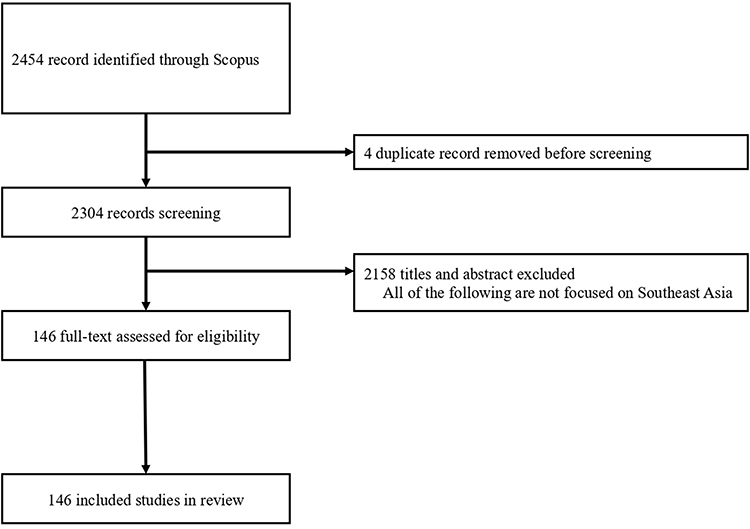 |
Figure 1 Study selection process. |
Yearly Publication Analysis
Between 2015 and 2016, the volume of publication on TB medication adherence in Southeast Asia remained low, with fewer than 10 articles published each year. From 2016 to 2018, a steady increase was observed, with publications rising about 10 in 2016 to over 20 in 2018. A notable peak occurred in 2020, with the number of articles reaching around 35. However, this was followed by a sharp decline in 2021, when the number dropped to about 14. In 2023, the publication volume rose again to around 25 articles, before declining once more in 2024 to just above 10. These trends are depicted in Figure 2, which illustrates the annual scientific production related to TB medication adherence.
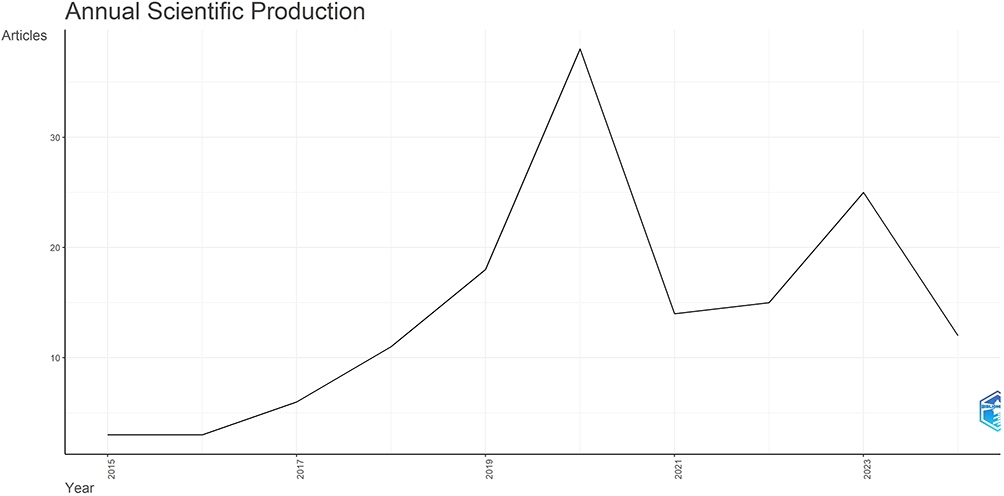 |
Figure 2 Annual scientific production (2015–2024). |
Country Analysis
Figure 3 showcases international research collaborations between Southeast Asian countries and their global countries. Indonesia emerges as central and prominent, indicating its significant role in TB medication adherence research and its strong collaborative ties with countries, such as the United States, Australia, and Netherlands. The clusters identified in Figure 3 include the Red Cluster, where the Philippines often collaborates with researchers in South Africa, the United Kingdom, and the Netherlands. The Green Cluster indicates that Vietnam and Malaysia frequently collaborate with Australia, France, and other countries. The Yellow Cluster comprises Indonesia and Thailand, which often collaborate with Sweden, Malaysia, and Vietnam. The Blue Cluster includes Singapore, which often collaborates with the United States and India.
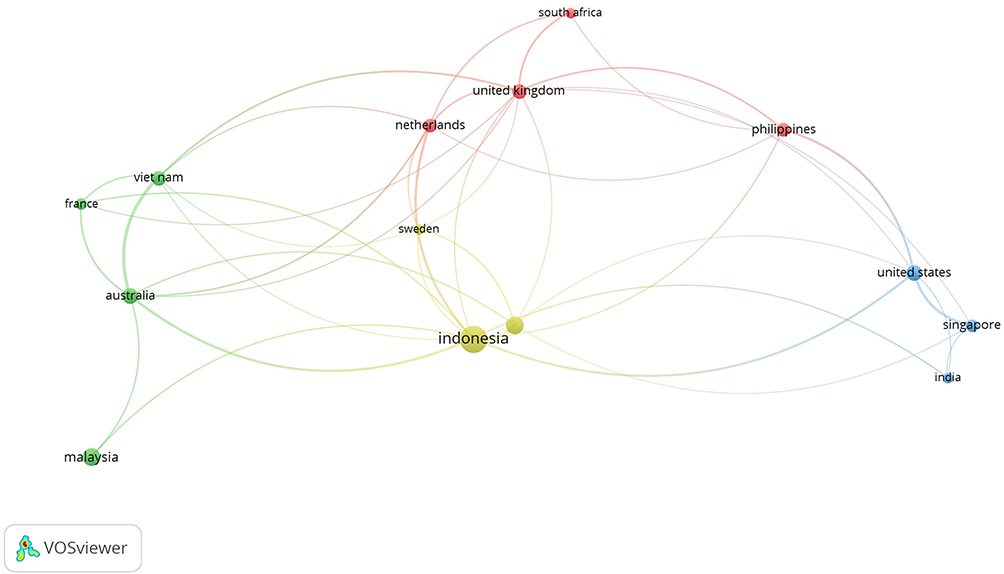 |
Figure 3 International research collaborations on TB medication adherence in Southeast Asia. |
Most Cited Documents
Table 1 presents the most cited documents related to TB medication adherence in Southeast Asia.14–23 The most highly cited article is by Getahun et al14 published in the European Respiratory Journal, with a total of 459 citations. Other frequently cited publications include Zhang et al15 in PLoS ONE with 67 citations, and Pradipta et al16 in NPJ Primary Care Respiratory Medicine with 61 citations. Additionally, studies by Nguyen et al17 and Abdulrahman et al18 both with 52 citations, are also among the top-cited works in this field.
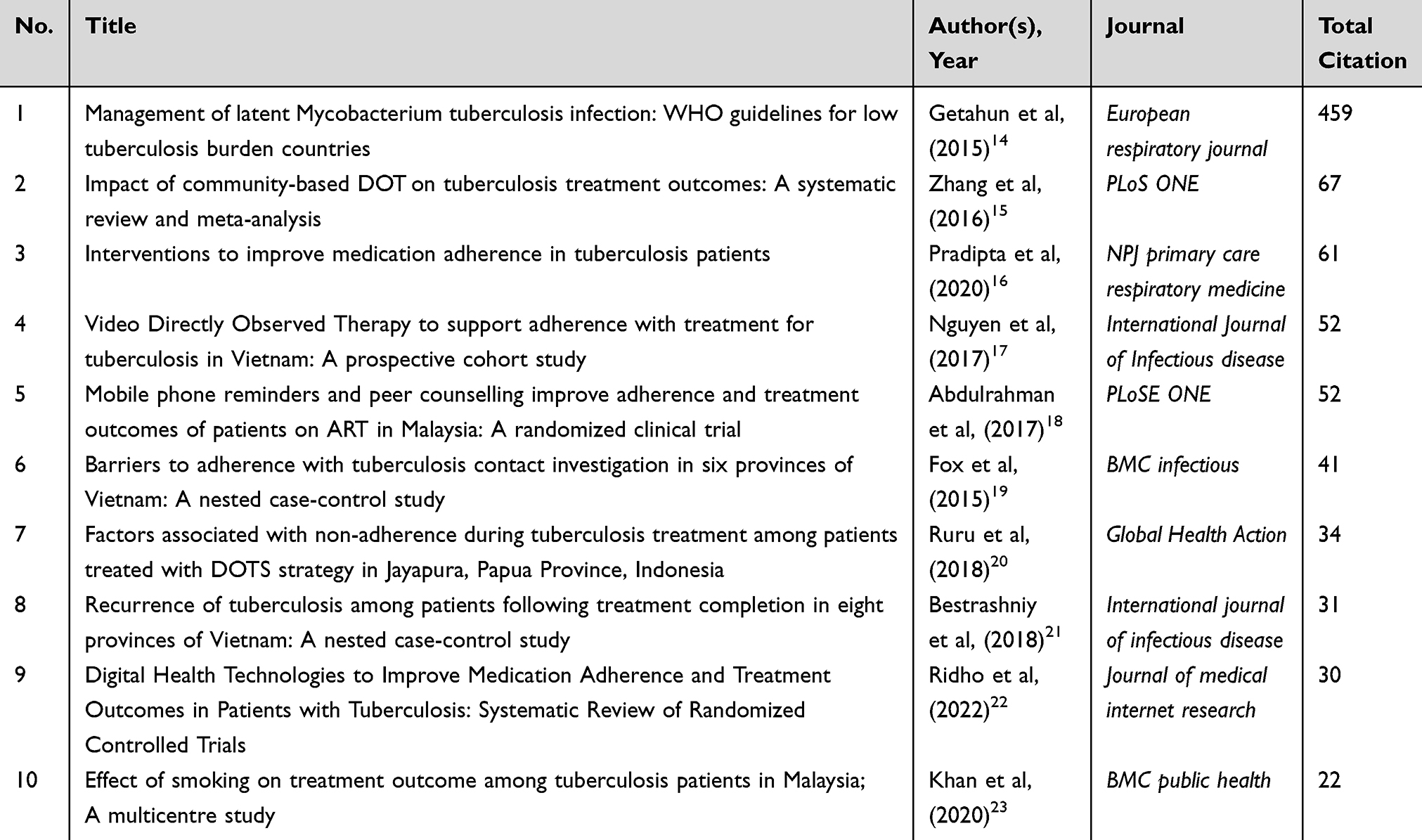 |
Table 1 Most Cited Documents |
Co-Occurrence and Network Analysis
The network visualization of tuberculosis medication adherence reveals a strong interconnection between core terms such as tuberculosis, medication adherence, and tuberculostatic agents, reflecting the complex, multidisciplinary nature of this research area. Four distinct thematic clusters are identified in this study, each representing a different perspective on tuberculosis care and adherence. The thematic clusters of this study presented in Figure 4 and publication examples in Table 2.17,22,24–29
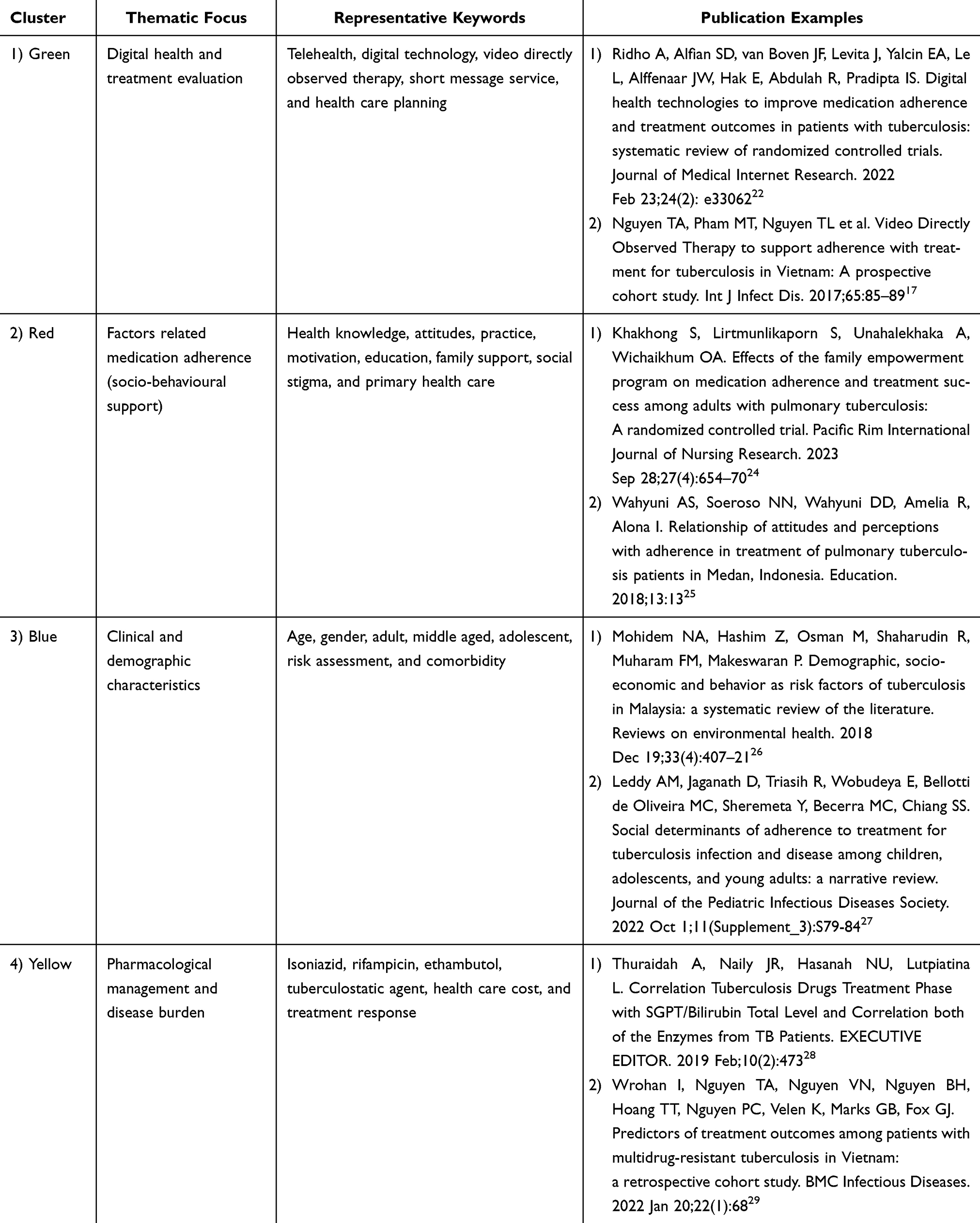 |
Table 2 Publication Examples Within Identified Thematic Clusters |
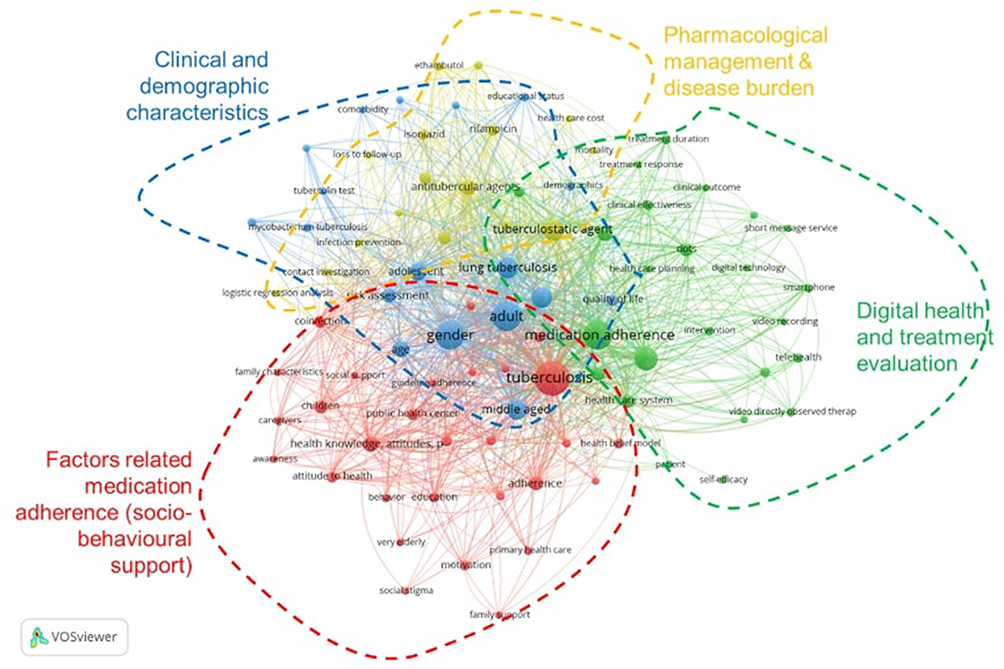 |
Figure 4 Research cluster on tuberculosis medication adherence. |
The Green Cluster highlights digital health and treatment evaluation, featuring keywords such as telehealth, digital technology, video directly observed therapy, short message service, and health care planning. This cluster indicates a growing trend toward integrating technology to monitor and improve medication adherence. It represents a shift toward innovative, technology-assisted models of care delivery. The Red Cluster focuses on factors related to medication adherence from a sociobehavioral and support perspective, with prominent keywords such as health knowledge, attitudes, practice, motivation, education, family support, social stigma, and primary health care. This cluster underscores the importance of addressing psychosocial influences, health literacy, and caregiver roles in enhancing adherence.
The Blue Cluster is characterized by clinical and demographic characteristics, incorporating terms like age, gender, adult, middle aged, adolescent, risk assessment, and comorbidity. This cluster emphasizes the need to understand how patient demographics and clinical conditions influence adherence behaviors, supporting the development of tailored interventions for specific populations. The Yellow Cluster centers on pharmacological management and disease burden, including terms such as isoniazid, rifampicin, ethambutol, tuberculostatic agent, health care cost, and treatment response. This cluster reflects an emphasis on antitubercular drug regimens, treatment outcomes, and the economic implications of TB control. It focuses on optimizing pharmacological interventions and addressing the broader burden of the disease.
These clusters reveal interconnected yet distinct research domains, spanning pharmacological, technological, clinical, and sociobehavioral dimensions. This comprehensive mapping demonstrates that improving tuberculosis medication adherence requires an integrative approach, combining medical, digital, social, and behavioral strategies. Figure 4 illustrates this multidimensional structure, showing strong linkages across domains and affirming the value of interdisciplinary research in tackling TB medication adherence challenges.
Research Trends in the Southeast Asian Countries
Figure 5 illustrates research trends over time, visualized through a keyword co-occurrence overlay map. Core keywords such as tuberculosis, tuberculostatic agent, pulmonary tuberculosis, and antitubercular agents remain central, highlighting the foundational focus of research in this field. Surrounding these core areas, a growing body of literature has increasingly concentrated on medication adherence, adherence behavior, and treatment outcomes, signaling a shift toward patient-centered treatment dynamics.
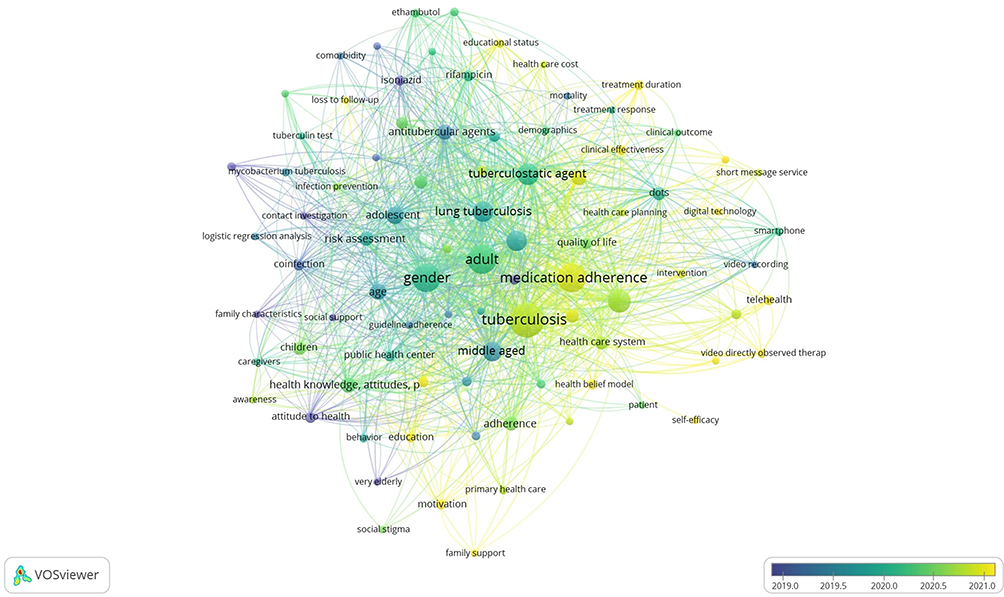 |
Figure 5 Research trends related to TB medication adherence in Southeast Asian countries. |
Emerging research trends are evident in the more recent keywords, highlighted in yellow on the map, such as digital technology, telehealth, smartphone, video recording, and short message service. These indicate a rising interest in harnessing technological innovations to enhance adherence interventions. Social behavioral dimensions also feature prominently, with frequent references to health knowledge, attitudes, and practices, motivation, behavior, social stigma, and self-efficacy. These terms underscore a growing recognition that behavioral change and psychosocial support are essential to sustaining adherence throughout TB treatment.
Furthermore, family support, caregiver roles, and public health centers are also identified as important supporting elements in the treatment journey. Clinical and economic considerations such as health-care systems, treatment cost, clinical outcomes, and planning reflect an effort to assess both the effectiveness and sustainability of various interventions. Despite the wide range of topics addressed, several critical areas remain underexplored.
Three-Field Plot Relationship
The three-field plot illustrates the relationships among authors’ countries (AU_CO), authors (AU), and keywords (DE) in research on medication adherence among tuberculosis patients, particularly within the Southeast Asian context in Figure 6. This visualization reveals patterns of collaboration and thematic focus in the field. Key authors such as Sukartini from Indonesia, Chongsuvivatwong from Thailand, and Kumwicher from Thailand emerge as central contributors, showing strong connections to critical topics like tuberculosis and medication adherence. Countries such as Indonesia, Thailand, and Australia are highlighted as major hubs of research activity, reflecting significant output and international collaboration. Frequently occurring keywords include tuberculosis, medication adherence, quality of life, stigma, and treatment, indicating a strong focus on both clinical and psychosocial aspects of care. The links between authors across different countries and recurring thematic areas suggest close global cooperation. Furthermore, the presence of terms such as self-efficacy, knowledge, and the health belief model points to the integration of behavioral science approaches in understanding treatment adherence. Overall, this visualization underscores the main contributors and the dominant thematic priorities shaping the current research landscape.
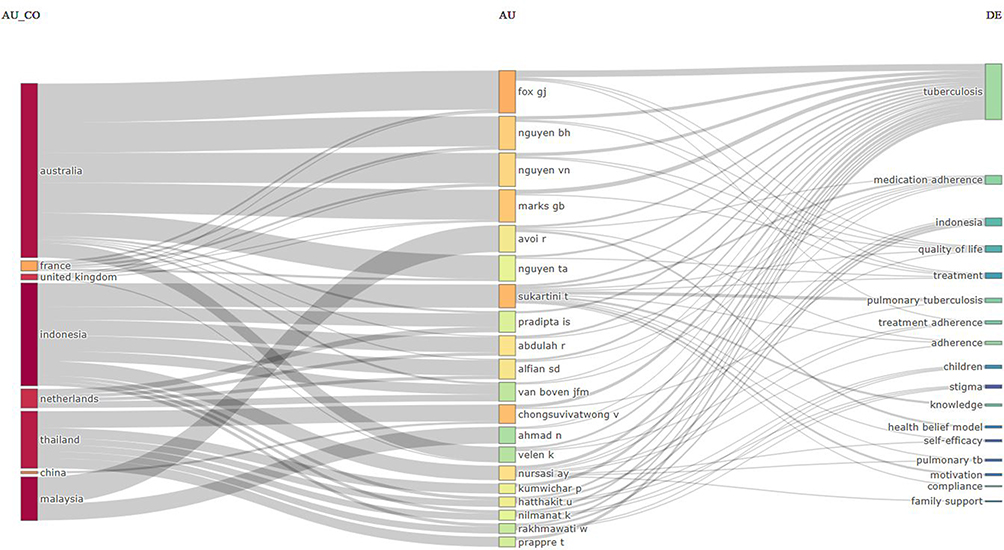 |
Figure 6 Three-field plot of authors’ countries, authors, and keywords. |
Discussion
This bibliometric analysis provides valuable insights into the evolving research landscape on TB medication adherence in Southeast Asia. Among the observed publication trends, a notable concentration of studies appeared around 2020, likely reflecting research efforts conducted prior to the onset of the COVID-19 pandemic. This pre-pandemic period marked a phase of heightened research activity, supported by global TB control initiatives and growing awareness of TB medication adherence-related challenges. However, the emergence of COVID-19 significantly disrupted TB programs, as health system resources were diverted toward pandemic response.30–32 Access to TB care was further constrained by transportation disruptions, mobility restriction, health-care workforce shortages, and increased fear and stigma, reducing the feasibility of conducting and publishing TB research.32,33 Although some countries began restoring TB services after 2021, high-burden regions such as Southeast Asia experienced delayed recovery and persistently low case detection rate.30 These findings highlight the vulnerability of TB research to global health crises and underscore the need for renewed and sustained investment in adherence-related research across Southeast in the post-pandemic era.
The network analysis of co-occurrence of keywords reveal four major clusters on TB medication adherence representing the thematic areas, starting from the largest: 1) Green cluster: Digital health and treatment evaluation, 2) Red cluster: Factors related medication adherence (socio-behavioural support), 3) Blue cluster: Clinical and demographic characteristics and 4) Yellow cluster: Pharmacological management and disease burden. To provide a clearer picture, Table 2 provides the details of clusters, thematic focus, and representative publication examples. An example from the largest thematic cluster (Green cluster), by Ridho et al, systematically reviewed the promising digital health technologies to improve medication adherence and treatment outcomes.22 In the second-largest cluster (Red cluster), a study by Yani et al and Wahyuni et al reported health behavior and attitude were positively associated with adherence.25,34 Moreover, family support program from Thailand was enhanced medication adherence.24 Although there have been established thematic areas, however, there are some more opportunity to develop the interdisciplinary research area between clusters. For example, a study by Margineanu et al about attitude evaluation among patients and medical staff towards eHealth in tuberculosis management that incorporated a qualitative approach (Red cluster) and digital health (Green cluster) in tuberculosis management (Yellow cluster).35
In alignment with global health trends, research on digital health intervention to support TB treatment adherence has grown significantly in recent years.22,36 However, our bibliometric analysis indicates that several important topics remain notably underexplored, particularly within the Southeast Asian context. In contrast, countries such as the United States have made more substantial progress in implementing and evaluating digital technologies aimed at improving medication adherence.22 Key areas such as family support, the role of community-based primary health care, and the development of personalized digital solutions have received limited scholarly attention in Southeast Asia. Although emerging, these themes appear as smaller nodes in recent trend analyses.
The findings from the bibliometric analysis highlight several promising yet underrepresented directions for future research on TB treatment adherence in Southeast Asia. One key trajectory involves exploring the barriers and facilitators to adherence, particularly the role of family engagement within the broader framework of community participation. As an integral component of the social system, families can provide emotional, informational, and practical support through the lengthy course of TB treatment.37 However, despite their potential to enhance adherence, family involvement remains insufficiently explored in current literature. Another research priority is the need to strengthening the capacity and responsiveness of the primary health-care system, which serves as the frontline of the TB care cascade.38,39 Integration of TB care and primary health service has been shown to improves access, reduce stigma, enhance adherence, and ultimately contribute to lowering the national TB burden.39–41 Operational and implementation research is essential to determine how primary health-care facilities can be more effectively integrated with community-based approach to deliver patient-centered TB care.
Although digital tools (eg, mobile health platform, text-based reminders, and other telehealth services) have been increasingly studied in other regions,36,42,43 their application in Southeast Asia remains limited. Given the rapid expansion of digital infrastructure in many Southeast Asian countries, there is a critical need for research that assesses the feasibility, acceptability, and effectiveness of digital innovations to support treatment adherence. Aligned with the third pillar of the WHO End TB Strategy,1 these emerging research pathways offer strategic opportunities to develop evidence-informed, equitable, and sustainable approaches to TB care and treatment.
This study identifies Indonesia as a leading contributor to TB medication adherence research in Southeast Asia. Authors affiliated with Indonesian institutions produced the highest number of publications and demonstrated strong international collaborations, particularly counterparts in the United States, Australia, and the Netherlands. This prominence likely reflects Indonesia’s high national TB burden, which ranked third globally, with one of the highest case numbers in the region.2,44 The scale of the TB epidemic in Indonesia has likely drawn significant domestic and international research attention.16 Additionally, increased national funding in TB control programs and the establishment of dedicated research centres may have further supported this trend.45
Conversely, other high-burden Southeast Asian countries, such as Myanmar and Cambodia, were noticeably underrepresented in the research output and collaboration networks. Despite Myanmar ranking among the global top five and Cambodia in the top 30 for TB incidence,2 their contributions to TB medication adherence research remain limited. Prior studies suggest that this may stem from underdeveloped research infrastructure, limited funding, and poor coordination between researchers and policymakers.46,47 Specifically, in Cambodia, a systematic review by Khan et al48 attributed the disparity to poorly coordinated research agendas and imbalanced donor funding. Notably, only 10.2% of Global Fund disbursements for infectious diseases were allocated to TB, compared to 58.1% for HIV and 31.7% for malaria.
Interestingly, co-authorship analysis reveals that research on TB medication adherence in Southeast Asia is not predominantly driven by authors affiliated with institutions within the region. Although the research is primarily localised in Southeast Asian countries, several authors from Australia, the Netherlands, and the United Kingdom are also central actors in the co-authorship network. This raises important questions about research ownership and representation. The prominence of authors such as Fox GJ, a well-known Australian researcher, exemplifies this dynamic.19 Such patterns may be attributed to existing bilateral partnerships, historical research ties, or disproportionate funding streams that enable high-income countries to lead studies in low- and middle-income country (LMIC) settings, particularly in the Global South.49–51 To foster more equitable research development in Southeast Asia, initiatives such as capacity-building programs, inclusive co-authorship networks, and cross-border funding mechanisms are essential. These efforts could strengthen regional research leadership while promoting meaningful collaboration with international partners. In particular, expanding research on TB medication adherence within each country is crucial to support the WHO End TB Strategy by 2035, especially in Southeast Asia, which contributes significantly to the global TB burden.
Limitations
This study has several limitations. Firstly, the analysis was restricted to articles published in English, which introduces language bias and may exclude significant research published in other languages. However, focusing on English ensures that the published articles are accessible to a global audience, thereby facilitating wider dissemination and impact of the research findings. Secondly, the study relied solely on the Scopus database, potentially missing relevant articles indexed in other databases, which could lead to incomplete data. Using only Scopus was chosen due to its comprehensive coverage, complete bibliographic information, and reliable indexing standards, but this choice might have omitted some relevant studies. Finally, A modest publication rebound occurred in 2023, the apparent decline in 2024 should be interpreted cautiously, as database searches only extended through June–July 2024.
Conclusion
This bibliometric study provides a comprehensive overview of the research landscape on medication adherence among patients with TB in Southeast Asia, identifying four key thematic clusters: digital health and treatment evaluation, factors related to medication adherence, clinical and demographic characteristics and pharmacological management and disease burden. Despite this progress, some areas remain underexplored, including family engagement, integration of primary health care, and locally driven digital innovations. To advance the field, future research should focus on leveraging digital health tools, exploring socio-behavioral factors, assessing long-term intervention impacts, and considering cultural and socioeconomic influences to support context-specific and effective interventions in this high-burden region.
Data Sharing Statement
Any additional data generated or analyzed during this review are available from the corresponding author upon reasonable request.
Acknowledgments
We extend our sincere thanks to the Lembaga Pengelola Dana Pendidikan (LPDP)/Indonesian Endowment Fund for Education for sponsoring the authors’ studies and supporting this research (L.L., R.F., and J.H.H.). We also express our gratitude to Universitas Padjadjaran for providing the facilities that supported the publication of this article.
Funding
No funding needs to be declared.
Disclosure
The authors declare no conflict of interest.
References
1. Bhatia V, Rijal S, Sharma M, et al. Ending TB in South-East Asia: flagship priority and response transformation. The Lancet regional Health - Southeast Asia. 2023;18:100301. doi:10.1016/j.lansea.2023.100301
2. WHO. Global Tuberculosis Report 2024.; 2024. Available from: https://iris.who.int/bitstream/handle/10665/379339/9789240101531-eng.pdf?sequence=1.
3. Yoon S, Kwan YH, Yap WL, et al. Factors influencing medication adherence in multi-ethnic Asian patients with chronic diseases in Singapore: a qualitative study. Front Pharmacol. 2023;14:1124297. doi:10.3389/fphar.2023.1124297
4. Alipanah N, Jarlsberg L, Miller C, et al. Adherence interventions and outcomes of tuberculosis treatment: a systematic review and meta-analysis of trials and observational studies. PLoS Med. 2018;15(7):e1002595. doi:10.1371/journal.pmed.1002595
5. Oh AL, Makmor-Bakry M, Islahudin F, Wong IC. Prevalence and predictive factors of tuberculosis treatment interruption in the Asia region: a systematic review and meta-analysis. BMJ Glob Health. 2023;8(1). doi:10.1136/bmjgh-2022-010592
6. Nabisere-Arinaitwe R, Namatende-Sakwa L, Bayiga J, et al. “It is not easy”: experiences of people living with HIV and tuberculosis on Tuberculosis treatment in Uganda. J Clin Tuberc Mycobact Dis. 2023;33:100385. doi:10.1016/j.jctube.2023.100385
7. Sazali MF, Rahim SSSA, Mohammad AH, et al. Improving tuberculosis medication adherence: the potential of integrating digital technology and health belief model. Tuberc Respir Dis. 2023;86(2):82–93. doi:10.4046/trd.2022.0148
8. Ekenoğlu Merdan Y, Etiz P. A Scopus-based bibliometric analysis of global tuberculosis publications: 1849-2020. Turk Thorac J. 2022;23(3):246–256. doi:10.5152/TurkThoracJ.2022.21284
9. Lazarides MK, Lazaridou IZ, Papanas N. Bibliometric analysis: bridging informatics with science. Int J Low Extrem Wounds. 2023;15347346231153538. doi:10.1177/15347346231153538
10. Ho YS, Al-Moraissi, Ahmed E, Christidis, Nikolaos, Christidis M. Research focuses and trends in literacy within education: a bibliometric analysis. Cogent Educ. 2024;11(1):2287922. doi:10.1080/2331186X.2023.2287922
11. Öztürk O, Kocaman R, Kanbach DK. How to design bibliometric research: an overview and a framework proposal. Rev Manag Sci. 2024;18(11):3333–3361. doi:10.1007/s11846-024-00738-0
12. Lin TC, Tang KY, Lin SS, Changlai ML, Hsu YS. A co-word analysis of selected science education literature: identifying research trends of scaffolding in two decades (2000–2019). Front Psychol. 2022;13:844425.
13. Montazeri A, Mohammadi S, Hesari P M, Ghaemi M, Riazi H, Sheikhi-Mobarakeh Z. Preliminary guideline for reporting bibliometric reviews of the biomedical literature (BIBLIO): a minimum requirements. Syst Rev. 2023;12(1):239. doi:10.1186/s13643-023-02410-2
14. Getahun H, Matteelli A, Abubakar I, et al. Management of latent Mycobacterium tuberculosis infection: WHO guidelines for low tuberculosis burden countries. Eur Respir J. 2015;46(6):1563–1576. doi:10.1183/13993003.01245-2015
15. Zhang H, Ehiri J, Yang H, Tang S, Li Y. Impact of community-based DOT on tuberculosis treatment outcomes: a systematic review and meta-analysis. PLoS One. 2016;11(2):e0147744. doi:10.1371/journal.pone.0147744
16. Pradipta IS, Houtsma D, van Boven JFM, Alffenaar JWC, Hak E. Interventions to improve medication adherence in tuberculosis patients: a systematic review of randomized controlled studies. Npj Prim Care Respir Med. 2020;30(1):21. doi:10.1038/s41533-020-0179-x
17. Nguyen TA, Pham MT, Nguyen TL, et al. Video Directly Observed Therapy to support adherence with treatment for tuberculosis in Vietnam: a prospective cohort study. Int J Infect Dis. 2017;65:85–89. doi:10.1016/j.ijid.2017.09.029
18. Abdulrahman SA, Rampal L, Ibrahim F, Radhakrishnan AP, Kadir Shahar H, Othman N. Mobile phone reminders and peer counseling improve adherence and treatment outcomes of patients on ART in Malaysia: a randomized clinical trial. PLoS One. 2017;12(5):e0177698. doi:10.1371/journal.pone.0177698
19. Fox GJ, Loan LP, Nhung NV, et al. Barriers to adherence with tuberculosis contact investigation in six provinces of Vietnam: a nested case–control study. BMC Infect Dis. 2015;15(1):103. doi:10.1186/s12879-015-0816-0
20. Ruru Y, Matasik, Mariana, et al. Factors associated with non-adherence during tuberculosis treatment among patients treated with DOTS strategy in Jayapura, Papua Province, Indonesia. Glob Health Action. 2018;11(1):1510592. doi:10.1080/16549716.2018.1510592
21. Bestrashniy JRBM, Nguyen VN, Nguyen TL, et al. Recurrence of tuberculosis among patients following treatment completion in eight provinces of Vietnam: a nested case-control study. Int J Infect Dis. 2018;74:31–37. doi:10.1016/j.ijid.2018.06.013
22. Ridho A, Alfian SD, van Boven JFM, et al. Digital health technologies to improve medication adherence and treatment outcomes in patients with tuberculosis: systematic review of randomized controlled trials. J Med Internet Res. 2022;24(2):e33062. doi:10.2196/33062
23. Khan AH, Sulaiman SAS, Hassali MA, et al. Effect of smoking on treatment outcome among tuberculosis patients in Malaysia; a multicenter study. BMC Public Health. 2020;20(1):854. doi:10.1186/s12889-020-08856-6
24. Khakhong S, Lirtmunlikaporn S, Unahalekhaka A, Oanong W. Effects of the family empowerment program on medication adherence and treatment success among adults with pulmonary tuberculosis: a randomized controlled trial. Pac Rim Int J Nurs Res. 2023;27:654–670. doi:10.60099/prijnr.2023.262115
25. Wahyuni A, Soeroso N, Wahyuni D, Amelia R, Alona I. Relationship of attitudes and perceptions with adherence in treatment of pulmonary tuberculosis patients in medan. Asian J Pharm Clin Res. 2018;11:222. doi:10.22159/ajpcr.2018.v11s1.26612
26. Mohidem NA, Hashim Z, Osman M, Shaharudin R, Muharam FM, Makeswaran P. Demographic, socio-economic and behavior as risk factors of tuberculosis in Malaysia: a systematic review of the literature. Rev Environ Health. 2018;33. doi:10.1515/reveh-2018-0026
27. Leddy AM, Jaganath D, Triasih R, et al. Social determinants of adherence to treatment for tuberculosis infection and disease among children, adolescents, and young adults: a narrative review. J Pediatr Infect Dis Soc. 2022;11(Supplement_3):S79–S84. doi:10.1093/jpids/piac058
28. Thuraidah A, Naily J, Hasanah N, Lutpiatina L. Correlation tuberculosis drugs treatment phase with SGPT/bilirubin total level and correlation both of the enzymes from TB patients. Indian J Public Health Res Dev. 2019;10:473. doi:10.5958/0976-5506.2019.00336.X
29. Wrohan I, Nguyen TA, Nguyen VN, et al. Predictors of treatment outcomes among patients with multidrug-resistant tuberculosis in Vietnam: a retrospective cohort study. BMC Infect Dis. 2022;22(1):68. doi:10.1186/s12879-021-06992-x
30. Semnani K, Esmaeili S. Nuances in the global impact of COVID-19 on tuberculosis control efforts: an updated review. Medicine. 2025;104(16):e42195.
31. Nasir BB, Muhammed OS, Tamiru MT, Chelkeba L. Assessing the impact of COVID-19 on tuberculosis detection and treatment in healthcare facilities across Addis Ababa, Ethiopia: a comprehensive mixed-method, multi-center study. PLoS One. 2024;19(10):e0311408. doi:10.1371/journal.pone.0311408
32. Wingfield T, Karmadwala F, MacPherson P, et al. Challenges and opportunities to end tuberculosis in the COVID-19 era. Lancet Respir Med. 2021;9(6):556–558. doi:10.1016/S2213-2600(21)00161-2
33. Khan MS, Rego S, Rajal JB, et al. Mitigating the impact of COVID-19 on tuberculosis and HIV services: a cross-sectional survey of 669 health professionals in 64 low and middle-income countries. PLoS One. 2021;16(2):e0244936. doi:10.1371/journal.pone.0244936
34. Yani DI, Juniarti N, Lukman M. Factors related to complying with anti-TB medications among drug-resistant tuberculosis patients in Indonesia. Patient Prefer Adherence. 2022;16:3319–3327. doi:10.2147/PPA.S388989
35. Margineanu I, Louka C, Vincenti-Gonzalez M, et al. Patients and medical staff attitudes toward the future inclusion of ehealth in tuberculosis management: perspectives from six countries evaluated using a qualitative framework. JMIR mHealth uHealth. 2020;8(11):e18156. doi:10.2196/18156
36. Huda MH, Rahman MF, Zalaya Y, et al. A meta-analysis of technology-based interventions on treatment adherence and treatment success among TBC patients. PLoS One. 2024;19(12):e0312001. doi:10.1371/journal.pone.0312001
37. Lutfian L, Azizah A, Wardika IJ, Wildana F, Maulana S, Wartakusumah R. The role of family support in medication adherence and quality of life among tuberculosis patients: a scoping review. Jpn J Nurs Sci. 2025;22(1):e12629. doi:10.1111/jjns.12629
38. WHO. Implementing the WHO Stop TB Strategy: A Handbook for. National Tuberculosis Control Programmes.; 2008.
39. Sejie GA, Mahomed OH. Mapping the effectiveness of the community tuberculosis care programs: a systematic review. Syst Rev. 2023;12(1):135. doi:10.1186/s13643-023-02296-0
40. Patel P, Rose CE, Collins PY, et al. Noncommunicable diseases among HIV-infected persons in low-income and middle-income countries: a systematic review and meta-analysis. AIDS. 2018;32:S5–20.
41. Jesus GS, Pescarini JM, Silva AF, et al. The effect of primary health care on tuberculosis in a nationwide cohort of 7·3 million Brazilian people: a quasi-experimental study. Lancet Glob Health. 2022;10(3):e390–e397. doi:10.1016/S2214-109X(21)00550-7
42. Lee S, Rajaguru V, Baek JS, Shin J, Park Y. Digital health interventions to enhance tuberculosis treatment adherence: scoping review. JMIR MHealth UHealth. 2023;11:e49741. doi:10.2196/49741
43. Gashu KD, Gelaye KA, Mekonnen ZA, Lester R, Tilahun B. Does phone messaging improves tuberculosis treatment success? A systematic review and meta-analysis. BMC Infect Dis. 2020;20(1):42. doi:10.1186/s12879-020-4765-x
44. Chen Z, Wang T, Du J, et al. Decoding the WHO global tuberculosis report 2024: a critical analysis of global and Chinese key data. Zoonoses. 2025;5:1. doi:10.15212/ZOONOSES-2024-0061
45. Wahid WC, Arsy FF, Setiawati N, et al. Increasing financing for tuberculosis programs in Indonesia. Resilience Dev Initiative. 2023;6:20230619.
46. Heng K, Sol K. Research development in Cambodia: key challenges and recommendations. Cambodian J Educ Res. 2022;2:1–14. doi:10.62037/cjer.2022.02.02.01
47. Taylor M, Medley N, van Wyk S, Oliver S. Community views on active case finding for tuberculosis in low‐ and middle‐income countries: a qualitative evidence synthesis. Cochrane Database Syst Rev. 2024. doi:10.1002/14651858.CD014756.pub2
48. Khan M, James R, Sundaram N, et al. Less research on tuberculosis than HIV and malaria when research agendas are poorly coordinated: a systematic review of research outputs from Cambodia. Int J Infect Dis. 2017;56:25–29. doi:10.1016/j.ijid.2016.11.417
49. Charani E, Abimbola S, Pai M, et al. Funders: the missing link in equitable global health research? PLOS Glob Public Health. 2022;2(6):e0000583. doi:10.1371/journal.pgph.0000583
50. Erondu NA, Aniebo I, Kyobutungi C, Midega J, Okiro E, Okumu F. Open letter to international funders of science and development in Africa. Nat Med. 2021;27(5):742–744. doi:10.1038/s41591-021-01307-8
51. Nafade V, Nash M, Huddart S, et al. A bibliometric analysis of tuberculosis research, 2007–2016. PLoS One. 2018;13(6):e0199706. doi:10.1371/journal.pone.0199706
 © 2025 The Author(s). This work is published and licensed by Dove Medical Press Limited. The
full terms of this license are available at https://www.dovepress.com/terms
and incorporate the Creative Commons Attribution
- Non Commercial (unported, 4.0) License.
By accessing the work you hereby accept the Terms. Non-commercial uses of the work are permitted
without any further permission from Dove Medical Press Limited, provided the work is properly
attributed. For permission for commercial use of this work, please see paragraphs 4.2 and 5 of our Terms.
© 2025 The Author(s). This work is published and licensed by Dove Medical Press Limited. The
full terms of this license are available at https://www.dovepress.com/terms
and incorporate the Creative Commons Attribution
- Non Commercial (unported, 4.0) License.
By accessing the work you hereby accept the Terms. Non-commercial uses of the work are permitted
without any further permission from Dove Medical Press Limited, provided the work is properly
attributed. For permission for commercial use of this work, please see paragraphs 4.2 and 5 of our Terms.