
Back to Journals » Therapeutics and Clinical Risk Management » Volume 21

Efficacy and Risk Assessment of Lateral Position Endotracheal Intubation Combined with Airway Surface Anesthesia in Gastrointestinal Endoscopic Surgery: A Randomized Controlled Non-Inferiority Study
Authors Tang L  , Huang J , Guo J, Zhang M, Chen W, Zhao X, Xia R, Xu W
Received 3 June 2025
Accepted for publication 7 October 2025
Published 15 October 2025 Volume 2025:21 Pages 1473—1483
DOI https://doi.org/10.2147/TCRM.S541144
Checked for plagiarism Yes
Review by Single anonymous peer review
Peer reviewer comments 2
Editor who approved publication: Professor De Yun Wang
Supplementary video of “Endotracheal Intubation with Anesthesia in Gastrointestinal Surgery” [541144].
Views: 80
Li Tang,1,* Jiehao Huang,2,* Jinxin Guo,1 Mu Zhang,1 Wei Chen,1 Xiaoyong Zhao,1 Rui Xia,1 Wei Xu1
1Department of Anesthesiology, First Affiliated Hospital of Yangtze University, Jingzhou, Hubei, People’s Republic of China; 2Department of Ultrasound, First Affiliated Hospital of Yangtze University, Jingzhou, Hubei, People’s Republic of China
*These authors contributed equally to this work
Correspondence: Rui Xia, Department of Anesthesiology, First Affiliated Hospital of Yangtze University, Jingzhou, Hubei, People’s Republic of China, Tel +8618972161338, Email [email protected] Wei Xu, Department of Anesthesiology, First Affiliated Hospital of Yangtze University, Jingzhou, Hubei, People’s Republic of China, Tel +8618163138576, Email [email protected]
Purpose: This study aims to evaluate and compare the efficacy and safety of endotracheal intubation in the lateral versus supine position, with both approaches combined with airway surface anesthesia, in patients undergoing gastrointestinal endoscopic surgery.
Patients and Methods: A total of 128 patients undergoing gastrointestinal endoscopic surgery under general anesthesia with intubation were randomized into a lateral (L, n=64) or supine (S, n=64) intubation group, both receiving airway surface anesthesia, between January and March 2025. The primary outcome measure was intubation time, while secondary outcomes included changes in intraoperative vital signs, number of intubation attempts, first-pass success rate, positioning time, healthcare worker satisfaction, and postoperative complications.
Results: No significant differences were found between the two groups in terms of age, sex, height, weight, BMI, ASA classification, and airway assessment (P > 0.05). Mean intubation times differed slightly between groups (S group: 37.4± 7.6s, 95% CI 35.5– 39.3; L group: 40.1± 8.5s, 95% CI 38.0– 42.2). The non-inferiority margin (δ) for this study was 6s, and the upper limit of the L group’s confidence interval (42.2s) was below the threshold of 39.3 + 6s. Thus, lateral position intubation was not inferior to supine intubation in terms of intubation time. There were no significant differences between the groups in the number of intubation attempts or first-pass success rate (P > 0.05). However, during positioning, the S group experienced greater hemodynamic fluctuations and a longer positioning time compared to the L group, and these differences were statistically significant (P < 0.05). Neither group showed any dental injuries or hypoxemia, and there were no significant differences in adverse reactions between the groups (P > 0.05).
Conclusion: Compared with conventional supine intubation, lateral position endotracheal intubation with airway surface anesthesia achieves similar efficacy while providing better hemodynamic stability, faster positioning, and higher provider satisfaction.
Keywords: lateral position, intubation, airway surface anesthesia, gastrointestinal endoscopic surgery, non-inferiority study
Introduction
Gastrointestinal endoscopic surgery, renowned for its minimally invasive nature and rapid recovery, has become a standard clinical intervention, particularly for therapeutic procedures. Common procedures include endoscopic submucosal dissection,1 endoscopic tumor resection, endoscopic variceal ligation, endoscopic retrograde cholangiopancreatography, endoscopic gastrointestinal hemostasis, and foreign body removal, among others.2–4 These procedures often involve substantial use of irrigation fluids, gas insufflation (eg, carbon dioxide to distend the lumen), and potential intraoperative bleeding, all of which increase the risk of aspiration.5 As such, endotracheal intubation with general anesthesia is often used to ensure the smooth progression of the surgery.
In the past, the anesthesia process involved intubating patients in the supine position before repositioning them to the left lateral position. However, this positional change introduces risks such as tube displacement, airway displacement, circulatory fluctuations, and iatrogenic injuries, which can lead to delays in surgery and increased operational burden.6,7 With advancements in visualization technology, lateral position intubation has emerged as a new method for airway management. In this technique, after the patient adjusts to the lateral position, anesthesia induction is performed, followed by endotracheal intubation using a rotating video laryngoscope.8,9 This approach minimizes positional adjustments, decreases reflux risks, and enhances patient safety.10 Lateral position intubation is especially suited for patients at high risk of aspiration like emergency cases with full stomachs or late-term pregnant women and those needing lateral-position surgery such as thoracic or retroperitoneal surgery; it also avoids hemodynamic instability from position shifts and reduces pressure injuries, further boosting perioperative safety without adding operational complexity.
Traditional anesthesia methods often rely on oral dyclonine-containing mucilage or tetracaine-based mucilage for airway local anesthesia. Although these gels reduce discomfort during intubation, their effectiveness is often limited by the drug coverage area and local anesthetic potency.11,12 This study introduces a novel disposable spray device that oxygen-delivers lidocaine as a uniform aerosol applied to the pharyngeal and subglottic regions,13 providing more precise, rapid, and uniform airway surface anesthesia.14 Compared to handheld pressurized spray devices, this new device offers significant advantages in terms of anesthesia coverage and effectiveness, particularly in reducing throat irritation during intubation and gastroscope insertion.
Liu Mengchao’s15 team demonstrated that lateral intubation with apnea oxygenation matches conventional supine intubation in ensuring oxygenation safety and ease of operation. However, there is limited research on lateral intubation combined with airway surface anesthesia. This study aims to evaluate the efficacy of combining lateral position intubation with a novel airway surface anesthesia method in gastrointestinal endoscopic surgery. Using a randomized controlled non-inferiority study, we compare this method with conventional supine intubation, focusing on intraoperative safety and efficacy. The results are expected to provide empirical support for clinical anesthesia practice.
Patients and Methods
Ethical Approval
This prospective randomized controlled non-inferiority study was conducted in adherence to the ethical principles outlined in the Declaration of Helsinki. The study protocol was approved by the Ethics Committee of the First Affiliated Hospital of Yangtze University (Approval Date: April 15, 2024; Approval Number: LL202484). The study was registered with the Chinese Clinical Trial Registry (Registration Number: ChiCTR2400094940). All participants provided written informed consent after being thoroughly informed about the study procedures.
Sample Size Calculation
This study employed a non-inferiority randomized controlled trial design to determine whether endotracheal intubation in the lateral position is non-inferior to that in the supine position in terms of intubation time. Based on existing literature and preliminary results, the average intubation time for supine intubation is approximately 35 ± 7 seconds. The standard deviation for lateral intubation time was assumed to be 6 seconds, with a non-inferiority margin (δ) set at 5 seconds, a significance level (α) of 0.025 (one-sided), and statistical power (1-β) of 0.9. Based on these assumptions, the sample size for each group was calculated to be 57 (N1 = N2 = 57). Considering a 10% dropout rate, the final sample size required for each group was 64 patients.
Design and Patients
This study included patients scheduled for gastrointestinal endoscopic surgery (endoscopic submucosal dissection or endoscopic mucosal resection) with general anesthesia and endotracheal intubation in the lateral position between January and March 2025 at our hospital, with a total of 140 patients enrolled. The inclusion criteria were: 1) age between 18 and 65 years; 2) American Society of Anesthesiologists (ASA) classification I–II; 3) normal mouth opening, thyromental distance, and head-neck mobility; 4) ultrasound measurement of the skin-to-epiglottis distance < 2.5 cm,16 and skin-to-hyoid distance < 1.28 cm.17 The exclusion criteria were: 1) patients with allergies to anesthetic drugs or their components; 2) patients with known or predicted airway difficulties (eg, Mallampati score ≥ 3, mouth opening < 3 cm, or thyromental distance < 6 cm); 3) patients with a body mass index (BMI) > 30 kg/m²; 4) patients with cervical spine disorders; 5) patients with a history of pharyngeal surgery; 6) patients with a history of difficult intubation. Twelve patients were excluded based on these criteria, and 128 patients were included in the study. Patients were randomly assigned to the lateral position intubation group (L group, n = 64) or the supine position intubation group (S group, n = 64) using a random number table method.
Interventions
All participants were required to fast for 8 hours preoperatively, with no medication administered prior to surgery. General anesthesia was induced using endotracheal intubation, which was performed by anesthesiologists with more than five years of anesthesia experience and conducted with the assistance of a video laryngoscope. Upon entering the operating room, all patients were positioned in the supine position initially, a peripheral intravenous line was established, and vital signs such as blood pressure, pulse oximetry (SpO2), heart rate (HR), and electrocardiogram (ECG) changes were continuously monitored using a Philips multifunctional monitor. The average values recorded during the first 5 minutes prior to induction were used as baseline data. Both groups of patients received 2% lidocaine (2 mL) for local surface anesthesia. Airway surface anesthesia was performed using a new spray device, which was connected to an oxygen source at a flow rate of 3 L/min (Figure 1). The other end was connected to a 5 mL syringe containing 2 mL of 2% lidocaine solution. The anesthesiologist adjusted the angle and direction of the nozzle based on the situation, aimed at the pharyngeal and subglottic areas, and pushed the syringe to allow the anesthetic to be sprayed through the nozzle (Figure 2 and Video S1).
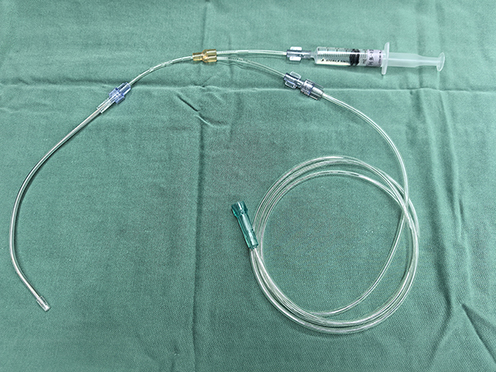 |
Figure 1 A display diagram of a new spraying device. |
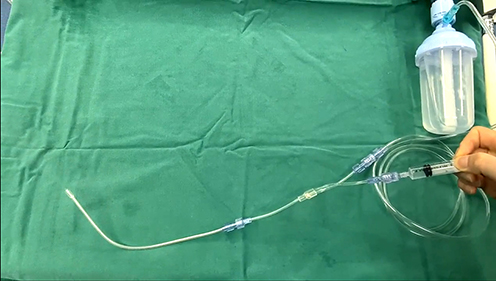 |
Figure 2 Trachospray soft mist demonstration. |
Then, in the L group, patients were positioned in the left lateral decubitus position with the assistance of the medical team (including the surgeon, anesthesiologist, and surgical nurse). A soft pad was placed under the head to ensure alignment with the body’s longitudinal axis. Both arms were extended forward and placed on dual-layered armrests, and restraint bands were used to stabilize the arms. Soft pads were placed on the chest, back, and both sides of the hips to provide support. A pelvic stabilizer was used to maintain the body’s stability, preventing any tilting or movement. A soft pad was placed between the legs, and the leg on the healthy side was bent at a 60 to 70-degree angle to ensure patient comfort while avoiding interference with the surgical view.
All patients underwent a standardized anesthesia induction protocol: preoperative oxygen was administered via a mask at 5 L/min for 5 minutes. Induction agents included sufentanil (0.3 μg/kg), propofol (2 mg/kg), and cisatracurium (0.2 mg/kg). After adequate muscle relaxation, endotracheal intubation was performed by an anesthesiologist experienced in lateral position intubation. The internal diameter of the endotracheal tube was 7.5 mm for male patients and 7.0 mm for female patients. SpO2 levels were closely monitored during intubation, and if they fell below 90%, mask ventilation was initiated immediately. If more than three attempts were made at intubation, it was considered a failure, and the patient was repositioned to the supine position with a laryngeal mask airway used to maintain airway patency. Successful intubation was confirmed by detecting exhaled CO2 waveforms and the ventilator was connected using the following settings: tidal volume 8 mL/kg, respiratory rate 12 breaths/min, I:E ratio 1:2. In the L group, surgery began immediately after intubation. In the S group, patients were repositioned to the left lateral decubitus position, during which the anesthesiologist protected the endotracheal tube and supported the head and neck, while the surgical team and circulating nurse assisted with positioning. Anesthesia depth was maintained with continuous inhalation of 1–2% sevoflurane combined with a remifentanil infusion (0.1–0.2 μg/kg/min), ensuring that the bispectral index (BIS) remained between 40 and 65. This target range prevents intraoperative awareness and body movement to meet endoscopic requirements, while avoiding the risks associated with levels below 40, such as hypotension and delayed recovery, or above 65, which may lead to movement and memory formation. At the end of the surgery, palonosetron (0.25 mg) was administered intravenously to prevent nausea and vomiting. If the HR fell below 45 bpm, atropine (0.25–0.5 mg) was administered intravenously. If the mean arterial pressure (MAP) decreased by more than 20% from baseline, fluid resuscitation or vasopressor agents (eg, norepinephrine or methoxamine) were applied. If HR dropped below 45 bpm and MAP fell by more than 20% from baseline, ephedrine (10 mg) was used. After surgery, patients were transferred to the post-anesthesia care unit (PACU) where they remained until fully awake and muscle strength was restored before extubation. They were then monitored for at least 30 minutes before being transferred back to the general ward.
Outcome Measures
Demographic data included age, gender, height, weight, BMI, ASA classification, Mallampati score, mouth opening, thyromental distance, skin-to-epiglottis distance, and skin-to-hyoid distance. The primary outcome was intubation time, defined as the time from laryngoscope insertion to confirmation of correct tube placement. Secondary outcomes included MAP, HR, and SpO2 at the following time points: pre-intubation (T0), immediately post-intubation (T1), 3 minutes post-intubation (T2), and after positioning (T3). Other secondary outcomes were first-pass success rate, number of intubation attempts, positioning time, healthcare worker satisfaction, intraoperative hypoxemia, and adverse reactions (lip, dental, and oral mucosal injuries, postoperative sore throat, itching, hoarseness at 24-hour follow-up).
Statistical Analysis
For the primary endpoint, a non-inferiority statistical approach was used, while superiority statistical methods were applied to other outcomes. Data analysis was conducted using SPSS version 27.0 statistical software. Normally distributed continuous variables are presented as mean ± standard deviation (SD), while non-normally distributed variables are reported as median (interquartile range). Between-group comparisons for continuous variables were performed using independent sample t-tests, whereas categorical data were compared using chi-square tests or Fisher’s exact test. Ordinal data were analyzed using the rank-sum test for intergroup comparisons. A P value of < 0.05 was considered statistically significant.
Results
A total of 160 patients were initially screened, of which 11 did not meet the inclusion criteria, and one patient declined to participate for other reasons. Ultimately, 148 patients were included in the analysis and randomly assigned to two groups (Figure 3).
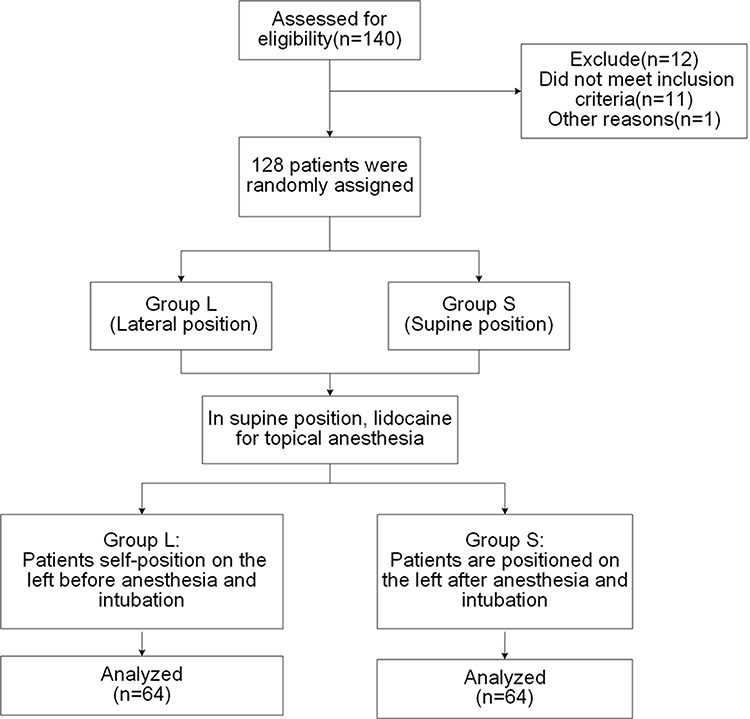 |
Figure 3 Flow diagram of patient enrollment. |
The baseline characteristics of the L group (lateral intubation) and the S group (supine intubation) were comparable, with no significant differences in gender, age, height, weight, BMI, ASA classification, Mallampati score, mouth opening, thyromental distance, skin-to-epiglottis distance, or skin-to-hyoid distance (P > 0.05), as shown in Table 1.
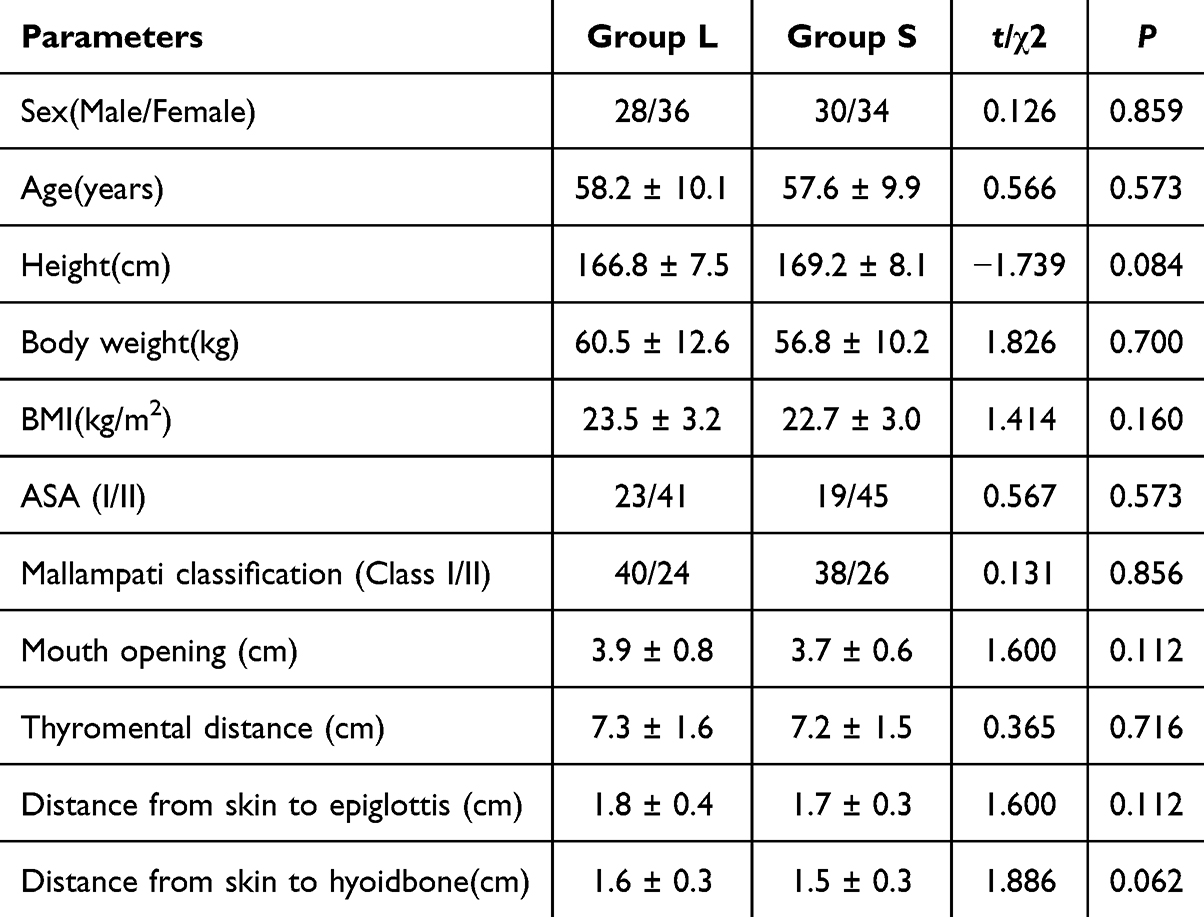 |
Table 1 Comparison of the Baseline Characteristics Between the Two Groups |
Both groups exhibited changes in hemodynamic parameters, including mean arterial pressure (MAP), heart rate (HR), and SpO2, at pre-intubation (T0), immediately post-intubation (T1), 3 minutes post-intubation (T2), and after positioning (T3). At T3, both mean arterial pressure (MAP) and heart rate (HR) were significantly higher in Group S than in Group L (P < 0.001), as shown in Table 2. No significant differences were observed at other time points between the two groups (P > 0.05).
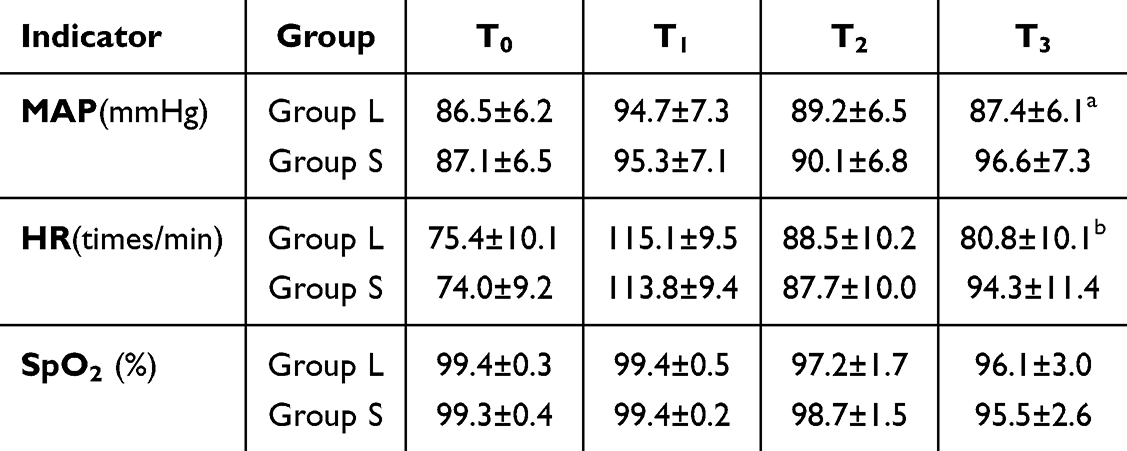 |
Table 2 Changes in MAP, HR,and SpO2 in the Two Groups at Different Times ( |

Table 3 shows there were no significant differences in intubation time between the two groups (P = 0.060). The first-pass success rate was 89.0% for the L group and 98.4% for the S group, with a slightly higher success rate in the S group, but statistical analysis revealed no significant difference (P = 0.062). The lateral intubation group had significantly shorter positioning times (3.5±0.6 min) compared to the supine intubation group (10.1±3.8 min, P < 0.001). Healthcare worker satisfaction was also significantly higher in the lateral intubation group (P < 0.001). Both groups successfully completed intubation within two attempts, with no instances of intubation failure or interruption.
 |
Table 3 Comparison of Intubation Parameters Between Two Groups |
Postoperative adverse reactions were minimal in both groups, with no significant differences between the groups (Table 4). The primary adverse reactions included mild oral mucosal injuries, lip injuries, sore throat, and hoarseness, all of which did not require special intervention. No patients in either group experienced dental injury or hypoxemia, and the incidence of adverse events was similar across both groups (P > 0.05).
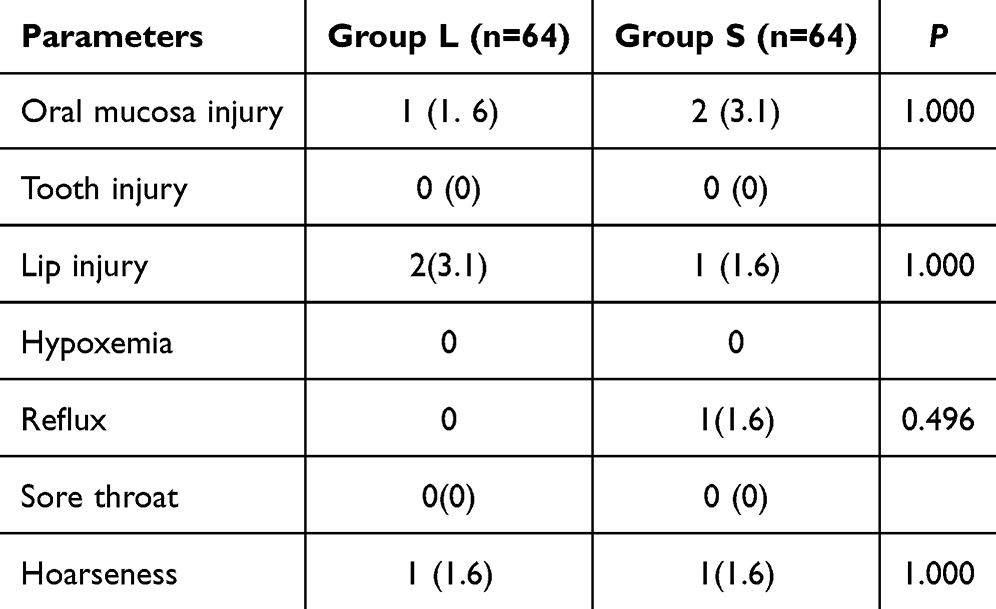 |
Table 4 Incidence of Adverse Reactions in Patients in the Two Groups |
Discussion
In this prospective randomized controlled non-inferiority study, we evaluated the feasibility and safety of lateral position intubation combined with airway surface anesthesia in gastrointestinal endoscopic surgery. Our findings demonstrate that lateral intubation results in comparable intubation times to supine intubation, with airway surface anesthesia ensuring safe maintenance of oxygenation. There were no significant differences in adverse reactions or complications between the two groups. This combination of lateral intubation and airway surface anesthesia provides a safe, effective, and user-friendly anesthetic management approach for patients undergoing gastrointestinal endoscopic surgery.
The Youyi TDC-K video laryngoscope offers a rotating display (0~130° vertically, 0~270° horizontally), with a distinctly curved front.18 This design eliminates the need to align the oral, pharyngeal, and laryngeal axes during intubation. The intubation path can be observed via the screen, avoiding the visual obstruction caused by gravitational collapse of the tongue and soft tissues in the lateral position. The laryngoscope is inserted centrally through the mouth and maintained parallel to the bed surface. The lens angle is adjusted (approximately 60°) to expose the glottis, after which the endotracheal tube is shaped and advanced accordingly. The video laryngoscope provides clear airway visualization, avoiding the line-of-sight issues of traditional intubation techniques, thus improving both success rates and safety.19,20 In the left lateral position, the video laryngoscope facilitates easier glottic exposure, reducing intubation difficulty and operational risk, making the left lateral position clearly advantageous over the right lateral position.
As an advanced airway management tool, video laryngoscopy has been widely used in various types of endotracheal intubation and is often superior to fiberoptic bronchoscopy.21,22 A study by Wahdan A S et al23 randomized 50 patients into video intubation (VS) and fiberoptic bronchoscopy (FO) groups. The study compared intubation time, first-pass success rate, hemodynamic responses, and perioperative complications between the two groups in the lateral position. The results showed that the intubation time in the VS group was significantly shorter than in the FO group (39.5 ± 10.0 s vs 75.6 ± 16.2 s, P < 0.001), although there was no significant difference in first-pass success rates (VS group 88%, FO group 100%).
Other studies have also compared lateral and supine intubation positions.24,25 A systematic review and meta-analysis by Palma C F et al26 evaluated the safety and efficacy of supine versus non-supine positions during endotracheal intubation. The analysis included 13 randomized controlled trials with 1916 patients. The success rates of intubation in the supine and lateral positions were 99.21% and 98.82%, respectively, and the first-pass success rates were 85.35% for supine and 88.56% for lateral positions. Although the overall success and first-pass success rates were similar, the incidence of adverse events was slightly higher in the non-supine group, with a total adverse event rate of 6.74% for the lateral position compared to 3.73% for the supine position.
The use of video laryngoscopy in lateral thoracoscopic surgeries, particularly for double-lumen tube intubation, has shown broad applications. Zhang X et al27 demonstrated that lateral double-lumen tube intubation significantly reduced the incidence of malpositioning compared to supine intubation, and decreased intubation time, frequency and duration of fiberoptic bronchoscopy use, as well as the incidence of hypotension, postoperative sore throat, and upper arm discomfort. Tao D et al28 found that the overall success rate of lateral video-assisted double-lumen tube intubation was not lower than that of supine intubation, with a lower risk of tube malposition and a reduced incidence of postoperative sore throat. However, the study by Rao Q et al29 showed that lateral video double-lumen tube (VDLT) intubation had a longer duration and did not meet the non-inferiority standard compared to supine intubation. Further research is needed to validate whether left lateral double-lumen tube intubation prolongs intubation time and to clarify its clinical effects.
In thoracoscopic surgery, lateral video laryngoscope-guided double-lumen tube intubation has been widely applied, and it has also demonstrated excellent feasibility in gastrointestinal endoscopic surgery. In a study of 120 patients, Jin Y et al30 found that video laryngoscope-guided intubation in the left lateral position showed good safety and feasibility for upper gastrointestinal endoscopic surgery. The study revealed no significant differences in intubation time and success rates between left lateral and supine intubation, but the left lateral position effectively avoided hemodynamic fluctuations and severe sore throat associated with position changes. This supports our conclusion that lateral position intubation reduces the negative impact of positional changes on patients and offers clear advantages in airway management and postoperative recovery. A study by Charoenkoop P et al31 found differences in flexible scope intubation outcomes between left lateral and supine positions when performed by anesthesiology trainees on spontaneously breathing patients This prospective randomized trial showed no significant differences in first-attempt success rate or intubation time between the two positions, but the left lateral position significantly reduced the need for jaw thrust (10.5% vs 85%, P<0.01). A study compared flexible fiberoptic bronchoscope intubation in supine vs lateral positions for surgical patients needing intubation under general anesthesia, finding lateral position advantages. This multicenter RCT (n=72, elective non-obstetric surgery) showed: lateral group had shorter median intubation time, higher first-attempt success (97% vs supine 16%), and milder post-intubation hemodynamic fluctuations (P=0.02). The result confirms that for surgical patient intubation, lateral position outperforms supine in efficiency, success rate and hemodynamic stability, offering a more reliable option for lateral-position airway management.32
Notably, our patients did not experience postoperative sore throat, primarily due to the use of lidocaine spray for airway surface anesthesia, which effectively alleviated discomfort associated with intubation. Obese patients often have anatomical characteristics such as short and thick necks and narrow airway spaces, which may increase the difficulty of intubation. Since this population was not included in this study, it remains unclear whether lateral position intubation can maintain the same operational convenience and safety as in the general population, including intubation success rate and complication rate. Therefore, further research is needed in the future.
In past gastrointestinal endoscopy procedures, local airway anesthesia has traditionally been achieved using drugs such as Dacronine or Tetracaine gels, which are applied either orally or topically to alleviate discomfort during intubation.33,34 With advancements in technology, aerosolized anesthesia has increasingly been used for airway anesthesia. This method utilizes an atomizer to disperse anesthetic drugs throughout the airway, providing more uniform coverage. As technology has progressed, on-demand aerosolized airway anesthesia has emerged, allowing for immediate application,35,36 which has significantly enhanced patient comfort. Currently, the use of a 2% lidocaine spray device, connected to high-flow oxygen, is becoming more common in surgical procedures. This device not only ensures the uniformity and rapid onset of anesthesia but also improves both safety and operational efficiency.37
Markerink H et al13 evaluated the use of a soft mist spray device for local anesthesia, where volunteers self-administered aerosolized anesthesia to perform a video laryngoscopy of the airway while remaining conscious. The results indicated that participants were able to visualize the glottis and vocal cords within 17 seconds using the Trachospray device. Notably, 70% of participants showed no significant response, allowing for smooth video laryngoscope insertion. However, 25% of participants exhibited minor reactions. Despite this, the anesthesia provided was effective, with no adverse events reported, and all participants reported high comfort (average NRS score of 8). This study showed that only 3 patients in Group L experienced sore throat, with none reported in the other group. In addition, only one patient in each of Group L and Group S developed hoarseness. These findings suggest that airway surface anesthesia may reduce complications associated with tracheal intubation and repeated pharyngeal irritation caused by endoscopic procedures.
Kaur H et al38 conducted a study to assess the anesthetic efficacy and safety of 1% and 2% lidocaine solutions during flexible bronchoscopy. The study demonstrated that both concentrations were similarly effective in providing anesthesia, with no significant difference in the incidence of adverse events. However, operators in the 2% lidocaine group reported a higher cough score (P = 0.015), though patient cough scores did not differ significantly (P = 0.065). Given that visual laryngoscopy generally causes more irritation during intubation than flexible bronchoscopy, the study selected the 2% lidocaine solution to ensure stronger anesthesia and facilitate smoother intubation.
In this study, one patient with gastric stone retention experienced reflux during the anesthesia process, but timely management prevented aspiration. Lateral position intubation combined with airway surface anesthesia provided enhanced airway management for emergency patients. By reducing reflexive laryngeal contractions, airway surface anesthesia facilitated a smoother intubation process and decreased the risk of airway irritation and reflux. Compared to traditional anesthesia methods, lateral position intubation effectively reduced the risk of gastric content aspiration, especially in patients with full stomachs. When combined with airway surface anesthesia, this technique further increased intubation success and reduced the likelihood of aspiration. This combined approach offers a novel strategy for emergency anesthesia and presents potential applications for future clinical research.
Limitations
This study has certain limitations. First, the pre-set non-inferiority margin of 6 seconds may be too small and not representative of clinical reality. As such, the 6-second difference may lack clinical significance, limiting the support for the non-inferiority hypothesis. Second, this study was conducted at a single center with a relatively small sample size, which could impact the statistical power and external validity of the results. Finally, due to the failure to control differences in operators’ experience levels and the exclusion of obese patients, patients with difficult airways were also excluded, and further research is needed to investigate the efficacy of lateral position intubation in these patient populations. Consequently, the generalizability of the findings may be limited.
Conclusion
This prospective, randomized, controlled, non-inferiority study found that lateral position intubation combined with airway surface anesthesia is not inferior to conventional supine intubation in terms of intubation time. There were no significant differences between the two groups in the number of intubation attempts or overall success rate. Hemodynamic fluctuations were more stable in the lateral position group, and healthcare worker satisfaction was improved, with no increase in adverse reactions or complications. Overall, lateral position intubation combined with airway surface anesthesia is a safe and effective technique, offering results comparable to traditional supine intubation.
Abbreviations
MAP, Mean Arterial Pressure; HR, Heart Rate; SpO2, Peripheral capillary oxygen saturation; BMI, body mass index; ASA, American Society of Anesthesiologists; FO, fiberoptic bronchoscopy.
Data Sharing Statement
The datasets generated and analyzed in this study are not publicly available due to containing sensitive information protected by data security regulations, but qualified researchers can obtain them by contacting the corresponding author (Dr. Rui Xia) upon stating a legitimate research purpose and signing relevant data usage agreements.
Ethics Approval and Informed Consent
All patient-related procedures in this study complied with the 1964 Declaration of Helsinki and its subsequent revisions. The study was approved by the Institutional Review Board (IRB) of First Affiliated Hospital of Yangtze University. Written informed consent was also obtained from each participant or their legally authorized representatives, who fully understood the study’s objectives, procedures, risks, and benefits before consenting.
Author Contributions
All authors made a significant contribution to the work reported, whether that is in the conception, study design, execution, acquisition of data, analysis and interpretation, or in all these areas; took part in drafting, revising or critically reviewing the article; gave final approval of the version to be published; have agreed on the journal to which the article has been submitted; and agree to be accountable for all aspects of the work.
Disclosure
Li Tang, and Jiehao Huang are co-first authors in this study. The authors report no conflicts of interest in this work.
References
1. Pimentel-Nunes P, Libânio D, Bastiaansen BAJ, et al. Endoscopic submucosal dissection for superficial gastrointestinal lesions: European society of gastrointestinal endoscopy (ESGE) guideline–update 2022. Endoscopy. 2022;54(06):591–622. doi:10.1055/a-1811-7025
2. Irani JL, Hedrick TL, Miller TE, et al. Clinical practice guidelines for enhanced recovery after colon and rectal surgery from the American society of colon and rectal surgeons and the society of American gastrointestinal and endoscopic surgeons. Dis Colon Rectum. 2023;66(1):15–40. doi:10.1007/s00464-022-09758-x
3. Ferlitsch M, Hassan C, Bisschops R, et al. Colorectal polypectomy and endoscopic mucosal resection: European society of gastrointestinal endoscopy (ESGE) guideline – update 2024. Endoscopy. 2024;56(07):516–545. doi:10.1055/a-2304-3219
4. Desai M, Ruan W, Thosani NC, et al. American society for gastrointestinal endoscopy guideline on the diagnosis and management of GERD: methodology and review of evidence. VideoGIE. 2024;10(2):81–137. doi:10.1016/j.vgie.2024.10.001
5. Simadibrata DM, Lesmana E, Fass R. Role of endoscopy in gastroesophageal reflux disease[J]. Clin Endoscop. 2023;56(6):681–692. doi:10.5946/ce.2023.182
6. Polese L, Giugliano E, Valmasoni M. Patient position in operative endoscopy. J Clin Med. 2023;12(21):6822. doi:10.3390/jcm12216822
7. Cui P, Wen T, Wang B, et al. Tracheal intubation in the lateral position in emergency medicine: a narrative review and clinical protocol. World J Emerge Med. 2025;16(2):103–112. doi:10.5847/wjem.j.1920-8642.2025.034
8. Huang HB, Peng JM, Xu B, et al. Video laryngoscopy for endotracheal intubation of critically ill adults: a systemic review and meta-analysis. Chest. 2017;152(3):510–517. doi:10.1016/j.chest.2017.06.012
9. Ludwin K, Bialka S, Czyzewski L, et al. Video laryngoscopy for endotracheal intubation of adult patients with suspected/confirmed COVID-19. A systematic review and meta-analysis of randomized controlled trials. Dis Emerg Med J. 2020;5(2):85–97.
10. Aramvanitch K, Leela-Amornsin S, Tienpratarn W, et al. Video laryngoscopy for endotracheal intubation: a consideration for manual in-line stabilization without cervical collar versus full immobilization. Therape Clin Risk Manage. 2025;Volume 21:103–109. doi:10.2147/TCRM.S486978
11. Wellenstein DJ, van der Wal RAB, Schutte HW, et al. Topical anesthesia for endoscopic office-based procedures of the upper aerodigestive tract. J Voice. 2019;33(5):732–746. doi:10.1016/j.jvoice.2018.02.006
12. Ullal TV, Marks SL, Belafsky PC, et al. A comparative assessment of the diagnosis of swallowing impairment and gastroesophageal reflux in canines and Humans. Front Veterinar Sci. 2022;9:889331. doi:10.3389/fvets.2022.889331
13. Markerink H, van Geffen G-J, Bruhn J. Topical anaesthesia using a soft mist spray device allows comfortable awake visualisation of the airway via self-videolaryngoscopy in volunteers. Medicina. 2024;60(1):176. doi:10.3390/medicina60010176
14. Sakae TM, de Souza RLPD, Brand Úo JCM. Impact of topical airway anesthesia on immediate postoperative cough/bucking: a systematic review and meta-analysis. Brazilian J Anesthesiol. 2023;73(1):91–100. doi:10.1016/j.bjane.2021.03.016
15. Mengchao L. Analysis of the efficacy and safety of lateral position intubation combined with apneic oxygenation in anesthesia for gastrointestinal endoscopic surgery: a randomized controlled non-inferiority study. Southeast Univ. 2021.
16. Benavides-Zora D, Jaramillo MC, Townsley MM, et al. Diagnostic performance of airway ultrasound for the assessment of difficult laryngoscopy: a systematic review and meta-analysis. J Cardiothorac Vascu Anesthes. 2023;37(7):1101–1109. doi:10.1053/j.jvca.2023.02.036
17. De Luis-Cabezón N, Ly-Liu D, Renedo-Corcostegui P, et al. A new score for airway assessment using clinical and ultrasound parameters. Front Med. 2024;11:1334595. doi:10.3389/fmed.2024.1334595
18. Salama ER, El Amrousy D. GlideScope® cobalt video laryngoscope versus direct Miller laryngoscope for lateral position-tracheal intubation in neonates with myelodysplasia: a prospective randomized study. Saudi J Anaesth. 2019;13(1):28–34. doi:10.4103/sja.SJA_460_18
19. Lee S-H, Park Y-K, Cho S-M, et al. Technical skills and training of upper gastrointestinal endoscopy for new beginners. World J Gastroenterol. 2015;21(3):759–785. doi:10.3748/wjg.v21.i3.759
20. Park TY, Choi SH, Yang YJ, et al. The efficacy and safety of the left lateral position for endoscopic retrograde cholangiopancreatography. Saudi J Gastroenterol. 2017;23(5):296–302. doi:10.4103/sjg.SJG_121_17
21. Kundu A, Patel N, Baidya DK, et al. Flexible bronchoscope versus video-laryngoscope for nasotracheal intubation in patients with anticipated difficult airway under topical anesthesia and dexmedetomidine infusion: a randomized controlled trial[J]. Trends Anaesth Crit Care. 2025;61:101547. doi:10.1016/j.tacc.2025.101547
22. Shen W, Cai X, Liu X, et al. Flexible bronchoscope versus video laryngoscope for orotracheal intubation during upper gastrointestinal endoscopic surgery in left lateral position: a randomized controlled trial. Inter J General Med. 2022;Volume 15:6097–6104. doi:10.2147/IJGM.S366020
23. Wahdan AS, El-Refai NAR, Omar SH, et al. Endotracheal intubation in patients undergoing open abdominal surgery in the lateral position: a comparison between the intubating video stylet and fiberoptic intubating bronchoscopy. Korean J Anesth. 2021;74(3):234–241. doi:10.4097/kja.20384
24. Zhao S, Yang X, Meng Q, et al. Impact of the supine position versus left horizontal position on colonoscopy insertion: a 2-center, randomized controlled trial. Gastrointest Endoscop. 2019;89(6):1193–1201. doi:10.1016/j.gie.2019.01.009
25. Jin X, Ding Y, Weng Q, et al. Continuous cuff pressure control on middle-aged and elderly patients undergoing endoscopic submucosal dissection of the esophagus effect of airway injury. Esophagus. 2024;21(4):456–463. doi:10.1007/s10388-024-01061-z
26. Palma CF, Mashina R, Chen C, et al. A systematic review and meta‐analysis of randomized controlled trials on supine vs. Nonsupine endotracheal intubation. Crit Care Res Prac. 2023;2023(1):5496368. doi:10.1155/2023/5496368
27. Zhang X, Wang D, Zhang Z, et al. Effect of intubation in lateral position on placement of a double-lumen tube in patients undergoing unilateral video-assisted thoracic surgery: a randomied clinical trial. EClinicalMedicine. 2024;67:102402. doi:10.1016/j.eclinm.2023.102402
28. Tao D, Zhang G, Zheng X, et al. Feasibility study of intubation in lateral position using Viva-sight double-lumen tube combined with video laryngoscope in patients undergoing pulmonary lobectomy. Asian J Surg. 2024;47(1):373–379. doi:10.1016/j.asjsur.2023.08.199
29. Rao Q, Yu H, Li P, et al. Efficacy and safety of video double-lumen tube intubation in lateral position in patients undergoing thoracic surgery: a randomized controlled trial. BMC Anesthesiol. 2024;24(1):179. doi:10.1186/s12871-024-02567-w
30. Jin Y, Ying J, Zhang K, et al. Endotracheal intubation under video laryngoscopic guidance during upper gastrointestinal endoscopic surgery in the left lateral position: a randomized controlled trial. Medicine. 2017;96(52):e9461. doi:10.1097/MD.0000000000009461
31. Charoenkoop P, Luetrakool P, Puttapornpattana T, et al. Anesthesiology trainees performing flexible scope intubation in spontaneously breathing patients in the left lateral position and the supine position: a prospective randomized trial. BMC Anesthesiol. 2022;22(1):93. doi:10.1186/s12871-022-01636-2
32. Li H, Wang W, Lu YP, et al. Evaluation of endotracheal intubation with a flexible fiberoptic bronchoscope in lateral patient positioning: a prospective randomized controlled trial. Chin Med J. 2016;129(17):2045–2049. doi:10.4103/0366-6999.189069
33. Simpson CB, Amin MR, Postma GN. Topical anesthesia of the airway and esophagus. Ear Nose Throat J. 2004;83(7):S2–S2.
34. Pirlich N, Lohse JA, Noppens RR. Topical airway anesthesia for awake-endoscopic intubation using the spray-as-you-go technique with high oxygen flow. J Visualize Experim. 2017;119:55116. doi:10.3791/55116
35. Williams KA, Barker GL, Harwood RJ, et al. Combined nebulization and spray-as-you-go topical local anaesthesia of the airway. British J Anaesth. 2005;95(4):549–553. doi:10.1093/bja/aei202
36. Chen C, Wen D, Wang Y, et al. A spray-as-you-go airway topical anesthesia attenuates cardiovascular responses for double-lumen tube tracheal intubation. BMC Anesth. 2022;22(1):203–207. doi:10.1186/s12871-022-01749-8
37. Mahawongkajit P, Soonthornkes N. Comparative effectiveness of lidocaine sprays between sitting and supine position for patients undergoing upper gastrointestinal endoscopy: a prospective randomized controlled trial. Surg Endoscop. 2022;1–9. doi:10.1007/s00464-021-08868-2
38. Kaur H, Dhooria S, Aggarwal AN, et al. A randomized trial of 1% vs 2% lignocaine by the spray-as-you-go technique for topical anesthesia during flexible bronchoscopy. Chest. 2015;148(3):739–745. doi:10.1378/chest.15-0022
 © 2025 The Author(s). This work is published and licensed by Dove Medical Press Limited. The
full terms of this license are available at https://www.dovepress.com/terms
and incorporate the Creative Commons Attribution
- Non Commercial (unported, 4.0) License.
By accessing the work you hereby accept the Terms. Non-commercial uses of the work are permitted
without any further permission from Dove Medical Press Limited, provided the work is properly
attributed. For permission for commercial use of this work, please see paragraphs 4.2 and 5 of our Terms.
© 2025 The Author(s). This work is published and licensed by Dove Medical Press Limited. The
full terms of this license are available at https://www.dovepress.com/terms
and incorporate the Creative Commons Attribution
- Non Commercial (unported, 4.0) License.
By accessing the work you hereby accept the Terms. Non-commercial uses of the work are permitted
without any further permission from Dove Medical Press Limited, provided the work is properly
attributed. For permission for commercial use of this work, please see paragraphs 4.2 and 5 of our Terms.