
Back to Journals » Patient Preference and Adherence » Volume 19
Developing a Health Literacy Intervention for Hypertriglyceridemia-Induced Acute Pancreatitis: A Timing It Right Framework
Authors Chen W, Yin P, Yang X, Ma S, Zheng X, Fang F, Su X 
Received 15 May 2025
Accepted for publication 3 October 2025
Published 21 October 2025 Volume 2025:19 Pages 3225—3237
DOI https://doi.org/10.2147/PPA.S540742
Checked for plagiarism Yes
Review by Single anonymous peer review
Peer reviewer comments 3
Editor who approved publication: Dr Johnny Chen
Weiwei Chen,1,* Ping Yin,2,* Xiaoxi Yang,3 Shuli Ma,4 Xinmei Zheng,1 Fang Fang,5 Xia Su2,6
1Medical College of Yangzhou University, Yangzhou, Jiangsu, People’s Republic of China; 2Hepatobiliary and Pancreatic Center, Northern Jiangsu People’s Hospital Affiliated to Yangzhou University, Yangzhou University, Yangzhou, Jiangsu, People’s Republic of China; 3Southern College, Sun Yat-Sen University, Gangzhou, Guangdong, People’s Republic of China; 4Department of Gastroenterology, Affiliated Hospital of Nantong University, Nantong, Jiangsu, People’s Republic of China; 5Nursing Department, Northern Jiangsu People’s Hospital Affiliated to Yangzhou University, Yangzhou University, Yangzhou, Jiangsu, People’s Republic of China; 6School of Nursing, Yangzhou University, Yangzhou, Jiangsu, People’s Republic of China
*These authors contributed equally to this work
Correspondence: Fang Fang, Nursing Department, Northern Jiangsu People’s Hospital Affiliated to Yangzhou University, Yangzhou University, Yangzhou, Jiangsu, People’s Republic of China, Email [email protected] Xia Su, Hepatobiliary and Pancreatic Center, Northern Jiangsu People’s Hospital Affiliated to Yangzhou University, Yangzhou University, Yangzhou, Jiangsu, People’s Republic of China, Email [email protected]
Objective: To develop a health literacy intervention program for patients with hypertriglyceridemia-induced acute pancreatitis based on Timing It Right.
Methods: Guided by the Timing It Right framework, a preliminary version of the intervention program was developed through a comprehensive literature review and semi-structured interviews. From August to October 2023, two rounds of Delphi expert consultations were carried out with a panel of 15 medical and nursing experts from four provinces and municipalities (Jiangsu, Sichuan, Heilongjiang, and Shanghai). The feedback obtained through this process was used to refine and finalize the intervention program.
Results: Following two rounds of consultation, a consensus was reached among all 15 experts. The authority coefficients of the experts were 0.825 and 0.813, respectively, with a 100% response rate. The Kendall’s coefficients of concordance were 0.203 and 0.206 (P < 0.001). In the second round, the coefficients of variation for all items ranged from 0.071 to 0.188. The final health literacy intervention program comprised 4 first-level items, 10 second-level items, and 52 third-level items.
Conclusion: The health literacy intervention program developed using the Timing It Right framework demonstrates scientific validity, reliability, feasibility, and practical applicability. It effectively addresses the clinical needs of patients and offers structured guidance for enhancing their health literacy. Further clinical validation is warranted to confirm its effectiveness.
Keywords: hypertriglyceridemia, acute pancreatitis, timing it right, health literacy, delphi technique, nursing
Introduction
Hypertriglyceridemia-induced acute pancreatitis (HTG-AP) imposes a substantial disease burden and has become a significant health concern that cannot be overlooked.
Acute Pancreatitis (AP) refers to an acute abdomen disease caused by the abnormal activation of pancreatic enzymes, which digest the pancreas itself and surrounding organs, mainly characterized by local inflammatory reactions of the pancreas and may even lead to organ dysfunction.1 Research shows that, Hypertriglyceridemia-induced acute pancreatitis (HTG-AP) is one of the most common etiologies of acute pancreatitis (AP) worldwide.2,3 A systematic review and multi-center cohort study revealed that the global prevalence of HTG-AP is approximately 11.6%, with significant East-West disparities. The incidence in Eastern countries (16.3%) is notably higher than in Western countries (5.4%).4 In recent years, along the continuous improvement of living standards and the increasing proportion of high-fat food, hypertriglyceridemia (HTG) has risen to the second place in the etiology of AP in China.5–7 Compared with biliary and alcoholic acute pancreatitis, HTG-AP has more severe conditions, more local or systemic complications and a higher mortality rate.8 A large-sample cross-sectional survey in China indicates that among all patients with recurrent acute pancreatitis, hypertriglyceridemic pancreatitis is the most important cause (54.5%).9 It is confirmed by research that the onset and recurrence of HTG-AP patients are closely related to personal lifestyle factors,10 and patients’health literacy and self-management ability play a decisive role in personal lifestyle.
Health literacy among patients with acute pancreatitis remains suboptimal, underscoring the imperative for developing a targeted intervention program for those with HTG-AP.
Health literacy (HL) refers to the capability of individuals to make health decisions about medical care, disease prevention, and health promotion based on their knowledge and capability.11 Our previous research in the submission is about the health literacy status and influencing factors of 317 AP patients from muti-centers which found that the average health literacy score of AP patients was 52.09, indicating a generally low level.12 A prospective cohort study indicated a negative correlation between health behaviors in health literacy and the risk of illness.13 The link between health literacy and health outcomes is well established and includes greater mortality and poorer overall health status, increased hospitalizations and emergency care use when health literacy levels are low.14 As a special population, the health literacy or health behaviors of HTG-AP patients have a more direct and noticeable impact on health outcomes. However, there is relatively little research on the health literacy of HTG-AP patients, and no interventional studies have been conducted on their health literacy. Furthermore, the key to improving health literacy is to scientifically and accurately assess the health literacy needs, develop corresponding intervention programs, and implement precise interventions.15 Our studies have shown that the content and essence of the health literacy needs of HTG-AP patients have different focuses at different disease stages.16 Therefore, there is an urgent need to construct a health literacy program for the specific health literacy needs of patients with HTG-AP at different disease course stages.
Developing a Timing It Right-Based Health Literacy Intervention for HTG-AP
The Timing It Right (TIR) theory, proposed by American scholar Cameron and others,17 aims to define the time period, content and method for the effective implementation of nursing intervention by clarifying the specific illness experience of patients at different treatment stages of the disease, and proposes that only when the needs of patients or caregivers in a specific period match the intervention measures the maximum benefits can be obtained. This theory divides the disease process into five stages: the diagnostic stage, the stable stage, the discharge preparation stage, the adjustment stage, and the adaptation stage. The theory has been applied to explore the physiological needs, psychological needs, support needs, and nursing interventions for patients with conditions such as acute respiratory distress syndrome18 and stroke,19 with significant results. This study, guided by the Timing It Right theory, aims to construct a health literacy program for patients with HTG-AP, providing a reference for clinical nursing practice.
Methods
This study developed a preliminary health literacy intervention program for patients with HTG-AP based on the Timing It Right framework, informed by qualitative research and literature review. The preliminary version was subsequently refined through two rounds of Delphi expert consultation, resulting in the final version of the program (Figure 1).
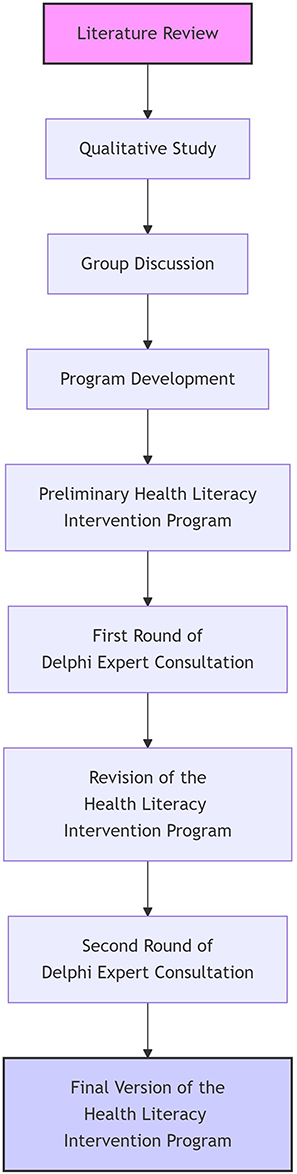 |
Figure 1 Solution Development Flowchart. |
Establishment of the Research Team
The research team consists of one professor of nursing, one nursing education expert, one head nurse from the pancreatic center, one deputy chief physician from the gastroenterology department, one specialist nurse from the gastroenterology department, and two master’s degree students. Literature screening and quality evaluation were carried out by two graduate students. The gastroenterology nurses and one graduate student were responsible for the semi-structured interviews. The nursing education expert and the head nurse of the pancreatic center were responsible for drafting and constructing the initial version of the intervention program. The professor of nursing and the deputy chief physician from the gastroenterology department were responsible for designing the expert consultation questionnaire and selecting experts. The team members jointly analyzed and organized the data.
Formation of the Initial Draft of the Intervention Program
Literature Retrieval
The Chinese search terms were “acute pancreatitis”, “Hypertriglyceridemia-induced acute pancreatitis”, “health literacy”, “health education”, “demand”, “experience”, “feeling”, and “qualitative”. The English search terms were “acute pancreatitis”, “Hypertriglyceridemia-induced acute pancreatitis”, “health literacy”, “health education”, “requirement”, “experience”, and “qualitative”. Using a combination of subject terms and free words, searches were conducted in both Chinese and English databases, including Wanfang, VIP, CNKI, PubMed, and Web of Science. The search period covered from the establishment of the database until July 31, 2023. A total of 2380 relevant articles were retrieved, with 2112 remaining after deduplication. By reading the titles and abstracts, 2105 articles were excluded, and 7 articles with a high degree of relevance to the topic were finally included.1,10,12,16,20–22 Through discussions within the research team and analysis of the included literature, combined with the clinical characteristics of HTG-AP and consultation from experts in gastroenterology, general surgery, and pancreatic specialties, the final intervention program was determined to include four stages and their defining criteria: diagnostic stage (within 24 hours of admission), hospitalization treatment stage, discharge preparation stage (1–2 days before discharge), and home recovery stage (since the health literacy level of AP patients generally stabilizes around three months post-hospitalization,12 the home recovery assessment was set at three months post-discharge). The program encompasses 10 dimensions, including disease knowledge, psychological counseling, treatment methods, medical and nursing care, and medical-nurse-family-community support.
Qualitative Interviews
Purposeful sampling and maximum variation sampling methods were used to select 31 HTG-AP patients with different socio-demographic characteristics and disease stages, who visited the Liver, Gallbladder, and Pancreatic Center at Nantong University Affiliated Hospital and Su Bei People’s Hospital from September 2022 to March 2023. Inclusion criteria: first-time diagnosis of HTG-AP;1 age between 18 and 80 years; clear consciousness, normal communication, complete language expression ability, and ability to independently participate in interviews; Vital signs stable Exclusion Criteria; ① Patients with a history of severe psychiatric disorders or psychological disorders;②Patients combined with severe impairment of cardiac, hepatic, cerebral, renal, or other vital organ functions;③Patients combined with gastrointestinal malignancies or other malignant tumors. The interview outline is shown in Table 1. Before starting the interviews, the research team members explained the purpose and significance of the study to the participants, assured them that their participation would not cause any harm, and informed them that they could withdraw from the study at any time. After obtaining informed consent from the participants, semi-structured interviews were conducted, lasting 30 to 40 minutes. Within 24 hours after the interview, two researchers independently organized the data, and the results were compared and reviewed. Nvivo11 analysis software was used, and the transcribed text data was analyzed using Colaizzi’s seven-step phenomenological analysis method. Guided by the Timing It Right theory, and based on the results of the interviews and literature review,16 an initial draft of the health literacy program for HTG-AP patients was developed, which included 4 primary items, 10 secondary items, and 54 tertiary items.
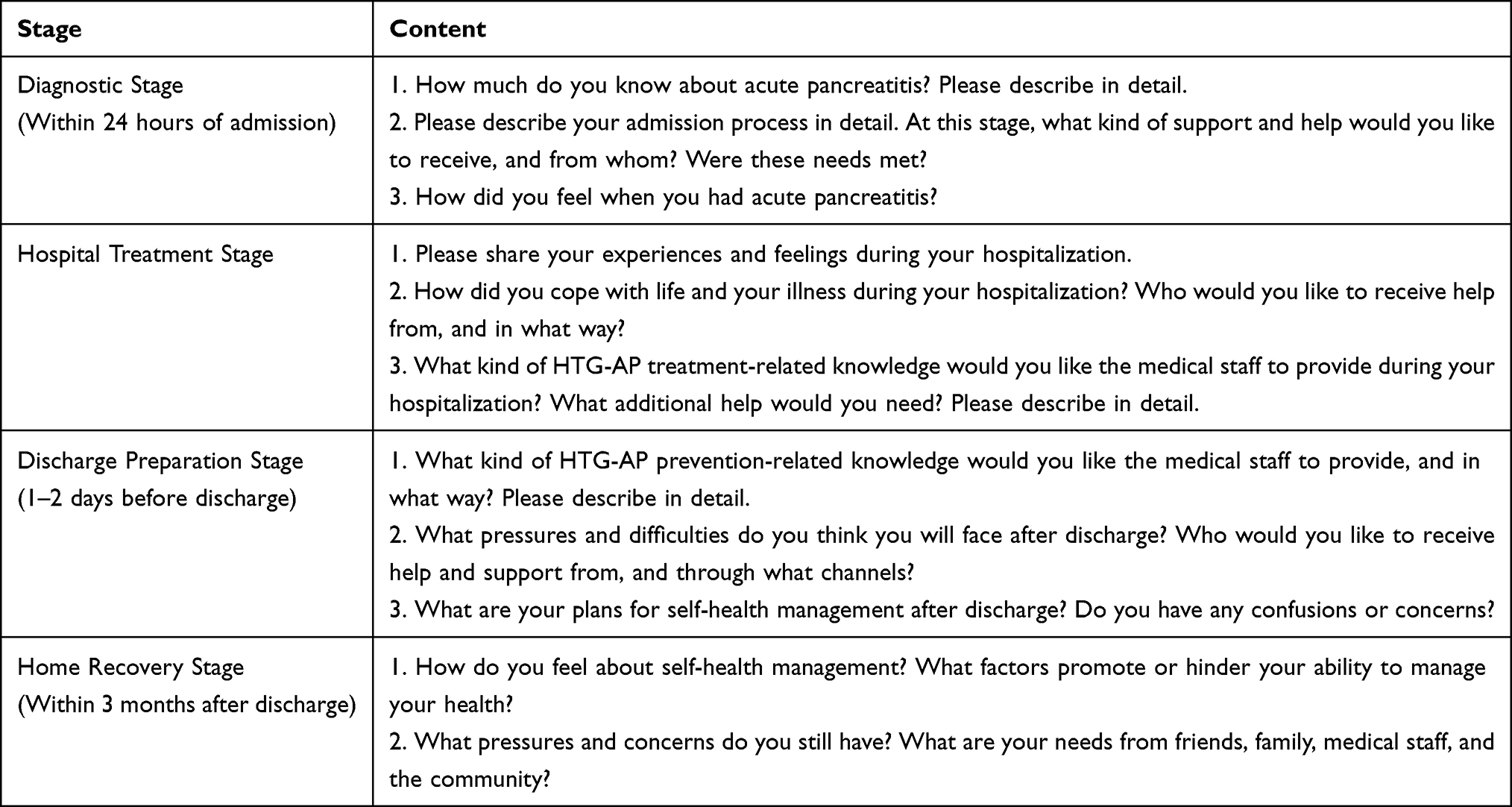 |
Table 1 Interview Outline for Health Literacy Needs at Different Stages of HTG-AP Patients |
Delphi Method
Design of the Expert Consultation Questionnaire
The expert consultation questionnaire consists of three parts: ① Questionnaire instructions: introducing the background, purpose, significance of the study, and how to complete the questionnaire. ② Expert Information Survey: In addition to general information such as age, title, years of service, and gender, it also includes the expert’s familiarity with the questionnaire content (Cs) and judgment criteria (Ca). Cs is divided into five levels: very familiar, fairly familiar, average, somewhat unfamiliar, and very unfamiliar. Ca includes four categories: practical basis, theoretical basis, reference to domestic and international materials, and subjective feelings. ③ Intervention Program Indicator Consultation Form: The importance of each indicator is evaluated using a 1–5 rating scale: “Not important at all” (1 point), “Not important” (2 points), “Somewhat important” (3 points), “Important” (4 points), and “Very important” (5 points). Additionally, each item includes a section for modification suggestions and additional comments, allowing experts to modify, delete, or add content.
Selection of Expert Consultants
Expert Inclusion Criteria: ① At least 10 years of experience in the relevant medical or nursing field; ② A bachelor’s degree or higher; ③ Associate senior title or above; ④ High enthusiasm and voluntary participation in this study.
Implementation of Expert Consultation
This study conducted two rounds of expert consultation from September to November 2023. The consultation questionnaires were distributed in the form of a questionnaire on Questionnaire Star. After the first round of consultation, the researchers compiled the importance scores for each item. Items with an average importance score <3.5 or a coefficient of variation (CV) >0.2520 were discussed by the team members to decide whether to delete them. The remaining items were modified based on the suggestions provided by experts in the “modification suggestions” section. The team members summarized, organized, and discussed these suggestions, making revisions and improvements for each level of item. The revised questionnaire was then sent for the second round of consultation. The opinions and suggestions from the second round of expert consultation were analyzed and organized, and the consultation ended once consensus was reached.
Statistical Methods
Data analysis was performed using SPSS 26.0 software. The questionnaire return rate and expert authority coefficient (Cr) were used to represent the level of expert engagement and authority. The expert engagement coefficient was indicated by the proportion of expert suggestions and the effective questionnaire return rate. When the effective return rate was ≥70%, it indicated good participation by the consulted experts.18 The expert authority level was represented by the authority coefficient (Cr), and when the Cr was ≥0.7, it indicated a high level of authority among the consulted experts.20 Kendall’s W coefficient and the coefficient of variation (CV) were used to indicate the degree of coordination and concentration of expert opinions. The higher the Kendall’s W value, the smaller the CV, with CV ≤0.25 typically being considered acceptable.20 The importance of the items was expressed using the mean ± standard deviation, with P < 0.05 indicating a statistically significant difference.
Results
General Information of the Consultation Experts (Table 2)
Expert Engagement and Authority Levels
A total of two rounds of expert consultation were conducted, with a 100% response rate. In the first round of consultation, seven experts provided 15 written suggestions. In the second round, none of the experts made any further suggestions. The average expert engagement coefficient for both rounds was 100%, indicating high participation. The expert judgment basis for the questionnaire content was 0.774, and the experts’ familiarity with the content of the questionnaire in the two rounds was 0.853 and 0.852, respectively. The authority coefficient was 0.825 in the first round and 0.813 in the second round, indicating a high level of expert authority and making the results reliable.
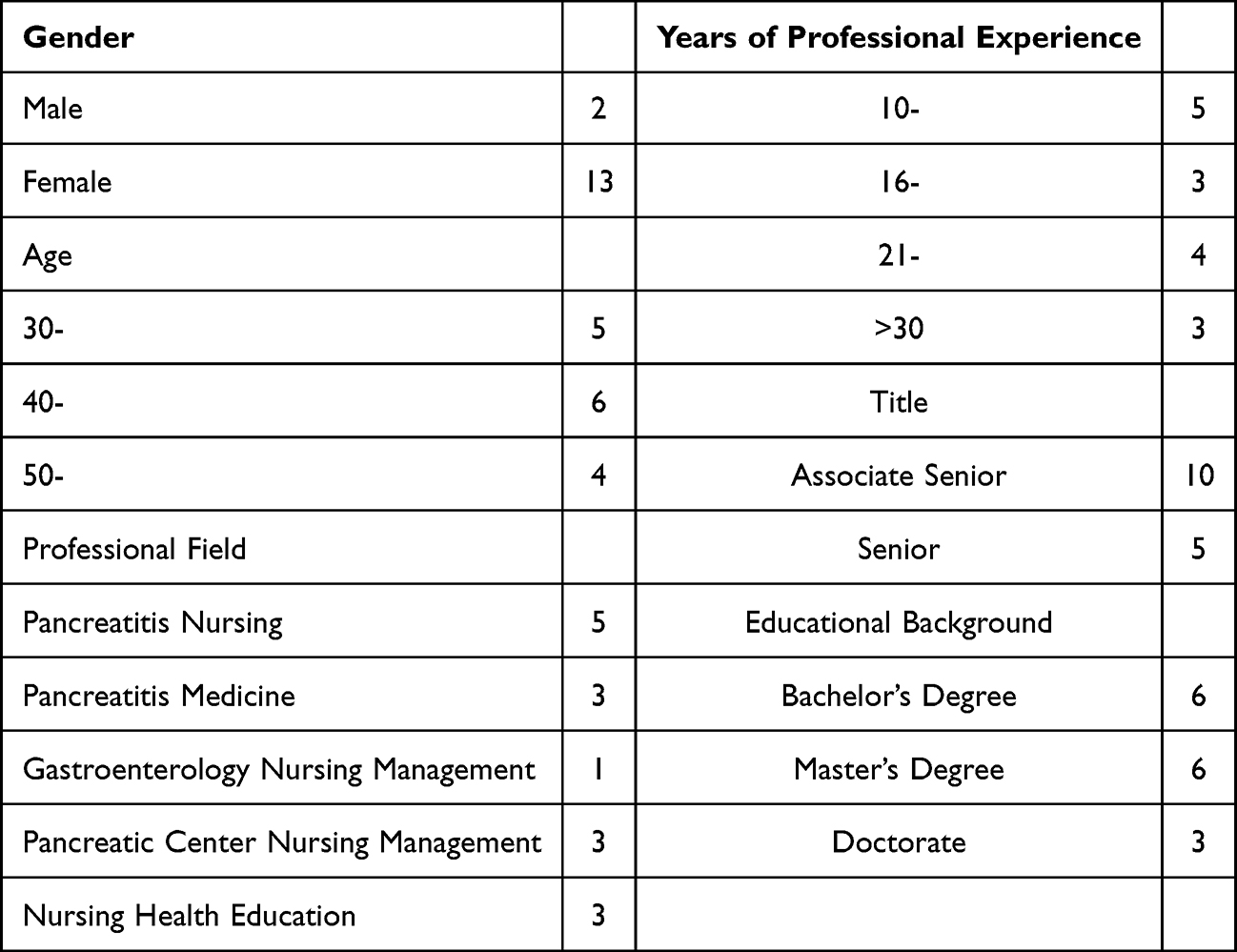 |
Table 2 General Data of Experts (n=15) |
Coordination of Expert Opinions
The degree of coordination of expert opinions was measured using CV and Kendall’s W value. In the first round, the CV ranged from 0.052 to 0.318, and in the second round, it ranged from 0.071 to 0.188. The Kendall’s W values for the two rounds were 0.203 and 0.206, respectively, with both P < 0.01, indicating a high degree of coordination among the experts’ opinions and a tendency for consensus.13
Expert Consultation Results
After two rounds of expert consultation, based on the average importance score of the items, CV, and the suggestions and recommendations provided by the experts, the research team discussed and analyzed the results. Ultimately, it was decided to delete 4 items, modify 3 items, and add 2 items. ① Deleted items: Treatment stage— “Inform patients of common complications: pancreatic pseudocyst, multiple organ failure, chronic pancreatitis”, “Inform patients about the prevention of dislodgement related to gastrointestinal decompression tubes, abdominal puncture drainage tubes, etc.”, “Inform patients of the importance of Mangxiao, Jinyang San, and acupoint paste for treatment, and teach patients how to use traditional Chinese medicine such as Mangxiao and Jinyang San”, “Provide resistance exercise equipment such as handgrip balls and sandbags”. ② Modified three tertiary items: In the diagnostic stage, change “Guide patients to evaluate past unhealthy lifestyle habits and correct their misconceptions about current lifestyles” to “Guide patients to evaluate past unhealthy lifestyle habits, correct misconceptions about current lifestyles, and help patients identify the causes of hyperlipidemia and associated pancreatitis”; In the treatment stage, change “Teach patients resistance exercises such as ankle pump exercises” to “Inform patients of precautions for exercise”; In the treatment stage, change “Timely inform patients of equipment and laboratory test results” to “Timely inform patients of the results and significance of equipment and laboratory tests”. ③ Added two tertiary items: In the treatment stage, add “Inform patients about the proper use of skinfold calipers and the normal range of body fat percentage” and “Teach patients and their families to develop a scientifically balanced diet plan based on BMI and their own dietary habits”. The final nursing intervention program included 4 primary items, 10 secondary items, and 52 tertiary items, as shown in Table 3.
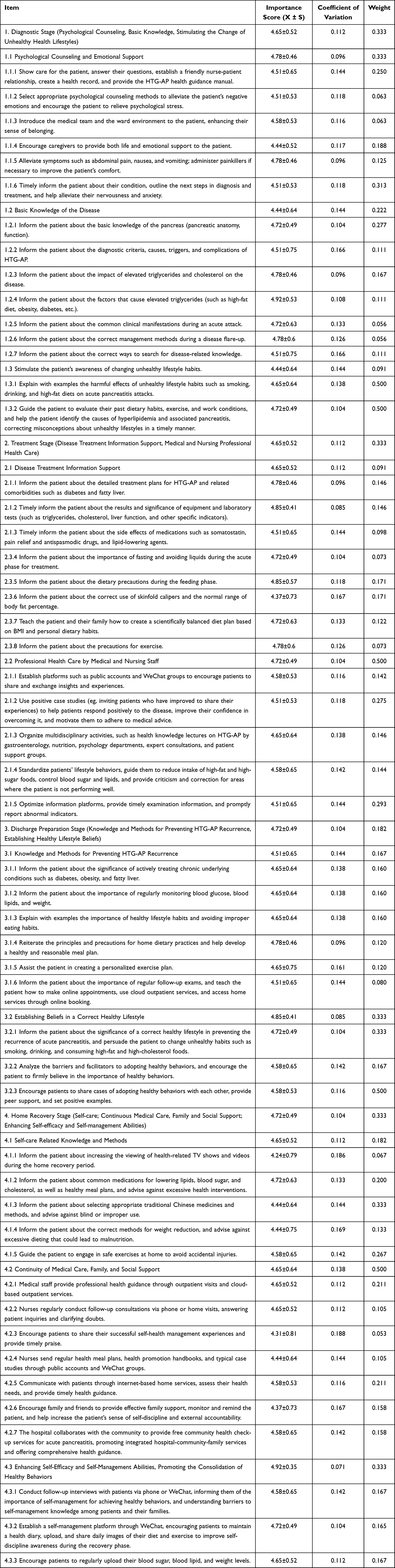 |
Table 3 Expert Consultation Results of the HTG-AP Health Literacy Program Based on Timing It Right (Round 2) |
Discussion
The Process of Constructing the Health Literacy Program for Patients with HTG-AP is Authentic and Reliable
This study is based on relevant literature research, using the Timing It Right theory as the theoretical framework. The study selected AP patients from different disease stages and with various socio-demographic characteristics as research subjects for semi-structured interviews, to understand the health literacy needs of HTG-AP patients at different stages of the disease. An initial draft of the health literacy program was proposed, followed by two rounds of expert consultation to supplement and refine the proposed intervention program. All the experts selected for this study have over ten years of experience in their respective fields, with rich clinical or nursing experience. Moreover, experts from medical schools and Grade-A tertiary hospitals in different regions of China were chosen, ensuring strong representativeness. The response rate for both rounds of expert consultation questionnaires reached 100%, and the majority of consulted experts provided important suggestions for the preliminary intervention program, indicating a high level of expert engagement. The authority coefficient in both rounds of consultation was greater than 0.7, indicating that the results of the two rounds of expert consultation are highly reliable. The Kendall’s W coefficient for the importance of items in both rounds of expert consultation showed statistical significance. After the second round of consultation, the coefficient of variation for importance was between 0.071 and 0.188, indicating that expert opinions had converged, with good coordination among the experts. Therefore, the process of constructing the HTG-AP health literacy program in this study is authentic, reliable, practical, and credible.
The Content of the Health Literacy Program for Patients with HTG-AP Emphasizes Personalization and Strong Targeting
Though several existing health literacy intervention tools have been developed for chronic disease management,23,24 the majority are designed for conditions such as diabetes or hypertension and focus primarily on long-term self-management. The tool developed in this study is specifically tailored for HTG-AP patients—a population with acute episodes and dynamic, phase-specific needs—which represents a significant contextual and clinical distinction. Furthermore, currently, health education is often disease-oriented, which may overlook the dynamic assessment of health literacy needs at different stages of. As a result, the health education provided by healthcare professionals may not align with the patient’s current needs. This mismatch can reduce the patient’s acceptance of the knowledge, thereby affecting the effectiveness of the health education.21,22 Research indicates25 that healthcare professionals’ timely attention to the specific health needs of hospitalized patients at different stages, as well as the development of personalized plans and precise health education, can maximally guide patients to accept disease-related knowledge and encourage them to actively engage in healthy behaviors. This approach promotes better treatment adherence and enhances the patients’ self-management abilities. Based on the Timing It Right theory, this study developed personalized intervention programs according to the changes in health literacy needs of HTG-AP patients at each stage, which can better meet the varying health literacy needs at different stages of the disease. This program helps healthcare providers tailor the timing and content of education to match the current stage of the disease, enabling effective individualized interventions for patients.
The content of the program is comprehensive and more targeted. Previous qualitative research16 has shown that patients’ health literacy needs vary at different stages, with both the focus and nature of their needs differing across stages. Therefore, this study provides different educational content at various stages. For example, during the diagnostic stage, the focus is on disease awareness, while in the treatment stage, it shifts to relevant treatment knowledge. The discharge preparation stage emphasizes information on preventing disease recurrence, and the recovery phase focuses on detailed self-care information. Providing sufficient information support can improve patient compliance and self-care abilities, thereby promoting recovery and enhancing quality of life.26 Emotional needs are particularly prominent during the diagnostic stage, with patients expressing a desire for professional psychological support. Therefore, this study prioritizes psychological intervention and emotional support during the diagnostic period. Previous studies have indicated that effective psychological guidance can improve negative emotions such as depression and anxiety, enhance self-efficacy, increase adherence to treatment and care, and promote changes in health behaviors.27,28 The treatment stage focuses on professional support and specialized care, which is consistent with the findings of Boije K27 and others. Healthcare providers, as a critical part of the patient’s social network, are essential in offering timely professional support. In the recovery phase, self-management is the primary focus of intervention. Improving self-management abilities helps patients change their behaviors and lifestyles, increasing quality of life and preventing disease recurrence.29
The Health Literacy Program for HTG-AP Patients Has Diverse and Intelligent Implementation Approaches
The program developed in this study is based on preliminary qualitative research investigating the health literacy needs of HTG-AP patients at different stages, reflecting a needs-oriented nursing culture.16 It has universal practicality for the management of HTG-AP patients. In terms of intervention methods, given that HTG-AP patients are predominantly middle-aged and young adults, health education is provided using a health education atlas manual developed for this study. This is supplemented with various forms of health education, including audio, video, and multi-modal scientific comic strips, to achieve efficient health education outcomes.30 Digital technologies has advanced in such a way that it has made it possible to expand the type of interactions available between the user and the medical provider or the healthcare systems.31 Today, the use of digital health tools has expanded to include health-related apps, wearable devices, and online medical resources to help people manage their health and make informed decisions about health care.32 Therefore, to address issues related to home self-management among HTG-AP patients during the recovery phase, follow-up is conducted via phone, and relevant knowledge is delivered through online platforms such as WeChat groups and the hospital’s official platform, which also addresses patients’ daily challenges. This multi-channel communication helps improve the operability and practicality of the intervention program.
Limitations
This study is the first to develop a health literacy intervention protocol for HTG-AP) based on the Timing It Right framework, demonstrating certain innovativeness and clinical applicability. There are certain limitations in this study. Initially, at present, only the preliminary development of the protocol has been completed. Whether it can truly improve patients’ health literacy and clinical outcomes (such as readmission rates, treatment adherence, etc). still requires further validation through randomized controlled trials or quasi-experimental studies. Besides, the protocol relies on expert consensus, which may introduce subjective bias. Although it was developed through a Delphi expert consultation process that aimed to incorporate multidisciplinary perspectives, the results remain influenced by the experts’ knowledge and experiential boundaries. Future adjustments and optimizations should incorporate actual patient feedback and clinical data.
Conclusion
This study, based on the Timing It Right theory, constructed the health literacy program for HTG-AP patients through a review of literature, semi-structured interviews, and the Delphi method. The program demonstrates good scientific rigor and feasibility. Future research will involve conducting an interventional study to validate its application in clinical practice and further refine the program.
Data Sharing Statement
The data that support the findings of this study are available from the corresponding author upon reasonable request.
Ethics Statement
The study approved by the Ethics Committee of Clinical Medical College, Yangzhou University (No. 2022ky276) and has passed the registration review by the China Clinical Trial Center (ChiCTR2300067520). All of the procedures in the study complied with the Declaration of Helsinki.
Acknowledgment
We are grateful to 15 experts for their assistance in questionnaire design, data collection and analysis. We would like to thank all the patients who participated in our study.
Author Contributions
All authors made a significant contribution to the work reported, whether that is in the conception, study design, execution, acquisition of data, analysis and interpretation, or in all these areas; took part in drafting, revising or critically reviewing the article; gave final approval of the version to be published; have agreed on the journal to which the article has been submitted; and agree to be accountable for all aspects of the work.
Funding
The 333 High-level Talents Training Project of Jiangsu Province.
Disclosure
All authors declare no conflicts of interest in this work.
References
1. Tenner S, Vege SS, Sheth SG. American college of gastroenterology guidelines: management of acute pancreatitis. Am J Gastroenterol. 2024;119(3):419–437. doi:10.14309/ajg.0000000000002645
2. Deng H, Peng K, Zhang L, et al. Clinical outcomes in a multicenter cohort involving 919 patients with hypertriglyceridemia-associated acute pancreatitis. Am J Gastroenterol. 2025:10–4309. doi:10.14309/ajg.0000000000003319
3. Meng Y, Han P, Ma X, et al. Research progress on the mechanism of acute hypertriglyceridemic pancreatitis. Pancreas. 2024;53(8):e700–e709. doi:10.1097/MPA.0000000000002364
4. Fan Z, Zhang Y, Li J, et al. Global burden and characterization of hypertriglyceridemia-induced acute pancreatitis: results from a systematic review and a multi-center cohort study. Sci China Life Sci. 2025;68(1):1–11. doi:10.1007/s11427-024-2900-6
5. Colvin SD, Smith EN, Morgan DE, et al. Acute pancreatitis: an update on the revised Atlanta classification. Abdom Radiol. 2020;45(5):1222–1231. doi:10.1007/s00261-019-02214-w
6. Khatua B, El-Kurdi B, Singh VP. Obesity and pancreatitis. Curr Opin Gastroenterol. 2017;33(5):374–382. doi:10.1097/MOG.0000000000000386
7. Jin M, Bai X, Chen X, et al. A 16-year trend of etiology in acute pancreatitis: the increasing proportion of hypertriglyceridemia-associated acute pancreatitis and its adverse effect on prognosis. J Clin Lipidol. 2019;13(6):947–953.e1. doi:10.1016/j.jacl.2019.09.005
8. Lai T, Li J, Zhou Z, et al. Etiological changes and prognosis of hospitalized patients with acute pancreatitis over a 15-year period. Dig Dis Sci. 2024;69(1):56–65. doi:10.1007/s10620-023-08172-0
9. Chen Y, Huang S, Luo B, et al. Prediction and evaluation of a nomogram model for recurrent acute pancreatitis. Eur J Gastroenterol Hepatol. 2024;36(5):554–562. doi:10.1097/MEG.0000000000002732
10. Hegyi P, Párniczky A, Lerch MM, et al. International consensus guidelines for risk factors in chronic pancreatitis. Recommendations from the working group for the international consensus guidelines for chronic pancreatitis in collaboration with the international association of pancreatology, the American pancreatic association, the Japan pancreas society, and European pancreatic club. Pancreatology. 2020;20(4):579–585. doi:10.1016/j.pan.2020.03.014
11. Dumenci L, Matsuyama RK, Kuhn L, et al. On the validity of the rapid estimate of adult literacy in medicine (REALM) scale as a measure of health literacy. Commun Methods Meas. 2013;7(2):134–143. doi:10.1080/19312458.2013.789839
12. Xiaoxi Y. Development and application of the health literacy scale for acute pancreatitis patients. Yangzhou University. 2022. doi:10.27441/d.cnki.gyzdu.2022.000916
13. Pang Y, Kartsonaki C, Turnbull I, et al. Metabolic and lifestyle risk factors for acute pancreatitis in Chinese adults: a prospective cohort study of 0.5 million people. PLoS Med. 2018;15(8):e1002618. doi:10.1371/journal.pmed.1002618
14. McKenna VB, Gilheaney Ó. Health literacy interventions in adult speech and language therapy: a scoping review. Health Expect. 2024;27(1):e13878. doi:10.1111/hex.13878
15. Liu YB, Liu L, Li YF, et al. Relationship between health literacy, health-related behaviors and health status: a survey of elderly chinese. Int J Environ Res Public Health. 2015;12(8):9714–9725. doi:10.3390/ijerph120809714
16. Su X, Ma S, Yang X, et al. Health literacy needs of acute pancreatitis patients during the diagnosis and treatment process under the lens of the timing it right theory: a qualitative study. Patient Prefer Adherence. 2024;Volume 18:507–517. doi:10.2147/PPA.S444955
17. Cameron JI, Gignac MA. “Timing It Right”: a conceptual framework for addressing the support needs of family caregivers to stroke survivors from the hospital to the home. Patient Educ Couns. 2008;70(3):305–314. doi:10.1016/j.pec.2007.10.020
18. Lee CM, Herridge MS, Matte A, Cameron JI. Education and support needs during rec-overy in acute respiratory distress syndrome survivors. Critical Care. 2009;13(5):R153. doi:10.1186/cc8053
19. Burns SP, Lutz BJ, Magwood GS. ‘Timing it Right’: needs of African American adults with stroke and their caregivers across the care continuum. Ethn Health. 2022;27(2):420–443. doi:10.1080/13557858.2019.1693512
20. Jünger S, Payne SA, Brine J, et al. Guidance on conducting and reporting delphi studies (CREDES) in palliative care: recommendations based on a methodological systematic review. Palliat Med. 2017;31(8):684–706. doi:10.1177/0269216317690685
21. Roth EM, Bays HE, Forker AD, et al. Prescription omega-3 fatty acid as an adjunct to fenofibrate therapy in hypertriglyceridemic subjects. J Cardiovasc Pharmacol. 2009;54(3):196–203. doi:10.1097/FJC.0b013e3181b0cf71
22. Sun S, He L, Bai M, et al. High-volume hemofiltration plus hemoperfusion for hyperlipidemic severe acute pancreatitis: a controlled pilot study. Ann Saudi Med. 2015;35(5):352–358. doi:10.1097/FJC.0b013e3181b0cf71
23. Holmen H, Holm AM, Falk RS, et al. A digital outpatient service with a mobile app for tailored care and health literacy in adults with long-term health service needs: multicenter nonrandomized controlled trial. J Med Internet Res. 2025;27:e60343. doi:10.2196/60343
24. Do Amaral MSG, Boonstra MD, van der Pol S, et al. A health literacy intervention targeting chronic kidney disease patients and healthcare professionals is cost-saving: findings from the Netherlands. J Gen Intern Med. 2025;40(1):1–9. doi:10.1007/s11606-025-09697-y
25. Wang Q, Tao C, Yuan Y, et al. Current situations and challenges in the development of health information literacy. Int J Environ Res Public Health. 2023;20(3):2706. doi:10.3390/ijerph20032706
26. Wang L, Zeng YB, Chen JY, et al. A simple new scoring system for predicting the mortality of severe acute pancreatitis: a retrospective clinical study. Medicine. 2020;99(23):e20646. doi:10.1097/MD.0000000000020646
27. Boije K, Drocic A, Engström M, Bjerså K. Patients’ perceptions of experiences of recovering from acute pancreatitis: an interview study. Gastroenterol Nurs. 2019;42(3):233–241. doi:10.1097/SGA.0000000000000375
28. Ma S, Yang X, He H, et al. Psychological experience of inpatients with acute pancreatitis: a qualitative study. BMJ Open. 2022;12(6):e060107. doi:10.1136/bmjopen-2021-060107
29. Xiong S, Ding M, Li P, et al. A health education model based on knowledge, attitude, and practice used as adjunct therapy for metabolic syndrome complicated with acute pancreatitis: a case report. J Int Med Res. 2020;48(5):300060520924272. doi:10.1177/0300060520924272
30. Munigala S, Gardner TB, O’Reilly EM, et al. Understanding pancreatic diseases using animated pancreas patient: informing patients for better health outcomes with visual formats of learning. Pancreas. 2018;47(10):1256–1261. doi:10.1097/MPA.0000000000001178
31. Arias López MDP, Ong BA, Borrat Frigola X, et al. Digital literacy as a new determinant of health: a scoping review. PLOS Digit Health. 2023;2(10):e0000279. doi:10.1371/journal.pdig.0000279
32. Estrela M, Semedo G, Roque F, et al. Sociodemographic determinants of digital health literacy: a systematic review and meta-analysis. Int J Med Inform. 2023;177:105124. doi:10.1016/j.ijmedinf.2023.105124
 © 2025 The Author(s). This work is published and licensed by Dove Medical Press Limited. The
full terms of this license are available at https://www.dovepress.com/terms
and incorporate the Creative Commons Attribution
- Non Commercial (unported, 4.0) License.
By accessing the work you hereby accept the Terms. Non-commercial uses of the work are permitted
without any further permission from Dove Medical Press Limited, provided the work is properly
attributed. For permission for commercial use of this work, please see paragraphs 4.2 and 5 of our Terms.
© 2025 The Author(s). This work is published and licensed by Dove Medical Press Limited. The
full terms of this license are available at https://www.dovepress.com/terms
and incorporate the Creative Commons Attribution
- Non Commercial (unported, 4.0) License.
By accessing the work you hereby accept the Terms. Non-commercial uses of the work are permitted
without any further permission from Dove Medical Press Limited, provided the work is properly
attributed. For permission for commercial use of this work, please see paragraphs 4.2 and 5 of our Terms.