
Back to Journals » Journal of Experimental Pharmacology » Volume 17
Colocasia Esculenta as a Potential Plant-Based Medicine: A Review on Its Bioactive Constituents and Pharmacological Activities
Authors Pertiwi R  , Wilar G, Sumiwi SA, Levita J
Received 5 July 2025
Accepted for publication 17 October 2025
Published 31 October 2025 Volume 2025:17 Pages 755—803
DOI https://doi.org/10.2147/JEP.S550113
Checked for plagiarism Yes
Review by Single anonymous peer review
Peer reviewer comments 3
Editor who approved publication: Prof. Dr. Abdelwahab Omri
Reza Pertiwi,1,2,* Gofarana Wilar,3,* Sri Adi Sumiwi,3,* Jutti Levita3,*
1Doctoral Program in Pharmacy, Faculty of Pharmacy, Universitas Padjadjaran, Sumedang, Indonesia; 2Faculty of Mathematics and Natural Sciences, Universitas Bengkulu, Bengkulu, Indonesia; 3Department of Pharmacology and Clinical Pharmacy, Faculty of Pharmacy, Universitas Padjadjaran, Sumedang, Indonesia
*These authors contributed equally to this work
Correspondence: Jutti Levita, Department of Pharmacology and Clinical Pharmacy, Faculty of Pharmacy, Universitas Padjadjaran, Jl. Raya Bandung-Sumedang km 21, Sumedang, 45363, Indonesia, Tel +6222-84288888 Ext 3510, Email [email protected]
Abstract: Colocasia esculenta (L.) Scott, commonly known as taro, is a tuberous plant widely cultivated and utilized as a food source and traditional medicine in various cultures worldwide. Its ethnopharmacological significance, particularly in Asia, Africa, and the Pacific Islands, has increased scientific interest in exploring its therapeutic potential. This review provides a comprehensive overview of the diverse characteristics of C. esculenta, emphasizing its bioactive constituents and reported pharmacological activities. To gather relevant information, articles were retrieved from the PubMed database using the keyword “Colocasia esculenta”, with filters applied to full-text articles published between 2015 and 2024. Inclusion criteria comprised studies reporting pharmacological, toxicological, or phytochemical findings, while unrelated agricultural studies were excluded. The evidence suggests that C. esculenta exhibits multiple pharmacological activities across various experimental models. In vitro studies have shown this plant has anticancer, antibacterial, anti-inflammatory, antiproliferative, anti-oxidant, and antidiabetic properties. Animal models have demonstrated their anticancer, antidiarrheal, anti-obesity, hepatoprotective, antidiabetic, diuretic, antihyperlipidemic, anti-inflammatory, neuroprotective, and anticonvulsant properties. Flavonoids, phenolic compounds, and alkaloids contribute to the therapeutic effects of C. esculenta. Limited human investigations, including studies using the proximity extension assay (PEA) protocol, suggest potential translational applications, although clinical evidence remains scarce. In conclusion, C. esculenta demonstrates promising pharmacological activities supported by preclinical evidence, yet significant research gaps persist, particularly regarding varietal differences, standardized dosages, safety profiles, and rigorous clinical validation. Future studies should focus on comparative phytochemical analyses, toxicological evaluations, and well-designed clinical trials to establish its efficacy and safety as a plant-based therapeutic agent.
Keywords: Colocasia esculenta, secondary metabolite, pharmacological activity, flavonoid, phenolic
Introduction
Traditional medicine remains a primary pillar in the basic healthcare systems of many developing countries, where a significant portion of the population relies on traditional practitioners and medicinal plants, despite the availability of modern medicine. The popularity of phytomedicine persists because of historical and cultural factors. In developed countries, interest in alternative and complementary therapies, including medicinal herbs, continues to grow as part of a holistic approach to health. Traditional medicine systems have increasingly attracted worldwide attention over the past ten years.1
Traditionally, Colocasia esculenta or taro has been widely utilized as a food source and as a traditional medicine. In Africa, taro is also considered an important food crop with various health benefits: its corm provides energy, while the leaves contain vitamins and minerals (β-carotene, iron, folate) believed to help protect the kidneys and prevent acidosis and kidney stones.2 Meanwhile, in Islamic and Mediterranean medieval records, taro (referred to as qolqas) was used both as food and medicine, with its distribution noted along the East African coast, Egypt, and Syria, and it was consumed therapeutically after being peeled and boiled to remove its acrid properties.3 In Asia, particularly India, taro is widely known in different regions under local names such as eddoe, arvi, and arbi. All parts of the plant (corm, leaves, and petioles) have been employed in traditional medicine to treat general weakness, constipation, baldness, stomatitis, hemorrhoids, liver diseases, and are attributed with laxative, demulcent, styptic, antidiabetic, antidepressant, and anthelmintic effects.4 In Indonesia, various ethnic communities such as Banjar, Dayak, Kutai, Malay, Bugis, and Toraja have utilized taro corms, petioles, and leaves both as staple food and as traditional remedies, including for lowering blood pressure and as an alternative therapy for diabetes.5
In Indonesia, traditional medicine plays a significant role in supporting the public healthcare system. Indonesia has great potential for developing traditional medicines derived from natural products as a tropical country with abundant biodiversity and a diverse ethnomedicinal cultural heritage. One of the natural resources widely grown in various regions of Indonesia, which the community has long utilized as a food source and traditional medicine, is taro, with the botanical name Colocasia esculenta (L.) Scott belongs to the Araceae family (see Figure 1).
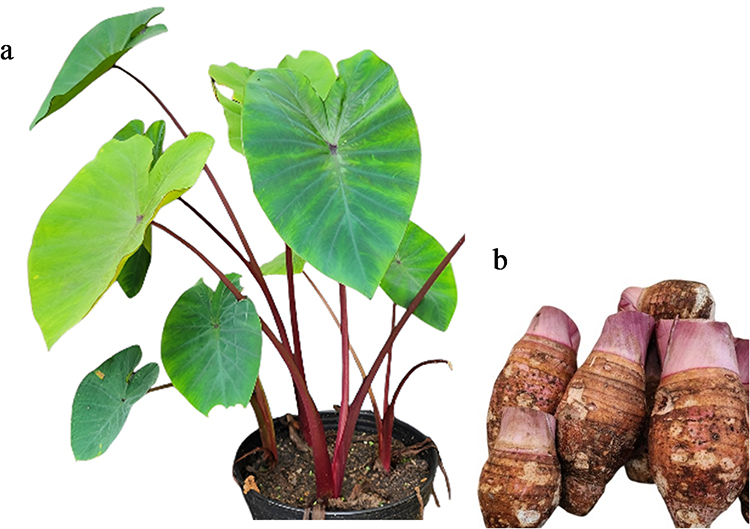 |
Figure 1 Colocasia esculenta (L.) Scott (a) plant and (b) tubers or corms. |
Colocasia esculenta (L.) Schott, a perennial herb of the Araceae family, is characterized by large peltate leaves and thick underground corms rich in starch, which serve as its main storage organ.6 The plant is commonly propagated vegetatively through corms, cormels, or stolons, as this approach is more reliable than seed propagation.7 Botanically, taro is classified into two major types: the eddoe-type, producing numerous side-corms, and the dasheen-type, which has a larger central corm with few side-corms, reflecting differences in physiology and utilization.7,8 Taro also shows high morphological plasticity, adapting widely across varieties.8
Ecologically, taro thrives in tropical and subtropical regions with temperatures of 25–30 °C and high rainfall (2000–2500 mm). It tolerates waterlogging and is often cultivated in paddy fields, wetlands, and riverbanks, although some adaptive varieties can grow under dryland conditions with limited irrigation.7 Local varietal diversity is evident worldwide: in Indonesia, surveys in Central Java identified landraces such as beneng, benek, kasduto, wungu, and banyu.9 In India and South Asia, a wild variant, var. aquatilis, produces long stolons and occurs from Southeast Asia to Australia.8 In Hawaii, commercial cultivars like Bun Long and Maui Lehua are widely used for cultivation and poi production.10 Studies report distinct nutritional and starch profiles in Moi, Tahitian, and Bun-long, supporting their potential in modern food development.11
C. esculenta is a tuber crop that is widely cultivated in South America and Asia, particularly in Indonesia, as a local food source that is rich in carbohydrates and fiber.12,13 Various taro varieties are distributed throughout the Indonesian archipelago. However, their utilization remains limited to traditional food consumption and has not been widely developed as a raw material for herbal medicine. Considering Indonesia’s rich biodiversity and ethnomedicinal heritage, taro has great potential for further development as a functional plant and a natural-based traditional medicine.
C. esculenta has attracted the attention of researchers in various scientific disciplines owing to its pharmacological, nutritional, and agronomic potential. Over the years, the number of studies focusing on this plant has significantly increased. As shown in Figure 2, research on C. esculenta has grown steadily from 1990 to the present, showing a linear trend-line with a regression equation of y = 0.8366x – 1668.3 and a correlation coefficient of R = 0.8744, thus reflecting the global interest in its applications in health, functional food, and sustainable agriculture. This trend also indicates that research on C. esculenta has developed quantitatively and expanded geographically, covering various countries across Asia, Africa, the Americas, and the Pacific Region.
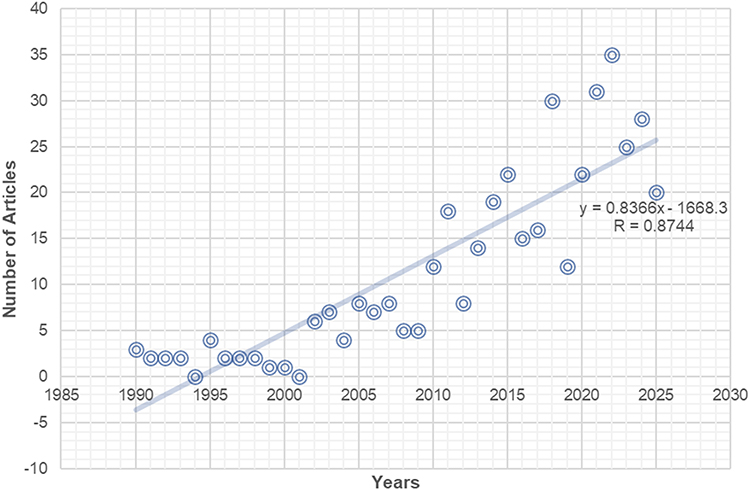 |
Figure 2 Annual distribution of research on Colocasia esculenta searched in the PubMed database in the period between 1990 and 2025, showing a linear trendline with a regression equation of y = 0.8366x – 1668.3 and a correlation coefficient of R = 0.8744. |
Studies on C. esculenta have shown that this plant contains bioactive compounds such as flavonoids, alkaloids, and saponins, which exhibit potential antioxidant, anti-inflammatory, antidiabetic, and antimicrobial properties.14 Moreover, its abundant phenolics and flavonoids, such as chlorogenic acid, catechin, and quercetin, exhibit high antioxidant activity. These compounds neutralize free radicals by donating an electron or a hydrogen atom, which helps prevent oxidation reactions that could harm cells and tissues.15 C. esculenta is rich in soluble fibres and polysaccharides, slowing glucose absorption in the intestines and regulating blood sugar levels.16 Additionally, the flavonoid content in C. esculenta has been shown to enhance insulin sensitivity by modulating insulin signaling pathways and reducing insulin resistance in individuals with type 2 diabetes.17 The phenolic and alkaloid compounds in C. esculenta disrupt bacterial cell membranes, inhibit bacterial protein synthesis, and interfere with the activity of essential enzymes in pathogenic microorganisms.18 A deeper understanding of the benefits and active compounds of C. esculenta is essential to support its utilization in healthcare and the food industry.19 Considering all, this article aims to provide insights into the potential of C. esculenta as a plant-based medicine by exploring various studies on the pharmacological activities of this plant.
The application of C. esculenta necessitates careful evaluation of its safety profile and traditional dosage practices. Both corms and leaves contain antinutritional constituents, including calcium oxalate crystals, tannins, and cyanogenic compounds, which may cause gastrointestinal irritation if consumed without appropriate processing. Traditional preparation methods such as boiling, roasting, and fermentation have historically been employed to reduce antinutrient levels and enhance edibility to mitigate these risks.7,20 Preclinical investigations further indicate a favorable safety margin, as ethanolic leaf extracts did not induce mortality in acute toxicity studies at doses up to 5000 mg/kg. Moreover, antihyperglycemic, antihypertensive, and diuretic effects were observed to be safe within a therapeutic window of 100–400 mg/kg in animal models.21 These findings underscore the therapeutic promise of C. esculenta, highlighting the need for further investigations to establish long-term safety thresholds and robust clinical validation.
Methods
Only peer-reviewed articles reporting pharmacological, phytochemical, or toxicological findings of C. esculenta were included to ensure scientific rigor. Further screening was conducted based on titles and abstracts, excluding unrelated articles, non-English publications, review papers, and duplicates. Studies focusing solely on agricultural or nutritional aspects without pharmacological relevance were excluded. Additional inclusion criteria were: (i) availability of full-text articles, (ii) publication in English, and (iii) publication within the last ten years (2015–2024). Quality assessment was performed by evaluating study design, methodological reproducibility, adequacy of controls, and clarity of outcome reporting.
This review was conducted in accordance with the PRISMA-ScR (Preferred Reporting Items for Systematic Reviews and Meta-Analyses extension for Scoping Reviews) guidelines to ensure transparency and reproducibility. Relevant articles on Colocasia esculenta were retrieved from the PubMed database using the keyword “C. esculenta.” Filters were applied to restrict results to English-language articles, free full-text availability, and publications between 2015 and 2024. This initial search yielded 246 records. A total of 204 articles were excluded for being unrelated to pharmacological or phytochemical aspects, being review papers, lacking full-text access, or providing insufficient or irrelevant data. Following the screening and eligibility assessment, 42 articles were included in the final qualitative synthesis. These studies addressed the ethnopharmacology, phytochemistry, pharmacological activities, or toxicological evaluation of C. esculenta.
Ethnopharmacology
C. esculenta has long been used in traditional medicine across various cultures because of its diverse bioactive compound content. Ethnopharmacologically, pressed petiole (leaf stalk) juice has styptic properties and is used to stop arterial bleeding. It is also used to treat earache (otalgia) and ear discharge (otorrhoea), and serves as a stimulant and rubefacient to enhance blood circulation, including in cases of internal hemorrhage. Leaf juice is a stimulant, expectorant, astringent, appetite enhancer, and a remedy for ear pain. Traditionally, the leaf stalk juice mixed with salt has been used as an absorbent to treat inflamed glands and buboes. The cooked C. esculenta contains mucilage, which is considered an effective nervine tonic. A decoction made from the peel is used in folk medicine to treat diarrhea. Taro is also believed to promote weight gain and reduce excessive sputum secretion in asthmatic individuals. Corm juice has been topically applied to treat alopecia. Internally, C. esculenta corm is used to treat hemorrhoids and portal system congestion as a laxative, demulcent, mild analgesic (anodyne), and galactagogue (a lactation inducer).22
The extensive historical use and well-established nutritional profile of C. esculenta highlight its potential as a functional food with health-promoting attributes. The starch derived from C. esculenta is characterized by its small and fine granule structure, which facilitates high digestibility and renders it appropriate for individuals with compromised or sensitive digestive systems. Furthermore, taro is inherently hypoallergenic and devoid of gluten, positioning it as a suitable carbohydrate source for populations with gluten-related disorders, including celiac disease and non-celiac gluten sensitivity.23 In the Patuakhali and Barguna districts of southern Bangladesh, the leaves and petioles of C. esculenta are traditionally used for their hemostatic properties and in treating wounds to promote healing.24 Other studies have reported that, traditionally, the tuber of C. esculenta is used in the management of diabetes mellitus and the treatment of ringworm, cough, sore throat, and wounds.25
C. esculenta, commonly known as “Alu and dasheen”, is a food crop in the Caribbean and is used as a traditional food for treating diabetes mellitus. The plant is useful for curing diabetes; it is anthelmintic, demulcent, and helpful for cough, sore throat, and wounds.26 C. esculenta has been utilized in traditional Chinese medicine as a component of tonic formulations and as a therapeutic agent for gastrointestinal disorders, particularly following tumor resection procedures. Tubers are a rich source of resistant starch and are commonly employed as an alternative carbohydrate in various dietary patterns across different countries. Additionally, C. esculenta contains several defense-related proteins, including lectins and metallothionein, which play a role in protecting plants against pests, pathogens, and abiotic stressors.25
Botanical and Phytochemical Aspects
C. esculenta is a tropical corm plant that includes various cultivars. This herbaceous plant is commonly found in tropical and subtropical regions.26 C. esculenta is one of the Araceae family’s most economically and nutritionally essential members, cultivated primarily for its starchy corms, which serve as a staple food in many regions.27 The plant grows up to 1.5 meters tall, with large, heart-shaped (cordate) leaves that are dark green, glossy, and borne on long petioles extending directly from the corm. Underground corms are thick, cylindrical, or globose, with brown fibrous skin and white, yellow, or purple flesh, depending on the variety. C. esculenta produces an inflorescence typical of the family Araceae, which consists of a spadix enclosed by a greenish-yellow spathe. The flowers are unisexual, with male and female flowers arranged separately on the spadix.28 Flowering is rare in cultivated varieties, but occurs naturally in wild populations. The plants thrive in warm and humid environments with high rainfall and are often grown in flooded or well-drained soils.29
Molecular markers, particularly microsatellites, also known as Simple Sequence Repeat (SSR), have become essential tools in plant genetics and breeding because they provide precise information on genetic diversity, genome organization, and trait inheritance. In C. esculenta, the development and application of SSR markers facilitate germplasm management, genome mapping, marker-assisted selection, and the conservation of genetic resources, thereby enhancing the efficiency and effectiveness of breeding programs. Previous studies successfully developed SSR markers from C. esculenta genomic libraries, and out of 43 primer pairs tested, 16 exhibited polymorphisms with an average of 3.2 alleles per locus. These SSR markers have proven highly useful in various applications, including germplasm collection management, genome mapping, and marker-assisted selection programs. Consequently, they serve as a critical tool to support the breeding and genetic conservation of C. esculenta, enabling more effective varietal identification and the selection of desirable traits.30
A comprehensive understanding of the pharmacological potential and nutritional significance of C. esculenta necessitates a detailed examination of the phytochemical profiles of its distinct plant organs. Leaves, tubers, stems, and flowers harbor diverse bioactive constituents and essential nutrients, underpinning the plant’s therapeutic efficacy and health-promoting properties. The subsequent section presents an in-depth analysis of these phytochemical and nutritional components.
The leaves of C. esculenta contain various bioactive compounds, including flavonoids and triterpenoids such as quercetin, luteolin 7-rutinoside, vitexin, rutin, kaempferol, orientin, oxalic acid, and acenaphthylene. Additionally, the leaves are rich in nutrients such as calcium oxalate, minerals (calcium and phosphorus), fiber, starch, and vitamins A, B, and C.38 Other reports also mention the presence of phenolics, alkaloids, glycosides, saponins, terpenoids, and general phenolic compounds.31 The tubers or corms of C. esculenta have a high content of globulin protein (about 80% of total protein), starch (73–80%), polysaccharide polymers (56% neutral sugars and 40% anionic components), as well as minor lipids and monoester phosphate.32,33 The stems and flowers of C. esculenta also contain various phytochemicals, such as alkaloids, flavonoids, glycosides, phenols, saponins, steroids, and tannins. Phenolic compounds are more dominant in the flowers, alkaloids, flavonoids, and saponins are present at fairly high levels, and glycosides and steroids are detected in smaller amounts. Tannins are highly dominant in the stems, with flavonoids and steroids present in low amounts, and the other compounds occur in moderate quantities.34
Phenolic compounds identified from the corm (tuber) extracts of C. esculenta obtained from Giardino della Minerva in Salerno, Italy, including 3,4,5-tri-o-methyl gallic acid, were analyzed using high-performance liquid chromatography equipped with a diode array detector (HPLC-DAD). Their chemical structures were identified through nuclear magnetic resonance (NMR) and mass spectroscopy (MS) techniques.35 In contrast, the tubers of C. esculenta from Abakaliki, Ebonyi State, Nigeria, revealed the presence of phenolic compounds such as pyrogallic acid, gallic acid, syringic acid, benzoic acid, and vanillic acid.36 In C. esculenta leaves collected from India, chlorogenic acid was identified,37 while the flowers of C. esculenta obtained from the Fulgazi region (Feni District, Chattogram, Bangladesh) were found to contain cyclohexane-1,2-diol 2-(4-methylcyclohex-3-en-1-yl)propan-2-yl propanoate.38 The flavonoid compounds identified from the tubers of C. esculenta collected from Abakaliki, Ebonyi State, Nigeria, include catechin and anthocyanin.36 Meanwhile, the leaves of C. esculenta obtained from India contained quercetin, rutin, vitexin, and kaempferol.37 The flavonoid content of C. esculenta flowers collected from the Fulgazi region (Feni District, Chattogram, Bangladesh) revealed the presence of octyl-β-D-glucopyranoside.38 Phenolics, flavonoids, and β-sitosterol play a role in antioxidant, anti-inflammation, and other pharmacological activities. C. esculenta was collected from the Al Monier Village, Al-Sharkya Governorate, Egypt, and its compounds were isolated using various chromatographic techniques. In addition, compounds such as ergosterol, fonsecinone A, asperpyrone C, and asperpyrone B were also identified.39 Flavonoid compounds, such as orientin and daucosterol, were isolated from C. esculenta leaves collected in Al Monier Village, Egypt, using silica gel column chromatography.40 Another study reported an isolation of methyl palmitate, stearic acid, elaidic acid, and hexanedioic acid from C. esculenta tubers collected at the National Root Crops Research Institute, Umudike, Nigeria.18 All of the metabolites isolated from C. esculenta are summarized in Table 1.
 |
Table 1 Metabolites Isolated From the C. Esculenta Plant |
The chemical and nutritional composition of Colocasia esculenta exhibits significant variability, influenced by environmental and cultivation factors. Leaf mineral content, including Fe, Cu, Mg, K, and Zn, as well as phytochemicals such as chlorogenic acid, anthraquinones, cinnamic acid derivatives, phenolics, apigenin, catechins, vitexin, and isovitexin, is strongly dependent on plant conditions, including climate, cultivation location, and the variety used.45 Additionally, as an anti-nutritional factor, oxalate content varies and can be reduced through food processing. This variability is observed at the environmental level and among genotypes. A study on Colocasia genotypes from the Eastern Himalayas indicated that multivariate analysis (Principal Component Analysis, PCA) highlighted the primary influence of genotype on traits such as total sugars, anthocyanins, phenolics, antioxidant activity (Ferric Reducing Antioxidant Power, FRAP), and oxalate content (total and insoluble).46 These findings suggest a trade-off between yield and nutritional or anti-nutritional quality, an important consideration in plant breeding programs.
In silico Studies of C. Esculenta
To further elucidate the therapeutic potential of Colocasia esculenta in the management of benign prostatic hyperplasia (BPH), an in silico approach was employed to screen and evaluate the bioactivity of its phenolic constituents. This computational method aimed to identify compounds that can inhibit two key proteins involved in BPH pathophysiology, namely 5α-reductase and α1-adrenoceptor.47 These proteins are well-established pharmacological targets in conventional BPH treatment, with finasteride and tamsulosin serving as standard reference drugs. Among the 22 phenolic compounds analyzed, 14 demonstrated strong binding affinity toward 5α-reductase, resembling the inhibitory action of finasteride, whereas 10 compounds exhibited affinity for the α1-adrenoceptor, analogous to the mechanism of tamsulosin. Molecular docking simulations revealed that CyP20 had the highest binding affinity for both targets, suggesting its potential as a dual-action agent. Furthermore, the interaction of C. esculenta phenolics with α1-adrenoceptor showed comparable effectiveness to tamsulosin, indicating that these natural compounds may offer synergistic or alternative pathways for BPH symptom management through the modulation of androgenic activity and smooth muscle contraction.48
In vitro Studies of C. Esculenta
Research on C. esculenta has shown potential progress in recent decades, particularly using in vitro approaches. Its anticancer,35,49 antibacterial,50–52 anti-inflammatory,42,50,53,54 proliferative,52 radical scavenging,37,42 and antidiabetic properties have been reported.38 In vitro methods are widely used because they allow for systematic and controlled preliminary analysis of bioactive compounds in C. esculenta, whether from crude extracts or purified fractions. The findings of these in vitro studies provide a critical foundation for further in vivo research and clinical trials to confirm the therapeutic potential of this plant. Various in vitro studies are summarized in Table 2.
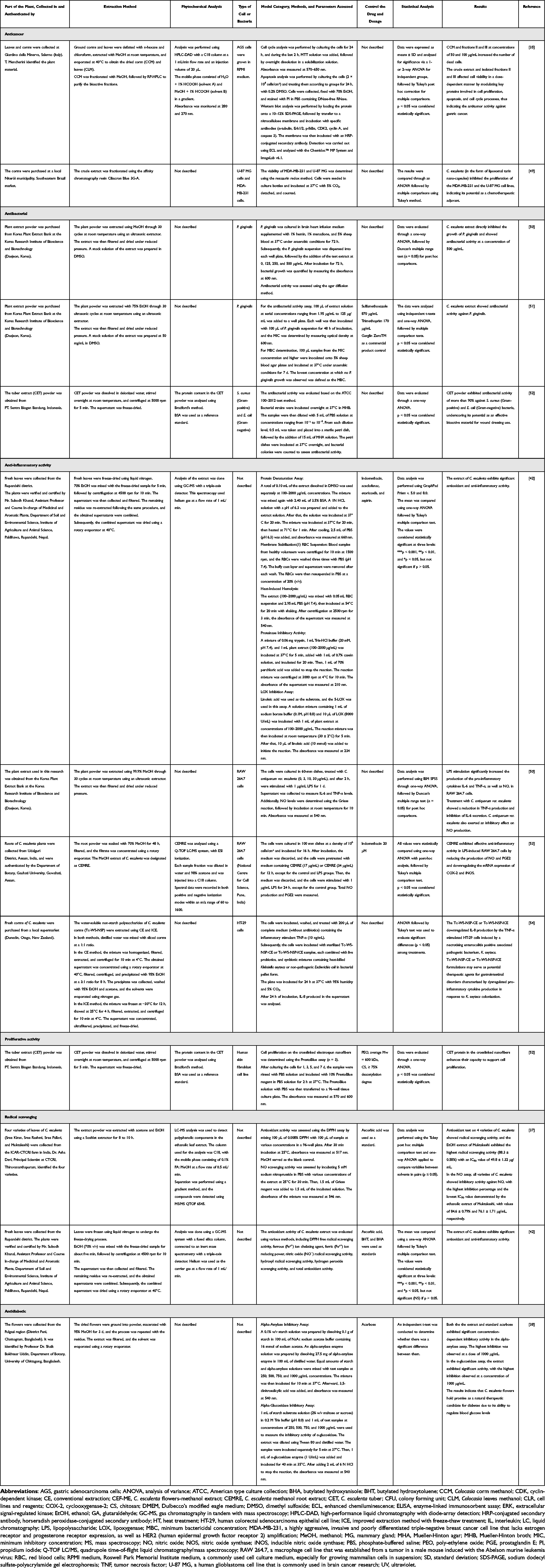 |
Table 2 In vitro Studies of C. Esculenta |
Anticancer Activity
Research on the anticancer activity of C. esculenta raw ethanol extract has shown that it inhibits T-cell leukemia, colon cancer, prostate cancer, and breast cancer by suppressing cell proliferation and significantly reducing metastasis.55 Corms of C. esculenta were collected from Giardino Della Minerva (Salerno, Italy), and the antimetastatic effectiveness originates from the suppression of tumor cell migration by directly downregulating the COX-1/2/PGE pathway, and indirectly by stimulating the antitumor immune response. Unlike methanol extracts from its leaves, they exhibited cytotoxic effects against gastric adenocarcinoma cells. This effect was mediated by apoptosis, which was driven by increasing caspase-3 activity. C. esculenta extract and its fractions were found to activate apoptosis markers and modulate the phosphorylation status of proteins essential for cell proliferation and tumor development. Further analysis of the active fraction led to the identification of the first bioactive phenolics: 3,4,5-tri-O-methyl-gallic acid, isolariciresinol, and dehydrodiconiferyl alcohol-9-O-β-D-glucopyranoside.35
Research on the effectiveness of liposomal tarin nanocapsule lectin derived from C. esculenta corms encapsulated in liposomes has shown that tarin can effectively inhibit the proliferation of glioblastoma and breast adenocarcinoma cancer cells in both the free and encapsulated forms. Moreover, tarin exhibited no toxicity toward healthy cells, including mouse bone marrow cells and L929 fibroblasts. Additionally, the encapsulated tarin exhibited a proliferative effect on healthy cells, which was suspected to be related to the increased production of cytokines or growth factors. Liposomal tarin nanocapsules successfully inhibited glioblastoma cell growth in cancer cell efficacy tests. However, free tarin did not exhibit cytotoxic effects on cancer cells, indicating that the encapsulation process enhanced its effectiveness by increasing its internalization within tumor cells. In addition to its anticancer effects, tarin has potential as an immunomodulatory agent capable of protecting hematopoietic cells from the toxic effects of chemotherapeutic drugs such as cyclophosphamide.49
Antibacterial Activity
C. esculenta has been studied for its potential antibacterial properties, inhibiting the growth of various bacteria, such as Porphyromonas gingivalis,50,51 Staphylococcus aureus, and Escherichia coli.52 The details are described below.
The methanol extract of C. antiquorum var. esculenta from the Korea Plant Extract Bank can suppress the growth of Porphyromonas gingivalis at concentrations of 125 μg/mL and 250 μg/mL, with inhibition reaching about 20%, and at a concentration of 500 μg/mL, resulting in approximately 40% inhibition.50 Further evaluation of its effects on P. gingivalis revealed that the 75% ethanol extract of C. antiquorum var. esculenta possesses antibacterial activity, with a minimum inhibitory concentration (MIC) of 31.3 μg/mL and a minimum bactericidal concentration (MBC) of 62.5 μg/mL. The results showed that the 75% ethanol extract was more potent than the methanol extract.55
C. esculenta tuber protein–chitosan–poly (ethylene oxide) cross-linked nanofibers have antibacterial activity against Gram-positive (Staphylococcus aureus) and Gram-negative (Escherichia coli) bacteria. The tubers of C. esculenta were obtained from PT. Sentra Biogen Bandung, Indonesia. The findings revealed a significant decrease in bacterial colonies, with a reduction rate exceeding 98% for S. aureus and 90–95% for E. coli. Based on the bacterial colony reduction rate, this activity was classified as bacteriostatic.52
Another findings highlight the antibacterial activity of C. esculenta against Enterococcus faecalis (ATCC 29212), which is attributed to the presence of secondary metabolite compounds such as phenolics, flavonoids, saponins, alkaloids, tannins, and triterpenoids. Saponins exert antibacterial effects by disrupting the permeability of bacterial cell wall.56
Anti-Inflammatory Activity
The anti-inflammatory activity of C. esculenta and its variants is exerted through the inhibition of pro-inflammatory mediators such as prostaglandin E2 (PGE2), nitric oxide (NO), interleukin-6 (IL-6), IL-8, and tumor necrosis factor (TNF)-α, along with the downregulation of inducible nitric oxide synthase (iNOS) and COX-2 expression.50,53,54,57 Further details are provided below.
A study showed that administration of C. esculenta root methanol extract from Udalguri District, Assam, India, to LPS-stimulated murine macrophage RAW 264.7 cells significantly reduced PGE2 and NO levels while downregulating iNOS and COX-2 mRNA expression.53 Another study from Dunedin, Otago, New Zealand, demonstrated that water-soluble non-starch polysaccharides from C. esculenta corms (TC-WS-NSP) can reduce IL-8 production in TNF-α stimulated HT-29 cells infected with Klebsiella oxytica.54 Response to infection by enteropathogenic bacteria or their toxins in the digestive tract triggers epithelial cells to secrete IL-8 and other pro-inflammatory cytokines.58 The reduction in IL-8 levels following TC-WS-NSP treatment suggests that this prebiotic interferes with the adhesion of K. oxytica to HT-29 cells stimulated by TNF-α, thereby decreasing IL-8 secretion in response to bacterial infection.
Furthermore, the administration of C. antiquorum var. esculenta from Namwonsi, Jeollabuk-do, Korea, significantly inhibited the production of the pro-inflammatory cytokines IL-6 and TNF-α, as well as NO, in RAW 264.7 cells stimulated with LPS. The anti-inflammatory effects of C. antiquorum var. esculenta through the mechanism of inhibition of TNF-α, IL-6, and NO. C. antiquorum var. esculenta did not exhibit cytotoxic effects, indicating that its anti-inflammatory activity was due to specific mechanisms inhibiting inflammation rather than cytotoxicity.54 C. antiquorum var. esculenta contains various single compounds, such as N-trans-feruloyl-tyramine and β-sitosterol, which have been reported to have anti-inflammatory properties.59,60
Proliferative Activity
The potential of C. esculenta to enhance cell proliferation was assessed by formulating nanofiber membranes to stimulate skin cell regeneration using the human skin fibroblast cell line (BJ cell, ATCC CRL-2522) as the model. Proteins from C. esculenta tubers were sourced from PT. Sentra Biogen Bandung, Indonesia, integrated into nanofiber membranes, and thought to improve cell adhesion and stimulate BJ cell growth.52 The primary amino acid in C. esculenta tuber protein is arginine, which has been shown to accelerate the proliferation of mouse embryonic fibroblast cells (NIH-3T3) and human dermal fibroblast (HDF) cells.61 In addition, the C. esculenta tuber protein contains glycine and proline, which are key protein components of connective tissues that form collagen.62 The increased C. esculenta tuber protein in the nanofiber membrane significantly promoted BJ cell proliferation. This finding is consistent with previous studies showing that C. esculenta tuber protein enhances fibroblast cell growth after 24 hours of incubation.52 Since proliferation is a crucial phase of wound healing characterized by fibroblast proliferation, extracellular matrix deposition, angiogenesis, and re-epithelialization, these results highlight the potential role of C. esculenta in supporting tissue regeneration and wound closure.63
Radical Scavenging Activity
The PubMed search revealed the radical scavenging activity of C. esculenta, which resulted in two documents, both of which described the 2,2-diphenyl-1-picrylhydrazyl (DPPH) and the NO techniques.37,42 The details are described below.
The DPPH radical scavenging activity test showed that the ethanolic extract of C. esculenta leaves from India inhibited 88.3% of DPPH radical, as reported by Varghese et al.37 Similarly, a related study reported that the methanolic extract of taro leaves had a scavenging activity of 81.77%, in comparison, the tuber extract showed 78.73%.18 Further research has highlighted the antioxidant potential of C. esculenta from Rupandehi district, Nepal, showing an IC50 value for a total antioxidant activity level of 5.84 μg/mL and DPPH scavenger activity of 8.91 μg/mL.42 The NO assay results showed that the ethanolic leaf extract exhibited higher activity than the acetone leaf extract. All samples showed a gradual increase in scavenging activity as concentration increased from 12.5 to 200 μg/mL. The ethanolic extract inhibited 84.6 ± 0.79% of scavenging activity, with an IC50 value of 76.1 ± 1.71 μg/mL.37 The radical scavenging activity assay of 30 genotypes of C. esculenta cultivated at the Horticulture Experimental Farm of ICAR-Research Complex for North-Eastern Hill Region, Umiam, Meghalaya, was performed during the years 2022 to 2023 using the DPPH method. The results showed that all taro genotypes exhibited radical scavenging activity. However, there were differences in the level of activity among the genotypes, with IC50 values ranging from 0.71 ± 0.06 mg/mL to 1.13 ± 0.07 mg/mL dry weight. The total phenolic content of the 30 C. esculenta genotypes varied significantly, ranging from 78 ± 4.08 mg GAE/100 g to 100 ± 4.88 mg GAE/100 g dry weight.64
Antidiabetic Activity
Traditionally, the extracts of the root and leaves of C. esculenta have therapeutic benefits and have been widely used in the management of diabetes and hypertension.65 Research on the methanol extract of C. esculenta has demonstrated that this extraction method effectively isolates various bioactive compounds with pharmacological potential, such as phenols, alkaloids, flavonoids, and saponins.66
Diabetes is a long-term metabolic disorder caused by inadequate insulin production or the inability of the body to use insulin effectively, resulting in increased glucose levels.67 The presence of an imbalance causes persistent hyperglycemia, which is further intensified by the enhanced activity of key digestive enzymes, such as α-amylase and α-glucosidase.68 These enzymes are responsible for breaking down carbohydrates into simple sugars that are readily absorbed into the bloodstream. The presence of enzyme inhibitors can slow carbohydrate digestion, decrease glucose absorption, and regulate postprandial blood glucose spikes.69
The methanol extract of C. esculenta collected from the Fulgazi region, Feni District, Chattogram, Bangladesh, strongly inhibited α-amylase and α-glucosidase, highlighting its potential as an antidiabetic agent. By blocking these enzymes, the methanol extract of C. esculenta slows carbohydrate breakdown and decreases intestinal glucose absorption, ultimately leading to low post-meal blood glucose levels.38 Research indicates that natural extracts with potent enzyme-inhibiting properties can effectively help regulate diabetes by preventing sharp increases in blood glucose after meals. Similar plant-based extracts have been found to significantly reduce glycemic indices in animal studies, underscoring the role of these inhibitors in diabetes management.70,71
In vivo Studies of C. Esculenta
C. esculenta has been the subject of various in vivo studies investigating its pharmacological activities, as summarized in Table 3.
 |
Table 3 In vivo Studies of C. Esculenta |
Anti-Benign Prostatic Hyperplasia (BPH) Agent
A study by Eleazu et al demonstrated that C. esculenta tubers collected from Abakaliki, Ebonyi State, Nigeria, when administered as a 50% ethanol extract to testosterone propionate (TP)-induced animals, had significantly reduced testosterone concentration, the expression of IL-10 in the prostate of rats, and prostatic protein concentration. In contrast, there was an increase in superoxide dismutase (SOD) levels in the rat prostate, showing antioxidant activity.36 An increase in serum prostate-specific antigen (PSA) was observed after TP was administered to male Wistar albino rats. However, co-administration of TP with the ethanol crude tuber extract of C. esculenta and its various fractions, including hexane, dichloromethane, ethyl acetate, and aqueous fractions, resulted in a decrease in serum PSA levels, except for the butanone fraction (BF), which did not show a significant reduction.48 Additionally, fractions of C. esculenta from Nigeria increased total serum protein and decreased testis weight relative to body weight. Histopathological analysis of the prostate revealed mild proliferation of glandular prostate cells and decreased secretion of prostatic fluids. Furthermore, the prostatic gland structure appeared normal, showing reduced prostate gland epithelial cells and an elevated presence of eosinophilic secretions in the glandular center.72
Studies have shown that the methanol/chloroform extract contains many phenolic compounds,79 some of which have been reported to exhibit antioxidant, anti-inflammatory, 5-α-reductase inhibitory, anemiagenic, antitumor, immunostimulatory, leukotriene-D4 inhibitory, anti-androgenic, lipoxygenase inhibitory, and hypocholesterolemic properties.36
Anticancer Activity
Recent studies have highlighted the therapeutic potential of C. esculenta, particularly in cancer prevention and treatment. Moreover, one article mentioned its potential biological, biochemical, and therapeutic applications, further supporting its relevance as a multifunctional medicinal plant.80 Recent studies suggest that various bioactive compounds found in C. esculenta, such as flavonoids and phenolic compounds, contribute to anticancer activity. The ability of C. esculenta to fight cancer has been shown in a study showing that a soluble component isolated from cooked C. esculenta possesses inhibitory properties against the growth of colon adenocarcinoma cells.81 An additional in vivo study identified a water-soluble extract from raw C. esculenta that significantly suppressed breast cancer spread in two preclinical models of triple-negative breast cancer (TNBC).55 The effectiveness of C. esculenta in preventing metastasis was confirmed via treatment in female mice of the Balb/cByJ strain with C. esculenta extract (400 µg and 200 µL/day), which suppressed 87% to 100% of lung metastases in two TNBC models (66.1; 410.4). Two representative experiments showed that C. esculenta extract inhibited 99% of lung metastases in 66.1 cells and 100% of 410.4 cells. New data indicate that C. esculenta extract acts through direct mechanisms (anti-migratory, anti-proliferative, and anti-cancer stem cells) and immunological mechanisms to inhibit metastasis.73
Antidiarrheal Activity
C. esculenta has emerged as a promising natural agent in managing diarrhea, owing to its rich phytochemical profile and multifaceted pharmacological actions. Several studies have indicated that its bioactive compounds contribute to antidiarrheal effects by inhibiting intestinal inflammation,82 suppressing excessive gastrointestinal motility,74 and modulating electrolyte balance83—these properties position C. esculenta as a potential alternative or complementary treatment for diarrhea. The antidiarrheal study utilized castor oil induction, which stimulates faecal excretion and increases intestinal motility by causing irritation and inflammation of the intestinal mucosal lining. Consequently, inflammatory mediators, particularly PGE2 and NO, inhibit glucose absorption, trigger intestinal mucosal inflammation, cause intestinal smooth muscle contraction, and disrupt ion channels such as Na+/K+ ATPase.82,84
The administration of C. esculenta peel extract, collected from Deko Kebele, Wonago Woreda, Southern Nations, and Peoples of South Ethiopia, in three different fractions, has been proven to reduce the total number of wet stools and total stool output. All solvent fractions significantly delayed the onset of diarrhea and reduced stool fluid content. The percentages of diarrhea inhibition at a 400 mg/kg dose for the aqueous fraction, chloroform fraction, and diethyl ether fraction were 55, 57.7, and 55.94%, respectively.74 The effects of C. esculenta can be attributed to the presence of various phytochemical compounds, particularly alkaloids, tannins, flavonoids, phenols, and terpenoids, which act by inhibiting PG, fluid, and electrolyte secretion, while simultaneously enhancing absorption through various mechanisms. Additionally, the anti-inflammatory effects of this plant may contribute to its efficacy.83
Anti-Obesity and Hepatoprotective Activity
C. esculenta has shown promising anti-obesity and hepatoprotective effects, particularly in high-fat diet-induced models, by reducing weight gain and protecting liver tissue. A high-fat diet with 25% fat content can cause a slight increase in the body weight of rats,85 whereas a 40% fat concentration is recognized for promoting obesity.86 A high-fat diet is more effective in increasing body weight than a high-carbohydrate diet.87 In a study using C. esculenta leaves collected from farms within Enugu Metropolis, Enugu State, Nigeria, rats fed with a high-fat diet (HFD) experienced a significant increase in body weight and elevated liver enzyme levels (ALT, AST, ALP) compared to the control group that received a standard diet. Administration of the crude aqueous extract and alkaloid fraction from C. esculenta leaves to rats fed a high-fat diet significantly reduced weight gain and decreased liver enzyme levels.75
Natural products with anti-obesity effects work through various mechanisms, including reduced energy intake, suppression of lipid uptake, prevention of pre-adipocyte differentiation and proliferation, reduction of lipogenesis, enhancement of lipolysis, and increased energy expenditure.88 Histological examination of liver tissue in rats fed a high-fat diet showed degenerative changes in the liver parenchyma due to lipid accumulation. These histopathological changes occur due to an increased supply of fatty acids to the liver or an increase in endogenous fatty acid synthesis in the liver.89 Administration of the crude aqueous extract and fraction of saponin from C. esculenta leaves showed protective effects on liver tissue by significantly reducing fat accumulation. Overall, C. esculenta leaf extract (especially crude aqueous extract) can potentially reduce the body weight and fat accumulation caused by a high-fat diet and protect liver function.75
Antidiabetic Activity
C. esculenta has gained increasing attention for its potential role in diabetes management, owing to its rich dietary fiber content,27 complex carbohydrates,90 and bioactive compounds that contribute to glycemic control.91 These properties support its traditional use and highlight its potential as a natural antidiabetic agent.
Research conducted by Eleazu et al showed that the administration of C. esculenta to streptozotocin-induced rats reduced serum glucose levels and hemoglobin A1C (HbA1C). HbA1C is a product of the irreversible condensation of glucose with the N-terminal residue of the β-chain of hemoglobin A. HbA1C levels are used to assess glycemic control in individuals with diabetes.71,92
This study showed that the diabetic control group had a blood glucose level of 288.60 ± 11.78 mg/dL and an HbA1C level of 9.57 ± 1.63%. In contrast, the group treated with C. esculenta from Nigeria had a blood glucose level of 82.25 ± 4.27 mg/dL and an HbA1C level of 7.15 ± 1.21%. Polyphenol content plays a crucial role in antidiabetic activity.71 Tannins and alkaloids are polyphenolic compounds with antioxidant properties. In addition to scavenging free radicals, polyphenols can engage with cellular receptors and influence signalling pathways, thereby influencing the oxidation-reduction mechanism status of cells and triggering continuous redox reactions. Tannins also inhibit the activity of α-amylase and α-glucosidase, which catalyze carbohydrate digestion into glucose.91 The ability of C. esculenta to reduce triacylglycerol levels may play an indirect role in its anti-hyperglycemic effects by influencing the glucose-fatty acid cycle.93
Diuretic Activity
C. esculenta has emerged as a potential natural diuretic agent, with studies demonstrating its ability to promote urine excretion,38 and regulate fluid and electrolyte balance.94 This effect is likely attributed to its bioactive compounds, which may act through mechanisms comparable to those of conventional diuretics. Diuretics increase urine production, helping to eliminate excess fluids and electrolytes from the body and making them beneficial in managing hypertension, edema, and kidney disease.95 One of the activities of the methanol extracts of C. esculenta flowers is diuretic activity. Methanol extracts of C. esculenta flowers collected from the Fulgazi region, District of Feni, Chattogram, Bangladesh, exhibited notable diuretic activity, as evidenced by a significant increase in urine output at all tested doses. This effect was particularly pronounced at 500 mg and 750 mg, with recorded urine volumes of 4.87 ± 0.67 mL and 5.78 ± 0.33 mL, respectively, after 12 hours of administration. The 750 mg dose resulted in a urinary excretion rate of 95%, closely approximating the effect of the reference diuretic, furosemide, which demonstrated a 105% excretion rate.38
Moreover, ensuring an optimal Na/K ratio is crucial for maintaining electrolyte balance. Diuretics cause potassium loss and increased sodium excretion.96 Maintaining stable Na+, K+, and Cl- levels is essential for regulating metabolic and cardiovascular health.97 The electrolyte profile showed that 750 mg of the methanol extracts of C. esculenta flowers increased Na+ and Cl- excretion, demonstrating the extract’s effect on fluid regulation. The high K+ content in C. esculenta contributes to its significant diuretic effect because enhanced kidney function and higher K+ levels can promote natriuresis (increased urine production).94
Studies have shown that carbonic anhydrase inhibitors such as acetazolamide effectively enhance diuresis.98,99 Cyclohexane-1,2-diol exhibited the highest binding affinity in molecular docking tests, indicating that this compound has the potential to act as a dual-action drug with strong diuretic properties. High binding affinity was also demonstrated by diethyl 1-methyl-3-hydroxy-5-phenylpyrrole-2,4-dicarboxylate, suggesting its possible involvement in managing these conditions. This indicates the effectiveness of the methanol extracts of C. esculenta flowers as a source of phytochemicals with therapeutic potential.38
Antihyperlipidemic Activity
C. esculenta has shown considerable potential as a natural therapeutic agent for the management of hyperlipidemia, particularly in diabetic conditions. Hyperlipidemia, defined as elevated levels of circulating lipids—primarily cholesterol and triglycerides—is a common complication of diabetes mellitus and a significant contributing factor to the development of cardiovascular diseases, including atherosclerosis, hypertension, and coronary artery disease.80,100 In diabetic individuals, increased mobilization of free fatty acids from peripheral tissues is believed to play a central role in the rise of serum lipid levels.101 Numerous studies have demonstrated the lipid-lowering properties of C. esculenta, showing its ability to decrease total cholesterol, triglycerides, low-density lipoprotein (LDL), and very low-density lipoprotein (VLDL), while elevating high-density lipoprotein (HDL). These effects contribute to improvements in lipid metabolism and cardiovascular health.71
A study by Eleazu et al reported that the administration of C. esculenta extract to diabetic rats significantly improved their lipid profiles. Total cholesterol decreased by 41.7%, triglycerides by 34.1%, VLDL by 34.0%, and LDL by 61.9%, while HDL increased by 46.0%. These results were further supported by a reduction in atherogenic and coronary risk indices, reinforcing the cardioprotective role of C. esculenta.71 These findings highlight the therapeutic potential of C. esculenta in regulating dyslipidemia and preventing lipid-related complications, particularly in the context of diabetes.
Treatment of Periodontal Disease
Recent studies have highlighted the potential of plant-derived compounds, such as C. antiquorum var. esculenta, to promote microbial diversity and support oral health. This therapeutic potential aligns with current strategies for treating and preventing periodontal disease, which require an integrated approach, particularly through modulation of the oral microbiome. Changes in the diversity of oral microbial communities are now recognized as early indicators of periodontal pathology, including dental caries, periodontitis, and systemic diseases such as cardiovascular disorders, cerebrovascular disease, atherosclerosis, and diabetes.102–104 Under pathological conditions, reduced microbial diversity often leads to the dominance of certain opportunistic organisms, which contributes to the development of periodontitis and dental caries.105 Therefore, restoring microbial balance has become a central focus in periodontal therapy. See details below.
In this study, the microbiome diversity in the positive control group decreased. In contrast, the groups treated with varnish and varnish containing 15% C. antiquorum var. esculenta showed an increase in diversity similar to that observed in the normal group. The presence of dominant bacteria such as Streptococcus and Lactobacillus in these groups indicates their potential to diversify the oral microbiome. In addition, although microbiome diversity decreased in the positive control group, no significant alveolar bone loss occurred, suggesting that changes in the oral microbiome can happen in the early stages of periodontal disease without causing noticeable structural damage. A decrease in microbiome diversity, as observed in the positive control group, is often associated with the dominance of certain bacteria, which can lead to periodontitis and tooth decay. This study demonstrated the effectiveness of C. antiquorum var. esculenta, obtained from the Korea Plant Extract Bank, Korea Research Institute of Bioscience and Biotechnology, Daejeon, South Korea, as a preventive and therapeutic agent for periodontal disease.51
Anti-Inflammatory Activity
C. esculenta has been increasingly recognized for its anti-inflammatory potential, supported by in vivo studies and phytochemical analyses highlighting its interaction with key inflammatory mediators. Several bioactive compounds in this plant have demonstrated the ability to modulate inflammation by affecting both early and late-phase mediators, including serotonin, histamine, prostaglandins, bradykinin, lysozyme,53 and the proinflammatory cytokine IL-1β.106 These mediators play crucial roles in the initiation and progression of inflammatory responses, and their modulation suggests that C. esculenta may serve as a promising natural source for inflammation management. Further details are provided in the following paragraphs:
It has been reported that C. esculenta contains various active compounds and possesses health benefits.107,108 The methanol extract of the roots of C. esculenta collected from Udalguri District, Assam, India, was analyzed by LC-MS and revealed 20 significant phytochemicals with potential anti-inflammatory properties. Animal testing on carrageenan-induced inflammation showed that the groups receiving the methanol extract of C. esculenta root at doses of 100 and 200 mg/kg BW exhibited inhibition percentages of 67.66% and 58.95%, respectively. The 400 mg/kg BW dose resulted in 87.79% inhibition. Therefore, the conclusions drawn from this study indicate that a high dose of the methanol extract of C. esculenta root (400 mg/kg BW) exerts anti-inflammatory effects by modulating the synthesis of kinins, prostaglandins, bradykinins, and lysozymes.53 The inflammatory progression caused by carrageenan induction is biphasic, with serotonin and histamine release in the early phase (first hour). The second phase of swelling, which responds to both steroidal and non-steroidal anti-inflammatory drugs, is caused by the release of prostaglandins, bradykinins, and lysozymes.109,110
In a periodontitis model study, C. antiquorum var. esculenta obtained from the Korea Plant Extract Bank, Korea Research Institute of Bioscience and Biotechnology, located in Daejeon, South Korea, was used. Application of C. antiquorum var. esculenta extract varnish significantly reduced IL-1β expression in the gingival tissue.76 IL-1β is an inflammatory cytokine that appears during the initial phases of inflammation.106 However, this study could not identify the compounds in C. antiquorum var. esculenta extract that are responsible for its anti-inflammatory activity.
Nutritious Food Products
C. esculenta has gained attention for its medicinal properties and nutritional value,19 particularly as a potential food source for sensitive populations, such as allergic infants and individuals with gastrointestinal disorders.12 Its corms can be processed into various food products suitable for these specific dietary needs.25,90 One drawback of consuming raw C. esculenta tubers is the presence of anti-nutritional compounds, including oxalates, throughout the entire plant. Oxalate is the final metabolic product of numerous plant varieties, occurs in both soluble and insoluble forms. Their levels fluctuate based on nutritional types, soil characteristics, and growth stages.111 Oxalate levels in the Araceae plants can be minimized by peeling, grating, soaking, fermenting, and cooking before consumption. If not properly cooked, oxalates can cause throat irritation and interfere with the distribution of other nutrients, potentially leading to health issues when consumed in excess.112,113
Research has demonstrated that consuming food supplemented with raw C. esculenta corms from Colegio de Posgraduados, Campus Veracruz, Mexico, at different concentrations (15% and 50%) did not significantly affect changes in the body weight of mice between the start and end of this study. The same pattern was observed in mice fed with cooked C. esculenta tubers (15% and 50%). All groups showed the same consumption pattern with no notable differences, indicating that the addition of C. esculenta corms (both raw and cooked) did not cause changes in consumption patterns. Therefore, it can be concluded that the amount of anti-nutritional factors, such as oxalates and hydrogen cyanide (HCN), in raw C. esculenta corms had no appreciable effect on the body weight of mice, as no statistically significant differences were detected over the 9-week observation period.77
Neuroprotective Activity
The neuroprotective potential of C. esculenta has attracted increasing scientific interest, particularly owing to its prospective use as an anticonvulsant and in the management of neurodegenerative conditions. Phytochemical constituents from its leaves benefit neural function, indicating their ability to modulate key targets involved in neuronal damage.41 A study on the neuroprotective activity of C. esculenta leaves demonstrated that the methanolic extract and n-butanol fraction, when tested in vivo using a rat model induced with monosodium glutamate (MSG) cytotoxicity, could mitigate the detrimental effects of MSG on the nervous system. Decreased aggressiveness scores in rats were evidenced by the administration of the methanolic extract and n-butanol fraction compared to the control group. The effect of C. esculenta extract on the histological examination of the cortical region indicated a reduction in degenerating neurons, while the hippocampal CA1 region showed a decrease in degenerating neurons. Molecular docking studies confirmed that the compounds isolated from C. esculenta leaves from Al Monier Village, Mashtool El Souk, Al-Sharkia Governorate, Egypt, effectively bind to target sites with a higher binding energy than that of the crystallized ligand, indicating a strong potential for neuroprotection. The polyphenolic compounds from C. esculenta leaves and their effective binding in molecular docking studies further highlight their potential for treating neurological conditions.40 This study confirms that caspase-3 is a key mediator of neuronal death and a standard regulator of several neurodegenerative diseases. The inhibition of caspase-3 may also protect the dopaminergic neurons from various stimuli.114,115
Anticonvulsant Activity
Obsessive-compulsive disorder (OCD) is a neuropsychiatric disorder characterized by intrusive, recurrent thoughts and/or ritualistic behaviors that lead to emotional distress and interfere with daily life.116 The marble-burying test has been widely utilized as a behavioral paradigm to assess compulsive-like activities through repeated trials. Pharmacological agents such as tricyclic antidepressants and selective serotonin reuptake inhibitors (SSRIs) have been shown to attenuate this behavior.117,118 Notably, marble-burying is a species-specific, defensive behavioral response in rodents that persists across multiple exposures and is not triggered by immediate physical threats.119 These characteristics support its interpretation as a model of compulsivity rather than anxiety.117,120 Building on this framework, Kalariya et al conducted a study employing the hydroalcoholic extract of C. esculenta leaves from India, demonstrating that intraperitoneal administration of 25 and 50 mg/kg significantly suppressed marble-burying behavior in mice.78
From a pathophysiological perspective, OCD has been associated with dysregulation of the neurotransmitter serotonin, which is thought to be involved in anxiety modulation. According to BBC Science (2014), serotonin interacts with receptor sites on adjacent neurons to induce neurotransmission. It has been hypothesized that patients with OCD have understimulated serotonin receptors. This hypothesis aligns with the findings that many patients with OCD experience improvement with SSRIs, a class of antidepressants that enhance serotonin availability for other nerve cells (https://www.bbc.co.uk/science/humanbody/mind/articles/disorders/causesofocd.shtml).
Hydroalcoholic extract of C. esculenta leaves is thought to have an effect similar to that of SSRIs or it may exert a suppressive effect on serotonergic neurotransmission. The anti-compulsive mechanism of the hydroalcoholic extract of C. esculenta leaves may involve one of its phytoconstituents (flavonoids, steroids, or β-sitosterol) in serotonergic neurotransmission. Additionally, the steroidal compounds found in the hydroalcoholic extract of C. esculenta leaves have lipophilic characteristics, enabling them to traverse the blood-brain barrier. These findings suggest that these compounds may contribute to anti-compulsive effects through molecular interactions within the central nervous system.121
Clinical Evidence
A study conducted by Wu et al provided preliminary evidence that C. esculenta possesses anticancer potential, particularly as a chemopreventive agent against pancreatic adenocarcinoma (PAAD).122 These findings support the need for further investigations into its bioactive compounds—such as tarin—and encourage future clinical trials in cancer patients.123
In this study, a dietary intervention was conducted in 42 healthy volunteers (19 males and 23 females) from Jingjiang City, Jiangsu Province, China. The biological effects of C. esculenta consumption were assessed using the proximity extension assay (PEA), which revealed significant changes in the expression of 22 of 92 cancer-related proteins. Specifically, carcinoembryonic antigen-related cell adhesion molecule 1 (CEACAM1), EPH receptor A2 (EPHA2), and integrin subunit beta-5 (ITGB5) were significantly upregulated, whereas cellular communication network factor 1 (CYR61, also known as CCN1), annexin A1 (ANXA1), and vimentin (VIM) were markedly downregulated following dietary intake of the plant.122 The involvement of these proteins in carcinogenesis has been well documented. CYR61 is implicated in hormone and growth factor signaling and has been associated with poor prognosis in breast, colorectal, and prostate cancers.124–126 ANXA1, a calcium-binding protein, plays a regulatory role in the arachidonic acid metabolic pathway and EGFR-mediated tyrosine kinase signaling, and it is frequently overexpressed during early stages of esophageal squamous cell carcinoma and adenocarcinoma.127 Vimentin, a key marker of epithelial-mesenchymal transition (EMT), is closely linked to tumor progression, particularly in colorectal cancer.128
Tarin—a bioactive GNA-related lectin isolated from C. esculenta—has demonstrated antiviral, insecticidal, and immunomodulatory properties. It may also exert prophylactic and therapeutic effects on hematopoietic and cancer cells, reinforcing its potential as a multi-functional therapeutic agent.122
Taken together, these findings highlight the therapeutic relevance of C. esculenta and its active components in cancer prevention and treatment.
Toxicity Studies
Toxicological evaluations of C. esculenta extracts have been conducted to assess their safety profiles in both acute and sub-chronic settings. C. esculenta is widely consumed as a traditional carbohydrate-rich food.27,90 Beyond its nutritional value, this plant has also been reported to exhibit various pharmacological activities with potential therapeutic benefits. Therefore, toxicity studies are essential to ensure its safety for dietary and medicinal applications.
Toxicity evaluations of C. esculenta indicate that leaf doses up to 1000 mg/kg BW,129 and tuber doses of 100–400 mg/kg BW are relatively safe in rats.71 Higher doses, particularly in sub-chronic tests, can reduce body weight, affect liver and kidney organs, and alter hematological parameters and liver enzymes, indicating moderate toxic potential. Overall, C. esculenta is safe for consumption at moderate doses, but long-term high-dose administration should be cautiously approached. The following section provides a detailed account of the acute and sub-chronic toxicity assessments of the leaves and tubers of C. esculenta, including safe dosage ranges, effects on organ function, and alterations in hematological and biochemical parameters.
Acute toxicity tests reported by Oriyomi et al showed that a single-dose administration of the ethyl acetate fraction of C. esculenta leaf extract, collected from the Parks and Garden of Obafemi Awolowo University (OAU), Nigeria, at 10, 100, and 1000 mg/kg BW did not significantly change the signs of toxicity in test animals. However, animals that received higher doses of 1600, 2900, and 5000 mg/kg BW exhibited signs of toxicity. Assessments were performed every 4 hours for a total of 24 hours. Acute toxicity signs at a dose of ≥1600 mg/kg BW orally in rats indicated a no-observed-adverse-effect level (NOAEL) of ≤1000 mg/kg BW for the ethyl acetate fraction of C. esculenta leaf extract. However, the cumulative effect of this fraction did not result in mortality or tremors. Therefore, the fraction was considered biologically safe at an LD50 >5000 mg/kg BW.41
The sub-chronic toxicity test of the ethyl acetate fraction of C. esculenta leaf extract administered for 60 days showed a dose-dependent weight loss effect and a decrease in the viscera index (organ-to-body weight ratio) of the liver and kidneys, indicating possible organ toxicity at higher doses. A decrease in body weight and visceral index is a sensitive indicator of toxicity.130 Additionally, there was an increase in the Atherogenic Risk Index (ARI) and Coronary Risk Index (CRI), as evidenced by changes in the lipid profile due to toxic expression. Hematological parameters showed an increase in red blood cells (RBC), white blood cells (WBC), lymphocytes, and mean corpuscular hemoglobin concentration (MCHC). Regarding liver enzymes, there was a decrease in total protein and albumin levels in the high-dose group. Furthermore, an increase in bilirubin, ALT, AST, urea, creatinine, and creatinine kinase levels was observed in the 1000 mg/kg BW dose group. These results suggest that the ethyl acetate fraction of C. esculenta leaf extract has moderate toxic potential.38
In another study, an acute toxicity test was conducted on fresh C. esculenta tubers purchased from a meat market in Abakaliki, Ebonyi, Nigeria. After an overnight fast, 2000 mg/kg of 50% aqueous ethanol extract of C. esculenta tuber was administered orally to a female rat, and physical or behavioral changes were observed for 30 minutes, then periodically every 4 hours for the next 24 hours, and daily thereafter for 14 days. After the first rat survived, four other female rats were recruited, fasted for 4 hours, administered the same dose of extract, and closely monitored for 14 days for signs of toxicity. The test showed no signs of toxicity or death in the animals; therefore, safe treatment doses for further testing were determined to be 100, 200, and 400 mg/kg BW.36
Metabolites and Their Mechanism of Action
C. esculenta is a plant known for its diverse pharmacological properties, attributed to its rich content of secondary metabolites such as saponins, flavonoids, alkaloids, tannins, terpenoids, and phenolic compounds.14 These bioactive constituents exhibit a wide range of biological effects—including antibacterial,50–52 anti-oxidant,37,42 anti-inflammatory,42,50,53,54 antihyperlipidemic,71 and anticancer activities,35,49,73—through the modulation of various cellular targets and signaling pathways.
The antibacterial potential of C. esculenta is primarily mediated by compounds that disrupt the structural and functional integrity of bacterial cells. Saponins increase the permeability of the bacterial cell wall, leading to cell lysis.56 Flavonoids interact with bacterial proteins and nucleic acids, causing denaturation and inhibition of metabolic processes, in addition to disrupting cell membrane synthesis.131 Tannins exert antimicrobial action by inhibiting protein synthesis essential for cell wall formation, resulting in membrane contraction and cell death.132 Alkaloids interfere with peptidoglycan synthesis in bacterial walls, weakening the structural support and causing cell death.133 Terpenoids further contribute by damaging the bacterial outer membrane and altering permeability, which deprives bacteria of essential nutrients and inhibits growth.134 These mechanisms collectively highlight the multifaceted antibacterial actions of C. esculenta metabolites.
Many of these compounds—particularly flavonoids, phenolic acids, and tannins—are potent antioxidants. They neutralize free radicals and chelate pro-oxidant metal ions, thereby reducing oxidative stress, which is a key factor in the pathogenesis of many chronic diseases. The antioxidant activity of C. esculenta has been linked to its high polyphenol contents, including catechins, kaempferol, caffeic acid, rutin, quercitrin, ellagic acid, quercetin, and chlorogenic acid.135 Studies on leaf extracts have shown strong radical scavenging capacity, attributed to high total phenolic and flavonoid content, as indicated by low IC50 values.136 Moreover, LC-MS analysis of ethanol extracts from C. esculenta leaves has revealed the presence of eight polyphenols: quercetin, kaempferol, gallic acid, caffeic acid, luteolin-7-rutinoside, chlorogenic acid, vitexin, and rutin.37
The antioxidant properties of C. esculenta are mechanistically linked to its antihyperlipidemic effects. Oxidative stress plays a pivotal role in lipid peroxidation and the development of atherosclerosis. By reducing oxidative damage, polyphenols in C. esculenta help lower total cholesterol, LDL, VLDL, and triglyceride levels, while simultaneously increasing HDL levels.98,137 This lipid-modulating effect not only improves lipid metabolism but also contributes to the prevention of cardiovascular complications, particularly in conditions such as diabetes mellitus, where hyperlipidemia is a common metabolic disturbance.
These antioxidant and lipid-regulating mechanisms also intersect with the anti-inflammatory potential of plants. Oxidative stress and inflammation are tightly interlinked, with ROS capable of activating pro-inflammatory transcription factors such as NF-κB. C. esculenta flavonoids, anthocyanins (eg, cyanidin 3-glucoside), and other polyphenols have been shown to inhibit the activation of NF-κB and MAPK signaling pathways, thereby suppressing the expression of inflammatory mediators including TNF-α, IL-6, IL-1β, COX-2, and iNOS.53,138,139 Compounds such as orientin and isoorientin further enhance this effect by modulating cytokine levels and reducing nitric oxide production. These mechanisms highlight how the anti-inflammatory activity of C. esculenta is closely related to its antioxidant function, forming a synergistic defense mechanism against chronic inflammation.37,42,140
In addition to mitigating inflammation, C. esculenta has shown promising anticancer activity by modulating apoptosis and immune function. Bioactive constituents such as tarin (a GNA-related lectin), flavonoids, and isoorientin activate the intrinsic mitochondrial apoptotic pathway, increasing the Bax/Bcl-2 ratio, promoting cytochrome c release, and triggering the activation of caspases-3 and −9.141 This apoptotic signaling leads to the programmed death of cancer cells. Concurrently, the suppression of proliferative pathways such as PI3K/Akt and MAPK further reinforces the antiproliferative effects. Moreover, tarin enhances natural killer (NK) cell activity and stimulates the release of cytokines such as interferon (IFN)-γ, thereby augmenting antitumor immunity and contributing to the chemopreventive properties of plants.47,123
Taken together, the pharmacological activities of C. esculenta are interconnected at the molecular level. Its bioactive compounds exert antibacterial, antioxidant, anti-inflammatory, antihyperlipidemic, and anticancer effects through mechanisms involving the disruption of microbial integrity, neutralization of oxidative stress, modulation of inflammatory signaling, and induction of apoptosis. The mechanisms underlying the anti-inflammatory and anticancer activities of bioactive metabolites in C. esculenta are presented in Figure 3. These findings highlight C. esculenta as a promising candidate for the development of multi-targeted therapeutic agents for chronic diseases.
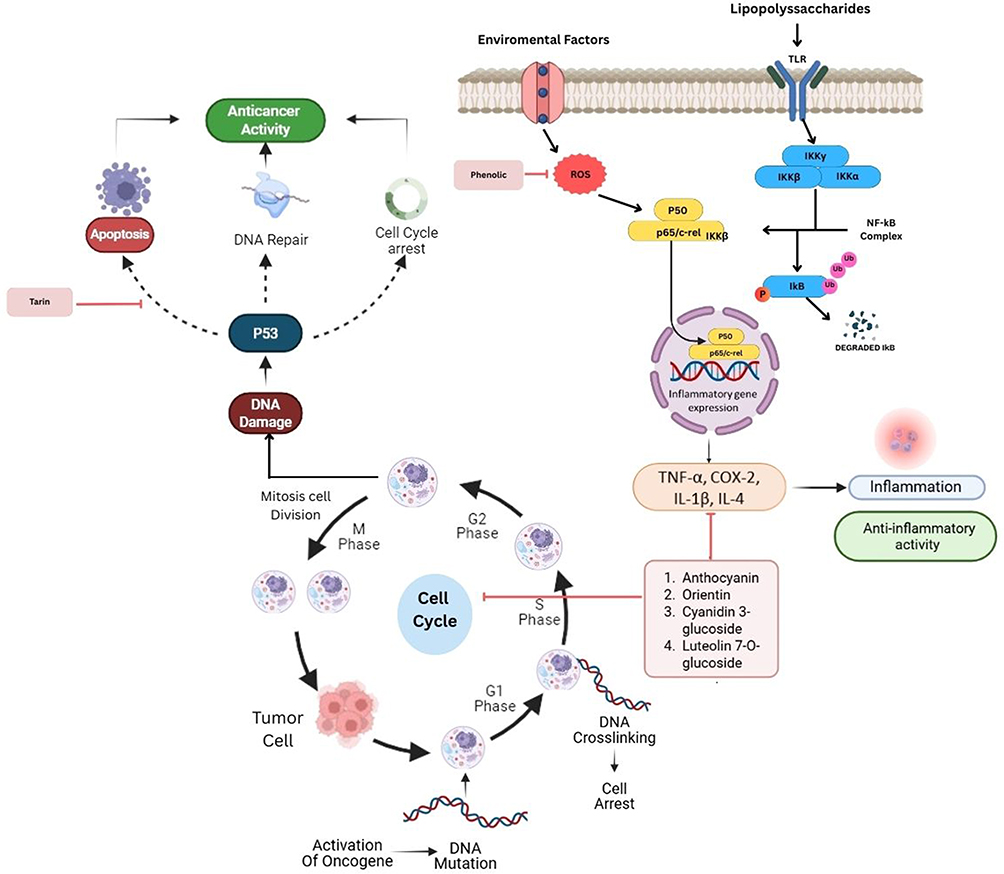 |
Figure 3 Mechanisms of anti-inflammatory and anticancer activities of bioactive metabolites in Colocasia esculenta, created using Biorender (https://www.biorender.com/) and combined in Canva (https://www.canva.com/). Abbreviations: COX-2, cyclooxygenase-2; DNA, deoxyribonucleic acid; IkB, IkappaB; IKKβ, IkappaB kinase beta; IL-1β, interleukin-1β; IL-4, interleukin-4; M phase, mitosis phase, which refers to a phase when the cell divides its nucleus and its cytoplasm (cytokinesis) to form two distinct daughter cells; G2 phase, gap 2 phase, which refers to a phase when the cell continues to grow, synthesizes proteins, and prepares for the next M phase. |
Conclusion
Our findings indicate that C. esculenta possesses a wide range of pharmacological properties under both in vitro and in vivo conditions, with antioxidant and anti-inflammatory activities being the most commonly observed. This suggests its potential against various diseases such as cancer, diabetes, coronary heart disease, and other diseases that are primarily caused by oxidative stress. These observations also support the safety of C. esculenta, as it has undergone acute and subchronic toxicity testing in animal models. Furthermore, anticancer observations using healthy human blood have demonstrated that C. esculenta has potential for clinical research in patients with cancer. C. esculenta contains a variety of bioactive molecules with significant potential as anti-inflammatory, antioxidant, metabolic-regulating, and anticancer agents, through the modulation of pro-inflammatory pathways, such as iNOS and COX-2. Based on toxicity studies, leaf doses up to 1000 mg/kg BW and tuber doses of 100–400 mg/kg BW in animals were considered relatively safe, indicating that moderate consumption can be considered safe. However, more in-depth molecular studies (in vitro, in vivo, and molecular biology) are needed to elucidate the specific protein-compound interactions and their pharmacodynamic effects.
Acknowledgments
The authors gratefully acknowledge the Rector of Universitas Padjadjaran, West Java, Indonesia, for supporting this publication’s article processing charge (APC). This study was conducted as a component of the first author’s dissertation at the Doctoral Program in Pharmacy, Faculty of Pharmacy, Universitas Padjadjaran, West Java, Indonesia. The first author also sincerely thanks the Indonesian Education Scholarship (Beasiswa Pendidikan Indonesia), the Center for Higher Education Funding and Assessment, the Ministry of Higher Education, Science, and Technology of Republic Indonesia, and the Indonesia Endowment Fund for Education (LPDP) for supporting the doctoral studies.
Disclosure
The authors declare no conflicts of interest related to this work.
References
1. World Health Organization. WHO Monographs on Selected Medicinal Plants. Vol. 1. Geneva, Switzerland: World Health Organization; 1999.
2. Otekunrin OA, Sawicka B, Adeyonu AG, Otekunrin OA, Rachoń L. Cocoyam [colocasia esculenta (L.) Schott]: exploring the production, health and trade potentials in Sub-Saharan Africa. Sustainability. 2021;13(8):4483. doi:10.3390/su13084483
3. Grimaldi IM, Muthukumaran S, Tozzi G, et al. Literary evidence for taro in the ancient mediterranean: a chronology of names and uses in a multilingual world. PLoS One. 2018;13(6):e0198333. doi:10.1371/journal.pone.0198333
4. Sharma S, Jan R, Kaur R, Riar CS. Taro (Colocasia esculenta). In: Nayik GA, Gull A editors. Antioxidants in Vegetables and Nuts: Properties and Health Benefits. Springer; 2020:1–14. doi:10.1007/978-981-15-7470-2_18
5. Oktavianingsih L, Suharyanto E, Daryono BS, Purnomo, Purnomo P. Traditional usages of taro (Colocasia spp.) by ethnic communities in Borneo. Biosaintifika. 2017;9(2):248–256. doi:10.15294/biosaintifika.v9i2.9956
6. World Flora Online. Colocasia esculenta (Schott L). 2025. Available from: http://www.worldfloraonline.org/taxon/wfo-0000917419.
7. Rojas-Sandoval J, Acevedo-Rodríguez P. Colocasia esculenta (taro). CABI Compendium. 2022. doi:10.1079/cabicompendium.17221
8. Ahmed I, Lockhart PJ, Agoo EMG, et al. Evolutionary origins of taro (Colocasia esculenta) in Southeast Asia. Ecol Evol. 2020;10(23):13530–13543. doi:10.1002/ece3.6958
9. Borelli T, Keim A, Sujarwo W, et al. Invisible treasures: assessing Indonesia’s unique agrobiodiversity for food and nutrition security. Sustainability. 2024;16(22):9824. doi:10.3390/su16229824
10. Paudel R, Bartlett B, Zamora CM, et al. Breeding and selection of taro (Colocasia esculenta) for improved disease-resistance in Hawaii. Plant Pathol. 2022;71(6):1472–1485. doi:10.1002/ppp3.10335
11. Saxby S, Lee C, Li Y. Nutritional, physicochemical, and functional properties of five varieties of taro (Colocasia esculenta). Curr Dev Nutr. 2021;5(Suppl 2):607. doi:10.1093/cdn/nzab044_038
12. Brandão NA, Tagliapietra BL, Clerici MTPS. Taro [Colocasia esculenta (L.) Schott]: a critical review of its nutritional value and potential for food application. Food Sci Technol. 2023;43. doi:10.5327/fst.00118
13. Rashmi DR, Raghu N, Gopenath TS, et al. Taro (Colocasia esculenta): an overview. J Med Plants Stud. 2018;6(4):156–161.
14. Samadder M, Rahman S, Huda KT, Hossain MA, Patwary MA, Yasin M. Antioxidant and antimicrobial prospects of Colocasia esculenta stolon: a phytochemical perspective. Discover Food. 2025;5(1). doi:10.1007/s44187-025-00317-6
15. El-Mesallamy AM, El-Tawil NA, Ibrahim SA, Hussein SAM. Phenolic profile: antimicrobial activity and antioxidant capacity of Colocasia Esculenta (L.) Schott. Egypt J Chem. 2021;64(4):2165–2172. doi:10.21608/EJCHEM.2021.56495.3213
16. Ferdaus MJ, Chukwu-Munsen E, Foguel A, da Silva RC. Taro roots: an underexploited root crop. Nutrients. 2023;15(15):3337. doi:10.3390/nu15153337
17. Martín MÁ, Ramos S. Dietary flavonoids and insulin signaling in diabetes and obesity. Cells. 2021;10(6):1474. doi:10.3390/cells10061474
18. Chakraborty P, Abraham J, Deb P, Chakraborty S, Chatterjee B. Cytotoxicity and antimicrobial activity of Colocasia esculenta. J Chem Pharm Res. 2015;7(12):627–635.
19. Mitharwal S, Kumar A, Chauhan K, Taneja NK. Nutritional, phytochemical composition and potential health benefits of taro (Colocasia esculenta L.) leaves: a review. Food Chem. 2022;383(February):132406. doi:10.1016/j.foodchem.2022.132406
20. Okechukwu KE, Sampson Ogah U. Phytochemical, vitamins and toxic level of processed cocoyam (Colocasia esculenta [L.] Schott) inflorescence. MOJ Food Process Technol. 2023;11(2):116–128. doi:10.15406/mojfpt.2023.11.00289
21. Lad SS, Kolhe SU, Devade OA, Patil CN, Nalawade RD, Rode MR. A review on medicinal properties of Colocasia esculenta Linn. Res J Pharmacol Pharmacodyn. 2023;15(3):144–148. doi:10.52711/2321-5836.2023.00026
22. Prajapati R, Kalariya M, Umbarkar R, Parmar S, Sheth N. Colocasia esculenta: a potent indigenous plant. Int J Nutr Pharmacol Neurol Dis. 2011;1(2):90–96. doi:10.4103/2231-0738.84188
23. Krishnapriya TV, Suganthi A. Biochemical and phytochemical analysis of Colocasia esculenta (L.) Schott tubers. Int J Res Pharm Pharm Sci. 2017;2(3):21–25.
24. Islam ATMR, Hasan M, Islam T, Rahman A, Mitra S, Das SK. Ethnobotany of medicinal plants used by rakhine indigenous communities in Patuakhali and Barguna District of Southern Bangladesh. J Evid Based Integr Med. 2021;25. doi:10.1177/2515690X20971586
25. Yu JG, Zhang Y, Zhong X, et al. Itches—stimulating compounds from Colocasia esculenta (taro): bioactive-guided screening and LC–MS/MS identification. Bioorg Med Chem Lett. 2015;25(20):4382–4386. doi:10.1016/j.bmcl.2015.09.023
26. Matthews PJ, Nguyen VD, Tandang D, Agoo EM, Madulid DA. Taxonomy and Ethnobotany of Colocasia esculenta and C. formosana (Araceae): implications for the evolution, natural range, and domestication of taro. Aroideana. 2015;38E(1):153–176.
27. Lebot V. Tropical root and tuber crops: cassava, sweet potato, yams, aroids. 2nd Edition. 2008.
28. Hay A. Aroids of Papua New Guinea. 1990;120.
29. Kuruvilla KM, Singh A. Karyotypic and electrophoretic studies on taro and its origin. Euphytica. 1981;30(2):405–413. doi:10.1007/BF00034004
30. Mace ES, Godwin ID. Development and characterization of polymorphic microsatellite markers in taro (Colocasia esculenta). Genome. 2002;45(5):823–832. doi:10.1139/g02-045
31. Sudhakar P, Thenmozhi V, Srivignesh S, Dhanalakshmi M. Colocasia esculenta (L.) Schott: pharmacognostic and pharmacological review. J Pharmacognosy Phytochem. 2020;9(4):1382–1386. doi:10.22271/phyto.2020.v9.i4s.11937
32. Zubair MW, Imran A, Islam F, et al. Functional profile and encapsulating properties of Colocasia esculenta (Taro). Food Sci Nutr. 2023;11(6):2440–2449. doi:10.1002/fsn3.3357
33. Temesgen M. Nutritional potential, health and food security benefits of taro Colocasia esculenta (L.): a review. Food Science and Quality Management. 2015;36:23–31.
34. Ogukwe CE, Amaechi PC, Enenebeaku CK. Studies on the flowers and stems of two cocoyam varieties: xanthosoma sagittifolium and Colocasia esculenta. Nat Prod Chem Res. 2017;5(3):263. doi:10.4172/2329-6836.1000263
35. Esposito T, Pisanti S, Mauro L, Mencherini T, Martinelli R, Aquino RP. Activity of Colocasia esculenta (Taro) corms against gastric adenocarcinoma cells: chemical study and molecular characterization. Int J Mol Sci. 2024;25(1). doi:10.3390/ijms25010252
36. Eleazu K, Maduabuchi Aja P, Eleazu CO. Cocoyam (Colocasia esculenta) modulates some parameters of testosterone propionate-induced rat model of benign prostatic hyperplasia. Drug Chem Toxicol. 2022;45(5):1923–1933. doi:10.1080/01480545.2021.1892956
37. Varghese VJ, Nair ARK, Joseph E. Comparative antioxidant and phytochemical evaluation of selected varieties of C. esculenta (L.) Schott leaves. Int J Pharmaceutical Sci Drug Res. 2024;16(3):370–377. doi:10.25004/ijpsdr.2024.160308
38. Mohammad M, Hossain MR, Hasan MM, et al. A novel insight into the anti-diabetic and diuretic potentials of the Colocasia esculenta L. (Taro) vegetable flower extract accentuating its ethnobotanical importance. Pharmacol Res Nat Prod. 2025;6. 100177. doi:10.1016/j.prenap.2025.100177
39. Khazaal HT, Khazaal MT, Abdel-Razek AS, et al. Antimicrobial, antiproliferative activities and molecular docking of metabolites from alternaria alternata. AMB Express. 2023;13(1):1–19. doi:10.1186/s13568-023-01568-1
40. Khazaal HT, El-Sayed EK, Mansour YE, et al. Neuroprotective activity of Colocasia esculenta (L.) Schott leaves against monosodium glutamate-induced excitotoxicity in rats: phytochemical and molecular docking study. Nat Prod Res. 2025;.1–40. doi:10.1080/14786419.2024.2340061
41. Oriyomi VO, Fagbohun OF, Akinola FT, Adekola MB, Oyedeji TT. Assessment of Colocasia esculenta leaf extract as a natural alternative for Sitophilus zeamais control: toxicological, biochemical, and mechanistic insights. Pestic Biochem Physiol. 2023;195:105545. doi:10.1016/j.pestbp.2023.105545
42. Shrivastava AK, Keshari M, Neupane M, et al. Evaluation of antioxidant and anti-inflammatory activities, and metabolite profiling of selected medicinal plants of Nepal. J Trop Med. 2023;2023:1–15. doi:10.1155/2023/6641018
43. Eleazu CO. Characterization of the natural products in cocoyam (Colocasia esculenta) using GC–MS. Pharm Biol. 2016;54(12):2880–2885. doi:10.1080/13880209.2016.1190383
44. Rajashekar Y, Tonsing N, Shantibala T, Manjunath JR. 2, 3-Dimethylmaleic anhydride (3, 4-Dimethyl-2, 5-furandione): a plant derived insecticidal molecule from Colocasia esculenta var. esculenta (L.) Schott. Sci Rep. 2016;6(1):1–7. doi:10.1038/srep20546
45. Gupta K, Kumar A, Tomer V, Kumar V, Saini M. Potential of Colocasia leaves in human nutrition: review on nutritional and phytochemical properties. J Food Biochem. 2019;43(7):e12878. doi:10.1111/jfbc.12878
46. Talang H, Mawlong GT, Kjam L, et al. Assessment of nutritional quality of taro (Colocasia esculenta L. Schott.) genotypes of the Eastern Himalaya, India. Front Nutr. 2025;12:1567829. doi:10.3389/fnut.2025.1567829
47. Ventura S, l OV, White CW, Xie JH, Haynes JM, Exintaris B. Novel drug targets for the pharmacotherapy of benign prostatic hyperplasia (BPH). Br J Pharmacol. 2011;163(5):891–907. doi:10.1111/j.1476-5381.2011.01332.x
48. Tusubira D, Aja PM, Munezero J, et al. Safety profile of colocasia esculenta tuber extracts in benign prostate hyperplasia. BMC Complement Med Ther. 2023;23(1):1–13. doi:10.1186/s12906-023-04018-4
49. Anna CNTFC, Vericimo MA, Dashevskiy A, Pereira PR, Paschoalin VMF. Liposomal taro lectin nanocapsules control human glioblastoma and mammary adenocarcinoma cell proliferation. Molecules. 2019;24(3). doi:10.3390/molecules24030471
50. Moon SH, Ji SH, Son JL, et al. Antibacterial, anti-inflammatory, and anti-osteoclastogenic activities of Colocasia antiquorum var. Esculenta: potential applications in preventing and treating periodontal diseases. Dent Mater J. 2020;39(6):1096–1102. doi:10.4012/dmj.2020-157
51. Moon SH, Shin SJ, Tae HJ, Oh SH, Bae JM. Effects of Colocasia antiquorum var. Esculenta extract in vitro and in vivo against periodontal disease. Medicina. 2021;57(10). doi:10.3390/medicina57101054
52. Wardhani RAK, Asri LATW, Rachmawati H, Khairurrijal K, Purwasasmita BS. Physical–chemical crosslinked electrospun colocasia esculenta tuber protein–chitosan–poly (Ethylene oxide) nanofibers with antibacterial activity and cytocompatibility. Int J Nanomed. 2020;15:6433–6449. doi:10.2147/IJN.S261483
53. Baro MR, Das M, Kalita A, Das B, Sarma K. Exploring the anti-inflammatory potential of Colocasia esculenta root extract in in-vitro and in-vivo models of inflammation. J Ethnopharmacol. 2023;303(September 2022):116021. doi:10.1016/j.jep.2022.116021
54. Anwar M, Mros S, McConnell M, Bekhit AEDA. Effects of taro (Colocasia esculenta) water-soluble non-starch polysaccharide, lactobacillus acidophilus, bifidobacterium breve, bifidobacterium infantis, and their synbiotic mixtures on pro-inflammatory cytokine interleukin-8 production. Nutrients. 2022;14(10):2128. doi:10.3390/nu14102128
55. Kundu N, Campbell P, Hampton B, et al. Antimetastatic activity isolated from Colocasia esculenta (taro). Anticancer Drugs. 2012;23(2):200–211. doi:10.1097/CAD.0b013e32834b85e8
56. Arabski M, Wȩgierek-Ciuk A, Czerwonka G, Lankoff A, Kaca W. Effects of saponins against clinical E. coli strains and eukaryotic cell line. J Biomed Biotechnol. 2012;2012:1–6. doi:10.1155/2012/286216
57. Agyare C, Boakye YD. Antimicrobial and anti-inflammatory properties of anchomanes difformis (Bl.) Engl. and Colocasia esculenta (L.) Schott. Biochem Pharmacol. 2015;05(01). doi:10.4172/2167-0501.1000201
58. Shields AM, Klavinskis LS, Antoniou M, et al. Systemic gene transfer of binding immunoglobulin protein (BiP) prevents disease progression in murine collagen-induced arthritis. Clin Exp Immunol. 2015;179(2):210–219. doi:10.1111/cei.12456
59. Gupta K, Kumar A, Tomer V, Kumar V, Saini M. Potential of Colocasia leaves in human nutrition: review on nutritional and phytochemical properties. J Food Biochem. 2019;43(7):1–16. doi:10.1111/jfbc.12878
60. Jiang Y, Yu L, Wang MH. N-trans-feruloyltyramine inhibits LPS-induced NO and PGE2 production in RAW 264.7 macrophages: involvement of AP-1 and MAP kinase signalling pathways. Chem Biol Interact. 2015;235:56–62. doi:10.1016/j.cbi.2015.03.029
61. Fujiwara T, Kanazawa S, Ichibori R, et al. L-Arginine stimulates fibroblast proliferation through the GPRC6A-ERK1/2 and PI3K/Akt pathway. PLoS One. 2014;9(3):e92168. doi:10.1371/journal.pone.0092168
62. Friess W. Collagen–biomaterial for drug delivery. Eur J Pharm Biopharm. 1998;45(2):113–136. doi:10.1016/S0939-6411(98)00017-452
63. Guo S, DiPietro LA. Factors affecting wound healing. J Dent Res. 2010;89(3):219–229. doi:10.1177/0022034509359125
64. Talang H, Devi HM, Laskar MA, et al. Assessment of nutritional quality of taro (Colocasia esculenta L. Schott.) genotypes of the Eastern Himalaya, India. Front Nutr. 2025;12:1567829. doi:10.3389/fnut.2025.1567829
65. Mba CJ, Agu HO. Developments on the bioactive compounds and food uses of the tubers: colocasia esculenta (L.) Schott (Taro) and Xanthosoma sagittifolium (L.) Schott (Tannia). Asian Food Sci J. 2021;20(11):101–112. doi:10.9734/afsj/2021/v20i1130380
66. Rabiu I, Yusha’u M, Abdullahi JI, Muhammed A. Phytochemical analysis, thin layer chromatography and gas chromatography–mass spectroscopy profile of Colocasia esculenta and manihot esculanta extracts and their potential for drug discovery. Drug Discovery. 2024;18(41):e10dd1975. doi:10.54905/disssi.v18i41.e10dd1975
67. Kumar R, Saha P, Kumar Y, et al. A review on diabetes mellitus: type 1 & type 2. World J Pharm Pharm Sci. 2020;9(10):838–850. doi:10.20959/wjpps202010-17336
68. Proença C, Ribeiro D, Freitas M, Fernandes E. Flavonoids as potential agents in the management of type 2 diabetes through the modulation of α-amylase and α-glucosidase activity: a review. Crit Rev Food Sci Nutr. 2022;62(12):3137–3207. doi:10.1080/10408398.2020.1862755
69. Zhu J, Chun C, Bin Z, Huang Q. The inhibitory effects of flavonoids on α-amylase and α-glucosidase. Crit Rev Food Sci Nutr. 2020;60(4):695–708. doi:10.1080/10408398.2018.1548428
70. Kumawat NS, Chaudhari SP, Wani NS, Deshmukh TA, Patil VR. Antidiabetic activity of ethanol extract of Colocasia esculenta leaves in alloxan-induced diabetic rats. Int J Pharmtech Res. 2010;2(2):1246–1249.
71. Eleazu CO, Eleazu KC, Iroaganachi MA. Effect of cocoyam (Colocasia esculenta), unripe plantain (Musa paradisiaca) or their combination on glycated hemoglobin, lipogenic enzymes, and lipid metabolism of streptozotocin-induced diabetic rats. Pharm Biol. 2016;54(1):91–97. doi:10.3109/13880209.2015.1016181
72. Tusubira D, Munezero J, Agu PC, et al. In-vivo and in-silico studies revealed the molecular mechanisms of Colocasia esculenta phenolics as novel chemotherapy against benign prostatic hyperplasia via inhibition of 5α-reductase and α1-adrenoceptor. Silico Pharmacol. 2023;11(1):1–15. doi:10.1007/s40203-023-00141-9
73. Kundu N, Ma X, Hoag S, et al. An extract of Taro (Colocasia esculenta) mediates potent inhibitory actions on metastatic and cancer stem cells by tumor cell-autonomous and immune-dependent mechanisms. Breast Cancer. 2021:15. doi:10.1177/11782234211034937
74. Obsa Terfa T, Abera Kebede F, Kitessa Beyene M, Tesfaye Abebe T, Basazn Mekuria A, Seid Yesuf J. Evaluation of in vivo antidiarrheal activities of 80% methanol extract and solvent fractions of peels of Colocasia esculenta (Araceae). Evid Based Complement Alternat Med. 2024;2024(1). doi:10.1155/2024/2728282
75. Azubuike NC, Onwukwe OS, Onyemelukwe AO, et al. Impact of Colocasia esculenta extract and fractions on high-fat diet-induced changes in body weight, adipose tissue and liver of rats. Pak J Pharm Sci. 2018;31(5):2143–2148.
76. Shin SJ, Moon SH, Kim HJ, Oh SH, Bae JM. Oral microbiome using Colocasia antiquorum var. esculenta extract varnish in a mouse model with oral gavage of P. gingivalis ATCC 53978. Medicina (Kaunas). 2022;58(4):506. doi:10.3390/medicina58040506
77. Vela-Gutiérrez G, Velázquez López AA, Tacias Pascacio VG, Vidal López DG, León García E, De La Cruz Medina J. Effect of heat treatment on oxalate and hydrocyanic acid levels of malanga corms of two cultivars (Xanthosoma sagittifolium and Colocasia esculenta) in a murine model. J Food Sci Technol. 2022;59(1):220–227. doi:10.1007/s13197-021-05004-9
78. Kalariya M, Prajapati R, Parmar SK, Sheth N. Effect of hydroalcoholic extract of leaves of Colocasia esculenta on marble-burying behavior in mice: implications for obsessive-compulsive disorder. Pharm Biol. 2015;53(8):1239–1242. doi:10.3109/13880209.2015.1014923
79. Omotoso A, Maduabuchi Ezealisiji K, Abayomi OE, Kenneth E, MK I. Chemometric profiling of methanolic leaf extract of Cnidoscolus aconitifolius (Euphorbiaceae) using UV-VIS, FTIR and GC-MS techniques. Peak J Med Plant Res. 2014;2(1):6–12.
80. Pereira PR, Silva JT, Verícimo MA, Paschoalin VMF, Teixeira GAPB. Crude extract from taro (Colocasia esculenta) as a natural source of bioactive proteins able to stimulate haematopoietic cells in two murine models. J Funct Foods. 2015;18:333–343. doi:10.1016/j.jff.2015.07.014
81. Brown AC, Reitzenstein JE, Liu J, Jadus MR. The anti-cancer effects of poi (Colocasia esculenta) on colonic adenocarcinoma cells in vitro. Phytother Res. 2005;19(9):767–771. doi:10.1002/ptr.1712
82. Russo M, Coppola V, Giannetti E, Buonavolontà R, Piscitelli A, Staiano A. Oral administration of tannins and flavonoids in children with acute diarrhea: a pilot, randomized, control-case study. Ital J Pediatr. 2018;44(1):4–9. doi:10.1186/s13052-018-0497-6
83. Bonelli F, Turini L, Sarri G, Serra A, Buccioni A, Mele M. Oral administration of chestnut tannins to reduce the duration of neonatal calf diarrhea. BMC Vet Res. 2018;14(1):4–9. doi:10.1186/s12917-018-1549-2
84. Kang DW, Choi SC, Kang JE, Park JS, Lee IA. The anti-inflammatory effect of Colocasia esculenta water extract on mouse ear edema models induced by TPA. J People Plants Environ. 2021;24(1):53–62. doi:10.11628/ksppe.2021.24.1.53
85. Han LK, Zheng YN, Yoshikawa M, Okuda H, Kimura Y. Anti-obesity effects of chikusetsusaponins isolated from Panax japonicus rhizomes. BMC Complement Altern Med. 2005;5(1):1–10. doi:10.1186/1472-6882-5-9
86. Han LK, Takaku T, Li J, Kimura Y, Okuda H. Anti-obesity action of oolong tea. Int J Obes. 1999;23(1):98–105. doi:10.1038/sj.ijo.0800766
87. Portillo MP, Simón E, García-Calonge MA, Del Barrio AS. Effect of high-fat diet on lypolisis in isolated adipocytes from visceral and subcutaneous WAT. Eur J Nutr. 1999;38(4):177–182. doi:10.1007/s003940050059
88. Yun JW. Possible anti-obesity therapeutics from nature - A review. Phytochemistry. 2010;71(14–15):1625–1641. doi:10.1016/j.phytochem.2010.07.011
89. Browning JD, Horton JD, Browning JD, Horton JD. Molecular mediators of hepatic steatosis and liver injury Find the latest version: molecular mediators of hepatic steatosis and liver injury. J Clin Invest. 2004;114(2):147–152. doi:10.1172/JCI200422422.The
90. Huang CC, Chen WC, Wang CCR. Comparison of Taiwan paddy- and upland-cultivated taro (Colocasia esculenta L.) cultivars for nutritive values. Food Chem. 2007;102(1):250–256. doi:10.1016/j.foodchem.2006.04.044
91. Yadav UCS, Moorthy K, Baquer NZ. Effects of sodium-orthovanadate and Trigonella foenum-graecum seeds on hepatic and renal lipogenic enzymes and lipid profile during alloxan diabetes. J Biosci. 2004;29(1):81–91. doi:10.1007/BF02702565
92. Cosson E, Chiheb S, Cussac-Pillegand C, et al. Haemoglobin glycation may partly explain the discordance between HbA1c measurement and oral glucose tolerance test to diagnose dysglycaemia in overweight/obese subjects. Diabetes Metab. 2013;39(2):118–125. doi:10.1016/j.diabet.2012.08.013
93. Randle PJ, Priestman DA, Mistry SC, Halsall A. Glucose fatty acid interactions and the regulation of glucose disposal. J Cell Biochem. 1994;55(S1994A):1–11. doi:10.1002/jcb.240550002
94. Baek EJ, Kim S. Current understanding of pressure natriuresis. Electrolyte Blood Pressure. 2021;19(2):38–45. doi:10.5049/EBP.2021.19.2.38
95. Ellison DH, Felker GM. Diuretic Treatment in Heart Failure. N Engl J Med. 2017;377(20):1964–1975. doi:10.1056/nejmra1703100
96. Palmer BF, Clegg DJ. Physiology and pathophysiology of potassium homeostasis. Adv Physiol Educ. 2016;40(4):480–490. doi:10.1152/advan.00121.2016
97. Oyedepo TA, Palai S. Herbal remedies, toxicity, and regulations. In: Preparation of Phytopharmaceuticals for the Management of Disorders: the Development of Nutraceuticals and Traditional Medicine. 2021:89–127. doi:10.1016/B978-0-12-820284-5.00014-9
98. Iqbal I, Wilairatana P, Saqib F, et al. Plant polyphenols and their potential benefits on cardiovascular health: a review. Molecules. 2023;28(17):6403. doi:10.3390/molecules28176403
99. Supuran CT, Temperini C, Cecchi A, et al. Carbonic anhydrase inhibitors. sulfonamide diuretics revisited—old leads for new applications? Org Biomol Chem. 2008;6(14):2499–2506. doi:10.1039/B800767E
100. Nelson RH. Hyperlipidemia as a risk factor for cardiovascular disease. Prim Care. 2013;40(1):195–211. doi:10.1016/j.pop.2012.11.003
101. Merzouk H, Madani S, Sari DC, Prost J, Bouchenak M, Belleville J. Time course of changes in serum glucose, insulin, lipids and tissue lipase activities in macrosomic offspring of rats with streptozotocin-induced diabetes. Clin Sci. 2000;98(1):21–30. doi:10.1042/cs0980021
102. Mustapha IZ, Debrey S, Oladubu M, Ugarte R. Markers of systemic bacterial exposure in periodontal disease and cardiovascular disease risk: a systematic review and meta‐analysis. J Periodontol. 2007;78(12):2289–2302. doi:10.1902/jop.2007.070140
103. Sim S, Kim H, Moon J, et al. Periodontitis and the risk for non‐fatal stroke in Korean Adults. J Periodontol. 2008;79(9):1652–1658. doi:10.1902/jop.2008.080015
104. Yang Y, Liu S, Wang Y, et al. Changes of saliva microbiota in the onset and after the treatment of. Aging. 2020;12(13):13090–13114. doi:10.18632/aging.103399
105. Willis JR, Gabaldón T. The human oral microbiome in health and disease: from sequences to ecosystems. Microorganisms. 2020;8(2):1–28. doi:10.3390/microorganisms8020308
106. D’Aiuto F, Parkar M, Brett PM, Ready D, Tonetti MS. Gene polymorphisms in pro-inflammatory cytokines are associated with systemic inflammation in patients with severe periodontal infections. Cytokine. 2004;28(1):29–34. doi:10.1016/j.cyto.2004.06.005
107. Prajapati R, Kalariya M, Umbarkar R, Parmar S, Sheth N. Colocasia esculenta: a potent indigenous plant. Int J Nutr Pharmacol Neurol Dis. 2011;1(2):90. doi:10.4103/2231-0738.84188
108. Park HR, Lee HS, Cho SY, Kim YS, Shin KS. Anti-metastatic effect of polysaccharide isolated from Colocasia esculenta is exerted through immunostimulation. Int J Mol Med. 2013;31(2):361–368. doi:10.3892/ijmm.2012.1224
109. Vinegar R, Schreiber W, Hugo R. Biphasic development of carrageenin edema in rats. J Pharmacol Exp Ther. 1969;166(1):96–103. doi:10.1016/S0022-3565(25)28209-X
110. Crunkhorn P, Meacock SCR. Mediators of the inflammation induced in the rat paw by carrageenin. Br J Pharmacol. 1971;42(3):392–402. doi:10.1111/j.1476-5381.1971.tb07124.x
111. Akhtar MS, Israr B, Bhatty N, Ali A. Effect of cooking on soluble and insoluble oxalate contents in selected Pakistani vegetables and beans. Int J Food Prop. 2011;14(1):241–249. doi:10.1080/10942910903326056
112. Pérez EE, Gutiérrez ME, De Delahaye EP, Tovar J, Lares M. Production and characterization of Xanthosoma sagittifolium and Colocasia esculenta flours. J Food Sci. 2007;72(6). doi:10.1111/j.1750-3841.2007.00420.x
113. Boakye AA, Wireko-Manu FD, Oduro I, Ellis WO, Gudjónsdóttir M, Chronakis IS. Utilizing cocoyam (Xanthosoma sagittifolium) for food and nutrition security: a review. Food Sci Nutr. 2018;6(4):703–713. doi:10.1002/fsn3.602
114. Rasmussen SA, Eisen JL. The epidemiology and clinical features of obsessive–compulsive disorder. Psychiatr Clin North Am. 1992;15(4):743–758. doi:10.1016/S0193-953X(18)30205-3
115. Hartmann A, Hunot S, Michel PP, et al. Caspase-3: a vulnerability factor and final effector in apoptotic death of dopaminergic neurons in Parkinson’s disease. Proc Natl Acad Sci U S A. 2000;97(6):2875–2880. doi:10.1073/pnas.040556597
116. Maren TH. Use of inhibitors in physiological studies of carbonic anhydrase. Am J Physiol Renal Physiol. 1977;232(4):F291–F297. doi:10.1152/ajprenal.1977.232.4.F291
117. Millan MJ, Dekeyne A, Papp M, et al. S33005, a novel ligand at both serotonin and norepinephrine transporters: II. behavioral profile in comparison with venlafaxine, reboxetine, citalopram, and clomipramine. J Pharmacol Exp Ther. 2001;298(2):581–591. doi:10.1016/S0022-3565(24)29416-7
118. Njung’e K, Handley SL. Effects of 5‐HT uptake inhibitors, agonists and antagonists on the burying of harmless objects by mice; a putative test for anxiolytic agents. Br J Pharmacol. 1991;104(1):105–112. doi:10.1111/j.1476-5381.1991.tb12392.x
119. Njung’e K, Handley SL. Evaluation of marble-burying behavior as a model of anxiety. Pharmacol Biochem Behav. 1991;38(1):63–67. doi:10.1016/0091-3057(91)90590-X
120. Gyertyán I. Analysis of the marble burying response: marbles serve to measure digging ratherthan evoke burying. Behav Pharmacol. 1995;6(1):24–31.
121. Librowski T, Czarnecki R, Mendyk A, Jastrzebska M. Influence of new monoterpene homologues of GABA on the central nervous systemactivity in mice. Pol J Pharmacol. 2000;52(4):317–321.
122. Wu L, Wang Y, Wang X, et al. Evaluation of Colocasia esculenta Schott in anti-cancerous proper ties with proximity extension assays. Food Nutr Res. 2021;65:1–8. doi:10.29219/fnr.v65.7549
123. Pereira PR, Corrêa ACNTF, Vericimo MA, Paschoalin VMF. Tarin, a potential immunomodulator and COX-inhibitor lectin found in taro (Colocasia esculenta). Compr Rev Food Sci Food Saf. 2018;17(4):878–891. doi:10.1111/1541-4337.12358
124. Terada N, Kulkarni P, Getzenberg RH. Cyr61 is a potential prognostic marker for prostate cancer. Asian J Androl. 2012;14(3):405–408. doi:10.1038/aja.2011.149
125. Yang R, Chen Y, Chen D. Biological unctions and role of CCN1/Cyr61 in embryogenesis and tumorigenesis in the female reproductive system (Review). Mol Med Rep. 2018;17(1):3–10. doi:10.3892/mmr.2017.7880
126. Menéndez JA, Mehmi I, Griggs DW, Lupu R. The angiogenic factor CYR61 in breast cancer: molecular pathology and therapeutic perspectives. Endocr Relat Cancer. 2003;10(2):141–152. doi:10.1677/erc.0.0100141
127. Inokuchi J, Lau A, Tyson DR, Ornstein DK. Loss of annexin A1 disrupts normal prostate glandular structure by inducing autocrine IL-6 signaling. Carcinogenesis. 2009;30(7):1082–1088. doi:10.1093/carcin/bgp078
128. Lazarova DL, Bordonaro M. Vimentin, colon cancer progression and resistance to butyrate and other HDACis. J Cell Mol Med. 2016;20(6):989–993. doi:10.1111/jcmm.12850
129. Akinmoladun FO, Olaleye TM, Adeyemi OO, Nwachukwu DC, Onwukwe OS, Onyemelukw AO. Subacute toxicity profile of the leaves of Colocasia esculenta [L. Schott] in albino rats. Res J Med Plant. 2016;10(5):340–348. doi:10.3923/rjmp.2016.340.348
130. Mbaka GO, Obgonnia SO, Awoyemi FO. Acute and sub-acute toxicity studies of ethanol seed extract of Raphia hookeri on Swiss albino rats. Br J Pharm Res. 2014;4:1196–1208.
131. Xie Y, Yang W, Tang F, Chen X, Ren L. Antibacterial activities of flavonoids: structure-activity relationship and mechanism. Curr Med Chem. 2014;22(1):132–149. doi:10.2174/0929867321666140916113443
132. Farha AK, Yang QQ, Kim G, et al. Tannins as an alternative to antibiotics. Food Biosci. 2020;38:100751. doi:10.1016/J.FBIO.2020.100751100751
133. Cushnie TPT, Cushnie B, Lamb AJ. Alkaloids: an overview of their antibacterial, antibiotic-enhancing and antivirulence activities. Int J Antimicrob Agents. 2014;44(5):377–386. doi:10.1016/j.ijantimicag.2014.06.001
134. Evans SM, Cowan MM. Plant products as antimicrobial agents. Cosmetic Drug Microbiol. 2016;12(4):205–231. doi:10.3109/9781420019919-17
135. Adefegha SA. Impact of pasting on starch composition, estimated glycemic index, phenolic constituents, antioxidant activities and antidiabetic properties of flour produced from cocoyam (Colocasia esculenta) corm. J Food Biochem. 2018;42(4):1–11. doi:10.1111/jfbc.12514
136. Nwozo OS, Effiong EM, Aja PM, Awuchi CG. Antioxidant, phytochemical, and therapeutic properties of medicinal plants: a review. Int J Food Prop. 2023;26(1):359–388. doi:10.1080/10942912.2022.2157425
137. Nugroho GA, Desmiaty Y, Sumiyati Y, Suherman SL, Lim H. Phenolic content and antioxidant activity of Colocasia esculenta in commercial herbal products. Sci Phytochem. 2025;4(1):33–39. doi:10.58920/sciphy0401288
138. Duarte LJ, Chaves VC, Nascimento MVPS, et al. Molecular mechanism of action of pelargonidin-3-O-glucoside, the main anthocyanin responsible for the anti-inflammatory effect of strawberry fruits. Food Chem. 2018;247:56–65. doi:10.1016/j.foodchem.2017.12.015
139. Sun Y, Li L. Cyanidin-3-glucoside inhibits inflammatory activities in human fibroblast-like synoviocytes and in mice with collagen-induced arthritis. Clin Exp Pharmacol Physiol. 2018;45(10):1038–1045. doi:10.1111/1440-1681.12970
140. Li Y, Zhao Y, Tan X, et al. Isoorientin inhibits inflammation in macrophages and endotoxemia mice by regulating glycogen synthase kinase 3β. Mediators Inflamm. 2020;2020:8704146. doi:10.1155/2020/87041461-10
141. Jiang X, Wang X. Cytochrome C Mediated Apoptosis. Annu Rev Biochem. 2004;73(1):87–106. doi:10.1146/annurev.biochem.73.011303.073706
 © 2025 The Author(s). This work is published and licensed by Dove Medical Press Limited. The
full terms of this license are available at https://www.dovepress.com/terms
and incorporate the Creative Commons Attribution
- Non Commercial (unported, 4.0) License.
By accessing the work you hereby accept the Terms. Non-commercial uses of the work are permitted
without any further permission from Dove Medical Press Limited, provided the work is properly
attributed. For permission for commercial use of this work, please see paragraphs 4.2 and 5 of our Terms.
© 2025 The Author(s). This work is published and licensed by Dove Medical Press Limited. The
full terms of this license are available at https://www.dovepress.com/terms
and incorporate the Creative Commons Attribution
- Non Commercial (unported, 4.0) License.
By accessing the work you hereby accept the Terms. Non-commercial uses of the work are permitted
without any further permission from Dove Medical Press Limited, provided the work is properly
attributed. For permission for commercial use of this work, please see paragraphs 4.2 and 5 of our Terms.