
Back to Journals » Drug Design, Development and Therapy » Volume 20
Bixin Beyond Colour: Expanding Therapeutic Horizons Through the Integration of Pharmacological Potential with Modern Drug Design and Delivery Strategies
Authors Hashmi AR, Sekar M  , Wong LS , Prashantha Kumar BR, Mat Rani NNI, Kumarasamy V
Received 27 July 2025
Accepted for publication 25 November 2025
Published 11 February 2026 Volume 2026:20 556587
DOI https://doi.org/10.2147/DDDT.S556587
Checked for plagiarism Yes
Review by Single anonymous peer review
Peer reviewer comments 2
Editor who approved publication: Prof. Dr. Tin Wui Wong
Ahmed Raza Hashmi,1 Mahendran Sekar,1,2 Ling Shing Wong,3 BR Prashantha Kumar,4 Nur Najihah Izzati Mat Rani,2 Vinoth Kumarasamy5
1School of Pharmacy, Monash University Malaysia, Subang Jaya, Selangor, Malaysia; 2Faculty of Pharmacy and Health Sciences, Royal College of Medicine Perak, Universiti Kuala Lumpur, Ipoh, Perak, Malaysia; 3Faculty of Health and Life Sciences, INTI International University, Nilai, Negeri Sembilan, Malaysia; 4Department of Pharmaceutical Chemistry, JSS College of Pharmacy, JSS Academy of Higher Education & Research, Mysuru, Karnataka, India; 5Department of Parasitology & Medical Entomology, Faculty of Medicine, Universiti Kebangsaan Malaysia, Kuala Lumpur, Malaysia
Correspondence: Mahendran Sekar, Email [email protected] Vinoth Kumarasamy, Email [email protected]
Abstract: Bixin, a vibrant apocarotenoid derived from the seeds of Bixa orellana Linn. (commonly known as annatto), has been traditionally used as a natural colorant. However, recent advances have unveiled its diverse pharmacological and therapeutic potential, positioning it as a promising candidate in modern drug discovery and delivery systems. This review presents a comprehensive overview of bixin, encompassing its chemical structure, biosynthetic pathways, physicochemical characteristics, extraction techniques and novel nanodrug delivery systems. We critically examine its biological activities, including antioxidant, anti-inflammatory, anticancer, antimicrobial, neuroprotective, hepatoprotective, nephroprotective, and photoprotective effects, supported by mechanistic insights such as activation of the NRF2 pathway, suppression of STAT6 signaling, and modulation of oxidative stress and inflammatory mediators. Despite its wide-ranging bioactivities, the clinical application of bixin remains limited due to challenges related to its solubility, stability, and bioavailability. To address these limitations, innovative formulation strategies, including nanoparticle encapsulation, sustained-release systems, and polymer conjugates have been explored to enhance its pharmacokinetic profile and therapeutic efficacy. Majorly, field of nano-pharmaceutical technologies provides deep insights to overcome physiochemical challenges and enhance the therapeutic potential of bioactive agents. Nowadays, lipid-based nanodrug delivery approaches contribute in an efficient manner. Additionally, its integration into functional foods, cosmeceuticals, and photoprotective applications highlights its interdisciplinary relevance. This review uniquely bridges the gap between traditional knowledge and contemporary pharmaceutical science by consolidating current findings on bixin’s pharmacological roles and delivery challenges. It also proposes future directions for translating bixin into a next-generation phytopharmaceutical through advanced formulation, mechanistic validation, and clinical evaluation. Collectively, the evidence positions bixin not merely as a natural colorant, but as a versatile bioactive molecule with significant promise in drug design, development, therapy, and delivery.
Keywords: bixin, Bixa orellana, drug discovery, biosynthesis, therapeutic potential, drug delivery
Introduction
Bixin is a naturally occurring apocarotenoid pigment primarily derived from the seeds of Bixa orellana Linn. (B. orellana), a plant commonly known as annatto or achiote. Native to tropical regions of the America, India, and East Africa, B. orellana has been traditionally used for various medicinal, cosmetic, and culinary purposes. Among the major active constituents of its seeds, bixin stands out as the primary pigment, responsible for the characteristic reddish-orange hue widely used as a natural colorant in food, cosmetics, and pharmaceuticals.1–3 The seeds of B. orellana contain two major carotenoid compounds: bixin, which is oil-soluble, and its water-soluble counterpart norbixin, which results from the alkaline hydrolysis of bixin.3 Together, these pigments are collectively known as annatto and are utilized extensively in the food industry under the designation E160b as natural food colorants. Beyond their coloring capacity, emerging research has brought attention to the pharmacological significance of bixin and its derivatives.
Bixin exhibits strong antioxidant properties due to its conjugated double-bond structure, which facilitates free radical scavenging activity. This antioxidant potential contributes to its proposed roles in the prevention of oxidative stress-related disorders such as cardiovascular diseases and metabolic syndrome.2,3 Furthermore, Ferreira et al (2013) demonstrated that ethanolic extracts of B. orellana seeds exhibit lipid-lowering effects in experimental hyperlipidemic models, supporting its traditional use in managing dyslipidemia.4 Ethnopharmacological data also indicate that B. orellana has been used in folk medicine for the treatment of a wide range of conditions, including skin infections, burns, gastric ulcers, diabetes, and hypertension.5,6 Additionally, the seeds have been found to possess antimicrobial, anti-inflammatory, and wound healing properties.1,3 The Natural Standard Research Collaboration conducted a systematic review that supported the safety and therapeutic potential of annatto, particularly highlighting bixin’s antioxidative and antimicrobial roles.1 Apart from its health-related benefits, bixin also demonstrates insecticidal and mosquito repellent properties. Studies by de Arias and colleagues revealed that extracts of B. orellana deter feeding and exhibit toxic effects on insect vectors such as Lutzomyia longipalpis, which are responsible for the transmission of leishmaniasis.7 Similarly, Giorgi et al8 confirmed the mosquito repellent activity of the plant, further strengthening its use in ethnobotanical pest management practices.8
In plant biology, bixin has garnered interest due to its unique biosynthetic pathway as a carotenoid derivative. Rivera-Madrid et al provided an in-depth analysis of the biosynthesis of carotenoid derivatives in Bixa orellana, suggesting promising applications of bixin not only as a bioactive compound but also in the context of metabolic engineering for industrial pigment production.3 Extensive ethnopharmacological records demonstrate that Bixa orellana has long been used in folk medicine for treating infections, inflammation, metabolic syndromes, and skin disorders.5,6 Scientific studies have validated many of these traditional uses, highlighting the bioactivity of bixin, which includes anti-inflammatory,9 antioxidant,10,11 anticancer,12 photoprotective,10 and antimicrobial properties.13 Recent pharmacological investigations have demonstrated that bixin can modulate multiple signaling pathways such as nuclear factor erythroid 2–related factor 2 (NRF2) pathway, adenosine monophosphate-activated protein kinase (AMPK), and suppression of signal transducer and activator of transcription 6 (STAT6) signalling (Figure 1), thereby offering therapeutic promise in oxidative stress-related diseases, cancer, kidney fibrosis, neurodegeneration, and even autoimmune diseases like multiple sclerosis.10–12 For instance, systemic administration of bixin has been shown to mitigate solar UV-induced skin damage through NRF2 activation, while its combination with dacarbazine sensitized melanoma cells to chemotherapy via ROS-mediated apoptosis.10,12
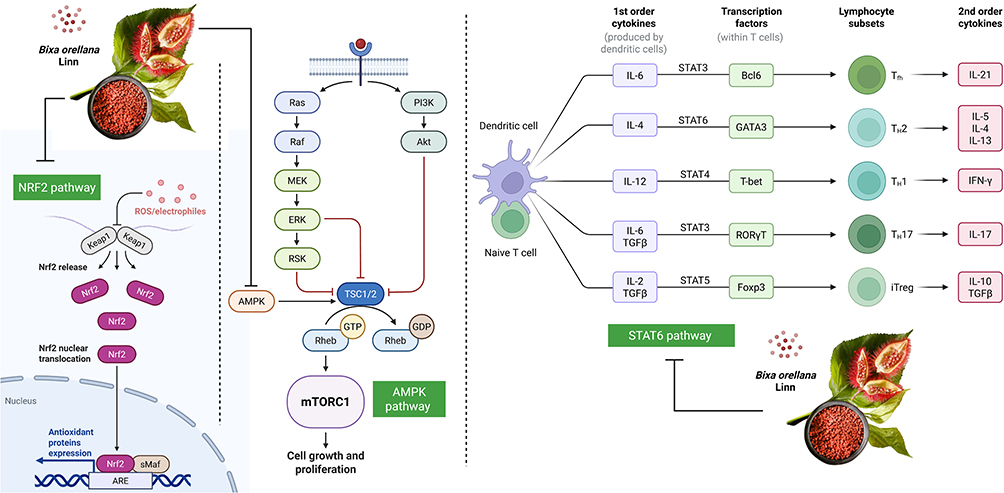 |
Figure 1 Proposed immunomodulatory and antioxidant mechanisms of Bixa orellana Linn. Bixa orellana Linn. exhibits antioxidant and immunomodulatory activity through several proposed molecular mechanisms. Current evidence indicates that its bioactive constituents can activate the NRF2 signalling pathway, contributing to enhanced cellular antioxidant defenses. B. orellana has also been reported to modulate immune responses, including effects on STAT6-associated signalling, which may influence cytokine-mediated regulation of immune cell function. Abbreviations: AMPK, AMP-activated protein kinase; ARE, Antioxidant response element; Bcl6, B-cell lymphoma 6 protein; ERK, Extracellular signal-regulated kinase; Foxp3, Forkhead box P3; GDP, Guanosine diphosphate; GTP, Guanosine triphosphate; iTreg, Induced regulatory T cell; MEK, Mitogen-activated protein kinase kinase; mTORC1, Mechanistic target of rapamycin complex 1; NRF2, Nuclear factor erythroid 2-related factor 2; PI3K, Phosphoinositide 3-kinase; Ras/Raf, Rat sarcoma/rapidly accelerated fibrosarcoma kinases; ROS, Reactive oxygen species; RSK, Ribosomal S6 kinase; STAT, Signal transducer and activator of transcription; T-bet, T-box expressed in T cells; Tfh, T follicular helper cell; Th1, T helper type 1 cell; Th2, T helper type 2 cell; Th17, T helper type 17 cell; TGFβ, Transforming growth factor beta; TSC1/2, Tuberous sclerosis complex 1/2. |
Despite these promising bioactivities, bixin’s therapeutic translation is hindered by major challenges in drug delivery, particularly its poor aqueous solubility, photoinstability, rapid degradation, and limited bioavailability when administered orally or topically.3,14 Bixin, being highly lipophilic and unstable under oxidative conditions, requires innovative formulation approaches to harness its full pharmacological potential. Encapsulation techniques, including the formation of inclusion complexes with β-cyclodextrin,15 nanoformulations,16 and intercalation with biocompatible layered double hydroxides,17 have been explored to enhance its stability, solubility, and targeted delivery. Moreover, conjugation with natural or synthetic polymers such as ethyl cellulose has shown potential for developing sustained-release systems.18 In this modern era, lipid-based nanocarriers subsidize very promisingly to conquer physiochemical challenges. These strategies not only improve the pharmacokinetic profile of bixin but also expand its applicability in controlled drug delivery systems, food-grade packaging films,19 and cosmeceuticals. Nevertheless, the full potential of bixin as a drug candidate remains underexplored, primarily due to insufficient in vivo pharmacokinetic studies, lack of standardized formulations, and limited clinical validation.
Furthermore, recent studies have shown that bixin exhibits amphiphilic characteristics, enabling it to self-assemble in aqueous media and form vesicular nanostructures capable of encapsulating hydrophobic drugs, thereby enhancing its potential for drug delivery applications.20 Overall, bixin from B. orellana represents a compound of substantial interest across multiple disciplines. Its multifaceted applications in health, industry, and agriculture underscore the importance of continued research into its bioactivity, safety, and potential for therapeutic development. This review offers a comprehensive and focused analysis of bixin, emphasizing its chemistry, biosynthetic pathway from lycopene, pharmacological potential, especially in oxidative stress, cancer, metabolic, and inflammatory disorders, mechanistic pathways including NRF2, AMPK, STAT6, and ROS regulation, drug delivery challenges and innovative formulation strategies, and Industrial, food, and cosmeceutical applications. The unique value of this review lies in its integrative perspective bridging natural product pharmacology, molecular mechanisms, and advanced drug delivery approaches to support the repositioning of bixin from a natural colorant to a potential therapeutic molecule. This review further identifies current research gaps, proposes formulation opportunities, and sets a roadmap for future translational and clinical research.
Isolation of Bixin from Bixa orellana
Bixin, the principal apocarotenoid pigment of B. orellana seeds, can be isolated through solvent extraction followed by purification. Typically, dried and powdered annatto seeds are subjected to extraction using organic solvents such as ethanol or chloroform, either via maceration or Soxhlet extraction. The filtrate is concentrated under reduced pressure to yield a crude reddish-orange extract. To purify bixin, the extract is partitioned with petroleum ether or hexane, allowing the lipophilic bixin to separate into the organic phase, which is then washed, evaporated, and recrystallized from ethanol if needed. Alternatively, alkaline hydrolysis using NaOH followed by acidification can convert bixin to norbixin for water-soluble applications.3,12,14,21
Chemistry of Bixin
Bixin (methyl hydrogen 9′-cis-6,6′-diapocarotene-6,6′-dioate_C25H30O4)22 is a reddish-orange crystalline powder having 25 carbons with a molecular weight of 394.5 g/mol.23 However, its exact monoisotopic mass is 394.21 Da. Bixin, like carotenes, has nine conjugated double bonds but features carboxyl groups instead of hexene rings at both ends. There are two forms of bixin, 9′-Z-bixin and all E-bixin, as mentioned in Figure 2. Both forms are water insoluble, though hydrolysis yields norbixin, a water-soluble diacid. All three compounds are known for their bright red-orange color. The carboxylic acid and methyl ester groups are present in its chemical framework along with double bonds, which makes it lipid soluble.9 Although this existence of a double bond confers on bixin high sensitivity to oxygen, heat and light.22 Its melting point is consistently reported around 197°C. UV-visible analysis in chloroform typically shows strong absorbance at 472 and 503 nm, confirming its extended conjugated system.18 Fourier transform infrared spectroscopy (FTIR) spectra reveal key functional groups, including methyl (C–H), hydroxyl (O–H), carbonyl (C=O), and ester linkages.23 Nuclear magnetic resonance (NMR) spectroscopy studies, including both 1H and 13C-NMR, have identified characteristic signals corresponding to methyl esters, conjugated double bonds, and other structural features, with COSY spectra supporting proton connectivity along the polyene chain.21 Mass spectrometric analysis further confirms the molecular ion (m/z 395) and fragmentation patterns typical of its structure, while GC-MS highlights fragment ions consistent with carboxylic acid and conjugated chain breakdown.12,24
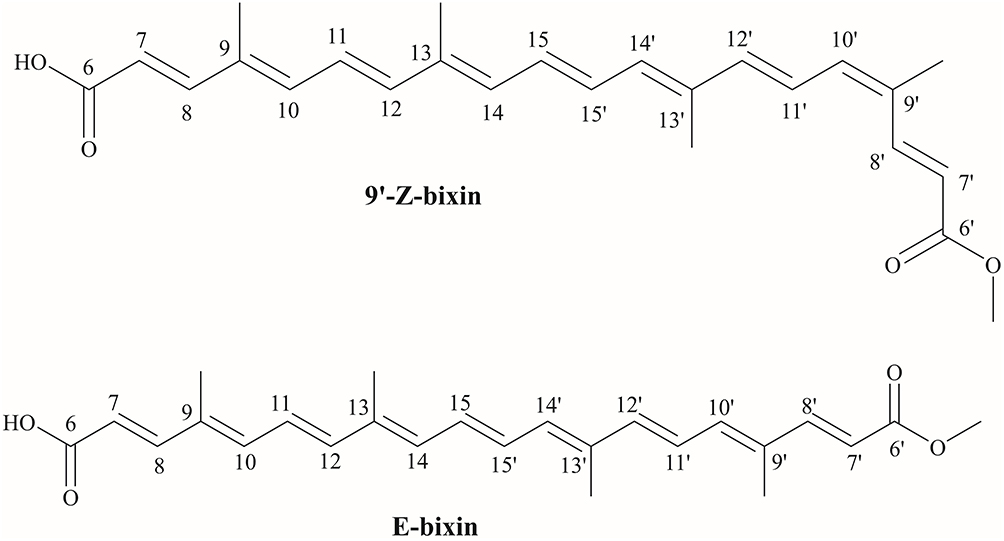 |
Figure 2 Chemical Structures of Bixin. |
Biosynthesis of Bixin
Carotenoids, including bixin, are terpenoids synthesized from the C5 precursor isopentenyl diphosphate, which is converted to geranylgeranyl pyrophosphate (GGPP). In bixin biosynthesis, two GGPP molecules condense to form phytoene, via an intermediate, farnesylfarnesyl pyrophosphate (FFPP).25–27 Phytoene is then converted to lycopene, which undergoes oxidative cleavage by dioxygenases to form aldehyde groups. These are further oxidized to carboxylic acids by aldehyde dehydrogenase and one is methylated by norbixin carboxyl methyltransferase to form bixin. A cis-to-trans isomerization also occurs during this process. Although plants encode many methyltransferases, only a few are involved in carboxyl group methylation, and in Bixa, this specific enzyme completes the synthesis of bixin (Figure 3).24,28
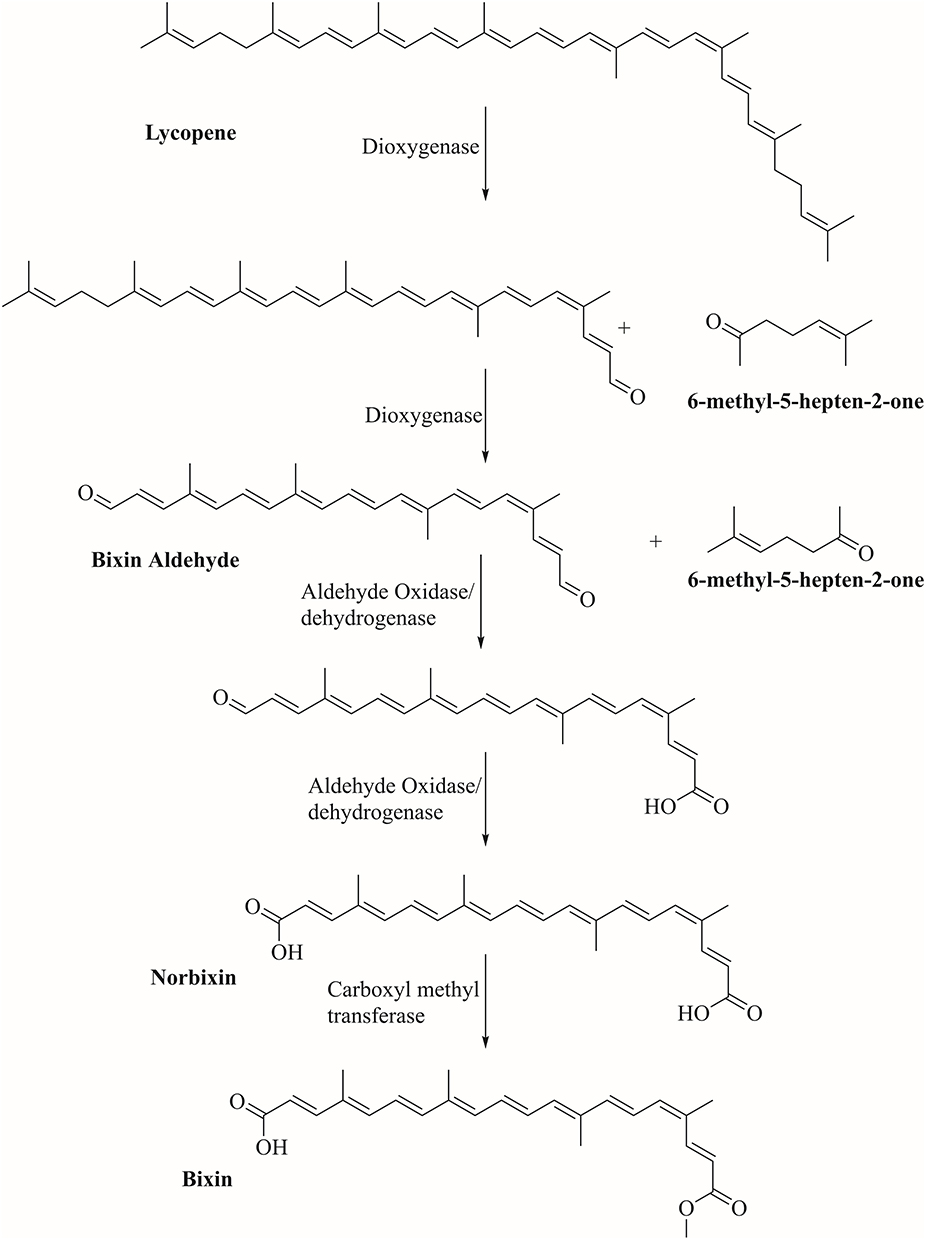 |
Figure 3 Biosynthesis of Bixin. |
Therapeutic Potential of Bixin
Because of diverse pharmacological properties, bixin has attracted growing attention for pharmaceutical utilization. Reported literature underscores the broad therapeutic potential of this molecule, which warrants further pharmacological and clinical investigation.29
Antioxidant Activity
Bixin exhibits potent antioxidant properties that have garnered attention in both the health and food industries. Natural carotenoids like bixin, β-carotene, lutein, and lycopene function primarily through their antioxidant capabilities, modulating oxidative stress and reducing inflammation by suppressing pro-inflammatory mediators and enhancing cytoprotective Phase II enzymes such as NQO1 and HO-1.30 These actions are critical in preventing oxidative stress-related disorders including, cardiovascular diseases (CVDs), type 2 diabetes (T2D), neurodegenerative conditions, and cancer. As noted by TS Tonny,31 bixin in combination with tocotrienols, displays strong antioxidant efficacy, making it a potential agent in managing diabetes and its complications. Similarly, Assis et al32 demonstrated that bixin-enriched yogurt significantly improved oxidative biomarkers in streptozotocin (STZ)-induced diabetic rats, elevated HDL levels, and mitigated lipid and carbohydrate disturbances. In hepatic models, bixin has been shown to reduce oxidative liver damage caused by carbon tetrachloride (CCl4), affirming its hepatoprotective effects through ROS scavenging and membrane stabilization.11 Furthermore, in the context of food preservation, bixin-loaded cassava starch films developed by Pagno et al19 were thermally stable and homogenous, effectively preventing oxidative spoilage, thereby extending shelf life. Based on the above findings, bixin activates NRF2-mediated pathways, confirming its role as a systemic antioxidant capable of protecting cells and tissues from free radical-induced damage.
Anticancer Activity
Bixin has emerged as a promising natural compound with significant anticancer potential, owing to its ability to modulate oxidative stress and intracellular signaling pathways. A recent study by Qiu et al33 demonstrated that bixin suppresses colorectal cancer (CRC) progression by activating the AMPK/PERK/eIF2α pathway, thereby inducing endoplasmic reticulum stress and apoptosis in tumor cells, highlighting a novel preventive strategy against CRC. In lung cancer models, Nurcahyanti et al34 explored bixin in combination with fucoxanthin and reported that this dual carotenoid therapy selectively sensitized cisplatin-resistant A549 and HeLa cancer cells, enhancing drug efficacy based on the Chou–Talalay synergy model. Supporting this, de Oliveira Júnior et al12 reported that bixin induced reactive oxygen species (ROS)-mediated cytotoxicity in human A2058 melanoma cells carrying the BRAF^V600E mutation, which confers resistance to dacarbazine. Co-treatment with bixin and dacarbazine significantly lowered the IC50 values, suggesting synergistic interaction and restoration of chemosensitivity. Moreover, data from Tibodeau et al35 revealed that cis-bixin displayed potent cytotoxicity across multiple tumor cell lines, including drug-resistant multiple myeloma cells from patients. Notably, cis-bixin selectively inhibited both thioredoxin (Trx) and thioredoxin reductase (TrxR1) key regulators of redox homeostasis leading to ROS accumulation and selective cancer cell death. These findings indicate bixin’s ability to trigger redox imbalance and stress-mediated apoptotic pathways, underlining its value as a chemosensitizing and anticancer agent.
Skin Photoprotection
Bixin has emerged as a potent natural photoprotective agent, largely due to its ability to activate NRF2-mediated cytoprotective responses. Solar ultraviolet (UV) radiation is known to induce genotoxic, oxidative, and inflammatory damage, leading to skin aging and carcinogenesis.10,36 Topical application of bixin has been shown to prevent such damage by activating the NRF2 pathway, which upregulates antioxidant defenses including glutathione synthesis and Phase II detoxifying enzymes. Rojo de la Vega et al36 provided the first in vivo evidence using SKH1 and C57BL/6J mouse models, demonstrating that topical bixin significantly reduced UV-induced epidermal hyperproliferation, oxidative DNA damage (Figure 4), and pigmentation loss in Nrf2+/+ mice, but not in Nrf2−/− counterparts, confirming NRF2-dependency. Similarly, systemic administration of bixin attenuated skin oxidative stress and inflammation in a genotype-dependent manner, reinforcing the feasibility of dietary bixin as a systemic skin protectant.10 Schmidlin et al37 further confirmed that bixin pre-treatment elevated cellular glutathione levels and reduced radiation-induced dermatitis and oxidative stress in mice, thus highlighting its role in mitigating ionizing radiation toxicity through NRF2 activation. Collectively, these findings suggest that bixin may serve as an effective adjunct to conventional sunscreen, offering both topical and systemic protection against photodamage. Supporting this, Raddatz-Mota et al38 emphasized the nutraceutical and dermatological relevance of bixin, norbixin, and tocotrienols derived from B. orellana, underscoring their industrial potential for skin health applications.
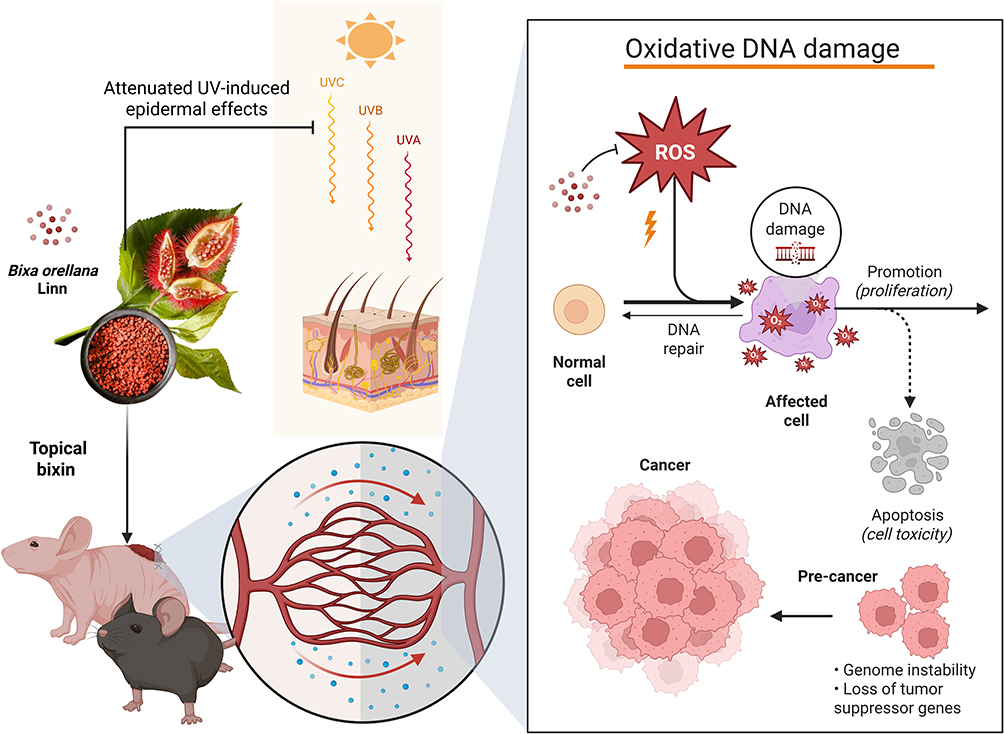 |
Figure 4 Protective effects of Bixa orellana Linn. (bixin) against UV-induced oxidative DNA damage. Topical application of bixin attenuates ultraviolet (UV)-induced epidermal damage. Exposure to UVA and UVB promotes excessive generation of reactive oxygen species (ROS), leading to oxidative DNA damage. When left unrepaired, damaged cells may undergo abnormal proliferation, genomic instability, and loss of tumor suppressor gene function, contributing to pre-cancerous changes and skin carcinogenesis. Bixin demonstrates a protective role by reducing oxidative stress, supporting DNA repair, mitigating cellular toxicity, and preventing progression toward cancerous transformation. |
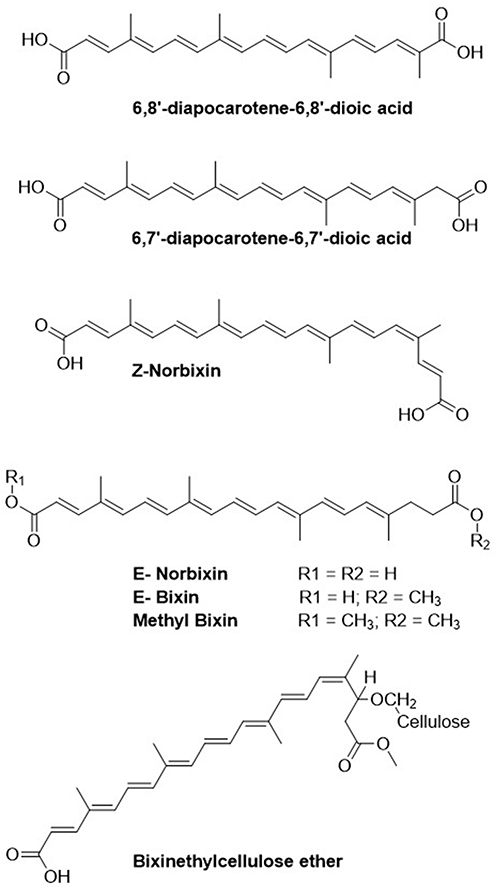 |
Figure 5 Structurally Related Bixin Molecules. |
Antimicrobial Activity
Bixin exhibits significant antimicrobial activity, making it a promising agent in food preservation, dental applications, and therapeutic formulations. Ultrasound-assisted extraction studies have revealed that the antibacterial effects of annatto seed extracts are largely attributed to carotenoids like bixin and phenolic compounds such as catechin, chlorogenic acid, chrysin, butein, hypoaletin, and xanthoangelol.13 These extracts demonstrated strong inhibitory activity against common foodborne pathogens like Bacillus cereus and Staphylococcus aureus, suggesting their potential use in food-safe antimicrobial coatings and packaging. Furthermore, Quiroz et al39 emphasized the interest in annatto seed extracts for developing natural preservatives due to their antimicrobial and antioxidant synergies. In the context of dental care, Silva et al40 investigated the potential of Urucum (B. orellana) extract as an adjunct to Papacarie Duo™, a chemomechanical caries removal agent composed of papain and chloramine. The study demonstrated that cis-bixin, the primary water-soluble pigment in Urucum, did not compromise collagen structure and exhibited promising antimicrobial activity suitable for antimicrobial photodynamic therapy (aPDT) applications. These findings not only support the antimicrobial role of bixin in clinical settings but also highlight its potential for integration into functional food products, oral hygiene formulations, and biomedical coatings.
Anti-Inflammatory Activity
Bixin, a natural apocarotenoid derived from Bixa orellana, has demonstrated substantial anti-inflammatory potential in both acute and chronic disease models. In a recent study, nanoparticle-formulated bixin (npBX) was evaluated for its ability to prevent lung inflammation and oxidative stress induced by cigarette smoke (CS). The results showed that npBX significantly reduced leukocyte counts and TNF-α levels in the bronchoalveolar lavage fluid (BALF) of CS-exposed mice. Furthermore, npBX markedly inhibited CS-induced elevations of malondialdehyde (MDA) and protein carbonylation (PNK) in lung tissues, demonstrating its efficacy in attenuating acute lung inflammation.16 In the context of age-related macular degeneration (AMD), a leading cause of visual impairment among the elderly norbixin, a derivative of bixin, has been shown to synergize with crocetin (from Crocus sativus) to slow the progression from intermediate AMD (iAMD) to late-stage AMD, including both neovascular AMD (nAMD) and geographic atrophy (GA).41 Similarly, Xue et al42 reported that bixin treatment significantly reduced inflammatory cell infiltration and fibrotic remodeling in the lungs, highlighting its therapeutic promise for other inflammation-associated diseases. Moreover, Roehrs et al43 proposed that norbixin may serve as a dietary intervention to reduce postprandial inflammatory and oxidative stress responses following high-calorie meals. Together, these findings underscore bixin and its derivatives as promising natural compounds for the prevention and treatment of inflammation-related disorders.
Antinociceptive Activity
Along with anti-inflammatory activity, bixin also exhibits its novel capacity for pain reduction.29 Pacheco et al performed a study and claimed to firstly report the antinociceptive activity of bixin without showing sedative effect.9 The analgesic potential of bixin was evaluated through several experimental pain models in rodents. Initially, the analgesic effect of bixin was analyzed in the formalin test by consuming rats, in which bixin (at 15 or 30 mg/kg) remarkably reduced the number of flinches in both the early neurogenic and late inflammatory phases, reflecting that it can act on both immediate nociceptor stimulation and subsequent peripheral inflammatory pain. In the acetic acid-induced writhing test, bixin (at 27 or 53 mg/kg in mice) markedly decreased the number of writhing responses, likely due to its anti-inflammatory and antioxidant effects, along with its ability to reduce neutrophil migration and inhibit prostaglandin production. Moreover, in the hot plate test, the higher dose of bixin (30 mg/kg in rats) significantly prolonged the response time to a thermal stimulus, indicating involvement of central pain modulation mechanisms. Significantly, these antinociceptive features were not associated with sedation, as bixin-treated rats showed no impairment in locomotor activity in the open field test. Together, these results reflect that bixin exhibits both peripheral and central analgesic actions without affecting normal motor function.9
Anti-SARS-CoV-2 Activity
Bereczki et al highlighted the potential of bixin for showing remarkable antiviral activity against SARS-CoV-2 (Severe Acute Respiratory Syndrome Coronavirus 2).44 It is the first time when apocarotenoids were listed among potential SARS-CoV-2 inhibitors. In order to analyze the anti-SARS-CoV-2 activity of bixin, the Vero E6 cell line (African green monkey kidney epithelial cells) was utilized across three orthogonal assays. The viral RNA reduction assay, cytopathic effect (CPE) reduction assay, and the immunofluorescence assay (IFA) determined an EC50 of 5.9 ± 1.7 µM, 14 ± 3.5 µM and 28 ± 8.8 µM, respectively. That confirmed bixin’s activity in inhibiting viral replication by visualizing the reduction in SARS-CoV-2 nucleoprotein expression. Moreover, bixin was found to be both effective and safe, as it exhibited a high therapeutic index (>17) and very low toxicity, with a CC50 value greater than 100 µM. Further mechanistic studies demonstrated that bixin acts by blocking certain host enzymes that help the virus enter cells. In particular, it inhibited Cathepsin L and Cathepsin B with an IC50 of 41.92 ± 1.12 µM and 14.56 ± 1.71 µM, respectively. These conclusions suggest that bixin interferes with viral entry by targeting key proteases in the host cell.
Other Therapeutic Potential of Bixin
In a study conducted by Yu et al,45 bixin treatment significantly reduced neuro-inflammation and demyelination in experimental autoimmune encephalomyelitis (EAE) mice, a model of multiple sclerosis (MS), primarily through ROS scavenging via activation of the NRF2 signaling pathway. These findings suggest that bixin holds promise as a potential therapeutic candidate for MS. Similarly, Li et al46 investigated the effect of bixin on renal interstitial fibrosis, reporting that bixin administration suppressed STAT6 induction by enhancing ubiquitination (but not acetylation) of STAT6, ultimately reducing its phosphorylation and stability. This mechanistic insight supports the therapeutic role of bixin in attenuating kidney fibrosis via inhibition of the STAT6 pathway. Moreover, bixin is among several carotenoids identified with preventive potential against Alzheimer’s disease (AD), a prevalent and devastating neurodegenerative disorder affecting the aging population. As discussed by Lakey-Beitia et al,47 carotenoids like bixin may serve as innovative therapeutic agents for AD and related conditions due to their antioxidant and neuroprotective actions. In another study, Tao et al48 identified bixin as a classical NRF2 inducer that protects against lung injury in a ventilator-induced lung injury (VILI) model. Mechanistically, bixin was found to activate NRF2 signaling in vitro by inhibiting KEAP1-C151–dependent ubiquitination and degradation of NRF2, leading to elevated NRF2 responses in vivo upon intraperitoneal (IP) injection. Notably, bixin treatment restored normal lung morphology and reduced both oxidative DNA damage and inflammatory responses in mice subjected to mechanical ventilation (MV), a common therapeutic intervention for respiratory distress. These collective findings support the development of NRF2 activators like bixin as potential pharmacological agents to prevent lung injury during MV and other oxidative stress–related conditions.
Structurally Related Compounds
Bixin is the principal apocarotenoid identified in the seeds of B. orellana, with numerous studies extensively reporting the presence of its derivatives and isomers. Among these, norbixin and methyl-bixin are well-documented. Additionally, structural analogues such as 6,8′-diapocarotene-6,8′-dioic acid and 6,7′-diapocarotene-6,7′-dioic acid have also been isolated from B. orellana extracts, as illustrated in Figure 5.12
In an effort to discover applications for bixin other than its predominant use as a colorant, the reaction of bixin with ethyl cellulose in acetic anhydride, giving a Michael addition product, bixinethylcellulose ether was reported, as demonstrated in Figure 5.18 Bixin–β-cyclodextrin (β-CD) inclusion complexes prepared via co-precipitation have been reported. The complexation enhanced the intensity of bixin’s color and significantly improved its water solubility. When applied in curd formulations, the bixin–β-CD complex did not alter the initial characteristics of the product and was well accepted in sensory evaluations. These findings suggest that the complexation of bixin with β-CD facilitates its incorporation into low-fat food products, thereby expanding its potential for industrial applications.15 The synthetic conditions for intercalating norbixin into layered double hydroxides (LDHs) were systematically evaluated. LDH samples containing M2⁺/Al3⁺ (M = Mg, Zn) were prepared using the co-precipitation method. Intercalation into the inorganic layers significantly enhanced the thermal stability of norbixin. Notably, the free radical scavenging activity of norbixin was preserved following immobilization within the LDH matrix. Given the biocompatibility of zinc- and magnesium-based LDHs, combined with the known biological activity of norbixin, these hybrid materials demonstrate strong potential for biomedical applications.49
Physiochemical Challenges for Bixin
Bixin is a liposoluble apocarotenoid acquired from natural sources ie, annatto seeds.9,50 The Food and Drug Administration (FDA) endorsed it for colorant and additive purposes.51 Furthermore, it also got permitted for therapeutic uses in pharmaceutical industries because of its multiple pharmacological responses.45,52 In spite of that, bixin bears stability issues due to the existence of conjugated double bonds along with long chain length that lead to the development of chemical instability and degradation.53 Moreover, in the presence of excessive heat, high pH, light and oxygen, bixin gets unstable.54 In that, all these factors affect the solubility and decreasing the bioavailability of the bixin compound55 and make it less suitable for therapeutic drug delivery, as illustrated in Figure 6. However, if we talk about its permeability, then bixinoids present high gastrointestinal permeability.56 Firstly, we have to overcome the solubility and bioavailability-related issues to potentiate the pharmacological behavior and patient compliance related to the practice of bixin.
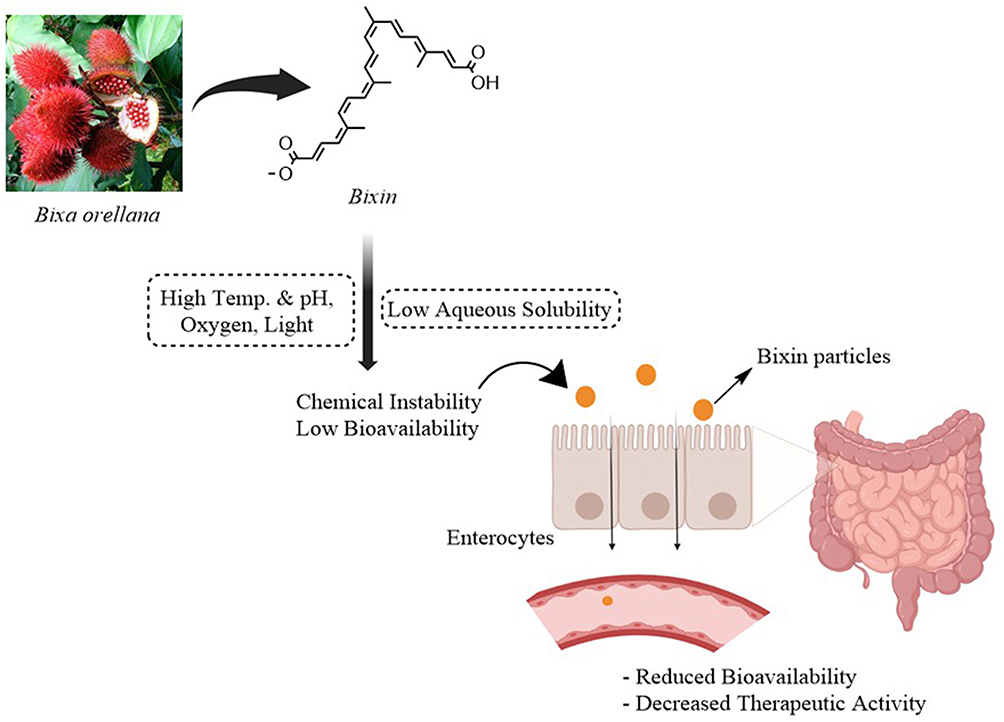 |
Figure 6 Bixin acquired from Bixa orellana, its physiochemical features ie, chemical instability, poor water solubility and low bioavailability, affects the therapeutic/pharmacological activity. |
Improving Bixin’s Stability, Solubility and Bioavailability via Novel Nano-Drug Delivery Systems
The physiochemical features, like biocompatibility, reduced particle size, improved surface area and biodegradability of novel nanotechnology or nano-drug delivery carriers, open new doors for conveying the bioactive substances.57 Nanocarriers like liposomes, niosomes, micro- and nano-emulsions, micelles, polymeric nanocarriers, nanogels, nanofibers, nanotubes, solid lipid nanoparticles and nanostructured lipid carriers,58 along with nanoencapsulation strategies,59,60 have contributed well and not only improve the bioavailability but also safeguard the bixin from the environment’s detrimental effects. Moreover, the physiochemical properties of a given compound ie, solubility and chemical stability issues, reformed via engagement of nano-drug delivery systems.61 Scientifically, it might be summarized that the nano-based technology is a promising approach to improve the stability, prompt the solubilization, enhance the shelf-life and improve bioactivity30 with a controlled drug release profile of the bioactive agents.62 These approaches have sufficient potential in designing the bixin-loaded nano-drug delivery systems with improved solubility and bioavailability behavior.52 A diagrammatic illustration that indicating the various novel nano-drug delivery systems to improve bixin’s stability and bioavailability are mentioned in Figure 7.
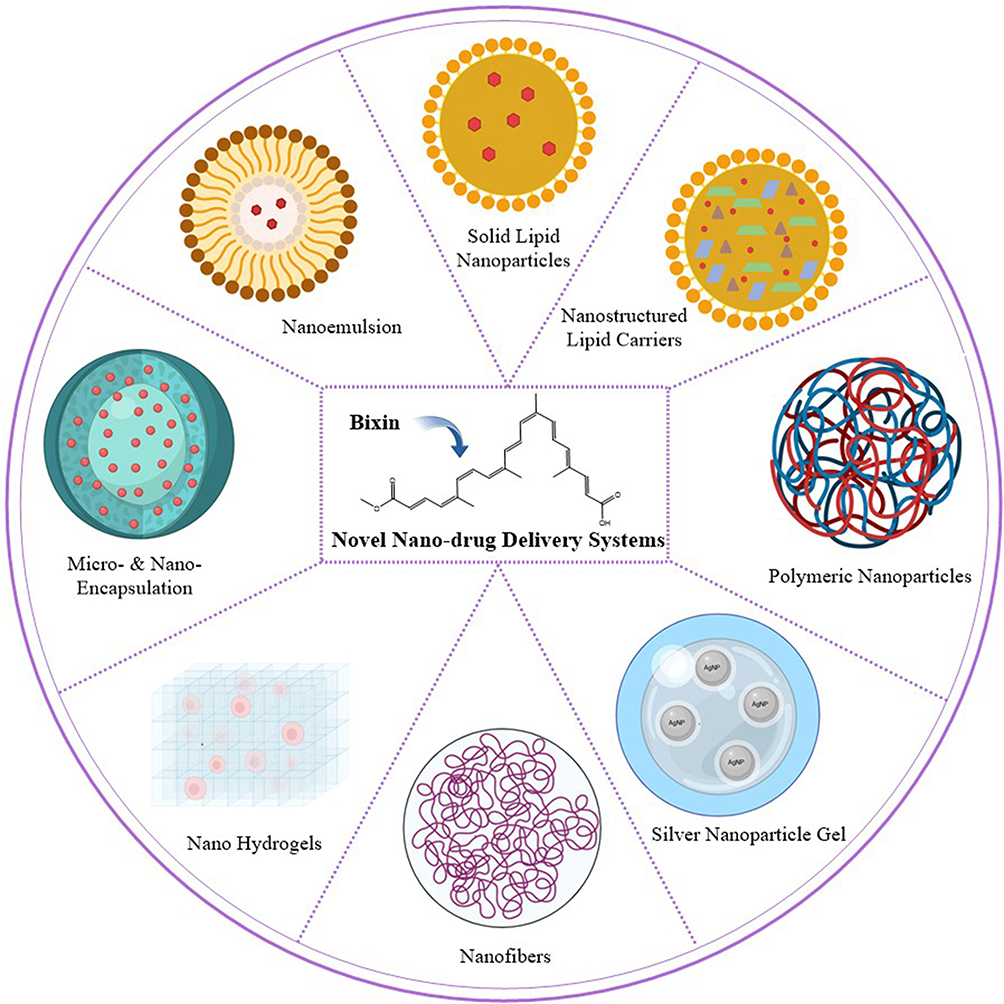 |
Figure 7 Various nanodrug delivery systems employing for delivery of bioactive agents like bixin. |
Nano-Drug Delivery Strategies Promoting Bixin’s Bioavailability
Bixin-loaded solid lipid particles (SLNs) were designed through glycerol monostearate and trimyristin as lipid matrices and for stabilization, egg lecithin and soya were incorporated.63 The formulation was designed via hot homogenization and characterized for in vitro drug release profile in addition to in vivo study to analyze the hepatoprotective function of a given compound by using Wistar rats. FTIR showed the compatibility of bixin with other incorporated ingredients. The drug loading and entrapment efficiency were found to be 17.96% and 99%, respectively, for bixin-loaded SLNs. The initial burst release followed by sustained release for the drug was monitored while in vitro studies were performed. In an in vivo study, bixin-loaded SLNs demonstrated a better reduction in marker enzymes in order to treat the paracetamol-induced hepatotoxicity in contrast to bixin suspension. Better appearance of therapeutic response indicates the improved drug’s bioavailability.63
A study was conducted to develop a silver nanoparticle gel containing bixin using a green synthesis approach for topical delivery.64 The formulation was evaluated for its stability and therapeutic efficacy, demonstrating promising results in terms of sustained activity and potential for topical application. For characterization of the designed formulation, FTIR, scanning electron microscopy (SEM), pH evaluation, drug content determination and compatibility studies were employed. The B16F10 cell line (murine melanoma cell line) was utilized for in vitro evaluation and the chemical carcinogen (7,12-dimethylbenz (a) anthracene) for in vivo evaluation in mice was utilized to evaluate the anticancer activity. Afterwards, a 60% inhibitory response of optimized formulation on B16F10 cell lines was monitored along with the suppression of oncogenesis on skin. It concluded at the end that the anticancer activity of designed formulation with bixin improved via nanocarriers.64
Bixin has demonstrated potent anti-inflammatory and antioxidant properties, which have been explored in the treatment of acute lung inflammation (ALI) associated with cigarette smoke exposure. Experimental findings suggest that bixin may help reduce oxidative stress and inflammatory responses, indicating its potential therapeutic role in managing ALI.54 For this purpose, researchers developed bixin-loaded polymeric nanoparticles (npBX) via interfacial deposition technique, for oral treatment of ALI in mice that were pre-exposed to cigarette smoke. The designed formulation showed the polydispersity index, zeta potential and mean hydrodynamic diameter of 0.226 ± 0.006, − 21.69 ± 9.90 mV and 23.7 ± 0.2 nm, respectively. Moreover, drug loading of 24.23 ± 0.41 mg/g was calculated. After in vivo evaluation, it was monitored that the treatment with npBX provides support as a therapeutic weapon for treatment. Improved treatment of ALI indicated the improved bioavailability of orally administered npBX.54
Nanofibers composed of bixin-loaded polycaprolactone (Bix-PCL) have been developed and applied for the treatment of cutaneous wounds in diabetic mice. The formulation showed potential in promoting wound healing, highlighting the usefulness of bixin in skin regeneration applications.65 Based on bixin content, two formulations were designed, Bix-PCL-1 (2.5% w/w bixin) and Bix-PCL-2 (12.5% w/w bixin) and subsequently evaluated via x-ray diffraction, thermal analysis, electrical conductivity, SEM and attenuated total reflectance infrared spectroscopy. In an in vitro drug release profile, initial burst release was observed during first 10 hours, 30% from Bix-PCL-1 and 40% from Bix-PCL-2 followed by the 100% slow and continuous release of bixin from nanofibers within 14 days. Results concluded that the Bix-PCL nanofibers are an auspicious technique for wound healing and also promote the bioaccessibility of bixin.65
A study was conducted to develop nanoencapsulated carotenoids, specifically lutein, using low molecular weight chitosan (LMWC) as the encapsulating agent. The nanoformulation aimed to enhance the stability, bioavailability, and controlled release of lutein for potential therapeutic applications.66 LMWC served as a nanocarrier for lutein and aided in enhancing its bioavailability. The bioavailability of lutein-loaded LMWC nanoencapsules was prominently higher than the control. In another study,67 lipid-based solid dispersions (LBSD) with incorporation of lycopene were prepared in order to enhance its oral bioavailability. Lycopene is a carotenoid with potent antioxidant and anti-cancerous activity. The designed formulation was compared with the commercially available product ie, Lycovit®. In conclusion, a clear difference between Cmax and AUC existed. Moreover, oral bioavailability of lycopene was significantly improved in fasted pigs via the designed formulation (lycopene-loaded LBSD), in contrast to the commercial one.
Nano-Drug Delivery Strategies Promoting Bixin’s Stability
In one of the study,68 the stability of bixin was evaluated by incorporating it into the lipid-core nanocapsules. For this, a model system of water and ethanol (8:2) was employed and the stability of the designed formulation was tested during heating and photosensitization at (65–95°C) and (5–25°C), respectively. During photosensitization, activation energies were monitored for both free bixin and bixin-loaded lipid core nanocapsules with and without oxygen. Furthermore, activation energies for formulation and free bixin were calculated during heating as well. In conclusion, it was summarized that the stability of bixin in the designed formulation has been increased. Lobato et al performed a study,69 to monitor the physical stability of bixin-loaded nanocapsules. The formulation was designed via the interfacial deposition technique by using poly-caprolactone (PCL). Five different formulations of bixin-loaded nanocapsules were prepared, attaining 11, 16, 37, 58 and 100 µg/mL concentrations of bixin. All formulations are kept in amber glasses under a temperature of 25 ± 1°C. After performing the characterization of the optimized formulation at predetermined time intervals for various parameters, it was evaluated that the bixin-loaded nanocapsules were physically stable for about 119 days at ambient temperature.
In a separate study,70 bixin microparticles were designed via spray-drying technique, in which bixin was encapsulated in the galactomannan polymer. Various parameters, ie, physiochemical features, particle size, encapsulated efficiency, release profile and toxicological behavior were monitored. During examination, it was analyzed that the encapsulating efficiency of bixin is more than 90% with an average particle size of 5.55 ± 0.50 µm. After stability testing, it was confirmed that the microencapsulation contributes compelling stability for bixin.70
A study investigated the use of maltodextrin as an encapsulating agent for bixin, employing a freeze-drying technique to improve its stability and handling characteristics.71 After that, for the sake of evaluating the influence of maltodextrin concentration and bixin-to-matrix ratio on the solubility and encapsulation efficiency of bixin, a preformed experimental design was employed. A 40% w/v concentration of maltodextrin and a 1:20 bixin-to-matrix ratio delivered the highest encapsulation efficiency. Meanwhile, the highest solubility was monitored at a 20% w/v concentration of maltodextrin and a 1:20 bixin-to-matrix ratio. As a result, the solubility and stability of the given compound improved after encapsulation.71
In a related study, a combination of modified starch and gelatin was used for the microencapsulation of bixin through the spray-drying method, aiming to enhance its stability and protect it from environmental degradation.72 Both commercial and solvent extracts of annatto seed ie, bixin were employed for microencapsulation. Furthermore, encapsulating materials were utilized in different ratios, starch-to-gelatin (100:0 and 60:40) to produce microcapsules of bixin. The ratio of 60:40 provided the highest encapsulation performance. For commercial extract microcapsules 86.37% and for solvent extract microcapsules 86.18% encapsulation efficiency was recorded. In an in vitro release study, initial burst release followed by the controlled release of extracted substances was analyzed. Moreover, the encapsulated product is more stable against light, heat and oxygen in contrast to non-encapsulated material. Bixin has also been shown to function as a nano-dispersion former with notable antimicrobial activity against both gram-positive (Staphylococcus aureus) and gram-negative bacteria (Escherichia coli and Pseudomonas aeruginosa). Additionally, bixin-based nano-dispersions have been successfully loaded with amphotericin B, demonstrating their potential as drug delivery carriers.73
Design–Activity Relationship in Bixin Nanodelivery Systems
Different design parameters, ie, particle size, morphology, and type of carrier, strongly influenced the therapeutic performance of bixin. The amphiphilic nature of bixin encourages its integration into diverse nanodelivery platforms, ie, polymeric nanoparticles, lipid-based matrices and biopolymeric carriers. These design parameters directly influence solubility, stability, cellular uptake, and drug release behavior, which together influence the overall pharmacological activity of the formulation.20
Nanocarriers efficiently encapsulated the drug particles and small size of these nanocarriers facilitated the improved cellular uptake and bioavailability of the model drug. Improved therapeutic activity of bixin-loaded polymeric nanoparticles was observed in cigarette smoke-induced lung inflammation and oxidative stress in mice, in comparison with free bixin, emphasizing the importance of particle size.16 Furthermore, lipid-based drug delivery platforms such as SLNs and NLCs not only support the enhanced cellular uptake and bioavailability but also deliver controlled drug release, improved stability and protection of bixin from photodegradation. Their lipophilic core promotes drug loading, while the amphiphilic surface facilitates interaction with biological membranes.52
Encapsulation techniques also critically influence the therapeutic activity of bixin, as they encapsulate the drug and prevent it from oxidative degradation, controlled release kinetics, and enhance pharmacological responses as compared to unencapsulated forms.72
Collectively, these observations highlight a clear design–activity relationship in bixin-based nanosystems. The pharmacokinetic behavior, drug release kinetics and biological performance are directly governed by the compositional optimization of nanoparticles. Therefore, maximizing the therapeutic potential of bixin is essential for future translational applications.
Leveraging Carotenoid-Based Nanocarriers to Enhance Bixin’s Pharmacokinetic Properties
A comparative summary of nanodrug delivery systems applied to structurally related carotenoids such as β-carotene, lycopene, lutein, and astaxanthin have been provided to highlight formulation trends relevant to bixin (Table 1). These carotenoids share similar physicochemical limitations, including poor aqueous solubility, chemical instability, and low oral bioavailability. The table presents a range of delivery platforms, including oil-in-water nanoemulsions, solid lipid nanoparticles (SLNs), nanostructured lipid carriers (NLCs), liposomes, polymeric nanoparticles, and niosomes, along with their associated outcomes in terms of drug loading efficiency, antioxidant activity, cellular uptake, stability under physiological conditions, and enhanced bioavailability parameters such as increased area under the curve (AUC) and systemic absorption. This detailed comparison offers insight into the effectiveness of various nanocarriers in overcoming the inherent limitations of lipophilic compounds. Observations such as improved therapeutic response, sustained release behavior, and enhanced biological performance support the relevance of these systems for bixin delivery. Additionally, the table illustrates how different polymers, surfactants, and encapsulation techniques contribute to the physicochemical enhancement of carotenoids, thereby providing a practical reference framework for designing advanced bixin-based formulations with improved therapeutic potential.
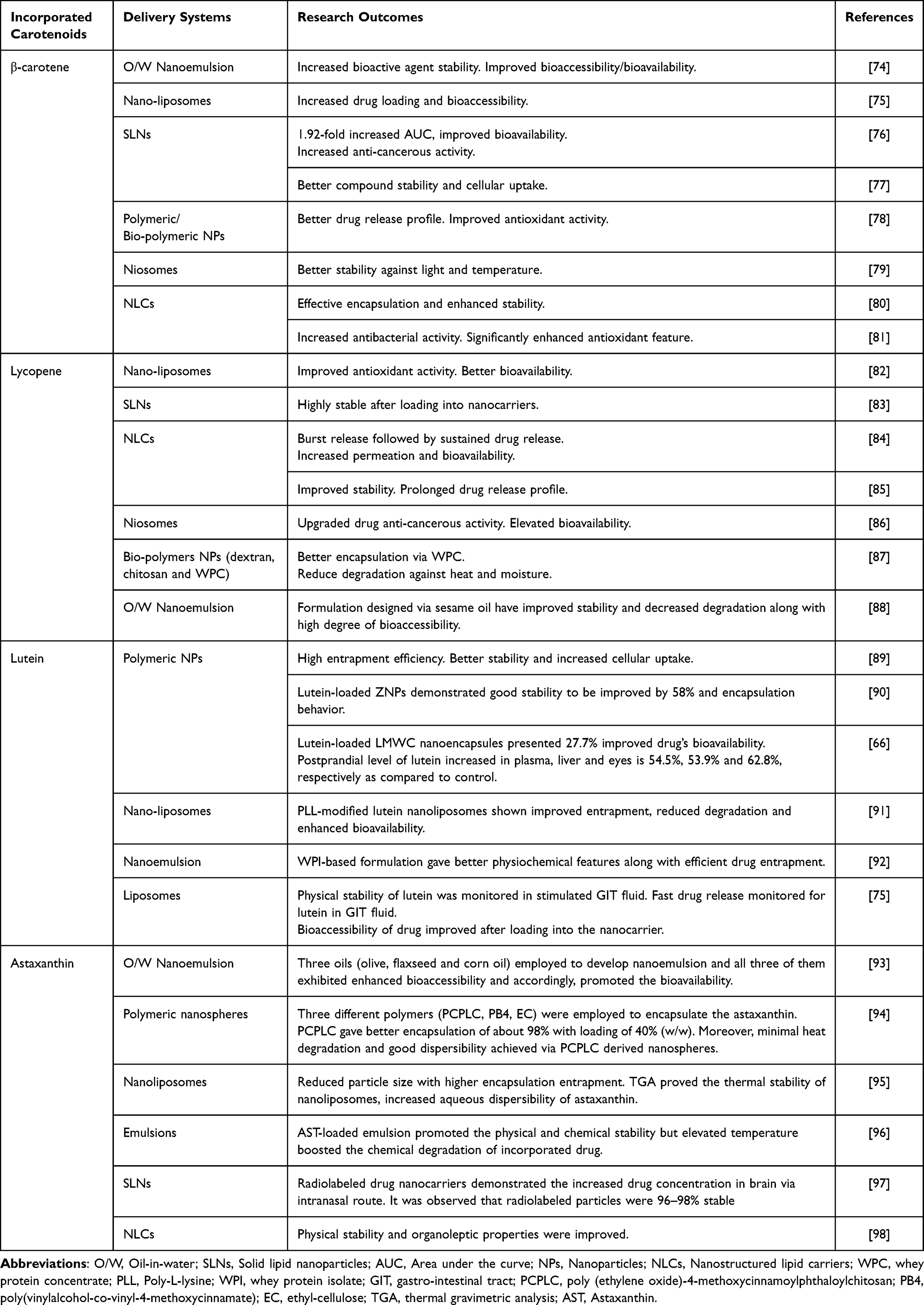 |
Table 1 Summary of Nanodrug Delivery Systems for Carotenoids Structurally Related to Bixin and Their Impact on Stability and Bioavailability |
Amphiphilic Nature and Self-Assembly Behavior of Bixin
Recently in 2024, a study was conducted by Patra et al, which highlights the drug delivery potential of bixin.20 The prime objective of the study is to investigate and report the first self-assembly of the bixin in aqueous liquids, thereby establishing its potential as a novel drug delivery system. Bixin is an apocarotenoid containing a long, 24-carbon polyene chain with nine conjugated double bonds. The molecule is characterized as a single-chain amphiphile because it possesses both a lipophilic (hydrophobic) long polyene chain and a polar (−COOH) head-group at one terminal, alongside a methyl ester group (-COOCH3) at the other terminal. So, this molecule renders the self-assembly mechanism because the polar -COOH head-group is driven outward towards the aqueous environment, while the hydrophobic polyene chains pack tightly inwards, leading to the formation of a bilayer membrane, as verified via High Resolution Transmission Electron Microscopy (HRTEM) that confirmed a bilayer membrane morphology of vesicles, supporting its suitability for forming drug carriers. In conclusion, it was claimed that the spontaneous self-assembly of bixin in aqueous liquids provides significant benefits primarily related to drug delivery and enhanced therapeutic action. The self-assemblies of bixin facilitate the efficient drug entrapment and ensure controlled drug release; moreover, alone and in combination with curcumin, bixin’s self-assemblies demonstrated remarkable antibacterial activities against Staphylococcus aureus and Escherichia coli.
Conclusion
Bixin, a prominent apocarotenoid pigment derived from B. orellana seeds, has emerged as a multifaceted bioactive compound with significant therapeutic and industrial potential. This review summarizes the broad pharmacological spectrum of bixin, including its potent antioxidant, anti-inflammatory, anticancer, antimicrobial, neuroprotective, hepatoprotective, nephroprotective, and photoprotective activities. Mechanistically, many of these effects are mediated through the NRF2 signaling pathway, STAT6 suppression, and ROS scavenging pathways central to oxidative stress mitigation and inflammation control. Preclinical studies have demonstrated bixin’s potential in disease models such as multiple sclerosis, Alzheimer’s disease, colorectal cancer, melanoma, ventilator-induced lung injury, cigarette smoke-induced inflammation, and age-related macular degeneration. Structurally, bixin possesses an amphiphilic nature due to its polar carboxylic and nonpolar methyl ester termini, enabling interactions with both aqueous and lipid environments. This amphiphilic property contributes to its biological versatility and supports its applicability in modern drug delivery systems. In addition, emerging data suggest its compatibility with modern drug delivery technologies. Despite its promising bioactivity, bixin faces certain limitations in terms of bioavailability, stability, and solubility, which restrict its clinical application. Recent advances in nanoparticle formulations, sustained-release systems, and polymer-based encapsulation strategies have shown promise in overcoming these challenges, thereby enhancing the compound’s therapeutic index.
Importantly, this review presents a unique perspective by consolidating both the pharmacological potential and the drug delivery challenges of bixin, which are often underrepresented in the current literature. The review also integrates mechanistic insights and cross-disciplinary applications ranging from functional foods and cosmeceuticals to nanomedicines and photoprotection to provide a holistic understanding of bixin’s potential. Future research should focus on detailed pharmacokinetics, toxicological profiling, structure-activity relationships (SAR), and clinical trials, which are critical to transitioning bixin from a phytochemical of interest to a clinically viable therapeutic agent. Furthermore, its possible role in combination therapies for inflammatory and oxidative stress–related disorders represents an area of emerging interest that warrants systematic exploration. With continued interdisciplinary research, bixin may eventually evolve from a traditional dye to a promising natural therapeutic candidate.
Acknowledgment
The authors would like to acknowledge the School of Pharmacy, Monash University Malaysia for providing the institutional support and necessary research infrastructure that facilitated the preparation of this article. The authors also extend their gratitude for the access to scientific resources and research facilities that greatly contributed to the quality and comprehensiveness of this work. This work was supported by the Geran Universiti Penyelidikan (GUP) under the grant number GUP-2024-047 Universiti Kebangsaan Malaysia (UKM).
Disclosure
The authors report no conflict of interest in this work.
References
1. Ulbricht C, Windsor RC, Brigham A, et al. An evidence-based systematic review of annatto (Bixa orellana L.) by the Natural Standard Research Collaboration. J Dietary Suppl. 2012;9(1):57–21. doi:10.3109/19390211.2012.653530
2. Vilar DA, Vilar MSDA, Moura TFADLE, et al. Traditional uses, chemical constituents, and biological activities of Bixa orellana L.: a review. Sci World J. 2014;2014(1):857292. doi:10.1155/2014/857292
3. Rivera-Madrid R, Aguilar-Espinosa M, Cárdenas-Conejo Y, et al. Carotenoid derivates in achiote (Bixa orellana) seeds: synthesis and health promoting properties. Front Plant Sci. 2016;7:1406. doi:10.3389/fpls.2016.01406
4. Ferreira JM, Sousa DF, Dantas MB, et al. Effects of Bixa orellana L. Seeds on Hyperlipidemia. Phytother Res. 2013;27(1):144–147. doi:10.1002/ptr.4675
5. Apelqvist J. Diagnostics and treatment of the diabetic foot. Endocrine. 2012;41(3):384–397. doi:10.1007/s12020-012-9619-x
6. Hirschmann GS, de Arias AR. A survey of medicinal plants of Minas Gerais. Brazil J Ethnopharmacol. 1990;29(2):159–172. doi:10.1016/0378-8741(90)90052-U
7. de Arias AR, Schmeda‐Hirschmann G, Falcao A. Feeding deterrency and insecticidal effects of plant extracts on Lutzomyia longipalpis. Phytother Res. 1992;6(2):64–67. doi:10.1002/ptr.2650060203
8. Giorgi A, De Marinis P, Granelli G, et al. Secondary metabolite profile, antioxidant capacity, and mosquito repellent activity of Bixa orellana from Brazilian Amazon Region. J Chem. 2013;2013(1):409826. doi:10.1155/2013/409826
9. Pacheco SDG, Gasparin AT, Jesus CHA, et al. Antinociceptive and anti-inflammatory effects of bixin, a carotenoid extracted from the seeds of Bixa orellana. Planta med. 2019;85(16):1216–1224. doi:10.1055/a-1008-1238
10. Tao S, Park SL, de la Vega MR, et al. Systemic administration of the apocarotenoid bixin protects skin against solar UV-induced damage through activation of NRF2. Free Radic Biol Med. 2015;89:690–700. doi:10.1016/j.freeradbiomed.2015.08.028
11. Moreira PR, Maioli MA, Medeiros HC, et al. Protective effect of bixin on carbon tetrachloride-induced hepatotoxicity in rats. Biol Res. 2014;47(1):1–7. doi:10.1186/0717-6287-47-49
12. de Oliveira Júnior RG, Bonnet A, Braconnier E, et al. Bixin, an apocarotenoid isolated from Bixa orellana L. sensitizes human melanoma cells to dacarbazine-induced apoptosis through ROS-mediated cytotoxicity. Food Chem Toxicol. 2019;125:549–561. doi:10.1016/j.fct.2019.02.013
13. Quintero Quiroz J, Naranjo Duran AM, Silva Garcia M, et al. Ultrasound‐assisted extraction of bioactive compounds from annatto seeds, evaluation of their antimicrobial and antioxidant activity, and identification of main compounds by LC/ESI‐MS analysis. Int J Food Sci. 2019;2019(1):3721828. doi:10.1155/2019/3721828
14. Rodrigues LM, Alcázar-Alay SC, Petenate AJ, et al. Bixin extraction from defatted annatto seeds Comptes Rendus. Chimie. 2014;17(3):268–283. doi:10.1016/j.crci.2013.10.010
15. Marcolino VA, Zanin GM, Durrant LR, et al. Interaction of curcumin and bixin with β-cyclodextrin: complexation methods, stability, and applications in food. J Agric Food Chem. 2011;59(7):3348–3357. doi:10.1021/jf104223k
16. Figueiredo-Junior AT, Valença SS, Finotelli PV, et al. Treatment with bixin-loaded polymeric nanoparticles prevents cigarette smoke-induced acute lung inflammation and oxidative stress in mice. Antioxidants. 2022;11(7):1293. doi:10.3390/antiox11071293
17. Perotti G, Silva FF, Couto RA, et al. Intercalation of apocarotenoids from annatto (Bixa orellana L.) into layered double hydroxides. J Braz Chem Soc. 2020;31.
18. Olatunji G, Oladoye S. Reaction of bixin with ethyl cellulose in N, N-dimethylformamide (N, N-DMF). Cellul Chem Technol. 2009;43(1):3.
19. Pagno CH, de Farias YB, Costa TMH, et al. Synthesis of biodegradable films with antioxidant properties based on cassava starch containing bixin nanocapsules. J Food Sci Technol. 2016;53(8):3197–3205. doi:10.1007/s13197-016-2294-9
20. Patra S, Kar S, Gopal Bag B. First vesicular self‐assembly of an apocarotenoid bixin in aqueous liquids and its antibacterial activity. Chem–Asian J. 2024;19(24):e202400361. doi:10.1002/asia.202400361
21. Rehbein J, Dietrich B, Grynbaum MD, et al. Characterization of bixin by LC‐MS and LC‐NMR. J Separation Sci. 2007;30(15):2382–2390. doi:10.1002/jssc.200700089
22. Rahmalia W, Fabre J-F, Usman T, et al. Adsorption characteristics of bixin on acid‐and alkali‐treated kaolinite in aprotic solvents. Bioinorganic Chem Appl. 2018;2018(1):3805654. doi:10.1155/2018/3805654
23. Husa N, Hamzah F, Said H. Characterization and storage stability study of bixin extracted from Bixa orellana using organic solvent. In:
24. Siva R, Doss FP, Kundu K, et al. Molecular characterization of bixin—An important industrial product. Ind Crops Prod. 2010;32(1):48–53. doi:10.1016/j.indcrop.2010.03.001
25. Jako C, Coutu C, Roewer I, et al. Probing carotenoid biosynthesis in developing seed coats of Bixa orellana (Bixaceae) through expressed sequence tag analysis. Plant Sci. 2002;163(1):141–145. doi:10.1016/S0168-9452(02)00083-3
26. Bouvier F, Dogbo O, Camara B. Biosynthesis of the food and cosmetic plant pigment bixin (annatto). Science. 2003;300(5628):2089–2091. doi:10.1126/science.1085162
27. Kiokias S, Proestos C, Varzakas T. A review of the structure, biosynthesis, absorption of carotenoids-analysis and properties of their common natural extracts. Curr Res Nutr Food Sci J. 2016;4(Special Issue Carotenoids March 2016):25–37. doi:10.12944/CRNFSJ.4.Special-Issue1.03
28. Carballo-Uicab VM, Cárdenas-Conejo Y, Vallejo-Cardona AA, et al. Isolation and functional characterization of two dioxygenasese putatively involved in bixin biosynthesis in annatto (Bixa orellana L.). PeerJ. 2019;7:e7064. doi:10.7717/peerj.7064
29. Patra S, Kar S, Bag BG. Isolation and biological activities of naturally occurring apocarotenoid bixin; 2021.
30. Saini RK, Prasad P, Lokesh V, et al. Carotenoids: dietary sources, extraction, encapsulation, bioavailability, and health benefits—a review of recent advancements. Antioxidants. 2022;11(4):795. doi:10.3390/antiox11040795
31. Tonny TS, Sarkar AP, Nahar K, et al. Evaluation of antidiabetic and antioxidant potential of methanolic extract of Bixa orellana seeds. Biomed Pharmacol J. 2024;17(1):527–535. doi:10.13005/bpj/2879
32. Assis RP, Arcaro CA, Gutierres VO, et al. Combined effects of curcumin and lycopene or bixin in yoghurt on inhibition of LDL oxidation and increases in HDL and paraoxonase levels in streptozotocin-diabetic rats. Int J Mol Sci. 2017;18(4):332. doi:10.3390/ijms18040332
33. Qiu Y, Li C. Bixin prevents colorectal cancer development through AMPK-activated endoplasmic reticulum stress. Biomed Res Int. 2022;2022:9329151. doi:10.1155/2022/9329151
34. Nurcahyanti ADR, Kusmita L, Wink M. Bixin and fucoxanthin sensitize human lung cancer and cervical cancer cell to cisplatin in vitro. BMC Res Notes. 2021;14(1):454. doi:10.1186/s13104-021-05866-4
35. Tibodeau JD, Isham CR, Bible KC. Annatto constituent cis-bixin has selective antimyeloma effects mediated by oxidative stress and associated with inhibition of thioredoxin and thioredoxin reductase. Antioxid Redox Signal. 2010;13(7):987–997. doi:10.1089/ars.2009.2896
36. Rojo de la Vega M, Zhang DD, Wondrak GT. Topical bixin confers NRF2-dependent protection against photodamage and hair graying in mouse skin. Front Pharmacol. 2018;9:287. doi:10.3389/fphar.2018.00287
37. Schmidlin CJ, Rojo de la Vega M, Perer J, et al. Activation of NRF2 by topical apocarotenoid treatment mitigates radiation-induced dermatitis. Redox Biol. 2020;37:101714. doi:10.1016/j.redox.2020.101714
38. Raddatz-Mota D, Pérez-Flores LJ, Carrari F, et al. Achiote (Bixa orellana L.): a natural source of pigment and vitamin E. J Food Sci Technol. 2017;54(6):1729–1741. doi:10.1007/s13197-017-2579-7
39. Quintero Quiroz J, Velazquez V, Corrales-Garcia LL, et al. Use of plant proteins as microencapsulating agents of bioactive compounds extracted from annatto seeds (Bixa orellana L.). Antioxidants. 2020;9(4):310. doi:10.3390/antiox9040310
40. Silva LAR, Çetinel G. Urucum extract and Papacarie Duo™ for potential use in antimicrobial photodynamic therapy (aPDT): absorption, cytotoxicity, and collagen interaction analysis. Photodiagn Photodyn Ther. 2020;30:101706. doi:10.1016/j.pdpdt.2020.101706
41. Camelo S, Latil M, Veillet S, et al. Beyond AREDS formulations, what is next for intermediate age‐related macular degeneration (iAMD) treatment? Potential benefits of antioxidant and anti‐inflammatory apocarotenoids as neuroprotectors. Oxid Med Cell Longev. 2020;2020(1):4984927. doi:10.1155/2020/4984927
42. Xue L, Zhang H, Zhang J, et al. Bixin protects against particle-induced long-term lung injury in an NRF2-dependent manner. Toxicol Res. 2018;7(2):258–270. doi:10.1039/C7TX00304H
43. Roehrs M, Conte L, da Silva DT, et al. Annatto carotenoids attenuate oxidative stress and inflammatory response after high-calorie meal in healthy subjects. Food Res Int. 2017;100:771–779. doi:10.1016/j.foodres.2017.08.005
44. Bereczki I, Papp H. Natural apocarotenoids and their synthetic glycopeptide conjugates inhibit SARS-CoV-2 replication. Pharmaceuticals. 2021;14(11):1111. doi:10.3390/ph14111111
45. Yu Y, Wu D-M, Li J, et al. Bixin attenuates experimental autoimmune encephalomyelitis by suppressing TXNIP/NLRP3 inflammasome activity and activating NRF2 signaling. Front Immunol. 2020;11:593368. doi:10.3389/fimmu.2020.593368
46. Li J, Yang Y, Wei S, et al. Bixin protects against kidney interstitial fibrosis through promoting STAT6 degradation. Front Cell Dev Biol. 2020;8:576988. doi:10.3389/fcell.2020.576988
47. Lakey-Beitia J, Kumar D,J, Hegde M, et al. Carotenoids as novel therapeutic molecules against neurodegenerative disorders: chemistry and molecular docking analysis. Int J Mol Sci. 2019;20(22):5553. doi:10.3390/ijms20225553
48. Tao S, Rojo de la Vega M, Quijada H, et al. Bixin protects mice against ventilation-induced lung injury in an NRF2-dependent manner. Sci Rep. 2016;6(1):18760. doi:10.1038/srep18760
49. Perotti GF, Silva FF, Couto RA, et al. Intercalation of Apocarotenoids from Annatto (Bixa orellana L.) into layered double hydroxides. J Braz Chem Soc. 2020;31(11):2211–2223.
50. Khalid M, Bilal M, Iqbal HMN, et al. Biosynthesis and biomedical perspectives of carotenoids with special reference to human health-related applications. Biocatal Agric Biotechnol. 2019;17:399–407. doi:10.1016/j.bcab.2018.11.027
51. Ma J-Q, Zhang Y-J, Tian Z-K, et al. Bixin attenuates carbon tetrachloride induced oxidative stress, inflammation and fibrosis in kidney by regulating the Nrf2/TLR4/MyD88 and PPAR-γ/TGF-β1/Smad3 pathway. Int Immunopharmacol. 2021;90:107117. doi:10.1016/j.intimp.2020.107117
52. Enayati A, Rezaei A, Falsafi SR, et al. Bixin-loaded colloidal nanodelivery systems, techniques and applications. Food Chem. 2023;412:135479. doi:10.1016/j.foodchem.2023.135479
53. Sridhar K, Inbaraj BS, Chen B-H. Recent advances on nanoparticle based strategies for improving carotenoid stability and biological activity. Antioxidants. 2021;10(5):713. doi:10.3390/antiox10050713
54. Figueiredo-Junior AT, Dos Anjos FDF, Brito FDCDM, et al. Bixin loaded on polymeric nanoparticles: synthesis, characterization, and antioxidant applications in a biological system. Appl Nanosci. 2021;11(1):63–78. doi:10.1007/s13204-020-01555-z
55. Figueirêdo BC, Bragagnolo N, Skibsted LH, et al. Inhibition of cholesterol and polyunsaturated fatty acids oxidation through the use of annatto and bixin in high‐pressure processed fish. J Food Sci. 2015;80(8):C1646–C1653. doi:10.1111/1750-3841.12964
56. Nogueira Sobrinho AC, Roberto CHA, Lima DM, et al. Bixinoids derived from Bixa orellana as a potential Zika virus inhibitor using molecular simulations. Antiviral effect on the Zika virus of bixinoids. Brazil Arch Biol Technol. 2022;65:e22210032. doi:10.1590/1678-4324-2022210032
57. Maurya VK, Shakya A, Aggarwal M, et al. Fate of β-carotene within loaded delivery systems in food: state of knowledge. Antioxidants. 2021;10(3):426. doi:10.3390/antiox10030426
58. Falsafi SR, Rostamabadi H, Nishinari K, et al. The role of emulsification strategy on the electrospinning of β-carotene-loaded emulsions stabilized by gum Arabic and whey protein isolate. Food Chem. 2022;374:131826. doi:10.1016/j.foodchem.2021.131826
59. Dos Santos PP, Andrade LDA, Flôres SH, et al. Nanoencapsulation of carotenoids: a focus on different delivery systems and evaluation parameters. J Food Sci Technol. 2018;55(10):3851–3860. doi:10.1007/s13197-018-3316-6
60. Rehman A, Tong Q, Jafari SM, et al. Carotenoid-loaded nanocarriers: a comprehensive review. Adv Colloid Interface Sci. 2020;275:102048. doi:10.1016/j.cis.2019.102048
61. Pérez-Monterroza EJ, Chaux-Gutiérrez AM, Franco CML, et al. Encapsulation of bixin with high amylose starch as affected by temperature and whey protein. Food Biophys. 2018;13(4):343–352. doi:10.1007/s11483-018-9540-9
62. Jain A, Sharma G, Kushwah V, et al. Beta carotene-loaded zein nanoparticles to improve the biopharmaceutical attributes and to abolish the toxicity of methotrexate: a preclinical study for breast cancer. Artif Cells Nanomed Biotechnol. 2018;46(sup1):402–412. doi:10.1080/21691401.2018.1428811
63. Rao MP, Manjunath K, Bhagawati ST, et al. Bixin loaded solid lipid nanoparticles for enhanced hepatoprotection–preparation, characterisation and in vivo evaluation. Int J Pharm. 2014;473(1–2):485–492. doi:10.1016/j.ijpharm.2014.07.027
64. Patil SS, Khulbe P, Nitalikar MM, et al. Development of topical silver nano gel formulation of bixin: characterization, and evaluation of anticancer activity. Saudi Pharm J. 2024;32(7):102125. doi:10.1016/j.jsps.2024.102125
65. Pinzón‐García AD, Cassini-Vieira P, Ribeiro CC, et al. Efficient cutaneous wound healing using bixin‐loaded PCL nanofibers in diabetic mice. J Biomed Mater Res Part B. 2017;105(7):1938–1949. doi:10.1002/jbm.b.33724
66. Arunkumar R, Prashanth KVH, Baskaran V. Promising interaction between nanoencapsulated lutein with low molecular weight chitosan: characterization and bioavailability of lutein in vitro and in vivo. Food Chem. 2013;141(1):327–337. doi:10.1016/j.foodchem.2013.02.108
67. Faisal W, Ruane-O’Hora T, O’Driscoll CM, et al. A novel lipid-based solid dispersion for enhancing oral bioavailability of Lycopene–In vivo evaluation using a pig model. Int J Pharm. 2013;453(2):307–314. doi:10.1016/j.ijpharm.2013.06.027
68. de Sousa Lobato KB, Paese K, Forgearini JC, et al. Evaluation of stability of bixin in nanocapsules in model systems of photosensitization and heating. LWT Food Sci Technol. 2015;60(1):8–14. doi:10.1016/j.lwt.2014.09.044
69. de Sousa Lobato KB, Paese K, Forgearini JC, et al. Characterisation and stability evaluation of bixin nanocapsules. Food Chem. 2013;141(4):3906–3912. doi:10.1016/j.foodchem.2013.04.135
70. Pascoal KL, Siqueira SMC, de Amorim AFV, et al. Physical-chemical characterization, controlled release, and toxicological potential of galactomannan-bixin microparticles. J Mol Struct. 2021;1239:130499. doi:10.1016/j.molstruc.2021.130499
71. Luna-Finkler CL, Gomes ADC, de Aguiar Júnior FCA, et al. From extraction to stabilization: employing a 22 experimental design in developing nutraceutical-grade bixin from Bixa orellana L. Foods. 2024;13(11):1622. doi:10.3390/foods13111622
72. Balakrishnan M, Gayathiri S, Preetha P, et al. Microencapsulation of bixin pigment by spray drying: evaluation of characteristics. Lwt. 2021;145:111343. doi:10.1016/j.lwt.2021.111343
73. Kikuchi IS, Takamoto RT, Matuo MC, et al. Antimicrobial activity of novel anionic nanodispersion prepared from Bixi. Latin Am J Pharm. 2015;34(4):740–747.
74. Zhou X, Wang H, Wang C, et al. Stability and in vitro digestibility of beta‐carotene in nanoemulsions fabricated with different carrier oils. Food Sci Nutr. 2018;6(8):2537–2544. doi:10.1002/fsn3.862
75. Tan C, Zhang Y, Abbas S, et al. Modulation of the carotenoid bioaccessibility through liposomal encapsulation. Colloids Surf B. 2014;123:692–700. doi:10.1016/j.colsurfb.2014.10.011
76. Jain A, Sharma G, Thakur K, et al. Beta-carotene-encapsulated solid lipid nanoparticles (BC-SLNs) as promising vehicle for cancer: an investigative assessment. AAPS Pharm Sci Tech. 2019;20:1–7. doi:10.1208/s12249-019-1301-7
77. Yi J, Lam TI, Yokoyama W, et al. Cellular uptake of β-carotene from protein stabilized solid lipid nanoparticles prepared by homogenization–evaporation method. J Agric Food Chem. 2014;62(5):1096–1104. doi:10.1021/jf404073c
78. Yi J, Lam TI, Yokoyama W, et al. Beta-carotene encapsulated in food protein nanoparticles reduces peroxyl radical oxidation in Caco-2 cells. Food Hydrocoll. 2015;43:31–40. doi:10.1016/j.foodhyd.2014.04.028
79. Palozza P, Muzzalupo R, Trombino S, et al. Solubilization and stabilization of β-carotene in niosomes: delivery to cultured cells. Chem Phys Lipids. 2006;139(1):32–42. doi:10.1016/j.chemphyslip.2005.09.004
80. Zirak MB, Pezeshki A. Effect of surfactant concentration on the particle size, stability and potential zeta of beta carotene nano lipid carrier. Int J Curr Microbiol Appl Sci. 2015;4(9):924–932.
81. Lacatusu I, Badea N, Ovidiu O, et al. Highly antioxidant carotene-lipid nanocarriers: synthesis and antibacterial activity. J Nanopart Res. 2012;14(6):1–16. doi:10.1007/s11051-012-0902-9
82. Stojiljkovic N, Ilic S, Jakovljevic V, et al. The encapsulation of lycopene in nanoliposomes enhances its protective potential in methotrexate‐induced kidney injury model. Oxid Med Cell Longev. 2018;2018(1):2627917. doi:10.1155/2018/2627917
83. Nazemiyeh E, Eskandani M, Sheikhloie H, et al. Formulation and physicochemical characterization of lycopene-loaded solid lipid nanoparticles. Adv Pharm Bull. 2016;6(2):235. doi:10.15171/apb.2016.032
84. Singh A, Neupane YR, Panda BP, et al. Lipid Based nanoformulation of lycopene improves oral delivery: formulation optimization, ex vivo assessment and its efficacy against breast cancer. J Microencapsulation. 2017;34(4):416–429. doi:10.1080/02652048.2017.1340355
85. Sirikhet J, Chanmahasathien W, Raiwa A, et al. Stability enhancement of lycopene in Citrullus lanatus extract via nanostructured lipid carriers. Food Sci Nutr. 2021;9(3):1750–1760. doi:10.1002/fsn3.2156
86. Sharma P, Saxena P, Jaswanth A, et al. Novel encapsulation of lycopene in niosomes and assessment of its anticancer activity. J Bioequiv Bioavailab. 2016;8:224–232.
87. Pérez-Masiá R, Lagaron JM, Lopez-Rubio A. Morphology and stability of edible lycopene-containing micro-and nanocapsules produced through electrospraying and spray drying. Food Bioprocess Technol. 2015;8:459–470. doi:10.1007/s11947-014-1422-7
88. Li D, Li L, Xiao N, et al. Physical properties of oil-in-water nanoemulsions stabilized by OSA-modified starch for the encapsulation of lycopene. Colloids Surf A Physicochem Eng Aspect. 2018;552:59–66. doi:10.1016/j.colsurfa.2018.04.055
89. Bolla PK, Gote V, Singh M, et al. Lutein-loaded, biotin-decorated polymeric nanoparticles enhance lutein uptake in retinal cells. Pharmaceutics. 2020;12(9):798. doi:10.3390/pharmaceutics12090798
90. Cheng CJ, Ferruzzi M, Jones OG. Fate of lutein-containing zein nanoparticles following simulated gastric and intestinal digestion. Food Hydrocoll. 2019;87:229–236. doi:10.1016/j.foodhyd.2018.08.013
91. Jiao Y, Li D, Liu C, et al. Polypeptide–decorated nanoliposomes as novel delivery systems for lutein. RSC Adv. 2018;8(55):31372–31381. doi:10.1039/C8RA05838E
92. Zhao C, Shen X, Guo M. Stability of lutein encapsulated whey protein nano-emulsion during storage. PLoS One. 2018;13(2):e0192511. doi:10.1371/journal.pone.0192511
93. Liu X, Zhang R, McClements DJ, et al. Nanoemulsion-based delivery systems for nutraceuticals: influence of long-chain triglyceride (LCT) type on in vitro digestion and astaxanthin bioaccessibility. Food Biophys. 2018;13(4):412–421. doi:10.1007/s11483-018-9547-2
94. Tachaprutinun A, Udomsup T, Luadthong C, et al. Preventing the thermal degradation of astaxanthin through nanoencapsulation. Int J Pharm. 2009;374(1–2):119–124. doi:10.1016/j.ijpharm.2009.03.001
95. Pan L, Wang H, Gu K. Nanoliposomes as vehicles for astaxanthin: characterization, in vitro release evaluation and structure. Molecules. 2018;23(11):2822. doi:10.3390/molecules23112822
96. Liu X, McClements DJ, Cao Y, et al. Chemical and physical stability of astaxanthin-enriched emulsion-based delivery systems. Food Biophys. 2016;11(3):302–310. doi:10.1007/s11483-016-9443-6
97. Bhatt PC, Srivastava P, Pandey P, et al. Nose to brain delivery of astaxanthin-loaded solid lipid nanoparticles: fabrication, radio labeling, optimization and biological studies. RSC Adv. 2016;6(12):10001–10010. doi:10.1039/C5RA19113K
98. Tamjidi F, Shahedi M, Varshosaz J, et al. Stability of astaxanthin‐loaded nanostructured lipid carriers in beverage systems. J Sci Food Agric. 2018;98(2):511–518. doi:10.1002/jsfa.8488
 © 2026 The Author(s). This work is published and licensed by Dove Medical Press Limited. The
full terms of this license are available at https://www.dovepress.com/terms
and incorporate the Creative Commons Attribution
- Non Commercial (unported, 4.0) License.
By accessing the work you hereby accept the Terms. Non-commercial uses of the work are permitted
without any further permission from Dove Medical Press Limited, provided the work is properly
attributed. For permission for commercial use of this work, please see paragraphs 4.2 and 5 of our Terms.
© 2026 The Author(s). This work is published and licensed by Dove Medical Press Limited. The
full terms of this license are available at https://www.dovepress.com/terms
and incorporate the Creative Commons Attribution
- Non Commercial (unported, 4.0) License.
By accessing the work you hereby accept the Terms. Non-commercial uses of the work are permitted
without any further permission from Dove Medical Press Limited, provided the work is properly
attributed. For permission for commercial use of this work, please see paragraphs 4.2 and 5 of our Terms.