
Back to Journals » Psychology Research and Behavior Management » Volume 18

Basic Psychological Needs and Psychological Well-Being Among Undergraduate Students in China: The Mediating Role of Autonomous Motivation and Academic Engagement
Authors Li Y  , Sueb R, Said Hashim K
Received 17 October 2024
Accepted for publication 4 February 2025
Published 4 March 2025 Volume 2025:18 Pages 527—549
DOI https://doi.org/10.2147/PRBM.S501467
Checked for plagiarism Yes
Review by Single anonymous peer review
Peer reviewer comments 3
Editor who approved publication: Dr Igor Elman
Yan Li,1,2 Rosilawati Sueb,2 Khadijah Said Hashim2
1School of Language and Cultures, Youjiang Medical University for Nationalities, Baise, Guangxi, 533000 People’s Republic of China; 2Faculty of Education, Universiti Teknologi MARA, UITM Puncak Alam Campus, Puncak Alam, Selangor, 42300 Malaysia
Correspondence: Rosilawati Sueb, Faculty of Education, Universiti Teknologi MARA, UITM Puncak Alam Campus, Puncak Alam, Selangor, 42300, Malaysia, Tel +60133631205, Email [email protected]
Purpose: From the perspective of positive psychology, and based on Self-Determination Theory and Sustainable Happiness Theory, this study explores the relationship between basic psychological needs and psychological well-being among undergraduate students, as well as the mediating roles of autonomous motivation and academic engagement.
Methods: A survey was conducted among 439 undergraduate students using the Basic Psychological Needs Scale, Learning Motivation Scale, Academic Engagement Scale, and Psychological Well-being Scale.
Results: Basic psychological needs were significantly and positively correlated with undergraduate students’ psychological well-being. Academic engagement partially mediated the relationship between basic psychological needs and psychological well-being. However, autonomous motivation did not mediate this relationship. Furthermore, autonomous motivation and academic engagement served as chain mediators in the relationship between basic psychological needs and psychological well-being.
Conclusion: Basic psychological needs are not only directly related to undergraduate students’ psychological well-being but are also indirectly associated with their psychological well-being through the mediating role of academic engagement and the chain mediating role of autonomous motivation and academic engagement.
Keywords: Basic Psychological Needs, Psychological Well-being, Autonomous Motivation, Academic Engagement, Undergraduate Students
Introduction
Happiness has been an enduring topic throughout history. With the rise of positive psychology, well-being has become a prominent focus in the field of psychology. Positive psychology discusses well-being from two perspectives: subjective well-being (SWB) and psychological well-being (PWB), which originate from different philosophical theories—hedonism and eudaimonia.1,2 Subjective well-being, rooted in hedonism, posits that happiness stems from life satisfaction, experiencing more positive emotions, and fewer negative emotions.3
The study of subjective well-being is relatively mature, with a wealth of research finding.4 It primarily focuses on individuals’ subjective experiences, using these perceptions to evaluate levels of well-being. However, such subjective experiences are highly variable and can change with environmental factors, making them inherently subjective.5 This inherent subjectivity limits the scope of research on subjective well-being.
In contrast, the concept of psychological well-being addresses these limitations. Rooted in eudaimonia, psychological well-being emphasizes the realization of one’s potential and the expression of human essence. It is considered more objective and stable.6,7 Psychological well-being focuses on personal growth, self-actualization, and life meaning. Therefore, exploring psychological well-being comprehensively and in depth is of great importance for understanding how individuals pursue happiness.
The concept of psychological well-being is rooted in Aristotle’s theory of “eudaimonia”, which posits that happiness is not subject to individual will but is a process of self-perfection, self-actualization, personal potential realization, and achievement.6 Building on the foundation of eudaimonia, Waterman further developed the concept of psychological well-being, suggesting that well-being arises from engaging in activities aligned with an individual’s deeply held values, characterized by full immersion and commitment.8
Ryff and Keyes, synthesizing previous theories, proposed six dimensions as indicators of psychological well-being: autonomy, environmental mastery, personal growth, purpose in life, positive relations with others, and self-acceptance.9 Psychological well-being emphasizes the experience of realizing one’s potential to achieve a meaningful and fulfilling life.
Undergraduate students are in a golden phase of life development, bearing not only the mission of realizing personal values but also the responsibility of contributing to societal progress. At this stage, students should make full use of university resources and platforms to pursue self-actualization, explore their inner potential, enhance core competitiveness, and maximize their life value through continuous effort. Therefore, it is particularly important to focus on the psychological well-being that undergraduate students experience during their self-growth. However, previous studies have predominantly concentrated on negative psychological issues or subjective well-being, while the topic of psychological well-being has received insufficient attention from Chinese scholars.10
From the perspective of Self-Determination Theory, the fulfillment of basic psychological needs is a crucial condition for achieving psychological well-being.11 Basic psychological needs are not only directly correlated with well-being but also indirectly associated with it through the promotion of autonomous motivation and positive behaviors.12 Autonomous motivation, as a highly self-determined intrinsic driving force, can inspire individuals’ active participation, enabling them to exhibit higher levels of academic engagement in their learning behaviors.13 Academic engagement, as a positive psychological state and behavior, aligns closely with the dynamic realization of psychological well-being and is likely a critical mechanism for enhancing the psychological well-being of undergraduate students.14,15
Nevertheless, there are still several gaps in the current research: First, existing literature has not sufficiently explored the mechanisms underlying the relationships among basic psychological needs, autonomous motivation, academic engagement, and psychological well-being. Second, studies on the indirect pathways linking basic psychological needs to psychological well-being lack systematic analysis. Third, few studies have integrated Self-Determination Theory and Sustainable Happiness Theory to investigate the formation mechanisms of psychological well-being.
Based on these considerations, this study adopts a positive psychology perspective and uses Self-Determination Theory and Sustainable Happiness Theory as its theoretical framework. It constructs a mediation model incorporating basic psychological needs, autonomous motivation, academic engagement, and psychological well-being to examine the relationships and mechanisms among these variables. This research not only enriches the theoretical framework of psychological well-being but also provides theoretical and practical guidance for enhancing the psychological well-being of undergraduate students.
Literature Review and Hypothesis Development
Basic Psychological Needs in Relation to Psychological Well-Being
The concept of basic psychological needs was introduced by Deci and Ryan within the framework of Self-Determination Theory.11,16 According to this theory, individuals have three fundamental psychological needs: autonomy, competence, and relatedness. Autonomy refers to the need to feel capable of making choices and acting independently; competence involves feeling effective in overcoming challenges and achieving success; and relatedness pertains to the sense of connection with others, feeling understood and supported. Deci and Ryan argued that these three basic psychological needs are inherent, universal across individuals, and not influenced by factors such as age, gender, race, or nationality, thus demonstrating universality.11
Deci and Ryan further suggested that when basic psychological needs are satisfied, individuals are likely to thrive and progress along a healthy developmental trajectory.11 The satisfaction of these needs functions like “nutrients”, continuously providing energy for personal growth and fostering positive development. Studies have shown that the satisfaction of basic psychological needs is positively correlated with well-being, academic engagement, positive emotions, prosocial behavior, and psychological resilience.17–21 Conversely, when basic psychological needs are unmet, diminished, or deprived, personal development can be hindered, leading to negative outcomes such as depression, anxiety, academic burnout, aggressive behavior, and online gaming addiction.22–26 This demonstrates that basic psychological needs are integral throughout the developmental process, serving as crucial psychological resources that consistently covary with individual growth.
It is worth noting that while the three basic psychological needs share similarities with certain dimensions of psychological well-being, Deci and Ryan emphasized that these two concepts differ.11 Basic psychological needs are considered elements that promote the formation of well-being, whereas psychological well-being is defined based on these dimensions. Based on the above, the following hypothesis is proposed:
H1: Basic psychological needs are positively correlated with psychological well-being among undergraduate students in China.
Mediation Effect of Autonomous Motivation
Autonomous motivation is one of the core concepts of Self-Determination Theory. It refers to an intrinsic driving force that originates from individuals’ interest in behavior, value identification, or integration of meaning. This type of motivation reflects a voluntary nature of behavior and demonstrates individuals’ deep recognition and pursuit of the intrinsic meaning of their actions.11 Self-Determination Theory introduces the groundbreaking hypothesis of the motivational continuum, which describes motivation as a spectrum ranging from amotivation (a lack of motivation) to externally regulated motivation (lacking self-determination) and finally to autonomous motivation (self-determined). Amotivation refers to a state of no motivation; externally regulated motivation describes a tendency to engage in activities for external outcomes; and intrinsic motivation refers to engaging in activities for the inherent interest in the activity itself.11,16
A key concept within Self-Determination Theory is internalization, the process by which individuals transform external values or regulations into values or regulations they personally endorse.11,16 Along the motivational continuum, external motivation can be internalized to become more self-determined through processes such as introjection, identification, and integration. Self-Determination Theory categorizes motivation into autonomous motivation, controlled motivation, and amotivation.11,16 Autonomous motivation includes intrinsic motivation, identified regulation, and integrated regulation, while controlled motivation encompasses introjected regulation and external regulation.
Basic psychological needs are closely correlated with autonomous motivation. According to Self-Determination Theory, the satisfaction of autonomy, competence, and relatedness—three basic psychological needs—is a crucial condition for fostering autonomous motivation.11,27,28 Studies have shown that basic psychological needs, as endogenous individual demands, are significantly associated with the enhancement of autonomous motivation.29,30 The fulfillment of these needs not only facilitates the emergence of motivation but also supports the internalization of external motivation.
When individuals perceive their actions as voluntary and feel autonomous in their decision-making, they experience higher levels of autonomy. This sense of autonomy enhances intrinsic motivation and highly internalized external motivations (eg identified and integrated regulation), leading individuals to act based on their internal desires. Research indicates that, compared to competence and relatedness needs, autonomy is particularly critical for individual development and plays a more prominent role in fostering autonomous motivation.29,31 However, competence and relatedness needs are also essential components of basic psychological needs and contribute unique roles to individual growth.32
When all three basic psychological needs are satisfied, individuals are more inclined to engage in activities they find interesting, beneficial for personal development, and challenging in the context of growth. Such engagement tends to be more enduring, of higher quality, and produces more effective behavioral outcomes.12,30,33 Based on the above, the following hypothesis is proposed:
H2: Basic psychological needs are positively correlated with autonomous motivation among undergraduate students in China.
Self-Determination Theory posits that autonomous motivation is an important factor correlated with psychological well-being. The theory emphasizes the relationship between autonomous motivation and psychological well-being, suggesting that autonomous motivation can enhance individuals’ well-being, although the connection between motivation and well-being has not been extensively studied.34 Autonomous motivation is believed to effectively foster psychological well-being.11,34 When individuals engage in activities that are autonomously chosen and personally meaningful, they experience a stronger sense of control and accomplishment. This not only strengthens psychological resilience and self-efficacy but also enables individuals to complete tasks more effectively and achieve personal growth, thereby contributing to greater psychological well-being.33,34
Research by Teo and Lilian also indicates that intrinsic motivation encourages individuals to participate in activities that bring both enjoyment and challenge, thereby enhancing persistence and enthusiasm for learning, which ultimately strengthens psychological well-being.35 It can thus be inferred that higher levels of autonomous motivation lead individuals to act more proactively, realize their potential, embrace challenges, and demonstrate greater perseverance. This proactive behavior is closely associated with improved outcomes and significant contributions to psychological well-being. Based on the above, the following hypothesis is proposed:
H3: Autonomous motivation is positively correlated with psychological well-being among undergraduate students in China.
From the above discussion, it can be observed that basic psychological needs are closely associated with autonomous motivation, and autonomous motivation covaries with psychological well-being. Deci and Ryan proposed that satisfying basic psychological needs stimulates intrinsic motivation, facilitates the internalization and integration of extrinsic motivation, and contributes to well-being and healthy psychological development.11 Conversely, the absence of such satisfaction may lead to less healthy psychological development. In summary, the satisfaction of basic psychological needs supports higher levels of autonomous motivation, which in turn enhances individuals’ willingness and performance in activities, thereby fostering greater psychological well-being. Based on the above, the following hypothesis is proposed:
H4: Autonomous motivation mediates the relationship between basic psychological needs and psychological well-being among undergraduate students in China.
Mediation Effect of Academic Engagement
Schaufeli extended the study of work engagement to student populations, introducing the concept of academic engagement. Academic engagement refers to a positive, fulfilling, and persistent psychological state related to learning, characterized by three dimensions: vigor, dedication, and absorption.36 Vigor reflects high levels of energy and resilience during learning, along with a willingness to exert effort and persevere in the face of challenges. Dedication refers to a strong sense of meaning, pride, and enthusiasm in learning, characterized by wholehearted involvement and a willingness to embrace challenges. Absorption is a state of deep concentration and enjoyment during learning, where one becomes fully immersed and experiences positive emotions.
Academic engagement is a critical variable in the field of positive psychology. The satisfaction of basic psychological needs is essential for healthy growth, well-being, and optimal functioning.15,17,37 Basic psychological needs serve as a core driving force behind individuals’ practice and actions. When students’ basic psychological needs are met in school, they are more likely to engage in academic activities.38,39 Satisfying basic psychological needs enables individuals to approBach tasks with a more positive mindset, remain steadfast when facing challenges or setbacks, and dedicate more time and effort to completing tasks. Conversely, when basic needs are unmet or thwarted, individuals are prone to adopt substitute goals, needs, or activities, such as excessive gaming, overeating, or avoiding social interactions, which are associated with negative habits.40–42
Previous studies have demonstrated that the satisfaction of basic psychological needs is positively correlated with academic performance, student engagement, school adaptation, and academic achievement.43–46 Conversely, when basic psychological needs are unmet, there is a decline in learning interest and engagement, often accompanied by disengagement and academic burnout.24 Based on the above, the following hypothesis is proposed:
H5: Basic psychological needs are positively correlated with academic engagement among undergraduate students in China.
The Sustainable Happiness Theory posits that happiness can be sustainably enhanced and identifies three factors contributing to happiness: genetic factors, environmental factors, and intentional activities, with their explanatory power for happiness being 50%, 10%, and 40%, respectively.14 According to this theory, genetic factors (eg genes, personality) play a significant role in happiness but are stable over time, causing happiness to fluctuate within a set range and eventually return to a baseline level.47,48 In contrast, the factors that sustain changes in happiness are intentional activities rather than environmental factors, as people adapt to their environments, and improvements in circumstances often reach a limit where further enhancement becomes difficult. Intentional activities, being dynamic, allow individuals to achieve self-actualization, self-improvement, potential realization, and personal accomplishment through cognitive, behavioral, and volitional efforts, thereby enhancing happiness.
Happiness is not innate but emerges through continuous social practices in which individuals exchange information and energy with their surroundings, functioning as an open system. Happiness possesses objectivity, meaningfulness, and developmental potential. Academic engagement, as a positive psychological and behavioral state, closely aligns with the pursuit of self-improvement and self-actualization within psychological well-being. It serves as an important pathway to enhance psychological well-being. Studies have demonstrated that academic engagement is positively correlated with psychological well-being.49,50 Zhang also emphasized that students’ academic engagement serves as an essential bridge for fostering psychological well-being.51 Thus, engaging in intentional learning activities is a key pathway for improving psychological well-being. Based on the above, the following hypothesis is proposed:
H6: Academic engagement is positively correlated with psychological well-being among undergraduate students in China.
As discussed earlier, the fulfillment of basic psychological needs supports individuals in choosing activities conducive to their development. It encourages them to engage more deeply in activities aligned with mainstream societal values, such as dedicating themselves to learning, acquiring knowledge and skills, improving and refining themselves, and experiencing psychological well-being throughout the meaningful and valuable learning process. Based on the above, the following hypothesis is proposed:
H7: Academic engagement mediates the relationship between basic psychological needs and psychological well-being among undergraduate students in China.
Chain Mediating Role of Autonomous Motivation and Academic Engagement
Self-Determination Theory explains the relationship between motivation and behavior, highlighting the close connection between autonomous motivation and academic engagement.11 When autonomous motivation is stimulated, students exhibit enthusiasm, interest, involvement, and curiosity. They persist in their efforts, actively address challenges and setbacks, and demonstrate positive academic engagement. Intrinsic motivation drives students to actively participate in learning due to their interest in the subject itself, characterized by high levels of focus, vigor, and dedication. This represents a highly autonomous form of intrinsic driving force.52,53 Similarly, internalized extrinsic motivation encourages individuals to align their learning goals with personal values and aspirations. Without external pressure or demands, students voluntarily and autonomously engage in learning activities.54 Therefore, autonomous motivation can directly contribute to higher levels of academic engagement, fostering a greater sense of initiative and involvement in learning. Autonomous motivation, thus, supports individuals in pursuing behaviors that interest them and contribute to their development. Based on the above, the following hypothesis is proposed:
H8: Autonomous motivation is positively correlated with academic engagement among undergraduate students in China.
As noted above, the fulfillment of basic psychological needs promotes intrinsic motivation and the internalization of extrinsic motivation. In other words, satisfying basic psychological needs fosters greater autonomous motivation, which, in turn, drives individuals to engage in behaviors and activities that they find interesting and meaningful (eg learning activities). According to the Sustainable Happiness Theory, intentional learning activities can enhance psychological well-being. Therefore, the following hypothesis is proposed:
H9: Autonomous motivation and academic engagement serve as chain mediators in the relationship between basic psychological needs and psychological well-being among undergraduate students in China.
Based on the above discussion, this study aims to explore the relationships among basic psychological needs, autonomous motivation, academic engagement, and psychological well-being, as well as their underlying mechanisms. The conceptual framework is presented in Figure 1.
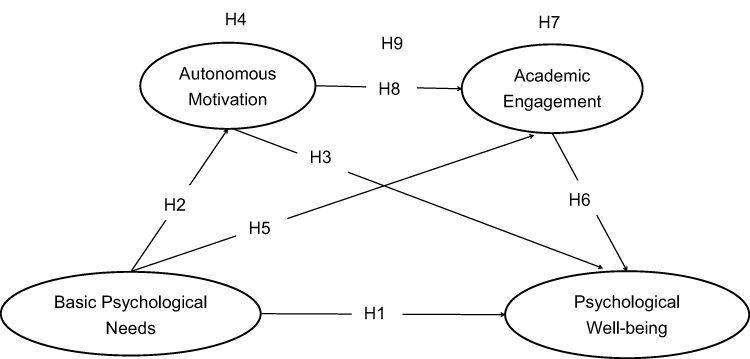 |
Figure 1 Conceptual Framework. Notes: H4=H2·H3; H7=H5·H6; H9=H2·H8·H6 |
Methodology
Participants and Procedure
This study employed a cluster sampling method to conduct a questionnaire survey among undergraduate students from four universities in Guangxi, China. To increase participation rates while ensuring data authenticity and compliance with ethical standards, data collection was conducted from May to June 2024, during the middle of the spring semester. This period was chosen as students had generally adapted to university life and established emotional connections with their instructors. Before distributing the questionnaires in classrooms, the consent and cooperation of instructors were obtained. Researchers explained the study’s objectives and procedures, and instructors provided a brief introduction to encourage participation while respecting students’ autonomy. Additionally, small tokens of appreciation were given to participants to express gratitude for their involvement.
The questionnaires were distributed and collected on-site, with participants given 20–25 minutes to complete them. A total of 462 questionnaires were collected. Invalid questionnaires were excluded based on the following criteria:1) Patterned responses, such as identical answers throughout the entire questionnaire;55 2) Excessive missing data, such as entire pages of unanswered questions or a missing rate significantly exceeding 15%;55 3) Failure to correctly respond to instructed items (the questionnaire included two instructed items to determine whether the responses are made conscientiously).56 A total of 23 invalid questionnaires were excluded, resulting in 439 valid questionnaires, with a validity rate of 95.02%.
The participants ranged in age from 18 to 25 years, with a mean age of 20.92 ± 1.447 (M ± SD) years. The sample included 156 males (35.5%) and 283 females (64.5%). Participants’ academic years were as follows: first-year students (n = 87, 19.8%), second-year students (n = 100, 22.8%), third-year students (n = 119, 27.1%), and fourth-year students (n = 133, 30.3%). Regarding residential backgrounds, 249 students (56.7%) were from rural areas, 111 (25.1%) from towns, and 80 (18.2%) from urban areas. Additionally, 79 participants (18.0%) were only children, while 360 (82.0%) were non-only children.
Ethical Approval and Informed Consent
Prior to the commencement of the study, ethical approval was obtained from the Ethics Committee of Youjiang Medical University for Nationalities (Approval No. 2023031101). Written informed consent forms were distributed to participants along with the paper-based questionnaires. The researchers provided participants with a brief explanation of the study’s objectives and purpose, emphasizing that the survey was conducted anonymously, and the data collected would be used solely for scientific research. Participation in the study was entirely voluntary, and participants were informed of their right to withdraw at any time without providing an explanation or facing any negative consequences.
Instrumentation
Demographic Survey
A self-designed questionnaire was used to collect demographic information, including gender, age, academic year, place of residence, and whether the participant was an only child.
Basic Psychological Needs: Basic Psychological Needs Scale (BPNS)
The Basic Psychological Needs Scale (BPNS), developed by Gagné, consists of 21 items covering three dimensions: Autonomy Need (7 items), Competence Need (6 items), and Relatedness Need (8 items).57 Among these, 10 items are reverse-scored. The scale employs a 7-point Likert scale, ranging from 1 (Strongly Disagree) to 7 (Strongly Agree). In this study, scores were calculated as the mean of all items, with higher scores indicating greater satisfaction of basic psychological needs.
Psychological Well-Being: Psychological Well-Being Scale (PWBS)
The Psychological Well-Being Scale (PWBS) was developed by Ryff.6 This study utilized the 42-item version of the scale,9 whose reliability and validity have been well established.43,58 The scale encompasses six dimensions: autonomy, self-acceptance, environmental mastery, personal growth, positive relations with others, and purpose in life. A total of 21 items are reverse-scored. The scale uses a 7-point Likert format, ranging from 1 (Strongly Disagree) to 7 (Strongly Agree). In this study, mean scores were calculated, with higher scores reflecting greater levels of psychological well-being.
Autonomous Motivation: Academic Motivation Scale (AMS)
The Academic Motivation Scale (AMS) was developed by Vallerand.59 It was later simplified by Kotera, resulting in the 14-item Academic Motivation Scale (AMS-14), which has demonstrated strong reliability and validity.60 This study utilized the simplified 14-item scale, which includes seven dimensions: intrinsic motivation to know, intrinsic motivation toward accomplishment, intrinsic motivation to experience stimulation, identified regulation, introjected regulation, external regulation, and amotivation, with two items per dimension. This study specifically used four dimensions—intrinsic motivation to know, intrinsic motivation toward accomplishment, intrinsic motivation to experience stimulation, and identified regulation—to measure autonomous motivation. The scale employs a 7-point Likert format, ranging from 1 (Not at all true) to 7 (Very true). Mean scores were calculated, with higher scores indicating stronger autonomous motivation.
Academic Engagement: Utrecht Work Engagement Scale - Student Version (UWES)
The Utrecht Work Engagement Scale-Student Version (UWES) was developed by Schaufeli.36 This study adopted the 9-item version (UWES-9), the reliability and validity of which have been well established.43,58 The UWES-9 includes three dimensions: vigor, dedication, and absorption, with three items per dimension. The scale uses a 6-point Likert format, ranging from 0 (Never) to 6 (Always). Mean scores were calculated, with higher scores reflecting higher levels of academic engagement among students.
Data Analysis
This study utilized Epidata 3.0 for data entry, SPSS 26.0 for descriptive statistical analysis, and SmartPLS 4.0 for Partial Least Squares Structural Equation Modeling (PLS-SEM). According to Hair et al, PLS-SEM follows a two-step analytical procedure: Measurement Model Assessment and Structural Model Assessment.61
The measurement model assessment aims to evaluate reliability and validity, including internal consistency (Cronbach’s alpha and Composite Reliability), convergent validity (factor loadings and Average Variance Extracted, AVE), and discriminant validity (Fornell-Larcker criterion and HTMT).61 This study employs a second-order reflective construct model. Following the recommendations of Bagozzi et al and Hair et al, the reliability and validity of both lower-order and higher-order constructs were assessed to ensure the overall reliability and validity of the model.61,62
The structural model assessment examines the relationships between latent variables and the predictive ability of the model. The assessment indicators include collinearity (VIF), path coefficients (β), coefficient of determination (R²), effect size (f²), predictive relevance (Q²), and mediation analysis.61
Results
Common Method Bias
Since the data for this study were collected through self-reports from undergraduate students, there may be potential common method bias between the predictor variables and outcome variables. Harman’s single-factor test was used to examine the influence of common method bias.63 The results showed that a total of 17 factors had eigenvalues greater than 1, and the first factor explained 25.81% of the variance, which is below the 40% threshold. Therefore, it can be concluded that common method bias is not a significant issue in this study.
Descriptive Statistics and Correlation Analysis
The means, standard deviations, and correlation coefficients of the variables are presented in Table 1. Pearson correlation analysis indicated that basic psychological needs, autonomous motivation, academic engagement, and psychological well-being were significantly correlated with each other in pairs.
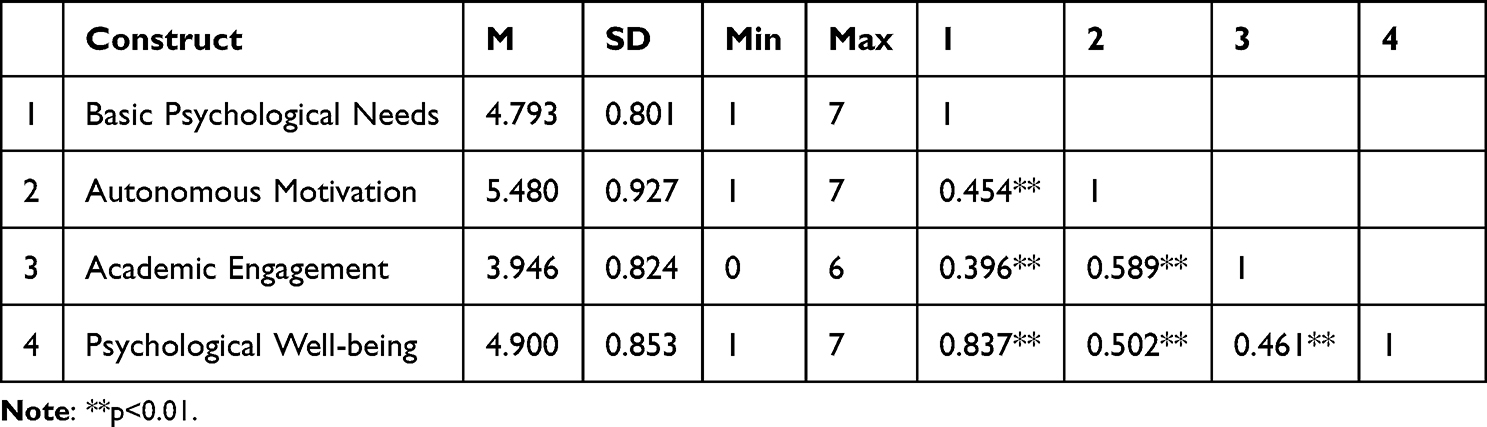 |
Table 1 Means, SD, and Correlation of Measures |
Measurement Model Assessment
First, the measurement model was evaluated for internal consistency reliability, convergent validity, and discriminant validity. Internal consistency was assessed using Composite Reliability (CR, > 0.7) and Cronbach’s alpha (> 0.7, though > 0.6 is acceptable).64 Convergent validity was evaluated through Average Variance Extracted (AVE, > 0.5) and outer loadings (> 0.7; however, outer loadings between 0.5 and 0.7 are acceptable for complex structures).64 Discriminant validity was examined using the Fornell-Larcker criterion and HTMT ratio. According to the Fornell-Larcker criterion, the AVE value of a latent variable should exceed the square of its correlations with other latent variables.65 For HTMT, values should be below 0.85 or 0.90, although values close to 1 are acceptable in cases of strong theoretical relationships.66,67
Initially, based on the recommendations of Hair, Risher et al, items with outer loadings below 0.5 were removed to ensure the scale’s reliability and validity.64 Specifically, the following items were removed: CN3, CN5, AN2, AN4, AN7, RN3, RN4, RN6 from the Basic Psychological Needs Scale, and AUT1, AUT5, AUT7; EM1, EM2, EM4, EM7; PG2, PG4, PG6; PRO2, PRO3, PRO4, PRO6; PL5, PL7; SA3, SA4, SA7 from the Psychological Well-being Scale.
The results (see Tables 2 and 3, Figures 2 and 3) indicate that the Cronbach’s alpha values for both lower-order constructs and higher-order constructs are mostly greater than 0.7. Although a small portion falls within the range of 0.6–0.7, they are deemed acceptable according to the judgment criteria of Hair, Risher et al.64 All CR values exceeded 0.7, indicating that both lower-order and higher-order constructs demonstrated good internal consistency reliability.
 |
Table 2 Reliability and Convergent Validity of Lower-Order Construct |
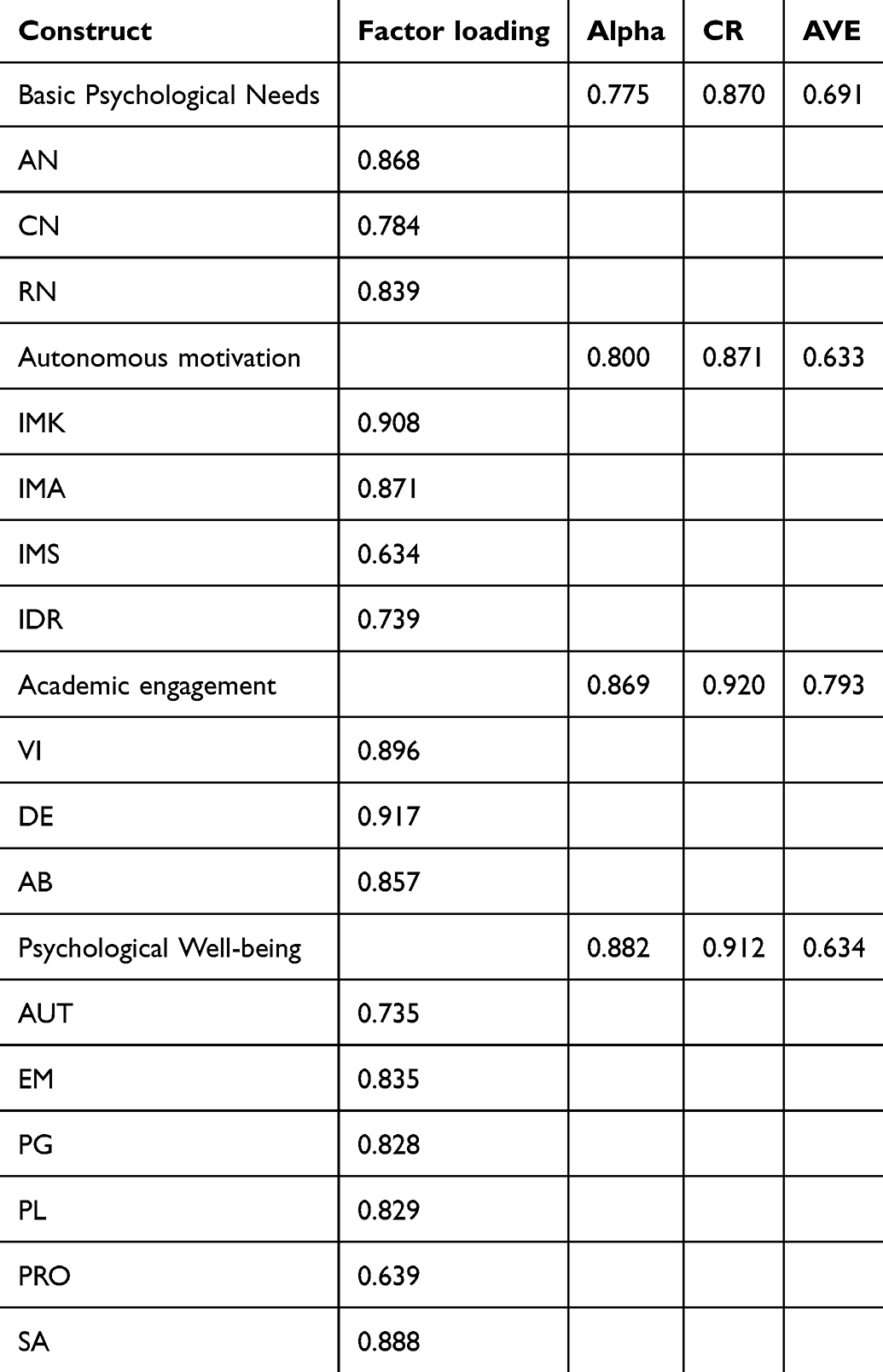 |
Table 3 Reliability and Convergent Validity of Higher-Order Construct |
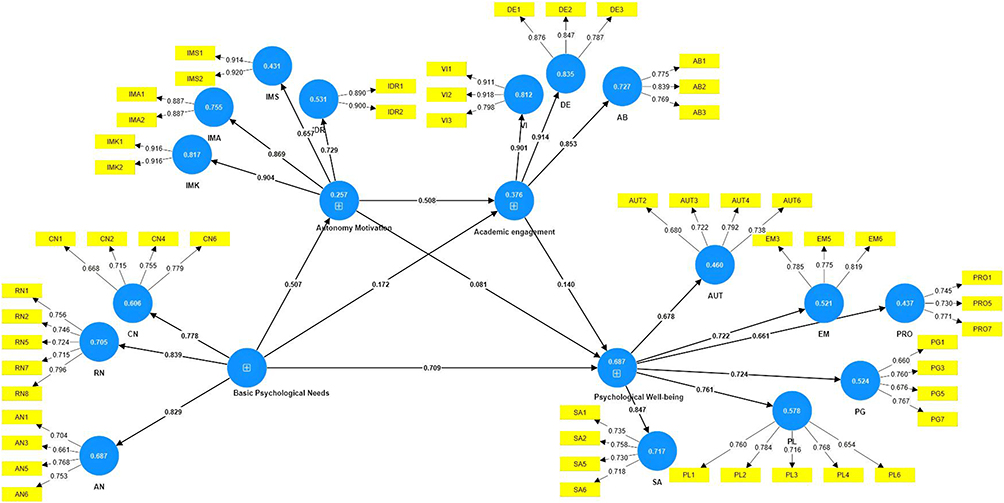 |
Figure 2 Measurement Model of the Lower-order Construct. |
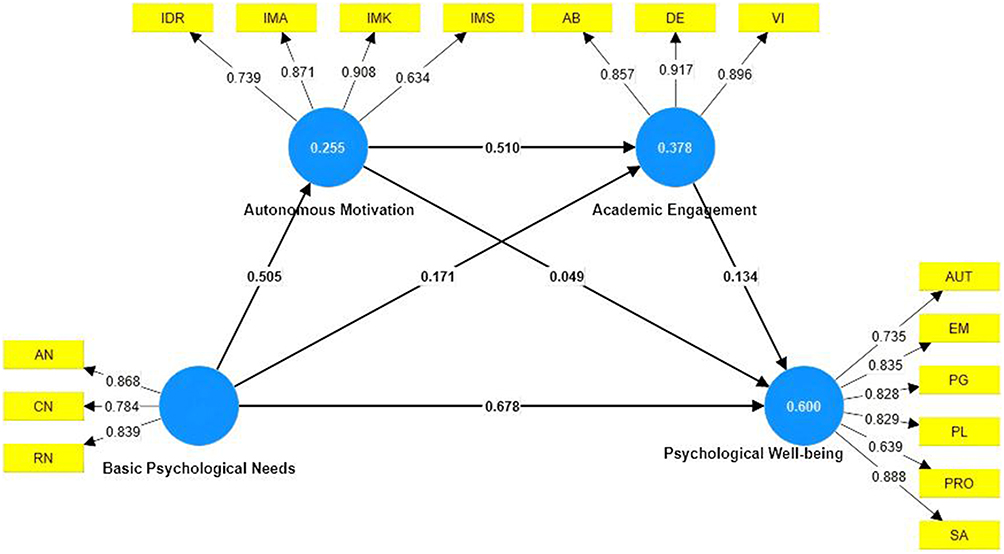 |
Figure 3 Measurement Model of the Higher-Order Construct. |
Most outer loading values were above 0.7, with only a few between 0.6 and 0.7. Given that other indicators met the evaluation criteria, these values were deemed acceptable based on the standards of Hair et al.64 All AVE values exceeded 0.5, confirming that the constructs demonstrated good convergent validity.
The results (see Tables 4 and 5, Figures 2 and 3) show that the AVE values for both lower-order and higher-order latent variables exceeded the square of their correlations with other latent variables, satisfying the Fornell-Larcker criterion. As shown in Tables 6 and 7, most HTMT values were below 0.85, with a few values close to 1. These were deemed acceptable based on the criteria of Henseler et al and Sarstedt et al66,67 Therefore, the constructs demonstrated acceptable discriminant validity.
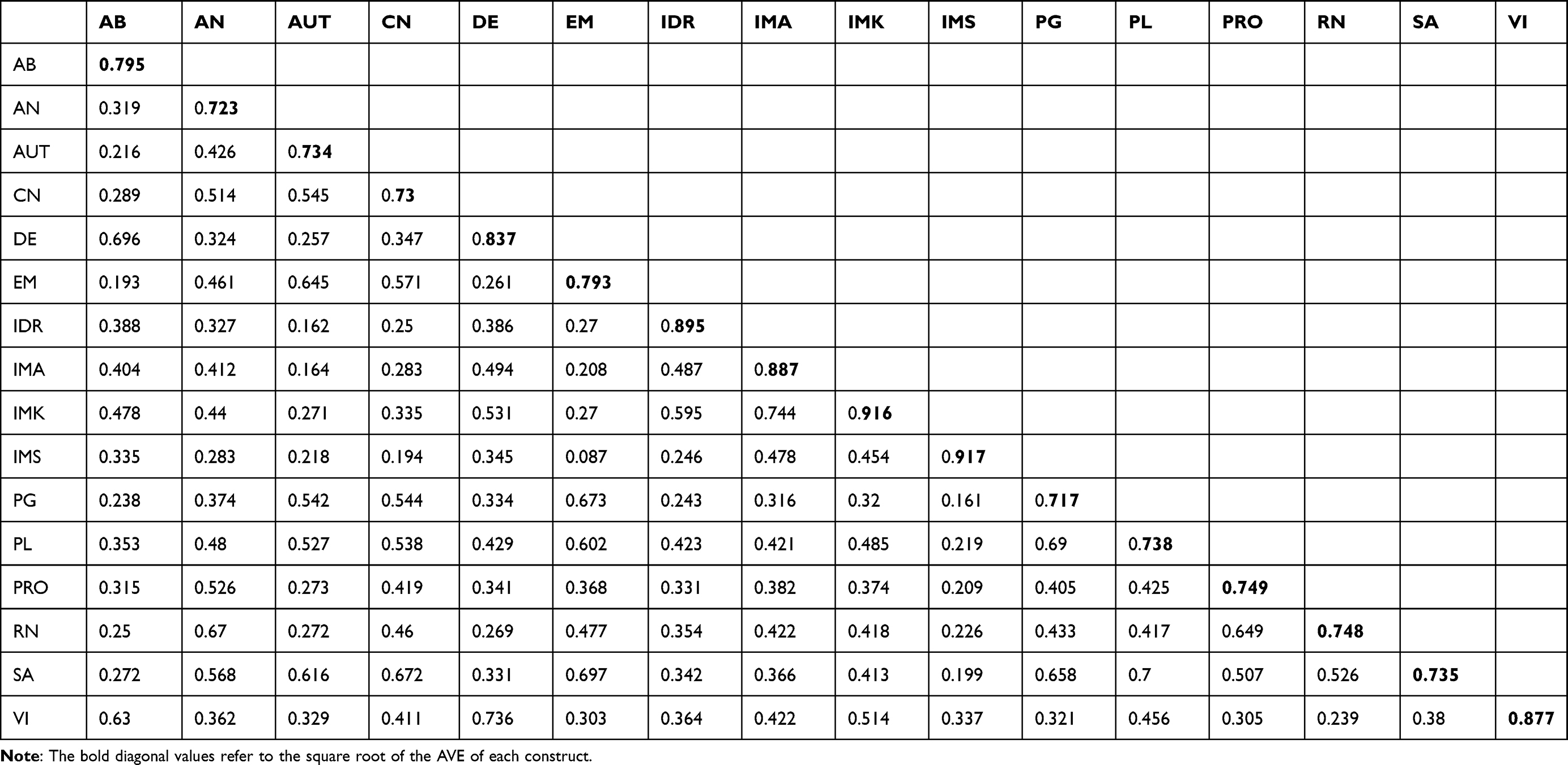 |
Table 4 Discriminant Validity of Lower-Order Construct (Fornell-Larcker Criterion) |
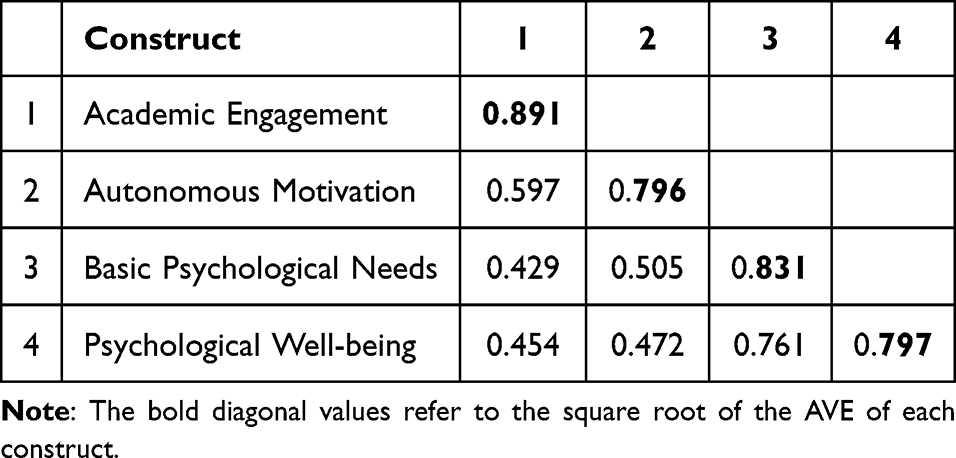 |
Table 5 Discriminant Validity of Higher-Order Construct (Fornell-Larcker Criterion) |
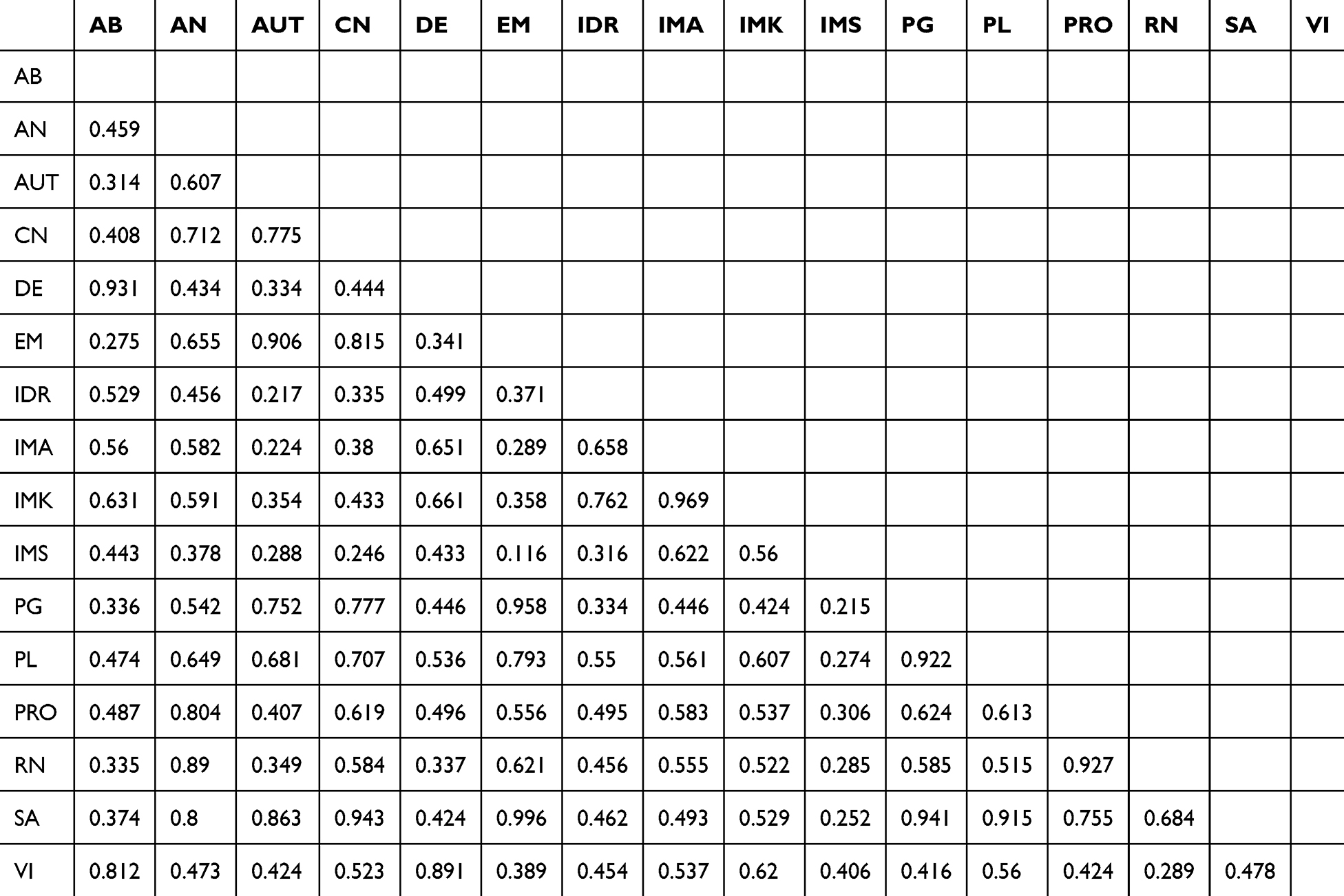 |
Table 6 Discriminant Validity of the Lower-Order Construct (HTMT) |
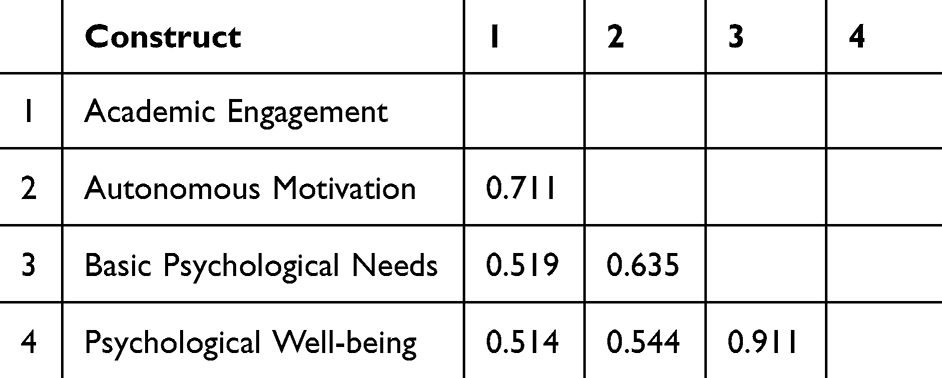 |
Table 7 Discriminant Validity of the Higher-Order Construct (HIMT) |
The measurement model assessment confirmed that the constructs achieved satisfactory levels of internal consistency reliability, convergent validity, and discriminant validity, providing a solid foundation for subsequent structural model analysis.
Structural Model Assessment
As shown in Table 8, several aspects of the structural model assessment were evaluated: First, in the assessment of multicollinearity, all VIF values for the variables were below 5.0, indicating that the model did not suffer from multicollinearity issues.68 Second, the coefficients of determination (R²) for autonomous motivation, academic engagement, and psychological well-being were 0.255, 0.378, and 0.600, respectively, indicating that the exogenous variables explained a moderate to high proportion of the variance in the endogenous variables.69 Third, the effect sizes (f²) of the relationships were examined. Basic psychological needs demonstrated large effect sizes on psychological well-being (f² = 0.828) and autonomous motivation (f² = 0.343) and a small effect size on academic engagement (f² = 0.035). Autonomous motivation exhibited a medium effect size on academic engagement (f² = 0.312) and a negligible effect size on psychological well-being (f² = 0.003). Academic engagement had a small effect size on psychological well-being (f² = 0.028). These results indicate that basic psychological needs are particularly strongly correlated with psychological well-being and autonomous motivation, while autonomous motivation is closely associated with academic engagement.69 Lastly, all Q² values for the endogenous variables were greater than 0, suggesting that the model has significant predictive relevance for the endogenous variables.61,70
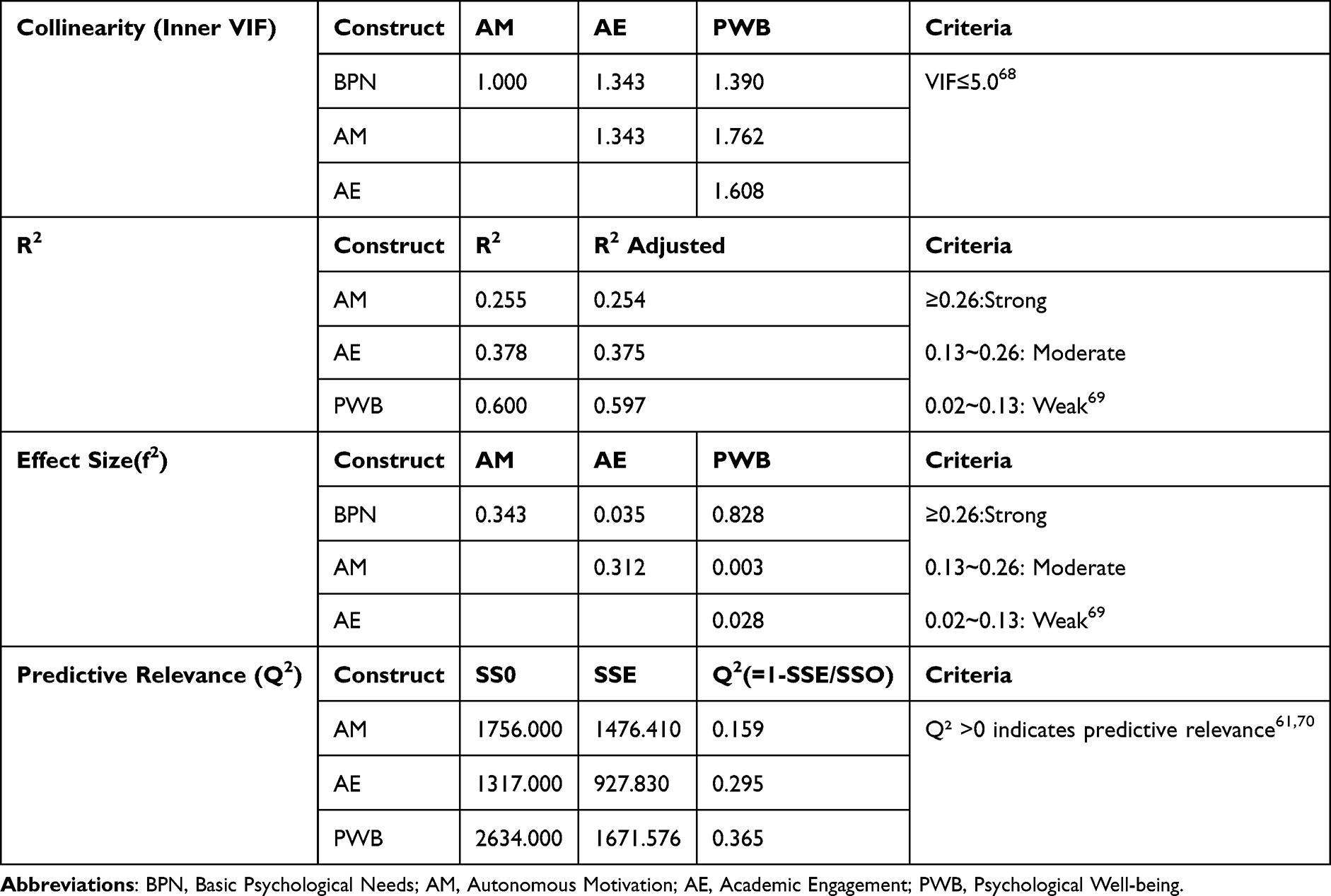 |
Table 8 Assessment of Structural Model |
In summary, the overall model performed well, with all evaluation indicators meeting the required standards. These results demonstrate that the model has good explanatory power and predictive capability.
The Bootstrapping method in SmartPLS 4.0 was further employed to test the hypothesized relationships and examine the significance of the paths within the model.61 Specifically, this study set 5000 bootstrap samples to compute path coefficients (β), t-values, and p-values. The commonly used threshold for significance is t > 1.96 (p < 0.05). Additionally, confidence intervals were calculated, and a path was considered significant if zero was not included within the confidence interval.61
The hypothesis testing results are shown in Table 9. The results indicated that basic psychological needs were positively correlated with psychological well-being (β = 0.678, t = 22.640, p < 0.001), supporting H1. Basic psychological needs were also positively correlated with autonomous motivation (β = 0.505, t = 12.594, p < 0.001), supporting H2. However, autonomous motivation was not significantly correlated with psychological well-being (β = 0.049, t = 1.169, p = 0.242), and thus H3 was not supported. Basic psychological needs were positively correlated with academic engagement (β = 0.171, t = 3.521, p < 0.001), supporting H5. Academic engagement was positively correlated with psychological well-being (β = 0.134, t = 3.189, p < 0.001), supporting H6. Finally, autonomous motivation was positively correlated with academic engagement (β = 0.510, t = 10.979, p < 0.001), supporting H8.
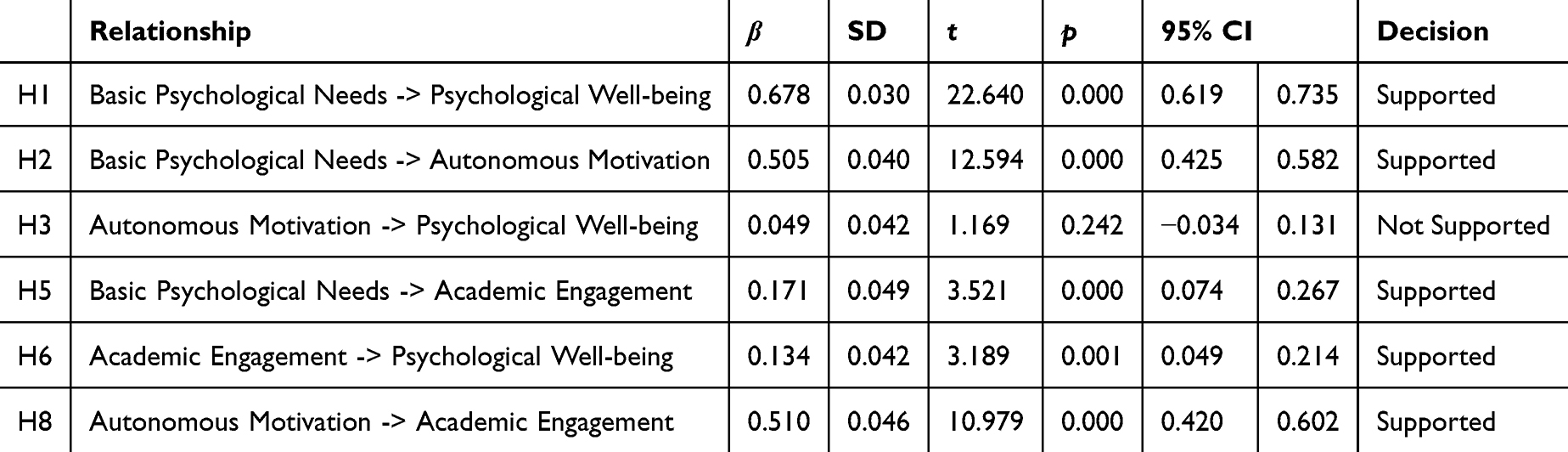 |
Table 9 Direct Relationship |
Mediation Analysis
In the mediation analysis, the mediating role of autonomous motivation in the relationship between basic psychological needs and psychological well-being was first examined. The results (see Table 10 and Figure 4) indicated that autonomous motivation did not demonstrate a significant mediating role (H4: β = 0.025, t = 1.163, p = 0.245). The 95% confidence interval obtained through the Bootstrap method (5000 resamples) was [−0.018, 0.067], which included 0, indicating that the mediation effect was not significant. Therefore, H4 was not supported.
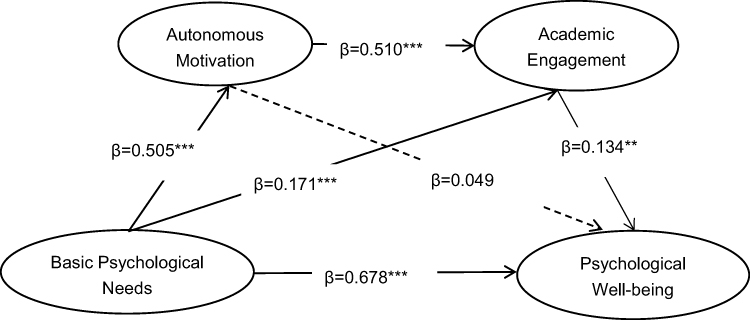 |
Figure 4 The Mediating Model. Notes: **P<0.01, ***P<0.001. |
Next, the mediating role of academic engagement in the relationship between basic psychological needs and psychological well-being was examined. The results (see Table 10 and Figure 4) showed that academic engagement demonstrated a significant mediating role (H7: β = 0.023, t = 2.313, p < 0.05). The 95% confidence interval obtained through the Bootstrap method (5000 resamples) was [0.021, 0.024], which did not include 0, further supporting the significance of the mediation effect. Therefore, H7 was supported.
Finally, the chain mediating role of autonomous motivation and academic engagement in the relationship between basic psychological needs and psychological well-being was examined. The results (see Table 10 and Figure 4) indicated that autonomous motivation and academic engagement demonstrated a significant chain mediating effect (H9: β = 0.034, t = 2.888, p < 0.05). The 95% confidence interval obtained through the Bootstrap method (5000 resamples) was [0.012, 0.059], which did not include 0, further confirming the significance of the chain mediation effect. Therefore, H9 was supported.
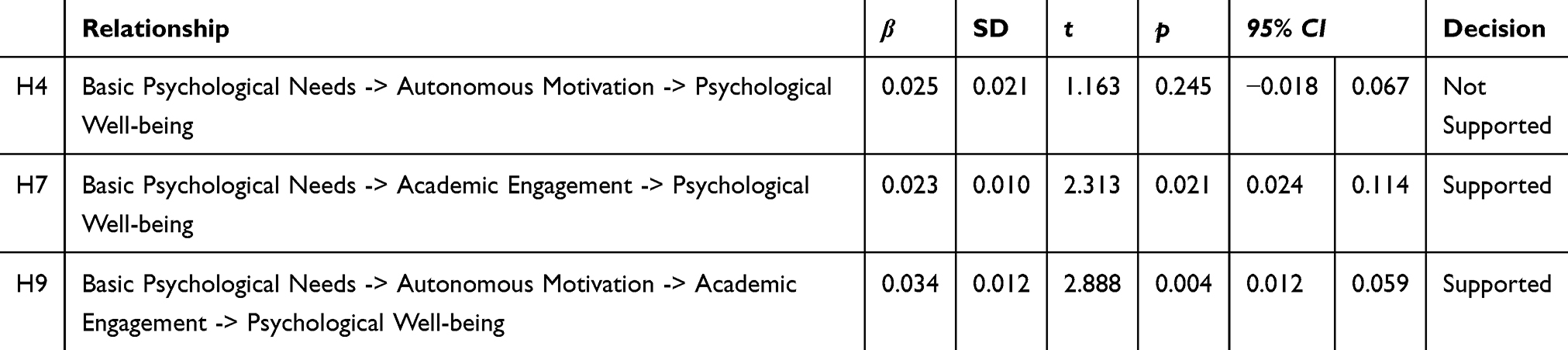 |
Table 10 Mediation Analysis |
Discussion
This study, grounded in the perspective of positive psychology and based on Self-Determination Theory and Sustainable Happiness Theory, constructed a chain mediation model. It examined the relationship between basic psychological needs and psychological well-being among undergraduate students and explored the chain mediating role of autonomous motivation and academic engagement in this relationship, revealing the mechanisms underlying the association between basic psychological needs and psychological well-being in undergraduate students.
Correlation Between Basic Psychological Needs and Psychological Well-Being
This study found that basic psychological needs are significantly positively correlated with psychological well-being among undergraduate students, indicating that higher levels of basic psychological need satisfaction are associated with higher levels of psychological well-being. Hence, H1 was supported. This finding aligns with previous studies and corroborates the perspective of Self-Determination Theory.11,17 Self-Determination Theory posits that the satisfaction of basic psychological needs—including autonomy, competence, and relatedness—is a critical predictor of achieving high levels of psychological well-being.33
Cross-cultural studies by Chen et al and Martela et al also demonstrated that basic psychological needs serve as essential nutrients for optimal functioning across individuals from various cultures and nationalities.17,71 The satisfaction of basic psychological needs is closely associated with enhanced well-being and life satisfaction. Therefore, when undergraduate students experience autonomy, competence, and relatedness in their academic and daily lives, their levels of psychological well-being are significantly elevated.
Mediation of Autonomous Motivation
This study found that autonomous motivation does not mediate the relationship between basic psychological needs and psychological well-being among undergraduate students. Specifically, while basic psychological needs were significantly positively correlated with autonomous motivation (supporting H2), autonomous motivation was not significantly correlated with psychological well-being (not supporting H3). Consequently, basic psychological needs were not related to psychological well-being through autonomous motivation (not supporting H4).
The significant positive correlation between basic psychological needs and autonomous motivation aligns with previous research and supports Self-Determination Theory,11,29,30 which posits a close relationship between basic psychological needs and autonomous motivation. According to Self-Determination Theory, the satisfaction of basic psychological needs stimulates and sustains autonomous motivation, making basic psychological needs a critical driver for the development and maintenance of autonomous motivation.11,27
However, the lack of a significant correlation between autonomous motivation and psychological well-being has also been observed in prior studies. Vansteenkiste, Ryan et al noted that the relationship between autonomous motivation and well-being might not always be significant across different contexts, suggesting that this relationship is not as stable as theoretical predictions might imply.12 Empirical studies have also found that in certain settings, autonomous motivation is not significantly related to psychological well-being. For instance, Easterbrook, Wright et al reported that extrinsic motivation was negatively correlated with well-being, while intrinsic motivation showed no significant correlation.72 Similarly, Kouali, Hall et al found that identified regulation and integrated regulation were positively associated with athletes’ well-being, but intrinsic motivation was not significantly correlated with their well-being.73
The lack of a significant relationship between autonomous motivation and psychological well-being can be further explained by considering the nature of psychological well-being. Psychological well-being emphasizes personal growth, self-actualization, and life meaning, which represent dynamic processes of self-improvement and potential realization.6 In contrast, motivation primarily represents the starting point of behavior, acting as an intrinsic driving force for action.74 Compared to motivational states, psychological well-being relies more heavily on positive behaviors and practical activities. Therefore, autonomous motivation may not be directly correlated with psychological well-being but instead operates indirectly through mediating variables such as positive behaviors and practical activities.
As this study revealed, autonomous motivation can indirectly support psychological well-being through academic engagement. This finding aligns with Sustainable Happiness Theory, which posits that intentional, meaningful, and valuable activities are key factors in enhancing psychological well-being.14,75
Mediation of Academic Engagement
This study found that academic engagement serves as a mediator in the relationship between basic psychological needs and psychological well-being. Basic psychological needs were significantly positively correlated with academic engagement (supporting H5), and academic engagement was significantly positively correlated with psychological well-being (supporting H6). Consequently, basic psychological needs were correlated with psychological well-being through academic engagement (supporting H7). These findings are generally consistent with previous studies.76
Self-Determination Theory emphasizes that the satisfaction of basic psychological needs can stimulate individuals’ positive engagement in learning activities. Ryan and Deci found that when autonomy, competence, and relatedness are satisfied, individuals exhibit stronger motivation and higher levels of academic engagement.33 Specifically, autonomy provides students with a greater sense of control in their learning, competence enhances their confidence in completing learning tasks, and relatedness strengthens their social connections within learning environments. Together, these factors contribute to higher levels of academic engagement.
These findings also align with Sustainable Happiness Theory, which posits that intentional activities can lead to greater psychological well-being. According to Sustainable Happiness Theory proposed by Lyubomirsky et al, happiness is not solely influenced by genetic predispositions or life circumstances but is significantly associated with intentional activities.14 Academic engagement, as a positive and goal-oriented activity, can be considered a typical example of intentional behavior that effectively enhances psychological well-being.75
Therefore, academic engagement plays an important mediating role in the relationship between basic psychological needs and psychological well-being. Happiness is not a static state but a genuine experience derived from active engagement in meaningful activities. When basic psychological needs are satisfied, individuals experience their most authentic state of happiness through pursuing goals and realizing values in the course of practical activities. For undergraduate students, achieving happiness requires overcoming challenges, realizing their potential, and experiencing fulfillment through continuous effort and self-improvement.
The Chain Mediation of Autonomous Motivation and Academic Engagement
This study found that autonomous motivation was significantly positively correlated with academic engagement (supporting H8). Autonomous motivation and academic engagement jointly served as chain mediators in the relationship between basic psychological needs and psychological well-being (supporting H9). Specifically, the satisfaction of basic psychological needs fosters autonomous motivation, which drives individuals to engage more actively in learning activities. Academic engagement, in turn, enhances individuals’ sense of long-term achievement and satisfaction, thereby increasing their psychological well-being. In summary: Basic Psychological Needs → Autonomous Motivation → Academic Engagement → Psychological Well-being.
The findings of this study indicate that autonomous motivation has a significant positive correlation with academic engagement, consistent with the assumptions of Self-Determination Theory. According to Ryan and Deci, when students’ intrinsic motivation and internalized extrinsic motivation are stimulated, they are more likely to exhibit high levels of academic engagement.11 Autonomous motivation enhances students’ sense of initiative and responsibility in learning tasks, thereby increasing their participation and focus in learning activities. Research by Azila-Gbettor et al also demonstrated that students with higher levels of autonomous motivation exhibit stronger engagement and persistence in the learning process.77
This study further found a significant chain mediating effect of autonomous motivation and academic engagement in the relationship between basic psychological needs and psychological well-being. This finding suggests that the satisfaction of basic psychological needs can enhance autonomous motivation, which in turn promotes academic engagement, ultimately contributing to increased psychological well-being.15,33 The satisfaction of basic psychological needs provides a foundational guarantee for the stimulation of motivation and the internalization of extrinsic motivation. Autonomous motivation encourages students to participate more actively and proactively in learning activities, while academic engagement, as a sustained behavioral performance, facilitates individuals’ self-actualization and the realization of their potential, thereby enhancing psychological well-being.15
By constructing a chain mediation model, this study highlights the critical roles of autonomous motivation and academic engagement in the relationship between basic psychological needs and psychological well-being. This finding offers a new perspective for understanding the mechanisms underlying undergraduate students’ psychological well-being.
Limitations and Future Directions
Although the Psychological Well-Being Scale developed by Ryff has been widely used in psychology,6 clinical, and health-related fields and has formed a well-established framework, many Chinese scholars have argued that the measurement of psychological well-being should be rooted in the local culture of China.10,78 This approach would more accurately reflect the current state of psychological well-being among Chinese undergraduate students. Therefore, future research should consider selecting psychological well-being scales that are more aligned with Chinese cultural contexts. Second, this study was cross-sectional and cannot establish causal relationships. Future research should adopt experimental or longitudinal designs to further verify the mediation model proposed in this study. Lastly, the study’s sample had certain limitations. Expanding the sample scope in future studies would enhance the generalizability and persuasiveness of the research findings.
Conclusion
1) Basic psychological needs were significantly positively correlated with psychological well-being among undergraduate students. 2) Academic engagement partially mediated the relationship between basic psychological needs and psychological well-being, while autonomous motivation did not mediate this relationship. 3) Autonomous motivation and academic engagement jointly served as chain mediators in the relationship between basic psychological needs and psychological well-being. Conclusion: Basic psychological needs not only directly correlate with undergraduate students’ psychological well-being but also relate to psychological well-being through the mediating role of academic engagement. Additionally, basic psychological needs are connected to psychological well-being through the chain mediation of autonomous motivation and academic engagement.
Implications
This study provides a valuable theoretical model for teachers, parents, and educators, offering insights into the mechanisms through which basic psychological needs, autonomous motivation, and academic engagement are associated with psychological well-being. In educational practices, teachers, parents, and relevant educators should leverage their resources and advantages to create an autonomy-supportive environment that fulfills students’ basic psychological needs.11,27 They should also guide students to experience and enhance their psychological well-being through active participation in learning activities.
For contemporary undergraduate students, while facing various external temptations, they are also presented with numerous opportunities and challenges. Their primary responsibility remains making full use of the resources and platforms provided by universities to strive for self-improvement. This involves not only diligently acquiring knowledge, skills, and competencies but also learning to experience happiness through practical activities. Students should cultivate a positive mindset, welcoming each day with constructive cognition, emotions, and thoughts. Developing an optimistic attitude toward life and embedding this positive psychological quality into every aspect of work, life, and learning will enrich their overall well-being.
Data Sharing Statement
The datasets generated during and/or analyzed during the study are available from the corresponding author upon reasonable request.
Ethics Statement
This study was approved by the Ethics Committee of Youjiang Medical University for Nationalities (Ethics Approval Number: 2023031101). All participants signed informed consent forms prior to participating in the survey. The study strictly adhered to the principles of the Declaration of Helsinki, and all research procedures were conducted in accordance with relevant ethical guidelines.
Acknowledgments
Sincere thanks to those who have worked and contributed to this thesis.
Disclosure
The authors report no conflicts of interest in this work.
References
1. Deci EL, Ryan RM, Gagné M, Leone DR, Usunov J, Kornazheva BP. Need satisfaction, motivation, and well-being in the work organizations of a former eastern bloc country: a cross-cultural study of self-determination. Personality & Social Psychology Bulletin. 2001;27(8):930–942. doi:10.1177/0146167201278002
2. Ryff CD, Singer BH, Dienberg Love G. Positive health: connecting well–being with biology. Philos Trans R Soc London, Ser B. 2004;359(1449):1383–1394. doi:10.1098/rstb.2004.1521
3. Diener E. Subjective well-being. Psychol Bull. 1984;95(3):542. doi:10.1037/0033-2909.95.3.542
4. Diener E, Oishi S, Tay L. Advances in subjective well-being research. Nat Human Behav. 2018;2(4):253–260. doi:10.1038/s41562-018-0307-6
5. Diener E, Lucas RE, Scollon CN. Beyond the hedonic treadmill: revising the adaptation theory of well-being. Am Psychologist. 2006;61(4):305. doi:10.1037/0003-066X.61.4.305
6. Ryff CD. Happiness is everything, or is it? Explorations on the meaning of psychological well-being. Journal of Personality and Social Psychology. 1989;57(6):1069. doi:10.1037/0022-3514.57.6.1069
7. Keyes CL, Shmotkin D, Ryff CD. Optimizing well-being: the empirical encounter of two traditions. Journal of Personality and Social Psychology. 2002;82(6):1007. doi:10.1037/0022-3514.82.6.1007
8. Waterman AS. Two conceptions of happiness: contrasts of personal expressiveness (eudaimonia) and hedonic enjoyment. Journal of Personality and Social Psychology. 1993;64(4):678. doi:10.1037/0022-3514.64.4.678
9. Ryff CD, Keyes CLM. The structure of psychological well-being revisited. Journal of Personality and Social Psychology. 1995;69(4):719. doi:10.1037/0022-3514.69.4.719
10. Jiang FP. Research overview of psychological well-being of college students: a bibliometric analysis based on CNKI Database. J Shandong Youth Univ Political Sci. 2020;36(5):7.
11. Deci EL, Ryan RM. The “what” and “why” of goal pursuits: human needs and the self-determination of behavior. Psychol Inq. 2000;11(4):227–268. doi:10.1207/S15327965PLI1104_01
12. Vansteenkiste M, Ryan RM, Soenens B. Basic psychological need theory: advancements, critical themes, and future directions. Motivation Emotion. 2020;44(1):1–31.
13. Collie RJ, Granziera H, Martin AJ. Teachers’ motivational approach: links with students’ basic psychological need frustration, maladaptive engagement, and academic outcomes. Teaching Teacher Educ. 2019;86:102872. doi:10.1016/j.tate.2019.07.002
14. Lyubomirsky S, Sheldon KM, Schkade D. Pursuing happiness: the architecture of sustainable change. Rev General Psychol. 2005;9(2):111–131. doi:10.1037/1089-2680.9.2.111
15. Hutomo BA, Kurniawati F. Importance of basic psychological needs satisfaction in higher education: a systematic literature review. G-Couns: Jurnal Bimbingan dan Konseling. 2024;9(1):233–246. doi:10.31316/gcouns.v9i1.6326
16. Deci EL, Ryan RM. Intrinsic motivation and self-determination in human behavior. Perspect Soc Psychol. 1985.
17. Martela F, Lehmus-Sun A, Parker PD, Pessi AB, Ryan RM. Needs and well-being across Europe: basic psychological needs are closely connected with well-being, meaning, and symptoms of depression in 27 European countries. Social Psychological and Personality Science. 2023;14(5):501–514. doi:10.1177/19485506221113678
18. Karimi S, Sotoodeh B. The mediating role of intrinsic motivation in the relationship between basic psychological needs satisfaction and academic engagement in agriculture students. Teach Higher Educ. 2020;25(8):959–975. doi:10.1080/13562517.2019.1623775
19. Wang N. How does basic psychological needs satisfaction contribute to EFL learners’ achievement and positive emotions? The mediating role of L2 self-concept. System. 2024;123:103340. doi:10.1016/j.system.2024.103340
20. Chen Y. Prosocial behavior and well-being: an empirical review of the role of basic psychological need satisfaction. J Psychol. 2024;158:1–21.
21. Lera M-J, Abualkibash S. Basic psychological needs satisfaction: a way to enhance resilience in traumatic situations. Int J Environ Res Public Health. 2022;19(11):6649. doi:10.3390/ijerph19116649
22. Pietrek A, Kangas M, Kliegl R, et al. Basic psychological need satisfaction and frustration in major depressive disorder. Frontiers in Psychiatry. 2022;13:962501. doi:10.3389/fpsyt.2022.962501
23. Durmaz M, Akkuş R. Mathematics anxiety, motivation and the basic psychological needs from the perspective of self-determination theory. Egitim ve Bilim. 2016;41(183).
24. Zupančič N, Palanović A, Ružojčić M, et al. Differential influence of basic psychological needs on burnout and academic achievement in three southeast European countries. International J Psychol. 2024;59(2):288–302. doi:10.1002/ijop.12938
25. Dou F, Wang Q, Wang M, Zhang E, Zhao G. Basic psychological need satisfaction and aggressive behavior: the role of negative affect and its gender difference. PeerJ. 2023;11:e16372.
26. Kaya A, Türk N, Batmaz H, Griffiths MD. Online gaming addiction and basic psychological needs among adolescents: the mediating roles of meaning in life and responsibility. Int J Ment Health Addict. 2023;1–25. doi:10.1007/s11469-022-00994-9
27. Ryan RM, Deci EL. Intrinsic and extrinsic motivation from a self-determination theory perspective: definitions, theory, practices, and future directions. Contemp Educ Psychol. 2020;61:101860. doi:10.1016/j.cedpsych.2020.101860
28. Vasconcellos D, Parker PD, Hilland T, et al. Self-determination theory applied to physical education: a systematic review and meta-analysis. J Educ Psychol. 2020;112(7):1444. doi:10.1037/edu0000420
29. Raiziene S, Gabrialaviciute I, Garckija R, Silinskas G. Satisfaction of basic psychological needs and autonomous motivation in school context: a test of additive, synergistic, and balance hypotheses. Croatian J Educ. 2018;20(2):399–429. doi:10.15516/cje.v20i2.2752
30. Pelikan ER, Korlat S, Reiter J, et al. Distance learning in higher education during COVID-19: the role of basic psychological needs and intrinsic motivation for persistence and procrastination–a multi-country study. PLoS One. 2021;16(10):e0257346. doi:10.1371/journal.pone.0257346
31. Cuevas R, García-Calvo T, González J, Fernández-Bustos JG. Basic psychological needs, motivation and engagement in adolescent students. Revista de Psicologia del Deporte. 2018;27(1):97–104.
32. Durksen TL, Chu M-W, Ahmad ZF, Radil AI, Daniels LM. Motivation in a MOOC: a probabilistic analysis of online learners’ basic psychological needs. Soc Psychol Educ. 2016;19(2):241–260. doi:10.1007/s11218-015-9331-9
33. Ryan RM. Self-Determination Theory: Basic Psychological Needs in Motivation, Development, and Wellness. Guilford Press; 2017.
34. Grassinger R, Landberg M, Määttä S, Vasalampi K, Bieg S. Interplay of intrinsic motivation and well-being at school. Motivation Emotion. 2024;48(2):147–154. doi:10.1007/s11031-024-10057-2
35. Teo SC, Lilian A, Koo AC. Examining the effects of academic motivation and online learning on Malaysian tertiary students’ psychological well-being and perceived learning performance. Cogent Educat. 2023;10(1):2186025. doi:10.1080/2331186X.2023.2186025
36. Schaufeli WB, Martinez IM, Pinto AM, Salanova M, Bakker AB. Burnout and engagement in university students: a cross-national study. J Cross-Cult Psychol. 2002;33(5):464–481. doi:10.1177/0022022102033005003
37. Mukba G. An investigation of basic psychological needs satisfaction and its basic components: a literature review. Humanistic Perspect. 2023;5(3):1189–1218. doi:10.47793/hp.1345948
38. Molinari L, Mameli C. Basic psychological needs and school engagement: a focus on justice and agency. Soc Psychol Educ. 2018;21(1):157–172. doi:10.1007/s11218-017-9410-1
39. Benlahcene A, Kaur A, Awang-Hashim R. Basic psychological needs satisfaction and student engagement: the importance of novelty satisfaction. J Appl Res Higher Educ. 2021;13(5):1290–1304. doi:10.1108/JARHE-06-2020-0157
40. Li ZX. The Influence of Basic Psychology on Middle School Students’ Academic Engagement: The Mediating Role of Daily Academic Resilience and Emotional Regulation Self-Efficacy. Shenyang Normal University; 2018.
41. Megías Á, González‐Cutre D, Beltrán‐Carrillo VJ, Gomis‐Díaz JM, Cervelló E, Bartholomew KJ. The impact of living with morbid obesity on psychological need frustration: a study with bariatric patients. Stress Health. 2018;34(4):509–522. doi:10.1002/smi.2811
42. Hidaayah N, Yunitasari E, Nihayati HE, Khamida K, Sari RY. Parenting strategies: applying basic psychological needs to children at risk of internet gaming disorder in Indonesia. Healthcare in Low-Resource Settings. 2024. doi:10.4081/hls.2024.11972
43. Carmona-Halty MA, Schaufeli WB, Salanova M. The Utrecht Work Engagement Scale for Students (UWES–9S): factorial validity, reliability, and measurement invariance in a Chilean sample of undergraduate university students. Frontiers in Psychology. 2019;10:1017. doi:10.3389/fpsyg.2019.01017
44. Chen H, Zhang MH. The relationship between basic psychological needs satisfaction and university students’ academic engagement: the mediating effect of emotional intelligence. Frontiers in Psychology. 2022;13:917578. doi:10.3389/fpsyg.2022.917578
45. Burgueño R, Chillón P, Herrador-Colmenero M, et al. Basic psychological need frustration scale: adaptation and validation to active commuting to school in Spanish children and adolescents. Transp Res Part F Traffic Psychol Behav. 2022;91:346–356. doi:10.1016/j.trf.2022.10.010
46. Buzzai C, Sorrenti L, Costa S, Toffle ME, Filippello P. The relationship between school-basic psychological need satisfaction and frustration, academic engagement and academic achievement. School Psychol Int. 2021;42(5):497–519. doi:10.1177/01430343211017170
47. Kammann R. Objective circumstances, life satisfactions, and sense of well-being: consistencies across time and place. New Zealand J Psychol. 1983;12(1):14–22.
48. Headey B, Wearing A. Personality, life events, and subjective well-being: toward a dynamic equilibrium model. Journal of Personality and Social Psychology. 1989;57(4):731. doi:10.1037/0022-3514.57.4.731
49. Pan Z, Wang Y, Derakhshan A. Unpacking Chinese EFL students’ academic engagement and psychological well-being: the roles of language teachers’ affective scaffolding. J Psycholinguistic Res. 2023;52(5):1799–1819. doi:10.1007/s10936-023-09974-z
50. Chaudhry S, Tandon A, Shinde S, Bhattacharya A. Student psychological well-being in higher education: the role of internal team environment, institutional, friends and family support and academic engagement. PLoS One. 2024;19(1):e0297508. doi:10.1371/journal.pone.0297508
51. Zhang H. Psychological wellbeing in Chinese university students: insights into the influences of academic self-concept, teacher support, and student engagement. Frontiers in Psychology. 2024;14:1336682. doi:10.3389/fpsyg.2023.1336682
52. Vansteenkiste M, Lens W, Deci EL. Intrinsic versus extrinsic goal contents in self-determination theory: another look at the quality of academic motivation. Educ Psychologist. 2006;41(1):19–31. doi:10.1207/s15326985ep4101_4
53. Reeve J. A self-determination theory perspective on student engagement. In: Handbook of Research on Student Engagement. Springer; 2012:149–172.
54. Vansteenkiste M, Zhou M, Lens W, Soenens B. Experiences of autonomy and control among Chinese learners: vitalizing or immobilizing? J Educ Psychol. 2005;97(3):468. doi:10.1037/0022-0663.97.3.468
55. Little RJ, Rubin DB. Statistical Analysis With Missing Data. Vol. 793. John Wiley & Sons; 2019.
56. Niessen ASM, Meijer RR, Tendeiro JN. Detecting careless respondents in web-based questionnaires: which method to use? J Res Personality. 2016;63:1–11. doi:10.1016/j.jrp.2016.04.010
57. Gagné M. The role of autonomy support and autonomy orientation in prosocial behavior engagement. Motivation Emotion. 2003;27(3):199–223. doi:10.1023/A:1025007614869
58. Schaufeli WB, Bakker AB, Salanova M. The measurement of work engagement with a short questionnaire: a cross-national study. Educ Psychol Meas. 2006;66(4):701–716. doi:10.1177/0013164405282471
59. Vallerand RJ, Pelletier LG, Blais MR, Briere NM, Senecal C, Vallieres EF. The Academic Motivation Scale: a measure of intrinsic, extrinsic, and amotivation in education. Educ Psychol Meas. 1992;52(4):1003–1017. doi:10.1177/0013164492052004025
60. Kotera Y, Conway E, Green P. Construction and factorial validation of a short version of the academic motivation scale. British J Guidance Counselling. 2023;51(2):274–283. doi:10.1080/03069885.2021.1903387
61. Hair J, Hollingsworth CL, Randolph AB, Chong AYL. An updated and expanded assessment of PLS-SEM in information systems research. Ind Manage Data Syst. 2017;117(3):442–458. doi:10.1108/IMDS-04-2016-0130
62. Bagozzi RP, Yi Y. On the evaluation of structural equation models. J Academy Marketing Sci. 1988;16(1):74–94. doi:10.1007/BF02723327
63. Podsakoff PM, MacKenzie SB, Lee J-Y, Podsakoff NP. Common method biases in behavioral research: a critical review of the literature and recommended remedies. J Appl Psychol. 2003;88(5):879. doi:10.1037/0021-9010.88.5.879
64. Hair JF, Risher JJ, Sarstedt M, Ringle CM. When to use and how to report the results of PLS-SEM. Eur Bus Rev. 2019;31(1):2–24. doi:10.1108/EBR-11-2018-0203
65. Fornell C, Larcker DF. Evaluating structural equation models with unobservable variables and measurement error. Journal of Marketing Research. 1981;18(1):39–50. doi:10.1177/002224378101800104
66. Henseler J, Ringle CM, Sarstedt M. A new criterion for assessing discriminant validity in variance-based structural equation modeling. J Academy Marketing Sci. 2015;43(1):115–135. doi:10.1007/s11747-014-0403-8
67. Sarstedt M, Ringle CM, Hair JF. Partial least squares structural equation modeling. In: Handbook of Market Research. Springer; 2021:587–632.
68. O’brien RM. A caution regarding rules of thumb for variance inflation factors. Qual Quantity. 2007;41(5):673–690. doi:10.1007/s11135-006-9018-6
69. Cohen J. Statistical power analysis for the behavioral sciences. (No Title). 1988.
70. Geisser S. A predictive approach to the random effect model. Biometrika. 1974;61(1):101–107. doi:10.1093/biomet/61.1.101
71. Chen B, Vansteenkiste M, Beyers W, et al. Basic psychological need satisfaction, need frustration, and need strength across four cultures. Motivation Emotion. 2015;39(2):216–236. doi:10.1007/s11031-014-9450-1
72. Easterbrook MJ, Wright ML, Dittmar H, Banerjee R. Consumer culture ideals, extrinsic motivations, and well‐being in children. Eur J Social Psychol. 2014;44(4):349–359. doi:10.1002/ejsp.2020
73. Kouali D, Hall C, Divine A, Pope JP. Motivation and eudaimonic well-being in athletes: a self-determination theory perspective. Res Quarterly Exercise and Sport. 2022;93(3):457–466. doi:10.1080/02701367.2020.1864259
74. Gurjar D. Motivation: a psychological perspective. Int J Adv Res Sci, Communication and Technol. 2022;2(1):140–142. doi:10.48175/IJARSCT-2475
75. Lyubomirsky S, Layous K. How do simple positive activities increase well-being? Curr Directions in Psychological Sci. 2013;22(1):57–62. doi:10.1177/0963721412469809
76. Ariani DW. BASIC PSYCHOLOGICAL NEEDS AS PREDICTORS OF BURNOUT AND ENGAGEMENT. J Psychol Educ Res. 2019;27(2).
77. Azila-Gbettor EM, Mensah C, Abiemo MK, Bokor M. Predicting student engagement from self-efficacy and autonomous motivation: a cross-sectional study. Cogent Educat. 2021;8(1):1942638. doi:10.1080/2331186X.2021.1942638
78. Zhang L, Zuo B. Eudaimonic well-being: a review on psychological well-being. Adv Psychol Sci. 2007;15(1):134–139.
 © 2025 The Author(s). This work is published and licensed by Dove Medical Press Limited. The
full terms of this license are available at https://www.dovepress.com/terms
and incorporate the Creative Commons Attribution
- Non Commercial (unported, 3.0) License.
By accessing the work you hereby accept the Terms. Non-commercial uses of the work are permitted
without any further permission from Dove Medical Press Limited, provided the work is properly
attributed. For permission for commercial use of this work, please see paragraphs 4.2 and 5 of our Terms.
© 2025 The Author(s). This work is published and licensed by Dove Medical Press Limited. The
full terms of this license are available at https://www.dovepress.com/terms
and incorporate the Creative Commons Attribution
- Non Commercial (unported, 3.0) License.
By accessing the work you hereby accept the Terms. Non-commercial uses of the work are permitted
without any further permission from Dove Medical Press Limited, provided the work is properly
attributed. For permission for commercial use of this work, please see paragraphs 4.2 and 5 of our Terms.