
Back to Journals » Psychology Research and Behavior Management » Volume 18
Attachment-Based Interventions and Outcomes in Foster and Adoptive Families: A Systematic Review
Authors Tadesse E  , Khalid S, Gao C
Received 17 June 2025
Accepted for publication 15 October 2025
Published 11 December 2025 Volume 2025:18 Pages 2361—2377
DOI https://doi.org/10.2147/PRBM.S547732
Checked for plagiarism Yes
Review by Single anonymous peer review
Peer reviewer comments 2
Editor who approved publication: Dr Igor Elman
Endale Tadesse,1 Sabika Khalid,2,3 Chunhai Gao4
1National Image Research Center, Shenzhen University, Shenzhen, People’s Republic of China; 2Joint Education Institute of Zhejiang Normal University and University of Kansas, Zhejiang Normal University, Jinhua, Zhejiang, People’s Republic of China; 3China-Africa Consortium of Universities Exchange Mechanism Research, Zhejiang Normal University, Jinhua, People’s Republic of China; 4Faculty of Education, Shenzhen University, Shenzhen, People’s Republic of China
Correspondence: Chunhai Gao, Faculty of Education, Shenzhen University, 3688 Nanhai Blvd, Nanshan, Shenzhen, Guangdong, 518060, People’s Republic of China, Email [email protected]
Abstract: Attachment-based interventions represent a key strategy for improving the well-being of children in foster and adoptive care. These interventions are designed to strengthen parent–child relationships, as demonstrated by measurable outcomes such as increased attachment security, improved psychosocial adjustment, and enhanced parenting effectiveness. This systematic review synthesizes research on the effectiveness of widely implemented programs, including Attachment and Biobehavioral Catch-up (ABC), Video-Feedback Intervention to Promote Positive Parenting (VIPP), and Parent–Child Interaction Therapy (PCIT). The evidence suggests that these interventions consistently enhance caregiver sensitivity, reduce behavioral difficulties in children, and promote caregiver mental health. However, the long-term effects of these interventions, particularly regarding placement stability and sustained child well-being, remain unclear. This highlights the need for additional longitudinal research to clarify enduring outcomes and address current gaps. Based on these findings, future work should prioritize evaluating long-term effects and tailoring interventions to individual child and caregiver circumstances to maximize effectiveness and sustainability.
Keywords: attachment-based interventions, foster and adoptive families, psychosocial adjustment, attachment security of children, parenting outcomes
Introduction
In many regions worldwide, policymakers and agencies prefer to place children in out-of-home care with foster families. These families nurture children on behalf of the state, ensuring their well-being in a safe and supportive environment. Foster parents provide care, learn about the child’s background, and support their overall development, including educational, medical, and psychological needs.1 Most jurisdictions require prospective foster parents to complete legal training that equips them with the necessary knowledge and skills to care for children effectively. This preparation helps them build positive relationships with children and effectively manage behavioral and emotional challenges.2–5 However, research highlights that agencies often do not provide foster parents with adequate training or support to address the complex needs of children who display behavioral difficulties.1,4
Foster parents, as primary caregivers, face numerous challenges that impact their effectiveness and overall experience. These difficulties lead to high turnover rates and hinder efforts to recruit and retain suitable families for this demanding responsibility.1,2 Children in foster care often experience the effects of past physical or sexual abuse and continue to cope with mental health concerns, social difficulties, and academic challenges.3,6,7 Additional risk factors that can influence foster care outcomes include the child’s age, history of neglect, behavioral concerns, family substance abuse, past placement disruptions, and the presence of biological children in the foster family.3 Given these risk factors, children in foster care remain particularly vulnerable and experience significantly higher rates of developmental, medical, and mental health issues than their peers in the general population.8,9 As a result, foster parents build strong relationships with fostering and training organizations.2,5,6 Their caregiving responsibilities require substantial support and training to help them meet the children’s needs.10
On a broader scale, placement instability continues to challenge family foster care, and research indicates that disrupted placements frequently occur.11 Systemic challenges—such as high caseloads, frequent staff turnover, and inadequate service provision—further exacerbate these difficulties in the foster care system.2 Many foster parents report that agencies fail to provide ongoing training and support, even after licensure, and identify this lack as a key factor leading them to leave the system.4,12 Because attachment security plays a critical role in a child’s emotional and psychological well-being, experts emphasize the need for interventions that strengthen parent–child attachment for both children and caregivers.13 Unaddressed attachment-related difficulties create parental stress and add challenges to caregiving.5,12
Practitioners and researchers have made attachment-based interventions integral to therapeutic approaches for supporting foster and adoptive families.14 Rooted in attachment theory, these interventions aim to help parents increase their responsiveness, emotional availability, and sensitivity, thereby fostering secure attachments between caregivers and children.15 Several evidence-based programs, including Attachment and Biobehavioral Catch-up (ABC),16 Video-Feedback Intervention to Promote Positive Parenting (VIPP),17 and Parent-Child Interaction Therapy (PCIT),18 have yielded promising results in improving parenting behaviors, child development, and overall psychosocial adjustment.19–21 These interventions differ not only in content but also in delivery models. Some experts deliver them in the home, emphasizing naturalistic caregiver–child interactions and on-the-spot parenting practice (eg, ABC, VIPP). In contrast, others deliver more clinic-based programs with structured therapeutic engagement and professional oversight (eg, PCIT). Delivery settings and formats—brief versus intensive, individualized versus group-based—shape caregiver engagement and child outcomes, underscoring the need to assess how context moderates the effectiveness of interventions. While short-term benefits of attachment-based interventions are supported by research, their long-term impact, the influence of contextual factors such as delivery setting and cultural adaptation, and the potential for sustaining placement stability in foster and adoptive families remain less clear. This highlights the importance of conducting systematic reviews to determine not only whether these interventions are effective, but also the circumstances in which they have the most significant benefit.
Despite the increasing evidence supporting these interventions, further research is needed to explore their impact on the psychosocial adjustment and attachment security of foster and adoptive children. This systematic review aims to consolidate existing studies and assess the effectiveness of attachment-based interventions in key areas, including attachment security, behavioral challenges, parenting stress, psychosocial well-being, and placement stability.
- Assess the impact of attachment-based interventions on key child outcomes, including attachment security, psychosocial adjustment, externalizing and internalizing behaviors, and stability of placement.
- Assess the impact of attachment-based interventions on parental outcomes, including parenting stress, depressive symptoms, and parenting behaviors (eg, sensitivity to emotional availability).
- Investigate potential moderators that may influence the effectiveness of the intervention, such as the type of intervention (eg, home-based vs clinic-based), the child’s age at placement, and the duration of the intervention.
Significance of the Review
Attachment-based interventions have gained significant attention in recent years as a promising approach to enhancing caregiver-child relationships and improving psychosocial outcomes for foster and adoptive families. Given that children in alternative care often experience attachment insecurity, behavioral difficulties, and emotional dysregulation, these interventions aim to provide targeted support to help them build stable, secure relationships with their caregivers.21–23 However, despite growing research in this area, the overall effectiveness of these interventions remains inconclusive, and critical gaps persist in understanding how, when, and for whom they are most effective. This systematic review addresses these gaps and guides future intervention strategies.
Evaluating the Impact on Child Outcomes
One of the primary goals of this review is to assess the impact of attachment-based interventions on key child outcomes, including attachment security, psychosocial adjustment, behavioral regulation, and placement stability. While previous studies indicate that such interventions can improve children’s emotional well-being and behavioral functioning, findings have been inconsistent across different programs and populations. Some meta-analyses have reported moderate effects on attachment security and social-emotional adjustment, whereas others suggest limited or no impact on placement stability or externalizing behaviors.24,25 By synthesizing available evidence, this review aims to clarify how these interventions promote long-term improvements and whether they effectively reduce the risk of placement breakdown in foster and adoptive care settings.
Examining the Effect on Parental Outcomes
Caregiver well-being is critical to a child’s ability to develop secure attachments. Parenting stress, depressive symptoms, and caregiver emotional availability all play a role in shaping the parent-child dynamic. However, while many interventions target parental behaviors, less is known about their impact on caregiver mental health and stress reduction. Several studies have shown that structured parenting interventions can enhance sensitivity and reflective capacity, resulting in more responsive caregiving and improved child attachment.20 However, the effectiveness of these programs in alleviating parental stress and depressive symptoms remains uncertain. This review will systematically assess whether attachment-based interventions lead to sustained improvements in caregiver mental health and parenting efficacy.
Identifying Moderators of Intervention Effectiveness
The success of attachment-based interventions may depend on several moderating factors, including the intervention setting (home-based vs clinic-based programs), child characteristics (age at placement, trauma history, and pre-existing attachment difficulties), and the length and intensity of the intervention (short-term vs long-term programs). While previous systematic reviews26 suggest positive short-term outcomes, they lack a rigorous analysis of how different intervention components influence effectiveness. Additionally, few studies have systematically compared home-based and clinic-based approaches to determine which is more beneficial for specific populations. By conducting systematic review analyses, this review will provide valuable insights into the conditions under which these interventions are most effective, enabling practitioners to tailor programs to meet the diverse needs of families.
Bridging the Gaps in Existing Research
Several existing systematic reviews have assessed parenting interventions for vulnerable families. However, many have significant limitations, such as the study by Barlow et al,27 which focused only on parent-infant psychotherapy for high-risk families, making the findings less applicable to foster and adoptive populations. Furthermore, Juffer et al20 provided evidence on VIPP but did not examine other widely used interventions, such as ABC or PCIT. Schoemaker et al25 explored various parenting programs but did not find conclusive evidence of their impact on attachment security, placement stability, or stress reduction. This review will address these gaps by rigorously evaluating study quality, statistical analysis of effect sizes, and examining key moderators.
The Intervention
Attachment-based interventions are structured therapeutic programs designed to enhance the quality of parent-child relationships by improving caregiver sensitivity, emotional availability, and responsiveness. These interventions are grounded in attachment theory13 and are particularly relevant for foster and adoptive families, where children have often experienced early-life trauma, neglect, or multiple caregiving transitions. The primary goal of these interventions is to promote secure attachment bonds, which are essential for a child’s emotional, social, and cognitive development.
Types of Attachment-Based Interventions
Attachment-based interventions vary in their approach, delivery setting, and intensity. This systematic review focuses on well-established parenting interventions involving caregivers and children in structured sessions. While these interventions are grounded in attachment theory, aiming to enhance attachment security, psychosocial adjustment, and parenting behaviors, it is essential to acknowledge that alternative models, such as behavioral and cognitive-behavioral interventions, also make significant contributions to the field. For example, programs rooted in behavioral or cognitive-behavioral frameworks often emphasize skill acquisition, reinforcement strategies, and cognitive restructuring to improve parenting practices and child behavior outcomes.26,28 Well-established approaches such as the Triple P – Positive Parenting Program and Incredible Years have demonstrated strong evidence for reducing child conduct problems and enhancing parenting confidence, highlighting the value of integrating attachment-based and non-attachment-based perspectives in intervention research.29,30
The following are key attachment-based interventions included in this review:
a) Attachment and Biobehavioral Catch-Up (ABC): A home-based intervention designed for caregivers of infants and toddlers with histories of trauma or neglect. It focuses on enhancing parental responsiveness, reducing intrusiveness, and helping children develop self-regulation skills. The program is typically delivered over 10 weekly sessions, incorporating video feedback and coaching to improve parental sensitivity.
b) Video-Feedback Intervention to Promote Positive Parenting (VIPP): A short-term, video-based intervention that provides caregivers with feedback on their interactions with their child. The program aims to increase parental sensitivity by helping caregivers recognize and respond appropriately to their child’s emotional cues. It generally consists of 4 to 6 home-based sessions, with adaptations such as VIPP-SD (Sensitive Discipline) for parents of children with behavioral difficulties.
c) Parent-Child Interaction Therapy (PCIT): A clinic-based intervention that targets children with behavioral and emotional problems. It uses real-time coaching, where therapists guide parents through structured play and discipline strategies via a two-way mirror and an earpiece. PCIT generally consists of 12 to 20 sessions, focusing on strengthening parent-child relationships and improving behavior management skills.
d) Circle of Security (COS): A relationship-based intervention that helps caregivers understand their child’s attachment needs and develop a more secure caregiving approach (5). Delivered in either group sessions or individual coaching, often over 8 to 12 weeks, COS uses reflective discussions, video examples, and guided interactions to build parental insight and emotional attunement.
While attachment-based interventions have garnered considerable attention for their emphasis on caregiver–child relationships, non-attachment models, such as behavioral and cognitive-behavioral approaches, also play a significant role in addressing the developmental and psychosocial needs of children in foster and adoptive contexts. These interventions often focus more directly on observable behaviors, skill-building, and cognitive restructuring rather than on the relational dynamics emphasized in attachment frameworks.
One widely implemented behavioral approach is Behavioral Parent Training (BPT), which equips caregivers with strategies for managing challenging child behaviors, establishing consistent routines, and reinforcing positive behaviors.31 Rooted in social learning theory, BPT has been shown to reduce externalizing problems and improve parental confidence, particularly for children with histories of behavioral dysregulation.28 Similarly, Cognitive-Behavioral Therapy (CBT)-based parent and child interventions target maladaptive thought patterns and emotional regulation difficulties that may emerge following trauma, neglect, or disrupted caregiving. For instance, Trauma-Focused Cognitive Behavioral Therapy (TF-CBT) integrates psychoeducation, relaxation, affect regulation, cognitive coping, and gradual exposure to trauma reminders. It is effective for foster youth experiencing post-traumatic stress and emotional difficulties.32 Another example is Parent Management Training (PMT), a structured behavioral model that trains parents to use reinforcement, limit-setting, and non-coercive discipline techniques. PMT has demonstrated robust effects on reducing conduct problems and aggression in high-risk children.32
Core Components of the Interventions
Despite differences in delivery format, most attachment-based interventions share common elements: Parental Sensitivity Training (helping caregivers recognize and respond to their child’s cues); Emotion Regulation Strategies (supporting children in developing self-soothing and coping skills); Dyadic Interaction Enhancement (strengthening parent-child bonds through structured play and guided feedback); Trauma-Informed Care Approaches (addressing effects of early adversity on attachment and stress); and Reflective Parenting Practices (encouraging parents to reflect on how their own childhoods influence their parenting).
Intervention Delivery Settings
Attachment-based interventions can be delivered in different settings, each with unique benefits. Home-based interventions (eg, ABC, VIPP) provide a natural environment for parent-child interactions, enhancing the real-world application of skills learned. Clinic-based interventions (eg, PCIT) offer structured sessions with direct therapist coaching, making them practical for children with significant behavioral challenges. Group-based interventions (eg, COS) provide peer support and a shared learning experience for caregivers facing similar challenges. These interventions aim to enhance the well-being of children and caregivers by fostering secure attachments and improving children’s emotional regulation skills. They aim to foster positive parenting practices, including increased sensitivity, warmth, and consistency in caregiving. Additionally, these programs help mitigate externalizing behaviors such as aggression and defiance, as well as internalizing challenges like anxiety and social withdrawal. Another key objective is to alleviate parental stress and reduce symptoms of depression, ultimately contributing to more stable placement stability by reinforcing caregiver-child bonds and minimizing disruptions.
Method
Study Inclusion
Studies were included if they evaluated the effects of attachment-based interventions on parent-child attachment and children’s psychosocial adjustment. Eligible studies had to use a well-defined control group, including randomized controlled trials (RCTs), quasi-randomized controlled trials (QRCTs) with unbiased allocation methods (eg, alternate assignment or birth dates), and quasi-experimental studies (QES) where allocation was based on researcher-controlled factors or external conditions such as policy rules or timing. QES studies had to demonstrate that outcome differences resulted from the intervention rather than pre-existing group differences. Studies without a control group were included only if they measured attachment categorically before and after the intervention and compared findings with a normative nonclinical sample to assess post-intervention alignment with typical attachment distributions. Foster and adoptive families with at least one fostered or adopted child aged 0–17 years were included, provided they resided in OECD countries. Eligible interventions were attachment-based programs that involved both parents and children, delivered in clinical, home, or community settings, in either individual or multi-family formats. The interventions needed to be grounded in attachment theory to enhance attachment security and improve psychosocial adjustment through increased parental sensitivity and emotional availability. Comparison groups could include no treatment, usual care, alternative interventions, or waitlist controls. Studies were required to report at least one relevant outcome: child psychosocial adjustment, externalizing or internalizing symptoms, attachment security, positive child behavior, observed parenting quality, parenting stress, or parental depressive symptoms. Outcomes were assessed immediately after the intervention and at follow-up (3–6 months post-intervention). Reported adverse effects were also considered.
Exclusion Criteria
Studies were excluded if they relied solely on single-group pre-post comparisons without a control or normative reference group. Interventions that did not involve direct interaction between at least one parent and a fostered or adopted child, such as individual therapy, couples’ therapy, psychoeducation, or parental counseling, were excluded. Studies conducted outside of OECD countries or focusing on biological families without adoption or foster care were not eligible. Outcomes not measured through validated instruments or not related to attachment and psychosocial adjustment were also excluded. Interventions conducted outside of home, clinical, or community-based settings, or those lacking direct therapist-participant interaction, were not considered.
Search Methods for Study Identification
A comprehensive search strategy was employed to maximize the inclusion of relevant studies while minimizing biases related to publication and dissemination. Multiple approaches were employed to ensure comprehensive coverage of the relevant literature. To achieve a multidisciplinary perspective, we selected bibliographic databases encompassing various academic fields related to the review topic, as well as general academic databases, to extend coverage beyond the expected disciplines. The databases searched included SocIndex, ERIC, Academic Search Premier, PsycINFO (all via EBSCO), Science Citation Index and Social Science Citation Index (via Web of Science), and Sociological Abstracts (via ProQuest). Electronic searches were conducted using tailored search strings specific to each database. The search terms and syntax were adapted to align with each platform’s indexing system and subject terms, ensuring the retrieval of all relevant studies. An example search string was developed and modified accordingly for each selected database using PsycINFO via EBSCO.
Search Terms
To ensure comprehensive retrieval of relevant studies addressing the systematic review objectives, the search strategy includes a combination of keywords and subject headings tailored to each database. The search terms cover three key areas: (1) attachment-based interventions, (2) child and parent outcomes, and (3) moderators influencing intervention effectiveness. Boolean operators (AND, OR) are used to combine concepts effectively (See Table 1).
 |
Table 1 Search Terms |
Data Collection and Analysis
Study Selection
Screening and removing duplicate records was conducted independently using Evidence for Policy and Practice Information and Co-ordinating Centre (EPPI-Centre Reviewer 4) (version 4.12.0.0). Initially, two team assistants, under the guidance of the review authors, independently evaluated the titles and abstracts of the identified studies to exclude those that were irrelevant. If at least one assistant deemed a study potentially relevant, or if the title and abstract did not provide enough information to determine eligibility, the full text was obtained for further review. Subsequently, two team assistants independently assessed the full texts, again under the supervision of the review authors. In cases of disagreement regarding a study’s eligibility, the review authors made the final decision. Once this screening process was completed, the next stage involved extracting and managing the data.
Data Extraction and Management
At this stage, two review authors independently coded and extracted data from the selected studies. In instances of disagreement, a third review author with significant expertise in the content and methodologies was consulted to resolve the issue. Details of conflicts resolved through this approach are documented in the Risk of Bias. The extracted data encompassed participant characteristics, details of intervention and control conditions, study design, sample size, risk of bias, potential confounding variables, outcomes, and study results. Following data extraction, attention turned to assessing the risk of bias in the included studies.
Assessment of Risk of Bias
In this systematic review, we assessed the risk of bias using established tools suitable for both randomized and non-randomized studies. For randomized studies, we utilized Cochrane’s revised Risk of Bias tool (RoB 2), which examines five key domains: i) Bias from the randomization process, ii) Bias due to deviations from intended interventions, iii) Bias from missing outcome data, iv) Bias in outcome measurement, v) and Bias in the selection of reported results. Each domain was assessed for specific outcomes, and judgments were categorized as “Low”, “Some concerns”, or “High” risk of bias. The study was excluded from the data synthesis if a domain was deemed critically biased.
For nonrandomized studies, we employed the ROBINS-I tool, assessing seven domains: i) Bias due to confounding, ii) Bias in participant selection, iii) Bias in intervention classification, iv) Bias from deviations from intended interventions, v) Bias from missing outcome data, vi) Bias in outcome measurement, vii) and Bias in selection of reported results. These domains were rated as “Low”, “Moderate”, “Serious”, “Critical”, or “No Information”. A “Critical” rating led to exclusion from data synthesis. Particular attention was then given to confounding factors, as detailed in the following section.
Confounding Factors
Particular attention was given to confounding factors, especially in nonrandomized studies, as these can affect comparability between groups. We considered both observable confounders (eg, age at placement, trauma history, socioeconomic background) and unobservable factors (eg, motivation, underlying abilities). Studies were evaluated on their method of addressing these confounders to ensure valid effect estimates. This careful evaluation contributed to the rigor of the assessment framework applied throughout the review. This rigorous assessment framework enhanced the validity and reliability of the findings from our systematic review.
Results
Study Selection and Characteristics
The current review provides a comprehensive understanding of attachment-based interventions on parent-child attachment and children’s psychosocial adjustment, highlighting the aspects that affect the adjustment of both adopted children and their parents. To identify relevant studies, we conducted database searches that yielded 1282 records. From these, 12 studies were included in the final analysis (See Figure 1). These studies involved 1302 children and 1344 parents. The interventions primarily targeted parent-child attachment, psychosocial adjustment, and parenting behaviors. The studies were conducted across multiple countries, with a notable concentration in the United States, the United Kingdom, the Netherlands, Italy, and Belgium, and were published in English between 2011 and 2022 (See Table 2).
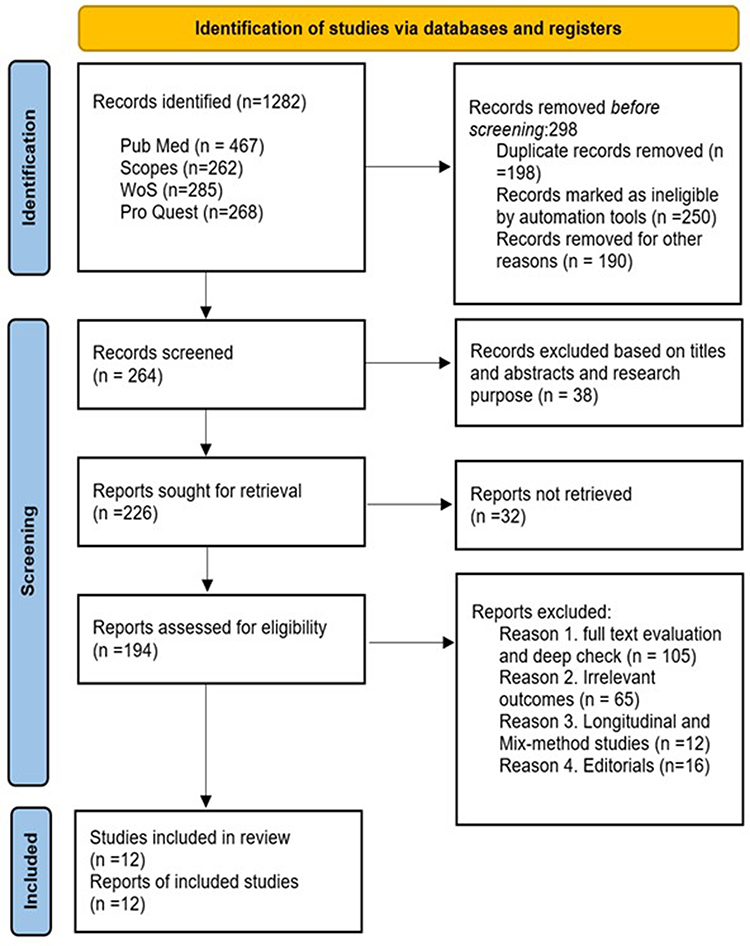 |
Figure 1 PRISMA 2020 flow diagram.33 |
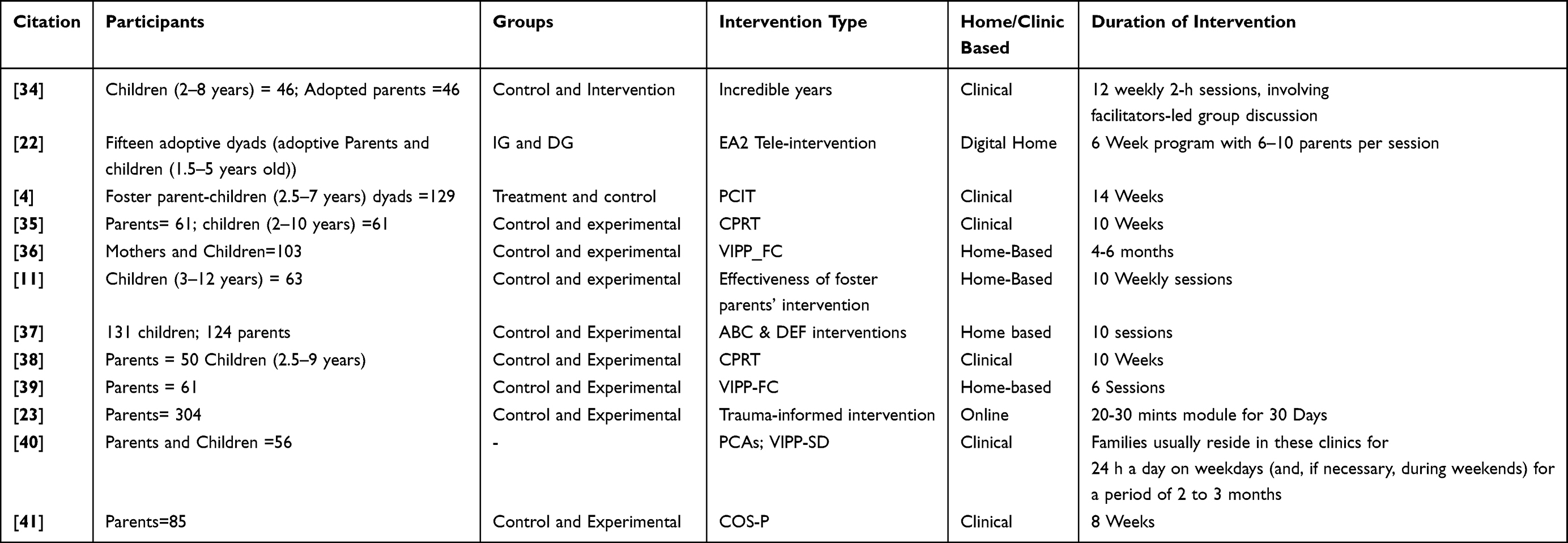 |
Table 2 Characteristics of Included Studies |
Effects of Attachment-Based Interventions on Child and Parent Outcomes
Psychosocial Adjustment of Children
The preliminary finding of the review synthesis is that ten studies examined the effect of attachment-based interventions on the overall psychosocial adjustment of foster and adopted children, as reported by their caregivers. The assessment tools included the Child Behavior Checklist (CBCL), the Strengths and Difficulties Questionnaire (SDQ), the Brief Infant–Toddler Social and Emotional Assessment (BITSEA), and the Eyberg Child Behavior Inventory (ECBI) (Table 3).
 |
Table 3 Impact of Attachment-Based Interventions on Child Outcomes |
Attachment Security
Three studies examined the effect of interventions on attachment security using independent observational measures, including the Strange Situation Procedure (SSP), the Attachment Q-Set, and the Emotional Availability Clinical Screener (See Table 4).
 |
Table 4 Effects of Attachment-Based Interventions on Parental Outcomes |
Positive Child Behavior
Four studies assessed changes in children’s positive behaviors through videotaped interactions using the Disruptive Behavior Diagnostic Observation Schedule (DB-DOS) and Emotional Availability Scales (EAS) (See Table 5).
 |
Table 5 Moderators Influencing Intervention Effectiveness |
Positive Parenting Behavior
Ten studies evaluated positive parenting behaviors post-intervention using observational methods, including the Adapted Ainsworth Sensitivity Scales (AASS), the Measurement of Empathy in Adult-Child Interaction, the Dyadic Parent-Child Interaction Coding System, the Reflective Functioning Scale, and the Emotional Availability Scales (EAS). Additionally, nine studies analyzed the effects of interventions on parenting stress using the Parenting Stress Index (PSI). In terms of depressive symptoms, three studies assessed self-reported depressive symptoms post-intervention using the Beck Depression Inventory (BDI) (See Table 6).
 |
Table 6 Effects of Interventions on Positive Parenting Behaviors, Parenting Stress, and Depressive Symptoms |
Discussion
Impact of Attachment-Based Interventions on Child Outcomes
Attachment-based interventions have had a significant impact on various child outcomes, including attachment security, psychosocial adjustment, externalizing and internalizing behaviors, and placement stability. Several studies provide compelling evidence regarding the effectiveness of these interventions:
Attachment Security and Emotional Availability: The profound impact of the EA2 tele-intervention22 and VIPP-FC/A36 cannot be overstated. These programs significantly bolstered parent-child emotional availability and attachment security, providing children with a crucial foundation for long-term relational stability, consistent with the recent literature evidence, which claims that attachment-focused video feedback interventions have a promising effect on adoptive parents and child attachment.42–44 However, it contradicts the study findings, which outline the delayed effect of VIPP-SD on externalizing problems.45 Subsequently, the limitations of COS-P,41 which failed to elicit substantial improvements in attachment, underscore that not all interventions achieve the same outcomes, in line with the recent finding of.5 This discrepancy raises critical questions: Do children need more than theoretical parental guidance? Would hands-on, interactive approaches like CPRT35 be universally more effective? These findings align with the meta-analysis conducted by,24 which found that attachment interventions were effective in improving parental sensitivity (d = 0.33) and infant attachment (d = 0.20), further emphasizing the potential for such interventions to enhance child-caregiver bonds. Besides improving social-emotional competence among internationally adopted children, the ABC intervention found strong support.37
Psychosocial Adjustment: Some interventions, particularly those integrating direct parental engagement, such as CPRT, demonstrated commendable success in improving children’s emotional regulation and social adaptability. Likewise, findings showed favorable outcomes for small groups of stressed parents while parenting their children.43 However, results from placement-based interventions25 highlight the moderating effect of institutional and pre-existing caregiving conditions. This suggests that while structured parenting programs foster emotional resilience, their efficacy may be constrained by external caregiving environments. Notably, the study found that while attachment-based interventions positively affected sensitive parenting, dysfunctional discipline, and behavior problems, they did not significantly impact attachment security.25 This suggests that psychosocial outcomes may be more responsive to intervention efforts than attachment security.
Externalizing and Internalizing Behaviors: The effectiveness of structured behavioral programs like PCIT4 and VIPP-SD20,40 in reducing aggression and disruptive behaviors is a testament to the value of evidence-based interventions, similar to early findings of PCIT treatment, which demonstrated significant improvement in positive parenting techniques and stress management of foster parents, along with external and internal concern regarding their children.21 However, the unexpected benefits of internalizing problems reported by40 challenge conventional assumptions about the specificity of interventions. Could it be that enhanced parental warmth and behavioral control indirectly address internalized distress? This insight aligns with findings from,20 who reported that VIPP-SD positively impacted sensitive parenting and socio-emotional child outcomes, reinforcing the notion that interventions targeting parent-child interactions can yield broader behavioral improvements beyond externalizing symptoms. However, the study found no significant benefits of using VIPP-SD in placement recommendations.40 The possible explanation is that the regular RAP assessment was already highly intensive, involving months of close observation and treatment, which allowed these therapists to form explicit judgments about the families’ capacities, thereby reducing the added impact of VIPP-SD.
Placement Stability: The long-term effects of attachment-based interventions on placement stability remain a matter of ongoing inquiry. The IY parenting program34 demonstrated notable improvements in foster parents’ coping skills, which are essential in maintaining stable placements. However, the study found no direct impact of VIPP-FC on placement decisions, indicating the complexity of determinants of placement stability.25 These findings contrast with the meta-analysis by,39 which found no significant effects on placement disruptions, highlighting the challenge of achieving long-term placement stability through short-term interventions. This divergence necessitates an integrated approach that combines behavioral training with systemic support, ensuring children receive immediate and sustained stability within foster and adoptive placements.1
Effect of Attachment-Based Interventions on Parental Outcomes
Parental outcomes, including stress reduction, decreased depressive symptoms, and improved parenting behaviors, have been a significant focus of attachment-based interventions. Nevertheless, many attachment-based interventions report benefits for caregivers, but the magnitude and consistency of these effects remain debatable.
Parenting Stress and Mental Health: The effectiveness of PCIT4 and VIPP-SD20 in reducing parental distress underscores their role in enhancing caregiver well-being.21 However, interventions like EA222 fell short of significantly alleviating parenting stress, suggesting that psychoeducational support alone may be insufficient. The limited success of COS-P41 further reinforces the need for interventions that blend theoretical knowledge with experiential learning. These findings are consistent with those of,25 who found that attachment-based interventions effectively reduced parenting stress but did not demonstrate superiority over other parenting programs, suggesting that multiple approaches may yield comparable results.
Parenting Behaviors and Emotional Availability: The success of CPRT38 and TBRI23 in fostering parental empathy and responsiveness highlights a crucial distinction: interventions that immerse parents in real-time interactions yield better results than those that rely solely on theoretical instruction. The effectiveness of video-feedback interventions such as VIPP-FC/A36 reinforces this idea, as they provide parents with tangible, actionable insights into their behavior. This finding is consistent with those of,20 who demonstrated significant improvements in parental sensitivity through video-feedback interventions, underscoring the effectiveness of this approach in altering parental behavior.
Depressive Symptoms: The impact of attachment-based interventions on parental mental health remains mixed,34 reported significant reductions in depressive symptoms among foster parents, highlighting the potential of structured interventions to enhance caregiver well-being. However, the limited success of COS-P41 in this domain suggests that some interventions may require additional psychological support components to be effective. These findings contrast with those of,27 who found that parent-infant psychotherapy did not significantly improve mental health outcomes compared to treatment-as-usual. This suggests that attachment-based approaches may need to be integrated with broader mental health interventions for optimal effect.
Moderators of Intervention Effectiveness
Contextual factors, including methodological approaches, delivery methods, child characteristics, and intervention duration significantly moderate the effectiveness of attachment-based interventions.
Research design: A critical examination of the literature reveals that study design and sample characteristics significantly influence reported outcomes of attachment-based interventions. Several studies employed randomized controlled trials (RCTs), which provide strong internal validity by reducing selection bias and enabling causal inference regarding the effects of interventions. For example,34 and22 utilized RCT designs to evaluate the efficacy of attachment-based programs, demonstrating significant improvements in parental sensitivity and child psychosocial outcomes. Similarly,36 and40 employed rigorous RCT methodologies to assess interventions such as Video-Feedback Intervention to Promote Positive Parenting (VIPP) and Parent-Child Interaction Therapy (PCIT), reporting consistent gains in caregiver responsiveness and reductions in child behavioral difficulties.
In contrast, quasi-experimental designs, such as those used by,4,37 and,23 offer practical advantages in real-world settings but are more vulnerable to confounding factors. These studies highlighted moderate improvements in attachment security and parenting behaviors, but the lack of randomization limits the ability to attribute outcomes solely to the intervention. Similarly, observational studies, such as38 and,25 provide valuable ecological validity but emphasize the need for cautious interpretation of causal effects.
Sample characteristics further shape intervention outcomes. Studies involving participants from lower socioeconomic backgrounds, such as those by40 and,41 suggest that systemic stressors, limited access to supportive resources, and chronic environmental instability can moderate the effectiveness of interventions. Additionally, the type and severity of trauma experienced by children—ranging from neglect to physical or sexual abuse—emerge as critical factors influencing responsiveness to interventions.35,36 Younger children and those with less complex trauma histories tend to show more immediate gains in attachment security. In contrast, older children or those with cumulative trauma may require longer, more intensive interventions to achieve comparable outcomes.
Collectively, these findings underscore the importance of considering both methodological rigor and participant characteristics in evaluating attachment-based interventions. As the discussion turns to how interventions are delivered, it is vital to examine the role that setting plays in shaping effectiveness, particularly when contrasting home-based and clinic-based models.
Intervention Type (Home-Based vs Clinic-Based): The setting of an intervention has a significant influence on its effectiveness in improving parent-child attachment and reducing parenting stress. Home-based interventions offer the advantage of a naturalistic environment where parents can immediately apply learned skills, whereas clinic-based interventions provide structured, expert-led guidance. Studies, such as those by,4 suggest that combining home-based Parent-Child Interaction Therapy (PCIT) with clinic-based support yields the best outcomes. However, research findings remain mixed on which setting is superior. A study found no clear evidence indicating whether home-based or clinic-based interventions were more beneficial overall, as results varied depending on whether parent or child outcomes were considered.10
One of the key issues in clinic-based interventions is high attrition rates. Many standard PCIT programs struggle with dropout rates, as parents may find it difficult to attend sessions regularly due to logistical or emotional barriers.34,35 This aligns with findings by46 and,47 which highlight that clinic-based programs often fail to retain participants long enough to achieve sustained improvements. In contrast, home-based interventions tend to have higher adherence rates since they eliminate travel barriers and integrate learning into daily routines. However, without the structured setting and real-time feedback provided in clinics, the effectiveness of these programs may vary depending on the caregivers’ level of engagement and self-discipline.10
A key advantage of home-based interventions is that they enable parents to practice attachment-enhancing techniques in real-life situations, thereby reinforcing behavioral changes more naturally,48 found that foster parents who participated in in-home PCIT reported significantly lower levels of parenting distress compared to those who received general in-home social support. This finding suggests that home-based interventions can be highly beneficial when they include structured training rather than relying solely on parental guidance (eg, COS-P), which has been associated with weaker effects. However, while home-based PCIT appears promising, clinic-based interventions may still be necessary for cases requiring intensive professional support, particularly for children with severe behavioral or attachment difficulties. These findings highlight the importance of combining structured training with naturalistic environments to maximize the impact of interventions. Considering the setting, it is also essential to examine child-specific factors, such as age at placement, to better understand the differential outcomes of interventions.
Child’s Age at Placement: The age at which a child is placed in a foster or adoptive home is a crucial factor influencing attachment-based intervention outcomes. Research consistently highlights that younger children demonstrate greater adaptability to new caregiving environments due to their heightened neural plasticity, which facilitates the formation of secure attachments.37 In contrast, older children, particularly those with histories of early adversity, often require more intensive and individualized interventions to experience similar benefits. The systematic review by10 highlights that attachment-based interventions are predominantly designed for younger children, raising uncertainty about their effectiveness for older age groups.
One of the main challenges with older children is their increased risk of insecure attachment and behavioral difficulties, which can complicate intervention efforts.49,50 These children often exhibit defensive attachment strategies developed as a response to early trauma and instability, making it harder for them to engage with traditional attachment-based programs. Studies such as those by41 and25 suggest that intervention efficacy diminishes with age, as older children exhibit fewer significant changes in attachment security compared to their younger counterparts. Similarly,10 found that the mean age of children in attachment intervention studies was 5.15 years, with most being placed in care at a relatively young age (mean of 2.31 years). This trend reflects a research bias toward younger children, leaving a gap in understanding how to best support older children in forming secure attachments. Despite these findings, some studies suggest that intervention success is not solely dependent on age but also on the quality and intensity of engagement. This nuanced view leads to further consideration of how intervention duration interacts with developmental and contextual factors to influence outcomes.
Duration of Intervention: The duration of an intervention plays a crucial role in determining its effectiveness, particularly in fostering attachment security and psychosocial adjustment in foster and adoptive families. Research suggests that while the quality and intensity of interventions are critical, the duration of time parents and children spend in structured therapeutic sessions significantly influences the depth of behavioral and relational changes.20,34 Longer interventions enable more stable improvements in parental sensitivity and child attachment security, offering sustained opportunities for consistent, supportive interactions. In contrast, short-term interventions may yield immediate but less durable effects, particularly for children with complex trauma histories.10
One of the key advantages of longer interventions is the time they allow for skill development and reinforcement. Parenting programs often focus on improving parental responsiveness, emotional attunement, and discipline strategies, which require practice and feedback to integrate into daily parenting practices34 fully. A more extended intervention period offers caregivers more opportunities to refine and apply these skills consistently. On the other hand, shorter interventions may not provide sufficient time for these changes to solidify, potentially leading to regression once the program ends. A study found that the mean intervention period across eight studies was 9.69 weeks, ranging from 1 to 12.5 weeks, indicating substantial variation in the length of interventions. While even brief interventions can be beneficial, extended durations may be more effective in ensuring that improvements are made over time.10 Another important consideration is the risk of early termination effects. Short-term interventions may initiate positive changes but fail to sustain them if the intervention does not last long enough for new behaviors to become habitual. Some studies suggest that shorter interventions can increase parental sensitivity in the short run, but more extended programs foster lasting improvements in parent-child relationships.20 Additionally, individual variability in response to interventions further complicates the question of optimal duration. Children with more severe attachment disruptions or histories of neglect may require more extended intervention periods to show measurable progress, while others may benefit from shorter, more intensive programs.10
While short-term interventions offer practical benefits, such as being more accessible and easier to implement at scale, their long-term impact remains uncertain. Extended interventions, by contrast, may be better positioned to reinforce positive parenting behaviors and prevent regression over time. However, a balance must be struck between duration, intensity, and engagement to maximize effectiveness. Future research should investigate how intervention lengths impact long-term outcomes and how program content and family characteristics interact with duration to influence efficacy. A nuanced approach that allows flexibility in intervention length may be the most effective strategy for supporting diverse families and ensuring sustained positive outcomes in foster and adoptive parent-child relationships.
Conclusion
Attachment-based interventions demonstrate the effectiveness of structured, evidence-based strategies in improving outcomes for children and caregivers. Their effectiveness in enhancing attachment security, reducing behavioral problems, and supporting parental well-being is well documented. However, outcomes vary depending on the intervention format, child characteristics, and program design. Structured behavioral programs such as PCIT and VIPP-SD often show stronger results than psychoeducational models like COS-P. This highlights the value of experiential, interactive, and feedback-driven approaches.
Despite these advances, key gaps remain. Future research should prioritize longitudinal studies to determine whether improvements in attachment security, psychosocial adjustment, and placement stability are sustained over time. It is also critical to explore how systemic supports, caregiver stress, cultural contexts, and trauma histories affect intervention outcomes. Comparative and integrative studies should examine attachment-based and non-attachment approaches, such as cognitive-behavioral, behavioral, or trauma-informed interventions. This can help find complementary strategies for the challenges faced by foster and adoptive families. In policy and practice, the findings suggest integrating attachment-based interventions into training programs, providing ongoing support and supervision, and tailoring interventions to meet the specific needs of both children and their families. A more integrated approach, combining attachment-based models with behavioral or trauma-informed practices, may optimize outcomes by addressing emotional, behavioral, and relational needs at once. Emphasizing rigor, long-term follow-up, and practical implementation will help the field create interventions that are both effective and sustainable. Ultimately, this fosters stable, nurturing environments for children in foster and adoptive care.
Policy Implications
The findings of this review highlight the need for comprehensive policies that enhance the effectiveness of attachment-based interventions in foster and adoptive care. One of the most critical areas for policy development is the provision of structured and mandatory training programs for foster and adoptive parents. Many caregivers lack the necessary skills to support children who have experienced trauma, disrupted attachments, and behavioral difficulties. Implementing training programs that emphasize attachment-based caregiving can significantly improve parent-child relationships and foster stability within the home environment. Moreover, policies should consider the attachment histories of prospective foster parents. Assessing whether caregivers have experienced secure attachment in their own lives can help identify potential challenges in providing stable, nurturing care. If a foster parent has unresolved attachment difficulties, additional support or preparatory interventions may be necessary to ensure they can effectively foster secure relationships with children in their care.
Integrating mental health support into the foster care system is also crucial. Many foster and adoptive parents experience high levels of stress, which can impact their ability to provide stable and nurturing care. Policies should ensure that mental health services, including counseling and therapeutic interventions, are easily accessible to both children and caregivers. Addressing caregiver stress and well-being is crucial in preventing placement breakdowns and ensuring that children receive the necessary support. Furthermore, intervention programs should be tailored to meet the unique needs of each child and family rather than following a one-size-fits-all model. Children in foster and adoptive care have diverse backgrounds, trauma histories, and developmental needs, requiring flexible intervention strategies that consider factors such as the child’s age at placement, pre-existing attachment difficulties, and the level of caregiver experience. Policies should support the implementation of adaptable intervention models that cater to these varying needs, thereby maximizing their effectiveness.
Another crucial policy consideration is the establishment of long-term support mechanisms for foster and adoptive families. Many attachment-based interventions are designed as short-term programs, but the benefits may diminish over time without continued guidance and reinforcement. Policymakers should prioritize the development of follow-up services, support groups, and periodic reassessments to ensure that the positive effects of interventions are sustained. Ultimately, fostering greater collaboration among child welfare agencies, mental health professionals, and educational institutions is crucial for delivering comprehensive care. Policies should encourage inter-agency partnerships to streamline support services, ensuring that children and caregivers receive coordinated assistance. By strengthening collaboration and creating a well-integrated support system, policymakers can enhance the overall well-being of children in alternative care and improve the success of attachment-based interventions.
Data Sharing Statement
Data is provided within the tables of this manuscript.
Acknowledgment
We would like to thank Dr, Makhabbat Berkutbayeva and Dr. Nurgaliyeva Dolores Abildaevna from the Department of Pedagogy and Educational Management in Faculty of Philosophy and Political Science at the Al-Farabi Kazakh National University, Almaty, Republic of Kazakhstan for their extensive support and resources they provide to meet the highest standard quality of this systematic review.
Author Contributions
All authors made a significant contribution to the work reported, whether that is in the conception, study design, execution, acquisition of data, analysis and interpretation, or in all these areas; took part in drafting, revising or critically reviewing the article; gave final approval of the version to be published; have agreed on the journal to which the article has been submitted; and agree to be accountable for all aspects of the work.
Funding
Major Bidding Project of the 2022 Shenzhen “14th Five-Year” Plan for Education Science (zdzb22012) Shenzhen Science and Technology InnovationBureau Project (20220811005233001). Special Project on Moral Education of the 2023 Guangdong Provincial Education Science Planning (2023JKDY037) General Project of the 2024 Guangdong Provincial Philosophy and Social Sciences Planning (GD24CJY26).
Disclosure
The authors declare no potential conflicts of interest in this work.
References
1. Kaasbøll J, Lassemo E, Paulsen V, Melby L, Osborg SO. Foster parents’ needs, perceptions and satisfaction with foster parent training: a systematic literature review. Child Youth Services Rev. 2019;101:33–41.
2. Buzhardt J, Heitzman-Powell L. Field evaluation of an online foster parent training system. J Educ Technol Syst. 2006;34(3):297–316. doi:10.2190/2P1F-WHC2-6QQE-EBLC
3. Whenan R, Oxlad M, Lushington K. Factors associated with foster carer well-being, satisfaction and intention to continue providing out-of-home care. Child Youth Services Rev. 2009;31(7):752–760.
4. Carnky JP, Topitzes J, Janczewski CE, McNeil CB. Enhancing foster parent training with parent-child interaction therapy: evidence from a randomized field experiment. J Soc Social Work Res. 2015;6(4):591–616. doi:10.1086/684123
5. Pereira M, Sedes L, Gadéa E, Shankland R. Enhancing foster care relationships through attachment-based intervention: the safe families study protocol, a randomized controlled trial of the circle of security parenting program®. BMC Psychol. 2025;13(1):1–13. doi:10.1186/s40359-025-02424-6
6. Cooley ME, Petren RE. Foster parent perceptions of competency: implications for foster parent training. Child Youth Services Rev. 2011;33(10):1968–1974. doi:10.1016/j.childyouth.2011.05.023
7. Palacios J, Rolock N, Selwyn J, Barbosa-Ducharne M. Adoption breakdown: Concept, research, and implications. Res Soc Work Pract. 2019;29(2):130–142. doi:10.1177/1049731518783852
8. Juffer F, Van Ijzendoorn MH. Behavior problems and mental health referrals of international adoptees: A meta-analysis. JAMA. 2005;293(20):2501–2515. doi:10.1001/jama.293.20.2501
9. Cooley ME, Thompson HM, Newell E. Examining the influence of social support on the relationship between child behavior problems and foster parent satisfaction and challenges. In: Child & Youth Care Forum. Vol. 48. Springer US; 2019: 289–303.
10. Dalgaard NT, Filges T, Viinholt BC, Pontoppidan M. Parenting interventions to support parent/child attachment and psychosocial adjustment in foster and adoptive parents and children: a systematic review. Campbell Syst Rev. 2022;18(1):e1209.
11. Vanderfaeillie J, Goemans A, Damen H, Van Holen F, Pijnenburg H. Foster care placement breakdown in the Netherlands and Flanders: Prevalence, precursors, and associated factors. Child Family Soc Work. 2018;23(3):337–345.
12. White L, Delaney R, Pacifici C, Nelson C, Dickinson SL, Golzarri-Arroyo L. Understanding and parenting children’s noncompliant behavior: the efficacy of an online training workshop for resource parents. Child Youth Services Rev. 2019;99:246–256.
13. Bowlby J. Clinical Applications of Attachment: A Secure Base. Routledge; 1988.
14. Diamond GS, Russon J, Levy S. Attachment-Based Family Therapy. In: Encyclopedia of Couple and Family Therapy. 2019: 177–184.
15. Dozier M, Stoval KC, Albus KE, Bates B. Attachment for infants in foster care: the role of caregiver state of mind. Child Dev. 2001;72(5):1467–1477.
16. Dozier M, Bernard K, Roben CK, Steele H, Steele M. Attachment and biobehavioral catch-up. In: Handbook of Attachment-Based Interventions. 2017: 27–49.
17. Cassibba R, Coppola G, Costantino E. The video-feedback intervention to promote positive parenting (VIPP): strategy, application and effectiveness. Attaccamento and Sistemi Complessi. 2014;1(1):45–63.
18. McNeil CB, Hembree-Kigin TL, Anhalt K. Parent-Child Interaction Therapy. 2010.
19. Yarger HA, Bernard K, Caron EB, Wallin A, Dozier M. Enhancing parenting quality for young children adopted internationally: results of a randomized controlled trial. J Clin Child Adolesc Psychol. 2020;49(3):378–390. doi:10.1080/15374416.2018.1547972
20. Juffer F, Bakermans‐Kranenburg MJ, van IJzendoorn MH. Pairing attachment theory and social learning theory in video‐feedback intervention to promote positive parenting. Curr Opin Psychol. 2017;15:189–194. doi:10.1016/j.copsyc.2017.03.012
21. Allen B, Timmer SG, Urquiza AJ. Parent–child interaction therapy as an attachment-based intervention: theoretical rationale and pilot data with adopted children. Child Youth Services Rev. 2014;47:334–341. doi:10.1016/j.childyouth.2014.10.009
22. Baker M, Biringen Z, Meyer‐Parsons B, Schneider A. Emotional attachment and emotional availability tele‐intervention for adoptive families. Infant Ment Health J. 2015;36(2):179–192. doi:10.1002/imhj.21498
23. Razuri EB, Hiles Howard AR, Parris SR, et al. Decrease in behavioral problems and trauma symptoms among at-risk adopted children following web-based trauma-informed parent training intervention. J Evid Inf Soc Work. 2016;13(2):165–178.
24. Bakermans-Kranenburg MJ, Van Ijzendoorn MH, Juffer F. Less is more: meta-analyses of sensitivity and attachment interventions in early childhood. Psychol Bull. 2003;129(2):195.
25. Schoemaker NK, Juffer F, Rippe RC, et al. Positive parenting in foster care: Testing the effectiveness of a video-feedback intervention program on foster parents’ behavior and attitudes. Child Youth Services Rev. 2020;110:104779. doi:10.1016/j.childyouth.2020.104779
26. Kerr L, Cossar J. Attachment interventions with foster and adoptive parents: a systematic review. Child Abuse Rev. 2014;23(6):426–439. doi:10.1002/car.2313
27. Barlow J, Bennett C, Midgley N, Larkin SK, Wei Y. Parent–infant psychotherapy for improving parental and infant mental health. BJPsych Adv. 2017;23(4):216. doi:10.1192/apt.23.4.216
28. Lochman JE, Boxmeyer CL, Kassing FL, Powell NP, Stromeyer SL. Cognitive behavioral intervention for youth at risk for conduct problems: future directions. J Clin Child Adolesc Psychol. 2019;48(5):799–810. doi:10.1080/15374416.2019.1567349
29. Sanders MR. The Triple P system of evidence-based parenting support: past, present, and future directions. Clin Child Fam Psychol Rev. 2023;26(4):880–903.
30. Leijten P, Gardner F, Melendez-Torres G, et al. What to teach parents to reduce disruptive child behavior: two meta-analyses of parenting program components. J Am Acad Child Adolesc Psychiatry. 2018;58(2).
31. Forehand R, Parent J, Sonuga-Barke E, Peisch VD, Long N, Abikoff HB. Which type of parent training works best for preschoolers with comorbid ADHD and ODD? A secondary analysis of a randomized controlled trial comparing generic and specialized programs. J Abnorm Child Psychol. 2016;44(8):1503–1513.
32. Wilson DB, Olaghere A, Kimbrell CS. Trauma-Focused Interventions for Justice-Involved and at-Risk Youth: A Meta-Analysis. US Department of Justice Office of Justice Programs; 2018.
33. Page MJ, McKenzie JE, Bossuyt PM, et al. The PRISMA 2020 statement: an updated guideline for reporting systematic reviews. BMJ. 2021;372.
34. Bywater T, Hutchings J, Linck P, et al. Incredible Years parent training support for foster carers in Wales: a multi‐centre feasibility study. Child Care Health Dev. 2011;37(2):233–243.
35. Carnes‐Holt K, Bratton SC. The efficacy of child parent relationship therapy for adopted children with attachment disruptions. J Couns Dev. 2014;92(3):328–337. doi:10.1002/j.1556-6676.2014.00160.x
36. Barone L, Ozturk Y, Lionetti F. The key role of positive parenting and children’s temperament in post‐institutionalized children’s socio‐emotional adjustment after adoption placement. A RCT study. Soc Develop. 2019;28(1):136–151. doi:10.1111/sode.12329
37. Lind T, Raby KL, Goldstein A, et al. Improving social–emotional competence in internationally adopted children with the attachment and biobehavioral catch-up intervention. Dev Psychopathol. 2021;33(3):957–969. doi:10.1017/S0954579420000255
38. Opiola KK, Bratton SC. The efficacy of child parent relationship therapy for adoptive families: A replication study. J Couns Dev. 2018;96(2):155–166. doi:10.1002/jcad.12189
39. Schoemaker NK, Wentholt WG, Goemans A, Vermeer HJ, Juffer F, Alink LR. A meta-analytic review of parenting interventions in foster care and adoption. Dev Psychopathol. 2020;32(3):1149–1172. doi:10.1017/S0954579419000798
40. Van der Asdonk S, de Haan WD, van Berkel SR, et al. Effectiveness of an attachment‐based intervention for the assessment of parenting capacities in maltreating families: a randomized controlled trial. Infant Ment Health J. 2020;41(6):821–835. doi:10.1002/imhj.21874
41. Zimmer-Gembeck MJ, Rudolph J, Edwards EJ, et al. The circle of security parenting program (COS-P): a randomized controlled trial of a low intensity, individualized attachment-based program with at-risk caregivers. Behav Ther. 2022;53(2):208–223. doi:10.1016/j.beth.2021.07.003
42. Turner F, Kainth G, MacDonald S, O’Connor R, Crawford K, Minnis H. I will commit to this child as much as I can for the time that they are with me:” A qualitative examination of how foster carer commitment relates to short-term foster care for young children following abuse and neglect: child Abuse and neglect. Child Abuse Neglect. 2023;135:105983.
43. Harris-Waller J, Granger C, Hussain M. Psychological interventions for adoptive parents: a systematic review. Adopt Foster. 2018;42(1):6–21.
44. Van Ijzendoorn MH, Schuengel C, Wang Q, Bakermans-Kranenburg MJ. Improving parenting, child attachment, and externalizing behaviors: meta-analysis of the first 25 randomized controlled trials on the effects of video-feedback intervention to promote positive parenting and sensitive discipline. Dev psychopathol. 2023;35(1):241–256. doi:10.1017/S0954579421001462
45. Van Zeijl J, Mesman J, Van IJzendoorn MH, et al. Attachment-based intervention for enhancing sensitive discipline in mothers of 1- to 3-year-old children at risk for externalizing behavior problems: a randomized controlled trial. J Consult Clin Psychol. 2006;74(6):994–1005. doi:10.1037/0022-006X.74.6.994
46. Fernandez MA, Eyberg SM. Predicting treatment and follow-up attrition in parent–child interaction therapy. J Abnorm Child Psychol. 2009;37(3):431–441. doi:10.1007/s10802-008-9281-1
47. Werba BE, Eyberg SM, Boggs SR, Algina J. Predicting outcome in parent-child interaction therapy: Success and attrition. Behav Modif. 2006;30(5):618–646. doi:10.1177/0145445504272977
48. Timmer SG, Zebell NM, Culver MA, Urquiza AJ. Efficacy of adjunct in-home coaching to improve outcomes in parent—child interaction therapy. Res Soc Work Pract. 2010;20(1):36–45. doi:10.1177/1049731509332842
49. Oosterman M, Schuengel C, Slot NW, Bullens RA, Doreleijers TA. Disruptions in foster care: a review and meta-analysis. Child Youth Services Rev. 2007;29(1):53–76. doi:10.1016/j.childyouth.2006.07.003
50. Van den Dries L, Juffer F, Van Ijzendoorn MH, Bakermans-Kranenburg MJ. Fostering security? A meta-analysis of attachment in adopted children. Child Youth Services Rev. 2009;31(3):410–421. doi:10.1016/j.childyouth.2008.09.008
 © 2025 The Author(s). This work is published and licensed by Dove Medical Press Limited. The
full terms of this license are available at https://www.dovepress.com/terms
and incorporate the Creative Commons Attribution
- Non Commercial (unported, 4.0) License.
By accessing the work you hereby accept the Terms. Non-commercial uses of the work are permitted
without any further permission from Dove Medical Press Limited, provided the work is properly
attributed. For permission for commercial use of this work, please see paragraphs 4.2 and 5 of our Terms.
© 2025 The Author(s). This work is published and licensed by Dove Medical Press Limited. The
full terms of this license are available at https://www.dovepress.com/terms
and incorporate the Creative Commons Attribution
- Non Commercial (unported, 4.0) License.
By accessing the work you hereby accept the Terms. Non-commercial uses of the work are permitted
without any further permission from Dove Medical Press Limited, provided the work is properly
attributed. For permission for commercial use of this work, please see paragraphs 4.2 and 5 of our Terms.