
Back to Journals » Psychology Research and Behavior Management » Volume 19
Associations Between Maladaptive Personality Traits and Parenting Styles Among Chinese Adolescents: A Latent Profile and Response Surface Analysis
Authors Dong S  , Tang S , Lu H, Yan Y
Received 1 May 2026
Accepted for publication 11 July 2026
Published 22 July 2026 Volume 2026:19 619094
DOI https://doi.org/10.2147/PRBM.S619094
Checked for plagiarism Yes
Review by Single anonymous peer review
Peer reviewer comments 2
Editor who approved publication: Prof. Dr. Bao-Liang Zhong
Shenghong Dong,1 Shenglan Tang,2,3 Huihui Lu,1,4 Yuzhi Yan1
1School of Psychology, Jiangxi Normal University, Nanchang, Jiangxi, People’s Republic of China; 2School of Education, Jiangxi Normal University, Nanchang, Jiangxi, People’s Republic of China; 3School of International Business, Jiangxi Vocational University of Foreign Studies, Nanchang, Jiangxi, People’s Republic of China; 4Shaxi Primary School, Shenzhen, Guangdong, People’s Republic of China
Correspondence: Shenghong Dong, School of Psychology, Jiangxi Normal University, Nanchang, Jiangxi, People’s Republic of China, Email [email protected]
Background: Maladaptive personality traits are closely associated with psychological pathology. Adolescence represents a critical period in personality development, making it important to identify these traits and their contextual correlates.
Methods: A cross-sectional survey was conducted in November 2025. Participants were adolescents recruited through convenience sampling from five secondary schools in Jiangxi Province, China. A total of 1,027 students completed online questionnaires. Maladaptive personality traits were assessed using the Brief Version of the Dimensional Personality Symptom Item Pool (DIPSI-B), and parenting styles were measured using the Chinese revision of the short-form Egna Minnen av Barndoms Uppfostran (s-EMBU-C). Latent profile analysis was conducted in Mplus 8.3 to identify personality trait configurations, and response surface analysis in SPSS 26.0 and an Excel macro examined the effects of parenting styles and parental (in)congruence.
Results: Five profiles were identified: flexible adaptation, general adaptation, maladaptation with internalizing problems, maladaptation with externalizing problems, and severe maladaptation. Multinomial logistic regression showed that maternal rejection was consistently associated with all maladaptive profiles, whereas paternal rejection was primarily associated with the severe maladaptation profile. Age and gender also showed significant associations with profile membership. Response surface analysis further revealed that congruent high rejection and overprotection were linearly associated with higher maladaptive personality traits, while congruent high emotional warmth was associated with lower trait levels. Discrepancies in emotional warmth and overprotection, regardless of direction, were linked to elevated maladaptive personality traits, whereas discrepancies in rejection were not significant beyond overall rejection levels.
Conclusion: Distinct latent subtypes of maladaptive personality traits exist among adolescents. Parenting styles and parental (in)congruence showed meaningful associations with maladaptive personality traits. These findings highlight adolescent trait heterogeneity and the relevance of both parenting styles and parental (in)congruence when understanding adolescent personality development, and provide implications for targeted prevention and intervention efforts.
Keywords: maladaptive personality traits, adolescents, parenting styles, parental congruence, latent profile analysis, response surface analysis
Introduction
Adolescent mental health has become a major global public health concern. Recent estimates indicate that approximately 234 million adolescents aged 10–19 worldwide experience mental disorders.1 Maladaptive personality traits are closely associated with a wide range of psychological symptoms and are considered important precursors of personality disorders.2,3 Accumulating evidence suggests that features of personality pathology often emerge during childhood and adolescence.4 Identifying personality-related vulnerabilities in early adolescence is therefore critical for the development of preventive mental health strategies. However, most existing research has focused on adult populations, with comparatively limited attention to adolescents.5,6 In particular, little is known about the internal structure of maladaptive personality traits and their underlying risk-associated mechanisms among Chinese adolescents. Whether maladaptive personality traits exhibit heterogeneity in this population, and how contextual factors operate across different levels of maladaptive personality traits, remains insufficiently explored. Clarifying these issues may enhance population-level risk-associated stratification and inform precision prevention strategies.
Maladaptive Personality Traits
Maladaptive personality traits are closely related to general personality traits and are conceptualized as extreme variants of general personality dimensions.7 They refer to enduring trait patterns that hinder effective adaptation to the environment.8,9 The symptoms manifested by maladaptive personality traits are considered precursors of the persistent maladaptive patterns of behavior, cognition, and affect characteristic of adult Axis II personality disorders.10 From a developmental psychopathology perspective, adolescence represents a particularly sensitive developmental period.11 During this stage, personality structures become increasingly differentiated and relatively stable, yet remain malleable and sensitive to environmental influences,5 underscoring their value as early risk-associated indicators. Previous research has shown that adolescent maladaptive personality traits are associated with a range of adverse outcomes, including depression, anxiety, behavioral problems, interpersonal dysfunction,12–14 and subsequent personality disorders.15 Thus, maladaptive personality traits in adolescence reflect not only current psychological risk-association but also potential developmental trajectories.
Within the dimensional framework of contemporary personality pathology, increasing attention has been devoted to examining configurations of maladaptive personality traits to better capture the heterogeneity of personality pathology.16,17 Both the DSM-5 Alternative Model for Personality Disorders (AMPD) and the ICD-11 trait-domain framework conceptualize personality pathology using multiple maladaptive personality traits.2,18 Individuals can therefore be characterized by their overall patterns of maladaptive traits, which have been shown to differentiate personality functioning, clinical presentation, and disorder severity.19,20 Developmental psychopathology further emphasizes heterogeneity in developmental pathways, suggesting that individuals may follow distinct trajectories toward or away from maladaptive outcomes.21,22 However, previous research has primarily examined maladaptive personality traits from a variable-centered perspective, focusing on trait levels and their associations with other variables.3,23 Such approaches overlook heterogeneity within the population. In contrast, person-centered approaches emphasize individual differences and classify individuals into latent groups characterized by minimal within-group differences and maximal between-group differences.24 This approach has gained increasing acceptance in personality research25,26 and aligns with the heterogeneity assumption of developmental psychopathology,27 facilitating risk-associated stratification at the population level.28 Despite growing interest in adolescent personality pathology, there remain gaps in research in this field, in particular, empirical evidence on latent classes of maladaptive personality traits among Chinese adolescents remains limited. Accordingly, we propose H1: Maladaptive personality traits in Chinese adolescents are heterogeneous, and multiple distinct latent classes characterized by different trait configurations can be identified.
Maladaptive Personality Traits and Parenting Styles
The family constitutes a central developmental context for adolescents.29 Parenting styles refer to relatively stable patterns of parental behaviors and attitudes displayed during child-rearing,30 which encompass dimensions such as rejection, emotional warmth, and overprotection.31 Parenting styles are strongly associated with adolescents’ mental health and personality development.32,33 Prior studies have shown that parental rejection, harsh discipline, and overcontrol are consistently associated with adolescent psychological problems.34 Negative parenting styles are also closely linked to personality disorder symptoms in adulthood.35 In contrast, parental warmth and emotional support are associated with better emotional regulation and lower levels of psychopathology in offspring.36 However, the evidence above primarily focuses on general psychological symptoms; the specific roles of each parenting dimension on maladaptive personality traits remain to be analyzed in further depth.
Different parenting styles do not have the same associations with personality-related vulnerabilities. Attachment theory suggests that early parent-child interactions shape an individual’s internal working models of self and others, which serve as a crucial foundation for personality organization.37 Through criticism, hostility, and emotional distancing, parental rejection may convey messages that devalue the relationship, threatening the individual’s sense of attachment security and potentially leading to negative self-representations and expectations of distrust in relationships.38 Interpersonal Acceptance-Rejection Theory further emphasizes that perceived rejection is significantly associated with emotional and personality problems across different cultural contexts, and its effects are relatively widespread and stable.39 In contrast, overprotection primarily restricts autonomous exploration,40 and its effects may depend heavily on developmental stage and individual characteristics,41 rather than directly undermining attachment security.42 Although emotional warmth promotes positive adaptation,43 given that maladaptive personality traits have a strong temperamental basis, the association between these traits and warmth may not necessarily follow a simple linear relationship.44
Furthermore, these associations may be further influenced by sociocultural contexts. In many Chinese families, socialization goals often emphasize academic achievement, adherence to behavioral norms, and fulfillment of family obligations,45 which may intensify parental supervision and control and influence adolescents’ interpretations of rejection or overprotection.46 At the same time, due to differences in parental role division and parent-child interaction patterns within the family,47 the predictive strength or direction of paternal and maternal influences on the same personality subtype may not necessarily align. Therefore, examining only the linear effects of parenting styles on a single continuous personality variable may obscure their differentiated roles within multidimensional personality configurations.48 Thus, this study proposes Hypothesis 2: Parenting styles are significantly associated with the latent categories of maladaptive personality traits in adolescents, and the associated patterns of the same parenting style differ between parents.
Parental (In) Congruence in Parenting Styles and Adolescent Maladaptive Personality Traits
Family Systems Theory emphasizes that adolescent development is shaped by the combined patterns of both parents’ parenting styles.49 Previous research has typically examined parenting styles as a composite construct or focused on either fathers or mothers separately, without considering their joint effects.50 Parental discrepancies in parenting styles may also be related to child development. Compared to congruent parenting, discrepancies have been associated with poorer psychological adjustment,51 and larger discrepancies have been linked to increased internalizing and externalizing problems.52 However, findings remain mixed. The discrepancy effects hypothesis proposes both a discrepancy–maladjustment and a discrepancy–adaptation hypothesis.53 When discrepancies reflect maladaptive family processes, they may contribute to internalizing and externalizing problems;54 when they reflect adaptive differentiation, they may not necessarily result in negative outcomes. Methodologically, most studies have relied on simple difference scores or group comparisons, which are insufficient to capture complex patterns such as high–high congruence, low–low congruence, or asymmetric discrepancies.55 Moreover, existing research has primarily focused on symptoms such as depression or suicidal ideation,56,57 with limited attention to maladaptive personality traits, which represent more stable vulnerability markers.58,59 The present study employs polynomial regression with response surface analysis to simultaneously estimate the main, quadratic, and interaction effects of paternal and maternal parenting styles. This approach allows for a refined examination of congruence and discrepancy hypotheses and provides three-dimensional visualizations of the associations between parental configurations and adolescent maladaptive personality traits.55 Accordingly, we propose H3: Along the congruence dimension, higher levels of rejection, higher levels of overprotection, and lower levels of emotional warmth will be positively associated with maladaptive personality traits. Along the discrepancy dimension, parental discrepancies in parenting styles will be associated with adolescent maladaptive personality traits, potentially exhibiting nonlinear discrepancy effects.
The Present Study
This study aims to: (a) Identify latent subtypes of maladaptive personality traits among adolescents; (b) Examine differentiated associations between parenting styles (rejection, emotional warmth, and overprotection) and membership in different latent categories; (c) Assess patterns of consistency and discrepancy in parenting styles, and explore the structural associations between parenting styles configurations and levels of maladaptive personality traits. At the theoretical level, this study integrates developmental psychopathology with family systems theory to propose an integrative analytical perspective. It links parenting styles to maladaptive personality traits in adolescents while incorporating both individual heterogeneity and family system coherence as key dimensions, thereby expanding multilevel understanding of the parenting-trait relationship. At the practical level, the findings provide empirical guidance for maladaptive personality traits identification and stratified support strategies in family contexts, and offer implications for family-oriented approaches to promoting adolescent mental health and facilitating early intervention.
Materials and Methods
Research Design
This study employed a cross-sectional design to examine the associations between maladaptive personality traits and parenting styles among Chinese adolescents. A person-centered approach (latent profile analysis) was used to identify distinct configurations of maladaptive personality traits, while a variable-centered approach (response surface analysis) was applied to examine the joint and congruence effects of maternal and paternal parenting styles. The integration of these analytic strategies allowed for a comprehensive understanding of both heterogeneity in adolescent personality traits and the combined association of parental behaviors within the developmental context of adolescence.
Participants and Procedures
This study used convenience sampling approach and conducted a cross-sectional survey in November 2025. Participants were students from five secondary schools in Jiangxi Province, China, selected based on accessibility and cooperation with the research team. Online questionnaires were administered at the class level via the Wenjuanxing survey platform. This study was conducted in accordance with the ethical principles of the Declaration of Helsinki and was approved by the Institutional Review Board of the School of Psychology, Jiangxi Normal University (Approval No. IRB–JXNU–PSY–2025045). Information about the study purpose, procedures, data usage, and confidentiality was provided to students and their legal guardians prior to data collection. Participation was voluntary. Written informed consent was obtained from the legal guardians of all participating adolescents, and assent was obtained from the adolescents themselves. Teachers were also informed and agreed to the study procedures. Inclusion criteria were as follows: (a) currently enrolled Chinese adolescents aged 12–18 years, (b) adequate cognitive and comprehension abilities, and (c) voluntary participation in the study. Exclusion criteria included: (a) diagnosis of severe organic illness or psychiatric disorders, (b) students who were transferring schools, on leave of absence, or had withdrawn from school, and (c) inability to understand the questionnaire. A total of 1,155 questionnaires were initially collected. After excluding invalid responses (eg, excessively short or long completion times, patterned responding), 1,027 valid questionnaires were retained, yielding a valid response rate of 88.92%. The final sample (Mage = 14.233, SD = 1.345) consisted of 535 boys and 492 girls. Regarding residential background, 476 participants were from urban areas, and 551 were from rural areas.
Measurement
The Brief Version of the Dimensional Personality Symptom Item Pool (DIPSI-B)
The DIPSI-B, developed by De Clercq et al and simplified by Rouco et al, is an instrument for measuring maladaptive personality traits in children and adolescents.10,60 The DIPSI-B comprises 98 items across 31 facets and is structured into five broader higher-order personality domains: disagreeableness, emotional instability, introversion, compulsivity, and oddity. Items are scored using a 5-point Likert scale ranging from 1 (strongly disagree) to 5 (strongly agree), with higher scores indicating more pronounced maladaptive traits. The original English version was translated into Chinese using a translation–back-translation procedure. The scale was first translated into Chinese by two doctoral students in psychology. The Chinese version was then back-translated into English by a psychology doctoral student and an English teacher, both of whom were blind to the original scale. Discrepancies between the original and back-translated versions were discussed and resolved by the research team to ensure conceptual and semantic equivalence. 11 middle school students aged 12 to 15 were invited to attempt all the items and mark those they did not understand. The translated version was further reviewed by the research team to ensure cultural appropriateness and comprehensibility for Chinese adolescents. To assess the construct validity and gender measurement invariance of the DIPSI-B, we followed the analytical approach consistent with Rouco.60 First, we analyzed the 31 facets using exploratory structural equation modeling (ESEM) with Geomin oblique rotation. The model fit was good: χ2/df = 2.442, CFI = 0.941, TLI = 0.914, RMSEA = 0.037, SRMR = 0.027, supporting the construct validity of the Chinese version. Furthermore, multiple-group confirmatory factor analysis (MG-CFA) was conducted at the 31-facet level to sequentially test configural invariance, metric invariance, and scale invariance across gender.60 The results indicated that all 31 facets supported configural invariance and scale invariance (ΔCFI ≥ −0.01), with 30 facets supporting metric invariance; the sole exception was Lack of empathy (ΔCFI = −0.0216). These findings are consistent with the initial DIPSI-B validation study, which established measurement invariance across genders in a community sample.60 In this study, McDonald’s ω coefficients for the disagreeableness, emotional instability, introversion, compulsivity, and oddity domains of the scale were 0.940, 0.939, 0.861, 0.869, and 0.878, respectively. The overall McDonald’s ω coefficient for the scale was 0.974.
Revision of the Short-Form Egna Minnen Av Barndoms Uppfostran for Chinese (s-EMBU-C)
This study employed the Chinese version of the Short-form Egna Minnen av Barndoms Uppfostran developed by Arrindell et al and revised by Jiang et al.31,61 The scale has demonstrated satisfactory psychometric properties in previous Chinese samples.62,63 This scale comprises two versions for paternal and maternal parenting, each containing 21 items. It categorizes parental styles into three types: rejection, emotional warmth, and overprotection. Rejection refers to hostile, harsh, and punitive parenting practices; emotional warmth denotes parental emotional acceptance and support; overprotection signifies excessive interference, strict control, and micromanagement of the child. The scale employs a 4-point Likert scale ranging from 1 (Never) to 4 (Always). In this study, McDonald’s ω coefficients for the father subscale’s dimensions of rejection, emotional warmth, and overprotection were 0.879, 0.905, and 0.745, respectively, while the McDonald’s ω coefficients for the maternal subscale were 0.879, 0.905, and 0.746, respectively. The overall McDonald’s ω coefficients for the paternal and maternal subscales were 0.884 and 0.889, respectively.
Data Analysis
Statistical Tools and Methods
SPSS 26.0 was employed for data preprocessing, descriptive statistics, correlation analysis, multinomial logistic regression analysis, and polynomial regression analysis. Mplus 8.3 was used for latent profile, ESEM, and MG-CFA analysis. An Excel macro program was used to calculate response surface curve parameters based on polynomial regression; OriginPro 2024 was utilized to plot the corresponding surface curves.55,64 Harman’s single-factor test was conducted to assess common method bias.65,66
Latent Profile Analysis
This study employed the standardized scores of 31 facets of adolescent maladaptive personality traits as indicators. Adolescents were sequentially categorized into 2 to 6 types for model fitting estimation and comparison through latent profile analysis. Starting with two categories, the number of categories was incrementally increased. Models were estimated using MIXTURE. Model selection was performed by comparing fit indices across categories to determine the optimal classification scheme.67 Key fit indices considered for model selection included: AIC, BIC, aBIC, LMR-LRT, BLRT, and Entropy.68–70 Among these, smaller values of the information criteria AIC, BIC, and aBIC indicate better model fit, with BIC considered the most robust among them.71 Likelihood ratio tests (LMR-LRT and BLRT) require statistical significance (p < 0.05) to demonstrate that the kth category model is significantly superior to the (k-1) th category model;72 The Entropy index serves as a measure of classification accuracy. Values closer to 1 indicate higher accuracy, with values above 0.80 indicating good classification precision.73 Additionally, when selecting categories, both the practical significance of the classification and the sample size within each category must be considered.71
Response Surface Analysis Method Based on Polynomial Regression
To capture linear and nonlinear effects of parental concordance and discrepancy in three parenting dimensions on adolescents’ maladaptive personality traits, while avoiding information loss inherent in simple difference scores. A response surface analysis method based on polynomial regression was employed. Following the recommendations of Shanock,55 the study adopted the following analytical steps: (1) The independent variables—paternal rejection (XPR), maternal rejection (YMR), paternal emotional warmth (XPEW), maternal emotional warmth (YMEW), paternal overprotection (XPO), and maternal overprotection (YMO) were centered to mitigate multicollinearity effects; (2) Three sets of polynomial regression equations were constructed with adolescents’ maladaptive personality traits (ZAMPT) as the dependent variable. The squared terms and interaction terms of the two centered independent variables, along with the centered independent variables, were included in the regression equations, and regression coefficients b1–b5 were calculated. The equation was formulated as follows:  , where X represents XPR, XPEW, or XPO, and Y represents YMR, YMEW, or YMO. (3) Response surface curve parameters a1–a4 were calculated for each group based on the polynomial regression coefficients and performed significance tests. The linear slope a1 (
 ) and nonlinear curvature a2 (
 ) provide information on how bilateral congruence affects the dependent variable, while the linear slope a3 (
 ) and nonlinear curvature a4 (
 ) reveal how bilateral incongruence influences the dependent variable.64
Results
Common Method Bias
Common method bias (CMB) was assessed using two approaches. First, Harman’s single-factor test showed that the first unrotated factor accounted for 18.99% of the variance, below the commonly used 40% threshold.66 Then, a single-factor CFA was further conducted using Mplus, and the model fit was poor (χ2 = 78,842.122, df = 9590, CFI = 0.286, TLI = 0.276, RMSEA = 0.084, SRMR = 0.088), suggesting that a single common factor cannot explain the covariance among all items.65 Therefore, these results suggest that common method variance was unlikely to substantially bias the findings.
Descriptive Statistics and Correlation Analysis
To explore the relationships between adolescents’ maladaptive personality traits and different parenting styles, Pearson correlation analysis was conducted on the relevant variables. Results (Figure 1) indicate that adolescents’ maladaptive personality traits, paternal rejection, maternal rejection, paternal overprotection, and maternal overprotection all exhibit pairwise positive correlations (r = 0.266–0.758). Paternal and maternal emotional warmth showed negative correlations with paternal rejection, maternal rejection, and maladaptive personality traits (r = −0.428 to −0.195). Paternal emotional warmth was positively correlated with paternal overprotection (r = 0.139) but showed no significant correlation with maternal overprotection. Maternal emotional warmth showed positive correlations with paternal overprotection (r = 0.062) and maternal overprotection (r = 0.102). Close relationships exist among these variables.
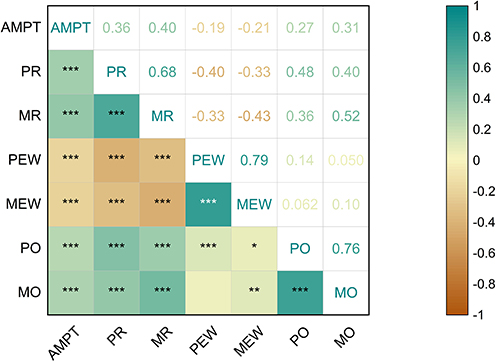 |
Figure 1 Correlation Analysis Results for Various Variables. Abbreviations: PR, Paternal Rejection; MR, Maternal Rejection; PEW, Paternal Emotional Warmth; MEW, Maternal Emotional Warmth; PO, Paternal Overprotection; MO, Maternal Overprotection. Notes: *p < 0.05; **p < 0.01; ***p < 0.001. |
Latent Profile Analysis Results of Maladaptive Personality Traits in Adolescents
Latent Profile Classification Results
As shown in Table 1, as the number of classification categories increases, fit indices such as AIC, BIC, and aBIC gradually decrease. Entropy values ranged from 0.917 to 0.955, indicating good classification accuracy. However, for the 6-category solution, the LMR p-value is 0.719, exceeding 0.05, and one category accounts for only 3.116% of the sample, rendering it practically insignificant. Additionally, BIC exhibited a decreasing trend across categories 2 to 5 but showed no marked decline at 6 categories (Figure 2). Comparatively, the 5-category model yielded relatively smaller AIC, BIC, and aBIC values, with entropy exceeding 0.90. Both the LMR and BLRT reached statistical significance (p < 0.05), and each of the five categories accounted for over 10% of the sample. Therefore, the 5-category solution was retained as the final model. For the 5-category solution, the mean posterior probabilities for membership in each latent category were 0.964, 0.940, 0.940, 0.934, and 0.971, respectively, indicating high classification accuracy and confirming the high reliability of the 5-category model.
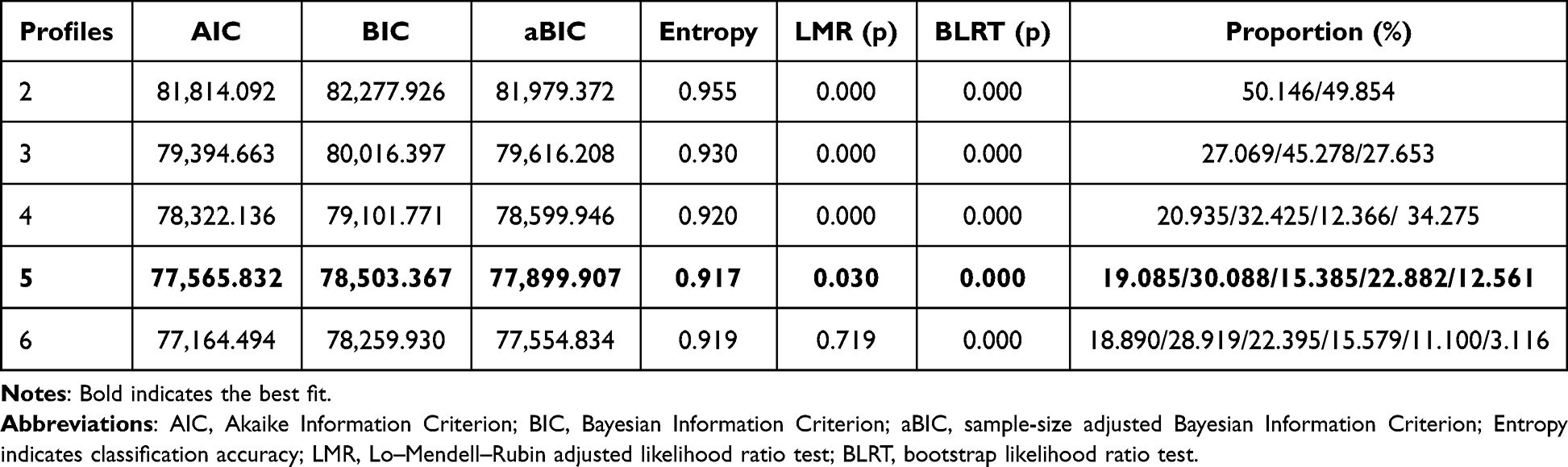 |
Table 1 Information on the Fit of the Latent Profile for Different Classes (n = 1027) |
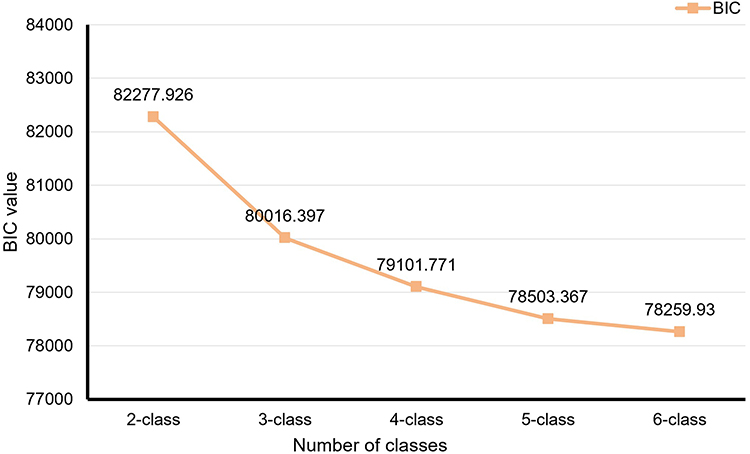 |
Figure 2 BIC values for different classes. |
To facilitate clearer comparisons and theoretical interpretations of different potential categories, Table 2 presents the standardized means for the five profiles across 31 facets, while Figure 3 illustrates the overall patterns of each profile across the facets of maladaptive personality traits in adolescents. Category 1 exhibited consistently low levels across all 31 facets (mostly below −0.80 standard deviations), demonstrating low levels of maladaptive traits. Importantly, this pattern is not merely a relative deviation from the sample mean, but indicates a broad absence of maladaptive tendencies across multiple domains, suggesting a highly resourceful and resilient functioning style. Therefore, it is labeled the flexible adaptation type. The scores of Category 2 on each dimension were concentrated around the sample mean (approximately −0.40 to 0 standard deviations), reflecting a level of personality functioning within the normative range rather than a state of significant advantage or risk. Accordingly, this type represents a general level of developmental adaptation and is labeled the general adaptation type. Although both categories exhibit low levels of maladaptive traits, the former demonstrates broader and more stable low-risk characteristics, while the latter is closer to the population average. Both Category 3 and Category 4 exhibit maladaptive characteristics, but there are significant differences in their structural composition. Category 3 shows significantly elevated scores on dimensions related to emotional instability, particularly in anxious traits, lack of self-confidence, ineffective coping, and depressive traits, while scoring relatively low in the disagreeableness domain. This characteristic structure, centered on internal emotional distress, aligns with the typical pattern of internalizing problems and is labeled maladaptation with internalizing problems. In contrast, Category 4 scored higher in the disagreeableness domain, particularly in dimensions such as hyperexpressive traits, dominance-egocentrism, narcissistic traits, and resistance, while showing only a mild elevation on the emotional instability dimension. This pattern, characterized by interpersonal conflict and behavioral disorders, is more consistent with the structural features of externalizing problems and is therefore labeled maladaptation with externalizing problems. The differences between the two categories are reflected not only in severity but also in the directional differences of maladaptive traits. Category 5 showed significant elevations across nearly all facets (with multiple facets exceeding 1 standard deviation), exhibiting broad, cross-domain maladaptive characteristics. Unlike the domain-specific elevations observed in Categories 3 and 4, this category exhibited a diffuse personality pathology structure encompassing multiple domains, including irritable-aggressive traits, affective lability, lack of self-confidence, depressive traits, and extreme fantasy. It has the lowest overall level of adaptation and is therefore labeled the severe maladaptation type. In summary, the five latent categories exhibited clear and theoretically meaningful distinctions in their structural patterns, supporting Hypothesis 1.
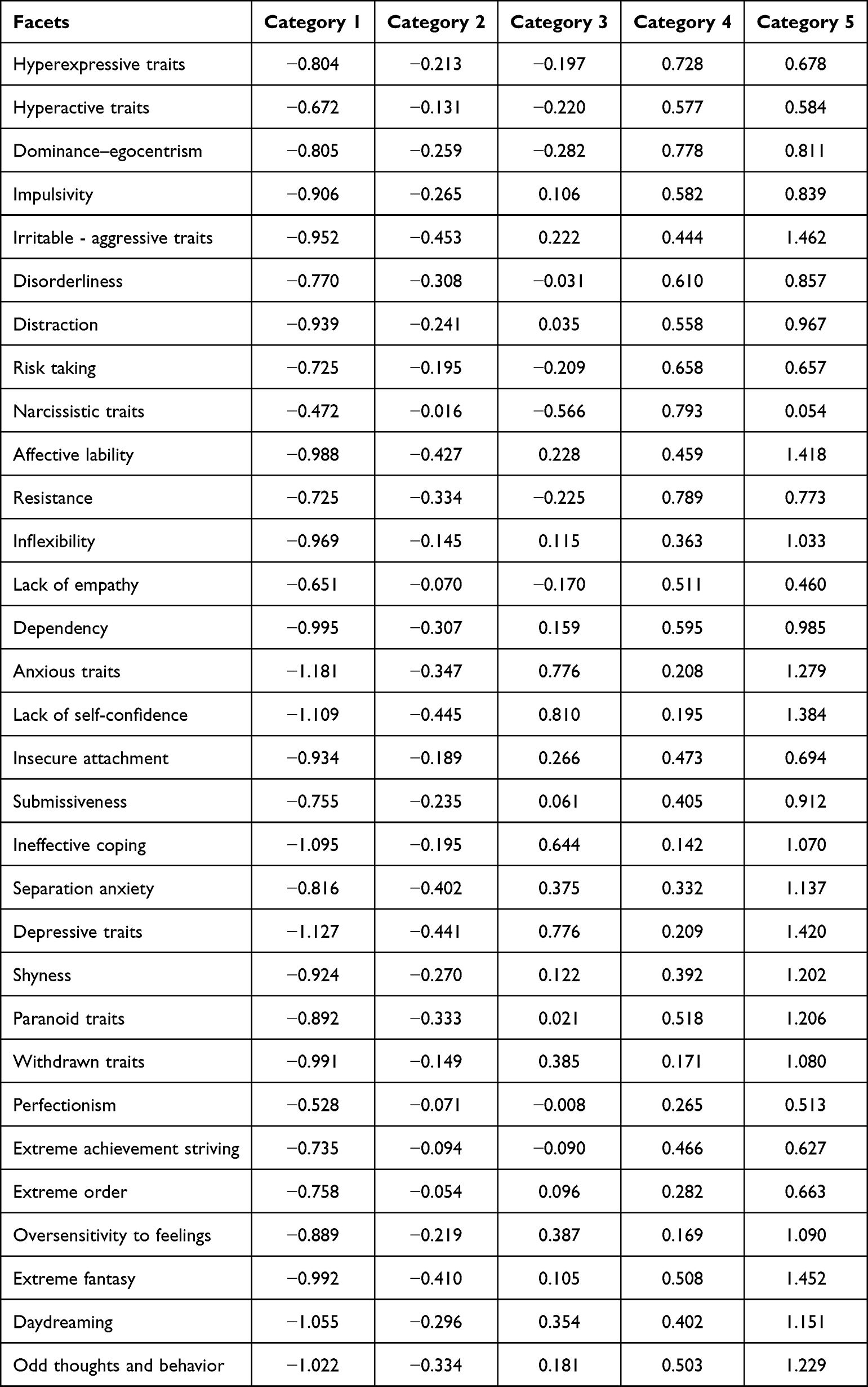 |
Table 2 Standardized Means of the 31 DIPSI-B Facets Across Latent Profiles |
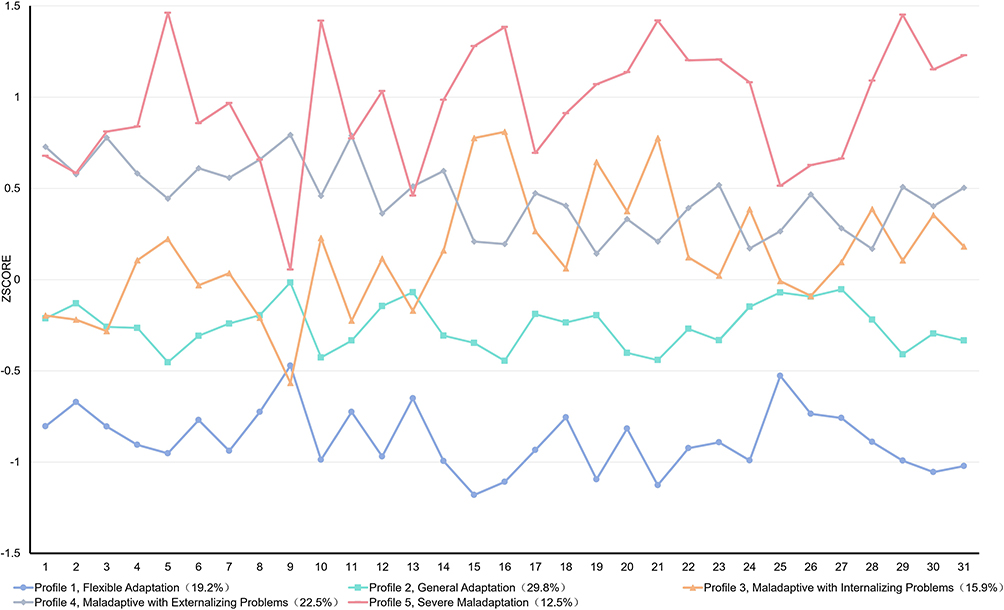 |
Figure 3 Latent profiles of maladaptive personality traits in adolescents. Notes: 1: Hyperexpressive traits; 2: Hyperactive traits; 3: Dominance - egocentrism; 4: Impulsivity; 5: Irritable - aggressive traits; 6: Disorderliness; 7: Distraction; 8: Risk taking; 9: Narcissistic traits; 10: Affective lability; 11: Resistance; 12: Inflexibility; 13: Lack of empathy; 14: Dependency; 15: Anxious traits; 16: Lack of self-confidence; 17: Insecure attachment; 18: Submissiveness; 19: Ineffective coping; 20: Separation anxiety; 21: Depressive traits; 22: Shyness; 23: Paranoid traits; 24: Withdrawn traits; 25: Perfectionism; 26: Extreme achievement striving; 27: Extreme order; 28: Oversensitivity to feelings; 29: Extreme fantasy; 30: Daydreaming; 31: Odd thoughts and behavior. Domains: 1–12: Disagreeableness; 13–21: Emotional instability; 22–24: Introversion; 25–27: Compulsivity; 28–31: Oddity. |
Results of Multinomial Logistic Regression Analysis
Based on the latent profile analysis, multinomial logistic regression was conducted to further examine the factors associated with adolescents’ maladaptive personality profile membership. Specifically, paternal and maternal rejection, emotional warmth, and overprotection were entered as predictor variables, while adolescents’ age, gender, and family residential location (urban/rural) were included as covariates to control for potential confounding effects. The flexible adaptation group was specified as the reference category. Table 3 presents the results of the multinomial logistic regression analyses.
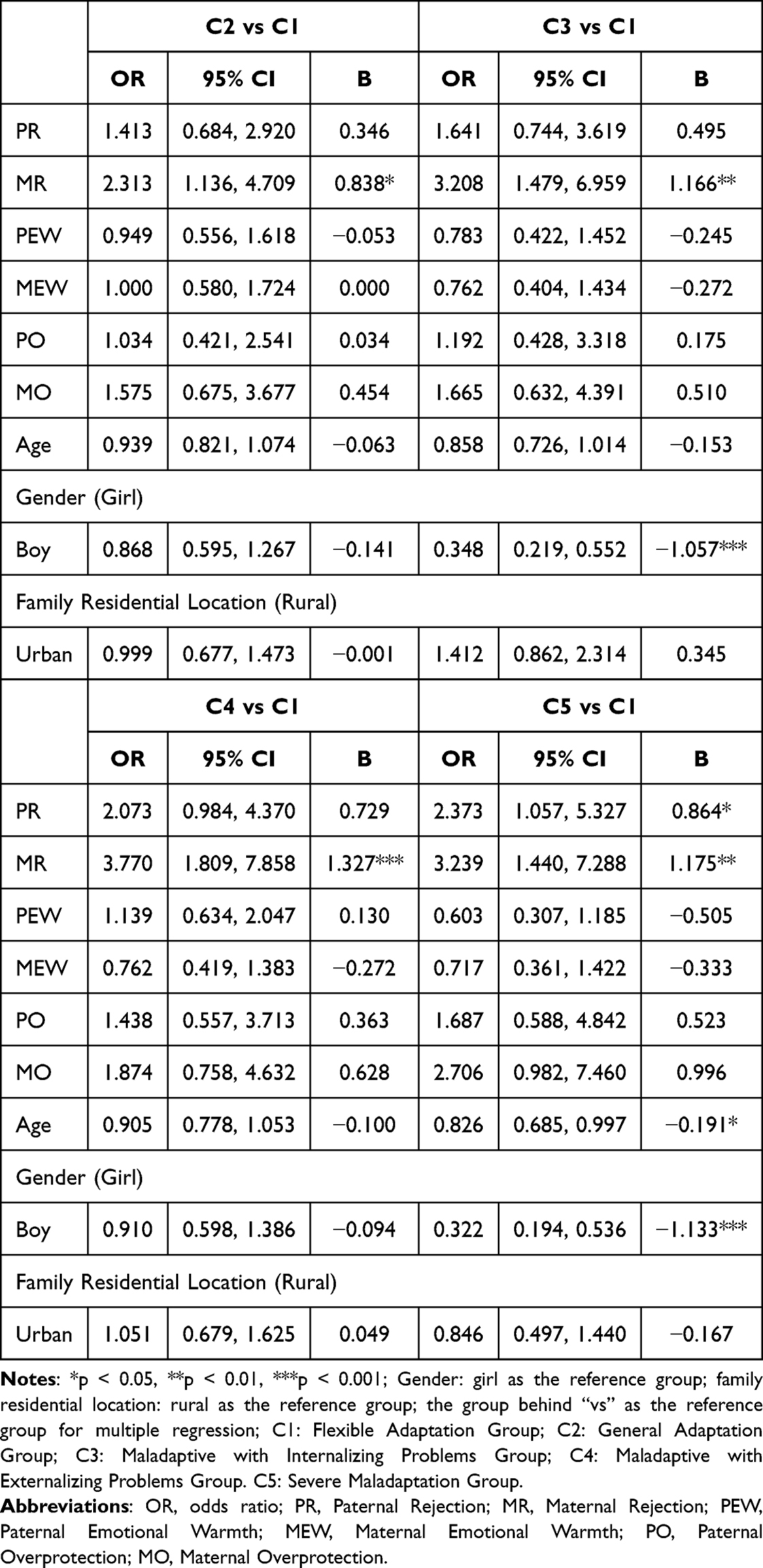 |
Table 3 Multinomial Logistic Regression Coefficients and Odds Ratios |
The results indicated that, in the rejection dimension, maternal rejection was significantly associated with subtype membership after controlling for age, gender, and residential area. Compared with the flexible adaptation group, maternal rejection significantly increased the likelihood of being classified into all other subtypes: the general adaptation group (OR = 2.313, 95% CI [1.136, 4.709], p = 0.021), the internalizing group (OR = 3.208, 95% CI [1.479, 6.959], p = 0.003), the externalizing group (OR = 3.770, 95% CI [1.809, 7.858], p < 0.001), and the severe maladaptation group (OR = 3.239, 95% CI [1.440, 7.288], p = 0.004). These findings indicate that higher levels of maternal rejection were consistently associated with elevated maladaptive personality across all subtypes. Paternal rejection showed a more limited related pattern. It significantly increased the likelihood of belonging to the severe maladaptation group (OR = 2.373, 95% CI [1.057, 5.327], p = 0.036), while its association with the externalizing group approached significance (OR = 2.073, 95% CI [0.984, 4.370], p = 0.055). No significant effects were observed for the general adaptation or internalizing subtypes. Overall, the rejection dimension demonstrated that maternal rejection exerted a broader and more stable association, whereas paternal rejection was primarily associated with the most severe subtype.
In the emotional warmth and overprotection dimensions, neither paternal nor maternal emotional warmth significantly related to subtype membership in the adjusted model. None of the subtype comparisons reached statistical significance. Similarly, paternal overprotection did not significantly relate to subtype membership. Maternal overprotection showed a marginal association with the severe maladaptation group (C5; OR = 2.706, 95% CI [0.982, 7.460], p = 0.054), whereas no significant effects were observed for the other subtypes. Thus, emotional warmth and overprotection did not demonstrate stable independent association across maladaptive personality subtypes in the adjusted model.
Regarding demographic covariates, gender was significantly associated with membership in the internalizing group (C3; OR = 0.348, 95% CI [0.219, 0.552], p < 0.001) and the severe maladaptation group (C5; OR = 0.322, 95% CI [0.194, 0.536], p < 0.001), indicating that girls were more likely than boys to belong to these subtypes. Age was significantly associated with membership in the severe maladaptation group (C5; OR = 0.826, 95% CI [0.685, 0.997], p = 0.047), suggesting that younger adolescents had higher odds of belonging to this subtype. Residential area was not significantly associated with subtype membership in any comparison.
Thus, Hypothesis 2 was partially supported.
Polynomial Regression and Response Surface Analysis Results
Although multiple logistic regression analyses have revealed the independent roles of various dimensions of parenting styles in predicting affiliation with different subtypes of maladaptive personality traits, this method primarily focuses on the main effects of variables and struggles to elucidate the matching structure between parental parenting styles or the combined effects of their consistency or inconsistency on adolescents’ maladaptive personality traits. Therefore, response surface analysis was further employed to examine the relationship between patterns of parental consistency and inconsistency and levels of maladaptive personality traits.
Descriptive Statistics of Parental Style Mismatch
Prior to conducting the quadratic response surface regression analysis, it is essential to confirm that a difference exists between the two predictor variables and to determine the direction of this difference.55 First, the three dimensions of parental parenting styles were converted into standard scores. Next, the inconsistent group was defined as cases where the father’s standard score was either 0.5 standard deviations higher or lower than the mother’s, while the consistent group included cases where the difference was within 0.5 standard deviations.74 The proportions of inconsistent samples across the three dimensions were 29.3%, 23.9%, and 29.6%, all exceeding 10%. This indicates that inconsistencies between parents in parenting styles do occur, justifying the subsequent polynomial regression analysis.
The Associations Between Different Parenting Styles and Adolescents’ Maladaptive Personality Traits
Polynomial regression and response surface analyses were conducted for the three dimensions of parenting styles. For the rejection dimension, paternal rejection was plotted on the X-axis, and maternal rejection on the Y-axis. For the warmth dimension, paternal warmth was plotted on the X-axis, and maternal warmth on the Y-axis. For the overprotection dimension, paternal overprotection was plotted on the X-axis, and maternal overprotection on the Y-axis. Adolescents’ maladaptive personality traits served as the Z-axis for all three models. The VIF values ranged from 1.862 to 4.064 in the rejection dimension, from 2.667 to 4.602 in the emotional warmth dimension, and from 2.351 to 4.537 in the overprotection dimension. All VIF values were below 5, indicating that multicollinearity was not a serious concern.75
For the rejection dimension (Table 4), along the line of congruence (PR = MR), the linear slope was positive and significant (a1 = 0.507, p < 0.001), and the curvature was negative and significant (a2 = −0.090, p < 0.05). This pattern indicates that when paternal and maternal rejection increased simultaneously, adolescents’ maladaptive personality traits increased accordingly. The significant negative curvature suggests that this positive association became slightly attenuated at higher levels of rejection, reflecting a diminishing rate of increase. As illustrated in Figure 4, adolescents reported lower maladaptive personality traits under the low–low rejection condition and higher levels under the high–high rejection condition. Along the line of incongruence (PR = −MR), neither the linear slope (a3) nor the curvature (a4) was significant. This suggests that discrepancies between paternal and maternal rejection were not significantly associated with maladaptive personality traits beyond the overall level of rejection.
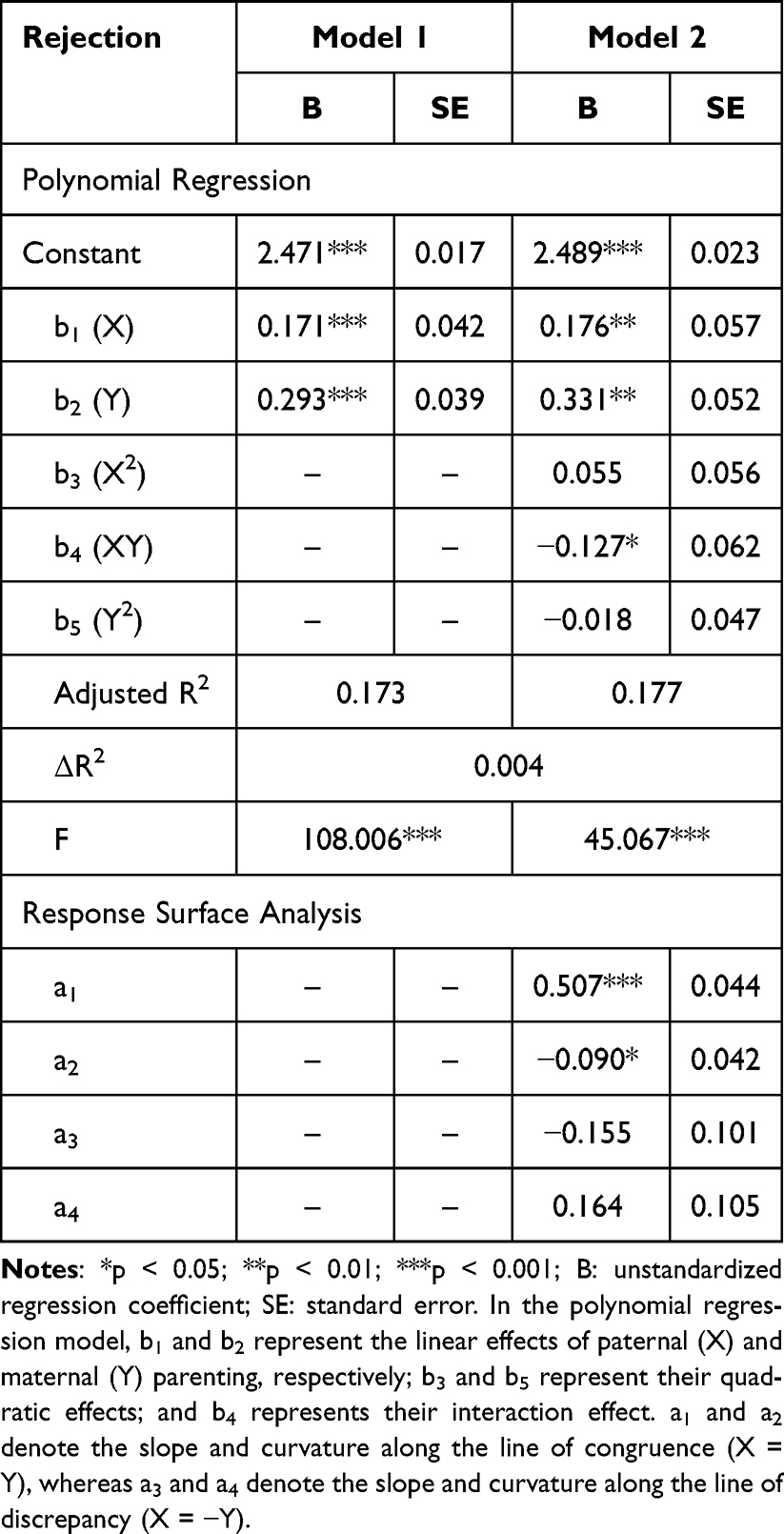 |
Table 4 Results of Polynomial Regression and Response Surface Analysis on the Relationship Between Parental Rejection and Adolescent Maladaptive Traits |
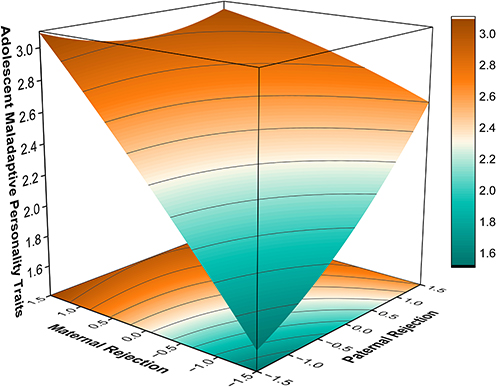 |
Figure 4 Response surface diagrams of parental rejection on adolescents’ maladaptive personality traits. |
For emotional warmth (Table 5), along the line of congruence (PEW = MEW), the linear slope was significantly negative (a1 = −0.190, p < 0.001), whereas the curvature was not significant (a2 = 0.008, p > 0.05). This indicates a negative linear association between congruent parental emotional warmth and adolescents’ maladaptive personality traits. As both paternal and maternal emotional warmth increased, adolescents tended to report lower levels of maladaptive personality traits. Conversely, the low–low warmth condition was associated with higher maladaptive traits compared to the high–high warmth condition (Figure 5). Along the line of incongruence (PEW = −MEW), the linear slope (a3) was not significant, whereas the curvature was positive and significant (a4 = 0.394, p < 0.001). This pattern suggests that discrepancies between paternal and maternal emotional warmth were associated with maladaptive personality traits in a nonlinear manner. Specifically, greater divergence between parents’ levels of emotional warmth was related to higher maladaptive personality traits, regardless of which parent reported higher warmth. This indicates that the magnitude of the discrepancy, rather than its direction, was associated with adolescents’ maladaptive personality traits.
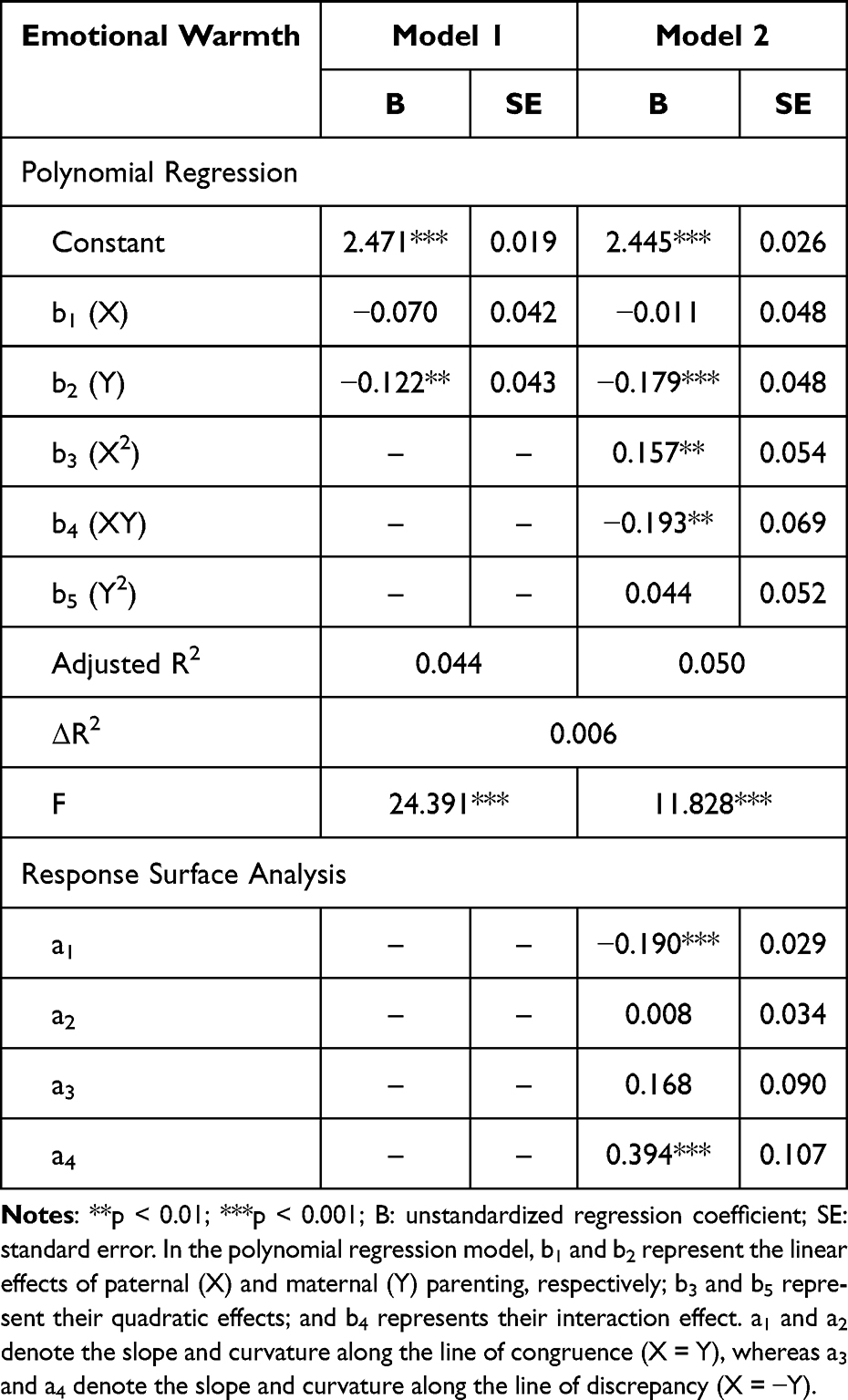 |
Table 5 Results of Polynomial Regression and Response Surface Analysis on the Relationship Between Parental Emotional Warmth and Adolescent Maladaptive Traits |
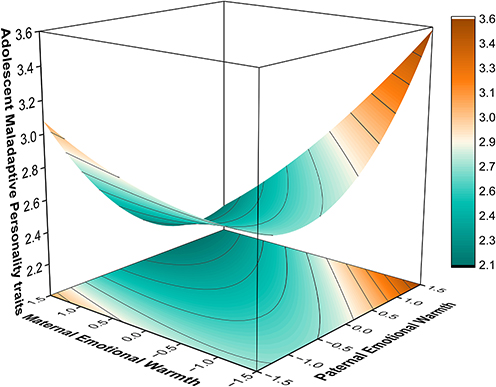 |
Figure 5 Response surface diagrams of parental emotional warmth on adolescents’ maladaptive personality traits. |
For overprotection (Table 6), along the line of congruence (PO = MO), the linear slope was positive and significant (a1 = 0.412, p < 0.001), while the curvature was not significant (a2 = −0.019, p > 0.05). This indicates a positive linear association between congruent parental overprotection and adolescents’ maladaptive personality traits. Adolescents exposed to high–high overprotection reported higher maladaptive personality traits compared to those in the low–low overprotection condition (Figure 6). Along the line of incongruence (PO = −MO), the slope was not significant (a3 = −0.086, p > 0.05), whereas the curvature was positive and significant (a4 = 1.294, p < 0.001). This pattern suggests a nonlinear association under discrepant parental overprotection. Adolescents whose parents exhibited greater differences in overprotection (one parent high and the other low) tended to report higher maladaptive personality traits compared to those whose parents demonstrated similar levels of overprotection. The direction of the discrepancy (father higher vs mother higher) was not significantly associated with differences in maladaptive personality traits. Overall, the findings partially confirm Hypothesis 3.
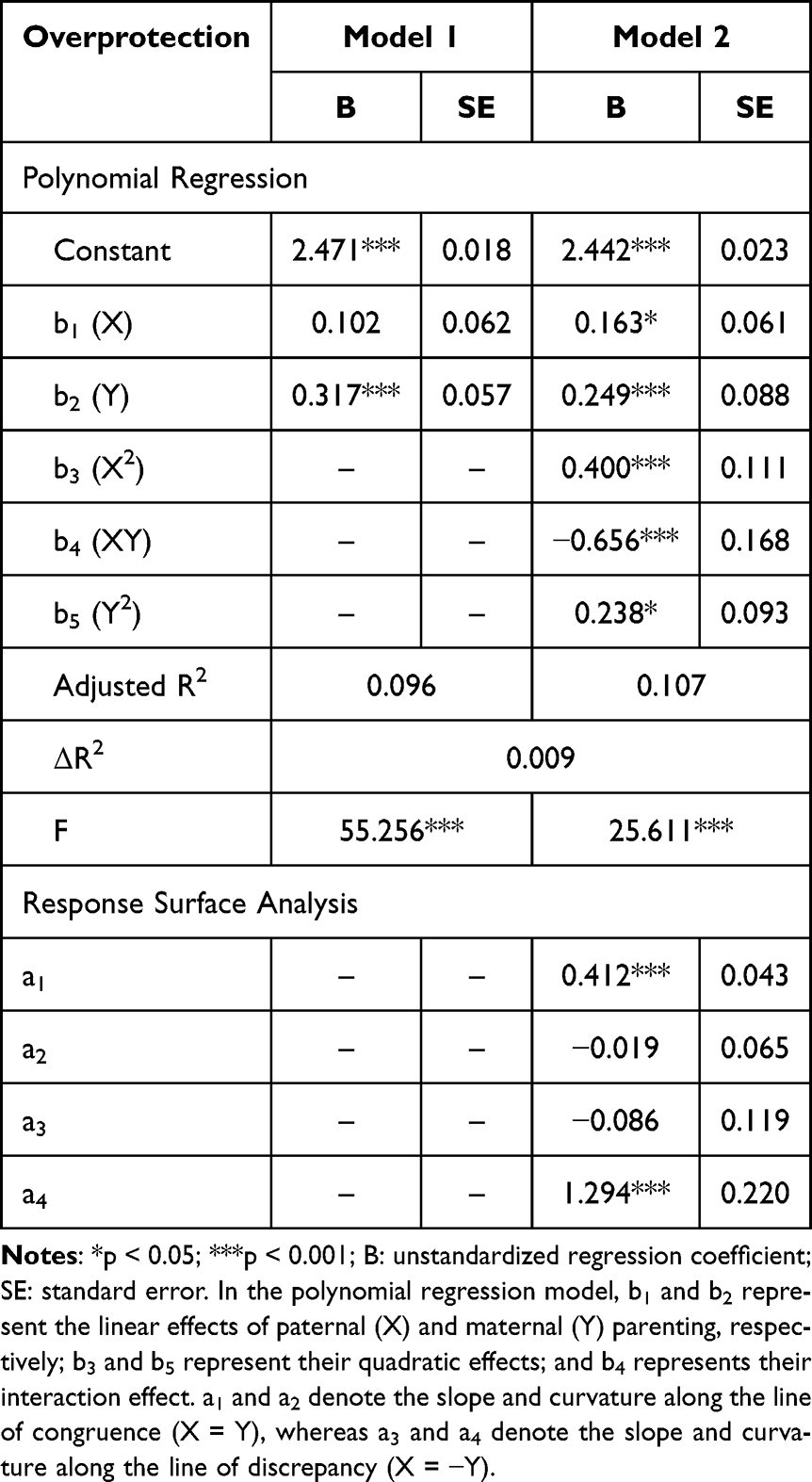 |
Table 6 Results of Polynomial Regression and Response Surface Analysis on the Relationship Between Parental Overprotection and Adolescent Maladaptive Traits |
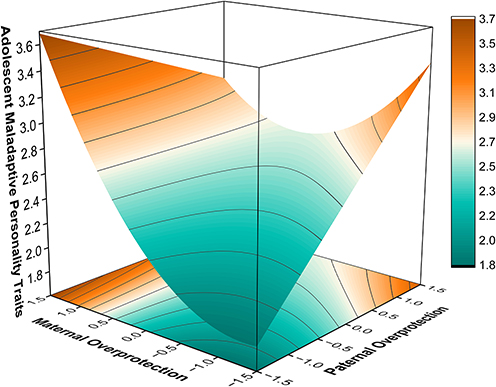 |
Figure 6 Response surface diagrams of parental overprotection on adolescents’ maladaptive personality traits. |
Discussion
Based on the perspective of maladaptive personality traits, this study systematically examined the structural heterogeneity of maladaptive personality traits in adolescents and their multilevel associations with parenting styles by integrating latent profile analysis and response surface analysis. Overall, this study reveals that maladaptive personality traits in adolescents exhibit significant structural heterogeneity, that specific parenting dimensions show differential associations across subtypes, and that parental consistency and inconsistency constitute independent family system effects. Furthermore, the findings highlight that adolescent gender and age serve as important differentiating backgrounds for maladaptive personality traits. Collectively, these findings indicate that maladaptive personality traits in adolescents are not a unidimensional continuous variable, but rather the result of the interplay among structural stratification, specific parenting dimensions, family system configurations, and individual demographic contexts.
Latent Categories of Maladaptive Personality Traits in Adolescents
From an individual-centered perspective, this study identified five subtypes of maladaptive personality traits in adolescents: flexible adaptation, general adaptation, maladaptation with internalizing problems, maladaptation with externalizing problems, and severe maladaptation. These findings differ from previous research, for instance, using Dutch adolescents as participants and the DIPSI as a research tool, Laceulle et al identified three latent categories: Low Level, Moderate Level, and High Level.26 In contrast, this study further identified two distinct profiles with significant characteristics between the moderate and high levels: maladaptation with internalizing problems and maladaptation with externalizing problems. This suggests that maladaptive personality traits during adolescence may not only vary in overall severity but may also manifest in different patterns of personality trait organization. This finding is aligned with the principles of equifinality and multifinality emphasized in developmental psychopathology.76 Specifically, similar levels of general susceptibility may give rise to different configurations of personality traits through distinct developmental pathways, and similar early-life risks may ultimately lead to different developmental outcomes due to differences in the organization of emotional and behavioral regulatory processes.77,78
The internalizing problems subtype is characterized by features such as emotional instability and withdrawal. This is consistent with the emotional processing bias model, which posits that when faced with negative emotional stimuli, individuals are more likely to exhibit selective attention toward threatening information and a negative interpretive bias toward ambiguous information, thereby intensifying their experience of emotional distress and increasing the risk of the onset and maintenance of internalizing problems such as anxiety and depression.79,80 The externalizing subtype, on the other hand, is characterized by higher levels of defiance and disinhibition, which aligns with the perspective of developmental psychopathology. Existing research suggests that disinhibition reflects insufficient behavioral inhibition, deficits in impulse control, and a preference for immediate rewards, while defiance manifests as hostility, interpersonal conflict, and a tendency to violate rules; these two personality traits collectively constitute the core personality foundation for the development of externalizing problems and increase the risk of aggressive behavior, disciplinary violations, and other externalizing symptoms.81,82 The identification of these two subtypes also aligns with the findings of Zhao et al on adolescent psychological adjustment,83 and those of Lau et al on adult personality disorders;84 both studies emphasize two distinct maladaptive patterns: internalizing and externalizing. Furthermore, these two maladaptive traits can also be interpreted within the framework of contemporary personality pathology. In dimensional models such as the DSM-5 Alternative Model for Personality Disorders (AMPD) and the ICD-11 trait-domain framework,2,85 personality risks associated with internalization are typically characterized by a combination of traits dominated by negative emotions (and, in some cases, a sense of alienation), whereas personality risks associated with externalization are more prominently manifested as a lack of control and defiance.20 Although the dimensions of the DIPSI-B do not completely align with those of the AMPD and ICD-11, the patterns identified in this study reveal clear conceptual correspondences: internalizing maladaptive traits reflect a vulnerability-centered configuration characterized by susceptibility to distress, whereas externalizing maladaptive traits reflect more conflict-prone and poorly controlled interpersonal and behavioral patterns. Therefore, the internalizing and externalizing patterns observed in our LPA not only imply an increase in the number of underlying subtypes but may also reflect developmental characteristics of further differentiation in adolescent personality structure.5 Different developmental trajectories may first manifest as differences in the organization of personality traits, rather than being evident solely at the level of overt psychopathological symptoms.6 This provides a person-centered framework for trait-based differentiation, suggesting that maladaptive personality traits in adolescents are best understood in terms of both severity and pattern.
It is worth noting that, among all subtypes, the severe maladaptive subtype warrants particular attention. This group exhibits significant elevations across multiple trait dimensions, demonstrating cross-pathway integration. This highly maladaptive configuration may be conceptually consistent with the general psychopathology factor (p factor) theory proposed in recent years,86 suggesting that trends toward higher-order maladaptive integration may already emerge during adolescence.87 This implies that some adolescents do not develop along a single pathway but instead form a broader structure of impaired personality functioning.88 Overall, this study uses LPA to reveal the hierarchical structure and pathway differentiation of maladaptive personality, providing a structural foundation for subsequent environmental analyses, while also suggesting that intervention strategies should be designed differentially based on distinct maladaptive pathways.
Differences in Parental Parenting Styles Across Subtypes of Maladaptive Personality Traits in Adolescents
Based on five subtypes of maladaptive personality in adolescents, this study employed multinomial logistic regression analysis to examine whether parenting styles were associated with differences in the assignment of maladaptive personality traits among adolescents (using the flexible adaptation group as the reference group), after controlling for factors such as age, gender, and family residence.
On the rejection dimension, maternal rejection in particular showed the strongest association with personality subtype affiliation, whereas emotional warmth and overprotection did not show stable, independent associations. Specifically, the higher the degree of maternal rejection, the greater the likelihood that adolescents would be classified into all non-reference personality subtypes. This pattern suggests that maternal rejection may represent a broad, nonspecific family factor associated with various maladaptive personality configurations.89 From the perspective of developmental psychopathology, a rejecting parenting style may impair adolescents’ emerging self-systems and interpersonal expectations across multiple domains,6,37 consistent with the view that chronic interpersonal adversity is associated with cross-diagnostic vulnerability.90 In contrast, paternal rejection was significantly associated only with the severe maladaptation subtype (and the association with the externalizing maladaptation subtype was near the level of significance). A possible culture-based explanation is that in many Chinese families, mothers typically assume the role of primary daily caregivers and guides for emotional socialization,91,92 leading to more frequent and emotionally intense interactions between adolescents and their mothers, and thus causing maternal rejection to be perceived as a more central relational signal. Furthermore, influenced by Confucian culture, the socialization orientation in Chinese families often emphasizes children’s academic achievement and behavioral norms, which raises the family’s expectations for their children’s development.93 Against this backdrop, mothers may bear a heavier burden of responsibility for their children’s behavior and academic performance, leading to greater behavioral involvement and emotional investment.91 However, when children’s performance falls short of expectations, mothers’ high level of investment is more likely to manifest as psychological control, critical feedback, or conditional positive attention, thereby increasing children’s subjective experience of a rejecting parenting style.94 In contrast, fathers’ patterns of involvement in daily supervision and emotional communication tend to exhibit greater heterogeneity, and their influence on adolescent adjustment is more dependent on family contextual factors.95 Existing research indicates that, compared to the stable predictive role of mothers, fathers’ influence on adolescent development is more susceptible to contextual variables such as family conflict, stress levels, and the quality of co-parenting.47 In situations of high family stress or heightened parent-child conflict, the impact of fathers’ negative parenting behaviors on adolescents’ adaptive outcomes may be more pronounced.96,97 This suggests that, within the Chinese cultural context, mothers’ parenting behaviors play a more prominent role in adolescents’ daily emotional and interpersonal experiences, whereas fathers’ rejecting behaviors may exert a greater influence when maladaptive behaviors are more prevalent and severe.
Neither overprotective parenting nor emotional warmth showed an independent association with personality subtype affiliation, suggesting that, after controlling for other variables, the contribution of these two parenting dimensions to distinguishing different maladaptive personality profiles among adolescents is relatively limited. This may be because the statistical effects of these two parenting styles may partially overlap with individual characteristics such as adolescents’ gender and age, rather than operating uniformly across different groups. When these individual characteristics were included in the model, the variance they shared was adjusted, thereby weakening their independent predictive effects. Co-variant results support this explanation somewhat. This study found that girls were more likely to be classified into the internalizing maladjustment and severe maladjustment categories. Previous research has indicated that girls exhibit greater sensitivity in relationship orientation and emotional processing and have a more nuanced perception of family atmosphere and parenting styles,98 making them more prone to internalizing positive or negative factors within the family.99,100 Xu et al also found that the influence of maternal parenting styles on emotional stability was significantly stronger among female students than among male students,101 suggesting that the effects of parenting styles may manifest differently across gender groups. Furthermore, this study found a positive correlation between younger age and the likelihood of being classified into the severe maladjustment subtype. In early adolescence, personality structures are still undergoing rapid differentiation, the self-system is not yet stable, and emotional regulation abilities are relatively weak.102 During this period, personality vulnerability may not yet have fully differentiated along specific trajectories but may instead manifest as a general increase across dimensions,103 thereby making individuals more likely to be classified into the severe maladjustment group. As individuals age and their self-regulatory abilities gradually mature, this state of generalized elevated risk may gradually subside or differentiate in specific directions;104 however, this inference still requires validation through longitudinal studies. Tang et al also point out that younger adolescents are more sensitive to parenting styles, but the effects may emerge gradually over the course of development rather than being immediately reflected in their current personality configuration.105 It is worth noting that although emotional warmth and overprotection failed to distinguish different personality trait subtypes in the multiple logistic regression analysis, the response surface analysis in this study further revealed that both parental emotional warmth and overprotection were significantly associated with the overall level of maladaptive personality traits. This suggests that the effects of emotional warmth and overprotection may be more general, primarily influencing the overall severity of maladaptive personality traits rather than specifically determining which particular maladaptive personality configuration an individual develops. In contrast, rejection (especially maternal rejection) continued to exhibit a stable pattern of association even after controlling for other variables, indicating a more robust indicator.
In summary, the results of the multiple logistic regression analysis partially support Hypothesis 2: Different parenting styles are not consistently associated with all maladaptive personality subtypes. The most stable independent association was found with parental rejection (particularly maternal rejection), while the associations with emotional warmth and overprotection were relatively limited. Female adolescents are more likely to be classified into the internalizing maladaptation and severe maladaptation subtypes, while younger adolescents are more likely to be classified into the severe maladaptation subtype. Given the current limited research on the relationship between parenting styles and maladaptive personality subtypes, the above inferences regarding general and specific effects still need to be verified by future longitudinal studies with more refined designs.
The Systemic Significance of Consistency and Inconsistency in Parental Parenting Styles
This study employed a polynomial regression analysis based on a second-order response surface to examine the association between consistency and inconsistency in parental parenting styles and maladaptive personality traits in adolescents. First, along the consistency dimension, high levels of rejection or overprotection from both parents were associated with high levels of maladaptive personality traits, whereas high levels of emotional warmth from both parents were associated with low levels of maladaptive personality traits. This consistency supports the structural reinforcement hypothesis in family systems theory,106 which posits that when parents reinforce a particular interaction pattern in the same direction, the impact is more stable and far-reaching.107 This finding further confirms the crucial role of synergistic interaction patterns exhibited by parents in childrearing within the overall functioning of the family system.108
Regarding inconsistency, discrepancy effects were observed for parental emotional warmth and overprotection. Specifically, greater divergence between paternal and maternal parenting styles was associated with higher levels of maladaptive personality traits. Notably, these associations were characterized by nonlinear curvature effects rather than directional differences, indicating that the magnitude of discrepancy, rather than which parent exhibited higher or lower levels, was associated with adolescents’ maladjustment. This pattern supports the structural instability hypothesis,106 suggesting that substantial inconsistencies between parents may disrupt the coherence of the family system, placing children in psychologically conflicting or ambiguous relational contexts.51 Specifically, differences in parenting styles may reflect a variety of underlying processes. First, these differences may indicate disagreements between parents regarding co-parenting (eg, inconsistent rules, inconsistent reinforcement, and low coordination in setting boundaries), which can reduce adolescents’ clarity regarding expectations and weaken their internalization of stable self-regulation standards.109 Second, differences in parenting styles may reflect conflict between parents or strained family relationships,54 as well as a lack of a harmonious and healthy family atmosphere.110 These differences may spill over into parent-child interactions, thereby undermining adolescents’ emotional security.111 Third, this inconsistency may also manifest as differences in parent-child relationships, where adolescents perceive one parent as supportive while the other is controlling or emotionally distant. In the Chinese cultural context, the “good cop, bad cop” approach is a common parenting strategy in Chinese families, often resulting in distinctly different parenting styles such as the “strict father, kind mother” or “tiger mom, cat dad”.63 Such differences can create a conflict between attachment and avoidance in adolescents, affecting their psychological coherence and complicating their developing cognitive representations of self and others.110,112 Finally, these explanations are consistent with the non-directional nature of the inconsistency effect observed in this study, suggesting that, regardless of whether the higher level of inconsistency is manifested on the father’s or mother’s side, inconsistency itself may be an important characteristic of family systems associated with maladaptive traits.
Taken together, these findings suggest that parenting styles should not be conceptualized as a simple additive combination of two independent parental influences. Instead, they constitute a structurally meaningful family configuration system, in which both overall alignment and the degree of divergence between parents play critical roles in adolescent personality development.
Theoretical and Methodological Contributions
At the theoretical level, this study identifies five latent subtypes of maladaptive personality traits among Chinese adolescents and systematically examines their associations with different parenting styles, thereby deepening our understanding of the structural heterogeneity of maladaptive personality in adolescents. Based on the results of latent profile analysis and response surface analysis, this study proposes a hierarchical association framework for maladaptive personality traits in adolescents, integrating the environmental associations of these traits into three levels: differences in parenting dimensions, consistency within the family system, and differentiation of individual background factors, thereby constructing a multilevel explanatory pathway. At the parenting dimension level, the study found that maternal rejection exhibited a relatively consistent gradient-like association with affiliation to high maladaptive personality subtypes, whereas paternal rejection was primarily associated with severe maladaptive personality subtypes, suggesting that different family roles and parenting dimensions may exhibit functional differences in their association patterns. At the individual background level, both age and gender were significantly associated with subtype affiliation, constituting important developmental contextual factors in the differentiation of maladaptive personality traits. Building on this, the present study further revealed key association patterns regarding parental consistency at the family systems level: consistent rejection and overprotection were associated with higher levels of maladaptive personality traits, consistent emotional warmth was associated with lower levels of maladaptive personality traits, and parental inconsistency in emotional warmth and overprotection was associated with higher levels of maladaptive personality traits. The above results provide evidence supporting the multi-path theory of developmental psychopathology and family systems theory,106,113 indicating that maladaptive personality traits are not a linear correspondence of a single parenting behavior, but rather likely reflect a comprehensive interrelationship structure involving parenting dimensions, the degree of coordination between parents, and individual background factors.
At the methodological level, this study integrates latent profile analysis with response surface analysis, overcoming the limitations of the traditional difference-in-scores method in assessing parental consistency,55 and extending the scope from continuous variable associations to the identification of hierarchical structures, and from testing single main effects to analyzing family system configuration patterns. This methodological integration not only enhances analytical precision but also provides a useful analytical framework for future investigations into the relationships between complex family system variables and personality structures.
Implications
Based on the stratified association framework for maladaptive personality traits in adolescents proposed in this study, which is grounded in parental rearing styles, intervention and prevention strategies for these traits should place greater emphasis on stratified identification and systematic intervention. At the individual level, the heterogeneity of maladaptive personality structures in adolescents should be fully considered,6 and stratified screening and differentiated interventions should be implemented.114 For internalizing personality traits, interventions should focus on emotion regulation training, cognitive reappraisal, and the enhancement of social cognitive skills to alleviate emotional instability and withdrawal tendencies;115,116 for externalizing personality traits, behavioral management strategies, self-control training, and parent-child communication skills training can be strengthened.117,118 For the severe maladjustment subtype, it is necessary to establish multisystemic resource support involving schools, families, and communities. For example, families should reduce rejecting interactions and high-pressure control, and both parents should improve consistency in their parenting styles;48 schools should provide sustained psychological support and necessary referral pathways;119 at the community level, access to clinical and community mental health resources is particularly critical for this group.120 The findings of this study further suggest that intervention practices should account for differences in gender and developmental stage. Interventions targeting female adolescents may focus on strengthening interpersonal emotional regulation strategies, fostering healthy expectations for intimate relationships, and establishing support systems capable of buffering negative family experiences.100,105 Prevention programs targeting younger adolescents should prioritize the development of foundational social-emotional skills such as emotion recognition, distress tolerance, and help-seeking behaviors, with early intervention occurring before maladaptive traits become entrenched as stable patterns.5
At the family level, prevention strategies should not focus solely on individual parental variables but should emphasize overall consistency in parenting styles.121 Although the findings of this study are based on a cross-sectional design and therefore cannot determine whether changes in parenting styles lead to changes in adolescents’ personality development, existing research treats parenting behaviors as targets that can be modified through parent training programs. For example, the online needs-based parenting program developed by Meerits et al demonstrates that parent training can promote more supportive parenting behaviors,122 providing an example of how observational associations can be translated into actionable family intervention pathways. Thus, the risk-associated parenting characteristics identified in this study—such as rejection, overprotection, and low emotional warmth—could also be addressed and improved through structured parent training programs, with a focus on the following areas: first, how to strengthen emotional guidance and positive communication to reduce rejecting responses; second, how to increase age-appropriate support for autonomy and consistent boundary-setting to reduce overprotection;123 third, how to promote daily active engagement and responsiveness to enhance emotional warmth.48 Particularly in cases where parenting styles show significant inconsistency, family therapy, modules focused on co-parenting, or parent coordination training may be employed to enhance the consistency and stability of parenting strategies,117 thereby reducing the confusion or conflicting messages experienced by adolescents.
Overall, this study suggests that the prevention of personality risks in adolescents should not be limited to correcting individual behaviors but should be based on the identification of structural levels and the coordinated regulation of the family system, thereby providing a clearer pathway from observational associations to targeted and scalable preventive measures. Future longitudinal and randomized intervention studies are needed to examine whether improving these parenting behaviors and the consistency of co-parenting leads to changes in levels of maladaptive traits or shifts in trait characteristics over time.
Limitations and Future Directions
This study has the following limitations, which require further refinement and exploration in future research. First, as a cross-sectional study, this research cannot assess the temporal consistency and stability across different cohorts, nor can it clearly establish the exact causal relationship between parenting styles and maladaptive personality traits in adolescents. Future studies could adopt a longitudinal design and employ methods such as latent transition analysis or cross-lagged analysis to explore the dynamic changes between maladaptive personality and family environment, thereby revealing the stability of risk stratification and its developmental trajectories. Second, data collection in this study relied on self-report scales, which may introduce social desirability bias. Future research should enhance inferential validity by integrating data from multiple sources or using multiple methods (eg, parent reports, teacher reports, or behavioral observation data). Third, although age, gender, and residential location were controlled in the regression analyses, other potentially important demographic factors, such as family structure and socioeconomic status, were not available in the dataset. These factors may influence both parenting practices and adolescent personality development. Future studies should incorporate more comprehensive sociodemographic indicators to further clarify potential confounding effects. Fourth, although multiple statistical methods were employed to assess common-method bias, statistical techniques can only detect, not completely eliminate the common method bias inherent in cross-sectional self-report study designs. Future research should consider adopting longitudinal study designs, multi-source data, or marker variable techniques to provide stronger evidence of causal relationships and enhance methodological rigor. Finally, this study primarily employed convenience sampling within Jiangxi Province, which may limit the generalizability of the findings. Future research should adopt stratified random sampling designs across different provinces to enhance representativeness. Despite these limitations, this study provides important insights into the structural heterogeneity of maladaptive personality traits among adolescents and their underlying family mechanisms.
Conclusion
This cross-sectional study identified five distinct latent types of maladaptive personality traits among Chinese adolescents: flexible adaptation, general adaptation, maladaptation with internalizing problems, maladaptation with externalizing problems, and severe maladaptation. Maternal rejection showed the strongest association with all maladaptation group, while paternal rejection was primarily associated with the severe maladaptation group. Age and gender were also significantly associated with group assignment. Response surface analysis further indicated that consistently high levels of rejection and overprotection were associated with higher levels of maladaptive personality traits; consistently high levels of emotional warmth were associated with lower levels of maladaptive personality traits; however, discrepancies between parents in emotional warmth and overprotection (regardless of direction) were associated with elevated levels of maladaptive personality traits. Overall, these findings highlight the heterogeneity of maladaptive personality traits in adolescents, demonstrate the differential associations between parenting styles and these types, and suggest the importance of (in)congruence in parenting styles when exploring maladaptive personality traits.
Abbreviations
PR, Paternal Rejection; MR, Maternal Rejection; PEW, Paternal Emotional Warmth; MEW, Maternal Emotional Warmth; PO, Paternal Overprotection; MO, Maternal Overprotection; LPA, Latent profile analysis; RSA, Response surface analysis.
Data Sharing Statement
The datasets generated and/or analyzed during the current study are not publicly available but are available from the corresponding author on reasonable request.
Ethics Approval and Consent to Participate
The study was conducted in accordance with the Declaration of Helsinki, and approved by the School of Psychology, Jiangxi Normal University Review Board (Approval Code: IRB–JXNU–PSY–2025045), and all of the participants provided signed informed consent.
Acknowledgments
We would like to thank all participants in this project.
Author Contributions
All authors made a significant contribution to the work reported, whether that is in the conception, study design, execution, acquisition of data, analysis, and interpretation, or in all these areas; took part in drafting, revising, or critically reviewing the article; gave final approval of the version to be published; have agreed on the journal to which the article has been submitted; and agree to be accountable for all aspects of the work.
Funding
This research received no external funding.
Disclosure
The authors report no conflicts of interest in this work.
References
1. He Y, Zhu Z, Li Y. Trend analysis of global burden of adolescent mental disorders from 1990 to 2023 and incidence projection for 2050. J Diagn Concepts Pract. 2026;25(2):183–26.
2. American Psychiatric Association. Diagnostic and Statistical Manual of Mental Disorders. DSM-5-TR. American Psychiatric Association Publishing; 2022.
3. Elalfy K, Farrag A, Suleiman A, et al. Maladaptive personality traits (DSM-5 AMPD, Criterion B) and depression among medical students in Egypt: a multicentric cross-sectional study. BMC Psychol. 2025;13(1):482. doi:10.1186/s40359-025-02784-z
4. Chanen AM, Thompson KN. The development of personality disorders. In: Handbook of Personality Development. The Guilford Press; 2019:551–571.
5. Chanen AM, Nicol K, Betts JK, Thompson KN. Diagnosis and treatment of borderline personality disorder in young people. Curr Psychiatry Rep. 2020;22(5):25. doi:10.1007/s11920-020-01144-5
6. Sharp C, Wall K. DSM-5 level of personality functioning: refocusing personality disorder on what it means to be human. Annu Rev Clin Psychol. 2021;17(1):313–337. doi:10.1146/annurev-clinpsy-081219-105402
7. Helle AC, Mullins-Sweatt SN. Maladaptive personality trait models: validating the five-factor model maladaptive trait measures with the personality inventory for DSM-5 and NEO personality inventory. Assessment. 2019;26(3):375–385. doi:10.1177/1073191117709071
8. Batziou SE, Dan-Glauser E. What is maladaptive in the emotion regulation of personality pathology? Investigating the regulation patterns of pathological personality profiles. J Personal. 2026. doi:10.1111/jopy.70078
9. VandenBos GR, ed. APA Dictionary of Psychology (2nd Ed.). American Psychological Association; 2015. doi:10.1037/14646-000
10. De Clercq B, De Fruyt F, Van Leeuwen K, Mervielde I. The structure of maladaptive personality traits in childhood: a step toward an integrative developmental perspective for DSM-V. J Abnormal Psychol. 2006;115(4):639–657. doi:10.1037/0021-843X.115.4.639
11. Barry K, Bick J. Developmental psychopathology. In: Encyclopedia of Adolescence. Elsevier; 2024:206–220. doi:10.1016/B978-0-323-96023-6.00073-7
12. Bai Y, Midgley N, Luyten P. Self-criticism and dependency in adolescents with depression: associations with clinical features and psychological functioning. British J Clinic Psychol. 2026;65(2):639–655. doi:10.1111/bjc.70038
13. De Clercq B, De Fruyt F, De Bolle M, Van Hiel A, Markon KE, Krueger RF. The hierarchical structure and construct validity of the PID -5 trait measure in adolescence. J Personal. 2014;82(2):158–169. doi:10.1111/jopy.12042
14. Favini A, Gerbino M, Eisenberg N, Lunetti C, Thartori E. Personality profiles and adolescents’ maladjustment: a longitudinal study. Pers Individ Dif. 2018;129:119–125. doi:10.1016/j.paid.2018.03.016
15. Chanen AM, McCutcheon L. Prevention and early intervention for borderline personality disorder: current status and recent evidence. Br J Psychiatry. 2013;202(s54):s24–s29. doi:10.1192/bjp.bp.112.119180
16. Altschuler MR, Krueger RF. Towards a contemporary approach for understanding personality pathology in developmental context: an integrative model. Dev Psychopathol. 2021;33(5):1793–1802. doi:10.1017/S0954579421000869
17. Watson D, Clark LA. Comorbidity and heterogeneity: two challenges for personality pathology research. Personal Disord. 2023;14(1):39–49. doi:10.1037/per0000586
18. Bach B, First MB. Application of the ICD-11 classification of personality disorders. BMC Psychiatry. 2018;18(1):351. doi:10.1186/s12888-018-1908-3
19. Morey LC, Benson KT, Busch AJ, Skodol AE. Personality disorders in DSM-5: emerging research on the alternative model. Curr Psychiatry Rep. 2015;17(4):24. doi:10.1007/s11920-015-0558-0
20. Mulder RT. ICD-11 personality disorders: utility and implications of the new model. Front Psychiatry. 2021;12:655548. doi:10.3389/fpsyt.2021.655548
21. Chen P, Jiang P, Cui Y, et al. Developmental trajectories of depressive symptoms during early adolescence: a 12-month cohort study in Nanchong, China. J Affect Disord. 2025;391:119941. doi:10.1016/j.jad.2025.119941
22. Li M, Huang Z, Ding J, Wu H, Liang S. Longitudinal trajectories of depressive symptoms in adolescent students. BMC Psychol. 2025;14(1):90. doi:10.1186/s40359-025-03874-8
23. Migalova E, Furstova J, Hasto J, Tavel P, Kascakova N. The link of adverse childhood experiences and attachment to maladaptive personality traits in adults diagnosed with substance use disorder. BMC Psychol. 2025;13(1):974. doi:10.1186/s40359-025-03331-6
24. Marsh HW, Lüdtke O, Trautwein U, Morin AJS. Classical latent profile analysis of academic self-concept dimensions: synergy of person- and variable-centered approaches to theoretical models of self-concept. Struct Equ Modeling. 2009;16(2):191–225. doi:10.1080/10705510902751010
25. Fisher PA, Robie C. A latent profile analysis of the five factor model of personality: a constructive replication and extension. Pers Individ Dif. 2019;139:343–348. doi:10.1016/j.paid.2018.12.002
26. Laceulle OM, Rienks K, Meijer L, De Moor EL, Karreman A. A developmental approach to youth maladaptive personality traits: variable- versus person-centered change in the transition from childhood to adolescence. Eur J Pers. 2023;37(6):649–668. doi:10.1177/08902070221130116
27. Achenbach TM. Transdiagnostic heterogeneity, hierarchical dimensional models, and societal, cultural, and individual differences in the developmental understanding of psychopathology. Eur Child Adolesc Psychiatry. 2015;24(12):1419–1422. doi:10.1007/s00787-015-0795-0
28. Brieant A, Cai T, Ip KI, Holt-Gosselin B, Gee DG. Heterogeneity in developmental trajectories of internalizing and externalizing symptomatology: associations with risk and protective factors. Child Psychiatry Hum Dev. 2025. doi:10.1007/s10578-024-01804-0
29. He J, Niu Y, Xue Z. Family environment profiles and mental health characteristics among Chinese middle school students: a latent profile analysis. Acta Psychologica. 2026;265:106682. doi:10.1016/j.actpsy.2026.106682
30. Baumrind D. Child care practices anteceding three patterns of preschool behavior. Genetic Psychol Monographs. 1967;75(1):43–88.
31. Arrindell WA, Sanavio E, Aguilar G, et al. The development of a short form of the EMBU 1Swedish acronym for Egna Minnen Beträffande Uppfostran (“My memories of upbringing”). 1: its appraisal with students in Greece, Guatemala, Hungary and Italy. Pers Individ Dif. 1999;27(4):613–628. doi:10.1016/S0191-8869(98)00192-5
32. De Clercq B, Van Leeuwen K, De Fruyt F, Van Hiel A, Mervielde I. Maladaptive personality traits and psychopathology in childhood and adolescence: the moderating effect of parenting. J Personal. 2008;76(2):357–383. doi:10.1111/j.1467-6494.2007.00489.x
33. Fatima S, Dawood S, Munir M. Parenting styles, moral identity and prosocial behaviors in adolescents. Curr Psychol. 2022;41(2):902–910. doi:10.1007/s12144-020-00609-3
34. WenLi Z, Tiemei X, Shuangqi L, Qun Y, Jingbo Z, Sijie S. Parenting styles and externalizing problem behaviors of preschoolers: mediation through self-control abilities and emotional management skills. Front Psychol. 2025;16:1433262. doi:10.3389/fpsyg.2025.1433262
35. Liang L, Zhang N, Liu W, Lin L, Zhang X. Longitudinal relations between maternal parenting styles and preschoolers’ externalizing problem behaviors: a chain mediation model. Child Youth Care Forum. 2025;54(2):453–470. doi:10.1007/s10566-024-09827-3
36. Yendell A, Clemens V, Schuler J, Decker O. What makes a violent mind? The interplay of parental rearing, dark triad personality traits and propensity for violence in a sample of German adolescents. Jonason PKed.. PLoS One. 2022;17(6):e0268992. doi:10.1371/journal.pone.0268992
37. Bowlby J. A Secure Base: Parent-Child Attachment and Healthy Human Development. New York: Basic Books; 1988.
38. George C, Solomon J. Representational models of relationships: links between caregiving and attachment. Infant Ment Health J. 1996;17(3):198–216. doi:10.1002/(SICI)1097-0355(199623)17:3<198::AID-IMHJ2>3.0.CO;2-L
39. Rohner RP. Introduction to Interpersonal Acceptance-Rejection Theory (IPARTheory) and evidence. Online Read Psychol Culture. 2021;6(1). doi:10.9707/2307-0919.1055
40. Van Petegem S, Soenens B, Vansteenkiste M, Beyers W. Rebels with a cause? Adolescent defiance from the perspective of reactance theory and self-determination theory. Child Development. 2015;86(3):903–918. doi:10.1111/cdev.12355
41. Nelson LJ, Padilla-Walker LM, McLean RD. Longitudinal predictors of helicopter parenting in emerging adulthood. Emerging Adulthood. 2021;9(3):240–251. doi:10.1177/2167696820931980
42. Brumariu LE, Kerns KA. Parent–child attachment and internalizing symptoms in childhood and adolescence: a review of empirical findings and future directions. Dev Psychopathol. 2010;22(1):177–203. doi:10.1017/S0954579409990344
43. Liu Q, Wang Z. Associations between parental emotional warmth, parental attachment, peer attachment, and adolescents’ character strengths. Child Youth Services Rev. 2021;120:105765. doi:10.1016/j.childyouth.2020.105765
44. Lionetti F, Aron EN, Aron A, Klein DN, Pluess M. Observer-rated environmental sensitivity moderates children’s response to parenting quality in early childhood. Develop Psychol. 2019;55(11):2389–2402. doi:10.1037/dev0000795
45. Cheung CSS, Pomerantz EM. Value development underlies the benefits of parents’ involvement in children’s learning: a longitudinal investigation in the United States and China. J Educ Psychol. 2015;107(1):309–320. doi:10.1037/a0037458
46. Yu X, Fu X, Yang Z, et al. Bidirectional relationship between parental psychological control and adolescent maladjustment. J Adolescence. 2021;92(1):75–85. doi:10.1016/j.adolescence.2021.08.007
47. Cabrera NJ, Volling BL, Barr R. Fathers are parents, too! Widening the lens on parenting for children’s development. Child Develop Perspect. 2018;12(3):152–157. doi:10.1111/cdep.12275
48. Pinquart M. Associations of parenting dimensions and styles with externalizing problems of children and adolescents: an updated meta-analysis. Develop Psychol. 2017;53(5):873–932. doi:10.1037/dev0000295
49. Martin A, Ryan RM, Brooks-Gunn J. The joint influence of mother and father parenting on child cognitive outcomes at age 5. Early Childhood Res Quarterly. 2007;22(4):423–439. doi:10.1016/j.ecresq.2007.07.001
50. Chung G, Phillips J, Jensen TM, Lanier P. Parental involvement and adolescents’ academic achievement: latent profiles of mother and father warmth as a moderating influence. Family Process. 2020;59(2):772–788. doi:10.1111/famp.12450
51. Gui Z, Ren X, Li X, Zhou C, Sun L. Parents’ parenting styles differences are associated with lifetime suicidal ideation: evidence from Chinese medical college students. J Health Psychol. 2022;27(10):2420–2434. doi:10.1177/13591053211044532
52. Chen M, Johnston C. Interparent childrearing disagreement, but not dissimilarity, predicts child problems after controlling for parenting effectiveness. J Clin Child Adolesc Psychol. 2012;41(2):189–201. doi:10.1080/15374416.2012.651997
53. De Los Reyes A, Ohannessian CM. Introduction to the special issue: discrepancies in adolescent–parent perceptions of the family and adolescent adjustment. J Youth Adolescence. 2016;45(10):1957–1972. doi:10.1007/s10964-016-0533-z
54. Tavassolie T, Dudding S, Madigan AL, Thorvardarson E, Winsler A. Differences in perceived parenting style between mothers and fathers: implications for child outcomes and marital conflict. J Child Fam Stud. 2016;25(6):2055–2068. doi:10.1007/s10826-016-0376-y
55. Shanock LR, Baran BE, Gentry WA, Pattison SC, Heggestad ED. Polynomial regression with response surface analysis: a powerful approach for examining moderation and overcoming limitations of difference scores. J Business Psychol. 2010;25(4):543–554. doi:10.1007/s10869-010-9183-4
56. Shidhaye R. Parenting and adolescent suicidal behavior. EClinicalMedicine. 2021;32:100728. doi:10.1016/j.eclinm.2021.100728
57. Yap MBH, Pilkington PD, Ryan SM, Jorm AF. Parental factors associated with depression and anxiety in young people: a systematic review and meta-analysis. J Affect Disord. 2014;156:8–23. doi:10.1016/j.jad.2013.11.007
58. Van Der Hallen R, De Pauw SSW, Prinzie P. Coping, (mal)adaptive personality and identity in young adults: a network analysis. Dev Psychopathol. 2024;36(2):736–749. doi:10.1017/S0954579423000020
59. Rose C, Engelskircher S, Hepp J. Maladaptive personality traits predict affective responses to interpersonal stressors above and beyond level of personality functioning. Personal Disord. 2025. doi:10.1037/per0000751
60. Rouco V, Franssens R, De Clercq B. A brief version of the DIPSI maladaptive trait measure for children and adolescents. Psychol Assessment. 2021;33(9):880–889. doi:10.1037/pas0001032
61. Jiang J, Lu Z, Jiang B, Xu Y. Preliminary revision of the Chinese version of the Short-Form Egna Minnen av Barndoms Uppfostran (s-EMBU). Psychol Develop Educat. 2010;26(1):94–99. doi:10.16187/j.cnki.issn1001-4918.2010.01.017
62. Shi Z, Zhou Z, Xu L, Chen H, Guan J, Liu C. Relationship between negative parenting styles and malevolent creativity among college students: a moderated mediation model. Psychol Develop Educat. 2024;40(6):808–815. doi:10.16187/j.cnki.issn1001-4918.2024.06.05
63. Wu M, Xie Y, Li Y. Consistency between maternal and paternal warmth and rural children’s prosocial behavior: the mediating role of psychological capital. Studies Psychol Behav. 2024;22(2):251–257,273.
64. Barranti M, Carlson EN, Côté S. How to test questions about similarity in personality and social psychology research: description and empirical demonstration of response surface analysis. Soc Psychol Personal Sci. 2017;8(4):465–475. doi:10.1177/1948550617698204
65. Hu L, Bentler PM. Cutoff criteria for fit indexes in covariance structure analysis: conventional criteria versus new alternatives. Struct Equ Model. 1999;6(1):1–55. doi:10.1080/10705519909540118
66. Zhou H, Long L. Statistical remedies for common method biases. Adv Psychol Sci. 2004;12(6):942–950.
67. Nylund KL, Asparouhov T, Muthén BO. Deciding on the number of classes in latent class analysis and growth mixture modeling: a Monte Carlo Simulation Study. Struct Equ Model. 2007;14(4):535–569. doi:10.1080/10705510701575396
68. Lo Y. Testing the number of components in a normal mixture. Biometrika. 2001;88(3):767–778. doi:10.1093/biomet/88.3.767
69. Lubke G, Muthén BO. Performance of factor mixture models as a function of model size, covariate effects, and class-specific parameters. Struct Equ Model. 2007;14(1):26–47. doi:10.1080/10705510709336735
70. Muthén LK, Muthén BO. Mplus user’s guide (7th ed). Int J Behavioral Develop. 2014;10(4):397–438.
71. Wang M. Latent Variable Modeling and Applications of Mplus: Advanced Edition.
72. Dias JG. Model selection criteria for model-based clustering of categorical time series data: a Monte Carlo Study. In: Decker R, Lenz HJ, editors. Advances in Data Analysis. Studies in Classification, Data Analysis, and Knowledge Organization. Berlin Heidelberg: Springer; 2007:23–30. doi:10.1007/978-3-540-70981-7_3
73. Qiu H. Principles and Techniques of Latent Class Models. Beijing: Peking University Press; 2008.
74. Fleenor JW, McCauley CD, Brutus S. Self-other rating agreement and leader effectiveness. Leadersh Q. 1996;7(4):487–506. doi:10.1016/S1048-9843(96)90003-X
75. Hair JF. Multivariate data analysis (7th Edition). 2009. Available from: https://xueshu.baidu.com/usercenter/paper/show?paperid=33eb8c146488776b7e55181a0fd8000b.
76. Allen TA, Hallquist MN. Disinhibition and detachment in adolescence: a developmental cognitive neuroscience perspective on the alternative model for personality disorders. Psychopathology. 2020;53(3–4):205–212. doi:10.1159/000509984
77. Cicchetti D, Rogosch FA. Equifinality and multifinality in developmental psychopathology. Dev Psychopathol. 1996;8(4):597–600. doi:10.1017/S0954579400007318
78. Meeus W. Rules of intra-individual development in adolescence: a framework. Eur J Develop Psychol. 2022;19(2):159–176. doi:10.1080/17405629.2021.1872537
79. Hirsch CR, Mathews A. Interpretation bias in emotional disorders: a selective review. Behav Res Ther. 2026;197:104948. doi:10.1016/j.brat.2025.104948
80. Mathews A, MacLeod C. Cognitive vulnerability to emotional disorders. Annu Rev Clin Psychol. 2005;1(1):167–195. doi:10.1146/annurev.clinpsy.1.102803.143916
81. Gottfredson MR, Hirschi T. A General Theory of Crime. Stanford: Stanford University Press; 1990.
82. Regier DA. The DSM-5 alternative model of personality disorders: integrating multiple paradigms of personality assessment: HOPWOOD, C. J. MULAY, A. L. and WAUGH, M. H. Routledge, 2019. Psychiatry. 2019;82(4):375–378. doi:10.1080/00332747.2019.1683422
83. Zhao J, Li Q, Wang L, Lin L, Zhang W. Latent profile analysis of left-behind adolescents’ psychosocial adaptation in rural china. J Youth Adolescence. 2019;48(6):1146–1160. doi:10.1007/s10964-019-00989-1
84. Lau C, Bagby RM, Pollock BG, Quilty L. Five-Factor model and DSM-5 alternative model of personality disorder profile construction: associations with cognitive ability and clinical symptoms. J Intell. 2023;11(4):71. doi:10.3390/jintelligence11040071
85. Harrison JE, Weber S, Jakob R, Chute CG. ICD-11: an international classification of diseases for the twenty-first century. BMC Med Inform Decis Mak. 2021;21(S6):206. doi:10.1186/s12911-021-01534-6
86. Caspi A, Moffitt TE. All for one and one for all: mental disorders in one dimension. AJP. 2018;175(9):831–844. doi:10.1176/appi.ajp.2018.17121383
87. Choate AM, Bornovalova MA, Hipwell AE, Chung T, Stepp SD. The general psychopathology factor (p) from adolescence to adulthood: exploring the developmental trajectories of p using a multi-method approach. Dev Psychopathol. 2023;35(4):1775–1793. doi:10.1017/S0954579422000463
88. DeYoung CG, Krueger RF. A cybernetic theory of psychopathology. Psychol Inq. 2018;29(3):117–138. doi:10.1080/1047840X.2018.1513680
89. Lynch SJ, Sunderland M, Newton NC, Chapman C. A systematic review of transdiagnostic risk and protective factors for general and specific psychopathology in young people. Clinic Psychol Rev. 2021;87:102036. doi:10.1016/j.cpr.2021.102036
90. McLaughlin KA, Colich NL, Rodman AM, Weissman DG. Mechanisms linking childhood trauma exposure and psychopathology: a transdiagnostic model of risk and resilience. BMC Med. 2020;18(1):96. doi:10.1186/s12916-020-01561-6
91. Dou D, Shek DTL, Kwok KHR. Perceived paternal and maternal parenting attributes among chinese adolescents: a meta-analysis. IJERPH. 2020;17(23):8741. doi:10.3390/ijerph17238741
92. Trevethan M, Lin KL, Raval VV, Li X, Hu J, Deo N. Mothers’ emotion socialization profiles and relation to adolescent socio-emotional functioning in China and India. J Appl Develop Psychol. 2021;73:101259. doi:10.1016/j.appdev.2021.101259
93. Dai H, Xin Z. Beyond class limits: where do educational expectations come from?—an investigation based on Confucian concept of “learning leads to success”. Mod Univ Educ. 2022;38(3):9–17.
94. Zhang Y. Review of parental psychological control research: antecedent variable analysis. Adv Psychol. 2022;12(07):2410–2415. doi:10.12677/AP.2022.127287
95. McKinney C, Renk K. Differential parenting between mothers and fathers: implications for late adolescents. J Family Issues. 2008;29(6):806–827. doi:10.1177/0192513X07311222
96. Zhang L, Wang R, Chen L. The impact of harsh parental discipline and emotional warmth on adolescent problem behaviors. PRBM. 2024;17:2309–2319. doi:10.2147/PRBM.S466830
97. Chen C. The relationship between paternal co-parenting and externalizing problems in adolescents. PSYCH OpenIR. 2021. Available from: https://ir.psych.ac.cn/handle/311026/41582.
98. Zhou D, Bian Y, Chen X, Wang L. The influence and differences of paternal and maternal warmth parenting styles on junior high school students’ loneliness. Chin J Spec Educ. 2016;(3):64–70.
99. Chen X, Yuan H, Zheng T, Chang Y, Luo Y. Females are more sensitive to opponent’s emotional feedback: evidence from event-related potentials. Front Hum Neurosci. 2018;12:275. doi:10.3389/fnhum.2018.00275
100. Zeng L, Ge W, Yao L, Chen S, Huang Y, Zhao S. Positive/negative affect and school adaptation in adolescents: gender differences in the moderating role of parent-child cohesion. Chin J Spec Educ. 2020;(10):83–89.
101. Xu X, Hanafi Z, Gao L. Sex differences in how are mothers’ SES related to late adolescents’ emotional stability in China: the mediating role of maternal parenting styles. BMC Psychol. 2025;13(1):145. doi:10.1186/s40359-025-02464-y
102. Zheng H, Zheng Y. Pubertal timing and suicidal ideation and attempts: sex differences in the links through bullying and victimization and internalizing problems. Arch Suicide Res. 2026;30(2):495–512. doi:10.1080/13811118.2025.2552460
103. Cicchetti D, Crick NR. Precursors and diverse pathways to personality disorder in children and adolescents. Dev Psychopathol. 2009;21(3):683–685. doi:10.1017/S0954579409000388
104. Soto CJ, John OP, Gosling SD, Potter J. Age differences in personality traits from 10 to 65: big five domains and facets in a large cross-sectional sample. J Personal Social Psychol. 2011;100(2):330–348. doi:10.1037/a0021717
105. Tang T, Wang Y, Gong F, et al. The relationship between parenting styles and positive youth development in China: a series of meta-analyses. Adv Psychol Sci. 2024;32(8):1302–1319.
106. Minuchin S. Families & Family Therapy. Oxford: Harvard U. Press; 1974.
107. Cox MJ, Paley B. Families as systems. Annu Rev Psychol. 1997;48(1):243–267. doi:10.1146/annurev.psych.48.1.243
108. Minuchin S. Family Healing: Strategies for Hope and Understanding. New York: Free Press; 1998.
109. Zou S, Wu X. Coparenting conflict behavior, parent–adolescent attachment, and social competence with peers: an investigation of developmental differences. J Youth Adolescence. 2020;49(1):267–282. doi:10.1007/s10964-019-01131-x
110. Du Y, Wu R, Zhang B, Zhang X, Ding J. The relationship between parental differential parenting, sense of coherence and resilience in adolescents. Chin J Clin Psychol. 2021;29(2):292–296,337. doi:10.16128/j.cnki.1005-3611.2021.02.015
111. Cox MJ, Paley B. Understanding families as systems. Curr Dir Psychol Sci. 2003;12(5):193–196. doi:10.1111/1467-8721.01259
112. Branje S. Development of parent–adolescent relationships: conflict interactions as a mechanism of change. Child Develop Perspect. 2018;12(3):171–176. doi:10.1111/cdep.12278
113. Sroufe LA. Psychopathology as an outcome of development. Dev Psychopathol. 1997;9(2):251–268. doi:10.1017/S0954579497002046
114. Sharp C, Rossouw T. Mentalization-Based treatment for adolescents (MBT-A). Psychodynamic Psych. 2024;52(4):542–562. doi:10.1521/pdps.2024.52.4.542
115. Chelouche-Dwek G, Fonagy P. Mentalization-based interventions in schools for enhancing socio-emotional competencies and positive behaviour: a systematic review. Eur Child Adolesc Psychiatry. 2025;34(4):1295–1315. doi:10.1007/s00787-024-02578-5
116. Cludius B, Mennin D, Ehring T. Emotion regulation as a transdiagnostic process. Emotion. 2020;20(1):37–42. doi:10.1037/emo0000646
117. Leijten P, Gardner F, Melendez-Torres GJ, et al. Meta-Analyses: key parenting program components for disruptive child behavior. J Am Acad Child Adolesc Psych. 2019;58(2):180–190. doi:10.1016/j.jaac.2018.07.900
118. Pandey A, Hale D, Das S, Goddings AL, Blakemore SJ, Viner R. Effectiveness of universal self-regulation-based interventions to improve self-regulation, and effects on distant health and social outcomes in children and adolescents: a systematic review and meta-analysis. Lancet. 2017;
119. Weist MD, Eber L, Horner R, et al. Improving multitiered systems of support for students with “Internalizing” emotional/behavioral problems. J Positive Behav Intervent. 2018;20(3):172–184. doi:10.1177/1098300717753832
120. McGorry PD, Mei C, Chanen A, Hodges C, Alvarez-Jimenez M, Killackey E. Designing and scaling up integrated youth mental health care. World Psychiatry. 2022;21(1):61–76. doi:10.1002/wps.20938
121. Teubert D, Pinquart M. The association between coparenting and child adjustment: a Meta-Analysis. Parenting. 2010;10(4):286–307. doi:10.1080/15295192.2010.492040
122. Meerits PR, Tilga H, Koka A. Web-based need-supportive parenting program to promote physical activity in secondary school students: a randomized controlled pilot trial. BMC Public Health. 2023;23(1):1627. doi:10.1186/s12889-023-16528-4
123. AL-Thiab MM, Alshehri MM, AlQumayzi AS, et al. Parenting-Related factors associated with depression and anxiety: a systematic review and meta-analysis. Cureus. 2026. doi:10.7759/cureus.103388
 © 2026 The Author(s). This work is published and licensed by Dove Medical Press Limited. The
full terms of this license are available at https://www.dovepress.com/terms
and incorporate the Creative Commons Attribution
- Non Commercial (unported, 4.0) License.
By accessing the work you hereby accept the Terms. Non-commercial uses of the work are permitted
without any further permission from Dove Medical Press Limited, provided the work is properly
attributed. For permission for commercial use of this work, please see paragraphs 4.2 and 5 of our Terms.
© 2026 The Author(s). This work is published and licensed by Dove Medical Press Limited. The
full terms of this license are available at https://www.dovepress.com/terms
and incorporate the Creative Commons Attribution
- Non Commercial (unported, 4.0) License.
By accessing the work you hereby accept the Terms. Non-commercial uses of the work are permitted
without any further permission from Dove Medical Press Limited, provided the work is properly
attributed. For permission for commercial use of this work, please see paragraphs 4.2 and 5 of our Terms.