
Back to Journals » Clinical Interventions in Aging » Volume 20
Association of Preoperative Frailty and Post-Induction Hypotension in Elderly Patients Undergoing Major Non-Cardiac Surgery: A Prospective Observational Cohort Study
Authors Yu J  , Che L , Wang R, Cui Q, Xu L, Huang Y
Received 18 April 2025
Accepted for publication 9 August 2025
Published 15 August 2025 Volume 2025:20 Pages 1283—1292
DOI https://doi.org/10.2147/CIA.S535277
Checked for plagiarism Yes
Review by Single anonymous peer review
Peer reviewer comments 2
Editor who approved publication: Dr Zhi-Ying Wu
Jiawen Yu, Lu Che, Ruoxi Wang, Quexuan Cui, Li Xu, Yuguang Huang
Department of Anesthesiology, Peking Union Medical College Hospital, Beijing, People’s Republic of China
Correspondence: Li Xu, Peking Union Medical College Hospital, Beijing, People’s Republic of China, Email [email protected]
Purpose: Post-induction hypotension (PIH) is one of the most common complications during general anesthesia, especially in elderly patients. Frailty, which describes age-related decrease of physiological capacity with increased susceptibility to stress, may be associated with PIH, when stress is brought by anesthetics. This study aimed to explore the association between preoperative frailty and PIH as well as postoperative complications.
Patients and Methods: This study was a prospective observational cohort study. Elderly patients scheduled for elective non-cardiac surgery under general anesthesia were recruited from December 2019 to April 2022 in Peking Union Medical College Hospital. Preoperative frailty was assessed by FRAIL scale. The primary outcome was post-induction hypotension. Secondary outcome included postoperative complications, functional recovery, length of stay and hospital cost.
Results: A total of 147 patients were included in the final analysis, of which 25 (17.0%) were considered frail. Frailty patients were generally older and suffered more from anemia, hypoalbuminemia, weakness, and orthostatic hypotension. The incidence of PIH was significantly higher in frail patients than non-frail elderly (80.0% vs 37.7%). Multivariable analysis revealed that frailty was associated with higher risk of PIH (aRR 1.72, 95% CI 1.20– 2.47, P=0.003) after adjusting for baseline characteristics, surgical type and intraoperative medications. Comprehensive complication index within 30 days after surgery was significantly higher in frail patients.
Conclusion: Frailty is associated with post-induction hypotension during general anesthesia in elderly patients undergoing non-cardiac surgery. Preoperative frailty assessment may help identify high-risk patients for better anesthesia plan.
Keywords: frailty, post-induction hypotension, orthostatic hypotension, autonomic dysfunction
Introduction
Despite great efforts made to avoid hemodynamic instability, intraoperative hypotension is still one of the most common complications during general anesthesia, especially in elderly patients.1,2 Among all intraoperative hypotension, post-induction hypotension (PIH) is of particular concern to anesthesiologists, as it is influenced by the patient’s condition and the anesthesia technique rather than surgical factors. PIH is generally considered as hypotension between anesthesia induction and surgical incision.2 Although the timeframe is relatively short and PIH might be considered as a transient phenomenon, previous studies have shown that PIH is associated with higher risk of organ hypo-perfusion damage including acute kidney injury,3 as well as longer intensive care and ventilation requirement,4 substantiating its clinical importance. Understanding the mechanism behind post-induction hypotension may aid in providing individualized anesthesia management for elderly patients.
Risk factors for PIH included elder age, higher American Society of Anesthesiologists (ASA) physical status classification, history of diabetes mellitus, lower baseline blood pressure and emergency surgery.1,2,5 Elderly patients are the most susceptible population to PIH, however, previously identified risk factors failed to predict PIH effectively in this group of high-risk patients during clinical practice. As post-induction hypotension is closely related to patients’ cardiovascular regulatory function6,7 and reflects decreased functional reserve to adapt to the instant and drastic hemodynamic changes brought by general anesthetics,8 we hypothesize that frailty is a risk factor for PIH. Frailty describes the condition of age-related decrease of physical capacity with increased susceptibility to stress.9 Frail patients are at higher risk of orthostatic hypotension,10 cardiovascular diseases11,12 and even cardiovascular mortality,13 indicating impairment of functional cardiovascular reserve.
Previous studies have found that frailty is associated with higher risk of severe postoperative complications,14 postoperative delirium,15 higher medical cost,16 30-day surgical readmission,17 and poorer survival.18 While frailty assessment has been increasingly recommended for pre-anesthesia evaluation, its association with intraoperative hypotension especially PIH has not been fully studied.
Therefore, we conducted a prospective cohort study aimed to explore the association between preoperative frailty and post-induction hypotension as well as postoperative prognosis.
Material and Methods
This study was a single-center prospective observational cohort study. Patients were recruited from December 2019 to April 2022 in Peking Union Medical College Hospital. The study protocol was approved by the local Research Ethics Committee on August 20th 2019 (reference number: ZS-2079) and prospectively registered at clinicaltrials.gov (NCT04120012). Written informed consents were obtained from all participants. This study complied with the Declaration of Helsinki and adheres to the applicable STROBE guidelines.
Participants
Patients who met all the following inclusion criteria were considered for recruitment: 1) age ≥ 65 years; 2) scheduled for elective major non-cardiac surgery; 3) scheduled for general anesthesia; 4) ASA physical status classification I–III; 5) study protocol fully understood by the patients, written consent obtained. Patients who met any of the following exclusion criteria would be excluded: 1) emergency surgery; 2) in active state of infection or inflammation; 3) chronic kidney disease (CKD) stage 5; 4) have conditions that would interfere accurate measurement of upper extremity blood pressure (eg, subclavian artery stenosis); 5) having conditions that would interfere with frailty assessment (eg, mental disorder, severe hearing disorder); 6) study protocol not fully understood, no written consent obtained.
Preoperative Assessment
Patients were visited the day before surgery for informed consent and preoperative assessment. The condition of frailty was assessed by FRAIL scale,19 a simple 5-question scale for frailty assessment: fatigue, resistance, ambulation, comorbidities and loss of weight. Each question scores 0 to 1 point, and the total score ranges from 0 to 5. Patient with a total score ≥3 was considered as frail. Patients’ body weight index (BMI), grip strength, gait speed, mean upper arm circumference, waist circumference, thigh circumference, baseline blood pressure and orthostatic blood pressure were also measured for physical evaluation. Other preoperative assessments included comprehensive medical history, ASA physical status classification, revised cardiac risk index (RCRI),20 Mini Nutritional Assessment – Short Form (MNA-SF),21 and baseline 15-item Quality of recovery score (QoR-15).22 Preoperative laboratory tests and examinations were also recorded from the hospital information system.
Intraoperative Management
Each patient received standard intraoperative monitoring including electrocardiogram, non-invasive cuff blood pressure, pulse oximetry and other monitoring in accordance with ASA guidelines. Patients were induced with propofol, fentanyl, and rocuronium in a titration manner, and maintained with sevoflurane, as this was the routine practice for general anesthesia in our institute. The attending anesthesiologists were allowed to individualize the anesthesia plan according to patients’ condition. Intraoperative management including blood pressure intervention was not standardized; however, dosages of anesthetic agents and vasoactive drugs were recorded. The attending anesthesiologists in charge of each patient were blinded to the study hypothesis and study’s preoperative assessment results. Post-induction blood pressure was measured noninvasively every two minutes. Intraoperative blood pressure was measured every three minutes.
Postoperative Follow-up
Postoperative follow-up was achieved by ward visit on postoperative day (POD) 1–3 and every three days after if the patient was in hospital. On POD7 and POD30, patients received telephone follow-up. Patients’ electronic medical records were also reviewed as auxiliary information. Postoperative complications, QoR-15 score and other postoperative recovery information were collected. Postoperative complications were classified according to the Clavien-Dindo classification,23 and comprehensive complication index (CCI)24 was calculated for early postoperative complications (within POD30).
Outcomes
The primary outcome for this study was post-induction hypotension. The timeframe was defined as within 20 minutes after anesthesia induction or before surgical incision, whichever came first.2 Hypotension was defined as non-invasive mean arterial pressure <65 mmHg or 30% decrease from baseline. Baseline blood pressure was recorded during preoperative visit in ward one day before surgery. Secondary outcome included early intraoperative hypotension (eIOH), postoperative complications, postoperative recovery, length of stay and hospital cost. Early intraoperative hypotension was defined as hypotension during the first 30 minutes of surgery when no complex surgical factors were introduced.
Statistical Analysis
Baseline information was described using mean and standard deviation (SD), median and quartiles or number and percentage as appropriate. Comparison of variables between frail and non-frail patients were performed using Student t test and Chi-square test according to variable type. Multivariable modified Poisson regression was performed to compare incidence of PIH and early intraoperative hypotension in frail and non-frail patients after adjusting for age, sex, ASA physical status classification, previous history of hypertension, coronary artery disease, cerebral infarction, diabetes, and medication history including usage of angiotensin-converting enzyme inhibitors (ACEI), angiotensin receptor blockers (ARB), beta-blockers, calcium channel blockers (CCB), surgical type, and induction dosage of propofol. Multivariable linear regression was performed to compare postoperative comprehensive complication index between frail and non-frail patients. Repeated measure analysis of variance was used for QoR-15 before and after surgery. The associations were reported as rate ratio (RR) or mean difference (MD) with 95% confidence intervals (CI). A two-sided P-value <0.05 was considered statistically significant. All analyses were performed using SPSS Statistics 22.0 (SPSS, Inc, IBM Company, Chicago, IL).
Sample Size Estimation
The incidence of post-induction hypotension observed in our preliminary trial was 42% in non-frail patients and 75% in frail patients, number of non-frail vs frail patients was 3:1. Assuming two-sided probabilities of 5% and 10% for type I and type II errors, 120 patients were required. Considering a dropout rate of 10%, we planned to recruit 134 patients in total.
Results
A total of 166 patients were recruited between December 2019 and April 2022. One hundred and sixty-three patients completed the preoperative assessment and intraoperative monitoring, 16 patients were excluded from final analysis because of deviation in anesthesia management or prophylactic vasoactive medication usage during anesthesia induction. One hundred and forty-seven patients were analyzed in the study, of which 25 patients (17.0%) were considered frail according to FRAIL scale definition (Figure 1).
 |
Figure 1 Study flowchart diagram. |
The baseline characteristics of patients are shown in Table 1. Around 90% of the patients in our cohort received laparoscopic surgery for gastrointestinal and colorectal neoplasm, as these were the major indications for surgery in elderly patients in our institution. The average age of this cohort was 73.2 ± 5.3 years, and frail patients were generally older than non-frail patients. More female patients were frail in this cohort. Frail patients were more likely to suffer from anemia (44.0% vs 17.2%) and hypo-albuminemia (60.0% vs 23.0%). Grip strength was significantly lower in frail patients (19.0 ± 7.9 vs 27.1 ± 8.5 kg), as well as gait speed (0.98 ± 0.29 vs 1.36 ± 0.33 m/s). The mean upper arm circumferences and thigh circumferences were also smaller for frail patients. Nutritional status assessed by MNA-SF was poorer in frail patients. Incidence of orthostatic hypotension was also significantly higher in frail patients (48.0% vs 19.7%). The ASA classification, previous medical history, long-term medication and RCRI score did not differ significantly between frail and non-frail patients in this cohort.
 |
Table 1 Patients’ Baseline Characteristics |
The intraoperative information is shown in Table 2. For anesthesia induction, average dosage of propofol was 1.67 ± 0.52mg/kg, and there was no significant difference between frail and non-frail patients. About 15.6% patients received reduced amount of propofol but additional etomidate for anesthesia induction, 24.0% frail patients received this combined an anesthetic induction protocol, higher than that in non-frail group (13.9%); however, the difference was not significant. More frail patients received packed red blood cell intraoperatively to treat anemia than that in non-frail patients. A majority of patients received ephedrine bolus after induction. For the primary outcome, 44.9% patients in our cohort experienced post-induction. Incidence of PIH and early intraoperative hypotension were both significantly higher in frail patients than non-frail patients. After adjusting for age, gender, ASA classification, comorbidities, medication, surgical types and induction dosage of propofol, multivariable analysis revealed that frailty was associated with higher risk of PIH (aRR 1.72, 95% CI 1.20–2.47, P=0.003) and eIOH (aRR 2.88, 95% CI 1.02–8.08, P=0.045) (Table 3).
 |
Table 2 Intraoperative Information |
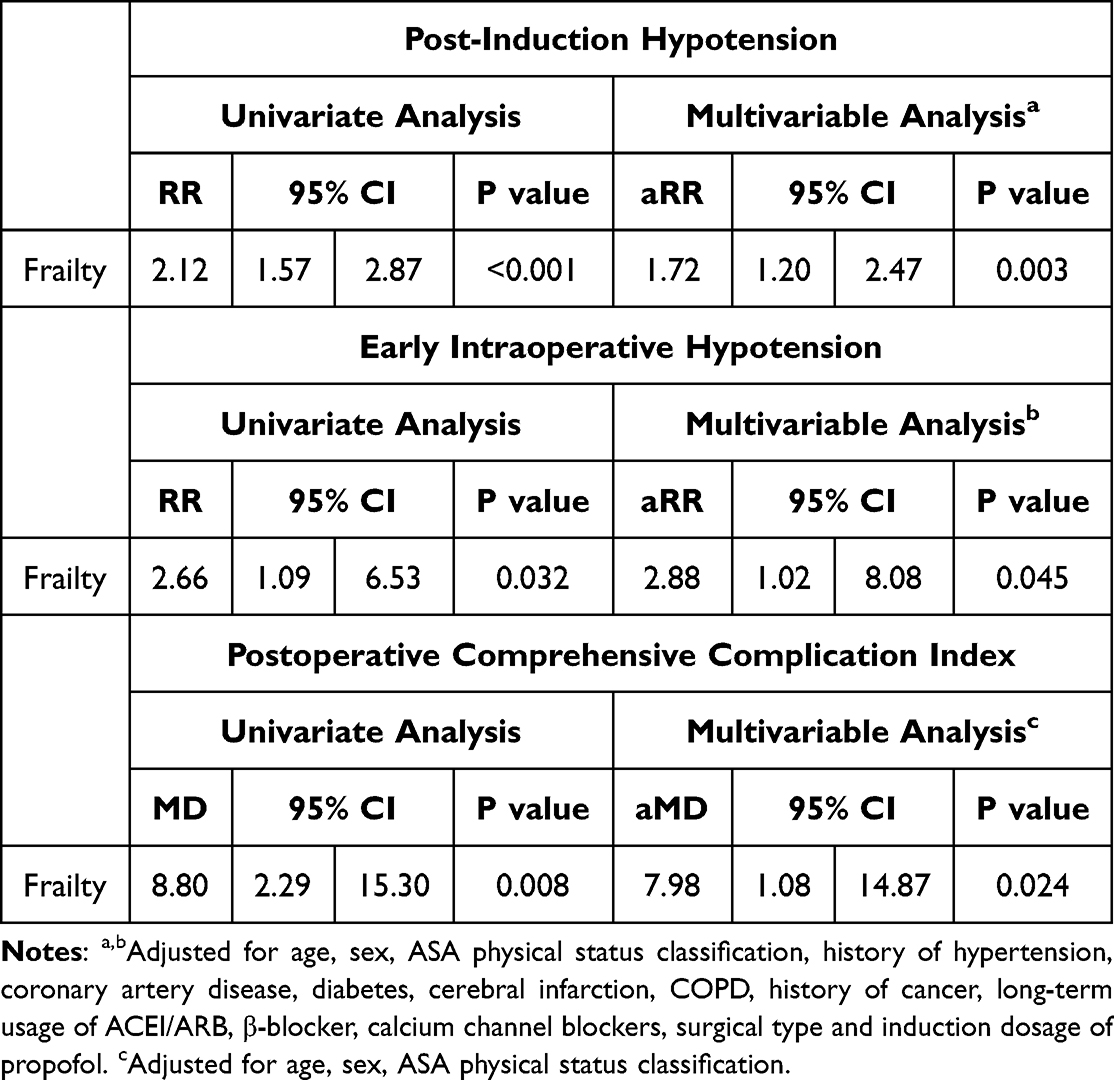 |
Table 3 Univariate and Multivariable Analyses of Preoperative Frailty and Outcomes |
Considering that preoperative hypovolemia may be a risk factor for PIH, we also performed passive leg raising (PLR) test in patients without contraindications for the test preoperatively. A total of 101 patients finished the PLR test, of which 32 patients (31.7%) were tested positive. However, hypovolemia was not significantly associated with PIH (aRR 0.87, 95% CI 0.55–1.38, P=0.562). Multivariable analysis showed that preoperative frailty remained a risk factor for PIH (aRR 1.57, 95% CI 1.07–2.29, P=0.020) after adjusting for hypovolemia and baseline characteristics (Table 4).
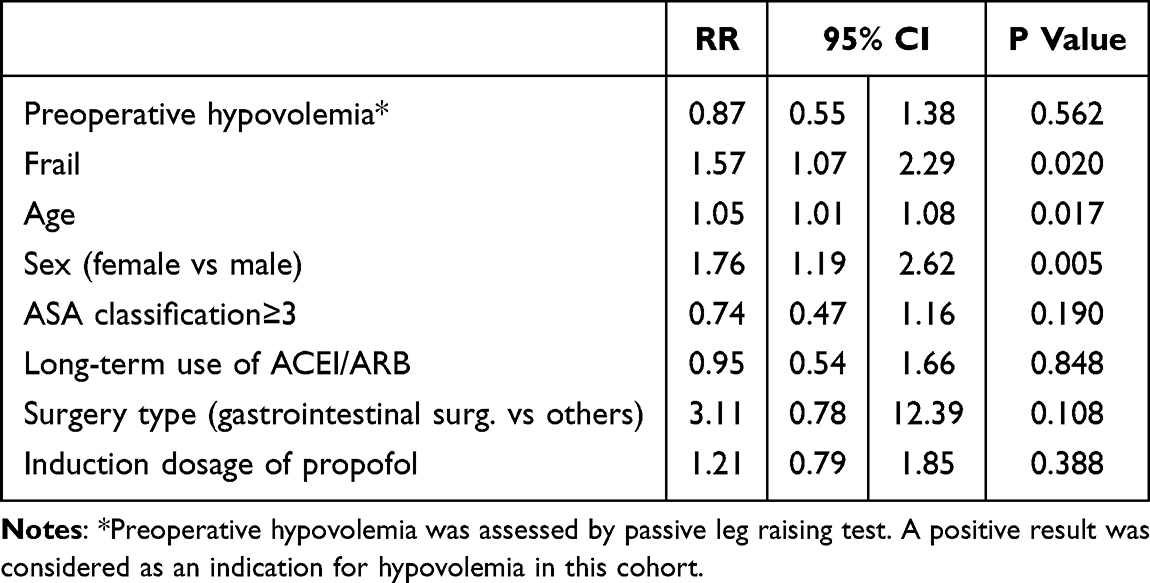 |
Table 4 Multivariable Analysis of Preoperative Hypovolemia and PIH |
In terms of postoperative complications (Table 5), comprehensive complication index within 30 days after surgery was significantly higher in frail patients than non-frail patients (22.1 ± 14.1 vs 13.3 ± 15.2, P = 0.008). After adjusting for age, sex and ASA physical status classification, multivariable analysis still showed higher postoperative CCI in frail patients than non-frail patients (aMD 7.98, 95% CI 1.08–14.87, P=0.024) (Table 3). More patients with frailty experienced relatively severer postoperative complications of Clavien-Dindo classification ≥3. However, other postoperative recovery index including day of defecation, day of urination, day of oral intake and length of stay were not significantly different between each group. Although the cost was higher in frail patients, the differences were not significant (Table 5).
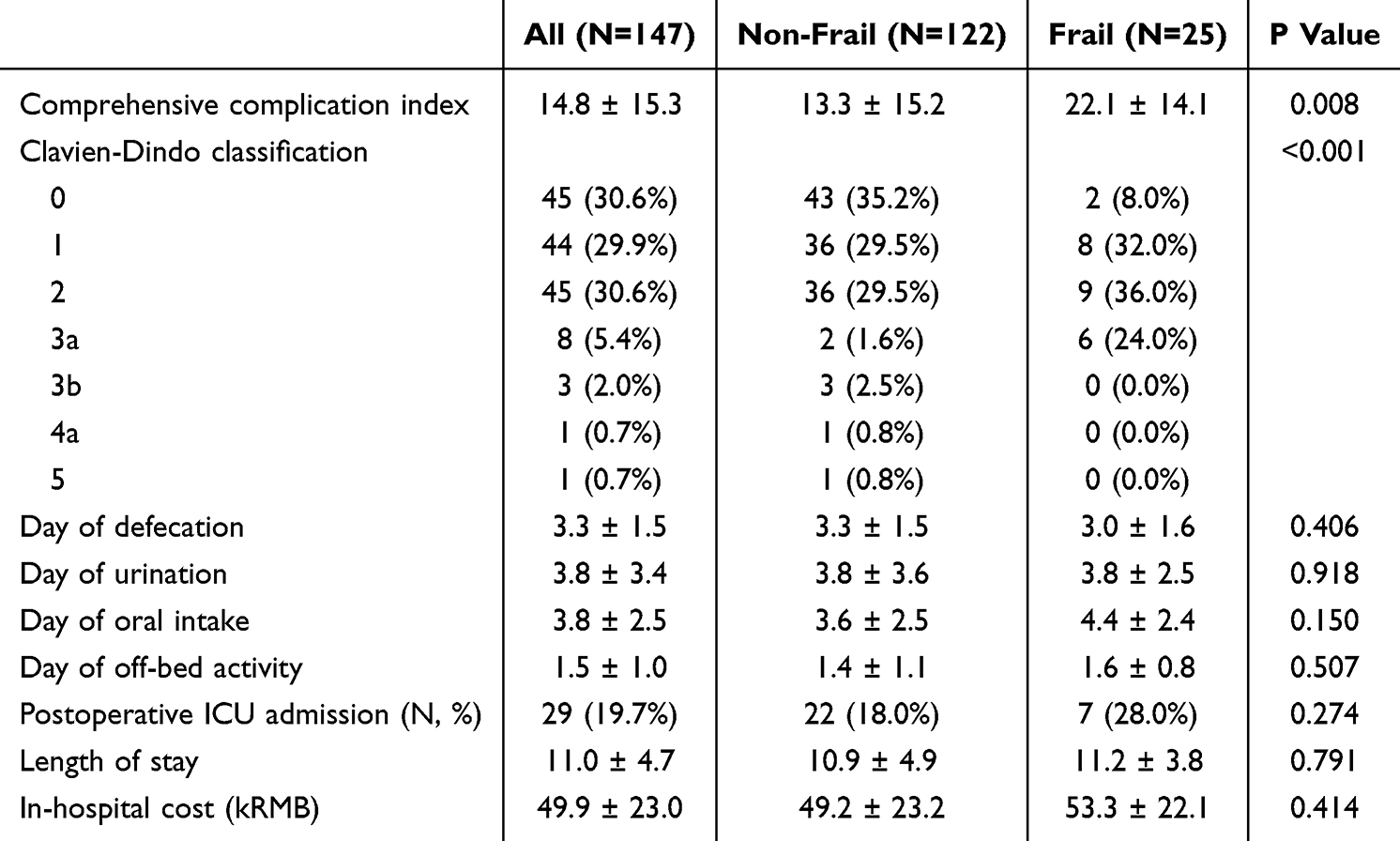 |
Table 5 Postoperative Complications and Recovery |
Discussion
This study was the first study focusing on the influence of frailty on post-induction hypotension. As a comprehensive concept of decreased functional reserve, frailty is being increasingly recognized by perioperative physicians and is found to be highly prevalent among the elderly surgical population. We found that preoperative frailty was associated with increased risk of PIH and early intraoperative hypotension in elderly surgical patients.
Hypotension after administration of general anesthetics is rather common in clinical observations, as most anesthetics may induce a vasodilation and negative inotropic and chronotropic effect, which cause reduction in peripheral vascular resistance as well as cardiac output. In younger patients with normal physical condition, autoregulation will restore hemodynamic stability instantly; however, this process might be difficult when it comes to elderly patients with reduced cardiovascular reserve or disability in autonomic tone, inducing drastic hemodynamic change after general anesthesia. Previous studies have identified several risk factors for post-induction hypotension, including senior age, ASA classification III to IV, type II diabetes mellitus, preoperative usage of ACEI or ARB medications, hypotension before induction, and large dosage of propofol.1,25,26 However, these factors were not significantly associated with PIH in this cohort, in which overall incidence of PIH was 44.9%, higher than previous studies. This indicates that other than traditional predictors, preoperative frailty assessment might be more informative for prediction of PIH in high-risk elderly patients.
Hypovolemia was traditionally considered as a risk factor for PIH. However, preoperative hypovolemia assessed by passive leg raising test was not significantly associated with PIH in this cohort. Consistent with previous study in which preoperative goal-directed fluid therapy to reach euvolemia could not significantly reduce PIH,27 this suggested that hypovolemia was not the sole reason for PIH. Previous study discovered that patients with PIH presented with significantly lower heart rate variability,28 indicating that autonomic dysfunction might play a role in PIH. One study suggested that pupil maximum constriction velocity, an indicator for autonomic function, could be a predictor for post-induction hypotension.29 We noticed that over one-third patient experienced bradycardia during the period of post-induction hypotension, suggesting regression of baroreflex and autonomic tone dysfunction in these patients. Autonomic dysfunction is a rather prevalent phenomenon in frail patients.30,31 In our cohort, autonomic function was briefly assessed by measuring orthostatic blood pressure. Consistent with previous studies, orthostatic hypotension was more predominant in frail patients in our cohort, presented with reduced reactivity to physical stress and postural change.10,30–34 Therefore, we hypothesize that the association between frailty and higher risk of PIH and early intraoperative hypotension may be attributed to the impaired autonomic function and cardiovascular regulation in these frail patients. Future studies with quantifiable measurements of autonomic function, such as heart rate variability, baroreflex sensitivity test or pupillary light reflex, are needed to further confirm this hypothesis.
Our study also observed that frail patients were at higher risks of postoperative complications, especially infection-related complications, in concordance with previous studies.35 Frail patients were at higher risks for anemia, hypo-albuminemia, malnutrition, sarcopenia, and chronic inflammation,36,37 which might attribute to poorer wound healing and difficulties in early postoperative mobilization. Several studies have focused on multimodal prehabilitation program to improve patients’ perioperative functional capacity and postoperative outcomes,38,39 yet the optimal prehabilitation strategies remain to be further explored.
This study also has several limitations. For ethical considerations, this study is designed as an observational study without strict and standard induction protocol, only recommended titrating of induction medications for clinical safety. The attending anesthesiologists could choose appropriate induction methods according to individual situations. In order to reduce the influence of different anesthesia protocol on PIH, patients who received total intravenous anesthesia were excluded from the data analysis; however, this might also bring selection bias. In future studies, standardized anesthesia induction protocols may be preferred to limit confounding factors. However, the results of this study also found that even if the induction regimen combined with etomidate was adopted in frail patients, the incidence of PIH could not be avoided, which further suggested the importance of preoperative frailty assessment. The majority population of frail patients in this cohort were with gastrointestinal tumor, which might influence the external validity or generalizability of the result in other non-cardiac surgical population. Although this study was the first study illustrating that preoperative frailty was associated with post-induction hypotension, the duration and severity of PIH could be further analyzed in future quantitative studies. Lastly, as a clinical observational cohort study, the mechanism behind frailty and post-induction hypotension requires further studies to elucidate.
Conclusion
In conclusion, frail elderly patients are at higher risk for post-induction hypotension after general anesthesia, suggesting impaired autonomic regulation in frail patients. Although future studies are needed to further explore its underlying mechanism, preoperative frailty assessment might assist anesthesiologists to identify high-risk patients to optimize their anesthesia plan.
Abbreviations
ACEI, angiotensin-converting enzyme inhibitors; ARB, angiotensin receptor blockers; ASA, American Society of Anesthesiologists; BMI, body weight index; CCB, channel blockers; CCI, comprehensive complication index; CI, confidence intervals; CKD, chronic kidney disease; eIOH, early intraoperative hypotension; MD, mean difference; MNA-SF, Mini Nutritional Assessment - Short Form; PIH, post-induction hypotension; POD, postoperative day; QoR-15,15 item Quality of recovery score; RCRI, revised cardiac risk index; RR, rate ratio; SD, standard deviation.
Data Sharing Statement
Deidentified participant data analyzed during the current study are available from the corresponding author (Dr Li Xu) upon reasonable request.
Funding
This study was funded by Peking Union Medical College Hospital National High Level Hospital Clinical Research Funding (2022-PUMCH-B-119).
Disclosure
The authors report no conflicts of interest in this work.
References
1. Jor O, Maca J, Koutna J. et al. Hypotension after induction of general anesthesia: occurrence, risk factors, and therapy. A prospective multicentre observational study. J Anesth. 2018;32(5):673–680. doi:10.1007/s00540-018-2532-6
2. Sudfeld S, Brechnitz S, Wagner JY, et al. Post-induction hypotension and early intraoperative hypotension associated with general anaesthesia. Br J Anaesth. 2017;119(1):57–64. doi:10.1093/bja/aex127
3. Maheshwari K, Turan A, Mao G, et al. The association of hypotension during non-cardiac surgery, before and after skin incision, with postoperative acute kidney injury: a retrospective cohort analysis. Anaesthesia. 2018;73(10):1223–1228. doi:10.1111/anae.14416
4. Green RS, Butler MB. Postintubation Hypotension in General Anesthesia: a Retrospective Analysis. J Intens Care Med. 2016;31(10):667–675. doi:10.1177/0885066615597198
5. Lee J, Woo J, Kang AR, et al. Comparative Analysis on Machine Learning and Deep Learning to Predict Post-Induction Hypotension. Sensors. 2020;20(16):1.
6. Oh EJ, Min JJ, Kwon E, Choi EA, Lee JH. Evaluation of pre-induction dynamic arterial elastance as an adjustable predictor of post-induction hypotension: a prospective observational study. J Clin Anesth. 2023;87:111092. doi:10.1016/j.jclinane.2023.111092
7. Aktas Yildirim S, Sarikaya ZT, Dogan L, Ulugol H, Gucyetmez B, Toraman F. Arterial Elastance: a Predictor of Hypotension Due to Anesthesia Induction. J Clin Med. 2023;12(9):3155. doi:10.3390/jcm12093155
8. Saugel B, Bebert EJ, Briesenick L, et al. Mechanisms contributing to hypotension after anesthetic induction with sufentanil, propofol, and rocuronium: a prospective observational study. J Clin Monit Comput. 2022;36(2):341–347. doi:10.1007/s10877-021-00653-9
9. Clegg A, Young J, Iliffe S, Rikkert MO, Rockwood K. Frailty in elderly people. Lancet. 2013;381(9868):752–762. doi:10.1016/S0140-6736(12)62167-9
10. Kocyigit SE, Soysal P, Bulut EA, Aydin AE, Dokuzlar O, Isik AT. What is the relationship between frailty and orthostatic hypotension in older adults? J Geriatr Cardiol. 2019;16(3):272–279. doi:10.11909/j.issn.1671-5411.2019.03.005
11. Richter D, Guasti L, Walker D, et al. Frailty in cardiology: definition, assessment and clinical implications for general cardiology. Eur J Prev Cardiol. 2022;29(1):216–227. doi:10.1093/eurjpc/zwaa167
12. Damluji AA, Chung SE, Xue QL, et al. Frailty and cardiovascular outcomes in the National Health and Aging Trends Study. Eur Heart J. 2021;42(37):3856–3865. doi:10.1093/eurheartj/ehab468
13. Ko D, Bostrom JA, Qazi S, Kramer DB, Kim DH, Orkaby AR. Frailty and Cardiovascular Mortality: a Narrative Review. Curr Cardiol Rep. 2023;25(4):249–259. doi:10.1007/s11886-023-01847-0
14. Abt NB, Richmon JD, Koch WM, Eisele DW, Agrawal N. Assessment of the Predictive Value of the Modified Frailty Index for Clavien-Dindo Grade IV Critical Care Complications in Major Head and Neck Cancer Operations. JAMA Otolaryngol Head Neck Surg. 2016;142(7):658–664. doi:10.1001/jamaoto.2016.0707
15. Gracie TJ, Caufield-Noll C, Wang NY, Sieber FE. The Association of Preoperative Frailty and Postoperative Delirium: a Meta-analysis. Anesth Analg. 2021;133(2):314–323. doi:10.1213/ANE.0000000000005609
16. Palumbo C, Knipper S, Pecoraro A, et al. Patient frailty predicts worse perioperative outcomes and higher cost after radical cystectomy. Surg Oncol. 2020;32:8–13. doi:10.1016/j.suronc.2019.10.014
17. Wahl TS, Graham LA, Hawn MT, et al. Association of the Modified Frailty Index With 30-Day Surgical Readmission. JAMA Surg. 2017;152(8):749–757. doi:10.1001/jamasurg.2017.1025
18. Makary MA, Segev DL, Pronovost PJ, et al. Frailty as a predictor of surgical outcomes in older patients. J Am Coll Surg. 2010;210(6):901–908. doi:10.1016/j.jamcollsurg.2010.01.028
19. Morley JE, Malmstrom TK, Miller DK. A simple frailty questionnaire (FRAIL) predicts outcomes in middle aged African Americans. J Nutr Health Aging. 2012;16(7):601–608. doi:10.1007/s12603-012-0084-2
20. Johnson EP, Monsour R, Hafez O, Kotha R, Ackerman RS. Major Perioperative Cardiac Risk Assessment: a Review for Cardio-Oncologists and Perioperative Physicians. Clin Practice. 2024;14(3):906–914. doi:10.3390/clinpract14030071
21. Poulia KA, Yannakoulia M, Karageorgou D, et al. Evaluation of the efficacy of six nutritional screening tools to predict malnutrition in the elderly. Clin Nutr. 2012;31(3):378–385. doi:10.1016/j.clnu.2011.11.017
22. Stark PA, Myles PS, Burke JA. Development and psychometric evaluation of a postoperative quality of recovery score: the QoR-15. Anesthesiology. 2013;118(6):1332–1340. doi:10.1097/ALN.0b013e318289b84b
23. Clavien PA, Barkun J, de Oliveira ML, et al. The Clavien-Dindo classification of surgical complications: five-year experience. Ann Surg. 2009;250(2):187–196. doi:10.1097/SLA.0b013e3181b13ca2
24. Slankamenac K, Graf R, Barkun J, Puhan MA, Clavien P-A. The comprehensive complication index: a novel continuous scale to measure surgical morbidity. Ann Surg. 2013;258(1):1–7. doi:10.1097/SLA.0b013e318296c732
25. Reich DL, Hossain S, Krol M, et al. Predictors of hypotension after induction of general anesthesia. Anesth Analg. 2005;101(3):622–628. doi:10.1213/01.ANE.0000175214.38450.91
26. Schonberger RB, Dai F, Michel G, et al. Association of propofol induction dose and severe pre-incision hypotension among surgical patients over age 65. J Clin Anesthesia. 2022;80:110846. doi:10.1016/j.jclinane.2022.110846
27. Khan AI, Fischer M, Pedoto AC, et al. The impact of fluid optimisation before induction of anaesthesia on hypotension after induction. Anaesthesia. 2020;75(5):634–641. doi:10.1111/anae.14984
28. Padley JR, Ben-Menachem E. Low pre-operative heart rate variability and complexity are associated with hypotension after anesthesia induction in major abdominal surgery. J Clin Monit Comput. 2018;32(2):245–252. doi:10.1007/s10877-017-0012-4
29. Shao L, Zhou Y, Yue Z, et al. Pupil maximum constriction velocity predicts post-induction hypotension in patients with lower ASA status: a prospective observational study. BMC Anesthesiol. 2022;22(1):274. doi:10.1186/s12871-022-01808-0
30. Parvaneh S, Howe CL, Toosizadeh N, et al. Regulation of Cardiac Autonomic Nervous System Control across Frailty Statuses: a Systematic Review. Gerontology. 2015;62(1):3–15. doi:10.1159/000431285
31. Alvarez-Millan L, Lerma C, Castillo-Castillo D, et al. Chronotropic Response and Heart Rate Variability before and after a 160 m Walking Test in Young, Middle-Aged, Frail, and Non-Frail Older Adults. Int J Environ Res Public Health. 2022;19(14):8413. doi:10.3390/ijerph19148413
32. Romero-Ortuno R, Cogan L, O’Shea D, Lawlor BA, Kenny RA. Orthostatic haemodynamics may be impaired in frailty. Age Ageing. 2011;40(5):576–583. doi:10.1093/ageing/afr076
33. Debain A, Loosveldt FA, Knoop V, et al. Frail older adults are more likely to have autonomic dysfunction: a systematic review and meta-analysis. Ageing Res Rev. 2023;87:101925. doi:10.1016/j.arr.2023.101925
34. Frandsen MN, Mehlsen J, Foss NB, Kehlet H. Pre-operative autonomic nervous system function - a missing link for post-induction hypotension? Anaesthesia. 2022;77(2):139–142. doi:10.1111/anae.15546
35. Aguilar-Frasco JL, Rodriguez-Quintero JH, Moctezuma-Velazquez P, et al. Frailty index as a predictive preoperative tool in the elder population undergoing major abdominal surgery: a prospective analysis of clinical utility. Langenbecks Arch Surg. 2021;406(4):1189–1198. doi:10.1007/s00423-021-02128-6
36. Ni Lochlainn M, Cox NJ, Wilson T, et al. Nutrition and Frailty: opportunities for Prevention and Treatment. Nutrients. 2021;13(7):2349. doi:10.3390/nu13072349
37. Ferrucci L, Fabbri E. Inflammageing: chronic inflammation in ageing, cardiovascular disease, and frailty. Nat Rev Cardiol. 2018;15(9):505–522. doi:10.1038/s41569-018-0064-2
38. Minnella EM, Awasthi R, Loiselle SE, Agnihotram RV, Ferri LE, Carli F. Effect of Exercise and Nutrition Prehabilitation on Functional Capacity in Esophagogastric Cancer Surgery: a Randomized Clinical Trial. JAMA Surg. 2018;153(12):1081–1089. doi:10.1001/jamasurg.2018.1645
39. Carli F, Bousquet-Dion G, Awasthi R, et al. Effect of Multimodal Prehabilitation vs Postoperative Rehabilitation on 30-Day Postoperative Complications for Frail Patients Undergoing Resection of Colorectal Cancer: a Randomized Clinical Trial. JAMA Surg. 2020;155(3):233. doi:10.1001/jamasurg.2019.5474
 © 2025 The Author(s). This work is published and licensed by Dove Medical Press Limited. The
full terms of this license are available at https://www.dovepress.com/terms
and incorporate the Creative Commons Attribution
- Non Commercial (unported, 4.0) License.
By accessing the work you hereby accept the Terms. Non-commercial uses of the work are permitted
without any further permission from Dove Medical Press Limited, provided the work is properly
attributed. For permission for commercial use of this work, please see paragraphs 4.2 and 5 of our Terms.
© 2025 The Author(s). This work is published and licensed by Dove Medical Press Limited. The
full terms of this license are available at https://www.dovepress.com/terms
and incorporate the Creative Commons Attribution
- Non Commercial (unported, 4.0) License.
By accessing the work you hereby accept the Terms. Non-commercial uses of the work are permitted
without any further permission from Dove Medical Press Limited, provided the work is properly
attributed. For permission for commercial use of this work, please see paragraphs 4.2 and 5 of our Terms.