
Back to Journals » Journal of Asthma and Allergy » Volume 19
Appropriate Use of Single Inhaled Triple Therapy in Uncontrolled Asthma: A Multinational Modified Delphi Consensus
Authors Mungan D, Cortes-Telles A  , Mokhtar M, Colodenco FD, Maillo M, Thomas PK, Mehta S, Al-Moamary MS , Tahoon H, Hussain R, Van Hasselt J, Hanania NA
Received 14 January 2026
Accepted for publication 16 April 2026
Published 25 May 2026 Volume 2026:19 590236
DOI https://doi.org/10.2147/JAA.S590236
Checked for plagiarism Yes
Review by Single anonymous peer review
Peer reviewer comments 4
Editor who approved publication: Dr Luis Garcia-Marcos
Dilsad Mungan,1 Arturo Cortes-Telles,2 Mahmoud Mokhtar,3 Federico Daniel Colodenco,4 Martin Maillo,5 PK Thomas,6 Sanjeev Mehta,7 Mohamed S Al-Moamary,8 Hind Tahoon,9 Razia Hussain,10 James Van Hasselt,11 Nicola A Hanania12
1Division of Allergy and Immunology, Department of Chest Diseases, Ankara University School of Medicine, Ankara, Türkiye; 2Clinica de Enfermedades Respiratorias, Hospital Regional de Alta Especialidad de la Peninsula de Yucatan IMSS-Bienestar, Merida, Mexico; 3Respiratory Unit, Department of Medicine, Mubarak Al-Kabeer Hospital, Jabriya, Kuwait; 4Allergy and Immunology, University of Buenos Aires, Buenos Aires, Argentina; 5Pulmonology and Allergy, Instituto Del Buen Aire, Universidad Nacional Del Litoral, Hospital “Dr. José María Cullen”, Santa Fe, Argentina; 6Tuberculosis & Chest Diseases, MGM Healthcare, Chennai, India; 7Allergy and Sleep Medicine, Lilavati Hospital and Arogya Nidhi Hospitals, Mumbai, India; 8Department of Medicine, College of Medicine, King Saud bin Abdulaziz University for Health Sciences, Riyadh, Saudi Arabia; 9Respiratory Medical Affairs, GlaxoSmithKline Plc., Jeddah, Saudi Arabia; 10Medical Department, GSK Life Sciences, Dubai, United Arab Emirates; 11Regional Medical Affairs, GSK, Bryanston, Gauteng, South Africa; 12Section of Pulmonary and Critical Care Medicine, Baylor College of Medicine, Houston, TX, USA
Correspondence: Hind Tahoon, GlaxoSmithKline plc, Jeddah, Saudi Arabia, Tel +966567766876, Email [email protected]
Introduction: Uncontrolled asthma is associated with impaired lung function, higher frequency of severe exacerbations, reduced quality of life, and increased healthcare costs. Although inhaled corticosteroids with long-acting β 2-agonists (ICS/LABA) form the cornerstone of treatment, many patients continue to experience suboptimal disease control. Despite additional therapeutic strategies, their utilization is inconsistent. We conducted a modified Delphi consensus among expert clinicians to understand their perceptions of treatment strategies in uncontrolled asthma and evaluate their approaches beyond ICS/LABA therapy with a focus on single-inhaler triple therapy and other add-on options, including biologics.
Methods: The study consisted of two rounds of online surveys and a panel meeting involving 27 respiratory experts from nine countries. A 59-statement questionnaire (52 consensus statements, seven open) was developed following a literature review. Responses were recorded using a 9-point scale ranging from 1 (disagreement) to 9 (agreement) with a consensus threshold of 75%.
Results: All experts participated in both surveys, and 22/27 attended a virtual panelists’ meeting. Consensus was reached on 39/52 and 3/13 statements in surveys-1 and − 2, respectively. Most panelists (15/27) estimated that 26– 50% of their patients with asthma have uncontrolled disease. Improvement in symptoms and reduction in exacerbations were perceived as key indicators of asthma control (96% agreement). Additionally, 93% agreed that adding a long-acting muscarinic antagonist (LAMA) to medium-high dose ICS/LABA is a valid option for patients with uncontrolled asthma, citing benefits in symptom relief, lung function, and exacerbation reduction. Consensus was not reached on the use of azithromycin, leukotriene modifiers or biologics in this population.
Conclusion: In this modified Delphi consensus, international respiratory experts agreed on adding LAMA in patients who remain uncontrolled on medium-high dose ICS/LABA. Most consensus statements aligned with prevalent guidelines. However, divergent opinions on the use of azithromycin, leukotriene modifiers or biologics highlight the need for evidence-informed treatment decisions.
Keywords: uncontrolled asthma, SITT, ICS/LAMA/LABA, delphi
Introduction
Asthma is a common respiratory condition estimated by the Global Burden of Disease collaboration to affect up to 262 million people worldwide in 2019.1 According to the estimates presented in the Global Asthma Report (GAR) 2022, despite access to care, one in eight adult patients had inadequately controlled symptoms.1 Despite treatment with inhaled corticosteroids combined with long-acting β2-agonists (ICS/LABA), approximately 30–70% of patients with asthma fail to achieve adequate symptom control,2,3 with 20–50% remaining uncontrolled even while on this therapy.4–6
The Global Initiative for Asthma (GINA) report defines uncontrolled asthma as having one or both of: a) poor symptom control (frequent symptoms or reliever use, activity limited by asthma, night waking due to asthma) and/or b) frequent exacerbations (≥2/year) requiring oral corticosteroids (OCS), or severe exacerbations (≥1/year) requiring hospitalization.7,8 Patients with uncontrolled asthma tend to have several modifiable and non-modifiable risk factors [inappropriate inhaler technique, inadequate adherence, education level, insurance status, smoking, and obesity defined as a body mass index (BMI) >30 kg/m2], as well as certain co-morbidities [chronic obstructive pulmonary disease (COPD), obstructive sleep apnea (OSA), gastroesophageal reflux disease (GERD), cardiac disease, anxiety, and depression].9 Altogether, these risk factors increase the risk of poor lung function, higher rates of severe exacerbations, worse quality of life, and higher direct and indirect disease and treatment-related costs.10,11
The increased risk of exacerbation accelerates lung function decline due to airway remodeling.12 Airway remodeling is also often attributed to an underlying inadequately treated chronic inflammatory process, which can contribute to persistent airflow obstruction.13 Furthermore, 13–26% of patients with asthma underperceive symptoms due to bronchoconstriction,14 which contributes to poor asthma symptom control.15
Long-term goals in asthma management include symptom control and minimizing the risk of exacerbations.16 GINA recommends a step-wise approach to achieve symptom control. According to these recommendations, ICS/LABA is the mainstay treatment option for patients in Steps 3 to 5, corresponding to moderate to severe asthma.7,8 For patients with asthma who remain uncontrolled despite receiving ICS/LABA, GINA suggests adding a long-acting muscarinic receptor antagonist (LAMA) as part of Step 4 or 5 therapy.7,8 However, the evidence surrounding the use of LAMA in uncontrolled, difficult-to-treat, or severe asthma is ambiguous and can be interpreted in multiple ways.17,18 Real‑world treatment patterns also often diverge from guideline recommendations.19 As observed in the Severe Asthma Network in Italy (SANI) 2021 and EU-LAMA precursor studies, clinicians tend to first maximize the ICS dose or introduce OCS before adding a LAMA, effectively creating a multiple-inhaler triple therapy (MITT) regimen when tiotropium is prescribed, underscoring gaps between evidence‑based recommendations and their practical application.19,20 In contrast, single-inhaler triple therapy (SITT) offers a simplified, fixed-dose combination approach, potentially improving adherence and treatment consistency.21 While LAMA is recommended before initiating biologics or OCS, the timing and criteria for its inclusion are not always clearly delineated.22 Nonetheless, emerging evidence supports the utility of triple therapy (ICS + LABA + LAMA) in improving outcomes for patients with severe asthma who are inadequately controlled on ICS/LABA alone. Though this approach may offer enhanced bronchodilation, reduced airway inflammation, and improved symptom control, ambiguity persists around the optimal timing, patient selection for initiating triple therapy in uncontrolled asthma and positioning SITT relative to MITT and biologic therapies. Addressing this gap requires multinational insight due to heterogeneity in clinical practice, healthcare system structures, and patient management patterns across regions.
Given the high burden of uncontrolled disease and the unclear evidence regarding the use of triple therapy in patients with uncontrolled asthma despite receiving ICS/LABA, we conducted a multinational modified Delphi consensus study to understand expert clinicians’ approaches to treating patients with uncontrolled asthma. Additionally, we sought to explore their criteria to select appropriate therapies for this patient population and determine their views on the appropriate use and timing of ICS-based triple therapy for patients with uncontrolled asthma.
Methods
Study Design
This study employed a modified Delphi technique,23 which included two rounds of cross-sectional surveys and a virtual panelist meeting among 27 respiratory experts from Argentina, Bahrain, Chile, India, Kuwait, Mexico, Saudi Arabia, Turkey, and the United Arab Emirates to determine their approach to the management of patients with asthma who remain uncontrolled despite ICS/LABA therapy. In contrast, the classic Delphi method employs a series of surveys, and typically, the results of the previous round are shared with respondents from the second round onwards.24
Cross-sectional surveys were conducted between May and June 2024, while a panelist meeting was conducted in June 2024. A research team developed a survey questionnaire, which was administered by an independent vendor using Decipher software (version Compact = 153). Responses were analyzed after each survey round using Microsoft Excel. All panelists’ information during the surveys was kept confidential and anonymous. The research complied with UK Data Protection law (GDPR) and the British Healthcare Business Intelligence Association’s (BHBIA) Legal and Ethical Guidelines.
Panelists
Twenty-seven international expert clinicians from nine countries, with recognized expertise in asthma management, were invited to participate. A prerequisite for participation was that triple therapy for asthma (ICS/LAMA/LABA) must be available for treatment in their respective countries.
The panelists were identified based on the following eligibility criteria:
(i) Respiratory specialist with more than 10 years of clinical experience in treating asthma.
(ii) Researcher in the field of asthma (Guideline author, Active Clinician, Academician).
(iii) Involved in diverse scientific activities related to asthma, including speakers at national/international congresses.
(iv) Membership of a respiratory society.
(v) Member of an international and/or national asthma guidelines committee.
(vi) Interest in improving patient care.
Additionally, to ensure ethical compliance, participants were provided with a detailed description of the study’s purpose and methodology before commencing each survey and were asked to provide informed consent to proceed. Both surveys were launched only after the participants provided consent. The same group of experts was invited to participate in all stages of the modified Delphi process. Participation in survey-2 was independent of the panelist meeting attendance.
Study Stages
Development of the Survey Questionnaire
A targeted literature search was conducted on the PubMed database utilizing different objective-specific search terms. Additional searches were conducted in Google Scholar and from other review article reference lists through cross-referenced articles. The search was not limited by time, and all applicable literature was screened. Only studies conducted in human populations and published in the English language were considered. All the retrieved articles were screened for population and objectives.
A 59-statement questionnaire (52 closed consensus statements and 7 open-ended qualitative questions) was developed following a literature review, and responses were recorded with a consensus threshold of 75% to address the following themes:
- Disease burden and assessment of patients uncontrolled on ICS/LABA (n=27; 6/27 open-ended)
- Use of ICS/LAMA/LABA triple therapy in patients with uncontrolled asthma (n=21; 1/21 open-ended)
- Selection of appropriate triple therapy devices in asthma (n=11)
Statements were refined through repeated feedback cycles and peer discussion. In line with a stepwise quality assessment approach adopted for various Delphi studies, we considered four key domains when designing and reporting this Delphi study: clearly defining the research question, transparently selecting and describing the expert panel, using iterative rounds with anonymous, structured feedback, and pre-specifying the consensus threshold of 75% which was consistent with previous studies that have employed the Delphi method.25,26
Survey-1 and Panelist Meeting
The first round of the Delphi survey was shared via Email to the panelists and completed online in May 2024. Panelists from the first round of the survey were invited to a virtual meeting to review the survey results and to share their expert views. The meeting was focused primarily on statements that did not achieve consensus in survey-1. This panelist meeting was arranged and facilitated by the sponsor and moderated by non-participating experts. The sponsor did not contribute to the survey response.
Survey-2 and Final Data Analysis
Statements that did not reach consensus in survey-1 and any additional statements deemed appropriate from the panelist meeting were included in survey-2 (n=14, 1 open-ended). Survey-2 was emailed to the panelists and was completed in June 2024. In survey-2, the participants had the opportunity to reconsider and revise their previous judgment on statements that did not reach consensus.
Data Analysis
Only the fully completed questionnaires were taken into consideration for descriptive analysis of the data. A 1-to-9-point scale was used to phrase the statements and rate responses as this scale offers greater granularity, allowing precise expression of opinions and distinguishing subtle differences. It facilitates nuanced consensus measurement, identifying strong agreement or disagreement. The wider range of options captures the complexity of expert opinions.
Panelists rated their level of agreement with each statement anonymously, ranging from 1 (strongly disagree) to 9 (strongly agree). These scores were further divided into three groups: agree (7–9 points), neither agree nor disagree (4–6 points), and disagree (1–3 points). Open-ended, top two priority options selection statements, and single-select radio button selection statements were quantified. Consensus was deemed to have been reached in both rounds of the survey when >75% of the respondents scored a characteristic within the same range.
Results
The panel primarily comprised active clinicians (n=8), many of whom also served as guideline authors (n=4) and/or academicians (n=6). All invited panelists (n=27) completed survey-1 and were then invited to participate in a virtual panelist meeting. In the panelist meeting, 22/27 panelists (81.5%) were present. Following the discussion, a revised second survey was circulated to all the original 27 panelists. The second survey was also completed by 100% (n=27) of the expert panelists.
In survey-1, panelists reached consensus on 39/52 closed-ended statements. The 13 statements that did not reach consensus in survey-1 and one statement added from the panelist meeting formed survey-2. In survey-2, consensus was reached on 3/13 closed-ended statements. Theme-wise results for each of the three concepts are presented below.
Disease Burden and Assessment of Patients Uncontrolled on ICS/LABA
Of the 21 close-ended statements, 18 achieved consensuses during the two surveys (survey-1: 17/21, survey-2: 1/4). Responses to seven open-ended questions were also collected. Table 1 summarizes all statements that achieved consensus.
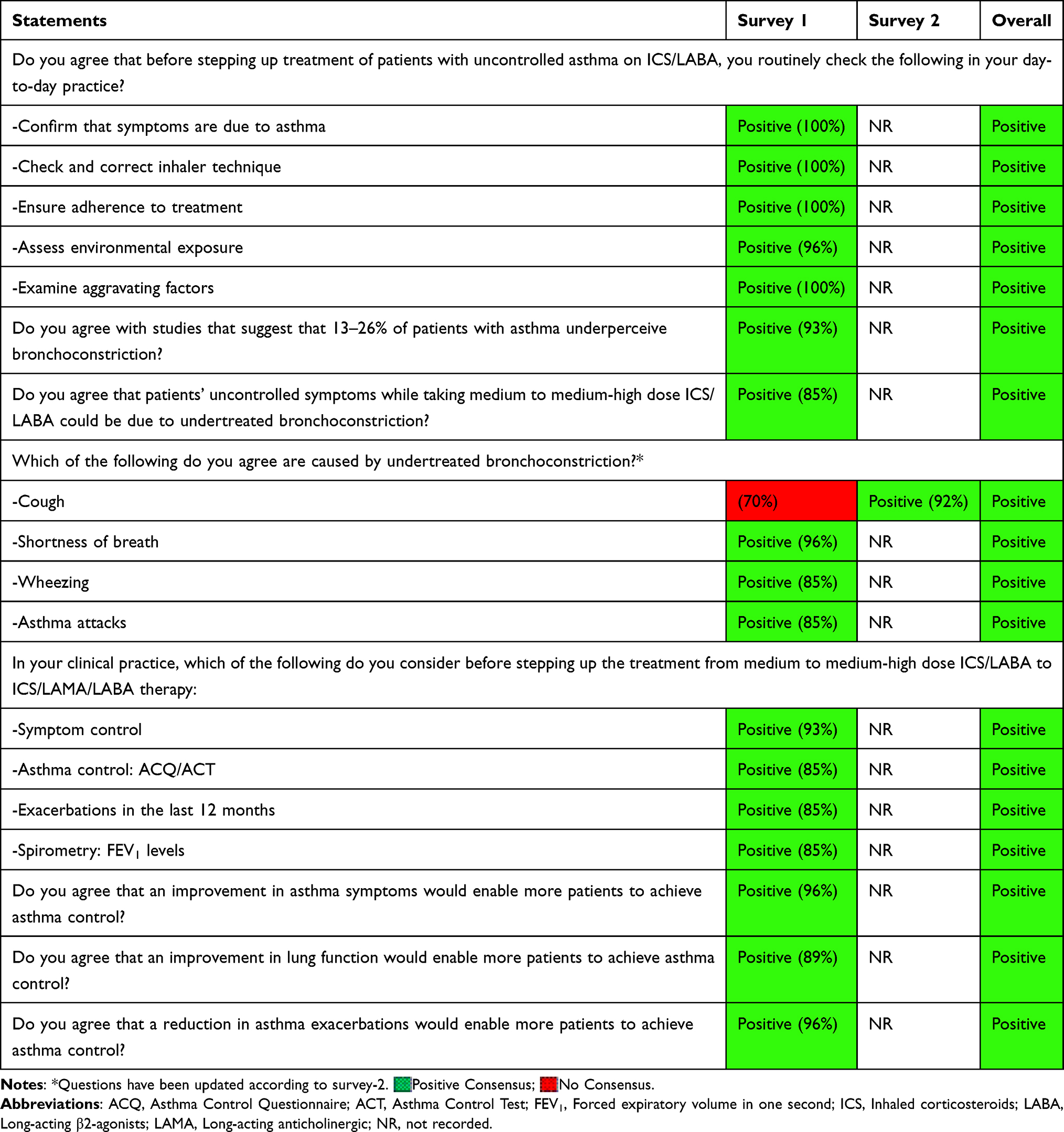 |
Table 1 Statements Achieving Consensus in Both Surveys for: Disease Burden and Assessment of Patients Uncontrolled on ICS/LABA |
All panelists (100%) agreed that they routinely check aspects such as confirming that symptoms are due to asthma, the inhaler technique is correct, the patients are adherent to their maintenance treatment and identifying and controlling aggravating factors before stepping up treatment in patients with uncontrolled asthma on ICS/LABA. Furthermore, 96% of the panelists also agreed that environmental exposure needs to be checked.
Panelists did not agree in survey-1 that cough (70% agreed) and phlegm production (48% agreed) can be confidently attributed to undertreated bronchoconstriction. In survey-2, however, a consensus was reached for cough (92%), but not for phlegm production (40% agreed) (Figure 1A).
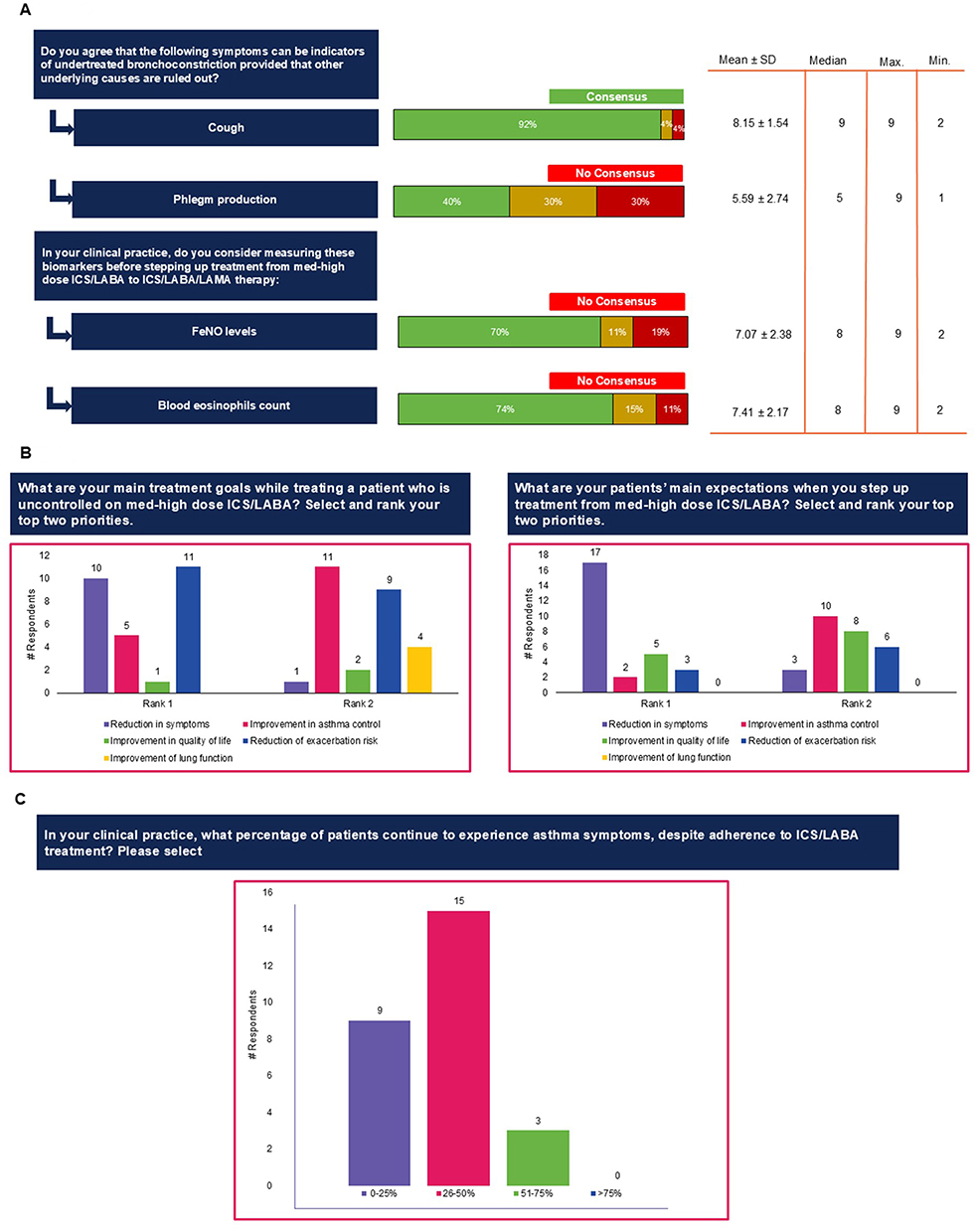 |
Figure 1 Disease burden and assessment of patients uncontrolled on ICS/LABA. (A) Survey-2: Consensus status for statements not reaching consensus in survey-1 (B) Survey-1- Open-ended questions (C) Survey-2 – Open-ended question. Abbreviations: FeNO, fractional exhaled nitric oxide; ICS, inhaled corticosteroids; LABA, long-acting beta2-agonists; LAMA, long-acting muscarinic antagonist. |
Consensus was reached on factors to be considered before stepping up the treatment from medium/high dose ICS/LABA to ICS/LAMA/LABA therapy. This included symptom control (93% agreed), asthma control by either Asthma Control Questionnaire (ACQ) or Asthma Control Test (ACT), exacerbations in the last 12 months, and spirometry by considering the forced expiratory volume in one second (FEV1) levels (85% agreed, each). Panelists did not reach consensus that measurement of fractional exhaled nitric oxide (FeNO) (survey-1: 48% agreed; survey-2: 70% agreed (Figure 1A) and blood eosinophils (survey-1: 52% agreed; survey-2: 74% agreed (Figure 1A) are required before stepping up treatment from medium-high dose ICS/LABA to ICS/LAMA/LABA therapy. Experts agreed that improvement in symptoms (96% agreed), improvement in lung function (89% agreed), and reduction of exacerbations (96% agreed) would enable more patients to achieve asthma control.
Reduction in exacerbation risk and improvement in asthma control were the most highly rated treatment goals according to the experts. Reduction in symptoms and improvement in asthma control were the main expectations of the patients according to the experts (Figure 1B).
In survey-1, 52% of panelists reported that approximately 50% of their patients continue to experience asthma symptoms, despite adherence to ICS/LABA treatment. Further questioning in survey-2 revealed that 26–50% of patients continue to experience asthma symptoms, despite adherence to ICS/LABA treatment according to 15 panelists, while 9 and 3 reported that up to 25% and 51–75% of patients experience symptoms, respectively (Figure 1C).
Use of ICS/LAMA/LABA and Other Add-on Therapies in Patients with Uncontrolled Asthma
Out of the 20 close-ended statements, 16 achieved consensus during the two surveys (survey-1: 14/20; survey-2: 2/6). Table 2 summarizes all the statements that achieved consensus. Figure 2 demonstrates the statements presented during survey-2 and the consensus status.
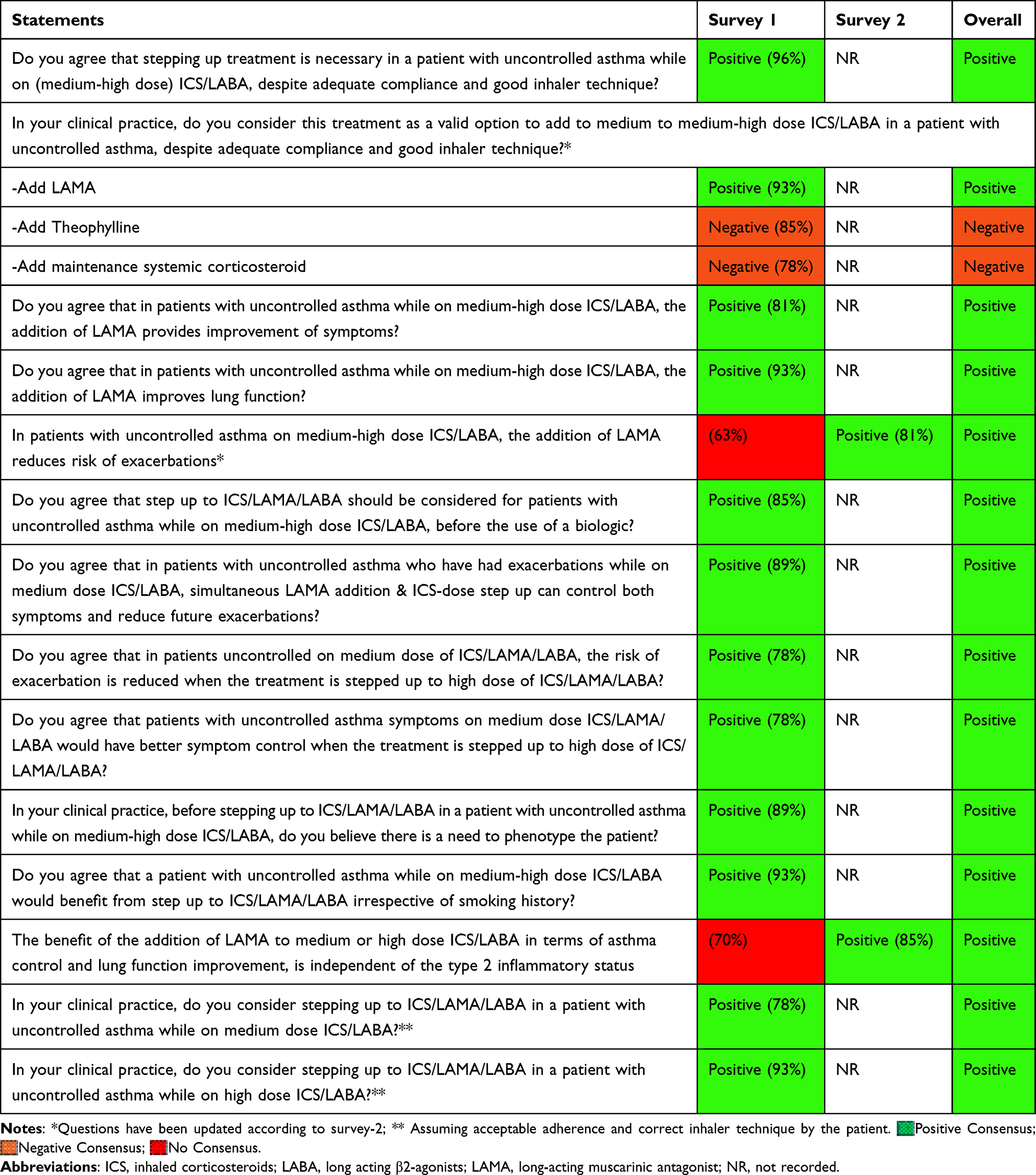 |
Table 2 Statements Achieving Consensus in Both Surveys for: Use of ICS/LAMA/LABA in Patients with Uncontrolled Asthma |
 |
Figure 2 Survey-2: Use of ICS/LAMA/LABA in patients with uncontrolled asthma- Consensus status for statements not reaching consensus in survey-1. *Assuming acceptable adherence and correct inhaler technique by the patient. Abbreviations: ICS, inhaled corticosteroids; LABA, long-acting beta2-agonists; LAMA, long-acting muscarinic antagonist. |
Consensus was reached that stepping up treatment is necessary for a patient with uncontrolled asthma while on medium-high dose ICS/LABA, despite adequate compliance and good inhaler technique (96% agreed). Additionally, 93% of the experts agreed that LAMA is a valid add-on treatment option for medium-high dose ICS/LABA in a patient with uncontrolled asthma despite adequate compliance and good inhaler technique). However, the experts did not agree on azithromycin (survey-1: 7% agreed; survey-2: 30% agreed) and leukotriene modifiers (survey-1: 23% agreed; survey-2: 30% agreed) while reaching a negative consensus on both theophylline (85% disagreed) and maintenance systemic corticosteroids (78% disagreed) to be valid add-on treatment options. Consensus was reached that in patients with uncontrolled asthma on medium-high dose ICS/LABA, the addition of LAMA provides improvement of symptoms (81% agreed), improves lung function (93% agreed), and reduces the risk of exacerbation (survey-1: 63% agreed; survey-2: 81% agreed). Furthermore, consensus was also reached that stepping up to ICS/LAMA/LABA should be considered for patients with uncontrolled asthma while on medium-high dose ICS/LABA, before the use of a biologic (85% agreed).
Furthermore, 78% of panelists agreed that stepping up from a medium dose of ICS/LAMA/LABA to a high dose of ICS/LAMA/LABA reduces the risk of exacerbation and improves symptom control in patients who have uncontrolled asthma. The panelists also agreed that patients on medium-high dose ICS/LABA would benefit from stepping up to ICS/LAMA/LABA regardless of the smoking history (93% agreed).
Additionally, a consensus was reached that in patients with uncontrolled asthma who have had exacerbations while on medium-dose ICS/LABA, simultaneous LAMA addition and ICS dose step-up can both control symptoms and reduce future exacerbations (89% agreed).
Panelists agreed on phenotyping the patient before stepping up the treatment (89% agreed) and that asthma control and lung function improvement with add-on LAMA are independent of the type 2 inflammatory status (survey-1: 70%; survey-2: 85%). The panelists reached consensus on stepping up to ICS/LAMA/LABA in patients with uncontrolled asthma while on medium dose and high dose ICS/LABA (78% and 93% agreed, respectively), but this was not achieved for low dose ICS/LABA (survey-1: 52%; survey-2: 37%).
Selection of Appropriate Triple Therapy in Asthma
Of the 11 closed-ended statements, eight statements achieved consensus during the two surveys (survey-1: 8/10; survey-2: 0/3). Table 3 summarizes all the statements that achieved consensus. Figure 3 demonstrates the statements presented during survey-2 and the consensus status.
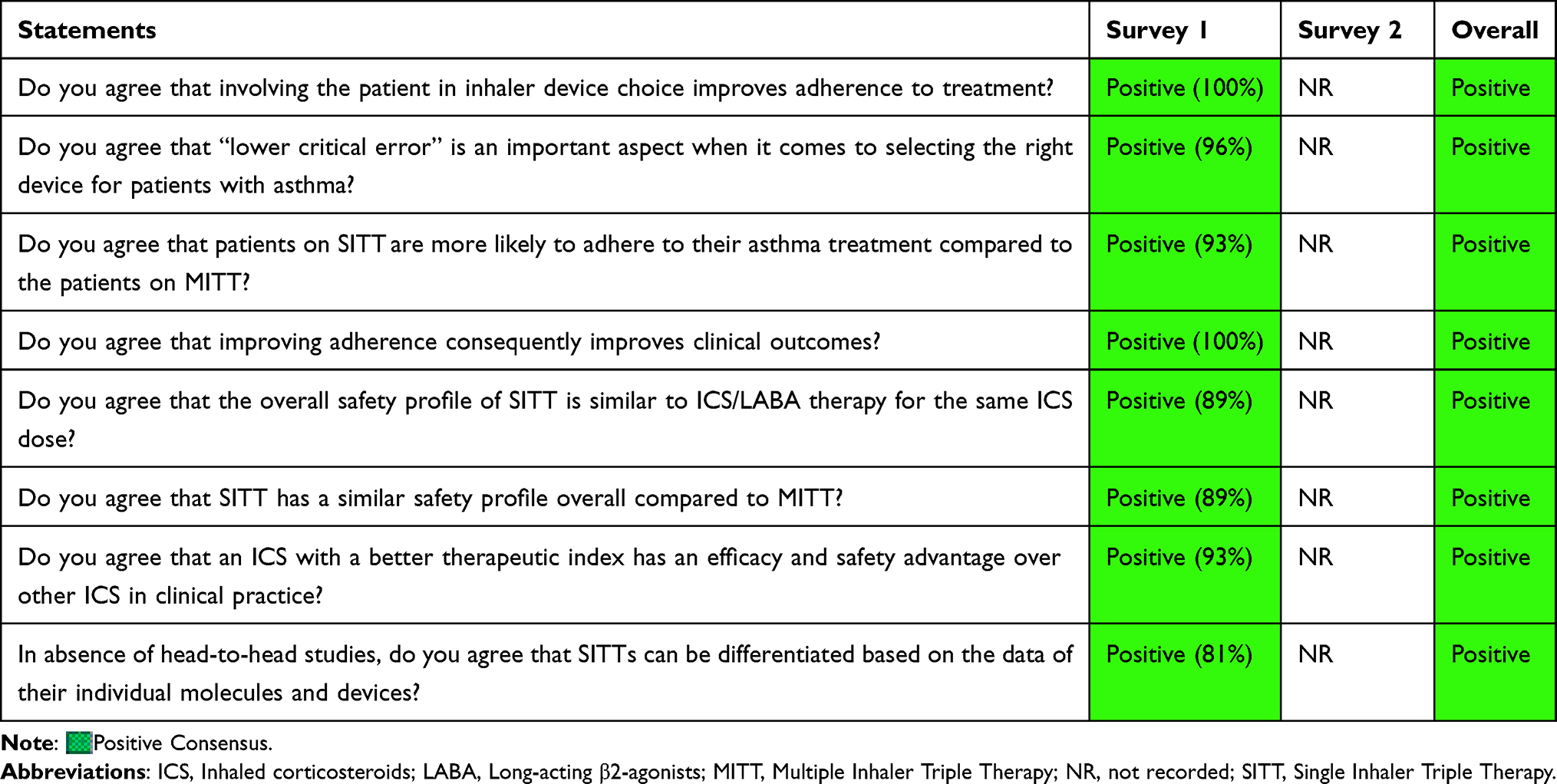 |
Table 3 Statements Achieving Consensus in Both Surveys for: Selection of Appropriate Triple Therapy in Asthma |
 |
Figure 3 Survey-2: Selection of appropriate triple therapy in asthma - Consensus status for statements not reaching consensus in survey-1. *SITT: Single Inhaler Triple Therapy. |
A consensus was reached on most statements. Absolute consensus was reached on that involving the patient in inhaler device choice improves adherence to treatment and improving adherence consequently improves clinical outcomes (100% agreed), while an agreement from 96% of the panelists regarding “lower critical error” being an important aspect when it comes to selecting the right device for patients with asthma was achieved. Furthermore, 93% of the panelists agreed that patients on Single Inhaler Triple Therapy (SITT) are more likely to adhere to their asthma treatment compared to patients on Multiple Inhaler Triple Therapy (MITT). The panelists agreed (89% agreed) that the overall safety profile of SITT is similar to ICS/LABA therapy for the same ICS dose and that SITT has a similar safety profile overall compared to MITT. The statement that ICS with a better therapeutic index has an efficacy and safety advantage over other ICS in clinical practice reached a consensus with 93% agreement from the panelists. The panelists also agreed that SITTs can be differentiated based on the data of their molecules and devices in the absence of head-to-head studies (81% agreed).
Consensus was not reached on the statements that all SITT molecules had similar safety (survey-1: 67%; survey-2: 67%), had similar efficacy profiles (survey-1: 44%; survey-2: 48%), and that they were equally easy to use (37% agreed).
Discussion
In this modified Delphi consensus, consensus among international clinicians’ experts was reached on several key concepts related to uncontrolled moderate to severe asthma. The panel largely agreed on the disease burden and assessment methods, including confirming the symptoms were due to asthma, ensuring correct inhaler technique/adherence, ruling out environmental and aggravating factors, as well as considering symptom assessment scores, spirometry, and annual asthma exacerbation history before stepping up the treatment. This reflects the continued importance of optimizing basic clinical management before escalating to more complex or costly therapies. There were mixed opinions regarding the choice of certain add-on treatments to ICS/LABA in patients with uncontrolled asthma. Experts agreed on the addition of LAMA for patients uncontrolled on medium-high dose ICS/LABA concerning SITT and MITT, which aligned with current guidelines. The divergent opinions of the experts on utilizing certain add-on therapies, such as azithromycin, leukotrienes, and biologic therapy, in patients with uncontrolled asthma are not unexpected and, in some areas, differ from recommendations such as those set forth by the GINA. These areas of uncertainty highlight the need for individualized, context-specific treatment decisions. Moreover, the panel of experts also identified areas for further research to optimize the treatment of patients with uncontrolled asthma.
LAMAs are considered as an add-on therapy to ICS/LABA in “Step 4 and 5” of GINA guidelines, either in a single inhaler device (SITT) or in a separate inhaler device (MITT). Certain factors, such as asthma control, symptom control, FEV1 levels, exacerbation history, and patient history, are important factors to consider before stepping from ICS/LABA to ICS/LAMA/LABA.27 The addition of LAMA has been shown to reduce the future risk of exacerbations, lower OCS exposure, and improve lung function.28–30 GINA recommends the addition of LAMA in patients uncontrolled on medium dose ICS/LABA.7,8 The panelists in this modified Delphi consensus agreed that patients uncontrolled on medium- high dose ICS/LABA should be escalated to ICS/LAMA/LABA and that this escalation is associated with improvements in symptoms and lung function. However, the panelists disagreed initiating LAMA in patients uncontrolled on low-dose ICS/LABA, and indicated that the effect of LAMA is independent of type 2 inflammation. These findings suggest that ICS/LAMA/LABA is viewed as an appropriate escalation step once ICS/LABA doses have been optimized. Although the panelists initially did not reach consensus on the statement that the addition of LAMA is associated with reduced risk of exacerbations, a consensus was reached during the second survey. While the CAPTAIN study provides evidence surrounding the efficacy of LAMA,28 the evidence is not consistent. Furthermore, unclear guidance from recommendation documents like GINA on adding LAMA to various ICS/LABA strengths may have contributed to the divergent views among experts.
The expert panel’s opinion aligns with a real-world study conducted in the US, which reported a 41% reduction in asthma-related exacerbations in patients who initiated treatment with SITT. Additionally, the study found that regular use of daily SITT is associated with decreased reliance on short-acting beta-2 agonists for managing asthma symptoms, a reduction in the number of OCS dispensing, and a reduced risk of exacerbations.30 Another study showed a significant reduction in the likelihood of asthma-related exacerbations following the initiation of SITT, with odds decreasing by 52% compared to the pre-initiation period (OR [95% CI]: 0.48 [0.46, 0.50]; p < 0.001). Additionally, the rate of exacerbations dropped by 38% (RR [95% CI]: 0.62 [0.61, 0.64]; p < 0.001).31 Administration of triple therapy (ICS/LAMA/LABA) can be either MITT or SITT. The latter may be a preferred method for administration to limit the costs associated with multiple inhalers and to eliminate medication and device errors. Studies have shown that SITT is associated with lower healthcare resource utilization, better cost-effectiveness, improved adherence and 12‑month treatment persistence compared with MITT.32–34 The panel agreed that SITT improves adherence and has a similar safety profile to MITT, supporting its use as a pragmatic option in appropriate patients, but did not agree that all SITTs are equivalent in terms of clinical efficacy and safety. Direct head-to-head data relating to the clinical efficacy and safety of these combinations is lacking and may be an area for future research.
Adherence to treatment among patients with asthma is essential to optimize therapeutic benefits. Poor adherence has been associated with worse outcomes, such as persistent asthma symptoms, worsening quality of life, and higher risk of mortality.35 In this modified Delphi, after survey-1, the experts did not reach a consensus regarding the percentage of patients experiencing continued asthma symptoms, despite adherence to ICS/LABA treatment. Nevertheless, in survey-2, more than half of the panelists selected that in real life, between 26 and 50% of their patients experience continued symptoms despite adherence to ICS/LABA treatment. This finding underscores the variability observed in clinical practice, which aligns with established evidence. The contrasting responses to this question, designed specifically to capture real-world clinical observations, highlight the diversity in clinical experiences and perceptions. In the SNAPSHOT study conducted in five Middle Eastern countries, the rate of uncontrolled asthma was reported to be approximately 44%.36 In a study conducted in Japan, 53.7% and 36.3% of patients continuously treated with medium or high dose ICS/LABA reported their asthma as uncontrolled based on the Japanese Guidelines for Asthma (JGL) and GINA criteria, respectively.4 In another study, 36.4% (ACT-assessed) and 55.6% (ACQ-6-assessed) patients with asthma had inadequately controlled asthma.10 These data suggest that there may be factors beyond medication, such as the patient characteristics, the questionnaires/tools used to define control, and access to medication, which might lead to uncontrolled disease despite regular maintenance medication.
Cough may present as a longstanding symptom in patients with asthma, and the Delphi panelists achieved a consensus in survey-2 that cough is associated with undertreated bronchoconstriction.37 Nevertheless, the Delphi panel experts did not agree that increased mucus production was only a result of undertreated bronchoconstriction, but is usually a result of multiple etiologic factors in patients with asthma.
Higher levels of baseline FeNO is a functional/biochemical predictor of an increased risk of exacerbations and may result in subsequently uncontrolled asthma.38,39 According to GINA recommendations, FeNO and blood eosinophil count may be utilized to initiate ICS treatment and biologics, but the utility of these biomarkers for stepping up to triple therapy is limited.7,8 Experts in this study did not agree on using FeNO and blood eosinophils for stepping up to triple therapy.
Experts from this Delphi panel strongly disagreed with adding theophylline or systemic corticosteroids for patients with uncontrolled asthma despite being on a medium-high dose ICS/LABA, resulting in a negative consensus. The opinion of the panel was divided regarding adding azithromycin, leukotriene modifiers, and biologic therapies in this population with no consensus on these options achieved. Instead, alternative options such as increasing the ICS dose and phenotyping for biologic therapy were suggested by the experts. Azithromycin has previously been described as effective in managing persistent uncontrolled asthma.40 Based on consensus among the GINA panel, consideration of azithromycin in patients with persistent uncontrolled asthma despite receiving high dose ICS/LABA is recommended by GINA, especially in clinical scenarios with no access to biologics.7,8 However, the Delphi panel experts expressed some reservations considering the potential adverse effects of hearing loss, antimicrobial resistance, as well as the requirement for further evidence to strengthen this recommendation.
The addition of leukotriene modifiers and biologics to medium or high dose ICS/LABA for patients with uncontrolled asthma despite adherence did not reach consensus in this study. Further phenotyping of these patients using biomarkers is essential to determine the subset of patients who are likely to respond to these therapies.41,42 Additionally, factors such as the availability and cost of care in different countries need to be considered.
Our study has several strengths. For instance, the use of a wider, 9-point scale provided panelists with more options for responses compared to the standard 3- or 5-point Likert scales. Moreover, applying a higher consensus threshold at 75% agreement/disagreement levels contributed to more robust results. A 75% threshold is often used in Delphi studies because it strikes a balance between achieving meaningful agreement and avoiding the impracticality of near-unanimous consensus. This cutoff is generally sufficient to represent a strong collective opinion while allowing for some dissent, recognizing that complete agreement is rarely achievable on diverse topics. Furthermore, the Delphi study was modified to include a panelists’ meeting between the two rounds with an independent facilitator who was not involved in the survey process. The meeting has been shown to provide opportunities for the exchange of information and a chance to clarify disagreements.43 Additionally, high response rates and virtual meeting participation suggested interactive engagement, interest, and relevance to clinical practice; this was supported by 100% response to both surveys and good attendance with active participation in the online meeting.
This study has certain limitations. The panelists of the study are highly engaged at the expert specialist level in asthma management and research; however, their opinions may not be representative of practices followed in the primary care setting. It is unknown whether a different group of experts or experts from different countries would reach similar conclusions, thereby limiting the generalizability of these results. Although the expert panel included clinicians from multiple countries, the predominance of representation from the Middle East and selected other regions may limit the global generalizability of these conclusions. In addition, the study was sponsored by GSK; however, no specific triple therapy product, molecule, or inhaler device was recommended or endorsed, and GSK‑affiliated authors did not participate in completing the surveys. The survey statements were developed in collaboration with an independent expert pulmonologist, and all ratings and consensus outcomes reflect the independent judgement of the panelists. As with all Delphi studies, these findings reflect structured expert opinion rather than published evidence from clinical trials or real-world data and should be viewed as consensus-based guidance. Divergent views are hypothesis-generating and highlight priorities for future research. The results of this study have temporal validity and may change with evolving knowledge, evidence, and practices in asthma management. We have considered GINA to be the reference strategy document for all the benchmark guidelines.
Conclusion
This Delphi study achieved consensus among international experts on key aspects of assessing and managing uncontrolled moderate to severe asthma, emphasizing accurate diagnosis, adherence checks, and comprehensive symptom evaluation before treatment escalation. While there was agreement on adding LAMA to ICS/LABA therapy, divergent views on other add-on treatments underscore the need for further research and alignment with evolving guidelines such as GINA recommendations.
Data Sharing Statement
All relevant data for this review are present in the manuscript. Further data generated during and/or analyzed during the study are available from the corresponding author upon reasonable request.
Acknowledgments
Dr. Neha Deshpande and Manasa Vishnubhotla from EVERSANA provided medical writing and editorial support for this manuscript and was funded by GSK. Costello Medical provided publication coordination support, funded by GSK.
Author Contributions
All authors made a significant contribution to the work reported, whether that is in the conception, study design, execution, acquisition of data, analysis and interpretation, or in all these areas; took part in drafting, revising or critically reviewing the article; gave final approval of the version to be published; have agreed on the journal to which the article has been submitted; and agree to be accountable for all aspects of the work.
Funding
All analyses, writing, and editorial support for this study were funded by GSK.
Disclosure
ACT has received consulting fees and honoraria from GSK, AstraZeneca, Boehringer-Ingelheim, and Janssen, and served on advisory boards for GSK, AstraZeneca, and Chiesi. MM has received grants, contracts, and honoraria from GSK, Sanofi, and ELEA, and meeting and travel support from GSK, Sanofi, and AstraZeneca. MM is an elected president of Asociación Argentina de Alergia e Inmunología Clínica and is a former secretary of Asociación Argentina de Medicina Respiratoria. MMo has received honoraria from GSK, AstraZeneca, Novartis, Sanofi, and Boehringer Ingelheim, Hikma Pharmaceuticals, Organon, and received travel with support from GSK, AstraZeneca, and Sanofi. SM has received honoraria from multiple organizations for academic activities. MAM has received honoraria from GSK, Sudair Pharma and Bayer Pharma; also received payment for expert testimony from GSK and Bayer. HT, RH, and JvH are former employees of GSK. NAH has received grants and contracts from Amgen, GSK, AstraZeneca, Genentech, Sanofi, Regeneron, Chiesi, consulting fees from GSK, AstraZeneca, Sanofi, Regeneron, Verona, and honoraria from GSK and Sanofi. The authors report no other conflicts of interest in this work.
References
1. The global asthma report 2022. Int J Tuberc Lung Dis. 2022;26(Supp 1):1–14. doi:10.5588/ijtld.22.1010
2. Bateman ED, Boushey HA, Bousquet J, et al. Can guideline-defined asthma control be achieved? The gaining optimal asthma control study. Am J Respir Crit Care Med. 2004;170(8):836–844. doi:10.1164/rccm.200401-033OC
3. Bateman ED, Harrison TW, Quirce S, et al. Overall asthma control achieved with budesonide/formoterol maintenance and reliever therapy for patients on different treatment steps. Respir Res. 2011;12(1):38. doi:10.1186/1465-9921-12-38
4. Ohbayashi H, Hozawa S, Bertran A, Yoshisue H, Tanaka H. Prevalence of uncontrolled asthma despite treatment with medium- or high-dose ICS/LABA using patient-reported outcomes in Japan: the KOCU (Knowing the controlled status of asthma in Japan) Study. Int Arch Allergy Immunol. 2023;184(7):656–667. doi:10.1159/000529251
5. Inoue H, Milligan KL, McConnon A, et al. Uncontrolled asthma: a retrospective cohort study in Japanese patients newly prescribed with medium-/high-dose ICS/LABA. NPJ Prim Care Respir Med. 2021;31(1):12. doi:10.1038/s41533-021-00222-2
6. Terzano C, Cremonesi G, Girbino G, et al. 1-year prospective real life monitoring of asthma control and quality of life in Italy. Respir Res. 2012;13(1):112. doi:10.1186/1465-9921-13-112
7. GINA 2024 stategy report. Available from: https://ginasthma.org/wp-content/uploads/2024/05/GINA-2024-Strategy-Report-24_05_22_WMS.pdf.
8. GINA strategy report 2025 front cover. Available from: https://ginasthma.org/wp-content/uploads/2025/11/GINA-2025-Update-25_11_08-WMS.pdf.
9. Stanford RH, Gilsenan AW, Ziemiecki R, Zhou X, Lincourt WR, Ortega H. Predictors of uncontrolled asthma in adult and pediatric patients: analysis of the asthma control characteristics and prevalence survey studies (ACCESS). J Asthma. 2010;47(3):257–262. doi:10.3109/02770900903584019
10. Zhang S, White J, Hunter AG, et al. Suboptimally controlled asthma in patients treated with inhaled ICS/LABA: prevalence, risk factors, and outcomes. NPJ Prim Care Respir Med. 2023;33(1):19. doi:10.1038/s41533-023-00336-9
11. Czira A, Turner M, Martin A, et al. A systematic literature review of burden of illness in adults with uncontrolled moderate/severe asthma. Respir Med. 2022;191:106670. doi:10.1016/j.rmed.2021.106670
12. Joseph C, Tatler AL. Pathobiology of airway remodeling in asthma: the emerging role of integrins. J Asthma Allergy. 2022;15:595–610. doi:10.2147/JAA.S267222
13. Bergeron C, Tulic MK, Hamid Q. Airway remodelling in asthma: from benchside to clinical practice. Can Respir J J Can Thorac Soc. 2010;17(4):e85–e93. doi:10.1155/2010/318029
14. Barnes PJ, Szefler SJ, Reddel HK, Chipps BE. Symptoms and perception of airway obstruction in asthmatic patients: clinical implications for use of reliever medications. J Allergy Clin Immunol. 2019;144(5):1180–1186. doi:10.1016/j.jaci.2019.06.040
15. van Schayck CP, van der Heijden FMMA, van den Boom G, Tirimanna P, van Herwaarden CLA. Underdiagnosis of asthma: is the doctor or the patient to blame? The DIMCA project. Thorax. 2000;55(7):562–565. doi:10.1136/thorax.55.7.562
16. Program NAE and P, Asthma TEP on the D and M of. Section 4, managing asthma long term: overview. In: Expert Panel Report 3: Guidelines for the Diagnosis and Management of Asthma. National Heart, Lung, and Blood Institute (US); 2007. Available from: https://www.ncbi.nlm.nih.gov/books/NBK7234/.
17. Virchow JC. Assessing the benefits of triple versus dual fixed-dose combinations for the treatment of severe asthma. Lancet Respir Med. 2020;8(10):937–939. doi:10.1016/S2213-2600(20)30303-9
18. Chang AB, Beasley R. More options for managing severe asthma in adults. Lancet Respir Med. 2021;9(1):3–5. doi:10.1016/S2213-2600(20)30398-2
19. Puggioni F, Brussino L, Canonica GW, et al. Frequency of tiotropium bromide use and clinical features of patients with severe asthma in a real-life setting: data from the severe asthma network in Italy (SANI) registry. J Asthma Allergy. 2020;13:599–604. doi:10.2147/JAA.S274245
20. Panek M, Breyer-Kohansal R, Steiropoulos P, et al. LAMAs in real-life asthma management—the 2023 EU-LAMA survey results. J Respir. 2025;5(4):17. doi:10.3390/jor5040017
21. Agusti A, Fabbri L, Lahousse L, Singh D, Papi A. Single inhaler triple therapy (SITT) in asthma: systematic review and practice implications. Allergy. 2022;77(4):1105–1113. doi:10.1111/all.15076
22. Cazzola M, Rogliani P, Matera MG. Might it be appropriate to anticipate the use of long-acting muscarinic antagonists in asthma? Drugs. 2023;83(11):957–965. doi:10.1007/s40265-023-01897-2
23. Hasson F, Keeney S, McKenna H. Research guidelines for the delphi survey technique. J Adv Nurs. 2000;32(4):1008–1015. doi:10.1046/j.1365-2648.2000.t01-1-01567.x
24. Niederberger M, Schifano J, Deckert S, et al. Delphi studies in social and health sciences—recommendations for an interdisciplinary standardized reporting (DELPHISTAR). results of a delphi study. PLoS One. 2024;19(8):e0304651. doi:10.1371/journal.pone.0304651
25. Miravitlles M, Soler-Cataluña JJ, Alcázar B, Viejo JL, García-Río F. Factors affecting the selection of an inhaler device for COPD and the ideal device for different patient profiles. Results of EPOCA delphi consensus. Pulm Pharmacol Ther. 2018;48:97–103. doi:10.1016/j.pupt.2017.10.006
26. Domingo C, Garcia G, Gemicioglu B, et al. Consensus on mild asthma management: results of a modified delphi study. J Asthma. 2023;60(1):145–157. doi:10.1080/02770903.2022.2034850
27. Kotoulas SC, Tsiouprou I, Domvri K, Ntontsi P, Pataka A, Porpodis K. Open and closed triple inhaler therapy in patients with uncontrolled asthma. Adv Respir Med. 2023;91(4):288–300. doi:10.3390/arm91040023
28. Lee LA, Bailes Z, Barnes N, et al. Efficacy and safety of once-daily single-inhaler triple therapy (FF/UMEC/VI) versus FF/VI in patients with inadequately controlled asthma (CAPTAIN): a double-blind, randomised, Phase 3A trial. Lancet Respir Med. 2021;9(1):69–84. doi:10.1016/S2213-2600(20)30389-1
29. Virchow JC, Kuna P, Paggiaro P, et al. Single inhaler extrafine triple therapy in uncontrolled asthma (TRIMARAN and TRIGGER): two double-blind, parallel-group, randomised, controlled phase 3 trials. Lancet. 2019;394(10210):1737–1749. doi:10.1016/S0140-6736(19)32215-9
30. Bogart M, Germain G, Laliberté F, et al. Real-world study of single-inhaler triple therapy with fluticasone furoate/umeclidinium/vilanterol on asthma control in the US. J Asthma Allergy. 2023;16:1309–1322. doi:10.2147/JAA.S424055
31. Baptist AP, Paczkowski R, Germain G, et al. Exacerbation reduction in patients with asthma following escalation to FF/UMEC/VI from ICS/LABA: retrospective cohort study. Pulm Ther. 2025;11(4):725–740. doi:10.1007/s41030-025-00327-w
32. Al-Moamary MS, Al-Lehebi R, Idrees MM, Zeitouni MO. When single-inhaler triple therapy is a preferred option in asthma management? Ann Thorac Med. 2022;17(4):185–188. doi:10.4103/atm.atm_341_22
33. Zhang S, King D, Rosen VM, Ismaila AS. Impact of single combination inhaler versus multiple inhalers to deliver the same medications for patients with asthma or COPD: a systematic literature review. Int J Chron Obstruct Pulmon Dis. 2020;15:417–438. doi:10.2147/COPD.S234823
34. Busse WW, Abbott CB, Germain G, et al. Adherence and persistence to single-inhaler versus multiple-inhaler triple therapy for asthma management. J Allergy Clin Immunol Pract. 2022;10(11):2904–2913.e6. doi:10.1016/j.jaip.2022.06.010
35. Engelkes M, Janssens HM, de Jongste JC, Sturkenboom MCJM, Verhamme KMC. Medication adherence and the risk of severe asthma exacerbations: a systematic review. Eur Respir J. 2015;45(2):396–407. doi:10.1183/09031936.00075614
36. Mungan D, Aydin O, Mahboub B, et al. Burden of disease associated with asthma among the adult general population of five Middle Eastern countries: results of the SNAPSHOT program. Respir Med. 2018;139:55–64. doi:10.1016/j.rmed.2018.03.030
37. Mincheva R, Ekerljung L, Bjerg A, et al. Frequent cough in unsatisfactory controlled asthma – results from the population-based west Sweden asthma study. Respir Res. 2014;15(1):79. doi:10.1186/1465-9921-15-79
38. Busse WW, Wenzel SE, Casale TB, et al. Baseline FeNO as a prognostic biomarker for subsequent severe asthma exacerbations in patients with uncontrolled, moderate-to-severe asthma receiving placebo in the LIBERTY ASTHMA QUEST study: a post-hoc analysis. Lancet Respir Med. 2021;9(10):1165–1173. doi:10.1016/S2213-2600(21)00124-7
39. Zeiger RS, Schatz M, Zhang F, et al. Elevated exhaled nitric oxide is a clinical indicator of future uncontrolled asthma in asthmatic patients on inhaled corticosteroids. J Allergy Clin Immunol. 2011;128(2):412–414. doi:10.1016/j.jaci.2011.06.008
40. Gibson PG, Yang IA, Upham JW, et al. Effect of azithromycin on asthma exacerbations and quality of life in adults with persistent uncontrolled asthma (AMAZES): a randomised, double-blind, placebo-controlled trial. Lancet. 2017;390(10095):659–668. doi:10.1016/S0140-6736(17)31281-3
41. McGregor MC, Krings JG, Nair P, Castro M. Role of biologics in asthma. Am J Respir Crit Care Med. 2019;199(4):433–445. doi:10.1164/rccm.201810-1944CI
42. Godar M, Blanchetot C, de Haard H, Lambrecht BN, Brusselle G. Personalized medicine with biologics for severe type 2 asthma: current status and future prospects. mAbs. 2017;10(1):34–45. doi:10.1080/19420862.2017.1392425
43. Boulkedid R, Abdoul H, Loustau M, Sibony O, Alberti C. Using and reporting the delphi method for selecting healthcare quality indicators: a systematic review. PLoS One. 2011;6(6):e20476. doi:10.1371/journal.pone.0020476
 © 2026 The Author(s). This work is published and licensed by Dove Medical Press Limited. The
full terms of this license are available at https://www.dovepress.com/terms
and incorporate the Creative Commons Attribution
- Non Commercial (unported, 4.0) License.
By accessing the work you hereby accept the Terms. Non-commercial uses of the work are permitted
without any further permission from Dove Medical Press Limited, provided the work is properly
attributed. For permission for commercial use of this work, please see paragraphs 4.2 and 5 of our Terms.
© 2026 The Author(s). This work is published and licensed by Dove Medical Press Limited. The
full terms of this license are available at https://www.dovepress.com/terms
and incorporate the Creative Commons Attribution
- Non Commercial (unported, 4.0) License.
By accessing the work you hereby accept the Terms. Non-commercial uses of the work are permitted
without any further permission from Dove Medical Press Limited, provided the work is properly
attributed. For permission for commercial use of this work, please see paragraphs 4.2 and 5 of our Terms.