
Back to Journals » Clinical, Cosmetic and Investigational Dermatology » Volume 19
A Study on Lifestyle and Dietary Factors in Psoriasis: Global Prevalence Trends in Working-Age Populations, Association with LE4 Lifestyle Factors, and Mendelian Randomization Analysis of Dietary Causal Effects
Authors Aobulitalifu A, Ren X, Cheng L, Maimaitiaili T, Apaer A, Upur H 
Received 30 December 2025
Accepted for publication 10 March 2026
Published 21 March 2026 Volume 2026:19 592632
DOI https://doi.org/10.2147/CCID.S592632
Checked for plagiarism Yes
Review by Single anonymous peer review
Peer reviewer comments 2
Editor who approved publication: Dr Monica K. Li
Alimijiang Aobulitalifu, Xiuyun Ren, Lei Cheng, Tuohatijiang Maimaitiaili, Aishanjiang Apaer, Hanzohra Upur
Department of Pharmacy, The First People’s Hospital of Kashi Prefecture, Kashi, People’s Republic of China
Correspondence: Hanzohra Upur, Department of Pharmacy, The First People’s Hospital of Kashi Prefecture, No. 120 YingBing Road, Kashi, People’s Republic of China, Email [email protected] Aishanjiang Apaer, Department of Pharmacy, The First People’s Hospital of Kashi Prefecture, No. 120 YingBing Road, Kashi, People’s Republic of China, Email [email protected]
Background: Psoriasis is a chronic immune-mediated skin disease influenced by genetic, environmental, and lifestyle factors, with increasing burden among working-age adults.
Objective: To examine global trends in psoriasis prevalence among working-age adults, evaluate associations with lifestyle factors using a simplified Life’s Essential 4 (LE4) index, and explore potential dietary causal relationships through Mendelian randomization (MR).
Methods: Global prevalence trends from 1990 to 2021 were analyzed using GBD 2021 data, calculating age-standardized rates (ASR) and estimated annual percentage changes (EAPC), with projections to 2031. Regional variations across SDI levels were also assessed. The LE4 index, derived from core lifestyle components of the Life’s Essential 8 framework using NHANES data, was evaluated via survey-weighted logistic regression and restricted cubic spline analysis. Two-sample MR analyses were conducted using the inverse-variance weighted (IVW) method to assess dietary traits.
Results: The global prevalence of psoriasis among working-age adults increased from 555.7 to 600.6 per 100,000 (EAPC: 0.22%), with projections reaching 631.6 by 2031; Notably, upward trends were consistently observed across all SDI regions. Higher LE4 scores (≥ 81.2) were associated with lower odds of psoriasis (OR: 0.518, P=0.040). MR analyses suggested that genetically predicted fizzy drink consumption increased risk (OR: 1.57, P=0.0215), whereas salad vegetable intake showed a protective association (OR: 0.85, P=0.0224).
Conclusion: The burden of psoriasis among working-age adults shows a modest global increase with regional heterogeneity. Healthier lifestyle patterns and favorable dietary factors were associated with reduced risk, highlighting the importance of modifiable behaviors in prevention strategies.
Keywords: psoriasis, epidemiology, lifestyle, mendelian randomization, global burden of disease
Introduction
Psoriasis is a chronic autoimmune skin disease with a strong genetic basis, in which genetic, immune, and environmental factors jointly contribute to its complex pathogenesis.1 Data from the Global Burden of Disease (GBD) 2021 study indicate that global psoriasis prevalence has nearly doubled since 1990, accompanied by marked increases in incidence and DALYs, with the highest burden concentrated in high-SDI regions.2 It significantly reduces patients’ ability to work and may lead to early retirement, with moderate-to-severe cases experiencing a 15–20% reduction in working ability.3 Previous studies have demonstrated that moderate-to-severe psoriasis is associated with significantly higher work absenteeism compared to mild disease, resulting in substantial productivity loss and financial consequences.4 Given the considerable impact of psoriasis on occupational functioning, the epidemiological analysis in this study focuses on the working-age population (15–64 years) to better characterize the disease burden in this group.
Lifestyle factors such as diet, physical activity, smoking, and sleep are closely associated with the development and progression of psoriasis. Although previous studies have shown a relationship between Life’s Essential 8 (LE8) scores and psoriasis, LE8 includes clinical biomarkers such as blood pressure and cholesterol, making it more complex and less focused on modifiable behaviors.5,6 In contrast, our study focuses exclusively on four core lifestyle behaviors and constructs a simplified, behavior-focused lifestyle score (LE4), derived from the behavioral domains of the standardized LE8 framework. These components were selected because of their established links to systemic inflammation and cardiometabolic dysfunction, both central to psoriasis pathophysiology. Other potentially modifiable behaviors, such as alcohol consumption and psychological stress, were considered; however, their inclusion would have substantially reduced the effective sample size due to missing or incomplete data in the NHANES dataset. To preserve statistical power, maintain nationally representative estimates, and ensure model stability, we prioritized the core behavioral domains with standardized and complete measurements. Additionally, while previous research has explored the interaction between genetic risk and lifestyle factors in psoriasis, most studies focus on gene-behavior interactions.7 Our study, however, places greater emphasis on the independent effects of behavior itself. In addition, Observational studies suggest that regular physical activity, reduced alcohol intake, and higher consumption of omega-3-rich fish, fruits, and vegetables may benefit psoriatic patients.8 However, confounding and reverse causation inherent in observational designs limit causal inference. Mendelian randomization (MR) offers a powerful approach to assess causal relationships between modifiable exposures, such as dietary patterns, and disease outcomes.9
Therefore, this study employs a multifaceted approach to comprehensively elucidate the epidemiology, and risk factors of psoriasis. Utilizing data from the Global Burden of Disease (GBD) Study (1990–2021), we first examined epidemiological trends in prevalence, age, and sex distributions among the working-age population (15–64 years). Next, leveraging the NHANES database, we developed a composite Lifestyle Essential 4 (LE4) score and assessed its inverse association with psoriasis risk. We further investigated causal relationships between dietary factors and psoriasis using Mendelian randomization (MR) analysis.
Methods
Data Acquisition
Global Burden of Psoriasis
This study utilized data from the 2021 Global Burden of Disease (GBD) dataset, a comprehensive resource providing detailed insights into various diseases, stratified by age and sex, spanning 1990 to 2021.10,11 Our primary focus is the working-age population (15–64 years), as defined by the World Health Organization (WHO). Psoriasis significantly affects this group, with greater disease severity markedly increasing work absenteeism and contributing to 38% of total productivity losses.3,4 Accordingly, this study aims to analyze psoriasis prevalence in this demographic. To achieve this, we extracted epidemiological data from the Global Health Data Exchange (GHDx) platform for 1990–2021 to assess the disease burden. Given the public availability of the 2021 GBD dataset, ethics committee approval was not required. The study adhered to established guidelines for accurate and transparent health estimates reporting.
The Association Between LE4 and Psoriasis
The National Health and Nutrition Examination Survey (NHANES), conducted by the CDC, assesses the US population’s health and nutritional status, collecting data on demographics, diet, and lifestyle. All studies were approved by the NCHS Ethics Review Board, with informed consent obtained from participants. We developed the LE4 index from Life’s Essential 8, comprising four behaviors: healthy eating (via Healthy Eating Index), regular physical activity, non-smoking, and sufficient sleep, selected for their associations with health outcomes and psoriasis.12 Data from 2005–2014 included demographics, sleep, smoking, physical activity, and diet quality (HEI-2020).13 This analysis examines LE4’s impact on psoriasis prevalence and severity. Psoriasis cases were identified by self-report: participants answering “Yes” to “Have you ever been told by a doctor or healthcare provider that you have psoriasis?” were categorized as patients; others were excluded.
Mendelian Randomization
To investigate the causal effects of diet and psoriasis, we conducted a two-sample Mendelian randomization (MR) analysis. Psoriasis outcome data were sourced from the FinnGen R11 dataset, encompassing 448,899 individuals (11,479 cases and 437,420 controls) and 20,094,059 single nucleotide polymorphisms (SNPs).14 Exposure data for the 187 dietary traits were obtained from the GWAS Catalogue (accession GCP000266).15 Ethical approval and consent to participate were obtained in all original studies.
Statistical Analysis
Global Burden of Psoriasis
This study examined psoriasis prevalence trends in the working-age population. Age-standardized rates (ASRs) were calculated using direct standardization with the 2021 GBD world standard population, using the formula:16

where ai represents the age-specific rate, wi i is the standard population weight for each age group, and A is the number of age groups.
Trends were assessed using the Estimated Annual Percentage Change (EAPC), derived from linear regression with the natural logarithm of rates as the dependent variable and year as the independent variable:17

Where β is the regression coefficient from the linear regression model fitting the natural logarithm of the rates.
The 95% confidence intervals (CIs) for the Estimated Annual Percentage Change (EAPC) were derived from a linear regression model. Trends were classified as increasing (EAPC and lower 95% CI > 0), decreasing (upper 95% CI < 0), or stable otherwise. Region-specific EAPCs and corresponding CIs were calculated independently.
Analyses encompassed global trends, patterns across Socio-Demographic Index (SDI) levels, national prevalence estimates for 2021, and age- and sex-specific trends stratified by SDI categories and age groups.
Prevalence projections through 2031 were generated using a Bayesian Age–Period–Cohort (BAPC) model implemented with Integrated Nested Laplace Approximation (INLA). Estimates are presented as posterior medians with 95% uncertainty intervals (UIs).
The BAPC model incorporates smoothing priors for age, period, and cohort effects to reduce overfitting and enhance temporal stability. All statistical analyses and visualizations were performed in R version 4.4.1 using the packages ggplot2, maps, dplyr, ggsci, INLA, and BAPC.
The Association Between LE4 and Psoriasis
This study included 40,816 participants from the 2005–2006 and 2009–2014 NHANES cycles. After exclusions (463 pregnant women, 17,866 with missing psoriasis data, and 12,733 with missing LE4 data), the final analytic sample comprised 5133 participants. Covariates, selected based on prior studies, included age, sex, race, education level, and poverty-to-income ratio (PIR).18 To ensure national representativeness, survey weights were applied per NHANES guidelines using the formula: weight = WTMEC2YR/2. Normally distributed variables were reported as mean ± standard deviation (SD), and categorical variables as counts (percentages). Group differences (psoriasis vs. non-psoriasis) were assessed using weighted t-tests. Survey-weighted logistic regression was used to analyze associations, reporting means and standard errors for continuous variables. The association between LE4 scores (as continuous and categorical variables) and psoriasis was examined using multivariable logistic regression in three models: Model 1 (unadjusted), Model 2 (adjusted for age, sex, and race), and Model 3 (further adjusted for PIR and education). Trend tests were conducted, and restricted cubic spline (RCS)19 regression explored non-linear relationships between LE4 scores and psoriasis prevalence.
To determine whether the observed association of the composite LE4 score was driven by specific components, additional survey-weighted logistic regression analyses were conducted for each individual LE4 component (smoking score, physical activity score, sleep score, and diet quality score) separately. A mutually adjusted model including all four components simultaneously was further constructed to evaluate their independent contributions.
Survey-weighted logistic regression models were applied to examine these associations. The primary models were adjusted for age, sex, race/ethnicity, poverty income ratio (PIR), and education level. Sensitivity analyses were subsequently performed with additional adjustment for body mass index (BMI) and depressive symptoms, which were hypothesized to function as potential mediators in the pathway between lifestyle behaviors and psoriasis risk.
Mendelian Randomization
In the MR analysis, the inverse-variance-weighted (IVW) method with multiplicative random effects served as the primary approach.20 Horizontal pleiotropy was assessed using the MR-Egger regression intercept, with P >0.05 indicating no significant directional pleiotropy.21 Instrumental variable heterogeneity was evaluated using the Q test, with P > 0.05 suggesting no significant heterogeneity.20 The Steiger test was conducted to assess reverse causation, with P < 0.05 and a direction of TRUE confirming no reverse causality.22 Statistical power was calculated following Burgess et al’s method,23 and calculations were performed using the online tool available at https://sb452.shinyapps.io/power/. All analyses were performed using the TwoSampleMR (v0.6.8), MendelianRandomization (v0.8.0), and MRPRESSO (v1.0) packages in R version 4.4.1. Effects were reported as odds ratios (OR), with statistical significance set at P < 0.05.
We implemented a rigorous four-step screening protocol to select high-quality instrumental variables: (1) genome-wide significance threshold (P < 5 × 10⁻⁸); (2) exclusion of weak instruments (F-statistic > 10); (3) linkage disequilibrium control (r2 < 0.001, clumping window = 10 Mb [10,000 kb], using the 1000 Genomes European reference panel)24.
The Mendelian randomization (MR) analysis relies on three core assumptions: first, the genetic variants used as instrumental variables must be strongly associated with the target exposure; second, there should be no interference from unmeasured confounders between the genetic variants and the outcome; and finally, the effect of genetic variants on the outcome must be entirely mediated through the exposure factor via a single pathway. To test the robustness of the results, we further employed several sensitivity analyses, including assessing heterogeneity (Cochran’s Q test), examining horizontal pleiotropy (MR-Egger intercept test), and identifying and adjusting for outlier instrumental variables caused by pleiotropy (MR-PRESSO).25 For MR analysis, a STROBE-MR checklist26 was presented in Supplementary Table 1.
Results
Global Burden of Psoriasis
In 2021, the global burden of psoriasis among the working-age population remained substantial. The global age-standardized prevalence rate (ASPR) for the working-age population increased from 555.7 cases per 100,000 (95% UI: 514.5–599.5) in 1990 to 600.6 cases per 100,000 (95% UI: 557–647.5) in 2021. The global estimated annual percentage change (EAPC) was 0.22% per year, indicating a steady upward trend in psoriasis prevalence (Table 1 and Figure 1).
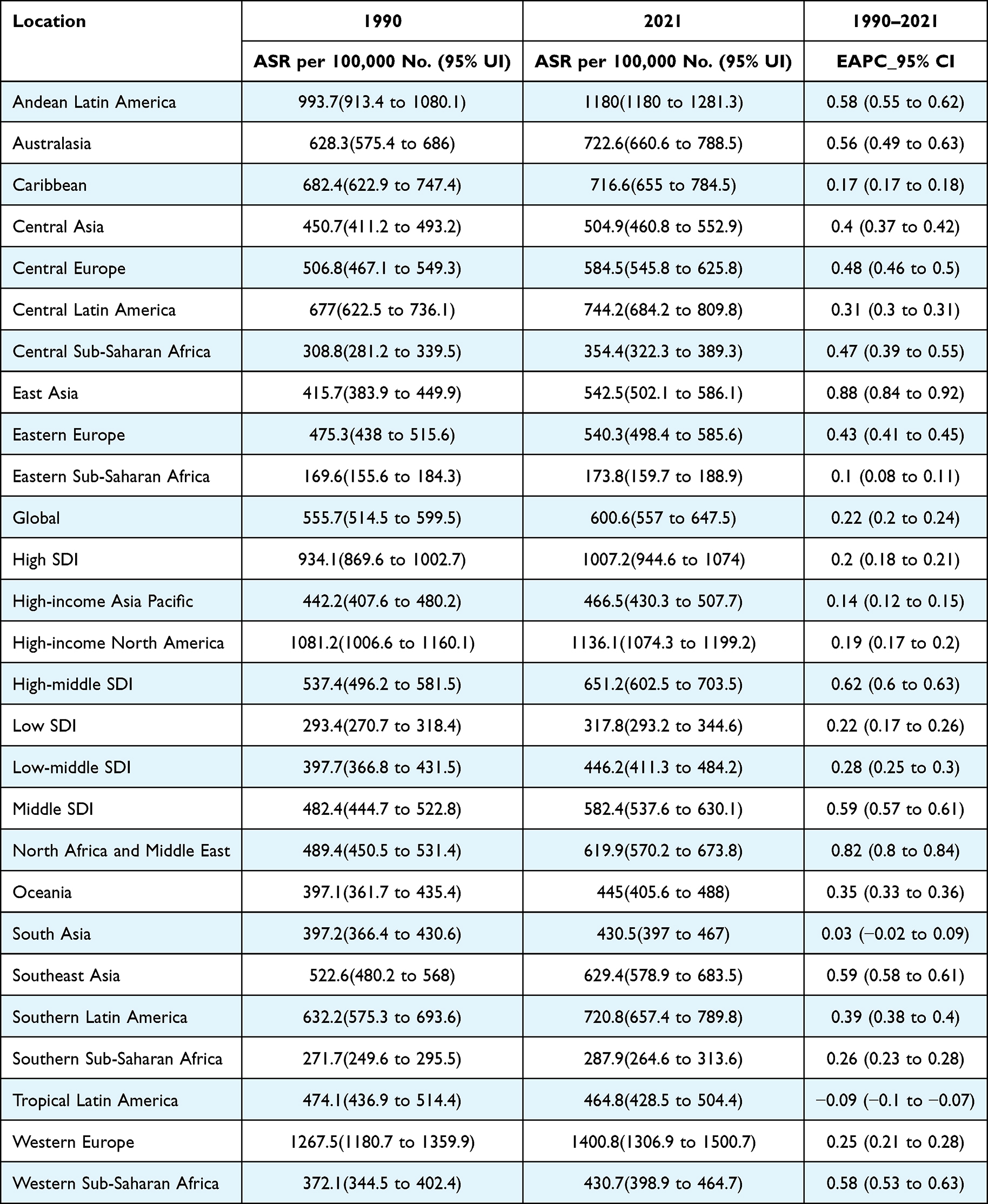 |
Table 1 Global and Regional Trends in Psoriasis Burden: Prevalence (1990–2021) |
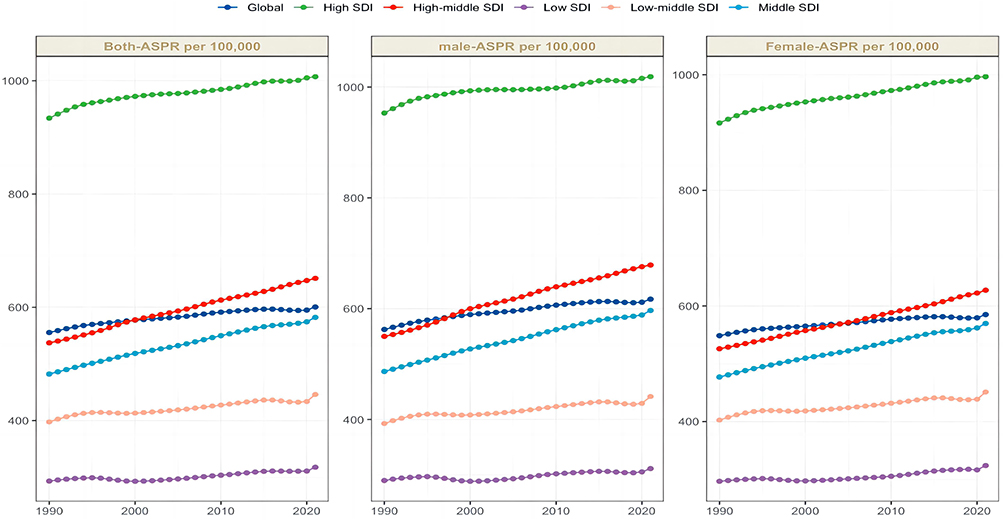 |
Figure 1 The global disease burden of Psoriasis 1990–2021. |
Regional Differences
The burden of psoriasis among the working-age population exhibits significant regional disparities, closely associated with socio-demographic index (SDI) levels. In high-SDI regions, the age-standardized prevalence rate (ASPR) increased from 934.1 cases per 100,000 (95% UI: 869.6–1002.7) in 1990 to 1007.2 cases per 100,000 (95% UI: 944.6–1074) in 2021, markedly higher than in low-SDI regions (Table 1). This may be closely related to lifestyle and dietary habits in highly developed areas, thereby driving the increase in psoriasis burden. At the national level, Germany had the highest prevalence (1925.5 cases per 100,000; 95% UI: 1785.3–2069.3), while Somalia had the lowest (133.1 cases per 100,000; 95% UI: 121.9–145.2) (Figure 2).
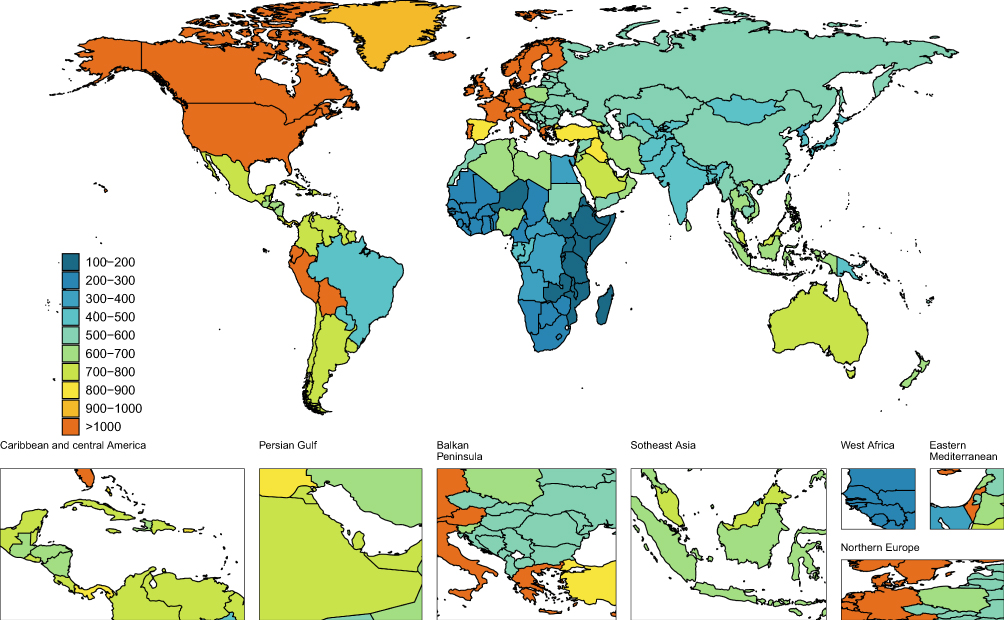 |
Figure 2 The global disease burden of Psoriasis for both sexes in 204 countries and territories in 2021. |
Age and Sex-Specific Patterns
Age-specific analysis of the working-age population in 2021 revealed that psoriasis prevalence gradually increased with age, reaching a peak in the 50–54 age group. In this age group, the number of male patients was 2,193,505, with an age-standardized prevalence rate (ASPR) of 988.2 per 100,000 people; female patients numbered 1,803,175, with an ASPR of 808.8 per 100,000 people (Figure 3). Additionally, data from 2021 showed that females had higher psoriasis prevalence than males between the ages of 15 and 39. However, after age 40, prevalence among males exceeded that of females—a trend consistent with observations from 1990 (Figure 4).
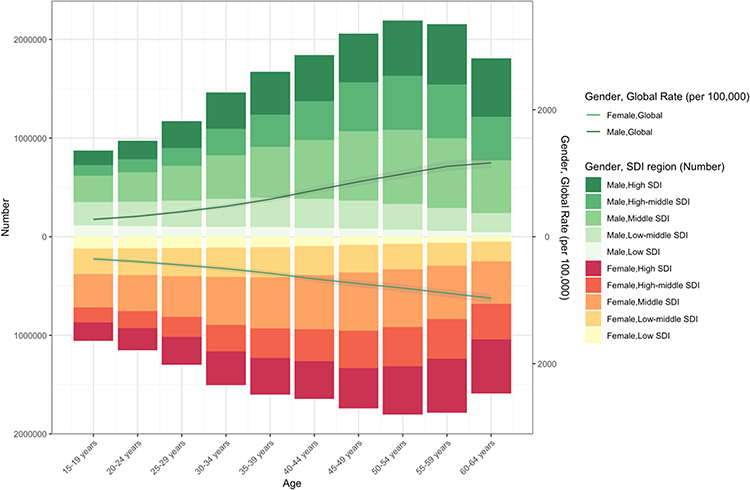 |
Figure 3 The age-specific numbers and ASPRs of Psoriasis by SDI regions in 2021. |
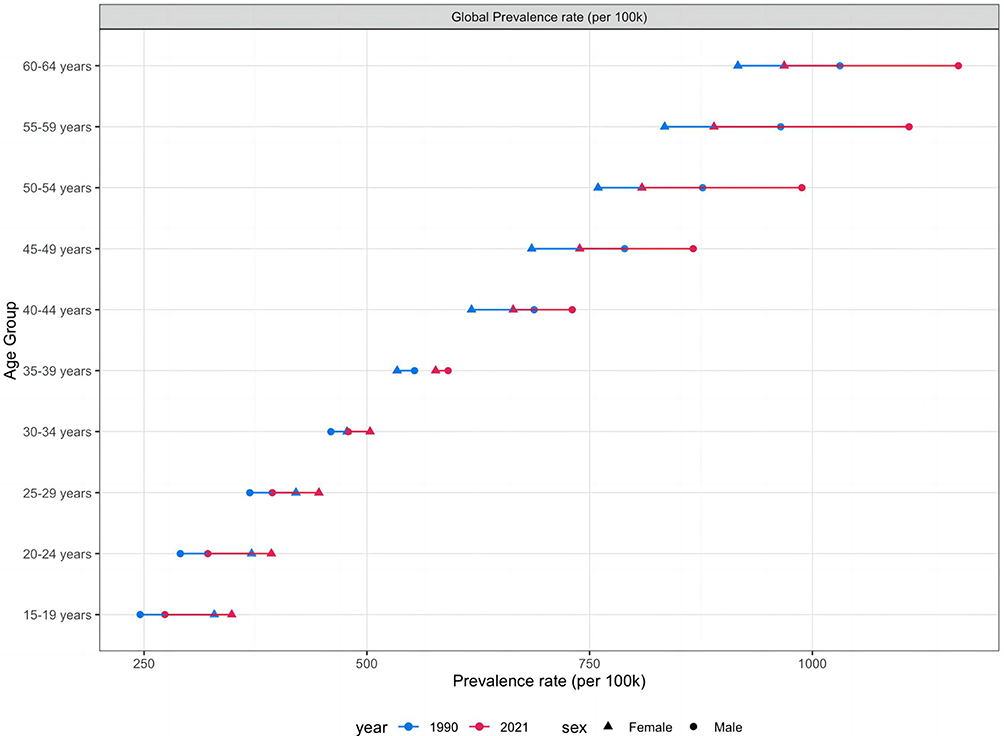 |
Figure 4 Age-standardized prevalence rates of Psoriasis by sex, and age group, 1990 and 2021. |
Future Projections
The global burden of psoriasis among the working-age population is projected to continue increasing, with the age-standardized prevalence rate (ASPR) expected to rise from 600.6 per 100,000 in 2021 to 631.6 per 100,000 in 2031, representing an increase of approximately 5.16%. During this period, the ASPR in males is projected to increase from 617.2 to 648.7 per 100,000, while in females, it is expected to rise from 585.1 to 613.9 per 100,000 (Figure 5).
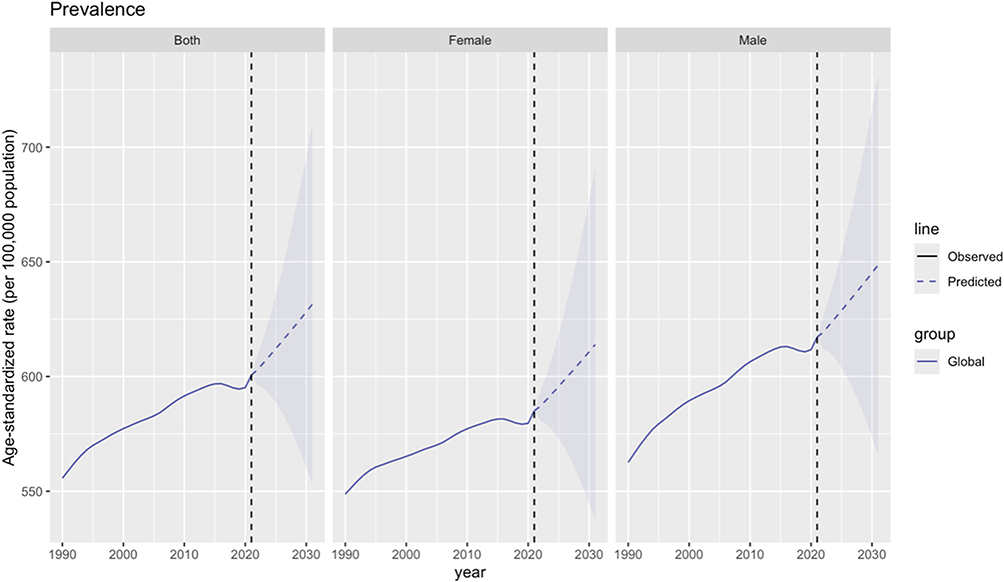 |
Figure 5 Future forecasts of global burden of Psoriasis. |
The Association Between LE4 and Psoriasis
Baseline Characteristics of the Study Population
A total of 5133 participants were selected according to the inclusion criteria mentioned in the methodology, with 53.38% being male and 46.62% female. The overall prevalence of psoriasis in the study population was 3.27%. The average age of psoriasis patients was higher (46.16±13.96 years). Additionally, the LE4 score of psoriasis patients was lower than that of non-psoriasis patients (see Figure 6 and Table 2).
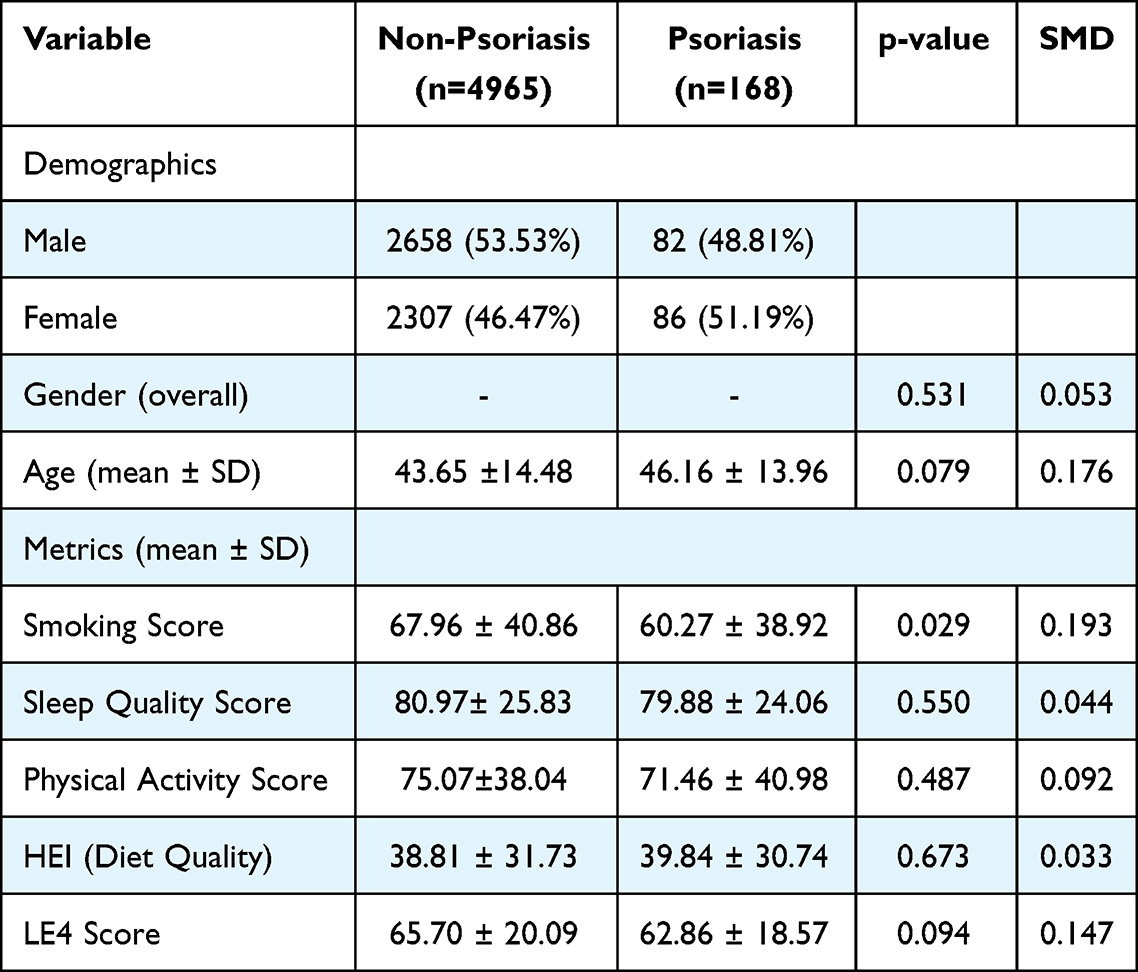 |
Table 2 Baseline Characteristics of the Study Population. |
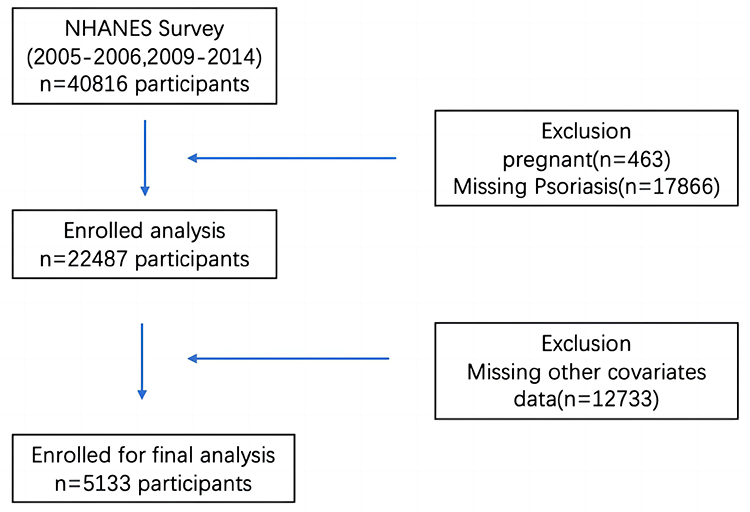 |
Figure 6 Data screening. |
The LE4 Score and Psoriasis
Using three regression models, the results presented in Table 3 demonstrate an association between the LE4 score and psoriasis among the US population. In the fully adjusted Model III, compared with the reference group (Q1, LE4 < 50.0), individuals in the fourth quartile (Q4, LE4 ≥ 81.2) had significantly lower odds of psoriasis, with an odds ratio (OR) of 0.518 (95% CI: 0.277–0.970, P = 0.040). This corresponds to a 48.2% reduction in the odds of psoriasis among individuals in the highest LE4 category. Although no statistically significant associations were observed for the second (Q2, 50.0 ≤ LE4 < 67.5) or third (Q3, 67.5 ≤ LE4 < 81.2) quartiles (all P > 0.05), a decreasing trend in psoriasis risk was observed with increasing LE4 scores.
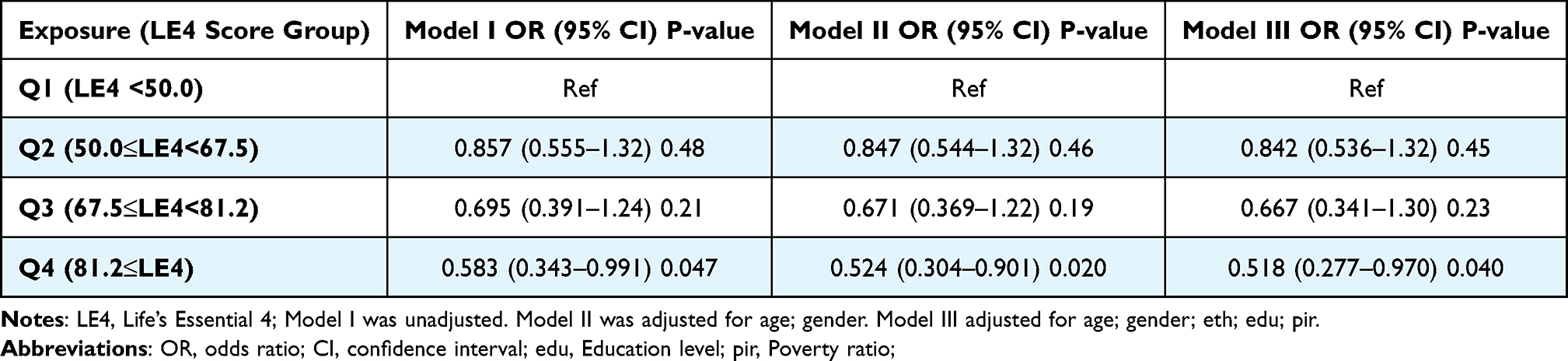 |
Table 3 The LE4 Score and Psoriasis |
Figure 7 presents the results of the restricted cubic spline (RCS) analysis, further supporting a significant inverse association between LE4 score and psoriasis risk. The overall model P-value was 0.0192, while the nonlinearity test yielded a P-value of 0.0643, with the LE4 score centered at the median value (67.5).
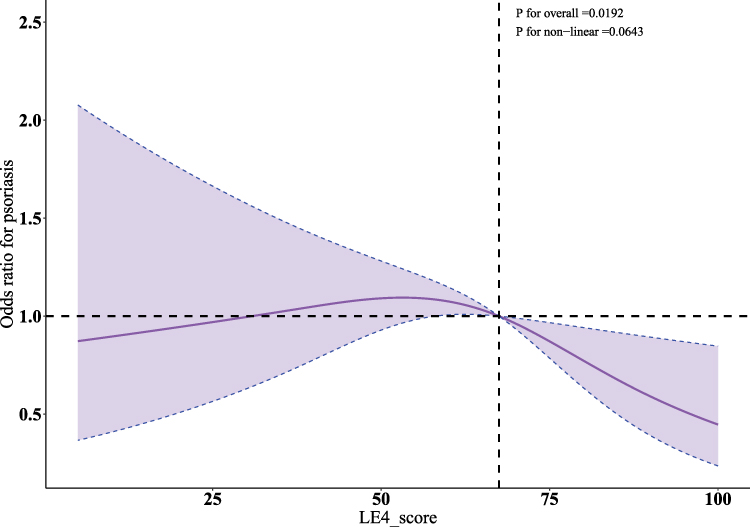 |
Figure 7 RCS. |
In component-level analyses using survey-weighted logistic regression adjusted for age, sex, race/ethnicity, PIR, and education, the smoking score was significantly inversely associated with psoriasis (OR per 1-point increase = 0.995, 95% CI: 0.991–0.999, P = 0.025). In contrast, physical activity (OR = 0.998, P = 0.531), sleep (OR = 0.998, P = 0.574), and diet quality (OR ≈ 1.000, P = 0.985) were not independently associated with psoriasis in the fully adjusted models (Supplementary Table 2).
In sensitivity analyses further adjusting for BMI and depressive symptoms, the association between LE4 and psoriasis was attenuated and no longer statistically significant. Severe obesity and depressive symptoms were independently associated with increased odds of psoriasis (Supplementary Table 3).
Mendelian Randomization
Through standard selection procedures, a total of 1531 instrumental variables (IVs) were identified, with all IVs exhibiting F-statistics greater than 10, indicating no evidence of weak instrument bias (Supplementary Table 4). The Mendelian randomization (MR) analysis revealed significant associations between 13 exposure factors and psoriasis, including preferences for strawberries and chicken (strawberry preference: OR = 1.66, 95% CI: 1.15–2.38, P = 0.00636; chicken preference: OR = 1.61, 95% CI: 1.11–2.32, P = 0.0112). These results suggest a potential causal relationship between preferences for strawberries and chicken and the risk of psoriasis.
Additionally, statistical power calculations were conducted to assess the confidence in the impact of each dietary factor on psoriasis. Specifically, preference for Diet fizzy drinks liking showed a significant effect on psoriasis (OR = 1.57, 95% CI: 1.07–2.30, P = 0.0215), with a statistical power of 96.10%, indicating high confidence in concluding that beverages are a risk factor for psoriasis. The MR Steiger directionality test further confirmed the consistency of the causal direction. The Cochrane Q statistic supported homogeneity among the exposure factors (P > 0.05), ruling out heterogeneity. MR-Egger intercept analysis indicated no evidence of horizontal pleiotropy (P = 0.9724) (Supplementary Tables 5 and 6). These findings enhance our confidence in the study’s conclusions. Furthermore, preferences for F-sauces (OR = 0.86, 95% CI: 0.77–0.95, P = 0.00496) and F-salad vegetables (OR = 0.85, 95% CI: 0.74–0.98, P = 0.0224) demonstrated statistical powers of 77.50% and 76.50%, respectively. Although these powers are slightly below 80%, we still have sufficient grounds to consider these dietary factors as potential protective factors against psoriasis (Figures 8 and 9, Supplementary Tables 7 and 8).
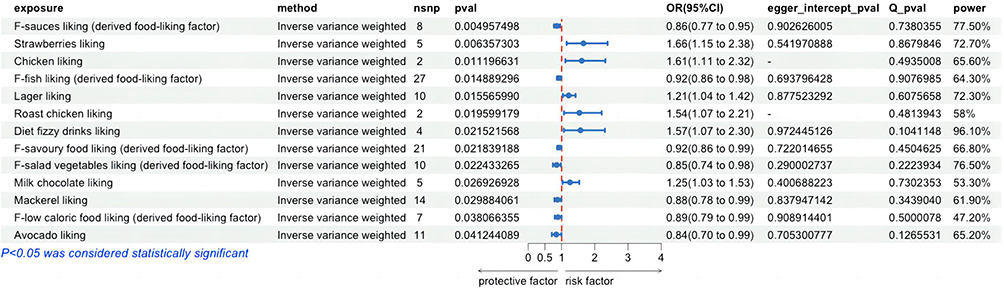 |
Figure 8 Mendelian Randomization Results. |
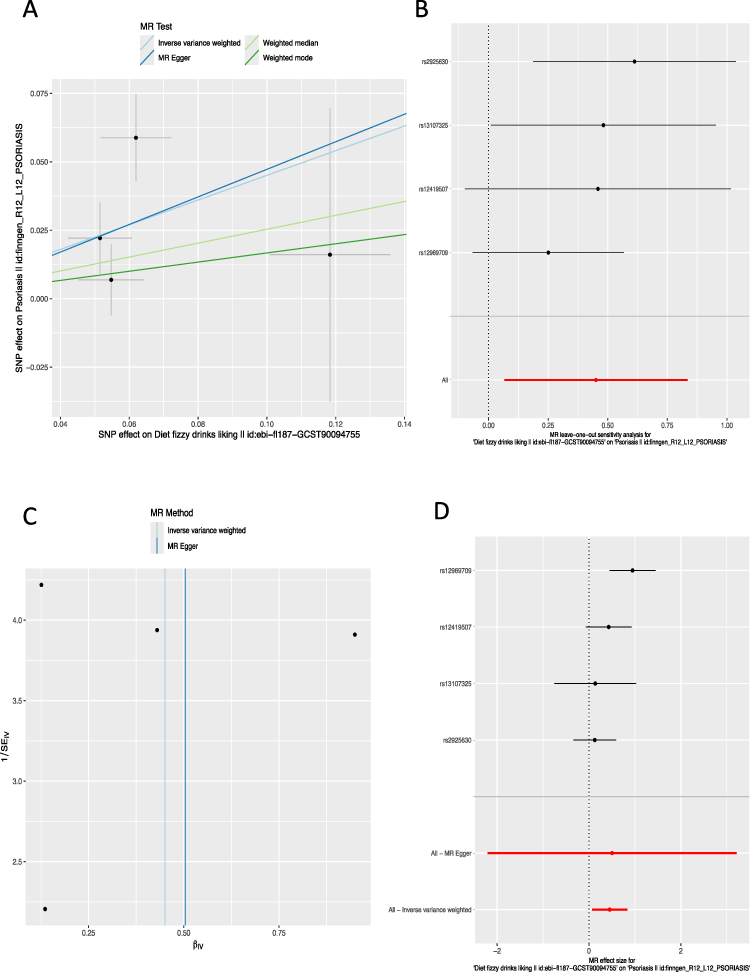 |
Figure 9 Pleiotropy Analysis. (A)Scatter plots about the causal effect of fizzy drinks on Psoriasis; (B)MR leave-one-out sensitivity analysis; (C)Funnel plot for visualizing outliers and heterogeneity; (D)Forest plot to visualize the causal effect of each SNP on Psoriasis. |
Discussion
In this study, we systematically analyzed global psoriasis prevalence trends and identified significant associations between lifestyle factors and psoriasis risk. Mendelian randomization analysis suggested a potential causal relationship between dietary factors and psoriasis. The study comprises five components, ranging from a global epidemiological investigation of psoriasis in working-age populations to lifestyle risk factors.
Comparisons with Other Studies
A recent study revealed a notable global increase in the prevalence of psoriasis, rising from 23.06 million cases in 1990 to 42.98 million in 2021—an 86% increase. Men were found to carry a slightly higher disease burden than women, particularly in regions with a higher Sociodemographic Index (SDI). In 2021, Germany reported the highest age-standardized prevalence rate (ASPR) at 1,593.7 cases per 100,000 people, while Somalia recorded the lowest at 114.9 cases per 100,000.2
The trends highlighted by this research are consistent with earlier studies, confirming the steadily increasing burden of psoriasis globally. However, this study uniquely focuses on the working-age population (18–64 years), emphasizing a significant rise in psoriasis prevalence among economically active adults. This age-specific focus provides important insights into potential productivity loss and economic burden associated with psoriasis in economically active populations. Germany again emerged with the highest prevalence rate within this demographic, at 1,925.5 cases per 100,000 (95% uncertainty interval: 1,785.3–2,069.3), contrasted by Somalia’s lowest rate of 133.1 cases per 100,000 (95% uncertainty interval: 121.9–145.2).
Utilizing updated datasets and advanced predictive modeling techniques, the study identified notable increases in psoriasis burden specifically among working-age individuals, predominantly in high-income regions. These findings highlight an urgent need for targeted public health interventions for economically active populations, offering crucial evidence to inform regional strategies for psoriasis prevention and management.
The present study comprehensively examined the impact of lifestyle and nutritional factors on psoriasis, emphasizing the role of extrinsic environmental influences—particularly modifiable behaviors such as alcohol consumption, smoking, stress management, sleep patterns, sedentary behavior, and dietary intake—in shaping disease onset, severity, and progression.8 In the component-level analyses, smoking emerged as the strongest contributor to the observed association between the composite LE4 score and psoriasis. This finding is consistent with extensive evidence linking tobacco exposure to systemic inflammation and immune dysregulation, both of which are central to psoriasis pathogenesis. Although physical activity, sleep, and diet quality were not independently significant in the fully adjusted models, the composite LE4 score reflects an overall behavioral profile. The graded association observed for the composite score suggests that cumulative lifestyle behaviors remain relevant at the population level.
Compared with the broader Life’s Essential 8 (LE8) framework, the LE4 index provides a simplified structure, reduced measurement burden, and a clearer focus on directly modifiable behaviors. This streamlined design may enhance feasibility and scalability in clinical and public health settings, thereby facilitating population-level prevention and health management strategies.
In sensitivity analyses adjusting for BMI and depressive symptoms, the association between LE4 and psoriasis was attenuated. This attenuation suggests that part of the relationship between lifestyle behaviors and psoriasis risk may be mediated through metabolic and psychological pathways. These findings align with the hypothesis that unhealthy lifestyle patterns may influence psoriasis risk indirectly through their effects on adiposity and mental health.
Dietary patterns also demonstrated meaningful associations. Previous studies have shown that low-calorie and ketogenic diets may reduce psoriasis severity.27 In our analysis, consumption of diet fizzy drinks was associated with increased psoriasis risk, whereas fish-based sauces and fresh salad vegetables appeared to confer potential protective effects. The Mendelian randomization findings linking diet fizzy drinks—defined as carbonated beverages sweetened with non-nutritive sweeteners—to increased risk may reflect several plausible biological mechanisms. Experimental and observational evidence suggests that non-nutritive sweeteners may alter metabolic regulation28 and disrupt gut microbiota composition.29 Such disturbances in metabolic homeostasis and microbial balance have been implicated in systemic inflammation, a key driver of psoriasis. Although causal pathways remain under investigation, these mechanisms may partially explain the observed association. Conversely, the protective associations observed for salads and fish-based dietary patterns may be attributable to anti-inflammatory and cardiometabolic benefits from nutrients such as dietary fiber, antioxidants, and omega-3 fatty acids. These components improve endothelial function, reduce oxidative stress, and modulate systemic inflammation, thereby potentially reducing disease burden.30
By incorporating Mendelian randomization, our study strengthens causal inference and reduces residual confounding compared with conventional observational analyses.
Limitations
This study has notable limitations. First, the Mendelian Randomization (MR) analysis and lifestyle habits (LE4 score) data were sourced from populations in the United States and Europe, respectively, limiting the generalizability of findings to global populations with diverse genetic, environmental, or healthcare contexts. Second, self-reported lifestyle data, including alcohol consumption, smoking, and dietary habits, may be subject to recall or social desirability bias, potentially affecting the accuracy of associations. Finally, the study lacks data on long-term lifestyle intervention effects and patient perspectives, which could inform practical implementation. Future research should include more diverse cohorts and longitudinal data to enhance applicability.
Due to limitations of the GBD and NHANES datasets, psoriasis subtypes could not be distinguished. Given potential heterogeneity in pathophysiology and metabolic comorbidities across subtypes, subtype-specific associations with lifestyle factors may not have been fully captured.
The Global Burden of Disease (GBD) estimates are model-based outputs derived from the DisMod-MR 2.1 Bayesian meta-regression framework, which integrates heterogeneous data across countries and time periods. Although uncertainty is quantified using 95% uncertainty intervals and hierarchical modeling, estimates for low- and middle-income regions with limited data may carry greater uncertainty and should be interpreted cautiously. Improvements in disease surveillance and registry coverage would further enhance the precision of global estimates.
While the Bayesian Age–Period–Cohort (BAPC) framework enables flexible temporal forecasting, projections inherently depend on historical trend stability and model assumptions. Although 95% uncertainty intervals were provided, future structural changes or alternative model specifications could influence absolute estimates. Therefore, projections should be regarded as scenario-based forecasts rather than exact predictions.
Conclusions
In conclusion, the global burden of psoriasis among working-age adults is increasing. Our findings emphasize the contribution of modifiable lifestyle and dietary factors, with higher LE4 scores associated with lower risk. Mendelian randomization analyses further suggest that diet fizzy drinks may elevate psoriasis risk, whereas salad vegetable intake appears protective. These results support the promotion of healthier dietary behaviors as part of population-level strategies to reduce psoriasis burden.
Data Sharing Statement
The data supporting this study are from the following sources: GBD 2021, which is publicly available upon registration, and preprocessed datasets from the GWAS Catalog and NHANES, which are provided in the Supplementary Tables of this article.
Ethics Statement
This study utilized publicly available, de-identified data from pre-existing databases. The original data collection was approved by the corresponding ethics committees, and informed consent was obtained from all participants.
In accordance with Article 32 (Items 1 and 2) of the Measures for Ethical Review of Life Science and Medical Research Involving Human Subjects (February 18, 2023, China), research that uses publicly available and anonymized data is exempt from additional ethical review. Therefore, no further institutional review board approval was required for this study.
Acknowledgments
We want to acknowledge the participants and investigators of the FinnGen study.
Author Contributions
All authors made a significant contribution to the work reported, whether that is in the conception, study design, execution, acquisition of data, analysis and interpretation, or in all these areas; took part in drafting, revising or critically reviewing the article; gave final approval of the version to be published; have agreed on the journal to which the article has been submitted; and agree to be accountable for all aspects of the work.
Funding
No funding was received for this manuscript.
Disclosure
The authors declare that they have no competing interests in this work.
References
1. Qasem SF, Ashkanani H, Ali A. Therapeutic advancements in the management of psoriasis: a clinical overview and update. Cureus. 2025;17(2):e79097. doi:10.7759/cureus.79097
2. Xiong J, Xue T, Tong M, Xu L, Bai B. Dynamic trend analysis of global psoriasis burden from 1990 to 2021: a study of gender, age, and regional differences based on GBD 2021 data. Front Public Health. 2025;13:1518681. doi:10.3389/fpubh.2025.1518681
3. Mustonen A, Mattila K, Leino M, et al. How much of the productivity losses among psoriasis patients are due to psoriasis. BMC Health Serv Res. 2015;15(1):87. doi:10.1186/s12913-015-0752-0
4. Lee K, Kingston P, Huang MY, et al. The hidden costs of psoriasis: a population-based study evaluating how psoriasis severity impacts work absenteeism. J Drugs Dermatol. 2024;23(8):640–15. doi:10.36849/JDD.7550
5. Ouyang F, Yang H, Di Z, et al. Life’s essential 8, genetic susceptibility and the risk of psoriatic disease: a prospective cohort study. Br J Dermatol. 2024;191(6):897–905. doi:10.1093/bjd/ljae268
6. Lloyd-Jones DM, Allen NB, Anderson CAM, et al; American Heart Association. Life’s essential 8: updating and enhancing the American Heart Association’s construct of cardiovascular health: a presidential advisory from the American Heart Association. Circulation. 2022;146(5):e18–e43. doi:10.1161/CIR.0000000000001078
7. Shen M, Xiao Y, Jing D, et al. Associations of combined lifestyle and genetic risks with incident psoriasis: a prospective cohort study among UK biobank participants of European ancestry. J Am Acad Dermatol. 2022;87(2):343–350. doi:10.1016/j.jaad.2022.04.006
8. Musumeci ML, Nasca MR, Boscaglia S, Micali G. The role of lifestyle and nutrition in psoriasis: current status of knowledge and interventions. Dermatol Ther. 2022;35(9):e15685. PMID: 35790061. doi:10.1111/dth.15685
9. Bennett DA, Du H. An overview of methods and exemplars of the use of mendelian randomisation in nutritional research. Nutrients. 2022;14(16):3408. doi:10.3390/nu14163408
10. Global Burden of Disease Collaborative Network. Global Burden of Disease Study 2021 (GBD 2021) results.Seattle, United States: Institute for Health Metrics and Evaluation (IHME); 2022. Available from: https://vizhub.healthdata.org/gbd-results/.
11. Vos T, Lim SS, Abbafati C, et al. Global burden of 369 diseases and injuries in 204 countries and territories, 1990–2019: a systematic analysis for the global burden of disease study 2019. Lancet. 2020;396:1204–1222.
12. Zhang J, Ren C, Qin Z, et al. Association between life’s essential 8 and psoriasis in US adults: a cross-sectional study. Front Med Lausanne. 2024;11:1445288. doi:10.3389/fmed.2024.1445288
13. Shams-White MM, Pannucci TE, Lerman JL, et al. Healthy eating index-2020: review and update process to reflect the dietary guidelines for Americans,2020–2025. J Acad Nutr Diet. 2023;123(9):1280–1288. doi:10.1016/j.jand.2023.05.015
14. Kurki MI, Karjalainen J, Palta P, et al. FinnGen provides genetic insights from a well-phenotyped isolated population. Nature. 2023;615(7952):E19. Erratum for: Nature, 613(7944), 508–518. doi:10.1038/s41586-022-05473-8. doi:10.1038/s41586-023-05837-8
15. May-Wilson S, Matoba N, Wade KH, et al. Large-scale GWAS of food liking reveals genetic determinants and genetic correlations with distinct neurophysiological traits. Nat Commun. 2022;13(1):2743. doi:10.1038/s41467-022-30187-w
16. Yang K, Yang X, Jin C, et al. Global burden of type 1 diabetes in adults aged 65 years and older, 1990–2019: population based study. BMJ. 2024;385(e078432):e078432. doi:10.1136/bmj-2023-078432
17. Li XY, Kong XM, Yang CH, et al. Global, regional, and national burden of ischemic stroke, 1990–2021: an analysis of data from the global burden of disease study 2021. EClinicalMedicine. 2024;75:102758. doi:10.1016/j.eclinm.2024.102758
18. Xiong H, Yu Z. Association between systemic inflammation indicators and psoriasis: a cross-sectional study from NHANES. Front Immunol. 2025;16:1556487. doi:10.3389/fimmu.2025.1556487
19. Wang X, Zhang J, Xu X, et al. Associations of daily eating frequency and nighttime fasting duration with biological aging in National Health and Nutrition Examination Survey (NHANES) 2003–2010 and 2015–2018. Int J Behav Nutr Phys Act. 2024;21(1):104. doi:10.1186/s12966-024-01654-y
20. Burgess S, Butterworth A, Thompson SG. Mendelian randomization analysis with multiple genetic variants using summarized data. Genet Epidemiol. 2013;37(7):658–665. doi:10.1002/gepi.21758
21. Bowden J, Davey Smith G, Burgess S. Mendelian randomization with invalid instruments: effect estimation and bias detection through egger regression. Int J Epidemiol. 2015;44(2):512–525. doi:10.1093/ije/dyv080
22. Hemani G, Tilling K, Davey Smith G. Orienting the causal relationship between imprecisely measured traits using GWAS summary data. PLoS Genet. 2017;13(11):e1007081. Erratum in: PLoS Genet. 2017 Dec 29;13(12)e1007149doi: 10.1371/journal.pgen.1007149. doi:10.1371/journal.pgen.1007081
23. Burgess S. Sample size and power calculations in mendelian randomization with a single instrumental variable and a binary outcome. Int J Epidemiol. 2014;43(3):922–929. PMID: 24608958. doi:10.1093/ije/dyu005
24. Henry A, Katsoulis M, Masi S, et al. The relationship between sleep duration, cognition and dementia: a Mendelian randomization study. Int J Epidemiol. 2019;48(3):849–860. doi:10.1093/ije/dyz071
25. Song X, Zhu W, Li Y, et al. Multi-omics insights of immune cells in the risk and prognosis of idiopathic membranous nephropathy. Commun Biol. 2025;8(1):1192. PMID: 40783650; PMCID: PMC12335521. doi:10.1038/s42003-025-08642-3
26. Skrivankova VW, Richmond RC, Woolf BAR, et al. Strengthening the reporting of observational studies in epidemiology using mendelian randomization: the STROBE-MR statement. JAMA. 2021;326(16):1614–1621. doi:10.1001/jama.2021.18236
27. Min M, Dulai AS, Ahmad N, Sivamani RK. Review of integrative medical therapies for psoriasis: the microbiome, probiotics, diet, and mindfulness. J Psoriasis Psoriatic Arthritis. 2024;9(3):108–114. doi:10.1177/24755303241236386
28. Azad MB, Abou-Setta AM, Chauhan BF, et al. Nonnutritive sweeteners and cardiometabolic health: a systematic review and meta-analysis of randomized controlled trials and prospective cohort studies. CMAJ. 2017;189(28):E929–E939. doi:10.1503/cmaj.161390
29. Suez J, Korem T, Zeevi D, et al. Artificial sweeteners induce glucose intolerance by altering the gut microbiota. Nature. 2014;514(7521):181–186. doi:10.1038/nature13793
30. Estruch R, Sacanella E, Lamuela-Raventós RM. Ideal dietary patterns and foods to prevent cardiovascular disease: beware of their anti-inflammatory potential. J Am Coll Cardiol. 2020;76(19):2194–2196. doi:10.1016/j.jacc.2020.09.575
 © 2026 The Author(s). This work is published and licensed by Dove Medical Press Limited. The
full terms of this license are available at https://www.dovepress.com/terms
and incorporate the Creative Commons Attribution
- Non Commercial (unported, 4.0) License.
By accessing the work you hereby accept the Terms. Non-commercial uses of the work are permitted
without any further permission from Dove Medical Press Limited, provided the work is properly
attributed. For permission for commercial use of this work, please see paragraphs 4.2 and 5 of our Terms.
© 2026 The Author(s). This work is published and licensed by Dove Medical Press Limited. The
full terms of this license are available at https://www.dovepress.com/terms
and incorporate the Creative Commons Attribution
- Non Commercial (unported, 4.0) License.
By accessing the work you hereby accept the Terms. Non-commercial uses of the work are permitted
without any further permission from Dove Medical Press Limited, provided the work is properly
attributed. For permission for commercial use of this work, please see paragraphs 4.2 and 5 of our Terms.