
Back to Journals » Drug Design, Development and Therapy » Volume 20
A Comprehensive Review of Hedyotis Diffusa Willd–Scutellaria Barbata D. Don Herb Pair in Anti- Hepatocellular Carcinoma Effects and Their Combinatorial Effects and Mechanisms
Authors Xu Y  , Xiang W , Zhu W, Shang L, Lun M, Qu S , Yin Y , Chen C, Yuan H, Song Y
Received 14 February 2026
Accepted for publication 21 May 2026
Published 3 June 2026 Volume 2026:20 603528
DOI https://doi.org/10.2147/DDDT.S603528
Checked for plagiarism Yes
Review by Single anonymous peer review
Peer reviewer comments 2
Editor who approved publication: Prof. Dr. Tin Wui Wong
Ya Xu,1– 3 Weijia Xiang,1– 3 Wanyi Zhu,1– 3 Lanqi Shang,1– 3 Mengting Lun,1– 3 Songyan Qu,1– 3 Yizhen Yin,1– 3 Changrong Chen,4 Honggang Yuan,5 Yinhong Song1– 3
1Hubei Key Laboratory of Tumor Microenvironment and Immunotherapy, China Three Gorges University, Yichang, People’s Republic of China; 2Institution of Infection and Inflammation, China Three Gorges University, Yichang, People’s Republic of China; 3College of Basic Medical Sciences, China Three Gorges University, Yichang, People’s Republic of China; 4Department of Clinical Laboratory, Affiliated Renhe Hospital of China Three Gorges University, Yichang, People’s Republic of China; 5Department of Urology, The First College of Clinical Medical Science, China Three Gorges University, Yichang, People’s Republic of China
Correspondence: Yinhong Song, Hubei Key Laboratory of Tumor Microenvironment and Immunotherapy, China Three Gorges University, Yichang, 443000, People’s Republic of China, Email [email protected] Honggang Yuan, Department of Urology, The First College of Clinical Medical Science, China Three Gorges University, Yichang, 443000, People’s Republic of China, Email [email protected]
Abstract: Hepatocellular carcinoma (HCC) is among the most prevalent malignancies of the digestive system, with a global rising incidence. Hedyotis diffusa Willd and Scutellaria barbata D. Don are classic herb pair in traditional Chinese medicine (TCM) of clearing heat and detoxifying, and is widely applied in the treatment of HCC. Although existing research has confirmed their efficacy against HCC through modulation of apoptosis, proliferation, angiogenesis, and immune responses, it is noteworthy that the combined or newly generated components after the compatibility of the two herbs exhibit even more pronounced therapeutic effects. In order to verify the pharmacological activity of the combination of Hedyotis diffusa Willd and Scutellaria barbata D. Don, it is necessary to try more in vitro and in vivo models. This review synthesizes current evidence on their TCM compatibility principles, pharmacological actions, and related signaling pathways of this herb pair, providing a rigorous theoretical foundation to guide rational clinical application and further translational research on the compatibility mechanism of the Hedyotis diffusa Willd–Scutellaria barbata D. Don herb pair in the treatment of HCC.
Keywords: Hedyotis diffusa Willd, Scutellaria barbata D. Don, herb pair, hepatocellular carcinoma
Introduction
Primary hepatic cancer (PHC) is one of the most common malignant tumors in China, ranking the second in mortality among domestic malignant tumors. Its predominant pathological subtype is hepatocellular carcinoma (HCC), thus, PHC mentioned in this study specifically refers to hepatocellular carcinoma, hereinafter abbreviated as HCC.1 According to global cancer statistics, HCC is the sixth most common cancer and the third leading cause of cancer-related deaths worldwide, with nearly half of newly diagnosed cases each year occurring in China, which severely impairs people’s life and health.2 At present, clinical treatments for HCC in China mainly include Western medical approaches such as surgery, systemic chemotherapy, transcatheter arterial chemoembolization, and targeted therapy. However, their therapeutic efficacy still fails to meet the clinical needs of HCC patients, thus an urgent need for novel and effective therapeutic strategies as well as safe and efficient complementary treatment modalities. In TCM, HCC arises from the internal accumulation of turbid toxins, qi stagnation and blood stasis, and obstruction of the collaterals, leading to the formation of a hypochondriac mass. Clinically, TCM practice often employs therapeutic strategies including reinforcing healthy qi to eliminate pathogens and clearing heat to detoxify.3 Moreover, the combined application of TCM and Western medicine has yielded more remarkable curative effects in HCC therapy. Owing to its advantages of low toxicity, high efficacy, antiviral activity and multi-target action, TCM has been increasingly widely applied in the treatment and prognosis of HCC.4,5
Herbal pairs refer to distinctive combinations of two relatively fixed herbs commonly utilized in clinical practice. These pairs represent the most fundamental and straightforward form of multi-herbal therapy, designed to achieve specific therapeutic effects through unique mechanisms.6 Scutellaria barbata D.Don (SB), a herbaceous plant belonging to the genus Scutellaria in the Lamiaceae family, is primarily cultivated in the provinces of Jiangsu, Zhejiang, Anhui, and others in China. According to the Supplement to the Compendium of Materia Medica, it possesses medicinal properties characterized by its cold nature, ability to clear abscesses and swelling, and efficacy in treating edema caused by damp stagnation. Hedyotis diffusa Willd (HD), a member of the genus Hedyotis in the Rubiaceae family, is predominantly found in Fujian, Guangdong, Guangxi, and other regions of China. The Guangxi Chinese Materia Medica Records document its medicinal effects in treating infantile malnutrition, venomous snake bites, and cancerous masses.7 From the perspective of medicinal property theory, both herbs are cold in nature. HD is sweet and bland in taste, and enters the stomach, large intestine, and small intestine meridians; it clears heat, removes toxicity, promotes diuresis, and relieves stranguria. SB is pungent and bitter in taste, and enters the lung, liver, and kidney meridians; it clears heat, removes toxicity, dissipates stasis, and stops bleeding. HD preferentially acts on the stomach and small intestine meridians and is effective in clearing damp‑heat from the gastrointestinal tract. SB preferentially acts on the lung and kidney meridians and excels at resolving stasis and dissipating nodules.8 These two herbs share similar meridian tropisms and therapeutic effects, and both are utilized medicinally in their whole form. They are frequently employed in a mutually reinforcing manner to achieve a synergistic effect, enhancing the efficacy of heat-clearing and detoxifying, dissipating abscesses and resolving masses, as well as providing anti-inflammatory and analgesic effects. In clinical practice, this herbal pair is commonly incorporated into classic TCM formulas in the treatment of HCC, such as Erban Erbai Decoction, Zhongliu He Fang and Yigan Jiedu Decoction.9,10 Among these, the Erzhu Jiedu recipe, composed of Atractylodes macrocephala (Baizhu), Atractylodes sp. (Cangzhu), Scutellaria barbata, Hedyotis diffusa, and Salvia miltiorrhiza, has been shown to inhibit both the progression of hepatocellular carcinoma and precancerous lesions. Its molecular mechanisms have been preliminarily validated through in vivo and in vitro experiments.11,12 In empirical TCM practice, the Zhongliu He Fang focuses on supporting healthy qi to combat cancer, while the Yigan Jiedu Decoction emphasizes clearing liver-gallbladder damp-heat. These two formulas, based on clinical experience, further extend the application of this herb pair across different TCM syndrome patterns of HCC.
Traditional Chinese medicine offers valuable insights and empirical experience for modern research on anti-HCC therapy. However, no study has yet integrated TCM syndrome differentiation with clinical mechanisms to summarize the anti-HCC effects of HD and SB. Most previous reviews have focused on isolated chemical components or single signaling pathways, with little attention paid to compatibility theory, synergistic mechanisms, or integration with TCM syndrome differentiation in HCC. To better provide a theoretical foundation for the in-depth development and clinical application in HCC therapy, this paper reviews the compatibility effects of HD and SB and the specific molecular mechanisms underlying their anti-HCC activity, thereby establishing a link between the clinical experience of traditional Chinese medicine and modern scientific mechanisms.
Hedyotis Diffusa Willd-Scutellaria Barbata D.Don Herb Pair - Analysis of Compatibility and Its Effectiveness in Anti-HCC Effects
In traditional Chinese medicine (TCM), liver cancer is not regarded as a discrete disease entity but is categorized under “swelling” and “liver accumulation”.13 Its formation, characterized by a tangible mass in the hypochondrium, stems from the fundamental pathological changes of qi deficiency and blood stasis.3 The etiology and pathogenesis are complex, primarily rooted in a deficiency of vital qi (Zheng Qi Xu), where an inherent deficiency predisposes individuals to disease and results in pathogenic excess. Strategies of treatments include huo-xue-hua-yu (removing blood stasis), jian-pi-li-qi (regulating the flow of qi and strengthening the spleen), or qing-re-jie-du (clearing heat and detoxifying).14,15 Regarding treatment strategies, Deng proposed that different stages of primary hepatic carcinoma require different approaches: an attack‑focused strategy for the early stage, a combination of attack and tonification for the intermediate stage, and a priority on strengthening healthy qi for the advanced stages.16 For the primary pathological mechanism of qi stagnation and blood stasis in malignant tumors, qi-supplementing and blood-activating stasis-resolving herbs are often combined to achieve a synergistic effect of reinforcing the body and dispelling evil.17 Strengthening healthy qi involves fortifying the spleen and benefiting qi, as well as nourishing the liver and kidney to consolidate the root. Eliminating pathogenic factors involves clearing heat and removing toxicity, as well as resolving phlegm and dissipating nodules to treat the symptoms. Notably, the approach of clearing heat and removing toxicity targets the core pathogenesis of cancer toxins transforming into heat and should be applied throughout the entire course of liver cancer treatment. The method of dissipating nodules and reducing masses targets palpable tumors, aiming to soften and shrink cancerous lesions. According to Records of Integrating Chinese and Western Medicine, the combination of HD and SB not only clears heat and removes toxicity but also resolves stasis and dissipates nodules, making it an essential herb pair for treating tumors. HD has the effect of strengthening healthy qi and is good at clearing damp‑heat from the gastrointestinal tract. SB clears heat and removes toxicity and excels at resolving stasis and dissipating nodules. Not only do both herbs possess the heat‑clearing and detoxifying effects that can be additive, but their functions are also complementary; therefore, they are often used together to achieve a synergistic effect. By identifying the etiology and pathogenesis of liver cancer, managing the relationship between supporting righteousness and expelling evil, and prescribing heat-clearing and detoxifying Chinese herbs such as Hedyotis diffusa Willd and Scutellaria barbata D.Don, physicians can achieve favorable clinical outcomes.18,19
The Chinese herb medicine Hedyotis diffusa Willd-Scutellaria barbata D.Don (HD-SB) has been prescribed for centuries and remains one of the most commonly utilized core treatments in TCM for cancer patients in China.20 As a representative herb pair, HD-SB is widely applied in heat-clearing, detoxifying, and stasis-dispersing therapies, demonstrating notable efficacy in treating cancers, particularly HCC and gastric carcinoma. Yang et al proposed that the deficiency of righteous qi, along with qi stagnation and blood stasis, constitutes the primary pathological mechanism leading to liver cancer. HD and SB are frequently combined with spleen-invigorating and qi-replenishing herbs, yielding significant clinical efficacy.21 Detoxification and dispersing therapies for liver cancer often rely on HD as the essential heat-clearing and detoxifying herb. It is recommended that patients with moderate constitution often require doses up to 70 g to prevent the spread of cancerous toxins.22 The Zhonggan mixture, with HD-SB as the principal herb pair, is commonly prescribed in an equal-ratio formula (86 g of each herb) for the management of hepatitis, cirrhosis, and hepatocellular carcinoma. A non-randomized controlled study of 112 patients with advanced liver cancer confirmed that this mixture significantly improved the 6-month survival rate and Karnofsky performance score (χ2-test, P<0.05). This finding offers direct clinical evidence for the application of this herb pair in improving survival and quality of life in advanced liver cancer.23 Further studies have revealed that varying the decoction ratios of HD and SB (1:1, 2:1, 1:2) inhibits the proliferation of human liver cancer cell lines MHCC97H and Huh7, with the 2:1 ratio demonstrating the strongest inhibitory effect. These findings provide an experimental basis for further exploration of the antitumor activity of this herbal pair.24 Another study comparing the inhibitory rate and half-maximal inhibitory concentration (IC50) of HD and SB in the human liver cancer cell line Bel7402 demonstrated that the concentrated decoction of the herb pair exhibited a more significant antitumor effect than the single extracts of either herb. This combination showed minimal impact on body weight, low toxicity, and good tolerance, indicating a synergistic and enhancing role.25 Meanwhile, HD, as a promising therapeutic candidate for liver fibrosis, reduces CCl4-induced gastrointestinal toxicity, as manifested by repairing intestinal mucosal structure, restoring tight junction protein expression, correcting dysbiosis, and enhancing intestinal barrier function. These findings provide experimental evidence that HDW alleviates chemical-induced gastrointestinal injury through preserving intestinal integrity.26 Furthermore, a randomized, double-blind, placebo-controlled trial involving 72 patients with hepatitis B cirrhosis and elevated alpha-fetoprotein (AFP) demonstrated that the Erzhu Jiedu recipe significantly inhibited AFP and AFP-L3 levels, with a total effective rate of 81.3% in the treatment group versus 40.0% in the placebo group (χ2-test, P<0.05), indicating both therapeutic efficacy and favorable safety.12
Based on a synthesis of the aforementioned literature, it is evident that the HD-SB herb pair represents a classic combination for clearing heat, removing toxicity, dissipating nodules, and reducing masses. Their “mutual reinforcement” compatibility pattern fully demonstrates a synergistic advantage of “1+1>2.” While achieving synergistic efficacy and toxicity reduction, HD tends to clear damp-heat and toxic pathogens, whereas SB focuses on resolving stasis and blood masses. Their functions are complementary. When used together with healthy qi-strengthening herbs, they can jointly interrupt the vicious cycle of “stasis, toxin, and deficiency”, thereby intervening in the progression of hepatocellular carcinoma at multiple stages.
Mechanism of HD-SB in Combating HCC
Inhibiting the Proliferation of HCC Cells
The development of malignant tumors is closely associated with cell proliferation. Blocking the tumor cell cycle to inhibit proliferation represents a critical anti-tumor strategy. Through a combination of network pharmacology analysis and experimental studies, HD-SB has been shown to act on multiple signaling pathways related to HCC. In vitro experiments have demonstrated that HD-SB can inhibit the proliferation of human hepatoma cell line HepG2 by increasing the levels of tumor proteins P53 (TP53) and amyloid precursor protein (APP), while reducing the levels of exportin 1 (XPO1) and cyclin-dependent kinase 2 (CDK2).27 Wang et al investigated the effect of the HD-SB in powder form on the expression of proliferating cell nuclear antigen (PCNA) in mice grafted H22 cells. The result indicated that the combination at 1:1 ratio effectively reduced PCNA expression, thereby impacting the tumor cell cycle and inhibiting proliferation.28 The mechanism underlying cell cycle arrest in hepatoma cells is complex, primarily involving the inhibition of cyclin-dependent kinases (CDKs) and the activation of tumor suppressor genes. Chen et al reported that the aqueous extract of HD could downregulate the expression of CDK2 and E2F transcription factor-1 (E2F1), arrest the cell cycle at the G0/G1 phase, induce S phase delay, and significantly inhibit the proliferation of HepG2 cells in a dose-dependent manner.29,30 Similarly, Chan et al found that multiple active components of SB, such as pheophorbide a, could block the cell cycle of liver cancer cells at the sub-G1 phase through multi-component and multi-target inhibition, thereby suppressing hepatoma cell proliferation.31,32 In addition, in vitro experiments confirmed that SBP-2A, a water-soluble polysaccharide isolated from SB, could downregulate the expression of cell cycle regulatory protein cyclin D1 and CDK4 in HepG2 cells, arrest the cell cycle at the G1 phase, and significantly reduce cell viability.33 Furthermore, the extract of HD was shown to inhibit the proliferation of SNU-368 hepatoma cells by downregulating the messenger RNA (mRNA) expression of hypoxia-inducible factor-1alpha (HIF-1α) and inhibiting the expression of glycolysis-related genes. This process inhibits aerobic glycolysis and promotes oxidative phosphorylation, effectively reversing the Warburg effect.34
The active components of HD-SB treat liver cancer cell lines, which regulates the expression of glycolysis genes and cell cycle proteins, blocking the unlimited division of tumor cells or inhibiting the Warburg effect, thereby inhibiting the proliferation of tumor cells and ultimately achieving anti-tumor treatment.
Promoting Apoptosis and Autophagy in HCC Cells
Apoptosis plays an important role in maintaining normal tissue structure and function, removing damaged cells, and preventing tumorigenesis. The suppression of mitochondrial and death receptor signaling pathways in hepatocellular carcinoma (HCC) cells is a key mechanism underlying HCC progression. It has been widely demonstrated that HD and SB induce apoptosis in HCC cell lines, which is closely associated with an imbalance in the B-cell lymphoma-2 (Bcl-2) protein family, ultimately activating the downstream caspase cascade to execute apoptosis. Cui et al reported that HD injection significantly induced apoptosis in human HCC cell lines SMMC-7721 and HepG2, which is related with the regulation of Bcl-2/cytochrome C (Cyt c) pathway.35,36 Li et al revealed that the H-Ethyl acetate fraction of HD (H-EtOAc) and its active component 1,3-dihydroxy-2-methylanthraquinone (DMQ) induced HepG2 cells apoptosis via both caspase-8 and caspase-9 pathways. While DMQ primarily acted through the mitochondrial apoptotic pathway, H-EtOAc predominantly functioned via the death receptor pathway, with tumor protein p53 (p53) playing a key regulatory role.37 Additionally, research has shown that H-EtOAc can induce apoptosis in HCC cells by activating the c-Jun N-terminal kinase (JNK)/nuclear receptor subfamily 4 group A member 1 (Nur77) signaling pathway, thereby engaging the mitochondrial apoptotic pathway.38 Dai et al demonstrated that crude extracts from SB (ESB) rapidly triggered the loss of mitochondrial transmembrane potential and activated caspase-3 in a dose-dependent manner in mouse H22 hepatoma cells, ultimately leading to apoptosis.39 It has been widely demonstrated that autophagy exerts a complex and stage-dependent dual role in HCC, which is tightly regulated by tumor stage, cellular physiological state and the tumor microenvironment.40 In the early stage of HCC, moderately activated autophagy eliminates damaged organelles and abnormal proteins, maintains hepatic cellular homeostasis, and restrains malignant transformation, thereby playing a tumor suppressive role. In advanced HCC, the tumor microenvironment is characterized by hypoxia and nutrient deprivation. Autophagy achieves energy recycling by degrading metabolic wastes and senescent organelles, enabling HCC cells to resist stress damage, sustain proliferation, and develop drug resistance, ultimately facilitating tumor progression.41 Moreover, HCC cells can restrict excessive autophagy through certain molecular mechanisms to avoid autophagic cell death, counteract the tumor suppressive potential of overactivated autophagy, and further drive tumor growth and malignant deterioration.40 HD and SB synergistically modulate both apoptosis and autophagy. Chen et al introduced the autophagy inducer rapamycin (RAPA) and the autophagy inhibitor chloroquine (CQ) into HepG2 cells to verify the effect of HD total flavonoids on autophagy, proving that it can induce apoptosis and activate excessive tumor autophagy in HCC cells by inducing endoplasmic reticulum (ER) stress and activating the protein kinase RNA-like endoplasmic reticulum kinase-eukaryotic translation initiation factor 2 alpha-activating transcription factor 4 (PERK-eIF2α-ATF4) signaling pathway, thereby causing severe autophagic stress and exerting anti‑hepatocellular carcinoma effects.42 Furthermore, the combined extract of HD-SB presents a unique mode of regulating cellular autophagy. On one hand, they inhibit the expression of autophagy-related proteins such as Beclin-1 and microtubule-associated protein 1 light chain 3 beta (LC3B), which blocks the cyto cytoprotective autophagy in HCC cells, while on the other hand, they promote massive and abnormal autophagosome formation in HCC cells to induce lethal excessive autophagic stress. Additionally, the combined extract downregulates the expression of P53 and Bcl-2 while upregulating P21 and Bcl-2-associated X protein (Bax) in human HCC cells HepG2.2.15 and Hep3B, thereby inducing apoptosis.43,44
Based on the above, the active components of HD-SB can promote apoptosis of HCC cells by regulating the expression of anti-cancer genes and apoptosis proteins. Meanwhile, they exert a bidirectional regulation on autophagy, blocking cytoprotective autophagy and inducing lethal excessive autophagic stress. Together, these effects suppress HCC progression, demonstrating the unique multi-target superiority of TCM (Figure 1).
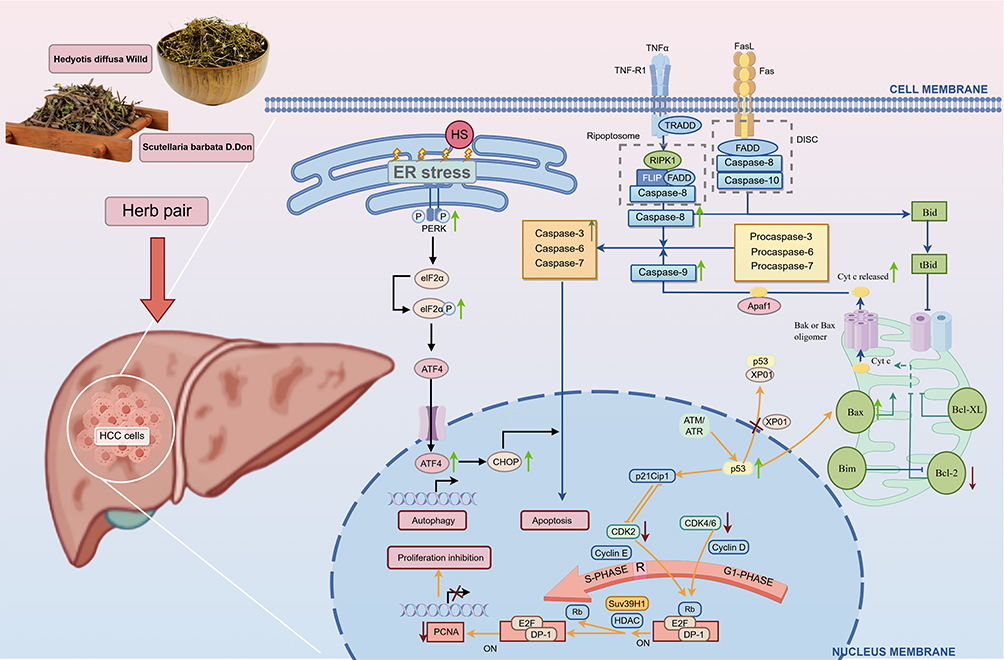 |
Figure 1 The effects of HD-SB on apoptosis, autophagy and cell cycle of HCC. The herb pair exerts anti-hepatocellular carcinoma (HCC) effects through multiple mechanisms, primarily involving the induction of apoptosis, modulation of autophagy, and inhibition of proliferation. For instance, it triggers endoplasmic reticulum (ER) stress and activates the PERK-eIF2α-ATF4 signaling pathway, leading to programmed cell death and autophagic activation. Additionally, it engages the mitochondrial apoptotic pathway by disrupting the Bcl-2 protein family balance, thereby activating the caspase cascade and mediating apoptosis in HCC cell lines. Furthermore, it upregulates TP53 expression via the ATM pathway, which subsequently inhibits cyclin-dependent kinase 2 (CDK2), induce G1 phase cell cycle arrest, and suppresses HCC cell proliferation. Notes: Green arrows upward (↑) indicate an increase or activation of the pathway. Red arrows downward (↓) indicate a decrease or inhibition of the pathway. Horizontal arrows (→) indicate conversion or promotion. Symbols resembling door bolts (⊣) indicate a stop or a inhibition. Created with Figdraw (2025). |
Suppressing HCC Cell Migration and Invasion
Invasion and metastasis represent the most critical biological characteristics of malignant tumors and are the primary causes of their lethality. Yang et al demonstrated that the combination of HD and SB inhibits the expression of intercellular adhesion molecule-1 (ICAM-1), ras homolog gene family member C (RHOC), and matrix metalloproteinase 2 (MMP2) by suppressing glycogen synthase kinase 3 beta (GSK-3β) phosphorylation. This ultimately blocks the activation of the Wnt/β-catenin signaling pathway, thereby regulating the migration and invasion of hepatocellular carcinoma cells.45 Peng et al reported that treatment of hepatocellular carcinoma cells with extracts of HD disrupts intercellular connections, reduces pseudopodia formation, upregulates microRNA 340 (miR-340) expression in a dose-dependent manner, and inhibits the proliferation, migration, and invasion of hepatocellular carcinoma cells.46 Furthermore, flavonoids, as key active components of HD and SB, exhibit significant potential in hepatocellular carcinoma treatment. Total flavonoids of HD modulate the balance between MMPs and tissue inhibitors of metalloproteinases (TIMPs), downregulate the expression of pro-invasive molecules such as MMP2 and MMP9, upregulate TIMP1 and TIMP2 expression, and markedly suppress the invasion and metastasis of human MHCC97H cells.47 In addition, total flavonoids of HD intervene in the epithelial-mesenchymal transition (EMT) process of MHCC97H cells, reduce cell invasiveness, increase E-cadherin protein expression, decrease vimentin protein expression, and reverse the EMT process in hepatocellular carcinoma cells.48
In summary, the combination of HD and SB effectively regulates key molecules involved in the invasion and metastasis of hepatocellular carcinoma cells, modulates the EMT process, and significantly attenuates the invasive and migratory capacities of these cells.
Inhibiting Liver Tumor Angiogenesis
Tumor angiogenesis is a fundamental process for tumor growth, invasion, and metastasis, regulated by multiple factors and signaling pathways, with vascular endothelial growth factor (VEGF) playing a pivotal role. Consequently, targeting VEGF has become a key focus in anti-tumor drug research. Chen et al demonstrated that extracts of HD combined with low-dose 5-FU significantly inhibited the growth of hepatocellular carcinoma Hep G2 cell xenografts. Immunohistochemical staining further revealed that HD enhanced the inhibitory effects of low-dose 5-FU on VEGF and transforming growth factor-beta (TGF-β), thereby synergizing its anti-angiogenic effects.49 Additionally, another study reported that total flavonoids in SB downregulated VEGF expression in a dose-dependent manner in the human hepatocellular carcinoma cell line MHCC97-H and primary human umbilical vein endothelial cells (HUVECs), significantly suppressing angiogenesis in HUVECs.50 Furthermore, Zhang et al observed that hepatic arterial infusion augmented the inhibitory effects of SB polysaccharides (SBPS) on VEGF expression and angiogenesis in hepatocellular carcinoma tissues.51
Both HD and SB are potent anti-angiogenic agents, and their combination may exhibit synergistic effects in suppressing VEGF expression, thereby effectively inhibiting tumor angiogenesis.
Enhancing Sensitivity to Anti-Tumor Drugs
In the clinical treatment of HCC, the low sensitivity of hepatocellular carcinoma cells to chemotherapy drugs, along with the multidrug resistance (MDR) effect, often results in unsatisfactory chemotherapy outcomes. In recent years, tyrosine kinase inhibitors have emerged as highly selective tumor MDR reversal agents, becoming a focal point in anti-tumor research. Liao et al demonstrated that the injection of HD could promote apoptosis in human HCC cells BEL-7402/5-FU within a multidrug-resistant model, reversing tumor cell resistance, potentially through the down-regulation of tyrosine kinase.52 Meanwhile, Pan et al found that a mixture of ethanol extracts from HD and SB could partially reverse the resistance of the human HCC cell line HepG2/ADM to adriamycin via a proliferation-apoptosis regulatory mechanism. This mechanism is associated with differential expression of various circular RNAs (circRNAs) in adriamycin-resistant HCC cells upon drug treatment, specifically the upregulation of 5,650 circRNAs, including has-circ-0089392, has-circ-0052011, and has-circ-0005420, and the downregulation of 3,801 circRNAs, such as has-circ-0002413 and has-circ-0007682. Moreover, experimental validation indicated that the upregulated has-circ-0005420 can bind to miR-137 through “sponge adsorption”, positively regulating the target gene PPARG, inhibiting the proliferation of adriamycin-resistant HepG2/ADM cells, promoting apoptosis, and reducing migration and invasion capabilities, thereby participating in the reversal of adriamycin resistance.53,54 Furthermore, the ursolic acid component in HD can be combined with cisplatin to increase the sensitivity of HepG2/DDP cells to cisplatin by downregulating the expression of nuclear factor erythroid 2-related factor 2 (Nrf2) and its downstream genes through the Nrf2/antioxidant response element (ARE) pathway, synergistically enhancing the anti-tumor effect of chemotherapy drugs.55 HD can also be used in conjunction with 5-fluorouracil (5-FU) to augment the anti-tumor activity of 5-FU by inhibiting the CDK2-E2F1 pathway.29
HD and SB can serve as traditional Chinese medicine MDR reversers, targeting multiple pathways and mechanisms in the treatment of drug-resistant HCC, while further strengthening the identification of targets for HCC MDR and facilitating in-depth research on effective ingredients and their mechanisms (Figure 2).
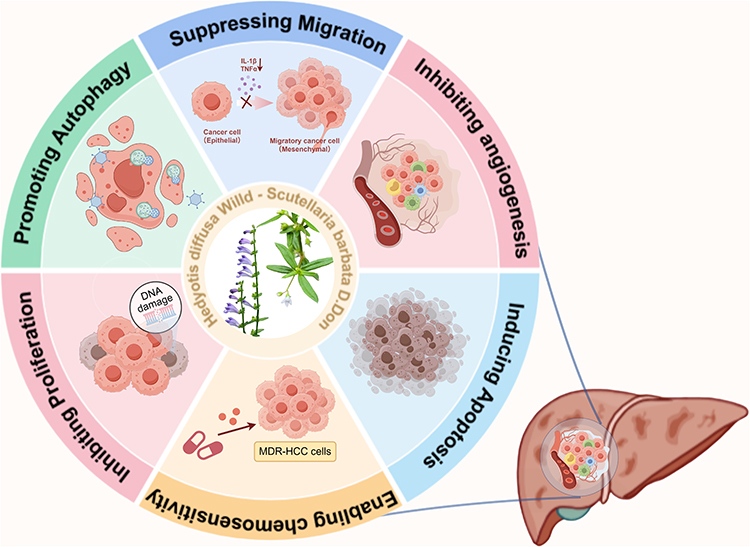 |
Figure 2 Summary of the effects of the HD-SB Herb Pair in Anti-HCC. Created with Figdraw (2025). |
The Signaling Pathways of the HD-SB Herb Pair Against HCC
In the molecular mechanisms of Hepatocarcinogenesis, the oncogenic signaling pathways closely associated with HCC cell survival primarily include: the Mitogen-activated protein kinase-extracellular-signal-regulated kinase (MAPK/ERK) signaling pathway, the Phosphoinositide 3-kinase-Protein kinase B-Mammalian target of rapamycin (PI3K-AKT-mTOR) signaling pathway, the Janus kinase-signal transducer and activator of transcription (JAK-STAT), Wnt-β-catenin, Hedgehog, and Hippo signaling pathways.56 Conversely, important tumor suppressor pathways include: the p53 pathway and the TGF-β/Smad pathway.57,58
Regulating Oncogenic Signaling Pathways
The MAPK/ERK signaling pathway plays a pivotal role in signal transduction during the development of HCC.59 The Mitogen-Activated Protein Kinase (MAPK) family, which is ubiquitously expressed in mammalian cells, regulates various cellular processes, including proliferation, differentiation, migration, and apoptosis.60 Members of the MAPK family, such as JNK and p38 protein kinases (p38MAPK), along with their associated signaling pathways, are involved in cell differentiation and apoptosis. On the other hand, ERK1/2 exhibits pro-proliferative and differentiation-promoting functions.61 Feng et al reported that the active component from SB (Scutebarbatine A, SBT-A), a terpenoid alkaloid, simultaneously activates the MAPK signaling pathway and the PERK-ATF4-CHOP axis of the ER stress signaling pathway when applied to HepG2 and Huh7 HCC cells. This dual activation results in G1 phase cell cycle arrest and induces apoptosis via activation of caspase pathways and poly (ADP-ribose) polymerase (PARP) cleavage.62 Further studies demonstrated that Hedyotis diffusa extract (HDE) inhibits the expression and phosphorylation of p-JNK and p-p38 proteins, thereby suppressing the activation of the JNK/p38MAPK signaling pathway. Additionally, HDE exhibits a concentration-dependent suppression of proliferation in human HCC QGY cells while promoting apoptosis.63 Ning et al showed that the ethyl acetate fraction of HDW (EHDW) activates the JNK/Nur77 signaling pathway within the MAPK family, triggering apoptosis through mitochondrial pathways in Hep3B liver cancer cells cultured in vitro as well as in liver cancer cells within zebrafish models.38
In cancer, the PI3K-AKT-mTOR pathway is frequently hyperactivated, playing a pivotal role in regulating cell survival, cell cycle progression, metabolism, angiogenesis, and motility.64,65 Approximately 50% of HCC cases exhibit activation of the PI3K-AKT-mTOR signaling pathway, characterized by upregulated expression of components such as the epithelial growth factor receptor (EGFR), PI3K, AKT, and mTOR complex 1(mTORC1).66–68 HCC PI3K-AKT-mTOR signaling is dysregulated, and both mTOR complexes are involved: mTORC1 regulates protein synthesis, autophagy, glucose and lipid metabolism, and mTORC2 stimulates liver tumorigenesis.69 Kim et al found that HDW, as a multi-target botanical agent, organically combines direct cytotoxicity with immune activation and TME remodeling. Network-based interpretation further suggests that PI3K-AKT-STAT3 signaling serves as the common mechanistic axis underlying these multi-level effects, and that the HD-SB herb pair, through coordinating this central signaling hub, achieves a dynamic balance between antitumor immune responses and inflammation resolution.70 Chuang et al demonstrated that treatment of SK-Hep-1 cells with ursolic acid (UA), a monomer isolated from HD, significantly inhibited the PI3K/AKT signaling pathway while activating downstream ERK1/2 and JNK1/2. UA downregulated the expression of Bcl-2, a pro-survival protein in cancer cells, while upregulating death receptors such as factor-related apoptosis (Fas) and TNF receptors. This led to activation of the caspase family, induction of PARP cleavage, and subsequent apoptosis of cancer cells.71 In vitro experiments by Yang et al revealed that active components, including wogonin and rhamnazin from SB, inhibited the expression of key genes such as PI3K and AKT, thereby blocking the PI3K-AKT signaling pathway and suppressing cancer cell proliferation.72 Additionally, the active component salvigenin from SB disrupted glycolysis and 5-FU chemotherapy resistance in HCC cells by targeting the PI3K/AKT/GSK-3β pathway, while, it also exhibited a concentration-dependent inhibitory effect on HCC cell growth while promoting apoptosis.73 In vivo studies have shown that ethanol extracts of HD dose-dependently reduced the percentage of PCNA-positive cells in liver tissue, downregulated discoidin domain receptor 1 (DDR1) protein expression, and inhibited PI3K/AKT pathway activation, ultimately suppressing HCC cell proliferation in rats.74 Furthermore, Wang et al found that extracts from SB modulate the PI3K/AKT/mTOR signaling pathway and miRNA expression, thereby influencing autophagy and inhibiting the growth of HuH-7 cells.75 Zhang et al found that aqueous extracts of HD regulate the PI3K/AKT signaling pathway to suppress VEGF expression and synergize with low-dose 5-FU to inhibit tumor angiogenesis. This combination significantly suppressed the growth of HepG2 xenograft tumors in mice49,76 (Figure 3).
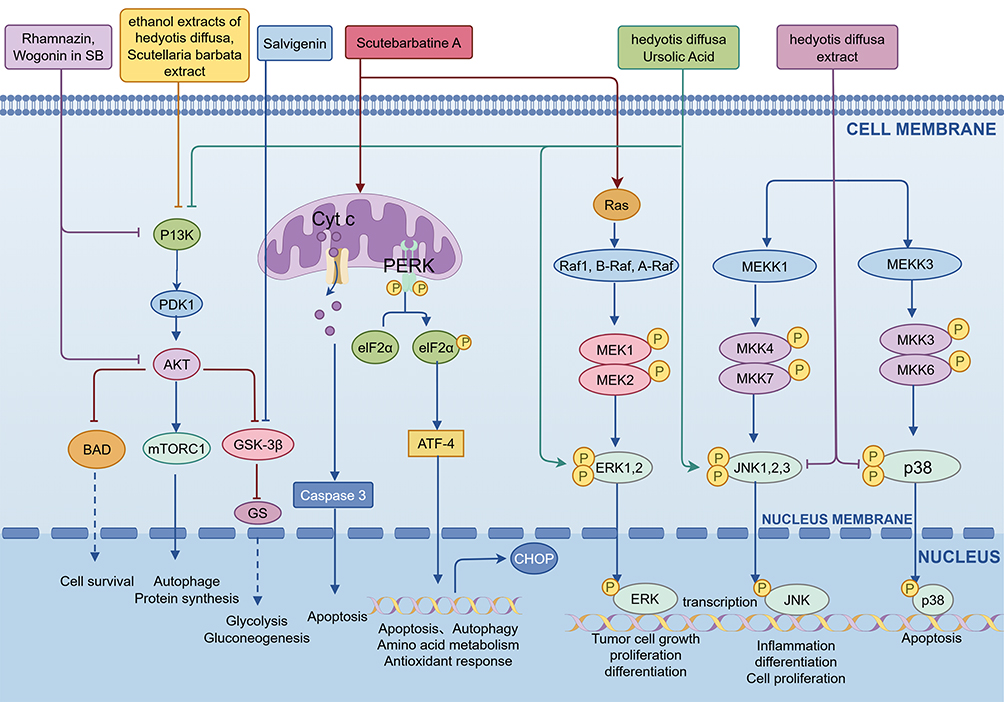 |
Figure 3 This diagram illustrates that the Hedyotis diffusa-Scutellaria barbata herb pair regulates PI3K/MAPK and other HCC-associated signaling cascades. This diagram shows that this herb pair modulates multiple HCC-associated signal pathways, particularly the PI3K and MAPK pathways, through diverse active components with distinct regulatory effects. On the PI3K/AKT pathway: Wogonin and Rhamnazin from Scutellaria barbata suppress the PI3K-AKT axis by downregulating the expression of PI3K and AKT. Salvigenin, another component of Scutellaria barbata, inhibits the PI3K-AKT-GSK-3β cascade. Both the ethanol extract of Hedyotis diffusa and the extract of Scutellaria barbata also exert inhibitory effects on PI3K-AKT signaling. Additionally, ursolic acid isolated from Hedyotis diffusa not only significantly inhibits the PI3K/Akt pathway but also activates ERK1/2 and JNK1/2, key downstream kinases of the MAPK pathway. On the MAPK pathway and ER stress: Scutebarbatine A (SBT-A), an active compound from Scutellaria barbata, concurrently activates the MAPK signaling cascade and the PERK-ATF4-CHOP axis of the endoplasmic reticulum stress pathway. Conversely, the extract of Hedyotis diffusa suppresses JNK/p38 MAPK signaling by reducing the expression and phosphorylation of p-JNK and p-p38 proteins. These multi-target regulatory actions collectively contribute to the herb pair’s anti-HCC efficacy. Solid arrows represent promotion or activation, blunt-ended arrows indicate inhibition, and dotted lines stand for indirect regulatory effects. Created with Figdraw (2025). |
The Janus kinase/signal transducer and activator of transcription (JAK/STAT) signaling pathway is a crucial molecular cascade in hepatocarcinogenesis, playing a central role in the progression of HCC by persistently driving oncogenic processes such as uncontrolled cell proliferation, resistance to apoptosis, and immune evasion. The effective component 2-hydroxy-3-ethylanthraquinone (HMA), derived from the Chinese herb HD, not only effectively inhibits the activity of the signal transducer and activator of transcription 3 (STAT3) signaling pathway mediated by interleukin-6 (IL-6), thereby suppressing its pro-proliferative effects, but also counteracts IL-6’s inhibitory influence on Bax and Caspase-9 mRNA expression, ultimately promoting apoptosis in HepG2 cells and related contexts.77–79 Furthermore, extracts from SB and HD regulate multiple pathways implicated in cancer development, including the Hedgehog, Wnt/β-catenin, and Notch1 signaling pathways, among others. By targeting diverse molecules across numerous pathways and mechanisms, these herbs exert therapeutic effects against HCC.80,81
Modulating Tumor Suppressor Signaling Pathways
The dysfunction of the p53 signaling pathway represents the most prevalent oncogenic pathway abnormality in HCC development, with p53 being one of the most frequently mutated genes in cancer, exhibiting mutations in over 50% of tumors.82 The p53 plays a crucial role in tumor suppression, and its mutation or inactivation results in dysregulation of the cell cycle and resistance to apoptosis.83 Xu et al discovered through molecular docking that the HD-SB exerts a therapeutic effect on primary HCC by targeting TP53 and core gene Estrogen receptor 1.84 The H-EtOAc and its active component DMQ induce apoptosis in HepG2 cells, underscoring the pivotal regulatory role of the p53 signaling pathway. This suggests that activation of the p53 pathway may be one of the mechanisms through which these substances combat HCC.37
The TGF-β/Smad pathway exerts a dual role in HCC, with its functional shift from tumor suppression to tumor promotion serving as a critical hallmark of HCC progression.85 Huang et al reported that the ethanol extract of SB inhibits the invasion and migration of HepG2 HCC cells, potentially by blocking the TGF-β/Smad/AMPK signaling pathway and reversing TGF-β-induced epithelial-mesenchymal transition. This finding provides novel experimental evidence supporting the targeting of the TGF-β pathway in HCC treatment.86 Additionally, numerous other key signaling pathways including the Wnt/β-catenin, Hedgehog, Hippo, and Notch signaling pathways, regulate HCC through distinct mechanisms, offering additional therapeutic opportunities.43
Discussion and Prospect
Notably, the drug pair of HD and SB, a representative combination for heat-clearing and detoxifying therapy, exhibits a significant therapeutic effect against HCC through a synergistic mechanism (Table 1). Both HD and SB alone exhibit anti-tumor effects, but their combined use produces synergistic effects, with the therapeutic outcome varying depending on factors such as compatibility ratio and extraction method. According to the properties and therapeutic actions of TCM herbs, herbal compatibility enables the components to interact in vivo after being combined, thereby allowing multiple components to achieve synergistic effects. Modern TCM research indicates that compatibility has a significant impact on the chemical composition of the herbal system. However, most studies have investigated the anti-HCC effects of HD and SB extracts separately, while a comprehensive and systematic investigation into the post‑compatibility changes in chemical composition and potential newly generated components of the HD‑SB pair has not yet been conducted. Although significant progress has been made in the extraction, isolation, purification, and structural identification of the HD–SB herb pair, the structure–activity relationship (SAR) underlying its biological functions remains unclear.87 Future studies should further focus on the dynamic changes in the material basis of the herb pair after compatibility in vivo, as well as the structural elucidation of its active components.
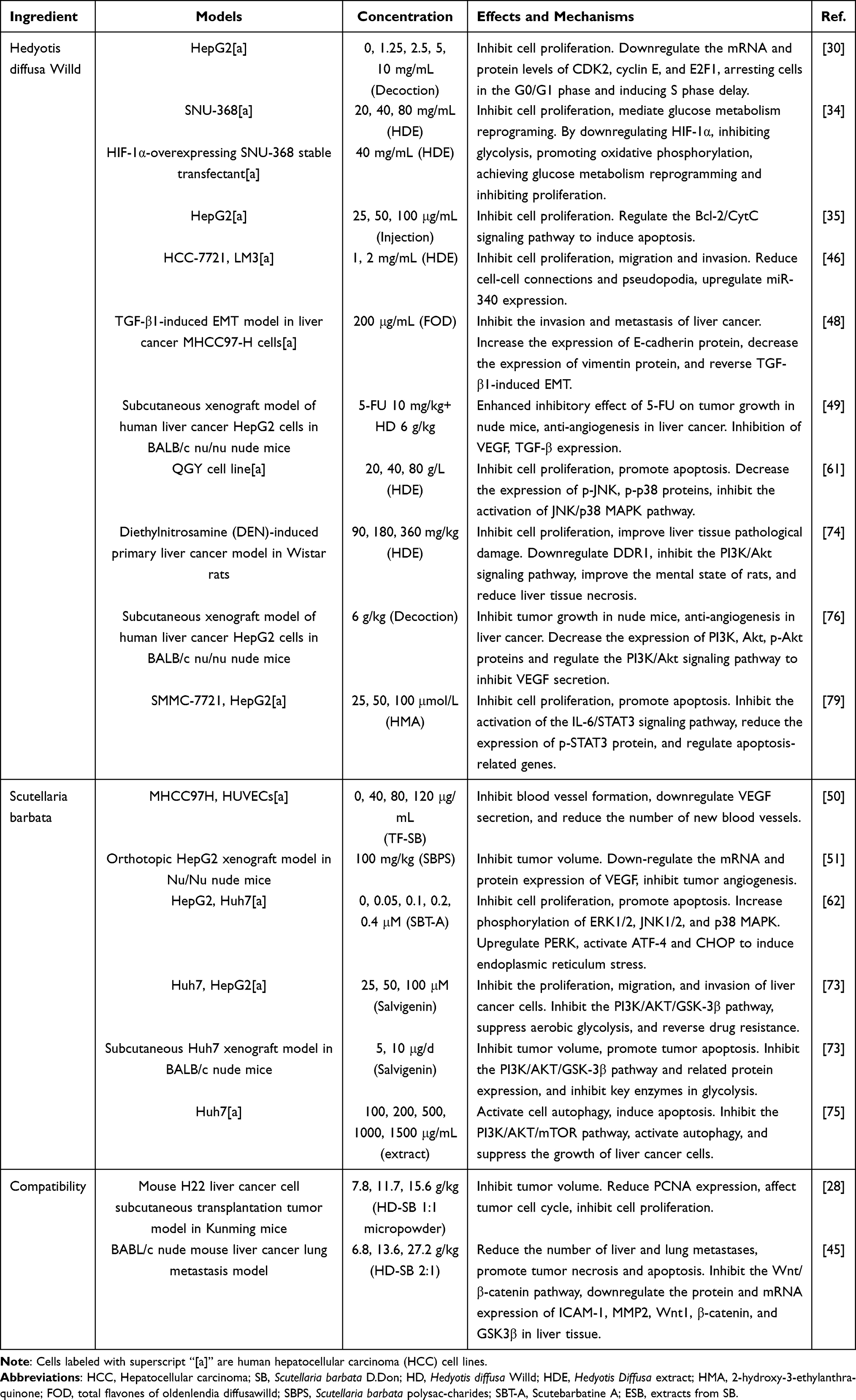 |
Table 1 Summary of Studies on the Anti-HCC Effects and Mechanisms of HD and SB |
Modern research on the HD-SB herb pair has provided substantial evidence for its significant anti-HCC effects through in vitro experiments, and these effects are consistent with the clinical application of TCM in treating liver cancer. Among these, compounds derived from the HD-SB herb pair, such as wogonin, rhamnetin, salvigenin, and ursolic acid, have shown potent anti‑HCC activity. Investigating the monomeric components and their profiles within the herb pair can reveal the material basis of its anti‑HCC properties, representing a key scientific issue in the study of herb pairs. Further screening of the most effective monomeric component combinations from the HD-SB herb pair, optimizing the compatibility ratio, and determining the optimal dosage may represent a positive trend for future research and provide theoretical support for the modernization of TCM. At the same time, to validate the pharmacological activity of the combined preparation, further establishment of in vitro and in vivo models is required, along with in‑depth investigation into the potential targets and molecular mechanisms underlying its anti‑HCC effects.
Future research should prioritize the translation of this herb pair from preclinical to clinical applications, involving comprehensive investigations into the interactions between the distinct components within the herb pair and the optimal compatibility ratio. Additionally, expanding mechanistic studies on non-coding RNAs (circRNA, miRNA) in mediating pharmacological efficacy and reversing drug resistance is crucial. With the continuous development of TCM and drug delivery systems, plant‑derived Extracellular Vesicles (EVs) has attracted increasing attention. Cheng et al have shown that EV-like particles derived from HD, as key mediators of intercellular communication, can deliver bioactive molecules such as miRNAs or proteins to target cells, thereby altering or intervening the behavior of HCC cells, including proliferation, apoptosis, and migration.88 Meanwhile, the HD‑SB herb pair can serve as a MDR reversal agent in TCM, with multiple components targeting antitumor signaling pathways to reverse MDR. By developing nanocarrier or liposome technologies to enable targeted drug delivery systems that act on specific signaling pathways, the combination of the HD-SB herb pair with immune checkpoint inhibitors (such as PD-1/PD-L1 monoclonal antibodies) and targeted agents (such as lenvatinib) can improve the bioavailability of active ingredients and tumor-targeting capabilities, thereby increasing the sensitivity of HCC cells to chemotherapeutic drugs such as 5-FU, cisplatin, and doxorubicin. Such efforts will promote research on integrative therapies combining TCM and Western medicine, including combined chemotherapy, radiotherapy, and targeted therapy, fully leveraging the advantages of TCM to achieve synergistic efficacy, toxicity reduction, and both symptomatic and fundamental treatment goals.
Conclusion
The HD-SB herb pair exhibits unique value in the comprehensive treatment of HCC due to its holistic regulatory advantages, characterized by multiple components, targets, and pathways. This review summarizes the various anti‑HCC active components derived from the HD-SB herb pair, with a focus on flavonoids, alcohol extracts, triterpenes, and acidic polysaccharides. These components possess anti HCC properties by inhibiting uncontrolled the proliferation of liver cancer and interfering with tumor angiogenesis, while also inducing cancer cell death through bidirectional regulation of autophagy related proteins, activation of the mitochondrial apoptotic pathway, and ER stress. The major signaling pathways modulated by the active components of the HD-SB herb pair may include the MAPKs, PI3K/Akt, Jak/STAT, p53 and Wnt/β catenin pathways. Despite the broad pharmacological activities of the HD-SB herb pair, research on its chemical composition following compatibility remains limited. Current anti‑HCC studies have mainly focused on its extracts, and further identification of the active or monomeric components is needed to elucidate the material basis of its efficacy. Moreover, existing evidence is largely derived from in vitro studies, with insufficient in vivo experiments, which hinders clinical translation. Future research should establish more in vitro and in vivo models to deeply investigate the potential targets and molecular mechanisms underlying its anti‑HCC effects. The HD-SB herb pair is a constituent of the HD and SB decoction. Although novel extraction techniques and pharmaceutical formulations have entered clinical trials, further population‑based clinical applications are still required to directly validate their actual efficacy and safety in humans. In addition, studies on the toxicity of these Chinese herbal medicines are relatively insufficient, necessitating safety assessments to explore potential molecular toxicological mechanisms and possible adverse reactions.
Abbreviations
TCM, traditional Chinese medicine; PHC, Primary hepatic cancer; HCC, Hepatocellular carcinoma; SB, Scutellaria barbata D.Don; HD, Hedyotis diffusa Willd; HD-SB, Hedyotis diffusa Willd and Scutellaria barbata D.Don; TP53, Tumor Protein P53; APP, Amyloid precursor protein; XPO1, Exportin 1; CDK2, Cyclin-dependent kinase 2; PCNA, Proliferating cell nuclear antigen; CDKs, cyclin-dependent kinases; E2F1, E2F transcription factor-1; CDK4, Cyclin-dependent kinase 4; mRNA, Messenger RNA; HIF-1α, Hypoxia-inducible factor-1alpha; Bcl-2, B-cell lymphoma-2; Cyt c, Cytochromes c; H-EtOAc, H-Ethyl acetate fraction; DMQ, 1, 3-dihydroxy-2-methylanthraquinone; p53, Tumor protein P53; JNK, c-Jun N-terminal kinase; Nur77, Nuclear receptor NR4A1; RAPA, Rapamycin; PERK-eIF2α-ATF4, Protein kinase RNA-like endoplasmic reticulum kinase-Eukaryotic Initiation Factor 2 alpha-Transcription Factor 4; Bax, Bcl-2 associated X protein; EMT, Epithelial-Mesenchymal Transition; FOD, total flavones of oldenlendia diffusa willd; VEGF, Vascular endothelial growth factor; SBPS, Scutellaria barbata polysaccharides; MDR, multi-drug resistance; Nrf2, Nuclear factor erythroid 2-related factor 2; ARE, Antioxidant response element; SBT-A, Scutebarbatine A; HDE, Hedyotis diffusa extract; EHDW, Ethyl acetate fraction of HDW; HMA, 2- hydroxy-3-ethylanthraquinone.
Author Contributions
All authors made a significant contribution to the work reported, whether that is in the conception, conceptualization of the theoretical framework, execution and interpretation, or in all these areas. And all authors took part in drafting, revising or critically reviewing the article, gave final approval of the version to be published and agreed on the journal to which the article has been submitted and agree to be accountable for all aspects of the work.
Funding
This study was supported by Hubei Provincial Natural Science Foundation of China (No. 2024AFD127), the scientific project of Health Commission of Hubei Province of China (No.WJ2025M025), the Open Foundation of Hubei Provincial Key Laboratory of Tumor Microenvironment and Immunotherapy in China (No. 2024ZLKF2-56) and Science Project of Yichang Municipal Science and Technology Bureau of Hubei Province in China (A25-4-014, A24-2-048, A22-2-016).
Disclosure
The authors report no conflicts of interest in this work.
References
1. Han B, Zheng R, Zeng H, et al. Cancer incidence and mortality in China, 2022. J National Cancer Center. 2024;4(1):47–16. doi:10.1016/j.jncc.2024.01.006
2. Sung H, Ferlay J, Siegel RL, et al. Global cancer statistics 2020: GLOBOCAN estimates of incidence and mortality worldwide for 36 cancers in 185 countries. CA Cancer J Clin. 2021;71(3):209–249. doi:10.3322/caac.21660
3. Xu CY, Zhang GJ. Discussion on the pathogenesis of liver cancer from the pathogenesis theory of ‘blood stasis and toxin interaction’. China J Tradition Chinese Med Pharm. 2023;38(04):1469–1472.
4. Lin J, Guo H, Qin H, Zhang X, Sheng J. Integration of meta-analysis and network pharmacology analysis to investigate the pharmacological mechanisms of traditional Chinese medicine in the treatment of hepatocellular carcinoma. Front Pharmacol. 2024;15:1374988. doi:10.3389/fphar.2024.1374988
5. Wang Y, Zhang Q, Chen Y, et al. Antitumor effects of immunity-enhancing traditional Chinese medicine. Biomed Pharmacother. 2020;121:109570. doi:10.1016/j.biopha.2019.109570
6. Xie Q, Chen J, Yang H, et al. A comprehensive review of coptidis rhizoma and magnoliae officinalis cortex drug pair and their chemical composition, pharmacological effects and pharmacokinetics analysis. Drug Des Devel Ther. 2024;18:4413–4426. doi:10.2147/dddt.S477381
7. Ding L, Wang RY, Yin SH, et al. Research progress of chinese drug pair in treatment of hepatocellular carcinoma. Chinese Archives Traditional Chin Med. 2025;43(03):107–111. doi:10.13193/j.issn.1673-771
8. Meng Q-X, Roubin RH, Hanrahan JR. Ethnopharmacological and bioactivity guided investigation of five TCM anticancer herbs. J Ethnopharmacol. 2013;148(1):229–238. doi:10.1016/j.jep.2013.04.014
9. Wu CH, Xiong MF, Tang XL, et al. Exploration on the research thinking of couplet medicine of hedyotis diffusa willd and scutellaria barbata in treatment cancer. Chinese Med Modern Distance Educ China. 2022;20(12):199–202. doi:10.3969/j.issn.1672-2779
10. Zhu J, Zhang Z, Wang R, et al. Nanoparticles derived from Scutellaria barbata and Hedytois diffusa herb pair and their anti-cancer activity. Pharmacolog Res. 2022;2:100048. doi:10.1016/j.prmcm.2022.100048
11. Wang F, Mai J, Wang H, et al. Identification of Erzhu Jiedu Recipe and its molecular mechanism underlying inhibited human hepatoma cells by UHPLC-Q-Exactive Orbitrap HRMS and network pharmacology. J Ethnopharmacol. 2024;325:117893. doi:10.1016/j.jep.2024.117893
12. Chen T-Y, Mai J-Y, Zhang P, et al. Efficacy of erzhu jiedu recipe on hepatitis B cirrhosis with hyperalphafetoproteinemia: a randomized, double-blind, placebo-controlled clinical trial. Medicine. 2021;100(38):e27231. doi:10.1097/md.0000000000027231
13. Zheng S, Xue T, Xue C, et al. Regulatory mechanisms of signaling pathways in liver cancer treatment with traditional Chinese medicine. J Ethnopharmacol. 2025;342:119386. doi:10.1016/j.jep.2025.119386
14. Zhang CA, Gu YF, Zhang YC, et al. Discussion on clinical thoughts for treating liver cancer recurrence and metastasis from phlegm. J Oncol Chinese Med. 2020;2(01):31–35. doi:10.19811/j.cnki.ISSN2096-6628.2020.01.008
15. Li HW. Inheritance and innovation of traditional Chinese medicine in the prevention and treatment of liver cancer. Chin J Integrated Trad Western Med Liver Dis. 2022;32(08):677–682+693. Cnki:Sun:Zxgb.0.2022-08-002.
16. Zhou Y, Zhou P. To analyze clinical experience of DENG Zhong-jia in curing liver cancer. Chin J Exp Traditional Med Formulae. 2012;18(02):260–261. doi:10.13422/j.cnki.syfjx.2012.02.025
17. Zhang BR, He SY, Qiao YL, et al. Prescription rules for the prescriptions containing scutellaria barbata and oldenlandia diffusa medicine based on traditional chinese medicine inheritance system. J Li-shizhen Trad Chin Med. 2020;31(09):2291–2294. doi:10.3969/j.issn.1008-0805
18. Liao X, Bu Y, Jia Q. Traditional Chinese medicine as supportive care for the management of liver cancer: past, present, and future. Genes Dis. 2020;7(3):370–379. doi:10.1016/j.gendis.2019.10.016
19. Zhang LW, Li LN, Liu WS. Chinese journal of integrated traditional and western medicine on liver diseases. Liaoning J Trad Chin Med. 2019;46(10):2051–2053. doi:10.13192/j.issn.1000-1719.2019.10.010
20. Hnit SST, Yao M, Xie C, et al. Transcriptional regulation of G2/M regulatory proteins and perturbation of G2/M cell cycle transition by a traditional Chinese medicine recipe. J Ethnopharmacol. 2020;251:112526. doi:10.1016/j.jep.2019.112526
21. Zhang WT, Wang YL, Dai ZQ, et al. Professor Yang Lianfang’s clinical experience in treating primary liver cancer: a case series report. Shanxi J Trad Chinese Med. 2021;37(09):12–13. Cnki:Sun:Shix.0.2021-09-005.
22. Guo DD, Yu SM, Zhang JL, et al. Professor Zhang Jinliang’s clinical experience in treating liver cancer with herb combinations. Chin J Integrated Trad Western Med Liver Dis. 2020;30(06):561–562. Cnki:Sun:Zxgb.0.2020-06-025.
23. Lu BZ, Lin NM, He XB, et al. Analysis of the application of Hedyotis diffusa in antitumor treatment in our hospital. China J Chinese Materia Medic. 2006;(18):1550–1552.
24. Yang PW, Chen XJ, Liu GW, et al. The effect of different proportions of scutellariae barbatae herba and hedyotis diffusae herba in the couplet medicinals on the proliferation activity of hepatocellular carcinoma cells. Acta Chinese Med Pharmacol. 2024;52(10):11–15. doi:10.19664/j.cnki.1002-2392.240196
25. Liu XH, Zhan S, Lin XK, et al. Effects of herba hedyotis, herba scutellariae barbatae and their drug pair compatibility on the glucose uptake effects of herba hedyotis, herba scutellariae barbatae and their drug pair compatibility on the glucose uptake. J Traditional Chin Med. 2020;61(10):890–895. doi:10.13288/j.11-2166/r.2020.10.016
26. Wang C, Luo M, Chen Q, Zheng L, Jiang T, Dai M. Hedyotis diffusa Willd. Extract alleviates CCl4-induced liver fibrosis via modulation of the gut microbiota and FXR/SHP/CYP7A1-mediated bile acid metabolism. J Ethnopharmacol. 2026;363:121450. doi:10.1016/j.jep.2026.121450
27. Hou C, Wen X, Yan S, et al. Network-based pharmacology-based research on the effect and mechanism of the Hedyotis diffusa–Scutellaria Barbata pair in the treatment of hepatocellular carcinoma. Sci Rep. 2024;14(1):963. doi:10.1038/s41598-023-50696-y
28. Wang AJ. Effect of the hedyotis diffusa–scutellaria barbata micro-powder combination on PCNA expression in mouse H22 hepatoma cells. J Li-shizhen Trad Chin Med. 2012;23(04):907–908. doi:10.3969/j.issn.1008-0805
29. Chen X-Z, Cao Z-Y, Chen T-S, et al. Water extract of Hedyotis Diffusa Willd suppresses proliferation of human HepG2 cells and potentiates the anticancer efficacy of low-dose 5-fluorouracil by inhibiting the CDK2-E2F1 pathway. Oncol Rep. 2012;28(2):742–748. doi:10.3892/or.2012.1834
30. Chen XZ, Cao ZY, Chen TS, et al. Effect of Hedyotis diffusa on mRNA Expression of Cdk2 and E2F1 in Human Hepatoma HepG2 cells. Fujian J Trad Chin Med. 2012;43(02):32–34. doi:10.13260/j.cnki.jfjtcm.010334
31. Chan JY, Tang PM, Hon P-M, et al. Pheophorbide a, a major antitumor component purified from scutellaria barbata, induces apoptosis in human hepatocellular carcinoma cells. Planta Med. 2006;72(1):28–33. doi:10.1055/s-2005-873149
32. Liu XM, Dou JM. Mechanism study on the treatment of hepatocellular carcinoma with flavonoids from Scutellaria barbata D. Don based on network pharmacology and molecular docking. China Med Engine. 2024;32(07):1–8. doi:10.19338/j.issn.1672-2019.2024.07.001
33. Su W, Wu L, Liang Q, et al. Extraction optimization, structural characterization, and anti-hepatoma activity of acidic polysaccharides from scutellaria barbata D. Don. Front Pharmacol. 2022;13:827782. doi:10.3389/fphar.2022.827782
34. He HY, Chao MX, Cui C, et al. Hedyotis diffusa extract inhibits aerobic glycolysis and promotes oxidative phosphorylation to suppress the proliferation of liver cancer cells. J Xi’an Jiaotong Univ. 2024;45(04):656–662. doi:10.7652/jdyxb202404020
35. Cui H, Gao QQ, Wang XQ, et al. Modulation of the Bcl-2/CytC signaling pathway by hedyotis diffusa injection induces mitochondrial apoptosis and inhibits proliferation in hepatoma cells. Shaanxi J Trad Chinese Med. 2019;40(04):418–420. doi:10.3969/j.issn.1000-7369
36. Li WT, Zhao FM, Dai ZH, et al. Hedyotis diffusa injection inhibits the proliferation of human hepatoma SMMC-7721 cells and induces mitochondrial apoptosis by modulating the Bcl-2/CytC signaling pathway. Chinese Traditional Patent Med. 2015;37(10):2264–2267. doi:10.3969/j.issn.1001-1528
37. Li Y-L, Zhang J, Min D, Hongyan Z, Lin N, Li Q-S. Anticancer effects of 1,3-dihydroxy-2-methylanthraquinone and the ethyl acetate fraction of hedyotis diffusa willd against HepG2 carcinoma cells mediated via apoptosis. PLoS One. 2016;11(4):e0151502. doi:10.1371/journal.pone.0151502
38. Ning W, Xu N, Zhou C, et al. Ethyl acetate fraction of hedyotis diffusa willd induces apoptosis via JNK/Nur77 pathway in hepatocellular carcinoma cells. Evid Based Complement Alternat Med. 2022;2022:1932777. doi:10.1155/2022/1932777
39. Dai Z-J, Wang X-J, Li Z-F, et al. Scutellaria barbate extract induces apoptosis of hepatoma H22 cells via the mitochondrial pathway involving caspase-3. World J Gastroenterol. 2008;14(48):7321–7328. doi:10.3748/wjg.14.7321
40. Debnath J, Gammoh N, Ryan KM. Autophagy and autophagy-related pathways in cancer. Nat Rev Mol Cell Biol. 2023;24(8):560–575. doi:10.1038/s41580-023-00585-z
41. Li X, He S, Ma B. Autophagy and autophagy-related proteins in cancer. Mol Cancer. 2020;19(1):12. doi:10.1186/s12943-020-1138-4
42. Chen H, Shang X, Yuan H, et al. Total flavonoids of Oldenlandia diffusa (Willd.) Roxb. suppresses the growth of hepatocellular carcinoma through endoplasmic reticulum stress-mediated autophagy and apoptosis. Front Pharmacol. 2022;13:1019670. doi:10.3389/fphar.2022.1019670
43. Zheng J, Wang S, Xia L, et al. Hepatocellular carcinoma: signaling pathways and therapeutic advances. Signal Transduct Target Ther. 2025;10(1):35. doi:10.1038/s41392-024-02075-w
44. Yang P-W, Chen -T-T, Zhao W-X, et al. Scutellaria barbata D. Don and Oldenlandia diffusa (Willd.) Roxb crude extracts inhibit hepatitis-B-virus-associated hepatocellular carcinoma growth through regulating circRNA expression. J Ethnopharmacol. 2021;275:114110. doi:10.1016/j.jep.2021.114110
45. Yang PW, Zhu JX, Chen JX, et al. Study on the mechanism of action of scutellaria barbata D. Don and Hedyotis diffusa in regulating the wnt/β-catenin axis on liver cancer migration and invasion. Pharmacol Clini Chinese Mater Med. 2024;40(12):48–54. doi:10.3969/j.issn.1001-859X.2024.12.zyylylc202412008
46. Peng YN, Shan LF, Jiang JL, et al. Effect of Hedyotis diffusa extract on the proliferation, migration, and invasion of hepatocellular carcinoma cells by regulating MiR-340. Hebei J Trad Chin Med. 2024;46(12):2035–2042. doi:10.3969/j.issn.1002-2619.2024.12.020
47. Dai Z-J, Wang B-F, Lu W-F, et al. Total flavonoids of Scutellaria barbata inhibit invasion of hepatocarcinoma via MMP/TIMP in vitro. Molecules. 2013;18(1):934–950. doi:10.3390/molecules18010934
48. Zhang YB, Zhu J, Xiao JX, et al. Effect and mechanism of total flavones of oldenlendia diffusa willd on epithelial-mesenchymal transition of cell line MHCC97-H induced by TGF-β. J Xi’an Jiaotong Univ. 2016;37(02):279–282+306. doi:10.7652/jdyxb201602027
49. Chen ZX, Cao ZY, Zhang YQ, et al. Effect of hedyotis diffusa willd combined with low-dose5-fluorouracil on antiangiogenesis in hepatocellular carcinoma. J Fujian Univ Trad Chinese Med. 2012;22(04):20–23. doi:10.13261/j.cnki.jfutcm.002680
50. Dai Z-J, Lu W-F, Gao J, et al. Anti-angiogenic effect of the total flavonoids in Scutellaria barbata D. Don. BMC Complement Altern Med. 2013;13(1):150. doi:10.1186/1472-6882-13-150
51. Zhang YS, Liu R, Ding Y, et al. Effects of different administration modes of Scutellaria barbata polysaccharides on angiogenesis of rat hepatocellular carcinoma. J North Pharm. 2023;20(07):1–4+18. doi:10.3969/j.issn.1672-8351.2023.07.001
52. Liao ZZ, Wei LM, Xu LY, Liang G. Effect of Hedyotic diffusa injection in reversing multi-drug resistance of human hepatoma BEL-7402/5-FU cells. J Xi’an Jiaotong Univ. 2015;36(04):554–557. doi:10.7652/jdyxb201504026
53. Pan YC, Wang Q, Hu AY, et al. Mechanism of reversal of Adriamycin–resistant hepatocellular carcinoma with ethanol extracts of Oldenlandia diffusa roxb and Scutellariae barbatae herba. Shanghai J Traditional Chin Med. 2021;55(10):52–57. doi:10.27320/d.cnki.gszyu.2021.001098
54. Chang SJ, Liang JY, Wang MX, et al. Traditional Chinese herbal medicine regulating circRNAs and associated ceRNA networks for liver cancer treatment. Chemistry of Life. 2025;45(08):1374–1383. doi:10.13488/j.smhx.20250235
55. Wu S, Zhang T, Du J. Ursolic acid sensitizes cisplatin-resistant HepG2/DDP cells to cisplatin via inhibiting Nrf2/ARE pathway. Drug Des Devel Ther. 2016;10:3471–3481. doi:10.2147/DDDT.S110505
56. Moon H, Ro SW. MAPK/ERK signaling pathway in hepatocellular carcinoma. Cancers. 2021;13(12):3026. doi:10.3390/cancers13123026
57. Huang J. Current developments of targeting the p53 signaling pathway for cancer treatment. Pharmacol Ther. 2021;220:107720. doi:10.1016/j.pharmthera.2020.107720
58. Pardali K, Moustakas A. Actions of TGF-beta as tumor suppressor and pro-metastatic factor in human cancer. Biochim Biophys Acta. 2007;1775(1):21–62. doi:10.1016/j.bbcan.2006.06.004
59. Chen C. Mechanisms of hepatocellular carcinoma and challenges and opportunities for molecular targeted therapy. World J Hepatol. 2015;7(15):1964–1970. doi:10.4254/wjh.v7.i15.1964
60. Schaeffer HJ, Weber MJ. Mitogen-activated protein kinases: specific messages from ubiquitous messengers. Mol Cell Biol. 1999;19(4):2435–2444. doi:10.1128/mcb.19.4.2435
61. Zhang YY, Chen YQ, Pei H, et al. Research progress on anti liver cancer mechanism of flavonoids in traditional chinese medicine. Chinese Archives Traditional Chin Med. 2025;43(07):121–125. doi:10.13193/j.issn.1673-7717.2025.07.026
62. Feng -P-P, Qi Y-K, Li N, Fei H-R. Scutebarbatine A induces cytotoxicity in hepatocellular carcinoma via activation of the MAPK and ER stress signaling pathways. J Biochem Mol Toxicol. 2021;35(5):e22731. doi:10.1002/jbt.22731
63. Liu JJ, Li FC, Yang YQ, et al. Effects of hedyotis diffusa extract on JNK/p38MARK pathway and cytological behavior of hepatoma cells. Anhui Med Pharm J. 2022;26(08):1496–1500+1697. doi:10.3969/j.issn.1009-6469.2022.08.003
64. Fruman DA, Rommel C. PI3K and cancer: lessons, challenges and opportunities. Nat Rev Drug Discov. 2014;13(2):140–156. doi:10.1038/nrd4204
65. Golob-Schwarzl N, Krassnig S, Toeglhofer AM, et al. New liver cancer biomarkers: PI3K/AKT/mTOR pathway members and eukaryotic translation initiation factors. Eur J Cancer. 2017;83:56–70. doi:10.1016/j.ejca.2017.06.003
66. Sun EJ, Wankell M, Palamuthusingam P, McFarlane C, Hebbard L. Targeting the PI3K/Akt/mTOR pathway in hepatocellular carcinoma. Biomedicines. 2021;9(11):1639. doi:10.3390/biomedicines9111639
67. Wang Q, Yu W-N, Chen X, et al. Spontaneous hepatocellular carcinoma after the combined deletion of akt isoforms. Cancer Cell. 2016;29(4):523–535. doi:10.1016/j.ccell.2016.02.008
68. Thorpe LM, Yuzugullu H, Zhao JJ. PI3K in cancer: divergent roles of isoforms, modes of activation and therapeutic targeting. Nat Rev Cancer. 2015;15(1):7–24. doi:10.1038/nrc3860
69. Bracic Tomazic S, Schatz C, Haybaeck J. Translational regulation in hepatocellular carcinogenesis. Drug Des Devel Ther. 2021;15:4359–4369. doi:10.2147/dddt.S255582
70. Kim SD, Park ES, Park JH, et al. Immune and tumor microenvironment mechanisms of hedyotis diffusa willd: a scoping review and network pharmacology analysis. Cancers. 2026;18(4):672. doi:10.3390/cancers18040672
71. Chuang W-L, Lin P-Y, Lin H-C, Chen Y-L. The apoptotic effect of ursolic acid on SK-Hep-1 cells is regulated by the PI3K/Akt, p38 and JNK MAPK signaling pathways. Molecules. 2016;21(4):460. doi:10.3390/molecules21040460
72. Yang A-Y, Liu H-L, Yang Y-F. Study on the mechanism of action of Scutellaria barbata on hepatocellular carcinoma based on network pharmacology and bioinformatics. Front Pharmacol. 2023;13:1072547. doi:10.3389/fphar.2022.1072547
73. Shao H, Chen J, Li A, et al. Salvigenin suppresses hepatocellular carcinoma glycolysis and chemoresistance through inactivating the PI3K/AKT/GSK-3β pathway. Appl Biochem Biotechnol. 2023;195(8):5217–5237. doi:10.1007/s12010-023-04511-z
74. Wu YF, Zhang CL, Zhang Q. Effects of ethanol extracts of hedyotis diffusa on proliferation of rat hepatocarcinoma cells by regulating DDR1. Shandong Med J. 2022;62(04):51–54. doi:10.3969/j.issn.1002-266X.2022.04011
75. Wang JX, Lu MJ, Wu R, et al. Effect of Scutellaria barbata extract on autophagy of hepatoma cell line HuH-7 and its mechanism. Chin J Biol. 2022;35(12):1465–1470. doi:10.13200/j.cnki.cjb.003775
76. Zhang YQ, Wang QT, Chen XZ, et al. Effect of hedyotis diffusa Willd on PI3K/Akt pathway in nude mice implanted hepatoma HepG2 cells. J Basic Clin Oncol. 2015;28(04):277–280. doi:10.3969/j.issn.1673-5412.2015.04.001
77. Park H, Lee S, Lee J, Moon H, Ro SW. Exploring the JAK/STAT signaling pathway in hepatocellular carcinoma: unraveling signaling complexity and therapeutic implications. Int J Mol Sci. 2023;24(18):13764. doi:10.3390/ijms241813764
78. Wang ZX, Wu WF. Impact and mechanisms of bioactive components from hedyotis diffusa on the growth of human hepatoma cells. Chin J Gerontol. 2021;41(21):4838–4841. doi:10.3969/j.issn.1005-9202.2021.21.071
79. Sun C, Wu MZ, Jiang ZQ, et al. Effective components 2-hydroxyl group-3-tectoquinone of Herba Hedyotis inducing livercancer cells apoptosis by IL-6/STAT3 signaling pathway. China J Tradition Chinese Med Pharm. 2018;33(12):5346–5350.
80. Peng S, Zhen QS, Wu XY, et al. Immunoregulatory mechanism of hedyotis diffusa in hepatocellular carcinoma: network pharmacology and bioinformatics study. Fujian Med J. 2025;47(07):64–70. doi:10.20148/j.fmj.2025.07.020
81. Yan XH, Mei GG, Mei L, et al. Anti-hepatocellular carcinoma mechanism of diterpenoids of Scutellaria barbata on based on network pharmacology and molecular docking. Anhui Med Pharm J. 2024;28(03):475–482+639–640. doi:10.3969/j.issn.1009-6469.2024.03.010
82. Goh AM, Coffill CR, Lane DP. The role of mutant p53 in human cancer. J Pathol. 2011;223(2):116–126. doi:10.1002/path.2784
83. Harris SL, Levine AJ. The p53 pathway: positive and negative feedback loops. Oncogene. 2005;24(17):2899–2908. doi:10.1038/sj.onc.1208615
84. Xu M, Chen LN, Wu JY, et al. Mechanism of Hedyotis diffusa-Scutellaria barbata D. Don for treatment of primary liver cancer: analysis with network pharmacology, molecular docking and in vitro validation. J Southern Med Univ. 2025;45(1):80–89. doi:10.12122/j.issn.1673-4254.2025.01.11
85. Elston R, Inman GJ. Crosstalk between p53 and TGF-βSignalling. J Signal Transduct. 2012;2012:294097. doi:10.1155/2012/294097
86. Huang YX, Zhang S, LiuK R. Study on inhibition of reversal of epithelial-mesenchymal transition by extracts from scutellaria barbata for cell and invasion of hepatoma cells. New Chin Med. 2019;51(08):17–21. doi:10.13457/j.cnki.jncm.2019.08.005
87. Zhao F, Cao M, Jiang S, Lin H, Sun R, Tao A. Comprehensive review: extraction-structure-conformation-pharmacological activity coupling research of Scutellaria genus polysaccharides. Carbohydr Res. 2026;565:109901. doi:10.1016/j.carres.2026.109901
88. Cheng Q, Zhang D, Zhao X, et al. Composition analysis of extracellular vesicle-like particles derived from Hedyotis diffusa Willd and their effects on apoptosis in hepatocellular carcinoma Huh-7 cells. Int J Biol Macromol. 2025;321(Pt 3):146395. doi:10.1016/j.ijbiomac.2025.146395
 © 2026 The Author(s). This work is published and licensed by Dove Medical Press Limited. The
full terms of this license are available at https://www.dovepress.com/terms
and incorporate the Creative Commons Attribution
- Non Commercial (unported, 4.0) License.
By accessing the work you hereby accept the Terms. Non-commercial uses of the work are permitted
without any further permission from Dove Medical Press Limited, provided the work is properly
attributed. For permission for commercial use of this work, please see paragraphs 4.2 and 5 of our Terms.
© 2026 The Author(s). This work is published and licensed by Dove Medical Press Limited. The
full terms of this license are available at https://www.dovepress.com/terms
and incorporate the Creative Commons Attribution
- Non Commercial (unported, 4.0) License.
By accessing the work you hereby accept the Terms. Non-commercial uses of the work are permitted
without any further permission from Dove Medical Press Limited, provided the work is properly
attributed. For permission for commercial use of this work, please see paragraphs 4.2 and 5 of our Terms.